15 Light & Airy Living Room Ideas for Summer
There is a version of your living room that exists only in summer, or rather, only when summer is allowed in. When the heavy curtains come down, when the dark throws are folded away, when the windows are opened and something white and thin is hung in their place. The room does not change structurally but it changes entirely — lighter, cooler, more open — and the version of it that emerges feels like the one the room was always meant to be.
The ideas below are not about redecorating. They are about the smaller, more considered adjustments that shift a room from its winter self into its summer one. Some cost almost nothing. Some are a single afternoon’s work. All of them make a genuine difference to how a room looks and, more importantly, how it feels to spend time in.
Each idea includes what you will need, what it will cost, and a practical tip to make it work as well as it deserves to.
1. The Sheer Curtain Swap
Budget: $20 – $100
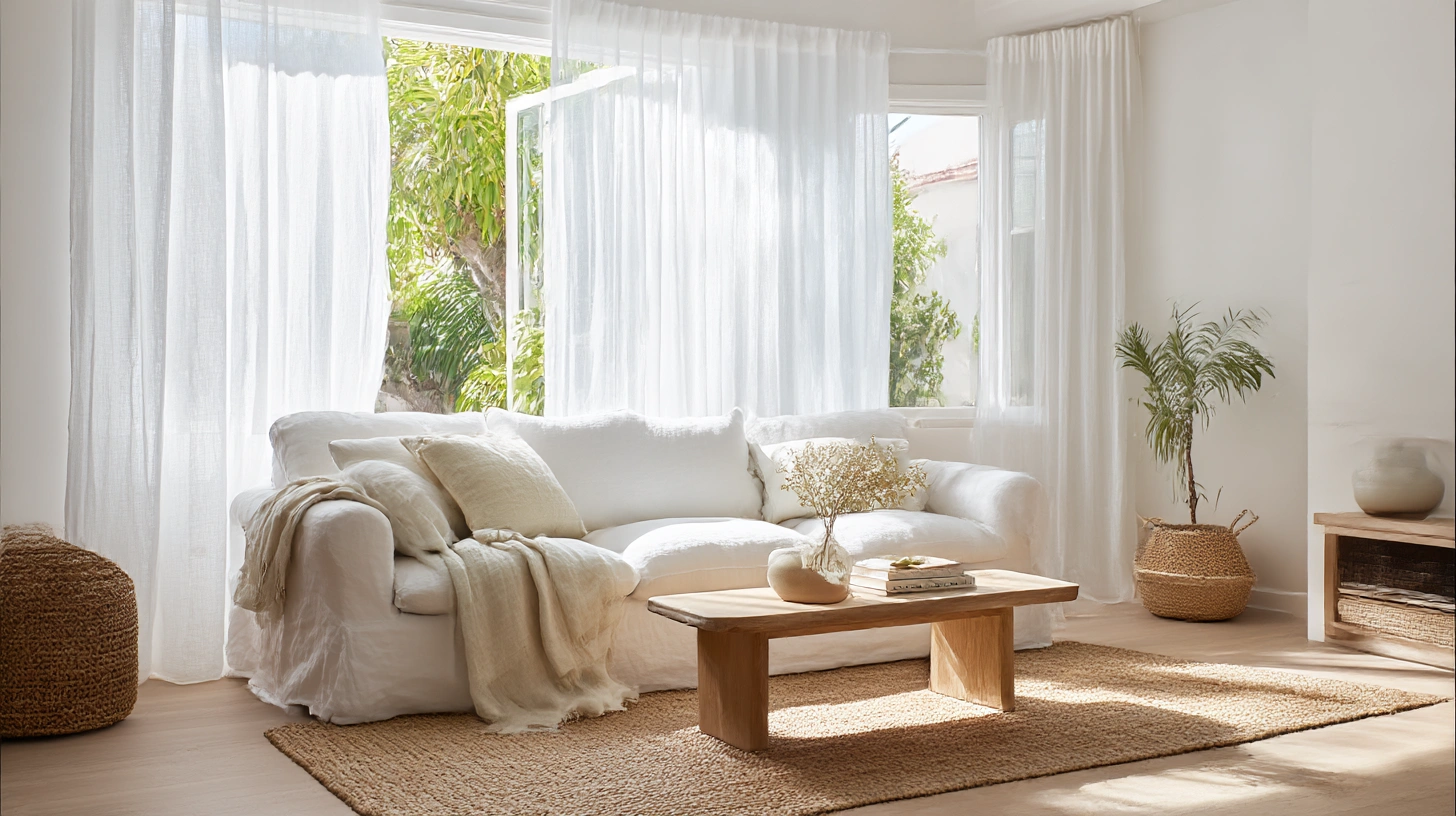
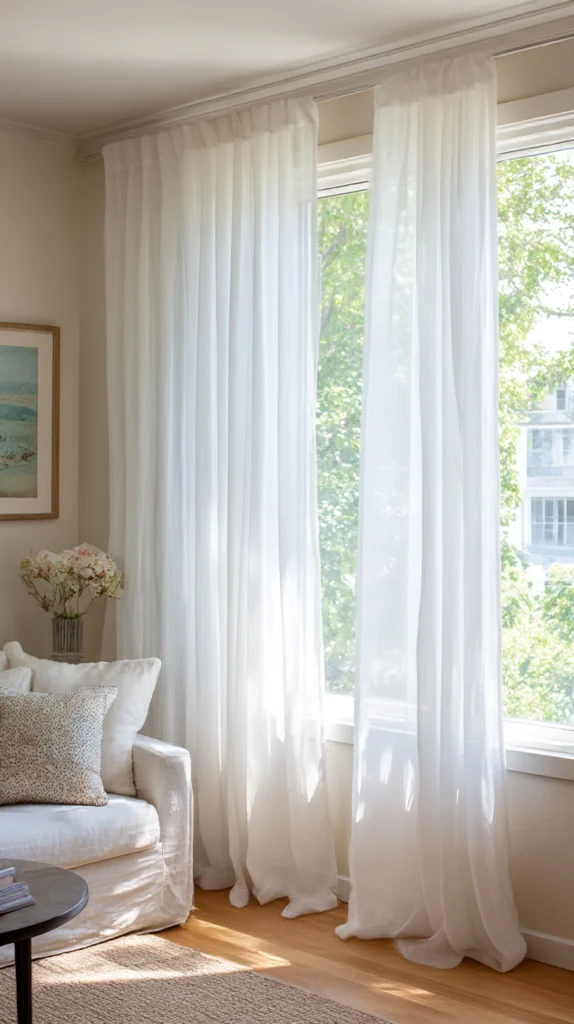
Replacing heavy lined curtains with sheer white or natural linen panels is the single highest-impact change available to a living room for summer. The room does not lose privacy — sheers obscure the interior from outside during daylight hours — but it gains a quality of light that thick curtains permanently suppress. Morning light through a sheer linen panel is one of the most pleasant things a living room can contain.
Sheer curtain panels in white or natural cost $15–$40 each. The same curtain pole and rings already in place serve both the winter and summer versions — only the panels change. Wash linen sheers before hanging to soften the fabric and remove the stiff, packaged quality that makes new curtains look unlived-in. Store the winter curtains folded in a breathable bag rather than a plastic one to prevent any mustiness developing over the months they are not in use.
Style tip: Hang the sheer panels higher than the top of the window frame — ideally from as close to the ceiling as the pole allows — and let them fall to the floor with a slight pool. The extra height makes the ceiling feel taller and the room feel larger, and a small pool of fabric on the floor is the detail that makes a curtain look generous rather than merely adequate.
2. The Natural Fibre Rug
Budget: $40 – $200
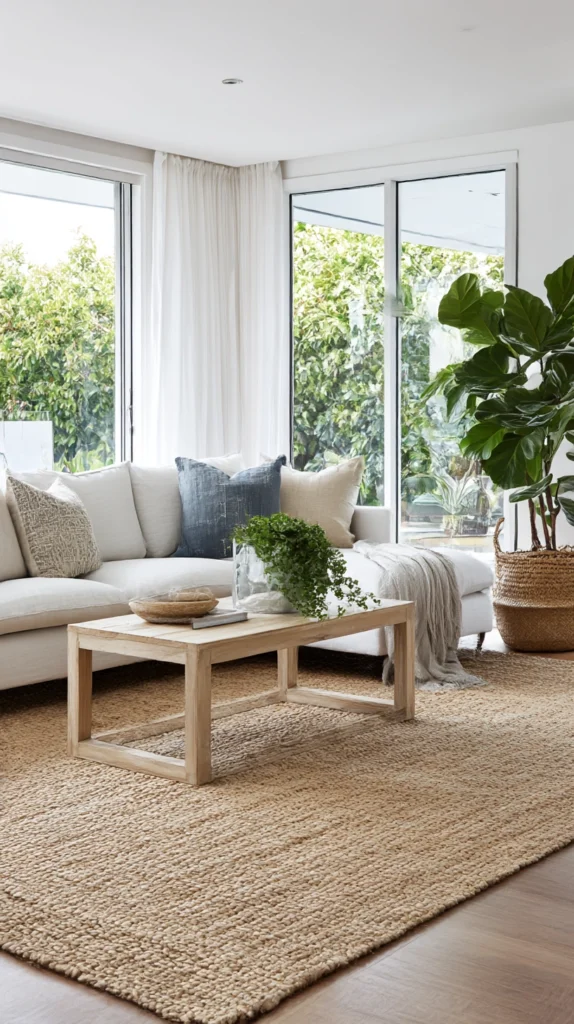
Swapping a dark, heavy, or patterned rug for one in natural fibre — jute, sisal, seagrass, or coir — changes the floor of a living room from its most anchoring element to its lightest. Natural fibre rugs in their undyed, natural tones read as ground, as sand, as something underfoot that is of the earth rather than imposed upon it, and they make everything placed on and around them feel more open and more summery by association.
A jute rug in a standard 160 by 230 centimetre size costs $40–$120. Seagrass and sisal versions run $60–$180 for the same size. Store the winter rug rolled and wrapped in breathable fabric — never plastic, which traps moisture — in a dry place. Vacuum natural fibre rugs rather than beating them and avoid saturating them with water when cleaning: natural fibres shrink and distort when soaked and the damage is permanent.
Style tip: Choose a rug size that is genuinely large enough for the seating arrangement — all four legs of every sofa and chair should sit on the rug, or at minimum the front two legs of each piece. A rug that is too small for the furniture it anchors makes the seating arrangement look unresolved and the room feel smaller rather than larger.
3. The White Linen Throw
Budget: $20 – $80
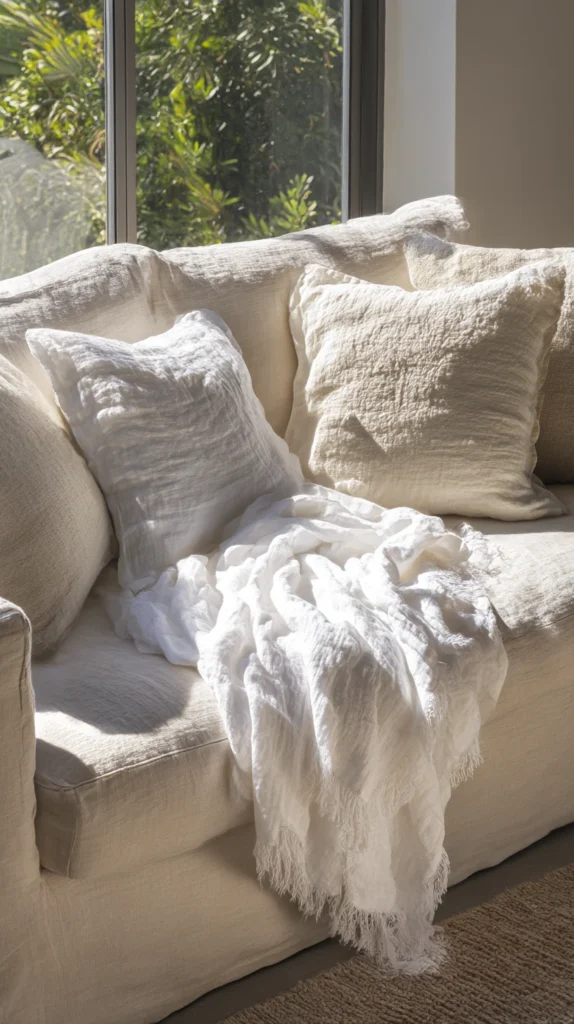
A white or cream linen throw draped across the sofa in place of the heavier knit or fleece versions that accumulate over winter costs almost nothing and changes the mood of the room immediately. Linen reads as summer — it has the slight crumple and the particular softness of fabric that has been washed many times — and a single throw in the right fabric transforms a sofa from a winter seat into a summer one.
A linen or linen-blend throw costs $20–$60. Washed linen, which has been pre-washed to remove the initial stiffness, drapes more naturally from the first use and looks considerably more lived-in than unwashed versions. Fold the throw in thirds lengthways and drape it diagonally across one arm and seat of the sofa rather than spreading it symmetrically across the back — a diagonal drape reads as casual and considered simultaneously in a way that a symmetrical arrangement rarely manages.
Style tip: Keep one throw per sofa and resist the accumulation of additional cushions and blankets that tends to gather during winter. A summer sofa with one good throw and two or three cushions reads as composed and deliberate. The same sofa with four throws and eight cushions reads as a surface that has not been edited, regardless of the quality of the individual pieces.
4. The Decluttered Surfaces
Budget: $0
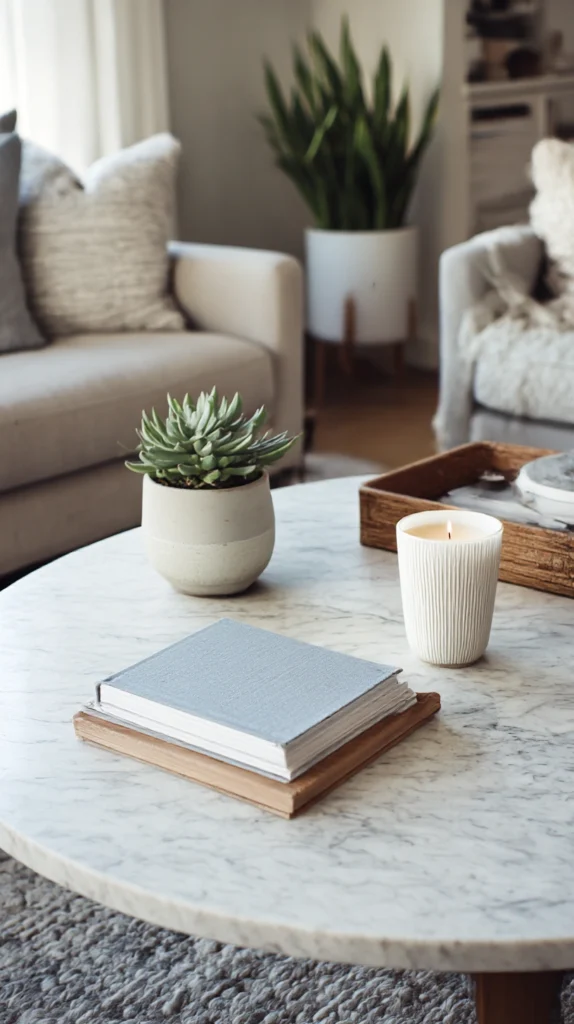
No purchase, no installation, and no specialist skill required — clearing the surfaces of a living room to a minimum is the most immediately effective summer transformation available and the one most consistently overlooked. Every object on a surface competes for the eye’s attention and adds visual weight to the room. Remove two-thirds of what is currently on the coffee table, the shelves, and the mantelpiece, and the room breathes in a way it cannot when every surface is fully occupied.
The objects removed do not need to be thrown away — a box in a cupboard returns them to circulation in autumn. Keep one considered group of objects per surface: a single vase with three stems, a candle and a small stack of books, one bowl. The restraint feels uncomfortable for about three days and then becomes impossible to give up.
Style tip: When editing a shelf or surface, remove everything first and replace only the pieces you actively choose to return rather than leaving everything in place and removing the obvious excess. Starting from empty produces a different and better result than starting from full — the eye makes different decisions when it is curating rather than editing.
5. The Botanical Print Gallery
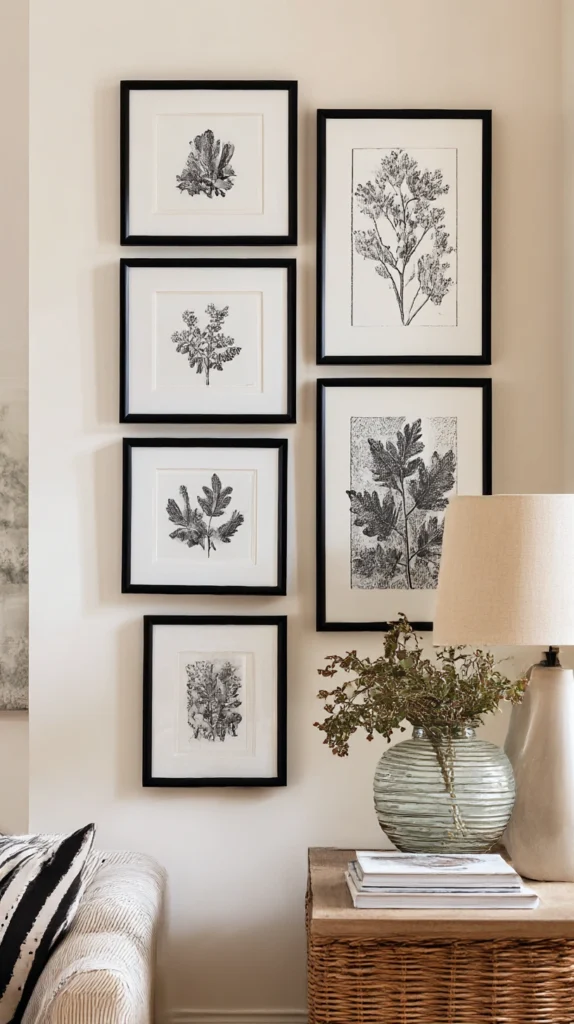
Budget: $15 – $60
A small gallery of botanical prints — fern fronds, citrus cross-sections, pressed flower illustrations — printed in black and white or in muted colour and hung in simple frames brings the visual language of the natural world into the living room without requiring a single plant to be kept alive. It is the most forgiving form of indoor greenery and, done well, one of the most elegant.
Botanical prints are available free from public domain archives online — many nineteenth-century natural history illustrations are out of copyright and print beautifully at A4 or A3 size. Printing at a local print shop costs $0.50–$2 per sheet. Simple white or natural wood frames cost $5–$15 each. Arrange three or four prints in a tight grid rather than spacing them widely — a tight grouping reads as a gallery, a wide arrangement reads as individual pictures that have not found their places yet.
Style tip: Choose prints that share a consistent botanical family or visual style rather than assembling a variety of unrelated illustrations. A gallery of four fern prints reads as a collection; four prints in four different botanical categories reads as the beginning of a collection that has not yet decided what it is.
6. The Indoor Plant Edit
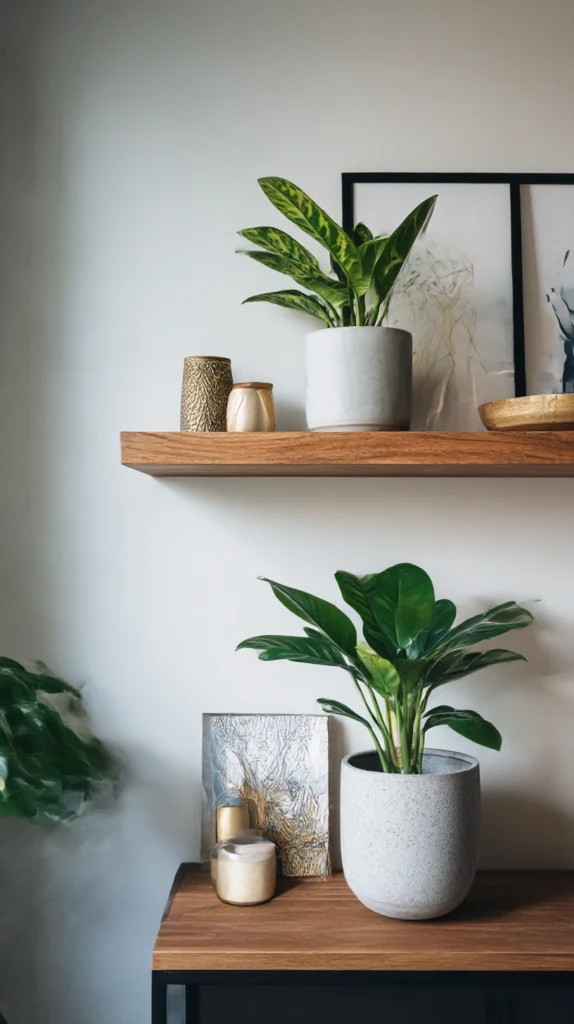
Budget: $15 – $80
Rather than adding more plants to the living room for summer, edit the existing ones — remove anything that is struggling, leggy, or no longer contributing to the space, and reposition the remaining plants so each one has room and light to perform. One healthy, well-positioned plant does more for a room than five plants in various states of distress arranged wherever they happen to fit.
If adding new plants for summer, choose those that suit the light conditions honestly — a plant placed in lower light than it requires will decline steadily regardless of how well it is watered and how much it improves the room in theory. A large-leafed plant in a simple pot costs $15–$50. A single large plant makes more visual impact than three small ones in the same space and requires a single pot rather than three, which is always a cleaner result.
Style tip: Elevate at least one plant in the room — on a stool, a side table, or a purpose-built plant stand — so not every plant sits at floor level. A room where all plants are at the same height reads as flat. One plant at eye level or above it gives the planting arrangement the vertical variation that makes it feel like a considered part of the room rather than an afterthought placed wherever floor space allowed.
7. The Summer Colour Palette Swap
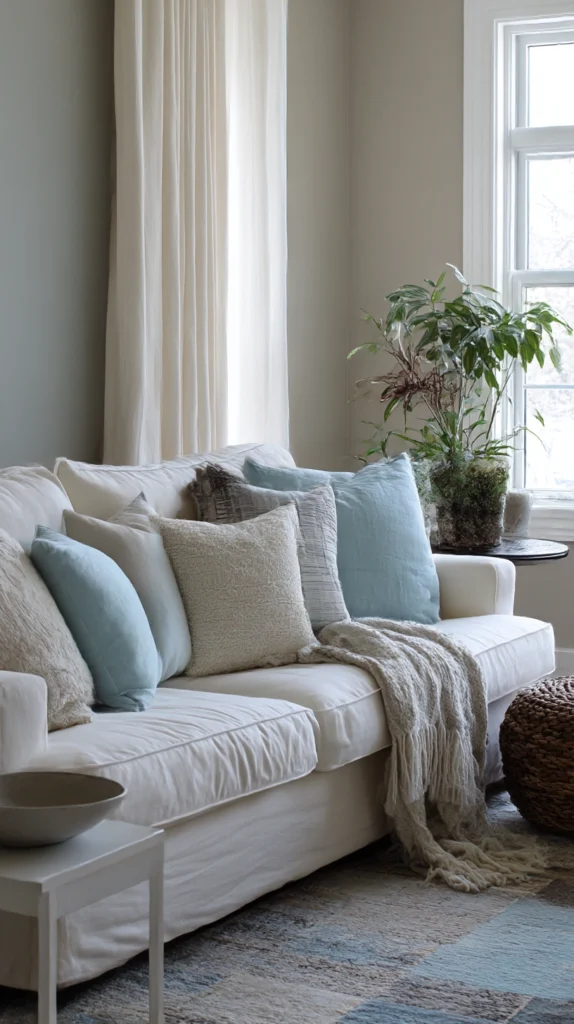
Budget: $0 – $40
Go through the cushions, throws, and small objects in the living room and remove anything in dark, warm, or heavy tones — deep reds, navies, charcoals, heavy ochres — replacing them with the lighter versions of the same family: soft blues, warm whites, sage greens, pale terracotta, bleached linen. The furniture stays. The architecture stays. The palette shifts and the room shifts with it.
If the existing cushion collection does not contain lighter versions, two or three new cushion covers in a summer palette cost $8–$20 each. Cushion cover sets in washed linen or cotton run $15–$40 for two. Store the winter palette in a vacuum storage bag — it compresses significantly and takes up a fraction of the cupboard space that loose cushions and throws require.
Style tip: Limit the summer palette to three tones maximum — a neutral base, one soft colour, and white or near-white as the lightening agent. A cushion arrangement in two soft greens and white reads as a palette; the same arrangement with five different colours reads as a collection of individual cushion choices that have not been considered as a group.
8. The Mirror Placement
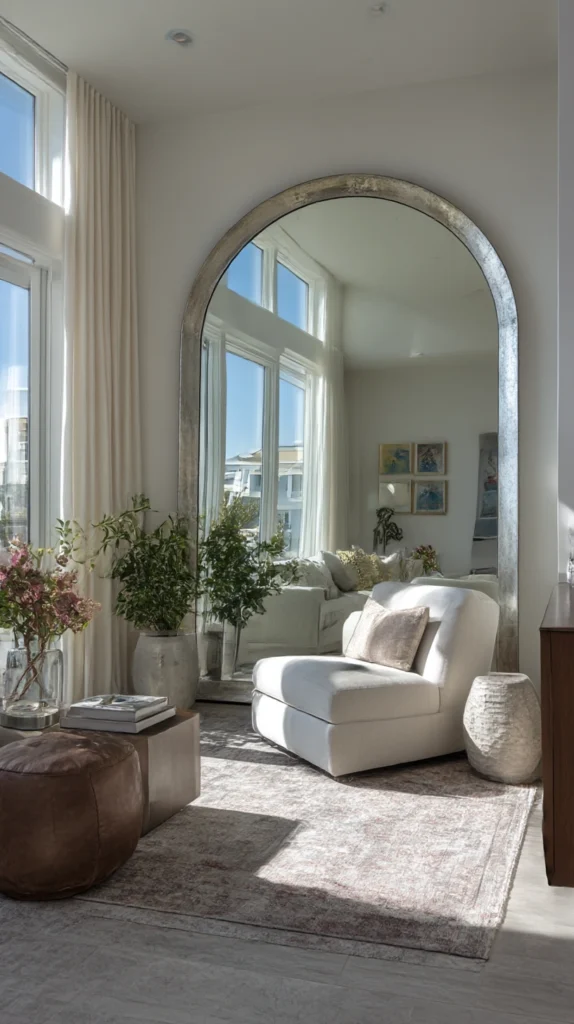
Budget: $20 – $150
A mirror placed opposite a window — or at an angle that catches the window’s light — doubles the natural light in a room without adding a single watt of artificial illumination. In summer, when the quality of the light coming through the windows is at its best, a mirror that reflects that light back into the room is one of the most effective and least expensive improvements available to a living space that does not receive enough sun.
A large mirror in a simple frame costs $20–$80 from secondhand shops, where mirrors are consistently undervalued and easy to find. A full-length mirror leaned against a wall rather than hung costs nothing in installation and can be repositioned until the optimal angle for light reflection is found. Clean the mirror before positioning it — a dusty mirror reflects a dusty version of the room and the cleaning makes a more visible difference than most people expect.
Style tip: Position the mirror so it reflects a view of the garden or the sky rather than another wall of the room. A mirror that reflects the outside world brings the outside in — it adds depth and natural imagery to the room in a way that a mirror reflecting the interior cannot. The position matters as much as the size.
9. The Linen Slipcover
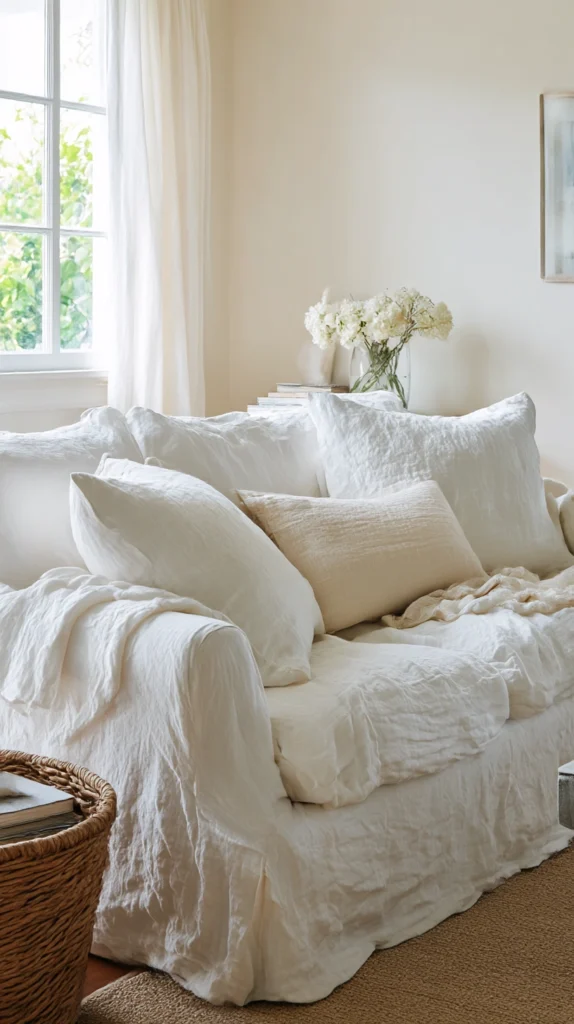
Budget: $40 – $200
A loose linen slipcover over a sofa or armchair — fitted loosely and deliberately rather than pulled tight — is the summer version of upholstery. It covers a dark or heavy-looking piece of furniture with something light, washable, and inherently summery, and it protects the original upholstery from the particular combination of sunscreen, sun, and summer use that fades and marks fabric more quickly than any other season’s wear.
Linen slipcovers for a standard sofa cost $60–$150. An armchair version runs $40–$80. Undyed or white versions work in almost any living room palette. Wash the slipcover before the first use to pre-shrink the fabric — a slipcover that fits correctly on the sofa before washing may be tight after it if linen pre-shrinking is not accounted for. A slipcover that is deliberately slightly large and drapes loosely looks intentional; one that is tight and pulling at the seams looks like it does not fit.
Style tip: Iron the slipcover while it is still slightly damp rather than fully dry. Linen ironed from damp achieves a pressed-but-relaxed finish that cannot be replicated once the fabric is bone dry and requires far less effort and heat to smooth. A linen slipcover with the slight crumple of well-ironed fabric looks expensive; one ironed from completely dry linen looks stiff and new.
10. The Summer Scent
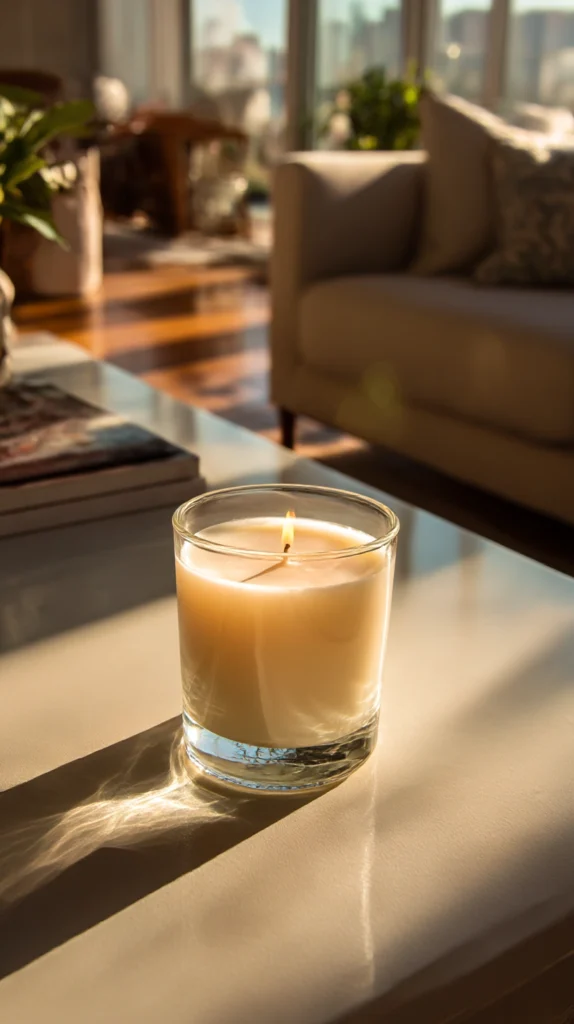
Budget: $10 – $50
A living room in summer has a different smell than one in winter — or it should. The heavy, warming scents of winter (amber, vanilla, cedar, smoke) belong to closed rooms and dark evenings. Summer calls for something lighter and more open: citrus, white flowers, fresh linen, cut grass, sea air. A single candle or a reed diffuser in the right scent shifts the atmosphere of a room in a way that is impossible to achieve visually.
A quality scented candle in a summer fragrance costs $10–$35. A reed diffuser runs $12–$40 and lasts six to eight weeks. Replace both the winter and summer scent at the same time as the other seasonal changes so the olfactory shift happens simultaneously with the visual one — a room that smells like winter but looks like summer feels inconsistent in a way that is hard to identify but immediately felt.
Style tip: Place the scent source where air movement will carry it — near a window that is regularly opened, or beside a fan if the room has one. A candle or diffuser in a still corner of the room scents that corner; one placed where air circulates scents the whole room within twenty minutes of lighting or of the window being opened.
11. The Bare Floor Moment
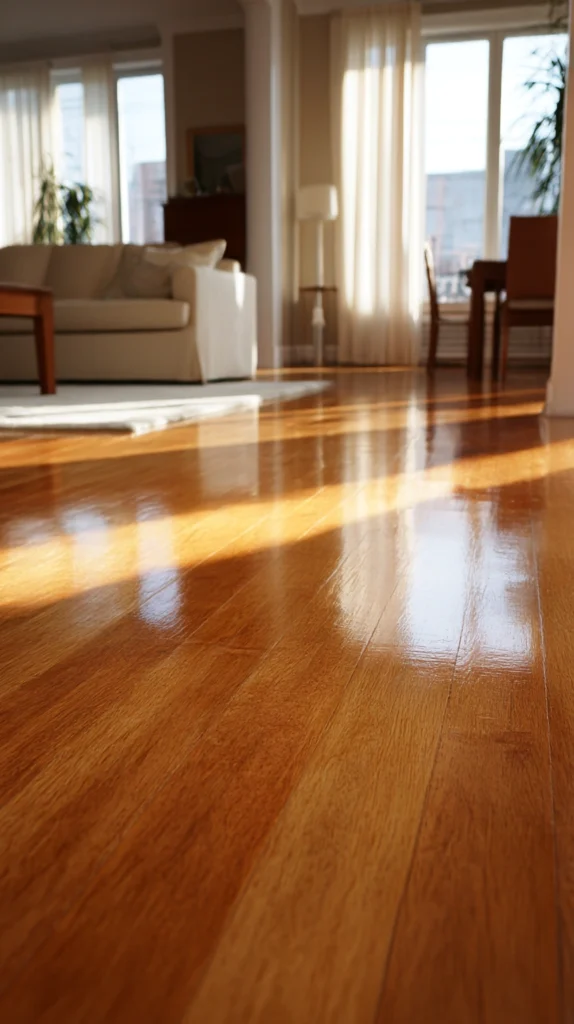
Budget: $0
Roll the rug up, move it to the edge of the room, and live with the bare floor for a week. In many living rooms, the floor beneath the rug — timber boards, stone flags, polished concrete, original tiles — is more beautiful than whatever is covering it and benefits from summer light in a way that a rug prevents. A bare floor in summer also keeps the room perceptibly cooler, which is its own argument.
The cost is zero and the reversibility is complete. Clean and polish the floor before unrolling the rug — the condition of the floor under a rug is usually the condition it was in when the rug went down, and a season of good maintenance makes the difference between a floor worth showing and one that explains why it was covered.
Style tip: If the floor is good but not perfect — gaps between boards, some discolouration, a stain that will not fully shift — lean into the imperfection rather than covering it back up. A floor with history reads as genuine in a way that a perfect floor rarely does, and in summer light the gaps and grain of old timber boards look like something to be pleased about rather than ashamed of.
12. The Ceiling Fan Addition
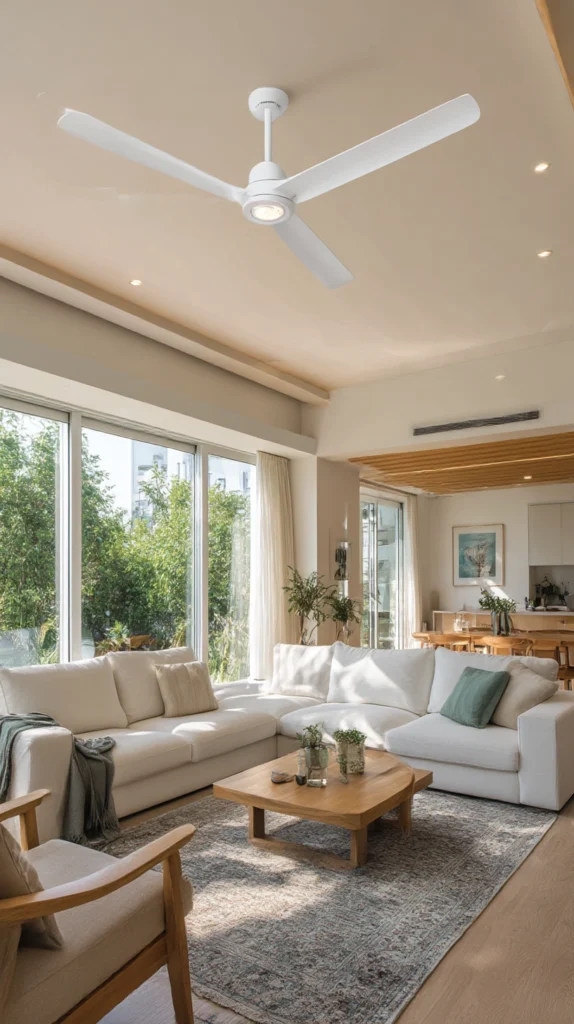
Budget: $40 – $200
A ceiling fan does not just cool a room — it changes the quality of the air in it. The slight movement of air that a ceiling fan produces makes a closed room feel open in a way that air conditioning, for all its effectiveness, never does. For a light and airy summer living room, a ceiling fan is the functional equivalent of an open window on a still day.
A basic ceiling fan with a light fitting costs $40–$100. A more design-conscious model runs $100–$200. Installation requires connecting to the existing ceiling light wiring — straightforward for anyone comfortable with basic electrical work, or a one-hour job for an electrician ($50–$80). Run the fan in reverse (clockwise from below) in summer to push air downward rather than drawing it up — most fans have a small switch on the motor housing that changes the blade direction.
Style tip: Choose a fan with blades in a light wood tone or white rather than dark timber. A dark-bladed fan against a white or pale ceiling reads as a heavy object in the upper portion of the room, which is the part of the room you want to feel most open. A pale blade against a pale ceiling almost disappears when stationary and becomes visible only as movement when spinning, which is exactly the quality a ceiling fan in a light room should have.
13. The Open Shelf Refresh
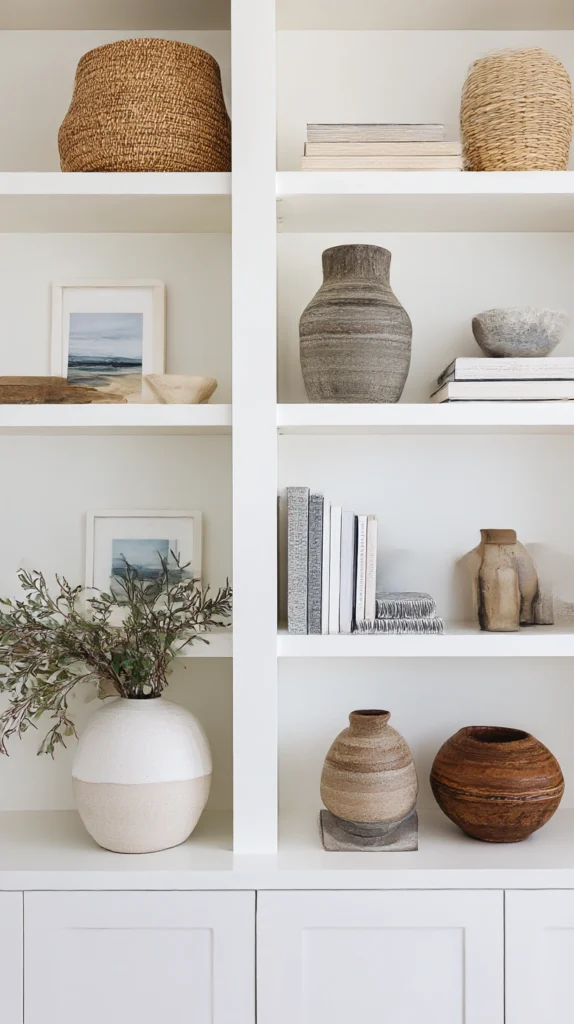
Budget: $10 – $50
Remove everything from one bookshelf or display shelf and re-style it for summer — fewer objects, more space between them, a small plant, a bowl of shells or smooth stones, books turned spine-inward for a uniform paper-page texture rather than a visual competition of colours and titles. A shelf that has been edited and considered reads as part of the room’s summer identity; one that has simply accumulated reads as storage.
The objects already in the room provide most of what is needed. A small plant costs $8–$20. A simple ceramic bowl or vessel runs $5–$15. The editing itself — the removal of two-thirds of what was there — costs nothing and is consistently the most effective part of the exercise. Books turned spine-inward is a divisive detail but a genuinely effective one for summer: the uniform pages read as texture rather than information and the shelf becomes calmer immediately.
Style tip: Leave at least one full shelf empty after the edit. An empty shelf is not a shelf that has not been filled — it is a deliberate pause in the arrangement that gives the eye somewhere to rest and makes every object on the surrounding shelves more visible and more considered. The empty shelf is doing as much work as the styled ones.
14. The Window Seat Moment
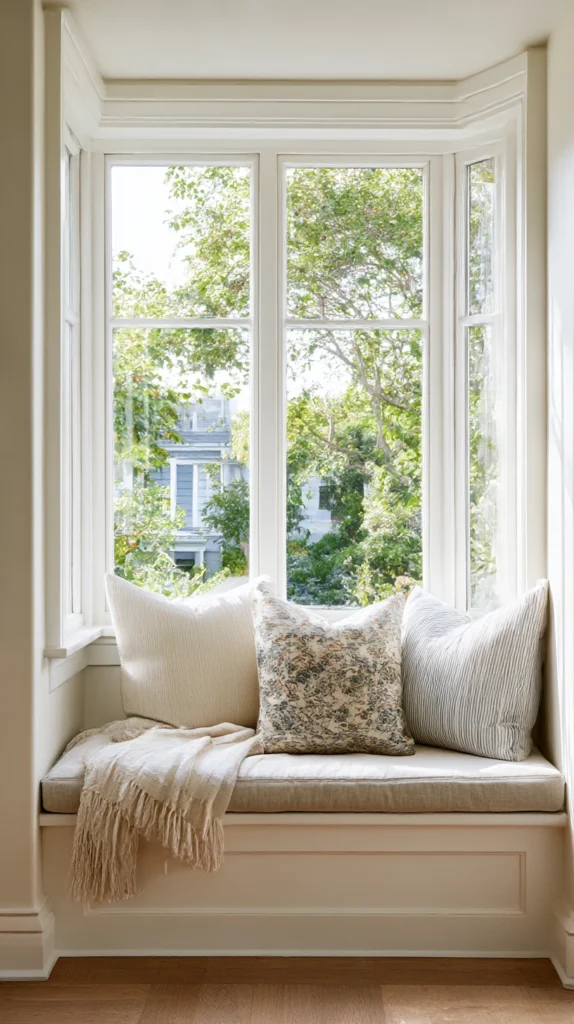
Budget: $20 – $80
If the living room has a bay window, a wide windowsill, or a low window with space beneath it, claim it as a window seat for summer — a cushion, a folded throw, a small side table or tray for a drink. The window seat is the most desirable spot in any summer room because it combines natural light with a view and a sense of enclosure, and creating one costs almost nothing beyond a cushion cut to fit the sill.
A custom foam cushion cut to a bay window size costs $20–$60 from most upholstery suppliers. A fitted cushion cover in outdoor or washable fabric runs $15–$30. Measure the sill depth before ordering — a cushion that overhangs the sill by more than 5 centimetres will not stay in place without a fixing, and a fixing on a rented property’s windowsill requires permission.
Style tip: Style the window seat as if it will definitely be used rather than as a display — a book, a blanket folded within reach, a glass of water on the sill edge. A window seat that looks as if someone might actually sit in it invites use; one that looks like a display does not. The difference is in the details that signal comfort rather than decoration.
15. The Evening Light Plan
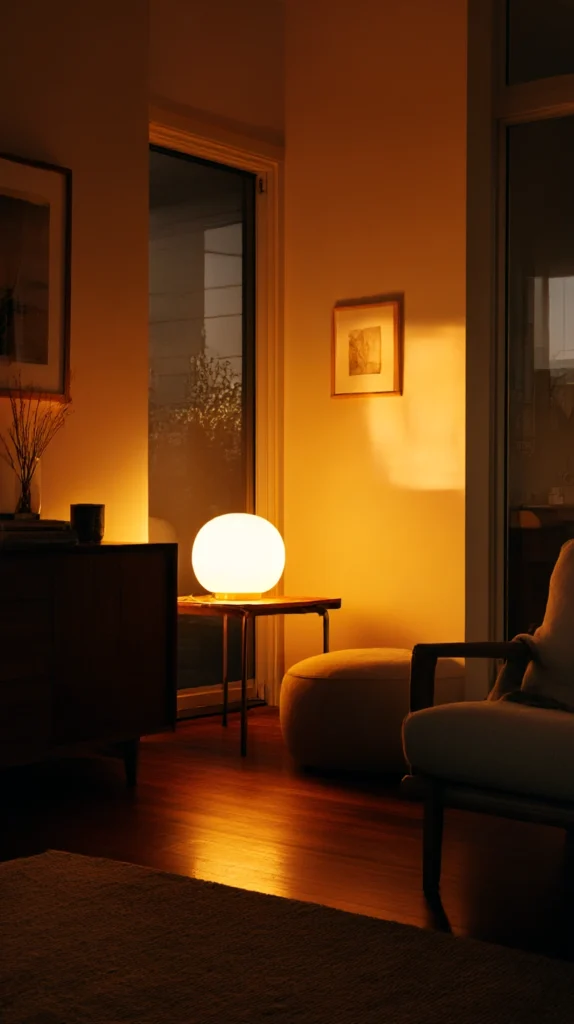
Budget: $20 – $80
A light and airy living room in summer is a daytime proposition; the evening version requires a different kind of consideration. Replace at least one overhead or floor lamp with something lower and warmer — a table lamp with a linen shade, a cluster of candles on the coffee table, a string of warm white lights along a shelf edge — so the transition from afternoon to evening does not return the room to its winter self the moment the sun goes down.
A table lamp with a linen shade costs $20–$60. A set of pillar candles runs $8–$20. Battery-powered warm white string lights for a shelf cost $8–$15. The principle is to keep the light source as low in the room as possible in the evening — overhead light flattens a room and makes it look like a room rather than a place to be in. Light at table height and below makes the same room feel like an entirely different, and considerably better, experience.
Style tip: Install a dimmer switch on any overhead light that does not already have one before the summer begins. A living room overhead light at full brightness is the fastest way to undo every other light and airy improvement made to the space. The same light at thirty percent becomes a useful ambient source rather than a flattening one, and the dimmer costs $10–$20 and twenty minutes to install.
The best summer living room is not the most designed one or the most expensively furnished one — it is the one where the light comes in freely, the air moves, the surfaces are clear enough to breathe, and the room feels genuinely different from its January self. Small changes, made with intention and made at the right moment in the season, do more than large ones made without thought.
Pick the ideas that suit the room and the budget, make the changes before the best weeks of summer arrive rather than during them, and then leave the room alone to be what it is. A light and airy living room in summer does not need to be worked at constantly. It needs to be set up correctly and then simply enjoyed.