15 Creative Ways to Transform Your Space into a Witchy Kitchen Retreat
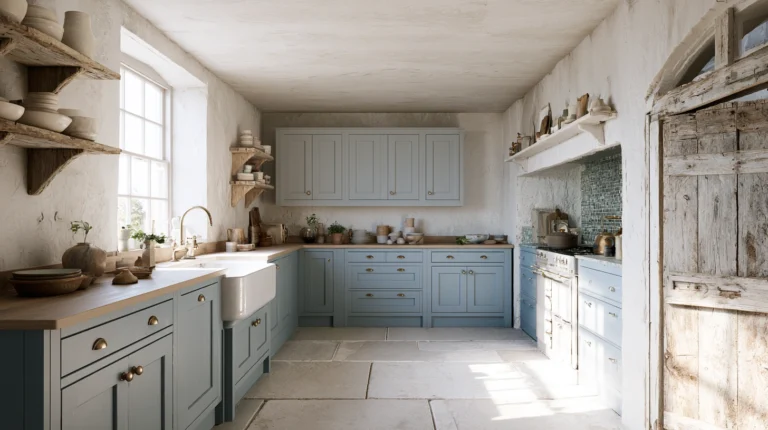
There is a particular kind of kitchen that feels like more than a place to cook. It smells of dried herbs and warming spices. The shelves hold glass jars of things with interesting labels, bundles of something hung from a hook, a mortar and pestle that looks genuinely used.
The light is warm and slightly dim, the surfaces are layered with objects that each have a reason to be there, and the overall effect is of a space that is simultaneously practical and deeply atmospheric. It does not require a gothic renovation or a theatrical budget. It requires only the decision to treat the kitchen as a space with character rather than simply a room with appliances.

The witchy kitchen aesthetic draws from herbalism, alchemy, folk craft, and the ancient tradition of the kitchen as the most powerful and most sacred room in the home — the place where raw ingredients are transformed into nourishment, where plants become medicine, and where the daily rituals of preparation and cooking carry the weight of intention. Every idea below is genuinely achievable, genuinely useful, and designed to make the kitchen feel as extraordinary as it deserves to.
1. The Hanging Herb Bundle Display
Budget: $10 – $60
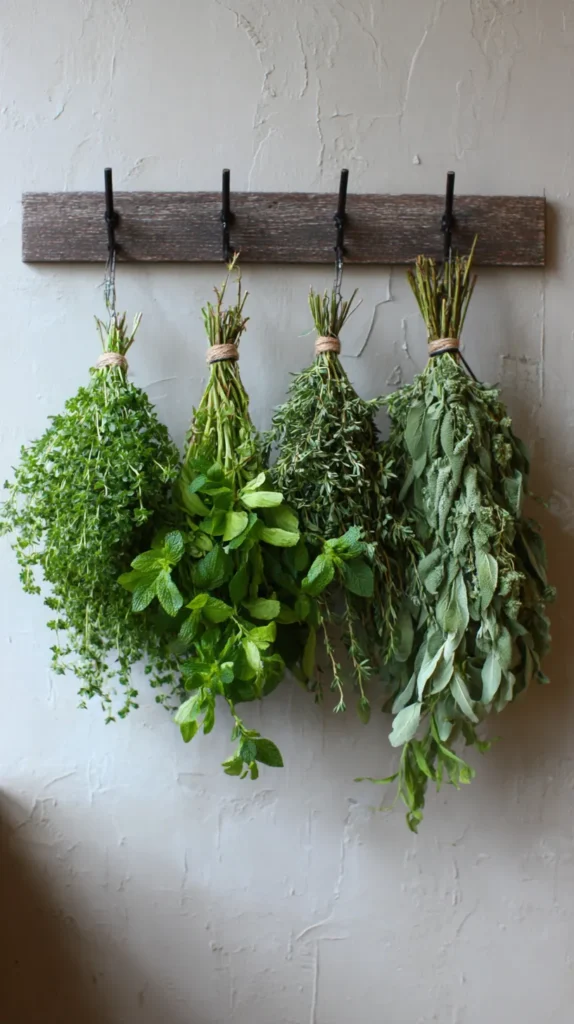
Bundles of dried herbs hung from a ceiling beam, a curtain rod mounted above the window, a wrought iron pot rack, or a series of small hooks along a shelf edge are the single most immediate transformation available to any kitchen. Lavender, rosemary, sage, thyme, chamomile, mugwort, yarrow, and dried roses hung in tied bunches bring fragrance, texture, and the most unmistakable visual signature of the witchy kitchen into the space from the moment they are installed. They also remain entirely functional — snipping from a hanging bundle for cooking or for a herbal tea is one of the small daily pleasures the kitchen offers.
Grow herbs in the garden or in pots and dry them by hanging upside down in a warm, dry room for two to three weeks before moving them to the kitchen display position. Purchased dried herb bundles cost $3–$15 each from herbalists, farmers markets, and online botanical suppliers. Bind with natural twine, raffia, or dried ribbon and vary the bundle sizes — some large and loosely tied, some small and tightly wrapped — for visual variety across the display.
Styling tip: Hang bundles at varying heights rather than at a uniform level. A display where every bundle hangs at exactly the same height reads as shop display; bundles at three or four different heights, some close to the ceiling and others hanging considerably lower, reads as a genuine accumulation of something gathered and useful.
2. The Apothecary Jar Spice Collection
Budget: $30 – $150
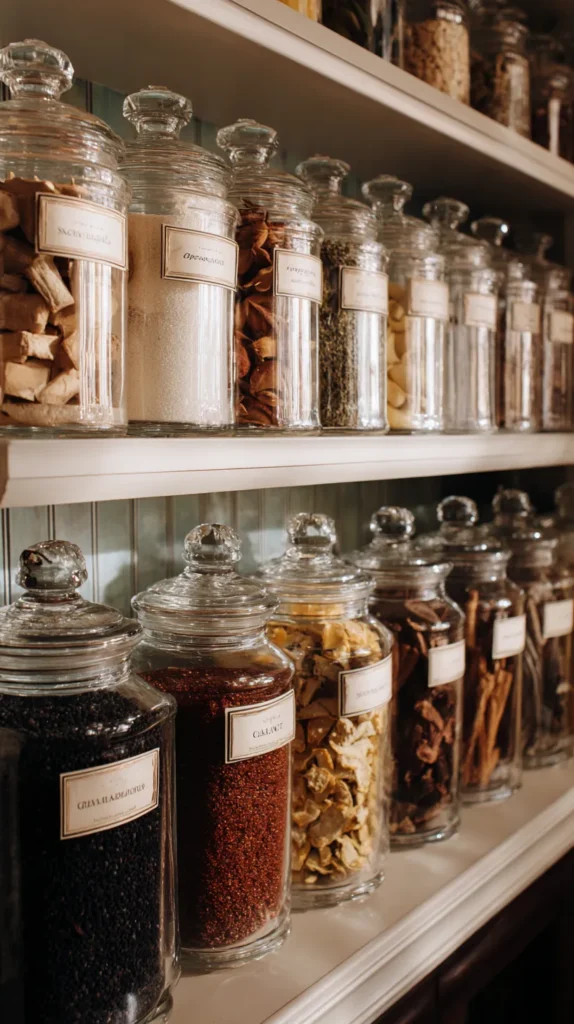
Replacing standard supermarket spice packets and plastic containers with a collection of matching apothecary-style glass jars — amber glass, clear glass with cork stoppers, dark glass with metal lids, swing-top preserving jars — creates the most immediate and most complete visual transformation available to a kitchen shelf or spice rack. The jars are identical in form; the contents provide all the variety. Labelled in handwritten ink, pressed botanical labels, or custom printed tags, a row of apothecary jars communicates the character of the witchy kitchen more completely than almost any other single element.
Amber glass apothecary jars cost $2–$8 each and protect contents from UV light that degrades essential oils and flavour compounds in spices and dried herbs. A set of twelve in matching sizes costs $20–$50. Transfer all existing spices and dried herbs into the jars and add anything missing — star anise, cardamom pods, dried lavender, black salt, smoked paprika, dried mushroom powder — that extends both the cooking range and the visual interest of the collection.
Styling tip: Arrange apothecary jars by height rather than alphabetically or by frequency of use. The tallest jars at the back, medium in the middle, and small at the front creates a display with visual depth that reads as a considered collection. Label every jar consistently — same ink, same label style, same font if printed — for a display that looks like a curated apothecary rather than a miscellaneous assortment of containers.
3. The Cast Iron Cookware Display
Budget: $80 – $400
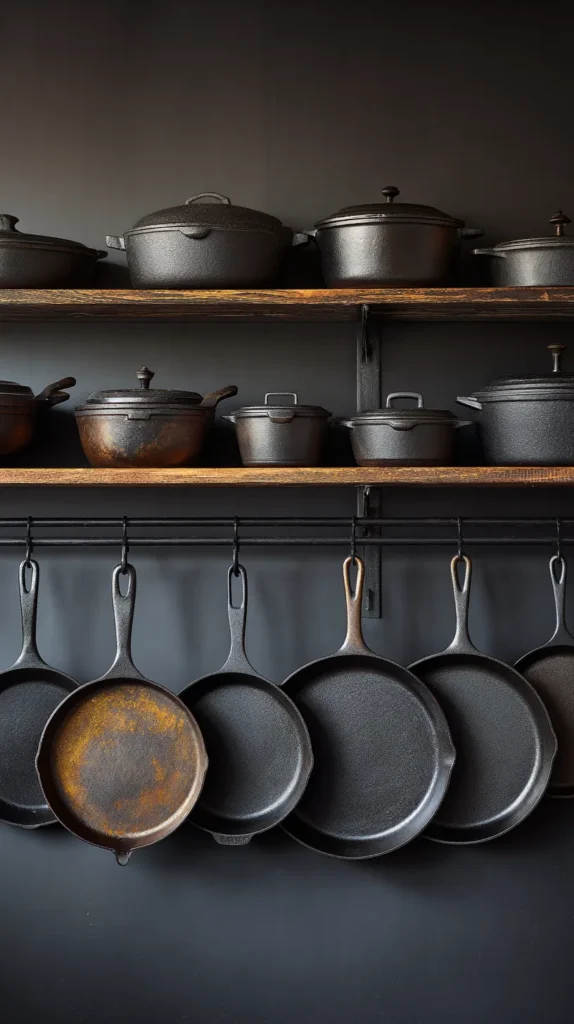
Cast iron cookware — skillets, Dutch ovens, griddle pans, cauldron-style pots — hung on a wall-mounted rack or stacked on open shelving has both the visual character and the material honesty that the witchy kitchen demands. The dark, seasoned surface of well-used cast iron, the weight and solidity of the pieces, and the association with ancient cooking traditions give cast iron cookware a presence in the kitchen that no modern non-stick pan can replicate. It is also, when properly maintained, the best cooking surface available at any price.
A cast iron Dutch oven in particular — the direct descendant of the cauldron — costs $40–$150 and becomes one of the most-used pieces of cookware in the kitchen while simultaneously being one of the most visually powerful. A wall-mounted pot rack costs $30–$80 and allows the full collection to be displayed horizontally across the wall rather than stored in a cabinet — the wall display communicates use, confidence, and the particular pleasure of cooking with serious equipment.
Styling tip: Season cast iron cookware regularly with a thin coat of flaxseed oil baked at high temperature — the seasoned surface develops a deep, almost lacquer-like black finish that is far more visually beautiful than unseasoned cast iron. The seasoning also improves with use — the more the cookware is used, the better it looks and the better it performs.
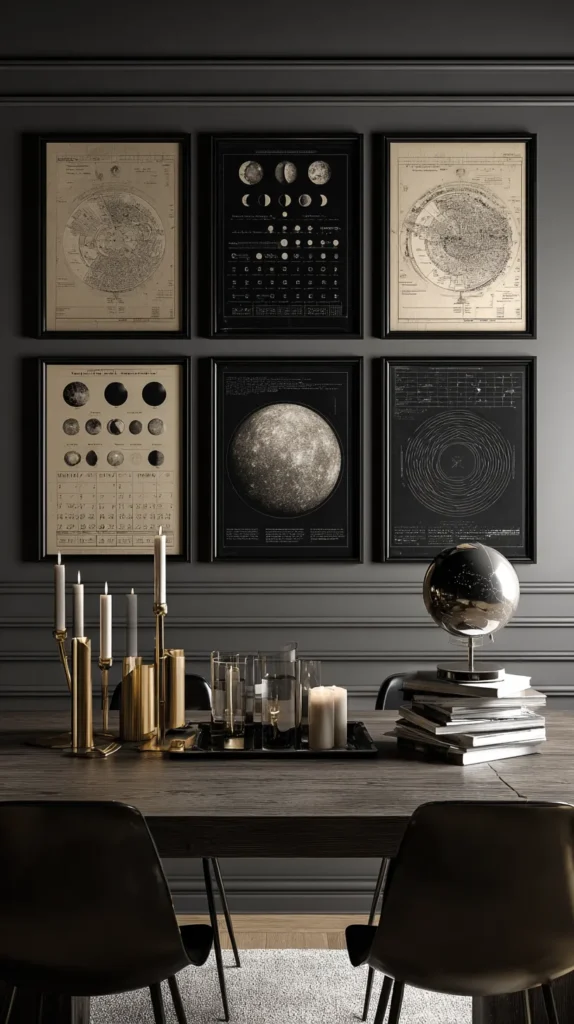
4. The Moonphase Calendar or Celestial Wall Display
Budget: $20 – $120
A moon phase calendar, a celestial map, a botanical zodiac print, or a series of astronomy prints hung on the kitchen wall brings the connection between kitchen craft and celestial cycles — a cornerstone of traditional herbalism and folk kitchen practice — into the visual language of the space. The moon has governed the timing of planting, harvesting, preserving, and brewing in agricultural and folk traditions for centuries, and a visible moon phase display in the kitchen is simultaneously a functional calendar and a piece of art.
Printed moon phase charts cost $5–$20 from independent artists on online marketplaces. Antique-style celestial maps in reproduction are available at $10–$40. A set of eight moon phase prints framed in matching dark frames creates a sophisticated wall display for under $60. Position them above the main work surface or above the shelf where herbs and botanical ingredients are stored — the proximity of the celestial reference to the plant material reinforces the connection between the two.
Styling tip: Frame celestial prints in dark timber or black metal frames with a generous white or cream mount — the dark frame suits the moody, atmospheric character of the witchy kitchen and gives the prints a gravitas that light or bright frames undermine. Keep the overall wall arrangement tight and close — prints hung with narrow gaps between frames read as a composed collection; the same prints with large gaps between them read as individual pieces without relationship to each other.
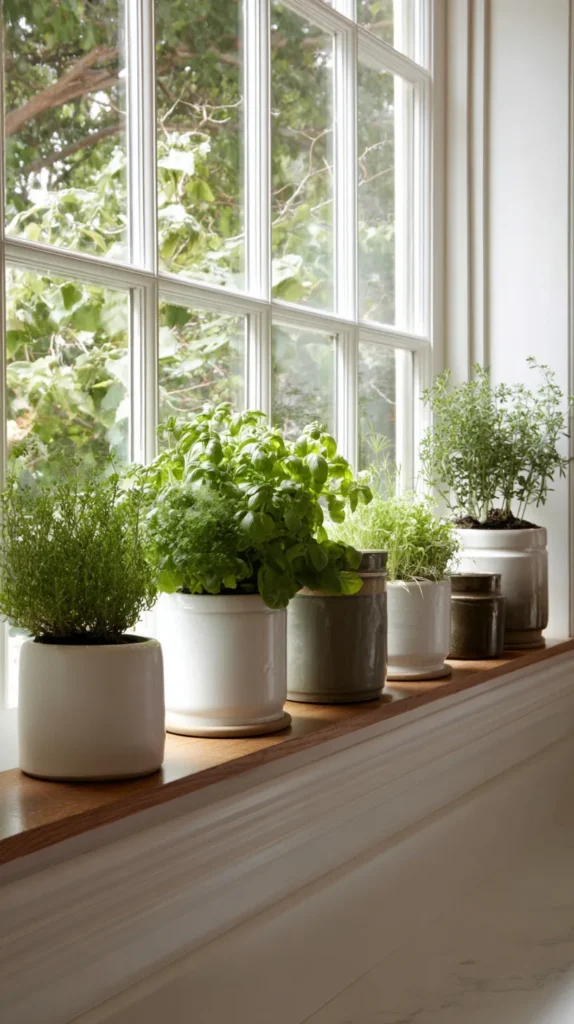
5. The Witch’s Windowsill Garden
Budget: $20 – $100
A deep kitchen windowsill planted with a curated collection of herbs and botanicals — particularly those with folkloric, medicinal, or magical associations — creates the most functional and the most atmospherically appropriate living element in a witchy kitchen. Rosemary for protection and memory, basil for abundance, lavender for calm, mugwort for dreams, lemon balm for happiness, thyme for courage, mint for clarity — each plant has a traditional story as well as a culinary use, and a windowsill that holds all of them is simultaneously a kitchen garden and a working botanical collection.
Plant each herb in a dedicated small pot — aged terracotta, dark glazed ceramic, or small stone-effect containers — and label with handwritten tags on small pieces of card tied with twine. The labels communicate intention and transform the functional herb collection into something with the character of a carefully maintained apothecary.
Styling tip: Vary the heights of the windowsill herb pots by placing some on small pieces of reclaimed brick, a folded piece of slate, or a small wooden block. Varying heights within a windowsill collection creates depth and visual interest that a flat row of identically-sized pots at the same level cannot achieve — and allows the plants behind to be seen clearly rather than being hidden behind those in front.
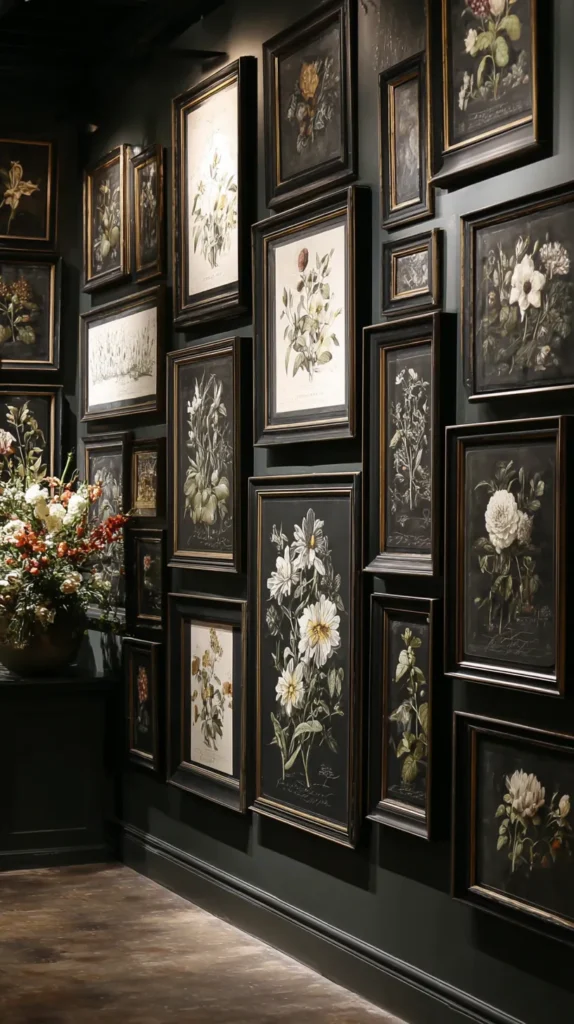
6. The Dark Botanical Print Collection
Budget: $30 – $200
A collection of dark, detailed botanical prints — Victorian-era engraved illustrations of medicinal plants, fungi studies, botanical cross-sections, herbarium drawings of poisonous plants, antique anatomy studies of plant structures — framed in dark or gilded frames creates a kitchen wall display of extraordinary scholarly beauty. The botanical print tradition has a direct lineage to the earliest herbalists and apothecaries, and dark botanical illustrations in a kitchen communicate exactly the kind of knowledge, craft, and careful attention to the natural world that the witchy kitchen aesthetic embodies.
Source prints from free digital archives — the Biodiversity Heritage Library, museum digital collections, and historic botanical atlas scans all provide high-resolution images of historic botanical illustrations available at no cost. Print on good quality paper at a local print shop for $3–$8 per print and frame in aged gold, dark wood, or black frames for a display that looks rare and considered for a very modest investment.
Styling tip: Include at least two or three prints of plants with specifically dark or ambiguous folkloric associations — belladonna, henbane, mandrake, wormwood, nightshade — among the more conventional culinary herb illustrations. The presence of the darker plants among the familiar ones gives the collection a complexity and a slightly unsettling depth that transforms it from a conventional botanical display into something with a genuinely witchy character.
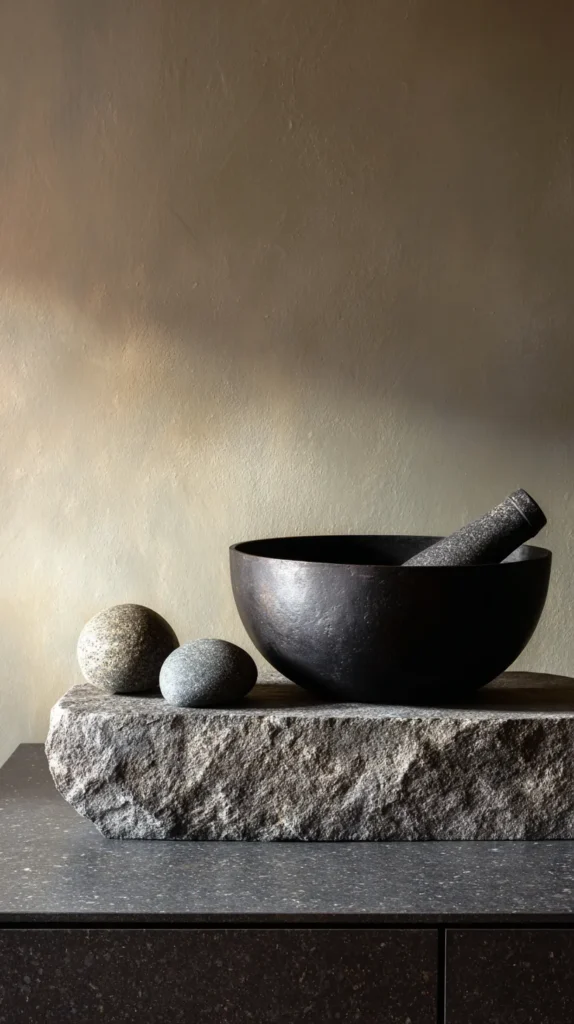
7. The Cauldron and Mortar Pestle Display
Budget: $30 – $200
A genuine cast iron cauldron — available from kitchen suppliers and specialist retailers in sizes from a small desktop version to a full cooking cauldron — and a stone, marble, or cast iron mortar and pestle displayed prominently on a kitchen surface are among the most symbolically resonant objects available to the witchy kitchen. Both are simultaneously functional and deeply iconic. The cauldron can serve as a vessel for small plants, a holder for kitchen tools, a display bowl for dried botanical material, or as cookware over a fire. The mortar and pestle is one of the most genuinely useful kitchen tools available.
A small cast iron cauldron costs $20–$60 and suits a shelf or countertop display. A large granite mortar and pestle costs $30–$80 and is by far the most effective tool for grinding whole spices, making pastes, and crushing dried herbs — far superior to an electric spice grinder for anything that benefits from the irregular, coarse grind that stone produces.
Styling tip: Use the cauldron as a living element in the kitchen display by planting it with a single dark-leafed plant — a black mondo grass, a dark-leafed basil variety, or a small hellebore — rather than using it purely as a decorative vessel. A planted cauldron bridges the gap between container, living thing, and symbolic object in a way that makes it the most characterful single element in the kitchen.
8. The Crystal and Stone Collection
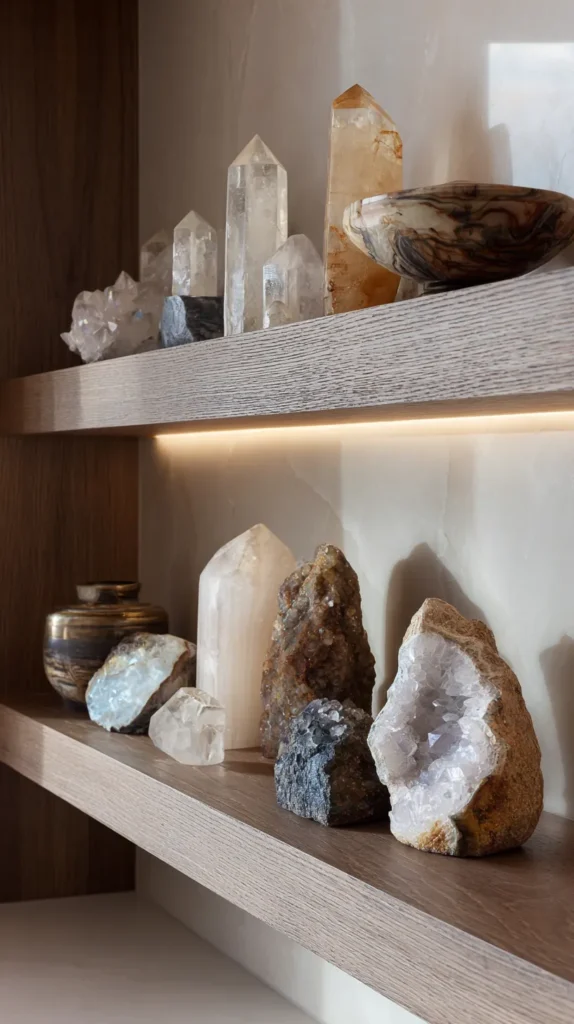
Budget: $20 – $150
A small collection of crystals and stones displayed on a kitchen shelf or windowsill — clear quartz, amethyst clusters, black tourmaline, citrine, obsidian, rose quartz — adds a mineral, geological quality to the kitchen atmosphere that plant material and ceramics alone cannot provide. The presence of raw crystal formations and polished stones in the kitchen connects the space to the earth in a literal, material way — these are objects formed over millions of years by geological processes, and their presence in the daily rituals of the kitchen carries a grounding quality that is as much physical as symbolic.
Source crystals from specialist mineral dealers, geological supply shops, and ethical crystal retailers rather than from mass-produced homeware collections — the quality and character of naturally formed specimens is significantly greater than commercially produced crystal decor pieces, and the price difference is often modest. A large amethyst cluster ($20–$60) as a focal point, surrounded by smaller tumbled stones and a few raw specimens, creates a mineral display of genuine visual richness.
Styling tip: Place the crystal collection on a surface where it receives some natural light — ideally on the windowsill with the herb garden or on a shelf that catches afternoon sun. Crystals in direct or indirect natural light refract and scatter light in a way that creates a subtly living quality in the display — the light changes as the sun moves, and the crystal collection appears to respond to it in a way that reads as genuinely alive rather than decorative.
9. The Spell Jar and Botanical Collection
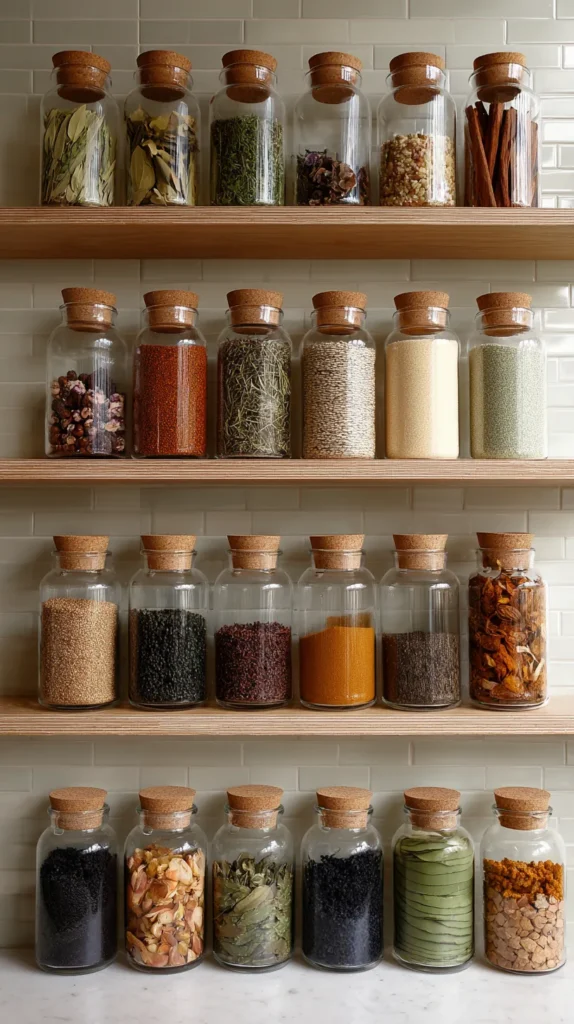
Budget: $15 – $80
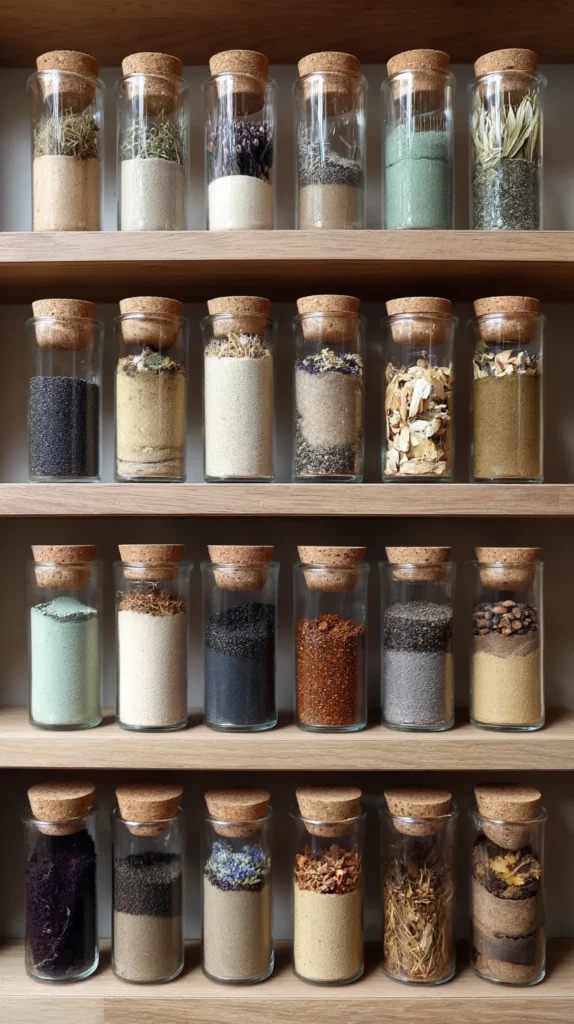
Small glass jars filled with layered dried botanicals, spices, salts, and herbs — spell jars in the folk tradition — displayed as a collection on a kitchen shelf create one of the most visually distinctive and most personally meaningful elements of the witchy kitchen. Each jar holds a specific combination of ingredients with a specific intention — a jar of rosemary, lavender, and chamomile for calm, a jar of bay leaf, cinnamon, and cloves for abundance, a jar of black salt, activated charcoal, and dried sage for protection — and the collection grows over time as new jars are created and older ones are refreshed.
Small clear glass jars with cork stoppers ($1–$3 each) show the layered ingredients beautifully. Seal completed jars with dark wax dripped over the cork — available from candle-making suppliers at $5–$10 per block — for a finished, apothecary-quality appearance that communicates care and intention in the construction of each jar.
Styling tip: Label spell jars with the intention rather than the ingredient list — a small tag that reads calm, protection, abundance, or clarity rather than the specific botanical contents communicates the purpose of the jar more powerfully and adds a layer of meaning to the collection that an ingredient list alone lacks.
10. The Dark and Moody Colour Palette
Budget: $20 – $200
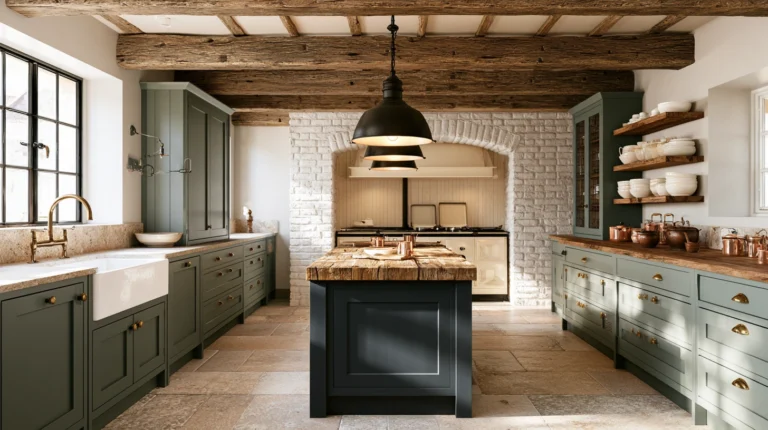
Painting the kitchen walls, cabinetry, or a single feature wall in a deep, dark colour — forest green, charcoal, deep plum, midnight navy, warm near-black — transforms the atmosphere of the space more completely than any accessory or display. The witchy kitchen is an intimate, layered, slightly mysterious space, and deep colour on the walls is the most powerful single tool available for creating that atmosphere. Against a dark wall, every plant, every glass jar, every piece of copper cookware, and every crystal appears more vivid and more considered than it would against a white or neutral background.
Chalky flat paint in deep tones costs $20–$40 per tin and creates a velvety, light-absorbing surface that suits the witchy aesthetic far better than a shiny or reflective finish. Forest green is the most universally successful choice for a kitchen — it references the botanical, herbal character of the space while creating a warm, enveloping atmosphere that white and neutral kitchens entirely lack.
Styling tip: Paint inside the open shelving alcoves in the same dark colour as the walls rather than leaving them white. A dark-backed open shelf makes every object placed on it — glass jars, ceramic pieces, copper pots, crystal clusters — appear more vivid, more intentional, and more beautiful than the same objects against a white shelf back. The dark background does the work of a display cabinet without the glass.
11. The Foraging and Botanical Reference Library
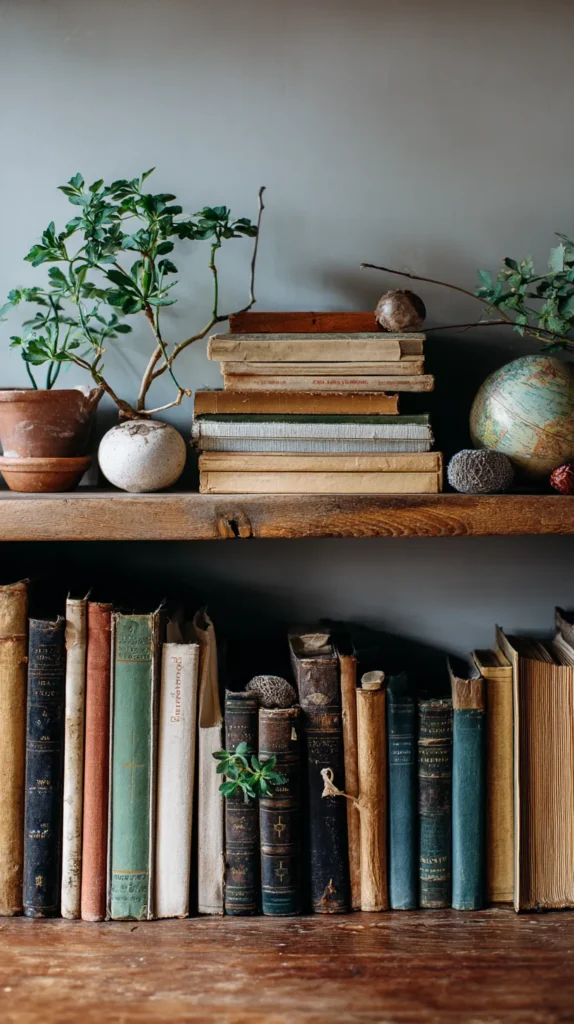
Budget: $30 – $150
A small collection of botanical reference books, foraging guides, herbalism texts, folk medicine histories, and culinary plant encyclopedias displayed on a dedicated kitchen shelf creates a working reference library that communicates genuine engagement with the plant world. These are not coffee table books — they are well-used, annotated, practical texts with broken spines and pressed leaves marking significant pages. The kitchen library is the intellectual counterpart to the physical botanical collection on the windowsill and the apothecary jars on the shelf.
A handful of genuinely useful botanical and foraging titles — Richard Mabey’s Flora Britannica, Jekka McVicar’s The Complete Herb Book, a quality foraging field guide for your region, Maude Grieve’s A Modern Herbal — costs $40–$100 for a collection that will be referenced regularly. Display spine-out with small objects tucked between them — a stone, a dried pod, a small glass vial — for a shelf arrangement that looks genuinely inhabited.
Styling tip: Store the kitchen botanical library at accessible working height — on a shelf beside the main prep surface rather than at ceiling height or in a remote corner of the kitchen. A reference book that is easy to reach in the middle of cooking gets used; one that requires a step ladder or a move to another room remains decorative. The working library is the most useful kind.
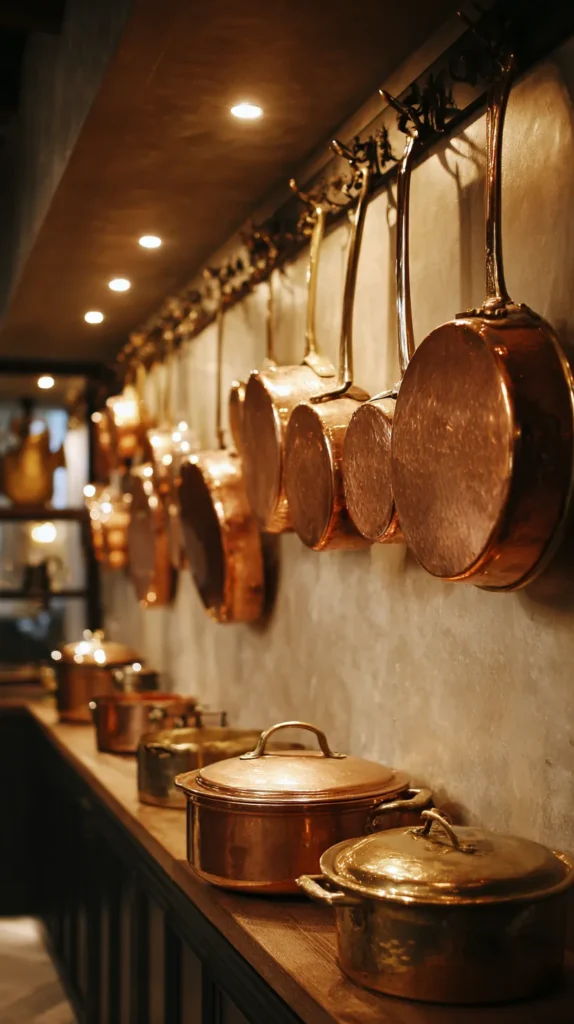
12. The Copper and Brass Cookware and Tool Collection
Budget: $60 – $400
Copper and brass cookware, utensils, and kitchen tools displayed on hooks, on a wall rack, or on open shelving bring a warm, alchemical quality to the kitchen that no other metal material can provide. The association between copper vessels and the alchemical and herbal traditions of early modern Europe is direct and genuine — copper was the preferred material of the apothecary, the herbalist, and the alchemist — and a collection of copper pans, brass measuring cups, and antique copper ladles in a modern kitchen carries that history in its surface.
Vintage and antique copper pots and pans from second-hand shops and antique markets cost $10–$60 per piece and have the patina and character that new copper cannot replicate for decades. Brass measuring cups, copper mixing bowls, and brass trivets are all available from specialist kitchen retailers and online marketplaces at modest cost. Display the collection on a wall-mounted pot rail at eye level where the warm, burnished surface catches the kitchen light throughout the day.
Styling tip: Clean copper with a paste of lemon juice and salt rather than with chemical cleaners — the natural acid removes tarnish and restores the warm colour of the metal without the harsh chemical smell that manufactured copper cleaners produce. A gently polished surface — warm and bright but not mirror-shiny — suits the witchy kitchen aesthetic far better than aggressively polished copper or heavily tarnished, dark pieces.
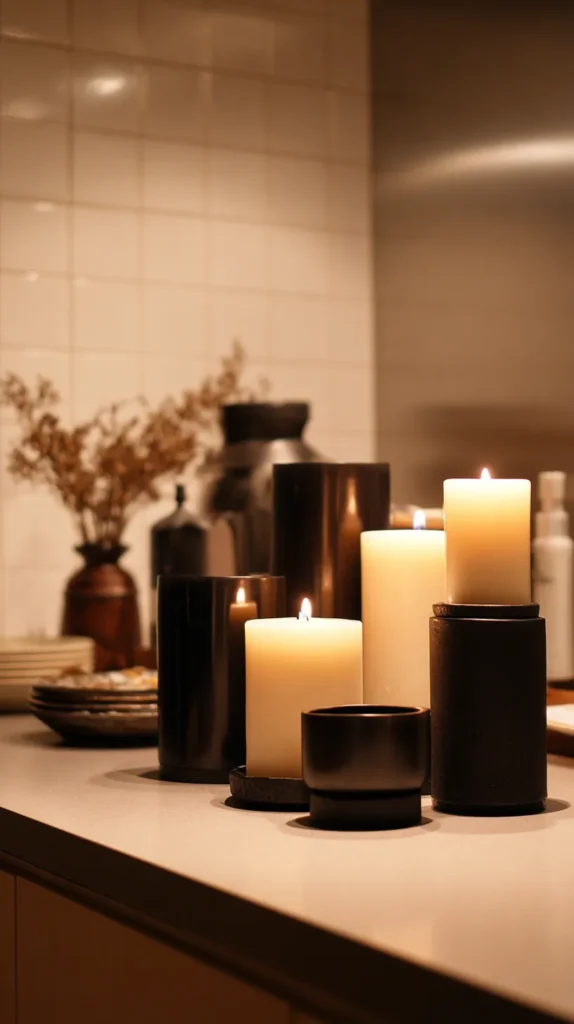
13. The Candle and Fire Element Display
Budget: $20 – $120
Candles in a witchy kitchen are not simply a light source — they are a statement of elemental presence and a visual commitment to the idea that artificial overhead lighting is not always the right atmosphere for a kitchen that takes itself seriously as a space for craft and intention. Beeswax pillar candles, dark taper candles in black iron holders, small votive candles in coloured glass, and large column candles on stone or cast iron stands — all placed with deliberate attention to composition and safety — create a quality of warm, moving light that changes the kitchen from a functional room into something genuinely atmospheric.
Dark taper candles in black, deep green, burgundy, and midnight blue suit the witchy kitchen palette far better than white or cream. Beeswax candles have a natural honey scent and burn significantly more cleanly and more slowly than paraffin alternatives. Beeswax pillar candles cost $8–$20 each and last many times longer than their paraffin equivalents — the cost per hour of burning is lower despite the higher purchase price.
Styling tip: Never leave kitchen candles burning unattended and keep them well away from hanging herbs, paper labels, linen, and any other combustible material. The witchy kitchen is an atmospheric space, not a fire risk — candles on a clear stone or ceramic surface, in secure holders, kept well away from anything flammable, burn safely and beautifully. Candles near hanging dried herbs are a genuine fire hazard regardless of how visually perfect the combination appears.
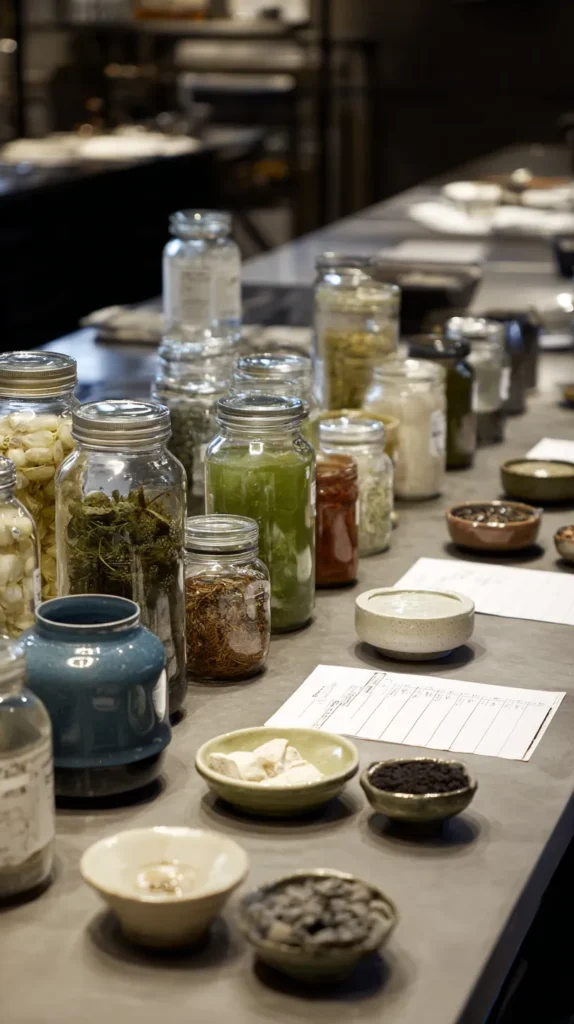
14. The Fermentation and Preserving Station
Budget: $40 – $200
A dedicated fermentation and preserving station — a section of kitchen counter or a side table fitted with large glass fermentation jars, swing-top bottles, ceramic crocks, muslin covers tied with twine, and jars of actively fermenting kombucha, sourdough starter, lacto-fermented vegetables, or herbal vinegars — creates the most genuinely alchemical display available to a kitchen. These are transformations happening in real time — sugar becoming alcohol, bacteria consuming lactose, wild yeasts consuming flour — and the working fermentation station communicates the kitchen’s identity as a place of genuine craft and ongoing process.
Large wide-mouth glass fermentation jars cost $8–$20 each. Ceramic fermenting crocks cost $30–$80 for a quality piece. Label each vessel with the contents and the date of starting in handwritten ink on kraft paper tags — the labels document the ongoing process and give the station the look and feel of an active apothecary laboratory rather than a static display.
Styling tip: Arrange the fermentation station so the most visually interesting vessels — the large kombucha jar with its SCOBY visible through the glass, the actively bubbling sourdough in its flour-dusted crock, the vivid purple of a red cabbage ferment — are at the front of the display at eye level. The living, changing quality of active fermentation is the most compelling element of the display — what is happening inside the jars is as interesting as the jars themselves, and positioning them where the process is visible makes the fermentation station a constantly changing feature of the kitchen.
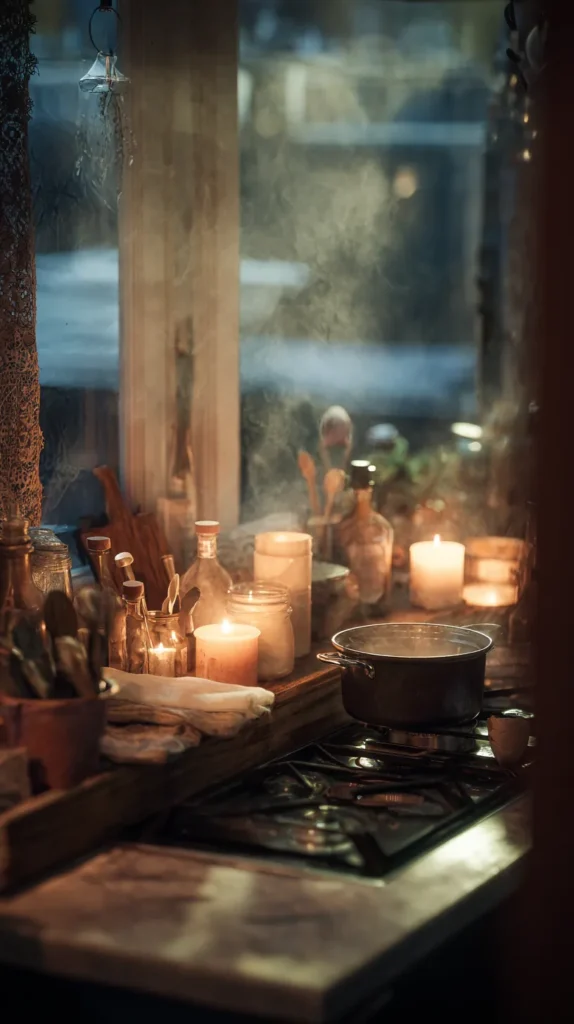
15. The Witchy Kitchen Scent Landscape
Budget: $20 – $100
The witchy kitchen is as much an olfactory experience as a visual one, and a deliberate scent landscape — created through a combination of burning dried herb bundles, simmering botanical potpourri on the stove, beeswax candles, essential oil diffusion, and the ambient fragrance of the hanging herb collection — creates an atmosphere that communicates the character of the space to every sense simultaneously. Scent is the most immediate and the most persistent sensory impression — a kitchen that smells of rosemary, beeswax, and woodsmoke creates a more powerful atmospheric impression than any visual element alone.
A stove-top potpourri — a small pan of water simmering with orange peel, cinnamon sticks, cloves, star anise, rosemary, and vanilla — costs pennies in ingredients and fills the kitchen with the most warm, complex, genuinely beautiful fragrance available. Dried sage bundles burned briefly to clear and scent the air cost $3–$8 from herbal suppliers. A beeswax taper candle burning in the corner of the kitchen creates a subtle honey scent that underpins every other fragrance in the space without competing with them.
Styling tip: Build the kitchen scent landscape in layers — a permanent ambient base from the hanging herb collection and the beeswax candles, a seasonal mid-layer from the stove-top potpourri or the specific herbs being used in today’s cooking, and an occasional top note from a burned sage bundle or a few drops of essential oil in a diffuser. The layering of scent at different intensities and permanencies creates a fragrance environment of genuine complexity that a single scent source alone cannot achieve.
The witchy kitchen is ultimately a kitchen that takes its own character seriously — that treats the daily practice of cooking, preserving, and plant tending as something worth surrounding with beauty, intention, and atmosphere. None of the ideas above require anything beyond the willingness to make deliberate choices about what occupies the space and why. Make those choices with care and the kitchen becomes what it was always capable of being — the most characterful and the most alive room in the home.