15 Seaside Cottage Kitchen Design Ideas That Bring the Coast Into Your Home
There is a specific quality that a seaside cottage kitchen possesses that no amount of coastal decoration can replicate in a kitchen that was not designed for it.
It is the quality of a room that was built for the practical pleasures of life near the water — where the counter is wide enough to shuck oysters and where someone might drop in from the beach still in their swimming clothes. Where the surfaces can handle salt air and wet hands and the general robust informality of a life that is being genuinely lived rather than carefully preserved.
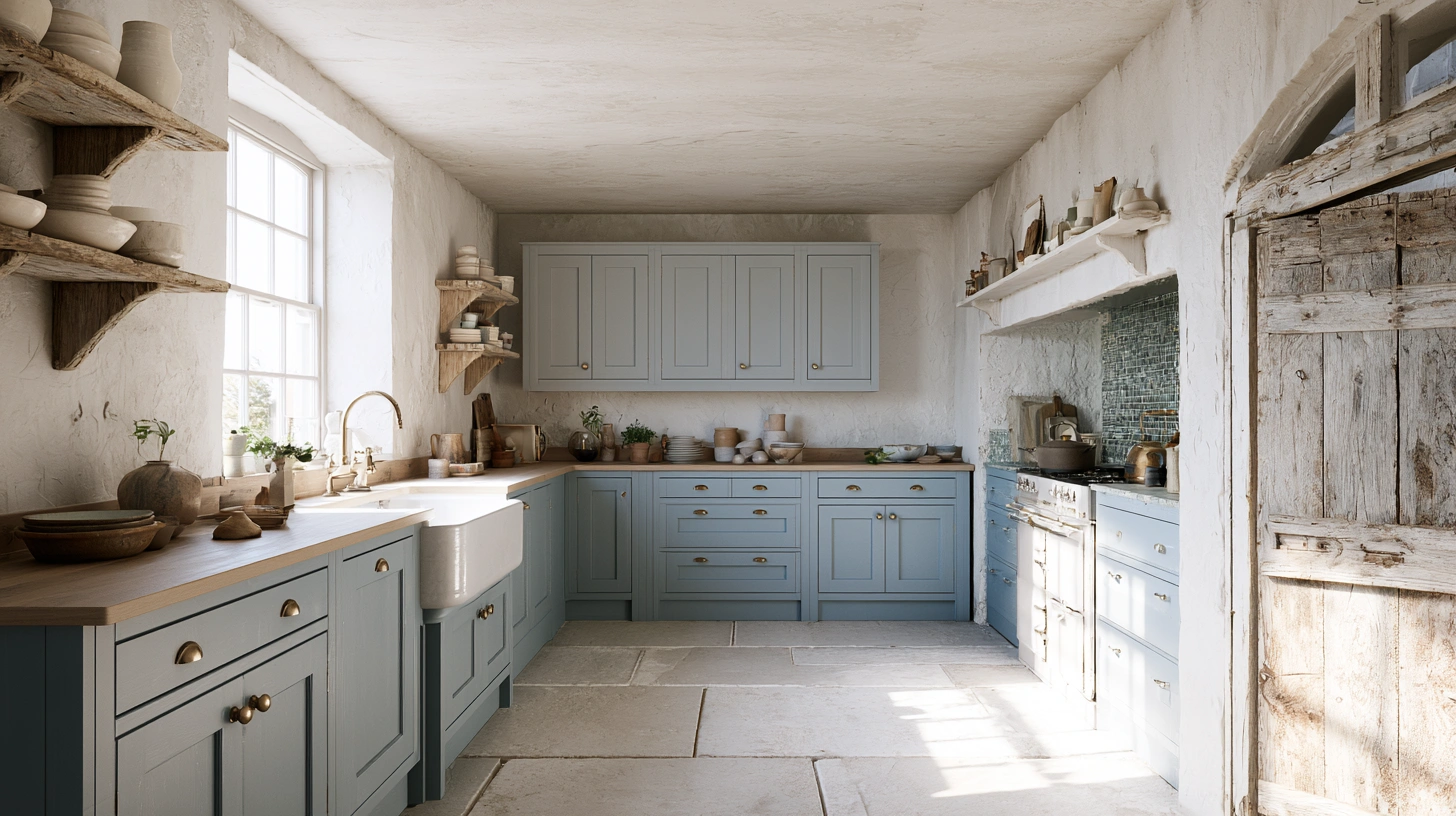
The seaside cottage kitchen is not a themed kitchen. It does not have seagulls on the tiles or anchors on the cabinet handles. It has the palette and the materials and the specific quality of light that references the coast through honest material choices rather than decorative signalling — the bleached timber, the chalky white ceramic, the pale stone, the faded blue that looks like it has been in the salt air for twenty years.
It is a kitchen that was designed for the specific pleasures of cooking and gathering in a room near the water, and those pleasures are communicated through every material decision rather than through any individual coastal reference.
Each idea below is a specific approach to one element of the seaside cottage kitchen. Each includes what you will need, what it will cost, and a practical tip to make it work as well as the coastal kitchen it is reaching for.
1. The Painted Shaker Cabinet in Coastal Blue
Budget: $200 – $2,000
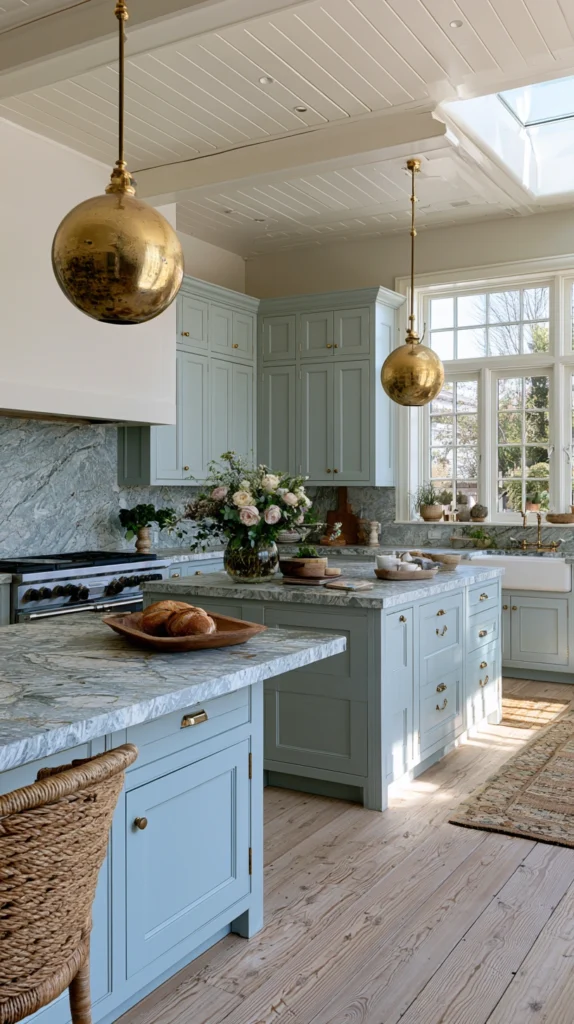
Shaker-style cabinet doors — the simple, recessed-panel door that is the most enduringly appropriate kitchen cabinet style for any informal, quality-focused interior — painted in a coastal blue creates the single most immediately effective transformation available to an existing kitchen. The coastal blue shaker cabinet is the kitchen element that most completely communicates the seaside cottage aesthetic from the moment of entering the room, and it does so through the quality of the colour and the honesty of the door style rather than through any decorative addition.
Painting existing kitchen cabinet doors in a quality chalk paint or kitchen-specific paint costs $40–$100 in paint for a standard kitchen. New shaker doors in an MDF or timber finish cost $30–$80 per door. A complete kitchen repaint by a professional runs $400–$1,200. Choose a blue with a grey undertone — the specific coastal blue that reads as the sea on an overcast day rather than a summer sky — rather than a bright, clear blue that reads as fresh rather than weathered.
Style tip: Paint the cabinet interiors in a lighter tone of the same blue rather than leaving them white. An open cabinet or a glass-fronted door that reveals a paler version of the external blue creates a tonal depth that reads as genuinely designed rather than painted. The interior colour is visible every time a door is opened and contributes to the kitchen’s colour narrative more than any other hidden surface.
2. The Reclaimed Timber Shelving
Budget: $60 – $300
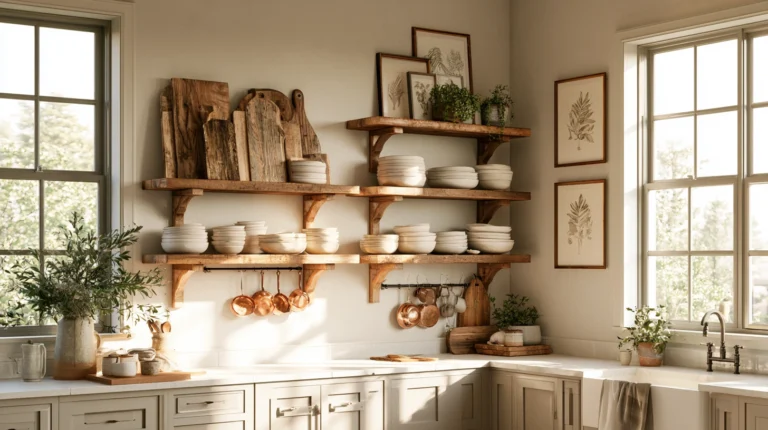
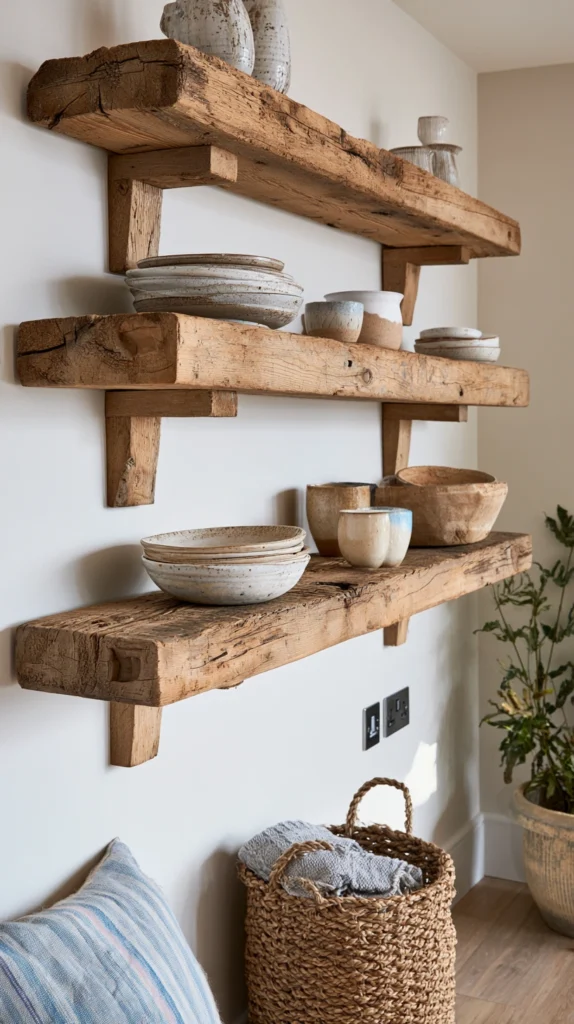
Open shelving in reclaimed timber — genuinely aged planks with their character intact, styled with a mix of functional and beautiful objects in a coastal material palette — replaces the closed upper cabinets that most kitchens default to with a display of the kitchen’s best objects. The reclaimed timber shelf reads as coastal because reclaimed timber is the material language of the coast — the driftwood aesthetic, the salvaged quality, the evidence of previous life in the surface of the wood.
Reclaimed scaffold planks cost $3–$8 each from salvage yards. A set of four shelves costs $12–$32 in timber plus $30–$60 in industrial steel brackets. A wall-mounting kit for the brackets runs $10–$20. Style the shelves with: white ceramic servingware, glass storage jars, a small plant or two, one or two coastal objects — a piece of coral, a large shell, a smooth beach stone. The styling is the investment that makes the shelf work; the reclaimed timber is the material that makes it coastal.
Style tip: Vary the bracket style from shelf to shelf — thick cast iron L-brackets for the lowest shelf, thinner hairpin brackets for the upper shelves — rather than using identical brackets throughout. The varied bracket creates the impression of shelves installed over time rather than a single installation, which is the accumulated quality that reclaimed timber shelving should communicate.
3. The Butcher Block or Timber Worktop
Budget: $200 – $1,000
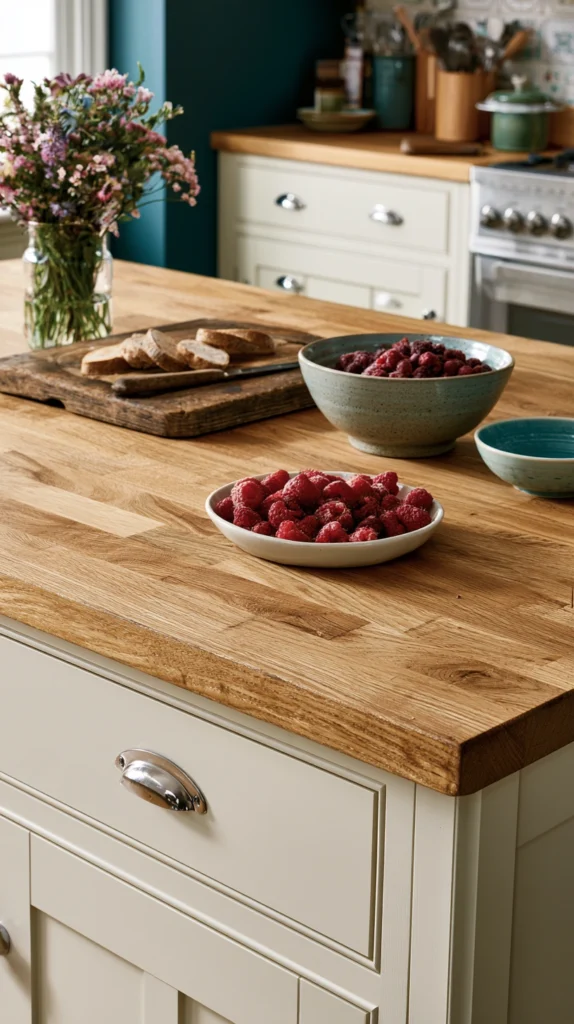
A timber worktop — in solid oak, iroko, walnut, or the classic end-grain butcher block format — brings the warmth and the material honesty of natural wood into the kitchen at the surface most directly and most frequently touched. The timber worktop references the working table of the seaside cottage — the surface where fish was prepared, where bread was made, where the practical business of feeding a household near the water was conducted — and it communicates that quality of genuine use in a way that polished stone or laminate never quite manages.
A solid oak worktop of 3 metres in length costs $150–$400. A walnut version runs $250–$600. An iroko timber worktop — the choice that most specifically references tropical coastal kitchens — costs $200–$500. Oil the timber worktop with a food-safe linseed or tung oil before installation and monthly thereafter — the oiled surface is the maintenance practice that keeps the timber beautiful through the sustained contact with water, food, and daily use that a kitchen worktop receives.
Style tip: Install the timber worktop beside rather than around the sink position — timber immediately around an undermount or butler sink deteriorates at the joint between the timber and the sink if the junction is not perfectly sealed. A stone or ceramic tile section around the sink with timber on the adjacent run provides the warmth of timber at the most visible worktop position while protecting the material from the water damage that the sink zone inevitably produces.
4. The Butler Sink
Budget: $150 – $600
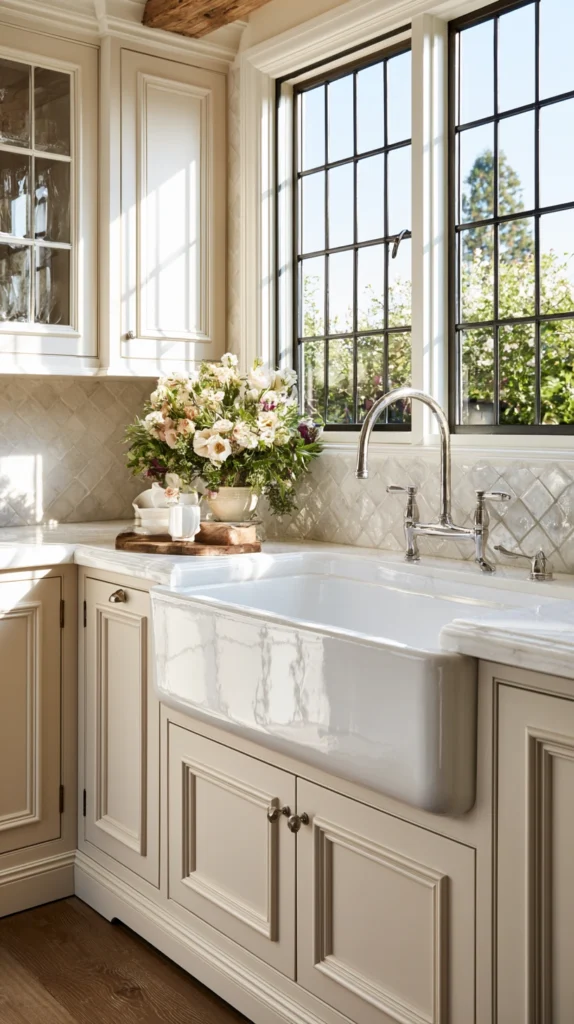
A butler sink — the deep, single-basin, apron-front white ceramic sink of the Victorian kitchen, also called a Belfast sink or a farmhouse sink — is the kitchen element that most specifically communicates the working quality of the seaside cottage. The butler sink was designed for the genuine work of a kitchen that was used seriously, and its depth, its ceramic surface, and its specific form have a quality of honest utility that communicates the seaside cottage aesthetic more directly than any decorative choice.
A standard butler sink in white ceramic costs $150–$350. A larger version of 90 centimetres runs $250–$600. A period-style mixer tap in brushed nickel, aged brass, or chrome to complement the butler sink costs $80–$250. The butler sink requires a specific cabinet configuration — the apron-front of the sink must be visible below the worktop level, which means the sink cabinet must be designed without a door panel in front of the sink apron.
Style tip: Pair the butler sink with a wooden draining board — a length of teak or oak cut to sit beside the sink at the correct slope for drainage — rather than a conventional stainless or ceramic draining rack. The wooden draining board beside a ceramic butler sink is the material pairing that most completely communicates the seaside cottage kitchen working aesthetic and that costs less than many contemporary draining rack alternatives.
5. The Whitewashed or Limewashed Wall
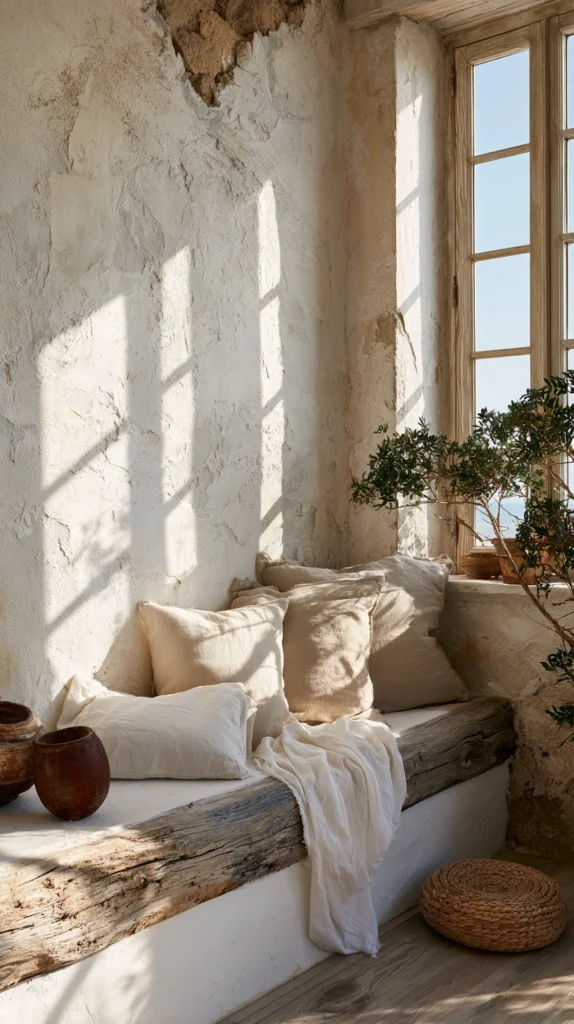
Budget: $30 – $150
Walls finished in a limewash or a whitewash — the specific quality of white that is not flat or even but slightly varied, slightly aged, slightly translucent — create the kitchen backdrop that most references the whitewashed walls of coastal cottage architecture. Limewash is not standard white paint. It is a calcium hydroxide-based finish that absorbs into the plaster and produces a surface of genuine depth that flat emulsion cannot replicate, and in a kitchen with coastal blue cabinets and natural timber, the limewashed wall provides exactly the quality of old white that the palette requires.
Limewash paint costs $20–$40 per litre — a standard kitchen requires two to three litres. Chalk paint in a white or off-white tone costs $25–$50 per tin. A white emulsion with a small amount of raw umber mixed in to warm and age the tone costs $15–$30. Apply with a dry brush rather than a roller — the brushed application creates the characteristic texture of limewash that a roller application, however slowly worked, cannot reproduce.
Style tip: Apply the limewash in two or three thin coats rather than one heavy one, allowing each coat to dry completely before the next. The multi-coat application creates the layered quality of a wall that has been repeatedly whitewashed over many years — the depth within the finish — that a single thick coat cannot achieve regardless of how it is applied.
6. The Sea Glass and Pebble Tile Splashback
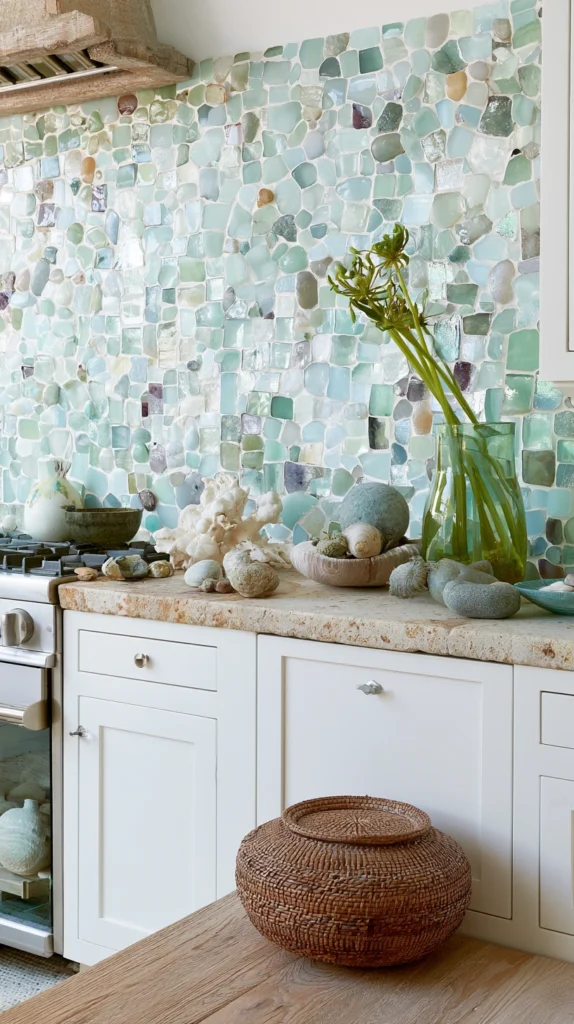
Budget: $80 – $400
A kitchen splashback in sea glass mosaic tiles — the pale aqua, frosted clear, and soft green-grey that references genuine sea glass — creates the most materially specific coastal splashback available to a kitchen. Sea glass mosaic tiles combine the practical function of a waterproof splashback with the specific visual quality of glass tumbled to frosted translucency by years of wave action, and in a coastal blue kitchen they provide a surface of considerable beauty at the functional position behind the hob and the sink.
Sea glass mosaic tiles in a standard 30 by 30 centimetre sheet cost $15–$40 per sheet. A standard kitchen splashback of 60 by 60 centimetres requires four sheets — $60–$160. A full-width splashback behind the hob and sink runs $120–$400. Install with a white waterproof adhesive rather than a grey adhesive — the translucency of sea glass tiles allows the adhesive colour to influence the tile colour, and grey adhesive shifts the pale aqua toward a muddier tone.
Style tip: Use a pale grout in a white or cream tone rather than the grey that standard tile installation typically uses. Pale grout between sea glass tiles allows each tile to read at its full clarity; dark grout reads as a grid that interrupts the continuous surface quality of the mosaic. The grout colour is the installation decision that most determines whether the sea glass splashback reads as the coastal material it is or as a tiled surface in coastal colours.
7. The Driftwood Island or Breakfast Bar
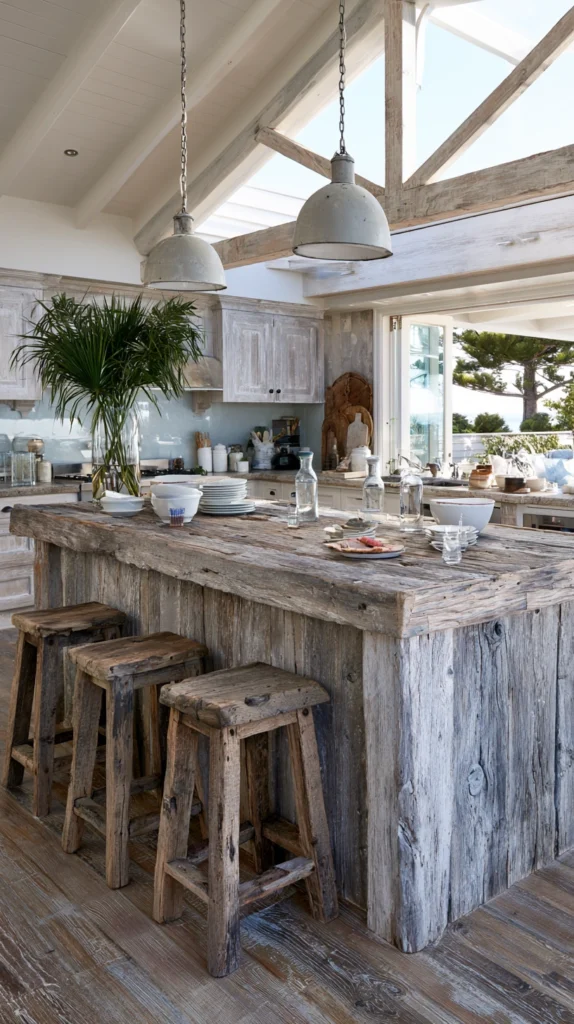
Budget: $200 – $1,500
A kitchen island with a driftwood-effect timber surface — either a genuinely weathered plank salvaged from a coastal source, or a new timber treated with a silver-grey weathering stain — creates the kitchen’s most social element in the material that most specifically references the coast. The island surface at which people stand to drink coffee, shell prawns, or talk to the cook while the meal is being prepared is the most used flat surface in the kitchen, and a driftwood-effect island provides the warmth and the material quality of the coastal aesthetic at the point of closest and most frequent human contact.
A freestanding kitchen island with a reclaimed or weathered timber top costs $200–$600. A bespoke island with a driftwood-effect oak top runs $500–$1,500. A DIY island from a secondhand kitchen cabinet with a new timber top costs $80–$300 in materials. The driftwood timber surface requires a penetrating water-resistant oil finish rather than a surface lacquer — a lacquered surface on a driftwood-effect timber obscures the open grain quality that makes the material look genuinely weathered.
Style tip: Choose bar stools for the island in a natural rattan or pale timber rather than in metal or upholstered fabric. The rattan or pale timber stool beside a driftwood island surface creates the material consistency of the coastal aesthetic at the seating-level as well as the surface-level; a metal bar stool introduces an industrial material that sits in tension with the warm, natural quality of the coastal kitchen palette.
8. The Coastal Colour Palette
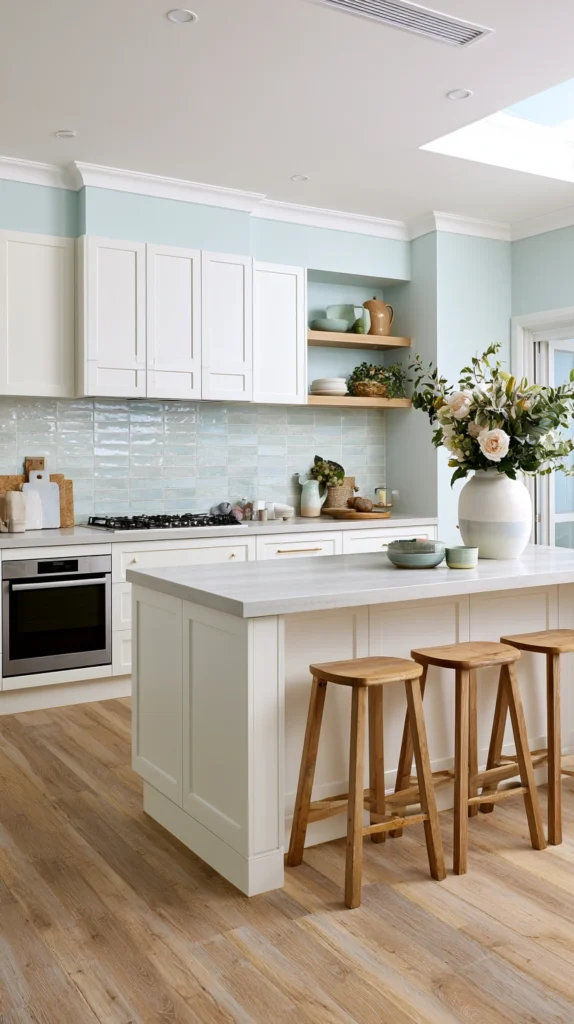
Budget: $30 – $150 to implement
The coastal kitchen colour palette — the specific combination of tones that references the coast without naming it — consists of: the white of bleached bone and weathered chalk, the blue-grey of sea and overcast sky, the warm sand and buff of dry beach, the pale aqua of shallow water, and the natural green-grey of coastal foliage. These five tones, distributed across the walls, the cabinets, the worktop, and the textiles of the kitchen, create the coastal atmosphere through the honest reference of the palette rather than through any coastal motif.
Wall paint in the coastal palette costs $25–$60 per tin. Cabinet paint in coastal blue-grey runs $30–$80. A sand or buff tone for the floor or the worktop costs $20–$60. Textiles — a linen apron, tea towels, a table cloth — in the natural and cream tones cost $10–$30 each. The palette requires discipline — every element should be assessed against the five coastal tones, and any element in a colour outside the palette should either be replaced or stored rather than allowed to dilute the coastal atmosphere.
Style tip: Apply the five coastal tones in the natural proportions in which they occur at the coast — the white and neutral tones as the dominant (walls, ceiling, worktop), the blue-grey as the accent (cabinets, textiles), and the aqua as the smallest punctuation (a single tile detail, the colour of a vase). The proportional distribution of the palette is the compositional decision that makes the kitchen read as coastal atmosphere rather than as coastal decoration.
9. The Wicker and Rattan Storage
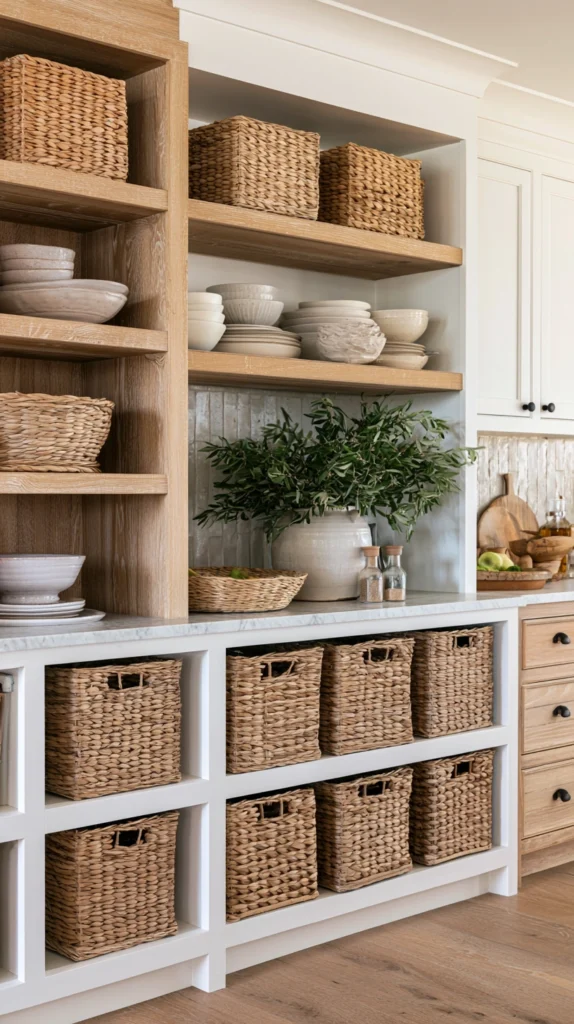
Budget: $40 – $200
Wicker baskets, rattan trays, and seagrass containers used as kitchen storage — on open shelves, on the island surface, in the pantry — give the coastal kitchen its material warmth at the storage and organisation level. The wicker basket is the storage material most associated with the coastal cottage aesthetic because it is the material of beach bags and lobster pots and boat baskets — the working materials of the coast used for their honest practicality in the kitchen context.
Individual wicker baskets cost $10–$30 each. A set of three in coordinating sizes runs $30–$80. Rattan trays cost $15–$40 each. Seagrass storage containers run $12–$35 each. Use the wicker and rattan for dry goods storage — bread, fruit, vegetables, onions — rather than for wet or refrigerated items. The wicker basket that holds bread and the rattan tray that organises the fruit bowl are the specific functional positions that communicate the coastal cottage kitchen aesthetic most honestly.
Style tip: Choose wicker baskets in a natural, undyed tone rather than a painted or bleached version. The natural honey-amber of unbleached wicker reads as genuinely coastal; a painted white basket reads as a styled version of the coastal aesthetic that sits in tension with the material honesty the kitchen is reaching for. The natural material in its natural colour is always the more coastal choice.
10. The Copper and Aged Brass Hardware
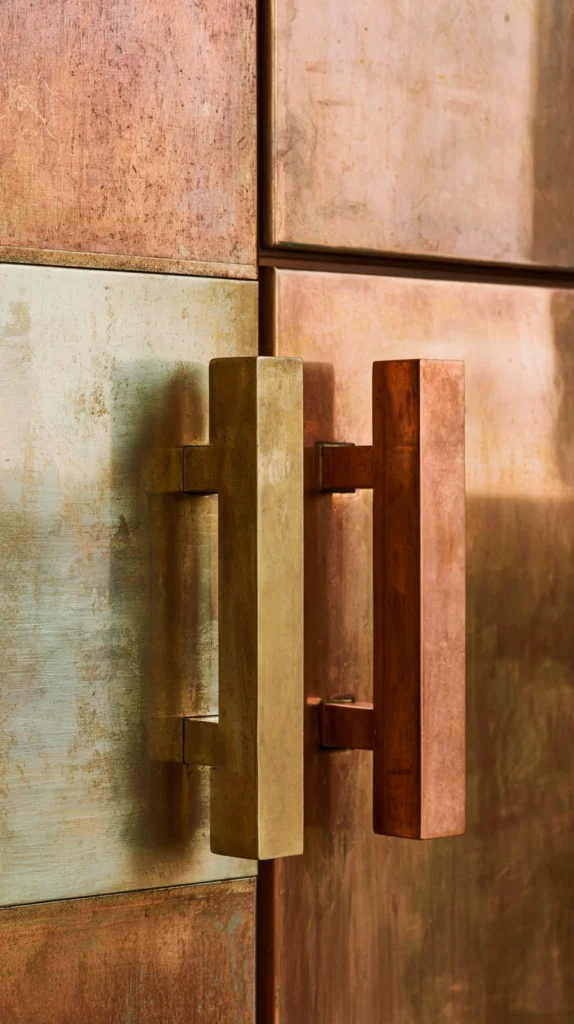
Budget: $40 – $200
Cabinet hardware in aged brass or copper — the warm metallic tones that develop patina through use rather than maintaining the uniform shininess of chrome or stainless — communicates the coastal aesthetic at the smallest visible scale of the kitchen. Aged brass and copper are the metals that belong to the maritime tradition — the fittings, the instruments, the bells of the coastal world — and their specific quality of warm, patinated metal gives the coastal kitchen its material coherence at the detail level.
Aged brass cabinet handles cost $3–$8 each. Copper cup pulls run $4–$10 each. A complete kitchen hardware replacement in aged brass for a standard kitchen costs $80–$200. Choose hardware that will develop a natural patina rather than a lacquered version that maintains its initial appearance — the patinating metal is the coastal material; the lacquered version is simply a brass-coloured handle.
Style tip: Allow the aged brass hardware to develop its natural patina through use rather than cleaning it back to a uniform bright tone. The patina that develops on aged brass cabinet handles — the darkening at the contact points, the slight colour variation across the surface — is the material quality that communicates genuine age and the honest material life of the coastal kitchen. A uniformly bright brass handle that has been regularly polished reads as new; one allowed to age reads as coastal.
11. The Tongue and Groove Ceiling or Wall Panel
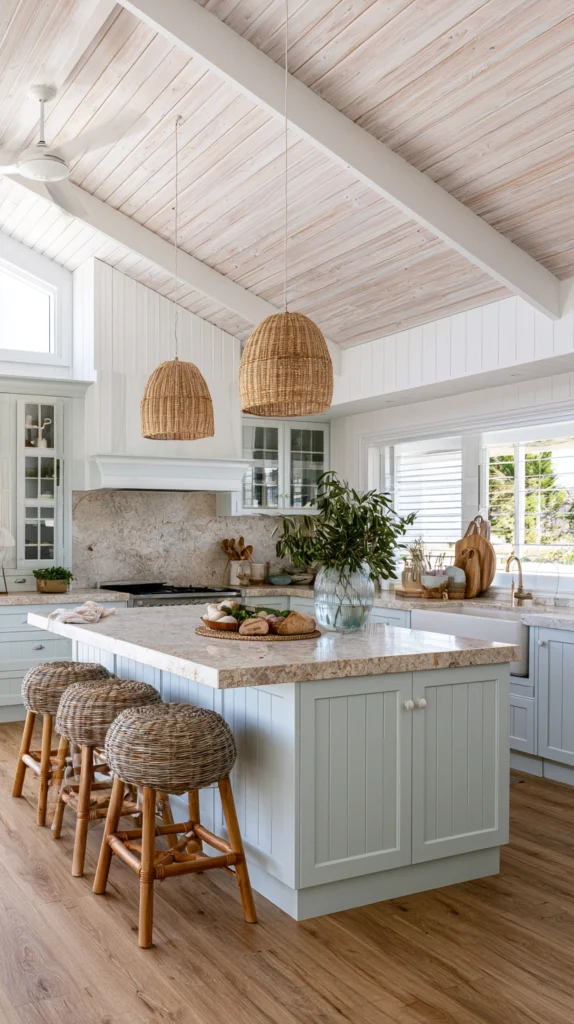
Budget: $80 – $400
Tongue and groove timber panelling — installed on the kitchen ceiling, on the wall below a chair rail, or as a feature wall behind the open shelving — creates the specific interior quality of a wooden-hulled sailing vessel or a beach hut interior. Tongue and groove is the material of coastal interiors precisely because it is the material of boats, of beach huts, and of the working structures of the coastal edge, and in a kitchen it provides the warmth and the texture of natural timber at a scale that individual pieces of timber furniture cannot match.
Tongue and groove boards in pine cost $2–$5 per linear metre. A kitchen ceiling of 3 by 4 metres requires approximately 50 linear metres — $100–$250 in timber. A chair-rail-height wall panel requires $60–$150 in boards for a standard kitchen wall. Paint the tongue and groove in the kitchen’s dominant white or coastal blue rather than leaving it in a natural timber finish — the painted tongue and groove reads as coastal; the unpainted version reads as timber panelling without a specific reference.
Style tip: Install the tongue and groove boards horizontally on walls and vertically on the ceiling rather than the conventional arrangement. Horizontal boards on a kitchen wall reference the clapboard architecture of coastal cottages; vertical boards on a ceiling create the impression of the planked hull of a boat overhead. The installation direction is the reference that makes the tongue and groove specifically coastal rather than generically panelled.
12. The Vintage Seaside Print Collection
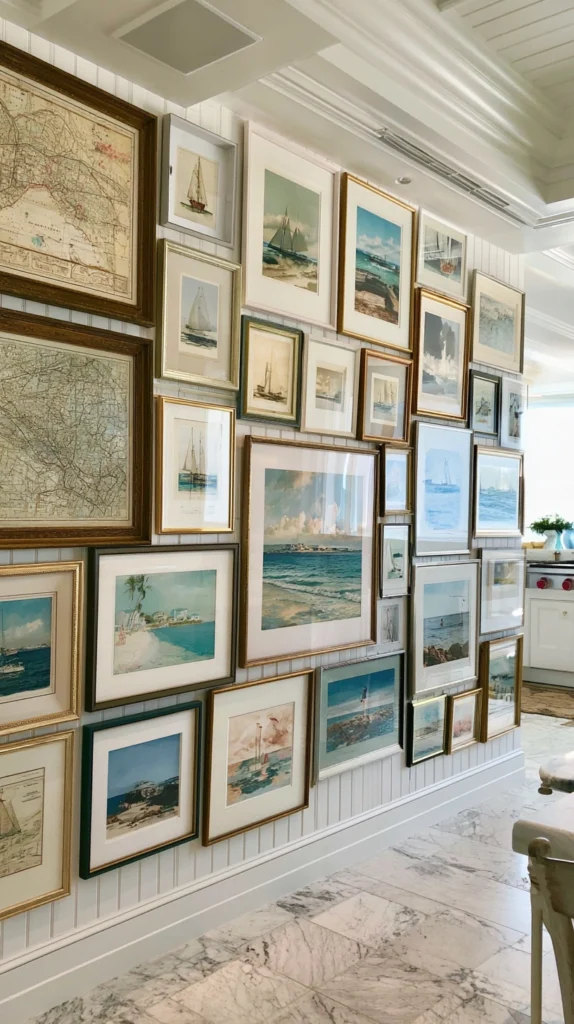
Budget: $30 – $200
A collection of vintage or vintage-style prints — botanical illustrations of coastal plants, old navigation charts, Victorian seaside photography, vintage fishing posters — arranged on the kitchen wall creates the cultural dimension of the seaside cottage kitchen. The kitchen is the room where print collections communicate most naturally — the gallery wall above the open shelving, the framed print beside the door, the map on the wall opposite the window — and vintage coastal imagery gives the kitchen the specific atmosphere of a room with a genuine relationship to the sea rather than a decorative reference to it.
Vintage navigation charts from public domain archives cost nothing to download and $3–$8 to print at A2 size. Vintage botanical coastal prints run $5–$20 each. Period seaside posters cost $10–$30 each as reproduction prints. Simple frames in natural timber cost $8–$20 each. The print collection should be framed consistently — all in the same frame finish — so the individual pieces read as a collection rather than as separately purchased prints placed in proximity.
Style tip: Choose prints that reference a specific coastal place rather than a generic coastal theme. A navigation chart of a specific stretch of coastline, a botanical print of a plant that grows on a specific cliff, a photograph of a specific harbour — the specificity communicates genuine coastal knowledge rather than coastal decoration. The specific print is the cultural object; the generic coastal print is the themed decoration.
13. The Flagstone or Limestone Floor
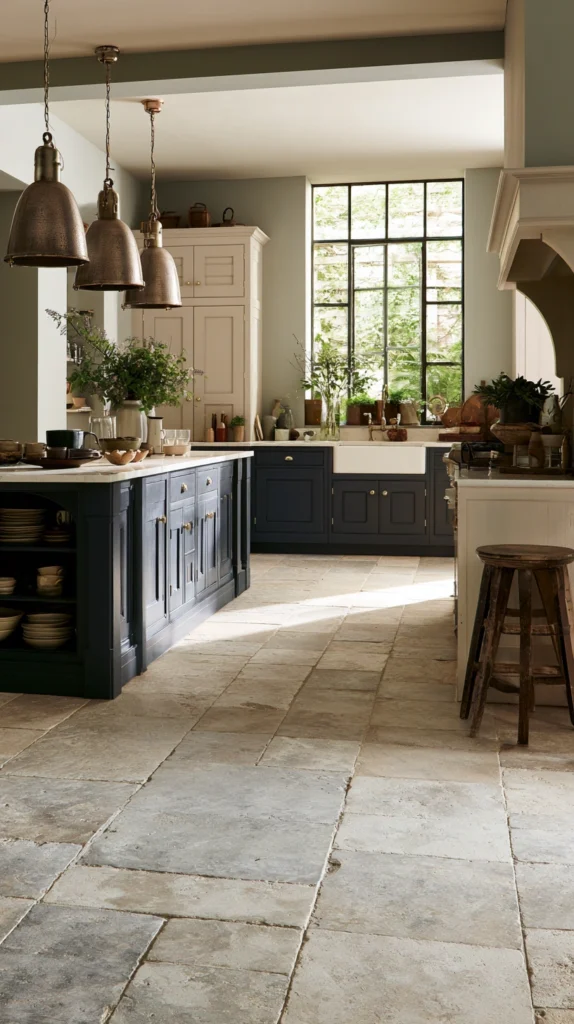
Budget: $300 – $1,500
A stone floor — in flagstone, limestone, or slate — gives the seaside cottage kitchen the cool, durable, genuinely old quality that connects the room to the tradition of coastal buildings constructed for the practical demands of life near the water. Stone floors were the kitchen floors of coastal cottages for centuries before any alternative was available, and a stone floor in a contemporary coastal kitchen references that tradition through the material itself rather than through any designed coastal reference.
Reclaimed flagstone costs $30–$60 per square metre. New limestone in a standard format runs $25–$50 per square metre. Welsh slate costs $30–$70 per square metre. Installation adds $20–$40 per square metre. Seal the stone floor before use — unsealed stone in a kitchen absorbs cooking oils, food spills, and cleaning products that stain permanently and become progressively harder to remove with each year of unsealed use.
Style tip: Choose a stone with a honed rather than a polished finish for the kitchen floor. A polished stone floor reads as formal; a honed stone reads as practical and honest — the specific quality of a surface designed for use rather than admiration, which is the quality of the seaside cottage kitchen floor at its most appropriate.
14. The Coastal Open Pantry
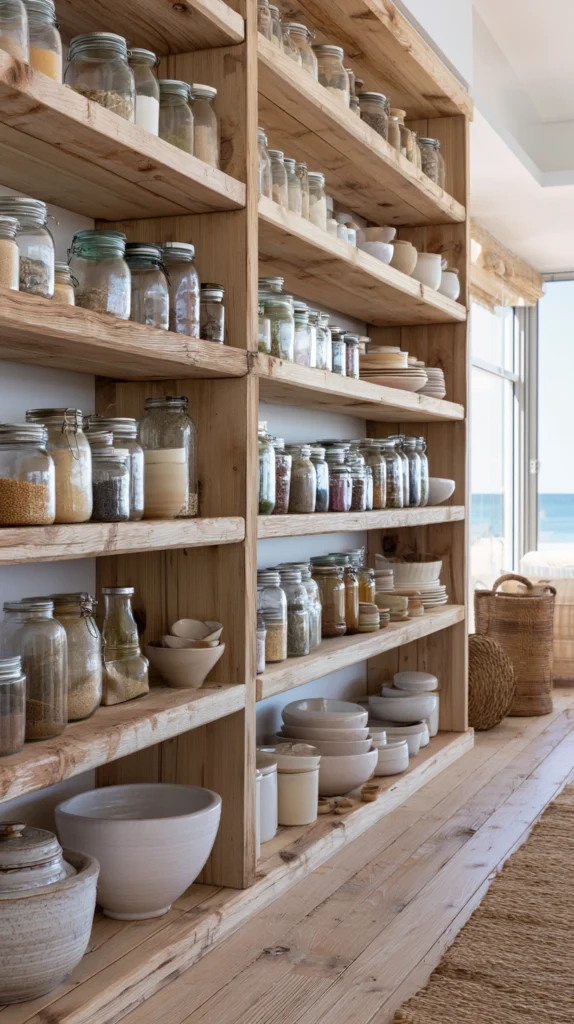
Budget: $100 – $500
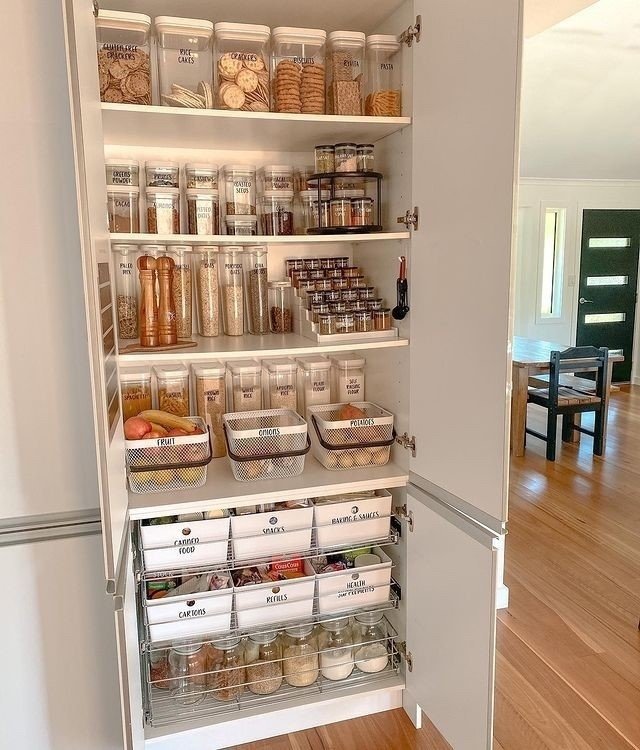
A walk-in pantry or a pantry cupboard styled in the coastal aesthetic — shelves lined with wicker baskets, glass storage jars in coordinating sizes, ceramic crocks in the coastal palette, and the practical stores of a kitchen that cooks seriously — creates the most functional and most specifically cottage of all the coastal kitchen elements. The pantry is the room that communicates most honestly the quality of daily life in a kitchen — what is stored, how it is organised, and how the practical and the beautiful were balanced — and a coastal pantry styled with genuine care communicates the seaside cottage aesthetic at the most functional and most honest level.
Open pantry shelving in reclaimed timber costs $60–$200. Glass storage jars for the pantry costs $5–$15 each — a set of ten runs $50–$150. Ceramic crocks for dry goods cost $15–$40 each. A wicker basket tray for each shelf level runs $10–$30 each. The pantry is styled with genuine function rather than for appearance — every container holds something genuinely used, every basket serves a specific storage purpose, and the beauty of the arrangement is the beauty of useful things organised well.
Style tip: Label the glass storage jars in a consistent handwritten style — chalk labels, tie-on tags, or handwritten card tucked behind the jar — rather than with printed adhesive labels. The handwritten label communicates the cottage aesthetic of the individually tended kitchen rather than the standardised appearance of commercial labelling, and the consistency of the label style across all jars gives the pantry the visual unity of a designed storage system.
15. The Coastal Kitchen Textile Layer
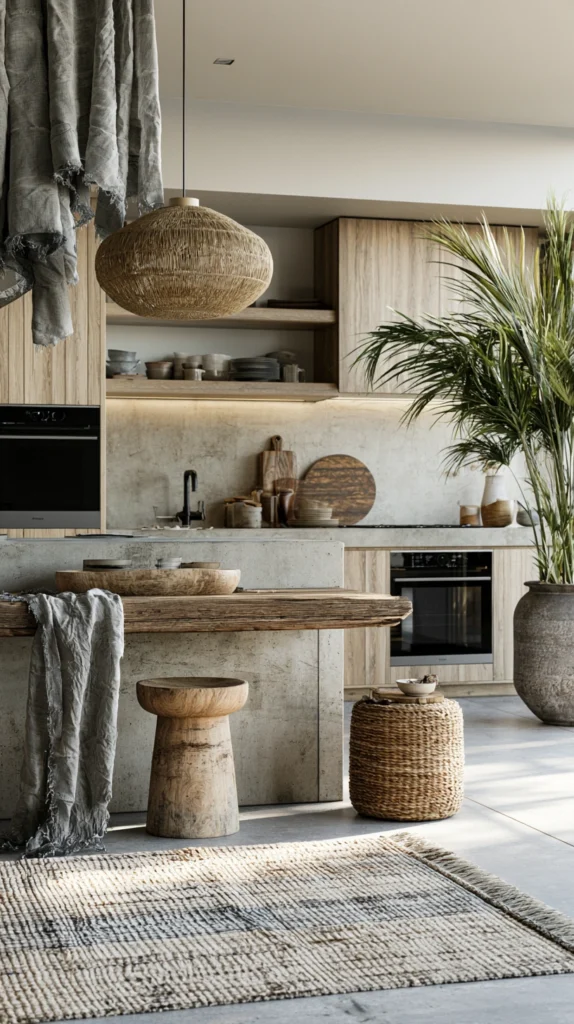
Budget: $30 – $150
The textiles of the seaside cottage kitchen — the linen apron on the hook beside the door, the striped cotton tea towels on the oven rail, the washed linen tablecloth on the kitchen table, the natural cotton window café curtain filtering the light — give the room its soft layer and its daily domestic quality. Kitchen textiles are the most frequently changed and the most affordably upgraded of all kitchen elements, and the right textile palette communicates the coastal aesthetic through the accumulated quality of everyday objects chosen with attention.
A linen apron in natural or coastal blue costs $20–$40. Striped cotton tea towels in navy and white run $5–$15 each — a set of four costs $20–$60. A washed linen tablecloth costs $30–$80. A café curtain in natural cotton or a simple stripe costs $15–$40 per panel. The textile palette should be consistent with the kitchen’s colour palette — all natural, cream, coastal blue, and navy rather than a mixed selection of available colours.
Style tip: Hang the café curtain at the lower half of the kitchen window rather than covering the full window with a conventional curtain. The café curtain at the lower half allows the full natural light to enter through the upper half while providing the domestic privacy of a covered lower section — the specific quality of filtered lower light with open upper light that gives the seaside cottage kitchen its characteristic combination of brightness and intimacy.
The seaside cottage kitchen communicates its coastal quality through the accumulated quality of its material decisions rather than through any individual coastal reference.
The bleached timber of the shelving, the chalky white of the limewashed walls, the specific blue-grey of the cabinet paint, the warm patina of the aged brass hardware, the cool stone of the floor, the honest utility of the butler sink — these are the materials of the coast, chosen for what they are rather than for what they reference, and together they produce the specific quality of a kitchen that was designed for the practical pleasures of life near the water rather than the decorative pleasures of looking like it.
Choose the materials honestly. Use them with the quality of finish that a kitchen used seriously deserves. And cook in the result — the seaside cottage kitchen is at its most beautiful when it is genuinely used for the purposes it was designed for, which are the purposes of the most pleasurable and most sociable of all domestic rooms.