12 Red, White & Blue Table Decor Ideas for a Stunning 4th of July Party
A well-dressed table is the centre of gravity of any celebration. Everything else at a party — the food, the conversation, the mood of the room — orbits around the table, and the care that has gone into dressing it communicates something immediate and important about the occasion being marked. A Fourth of July table that is genuinely considered, that uses the red, white, and blue palette with style rather than simply with enthusiasm, creates an atmosphere of celebration that guests feel before they have eaten a single thing or said a single word.
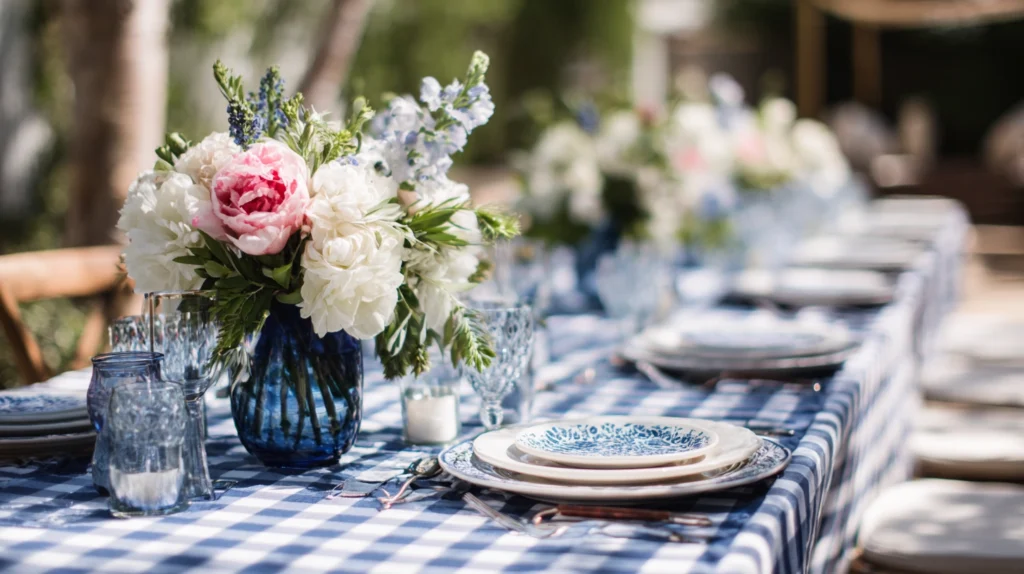
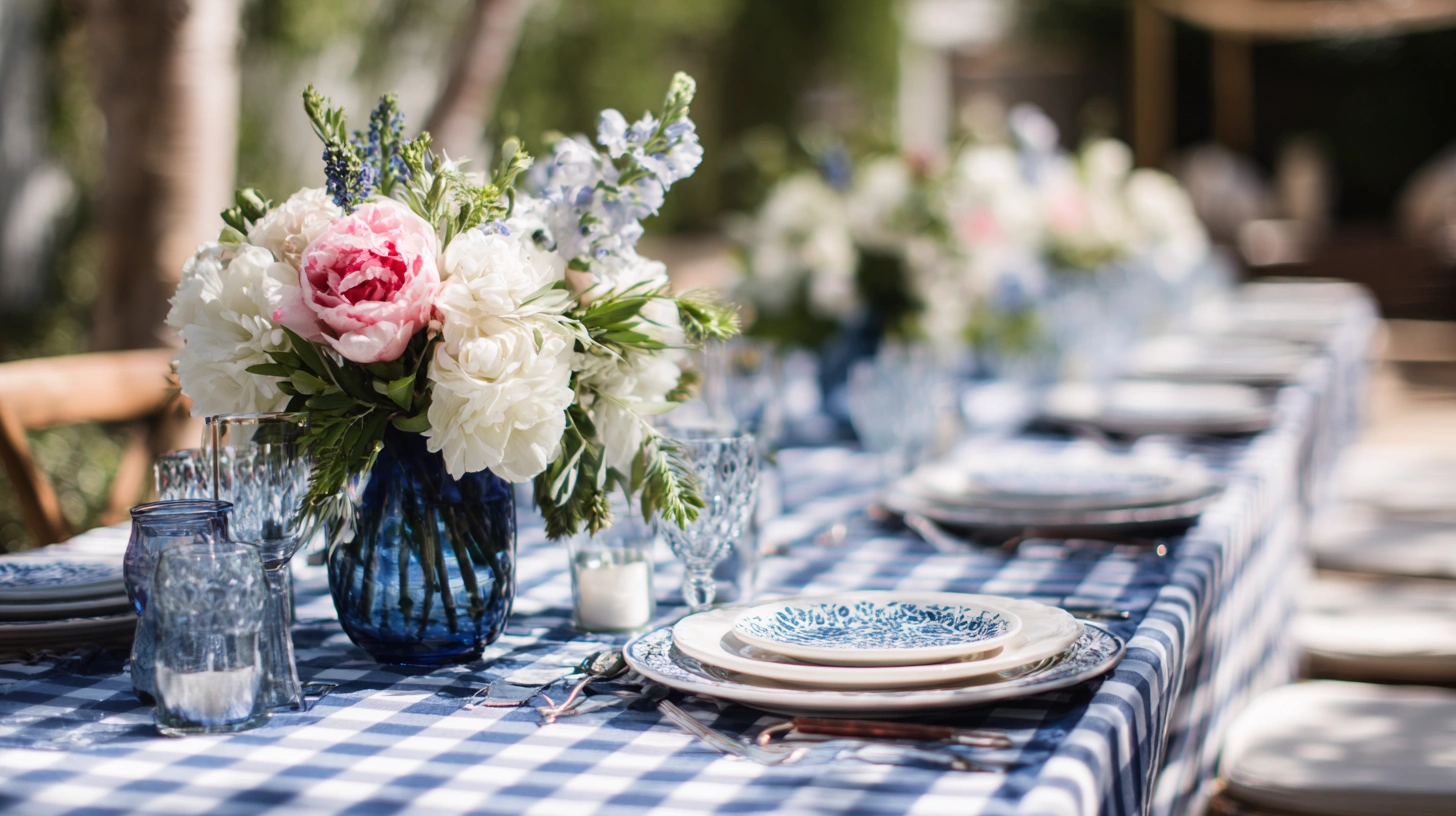
The challenge with a patriotic table is the same as any themed table — avoiding the generic. Red, white, and blue used without thought produces a table that looks like a party supply catalogue. The same colours used with restraint, with quality materials, and with personal detail produce a table that looks genuinely designed. The ideas below each find a specific and stylish way to make the most familiar colour combination in American celebration feel fresh, considered, and genuinely impressive.
1. The Linen and Wildflower Table
Budget: $60 – $200
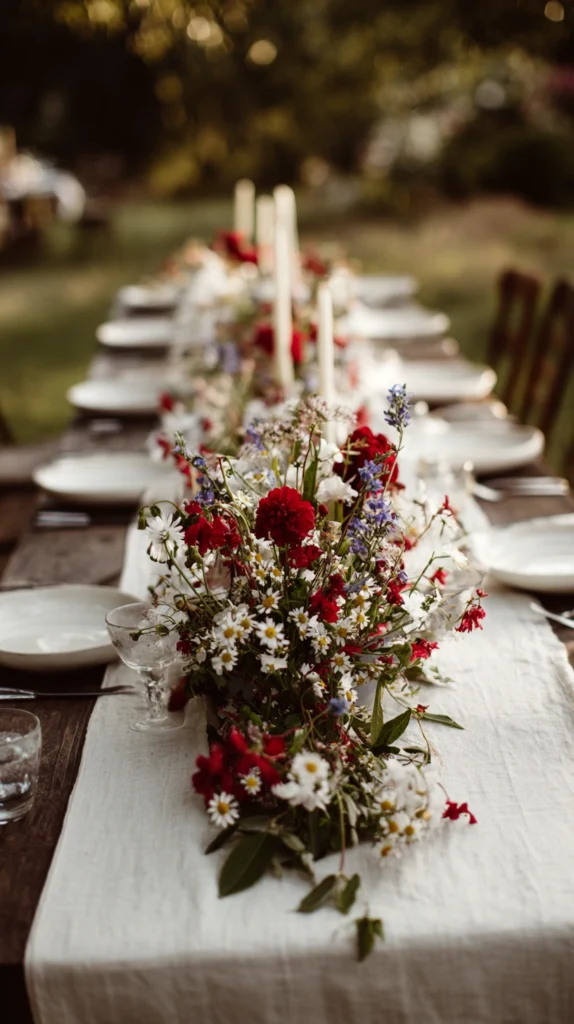
A table dressed in white washed linen, centred with a long, loose runner of wildflowers and garden blooms in red and blue — red zinnias, white cosmos, blue bachelor’s buttons, red dahlias, white Queen Anne’s lace — arranged directly on the linen rather than in a formal vessel creates the most naturally beautiful and the most effortlessly elegant Fourth of July table available. The relaxed, slightly imperfect quality of garden flowers laid loosely along a linen cloth communicates abundance, summer, and genuine care simultaneously.
Lay the flower runner directly on the cloth in a loose, organic line from one end of the table to the other, tucking small clusters of greenery — eucalyptus, fern, garden herbs — between the blooms to fill gaps and create visual depth. Place white pillar candles of varying heights at intervals within the runner for a table that transitions beautifully from a lunch setting to an evening one as the candles are lit after dark.
Styling tip: Use an odd number of flower clusters along the runner — three main clusters with loose stems connecting them — rather than attempting a perfectly continuous, evenly distributed arrangement. Three distinct clusters create a composition with visual rhythm; an evenly distributed arrangement reads as filler rather than floristry.
2. The Classic Red and White Check
Budget: $30 – $120
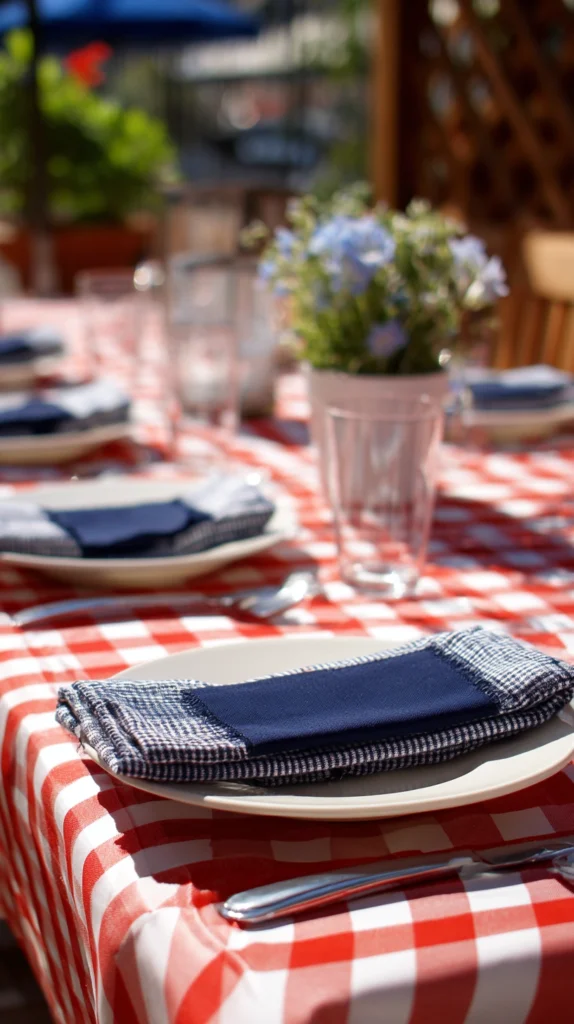
A red and white gingham or buffalo check tablecloth is the most immediately cheerful and most genuinely American table covering available for a Fourth of July celebration — and in combination with navy blue napkins, white ceramic plates, and simple mason jar vases of red and white flowers, it creates a table of warm, unpretentious patriotic charm that suits an outdoor lunch or a backyard barbecue perfectly. The check pattern has enough graphic energy to serve as the primary decorative element without requiring an elaborate centrepiece or complex layering.
A cotton gingham tablecloth in red and white costs $15–$40 for a standard rectangular table size. Pair with solid navy blue napkins ($2–$5 each) for the blue element of the palette without introducing the check pattern on a second surface. White ceramic plates allow the check cloth to read clearly beneath them — patterned plates on a patterned tablecloth create visual competition that reduces the impact of both.
Styling tip: Iron the gingham tablecloth before use — a wrinkled check cloth loses the clean, graphic quality that makes the pattern so effective and communicates carelessness rather than the cheerful, considered informality the pattern is intended to convey. Five minutes with an iron transforms the cloth from a piece of fabric into a proper table covering.
3. The Stars and Stripes Place Setting
Budget: $50 – $250
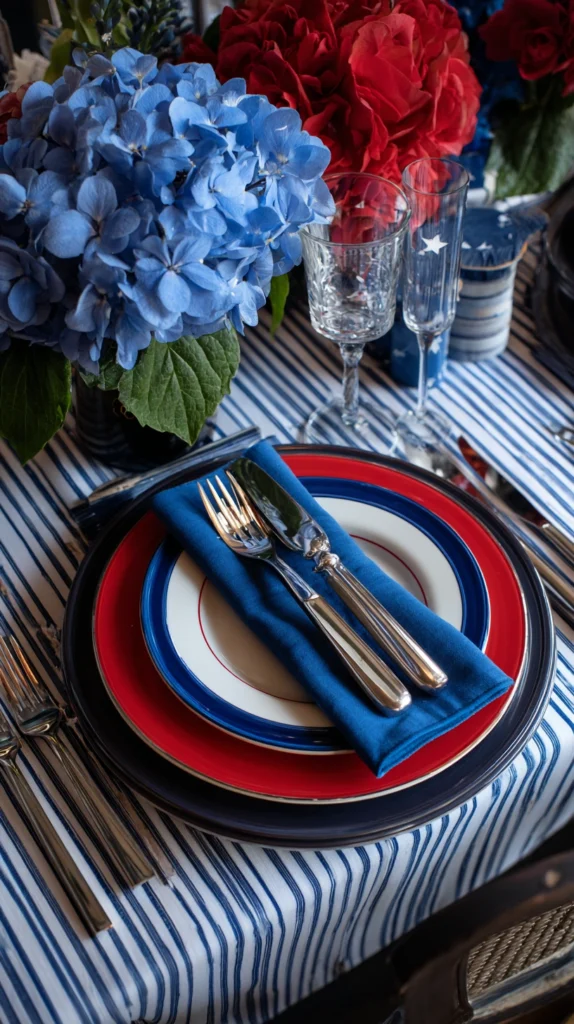
A complete place setting built around the patriotic palette — red charger plates, white dinner plates, blue linen napkins folded into a star shape, silver or brushed steel cutlery, and a small American flag or a patriotic table favour at each place — creates a table where every seat has been individually considered and dressed. The individually composed place setting communicates that the people sitting down have been thought about specifically, which is the most immediate and the most personal form of hospitality available.
Red melamine charger plates suitable for outdoor use cost $3–$8 each. White ceramic dinner plates cost $5–$15 each. Blue linen napkins cost $3–$8 each. The full place setting at one cover can be assembled for under $30 and creates an individually dressed table position that reads as significantly more considered than a shared centrepiece and identical settings at every place.
Styling tip: Fold napkins into a simple pocket fold rather than an elaborate origami form — a pocket fold holds a small card, a favour, or a sprig of rosemary in the napkin itself and creates a neat, considered place setting without the self-conscious formality of complex napkin folding. The pocket fold communicates care without effort, which is always the right impression for a celebratory outdoor lunch.
4. The Mason Jar Centrepiece Cluster
Budget: $20 – $80
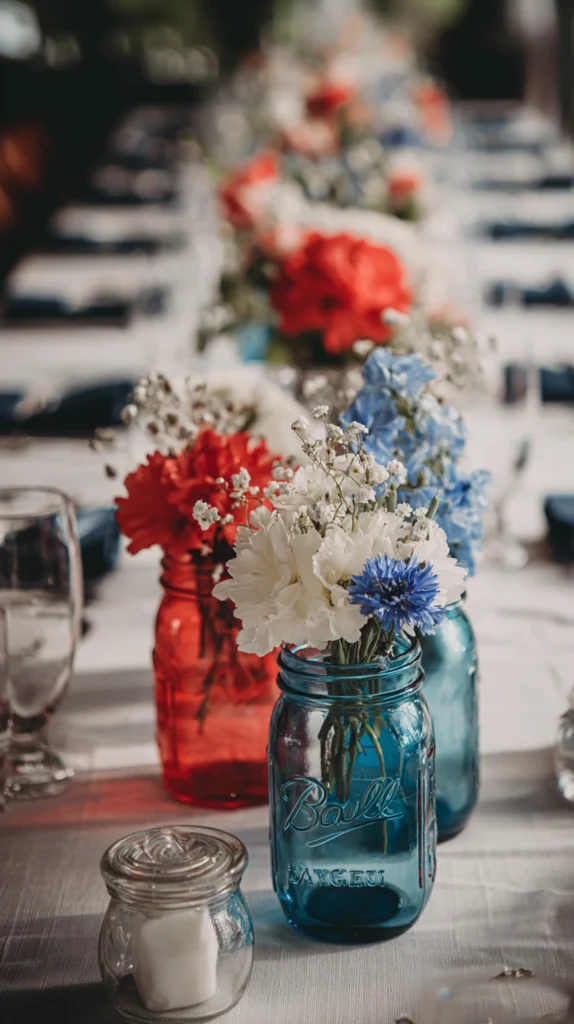
A cluster of mason jars in varying sizes — quart, pint, and half-pint — filled with red, white, and blue flowers and arranged as a grouped centrepiece rather than spaced individually along the table creates an informal, abundant floral display with genuine visual impact. The mason jar is the perfect vessel for a Fourth of July table — it is quintessentially American, completely unpretentious, and requires no florist skill to fill beautifully with garden or grocery flowers.
Wrap each jar with a different treatment — one with navy blue ribbon, one with red twine, one left plain — for variety within the cluster. Fill with tight clusters of a single flower variety per jar rather than mixed arrangements — a jar of all red zinnias beside a jar of all white daisies beside a jar of all blue hydrangea creates a more graphic and more intentional centrepiece than three jars each containing a mixed arrangement of all three colours.
Styling tip: Vary the jar heights by placing some on small wooden discs, upturned saucers, or stacked books hidden beneath the tablecloth. Even a 5–8 centimetre height difference between jars in the cluster creates a visual dynamic that flat, same-height groupings lack — the eye moves between the heights naturally and the centrepiece reads as a composed arrangement rather than a collection of jars placed together.
5. The Tiered Dessert and Snack Display
Budget: $40 – $180
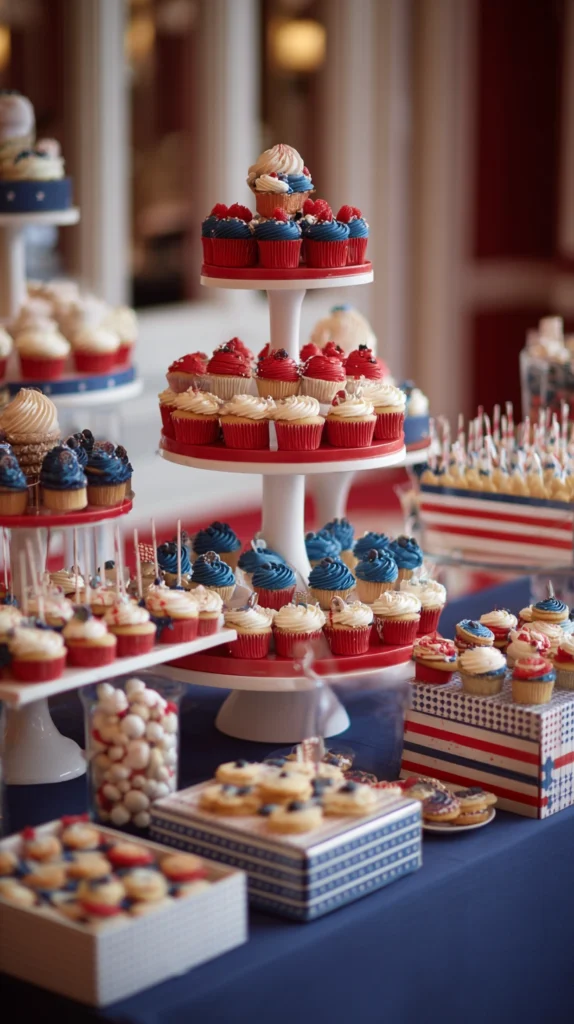
A tiered cake stand or a graduated display of cake stands at different heights, dressed with patriotic desserts and snacks — red velvet cupcakes, white frosted cookies with blue stars, strawberries and cream, blueberry tarts, red and white striped meringues — creates a table centrepiece that is as delicious as it is decorative. The food IS the decoration, and when the food is arranged with the same care as any floral centrepiece, it creates a table focal point of extraordinary abundance and colour.
A three-tier white ceramic cake stand costs $25–$60 and provides three display levels in a compact footprint. A cluster of individual stands at varying heights — one tall, one medium, one low — costs $30–$80 for a complete set and creates a wider, more generous display that suits a longer table better than a single tall tiered stand. Fill every level densely — a sparse dessert display communicates caution rather than celebration.
Styling tip: Place the most visually striking desserts at the top tier and the most substantial or generously portioned items at the base. The eye travels upward to the most beautiful piece — a perfectly frosted cupcake, a dramatic macaron tower — then downward to the most inviting pile. The visual journey from top to base is the narrative of the display and it should be planned rather than left to chance.
6. The Patriotic Candle Landscape
Budget: $25 – $100
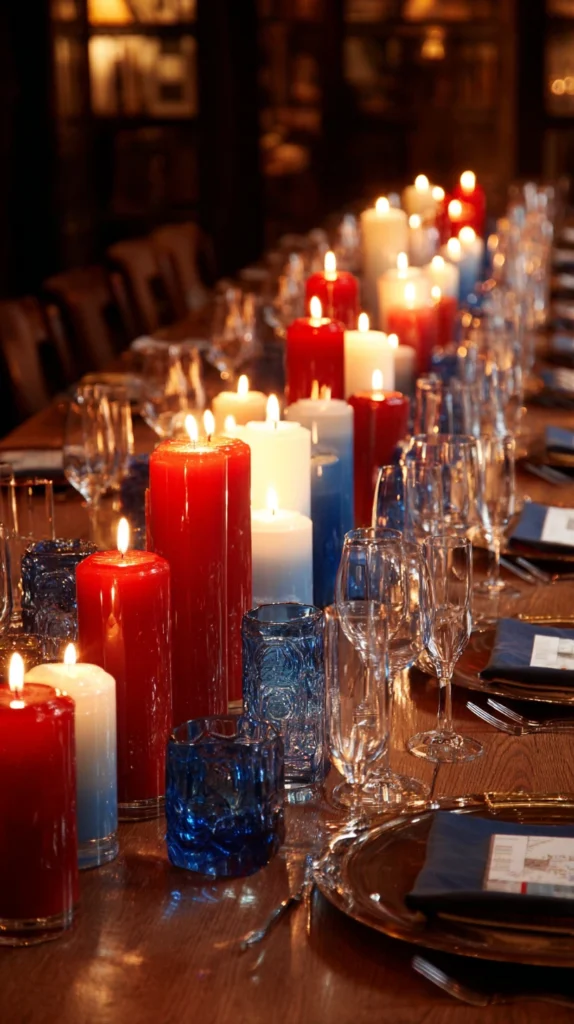
A table landscape of candles in the patriotic palette — red pillar candles, white taper candles in navy blue holders, blue glass votive holders with white candles — arranged in a loose, asymmetric grouping along the table centre creates a table that is genuinely spectacular after dark. The Fourth of July is an evening celebration as much as a daytime one, and a table designed specifically to look extraordinary by candlelight — with the fireworks visible beyond it and the warm glow of multiple candle heights reflected in glasses and cutlery — is among the most atmospherically beautiful table settings available.
Red pillar candles in varying heights cost $5–$15 each. Navy blue taper candle holders cost $8–$20 for a pair. Blue glass votive holders cost $3–$8 each. Arrange in a line down the table centre with the tallest elements at the ends and the grouping building toward a peak in the middle — or in a scattered, naturalistic arrangement that places taller and shorter candles without a formal structure. Both approaches work; the scattered arrangement suits an outdoor, informal table more naturally.
Styling tip: Use unscented candles on a dining table rather than scented ones — fragrance from candles competes with the smell of food and creates a sensory conflict that reduces the enjoyment of both. The visual quality of candlelight requires no fragrance to make its case, and an unscented candle performs identically in terms of light while leaving the olfactory experience of the meal undisturbed.
7. The Vintage Americana Tablescape
Budget: $50 – $200
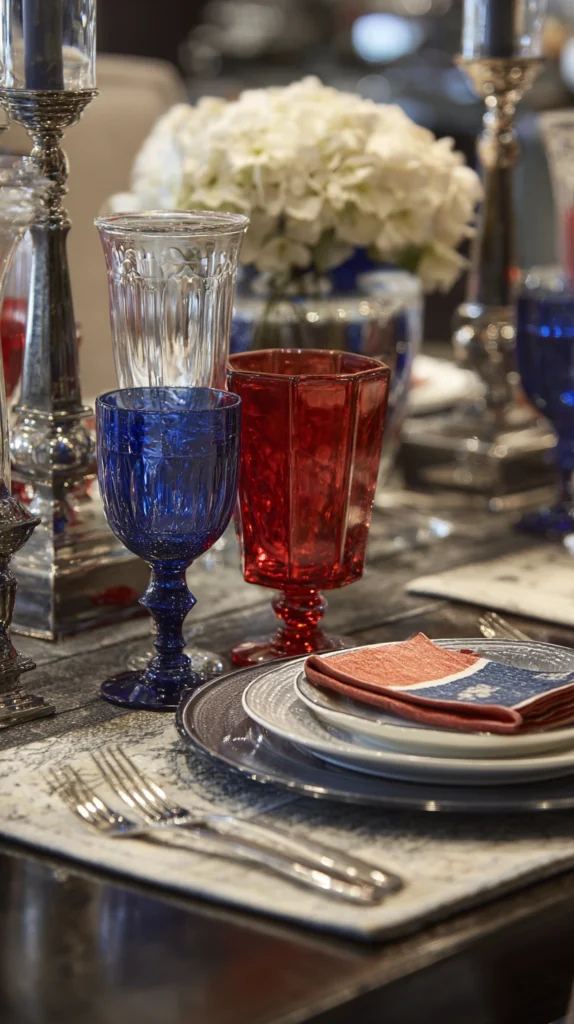
A table dressed with vintage and antique Americana objects — an old enamel colander repurposed as a flower vessel, vintage tin trays used as chargers, antique mason jars with original lids used as drinking glasses, worn red and white quilted table runner, old photographs or vintage patriotic postcards framed as table decorations — creates a Fourth of July tablescape of genuine historical character and personal warmth that manufactured holiday decor cannot replicate.
The vintage Americana table communicates that the celebration has roots — that it is connected to the full history of the occasion rather than to its contemporary commercial presentation. Every object has a story and every story adds to the character of the table. Source from thrift stores, antique markets, and family storage, and mix genuinely aged pieces with contemporary quality equivalents that suit the same aesthetic.
Styling tip: Include at least one object with a genuine personal history — a piece from a grandparent’s kitchen, a family quilt used as a table runner, a set of plates that have been at Fourth of July celebrations for decades. The personal object grounds the vintage aesthetic in genuine family history rather than in the aesthetic of vintage as a style, and that distinction is immediately felt even when it is not consciously identified.
8. The Striped Table Runner Statement
Budget: $20 – $100
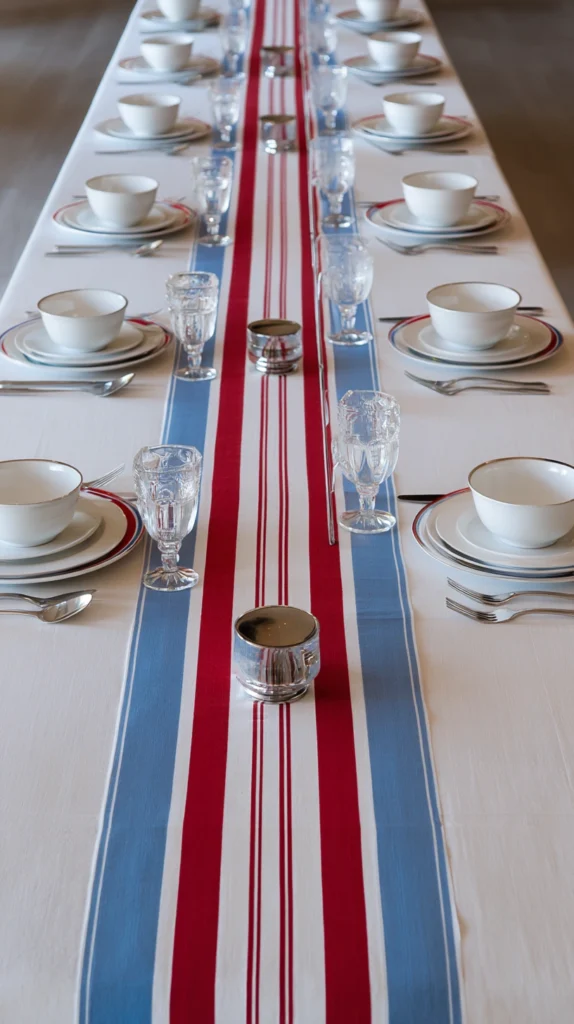
A bold red, white, and blue striped table runner — in wide sailor stripes, narrow ticking stripes, or graduated multi-width stripes — laid over a plain white tablecloth creates a table with graphic clarity and immediate patriotic impact. The runner format concentrates the pattern in the centre of the table and leaves the cloth on either side of the plates visible as a plain, clean surface — a more refined approach than a fully patterned tablecloth that introduces the stripe on every surface simultaneously.
A cotton or linen striped runner costs $15–$40 for a standard length. The runner approach also allows the table decoration to be adjusted and repositioned easily — the runner can be layered over different base cloths, reversed, or replaced without changing any other element of the setting. For an outdoor Fourth of July table in direct sunlight, choose a solution-dyed outdoor fabric runner that will not fade or bleed if caught in unexpected rain.
Styling tip: Let the runner extend 30–40 centimetres beyond each end of the table and allow it to fall naturally rather than tucking it under. Overhanging ends read as generous and deliberate; tucked ends read as a runner that is slightly too long, which is not the same thing. The overhang is both a design choice and a practical one — it prevents the runner from sliding inward when guests reach across the table.
9. The Ice Bucket and Drinks Station Table
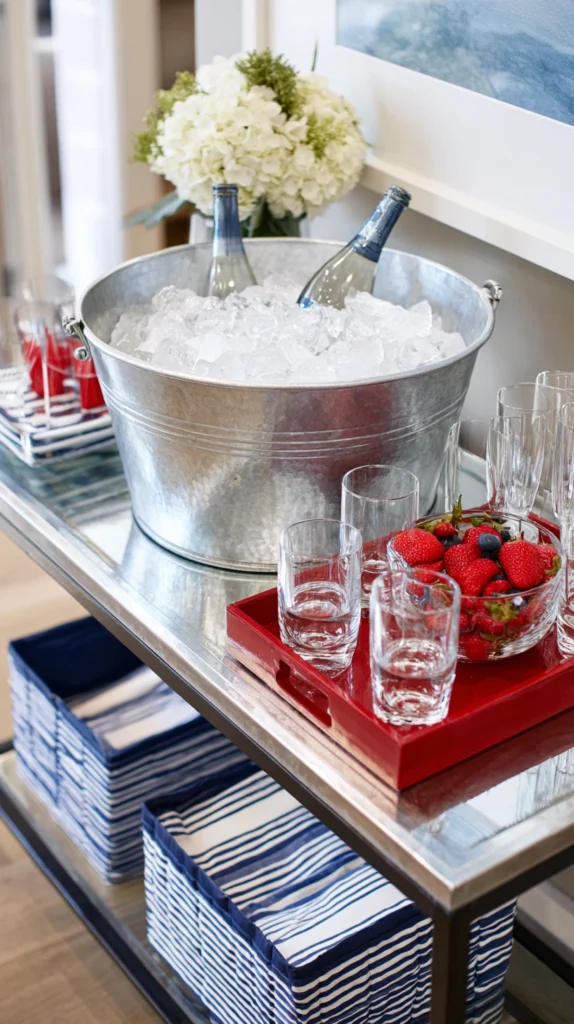
Budget: $50 – $200
A dedicated drinks station table dressed in the patriotic palette — a large galvanised metal tub filled with ice and red, white, and blue-labelled beverages, a striped linen cloth beneath, mason jar glasses beside it, a red wooden crate of patriotic bottle openers and paper straws, and a small arrangement of patriotic flowers in a tin beside the drinks — creates a second table that is as decorative as it is functional and that communicates the thoroughness of the hospitality being offered.
A galvanised metal tub costs $20–$40 and suits the Fourth of July aesthetic far better than a conventional ice bucket or cooler. Fill with red, white, and blue canned beverages, lemonade in glass bottles with a striped straw, and sparkling water alongside the usual drinks choices. The drinks station table, when properly dressed, creates a focal point of the party space that serves both as decoration and as the natural gathering point between the main table and the rest of the outdoor space.
Styling tip: Label the drinks in the tub with small kraft paper tags identifying each variety — a simple touch that makes the drinks station feel like a considered display rather than a functional cooler. The labels also allow guests to identify their choice without rummaging through ice, which keeps the station looking organised throughout the party rather than dishevelled after the first rush of arrivals.
10. The Individual Favour Box Place Setting
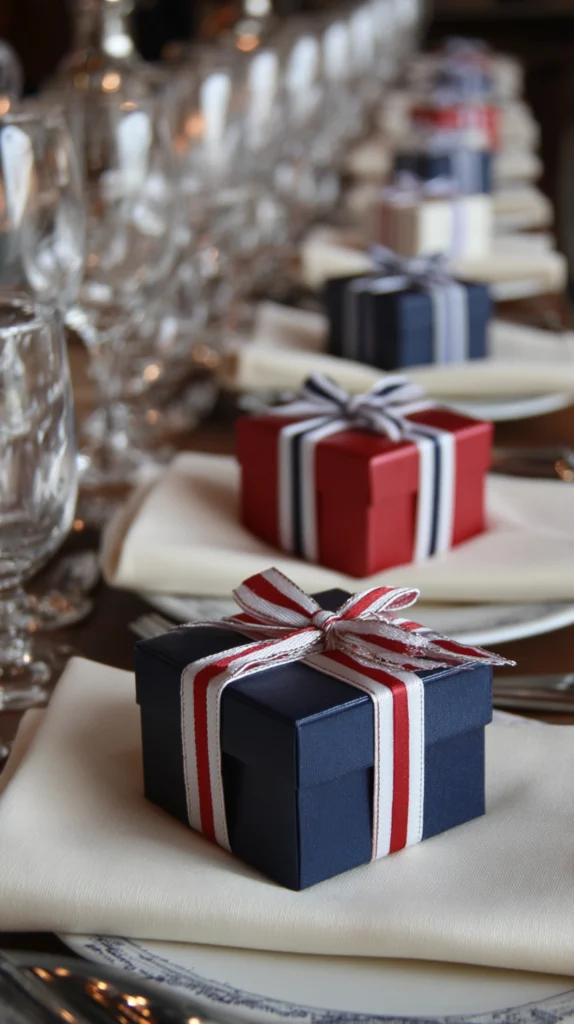
Budget: $30 – $150
A small patriotic favour box at each place setting — a red kraft paper box tied with blue and white twine, a navy blue paper bag stamped with a white star, or a white box with red ribbon — filled with patriotic treats such as red, white, and blue M&Ms, star-shaped sugar cookies, small sparklers, or a personalised card creates the most individually considered and the most memorable place setting available. The favour communicates that each person at the table was thought about specifically before they arrived.
Patriotic kraft boxes cost $0.50–$2 each from party supply retailers. Fill with $2–$5 of treats per person for a favour that feels genuinely generous without significant additional cost. Place on top of the folded napkin at each setting or prop against the water glass so it is immediately visible when guests take their seats. Write each guest’s name on the outside in a consistent hand — the name transforms the favour from a generic party gift into a personal greeting.
Styling tip: Keep the favour box contents consistent across all settings rather than varying them per person — the visual uniformity of identical favours at every place creates a composed table; varied favours create a visual inconsistency that reduces the impact of the overall place setting even if each individual favour is equally well chosen.
11. The Patriotic Charcuterie and Grazing Table
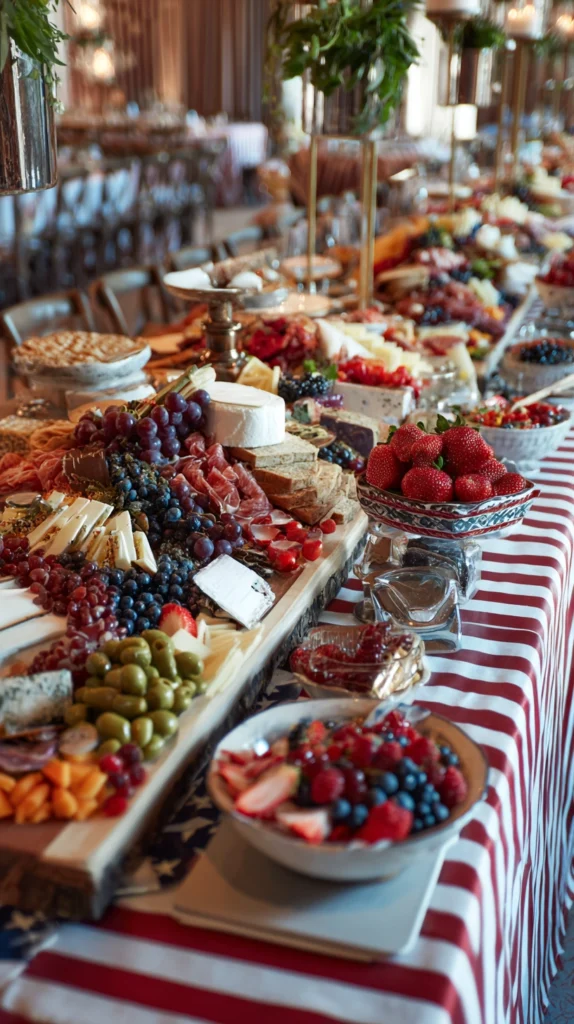
Budget: $60 – $250
A grazing table — a long table covered with a white linen cloth and laid with an abundant spread of charcuterie, cheeses, dips, crackers, fruits, and accompaniments arranged in the patriotic colour palette — red strawberries, red peppers, white cheeses, white cauliflower florets, blue grapes, blueberries — creates a centrepiece that IS the food and the decoration simultaneously. The grazing table eliminates the need for a separate centrepiece because the food, arranged with sufficient care, is as visually spectacular as any floral or candle arrangement.
Arrange the grazing table in diagonal stripes of colour — a stripe of red fruits and vegetables, a stripe of white cheeses and crackers, a stripe of blue fruits and accompaniments — for a grazing table that literally reads as a flag when viewed from above. The diagonal stripe arrangement is the most visually striking layout for a patriotic grazing table and the most immediately recognisable as a deliberate design decision rather than a random arrangement.
Styling tip: Fill every gap in the grazing table with fresh herbs — rosemary sprigs, thyme branches, basil leaves — rather than leaving any surface of the white cloth visible. A grazing table with visible cloth gaps looks incomplete; one where every surface is covered with food, garnish, or greenery looks genuinely abundant. The herbs cost almost nothing and contribute significantly to the visual density that makes a grazing table impressive.
12. The After-Dark Fireworks Viewing Table
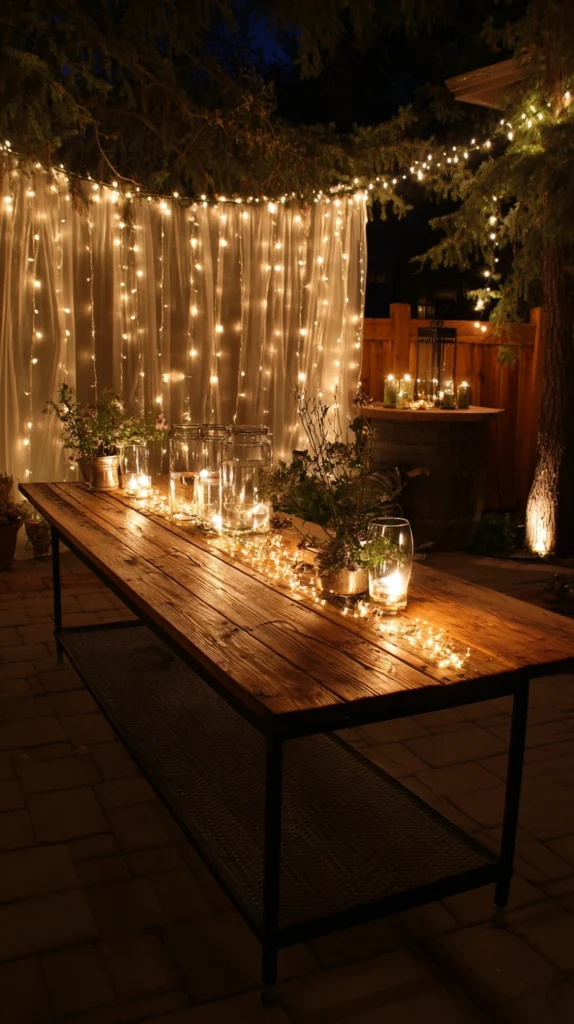
Budget: $40 – $180
A table specifically designed for the after-dark portion of the Fourth of July celebration — the moment when everyone moves outside to watch the fireworks — dressed with glowing luminaries, battery-powered fairy lights woven through the centrepiece, glow-in-the-dark star confetti scattered across the cloth, and patriotic sparklers in mason jars creates a table that belongs to the night rather than to the day. The after-dark table is a different table from the dinner setting — it is the table for the final chapter of the celebration, when the sky becomes the main event.
Battery-powered fairy lights in warm white with red and blue star-shaped diffusers cost $10–$25 per string. Paper bag luminaries in the patriotic palette cost pennies each to make. Star confetti in red, white, and blue costs $3–$8 per pack. The after-dark table requires almost no additional investment if the dinner table is simply refreshed — clear the food, scatter the confetti, weave in the fairy lights, and add the luminaries to transform a dinner table into a fireworks viewing one.
Styling tip: Position the after-dark table so it faces the direction from which the local fireworks display will be visible — the table becomes the front row of the best seat in the house, and the decoration around it frames the fireworks as the centrepiece of the evening rather than the table itself. The fireworks are the final decoration, and the table should be arranged in acknowledgement of that fact.
The Fourth of July table that impresses guests is one where the familiar palette has been handled with enough personal style and enough material quality that the celebration feels specific to the household hosting it rather than generic to the occasion being marked. Red, white, and blue used with confidence, restraint, and genuine care for the people sitting down at the table create a celebration that is remembered not for how much decoration was present but for how well it all came together — for the quality of the welcome the table extended before a word was spoken or a plate was filled.