12 Christmas Mantel Decor Ideas That Feel Magazine-Worthy
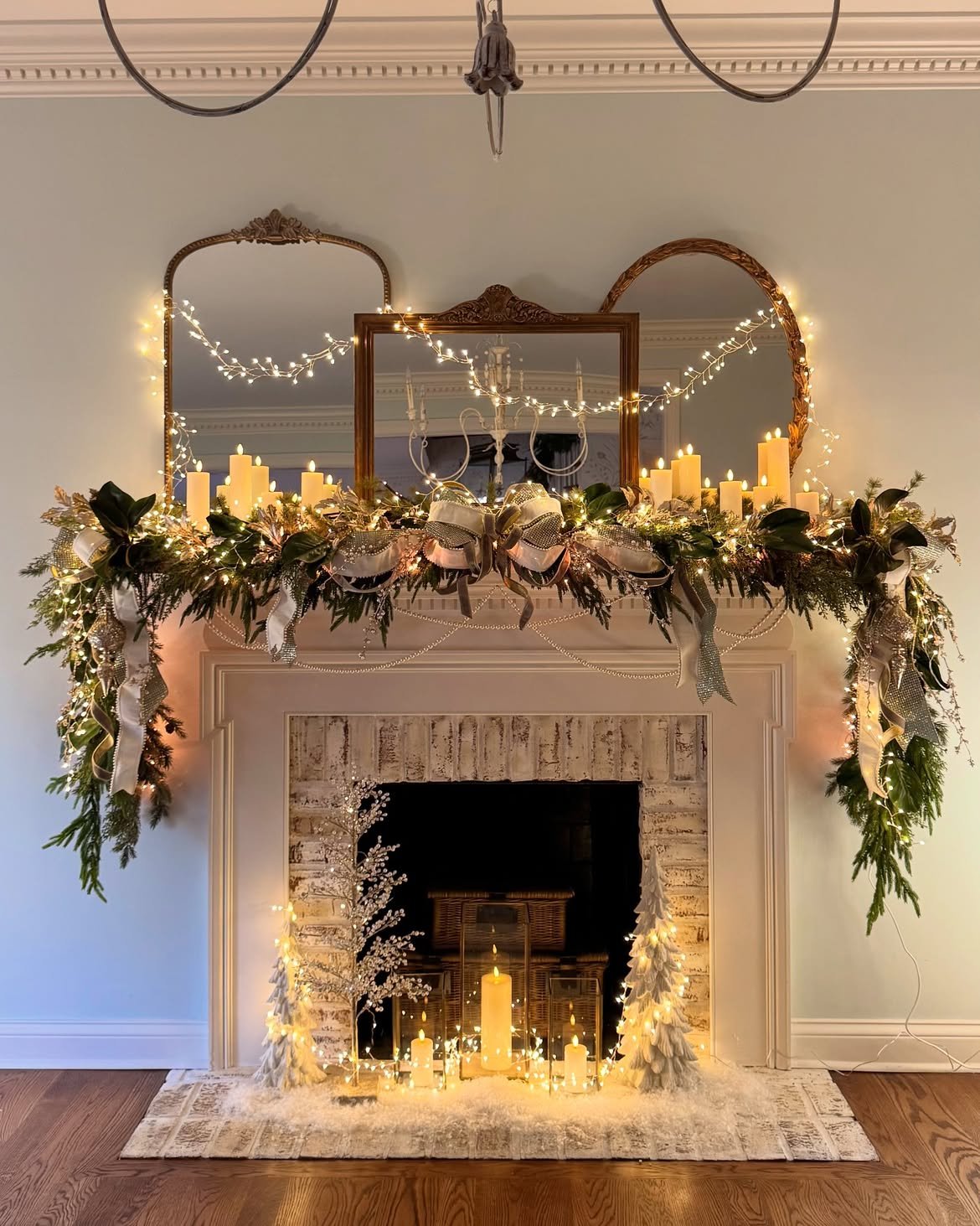
A magazine mantel photo and a real one taken in someone’s living room usually differ in one specific way: restraint.
The magazine version has fewer objects, more negative space, and a clear color story. The real version often has three garlands, five ornament colors, and every surface filled edge to edge.
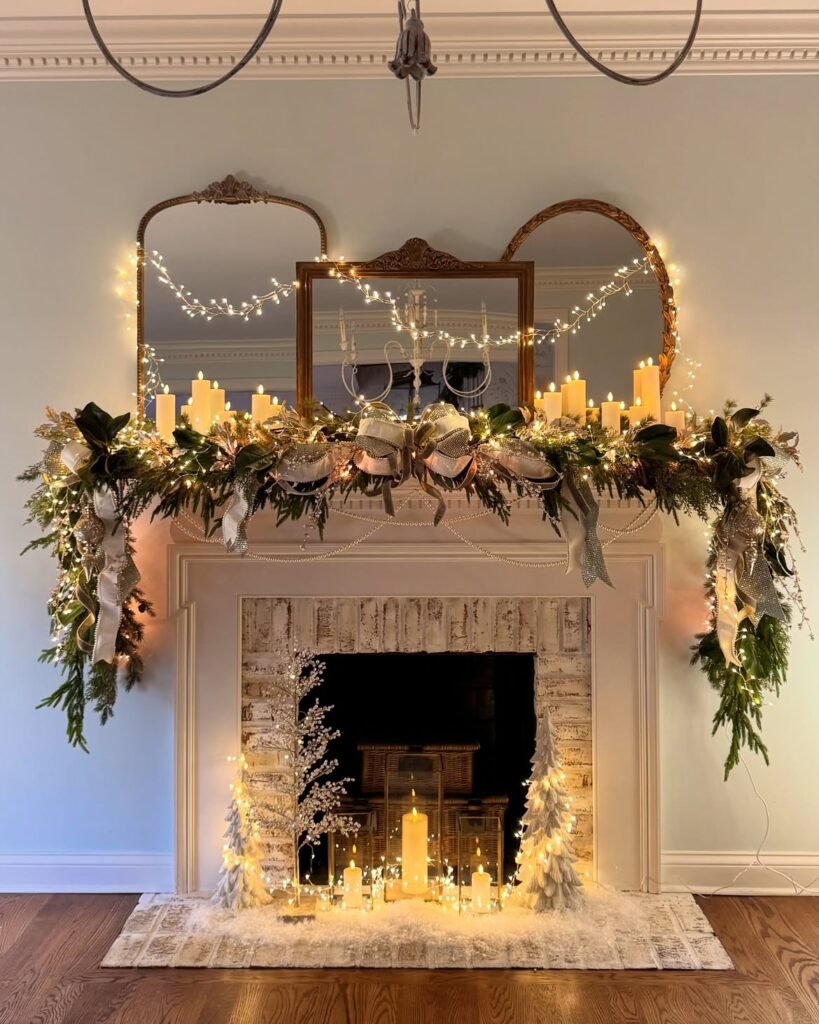
The fix isn’t buying more. It’s editing down to fewer, better-chosen pieces, arranged with actual structure.
Here are 12 ways to get there.
The Four Things Every Magazine-Worthy Mantel Gets Right
Before the specific ideas, these four principles show up in almost every professionally styled mantel.
- A limited color palette — two to three colors, not the full Christmas spectrum
- Height variation — objects at different levels, not one flat row
- Negative space — gaps between elements, not wall-to-wall coverage
- One clear focal point — usually centered or slightly off-center, with everything else supporting it
1. The Monochromatic Evergreen and White Mantel
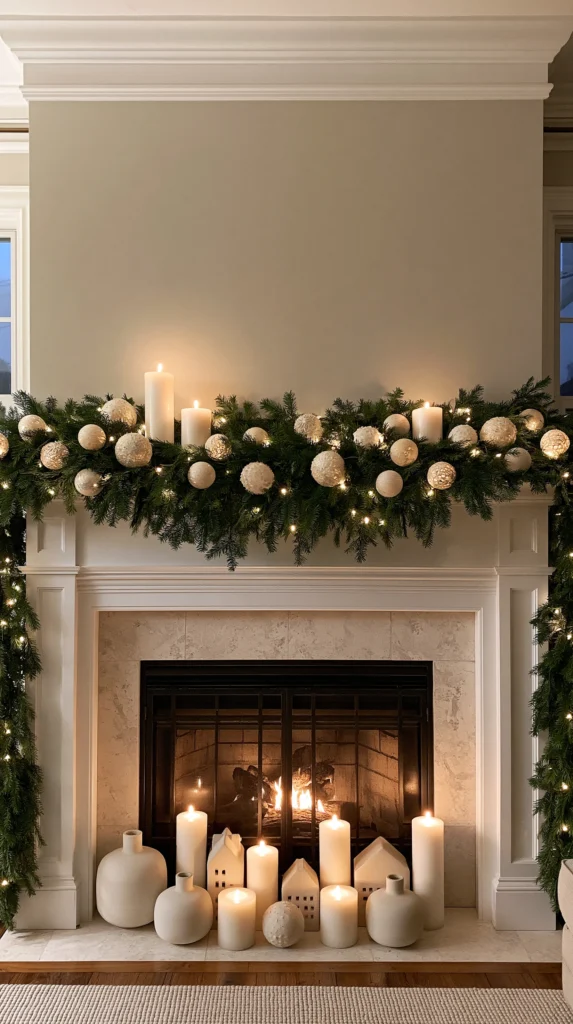
The look: Deep green garland paired entirely with white and cream accents, no other colors competing.
Building it:
- Drape a full, lush garland along the mantel’s front edge
- Add white pillar candles at 2–3 different heights
- Use cream or white ceramic pieces as the only non-greenery accent
- Skip metallics entirely to keep the palette truly monochromatic
Why it reads as elevated: One consistent color story, done fully, beats five colors done partially every time.
Cost: $40–$90 for garland and candles.
2. The Black and Gold Statement Mantel
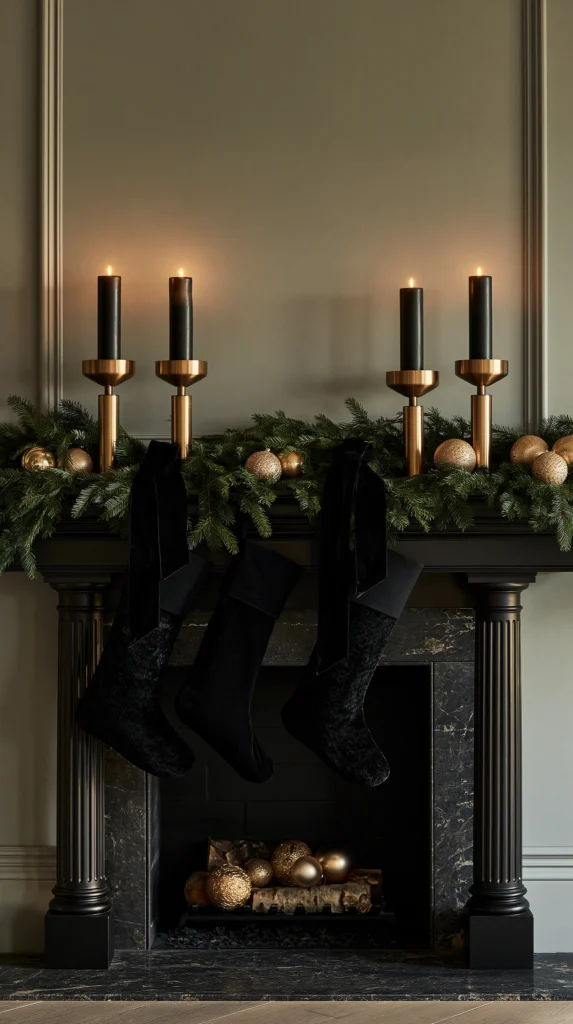
The look: A dramatic, high-contrast palette built for evening ambiance and photography.
Building it:
- Use a dark or black-toned garland base if available, or a standard green garland with black ribbon woven through
- Add gold candlesticks and a few gold ornaments as accents
- Include one black-and-gold striped or checked stocking pair for contrast
- Light the space with warm bulbs specifically, since gold reflects warm light beautifully
Why it reads as elevated: High contrast photographs dramatically and reads as intentional rather than default “Christmas colors.”
Cost: $50–$110 for specialty ribbon and gold accents.
3. The Natural, Undecorated-Looking Mantel

The look: Raw materials, minimal ornamentation, leaning into texture instead of shine.
Building it:
- Use fresh or preserved eucalyptus and pine mixed together, rather than a single uniform garland
- Add unpolished wood candle holders instead of anything metallic or glossy
- Include a few pinecones and dried orange slices tucked into the greenery
- Skip tinsel, glitter, or anything reflective entirely
Why it reads as elevated: It looks gathered from outside, not purchased from a seasonal aisle.
Cost: $25–$60 depending on real vs. faux greenery.
4. The Symmetrical Formal Mantel
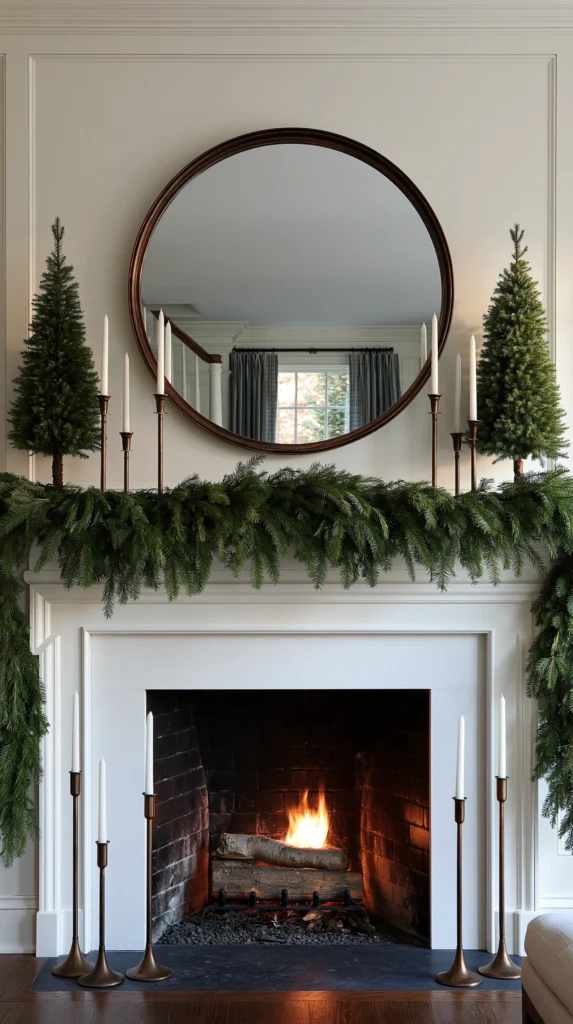
The look: A classic, mirrored arrangement with matching elements on either side of a central focal point.
Building it:
- Center a mirror, artwork, or wreath above the mantel as the anchor point
- Place matching candlesticks or arrangements on each side, equal distance from center
- Add a garland that drapes evenly on both sides
- Keep any asymmetrical details, like a single stocking, to a minimum since this style depends on balance
Why it reads as elevated: Symmetry reads as formal and considered, especially in traditional or classic home styles.
Cost: $60–$130 for matching candlesticks and a garland long enough to drape evenly.
5. The Layered Candle-Only Mantel
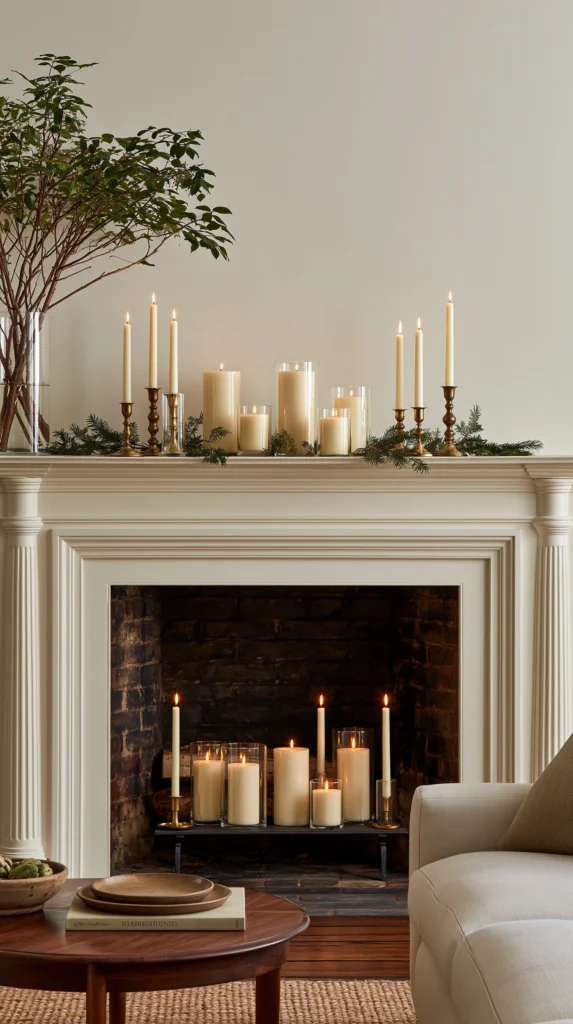
The look: No garland at all — just candles in varying heights, doing all the visual work.
Building it:
- Group 8–12 candles across the mantel in three or four different heights
- Use a consistent candle color, like ivory or deep red, rather than mixing many tones
- Add a few sprigs of greenery tucked between candle clusters, not a full garland
- Vary candle holder materials slightly, like glass and brass together, for texture
Why it reads as elevated: The restraint of skipping garland entirely makes the candles themselves feel like a deliberate design choice.
Cost: $30–$70 for a full set of varied candles and holders.
6. The Vintage Ornament Cluster Mantel
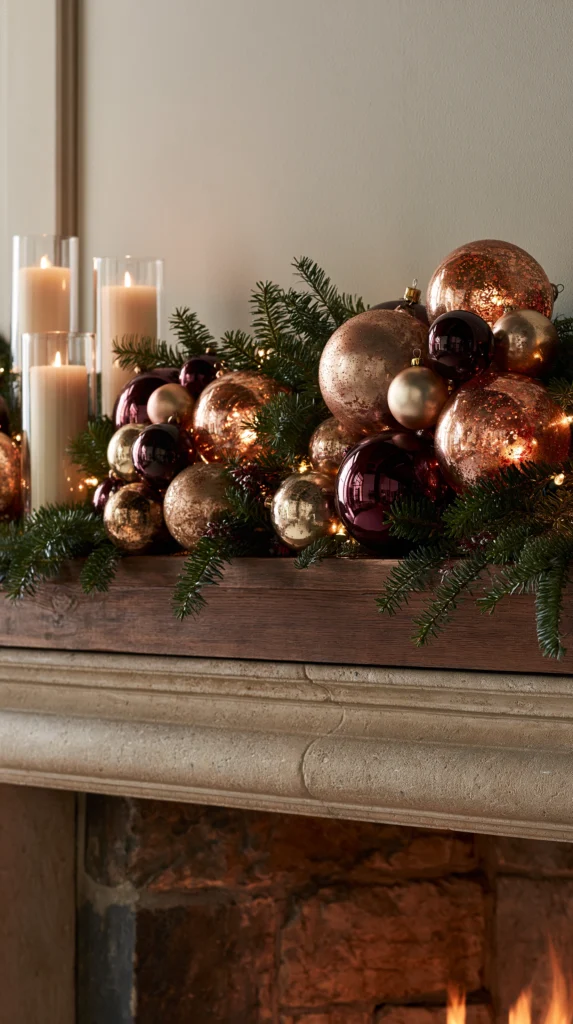
The look: Large vintage or vintage-style ornaments clustered as sculptural objects rather than hung.
Building it:
- Source oversized vintage or vintage-look ornaments in 2–3 coordinating colors
- Cluster them directly on the mantel surface in groups of three, not scattered individually
- Add a simple garland base underneath the clusters
- Skip small ornaments entirely — scale is what makes this style work
Why it reads as elevated: Oversized, sculptural objects photograph as intentional statement pieces rather than leftover tree ornaments.
Cost: $8–$20 per large ornament, needing 6–9 total.
7. The Ribbon-Forward Mantel
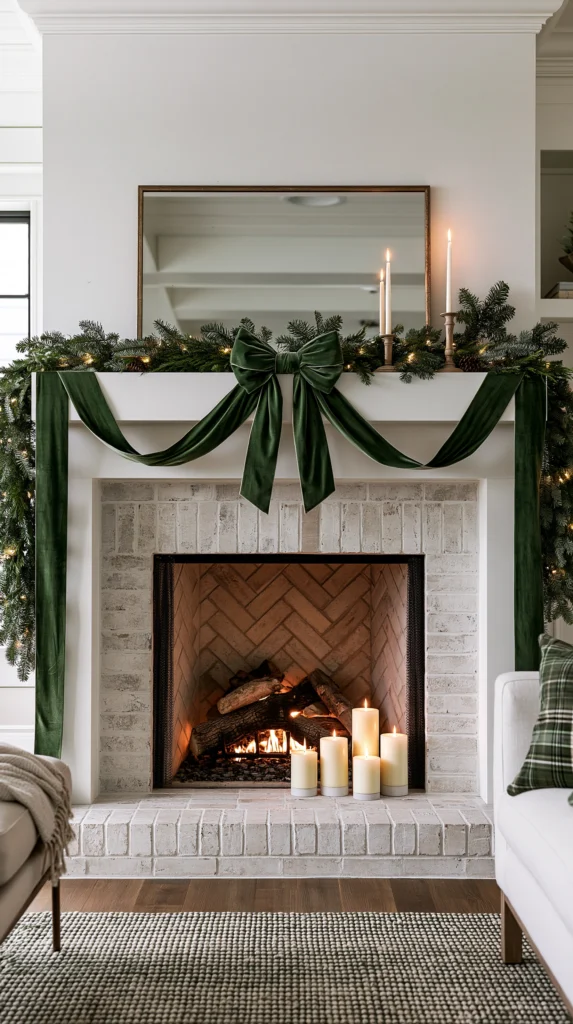
The look: Wide, high-quality ribbon as the dominant visual element, with minimal other decor.
Building it:
- Drape wide velvet or silk ribbon along the mantel’s edge in place of a full garland
- Add a single ribbon bow or cascade at the center as a focal point
- Include just a few candles or small greenery sprigs as support, not competing decor
- Choose ribbon in a rich, single tone rather than a printed or patterned option
Why it reads as elevated: Fabric texture and a single strong color read as more designed than a standard garland-and-ornament combination.
Cost: $25–$55 for enough quality ribbon to drape a full mantel.
8. The Fresh Fruit and Greenery Mantel
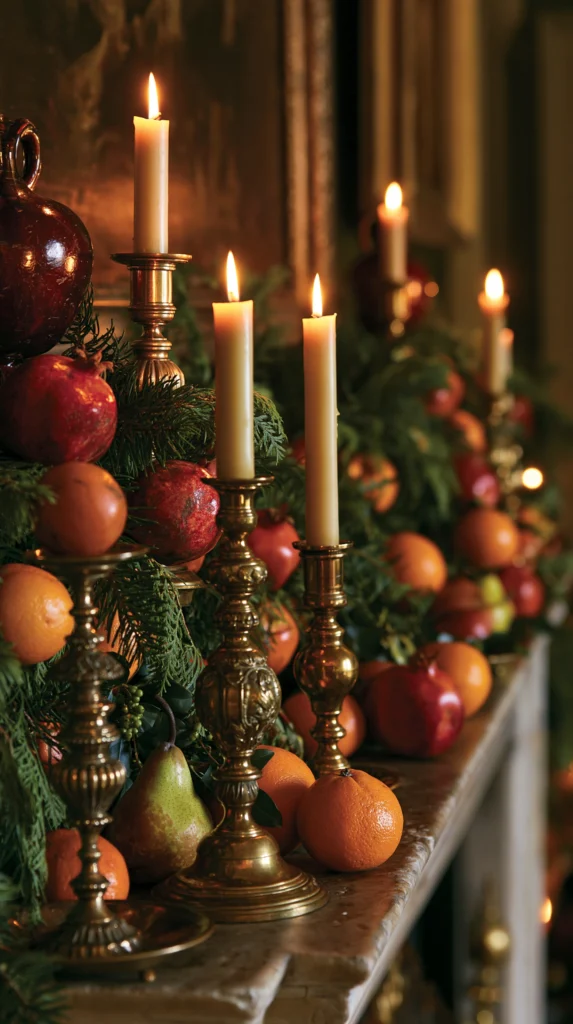
The look: Citrus and pomegranates mixed into the greenery for an old-world, European-inspired look.
Building it:
- Lay a base garland of pine or cedar along the mantel
- Tuck whole pomegranates, small oranges, and pears into the greenery at intervals
- Add a few gold or brass candle holders for warmth against the fruit’s color
- Refresh fruit every few days if using real produce, since it will eventually soften
Why it reads as elevated: It references a specific, recognizable decorating tradition rather than generic modern Christmas decor.
Cost: $20–$40 for garland and fresh fruit.
9. The Neutral Scandinavian-Inspired Mantel
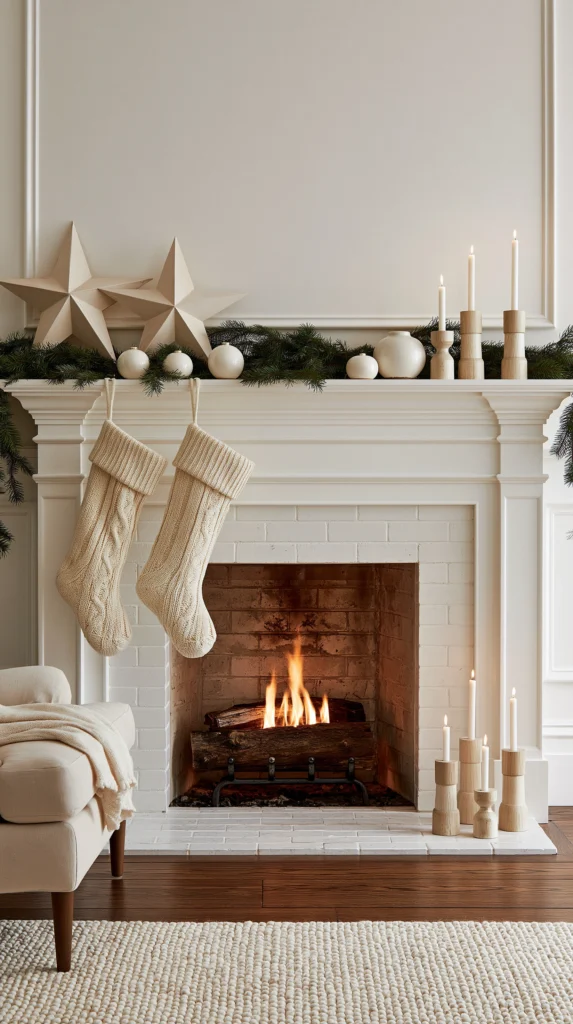
The look: White, cream, and light wood tones, leaning minimal and calm rather than bold.
Building it:
- Use a light, sparse garland rather than a full, dense one
- Add cream and light wood ornaments, skipping red and green entirely
- Include a few simple wood or ceramic stars or geometric shapes
- Keep spacing generous, with more negative space than a traditional mantel
Why it reads as elevated: The restraint and cooler palette photograph as calm and intentional rather than busy.
Cost: $35–$75 for neutral-toned decor pieces.
10. The Statement Wreath Above, Minimal Mantel Below
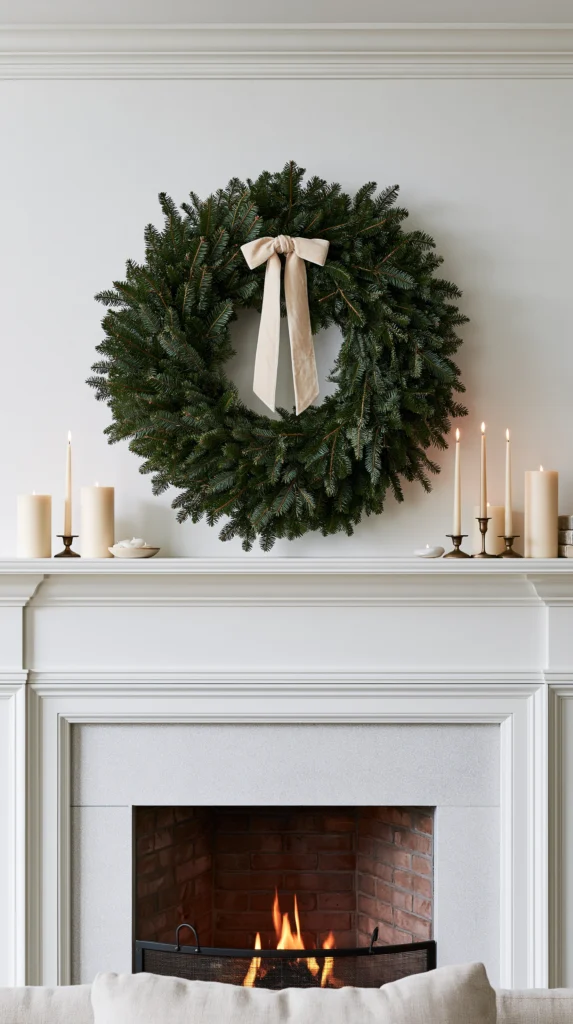
The look: A single oversized wreath as the true focal point, with the mantel surface kept deliberately simple.
Building it:
- Hang one large, full wreath centered above the mantel
- Keep the mantel surface itself to just a few candles or small objects
- Let the wreath’s size and fullness carry most of the visual weight
- Avoid competing with a busy mantel arrangement underneath a statement wreath
Why it reads as elevated: One big, well-chosen piece often outperforms many smaller ones fighting for attention.
Cost: $30–$70 for a large, full wreath.
11. The Plaid and Buffalo Check Mantel
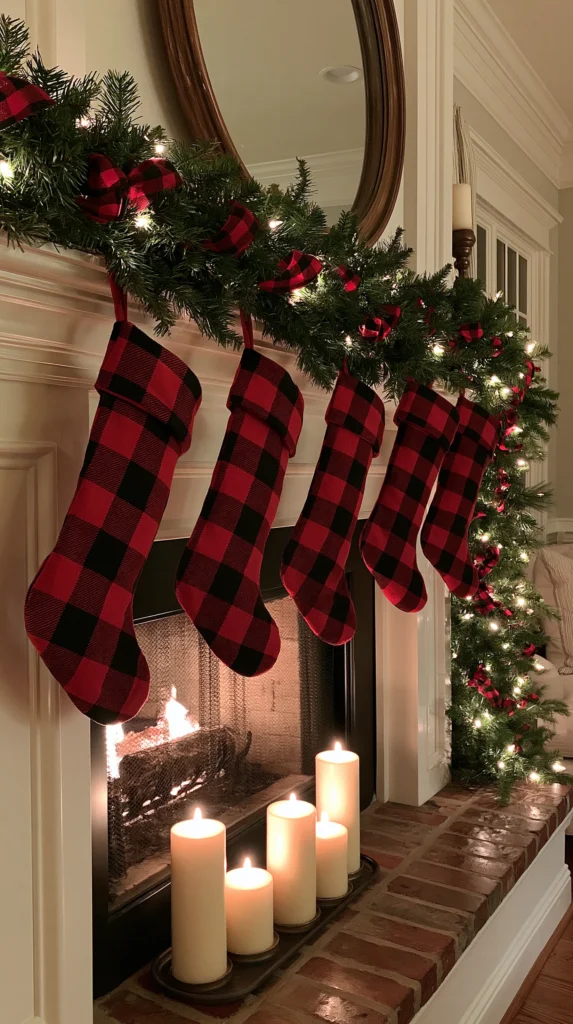
The look: A classic red-and-black or red-and-white check pattern as the dominant textile element.
Building it:
- Use plaid ribbon woven through a traditional green garland
- Add matching plaid stockings hung with simple hooks
- Include a few solid red or cream candles to balance the pattern
- Keep the pattern to ribbon and stockings only, not multiple competing plaid items
Why it reads as elevated: A single consistent pattern, used with restraint, reads as classic rather than themed.
Cost: $20–$45 for ribbon and matching stockings.
12. The Metallic Mixed-Finish Mantel
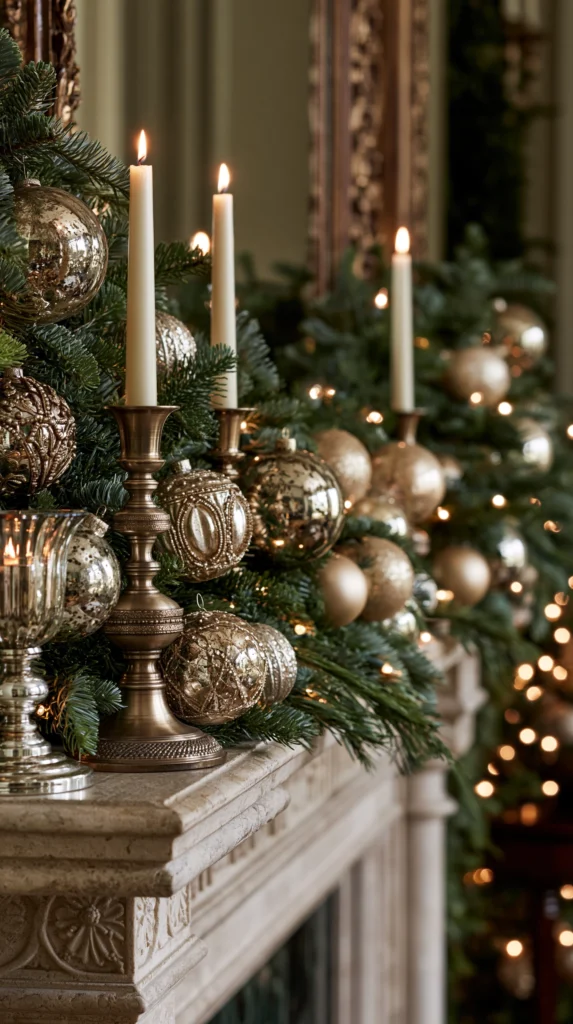
The look: Gold, silver, and brass combined deliberately for a glamorous, layered effect.
Building it:
- Start with a simple green or white garland base
- Add metallic ornaments and candle holders in at least two different finishes
- Include a few mercury glass pieces to catch and reflect candlelight
- Keep the ratio roughly 60/40 between the two dominant metallics for balance
Why it reads as elevated: Mixed metallics read as curated and collected rather than a single matched set bought all at once.
Cost: $40–$95 for a mix of metallic accent pieces.
Photographing Your Finished Mantel
If the goal is genuinely magazine-worthy results, how the mantel gets photographed matters almost as much as how it’s styled.
- Shoot straight-on rather than at an angle, since angled shots distort proportions and height variation
- Use natural daylight when possible, turning off overhead lights that can cast a yellow or greenish tint
- Take the photo from a slightly lower angle, roughly seated eye level, rather than standing directly above the mantel
- Crop out any surrounding clutter in the shot itself rather than trying to fix it after the fact
Comparing Total Cost Across All 12 Styles
For anyone deciding between styles primarily on budget, here’s every option side by side.
| Style | Estimated Cost |
| Monochromatic evergreen and white | $40–$90 |
| Black and gold statement | $50–$110 |
| Natural, undecorated-looking | $25–$60 |
| Symmetrical formal | $60–$130 |
| Layered candle-only | $30–$70 |
| Vintage ornament cluster | $70–$180 |
| Ribbon-forward | $25–$55 |
| Fresh fruit and greenery | $20–$40 |
| Neutral Scandinavian-inspired | $35–$75 |
| Statement wreath above | $30–$70 |
| Plaid and buffalo check | $20–$45 |
| Metallic mixed-finish | $40–$95 |
Most budget-friendly overall: the fresh fruit and greenery mantel, since much of the material can come from a regular grocery trip rather than a specialty decor purchase.
Highest investment, but most reusable long-term: the symmetrical formal mantel, since matching candlesticks and quality garland typically last many seasons with proper storage.
When to Start Building Your Mantel Each Year
Timing affects both cost and stress level.
- Early November: Best time to shop for garland and base materials, before seasonal stock sells through
- Late November: Order any specialty items, like oversized vintage ornaments, that may need shipping time
- First week of December: Assemble the full mantel, leaving time for the editing step before guests start arriving for the season
- Throughout December: Do a quick weekly check for drooping greenery, burnt-down candles, or shifted decor that needs a small refresh
Matching a Style to Your Existing Room
Not every idea suits every room’s existing decor.
- Traditional or classic rooms: the symmetrical formal mantel and plaid mantel fit naturally
- Modern or minimalist rooms: the candle-only and Scandinavian-inspired mantels fit best
- Farmhouse or rustic rooms: the natural greenery and fresh fruit mantels work well
- Formal or glamorous rooms: the black and gold, and mixed-metallic mantels suit best
Lighting Each Style for Evening Impact
Most mantels get seen more at night than during the day, and lighting choices change how each style actually reads after dark.
| Mantel Style | Best Bulb Tone | Extra Lighting Tip |
| Monochromatic evergreen | Warm white | Add small fairy lights woven through garland |
| Black and gold | Warm white | Uplight from below to catch gold reflections |
| Natural/undecorated | Warm white | Keep light low and soft, avoid bright overhead |
| Symmetrical formal | Warm white | Match bulb tone on both sides for balance |
| Candle-only | N/A, real flame | Vary flame height with candle height for depth |
| Vintage ornament cluster | Warm white | Uplight ornaments slightly for a glow effect |
| Ribbon-forward | Warm white | Keep lighting soft so ribbon texture stays visible |
| Fresh fruit and greenery | Warm white | Add candles near fruit for a warm glow |
| Scandinavian-inspired | Cool-neutral white | Keep lighting minimal, matching the calm palette |
| Statement wreath | Warm white | Light the wreath itself, not just the mantel below |
| Plaid/buffalo check | Warm white | Standard warm lighting works well with this palette |
| Mixed-finish metallic | Warm white | Warm light makes mixed metals glow rather than clash |
The general rule: warm white bulbs suit nearly every style on this list except the cooler, more minimal Scandinavian palette, which can handle a slightly neutral tone without losing its calm effect.
Budgeting Across a Few Styles at Once
Some households want to layer two styles together, like natural greenery with a few metallic accents, rather than sticking to just one.
- Start with whichever base style has the lowest cost, usually the natural greenery or candle-only mantel
- Add a second style’s accent pieces sparingly, treating them as a layer rather than a full second theme
- Keep the color story limited even when blending two styles, since combining too many palettes undoes the restraint that makes any single style read as elevated
- Reuse a strong base garland across multiple years, changing only the smaller accent pieces to shift the look annually without a full re-purchase
The Editing Step Most People Skip
Once a mantel is fully decorated, the single highest-impact step is removing, not adding.
- Step back and view the mantel from across the room, not up close
- Identify one item that could be removed without the overall look suffering
- Remove it, then reassess — repeat once more if needed
- Photograph the finished mantel, since photos often reveal clutter the eye missed in person
- Compare the photo against a magazine reference image if one inspired your original direction, checking specifically for negative space and color consistency
Common Mistakes That Undo an Otherwise Good Mantel
A handful of recurring issues explain most of the gap between a styled mantel and a magazine one.
- Too many colors at once, mixing red, green, gold, silver, and white without any restraint
- No height variation, with every object sitting at roughly the same level along the mantel
- Skipping the above-mantel wall space, leaving a styled surface below a completely bare wall above it
- Overcrowding, filling every available inch rather than allowing any negative space between elements
- Mismatched lighting temperature, combining warm and cool bulbs within the same display without realizing the inconsistency
One Last Check Before Calling It Finished
A quick final pass catches anything the styling process itself might have missed.
- Confirm every candle is a safe distance from any hanging greenery or ribbon
- Check that the mantel’s weight distribution feels stable, especially with heavier vintage ornaments or metal candlesticks
- Walk into the room fresh, as if seeing it for the first time, rather than judging it while still mid-arrangement
- Ask one other person for a quick honest read, since a second set of eyes often catches clutter the original stylist has stopped noticing
A magazine-worthy mantel rarely has more decorations than a typical one. It just has fewer, better-chosen pieces with real breathing room between them, lit consistently, and edited down at least once before being called finished.
The gap between a mantel that photographs well and one that just looks fine in person usually comes down to these same few decisions repeated across every style on this list: pick a tight palette, vary the height, leave gaps, light it warm, and remove one thing before calling it done.