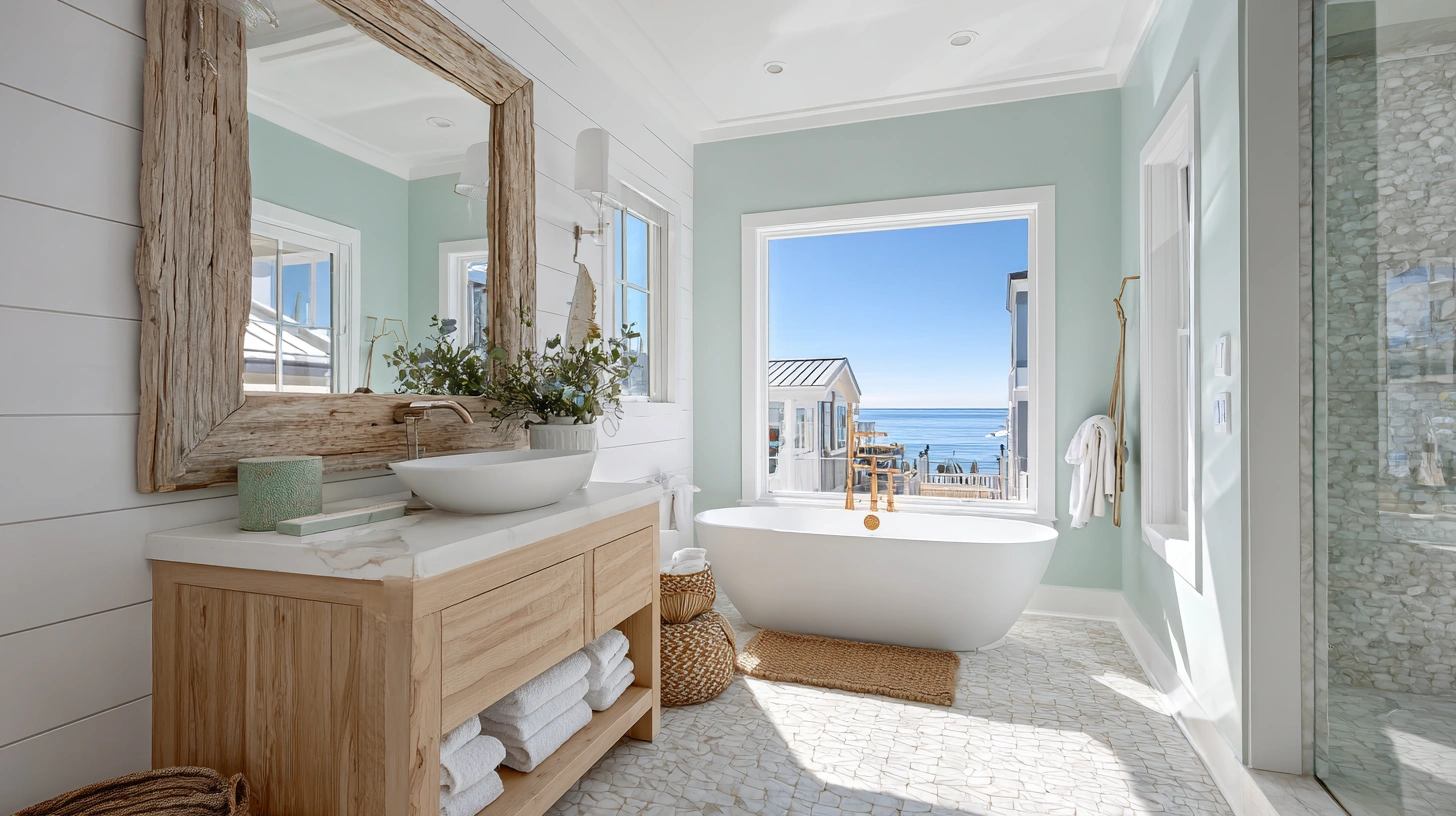
15 Coastal Bathroom Ideas for a Breezy Feel
There is a particular quality of ease that a well-designed coastal bathroom creates — the feeling of being somewhere unhurried, where the light is clear and soft, the materials are honest and tactile, and the overall atmosphere communicates that whatever needs doing can be done at whatever pace feels right.
It is not the bathroom of a hotel chain. It is the bathroom of somewhere that has a relationship with the sea — a weathered shack on a quiet coast, a white-walled house on a sun-baked island, a timber cabin within sound of the waves.
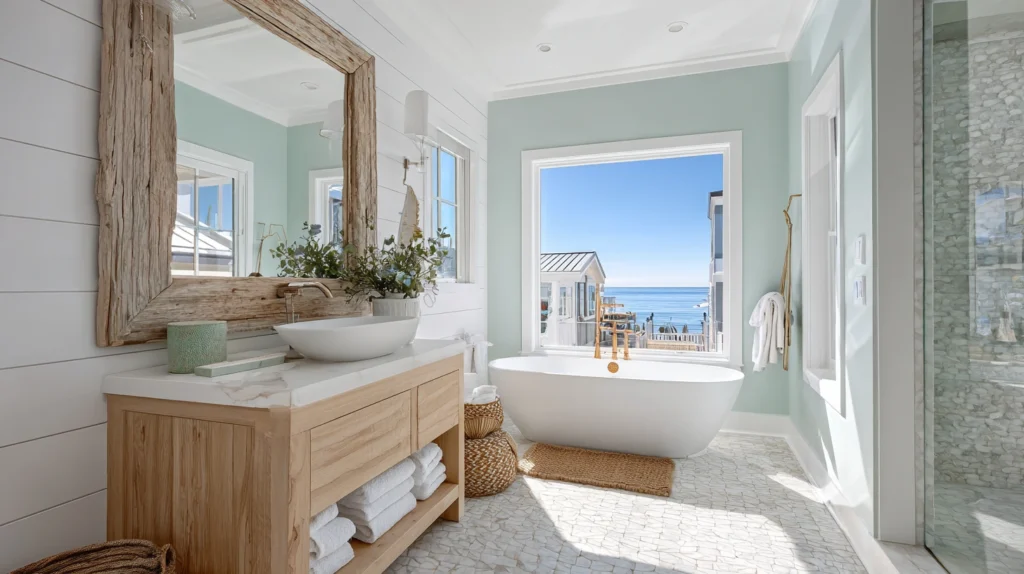
The coastal bathroom works because it is built from materials and colours that reference their origins honestly. Pale wood that looks as though salt air has touched it. Tiles the colour of shallow water over pale sand.
Rope, shell, driftwood, cotton, and stone used because they belong — because they carry the sensory memory of the coast in their texture and their tone. The ideas below translate that quality into achievable, practical bathroom transformations at every budget and every scale.
1. The White Shiplap Wall
Budget: $80 – $500
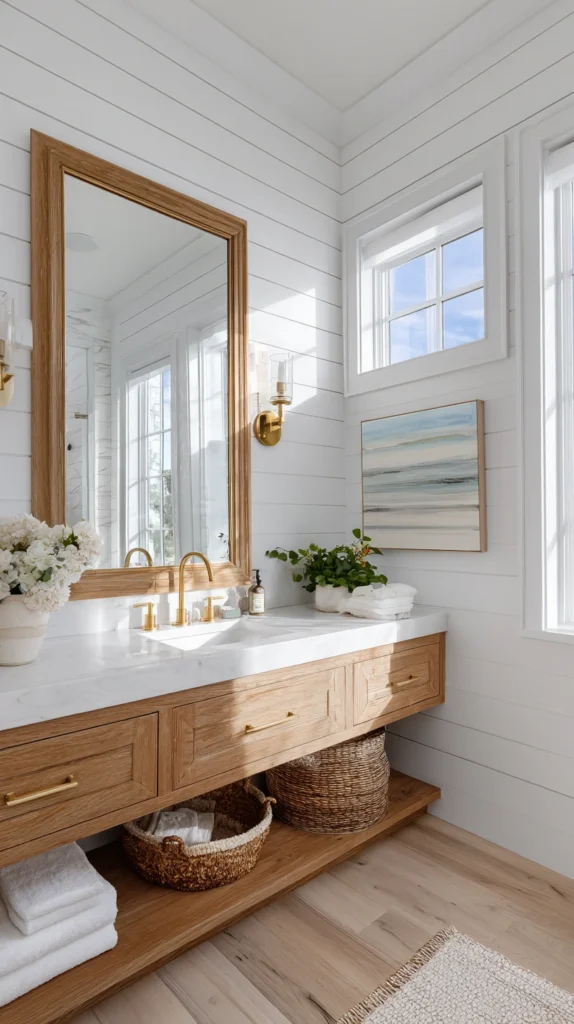
Shiplap timber cladding — horizontal boards with a slight rebate at each edge that creates a shadow line between courses — painted in flat white or warm off-white on a bathroom wall brings the most immediately recognisable coastal architectural element into the interior. The horizontal lines of the boarding reference the horizon, the white paintwork references the whitewashed timber of coastal buildings, and the shadow lines between boards create a subtle surface texture that flat painted plaster entirely lacks.
Install shiplap on the wall behind the bath, behind the vanity, or across all four walls for full immersion. Use moisture-resistant MDF shiplap boarding or genuine pine tongue-and-groove sealed with exterior-grade primer and eggshell paint for durability in the wet bathroom environment. The boards cost $15–$40 per square metre in materials and can be installed directly over existing plasterboard with construction adhesive and nails.
Garden tip: Paint the shiplap in a flat or eggshell finish rather than a gloss — flat white on shiplap boarding creates the chalky, slightly bleached quality of sun-faded coastal timber, while gloss paint makes the boarding look like a bathroom accessory rather than an architectural element. The matte finish is the detail that makes the difference between a bathroom that looks coastal and one that looks like it is trying to.
2. The Pebble and Stone Floor
Budget: $60 – $300
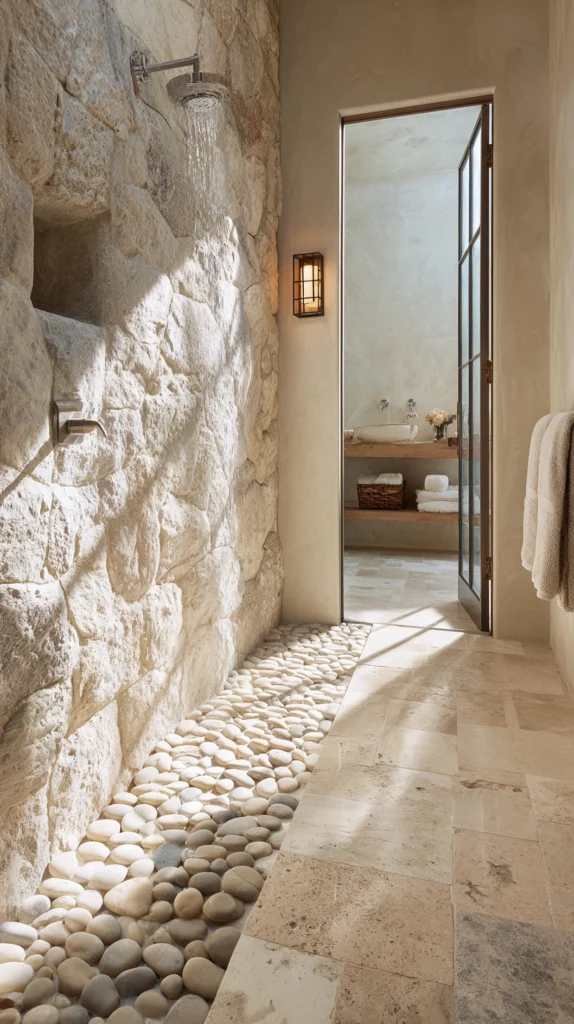
A bathroom floor tiled with smooth river pebbles, slate chippings, or natural stone mosaic creates a surface that references the physical texture of a beach underfoot in a way that conventional tile cannot. The irregular surface of pebble mosaic in particular — rounded stones set on edge in a mortar bed — creates a mildly textural, pleasantly tactile walking surface that feels simultaneously natural and luxurious. Underfloor heating beneath a pebble mosaic floor creates one of the best underfoot experiences available in any bathroom.
Pre-mounted pebble mosaic sheets on a mesh backing cost $15–$35 per sheet covering approximately 0.09 square metres and make installation straightforward on a prepared floor substrate. Natural slate mosaic tiles cost $20–$50 per square metre. Both require a flexible tile adhesive and a waterproof grout — grey or sand-toned grout suits both materials better than white, which makes the joints between stones appear too prominent and too regular.
Styling tip: Use the pebble or stone floor in the wet area of the shower only — from the shower threshold inward — rather than across the entire bathroom floor. The pebble surface as a shower floor creates a contained, spa-like zone of natural texture within a more conventional tiled or timber bathroom floor, which looks more considered and more deliberate than wall-to-wall pebble throughout the space.
3. The Driftwood Mirror Frame
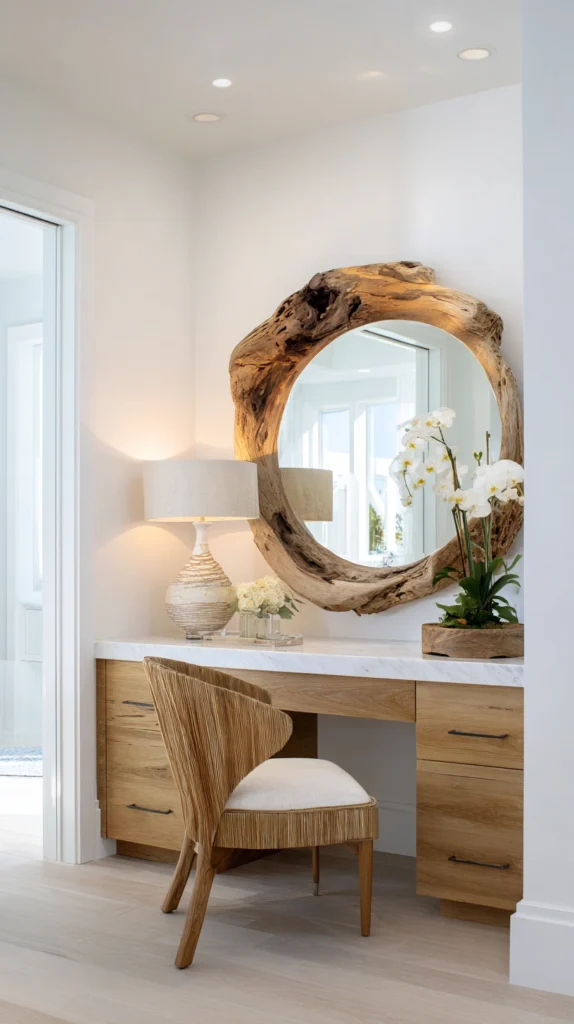
Budget: $40 – $200
A bathroom mirror framed in driftwood — either a purpose-made piece from a coastal artisan or a DIY frame built from collected pieces of weathered timber glued around a standard mirror — creates a focal point of genuine natural character and coastal authenticity that no commercially produced mirror frame can replicate. The silver-grey, sun-bleached surface of driftwood, the irregular forms of each piece, and the accumulated history of the material — worn by water and time into its current state — give the finished frame a quality of place that suits the coastal bathroom perfectly.
Collect driftwood pieces on coastal walks, source from online craft suppliers ($15–$40 per bag of mixed pieces), or purchase a purpose-made driftwood mirror from a coastal artisan market or independent homeware retailer ($60–$150 for a quality piece). Position the mirror above the vanity where it serves its practical function while the driftwood frame creates the most visible decorative statement in the bathroom.
Styling tip: Choose driftwood pieces in a consistent tonal range — all pale silver-grey, or all warm honey-brown — rather than mixing very light and very dark pieces in the same frame. A frame with consistent tonal range reads as a unified piece; a frame with extreme tonal variation between pieces reads as a collection of different materials assembled together, which reduces the coherence and the natural quality of the finished mirror.
4. The Sea Glass and Shell Display
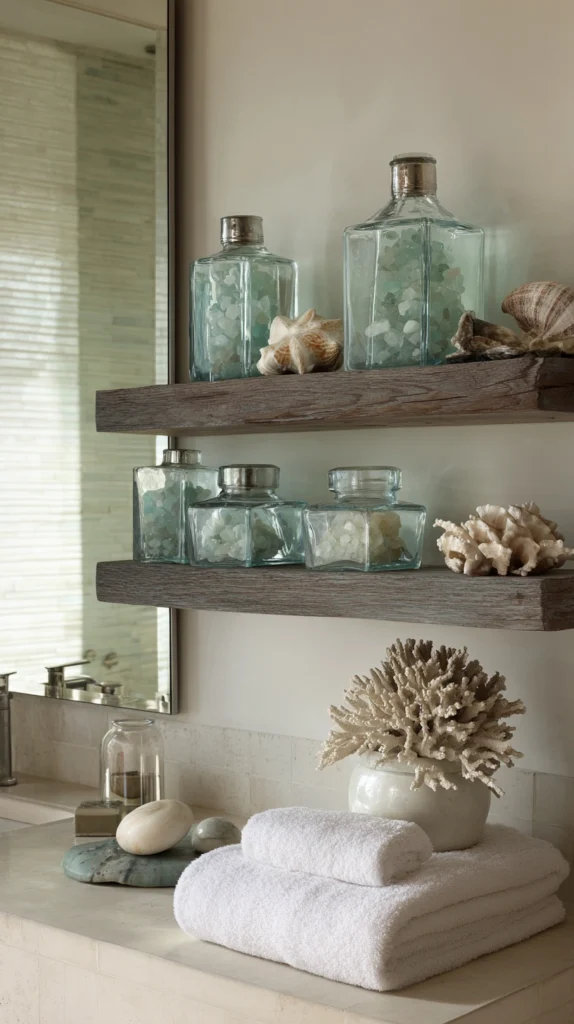
Budget: $10 – $60
A collection of sea glass, shells, smooth pebbles, coral fragments, and sand dollars displayed on a bathroom shelf, in a glass bowl on the vanity, or arranged in a series of glass apothecary jars creates the most personal and the most genuinely coastal decorating element available in any bathroom. These are objects collected from actual beaches — or sourced from coastal suppliers — that carry the physical memory of the sea in their surfaces. No manufactured coastal accessory communicates the same authenticity.
Display sea glass in a clear glass bowl or jar where the translucency of the glass and the light that passes through the coloured pieces is visible — green, blue, amber, and white sea glass in a clear bowl on a white shelf creates a simple, genuinely beautiful display that costs nothing beyond the collecting. Large shells placed as individual sculptural objects on a shelf — a conch, a nautilus, a large scallop — communicate the coastal aesthetic with a directness and an organic beauty that printed or manufactured coastal accessories cannot match.
Styling tip: Resist the temptation to fill every surface with shells and sea glass. Two or three significant pieces displayed with clear space around them create a more sophisticated coastal impression than a bathroom covered in shell-themed accessories at every scale. The restraint communicates genuine connection to the coast rather than decorating theme.
5. The Soft Blue and Green Tile Palette
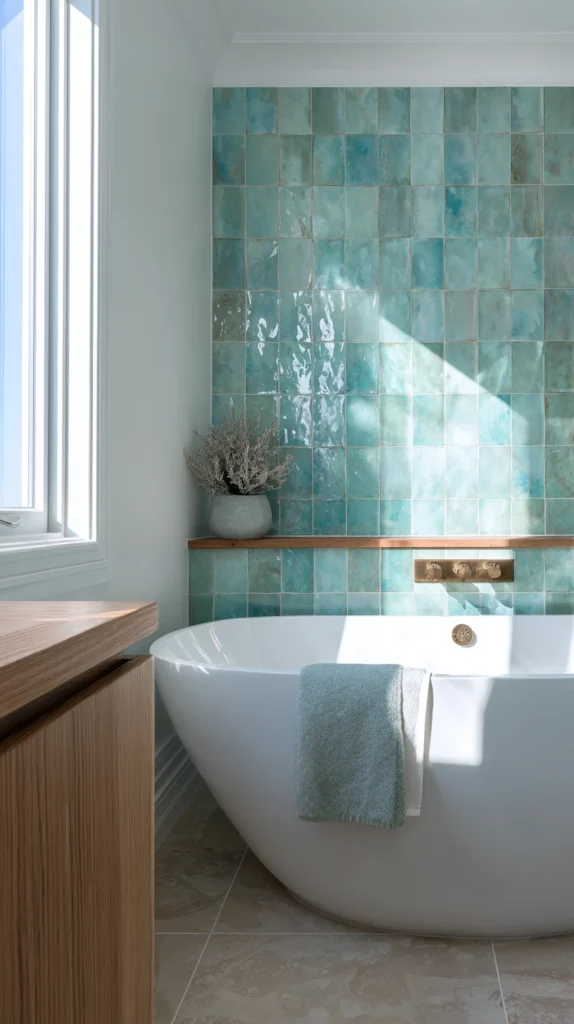
Budget: $100 – $600
Tiles in the colour range of coastal water — pale aqua, soft turquoise, dusty teal, warm sand, sea green, soft grey-blue — are the most immediate and most complete way to introduce the coastal palette into a bathroom. The colour of shallow water over pale sand, or of deep water beyond a reef, or of the sea on an overcast day — all of these are available in ceramic and glass tile form, and a bathroom tiled in any of them creates an immediately convincing coastal atmosphere.
Handmade ceramic tiles in coastal glazes cost $30–$80 per square metre and have a slight variation in colour and surface texture between individual tiles — exactly the quality that creates the impression of genuine craft and natural material rather than uniform manufactured product. Glass mosaic tiles in iridescent sea-toned colours cost $20–$50 per square metre and catch light in a way that ceramic tiles cannot, creating a surface that appears to shift colour as the light changes.
Styling tip: Use coastal-coloured tiles on a single feature surface — behind the bath, inside the shower enclosure, or as a full-height splashback behind the vanity — rather than tiling the entire bathroom in one colour. A single tiled feature surface surrounded by plain white walls and natural timber creates a more refined and more considered coastal bathroom than a uniformly tiled space where the colour is present on every wall simultaneously.
6. The Rope and Natural Fibre Accessories
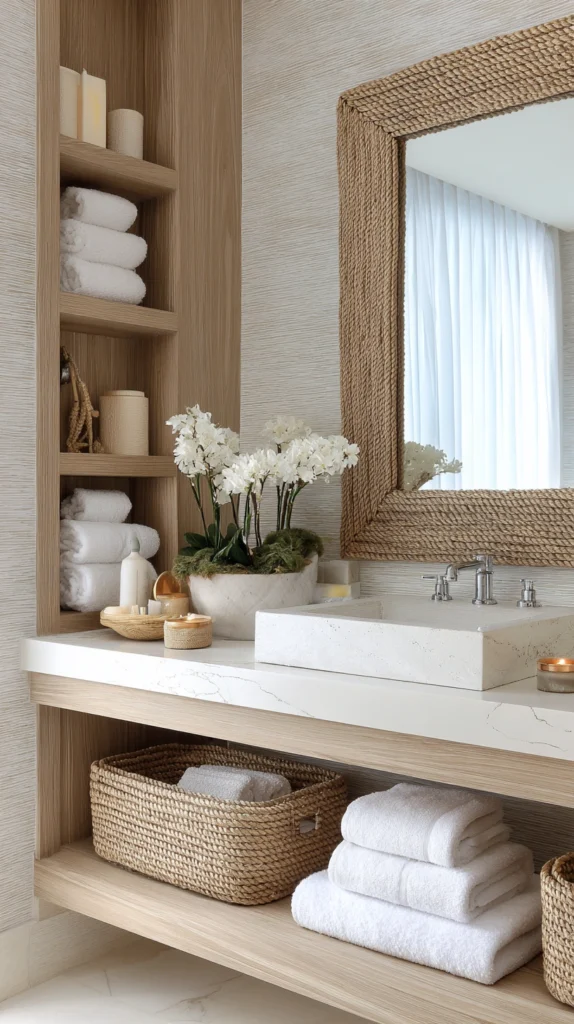
Budget: $20 – $100
Natural rope, jute, sisal, and woven grass accessories — rope-wrapped towel rings, jute-wrapped storage baskets, woven seagrass bath mats, rope-handled mirrors, macramé wall hangings — bring the tactile quality and the natural material palette of coastal environments into the bathroom at every scale. These are materials that reference their maritime origins directly — rope in particular carries an almost universal association with the sea — and they warm the coastal bathroom in a way that ceramic and glass accessories alone cannot achieve.
Woven seagrass bath mats cost $15–$40 and provide a natural, textural floor covering beside the bath or shower that suits the coastal bathroom far better than a conventional synthetic bath mat. Jute storage baskets for towels and toiletries cost $10–$30 each and add natural texture to bathroom storage. Rope-wrapped towel rings and hooks cost $15–$40 each and replace standard chrome bathroom hardware with something that suits the material palette of the coastal room.
Styling tip: Combine natural fibre accessories with white cotton towels rather than coloured ones — white cotton against jute, rope, and woven grass creates the clean, bleached coastal quality that the combination of natural fibres and vivid colour loses. The material warmth of the natural fibres and the fresh clarity of white cotton is the combination that reads most convincingly as coastal rather than simply rustic.
7. The Freestanding Roll-Top Bath
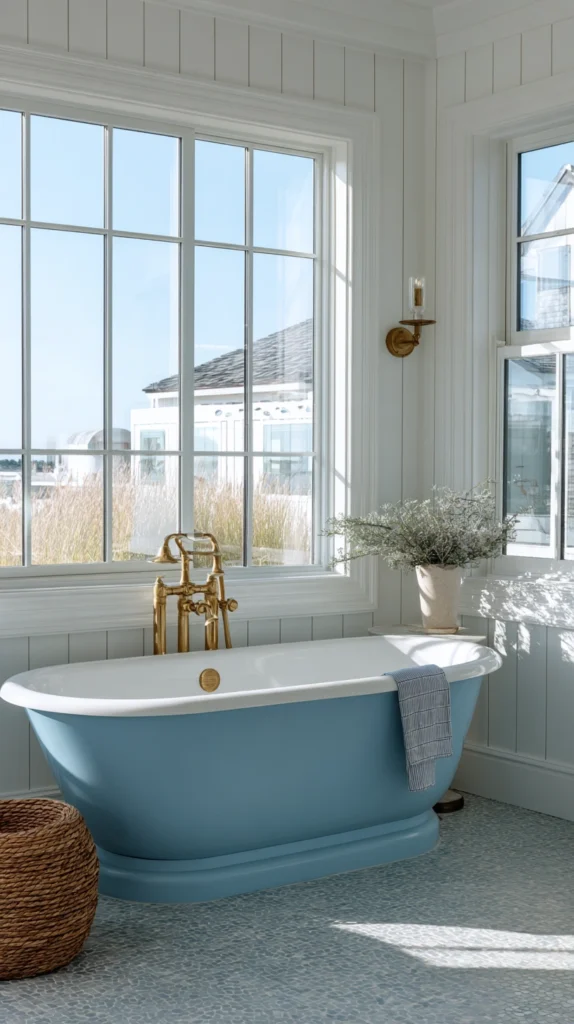
Budget: $400 – $2,000
A freestanding roll-top bath — the classic Victorian bathtub form, standing on claw feet or a simple plinth base — is the most architecturally significant and the most immediately impactful single investment available in a coastal bathroom renovation. The roll-top bath has associations with relaxed, unhurried bathing that built-in baths and contemporary freestanding forms lack — it implies that the bath is the point of the room, that time spent in it is time well spent, and that the bathroom is a place of genuine comfort rather than efficient ablution.
Cast iron roll-top baths are the most beautiful and the most durable option — their thermal mass keeps the water warm for significantly longer than acrylic versions, and their surface is incomparably more beautiful. A reconditioned cast iron roll-top costs $400–$1,200 from salvage dealers and specialist bathroom suppliers. A new acrylic version costs $300–$800 and provides a convincing visual result at lower cost and weight.
Styling tip: Paint the exterior of a roll-top bath in a coastal colour — pale sage green, dusty blue, warm off-white, or soft teal — rather than leaving it in the standard white. A painted exterior transforms the bath from a conventional bathroom fitting into a statement piece of furniture, and the colour choice provides the opportunity to anchor the entire bathroom palette to the bath as its focal point.
8. The Natural Timber Vanity
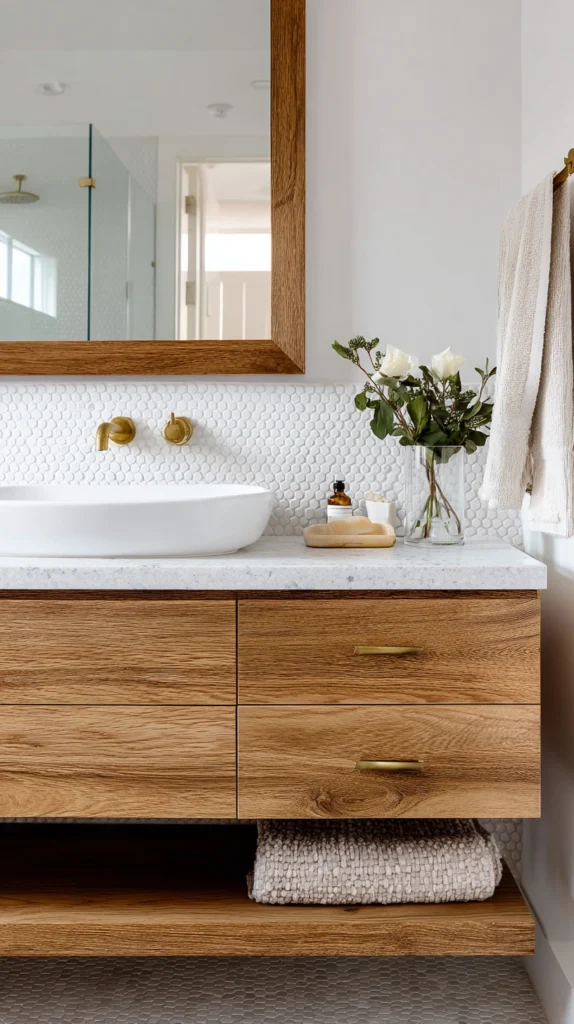
Budget: $200 – $1,200
A bathroom vanity in natural, unsealed or lightly oiled timber — oak, teak, pine, reclaimed hardwood — brings a warmth and an organic quality into the coastal bathroom that painted MDF and lacquered cabinetry cannot achieve. The grain of the timber, the slight variation in tone between boards, and the way the surface weathers and responds to the humid bathroom environment over time are all qualities that communicate natural material honesty — the same quality that makes driftwood beautiful and aged timber coastal buildings so atmospheric.
Teak is the most naturally water-resistant timber for bathroom use — its high oil content protects it from moisture without any additional treatment. Oak and pine require regular oiling with a quality hardwax oil to maintain their water resistance in a wet bathroom environment. A natural timber vanity unit costs $200–$600 for a quality piece from a specialist bathroom retailer or independent furniture maker.
Styling tip: Pair a natural timber vanity with brushed brass or antique bronze hardware — taps, drawer handles, and mirror fixings — rather than chrome. Chrome against natural timber looks clinical and disconnected; warm brass or bronze against natural wood grain creates a material partnership of genuine warmth and coastal character that suits the overall atmosphere of the room.
9. The Woven Rattan and Cane Storage
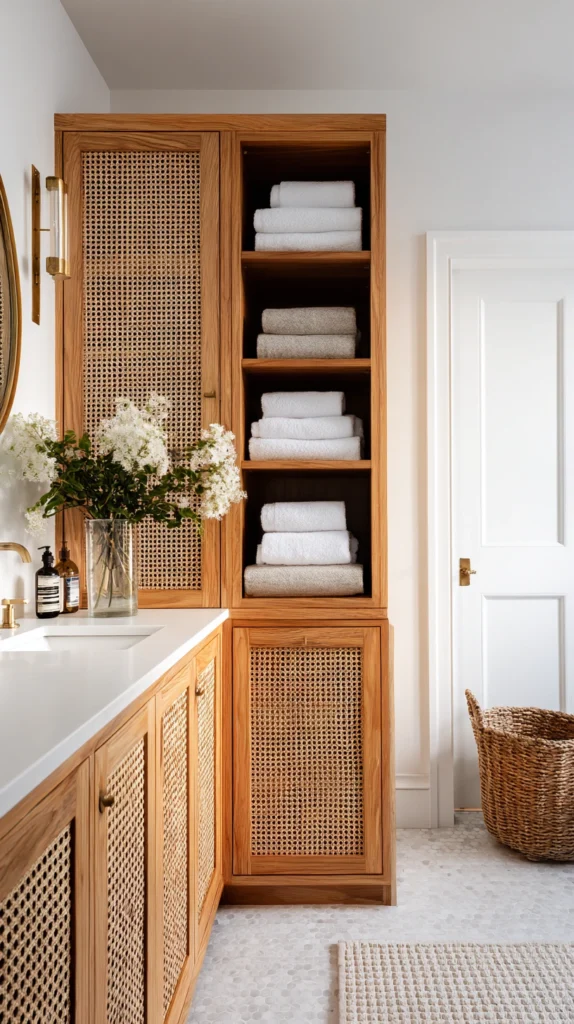
Budget: $40 – $200
Rattan baskets, cane storage units, woven laundry hampers, and rattan-fronted cabinet doors bring the lightweight, tropical-coastal material quality of natural woven cane into the bathroom storage scheme. Rattan and cane have a long association with coastal and island environments — the materials are simultaneously practical and decorative, visually light and warm, and they age beautifully in a bathroom context, developing a deeper honey tone with time and use.
Replace the solid panel doors of an existing bathroom cabinet with rattan webbing panels — remove the existing door panels, cut rattan webbing to size, and staple it into the door frame. The transformation costs $20–$40 in materials and takes an afternoon. The rattan-fronted cabinet is one of the most effective and most widely adopted bathroom storage updates available — the woven surface creates visual interest and coastal warmth on what is typically the flattest and most visually uninteresting surface in the bathroom.
Styling tip: Line the inside of rattan-fronted cabinet shelves with pale blue or soft white painted timber so the colour is visible through the woven rattan panel. The contrast between the warm honey tone of the rattan and the pale colour behind it creates a depth and layering in the cabinet front that a solid panel door never achieves — and the visible colour inside the cabinet reinforces the coastal palette throughout the storage as well as on the visible bathroom surfaces.
10. The Nautical Stripe Textile Scheme
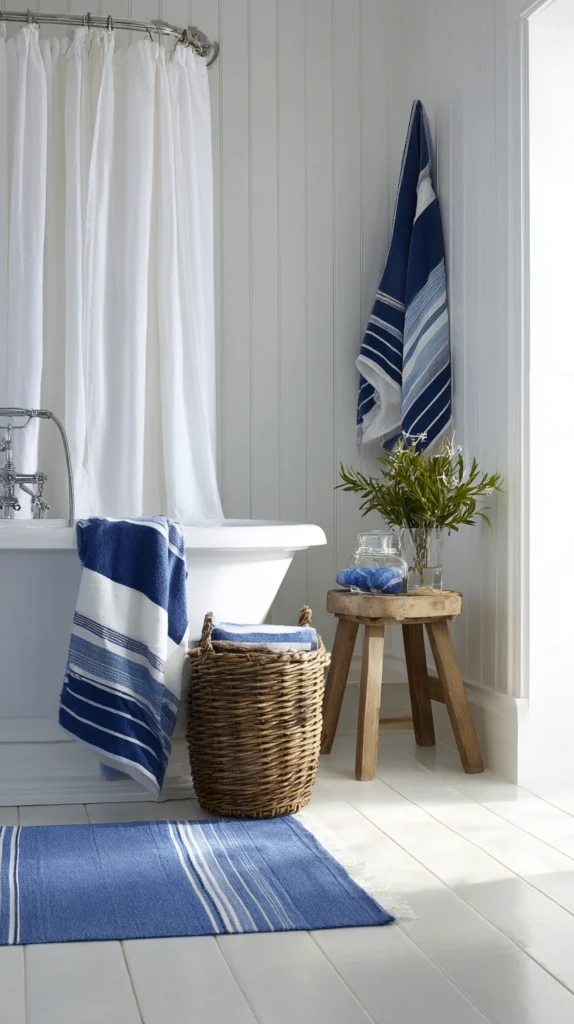
Budget: $40 – $180
A bathroom textile scheme built around the nautical stripe — navy and white, blue and cream, grey and white, or red and white in varying widths and scales — brings the most immediately recognisable coastal pattern into the bathroom through towels, bath mats, shower curtains, and small textile accessories. The stripe is versatile enough to read as contemporary, traditional, or relaxed depending on the colour combination and the scale of the stripe width, and in a bathroom context it provides graphic interest without the complexity of a pattern.
Striped cotton towels in navy and white cost $10–$25 each and look most convincing hung in sets — two matching bath towels, two hand towels, folded consistently and displayed on a rail or open shelf rather than stuffed into a cabinet. A striped shower curtain ($20–$60) is the single largest textile surface in a bathroom and provides the maximum impact of the stripe pattern on the overall visual character of the space.
Styling tip: Limit the nautical stripe to the textiles only — towels, bath mat, shower curtain — rather than introducing it onto walls or tiles as well. The stripe in the textiles provides sufficient pattern interest; stripe on the walls alongside stripe in the textiles creates a competition between surfaces that reduces the impact of both. Let the textiles carry the pattern and let the walls provide the calm, consistent backdrop that makes the stripe read clearly.
11. The Coastal Scent and Botanical Display
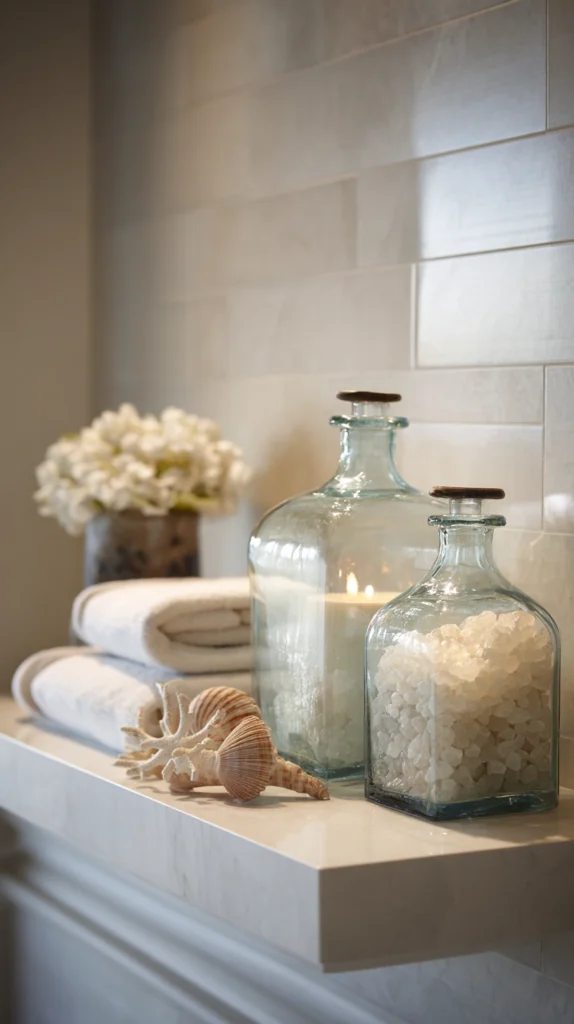
Budget: $20 – $100
A bathroom that smells of the coast — of sea air, driftwood, salt, sun-dried cotton, coastal herbs like sea lavender and samphire — creates a sensory coastal atmosphere that visual decoration alone cannot achieve. Reed diffusers in coastal fragrance blends, dried coastal botanicals displayed in small glass vessels, natural sea salt bowls on the shelf, and coastal herb sachets in cotton muslin bags all contribute to a scent landscape that reinforces the visual coastal palette at a sensory level.
Dried sea lavender ($5–$15 per bunch) displayed in a simple glass vase or ceramic pot provides both fragrance and visual texture. Reed diffusers in ocean, sea salt, or coastal wood fragrance blends cost $15–$40 and maintain a consistent background scent for four to six weeks. A small bowl of natural sea salt crystals ($5–$10) on a bathroom shelf is simultaneously a visual reference to the coast and a subtle source of the clean, mineral scent that sea air carries.
Styling tip: Keep the coastal bathroom scent subtle rather than overwhelming — the most convincing coastal fragrance is a suggestion rather than an assertion. A heavily perfumed bathroom loses the clean, breezy quality that the coastal aesthetic is built on. A light, consistent background fragrance from a reed diffuser and the natural scent of dried botanicals creates the right level of olfactory presence — noticed and appreciated rather than immediately obvious.
12. The Weathered Wood Shelf Display
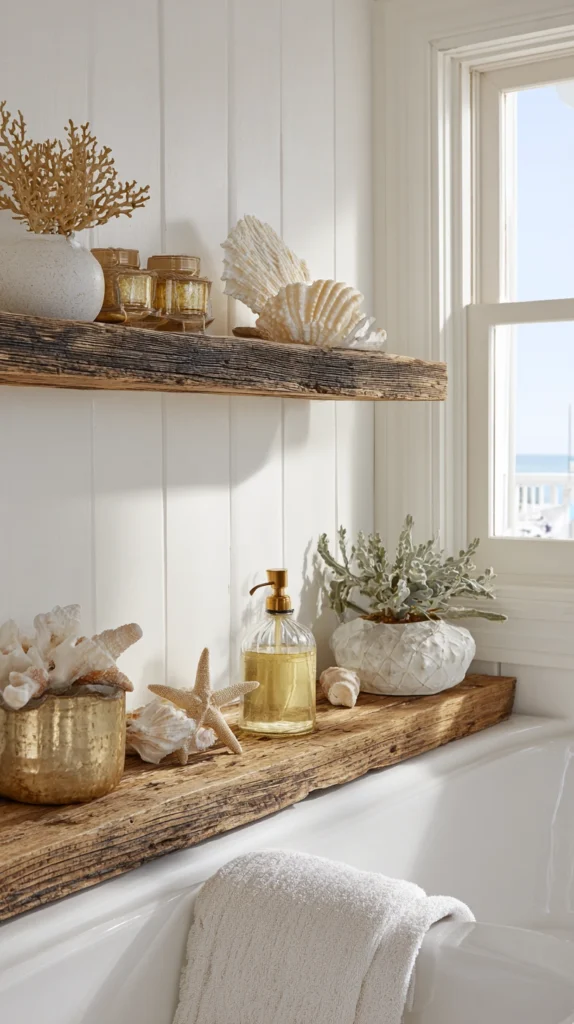
Budget: $30 – $150
A bathroom shelf made from a single length of weathered, reclaimed, or deliberately aged timber — mounted on simple rope supports, iron brackets, or driftwood supports — creates a display surface of genuine natural character that suits the coastal bathroom far better than a standard white painted shelf. The patina of weathered timber, its surface imperfections, and the honest, slightly rough quality of reclaimed wood all communicate the coastal aesthetic through material honesty rather than decoration.
A length of reclaimed oak or pine from a demolition or salvage yard costs $10–$30 and requires only sanding, sealing, and mounting. Deliberately aged new timber — treated with a watered-down coat of grey-tinted wood stain and distressed with sandpaper after drying — creates a convincing weathered appearance at very low cost. Mount with natural rope supports looped over two ceiling hooks for a hanging shelf effect that suits the coastal bathroom with particular elegance.
Styling tip: Style the weathered timber shelf as a carefully edited display rather than a storage surface — three or four objects with clear space between them rather than a shelf filled end to end. A single large piece of driftwood, a glass jar of sea glass, a small succulent in a terracotta pot, and a folded white linen hand towel creates a shelf arrangement that communicates the coastal aesthetic through restraint and quality of individual objects rather than quantity.
13. The Open Shower With Stone Walls
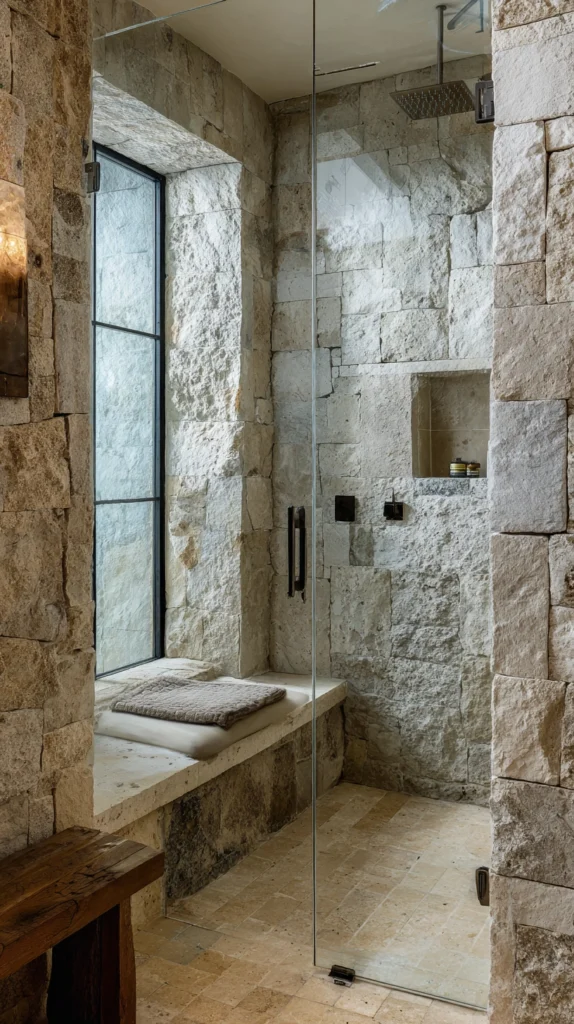
Budget: $500 – $3,000
A walk-in shower with natural stone tile walls — slate, limestone, travertine, or rough-hewn granite — creates a showering experience of extraordinary sensory richness that more conventional tiled surfaces cannot approach. The texture of natural stone in a wet environment, the slight colour variation between individual stone pieces, and the way water moves across and through stone surfaces all create a shower that feels genuinely elemental — like bathing in a rock pool or beneath a coastal waterfall rather than in a domestic plumbing installation.
Slate tiles cost $20–$50 per square metre and create a dramatic, dark-toned shower wall with exceptional texture. Limestone costs $30–$70 per square metre and creates a pale, sandy surface with natural fossil and shell inclusions visible in the stone. Both require sealing with a penetrating stone sealer before use and annually thereafter to prevent staining and moisture penetration through the stone body.
Styling tip: Leave the grout joints in a natural stone shower wall as narrow as possible — 2–3 millimetres rather than the standard 5–8 millimetres used for ceramic tiles. Narrow joints make the stone surface read as a continuous natural material rather than as individual tiles separated by visible grout, which significantly increases the sense of natural stone immersion that is the defining quality of this shower treatment.
14. The Coastal Colour Wash Wall
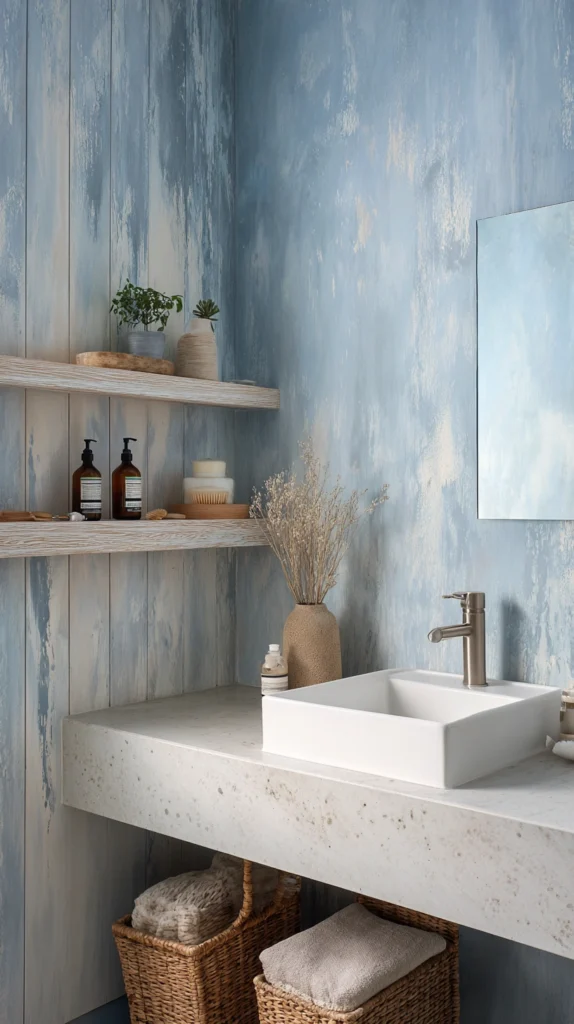
Budget: $20 – $80
A bathroom wall painted in the particular pale, slightly chalky, slightly weathered quality of coastal colour wash — applied with a dry brush technique in two overlapping layers of slightly different tones — creates a surface with the soft, faded quality of a sun-bleached wall in a coastal village rather than the flat, uniform coverage of a conventionally painted surface. The technique is simple, requires no specialist skill, and produces a result with genuine atmospheric quality.
Apply a base coat of pale sandy white or warm off-white and allow to dry completely. Mix the second coat — pale blue-grey, soft sage, or warm terracotta — to a thin, watery consistency and apply with a wide, dry brush in loose, uneven strokes, allowing the base coat to show through. The result has the layered, slightly imperfect quality of limewash or distemper rather than modern emulsion — exactly the quality that makes coastal architecture so atmospheric.
Styling tip: Apply the colour wash to one wall only — the wall opposite the bathroom window, where the raking light that enters the room will pick up the texture and the layering of the technique most visibly. A colour-washed feature wall in a coastal bathroom creates an immediate sense of depth and atmosphere; the same technique on all four walls can feel overwhelming in a small bathroom space where the walls are close and the surface is seen at close range.
15. The Coastal Lighting Scheme
Budget: $60 – $400
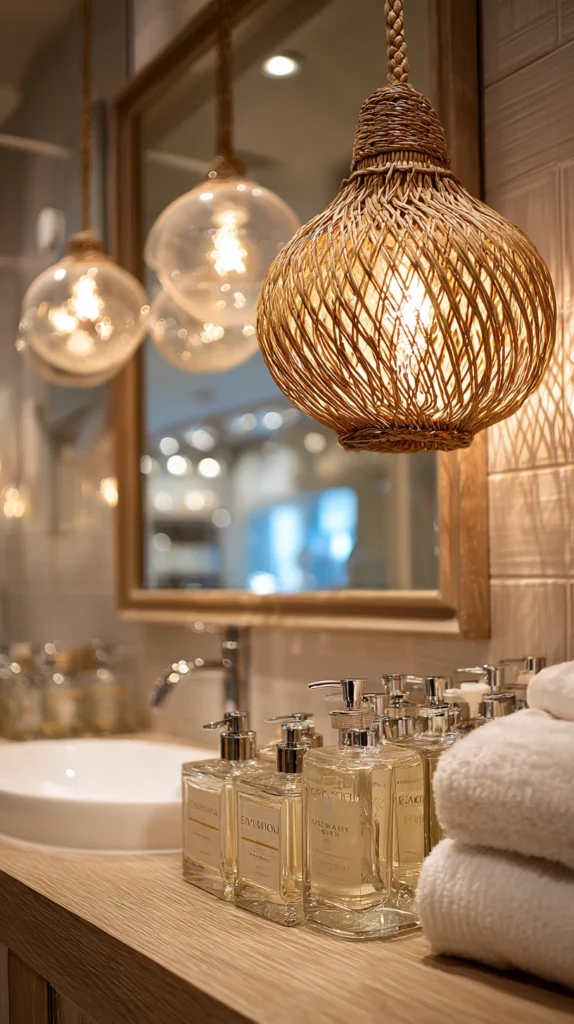
Bathroom lighting designed for the coastal aesthetic — rope-wrapped wall lights, wicker pendant shades, glass globe lights on a simple brass fitting, driftwood-based table lamps beside a freestanding bath — creates a quality of warm, diffused light that reinforces the relaxed, unhurried atmosphere of the coastal bathroom. The lighting fixture is one of the most frequently overlooked elements in bathroom decoration and one of the most impactful — the quality of light in a bathroom determines how the space feels at every hour of the day and evening.
Rattan or wicker pendant shades in a coastal bathroom create a warm, filtered light quality — the woven surface casts a patterned shadow on the walls and ceiling that catches the surface texture of the room’s materials in an atmospheric way. Glass globe pendants in a warm amber or clear glass finish cost $40–$100 each and suit the coastal bathroom with a clean simplicity that more elaborate fittings lack. Specify warm white bulbs at 2700K for all bathroom lighting — the warm tone flatters both the natural materials and the people using the room.
Styling tip: Install a separate dimmable circuit for the main bathroom light so the intensity can be reduced for an evening bath rather than requiring the overhead light to be switched off entirely in favour of candles. A dimmable bathroom light at low intensity creates a quality of warm, intimate light that suits the coastal bathroom’s unhurried atmosphere perfectly — without the fire risk of candles in a wet bathroom environment and without the harsh brightness of full overhead illumination.
The coastal bathroom is ultimately a room built on material honesty and sensory generosity — natural materials used because they are genuinely beautiful, a colour palette drawn from an actual landscape, and a quality of atmosphere created through the accumulation of considered details rather than a single dramatic gesture. Choose the ideas that suit the scale of your bathroom and the depth of the transformation you are ready for, execute them with care for the materials and the overall coherence of the palette, and the coastal quality will follow naturally — a room that feels genuinely unhurried in the best possible way.
