13 Fall Scented Bedroom Decor Ideas
My bedroom smelled like nothing for years. Laundry detergent on the sheets, maybe, and that was the entire scent profile of the room I slept in every single night.
Tried one plug-in air freshener once. Smelled like artificial pumpkin spice candy, gave me a headache within twenty minutes, unplugged it before bed and never used it again.
Then I learned that scented decor is its own design category, with objects that are simultaneously beautiful, functional, and genuinely fragrant. Real materials, real essential oils, real craft, rather than synthetic fragrance sprayed into the air.
Now walking into my bedroom triggers an immediate physical sense of calm before I have even looked at anything. Same room, same furniture, completely different sensory experience.
Let me show you 13 scented decor ideas that make a bedroom smell like fall while still looking like an intentionally designed room rather than a candle store.
Why Most Bedroom Scent Attempts Fail
The artificial fragrance problem:
What goes wrong with plug-ins and sprays:
- Synthetic fragrance oils, not natural essential oils
- Overwhelming and headache-inducing at close range (a bedroom is a small, enclosed space)
- The scent fades from awareness within minutes due to nose fatigue, so it gets sprayed again, compounding the problem
- No decorative or functional value beyond the fragrance itself
The single-candle limitation:
Why one candle is not a system:
- A single candle, only burning occasionally, provides inconsistent scent
- Most candles sit unlit most of the time, providing zero fragrance value when not actively burning
- A genuine scented decor approach uses objects that release fragrance continuously, not only during the rare moment a match is struck
What scented decor actually requires:
The dual-function principle:
- Every object should work as decor first, with fragrance as a built-in function
- This means choosing real materials (dried botanicals, natural wood, pure essential oils) rather than synthetic alternatives
- A genuinely well-scented bedroom looks beautiful with the lights on and smells wonderful with the lights off
My revelation: Scented bedroom decor is not about adding fragrance to a finished room — it is about choosing decor objects whose material happens to be fragrant. The scent becomes inseparable from the object, not an addition to it.
1. A Dried Lavender Bundle on the Nightstand (The Sleep-Specific Classic)
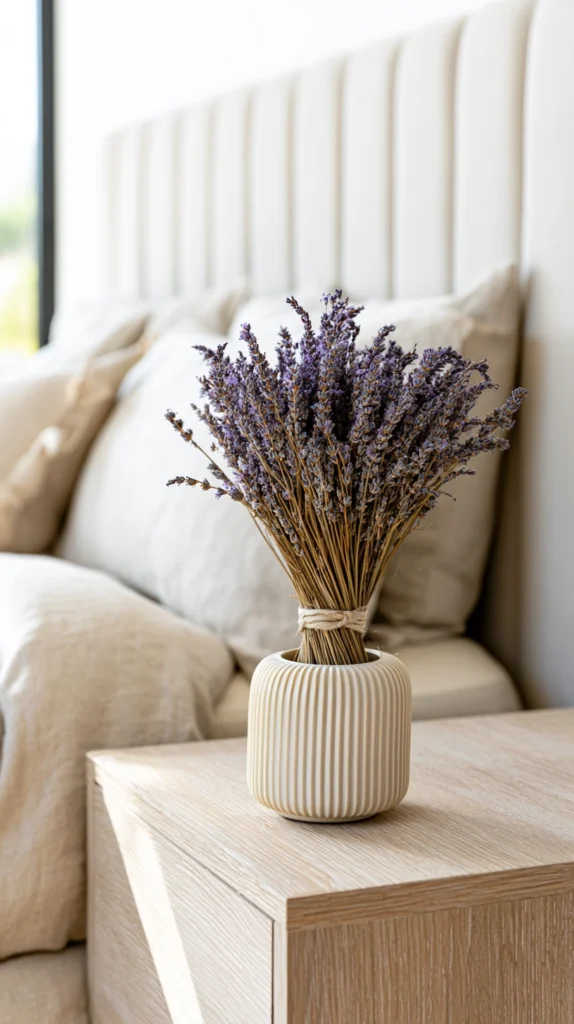
A small bundle of dried lavender stems, tied and displayed beside the bed — the most clinically supported scent choice for a bedroom specifically.
My nightstand before:
What was there:
- A phone charger and a glass of water
- No fragrance, no botanical element, nothing connecting the space to the season at all
Why lavender specifically for a bedroom:
The sleep science:
- Lavender is among the most studied scents for sleep, with measurable effects on reducing cortisol and heart rate
- This is not simply a pleasant fragrance choice but one with genuine physiological backing for a room used specifically for rest
- Unlike many fall scents (cinnamon, clove, woodsmoke) which are warm but stimulating, lavender is warm and calming simultaneously
Sourcing a lavender bundle:
Where to find quality dried lavender:
- Farmers markets in late summer and early fall (often the freshest, most fragrant stems)
- Specialty herb shops and apothecaries
- Online sources like Mountain Rose Herbs or Etsy dried botanical sellers
- Growing and drying your own, if garden space allows (the most economical option over time)
How to bundle it:
The simple construction:
- Gather 15-20 dried lavender stems
- Trim stems to a consistent length, roughly 6-8 inches
- Tie tightly near the cut end with natural twine or a thin ribbon
- Fan the flower heads slightly for a fuller appearance
Display options:
Where and how to place it:
- Standing upright in a small ceramic vase or jar (no water needed, dried stems)
- Laid flat on a small wooden tray beside other nightstand objects
- Hung upside down from a small hook on the wall above the nightstand
Color and texture:
Why it fits the fall bedroom aesthetic:
- The dusty purple-gray of dried lavender pairs beautifully with the earthy, warm color palettes common in fall bedroom decor
- The texture is delicate but substantial, adding visual interest without requiring any electrical or flame element
Refreshing the scent over time:
Maintaining fragrance:
- Dried lavender retains noticeable scent for several months but does fade gradually
- Gently crushing a few flower heads between fingers releases trapped fragrance oils
- A drop or two of lavender essential oil added directly to the dried stems revives the scent fully when it begins to fade
Cost:
- Dried lavender bundle (bunch or pre-made): $8-20
- Small display vase or vessel: $10-25
- Total: $18-45
My lavender bundle result: The simplest and least expensive scented decor addition on this entire list, the bundle sits beside my lamp and releases a gentle fragrance every time I brush against it while reaching for my glass of water, the scent has become directly associated with the moment of settling in for the night.
Lavender Bundle Tips
Choosing English lavender specifically:
Variety matters:
- English lavender (Lavandula angustifolia) has the sweetest, most calming scent profile
- French or Spanish lavender varieties can have a more camphorous, medicinal quality
- Check the variety when purchasing, as this affects how genuinely soothing versus sharp the scent will be
Crushing technique for scent release:
The gentle reactivation method:
- Roll a few flower heads between thumb and forefinger before bed
- This small ritual releases fresh fragrance oils and can become part of the nightly wind-down routine itself
- A pleasant, tactile habit that reinforces the sleep association each time it is performed
2. A Cinnamon Stick and Dried Orange Bundle (Warm Spice Without a Candle)
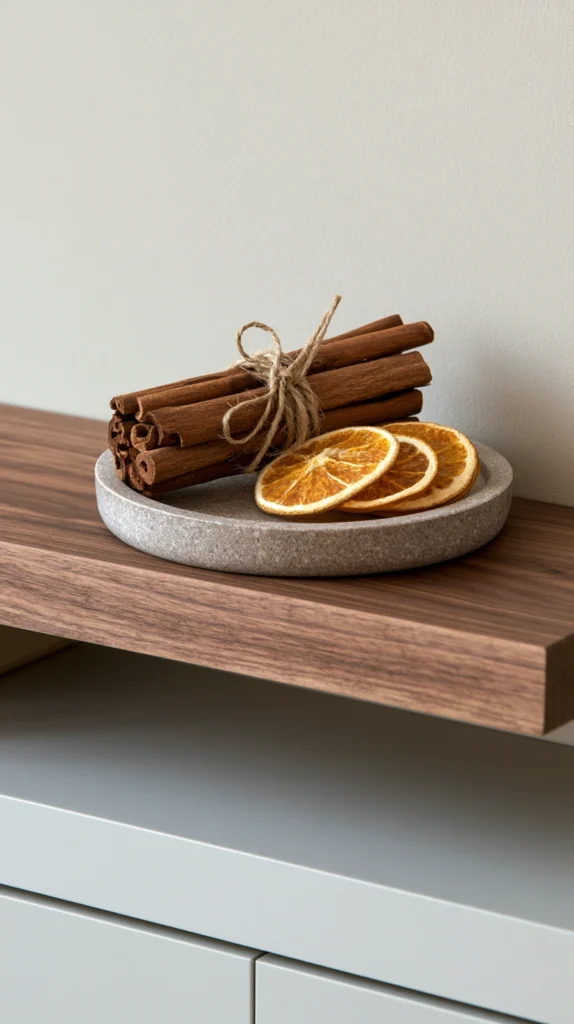
Cinnamon sticks bundled with dried orange slices — a traditional, naturally fragrant decoration requiring no flame, wax, or electricity.
My search for warm scent without heat:
The specific problem:
- Wanted the classic warm cinnamon-and-orange fall fragrance
- Did not want another candle adding to the bedroom’s fire-risk inventory
- Discovered that the traditional dried bundle achieves the same scent purely through the materials themselves
Why this combination is specifically fall:
The traditional reference:
- Cinnamon and dried citrus have been used as natural air fresheners and decorations for centuries, particularly associated with harvest and autumn gatherings
- The combination is warm (cinnamon) and bright (orange) simultaneously, avoiding the heaviness that an all-spice scent profile can sometimes carry
Making the bundle:
Materials needed:
- 8-10 whole cinnamon sticks
- 2-3 dried orange slices (homemade or store-bought)
- Natural jute twine or thin ribbon
- A few whole cloves (optional, for an additional spice note)
Drying your own orange slices:
The simple process:
- Slice an orange into thin, even rounds
- Pat dry with a paper towel
- Arrange on a baking sheet lined with parchment
- Bake at the lowest oven setting (around 200°F) for 3-4 hours, flipping once
- Let cool completely before handling further (they become brittle when fully dry)
Assembling the bundle:
Construction technique:
- Arrange the cinnamon sticks in a small fan or cluster
- Tuck the dried orange slices among the sticks
- Tie everything together near one end with twine, leaving enough length to hang if desired
- A few whole cloves can be tucked into the orange slices’ visible pith for added texture and scent
Display placement:
Where this bundle works best:
- Hung from a small hook near the window (catches subtle ambient air movement, releasing scent gradually)
- Laid in a shallow dish on the dresser
- Tucked among other dried botanicals in a larger nightstand arrangement (referencing the lavender bundle from idea 1)
Scent longevity and refreshing:
Maintaining fragrance over the season:
- This combination typically holds noticeable scent for 4-6 weeks
- A drop of cinnamon or sweet orange essential oil on the materials revives the fragrance when it begins to fade
- Beyond about two months, the bundle is best replaced with fresh materials, as dried citrus in particular loses both scent and structural integrity over time
Cost:
- Whole cinnamon sticks: $4-8
- Oranges for drying (or pre-dried slices): $3-10
- Twine and assembly: $2-5
- Total: $9-23
My cinnamon and orange bundle result: Hanging this small bundle near my bedroom window for under $15 in materials brought genuine, traditional fall fragrance into the room without introducing any flame or electrical element, the scent is noticeably warmer and more “classic fall” than the lavender bundle, making the two complement each other nicely in different parts of the room.
Cinnamon and Orange Tips
Avoid placing near direct sun:
Preserving the bundle:
- Direct sunlight accelerates fading of both scent and the visual color of the dried orange slices
- A spot with indirect light, near but not directly in a sunny window, preserves the bundle considerably longer
Layering with the lavender bundle:
Building a fuller scent profile:
- The calming quality of lavender and the warm spice of cinnamon and orange occupy different parts of the room without competing directly
- Many people find this combination, used in different corners of the same bedroom, creates a more complete and interesting fragrance experience than either alone
3. A Beeswax Candle Cluster With No Added Fragrance (Natural Honey Scent)
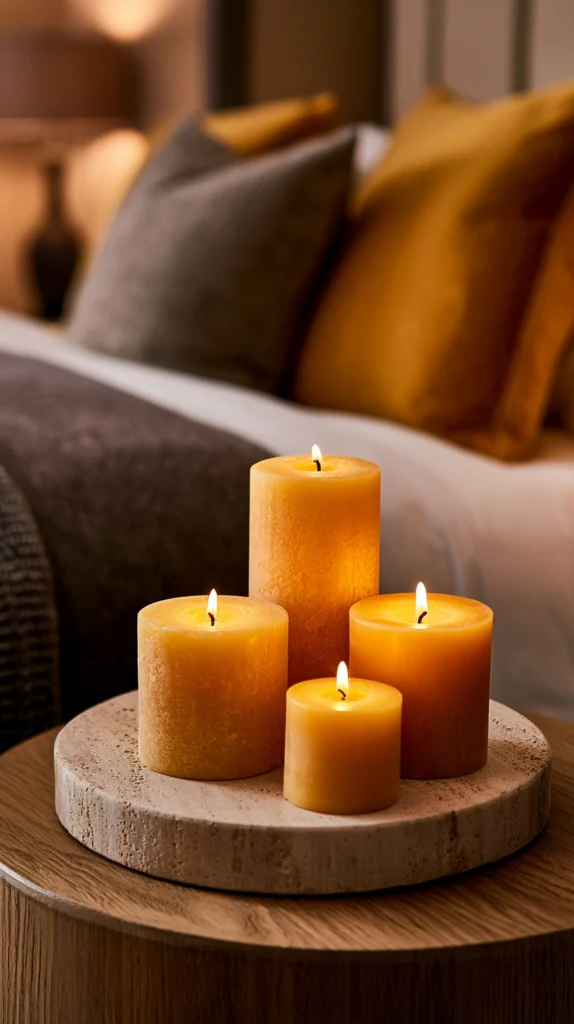
Pure, unscented beeswax candles, grouped and lit — proving that the most naturally fall-appropriate candle scent is often the one with no fragrance added at all.
My over-fragranced candle phase:
What I had been doing:
- Buying heavily scented “pumpkin spice” or “apple cinnamon” candles from big box retailers
- Synthetic fragrance that smelled artificial up close and gave mild headaches after extended exposure
- Never considered that pure beeswax itself carries its own genuine, subtle fragrance
Why pure beeswax matters:
The natural fragrance most people overlook:
- Beeswax candles, with no added fragrance oils, release a subtle, warm, honey-like scent purely from the wax itself as it burns
- This natural scent is genuinely autumnal: warm, slightly sweet, entirely free of the headache-inducing synthetic quality common in heavily fragranced candles
- Most people have never experienced this scent because nearly all commercial candles are made from paraffin or soy with added synthetic fragrance, masking what pure beeswax actually smells like
Sourcing genuine beeswax candles:
What to look for:
- 100% beeswax, with no parrafin blend (some “beeswax” candles are only partially beeswax)
- No added fragrance oils (the goal is the wax’s natural scent, not a masked version of it)
- Local beekeepers and farmers markets often sell genuine beeswax candles directly
- Online specialty retailers (Big Dipper Wax Works, Bee Friendly Honey Farm) for reliable quality
The cluster arrangement:
Building the visual and fragrant display:
- Several beeswax pillar candles of varying heights, grouped on a wooden tray or small ceramic dish
- The natural golden-amber color of beeswax itself provides visual warmth even unlit
- Grouping multiple candles together increases the natural scent throw when lit, compensating for beeswax’s typically more subtle fragrance compared to heavily scented alternatives
Why beeswax color and texture fit fall decor:
The visual bonus:
- Beeswax candles range from pale gold to deep amber, depending on the specific honey source
- This color range fits naturally into earthy, warm fall bedroom palettes without needing any additional styling
- The slightly irregular, hand-dipped quality common to genuine beeswax candles also supports the handcrafted aesthetic values discussed throughout fall and cottage-style decor more broadly
Safety in the bedroom specifically:
The real flame consideration:
- As with all real flame in a bedroom, never leave lit candles unattended, and always extinguish before sleep
- For those uncomfortable with any real flame in the bedroom, a high-quality LED candle cluster can substitute for the visual effect, though it will not replicate the genuine beeswax scent (real beeswax must actually burn to release its characteristic fragrance)
Cost:
- Beeswax pillar candles (set of 4-5): $25-50
- Wooden tray or ceramic dish: $15-30
- Total: $40-80
My beeswax candle cluster result: Switching from synthetic pumpkin spice candles to a cluster of unscented genuine beeswax pillars revealed an entirely different, far more pleasant fragrance experience, the natural honey-like scent is subtle enough to never cause headaches but distinctive enough to genuinely change the room’s atmosphere when lit in the evening.
Beeswax Candle Tips
Trim the wick before each burn:
Maximizing both burn quality and scent release:
- A properly trimmed wick (about a quarter inch) burns more cleanly and evenly
- This small habit also slightly improves how effectively the wax’s natural fragrance releases into the room while burning
Distinguishing genuine beeswax from blends:
What to check before buying:
- Genuine beeswax candles typically have a distinctly higher price point than paraffin or soy candles of similar size
- A very inexpensive “beeswax” candle is often a blend with minimal actual beeswax content, diluting both the scent and the burn quality genuine beeswax provides
4. A Cedar Wood Box or Drawer Liner (Subtle, Continuous Woodsy Scent)
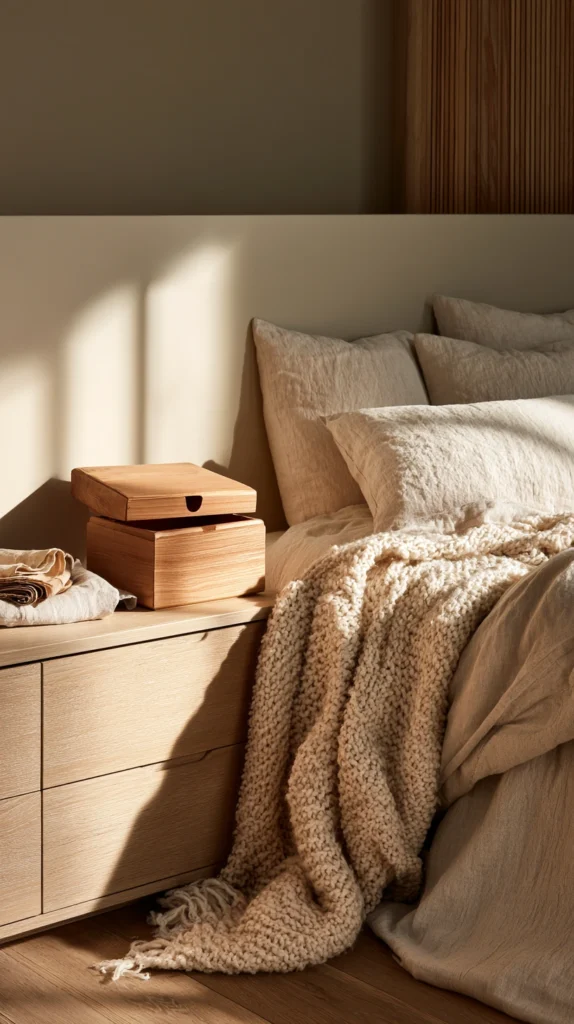
Cedar wood incorporated as functional storage — a fragrance source that requires no maintenance and works continuously without any flame or electricity.
My drawer and storage scent gap:
What was missing:
- Dresser drawers and closet storage with no fragrance element at all
- A missed opportunity, since these enclosed spaces hold scent particularly well once introduced
Why cedar specifically:
The natural properties:
- Cedar wood naturally releases a subtle, woodsy fragrance continuously, without needing to be lit, heated, or otherwise activated
- This fragrance is also a natural moth deterrent, providing a practical function alongside the scent benefit
- The scent is genuinely autumnal and grounding, evoking forest and woodland rather than the sweeter spice-forward scents common elsewhere on this list
Cedar product options:
Different forms to incorporate:
Cedar blocks:
- Small solid cedar blocks placed directly in drawers
- The most straightforward and affordable cedar option
- Cost: $8-15 for a set of several blocks
Cedar drawer liners:
- Thin cedar wood sheets cut to fit drawer dimensions
- Provides scent across the entire drawer surface rather than from a single block
- Cost: $15-30 for a set sized to standard dresser drawers
Cedar hangers:
- Solid cedar wood hangers for closet use
- Combines a functional closet need with continuous fragrance
- Cost: $30-60 for a set of several hangers
A small cedar box:
- A decorative cedar box on the dresser top, used for storing small items
- Functions as both a decor object and a fragrance source simultaneously
- Cost: $20-50 depending on craftsmanship
Where cedar fits in the broader scent system:
The “invisible” scent layer:
- Unlike candles or dried bundles, which are visible decor elements, cedar’s fragrance often works in the background, scenting clothing, linens, or small stored items without drawing visual attention to itself
- This makes cedar an excellent complement to the more visible scented decor elsewhere in the room, filling in a fragrance layer that operates even when nothing is actively burning or displayed
Refreshing cedar’s scent:
Maintenance over time:
- Cedar’s natural oils diminish gradually, typically over six months to a year
- Lightly sanding the surface of a cedar block or liner with fine sandpaper exposes fresh wood and renews the scent
- A few drops of cedarwood essential oil also revives the fragrance without requiring any sanding
Cost:
- Cedar blocks (set): $8-15
- Cedar drawer liners: $15-30
- Cedar box for the dresser: $20-50
- Total: $43-95 (choosing a combination, not necessarily all options)
My cedar storage result: Adding cedar liners to my dresser drawers and a small cedar box on top for jewelry storage introduced a subtle, continuous woodsy fragrance that I notice specifically when opening drawers or reaching for the box, this background layer works alongside the more prominent lavender and cinnamon scents without competing against them.
Cedar Tips
Sanding lightly to refresh:
The renewal technique:
- Fine-grit sandpaper (220 grit or higher) gently passed over the cedar surface exposes fresh wood
- This takes only a minute or two and noticeably renews the fragrance without needing to replace the entire piece
Combining function with fragrance:
Maximizing the cedar investment:
- Choose cedar items that also serve a genuine storage function (drawer liners that actually protect clothing, a box that actually holds jewelry)
- This dual-function approach means the cedar fragrance comes essentially free, riding alongside an object you needed regardless
5. A Reed Diffuser With a Custom Fall Essential Oil Blend (Consistent, Flame-Free Fragrance)
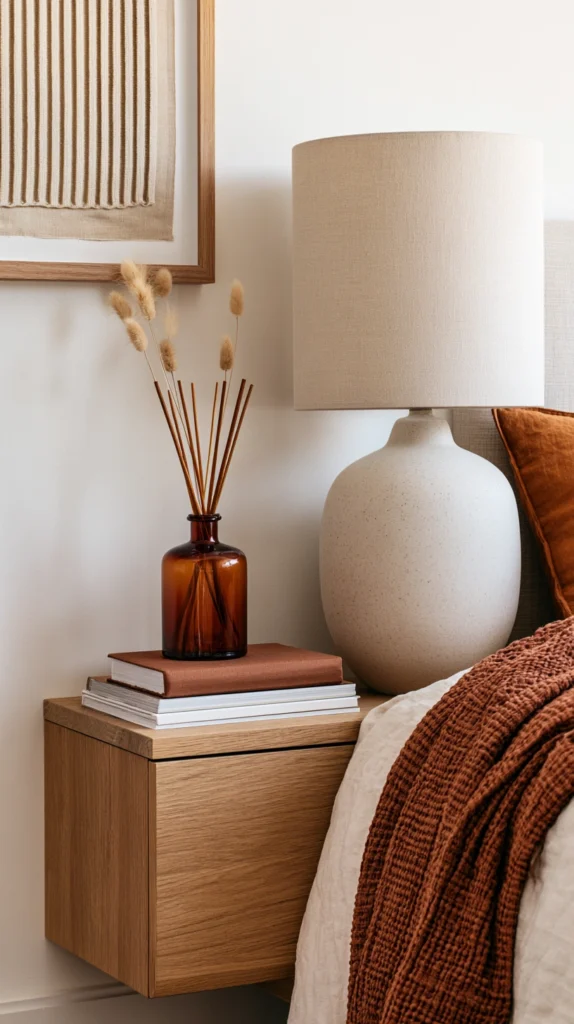
A reed diffuser filled with a personally blended combination of fall-appropriate essential oils — continuous scent with zero flame risk and complete control over the exact fragrance profile.
My inconsistent scent problem:
What kept happening:
- Candles only provided scent while actively burning, which was inconsistent at best
- Wanted a continuous background fragrance that did not require remembering to light anything
Why a reed diffuser solves this specifically:
The mechanism:
- Reed diffuser sticks wick diffuser oil up from the reservoir and release it continuously into the air
- No flame, no electricity, no maintenance beyond occasionally flipping the reeds
- Provides the most consistent, low-effort fragrance option of any method on this list
Building a custom fall blend:
Base diffuser oil:
- Purchase an unscented diffuser oil base (often a light carrier oil blend specifically formulated for wicking)
- Available from craft supply retailers or online (Bramble Berry, WSP)
Essential oil combinations for fall:
Warm and spiced blend:
- Cedarwood (8 drops)
- Clove bud (4 drops)
- Sweet orange (6 drops)
- Creates a warm, slightly spicy, grounding combination
Woodsy and calming blend:
- Cedarwood (8 drops)
- Lavender (6 drops)
- Vetiver (4 drops)
- A more sleep-supportive combination, leaning calming rather than energizing
Apple and spice blend:
- Cinnamon bark (3 drops, used sparingly as it is quite strong)
- Sweet orange (6 drops)
- Clove bud (3 drops)
- The most literally “apple pie” scented combination, though cinnamon bark specifically should be used in smaller quantities than other oils due to its intensity
Mixing the blend:
The simple process:
- Add the unscented diffuser base oil to the reservoir container, filling to the recommended level
- Add the chosen essential oil combination directly to the base oil
- Stir gently with a reed or small stick
- Insert the reeds (typically 6-8 reeds for a standard-sized room)
- Flip the reeds after the first hour, then every few days to maintain consistent scent throw
Vessel selection:
Choosing a beautiful container:
- A simple glass bottle in an amber or smoked tone fits the fall aesthetic better than a clear or brightly colored vessel
- Ceramic vessels with an earthy glaze also work well and add textural variety to the dresser or nightstand display
- The vessel itself becomes a piece of decor, not simply a hidden functional object
Cost:
- Unscented diffuser base oil: $10-20
- Essential oils (a small collection for blending): $30-60 (reusable across multiple batches)
- Reed sticks: $5-10
- Decorative vessel: $10-30
- Total: $55-120 (initial setup; subsequent refills cost significantly less)
My custom reed diffuser result: Blending my own cedarwood, clove, and sweet orange combination in a smoked glass bottle on my dresser provided the most consistent background fragrance of any method I tried, the scent is present but never overwhelming, exactly the kind of subtle continuous presence a bedroom benefits from most.
Reed Diffuser Tips
Reed material matters:
Choosing the right reeds:
- Natural rattan reeds wick oil more effectively than synthetic alternatives
- Replace reeds entirely (rather than just flipping) every few weeks for the strongest scent throw, since the wicking material itself becomes saturated over time
Testing the blend in small batches first:
Avoiding a large wasted batch:
- Mix a small test batch (a tablespoon of base oil with a few drops of each essential oil) before committing to a full reservoir
- This allows adjusting the ratio of oils to taste before scaling up to the full diffuser size
6. A Pumpkin Spice Potpourri Bowl (Visual Texture Plus Classic Fall Fragrance)

A bowl of dried botanicals and warm spices, displayed as decor — combining the most recognizably “fall” scent profile with genuine visual interest, avoiding the synthetic quality of commercial potpourri.
My commercial potpourri disappointment:
What store-bought potpourri usually delivers:
- Heavily synthetic fragrance, often with artificial dyes on the dried materials themselves
- A scent that fades within days, sometimes hours, despite an initially strong fragrance
- Visually unappealing dried materials, clearly chosen for cost rather than beauty
Why homemade potpourri solves both problems:
Building it properly:
- Real, naturally colored dried botanicals chosen for visual appeal first
- Essential oils rather than synthetic fragrance oils added after assembly, allowing for refreshing over time
- A genuinely beautiful bowl that happens to be fragrant, rather than a purely functional fragrance delivery system that happens to look mediocre
Materials for a genuine fall potpourri:
Dried botanical base:
- Dried orange peel pieces
- Cinnamon sticks, broken into shorter segments
- Whole cloves
- Dried bay leaves
- Small pinecones
- Dried rose hips or small dried berries for color variation
Building the mixture:
Assembly process:
- Combine all dried botanical materials in a large bowl, mixing for even distribution
- Add essential oils directly to the mixture: a combination of cinnamon, clove, sweet orange, and cedarwood works well (start with 10-15 total drops for a medium bowl)
- Toss gently to distribute the oil throughout the mixture
- Let the mixture sit, covered, for at least 24 hours before displaying, allowing the oils to fully absorb into the dried materials
Display vessel:
Choosing the right bowl:
- A wide, shallow wooden bowl shows off the variety of textures and colors most effectively
- Ceramic bowls in earthy glazes also work well
- Avoid plastic or anything with a glossy, modern finish that fights the natural, textural quality of the materials themselves
Placement in the bedroom:
Where this works best:
- On the dresser top, where its visual texture also serves as a decorative centerpiece
- On a small table in the reading nook, if the room has one
- Near (but not directly beside) the bed, since potpourri can have a stronger initial scent throw than some other options on this list
Refreshing the potpourri:
Maintenance over the season:
- Every two to three weeks, add a few more drops of essential oil directly to the mixture and toss gently
- The dried materials themselves can last an entire season or longer with this periodic refreshing
- Eventually, as the materials become dusty or visually faded, replace with a fresh batch for the following fall
Cost:
- Dried botanical materials (often a mix of purchased and home-dried): $15-35
- Essential oils (cinnamon, clove, orange, cedarwood): $25-50 (reusable across multiple batches and other recipes on this list)
- Display bowl: $15-40
- Total: $55-125 (initial cost; subsequent batches are significantly cheaper using oils already on hand)
My homemade potpourri result: Building my own mixture with real cinnamon sticks, dried orange peel, cloves, and small pinecones, scented with essential oils rather than synthetic fragrance, created a bowl that looks as intentional as any decorative object I own while providing genuine, refreshable fall fragrance, the difference from commercial potpourri was immediately apparent both visually and olfactorily.
Potpourri Tips
Avoiding overly strong initial scent:
Calibrating the oil quantity:
- Adding too much essential oil initially can create an overwhelming scent in a small bedroom
- Start with fewer drops than feels necessary; it is always easier to add more later than to dilute an overly strong batch
Color variety for visual interest:
Building a more beautiful mixture:
- Include materials with varied colors and textures (the deep orange of dried peel, the brown of cinnamon and pinecones, small red dried berries)
- A potpourri bowl with too little visual variety can look more like dried debris than an intentional decorative object
7. A Linen and Pillow Spray With a Personal Fall Blend (Direct, Immediate Bedtime Scent)
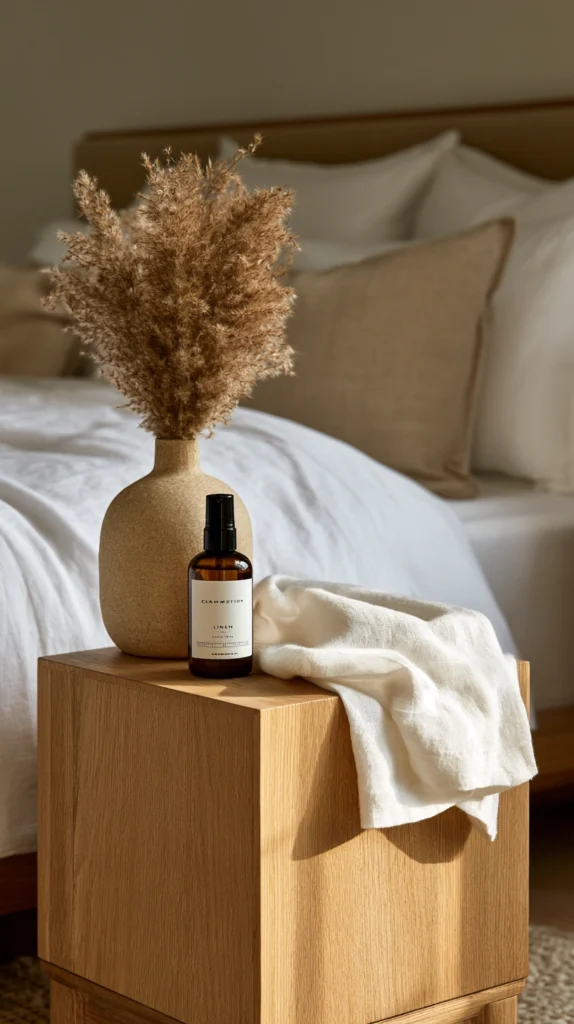
A custom essential oil spray applied directly to sheets and pillows — the most immediate and intimate scent delivery method on this list, designed specifically for the moment of getting into bed.
My missing direct-contact scent layer:
What was absent:
- All the other scented decor on this list fills the room generally
- Nothing specifically scented the bedding itself, the surface in most direct contact with the body during sleep
Why a pillow spray deserves its own dedicated category:
The immediacy principle:
- Unlike ambient room fragrance, a pillow spray delivers scent directly and immediately at the exact moment of lying down
- This creates one of the strongest possible scent-sleep associations, since the fragrance is encountered in the precise context (head on pillow, about to sleep) every single night
- The conditioning effect of this consistent, direct association builds faster than ambient room scent alone
Making a simple pillow spray:
Basic recipe:
- Combine 2 ounces of distilled water with 1 tablespoon of witch hazel or high-proof vodka (acts as an emulsifier, helping the oil disperse evenly rather than floating on top)
- Add 15-20 drops total of essential oils
- Shake well before each use (the oil and water will naturally separate between uses)
- Spray lightly onto pillowcases and sheets, allowing a few minutes to dry before lying down
Fall-specific blend suggestions:
Calming fall blend:
- Lavender (10 drops)
- Cedarwood (5 drops)
- Sweet orange (5 drops)
Deeper, warmer blend:
- Sandalwood (8 drops)
- Vetiver (6 drops)
- Lavender (6 drops)
Bottle selection:
Choosing the vessel:
- A small glass spray bottle, ideally amber or cobalt to protect the essential oils from light degradation
- A label noting the blend recipe adds a charming, apothecary-style detail
- Keep on the nightstand within easy reach for the nightly application ritual
Building the nightly ritual:
Incorporating the spray into the wind-down sequence:
- Apply a light mist to the pillow as one of the final steps before getting into bed, after the lamps have been dimmed and any reading has concluded
- This positions the spray as the final scent cue immediately preceding sleep, maximizing its conditioning value over consistent nightly use
Cost:
- Distilled water and witch hazel: $5-10 (lasts for many batches)
- Essential oils: $25-50 (reusable across this and other recipes on this list)
- Small glass spray bottle: $5-12
- Total: $35-72 (initial cost; refills cost only a few dollars in materials)
My pillow spray result: Misting my lavender, cedarwood, and sweet orange blend onto my pillow each night as the final step before sleep created the strongest scent-sleep association of any method on this list, within about two weeks of consistent use, the scent alone began triggering a noticeable physical sense of drowsiness even before lying down fully.
Pillow Spray Tips
Less is more with direct application:
Avoiding overly strong sprays:
- A light mist, rather than a heavy soaking spray, prevents both overwhelming fragrance and potential staining on lighter colored pillowcases
- One or two pumps from a standard spray bottle nozzle is typically sufficient for a single pillow
Testing for skin sensitivity first:
A practical caution:
- Since this spray contacts the pillowcase directly against the face, test a small amount on a hidden area of fabric first to ensure no adverse reaction
- Those with particularly sensitive skin may want to spray slightly earlier before bed, allowing more drying time before direct face contact
8. A Dried Apple and Spice Garland (Decorative String With Genuine Fragrance)
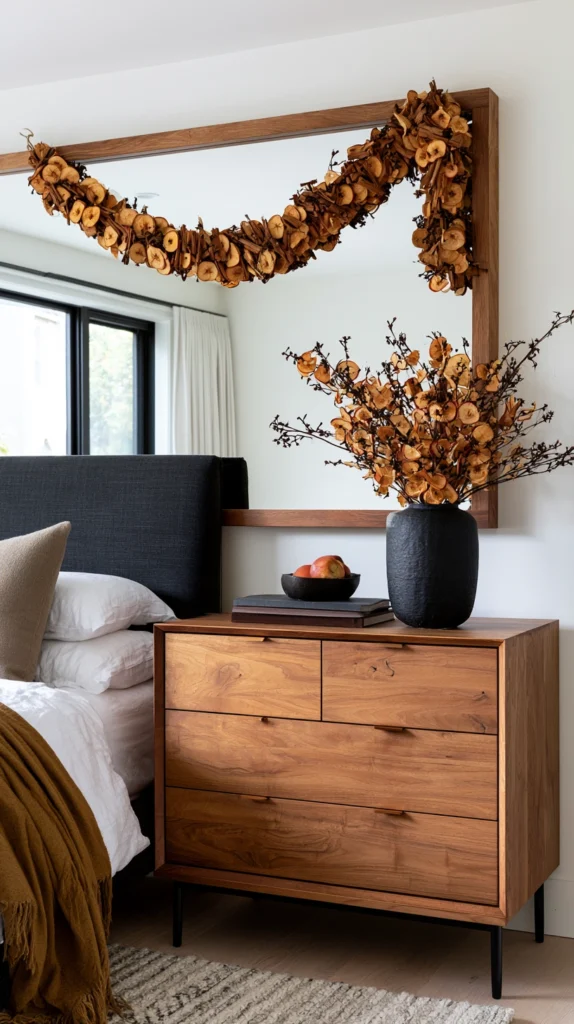
A garland made from dried apple slices and whole spices, strung and displayed — bringing the specific, beloved scent of baked apples into the bedroom without any baking, candles, or electricity required.
My missing “baked apple” scent:
What I wanted but had not found:
- The specific warm, sweet, slightly tart fragrance of apples baking with cinnamon
- Most candles labeled with this scent profile smell artificially sweet rather than genuinely appley
- Discovered that dried apple slices themselves, combined with whole spices, create this exact fragrance naturally
Why dried apple specifically:
The natural scent profile:
- As apple slices dry, they concentrate their natural sugars and aroma, creating a genuinely sweet, warm fragrance reminiscent of baking
- Combined with cinnamon sticks and whole cloves along the same garland, the combination closely replicates the classic baked apple scent without any artificial fragrance involved
Drying apple slices for the garland:
The process:
- Slice apples into thin, even rounds (a mandoline slicer helps achieve consistency)
- Soak briefly in a mixture of water and lemon juice to prevent excessive browning
- Pat dry and arrange on a baking sheet
- Dry at the lowest oven setting (around 200°F) for 3-4 hours, flipping once, until leathery and mostly dehydrated but not completely brittle (some flexibility makes them easier to string)
Stringing the garland:
Assembly:
- Using a needle and thread or thin twine, carefully thread through the center of each dried apple slice
- Space cinnamon sticks and small clusters of cloves between apple slices along the length of string
- Continue until the garland reaches the desired length for the intended display space
Display placement:
Where this garland works in a bedroom:
- Draped along the top of a dresser mirror
- Hung along a headboard wall, if the wall has hooks or a ledge to support it
- Wrapped loosely around a bedpost, particularly effective with the curved or sleigh bed frames common in cottage-style bedroom decor
Scent longevity:
How long the garland remains fragrant:
- Typically holds noticeable scent for 3-4 weeks before the apple slices fully dry out and the fragrance diminishes significantly
- Unlike some other items on this list, this garland is not easily refreshed with essential oils (the dried apple itself is the primary scent source) and is best treated as a seasonal, replaceable decoration
Visual appeal beyond fragrance:
The decorative value:
- The warm amber-brown tones of dried apple slices and cinnamon sticks fit naturally into earthy fall color palettes
- The slightly irregular, handmade quality of a hand-strung garland adds genuine textural interest distinct from purchased decor
Cost:
- Apples for drying (or pre-dried slices if purchasing): $5-12
- Cinnamon sticks and cloves: $5-10
- Twine or thread: $2-5
- Total: $12-27
My dried apple garland result: Stringing a simple garland of dried apple slices and cinnamon sticks along my dresser mirror brought a genuinely warm, sweet baked-apple fragrance into the room that no candle I had tried previously managed to replicate convincingly, the visual warmth of the amber apple slices was an unexpected bonus beyond just the scent.
Dried Apple Garland Tips
Using a dehydrator if available:
A more efficient alternative to the oven:
- A food dehydrator, if owned, produces more consistent results than oven drying and uses less energy over the longer drying time
- Follow the dehydrator’s specific fruit-drying temperature and time guidelines, typically slightly cooler and longer than oven drying
Accepting the seasonal, temporary nature:
Planning for replacement:
- Unlike cedar or essential oil based items, this garland is genuinely seasonal and will need to be replaced or remade for each fall rather than maintained indefinitely
- This temporary quality is part of its charm, connecting directly to the specific season rather than functioning as a year-round fixture
9. A Hand-Poured Soy Candle With Natural Essential Oils (Customized Clean-Burning Fragrance)
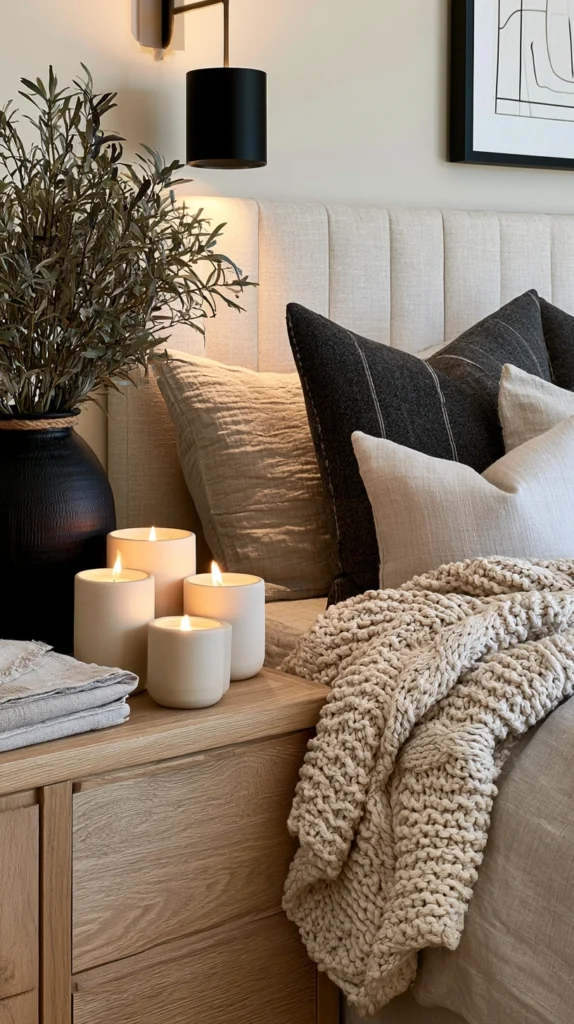
A candle made specifically with soy wax and pure essential oils rather than synthetic fragrance — for those who want the ritual and ambiance of candlelight with a cleaner, more naturally fall-appropriate scent than most commercial options provide.
My commercial candle frustration:
What kept disappointing me:
- Most “fall scent” candles from major retailers use synthetic fragrance oils, not essential oils
- The scent often smells convincing in the unlit jar but becomes harsh or artificial once actually burning
- Headaches after extended exposure in a small bedroom, even with windows cracked
Why hand-pouring with essential oils solves this:
The material difference:
- Soy wax burns cooler and cleaner than paraffin, releasing less soot and supporting better fragrance diffusion
- Pure essential oils, while generally providing a more subtle scent throw than synthetic fragrance oils, avoid the headache-inducing quality common with heavily synthetic options
- Complete control over the exact essential oil blend used, rather than relying on a manufacturer’s proprietary and often vague “fragrance oil” formula
Basic soy candle making process:
Materials needed:
- Soy wax flakes (natural, no additives)
- Cotton wicks with a metal base, sized appropriately for the chosen container
- A heat-safe glass or ceramic container
- A double boiler setup (or a heat-safe bowl over simmering water)
- Essential oils for fragrance
The pouring process:
Step by step:
- Melt soy wax flakes slowly in the double boiler, monitoring temperature with a candle-making thermometer (typically melted around 170-180°F)
- Once fully melted, remove from heat and let cool slightly to around 130-140°F
- Add essential oils at this slightly cooled stage (adding oils to wax that is too hot can cause some of the fragrance to evaporate before the candle even sets)
- Stir gently but thoroughly to ensure even distribution
- Pour into the prepared container with the wick already centered and secured
- Let cool and cure for at least 24-48 hours before burning
Fall essential oil blends for candles:
Recommended ratios:
- For a standard 8-ounce candle, approximately 30-40 drops of essential oil total provides a noticeable but not overwhelming scent
- Cedarwood, sweet orange, and clove bud in roughly equal parts creates a warm, balanced fall profile
- Cinnamon bark should be used more sparingly within any blend (its intensity is disproportionate to other essential oils)
Container selection:
Choosing a vessel that doubles as decor:
- Reused glass jars with the labels removed
- Small ceramic or stoneware vessels purchased specifically for candle making
- Vintage teacups or small bowls found secondhand, adding character beyond a standard candle jar
Cost:
- Soy wax flakes (enough for multiple candles): $15-25
- Wicks: $5-10
- Essential oils: $25-50 (reusable, as with other recipes on this list)
- Containers: $5-20 depending on source
- Total: $50-105 for initial setup, producing multiple candles; subsequent batches cost significantly less
My hand-poured candle result: Making my own soy candles with a cedarwood, sweet orange, and clove blend eliminated the headaches I had experienced with commercial synthetic-fragrance candles entirely, the scent is more subtle than store-bought options but genuinely pleasant rather than overwhelming, and the ritual of making them myself added a layer of personal investment that store-bought candles never provided.
Hand-Poured Candle Tips
Curing time matters significantly:
Why patience improves the result:
- A candle that is burned immediately after pouring, without allowing the recommended 24-48 hour cure time, often has a weaker, less consistent scent throw
- This curing period allows the fragrance oils to fully bind with the wax, significantly improving how well the scent releases once the candle is actually lit
Wick size affects scent throw:
A common beginner mistake:
- A wick too small for the container diameter results in a weak flame that does not generate enough heat to release fragrance effectively, regardless of how much essential oil was added
- Research the appropriate wick size for the specific container diameter being used, as this technical detail significantly affects the final result
10. A Vintage Apothecary Bottle Display With Labeled Essential Oils (Functional Beauty as Visible Decor)
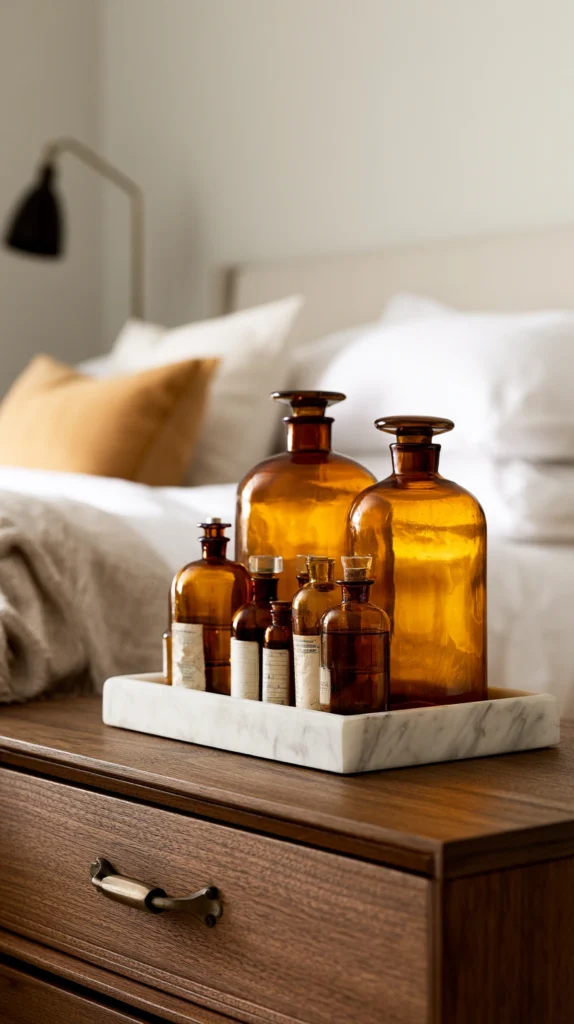
A small collection of vintage or vintage-style glass bottles holding essential oils, displayed openly rather than hidden in a drawer — turning the fragrance system itself into a beautiful decorative object.
My hidden fragrance supply problem:
What was happening:
- Essential oils stored in a drawer, used occasionally, mostly forgotten between uses
- No visual connection between the beautiful idea of “scented decor” and the actual bottles doing the scenting work
- Out of sight meant out of mind, and the entire scent system fell into inconsistent use
Why displaying the oils themselves works:
The visibility principle:
- An object stored out of sight stops being used within days; an object displayed and accessible becomes part of the daily routine automatically
- Vintage apothecary-style bottles are genuinely beautiful objects in their own right, not merely functional containers to be hidden away
- This display becomes a piece of decor that also happens to be the literal source of much of the room’s fragrance
Sourcing the bottles:
Where to find vintage apothecary bottles:
- Antique shops and estate sales (genuine vintage glass, often amber or cobalt blue, $5-25 each)
- Etsy vintage sellers specializing in apothecary and pharmacy glass
- New reproductions, widely available at craft stores, for those without easy access to genuine vintage pieces ($8-15 each)
Building the display:
Assembling the collection:
- Choose four to six bottles of varying heights and slightly different shapes (uniformity looks purchased as a set; variation looks collected over time)
- Fill each with a different essential oil relevant to the fall scent system (lavender, cedarwood, clove, sweet orange, cinnamon, sandalwood)
- Add small handwritten or printed labels identifying each oil, reinforcing the apothecary aesthetic
Display surface and arrangement:
Where this collection lives:
- A small wooden or marble tray on the dresser, containing the entire bottle collection
- Arranged by height, tallest toward the back, in the same visual principle used for other tiered decorative arrangements throughout the home
- Positioned near the reed diffuser or pillow spray ingredients, creating a cohesive “fragrance station” within the room
Functional use alongside display:
Making the display genuinely useful:
- These same oils serve as the working supply for refreshing the lavender bundle, the pillow spray, the reed diffuser, and the potpourri bowl described elsewhere on this list
- Rather than a separate hidden supply and a separate decorative display, this single visible collection serves both purposes simultaneously
Cost:
- Vintage or vintage-style bottles (set of 5-6): $40-100
- Essential oils to fill them (if not already owned from other recipes on this list): $30-60
- Small tray: $15-30
- Labels: $5-10
- Total: $90-200 (significantly less if essential oils are already on hand from building other items on this list)
My apothecary bottle display result: Moving my essential oil collection from a hidden drawer to a beautifully arranged tray of vintage amber bottles on my dresser meant I actually used the oils consistently to refresh other scented items around the room, rather than forgetting about them entirely, the display itself also became one of the most-complimented decorative vignettes in the bedroom.
Apothecary Display Tips
Mismatched but related bottles:
Avoiding the matched-set look:
- Sourcing bottles from multiple shopping trips, rather than buying an identical set all at once, creates the collected-over-time appearance that fits this aesthetic better than uniform matching bottles
- Some variation in exact amber tone or bottle shape adds authenticity rather than detracting from the cohesive display
Protecting oils from light degradation:
A practical consideration:
- Essential oils degrade faster with extended light exposure, particularly UV light
- Amber or cobalt glass specifically (rather than clear glass) provides meaningful protection while still allowing the bottles to be visibly displayed
- If the display location receives significant direct sunlight, consider rotating the bottles to a slightly shadier spot for the bulk of their storage time, bringing them to a sunnier display spot only briefly
11. A Dried Eucalyptus and Pine Sprig Arrangement (Crisp, Woodsy Counterpoint to Sweet Spice)

A simple arrangement of dried eucalyptus and pine in a vase — providing a cooler, crisper fragrance note that balances the warmer, sweeter spice scents used elsewhere in the room.
My all-warm-spice imbalance:
What I noticed after building several other items on this list:
- Lavender, cinnamon, orange, and clove are all warm, sweet, or spiced fragrance notes
- The overall room scent profile, while pleasant, lacked any cooler, crisper counterpoint
- Adding a eucalyptus and pine element introduced exactly this missing balance
Why eucalyptus and pine specifically:
The complementary scent profile:
- Eucalyptus carries a fresh, slightly medicinal, cooling quality
- Pine adds a crisp, resinous, forest-floor quality
- Together, they balance the sweeter spice notes elsewhere in the room without competing directly against them, since they occupy a genuinely different fragrance category
Sourcing dried eucalyptus and pine:
Where to find quality material:
- Fresh eucalyptus, purchased and air-dried at home (available at most grocery stores with floral sections, particularly Trader Joe’s)
- Pre-dried eucalyptus bundles from craft stores or florists
- Fresh pine boughs, gathered locally if accessible, or purchased from holiday tree lots as the season progresses toward winter
Drying fresh eucalyptus:
The simple process:
- Bundle fresh eucalyptus stems together with twine near the cut ends
- Hang upside down in a cool, dry location away from direct sunlight
- Allow to dry for 2-3 weeks, until stems feel rigid and leaves have a slightly leathery, papery quality
- The color shifts from bright green to a soft silvery-gray during this process, which fits naturally into earthy fall and cottage color palettes
Combining with pine:
Building the mixed arrangement:
- Pine retains fragrance most strongly while still relatively fresh (it does not dry and rebound in fragrance the way eucalyptus does)
- Combining a few fresh or recently cut pine sprigs with the already-dried eucalyptus creates layers of both visual texture and fragrance intensity
- The pine sprigs will eventually dry and lose vibrancy faster than the eucalyptus, making periodic replacement of just the pine element a practical maintenance approach
Display vessel:
Choosing the right vase:
- A simple ceramic or glass vase in an earthy tone
- Tall enough to support the arrangement’s height without tipping, particularly important if pine branches add weight to one side
- A vase with some visual texture (a hand-thrown ceramic piece, for example) complements the natural, slightly irregular quality of the botanical material itself
Placement in the bedroom:
Where this works best:
- On the dresser, where it provides height and visual interest alongside other displayed objects
- Near the reading nook, if the room has one, offering a fresh scent note in a space used for extended time
- Away from direct proximity to the bed itself, since this cooler, crisper scent can feel slightly more invigorating than calming, making it better suited to daytime-use areas of the room than the immediate sleep zone
Cost:
- Fresh eucalyptus for drying (or pre-dried bundle): $8-20
- Fresh pine sprigs: $5-15 (often free if locally gathered with appropriate permission)
- Vase: $15-40
- Total: $28-75
My eucalyptus and pine arrangement result: Adding this cooler, woodsy arrangement to my dresser balanced what had become an entirely warm-spice-dominated room scent profile, the combination of silvery dried eucalyptus and fresh green pine also added welcome visual texture and color variation among the warmer amber and rust tones of the other decor.
Eucalyptus and Pine Tips
Replacing pine more frequently than eucalyptus:
Managing the different lifespans:
- Pine sprigs typically need replacement every 2-3 weeks to maintain both visual freshness and fragrance strength
- Dried eucalyptus, once fully dried, holds its appearance and subtle fragrance for several months
- Treating these as separate maintenance schedules within the same arrangement keeps the display looking its best throughout the season
Avoiding placement directly beside the bed:
A scent-zoning consideration:
- This cooler, crisper fragrance pairs better with a slightly invigorating daytime mood than with sleep-specific calm
- Reserve the warmer, sweeter scents (lavender, cedarwood, orange) for the immediate nightstand area, and place this fresher arrangement somewhat further from the bed itself
12. A Wool or Felted Sachet Filled With Dried Herbs (Textile Craft Meets Fragrance)
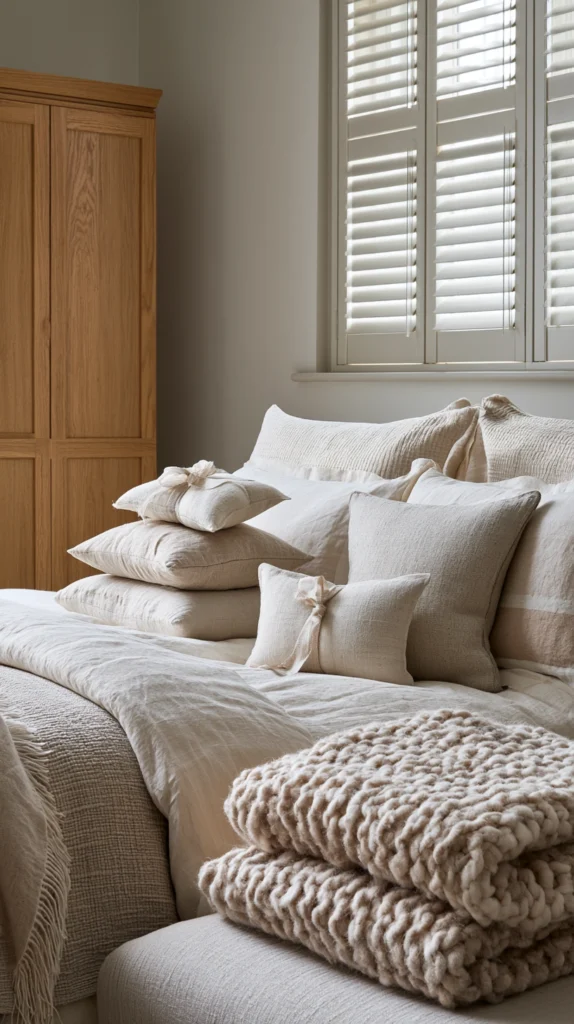
A small handmade fabric sachet stuffed with a custom dried herb blend — combining textile craft with a fragrance delivery method that can be tucked anywhere in the room.
My missing soft-textile scent element:
What was absent:
- Every scented item on this list so far involved either hard materials (bottles, wood, ceramic) or open-air dried botanicals
- Nothing soft, textile-based, and tuck-away portable, the kind of small handmade object that fits naturally among pillows or drawer linens
Why a sachet specifically fits this aesthetic:
The handcraft connection:
- A small sewn or felted sachet, filled with dried herbs, references the same handmade textile tradition discussed throughout cottage and hobbitcore-adjacent decor styles
- Unlike a candle or diffuser, a sachet is inherently soft, portable, and can be tucked into pillowcases, drawers, or even hung from a doorknob
Making a simple sewn sachet:
Materials needed:
- A small piece of natural fabric (linen or cotton, roughly 6×6 inches for a finished 3×3 inch sachet)
- Needle and thread, or a sewing machine
- Dried herb filling (recipe below)
- Optional: ribbon or twine for a drawstring closure rather than fully sewn shut
Construction:
Basic sewing process:
- Cut two squares of fabric to the desired finished size, adding a half-inch seam allowance on all sides
- Place fabric pieces right sides together and sew around three sides
- Turn right side out through the open fourth side
- Fill with the dried herb mixture
- Sew the remaining open side closed, or gather with a ribbon for a drawstring pouch that allows refilling later
Dried herb filling recipe:
A fall-appropriate blend:
- Dried lavender buds (a generous handful, for the calming base)
- Dried chamomile flowers (a smaller handful, adding a gentle, sweet undertone)
- A few whole cloves
- A small piece of dried orange peel, crumbled
No-sew felted sachet alternative:
For those without sewing skills or equipment:
- Wool felt sheets, available at craft stores, can be hot-glued rather than sewn
- Cut two matching shapes, hot glue around the edges leaving a small gap, fill with the herb mixture, then glue the gap closed
- A faster, though slightly less refined, alternative achieving the same fragrance result
Where sachets work in the bedroom:
Placement options:
- Tucked inside a pillowcase, beneath the pillow itself (a traditional placement for lavender sachets specifically, supporting the sleep association discussed in idea 1)
- In dresser drawers, alongside or instead of the cedar blocks from idea 4
- Hung from a doorknob or drawer pull by a ribbon loop
- Several scattered among other small decorative objects on a shelf or nightstand
Refreshing the scent:
Extending the sachet’s useful life:
- Gently squeeze or knead the sachet periodically to help release trapped fragrance
- A few drops of relevant essential oil added directly through the fabric (it will absorb somewhat) extends the scent life when the dried herbs themselves begin to fade
- Eventually, after several months, the herb filling can be replaced entirely while reusing the same fabric pouch
Cost:
- Fabric scraps (often available from remnant bins very cheaply): $2-8
- Dried herb filling: $10-20
- Total: $12-28
My herb sachet result: Sewing a small linen sachet filled with lavender, chamomile, and a touch of dried orange peel, then tucking it beneath my pillow, created a constant, very subtle background fragrance throughout the night that complemented the more occasional, stronger scent from the pillow spray applied at bedtime specifically.
Sachet Tips
Choosing fabric that fits the room’s textile palette:
Coordinating with existing decor:
- A natural linen or cotton sachet in an earthy tone fits more cohesively into a fall bedroom’s overall color story than a brightly patterned or synthetic fabric
- This small detail, easily overlooked, contributes to the sachet feeling like an intentional part of the room rather than a random craft project
Making multiples for different placements:
Building a small collection:
- Rather than a single sachet, consider making three or four with slightly varied herb ratios
- One under the pillow (heavier on lavender for sleep), one in a drawer (heavier on cedar-adjacent scents if dried cedar shavings are added), and one simply displayed decoratively, allows for a more varied and intentional fragrance distribution throughout the room
13. A Scented Wax Melt Display in a Vintage Dish (Flameless Warmth and Fragrance)
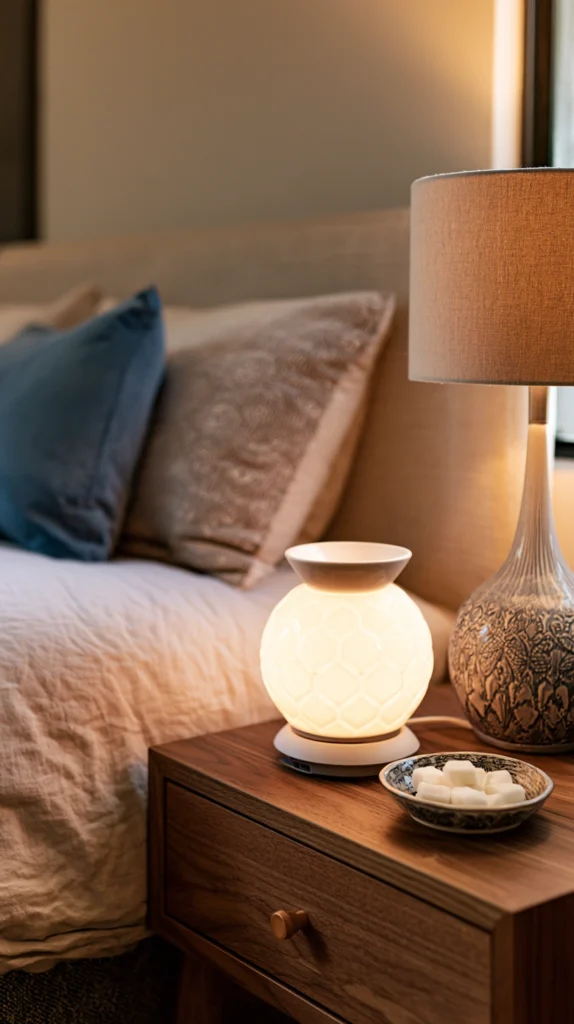
Wax melts, used in an electric warmer displayed in a beautiful vintage or ceramic dish — combining the visual warmth of melted wax with complete flame-free safety, ideal for the hours the room is unattended.
My need for flame-free warmth:
The specific gap this fills:
- Wanted the visual and olfactory experience of melting, fragrant wax
- Did not want any open flame running for extended periods, particularly during hours when the bedroom might be empty or when overnight use was desired
- An electric wax warmer with a beautiful display dish solved both concerns simultaneously
Why wax melts work differently than candles:
The mechanism:
- An electric warmer heats wax from below using a low-wattage bulb or heating element, melting it gently without any flame
- This allows extended use, including potentially overnight on a timer, without any fire risk
- The scent throw from melted wax is often comparable to or stronger than a candle of similar size, since more wax surface area is typically exposed to heat
Choosing the wax melts:
What to look for:
- Soy or natural wax blend melts, scented with essential oils rather than synthetic fragrance, mirroring the same material preference established throughout this list
- Many of the smaller candle-making suppliers who sell soy wax flakes (referenced in idea 9) also sell pre-made or DIY wax melt options
- Making your own wax melts follows nearly the same process as the hand-poured candle in idea 9, simply poured into small silicone molds instead of a candle container, with no wick needed
The warmer base:
Selecting the right unit:
- A simple electric warmer base, available at most home goods retailers, typically uses a low-wattage bulb beneath a small ceramic dish
- Choose a warmer with a timer function if extended or overnight use is desired, automatically shutting off after a set period
The vintage dish display:
Elevating the visual presentation:
- Many warmer bases use a generic ceramic dish; replacing this with a small vintage dish (a found saucer, a small antique bowl) elevates the entire object from purely functional to genuinely decorative
- This connects back to the same vintage-sourcing principles discussed throughout cottage and hobbitcore-adjacent decor approaches, applied here to a practical fragrance tool
Fragrance blend suggestions for wax melts:
Fall-appropriate combinations:
- The same essential oil blends suggested for the hand-poured candle in idea 9 work equally well in melt form
- Cedarwood, clove, and sweet orange remains a reliable, balanced fall profile
- A small amount of cinnamon bark oil, used sparingly, adds warmth without overwhelming the blend
Placement and timing:
Using the warmer thoughtfully:
- Position away from any fabric or paper that could be affected by the heat, despite the absence of open flame
- Many people use this specifically during the evening wind-down hours, turning it off (or relying on the timer) before actual sleep, similar to the LED candle timer approach discussed in earlier fall bedroom guidance
Cost:
- Electric warmer base: $15-30
- Wax melts (pre-made or DIY materials): $10-25
- Vintage dish (if replacing the standard included dish): $5-20
- Total: $30-75
My wax melt display result: Replacing the generic ceramic dish on my electric warmer with a small vintage floral-patterned saucer found at a thrift store for two dollars turned a purely functional object into something that looks intentionally chosen, the cedarwood and orange wax melt scent fills the room gently during the hour before bed, then switches off automatically via the timer before I am actually asleep.
Wax Melt Tips
Cleaning the warmer dish between scent changes:
Avoiding scent muddling:
- Wipe out the dish while the wax is still warm and liquid (using a paper towel, carefully, as it will be hot) before switching to a different scent blend
- This prevents the new fragrance from mixing with residue from the previous melt, keeping each scent change clean and distinct
DIY wax melts using existing candle-making supplies:
Maximizing materials already on hand:
- If soy wax flakes and essential oils were already purchased for the hand-poured candle project in idea 9, making wax melts requires no wick and uses the exact same melting process
- Pour into small silicone molds instead of a candle jar, creating an efficient way to use the same base materials for two different fragrance delivery methods
Choosing Your Scented Decor System
By scent profile preference:
Calming and sleep-focused:
- Dried lavender bundle (idea 1)
- Linen and pillow spray (idea 7)
- Wool sachet with lavender and chamomile (idea 12)
Warm and spiced:
- Cinnamon and orange bundle (idea 2)
- Pumpkin spice potpourri bowl (idea 6)
- Dried apple and spice garland (idea 8)
Subtle and continuous background:
- Cedar wood storage (idea 4)
- Reed diffuser (idea 5)
- Vintage apothecary bottle display (idea 10)
Fresh and balancing:
- Eucalyptus and pine arrangement (idea 11)
Flame considerations:
No flame at all:
- Lavender bundle, cinnamon and orange bundle, cedar storage, reed diffuser, pillow spray, apothecary display, eucalyptus and pine, herb sachet, wax melt (electric, flameless)
Real flame (requiring full attention and never unattended):
- Beeswax candle cluster (idea 3)
- Hand-poured soy candle (idea 9)
By effort and skill level:
No crafting required:
- Lavender bundle (idea 1, if purchased pre-made)
- Cedar storage products (idea 4)
- Apothecary bottle display (idea 10, if oils are purchased rather than blended)
Simple assembly:
- Cinnamon and orange bundle (idea 2)
- Reed diffuser (idea 5)
- Pillow spray (idea 7)
- Potpourri bowl (idea 6)
More involved craft projects:
- Dried apple garland (idea 8)
- Hand-poured candles (idea 9)
- Sewn or felted sachets (idea 12)
By budget:
Under $30:
- Lavender bundle, cinnamon and orange bundle, cedar blocks, dried apple garland, herb sachet (individually)
$30-80:
- Reed diffuser, beeswax candle cluster, potpourri bowl, pillow spray, eucalyptus and pine arrangement, wax melt display
$80-200:
- Hand-poured candle setup (initial investment), apothecary bottle display
Building a Complete Scent System
Layering multiple methods for a fuller experience:
The zone approach:
- Nightstand zone: lavender bundle, pillow spray, herb sachet (calming, sleep-focused scents in closest proximity to the bed)
- Dresser zone: potpourri bowl, apothecary display, reed diffuser (a mix of warm and continuous background fragrance)
- Drawer and closet zone: cedar storage (invisible, functional, continuous)
- A flexible accent piece: eucalyptus and pine arrangement, repositioned seasonally or as desired (the fresher counterpoint)
Avoiding scent overload:
The restraint principle:
- Not every idea on this list needs to be implemented simultaneously
- Three to five scented elements, thoughtfully placed and chosen from complementary fragrance families, typically provides a fuller experience than attempting all thirteen at once
- Building gradually, testing how the room’s overall scent feels after each addition, prevents the overwhelming result that defeats the purpose of natural, subtle scenting in the first place
Maintenance Through the Season
Weekly:
- Refresh diffuser reeds if scent has weakened
- Mist the pillow spray as part of the nightly routine
- Crush a few lavender buds in the nightstand bundle to release fresh fragrance
Monthly:
- Add a few drops of essential oil to the potpourri bowl and sachets to refresh
- Check cedar blocks and lightly sand if scent has diminished
- Replace pine sprigs in the eucalyptus arrangement
Seasonal transition:
- Replace the dried apple garland and potpourri bowl contents with fresh materials for the following fall
- Reassess which scented elements earned a permanent place in the room versus which were specific to this particular season’s experimentation
My Complete Scented Bedroom Build
What I added across one fall season:
Week 1 ($45):
- Dried lavender bundle on the nightstand
- Cedar drawer liners
Week 3 ($65):
- Built the custom reed diffuser with cedarwood, clove, and orange blend
- Made the first batch of pillow spray
Week 5 ($90):
- Assembled the homemade potpourri bowl
- Made the cinnamon and orange bundle
Week 8 ($110):
- Set up the vintage apothecary bottle display
- Hand-poured the first batch of soy candles
Total investment: $310 across one fall season Result: A bedroom with a genuinely layered, natural fragrance profile that changes subtly throughout the day and evening, never overwhelming, always present
Getting Started This Weekend
Start with the simplest, most immediate option.
This weekend:
Step 1 — Make the lavender bundle:
- The fastest, least expensive item on this entire list
- Immediately changes the nightstand’s sensory presence
Step 2 — Mix a basic pillow spray:
- Using the simple recipe from idea 7
- Begin the nightly application ritual immediately
Step 3 — Add cedar to one drawer:
- A single set of cedar blocks or liner in the most-used drawer
- Establishes the continuous background layer with zero ongoing effort required
My recommendation:
These three items together cost under $60 total and require no crafting skill or special equipment, providing an immediate, noticeable shift in how the bedroom smells and feels before committing to any of the more involved projects further down this list.
Now go give your bedroom the layered, natural fragrance it has been missing all season.
Quick Summary
The 13 scented bedroom decor ideas:
Direct sleep support:
- Dried lavender bundle (idea 1): the most clinically supported sleep scent
- Linen and pillow spray (idea 7): the most immediate, direct scent-sleep association
- Wool or felted herb sachet (idea 12): constant subtle background near the pillow
Classic warm fall fragrance:
- Cinnamon and dried orange bundle (idea 2): traditional, flame-free spice scent
- Pumpkin spice potpourri bowl (idea 6): visual texture plus classic fragrance
- Dried apple and spice garland (idea 8): the specific baked-apple scent profile
Candlelight and warmth:
- Beeswax candle cluster (idea 3): natural honey scent, no synthetic fragrance
- Hand-poured soy candle (idea 9): full control over a clean-burning custom blend
- Wax melt display (idea 13): flame-free warmth with timer-controlled safety
Continuous background fragrance:
- Cedar wood storage (idea 4): invisible, functional, nearly maintenance-free
- Reed diffuser with custom blend (idea 5): the most consistent, low-effort option
Display and authenticity:
- Vintage apothecary bottle display (idea 10): turning the fragrance supply into decor
- Dried eucalyptus and pine arrangement (idea 11): the fresh, balancing counterpoint
The non-negotiable rules:
Always:
- Choose pure essential oils over synthetic fragrance oils wherever the recipe allows
- Layer multiple scent methods rather than relying on a single source
- Test new scent combinations in small batches before committing to a full-size version
- Refresh dried and oil-based scents periodically rather than assuming a single application lasts indefinitely
Never:
- Leave real flame candles unattended or burning through sleep
- Overload the room with too many strong scents competing simultaneously
- Use synthetic, heavily fragranced commercial products as a substitute for genuine natural materials
- Apply pillow spray so heavily that it risks staining fabric or feels overwhelming at close range
The scent zone formula:
Calming scents near the bed (lavender, chamomile) + warm spice scents on the dresser (cinnamon, orange, clove) + continuous background scent in storage (cedar) + a fresh counterpoint somewhere in the room (eucalyptus, pine) = a bedroom with genuine fragrance depth rather than one dominant, overwhelming smell.
Common mistakes:
- Relying entirely on synthetic commercial candles or sprays instead of natural materials
- Adding too much essential oil to a recipe initially, creating an overwhelming rather than subtle result
- Forgetting to refresh dried botanicals and oil-based scents, allowing fragrance to fade unnoticed over weeks
- Choosing only sweet, warm scents without any cooler or fresher counterpoint, creating an unbalanced overall profile
- Leaving real flame candles burning unattended, particularly overnight
- Treating scented decor as a single object rather than a layered system across multiple zones in the room
Remember: Lavender remains the single most reliable scent choice specifically for a bedroom given its genuine sleep-supporting properties, essential oils consistently outperform synthetic fragrance oils both in scent quality and in avoiding headaches at close range in a small enclosed room, cedar provides the most maintenance-free continuous fragrance layer of anything on this list, a pillow spray builds the strongest possible scent-sleep association because of its direct and immediate application at the exact moment of going to sleep, and the goal throughout is always a layered, natural, subtle fragrance system rather than one single overwhelming scent source dominating the entire room.