13 Heat-Tolerant Plants That Thrive in Full Sun
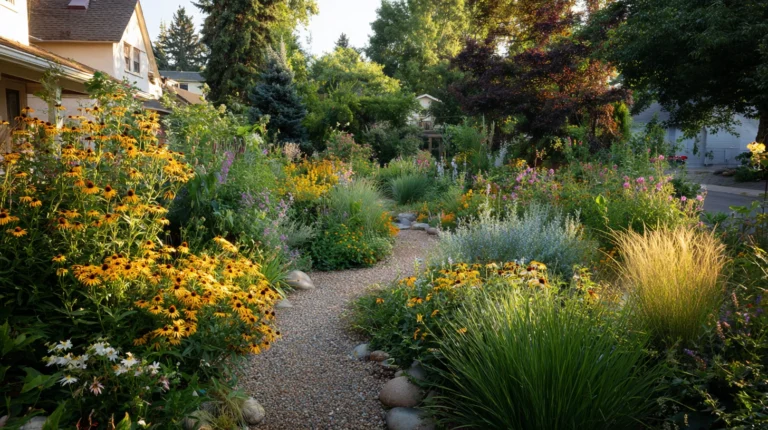
A garden that bakes in direct sun for six or more hours a day is not a difficult garden — it is a specific one. The plants that struggle there are simply the wrong plants.
The ones that belong in full sun do not merely survive the heat; they perform better because of it, flowering more prolifically, holding their colour longer, and asking for very little in return. The key is matching the plant to the conditions rather than fighting the conditions to suit the plant.
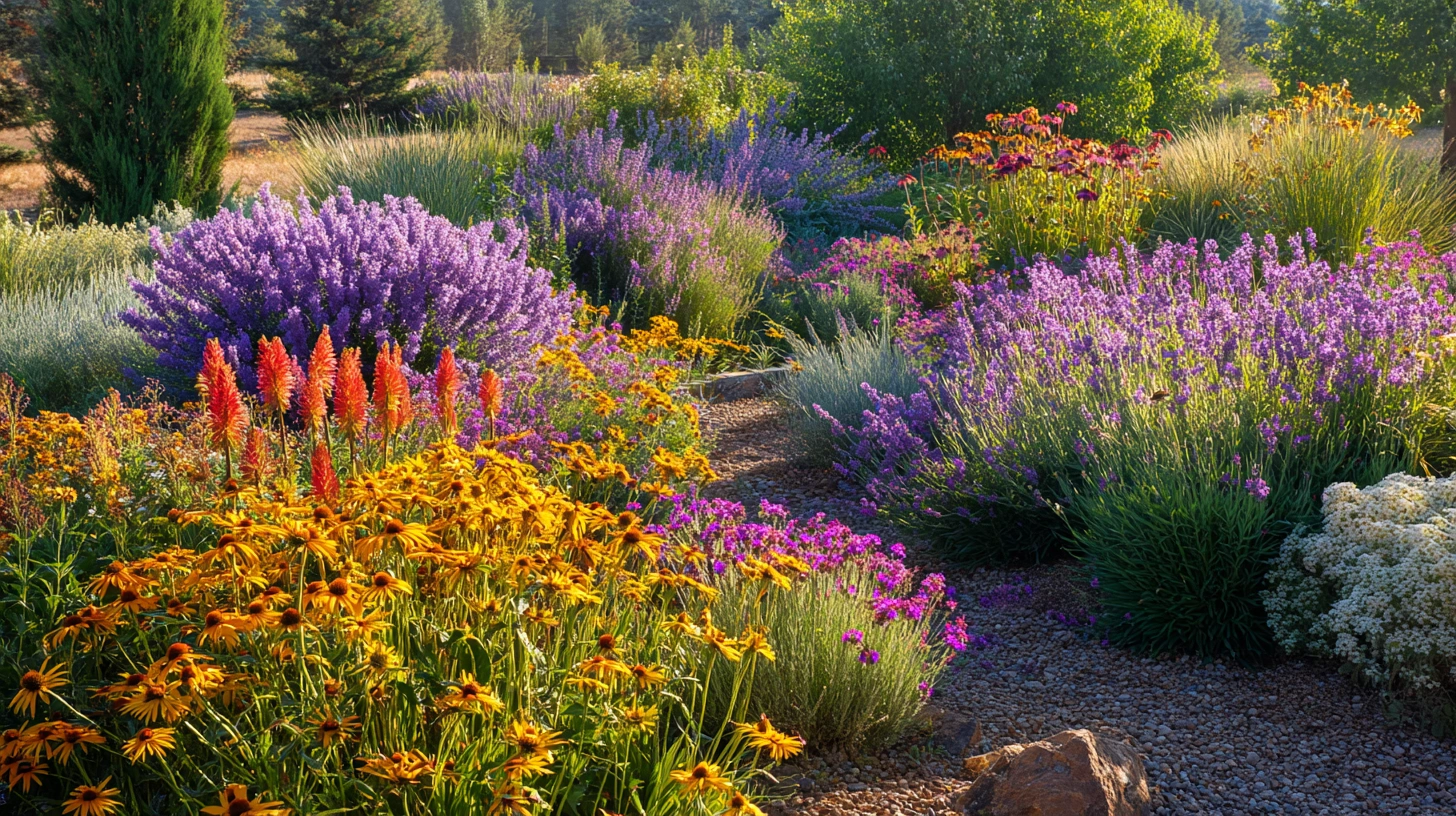
The thirteen plants below are among the most reliable performers in hot, sun-exposed gardens and borders. Each one is widely available, relatively easy to establish, and genuinely rewarding once settled in. Growing notes and typical costs are included throughout to help you plan and plant with confidence.
1. Lavender (Lavandula)
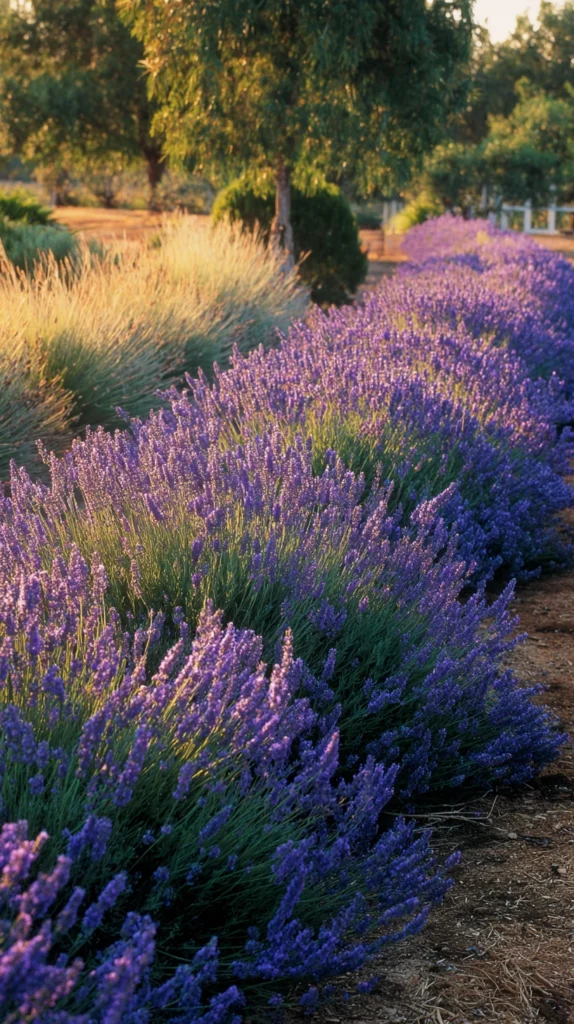
Cost: $5 – $20 per plant
Lavender is perhaps the definitive full-sun plant — native to the sun-baked hillsides of the Mediterranean, it has evolved specifically for heat, drought, and poor soil. In the right conditions it asks for almost nothing: no feeding, infrequent watering once established, and a light trim after flowering each year. In return it offers weeks of colour, fragrance that carries across an entire garden, and stems that dry beautifully for indoor use.
English lavender varieties such as Hidcote and Munstead are the most compact and hardiest, reaching 30–45 cm in height and width. French and Spanish varieties grow larger and flower earlier but are less cold-tolerant. Plant in free-draining soil — lavender will rot in waterlogged ground regardless of how much sun it receives. Space plants 30–45 cm apart for a solid, fragrant hedge effect within two seasons.
Growing tip: Cut back by one third immediately after the first flush of flowers fades, but never cut into old wood. Lavender does not regenerate from bare stems the way many shrubs do, and hard pruning into the woody base will kill it.
2. Echinacea (Coneflower)
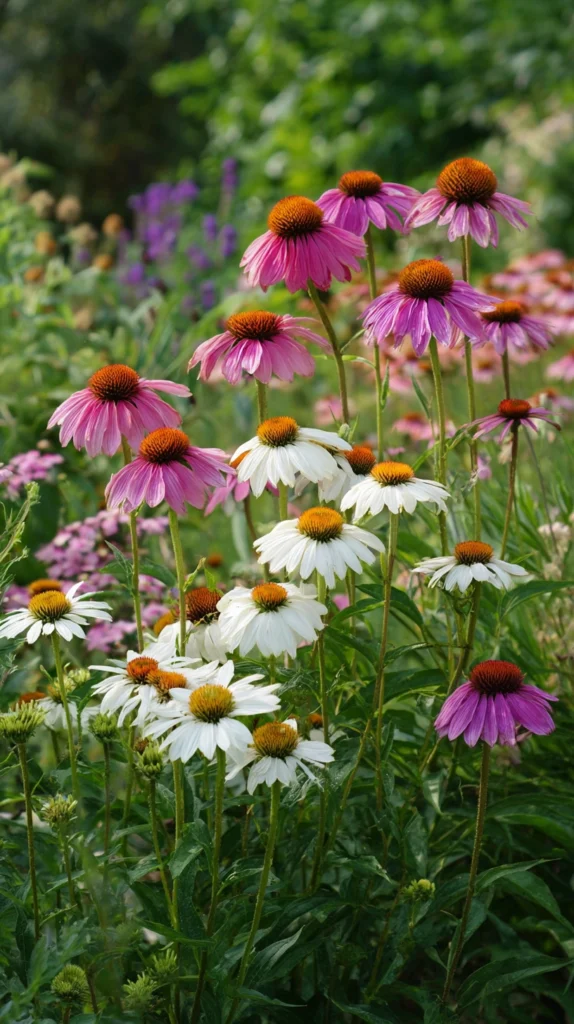
Cost: $6 – $18 per plant
Echinacea is a prairie plant by nature, built for wide open spaces, hot summers, and periods of drought. The large daisy-like flowers — in shades ranging from classic purple-pink to deep red, orange, yellow, and white depending on variety — sit on tall, sturdy stems that rarely need staking and hold their structure well into autumn. The seed heads that follow are equally decorative and provide food for birds through the winter months.
Most echinacea varieties reach 60–90 cm in height and spread to around 45 cm. They are fully hardy perennials that die back in winter and return reliably each spring, growing slightly larger and more floriferous with each passing year. Plant in well-drained soil and water regularly in the first season until the root system is established. After that, established plants are genuinely drought-tolerant and need little intervention.
Growing tip: Leave the seed heads standing through winter rather than cutting the plant back in autumn. They look architectural in frost, feed the local bird population, and the plant will self-seed gently into nearby gaps if you allow it.
3. Sedum (Stonecrop)
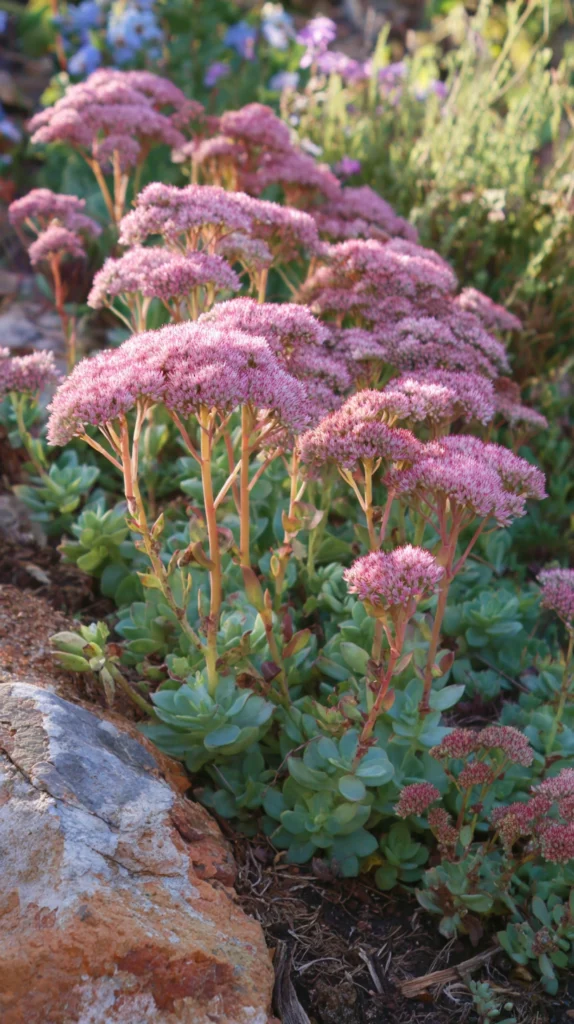
Cost: $5 – $15 per plant
Sedum is one of the most genuinely drought-tolerant plants available for a sunny garden border. Its thick, succulent leaves store water against periods of heat and dry soil, making it one of the few plants that actively looks better the hotter the summer gets. The flat-topped flower clusters appear in late summer and autumn, attracting butterflies and bees at a time of year when many other flowers have already finished.
Upright sedum varieties such as Autumn Joy and Matrona reach 45–60 cm in height and form neat, self-supporting clumps. Low-growing varieties like Sedum spurium are excellent for ground cover and rock garden edges. All sedums prefer sharply drained soil and full sun — even partial shade reduces flowering noticeably. Divide established clumps every three or four years to maintain vigour and spread the plant through the garden at no additional cost.
Growing tip: Plant sedum in the leanest soil available to you. Rich, fertile soil causes the stems to grow tall and flop before flowering. Poor, gritty soil keeps the plant compact and upright with no staking required.
4. Russian Sage (Perovskia atriplicifolia)
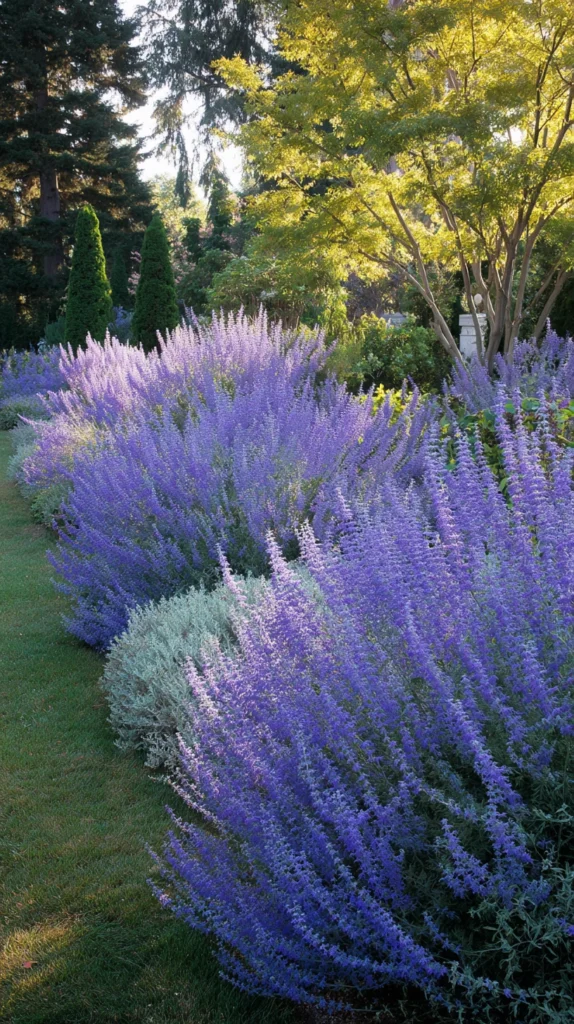
Cost: $8 – $20 per plant
Russian sage is one of those plants that appears in almost every list of reliable sun-lovers, and for good reason. From midsummer through to the first frosts, it produces long wands of tiny violet-blue flowers above silver-grey foliage — a colour combination that works with almost everything around it and lights up in evening sun in a way that few other border plants can match. It is also completely unfazed by heat, drought, and exposed positions.
Plants typically reach 90–120 cm in height with a similar spread, forming an open, airy clump rather than a dense mass. They are fully hardy in most temperate climates and remarkably long-lived once established. Cut back hard to around 30 cm in early spring each year — new growth emerges from the base and the plant flowers on the current season’s stems. Avoid cutting back in autumn, as the silver stems provide winter interest and protect the crown from hard frosts.
Growing tip: Russian sage takes a full growing season to establish and may look underwhelming in its first year. By the second summer it will have settled in and by the third it becomes one of the best plants in the border. Patience here is genuinely rewarded.
5. Agapanthus (African Lily)
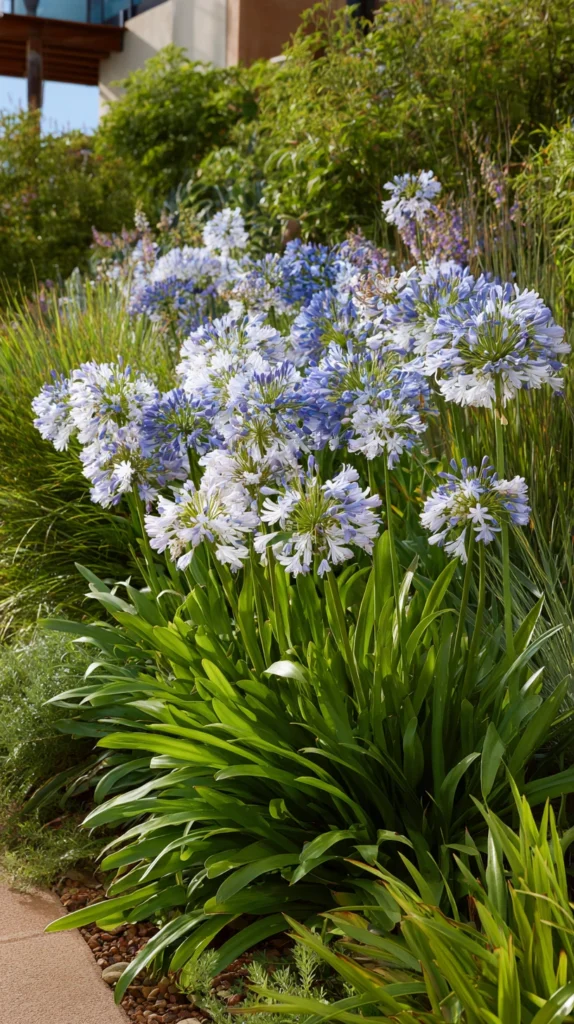
Cost: $10 – $30 per plant
Agapanthus produces some of the most striking flowers of the summer garden — large, spherical heads of tubular blue or white blooms on tall, upright stems that stand well above the strap-like foliage. They love heat, perform best in full sun, and are particularly effective in containers where their roots can be kept slightly restricted, which encourages more prolific flowering. A row of agapanthus in large pots along a sunny terrace is one of the most reliably elegant garden combinations available.
Deciduous varieties are hardier than evergreen ones and better suited to gardens with cold winters. Evergreen varieties offer year-round foliage but need winter protection in temperatures below -5°C. Plants reach 60–100 cm in flower and spread slowly into generous clumps over several years. Feed with a potassium-rich fertiliser in spring and summer to encourage flowering rather than leafy growth.
Growing tip: Agapanthus flowers most prolifically when slightly pot-bound. Resist the urge to repot into a larger container every year — allow the roots to fill the pot completely before moving up a size, which typically means repotting every three to four years.
6. Salvia (Ornamental Sage)
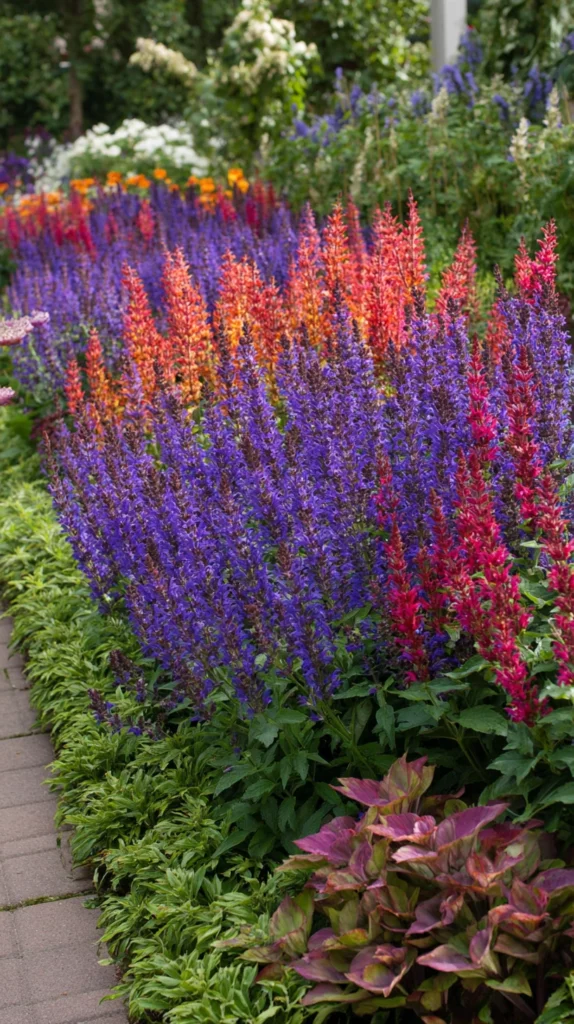
Cost: $5 – $18 per plant
The ornamental salvias are among the hardest-working plants available for a hot, sunny border. They flower for months rather than weeks, the spikes of hooded blooms in purple, red, pink, or white attract pollinators from the moment they open, and deadheading or light trimming after each flush encourages continuous flowering well into autumn. There are salvias for every scale of garden, from compact 30 cm varieties to towering 1.5 metre species.
Hardy perennial salvias such as Salvia nemorosa and Salvia × sylvestris are fully winter-hardy and return reliably each year. Half-hardy varieties like Salvia guaranitica and Salvia involucrata flower more dramatically but need lifting and overwintering in frost-prone gardens. All salvias prefer free-draining soil in full sun. They tolerate poor, dry conditions far better than rich, moist ones and rarely need feeding once established.
Growing tip: Cut salvia back by half after the first major flush of flowers in early summer. New growth and a second flush of blooms will follow within four to six weeks, extending the display significantly into late summer and early autumn.
7. Kniphofia (Red Hot Poker)
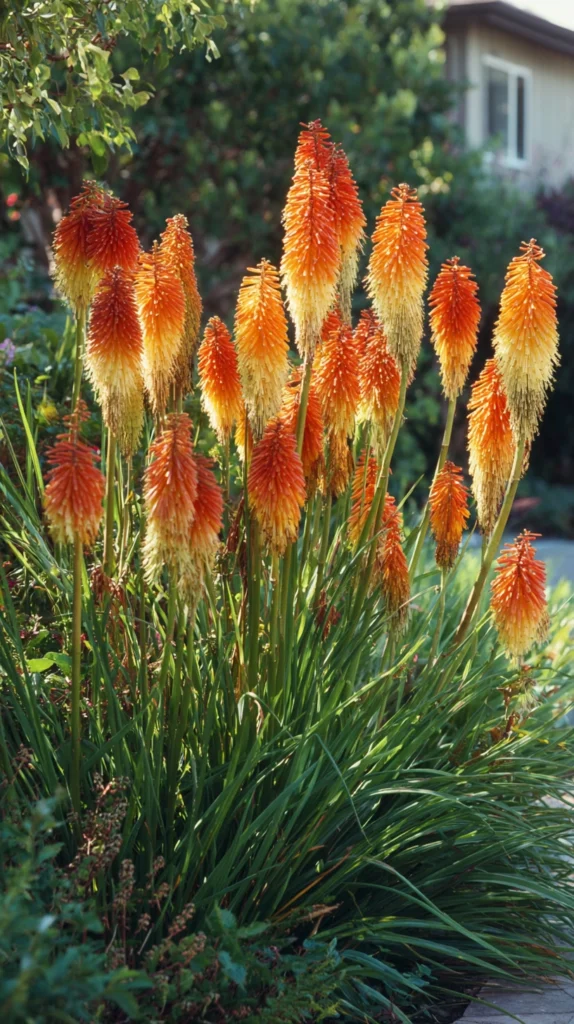
Cost: $8 – $22 per plant
Kniphofia is a plant that makes a statement. The tall, torch-like flower spikes — graduating from deep red or orange at the tip to yellow or cream at the base — rise above grassy clumps of foliage and provide a strong vertical accent that few other summer perennials can match. They love baking conditions, tolerate drought once established, and are particularly effective planted in bold groups where the upright stems create a rhythm through the border.
Modern varieties range from compact 50 cm plants suitable for smaller borders to tall 1.2 metre specimens that command attention at the back of a large bed. Flowering times vary by variety from early summer through to late autumn, so planting a mix of early and late cultivars extends the display across the whole season. Plant in well-drained soil in a sheltered spot — the foliage is frost-hardy but the crowns benefit from a dry mulch in the first winter after planting.
Growing tip: Do not cut the foliage back in autumn. Tie the leaves loosely over the crown instead, which protects it from winter wet without removing the insulating layer of foliage the plant uses to protect itself.
8. Verbena bonariensis
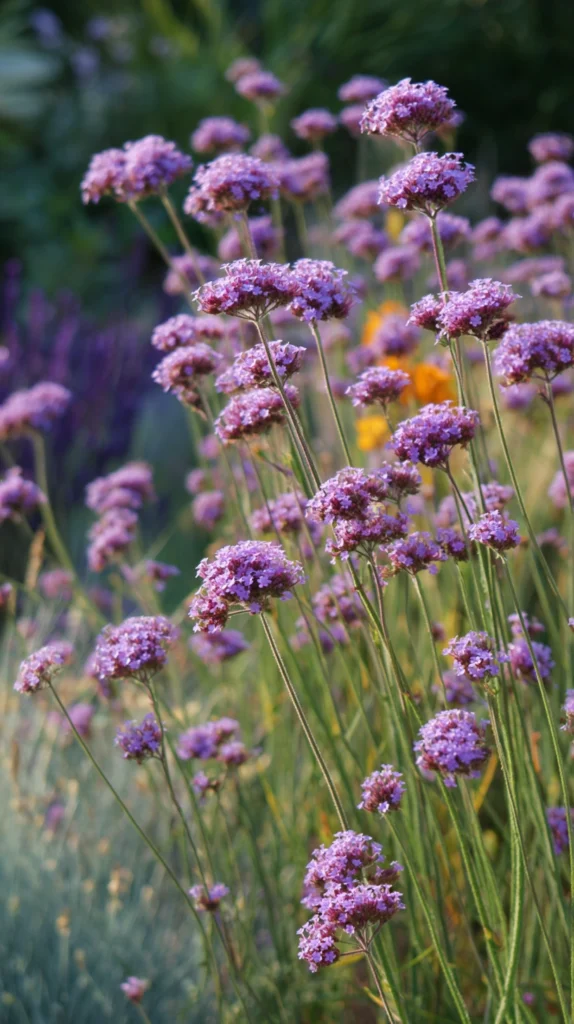
Cost: $4 – $12 per plant
Verbena bonariensis is one of the great see-through plants — the tall, wiry stems carry tiny clusters of vivid purple flowers at the tips, and because the stems are almost transparent the plant can be placed in the front or middle of a border without blocking anything behind it. It flowers from midsummer to the first frosts, it is irresistible to butterflies and bees, and it self-seeds generously enough to spread through a border without any effort on your part.
Plants reach 1.2–1.5 metres in height but take up very little ground space — a single plant has a footprint of roughly 30 cm across. They are short-lived perennials that tend to behave as biennials in colder gardens, but self-seeding ensures they remain a permanent presence once established. Full sun and free-draining soil are the only requirements. In ideal conditions, verbena bonariensis asks for nothing at all once it is in the ground.
Growing tip: Allow the first generation of self-seeded plants to appear naturally before pulling anything up. Seedlings look like weeds in their first few weeks and are easy to mistake for something unwanted. Let them develop to 5–8 cm before assessing and editing the positions.
9. Gaillardia (Blanket Flower)
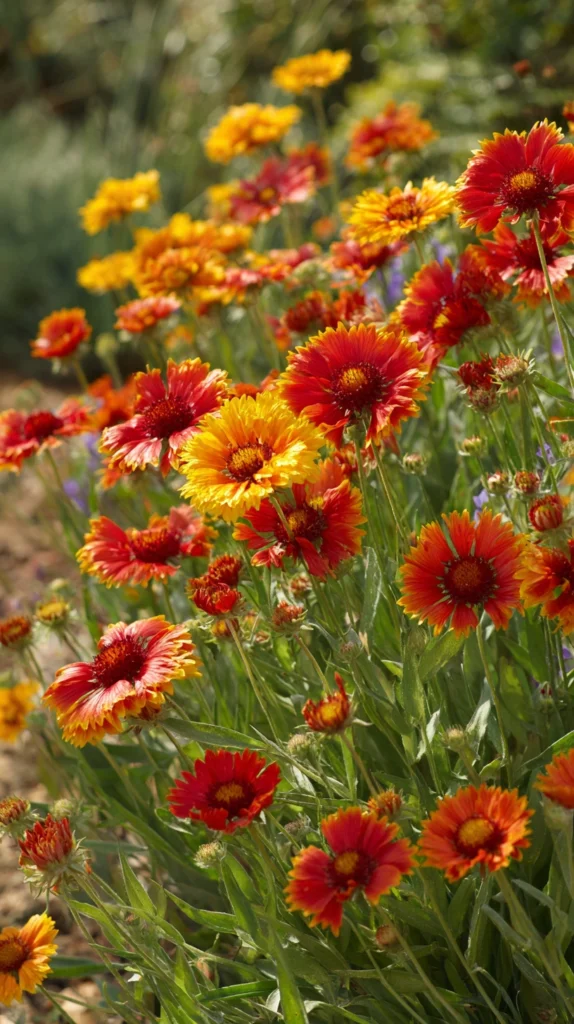
Cost: $5 – $15 per plant
Gaillardia is a native of the North American prairies and one of the most heat-tolerant flowering perennials available for a sunny garden. The large daisy flowers in bold combinations of red, orange, and yellow bloom from early summer through to the first frosts, and the plant keeps producing new buds almost continuously across the entire season. It is particularly effective in gravel gardens and dry borders where most other plants struggle by August.
Most perennial gaillardia varieties reach 45–60 cm in height and spread to a similar width. They are short-lived perennials that tend to exhaust themselves after two or three seasons of prolific flowering, but they self-seed reliably and replacements are inexpensive. Plant in the leanest, most free-draining soil available — gaillardia planted in rich, moist soil produces excessive foliage at the expense of flowers and tends to flop without support.
Growing tip: Deadhead gaillardia consistently throughout the season to keep the flowers coming. Unlike some perennials where deadheading makes little difference, regular removal of spent blooms noticeably extends the display and prevents energy going into seed production.
10. Echinops (Globe Thistle)
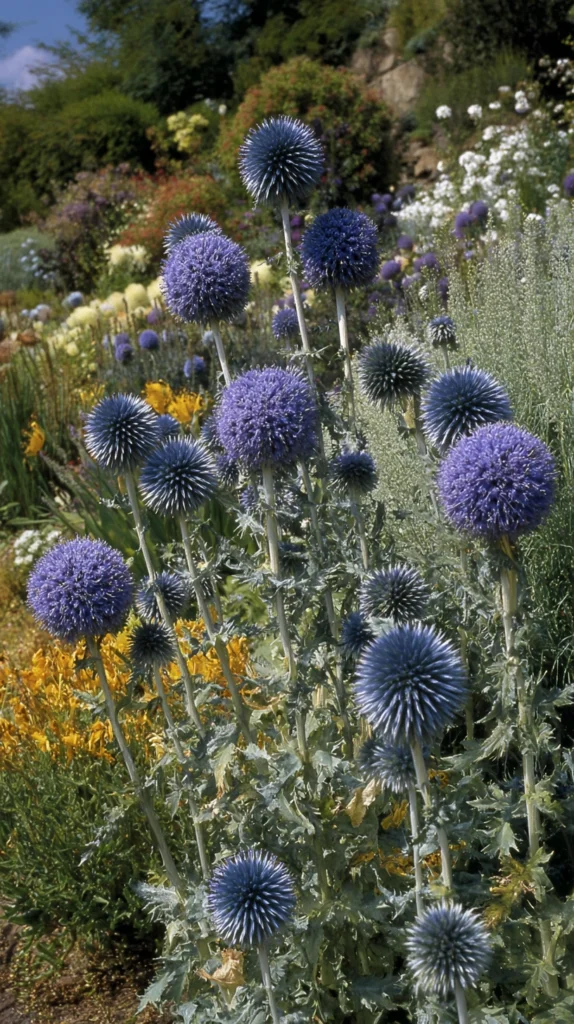
Cost: $6 – $16 per plant
Echinops produces one of the most architecturally interesting flowers in the summer border — perfectly spherical, steel-blue drumstick heads on tall branching stems above deeply divided, silver-backed foliage. It looks dramatic, it is completely drought-tolerant once established, it thrives in the poorest soils in full sun, and it is one of the best plants available for attracting bees and butterflies. The dried flower heads are also excellent for cutting and arranging indoors.
Most varieties reach 90–150 cm in height, making echinops a back-of-border plant in most garden schemes. The cultivar Veitch’s Blue is the most commonly grown and one of the most reliably blue in flower colour. Cut back after flowering to encourage a second flush of smaller blooms. Plants spread slowly by self-seeding and by underground runners — divide every four or five years to prevent them becoming too dominant in a border.
Growing tip: Cut a few stems for drying before the flowers fully open — the colour holds much better at the semi-open stage than once fully mature. Hang upside down in a dry, airy space for two to three weeks for best results.
11. Osteospermum (African Daisy)
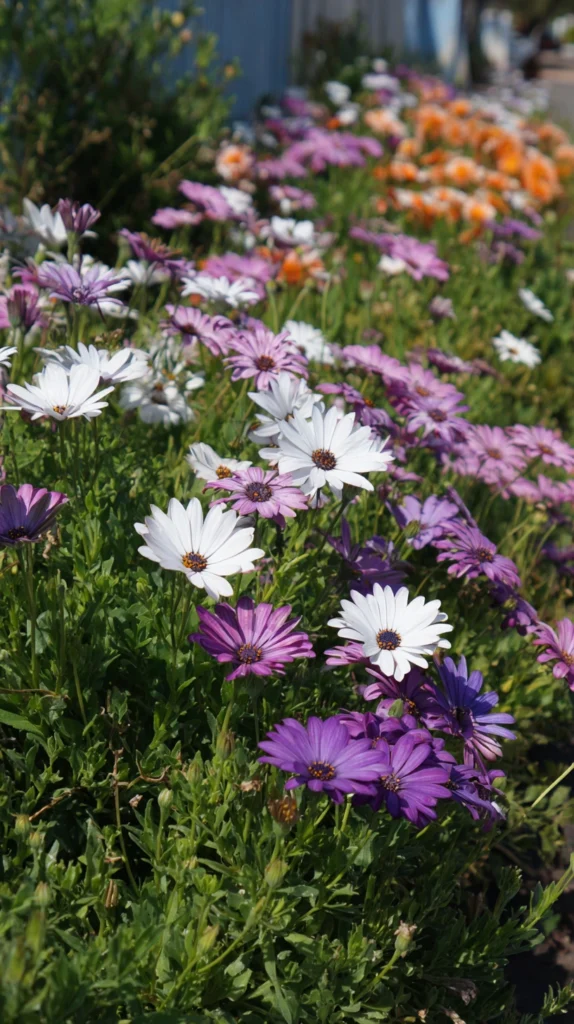
Cost: $4 – $12 per plant
Osteospermum is a prolific, sun-loving daisy that flowers from late spring through to the first autumn frosts in shades of white, yellow, orange, pink, and purple — often with contrasting central discs that give each flower a jewel-like quality up close. It is one of the best plants for sunny containers, window boxes, and the front of a south-facing border, where it spills and tumbles in a way that fills gaps and softens edges naturally.
Most osteospermum varieties are half-hardy perennials that are treated as annuals in colder climates, though they can be overwintered successfully as cuttings taken in late summer. In mild coastal gardens they often survive winter outdoors and grow into substantial, woody-based plants over several years. Full sun is non-negotiable — osteospermum closes its flowers in shade and performs poorly without at least six hours of direct sunlight per day.
Growing tip: Take softwood cuttings in August or September, root them on a warm windowsill over winter, and plant out the following spring. This turns one plant into six or eight for no additional cost and ensures you never lose a favourite variety to a hard winter.
12. Helenium (Sneezeweed)
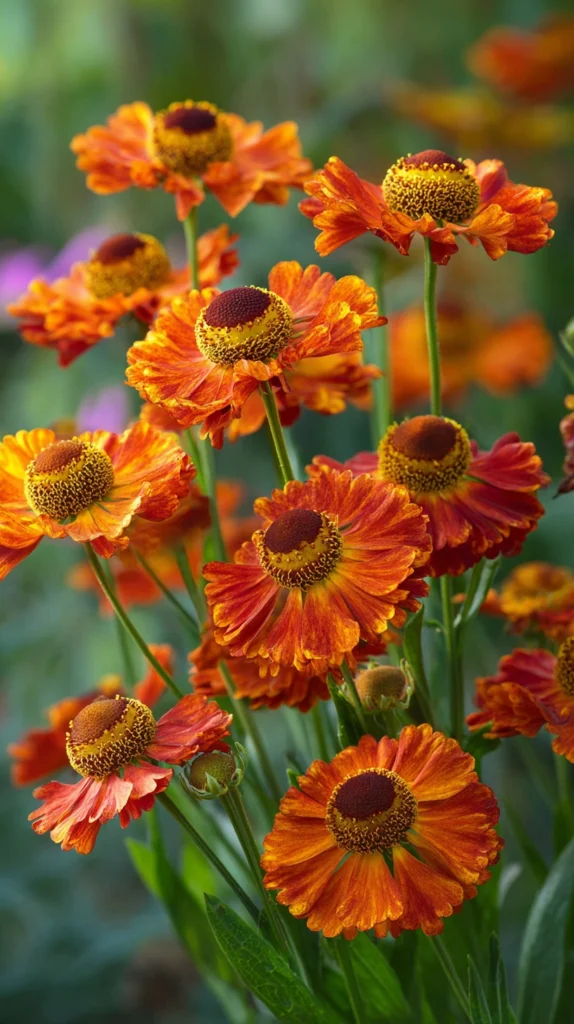
Cost: $7 – $18 per plant
Helenium is a prairie perennial that peaks in late summer and early autumn when many other border plants are fading, making it one of the most valuable plants for extending the season of interest in a sunny garden. The rich, velvety flowers in shades of copper, burnt orange, mahogany, and deep yellow sit on branching stems above clumps of mid-green foliage and glow in the low evening light of late summer in a way that is genuinely hard to match.
Plants typically reach 80–120 cm in height depending on variety and form generous, self-supporting clumps that increase in size each year. The Chelsea Chop — cutting plants back by one third in late May — delays flowering by two to three weeks and results in shorter, sturdier stems that need no staking. Helenium prefers consistently moist soil, so in a very free-draining, hot border add organic matter when planting and mulch generously each spring to retain moisture.
Growing tip: Divide helenium clumps every two to three years in spring, discarding the woody central portion and replanting the younger outer sections. Undivided clumps deteriorate noticeably and flower less prolifically — regular division keeps the plant performing at its best.
13. Crocosmia (Montbretia)
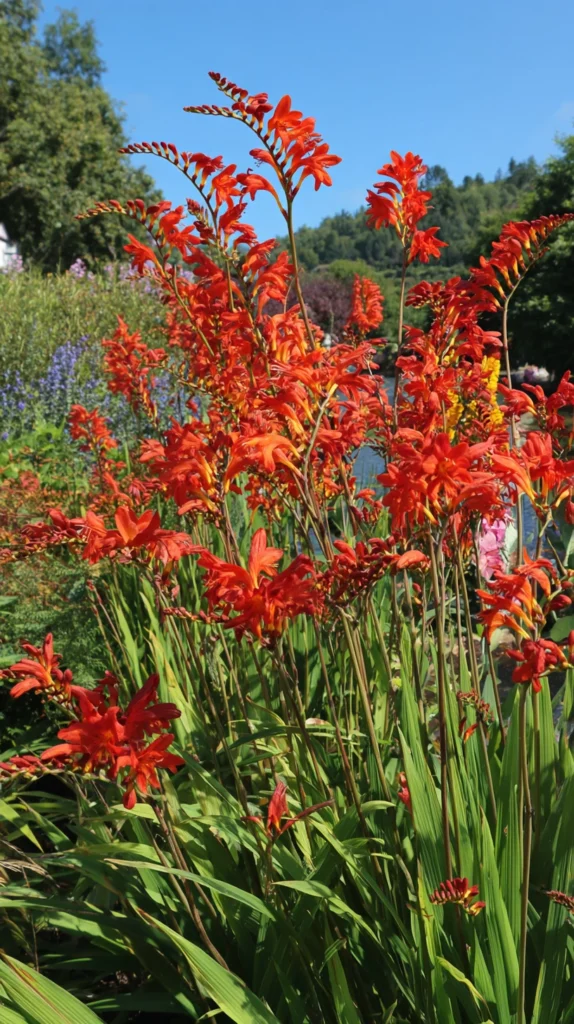
Cost: $5 – $15 per corm or small clump
Crocosmia is one of the most reliable late-summer performers for a full-sun garden. The arching stems carry sequences of small, funnel-shaped flowers in vivid shades of red, orange, and yellow that open progressively along the stem from base to tip, extending the flowering period over several weeks. The sword-like foliage is attractive before flowering and provides structure in the border through the whole growing season. It spreads steadily by underground corms and fills a space over time without becoming aggressive.
The variety Lucifer is the most widely grown and one of the most vigorous, reaching 90–120 cm with brilliant scarlet flowers. Smaller varieties such as Emily McKenzie and George Davison are more compact at 50–70 cm and suit smaller borders and containers. Plant corms 8–10 cm deep in spring in well-drained soil. Established clumps are drought-tolerant but perform better with occasional deep watering during prolonged dry spells in summer.
Growing tip: Lift and divide overcrowded crocosmia clumps every three or four years in spring. Congested corms produce fewer and smaller flowers over time. Dividing and replanting at wider spacing restores vigour quickly and gives you enough new plants to spread through other parts of the garden.
The common thread running through every plant on this list is a preference for conditions that most gardeners instinctively try to improve — heat, sun, and lean soil. Working with those conditions rather than against them is the most straightforward route to a garden that looks genuinely good through the longest, hottest part of the year, when everything else is struggling to keep up.
Start with two or three plants from this list that suit the scale and style of your garden, establish them well in their first season, and build outward from there. A full-sun border planted thoughtfully is one of the lowest-maintenance and most rewarding gardens it is possible to create — and it gets easier, not harder, with each passing year.