14 Low-Maintenance Summer Flower Beds
A beautiful summer flower bed does not have to mean hours of weekly upkeep. The secret is in the planning — choosing plants that are naturally suited to your soil and conditions, spacing them generously enough to suppress weeds as they fill in, and building the bed on a foundation of good mulch that does much of the work for you. Get those three things right and a flower bed largely looks after itself through the summer months.
The fourteen beds below are designed around that principle. Each one is built from plants that are proven, widely available, and genuinely low-maintenance once established. Whether you are starting from bare soil or refreshing an existing border, you will find a setup here that suits your garden, your budget, and the time you realistically have to give it.
1. The Cottage Garden Bed
Budget: $60 – $200
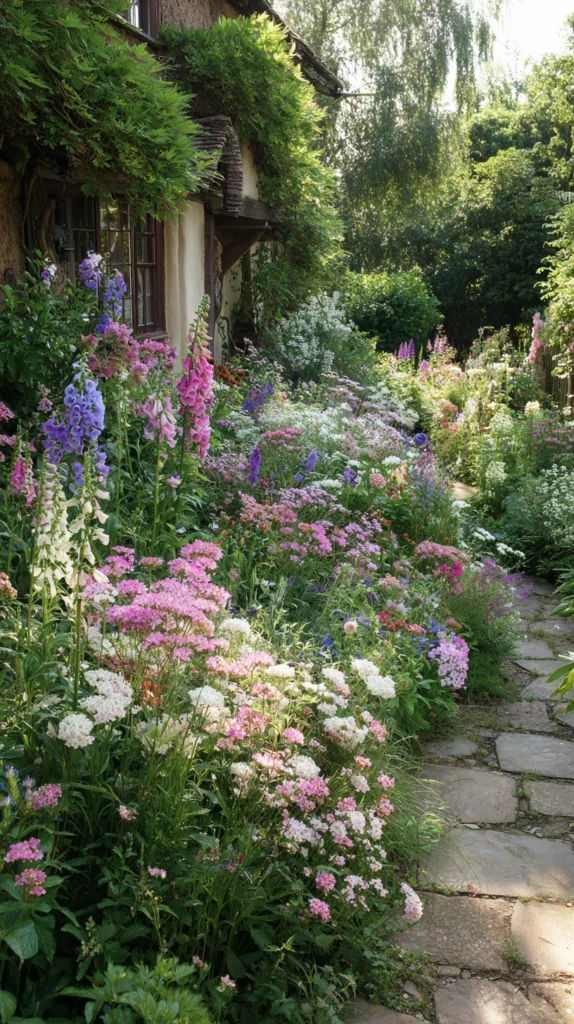
The cottage garden style looks effortlessly abundant and, once established, largely is. The key is choosing self-seeding perennials and hardy annuals that return and spread on their own year after year — echinacea, achillea, foxglove, aquilegia, and hardy geranium are the workhorses of this style. Plant them in relaxed, overlapping drifts and allow them to seed gently into each other’s gaps. Within two seasons the bed manages much of its own replanting.
A starter selection of five or six cottage perennials costs $30–$80 in small pots from a garden centre or $15–$40 as bare-root plants ordered online in autumn or spring. Add a thick 5–8 cm layer of garden compost or bark mulch across the bed ($20–$50 for a large bag) to suppress weeds and retain moisture. The mulch alone reduces maintenance significantly through the driest summer months.
Planting tip: Leave small gaps between plants when first planting and allow self-seeders to fill them naturally over the following seasons. Fighting the self-seeding habit of cottage plants wastes effort — working with it gives you a bed that continuously improves without additional cost.
2. The Gravel Garden Bed
Budget: $80 – $300
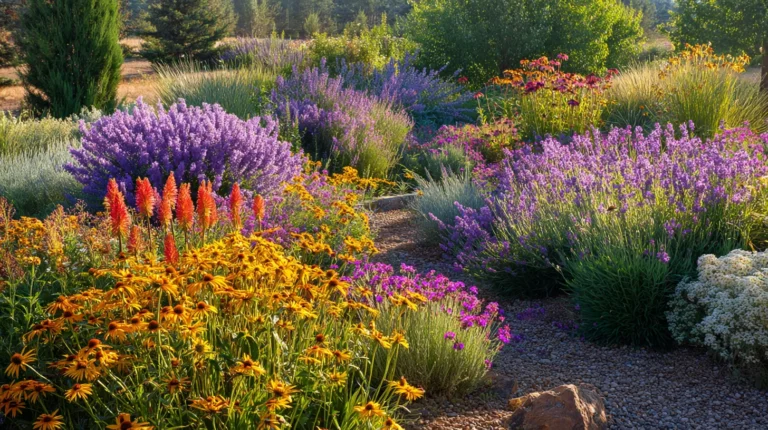
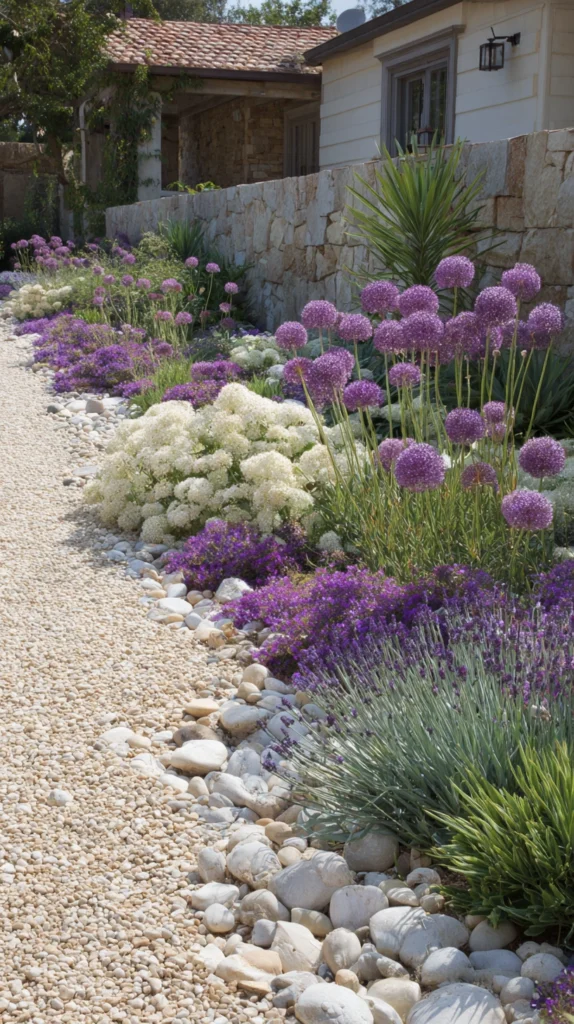
A gravel mulch laid over the entire bed surface is one of the most effective low-maintenance strategies available. It suppresses weeds, retains soil moisture, prevents soil compaction from rain, and provides the sharp drainage that Mediterranean and drought-tolerant plants need to thrive. Through it, plant lavender, sedum, verbascum, cistus, and ornamental alliums — plants that positively prefer dry, lean conditions and ask for almost nothing once settled in.
Gravel or horticultural grit costs $20–$50 per large bag, and a typical border requires a layer 5 cm deep to be effective. Lay a sheet of water-permeable membrane beneath the gravel before planting to further reduce weed growth — membrane rolls cost $15–$30. The initial outlay is higher than a conventional bed but the ongoing maintenance is minimal enough to justify the setup cost within the first season.
Planting tip: Pull the membrane back to plant, then tuck it snugly around each plant’s base before replacing the gravel. Leaving gaps in the membrane around plant bases allows weeds to establish exactly where they are hardest to remove later.
3. The Perennial Only Bed
Budget: $100 – $350
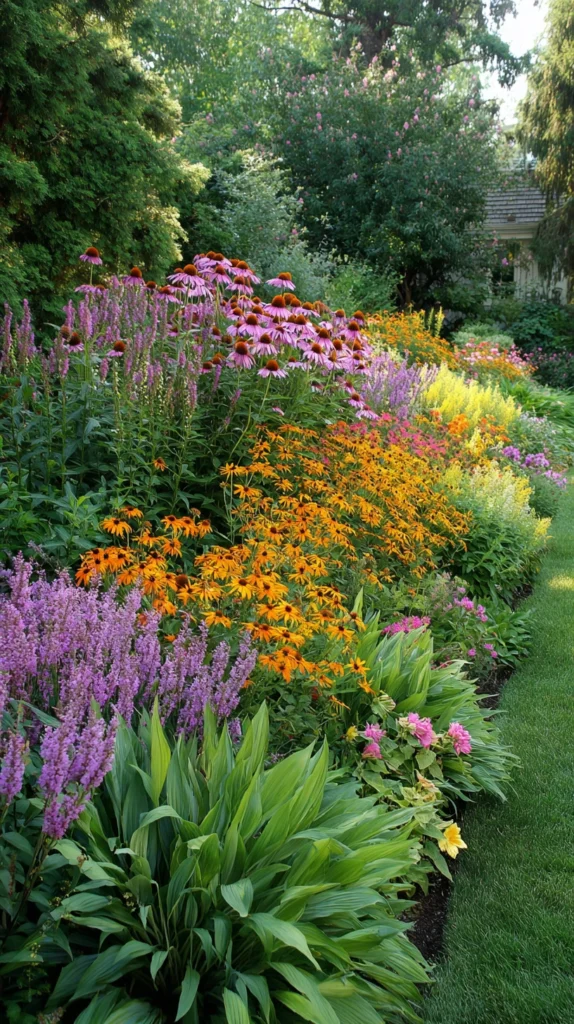
A bed planted exclusively with hardy perennials is the lowest-maintenance option of all over a multi-year period. The initial cost is higher than an annual bed, but perennials return every year, grow larger and more floriferous with age, and eventually need dividing — which gives you free plants to fill new areas of the garden. There is no replanting each spring, no gap left by finished annuals, and no need to buy new plants for three or four years at minimum.
A well-chosen perennial bed for summer interest might include salvia, echinacea, helenium, kniphofia, geranium, and rudbeckia — six varieties that together provide continuous colour from June through to October. Buy three plants of each variety for a generous, well-filled effect: 18 plants in total at $6–$15 each gives a complete bed for $110–$270. Mulch generously on planting and divide established clumps every three years to maintain vigour.
Planting tip: Plant perennials in groups of three or five of the same variety rather than dotting single plants across the bed. Grouped plantings look intentional, create stronger colour impact, and allow each variety enough root space to establish well without competition from its neighbours.
4. The Pollinator Border
Budget: $50 – $180
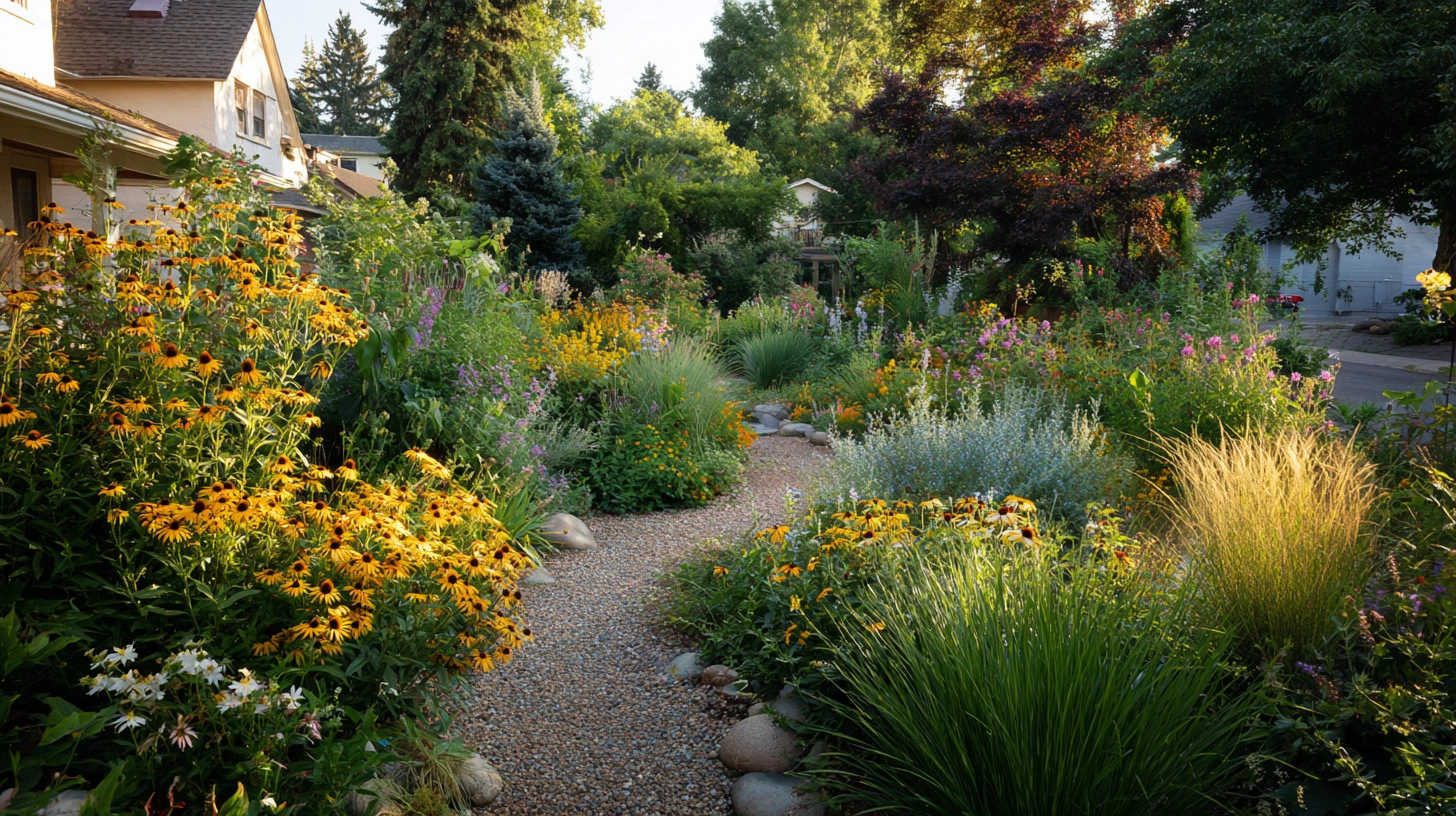
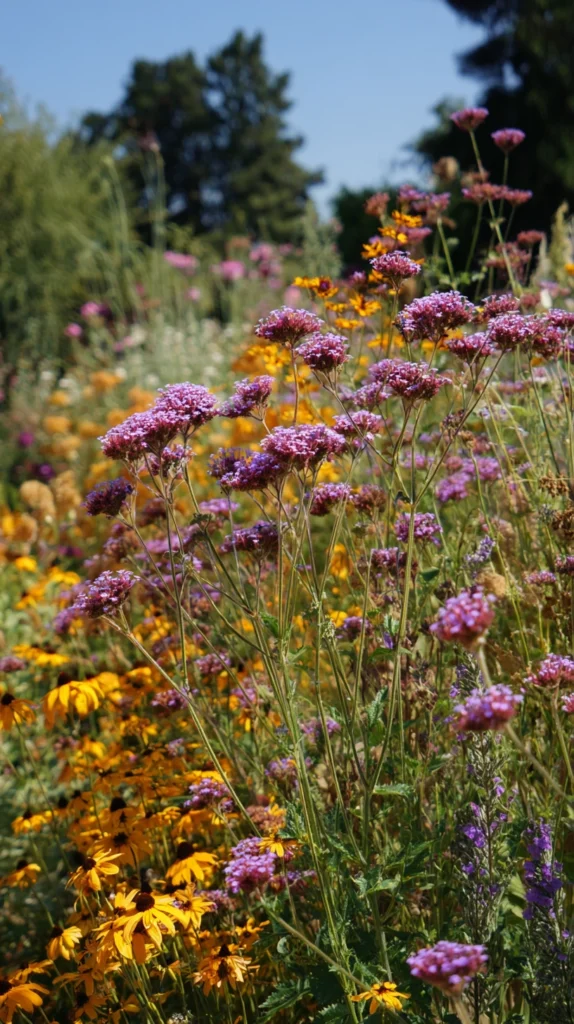
A border planted specifically to attract bees, butterflies, and other pollinators is among the most rewarding and self-sustaining bed types available. Pollinators favour open, single flowers over complex doubles, and the plants they love most — echinacea, verbena bonariensis, agastache, nepeta, and single-flowered rudbeckia — are also among the toughest and most drought-tolerant perennials in cultivation. The bed feeds the garden ecosystem and requires very little feeding or intervention in return.
Most pollinator-friendly perennials are available for $5–$15 each from garden centres or significantly cheaper in mixed seed packets ($3–$8 per packet) if you are happy to start from seed in early spring. A combination of plug plants for instant effect and direct-sown annuals to fill gaps gives the best value across the season. Leave seed heads standing at the end of summer — they feed birds and provide overwintering habitat for beneficial insects.
Planting tip: Include at least one plant that flowers in each month from May through October so that pollinators have a reliable food source throughout the entire season rather than a short burst of abundance followed by a gap.
5. The Shade-Edge Summer Bed
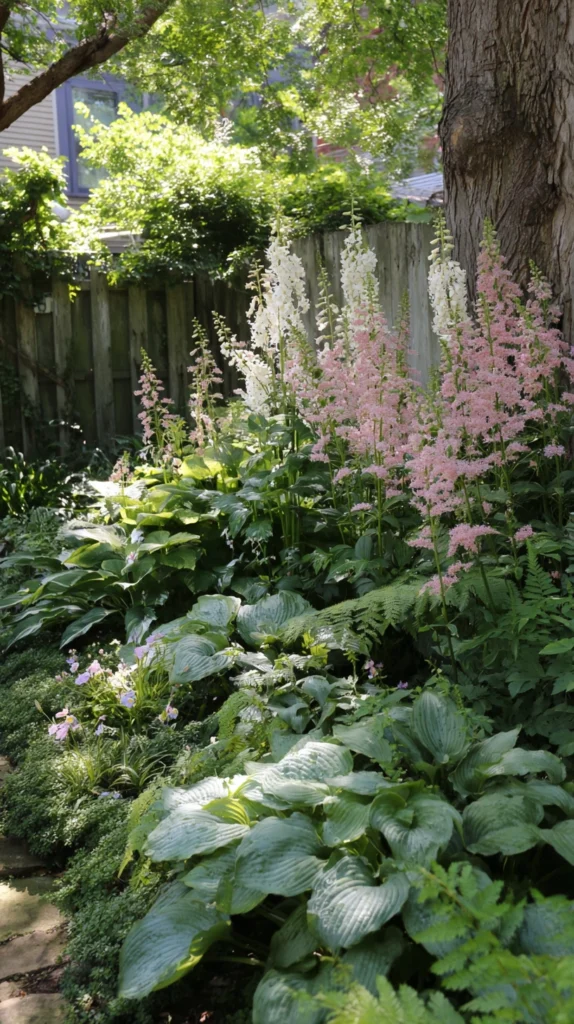
Budget: $70 – $220
A bed that sits along the shaded edge of a fence, wall, or tree canopy does not need to be dull. Astilbe, hostas, hardy geraniums, and foxgloves all thrive in partial shade and together create a lush, layered planting that requires almost no supplemental watering once established because the shade keeps the soil consistently moist. The reduced evaporation in shaded beds is one of the reasons they are naturally easier to maintain than full-sun borders in summer.
Astilbe plants cost $8–$18 each and produce plumes of red, pink, or white flowers in midsummer that dry attractively on the plant and provide winter structure. Hostas cost $10–$30 each and are available in an enormous range of leaf sizes and colours. Hardy geraniums fill gaps quickly at $5–$12 each. Together, three or four of each variety establishes a generous shaded bed for $80–$200 depending on plant sizes selected.
Planting tip: Slugs and snails are the primary pest in a shaded bed. Apply a ring of sharp horticultural grit around hostas and other vulnerable plants at the start of the season — it is far more effective than occasional slug pellet use and does not need repeating after rain the way pellets do.
6. The Wildflower Meadow Bed
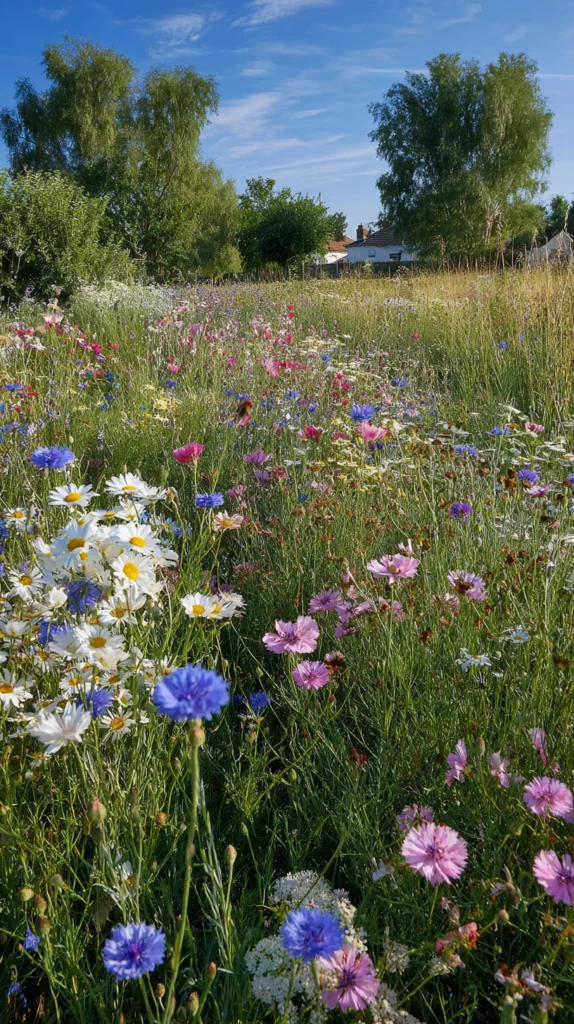
Budget: $15 – $60
A wildflower bed is the lowest-cost, lowest-maintenance option on this list by a significant margin. Sow a mixed wildflower seed blend directly onto cleared, bare soil in spring or autumn, water once to establish germination, and then largely leave it alone. The result over one season is a naturalistic, densely planted bed of poppies, cornflowers, ox-eye daisies, and field scabious that looks deliberately designed and costs almost nothing to create.
A 100g packet of mixed annual and perennial wildflower seed costs $5–$15 and covers roughly 10 square metres when broadcast-sown at the recommended rate. The only preparation required is removing all existing vegetation and raking the soil to a fine tilth before sowing — wildflowers germinate poorly in competition with established grass or weeds. Cut the bed to 5 cm in late autumn and leave the cuttings for 48 hours before removing, allowing seed to drop back onto the soil surface for next year.
Planting tip: Mix the wildflower seed with dry silver sand before sowing to make even distribution easier across a large area. The sand also makes it easier to see which areas have been covered and which have not.
7. The Ornamental Grass and Perennial Bed
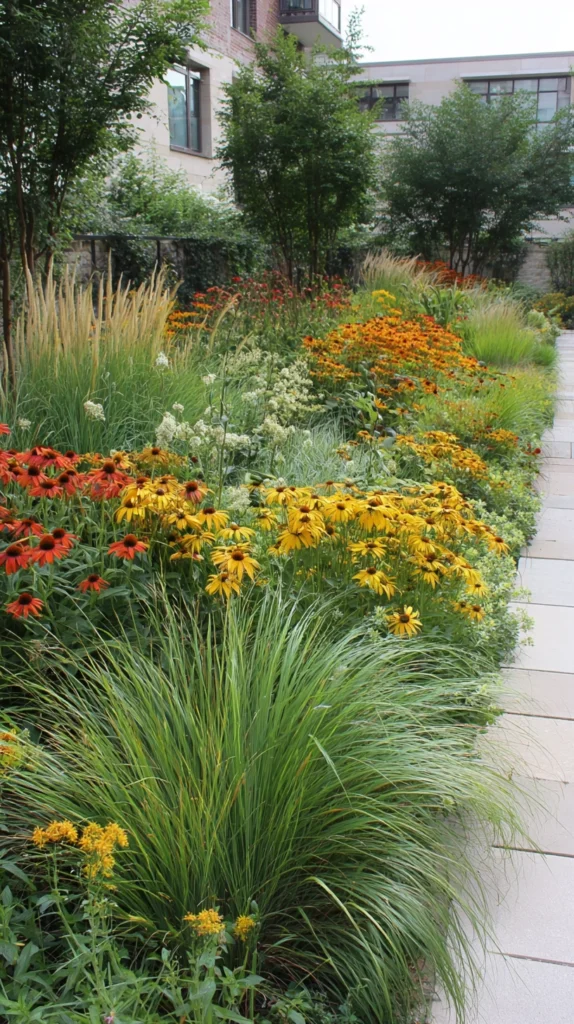
Budget: $90 – $280
Ornamental grasses are among the most truly low-maintenance plants available for a summer border. They need cutting back once a year in late winter, they rarely need dividing, they are virtually pest-free, and they provide movement, texture, and seasonal interest from the moment they emerge in spring through to the following February. Combined with a few bold perennials — echinacea, rudbeckia, or agapanthus — they create a planting that looks considered across all four seasons.
Reliable ornamental grasses for a summer bed include Calamagrostis Karl Foerster ($10–$20), Stipa gigantea ($12–$22), Pennisetum Hameln ($8–$18), and Molinia Transparent ($10–$20). Space grasses generously — most need 60–90 cm of space to develop their full form. Interplant with three to five bold perennials at $8–$18 each. The bed needs almost no intervention between the annual late-winter cut-back and the following autumn.
Planting tip: Cut deciduous grasses back hard to 10–15 cm in late February or early March before new growth begins. Cutting them in autumn removes the winter structure that makes them most attractive and exposes the crown to the worst of the winter weather unnecessarily.
8. The Hot Colour Tropical Bed
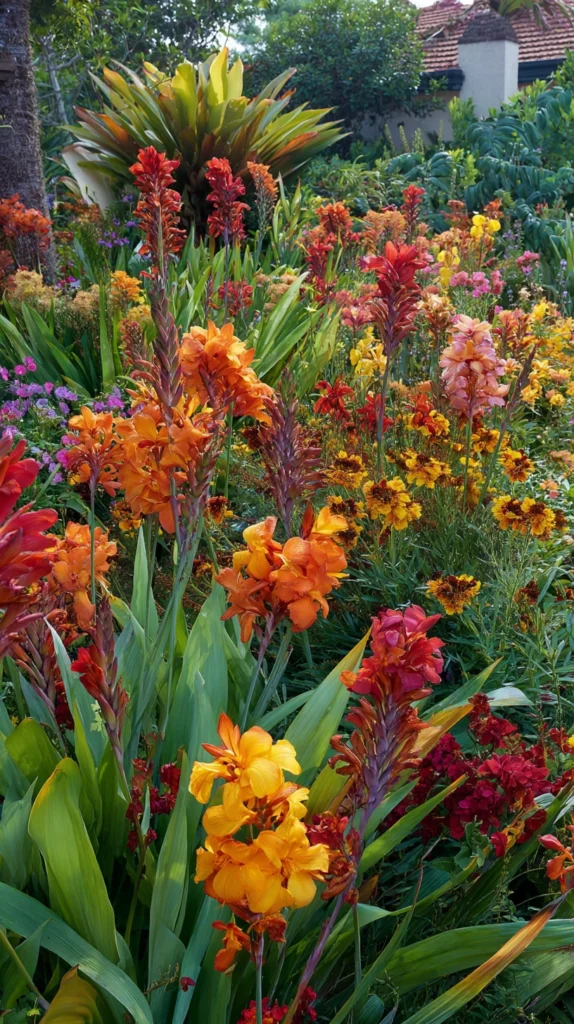
Budget: $80 – $250
A hot-coloured bed — dahlias, cannas, crocosmia, helenium, and rudbeckia in shades of red, orange, and deep yellow — brings a bold, almost tropical energy to a summer garden and performs from midsummer through to the first frosts without any deadheading required for the grasses and perennials. Dahlias benefit from deadheading if you have the time, but the other plants in this combination carry the bed on their own through the peak summer weeks.
Dahlia tubers cost $3–$10 each and should be planted after the last frost date for your area. Canna rhizomes run $8–$20 each. Crocosmia Lucifer costs $5–$12 per clump. Helenium and rudbeckia plug plants are $5–$12 each from online nurseries in spring. Together these five genera create an overlapping season of colour from July through October, with each variety picking up as the previous one peaks.
Planting tip: Lift dahlia tubers and canna rhizomes after the first frost blackens the foliage, allow them to dry for a week, then store in dry compost or newspaper in a frost-free shed until the following spring. This costs nothing and saves buying new tubers each year.
9. The White and Silver Bed
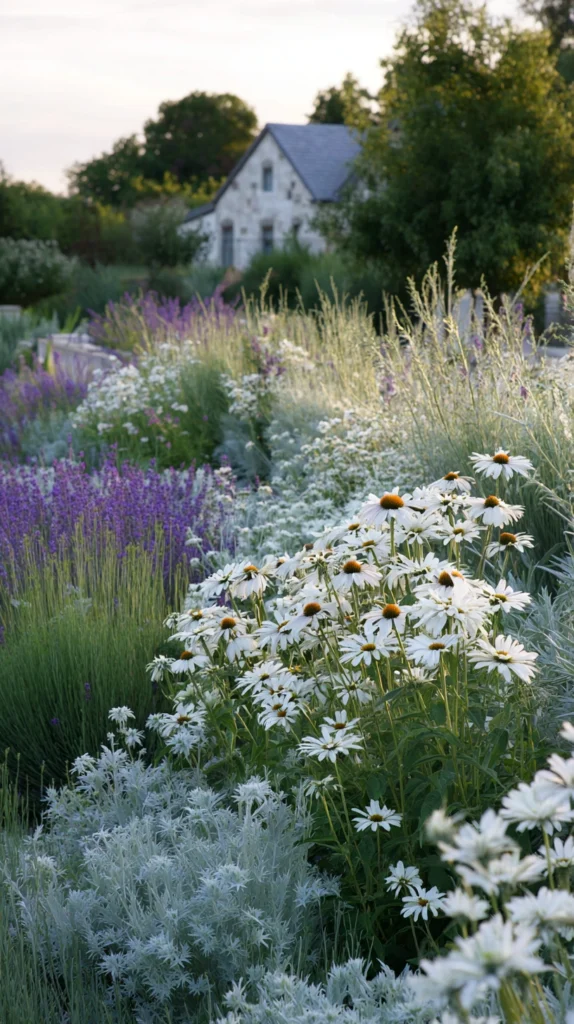
Budget: $70 – $220
A bed planted entirely in white flowers and silver foliage is one of the most elegant and surprisingly easy summer combinations available. White-flowered plants tend to be robust — they have not been bred into the fragility that sometimes accompanies intensely coloured hybrids — and silver-leaved plants such as artemisia, stachys, and senecio are almost all Mediterranean in origin and therefore highly drought-tolerant and undemanding in full sun.
A white and silver bed might include white echinacea ($8–$15), white agapanthus ($10–$20), artemisia Silver Mound ($6–$12), Stachys byzantina ($5–$10), and white cosmos sown directly from seed ($2–$5 per packet). The palette reads as cool and sophisticated in summer heat and glows visibly in the evening light after sunset — one of the reasons Vita Sackville-West’s famous White Garden at Sissinghurst has been so widely imitated.
Planting tip: Deadhead white flowers more attentively than coloured ones. Spent white blooms brown and become more visible against pale foliage than spent blooms of other colours. A quick pass through the bed every two weeks keeps it looking fresh with minimal effort.
10. The Container Cluster Bed
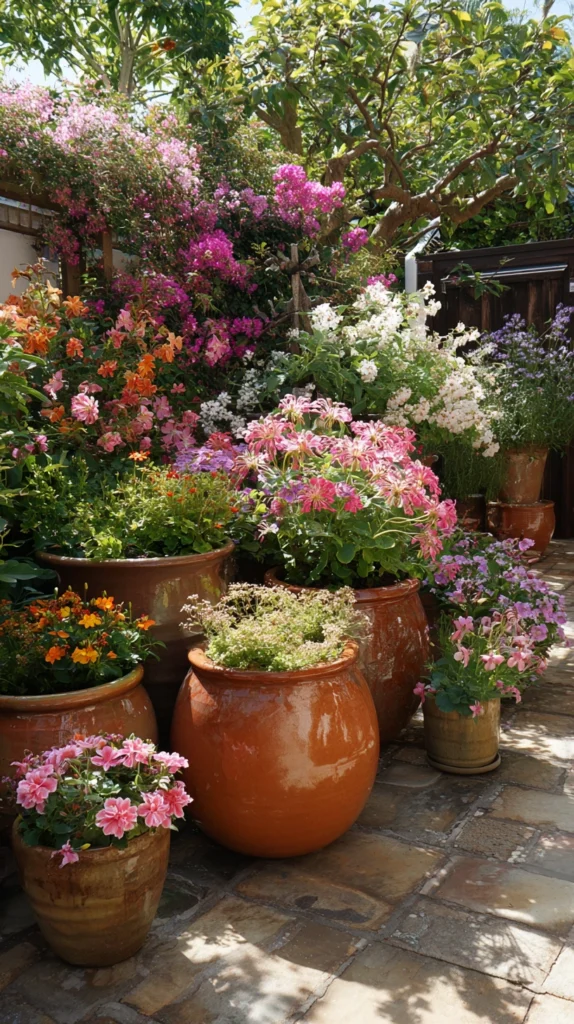
Budget: $60 – $250
A grouping of containers arranged as a bed — clustered on a terrace, against a wall, or around a doorstep — is the most flexible version of a summer flower bed. Each pot can be changed independently, moved if one plant performs badly, and brought under cover if an unexpected frost threatens. It is also the best approach for gardens with poor soil, paved surfaces, or rented properties where permanent planting is not possible.
Use a mix of pot sizes — at least one large pot of 40 cm diameter or more as a centrepiece, surrounded by medium and small pots at varying heights. Terracotta pots are the most attractive but dry out faster than glazed or plastic equivalents. Self-watering pots ($15–$40 each) with built-in water reservoirs significantly reduce the watering frequency required and are worth the additional outlay in a hot, dry summer. Plant each container with one thriller, one filler, and one spiller for a balanced result.
Planting tip: Water container plants in the morning rather than the evening in summer. Evening watering leaves foliage damp overnight, which encourages fungal issues. Morning watering allows foliage to dry through the day and delivers moisture when the plant is about to begin its most active photosynthetic period.
11. The Edging and Path Bed
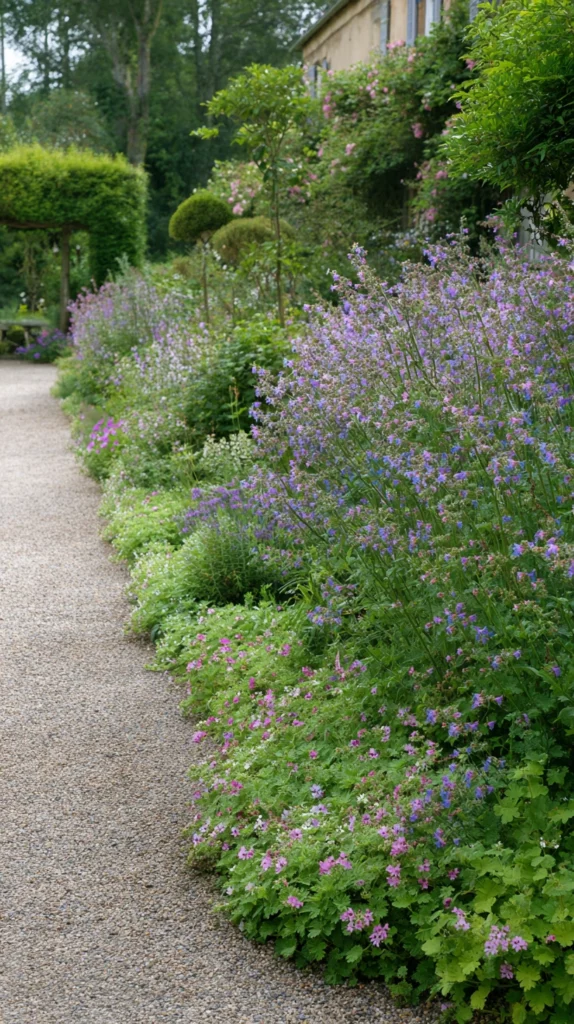
Budget: $40 – $150
A narrow bed running along a garden path or lawn edge — typically 30–60 cm wide — planted with low, spreading perennials and self-seeding annuals is one of the simplest ways to add sustained summer colour to a garden without committing to a large-scale planting project. Nepeta, hardy geranium, alchemilla, and low-growing salvia varieties are ideal for this format — they spread laterally, suppress weeds effectively, and soften hard edges in a way that nothing else quite replicates.
Hardy geranium Rozanne — one of the best garden plants available — costs $8–$15 and spreads to 60–90 cm in a single season, flowering continuously from June to October with very little deadheading required. Nepeta Six Hills Giant costs $6–$12 and reaches a similar spread. Alchemilla mollis self-seeds prolifically once established and costs $5–$10 for an initial plant that will supply you with dozens of seedlings within two years at no further cost.
Planting tip: Cut alchemilla back hard to the base after its first flowering flush in early summer. It produces a fresh mound of new foliage within two weeks and often flowers a second time in late summer — something it will not do if left to go to seed untrimmed.
12. The Late Summer Rescue Bed
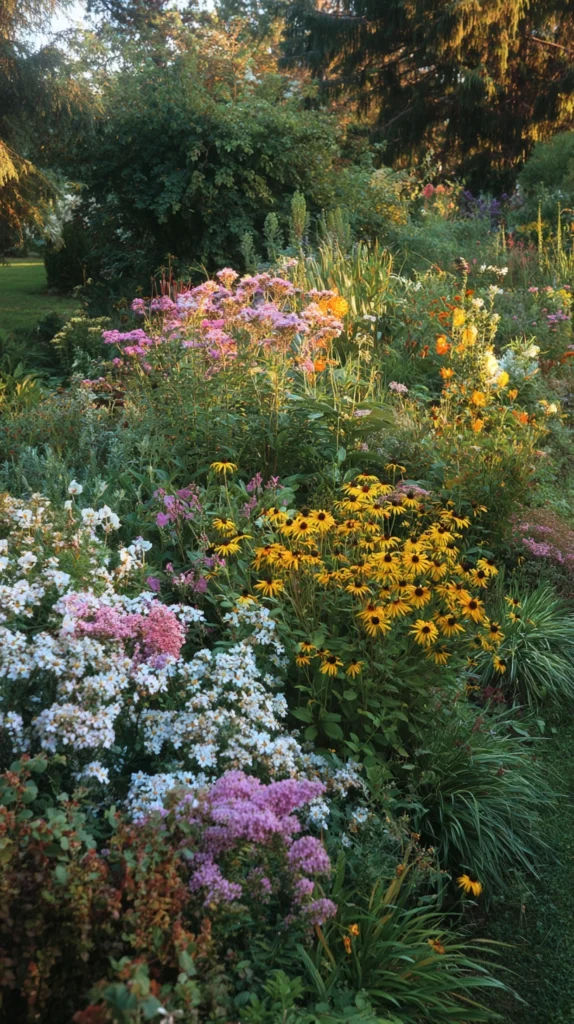
Budget: $40 – $130
A bed planted specifically with late-summer and autumn performers — rudbeckia, helenium, sedum, aster, and Japanese anemone — that comes into its own precisely when most other beds are looking tired and finished. It requires very little maintenance through the early part of the season when there is little to see, and peaks from August through October when the rest of the garden needs it most. For a garden that looks good in photographs through to the end of the season, this bed earns its space more than almost any other.
Rudbeckia Goldsturm is one of the most reliable late-summer perennials available, producing masses of golden yellow daisies from August through October for $6–$14 per plant. Aster varieties cost $7–$15 each and flower in shades of purple, pink, and white. Japanese anemone runs $8–$18 per plant and spreads steadily underground to fill a border over several years. All three are fully hardy, require no deadheading, and improve with each passing season.
Planting tip: Resist cutting this bed back until late February. The seed heads and dried stems of rudbeckia, sedum, and aster are among the best winter structures in the garden and provide essential habitat for overwintering insects through the coldest months.
13. The Raised Bed Cutting Garden
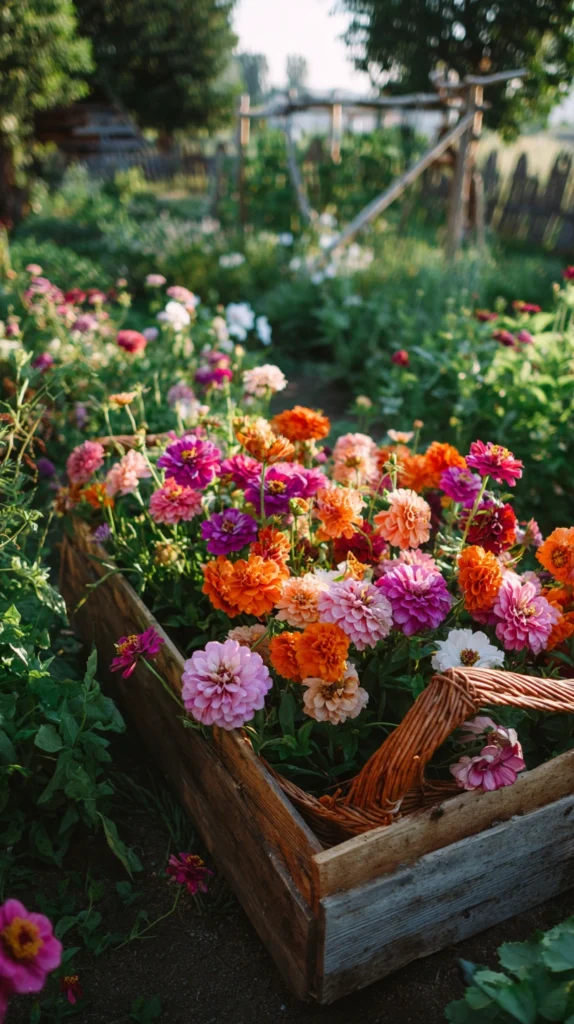
Budget: $100 – $400
A raised bed planted as a cutting garden — rows of cosmos, zinnias, sweet peas, and dahlias grown specifically to cut and bring indoors — is both a productive and a low-effort summer bed once the initial sowing is done. The raised bed format suppresses weeds effectively, warms up faster in spring, and the act of regular cutting encourages the plants to produce more flowers rather than fewer, making the bed self-maintaining through the growing season.
A simple timber raised bed kit costs $40–$120 for a 120×60 cm frame. Fill with a 50/50 mix of topsoil and garden compost ($20–$60 per large bag). Cosmos and zinnia seeds cost $2–$5 per packet and are sown directly in May. Sweet pea seeds ($2–$5) are best started in autumn or early spring in deep pots. Dahlia tubers ($3–$8 each) planted in late April complete the cutting garden lineup at modest cost.
Planting tip: Cut flowers in the early morning when stems are fully hydrated from the cool overnight hours rather than in the afternoon heat. Morning-cut flowers last significantly longer in a vase than those cut during the warmest part of the day.
14. The No-Dig Flower Bed
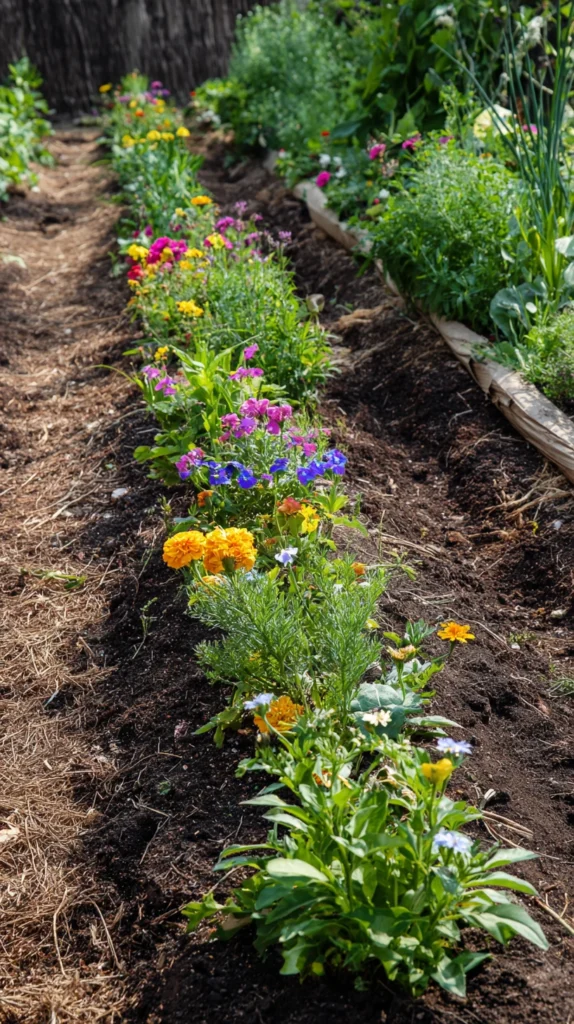
Budget: $50 – $180
The no-dig method — laying cardboard directly over grass or weeds, topping it with 10–15 cm of compost, and planting straight into the compost layer — is one of the fastest and most effective ways to create a new flower bed without breaking your back. The cardboard smothers existing vegetation within weeks, worms do the digging for you underground, and the compost provides an immediate, weed-suppressed planting medium that plants establish in quickly and easily.
Cardboard is free from any supermarket or furniture retailer — remove all tape and staples before laying. Garden compost or well-rotted manure costs $20–$50 per large bag, and a typical new bed requires four to six bags to achieve the required depth. Plant through the compost layer in the normal way. Within one growing season the cardboard has fully decomposed, the worm activity has improved the soil structure beneath, and the bed is indistinguishable from a conventionally dug one.
Planting tip: Overlap cardboard sheets by at least 15 cm at every join to prevent weeds from finding gaps and pushing through. A single layer with poorly overlapped seams fails within weeks — the overlapping is what makes the method work reliably.
The most important investment in any low-maintenance flower bed is the preparation — good mulch, the right plants for the conditions, and enough spacing to allow natural ground coverage. Beds that look after themselves are not accidental. They are planned that way from the beginning, and the planning takes far less time than the maintenance it replaces.
Choose one idea from this list that suits the space and time you have, establish it well in its first season, and resist the urge to add more before the original planting has had a chance to settle. A bed given room and time to develop on its own terms is almost always the most satisfying result — and the one that asks the least of you in every season that follows.