13 Vertical Garden Ideas That Save Space & Look Stunning
A vertical garden solves one of the most persistent tensions in gardening — the tension between the desire for abundant growing space and the reality of limited ground to grow on. By turning the wall, the fence, the railing, or the bare vertical surface into a growing plane, it multiplies the productive and decorative area of a garden, a balcony, or an interior space without claiming a single additional square metre of floor.
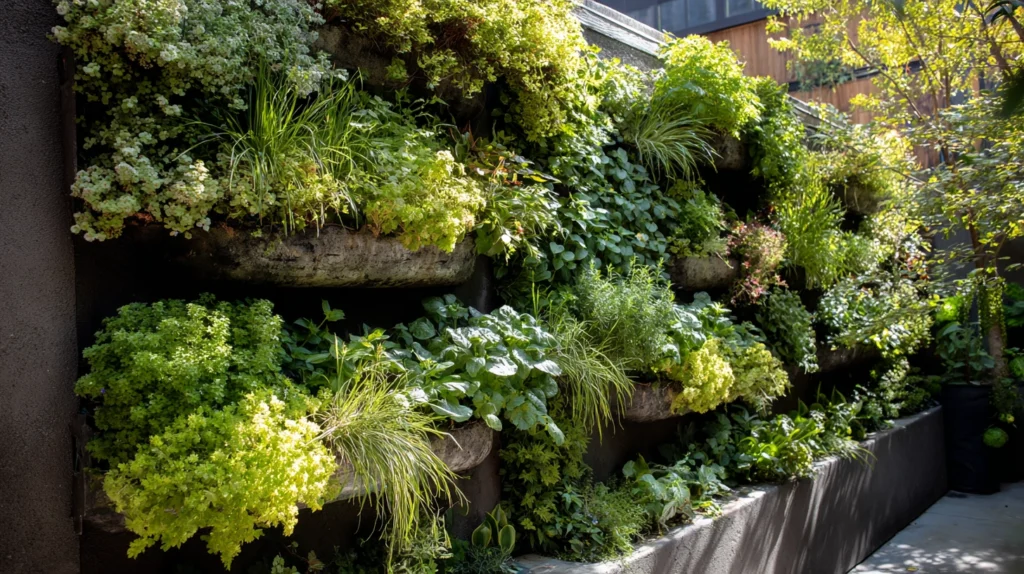
The best vertical gardens do more than save space. They transform the character of the surfaces they occupy — a bare concrete wall becomes a living tapestry, a plain timber fence becomes a productive herb garden, a narrow urban balcony becomes a green, plant-filled sanctuary.
They create privacy, reduce ambient noise, moderate temperature, and provide habitat for insects and birds in urban environments where green space is scarce. They make the case, more persuasively than any purely ornamental treatment, that a surface covered in plants is almost always more beautiful than a surface that is not.
The ideas below cover every vertical gardening approach — from the simplest pocket planter fixed to a fence to a full engineered living wall system — with practical guidance on plant selection, irrigation, and maintenance for each one.
1. The Pocket Planter Fence Wall
Budget: $30 – $150
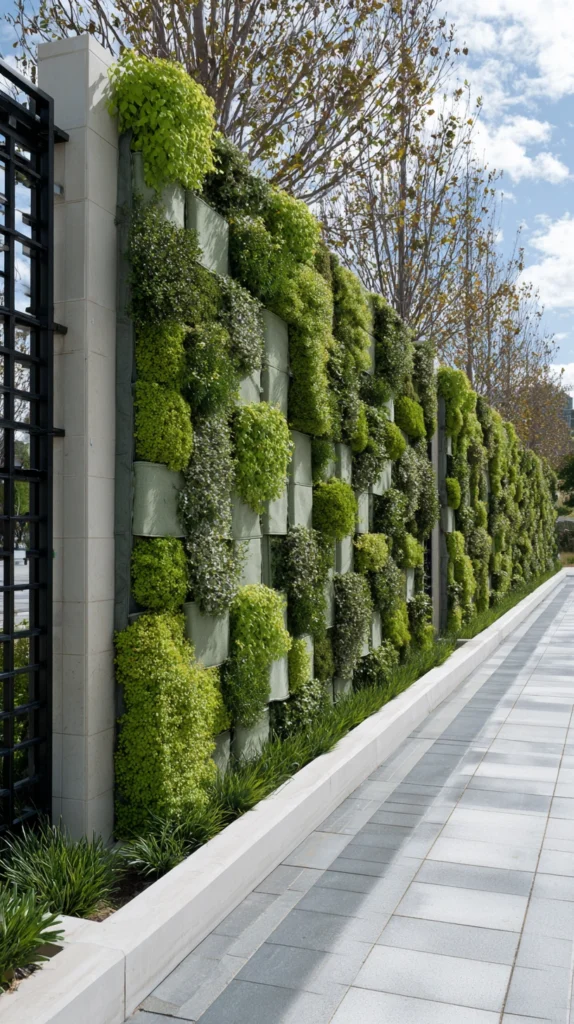
Fabric or felt pocket planters fixed to a fence, a wall, or a freestanding frame create an immediately effective vertical garden at the lowest cost and with the least technical complexity of any approach on this list. Each pocket holds one plant — a herb, a trailing annual, a small fern, a succulent — and a row of pockets creates a dense, planted surface that covers a fence panel completely within a single growing season. The system is modular, expandable, and entirely removable at the end of the season.
Fabric pocket planter systems cost $15–$40 for a panel covering approximately one square metre. Individual felt pockets cost $3–$8 each and can be fixed to any surface with a simple screw or a strong adhesive hook. Plant with compact, shallow-rooted species — herbs, lettuces, strawberries, trailing petunias, small ferns — that perform well in the limited soil volume a pocket planter provides.
Garden tip: Water pocket planters from the top of the panel and allow water to percolate downward through successive pockets rather than watering each pocket individually. Top-down watering ensures every pocket receives some moisture, prevents the upper pockets from being overwatered while the lower ones dry out, and significantly reduces the time required to water the entire panel. Check the lowest pockets regularly — they receive the most drainage from above and can become waterlogged in wet weather.
2. The Pallet Vertical Garden
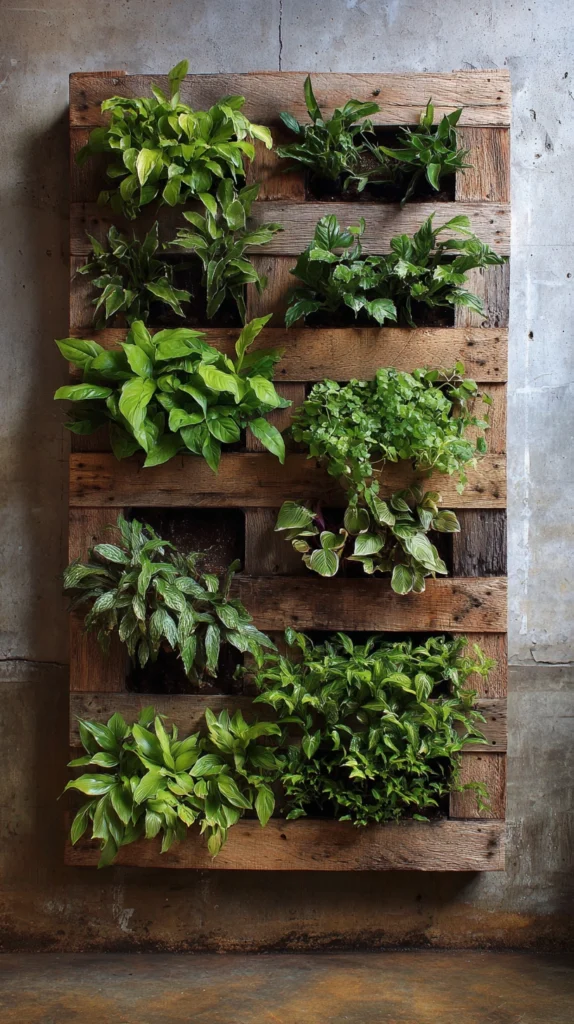
Budget: $10 – $60
A reclaimed timber pallet stood upright against a wall or fence and planted in the gaps between the slats creates a vertical garden from a material that costs nothing to source and provides a ready-made planting framework without any construction. The horizontal slat spacing of a standard pallet is almost perfectly suited to compact herbs, alpines, and shallow-rooted annuals, and a planted pallet leaned against a sunny wall is among the most photographed and most shared garden ideas of the past decade — for good reason.
Line the back and sides of the pallet with landscaping fabric ($8–$15 per roll) before filling with compost to prevent the growing medium from falling through the gaps. Lay the pallet flat to plant it, fill each slat gap with compost, and allow the plants to establish for two to three weeks before standing the pallet upright — plants that have had time to root into the compost stay in place when the pallet is stood vertically; freshly planted specimens fall out.
Garden tip: Choose a pallet stamped with the letters HT (heat treated) rather than MB (methyl bromide treated) for any food-growing vertical garden. HT pallets are treated with heat to remove pests and are safe for growing edible plants. MB pallets have been treated with a chemical pesticide that can persist in the timber and leach into the soil — unsuitable for any vegetable or herb planting regardless of how long ago the treatment was applied.
3. The Trellis and Climbing Plant Wall
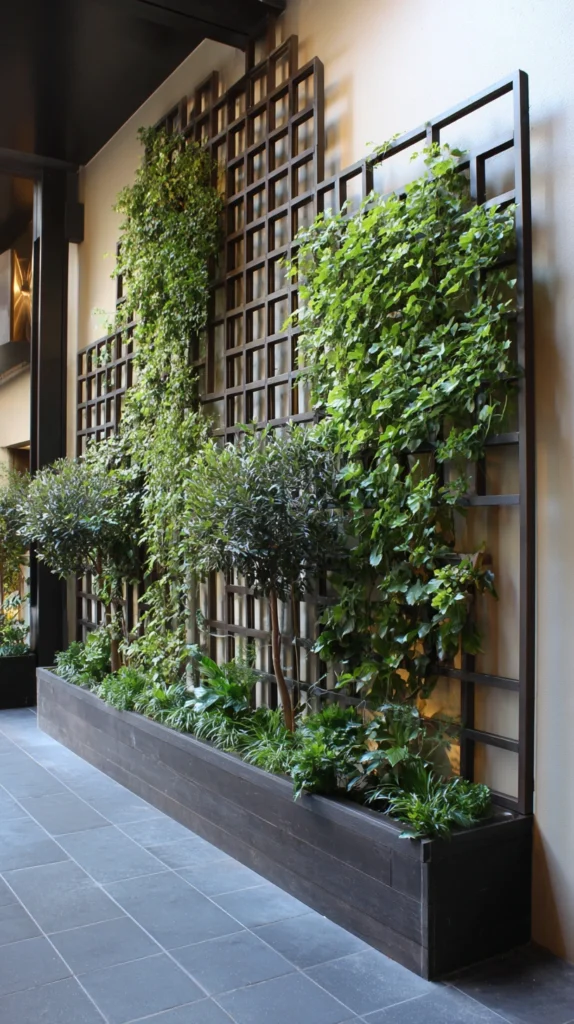
Budget: $40 – $200
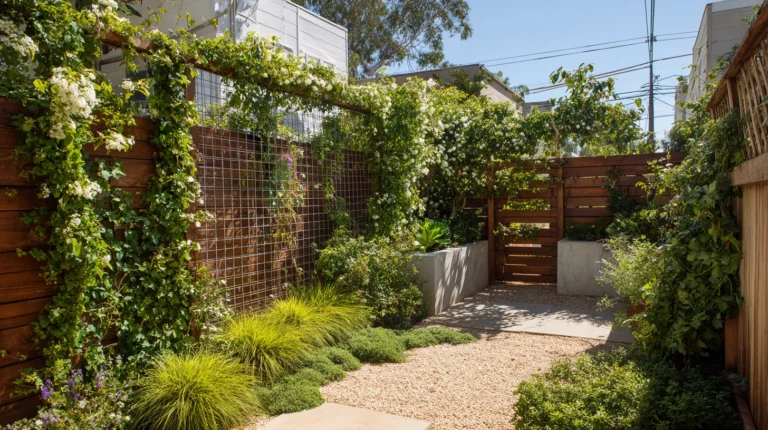
A trellis fixed to a wall or fence and planted with climbing plants is the most enduring, most ecologically valuable, and most structurally beautiful approach to vertical gardening. The trellis provides the support; the climbing plant provides the coverage, the colour, the fragrance, and the habitat. Given three to five years to establish, a well-chosen climber on a well-fixed trellis creates a living wall of extraordinary richness and depth that no pocket planter system or modular living wall can replicate.
Clematis, climbing roses, honeysuckle, jasmine, wisteria, passionflower, and hydrangea petiolaris all use trellis support effectively and provide seasonal interest across multiple months. Fix the trellis with spacers that hold it 3–5 centimetres away from the wall surface — the gap allows air to circulate behind the climbing plant stems, prevents moisture from accumulating against the wall, and allows birds to access the planting behind the trellis for nesting and insect foraging.
Garden tip: Plant climbing plants at least 30 centimetres away from the base of the wall or fence rather than directly against it. The soil directly at the base of a wall is in the rain shadow of the wall above — it receives significantly less rainfall than open ground and is often compacted and nutrient-poor. Planting 30 centimetres outward puts the roots in better soil conditions, and the plant grows naturally toward the trellis as it establishes without needing to be trained.
4. The Modular Living Wall System
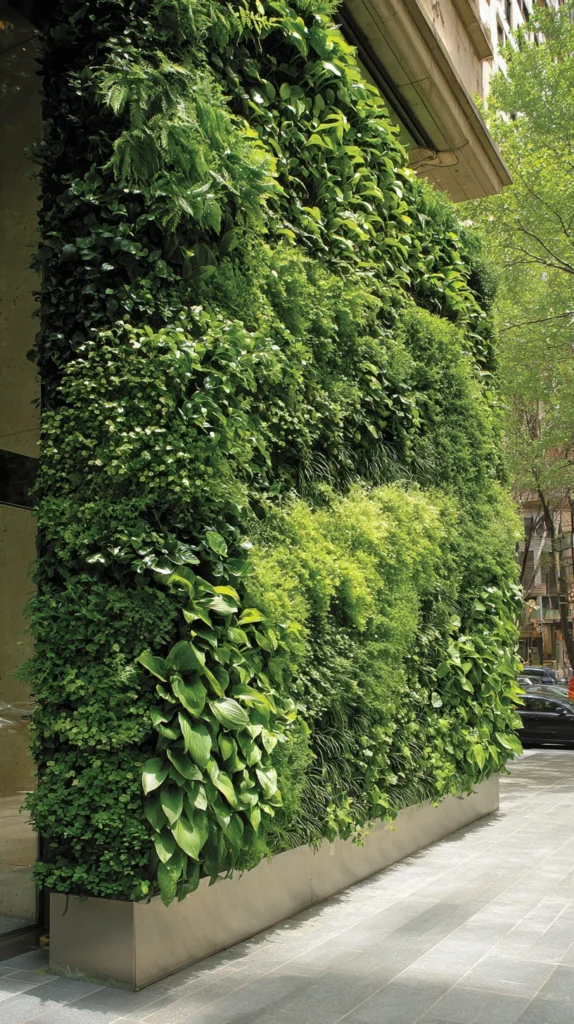
Budget: $150 – $1,500
A purpose-designed modular living wall system — interlocking planting panels with integrated water channels, designed to be fixed to any vertical surface and planted with a dense matrix of plants — creates the most polished, most controllable, and most visually impressive vertical garden available. The modular format allows any size of living wall to be created from the same panel unit, the integrated channels distribute water evenly across all panels, and the system can be updated, replanted, or reconfigured without dismantling the entire wall.
Quality modular living wall systems with integrated irrigation cost $80–$200 per square metre installed. Entry-level systems cost $40–$100 per square metre. For any living wall over four square metres, a drip irrigation system connected to a timer is not optional — it is essential. A large living wall watered inconsistently by hand develops dry patches and wet patches that result in plant loss and an uneven appearance that undermines the entire installation.
Garden tip: Plant a modular living wall system with a minimum of five different plant species rather than a single species across the entire wall. A single-species living wall looks impressive when every plant is performing well but becomes very obviously thin when one species struggles or experiences a pest problem — a diverse planting ensures that some species are always performing well and that any individual losses are absorbed by the surrounding plants without leaving obvious gaps.
5. The Espalier Fruit Tree Wall
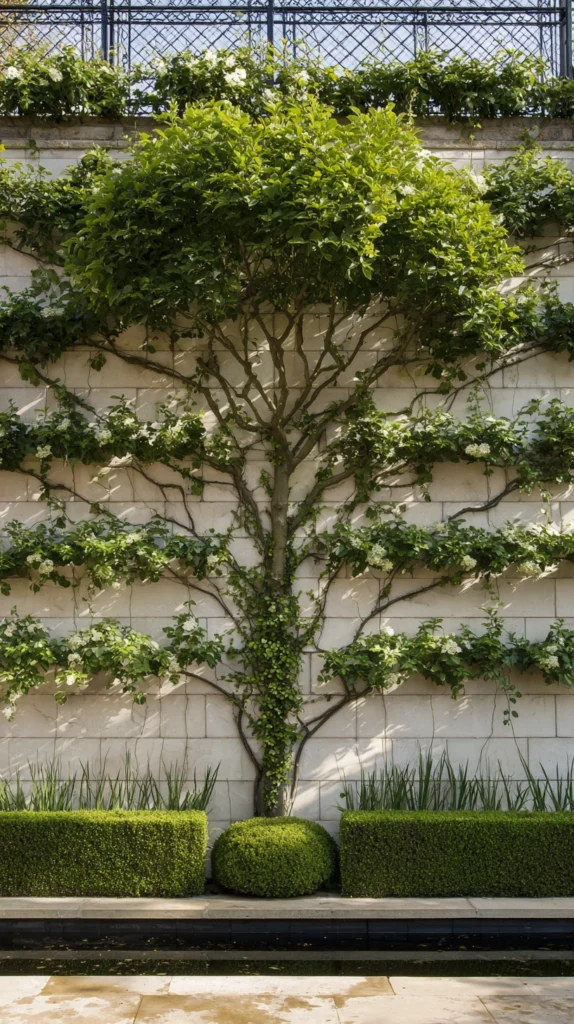
Budget: $60 – $300
An espalier fruit tree — trained flat against a wall with its branches spread horizontally on wires — is the oldest and most productive form of vertical growing available. The flat, two-dimensional form of the espalier uses the wall’s stored warmth and reflected light to ripen fruit more reliably than a freestanding tree, takes up virtually no ground footprint, and creates a genuinely beautiful living wall treatment that improves in character with every year of training and growth.
Apples, pears, peaches, nectarines, figs, and cherries all respond well to espalier training on a warm, sheltered wall. Fix horizontal wires at 40-centimetre intervals using vine eyes rawlbolted into the masonry. A young feathered maiden tree ($20–$40) provides the initial framework from which horizontal tiers are developed over three to four years of patient training — the investment of time produces a wall feature that lasts decades.
Garden tip: Train espalier branches while they are young and flexible rather than waiting until they are established in the wrong position. A young shoot can be redirected with a gentle tie to the training wire; a branch that has grown in the wrong direction for two or three seasons has become too rigid and too established to redirect without breaking. Check and adjust all ties and shoot directions at least twice during the growing season in the first four years of training.
6. The Succulent Picture Frame Wall
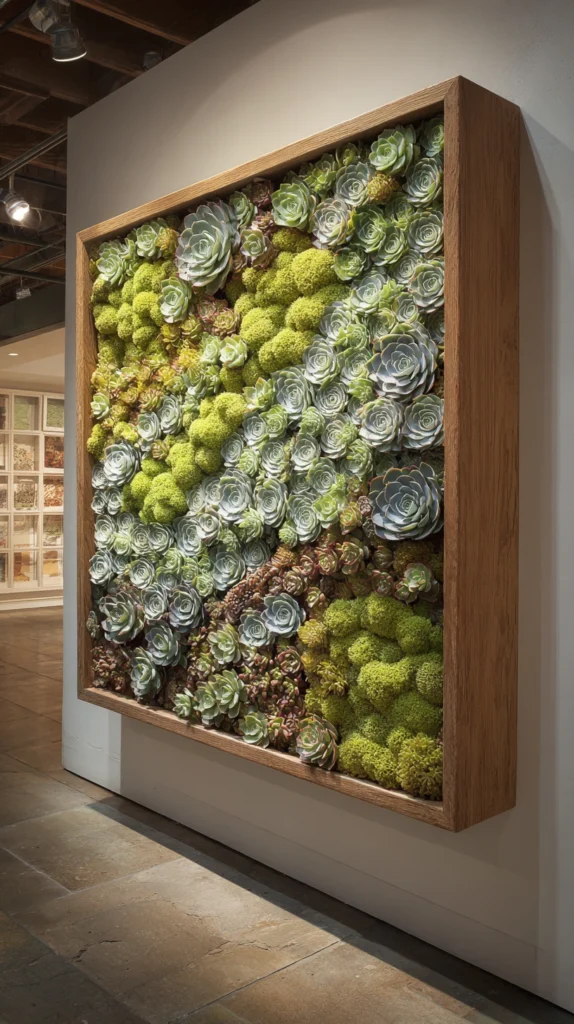
Budget: $40 – $180
A shallow timber frame — the depth of a picture frame — filled with a wire and moss substrate and planted with small succulent rosettes creates a living picture that can be hung on an exterior wall like a piece of garden art. The geometric rosette forms of echeverias, sempervivums, and small sedums arranged in colour-graduated patterns across the frame create a graphic, mosaic-like composition of extraordinary visual beauty that works as garden art as much as it does as a planting scheme.
Build the frame from pressure-treated timber at a depth of 5–8 centimetres, staple chicken wire across the back, fill with a mix of coir fibre and perlite, and plant succulent rosettes by pushing their stems through the chicken wire into the growing medium. Lay the frame flat for six to eight weeks to allow roots to establish before hanging vertically — hanging before the roots have established results in plants falling out of the frame as the compost dries and contracts.
Garden tip: Choose slow-growing, compact succulent varieties for a living picture frame rather than vigorous species that will quickly outgrow their position and disrupt the composition. Small echeveria varieties, sempervivum, and sedum hispanicum are all ideal — they stay compact, produce offsets that fill gaps naturally, and tolerate the dry, vertical growing conditions of a wall-hung frame far better than moisture-dependent succulents. Water by immersion — laying the frame flat in a tray of water for ten minutes once every two to three weeks — rather than watering from above.
7. The Balcony Rail Planter System
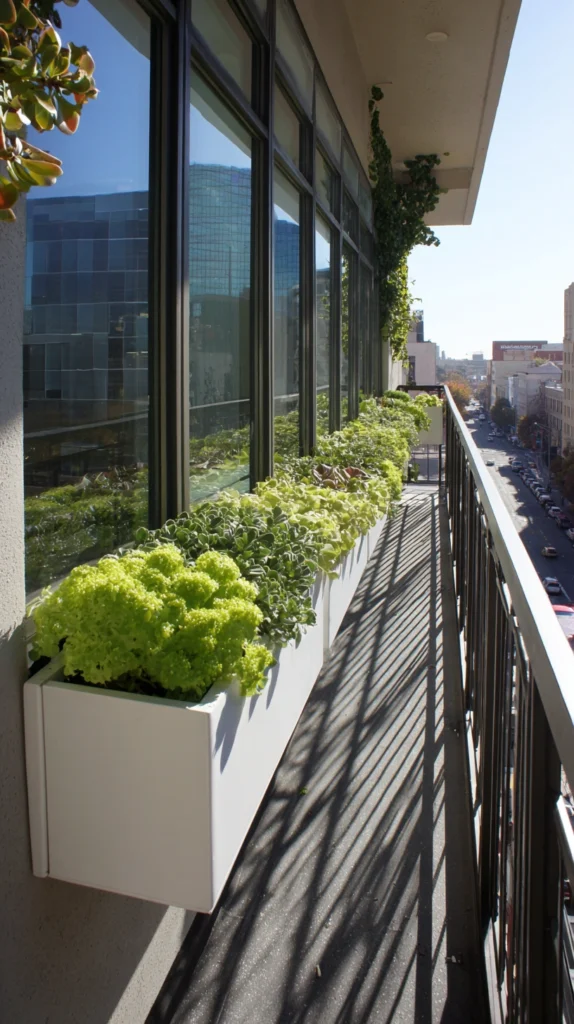
Budget: $40 – $200
Planter boxes designed to hang from a balcony railing — fixing over the top of the rail with integral hooks or clamps — create an immediate vertical growing surface on even the most space-restricted urban balcony. A row of rail planters along the full length of a balcony railing provides a planting depth of 15–20 centimetres — sufficient for herbs, salad leaves, compact flowering plants, and trailing species — while using no floor space and creating a green visual screen at railing height.
Rail planter systems in powder-coated metal or UV-stable plastic cost $15–$40 per planter and are designed to fit standard railing depths. Fill with a lightweight container compost rather than standard garden compost — reducing the weight on the railing is important for both structural and safety reasons. Self-watering rail planters with integrated water reservoirs cost $25–$60 each and significantly reduce the watering frequency required — important for balcony gardeners who travel frequently or who cannot water daily in hot weather.
Garden tip: Check the structural load rating of any balcony railing before installing multiple heavy planters. A single planter of damp compost weighs 5–10 kilograms — a full rail of six to eight planters adds 30–80 kilograms to the railing structure. Most balcony railings are engineered to withstand the pressure of a person leaning against them rather than the sustained dead weight of multiple loaded planters. Check with a structural engineer or the building management if in any doubt about load capacity.
8. The Green Roof Over a Garden Structure
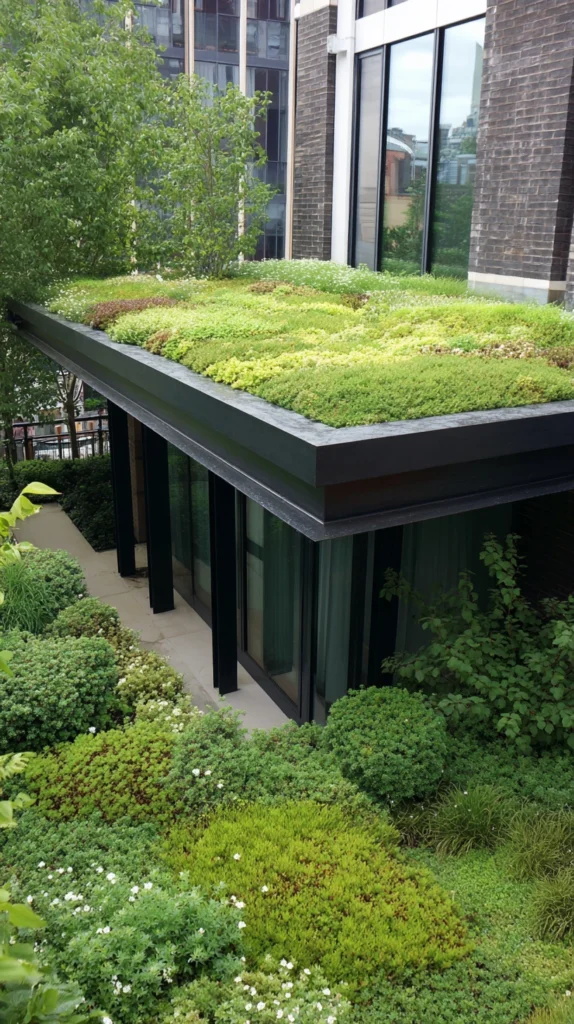
Budget: $100 – $600
A garden shed, a pergola, a cycle store, or a garden room with a flat or gently pitched roof planted as a sedum or wildflower green roof creates a vertical growing space that is visible from above — from a first-floor window, a raised terrace, or an elevated viewpoint — rather than from the ground. The green roof uses the roof surface of an existing structure as growing space without claiming any garden floor area and creates a living, seasonal surface visible from the house that a conventional roofing material cannot provide.
Sedum matting systems cost $15–$30 per square metre and can be laid across a prepared roof surface in a single day. They require a waterproof membrane, a drainage layer, and a growing substrate beneath the sedum mat — a combined system cost of $20–$40 per square metre in materials. The structural frame must be capable of carrying the additional weight of a saturated green roof — approximately 80–120 kilograms per square metre.
Garden tip: Install an irrigation point on the green roof at the build stage even if you do not connect it immediately. A newly installed sedum roof needs more supplementary watering in its first two summers than it will in subsequent years, and being able to apply water directly to the roof surface without climbing onto it with a hose makes the establishment period significantly easier. A threaded tap connector at roof level, connected to the garden water supply, costs almost nothing to install during construction and eliminates a significant maintenance difficulty afterward.
9. The Hanging Basket Tower
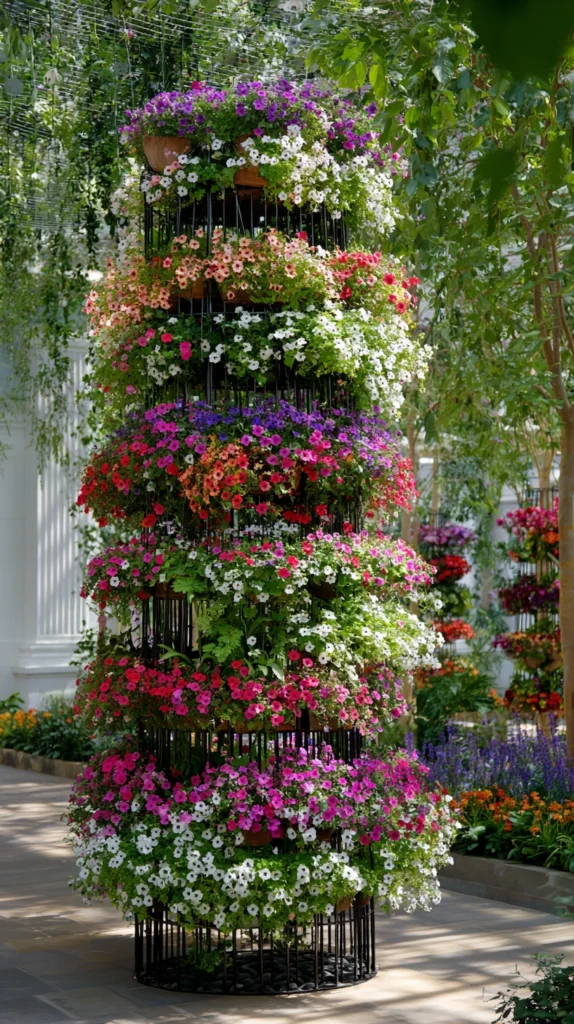
Budget: $30 – $150
A vertical tower of stacked hanging baskets — suspended one above the other on a central chain or pole, each basket slightly smaller than the one below — creates a columnar vertical garden that uses overhead rather than wall space and suits positions where wall fixing is impossible or undesirable. A tower of three or four baskets planted with cascading species — trailing fuchsias, lobelia, bacopa, trailing begonias, nasturtiums — fills a vertical column of space with colour and foliage that is visible from all sides simultaneously.
Standard wire hanging baskets cost $5–$15 each. Line with coir liner or moss to retain compost while allowing drainage. A central galvanised chain from a ceiling hook, a pergola beam, or a purpose-made bracket supports the full tower — ensure the fixing point is rated for the total weight of all baskets fully watered, which can reach 15–25 kilograms for a three-basket tower. Space baskets at 30–40 centimetre vertical intervals for the cascading plants from each basket to reach toward the basket below.
Garden tip: Plant each basket in the tower with species that cascade downward toward the basket below rather than growing upward — trailing lobelia, bacopa, ivy-leaved pelargoniums, and trailing fuchsias all grow naturally downward and create the flowing, continuous column of colour that makes a hanging basket tower so effective. Upward-growing or bushy plants in the upper baskets block the view of the baskets below and destroy the elegant vertical flow of the tower planting.
10. The Herb Ladder or Step Planter
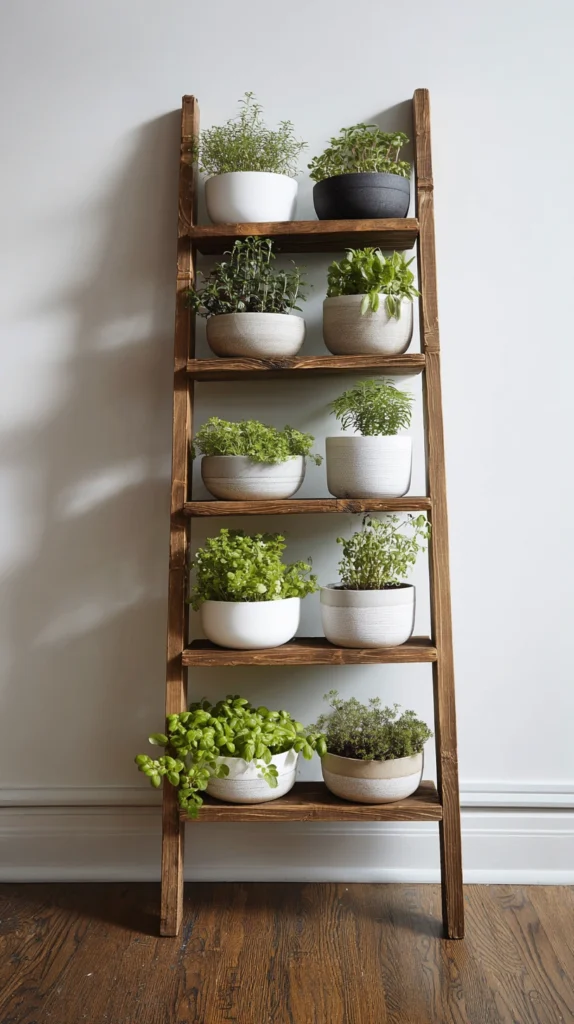
Budget: $30 – $150
A timber step ladder — either a purpose-made tiered plant stand or a genuine reclaimed ladder — used as a vertical display framework for a collection of potted herbs and compact vegetables creates an immediately useful and visually attractive kitchen garden in minimal floor space. A standard five-rung ladder provides five planting levels at different heights, accommodating pots of varying sizes and creating a planting display with genuine vertical depth and visual interest from every angle.
A reclaimed timber ladder from a salvage yard or online marketplace costs $10–$30 and has a character and patina that purpose-made plant stands cannot replicate. Purpose-made tiered plant ladders in powder-coated metal or solid timber cost $30–$80 and provide a more stable and more precisely engineered display framework. Both suit a sunny patio, balcony, or kitchen garden position and can be brought inside over winter to protect tender herbs.
Garden tip: Place the heaviest and largest pots on the lowest rungs and the lightest and smallest on the upper rungs for stability. A ladder planter that is heavy at the top and light at the bottom is vulnerable to tipping in wind — the reverse arrangement lowers the centre of gravity and makes the structure significantly more stable. On an exposed balcony or patio, peg the ladder feet to the ground with tent pegs or weight the lowest rung pots with gravel to prevent movement in high winds.
11. The Indoor Vertical Garden Wall
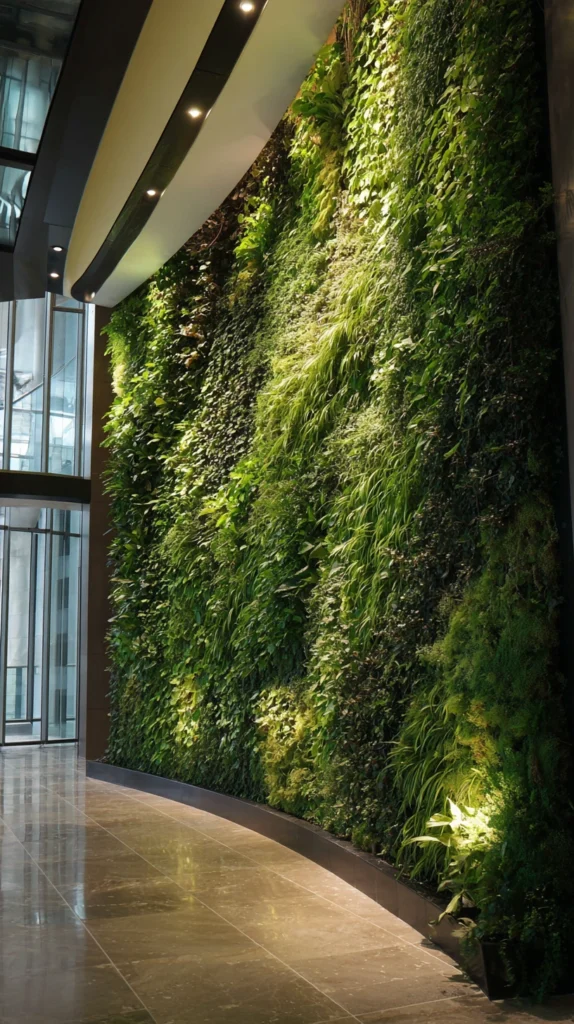
Budget: $100 – $800
A vertical garden installed indoors — on a feature wall in a living room, a kitchen, a bathroom, or a home office — brings the visual richness and the air-quality benefits of a planted surface into an interior space. Indoor vertical gardens using pothos, philodendrons, ferns, peace lilies, tradescantia, and peperomias create a wall of extraordinary lush green that improves air quality, reduces ambient noise, and creates a sense of natural abundance in a domestic interior that no painted or decorated surface can replicate.
Indoor living wall systems use the same modular panel technology as outdoor versions but specify shade-tolerant, humidity-tolerant plant species suited to interior conditions. A self-contained indoor living wall unit with integrated lighting and a water reservoir costs $200–$600 and requires no wall fixing — it stands against the wall as a freestanding piece of living furniture. Wall-mounted systems cost $100–$400 per square metre and require a moisture-resistant backing board between the planting system and the wall surface.
Garden tip: Position an indoor vertical garden within 2 metres of a natural light source — a window or skylight — for plant performance without supplementary grow lighting. Most interior shade-tolerant plants can survive at lower light levels but perform significantly better — producing denser foliage, richer colour, and more vigorous growth — within the light levels available near a window. An indoor living wall positioned in a permanently dark corridor will require grow lighting to keep the plants healthy regardless of how shade-tolerant the selected species are.
12. The Woven Willow or Hazel Living Fence
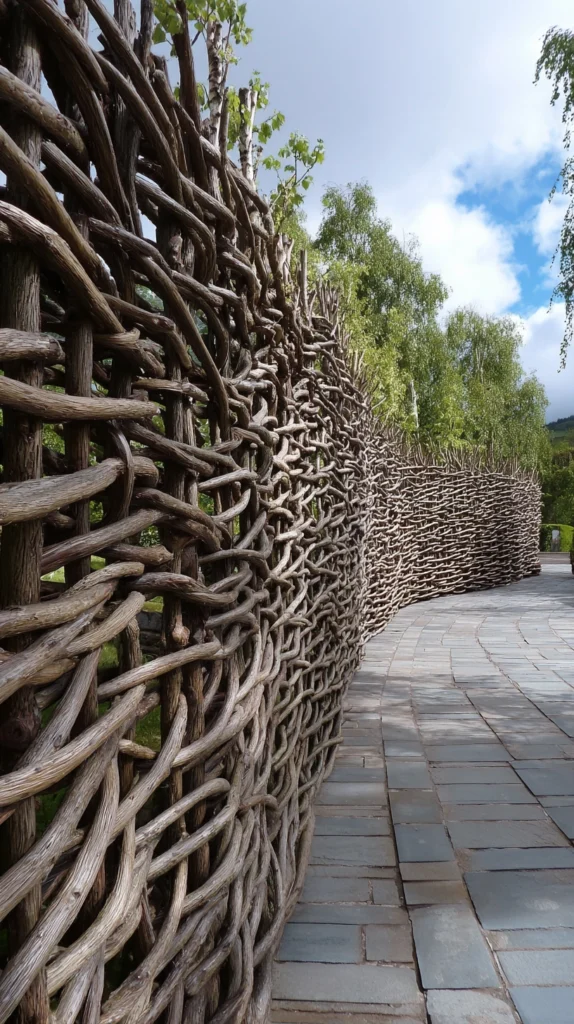
Budget: $60 – $300
A living willow or hazel fence — constructed from freshly cut willow withies or hazel rods woven into a traditional wattle pattern and left to root and grow — creates a vertical garden that is simultaneously a structural boundary and a living plant community. Salix viminalis (common osier willow) and Salix purpurea (purple willow) root readily from fresh cuttings pushed directly into moist soil, and a woven structure built from fresh willow whips establishes as a living fence within a single growing season.
Cut willow whips in late winter or early spring while the plant is dormant, weave the fence structure immediately before the material dries, and push the cut ends at least 30 centimetres into moist soil. Within weeks, the cut ends will root and the structure will begin to leaf out. By midsummer the living fence is unrecognisable from its winter skeleton — a lush, green, growing boundary of genuine natural beauty.
Garden tip: Weave the living willow fence structure more tightly than feels necessary in the first season — the growing stems expand in diameter as they mature and a tightly woven structure becomes progressively more open as the stems thicken. A structure that appears too tight when first built achieves the correct density after one to two growing seasons; a loosely woven structure becomes too open to function as a privacy screen within the same period.
13. The Tower Planter Vegetable Column
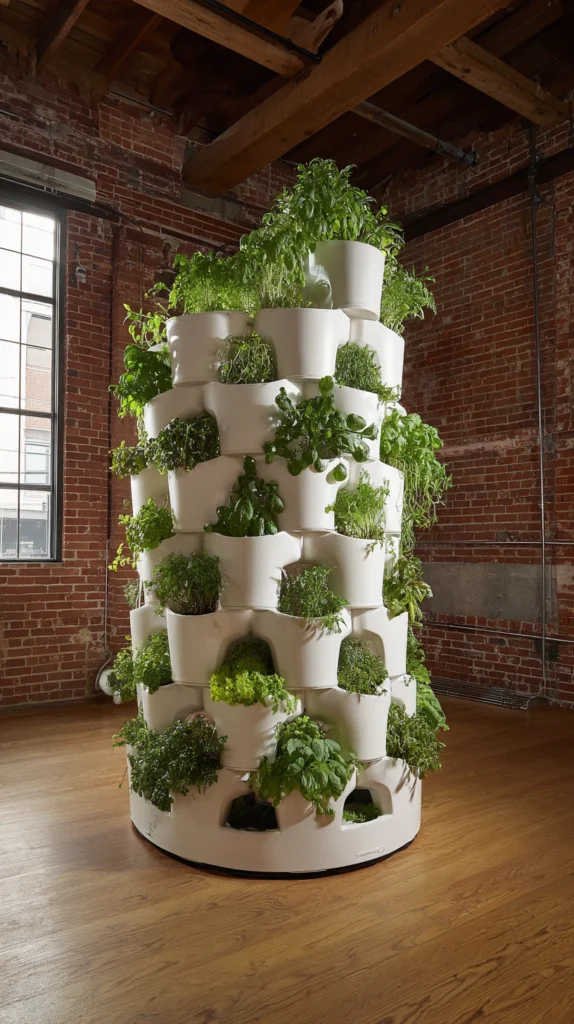
Budget: $25 – $120
A tower planter — a vertical column of stacked growing pockets, a purpose-designed tower pot with planting holes around its circumference, or a stacked ring system of individual pots — creates a compact, productive vegetable garden in a footprint of less than 30 centimetres square. A single tower planter can grow strawberries, lettuces, herbs, compact cherry tomatoes, or trailing courgettes in a column of planting that produces a meaningful harvest from a balcony, patio, or small garden corner where no conventional bed could be accommodated.
Purpose-designed tower planters in UV-stable polyethylene cost $25–$60 and provide 12–20 individual planting positions in a 60–90 centimetre tall column. Terracotta strawberry pots cost $20–$40 and create the same effect with a more traditional aesthetic. Both require frequent watering — the limited soil volume in a tower planter dries out quickly in warm weather and needs daily checking during summer heat waves.
Garden tip: Rotate a tower planter by a quarter turn every three to four days so each side receives equal sunlight exposure across the growing season. A tower planter left stationary develops a sunny side and a shaded side — plants on the sunny side grow vigorously and produce well while plants on the shaded side produce weak, drawn growth and minimal harvest. Regular rotation produces even, balanced growth on all sides and significantly increases the total yield from the planting column.
A vertical garden is ultimately an argument for looking at unused surfaces differently — for seeing a bare wall, an empty fence, or a plain railing not as a background to the garden but as part of the garden itself. Every vertical surface is a growing opportunity and a decorating opportunity simultaneously, and the ideas above show that the two are rarely in conflict. Start with one surface, one system, and one season of growing, and the vertical garden will demonstrate its own case for expansion more persuasively than any list of ideas ever could.