14 Summer Garden Decor Ideas
A garden in summer is already doing most of the work. The long days, the full planting, the warmth that makes being outside genuinely pleasurable rather than aspirational — all of it arrives without any decorating effort whatsoever. What decoration does in a summer garden is not create the atmosphere but refine it — giving the space a sense of intention, creating moments of particular beauty within the larger abundance, and extending the usable hours of the garden from daylight into the warm summer evenings that are often the best the season offers.
The best summer garden decor works with the garden rather than over it. It does not compete with the planting, does not impose an interior aesthetic on an outdoor space, and does not require constant maintenance to look its best. It adds warmth, personality, and a sense of occasion to a space that is already generous in its beauty — and then gets out of the way.
1. The String Light Canopy
Budget: $40 – $200
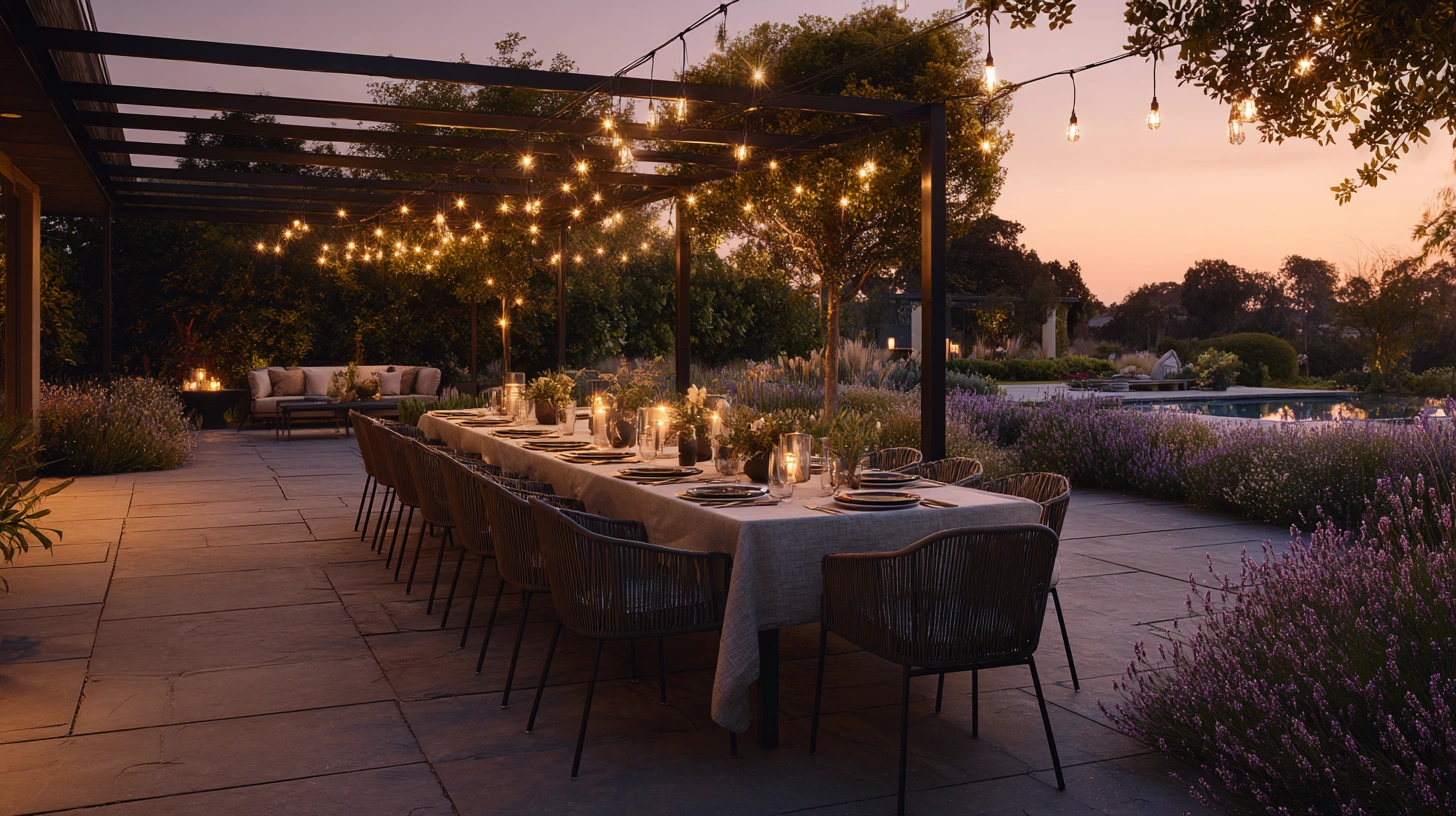
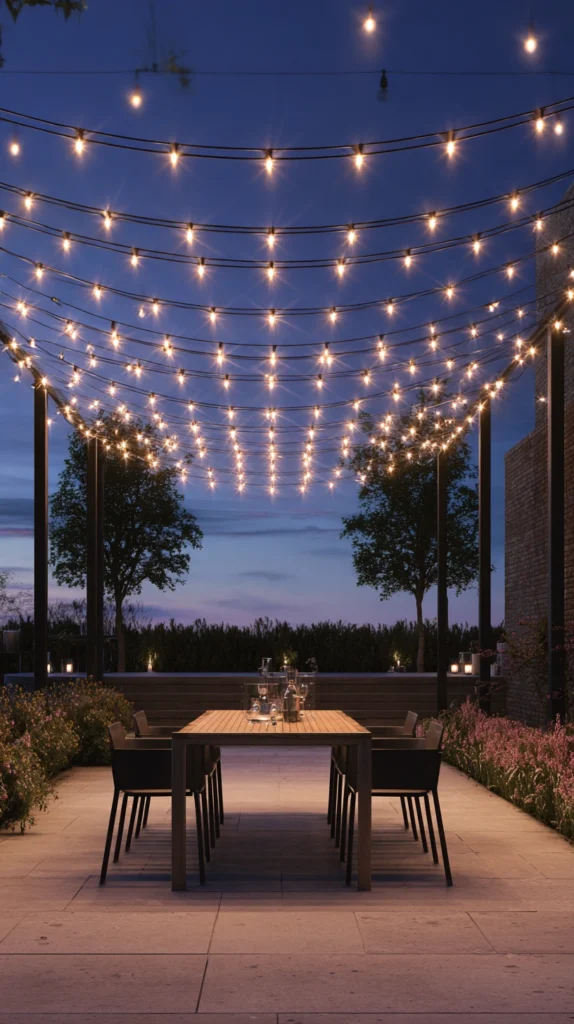
String lights draped across a garden seating area — suspended between two posts, threaded through the branches of an overhead tree, or run back and forth across a pergola structure — create the single most transformative evening garden decoration available at any price. The effect of warm string lights on a summer evening, with the sky darkening slowly above them and the garden visible beyond their glow, is genuinely magical and entirely disproportionate to the modest investment required to achieve it.
Vintage Edison bulb string lights on a heavy-duty outdoor cable cost $20–$60 per string and provide the warmest, most atmospheric quality of light. Solar-powered versions eliminate the need for an outdoor socket and charge through the day to provide a full evening of light. Thread in parallel lines approximately 20–30 centimetres apart for a dense canopy effect, or run in a single festoon loop for a simpler, more elegant overhead line.
Styling tip: Fix string lights with small screw hooks installed permanently in the pergola beams or fence posts rather than with cable ties or clips that deteriorate with outdoor exposure. Permanent hooks allow the lights to be taken down at the end of summer and rehung at the beginning of the next season with no new installation required — the infrastructure is in place indefinitely.
2. The Outdoor Dining Table Setting
Budget: $50 – $250
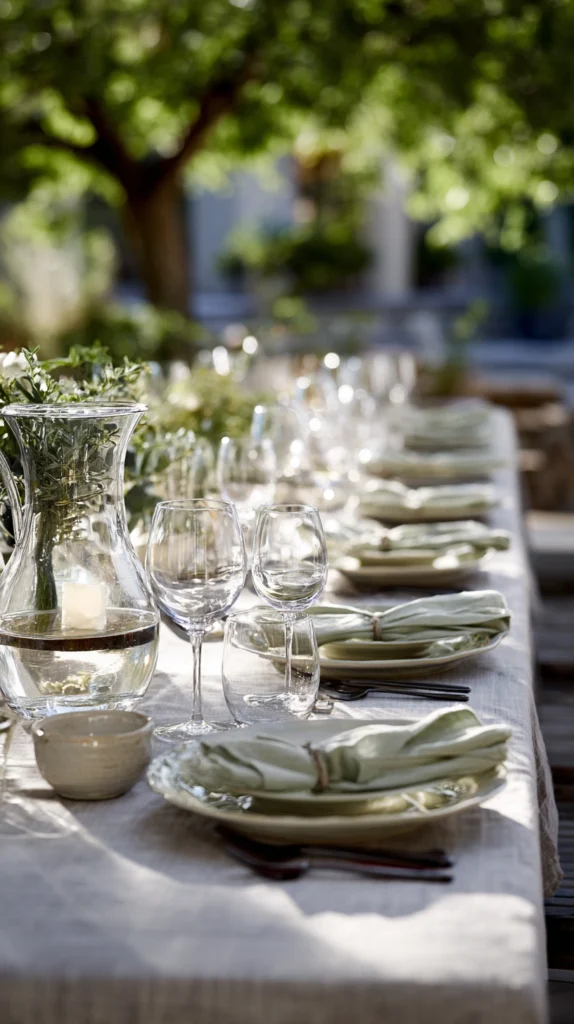
A properly dressed outdoor dining table — linen or cotton tablecloth, real ceramic plates, proper glassware, cloth napkins, a central arrangement of garden flowers — communicates that eating outside is an occasion rather than a practical convenience. The outdoor table dressed as well as any indoor dining table creates the most immediately inviting and the most genuinely civilised garden atmosphere available. It says that the garden is a room worth inhabiting with the same care as any room inside the house.
Set the table before the meal rather than after it — the dressed table visible from the house during the preparation communicates the occasion in advance and builds the anticipation of sitting down at it. A simple cotton cloth, mismatched but quality ceramics, and a single generous bunch of garden flowers in a ceramic vase creates a table of genuine beauty for a very modest investment.
Styling tip: Use real glassware rather than plastic or acrylic outdoor alternatives for any garden table setting where breakage is not a serious practical concern. Real glass communicates care and provides a quality of light reflection — catching the sun, catching the candle — that no acrylic glass can replicate. The small additional risk of breakage is worth the significant improvement in the quality of the table.
3. The Planted Pot Collection
Budget: $40 – $200
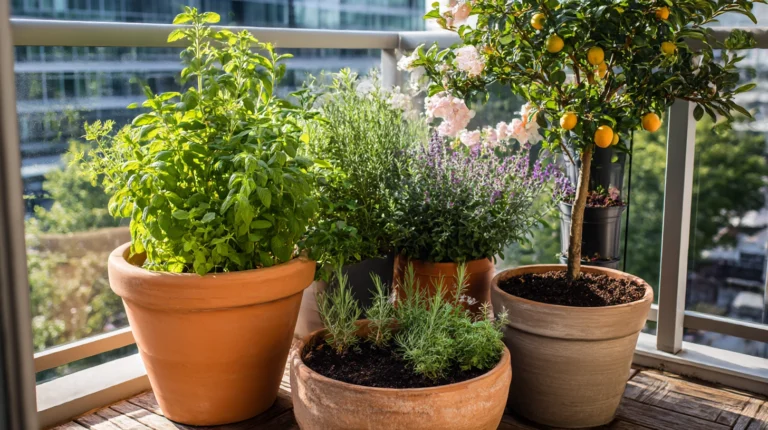
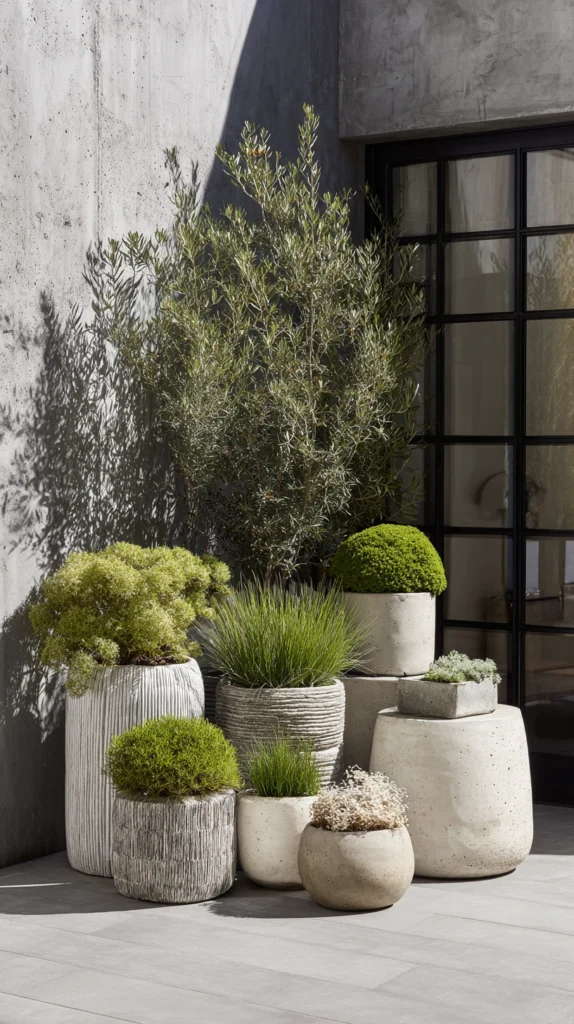
A generous collection of planted pots — terracotta, ceramic, stone-effect fibreglass, glazed in deep colours — grouped in a corner of the patio, arranged on steps, or clustered around a focal point creates one of the most beautiful and most personally characterful garden decorating statements available. The planted pot collection is simultaneously the most organic and the most designed element a garden can contain — it reflects the plant choices, the colour preferences, and the visual instincts of the person who assembled it.
Group pots in odd numbers at varying heights, using the largest as anchors and filling in with medium and small pots at lower levels. Mix trailing species — verbena, bacopa, ivy — with upright specimens — agapanthus, salvia, standard bay — for a collection with vertical interest and cascading softness simultaneously. The most beautiful pot collections always contain some pots that are purely about the vessel and some that are purely about the plant.
Styling tip: Allow the pots at the edge of the grouping to spill slightly beyond the defined cluster rather than keeping the collection in a tight, contained arrangement. The trailing plants that extend beyond the group and the pots that sit slightly separate from the main cluster give the collection a natural, grown-into quality that a rigidly contained arrangement lacks.
4. The Outdoor Lantern Collection
Budget: $30 – $180
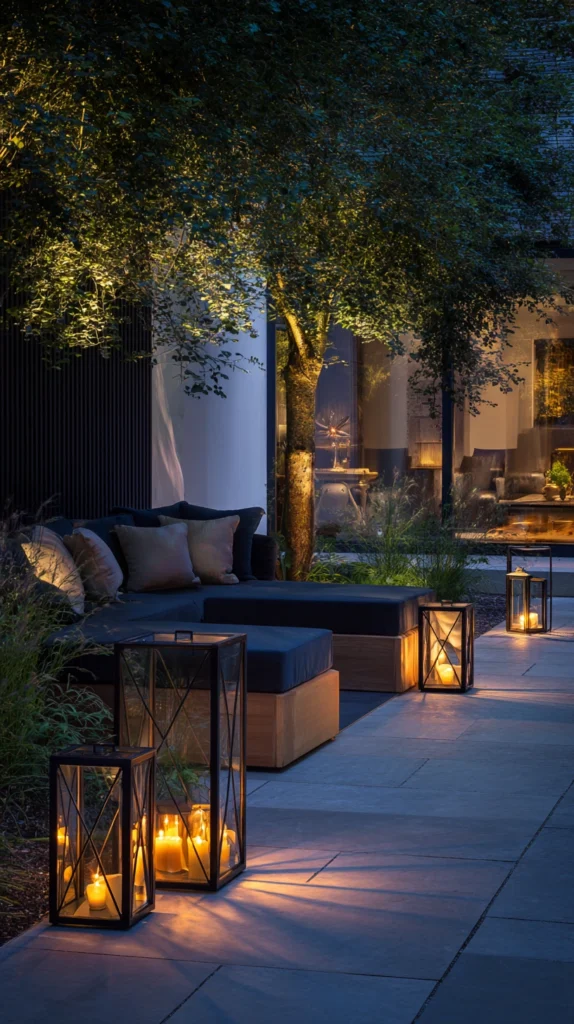
A collection of outdoor lanterns — tall floor lanterns, small table lanterns, hanging lanterns on a shepherd’s hook, wall-mounted lanterns — placed at different heights and in different positions across the garden creates a warm, distributed light at dusk and after dark that transforms the garden from a daylight space into an atmospheric evening one. The lantern collection is the most flexible garden lighting approach available — individual pieces can be moved, regrouped, and repositioned as the occasion demands.
Use LED flameless candles in outdoor lanterns positioned near planting — the risk of a real flame beside dry summer foliage is real and the LED alternatives now produce a convincing flickering quality that is almost indistinguishable from genuine candlelight at normal viewing distances. Reserve real candles for lanterns on hard surfaces well away from any planting or combustible material.
Styling tip: Place the tallest lanterns at the perimeter of the garden and the smallest at the centre of tables and seating areas — light that comes from the edges of the garden inward creates a sense of enclosed warmth and draws the eye to the centre of the social space. Light that comes only from the centre outward leaves the garden edges in darkness that can feel slightly uninviting.
5. The Garden Water Feature
Budget: $60 – $500
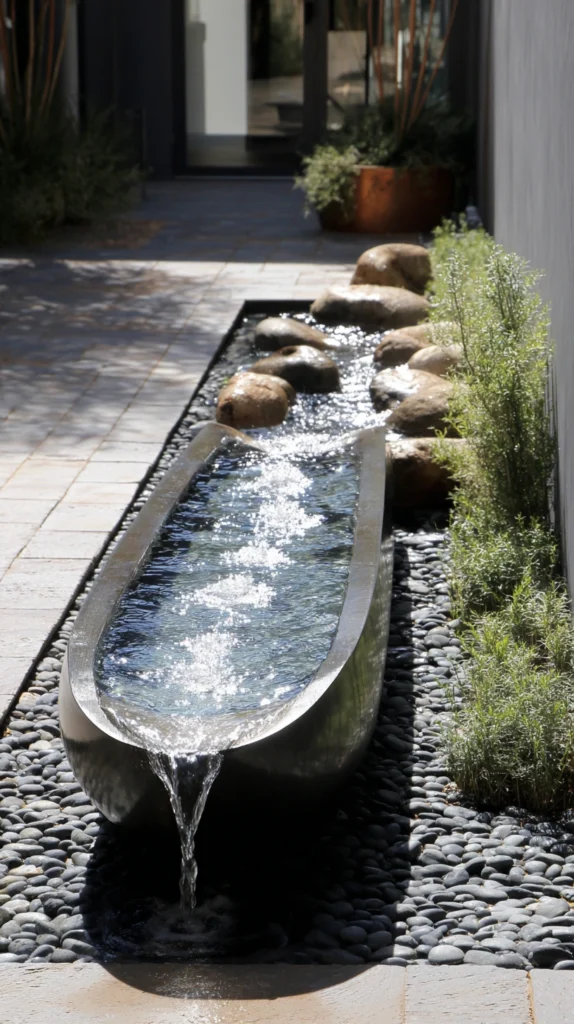
A water feature — a self-contained wall fountain, a freestanding urn spout, a solar-powered bird bath fountain, or a small wildlife pond — adds a dimension of sound and movement to the garden that no planted or decorated element can provide. The sound of moving water on a warm summer day has a cooling, calming quality that changes the atmosphere of the entire garden space. It is the detail that guests mention most consistently when asked what they noticed about a garden — not the planting, not the furniture, but the sound of water.
Solar-powered fountain pumps ($15–$40) can be placed in any existing bowl, basin, or container to create a simple moving water feature that requires no wiring and runs automatically in sunlight. A glazed ceramic urn with a solar pump and a simple spout creates a beautiful, self-contained water feature for under $100 in total materials and can be installed in an afternoon without any specialist knowledge.
Styling tip: Position a water feature where it is heard before it is seen — around a corner, behind a planting screen, or at the far end of a path — so that the sound of water creates anticipation and discovery as guests move through the garden. A water feature that is immediately visible from the seating area is pleasant; one that is heard first and found second creates a genuinely memorable garden moment.
6. The Outdoor Rug and Seating Area
Budget: $60 – $300
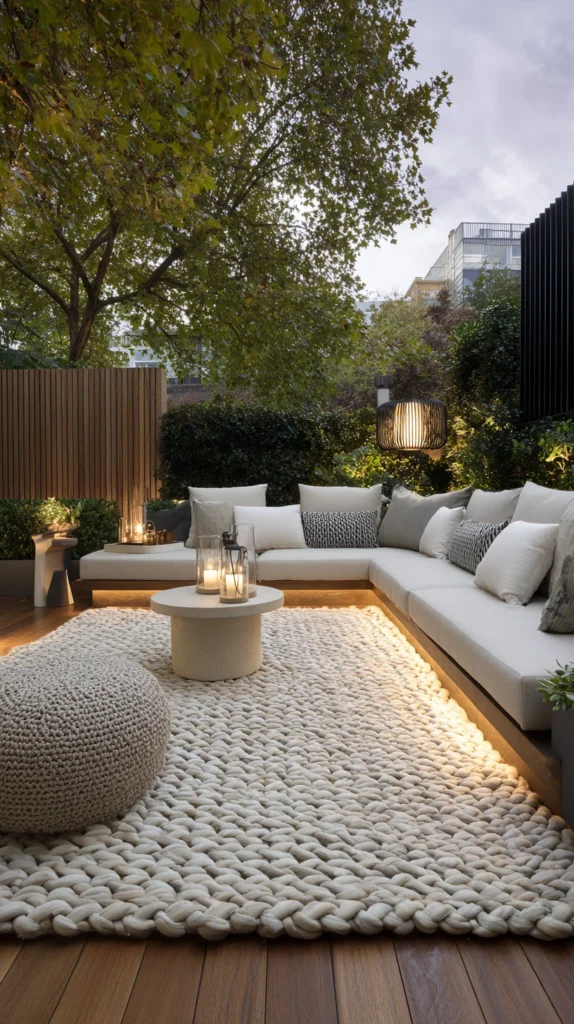
An outdoor rug placed beneath the garden seating area — defining the dining or lounging zone as a distinct space within the larger garden — brings the quality and the visual logic of an interior room to the outdoor setting. The rug creates an immediate sense of enclosure and intention around the seating, signals clearly where the social space begins and ends, and provides a surface warmth and comfort that bare paving cannot offer. An outdoor seating area with a rug beneath it looks designed; the same furniture without a rug looks placed.
Polypropylene outdoor rugs are fully weatherproof, UV-resistant, and washable — they can remain outside through the entire summer without fading or deteriorating. They cost $30–$120 for a standard seating area size and are available in every colour and pattern. Natural fibre rugs in jute or sisal suit sheltered patio areas but are not fully weatherproof — they suit covered spaces and fair-weather use rather than permanent outdoor exposure.
Styling tip: Choose an outdoor rug that is generously sized for the seating area rather than one that fits exactly beneath the furniture. A rug that extends at least 30 centimetres beyond the outer legs of the furniture on all sides creates a properly defined room-like space. A rug that only just fits beneath the furniture, with legs hovering at its edge, creates a slightly meanly scaled effect that diminishes the spatial quality the rug was intended to provide.
7. The Vertical Climber Feature
Budget: $20 – $150
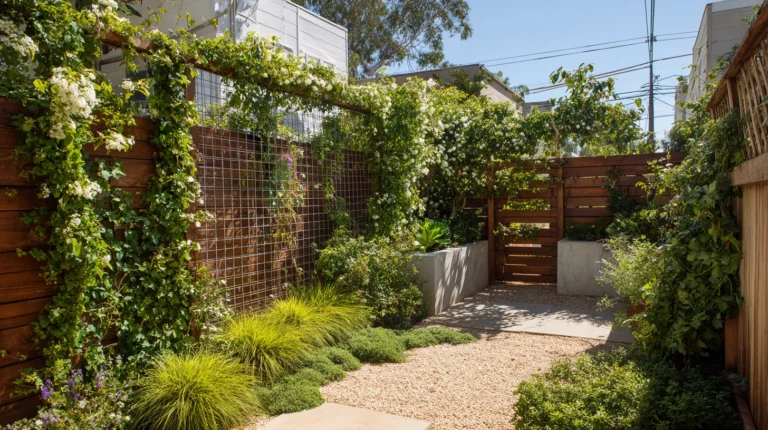
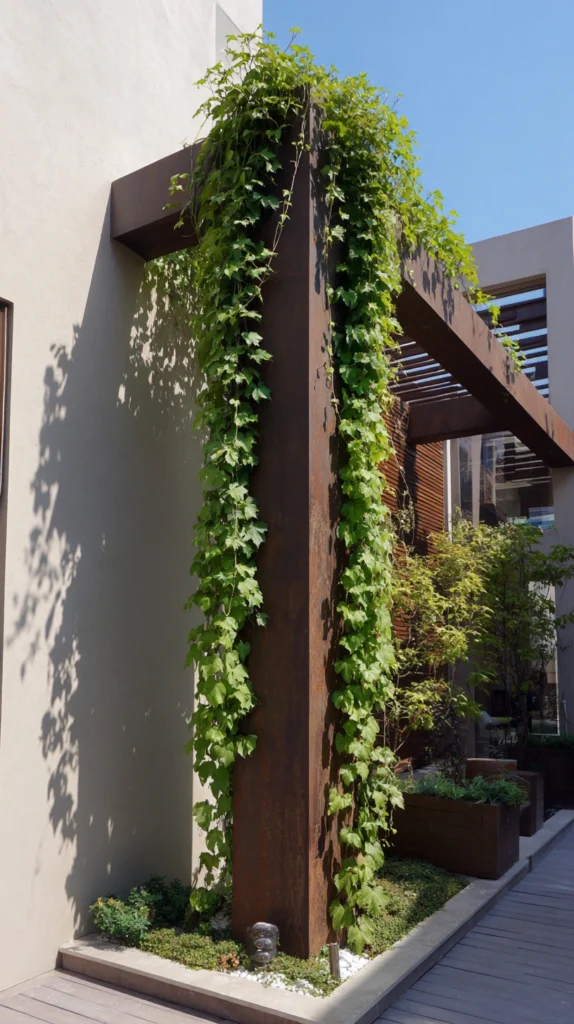
A single climber plant — clematis, climbing rose, jasmine, honeysuckle, or passionflower — trained up a simple support structure: an obelisk, a wigwam of bamboo poles, a wire pyramid, or a rustic timber arch — creates the most visually dramatic and the most organically beautiful vertical garden decoration available. The climber and its support together create height, structure, and a focal point within the border or the patio planting that flat ground-level planting cannot provide.
A painted metal obelisk in dark green or black costs $20–$50 and suits every garden style from contemporary to cottage. A rustic hazel or willow wigwam costs $15–$30 or can be made from garden-harvested canes for nothing. Both provide the structure a climber needs to ascend and the visual anchor that a planting scheme needs at intervals to prevent it from reading as one undifferentiated horizontal mass.
Styling tip: Plant the climber at the base of the support with its root ball positioned slightly away from the structure rather than directly against it — 15–20 centimetres out is sufficient. The space allows the roots to access better soil away from the shadow of the support structure and the plant grows naturally toward the obelisk as it establishes, creating a more naturalistic base than a plant placed directly against the post.
8. The Garden Sculpture or Art Piece
Budget: $40 – $500
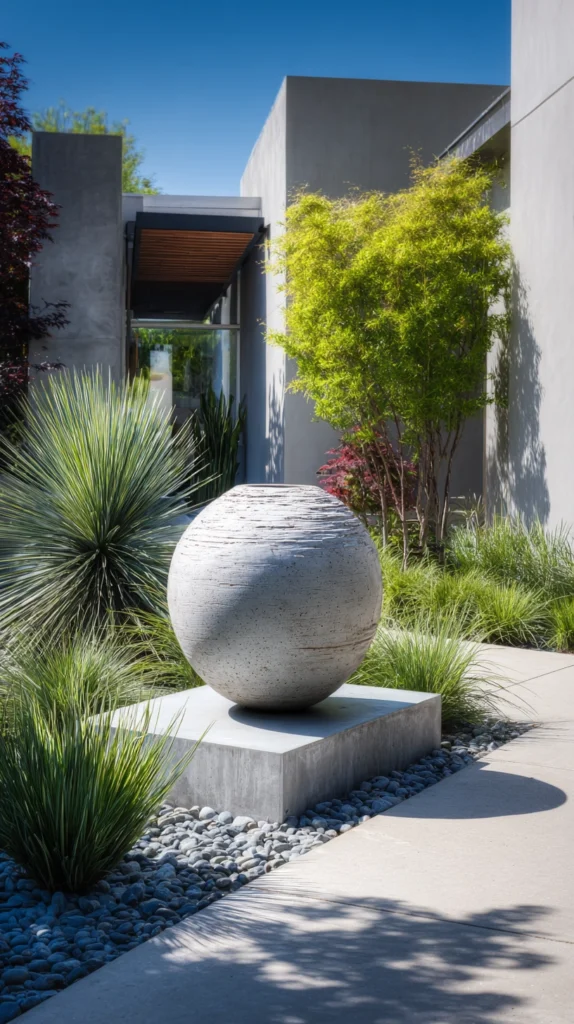
A single piece of garden sculpture or art — a ceramic bird, a stone sphere, a metal abstract form, a cast iron urn, a driftwood piece, a mosaic panel — placed as a focal point at the end of a path, at the centre of a circular bed, or at the back of a border creates the kind of deliberate visual full stop that a garden needs at intervals to give it a sense of designed intention. The sculpture does not need to be large or expensive — it needs to be placed with conviction in a position that earns it genuine attention.
The best garden sculpture pieces are those that work with the garden’s scale and planting palette rather than contrasting with them. A pale stone sphere disappearing into a mound of white-flowering ground cover creates a subtle, beautiful effect. A bold abstract metal form against a dark yew hedge creates a dramatic graphic contrast. The relationship between the sculpture and its setting is as important as the quality of the sculpture itself.
Styling tip: Place garden sculpture slightly higher than ground level — on a low plinth, a flat stone, or a mound of soil — rather than directly on the ground. A sculpture at ground level is seen against the soil and disappears into the base of the planting. A sculpture raised even 10–15 centimetres above ground level is seen against the planting above and behind it, which creates the backdrop that makes it genuinely visible and genuinely appreciated.
9. The Outdoor Cushion and Textile Refresh
Budget: $40 – $200
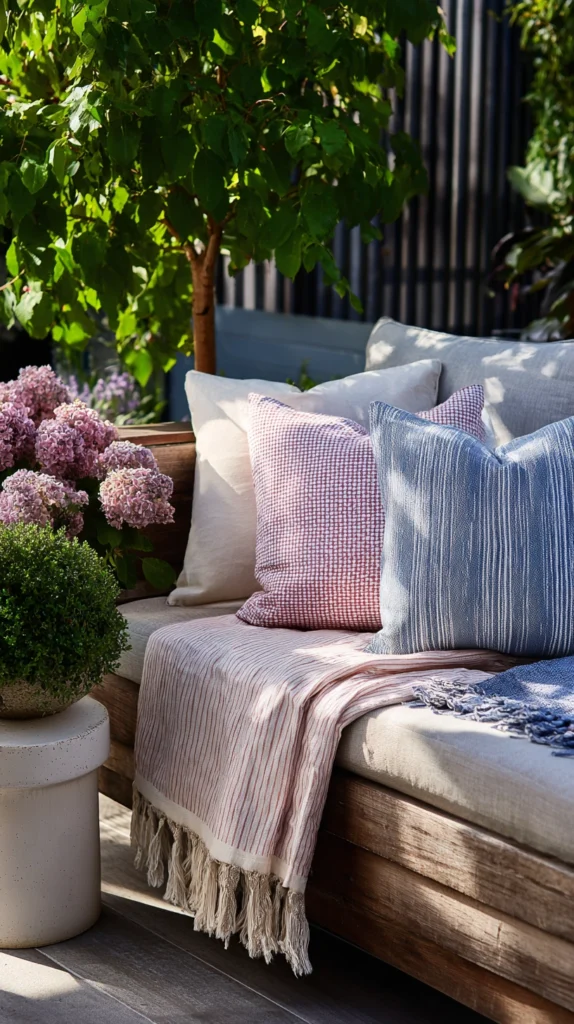
A summer refresh of all the outdoor cushions and textiles — new outdoor cushion covers in a summer colour palette, a fresh outdoor throw or two for cooler evenings, a new garden seat pad on the most-used chair — is one of the lowest-effort and highest-impact garden improvements available. Faded, flat, or weathered outdoor cushions make even beautiful garden furniture look neglected; fresh, well-chosen cushion covers make modest furniture look genuinely considered.
Choose a colour palette for the outdoor cushions that complements rather than matches the planting — warm terracotta beside a green garden, pale sage beside a hot-coloured border, deep navy beside pale stone paving, natural linen beside tropical foliage. The complement creates a visual relationship between the hard furnishing and the planting that a match cannot provide — two different elements agreeing rather than repeating.
Styling tip: Buy more cushions than feels necessary for the number of seats in the garden — outdoor seating always benefits from an abundance of cushions rather than a precisely calculated allocation. Cushions piled generously on a garden bench or scattered across an outdoor sofa communicate a generosity and an invitation to comfort that neatly placed individual cushions, one per seat, cannot convey.
10. The Garden Chandelier or Statement Light
Budget: $50 – $300
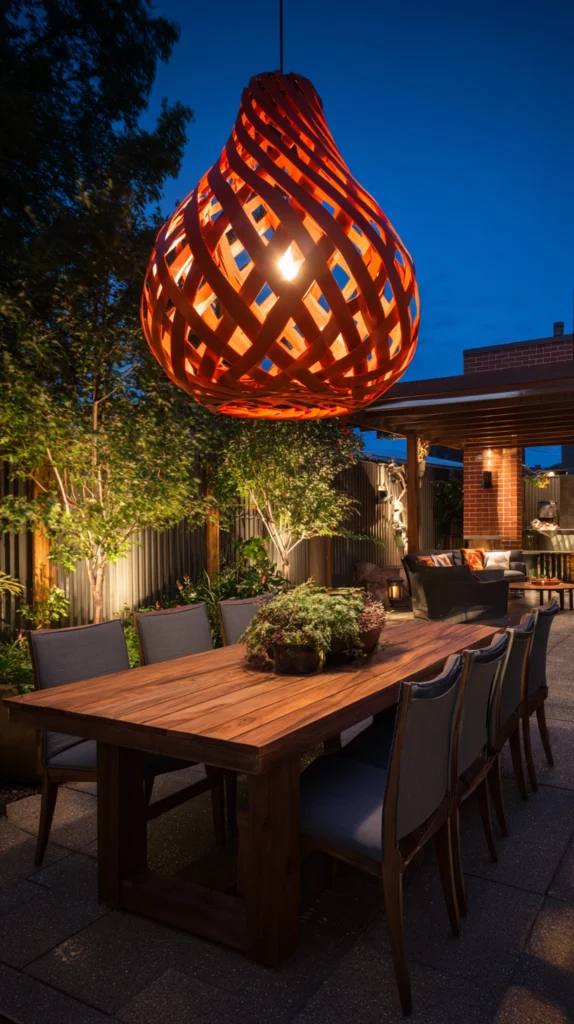
A statement outdoor light fitting — a wicker or rattan pendant shade hung from a pergola beam, a garden chandelier of multiple candle holders suspended from an overhead structure, a large industrial-style outdoor pendant above the dining table — creates a focal point of decorative and practical light that defines the dining or seating area as a room with a ceiling. The overhead light fitting communicates that the outdoor space has been designed with the same attention as an indoor room, and it provides the kind of warm, downward light at the table that makes food look better and faces look beautiful.
A rattan or bamboo pendant shade with a standard fitting costs $40–$100 and is suitable for a covered or semi-covered outdoor position where it is protected from direct rainfall. A weatherproof metal pendant costs $60–$200 and can be used in a fully exposed outdoor position. Both require an outdoor-rated cable and a suitable hanging point — a pergola beam, a ceiling hook, or a sturdy branch.
Styling tip: Hang the outdoor pendant light lower than feels instinctively comfortable — ideally with the base of the shade approximately 70–80 centimetres above the table surface. A light hung too high loses its ability to create an intimate, enclosed atmosphere at the table level and simply illuminates the space generally rather than creating the focused, warm pool of light that makes an outdoor dining area genuinely atmospheric.
11. The Planted Herb and Edible Garden Display
Budget: $30 – $120
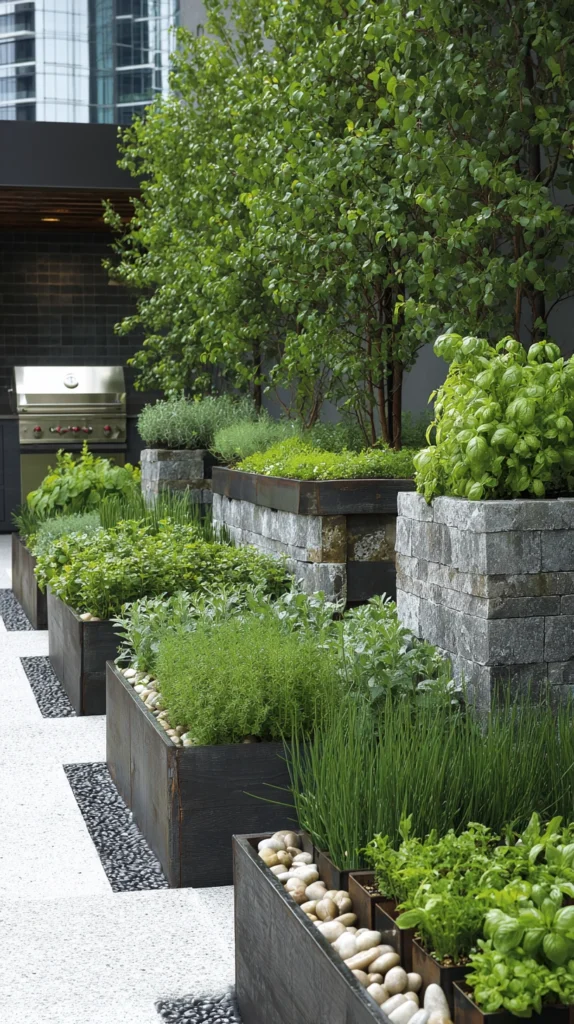
A dedicated herb and edible garden display — a cluster of terracotta pots planted with culinary herbs, a small raised bed positioned beside the outdoor dining table, or a tiered plant stand of edible plants — creates a garden decoration that is simultaneously beautiful and genuinely useful. The connection between the growing herb display and the food prepared and eaten nearby communicates a quality of domestic self-sufficiency and sensory richness that purely ornamental planting cannot provide.
Position the herb display as close to the outdoor cooking and dining area as possible — herbs that are a single step away from the grill or the dining table will be used constantly and casually in a way that herbs growing at the far end of the garden will not. The proximity of the herb garden to the cooking space is the detail that transforms it from a garden feature into a daily kitchen resource.
Styling tip: Label herb pots with handmade tags — a small piece of slate with the name scratched in, a piece of bark with the name written in waterproof ink, a ceramic tag pressed with the plant name — rather than with standard plastic nursery labels. Handmade labels give the herb display a craft quality and a personal character that commercial labels undermine, and they communicate that the herb garden was assembled with care rather than simply purchased from a garden centre.
12. The Garden Fire Pit Area
Budget: $60 – $400
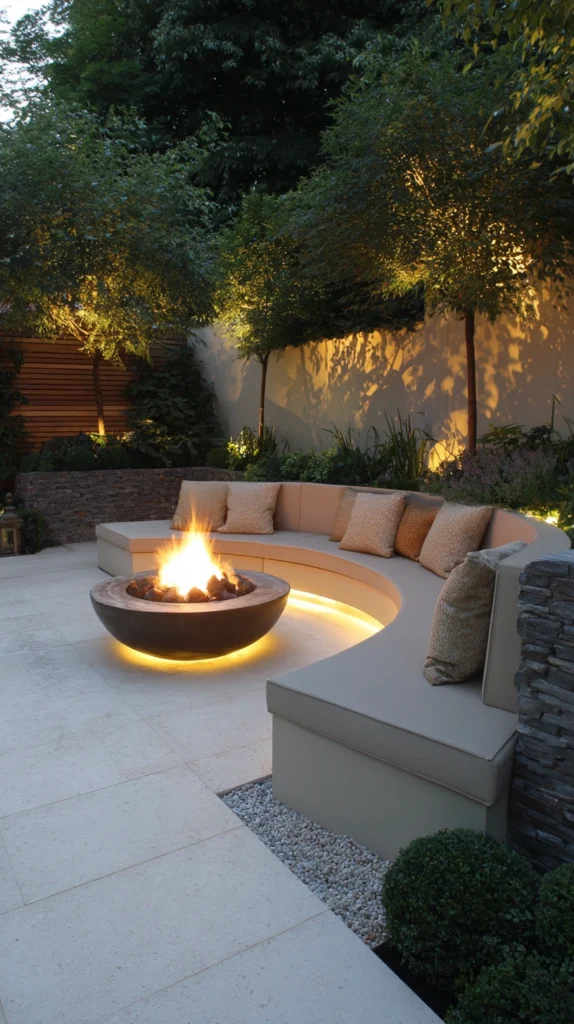
A fire pit at the heart of a defined seating area — surrounded by comfortable outdoor chairs, a supply of firewood presented neatly in a log store or a galvanised metal basket, and the materials for s’mores or toasted marshmallows on a nearby surface — creates the most social and the most atmospherically powerful outdoor gathering space available in any summer garden. The fire is the ancient focal point — it has gathered people around it for as long as people have existed — and it does that work as effectively in a suburban backyard as anywhere else.
A portable steel fire pit costs $40–$80 and requires no installation. A permanent stone or brick fire pit costs $150–$400 to build as a DIY project. Both require a clear area of at least three metres diameter free of combustible material and a safe distance from any structure, fence, or overhead planting. Hardwood logs burn longer and more cleanly than softwood — oak, ash, and beech are the best choices for an evening fire.
Styling tip: Arrange the seating around the fire pit in a loose arc rather than a perfect circle — the arc creates a social space with a clear front and back, allows easy movement in and out of the seating, and orientates every seat toward the fire without creating the confrontational face-to-face arrangement of a complete circle. An arc of chairs around a fire is always more comfortable and more naturally social than a geometric ring.
13. The Garden Bunting and Flag Decoration
Budget: $15 – $80
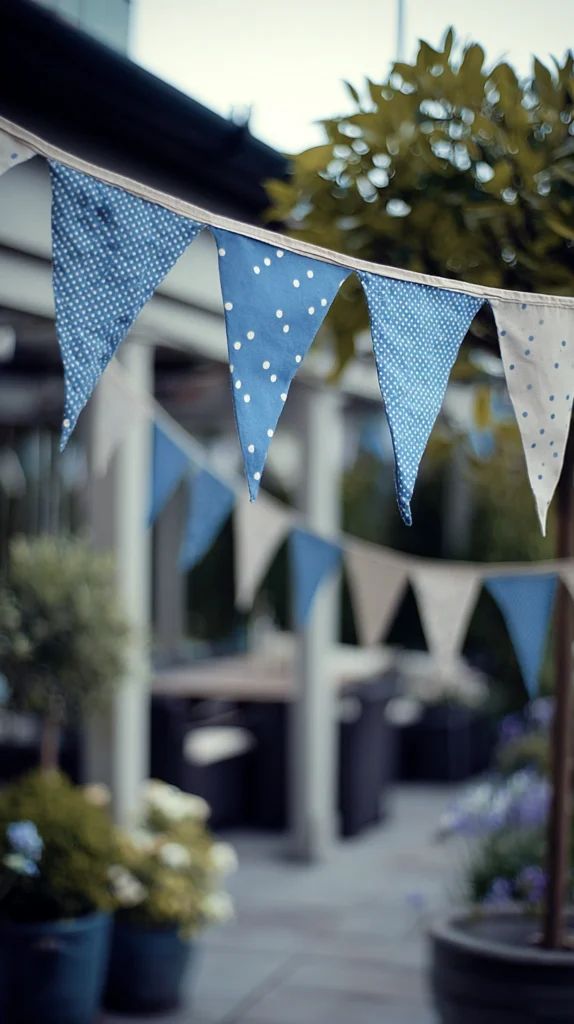
Fabric bunting strung between fence posts, between garden structures, or through the lower branches of trees creates an immediate sense of celebration in a garden that suits outdoor parties, long summer lunches, and any occasion where the garden is the venue for something worth marking. Bunting is the simplest and most universally understood signal that an outdoor space has been prepared for an occasion — it transforms a garden from a private space into a party venue in the time it takes to string it up.
Cotton flag bunting in a consistent colour palette — all white, natural linen, a bold two-colour combination — costs $10–$25 for a 5-metre length and suits every garden style when the colour is chosen carefully. Mix pennant, square, and circular flag shapes on the same string for a more interesting profile than a single consistent shape throughout.
Styling tip: String bunting at a gentle drape rather than pulled tight — the natural sag between fixing points gives bunting its festive character. Bunting pulled completely taut looks rigid and installation-like rather than celebratory. A fixing-point spacing of approximately 2 metres with a generous length of bunting between each point creates the relaxed, festive drape that communicates summer occasion most effectively.
14. The Evening Garden Dining Experience
Budget: $80 – $400
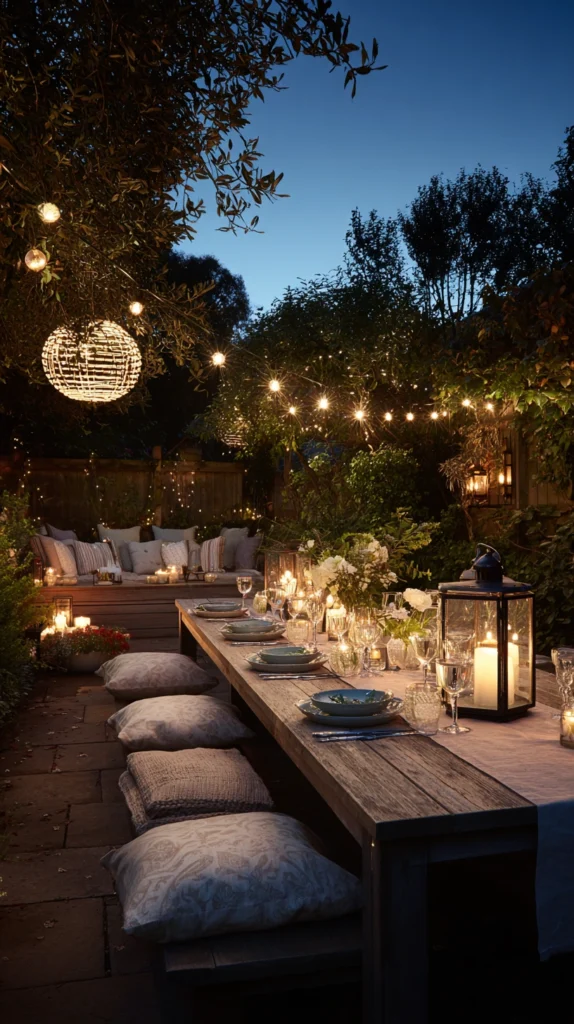
A summer garden designed specifically for the evening dining experience — a long table positioned to capture the last light of the day, string lights overhead, lanterns at intervals along the table, a central arrangement of garden flowers and candles, outdoor cushions on every seat, a portable speaker for background music, and a drinks station within easy reach of every guest — creates the most complete and the most genuinely enjoyable outdoor entertaining experience available in any domestic garden. It is not the decoration that makes this experience extraordinary — it is the combination of all the elements working together to create an outdoor room of complete warmth and generous hospitality.
The evening garden dining experience requires preparation rather than expenditure — the table must be set before the guests arrive, the lighting must be tested and working, the drinks must be cold and accessible, and the host must be present at the table rather than in the kitchen. The garden does the decorating; the host provides the occasion.
Styling tip: Set the table and light the overhead lights an hour before the guests arrive — then walk back to the furthest point of the garden and look at the whole scene from a distance before anyone sits down. The view of a lit, dressed garden table from a distance, with the lights warm and the flowers visible and the evening beginning to deepen the sky above, is one of the most genuinely beautiful domestic sights available. It is also the view that every arriving guest will have — and ensuring it is as good as it can be before anyone arrives is the most important single preparation available for an evening garden party.
The summer garden decorated with care and personal intention becomes something more than an outdoor space. It becomes a room that the household genuinely inhabits rather than simply passes through — a place where the summer is actually experienced rather than observed from inside the house. Choose the ideas that suit the character of the garden and the people who use it, invest in them with appropriate generosity, and let the season provide everything else.