14 Blush and Sage Green Living Room Ideas for an Earthy Feel
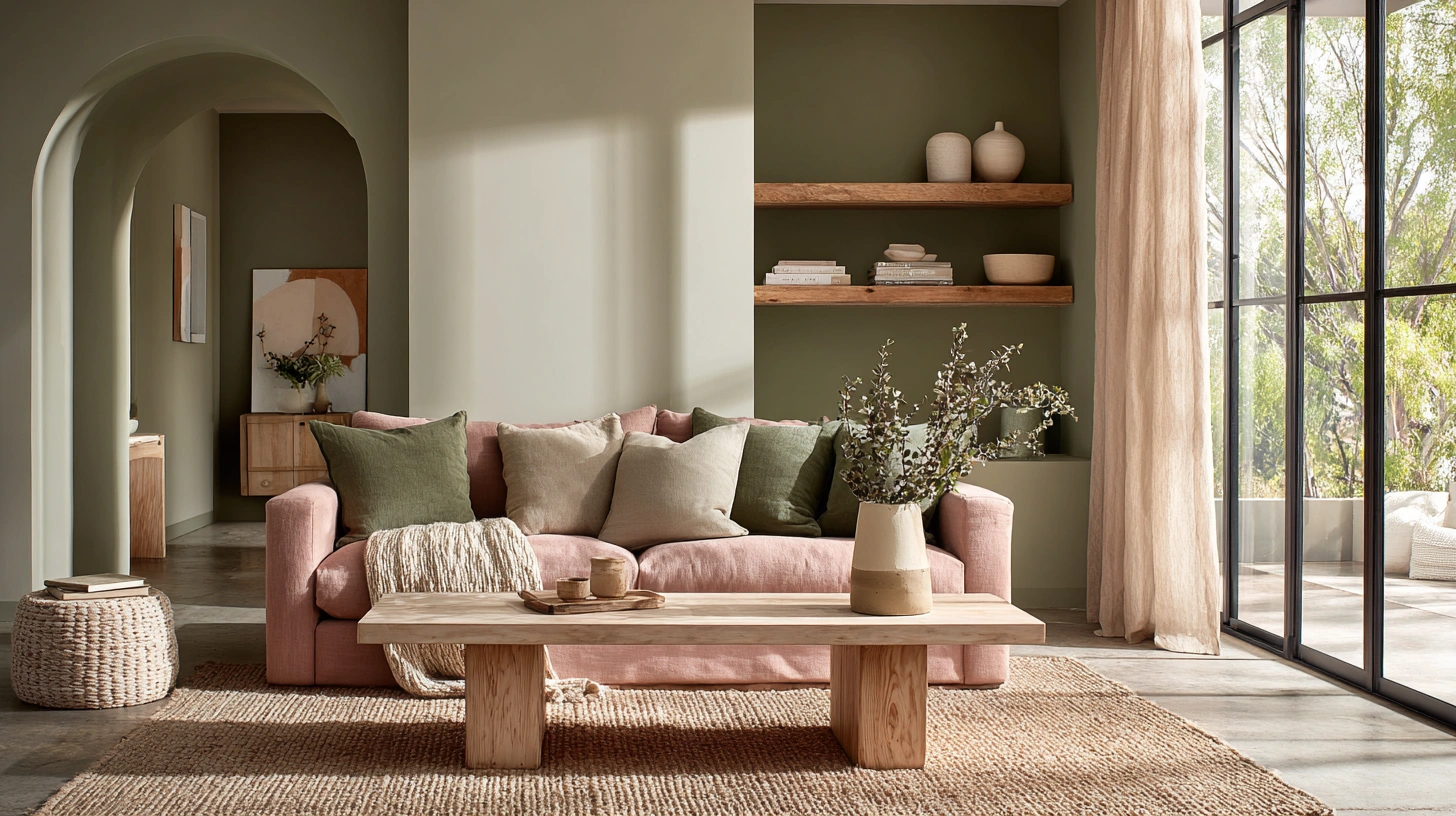
Blush and sage green is one of those colour combinations that arrives in a room with the quality of something found rather than chosen — as though these two tones have always belonged together and the room has simply been arranged to acknowledge what was already true.
The pairing works because both colours share the same fundamental quality: each contains grey, each references the natural world, and each sits in the quietly sophisticated register that sits between the obviously bold and the obviously neutral without being either.
Blush brings warmth — the warmth of faded roses, of terracotta softened by years of sunlight, of the particular pink that appears in the pale morning sky. Sage brings calm — the grey-green of Mediterranean herbs in dry soil, of lichen on stone, of the particular green that appears when a colour has been left in the sun long enough to lose its initial brightness and acquire the depth that comes only with time.
Together they create a room that feels genuinely settled — earthy in the best possible sense, connected to the natural world in its palette and its materials, and restful in a way that more obviously bold or more obviously neutral rooms rarely achieve.
1. The Sage Walls and Blush Upholstery Foundation
Budget: $200 – $1,200
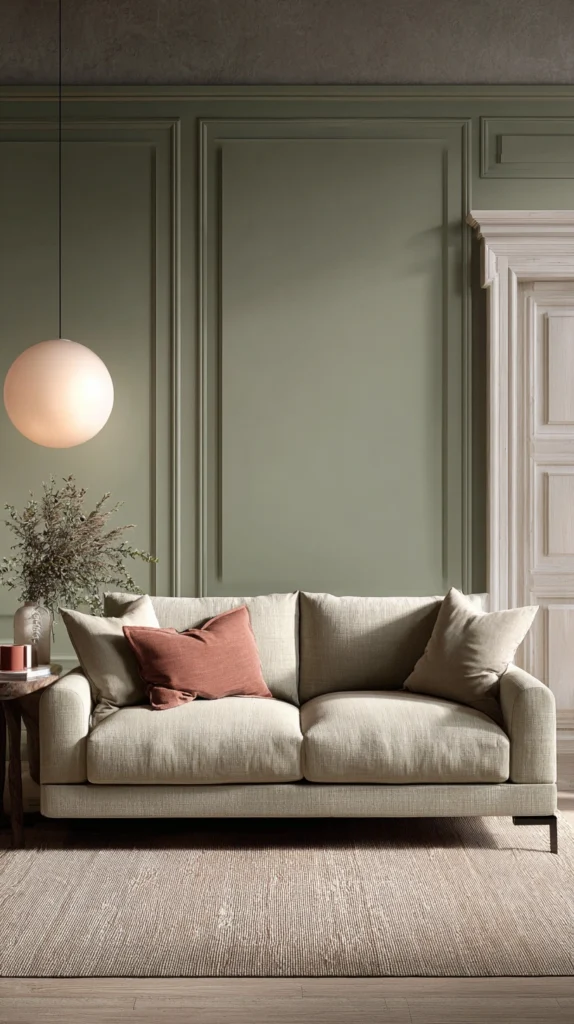
A living room built on sage green walls and blush upholstery is the most direct and the most confident expression of the palette and the one that creates the greatest atmospheric impact from the fewest decorating decisions. The sage walls provide an enveloping, restful backdrop of warm grey-green that makes every piece of furniture placed in front of it appear richer and more considered. The blush upholstery — sofa, armchairs, or a combination — creates the warm, domestic focal point of the room against that backdrop.
Sage green paint in the right tone — warm rather than cool, with enough grey to read as sophisticated and enough green to read as botanical — costs $20–$40 per tin. Farrow and Ball’s Mizzle, Little Greene’s Sage, and Dulux’s Sage Subtle are all in the correct register. Pair with a blush linen sofa ($400–$1,200) for a foundation combination of genuine simplicity and genuine beauty.
Styling tip: Paint the woodwork — skirting boards, door frames, window frames, and coving — in a warm off-white rather than a bright white. Bright white woodwork against sage walls creates too strong a contrast that introduces a crispness the earthy palette is trying to avoid. Warm off-white woodwork allows the sage walls to read without interruption and maintains the soft, settled quality that makes this foundation combination so effective.
2. The Blush Linen Sofa With Sage Cushions
Budget: $150 – $800
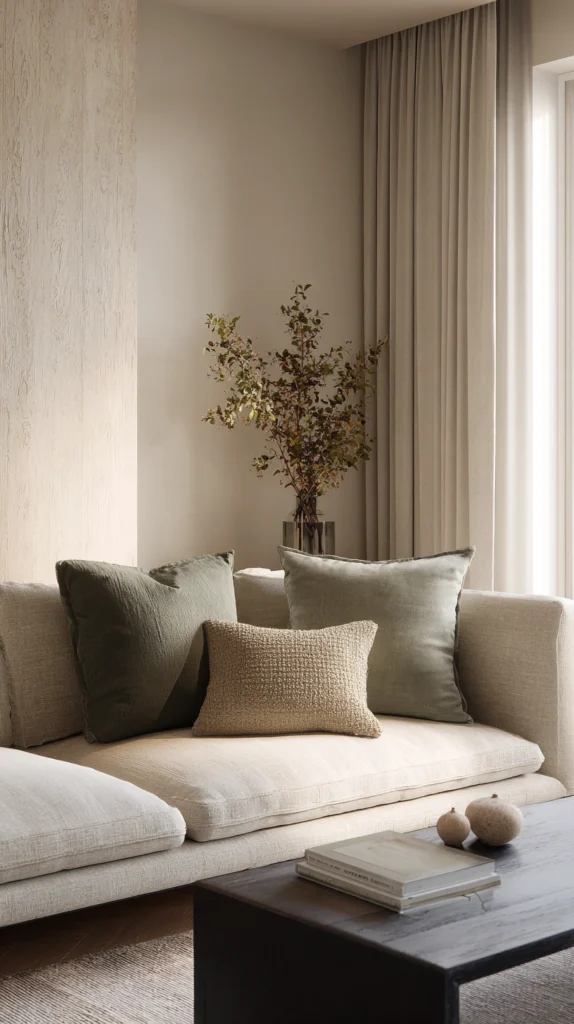
A blush linen sofa dressed with sage green cushions — in varying tones of sage, from pale grey-green to deeper olive — creates the most natural and the most immediately beautiful expression of the blush and sage palette at furniture level. The linen fabric suits both colours — its natural texture and slight irregularity of weave give both the blush and the sage tones a depth that smooth, synthetic fabrics cannot provide, and the natural fibre quality of linen connects the colour palette to the organic, earthy aesthetic that both colours reference.
Sage velvet cushions beside sage linen cushions beside sage embroidered cushions on a blush sofa creates a cushion arrangement with tonal variation within the same colour family that is more interesting and more sophisticated than cushions of identical sage tone throughout. Vary the texture rather than the colour — the textural variation provides the visual complexity that the restrained palette deliberately avoids through colour contrast.
Styling tip: Add one terracotta or warm amber cushion to the sage and blush cushion collection on the blush sofa. The terracotta connects to the earthiness of both colours, provides a warm accent that prevents the combination from reading as too cool or too pastel, and creates a colour reference that can be repeated in the room’s ceramic and plant pot accessories for a composed, distributed accent thread throughout the space.
3. The Natural Texture Living Room
Budget: $200 – $1,000
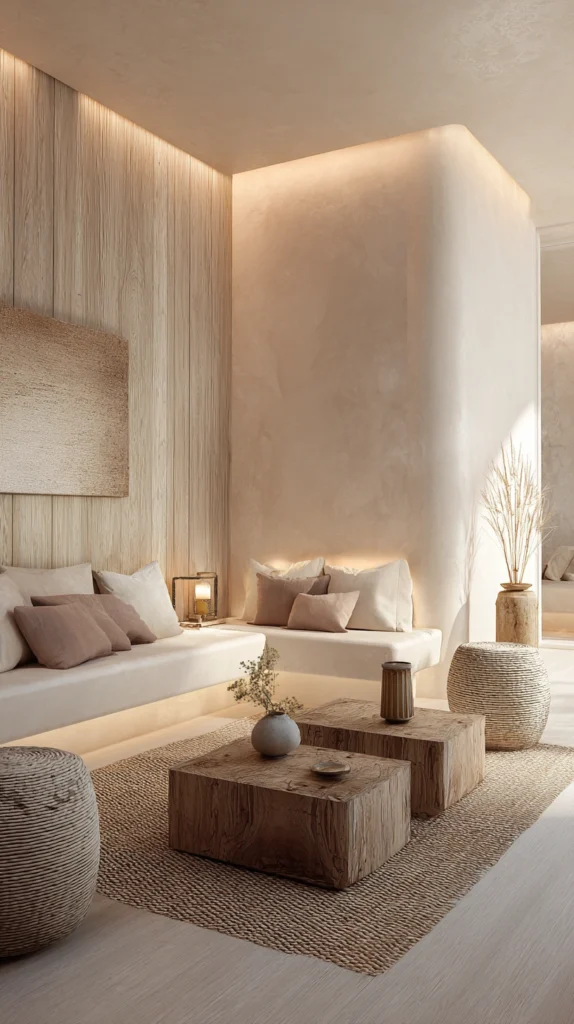
Blush and sage green in combination with natural textures — jute rugs, linen curtains, woven baskets, rattan furniture, linen cushion covers, cotton throws, and terracotta plant pots — creates a living room of genuine earthy warmth that the same colours in smooth, synthetic materials would entirely fail to achieve. The palette and the materials are inseparable in this aesthetic — the earthy feel comes as much from the tactile quality of the materials as from the visual quality of the colours.
A jute rug in the natural honey tone costs $60–$150 and suits blush and sage with particular natural logic — the warm neutral of the jute bridges the two palette colours and provides a ground plane that reads as organic and genuinely earthen. Woven baskets for plant pot covers, magazine storage, and blanket storage cost $10–$40 each and add the woven material quality that reinforces the natural texture narrative throughout the room.
Styling tip: Layer multiple natural textures rather than using a single one throughout — a rough jute rug beneath a smooth cotton throw beside a nubby boucle cushion beside a woven rattan side table creates a room where the tactile variety is as interesting as the colour. A room that is all jute and no other texture reads as monotonously rough; a room with varied natural textures reads as genuinely rich and considered.
4. The Sage Green Statement Wall
Budget: $20 – $150
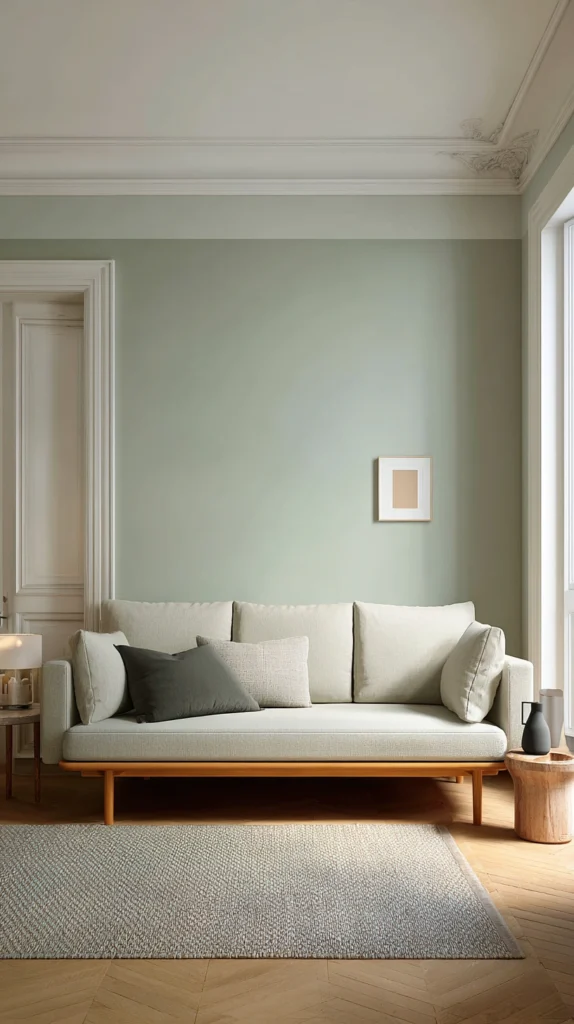
A single sage green accent wall — behind the main sofa, at the end of a long room, or within an alcove bookcase — creates the most easily achieved and the most easily reversed introduction of sage into a blush and neutral living room. The sage accent wall provides an immediate earthy depth to one surface of the room while leaving the remaining walls in the pale, warm neutrals that suit blush upholstery and natural textiles without requiring a full commitment to sage on every surface.
A flat or eggshell sage green paint on one wall costs $20–$40 in materials and creates a backdrop of immediate character and warmth behind whatever furniture piece it frames. The flat finish is critical — sage green in a shiny finish reads as a bathroom tile colour rather than an earthy, naturalistic wall tone. The chalky, slightly absorbent quality of flat emulsion or eggshell gives sage its depth and keeps it in the earthy register the palette requires.
Styling tip: Paint the inside of any alcove bookcase or built-in storage in sage green rather than a full accent wall if the room does not have a suitable feature wall position. A sage-backed bookcase creates an immediate and beautiful earthy backdrop for books, plants, and ceramics displayed on the shelves, and the contained application of the colour allows it to be introduced at modest scale without committing to a full wall of colour.
5. The Blush and Sage Floral Arrangement
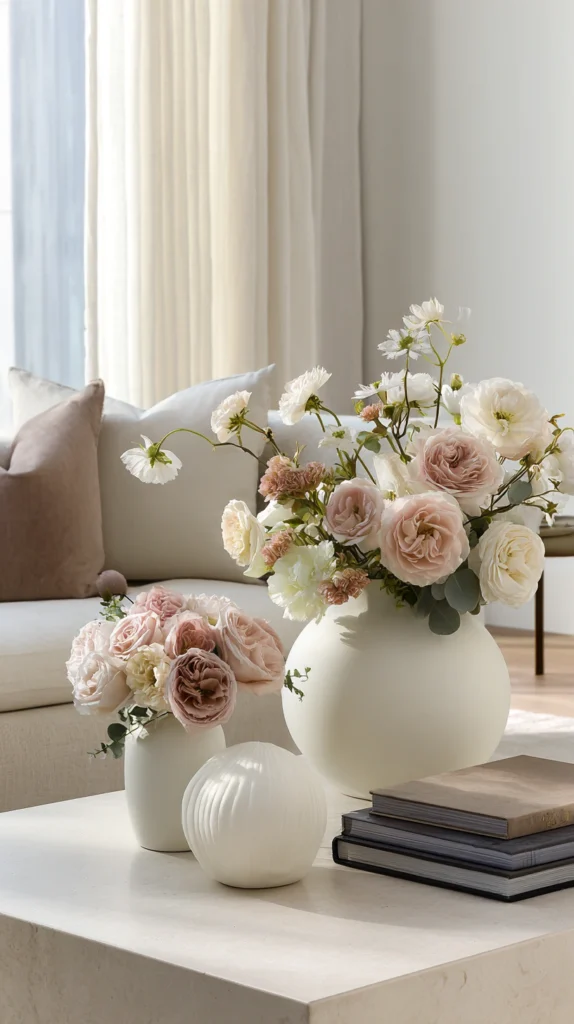
Budget: $20 – $100
Fresh flowers in the blush and sage colour palette — pale pink garden roses, dusty pink dahlias, blush ranunculus, combined with sage green eucalyptus, grey-green artemisia, olive branches, and dried pampas in natural tones — creates the most naturally beautiful and the most living expression of the palette available in any room. The blush and sage flower arrangement references the outdoor world from which the palette draws its colours and brings that reference directly and sensuously into the interior space.
A large ceramic vase in sage green, terracotta, or warm cream filled with blush roses and eucalyptus stems costs $15–$40 in flowers and creates a room focal point of extraordinary natural beauty. Replace weekly rather than allowing the flowers to decline — a fresh arrangement communicates care and attention in the most immediate way available to any living room decoration.
Styling tip: Include dried elements alongside fresh in the blush and sage arrangement — dried pampas, dried lavender, dried sage bundles, dried allium heads — for a permanent botanical component that provides continuity between weekly fresh flower changes. The combination of permanent dried elements and changing fresh flowers creates an arrangement with both structure and seasonal vitality.
6. The Earthy Ceramic Collection
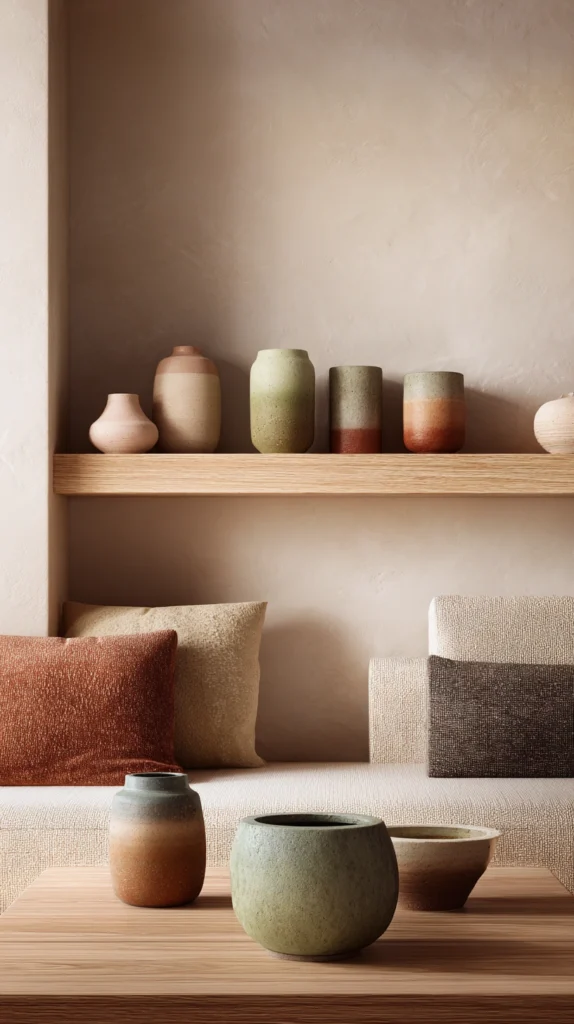
Budget: $30 – $200
A collection of handmade ceramics in blush, sage, terracotta, and warm cream — displayed on a coffee table, a sideboard, or a set of open shelves — creates a surface display of extraordinary material warmth and craft beauty that suits the blush and sage living room with complete natural logic. Handmade ceramics carry the colours of the earth — the same geological palette that blush and sage reference in their own tonal register — and a collection of hand-thrown or hand-built pieces in these tones creates a display that feels genuinely connected to the material world the palette is drawn from.
Handmade ceramic vases in sage green glazes cost $20–$60 each from independent potters and online makers. Blush-glazed bowls and terracotta vessels cost $15–$50 each. A collection of seven to ten pieces at varying heights, grouped on a sideboard or coffee table with clear space between the major pieces and smaller pieces filling the gaps, creates a display of genuine artistic quality from a very modest investment.
Styling tip: Include at least one unglazed or matte-surface ceramic in any collection of glazed pieces — the contrast between the smooth, reflective surface of a glazed vase and the rough, absorbent surface of an unglazed piece creates the kind of material contrast that makes both more interesting and more beautiful than either would appear in isolation. The unglazed piece grounds the collection in the literal earth that all ceramics originate from.
7. The Living Plant Collection in Earthy Pots
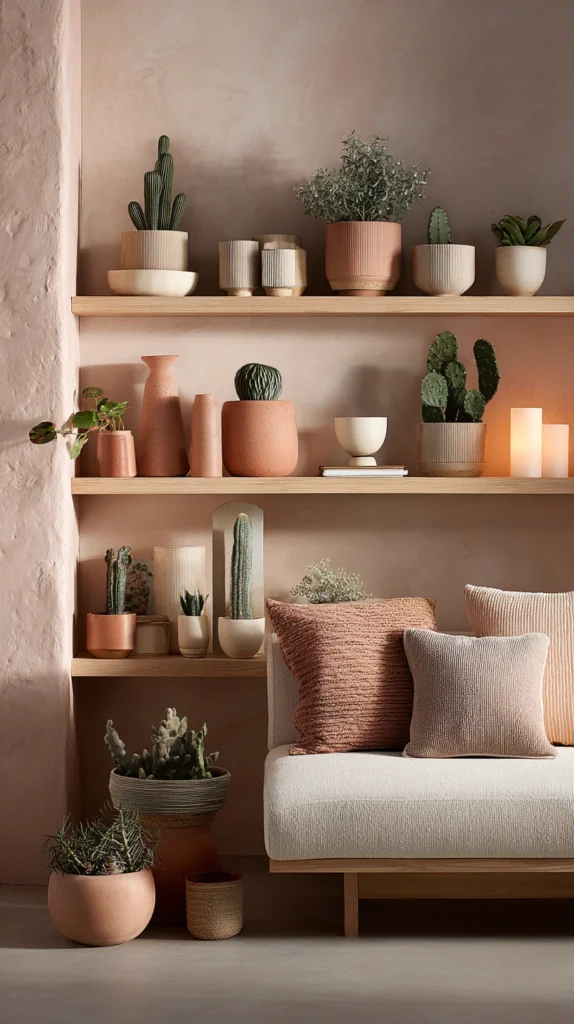
Budget: $50 – $250
A generous collection of living plants in terracotta, sage ceramic, and warm cream pots creates the most ecologically alive and the most genuinely earthy atmosphere available in a blush and sage living room. The green of the living plants reinforces the sage palette, the warmth of the terracotta pots reinforces the blush palette, and the presence of living, growing things in the room creates the connection to the natural world that the earthy palette is philosophically committed to expressing.
Choose plants with different leaf forms and habits for a collection with genuine three-dimensional presence — a tall fiddle leaf fig beside a spreading pothos beside a small succulent cluster beside a trailing string of hearts creates a plant landscape at multiple heights and scales. All plants in terracotta pots creates the most cohesive and the most earthily beautiful pot palette for a blush and sage room — the warm orange-red of unglazed terracotta is the natural companion of both palette colours.
Styling tip: Group plants in odd-numbered clusters of three, five, or seven rather than distributing them individually across every available surface. A cluster of plants in the same corner or on the same shelf reads as a designed botanical moment; the same plants distributed singly across different surfaces reads as an accumulation. The cluster communicates intention; the distribution communicates collection.
8. The Sage and Blush Gallery Wall
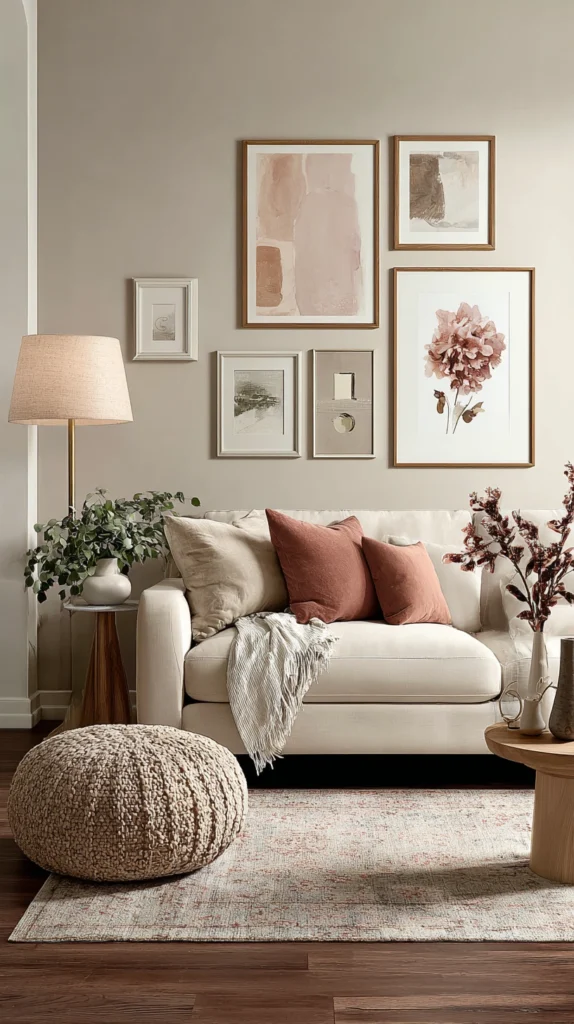
Budget: $50 – $300
A gallery wall in the blush and sage palette — botanical prints in sage and green tones, abstract paintings with blush and terracotta washes, landscape photographs with green and warm neutral palettes, pressed botanical specimens in natural frames — creates a wall surface of gentle colour and genuine visual warmth. The gallery wall introduces both palette colours through art and print rather than through paint or wallpaper, making it the most reversible and the most easily updated version of the palette available in the room.
Frame in natural timber, thin black metal, or warm cream-painted frames — all three suit the earthy palette equally well and are available in standard sizes that suit the most widely available print sizes. Mix frame profiles within the gallery — some with mounts, some without, some with wide profiles, some with narrow — for a collected quality that a gallery of identical frames cannot achieve.
Styling tip: Include at least one oversized print in the gallery wall — a piece that is significantly larger than the other prints and that anchors the arrangement as its visual centre of gravity. An oversized anchor print surrounded by smaller companions creates a gallery with clear visual hierarchy; a gallery of all similar-sized prints creates a flat, wallpaper-like effect that reads as pattern rather than composition.
9. The Blush and Sage Bedroom-Influenced Living Room
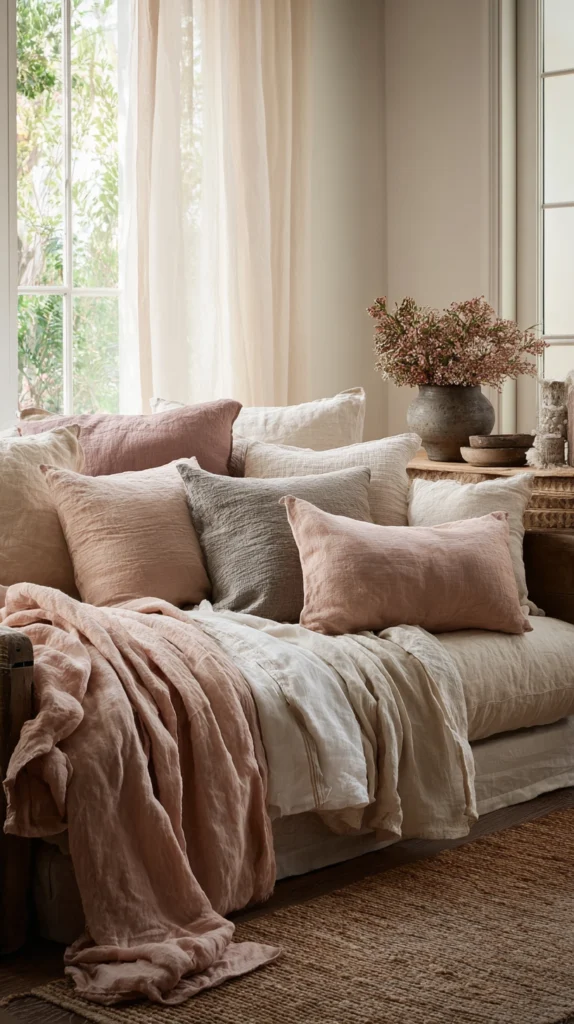
Budget: $200 – $1,000
A blush and sage living room that borrows from the layered, textile-abundant aesthetic of a beautifully dressed bedroom — layered cushions and throws in blush and sage linen, curtains that puddle softly on the floor, a woven rug that extends generously beneath the furniture, and a general atmosphere of horizontal ease and settled comfort — creates the most intimate and the most specifically restful version of the earthy palette available. The bedroom-influenced living room communicates that rest and comfort are the primary purposes of the space and that the palette serves those purposes entirely.
Washed linen throws in sage green draped over the sofa arm cost $30–$80 each. Blush linen cushion covers with natural buttons cost $15–$40 each. The combination of multiple textile layers in the palette creates the layered, abundant softness that defines this look — and the slightly imperfect, unironed quality of washed linen suits the earthy aesthetic far better than any crisp, pressed fabric.
Styling tip: Allow textiles to be deliberately imperfect in their arrangement — a throw that is loosely rather than precisely folded, cushions that are slightly plumped rather than perfectly rectangular, a rug whose fringe is not perfectly straight. The slightly imperfect textile arrangement communicates genuine use and genuine habitation in a way that precisely arranged textiles, however beautiful, do not — and genuine habitation is the quality that makes the earthy living room feel genuinely alive.
10. The Natural Light Blush and Sage Room
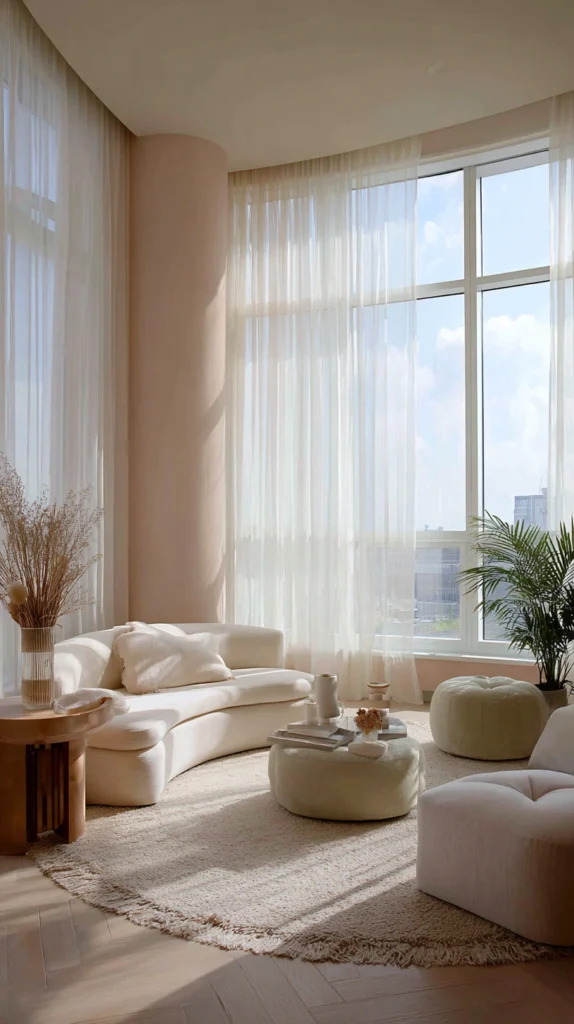
Budget: $100 – $600
A blush and sage living room designed specifically around the quality of natural light available in the space — with sheer linen curtains that diffuse rather than block incoming light, pale blush walls that reflect light warmly without adding colour, and sage green accents that read differently in morning light, afternoon sun, and cloudy diffuse light — creates a room that is most beautiful precisely because it changes continuously with the changing quality of natural light throughout the day.
Unlined linen curtains in pale blush or warm natural tones cost $60–$150 per pair and allow the quality of light passing through them to tint the room subtly — pale pink linen diffuses morning light into the most beautiful warm rose quality imaginable. Sage cushions and throws read as different shades of green-grey at different times of day as the light direction and intensity change — the colour never looks the same twice, which is one of the most engaging and most naturally beautiful qualities of an earthy, light-responsive palette.
Styling tip: Keep window treatments as minimal and as light as possible in a blush and sage room that receives good natural light — the light itself is the primary decorating element in a pale, earthy palette and anything that reduces or alters it is working against the palette’s greatest strength. A room that sacrifices some privacy for the quality of natural light it receives is almost always more beautiful than one that prioritises privacy at the cost of the light.
11. The Aged and Vintage Blush and Sage Room
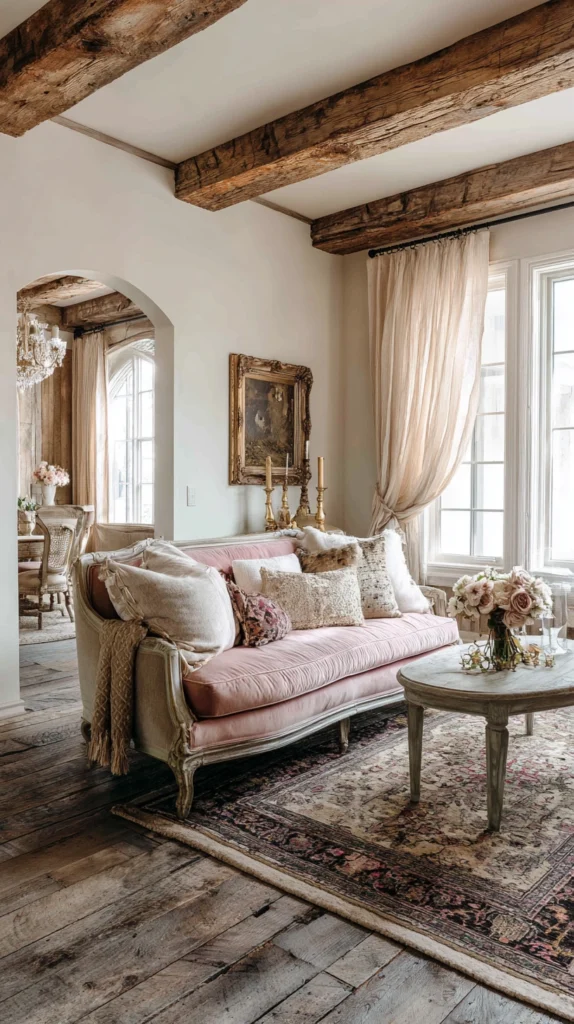
Budget: $100 – $600
A living room furnished with aged and vintage pieces in the blush and sage palette — a faded rose velvet armchair that has lost some of its original brightness, sage green painted furniture with wear marks at the edges, a vintage kilim in warm earthy tones, aged terracotta pots with their characteristic white salt deposits, and antique frames with slightly darkened gilding — creates the most genuinely earthy and the most authentically settled version of the palette available. The aged quality of the pieces communicates that the palette’s earthiness is a matter of material character and time rather than decorating decision.
Faded vintage fabrics in the palette colours are available from antique markets, charity shops, and second-hand dealers at very modest cost — the fading that reduces the commercial value of vintage upholstery and textiles is precisely the quality that gives them their earthy, settled aesthetic value in the palette. A faded rose velvet cushion from a second-hand shop is often more beautiful in this palette than a brand new blush velvet equivalent.
Styling tip: Introduce genuine aged patina into the room’s metallic elements — brushed brass that has been allowed to develop its natural darker tone rather than polished to a bright finish, copper accessories with their natural greenish surface oxidation preserved, antique bronze fixtures and fittings. Polished and pristine metallics introduce a crispness that works against the earthy, settled quality the palette is expressing; aged metallics reinforce it.
12. The Blush and Sage Maximalist Room
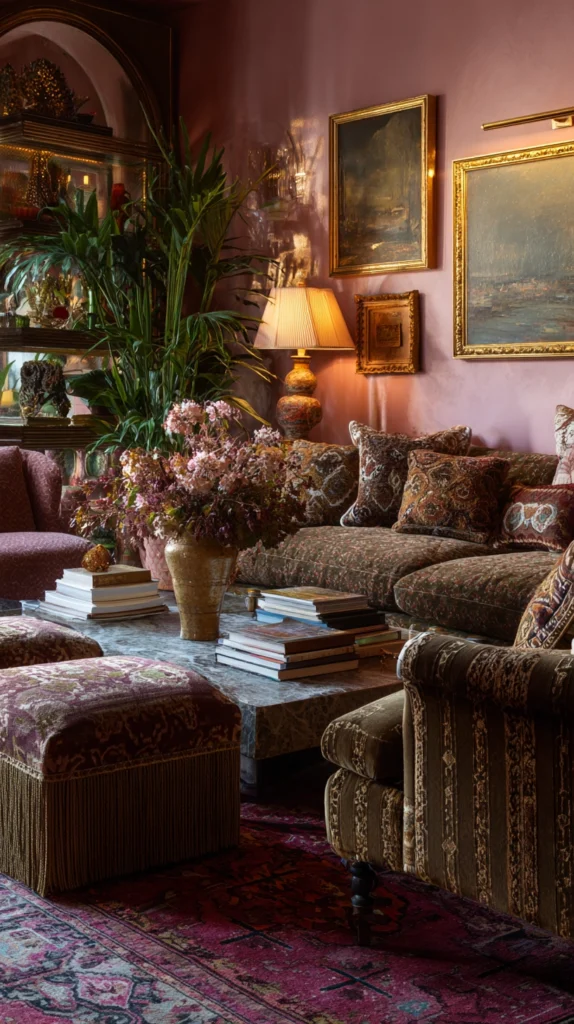
Budget: $400 – $2,500
A fully committed maximalist blush and sage living room — sage wallpaper on all four walls, blush velvet upholstery, botanical prints in the palette on every available wall space, plants in terracotta at every scale, sage and blush ceramics on every surface, layered rugs in earthy tones, and natural textiles at every level — creates an interior of extraordinary earthy abundance that treats the palette as a total environment rather than a colour scheme. The maximalist version of the blush and sage palette is the most confident and the most specifically beautiful version available when executed with complete consistency.
The key quality that makes the maximalist earthy room work rather than overwhelm is the tonal consistency of the palette — every element, however diverse in pattern or texture, should contain only tones from within the blush, sage, terracotta, and warm neutral family. A single vivid colour outside the palette in a maximalist earthy room breaks the enveloping, settled quality that is the defining characteristic of the aesthetic.
Styling tip: Use botanically patterned wallpaper as the maximalist room’s primary surface rather than a geometric or abstract pattern. Botanical patterns — leaves, ferns, botanical illustrations, plant forms — reinforce the earthy, natural world reference of the palette at the largest scale available in the room and create a visual connection between the plant-filled interior and the natural world beyond the window that no other wallpaper pattern achieves with the same organic coherence.
13. The Minimalist Blush and Sage Room
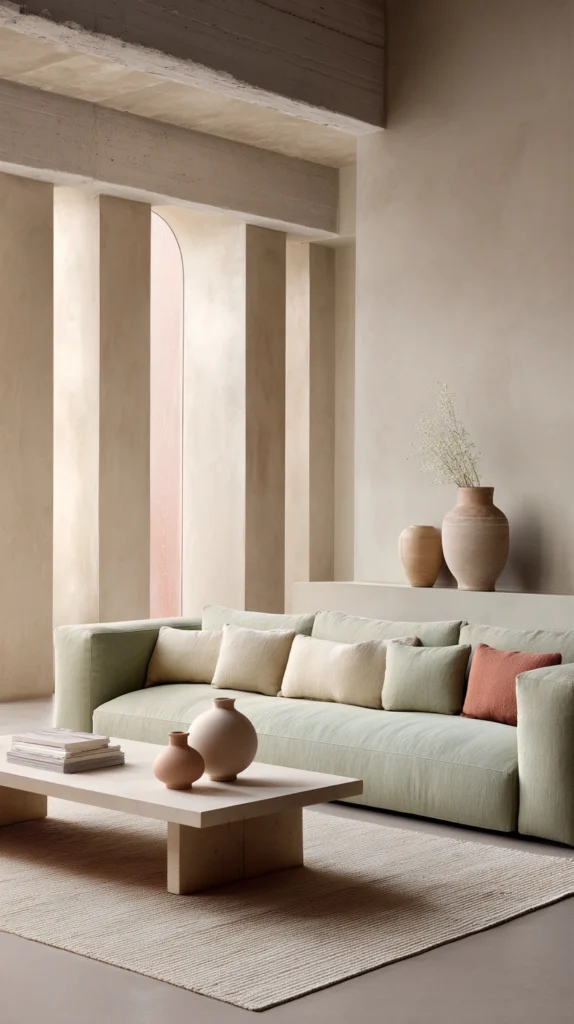
Budget: $200 – $1,000
At the opposite end of the decorating confidence spectrum from the maximalist version — a living room in which blush and sage are applied with complete restraint, each colour appearing in only two or three carefully chosen elements, the rest of the room in warm white and natural materials. A sage green sofa as the room’s single colour statement, blush ceramic vases on the coffee table, natural linen curtains, a jute rug, and one large botanical print on a white wall creates a room of extraordinary calm and clarity that communicates the palette through suggestion rather than immersion.
The minimalist blush and sage room is more difficult to execute well than the maximalist version — there is less to distract the eye from imperfections in individual choices, and every object that earns a place in the room must justify its presence through genuine quality of form and material rather than through visual abundance. The restraint requires both confidence and a good eye for the individual quality of objects.
Styling tip: In a minimalist blush and sage room, invest the freed-up budget in the quality of the individual pieces rather than in the quantity. A single hand-thrown ceramic vase of genuine quality costs the same as five mass-produced alternatives and creates a more beautiful room with fewer objects. Minimalism is not cheaper than maximalism — it simply redirects the investment from quantity to individual quality.
14. The Seasonal Blush and Sage Refresh
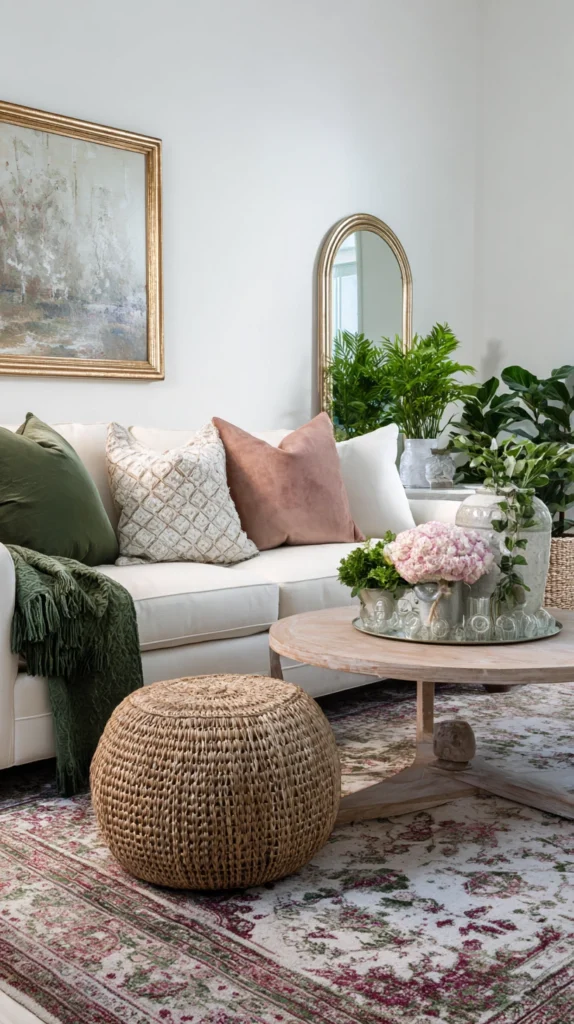
Budget: $40 – $200
The blush and sage palette refreshed seasonally — keeping the permanent elements (walls, sofa, rug) consistent through the year while updating the flowers, the ceramics, the throws, and the plant selection to reflect the changing seasons — creates a living room that is always recognisably itself and always expressing the current moment of the year simultaneously. The seasonal refresh is the most dynamic and the most alive version of the palette available — it treats the room as a continuously evolving expression of the natural world rather than as a fixed decorating arrangement.
Spring — blush tulips and pale sage foliage, fresh green plants, light cotton throws. Summer — full pink roses and eucalyptus, maximum plant abundance, linen in the lightest weights. Autumn — dried sage bundles and blush dahlias, terracotta accent objects introduced, warmer heavier throws. Winter — dried botanical arrangements in earthy tones, sage candles and warm amber light, the heaviest linen and wool textiles layered generously.
Styling tip: Change only three or four elements in the seasonal refresh rather than attempting a comprehensive update — the flowers, one textile, the plant selection, and one surface display is sufficient to shift the room’s seasonal character without requiring significant effort or expense. The restraint of changing only the most seasonal and the most visible elements allows the room to evolve naturally with the calendar while remaining fundamentally consistent in its palette and its character throughout the year.
Blush and sage green at their best create a living room that feels as though it has grown into its colours rather than been painted in them — a room that wears its palette with the same natural ease that a well-loved garden wears its planting.
The earthiness is not a decorating position. It is a quality that emerges from genuine engagement with natural materials, natural colours, and the particular kind of settled domestic beauty that comes from choosing things because they are genuinely beautiful rather than because they are fashionable, and from living with them long enough to understand what they are.