15 Pink and White Living Room Ideas for a Clean Classic Look
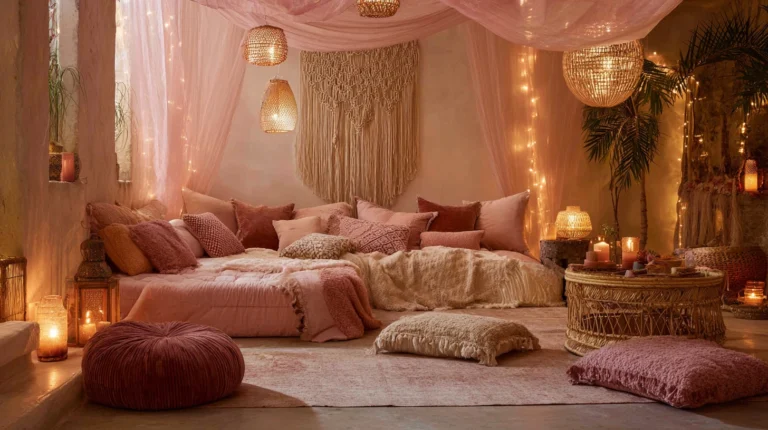
Pink and white is one of the most enduringly beautiful colour combinations in interior design — and one of the most consistently underestimated. The assumption that it is too sweet, too feminine, or too limited for a serious living room ignores the extraordinary range of moods that this deceptively simple pairing can produce.
A pale blush beside warm white creates something barely-there and architectural. A deep rose beside crisp white creates something bold and graphic. A dusty pink beside aged white creates something vintage and romantic. The palette is not one thing — it is a spectrum of possibility, and every point along that spectrum is worth exploring.
What pink and white share — the quality that makes them natural companions — is clarity. Both are clean colours in the sense that they do not muddy or complicate the rooms they occupy. White brings light and air; pink brings warmth and welcome.
Together they create rooms that feel genuinely fresh without feeling cold, genuinely inviting without feeling cluttered, and genuinely classic without feeling dated. The ideas below explore every version of this combination — from the barely-there restraint of the palest possible blush beside warm white to the full commitment of a deeply coloured rose room with white architectural relief.
1. The Pale Blush and Warm White Foundation
Budget: $150 – $800
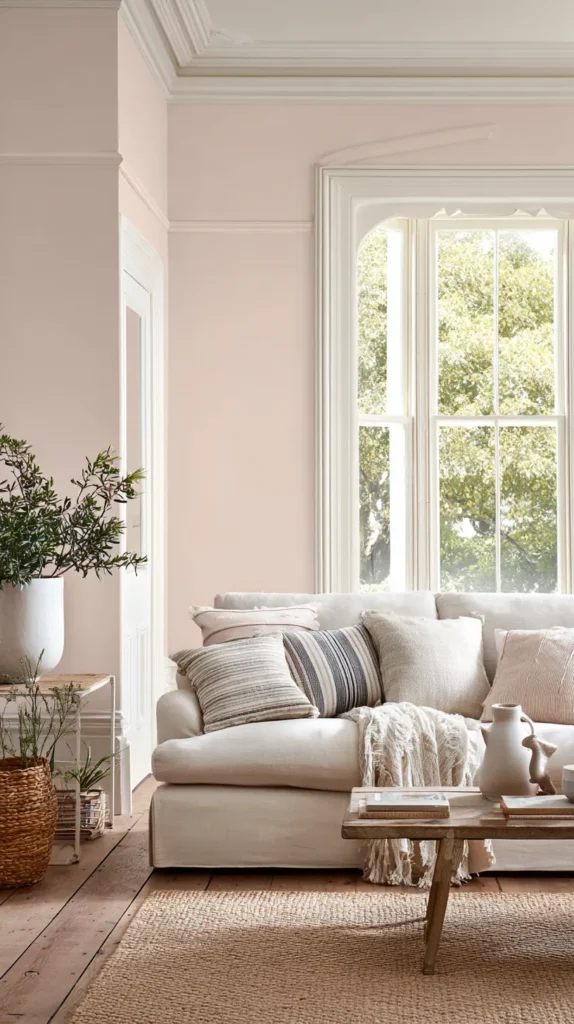
The most restrained and the most universally flattering interpretation of the pink and white palette — the palest possible blush on the walls, warm white on all the woodwork and ceiling, natural linen upholstery in blush and cream tones, and white marble or white painted surfaces throughout. This is the version of the combination that works in the most rooms, suits the most house types, and produces the most consistently beautiful results regardless of the natural light conditions or the architectural character of the space. It is also the foundation from which every other version on this list can be developed.
The critical quality decision in this foundation is the blush tone — it must be warm rather than cool, with just enough pink to read as coloured rather than neutral but not so much as to read as obviously pink from across the room. Farrow and Ball’s ‘Calamine’, Little Greene’s ‘Pink Slip’, and Benjamin Moore’s ‘Pale Blush’ are all in the correct register. The tone should be visible in strong direct light and almost imperceptible in low light — present without insisting.
Styling tip: Use the same warm white on the ceiling, the woodwork, and any built-in furniture throughout a blush and white room rather than using a bright white on some surfaces and an off-white on others. Multiple different whites in the same room create an unintentional clash of undertones that makes the room feel unresolved — one consistent warm white throughout gives every white surface the same underlying quality and makes the blush walls read more clearly and more beautifully against them.
2. The Pink Velvet and White Marble Living Room
Budget: $400 – $2,500
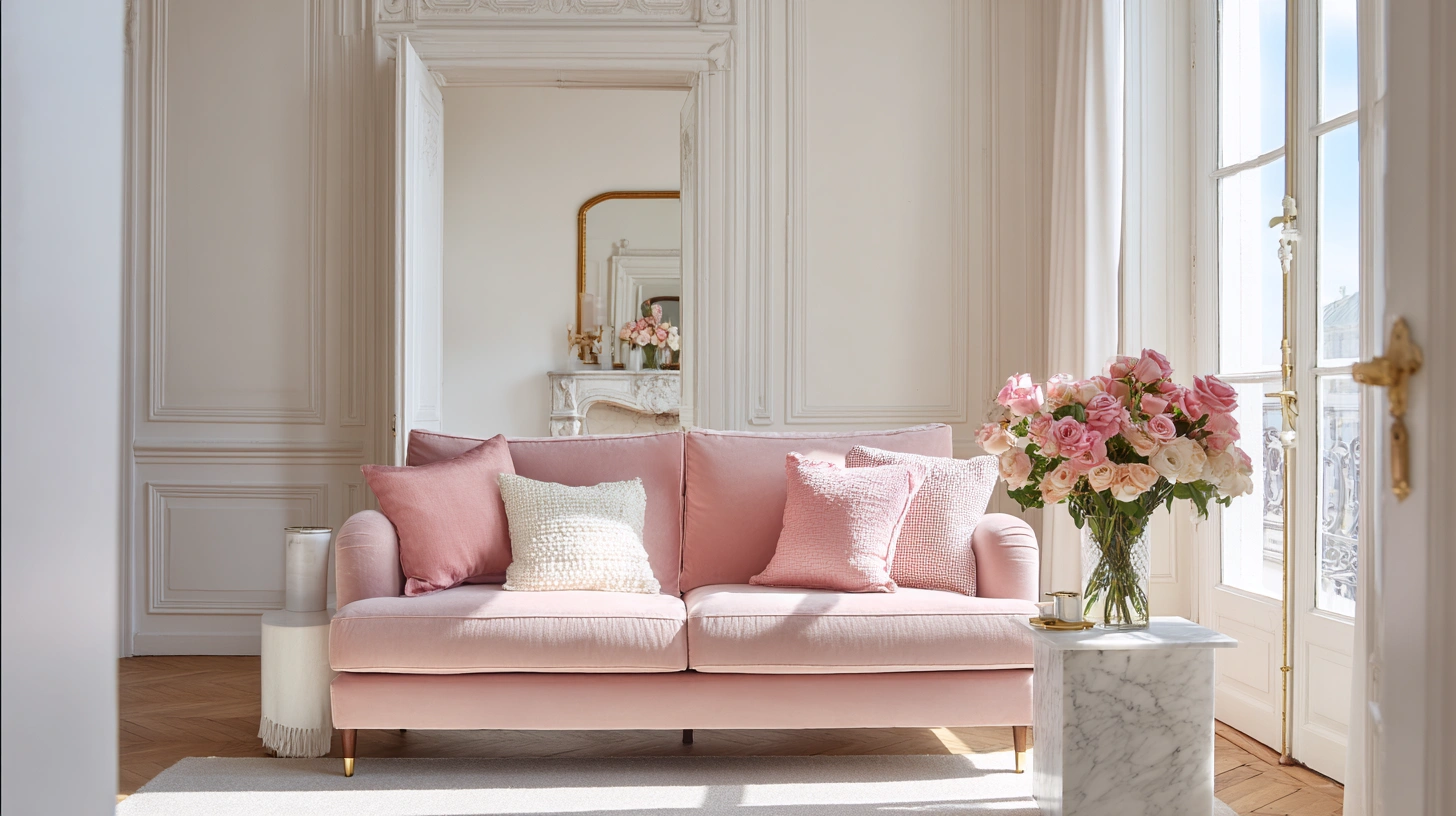
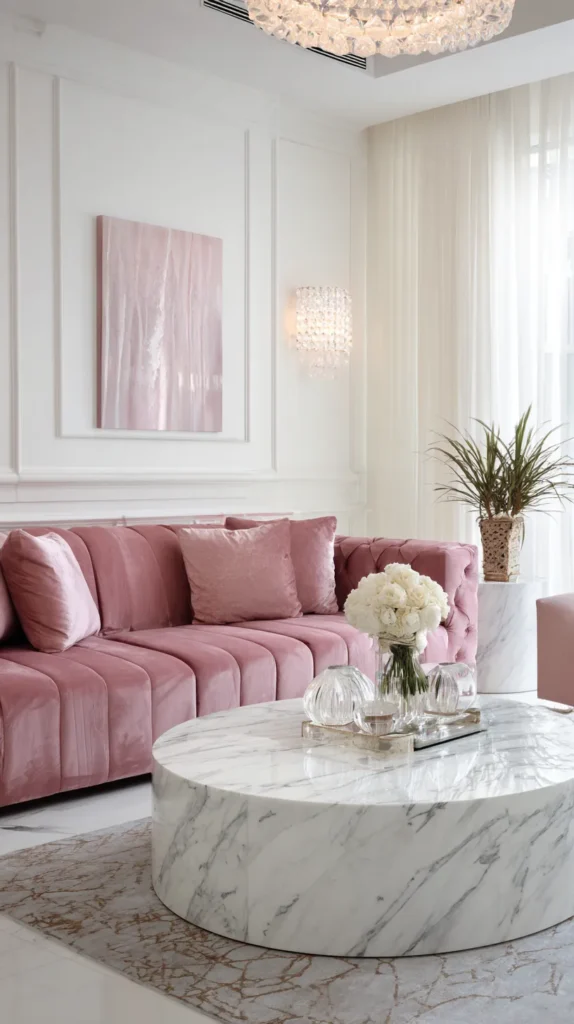
Pink velvet upholstery beside white marble surfaces is one of the most luxurious and the most classically beautiful combinations available in the pink and white palette — the warmth and tactile depth of velvet fabric contrasting with the cool, smooth hardness of marble creates a material pairing of extraordinary physical and visual richness. A rose velvet sofa beside a white marble coffee table, or blush velvet armchairs flanking a marble fireplace surround, creates focal points of genuine glamour that communicate the combination at its most considered and most sophisticated.
White Carrara marble with its characteristic grey veining is the most classically beautiful marble surface available for a pink and white room — the cool grey tones in the veining complement the warm pink of the velvet and the warm white of the surrounding surfaces in a three-way relationship of material warmth and material cool that is one of interior design’s most enduring material combinations.
Styling tip: Balance the luxurious quality of velvet and marble with at least one deliberately humble material — a natural jute rug, a simple linen cushion, an unglazed terracotta pot. The humble material grounds the luxury and prevents the room from reading as a showroom or a hotel lobby rather than a domestic space that is genuinely inhabited. The contrast between the precious and the ordinary is what makes both more interesting.
3. The Graphic Pink and White Stripe
Budget: $100 – $500
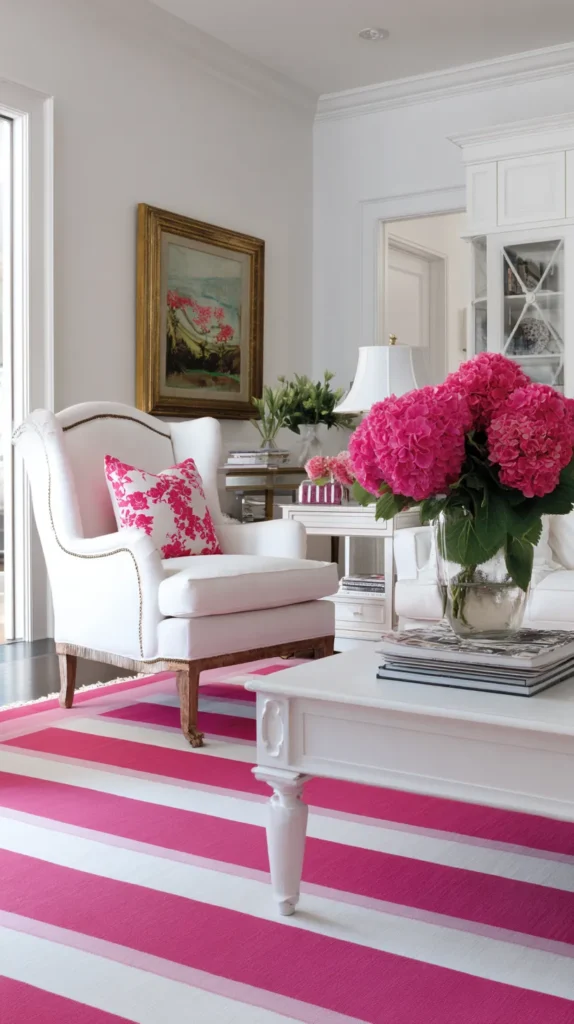
Bold pink and white stripes — on a statement cushion collection, a wallpapered feature wall, a striped rug, or a fabric roman blind — introduce the palette in its most graphic and most energetic form. The stripe is the pattern that suits the pink and white combination most naturally — it creates visual movement, communicates a relaxed confidence about the colour choice, and provides the graphic clarity that prevents the combination from reading as too soft or too tentative. A room anchored by a bold pink and white stripe has an immediate visual energy that unstripped versions of the same palette cannot match.
Wide bold stripes read as contemporary and confident. Narrow ticking stripes read as relaxed and coastal. Irregular multi-width stripes read as artistic and considered. All three suit the pink and white palette with equal effectiveness — the choice is determined by the room’s architectural character and the decorating mood being sought rather than by any absolute aesthetic preference.
Styling tip: Use the stripe on one surface or one element of the room rather than on multiple surfaces simultaneously. A striped rug beside a striped wallpaper beside a striped cushion creates visual competition between the pattern instances; the same stripe on a single surface, surrounded by plains and textures in the palette colours, reads with full graphic authority and allows the pattern to be the clear visual statement it is intended to be.
4. The White Linen and Pink Floral
Budget: $150 – $700
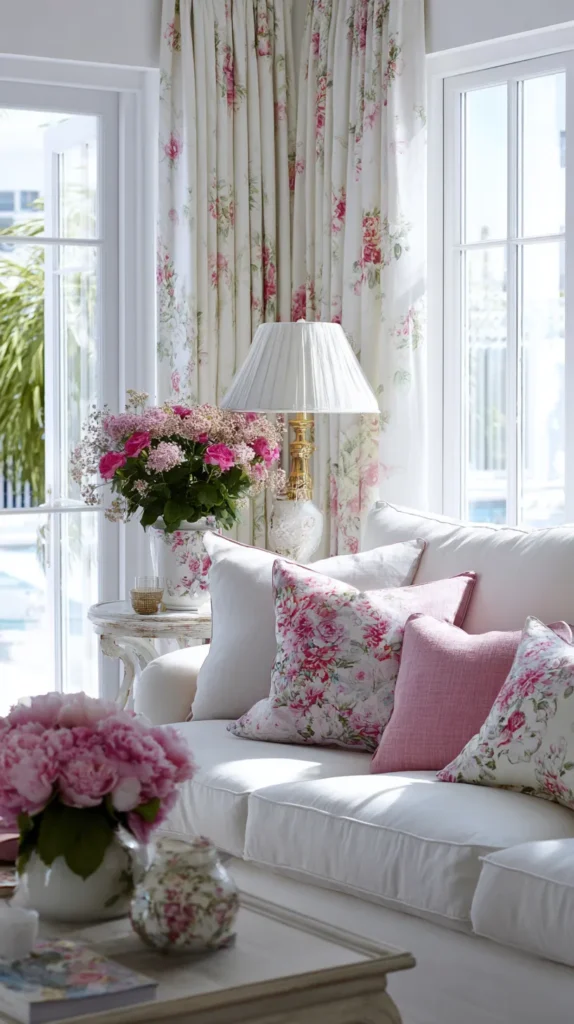
White washed linen as the dominant upholstery and curtain fabric, with pink floral accents — a floral cushion collection, a botanical print on the wall, a bunch of garden roses on the coffee table — creates the most naturally beautiful and the most quietly romantic version of the pink and white palette. The linen provides the clean, honest, slightly irregular white that suits the pink floral elements far better than a smooth, bright fabric, and the pink florals provide the warmth and seasonal vitality that pure white linen needs to prevent it from feeling cold.
Washed white linen has a naturally warm tone — neither as bright as cotton nor as cool as silk — that sits very close to the warm white of painted woodwork and creates a visual continuity between the fabric and the architectural surfaces that makes a linen-based room feel genuinely designed rather than furnished. The slight slub and irregularity of the weave adds a handmade quality that suits the pink floral additions with complete natural logic.
Styling tip: Change the floral accents seasonally while keeping the white linen constant — spring bulb flowers in early months, roses and peonies in summer, dahlias in autumn — to create a room that remains recognisably itself throughout the year while expressing the season through its pink floral elements. The white linen is the permanent canvas; the pink flowers are the seasonal content.
5. The Classic Pink and White Bedroom-Influenced Look
Budget: $200 – $1,000
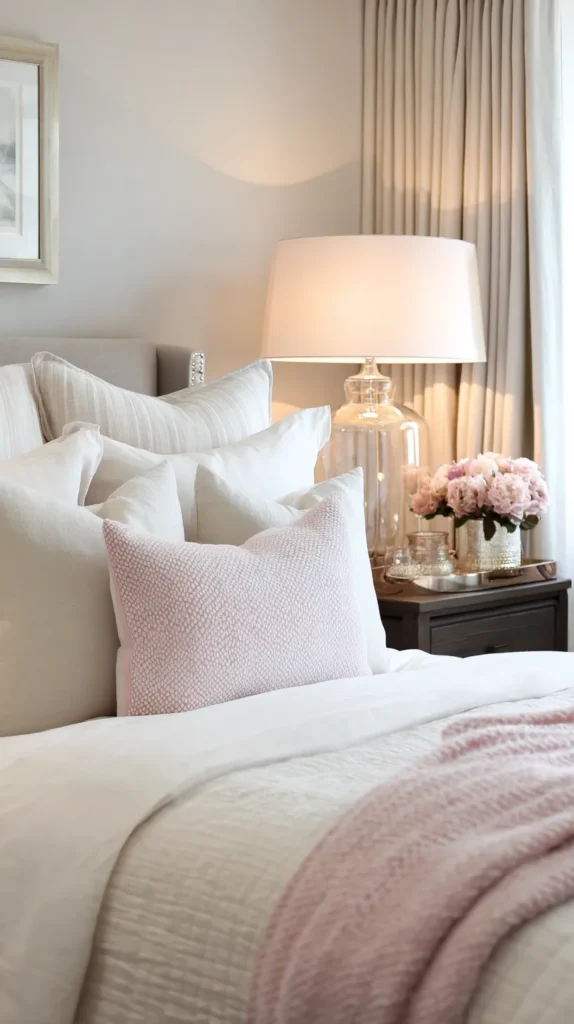
A living room that borrows the most beautiful qualities of a classically dressed bedroom — layered white bedding textures translated into sofa cushions and throws, pink reading lamp at intimate height, white painted furniture with pink ceramic accessories, and a general atmosphere of horizontal ease — creates the most specifically restful and the most domestically generous version of the pink and white palette. It is the room that makes arriving home feel like arriving at exactly the right place.
White cotton cushion covers with pink embroidered detailing, a pink cellular throw folded over the sofa arm, white bedside-lamp-style table lamps on the side tables — these are the textile and lighting choices that create the bedroom quality within a living room context. The combination communicates that comfort and ease are the primary values of the space, which is always the most welcoming possible message a living room can send.
Styling tip: Keep the sofa cushions deliberately abundant — more cushions than can be used simultaneously, arranged in layered depth at each end of the sofa. The abundance of cushions communicates generosity and welcome in a way that a precisely allocated individual cushion per seat does not, and it creates the visual richness that the otherwise restrained palette needs to prevent it from reading as spartan.
6. The Rose and Bright White Contemporary Room
Budget: $200 – $1,200
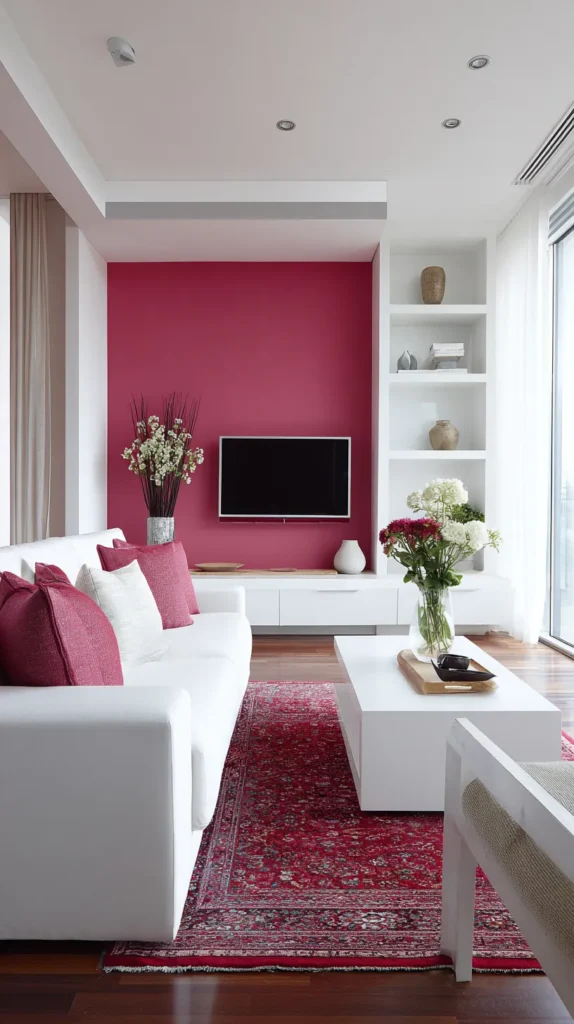
A more saturated, more contemporary version of the palette — deep rose pink on one feature wall, bright white on the remaining three walls, white upholstery, and rose accents in ceramics, flowers, and a single statement cushion — creates a living room of graphic boldness and contemporary energy that suits modern architecture with particular natural authority. The higher saturation of the rose pink creates a more dramatic contrast with the bright white than the softer blush versions of the palette, and the graphic quality of that contrast suits rooms with clean lines and minimal ornamentation.
Deep rose or coral pink paint — approximately three or four shades deeper than the pale blush of the foundation version — costs $20–$40 per tin and creates an accent wall of immediate visual authority. Pair with white upholstery — a white cotton or linen sofa — for the maximum contrast that makes both colours read at their most vivid and most beautiful simultaneously.
Styling tip: Keep the feature wall completely free of additional decoration — no art, no shelving, no mirror. A deep rose accent wall is itself a sufficient decorating statement and any additional element placed on it competes with the colour rather than supporting it. The wall is the decoration; it asks for nothing placed on it in order to do its job completely.
7. The Pink and White Pattern Mix
Budget: $150 – $700
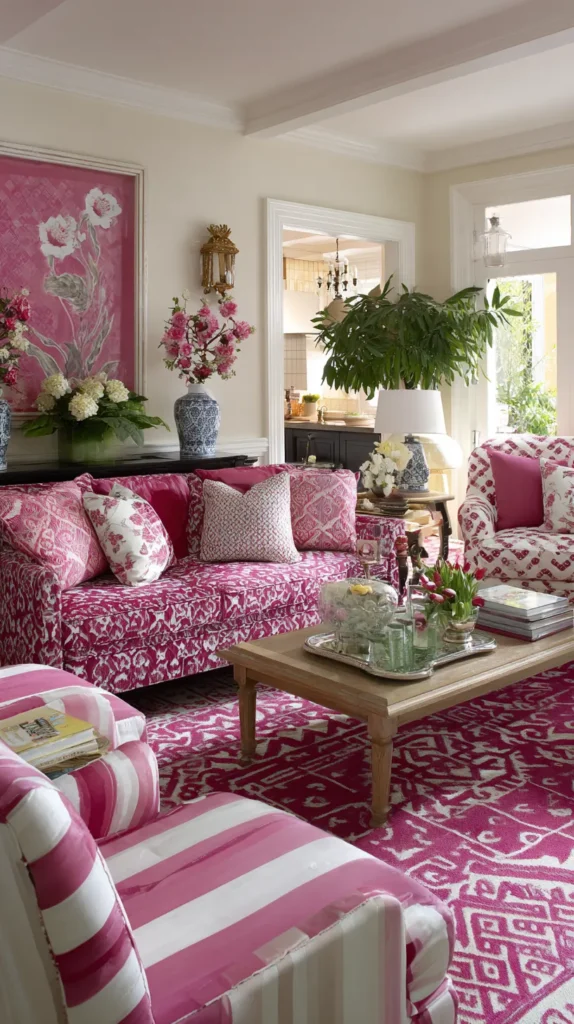
A living room in which multiple patterns in the pink and white palette — geometric, floral, stripe, spot, and abstract — are mixed together across the upholstery, cushions, and accessories creates a room of visual richness and layered pattern interest that single-pattern or plain schemes cannot achieve. The constraint of the two-colour palette — everything in pink and white — is what makes the pattern mix work, because the shared palette overrides the differences between the patterns and creates a room that reads as complex and collected rather than busy and competing.
The key to successful pattern mixing in pink and white is varying the pattern scale — a large-scale floral beside a small geometric beside a medium stripe creates visual hierarchy and prevents any single pattern from overwhelming the others. All patterns at the same scale create a visual density that is overpowering; varied scales create a layered complexity that rewards extended looking.
Styling tip: Include at least two plain elements in a pattern-mixed pink and white room — a plain pink cushion among the patterned ones, a plain white wall among the decorated surfaces — to give the eye the relief it needs between pattern instances. The plain elements are not neutral fillers; they are active participants in the composition that make the patterned elements around them more vivid and more readable by contrast.
8. The Pink and White Scandi-Influenced Room
Budget: $150 – $700
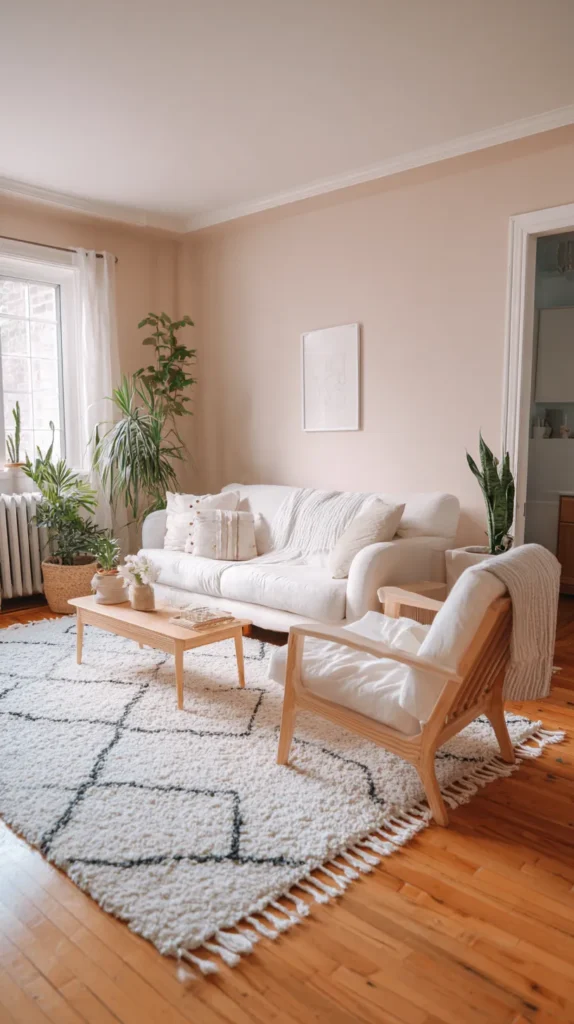
The Scandinavian interpretation of the pink and white palette — pale blush walls, white painted timber furniture, natural wood accents, simple geometric textiles in pink and white, and a generally uncluttered, spare aesthetic that communicates functional beauty rather than decorative abundance — creates a living room of extraordinary calm and clarity. The Scandi approach to pink and white strips the combination back to its most essential qualities — warmth and light — and expresses them through simplicity rather than through accumulation.
White painted timber furniture — a white oak coffee table, white-painted shelving, a white wooden bench — suits the pale blush walls of the Scandi pink and white room with particular natural logic. The white painted timber provides a warmth that cold, lacquered white cabinetry lacks, and the grain of the timber visible through the paint connects the room to the natural world in a modest, understated way that suits the Scandi sensibility completely.
Styling tip: Use candles as the primary atmospheric lighting element in a Scandi pink and white living room — the combination of pale blush walls and warm candlelight creates an evening room of extraordinary warmth and intimacy that perfectly expresses the Scandinavian concept of hygge. Candles in white ceramic holders and pink wax pillar candles provide light that flatters the pale palette in a way that no electric fitting entirely replicates.
9. The Vintage Pink and Aged White Room
Budget: $100 – $600
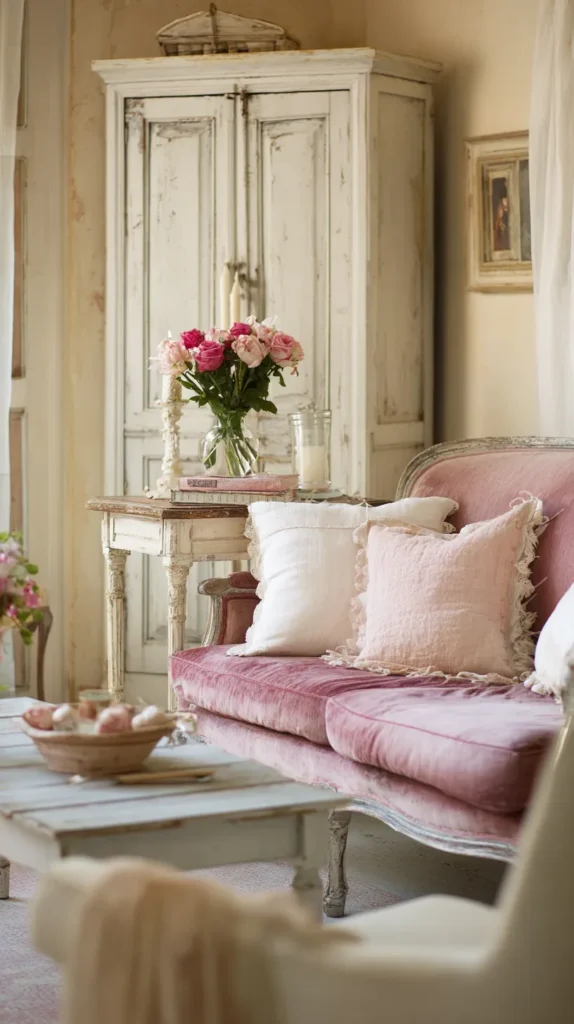
A living room furnished with vintage and antique pieces in faded pink and aged white — a worn rose velvet armchair, aged white-painted furniture with distressed edges, a faded floral rug in pale pink and cream, antique white ceramic pieces, and vintage pink glass vessels — creates the most romantically beautiful and the most specifically time-worn version of the palette. The aged quality of the pieces communicates that the combination has been loved rather than chosen, which is always the most flattering possible origin story for any decorating palette.
Charity shops, antique markets, and second-hand furniture dealers provide the best source material for this version of the palette — the fading and wear that reduces the commercial value of vintage upholstery is precisely the quality that gives it its earthy, settled aesthetic value in an aged pink and white scheme. A faded rose velvet cushion from a charity shop is often more beautiful than a brand new blush velvet equivalent.
Styling tip: Mix the aged and distressed pieces with one or two very simple contemporary elements — a clean white ceramic vase, a modern table lamp with a white shade — to prevent the vintage accumulation from reading as nostalgic rather than considered. The contemporary pieces communicate that the vintage choices are deliberate aesthetic decisions rather than an inability to update, and they give the room a quality of being genuinely lived-in in the present rather than preserved from the past.
10. The Pink Painted Furniture and White Walls
Budget: $50 – $300
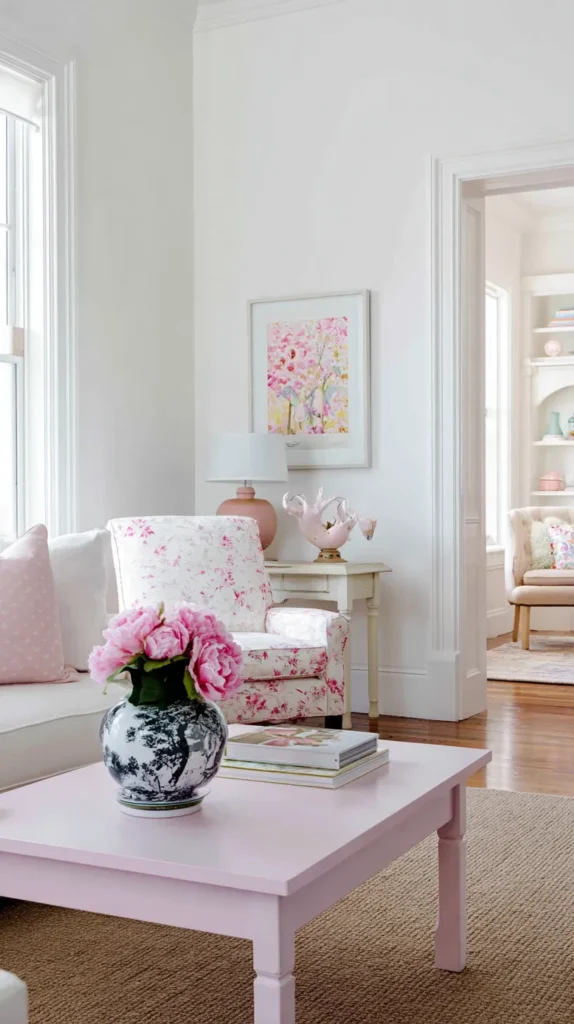
A living room with white walls and white upholstery given its pink character through painted furniture — a blush-painted console, a rose-painted bookcase, a pale pink coffee table, a pink-painted side table — creates the most easily updated and the most personally characterful version of the palette available. The painted furniture approach allows the pink to be introduced, adjusted, and changed at will — chalk paint on a piece of furniture is a completely reversible decorating decision that costs less than a set of cushions and creates a more significant visual impact.
Chalk paint in pink tones — Annie Sloan’s Antoinette, Frenchic’s Rosie, Rust-Oleum’s Blush — costs $15–$30 per tin and covers most furniture pieces in two coats. A painted coffee table or side table in a blush or rose tone creates an immediate focal point of colour and personality in an otherwise white room — it anchors the pink and white palette in a functional piece rather than a purely decorative element, which gives the colour choice a practical legitimacy that purely decorative applications sometimes lack.
Styling tip: Paint furniture in tones of pink that are slightly deeper than the pink cushions or accessories in the room — the furniture piece benefits from a slightly more saturated tone than the textiles because its hard surface reflects light differently from fabric. A painted table that is the same tone as the surrounding cushions will read as slightly pale and slightly washed-out; one that is marginally deeper will read as exactly right.
11. The Pink and White Classic English Room
Budget: $200 – $1,200
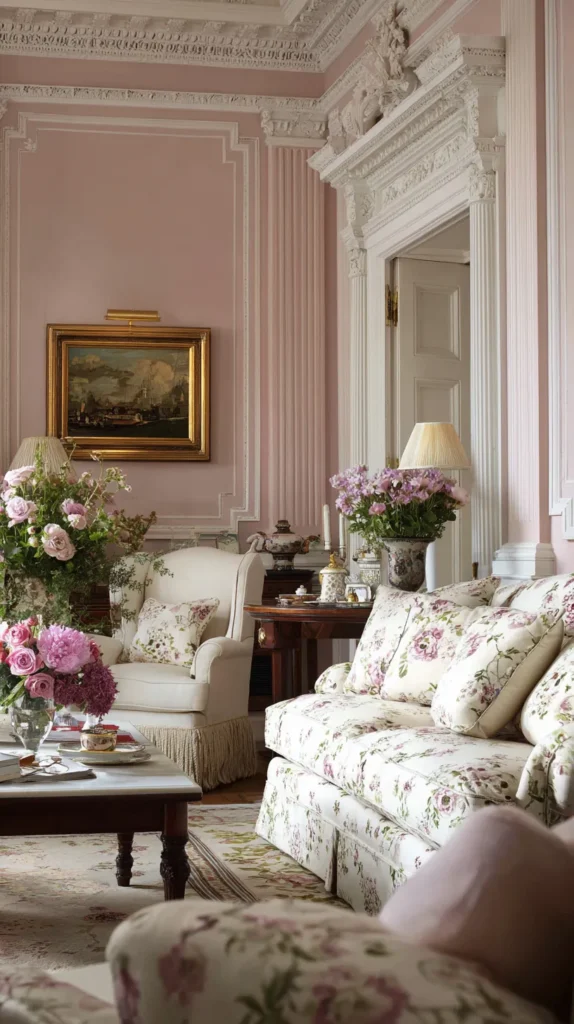
The English country house interpretation — dusty pink walls, white painted architectural detailing (coving, dado rail, fireplace surround, skirting), floral upholstery in pink and white on a traditional sofa form, white ceramic table lamps with pink shades, botanical prints in cream and white frames, and a Persian rug with pink in its palette — creates the most historically rooted and the most architecturally specific version of the pink and white combination. It suits Victorian and Georgian rooms with original architectural features in a way that more contemporary versions of the palette do not.
The architectural detailing is the defining quality of the English country house pink and white room — the white coving, the white fireplace, the white dado rail all create a framework of crisp white geometry within which the dusty pink walls appear as an enveloping, warm-toned backdrop rather than as a colour choice. The white architecture does the structural work; the pink walls provide the warmth.
Styling tip: Choose a dusty, greyish pink rather than a clean or warm pink for the English country house version of the palette — the dusty quality references the faded, slightly aged pinks of Victorian and Edwardian wallpapers and gives the room the settled, unhurried quality that the English country house aesthetic is built on. A bright or clean pink against white architectural detailing reads as contemporary; a dusty, greyed pink reads as genuinely period-appropriate.
12. The Pink and White Coastal Room
Budget: $100 – $500
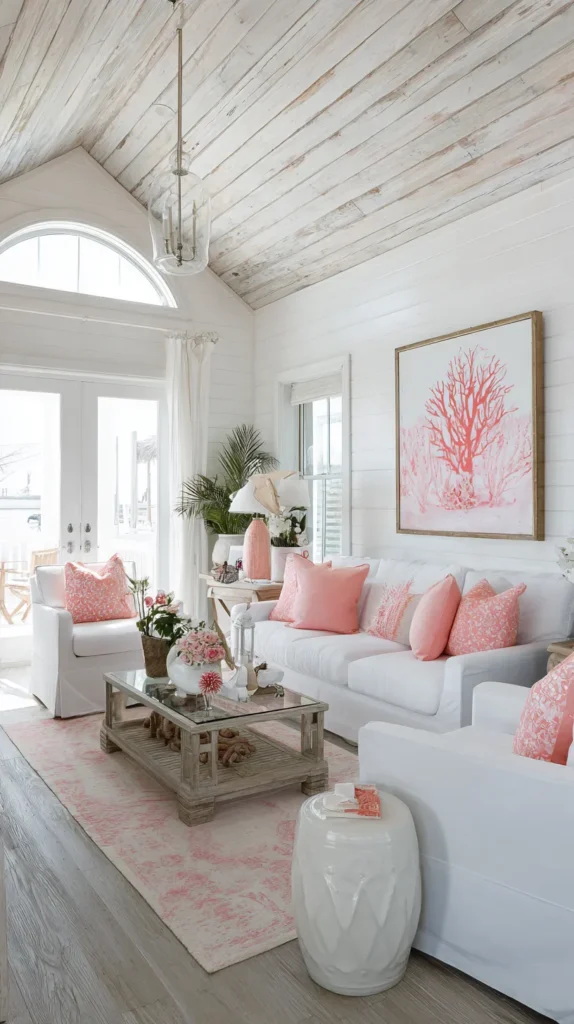
A coastal interpretation of the pink and white palette — white shiplap or tongue-and-groove wall cladding, pale blush or coral cushions, white cotton upholstery, natural rope and wicker accessories, and a pink and white stripe textile as the connecting pattern — creates a living room of breezy, relaxed, coastal warmth. The coastal version of the palette draws the pink toward the warm coral and sand end of the spectrum and keeps the white clean and bright rather than warm and aged — the overall effect is of a beach house where the morning light is always good and the afternoon is always warm.
White cotton slipcovers on an existing sofa cost $60–$150 and transform a dark or neutral piece into the clean white coastal foundation immediately. Coral or warm blush cushions cost $15–$40 each and introduce the pink element at the most flexible and the most easily updated level. Natural rope accessories and wicker pieces connect the palette to the coastal material vocabulary without introducing additional colour.
Styling tip: Keep the decorative objects in a coastal pink and white room to a minimum — shells and sea glass in a clear glass bowl, a single large coral piece, driftwood as an accessory. The coastal aesthetic is at its most beautiful when it is uncluttered, and a pink and white coastal room benefits from more space and more light and less decoration than most other versions of the palette.
13. The Pink and White Maximalist Floral Room
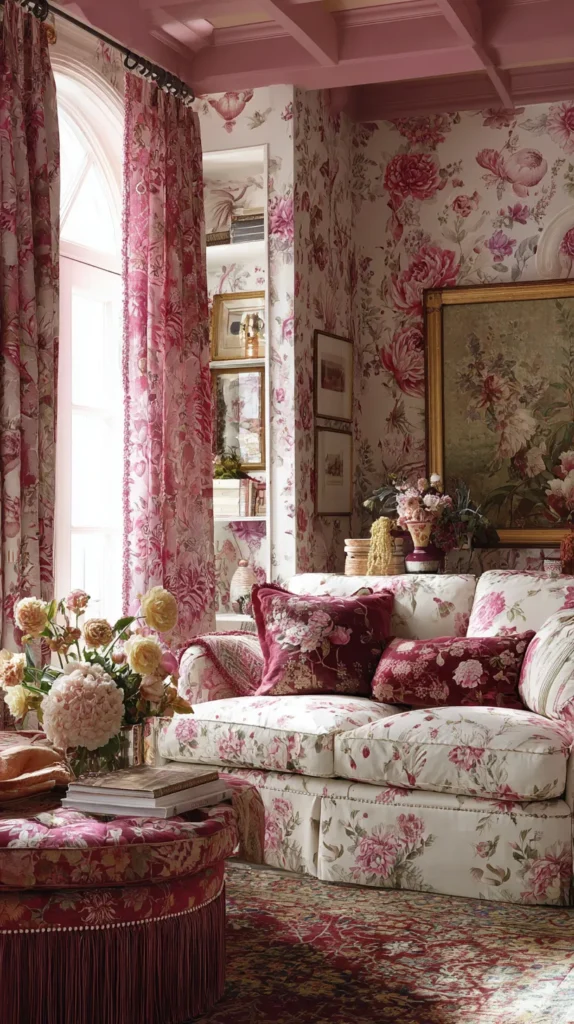
Budget: $400 – $2,500
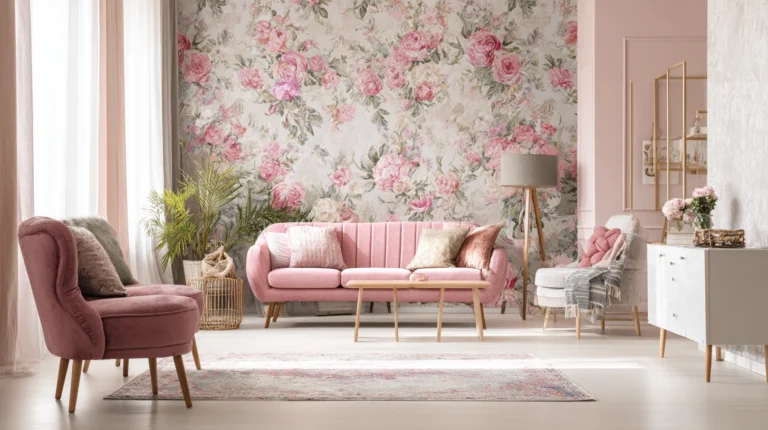
Every surface contributing its version of the pink and white floral palette simultaneously — pink floral wallpaper on all four walls, white upholstery with pink floral cushions, pink floral curtains, a floral rug in pink and cream, and fresh flowers in every available vessel — creates a living room of extraordinary botanical abundance that is the most romantically beautiful and the most specifically committed version of the pink and white combination available. The maximalist floral room requires complete confidence and complete consistency of palette — every pink must share the same tonal family, every white must share the same warmth — but it rewards that consistency with a room of genuinely memorable beauty.
The maximalist pink and white floral room draws from the great tradition of the English floral interior — the rooms of houses like Colefax and Fowler where floral abundance, pale walls, and the confident combination of multiple pattern scales were understood as expressions of the highest domestic sophistication. Referencing that tradition honestly and executing it with genuine quality creates rooms that are among the most beautiful available in any decorating style.
Styling tip: Use varying scales of floral pattern — a large-scale wallpaper pattern with a medium-scale curtain fabric and a small-scale cushion print — for a maximalist floral room with genuine visual hierarchy rather than competing pattern instances of equal scale. The scale variation is what allows multiple florals to coexist without fighting and what creates the layered, collected quality that makes the maximalist floral interior feel abundant rather than chaotic.
14. The Pink and White Bathroom-Influenced Living Room
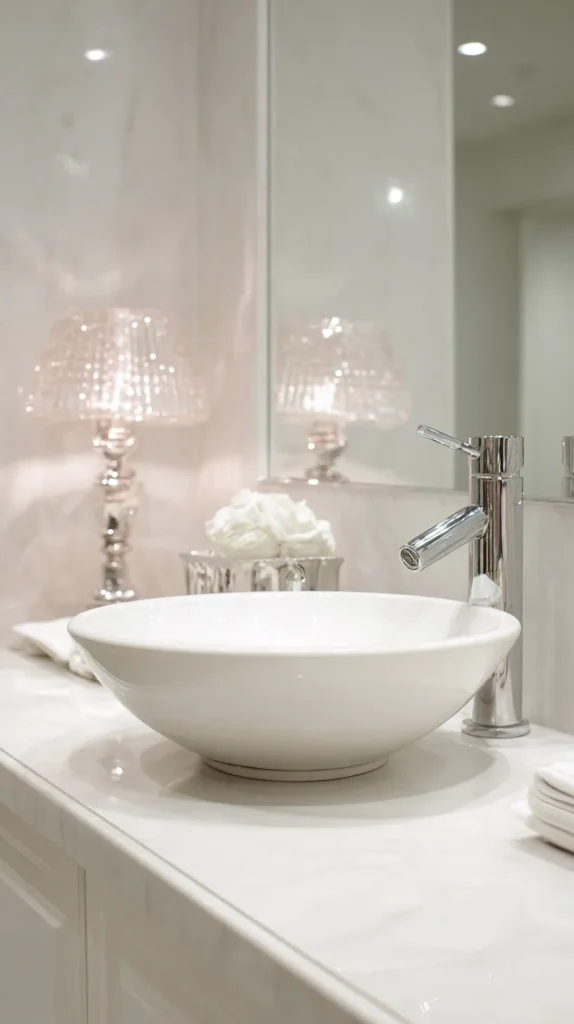
Budget: $150 – $700
A living room that borrows the clean, refreshing qualities of a beautifully designed bathroom — white walls, white ceramic accessories, pink glass vessels, marble surfaces, and a general atmosphere of clean, crisp organisation — creates the most specifically fresh and the most specifically clean version of the pink and white palette available. The bathroom-influenced living room communicates that cleanliness and clarity are as valued in the living space as in the washing space — that the quality of fresh simplicity is worth bringing into every room of the home.
White ceramic vases and bowls, pink glass candleholders, a white marble tray on the coffee table, and folded white linen throws create the bathroom-influenced aesthetic through object and material selection rather than any structural change. The objects themselves communicate the aesthetic — their cleanness, their simplicity, and their material quality do all the decorating work the combination requires.
Styling tip: Use white flowers only in the bathroom-influenced pink and white living room — white peonies, white roses, white cosmos — for a floral element that reinforces the freshness and clarity of the aesthetic without introducing a separate colour consideration. The pink of the palette is carried by the glass, the ceramics, and the textiles; the flowers provide the white that lifts and brightens the whole arrangement.
15. The Monochromatic Pink and White Tonal Room
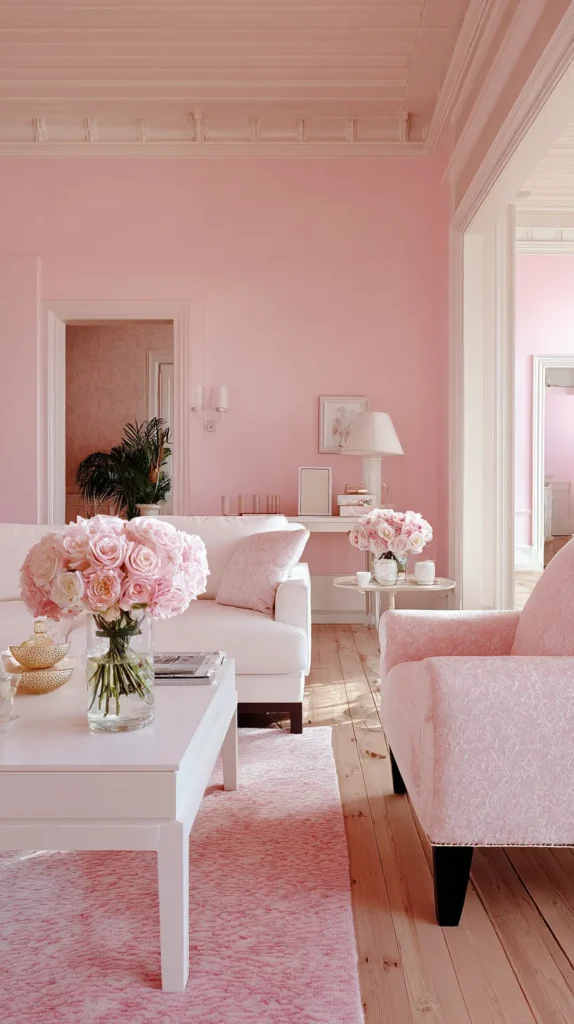
Budget: $200 – $1,000
A living room in which multiple tones of pink and multiple tones of white are layered across every surface — from the palest barely-there blush through dusty rose to deeper warm pink, and from the warmest ivory through cream to the brightest white — creates a room of extraordinary tonal complexity within the most restricted possible colour palette. The monochromatic approach is not about using two colours but about using an entire spectrum of a single colour family, and the pink and white spectrum is wide enough to create a room of genuine visual richness from a single hue.
The tonal variation within the palette — pink walls against a paler pink ceiling, blush upholstery beside rose cushions beside dusty pink throws, warm white woodwork beside cream accessories beside bright white flowers — creates the visual interest and the depth that a single-tone, flat-colour application of the same palette entirely lacks. The room never looks the same in two different lighting conditions, and the continuous tonal variation rewards attention in a way that simpler colour schemes do not.
Styling tip: Anchor a monochromatic pink and white tonal room with one element of genuine material contrast — a dark timber floor, a natural jute rug, a dark-leafed plant in a terracotta pot. The single contrast element is what prevents the all-pink-and-white room from floating into a sweetness that even the most confident tonal layering cannot entirely prevent without some grounding from outside the palette. The contrast is not a contradiction — it is the full stop that gives every other element in the room its proper weight and its proper place.
Pink and white at their best create living rooms of a particular kind of clean, classic beauty — rooms that are immediately welcoming, consistently flattering to the people within them, and genuinely beautiful in every quality of light from the brightest summer morning to the warmest candlelit evening.
The range of interpretations available within these two colours is wider than most people expect and richer than most rooms explore. Choose the version that suits the room’s architecture and your own instincts, commit to it with enough consistency and enough generosity of application, and the clean classic quality will follow as naturally as the light itself.