15 Cozy Coastal Cottage Design Tips
A coastal cottage is not a beach house styled with nautical props — it is a home that feels as though it belongs near the sea, built from materials that are honest and worn, colours that are drawn from the natural coastal palette, and a quality of light that feels genuinely connected to the outdoor environment rather than insulated from it.
The coziness comes from the same quality that makes old coastal buildings so appealing: the evidence of weather, time, and genuine human habitation rather than the uniformity of anything recently designed to look coastal.
The fifteen design tips below guide every aspect of achieving the cozy coastal cottage aesthetic — from the wall colours and textiles to the lighting and the small everyday objects that give a home its specific character. Each includes a practical tip to help you apply the principle in the home you actually have rather than an idealised version of a sea-view property.
1. Choose a Coastal Colour Palette That References Nature, Not Merchandise
Budget: $30 – $150 per room for paint
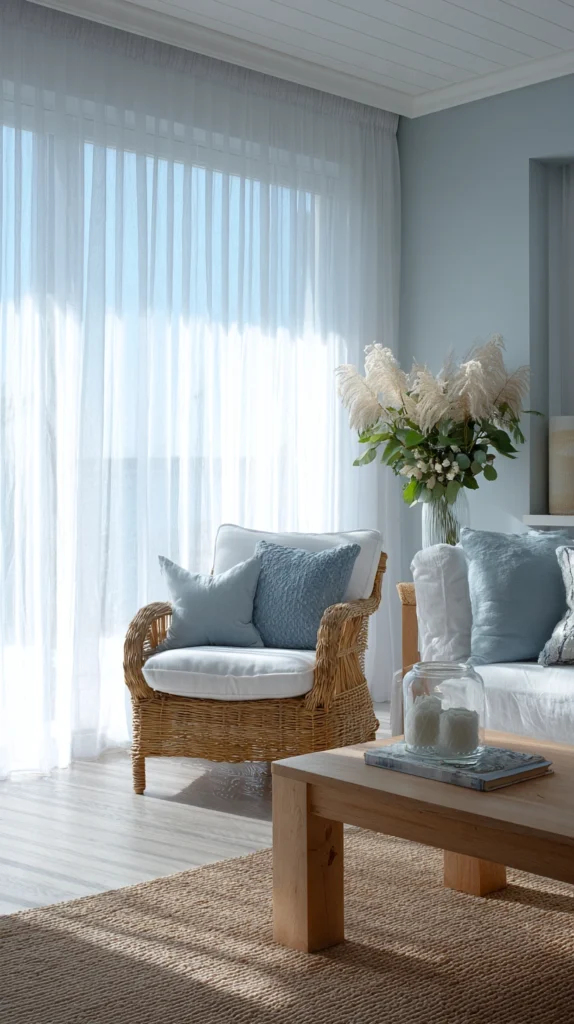
The authentic coastal colour palette is not the bright navy and white of a nautical gift shop. It is the softer, more complex tones of the actual coast — the blue-grey of sea mist, the warm white of sun-bleached timber, the sandy beige of dried seagrass, the soft sage of coastal foliage, and the pale terracotta of water-worn stone. These colours feel like the sea without screaming it, and they work together with the same ease that natural materials always produce in combination.
A coastal palette might combine walls in Farrow and Ball Mizzle or Setting Plaster with trim in White Tie, complemented by stone-washed blue linen soft furnishings and natural seagrass flooring. The palette has warmth and depth that the primary blue-and-white combination lacks, and it suits every room in a coastal home — from bedroom to kitchen to bathroom — with the flexibility that a single-note nautical palette never provides.
Design tip: Test your chosen coastal palette by bringing large paint swatches home and observing them through a full day of natural light before committing. Coastal colours often shift significantly between morning, afternoon, and evening light — a colour that reads as perfect sea-blue at midday may appear grey-green at dusk and almost white on an overcast morning. The right coastal colour should look beautiful in every light condition the room experiences, not only in the flattering afternoon moment when you first fell in love with it.
2. Layer Natural Textiles Throughout
Budget: $50 – $300 per room
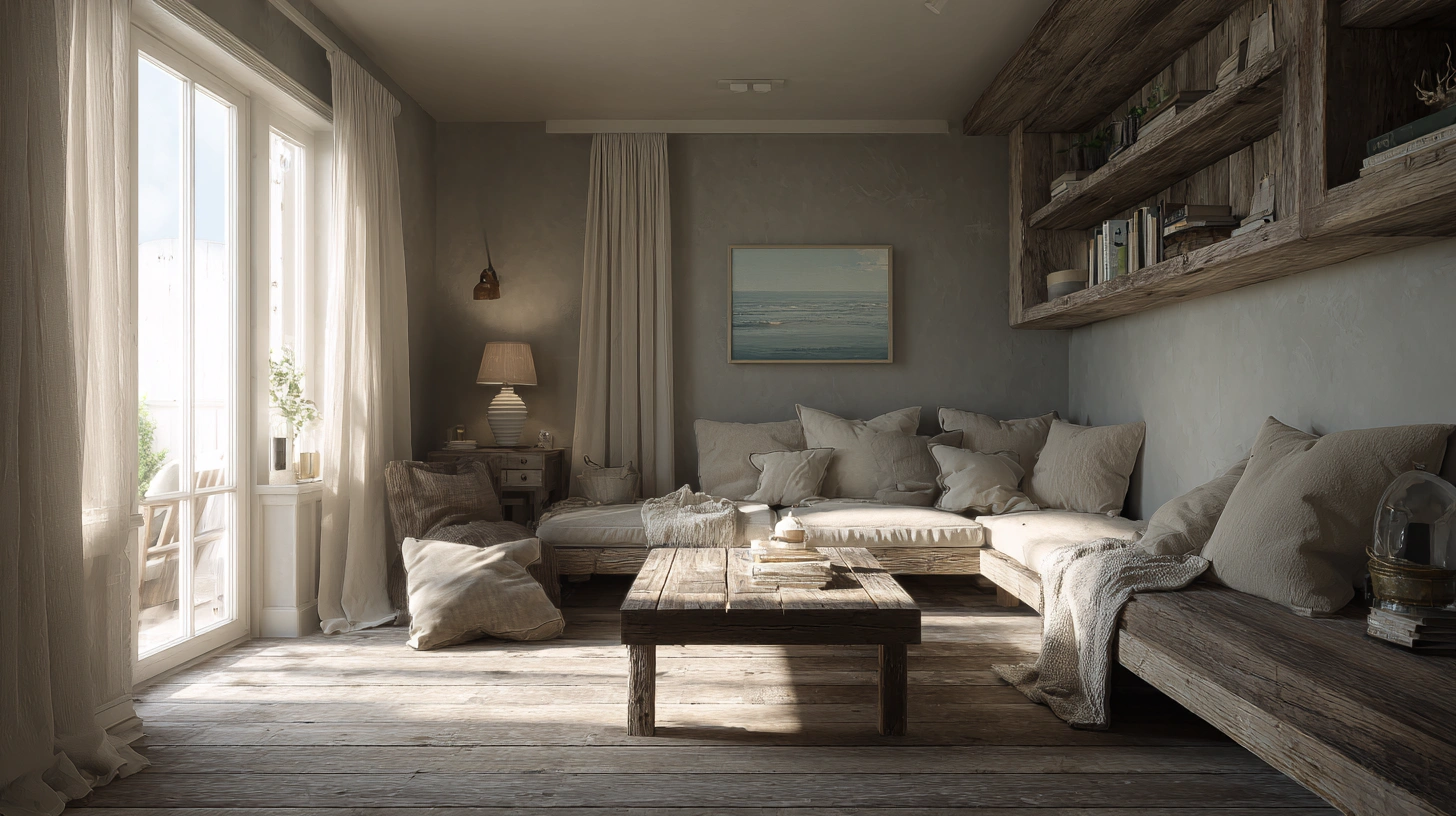
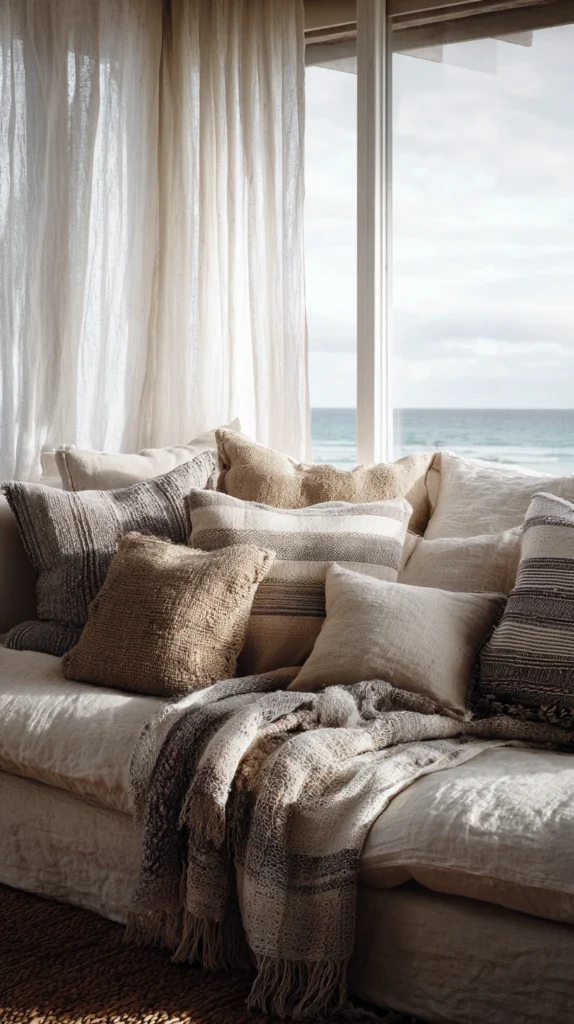
The textile palette of a cozy coastal cottage is built from natural fibres in their most relaxed, most lived-in state — stone-washed linen, undyed cotton, rough-woven jute, and worn wool rather than anything synthetic, stiff, or hotel-smooth. The textiles should feel as though they have been washed a hundred times and are considerably more comfortable for it. Layering multiple textures within the same neutral colour palette creates a richness that is entirely different from colour variety and that suits the coastal cottage aesthetic more completely.
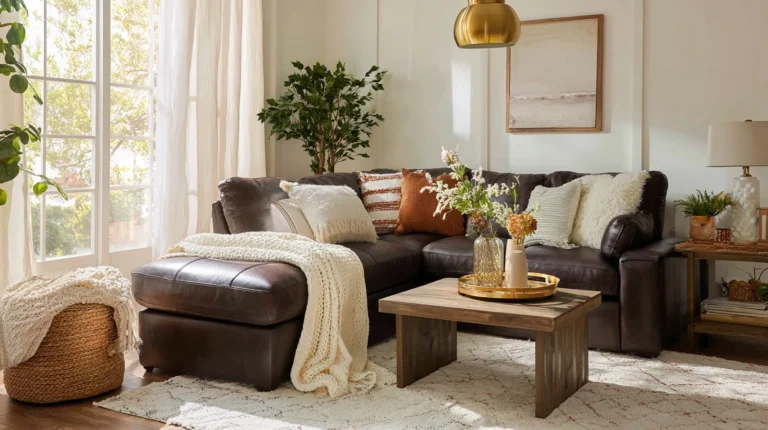
A sofa dressed with a stone-washed linen slipcover, layered with a cotton waffle throw, two linen cushions in different weaves, and a chunky knit pillow costs $120–$300 in textiles and creates an immediate quality of warmth and lived-in comfort that no amount of additional furniture or wall decoration achieves as effectively. Every fabric surface in the room should be touchable and inviting — the coastal cottage is always built for comfort before appearance.
Design tip: Wash all new textiles before using them in a coastal cottage interior — ideally twice. The stone-washed, slightly rumpled quality that makes linen and cotton look genuinely coastal rather than freshly purchased develops through laundering rather than through design. A new linen throw used straight from the packaging looks stiff and over-crisp. The same throw washed twice and draped casually over a sofa arm looks as though it has always been exactly there.
3. Use Reclaimed and Driftwood-Finish Timber
Budget: $50 – $500 depending on scale
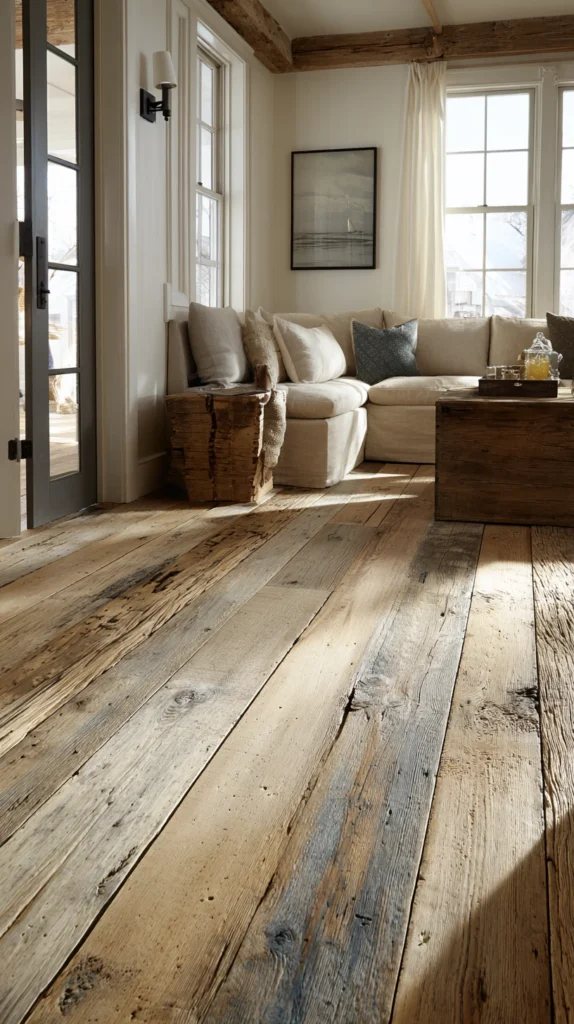
Reclaimed timber — in flooring, furniture, shelving, and architectural details — brings the most specifically coastal texture available into any interior. The silvered, weathered surface of timber that has been exposed to the elements references the driftwood, the sun-bleached fishing boat, and the worn jetty plank in a way that deliberately aged or distressed new timber never quite replicates. The genuine material carries the story that a facsimile merely suggests.
A reclaimed timber floating shelf costs $30–$80 from salvage yards. A reclaimed floorboard running length for a small room costs $15–$30 per square metre. A furniture piece in reclaimed oak or pine — a coffee table, a dining bench, a bedside table — costs $80–$400 depending on size and source. The uneven surface, the nail holes, the tonal variation across the boards — these qualities are the design feature, not the material’s limitation, in a coastal cottage interior that understands what it is doing.
Design tip: Do not seal or varnish reclaimed timber flooring and furniture to a high shine in a coastal cottage. A flat, matte oil finish preserves the wood and highlights its natural grain and texture without adding a surface that disconnects the material from its character. A high-gloss varnish on genuinely old, characterful timber is one of the most consistently counterproductive design decisions available in any interior aesthetic that values authenticity.
4. Let in Maximum Natural Light
Budget: $0 – $200
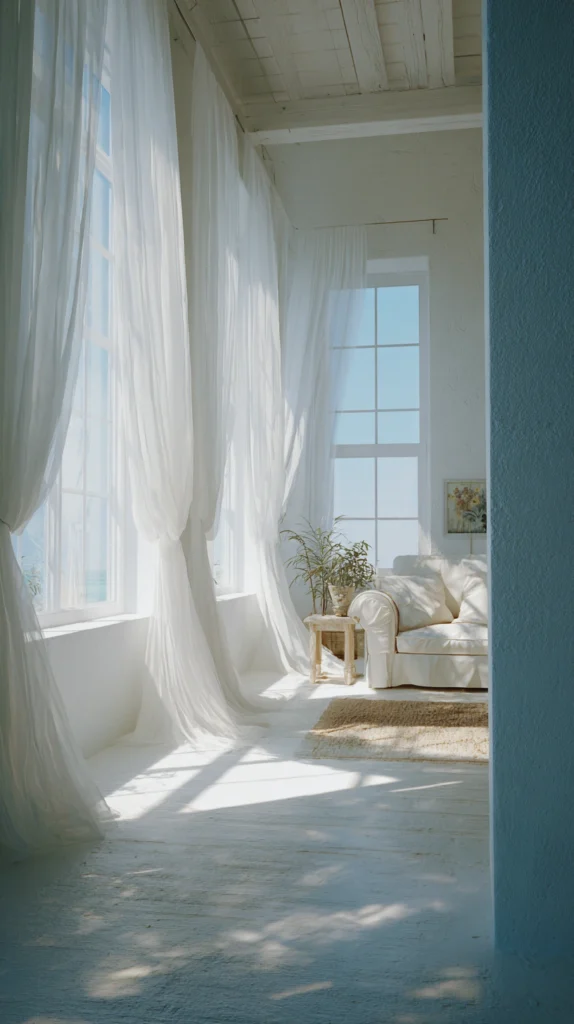
The quality of light in a coastal cottage should feel connected to the natural light quality of the coast itself — bright, moving, and slightly different at every hour of the day. Achieving this indoors is primarily about removing the obstacles that prevent natural light from entering and reflecting freely through the space rather than about adding artificial light to compensate for the ones that remain. Sheer curtains rather than heavy drapes, pale wall colours, and mirrors positioned to bounce natural light further into the room all contribute to the specific coastal light quality that makes these interiors so appealing.
Replace heavy curtains in south or east-facing rooms with lightweight linen voile panels ($20–$60 each) that filter rather than block light. Remove net curtains entirely where privacy allows — clear glass always produces better light quality than filtered glass. Position a large mirror on the wall opposite the main window to reflect daylight into darker corners of the room ($30–$150 for a suitable coastal-frame mirror). The combination of these changes costs $50–$200 and produces a measurable improvement in the quality and quantity of natural light in most rooms.
Design tip: Keep windowsills completely clear of objects — a clear windowsill allows light to enter the room from the full height of the window rather than being partially blocked at the base by plant pots, ornaments, or stacked books. A clear windowsill is one of the simplest and most cost-free improvements to room light quality available in any home, and in a coastal cottage interior where the quality of natural light is as important as any decorating decision, it is one of the most impactful.
5. Add Wooden Tongue-and-Groove Panelling
Budget: $100 – $500 per room
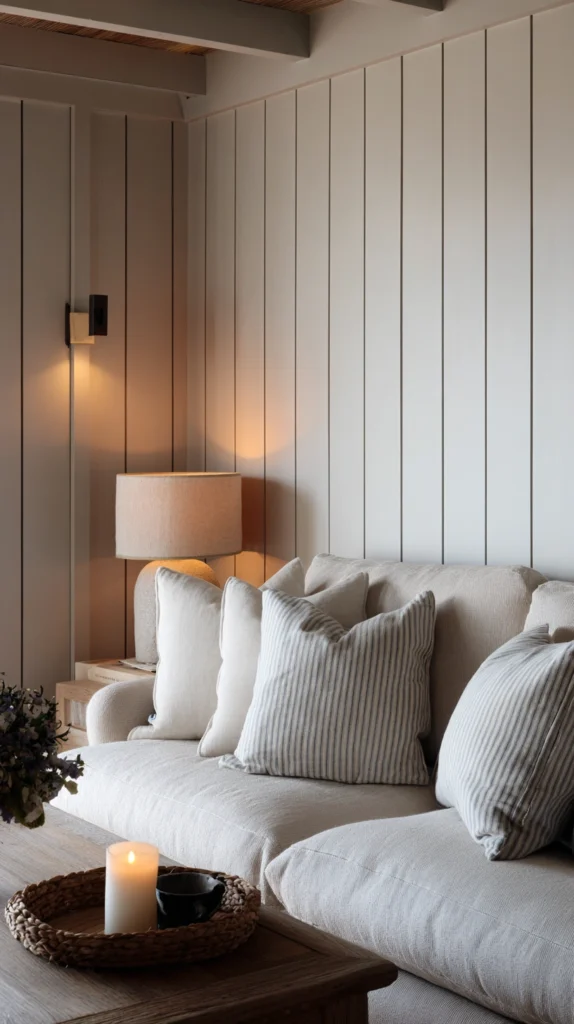
Tongue-and-groove timber wall panelling — painted in the wall colour or in white below a picture rail, across a single feature wall, or throughout an entire room — is the most characteristically coastal cottage architectural detail available for a domestic interior. The horizontal or vertical lines of the boards reference the weatherboarded exterior of coastal properties while the painted finish softens the industrial quality of unpainted timber into something warm, domestic, and specifically of the cottage tradition.
MDF tongue-and-groove panelling costs $1.50–$3 per linear metre from timber merchants. A bathroom wall fully panelled to dado height in a standard room requires approximately 15–20 linear metres at $22–$60 in materials. Paint in an eggshell finish in the room’s wall colour or in white for a two-tone treatment that creates a visual horizon line across the room at dado height — the two-tone wall with panelling below and a different colour above is one of the most effective and most specifically coastal cottage decorating treatments available in any room format.
Design tip: Install tongue-and-groove panelling vertically rather than horizontally in rooms with low or standard ceiling heights. Vertical boards draw the eye upward and create the impression of greater ceiling height — a valuable effect in the compact, cottage-scale rooms that many coastal homes feature. Horizontal boards create the opposite effect and suit rooms with genuinely high ceilings where a slight visual reduction of apparent height produces a more intimate, cottage-appropriate proportion.
6. Choose Furniture That Looks Collected Rather Than Matched
Budget: $100 – $800 per room
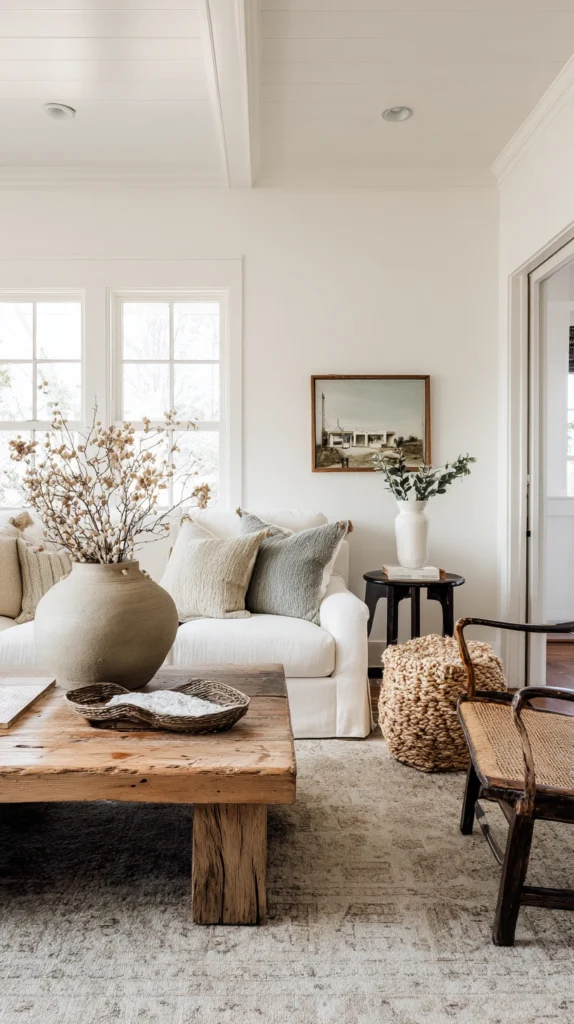
A coastal cottage furnished entirely from a single furniture collection looks like a showroom rather than a lived-in home. The authentic coastal interior accumulates furniture over time from different sources — a Victorian pine dresser beside a mid-century rattan chair, a simple painted wooden table with four mismatched chairs, a heavy oak bookcase beside a delicate wicker side table. The lack of matching is the point: it communicates that the home has been genuinely inhabited and furnished over time rather than styled in an afternoon.
Charity shops, car boot sales, antique markets, and online resale platforms are the most appropriate and most cost-effective sources for coastal cottage furniture — and they consistently produce the most characterful pieces at the lowest prices. A reclaimed pine dresser from a charity shop costs $40–$150. A wicker armchair from an antique market runs $30–$80. A simple painted wooden table from Facebook Marketplace costs $20–$80. The assembled room costs less than any equivalent from a furniture retailer and looks more genuinely coastal in every piece it contains.
Design tip: Unify a collection of mismatched furniture through paint — applying the same off-white chalk paint to multiple different furniture pieces at different heights and from different eras creates a visual consistency that ties the collected pieces into a coherent room without erasing the individual character of each item. The paint unifies the palette while the forms, proportions, and surface textures beneath the paint continue to provide the variety that makes the room interesting.
7. Display Found and Collected Objects
Budget: $0 – $50
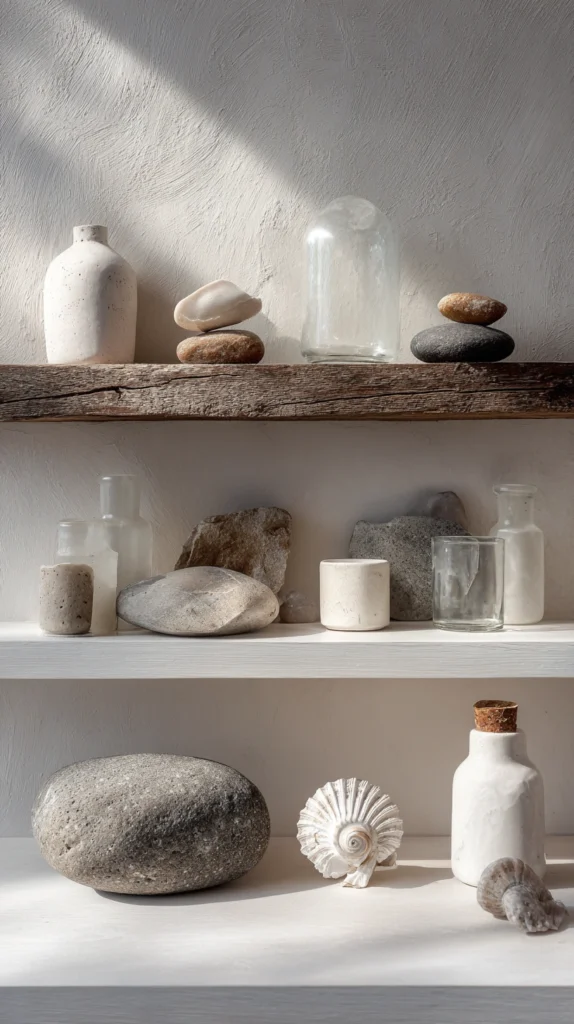
The shelves and surfaces of a coastal cottage tell its story through what is displayed on them — shells collected from specific beaches, sea glass gathered during specific walks, a driftwood piece found after a particular storm. These objects have a value that no purchased decorative object can replicate: they carry the specific memory of the place and the occasion of their finding. A coastal cottage decorated with found objects feels genuinely connected to the coast. One decorated with purchased coastal-themed ornaments feels like a holiday rental.
Display found objects in shallow ceramic bowls, glass apothecary jars, or on plain wooden shelves where their individual forms are clearly visible. Group by colour — all pale grey pebbles together, all sea glass in graduated tones from pale blue to deep green — or by origin, or simply by aesthetic quality. The selection and grouping of found objects is itself a form of design — it represents the specific aesthetic sensibility of the person who lives in the cottage and that personal quality is the one that no amount of purchased decoration produces.
Design tip: Resist the urge to clean and bleach found coastal objects to a uniform pristine state. The natural variation in colour, the slight irregularity of a hand-rolled sea glass edge, the barnacle scar on a beach stone — these are the qualities that make found objects worth displaying. A cleaned and bleached shell looks like a craft shop prop. A shell found on a specific beach and displayed with its natural character intact looks like what it is: evidence of a genuine connection to a specific place and moment.
8. Install Low, Warm Layered Lighting
Budget: $50 – $300 per room
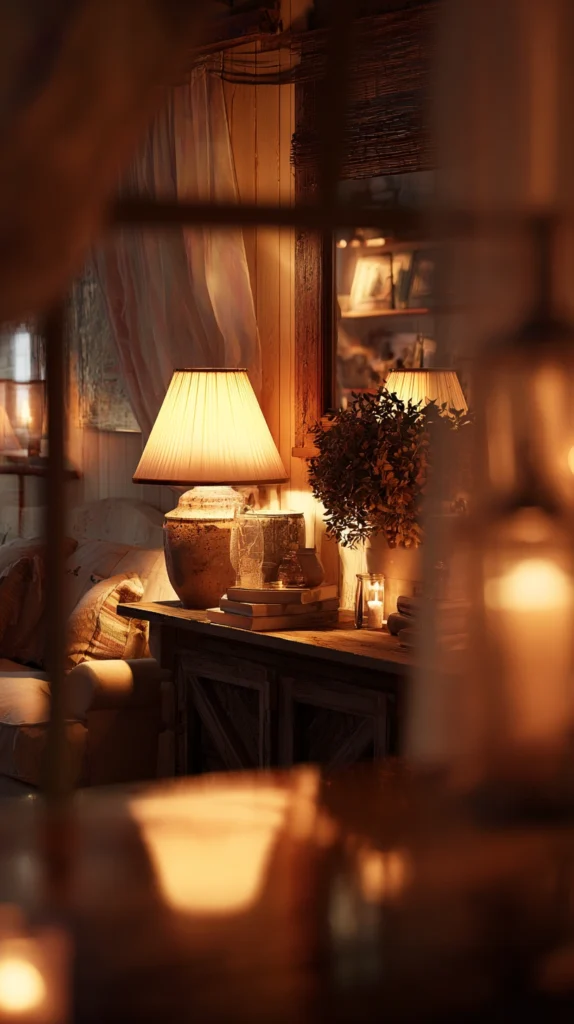
Coastal cottage lighting should feel like the last hour of an afternoon in a room with low ceilings, small windows, and a warm, slightly golden quality to every light source. This is achieved through layering — multiple light sources at different heights, all at warm white (2700K or below), with no single overhead source dominating the room’s character. A central overhead light used alone makes any cottage room feel like a kitchen. The same room lit from table lamps, floor lamps, and candles feels like a place where an evening could genuinely be spent.
A pair of table lamps in a ceramic or driftwood base ($30–$80 each) with a warm white bulb create the primary ambient lighting for a seating area. A floor lamp in a woven rattan or natural fibre shade ($60–$150) adds height variation to the light sources. Candles in glass holders ($5–$20 per set) provide the moving, warm light that no electric source fully replicates. All on simultaneously at low brightness, the three sources together produce the quality of coastal cottage evening lighting that makes a room feel genuinely warm and genuinely inhabited.
Design tip: Fit dimmer switches on every main room light in the coastal cottage — the ability to reduce overhead lighting to 30–40 percent of full output transforms the room’s evening atmosphere more completely than any other single electrical installation. A dimmable room can be adjusted for practical tasks at full output and for relaxed evening use at 30 percent — two entirely different atmospheres in the same space without any additional lighting investment beyond the $15–$30 dimmer switch installation.
9. Add a Working Fireplace or Log Burner
Budget: $500 – $3,000
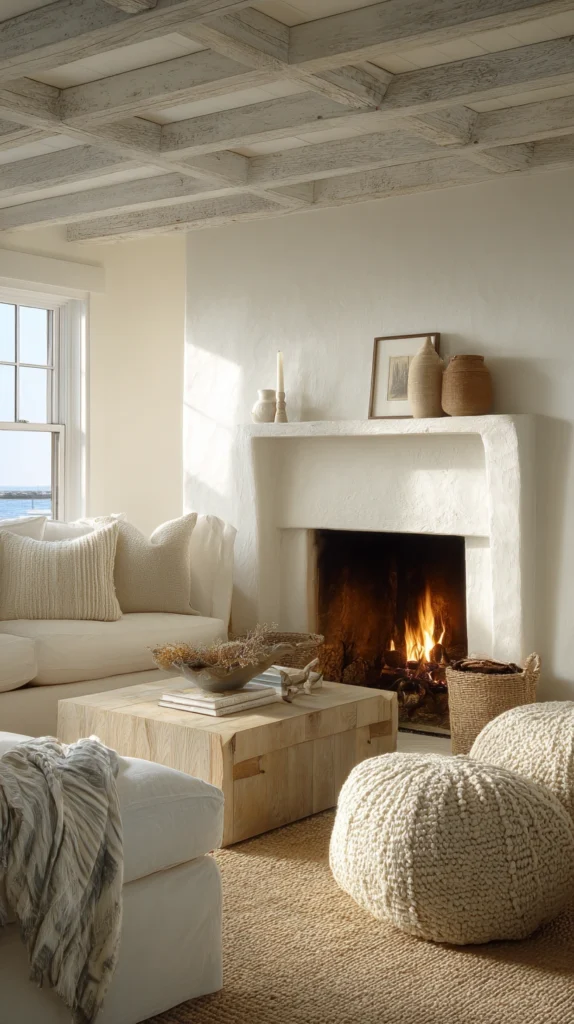
Nothing creates the cozy quality of a coastal cottage more completely and more immediately than a real fire — the crackling, the warmth, the smell of wood smoke, and the quality of firelight on walls and objects that no electric equivalent approaches. A coastal cottage without a working fire is merely decorated in a coastal style. One with a log burner or an open hearth is genuinely the kind of home that people do not want to leave on winter evenings.
A freestanding log burner installation costs $1,500–$3,000 including the stove, flue liner, and professional installation. A basket grate in an existing open fireplace costs $30–$80 and requires only the existing chimney to be swept ($60–$100) before use. A electric log-effect fire ($200–$800) provides the visual quality of a fire without the heat or the installation cost — a reasonable compromise for a room where an actual fire is not practical but the aesthetic of a hearth surround is essential to the coastal cottage character of the room.
Design tip: Style the fireplace surround as the focal point of the room around which all furniture is arranged — the coastal cottage sitting room is always organised in relation to the fire rather than in relation to the television. Place the main seating to face the hearth, position candles and found objects on the mantelpiece, and hang the room’s most important art or mirror above the fireplace. The furniture arrangement that faces the fire rather than the screen is the one that creates the social, cozy quality the coastal cottage interior is designed to produce.
10. Use Seagrass, Jute, or Sisal Flooring
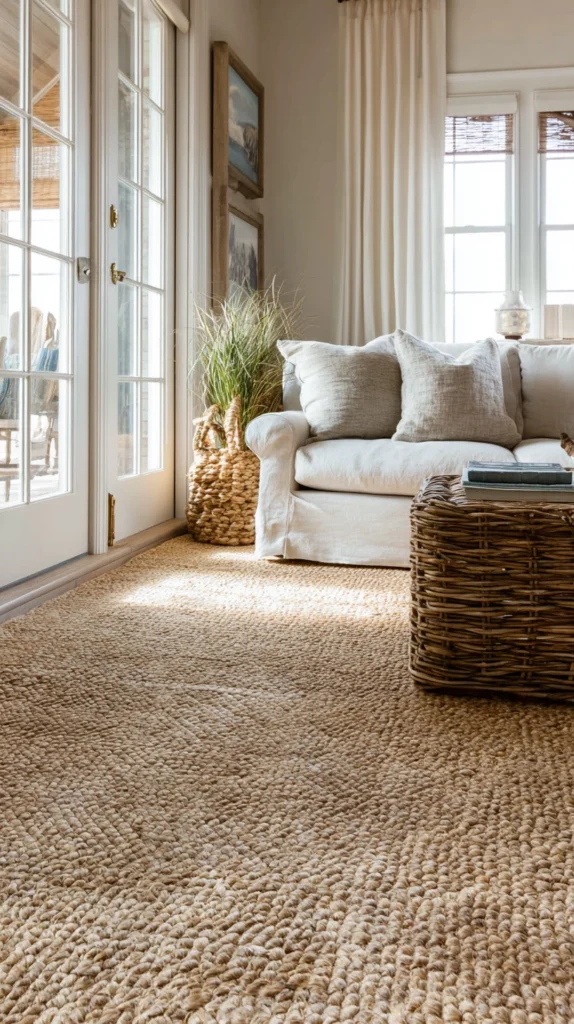
Budget: $25 – $80 per square metre installed
Natural fibre flooring — seagrass, jute, or sisal — is the single most appropriate hard floor covering available for a coastal cottage interior. The tightly woven, undyed natural surface references the basket weave, the rope, and the sailcloth of the maritime tradition without any literal nautical reference, and it works with every other natural material in the coastal palette in a way that laminate, vinyl, or tiled flooring never achieves regardless of their colour or pattern.
Seagrass carpet costs $25–$50 per square metre supplied and fitted. Sisal is slightly more durable at $30–$60 per square metre. Jute is the softest underfoot of the three natural fibres at $20–$40 per square metre but is less durable in high-traffic areas. All three suit bedroom, sitting room, and study applications. Use a quality underlay beneath any natural fibre floor covering to extend its working life and to provide the cushioned underfoot quality that natural fibre without underlay lacks entirely.
Design tip: Lay a large woven rug over natural fibre flooring in the main seating area rather than using natural fibre throughout and then placing a standard area rug on top. The layering of a flat-weave or kilim rug over seagrass creates the warm, textural floor arrangement that suits a coastal cottage sitting room best — and the rug can be changed seasonally while the more expensive natural fibre floor covering beneath it remains in place indefinitely.
11. Embrace Imperfection and Patina
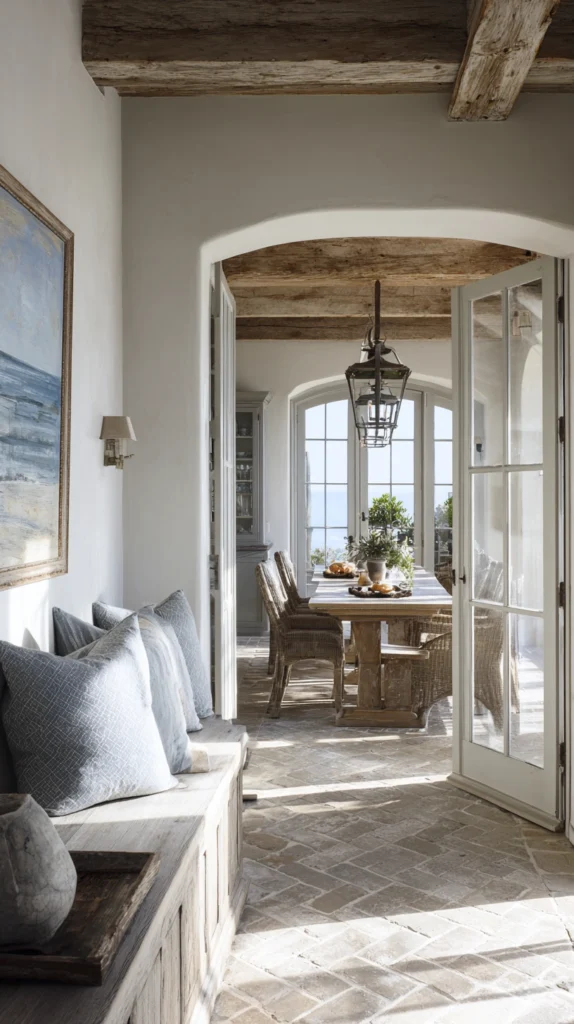
Budget: $0
The coastal cottage aesthetic is fundamentally built on the acceptance of imperfection — the cracked terracotta pot, the slightly uneven linen throw, the chipped enamel mug, the wonky shelf that has always been wonky and will never be fixed. These imperfections are not the cottage’s shortcomings. They are its character. The home that accepts and embraces its own imperfections communicates something that the perfectly renovated, spotlessly maintained interior can never convey: genuine habitation over time by real people who valued comfort over presentation.
Resist the instinct to replace objects that show age and use with pristine equivalents. The worn leather chair arm, the faded linen cushion, the slightly rusted candle holder — each of these carries patina that took years to develop and that a replacement purchased new lacks entirely. The coastal cottage of genuine character is always assembled over time from objects that have been used and kept rather than objects that have been purchased specifically to fill a designed space, and this quality cannot be bought at any price or replicated at any speed.
Design tip: When new items must be purchased for a coastal cottage interior, choose materials that age beautifully — genuine linen, untreated terracotta, natural timber, genuine leather, cast iron — rather than materials that simply maintain their appearance indefinitely. A new terracotta pot that weathers into mossiness within a season improves with time. A synthetic terracotta-look plastic pot that looks the same in twenty years as on the day it was bought contributes nothing to the accumulating character of the cottage interior that surrounds it.
12. Create a Reading Nook
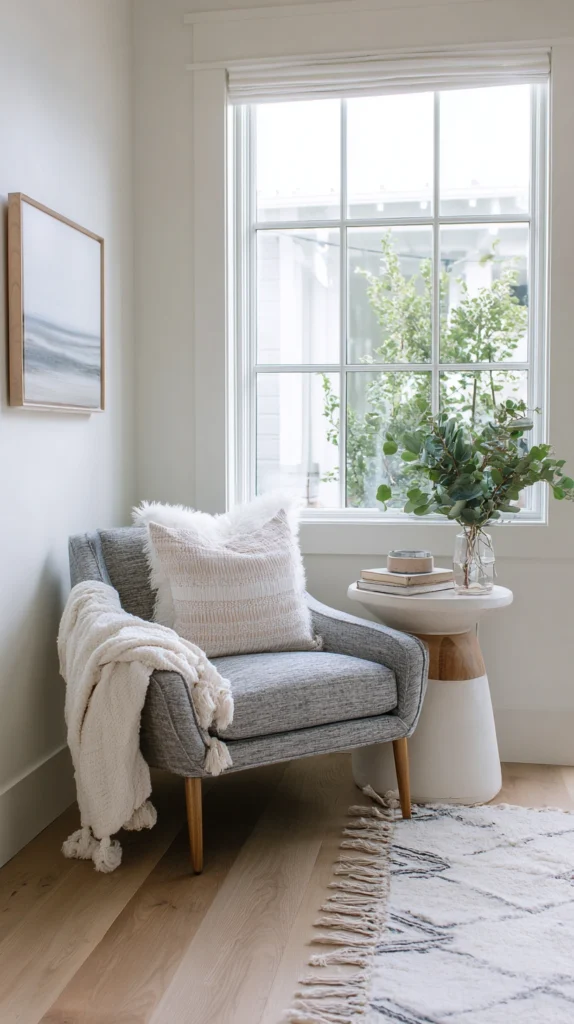
Budget: $80 – $400
Every cozy coastal cottage has a corner that is clearly meant for reading and spending long, quiet hours in — a deep window seat, an armchair wedged beside a bookshelf, a low alcove with a cushion and a lamp. The reading nook is the domestic equivalent of the sheltered bay on a cliff walk: a specific place where the conditions are slightly better than the surrounding environment and where the choice to stop and stay is completely justified. Its presence in the cottage interior signals that the home has been thought about in terms of how it is actually lived in.
A built-in window seat with a 10 cm foam cushion costs $100–$250 in materials. An existing alcove fitted with a shelf for books and a small plug-in wall light costs $30–$80. A comfortable armchair in a naturally lit corner with a side table and a floor lamp costs $150–$350 assembled from secondhand and new purchases. The reading nook requires only a comfortable place to sit, adequate light, a surface for a drink, and enough privacy from the main circulation of the room to feel like a defined retreat within the larger space.
Design tip: Position the reading nook beside a window rather than facing a blank wall — the view outward from a reading position, even if it is only a garden or a street, creates a quality of openness that a wall-facing seat lacks. In a coastal cottage, a window view — however modest — connects the interior to the outdoor environment that gives the entire aesthetic its rationale, and that connection is most directly and most pleasurably experienced from a reading nook that looks out rather than in.
13. Fill Shelves With Books and Meaningful Objects
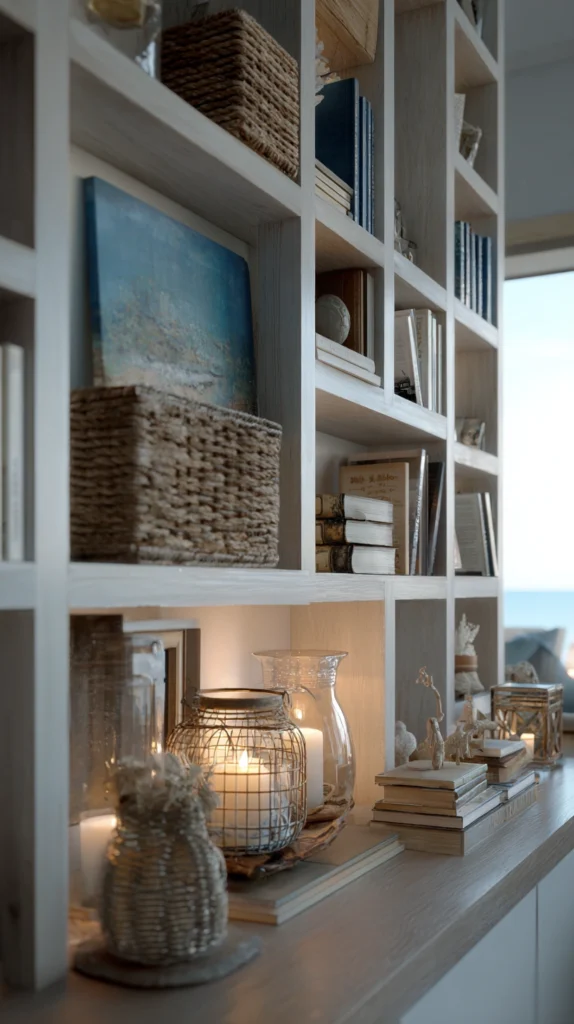
Budget: $0 – $100
The shelves and bookcases of a coastal cottage should look like the shelves of someone who reads and collects meaningful objects over time — not styled displays arranged by spine colour or object type, but genuine accumulations of things that have arrived in the home over years of living and have stayed because they mean something rather than because they look good. Books actually read and kept, a small piece of driftwood from a walk, a photograph in a simple frame, a shell, a postcard — each object a small piece of autobiography.
The style of shelf organisation that suits a coastal cottage is edited rather than themed — not the perfectly colour-coded bookshelf of a styled interior photograph, but a shelf where the books are organised by the logic of who put them there rather than by any external system of aesthetics. Add two or three meaningful objects per shelf length as breathing space within the book collection. Empty a shelf section completely if the other shelves are full — the empty section is not wasted space, it is visual rest.
Design tip: Mix horizontal and vertical book stacking within the same shelf — a few books lying flat as a surface beneath a small object, while the majority stand upright beside them. This variation in shelf stacking is the detail that makes a bookshelf look genuinely personal rather than arranged by a stylist following a system, and in a coastal cottage interior where authenticity is the overriding aesthetic principle, the personally organised bookshelf communicates that quality most directly of any surface in the room.
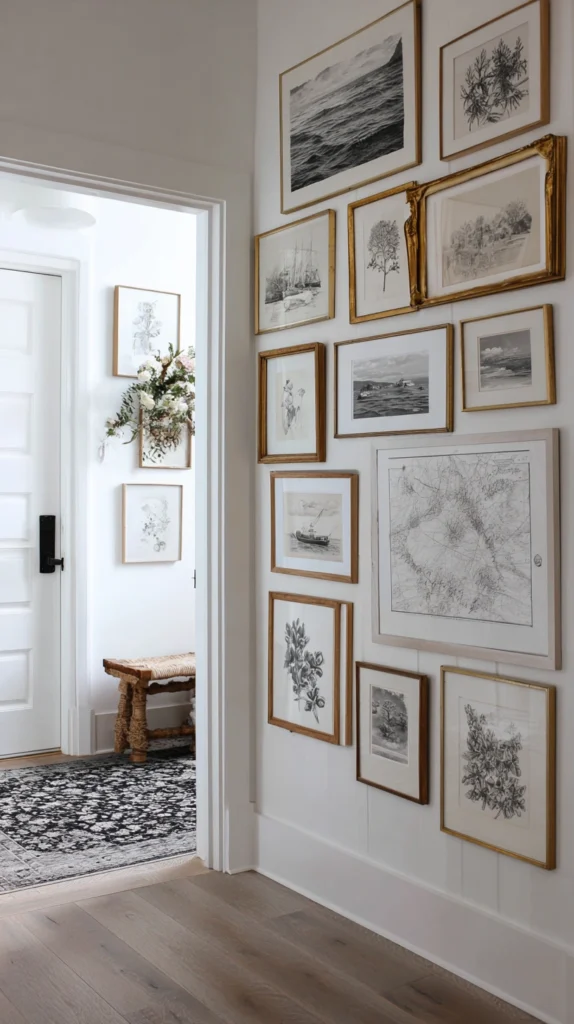
14. Add Coastal Botanical Art and Photography
Budget: $20 – $150 for a wall arrangement
Art on the walls of a coastal cottage should reference the coast without being literally of the sea — botanical illustrations of coastal plants, atmospheric black and white photographs of coastal landscapes, watercolour studies of shells and pebbles, a hand-drawn map of the coastline nearest to the cottage. These choices provide a visual connection to the coastal environment that is specific and personal rather than generic and purchased from a seaside gift shop.
A set of three black and white coastal landscape prints in simple white frames costs $40–$100. A single large watercolour of a local seascape costs $50–$200 from an independent artist at a local market or online. A framed antique map of the relevant coastline from a reclamation dealer costs $30–$80. Choose art that is specific to the place the cottage is connected to rather than generic coastal imagery — a print of the actual headland visible from the window says something that a generic seascape print does not, regardless of their relative artistic quality.
Design tip: Hang art in the coastal cottage at eye level when standing — approximately 155–160 cm to the centre of the frame — rather than at the higher position that many people instinctively choose. Art hung too high creates a disconnection between the viewer and the work that is particularly at odds with the intimate, cozy quality of a cottage interior. Art at the correct height is immediately engaging when you enter the room and can be looked at properly while standing or sitting without any deliberate adjustment of the viewing angle.
15. Keep It Simple, Lived-In, and Genuinely Used
Budget: $0
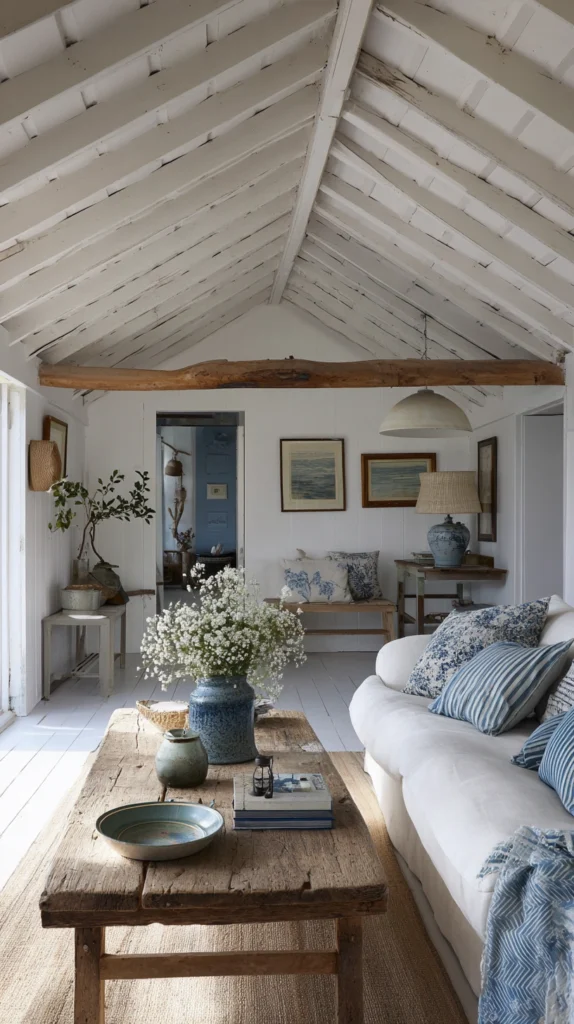
The final and most important principle of the cozy coastal cottage interior is the one that costs nothing and requires only a willingness to live in the home rather than maintain it as a display. The best coastal cottages always look as though they are genuinely occupied — a novel left open on the reading chair, a pair of wellies by the back door, a cut flower from the garden in a jar on the kitchen table. These are not styling details. They are the evidence of daily life, and that evidence is what makes the coastal cottage aesthetic feel genuinely warm rather than aspirationally cool.
Use the best things you own rather than reserving them. Eat from the good plates on Tuesdays as well as Sundays. Leave the books out. Keep the fire laid and ready. Allow the cottage to be the home it is designed to be rather than the showroom it has never been intended to become. A coastal cottage that is genuinely lived in by someone who genuinely loves it will always look more beautiful and more cozy than the same cottage styled to within an inch of its life for a photograph that will be admired for thirty seconds before being scrolled past.
Design tip: Reassess the cottage interior once a season rather than once a year — removing anything that has accumulated without serving a purpose, adding anything that the season brings into the home (a vase of autumn berries, a new stack of winter reads, a summer bunch of garden flowers), and checking that the rooms still feel as comfortable and as genuinely welcoming as they did when each decorating decision was made. A seasonal reassessment maintains the quality of the lived-in coastal cottage without allowing it to drift into either clutter or sterility over the months between more serious reviews.
The cozy coastal cottage is always a home that knows what it is and is confident in being it — made from honest materials, furnished over time, connected to the natural world outside its windows, and genuinely used by the people who live in it. It is never finished and it never needs to be. Every season adds something, every year of habitation deepens its character, and every object that stays earns its place through use and meaning rather than through appearance alone.
Begin with one room and one right decision — the wall colour, the lighting, the textile layer, or the reading nook. Let that decision show you what the room needs next. The cozy coastal cottage that arrives gradually and genuinely is always the more satisfying destination than the one assembled in a single weekend from a single retailer’s vision of what it should look like. Take the time. The sea is not going anywhere.