15 Beach-Inspired Outdoor Shower Ideas That Bring the Coastal Vibe to Your Backyard
There is a specific pleasure that rinsing off in the open air provides that no indoor shower, however well-appointed, can replicate.
The warmth of timber underfoot, the light falling from above rather than from a fitting on the ceiling, the smell of whatever is growing beside the shower structure, the transition from the garden or the pool back to the house that the outdoor shower makes genuinely enjoyable rather than merely necessary. It is the pleasure of doing something ordinary in an extraordinary context.
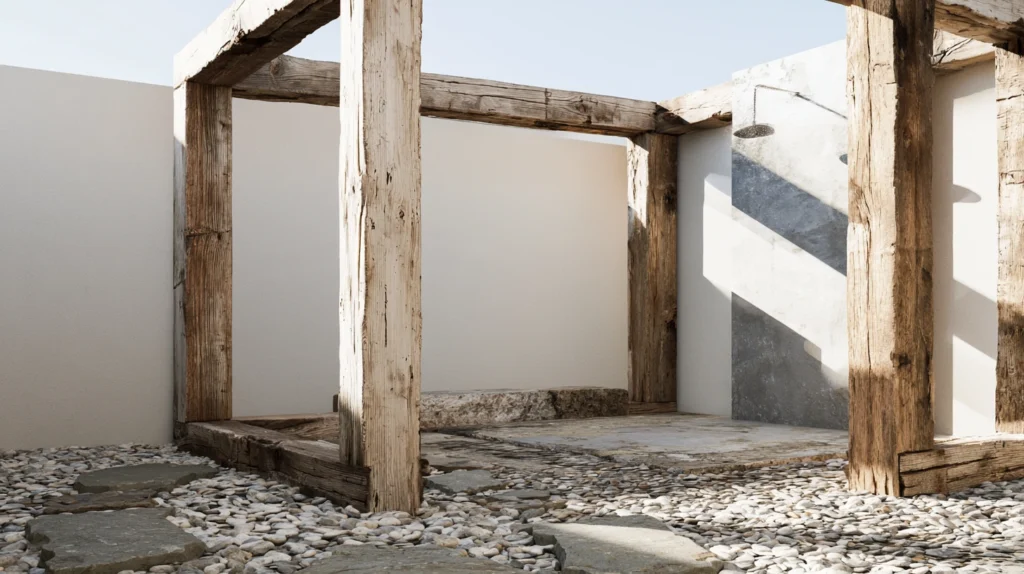
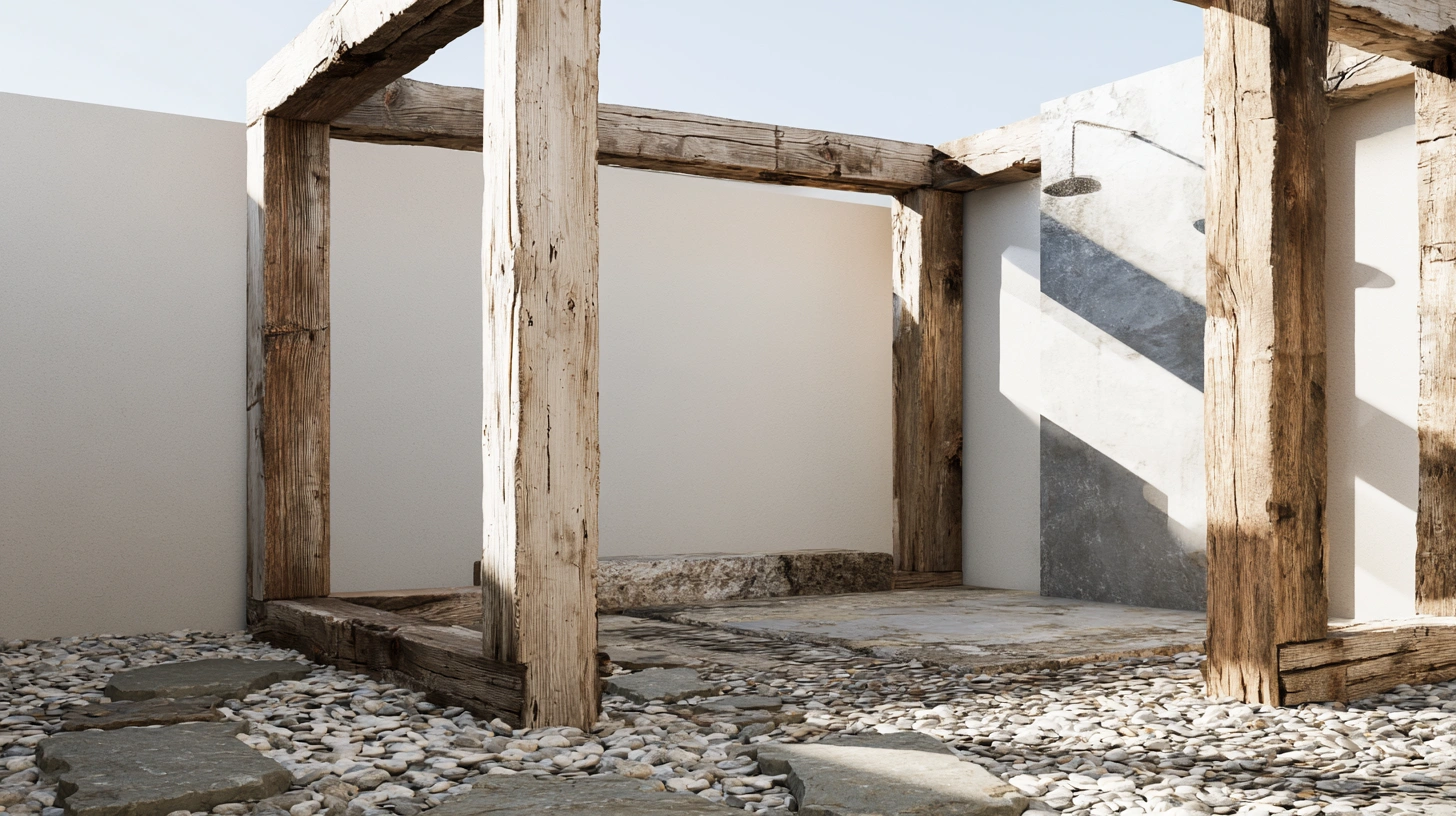
The beach-inspired outdoor shower brings the specific material vocabulary of the coastal environment into the backyard — the weathered timber, the natural stone, the pale pebble underfoot, the rope and the rattan and the organic materials that reference driftwood and sea glass and the honest simplicity of the things the sea leaves behind.
It does not need to be on the beach to feel like the beach. It needs only the right materials, the right planting, and the specific quality of openness that the outdoor shower is uniquely positioned to provide.
Each idea below is a specific approach to one type of beach-inspired outdoor shower. Each includes what you will need, what it will cost, and a practical tip to make it work as well as the coastal experience it is reaching for.
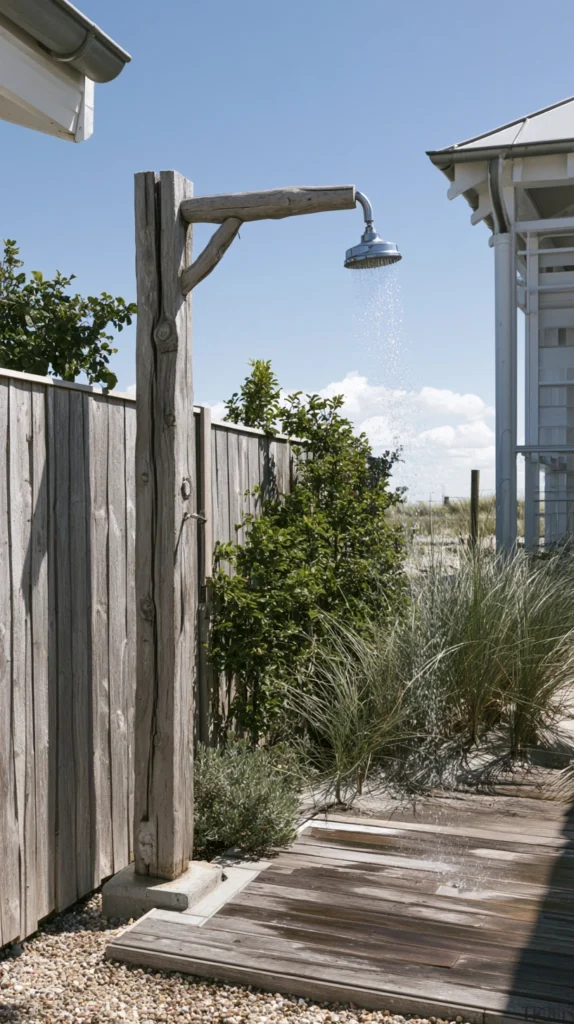
1. The Driftwood and Timber Freestanding Shower
Budget: $200 – $1,000
A freestanding outdoor shower structure built from weathered or driftwood-effect timber — with a simple showerhead on a timber post, a teak or decking floor panel beneath, and the structure left open on all sides — creates the most specifically beach-like of all outdoor shower aesthetics. The weathered timber reads as something that has been at the coast for years, that has been rained on and sun-bleached and salt-touched, and that quality of honest material aging is the defining character of the beach-inspired outdoor shower.
A pressure-treated timber post and beam structure costs $80–$250 in materials. A wall-mounted outdoor showerhead in a brushed nickel or chrome finish runs $30–$100. A teak shower mat or a decking floor panel costs $30–$80. A weathering treatment applied to new timber — silver-grey wood stain — costs $15–$30 and replicates the aged driftwood quality in the first season rather than requiring years of weathering to develop naturally.
Style tip: Leave the structure open rather than enclosing it on three sides. An outdoor shower that is enclosed reads as an outdoor bathroom; one that is open on all sides reads as genuinely coastal — the openness is the quality that makes the outdoor shower feel like the beach rather than like a shower that happens to be outside. Position it where a natural element — a hedge, a fence, a planted border — provides the privacy rather than an added wall.
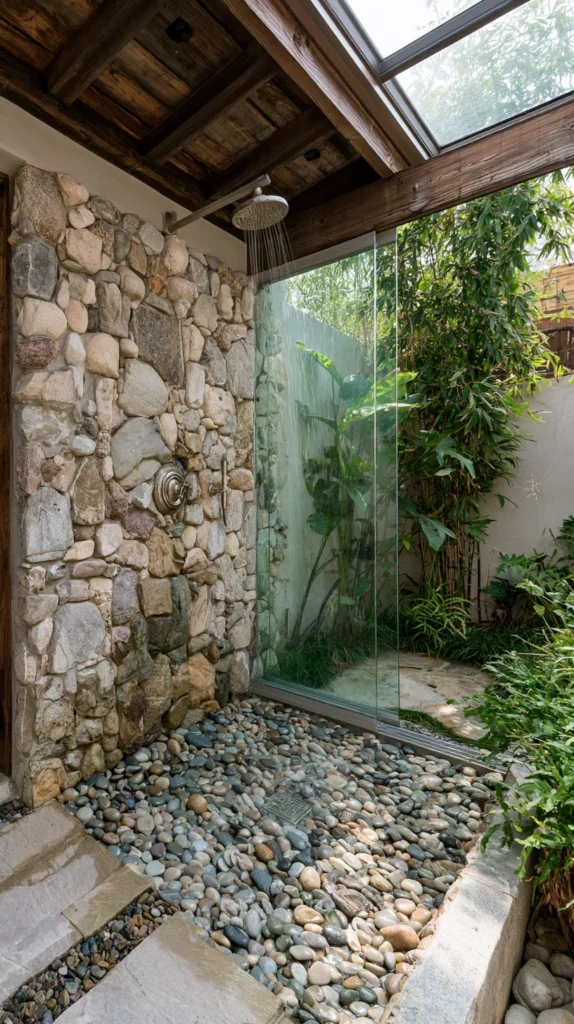
2. The Pebble Floor Shower Base
Budget: $80 – $300
A shower base of smooth river pebbles — set into a mortar bed over a drainage layer, with the pebbles graded from larger at the perimeter to smaller at the drain centre — creates the most tactilely specific and most beach-referencing of all outdoor shower floor surfaces. Walking on smooth pebbles underfoot while showering is a physical experience that is entirely distinctive from any other shower floor material and one that references the specific texture of a beach in the most direct and most honest way.
Smooth river pebbles of 20–40 millimetres diameter cost $15–$25 per kilogram. A standard shower base of 90 by 90 centimetres requires 8–10 kilograms. Exterior mortar for setting the pebbles costs $8–$15 per bag. A drainage outlet with a mesh cover runs $15–$30. Set the pebbles with their flattest face upward and their longest axis vertical — the exposed face of the pebble is smoother and more comfortable underfoot than the rounded side, and the vertical setting creates the most stable individual stone.
Style tip: Rinse the pebble floor with fresh water after each use rather than allowing soap and shampoo to accumulate in the joints between stones. A pebble shower floor that is rinsed clean after use remains as fresh and as beach-like as it was on installation; one that is allowed to accumulate soap residue develops a greasy surface that is both unpleasant underfoot and progressively more difficult to clean.
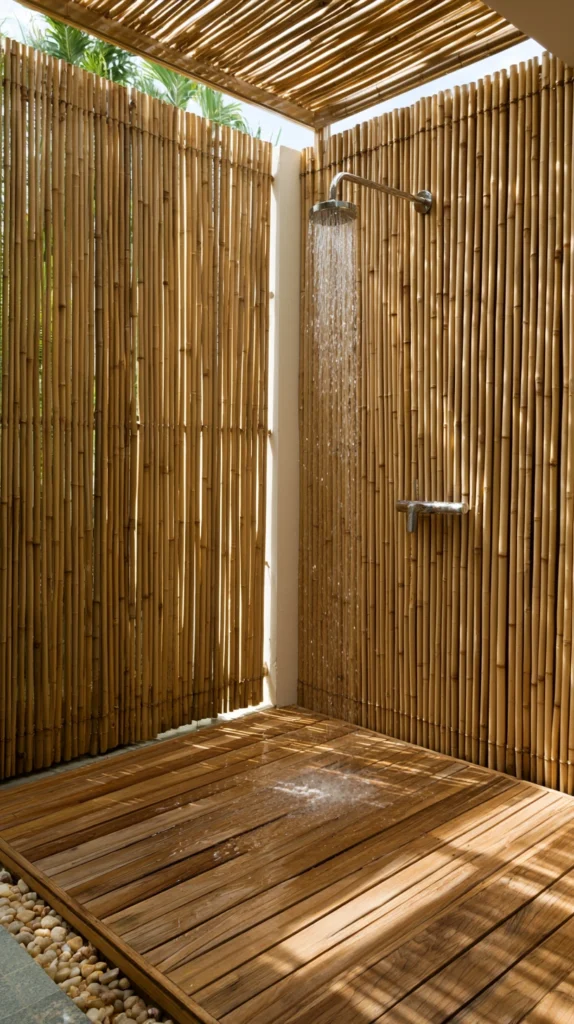
3. The Bamboo Privacy Screen Shower
Budget: $100 – $500
A shower structure screened on two or three sides by bamboo panels — the natural, slightly warm-coloured bamboo that reads as tropical beach rather than formal fence — creates the most exotic and most specifically resort-like of all the outdoor shower environments. Bamboo screening at the outdoor shower creates the impression of a shower within a garden rather than a shower against a wall, and the specific quality of light that passes through bamboo — slightly filtered, slightly dappled — makes showering within it a genuinely pleasant visual experience.
Bamboo screening panels of 180 by 90 centimetres cost $15–$30 each. A three-sided screen requires six panels — $90–$180. Timber posts to support the panels cost $10–$20 each. A bamboo or timber decking floor runs $30–$80. Choose natural bamboo rather than synthetic bamboo screening — the natural material has the warmth and the slight variation in colour and texture that reads as genuinely coastal; the synthetic version reads as fence.
Style tip: Plant a large bamboo clump — Fargesia or Phyllostachys — on the garden side of the bamboo panel screen so the natural plant and the panel screening read as a continuous material element. The planting behind the panel creates the impression of a shower within a bamboo grove rather than a shower behind a bamboo screen, and the two elements together produce the depth of material that either one alone cannot achieve.
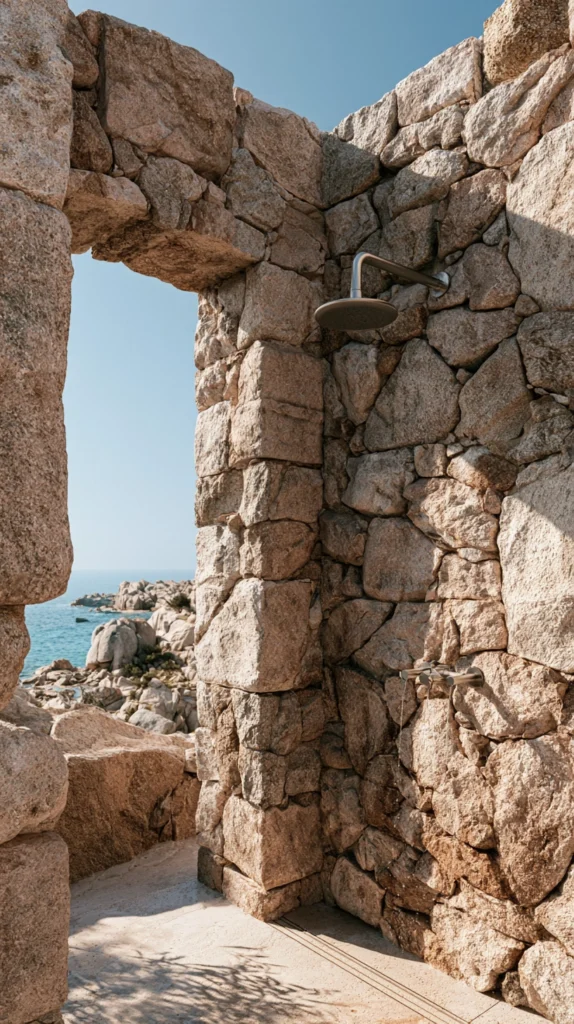
4. The Stone Wall Outdoor Shower
Budget: $300 – $2,000
A stone wall — built from natural stone, reclaimed stone, or a quality stone-effect block — as the back wall of the outdoor shower creates the most solid, most architectural, and most specifically Mediterranean beach town of all the outdoor shower structures. A stone wall shower reads as something that was always there, that grew from the ground rather than was constructed on it, and that will continue to stand regardless of what the seasons bring. It is the outdoor shower with the most material authority and the most genuinely beautiful aging quality.
A dry-stone effect back wall using reclaimed stone costs $100–$400 in materials — the stone plus a mortar backing for stability. A rendered block wall costs $200–$600. A natural slate feature wall runs $300–$800. The stone wall needs a waterproof membrane behind the shower zone — even natural stone will eventually develop mineral staining from continuous water contact without a membrane behind it.
Style tip: Choose a stone that relates to the geological character of a specific coastal region rather than a generic decorative stone. Pale limestone references the Mediterranean coast. Dark slate references the rocky Atlantic shoreline. Warm sandstone references the English seaside. The specific stone choice is the coastal reference that makes the shower feel like a specific place rather than a generic beach-inspired installation.
5. The Tropical Garden Shower Enclosure
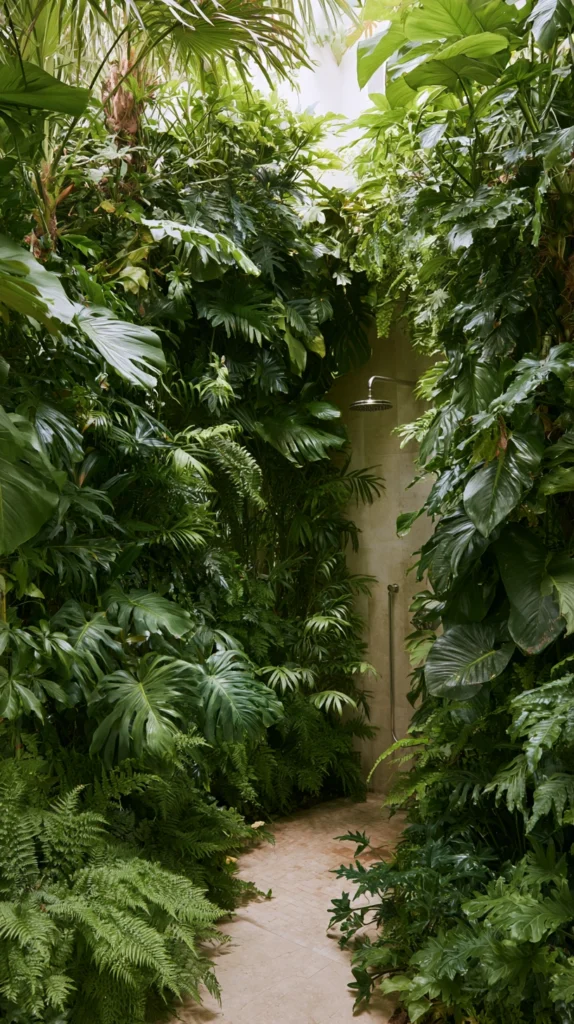
Budget: $150 – $800
An outdoor shower enclosed by tropical planting — large-leafed cannas, bananas, tree ferns, gunnera, bamboo — rather than by a built structure creates the most immersive and most specifically tropical beach resort of all the outdoor shower environments. A shower surrounded by lush, large-leafed planting of sufficient density provides natural privacy while creating the specific atmosphere of showering in a tropical garden — one of the most consistently pleasurable outdoor experiences available in a domestic setting.
Large-leafed tropical plants — cannas, bananas, tree ferns — cost $15–$60 each. A planting of six to eight around the shower position costs $90–$480. A simple showerhead on a copper or stainless steel post costs $30–$100. A pebble or timber shower mat costs $20–$60. The tropical planting enclosure requires the densest possible planting immediately adjacent to the shower — plants spaced at the recommended distance for their mature size will take three to five seasons to achieve the privacy and the enclosure that the shower environment requires.
Style tip: Choose plants with genuinely large leaves — banana leaves, gunnera, canna lily — rather than plants that are simply tropical-looking but small-leafed. The scale of the leaf is the quality that produces the specific enclosure and the specific shadow quality of the tropical shower environment. A small-leafed tropical plant around a shower reads as a tropical border; a large-leafed one reads as a tropical grove.
6. The Rope and Rattan Coastal Shower
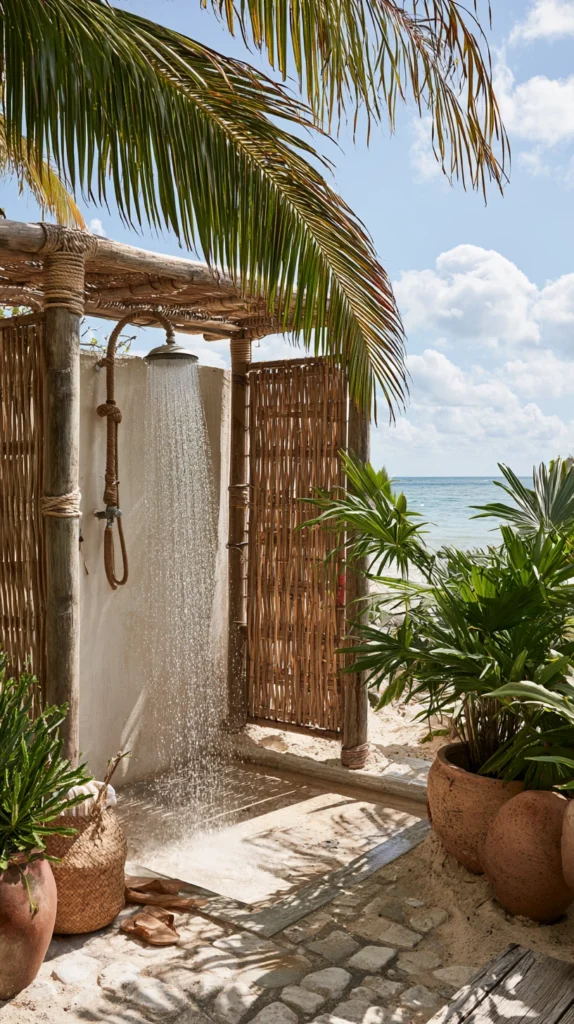
Budget: $100 – $400
A shower structure that incorporates rope and rattan details — rope-wrapped showerhead pipes, a rattan privacy screen on a timber frame, natural rope used as the decorative element where another shower might use metal or plastic — creates the most craft-specific and most artisan-coastal of all the beach-inspired shower aesthetics. The rope and rattan shower references the working materials of the coast — the rigging, the lobster pots, the beach hut screens — in a way that communicates genuine coastal knowledge rather than a general beach theme.
Natural hemp rope of 20 millimetres diameter costs $3–$8 per metre — enough to wrap a showerhead pipe in 5–6 metres. A rattan privacy screen of 180 by 90 centimetres runs $30–$60. A timber frame to support the rattan screen costs $20–$60 in materials. Treat the rope with a water-resistant wax or sealant before installation — unsealed natural rope in a constant-moisture environment develops mould within the first season regardless of the drying time between uses.
Style tip: Use the rope wrapping on the showerhead pipe only rather than on every element of the shower structure. A pipe wrapped in rope reads as a specific material decision at the functional element; the same rope applied to every post and beam reads as a themed installation. The restraint of the rope application to one specific element is the detail that makes it a design choice rather than a decoration.
7. The Reclaimed Wood Shower Structure
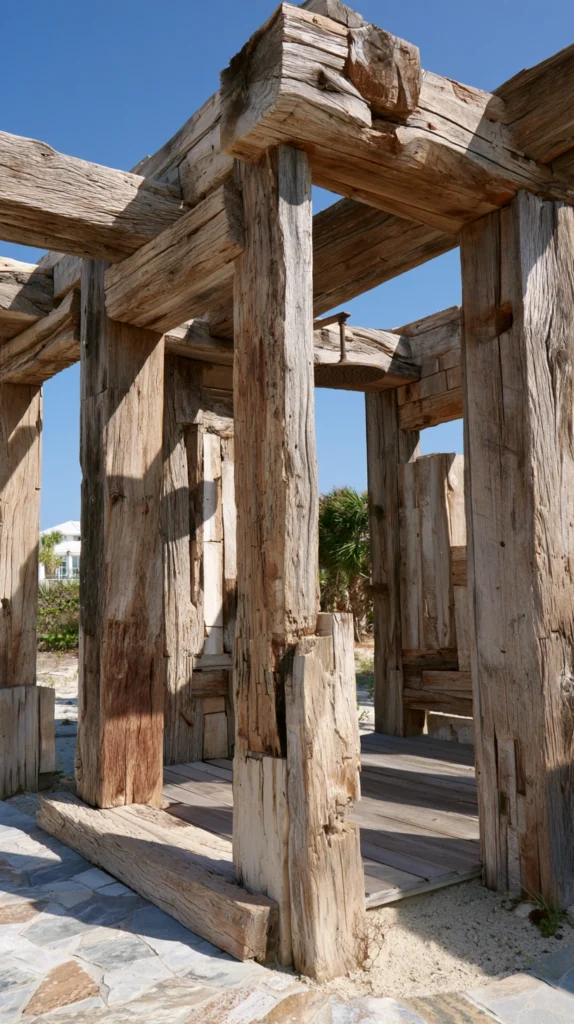
Budget: $150 – $600
A shower structure built from genuinely reclaimed timber — old scaffolding planks, reclaimed floor boards, salvaged railway sleepers, or any timber with a visible history in its surface — creates the outdoor shower with the most specific material honesty and the most authentic aged quality. Reclaimed timber at an outdoor shower reads as material that was chosen for what it is rather than for what it looks like, and the character in the surface — the nail holes, the saw marks, the colour variation of decades of patina — is the quality that makes the reclaimed shower genuinely coastal rather than coastal-themed.
Reclaimed scaffold planks cost $3–$8 each from salvage yards. Reclaimed railway sleepers run $15–$30 each. A shower structure of adequate size requires six to eight planks or two to three sleepers — $20–$100 in reclaimed timber. A weatherproof sealant to stabilise the reclaimed surface costs $15–$30. The sealant should be a penetrating type rather than a surface lacquer — a lacquer on reclaimed timber produces a film that peels at the edges of existing marks and nail holes within the first season.
Style tip: Leave the reclaimed timber without a colour stain — in its natural, varied, aged colour rather than treating it to a uniform tone. The colour variation in genuinely aged reclaimed timber is its most beautiful quality and the one that most specifically communicates the beach aesthetic. A uniformly stained reclaimed timber loses the variation that made the reclaimed material worth choosing over new timber in the first place.
8. The Rainwater Shower Tower
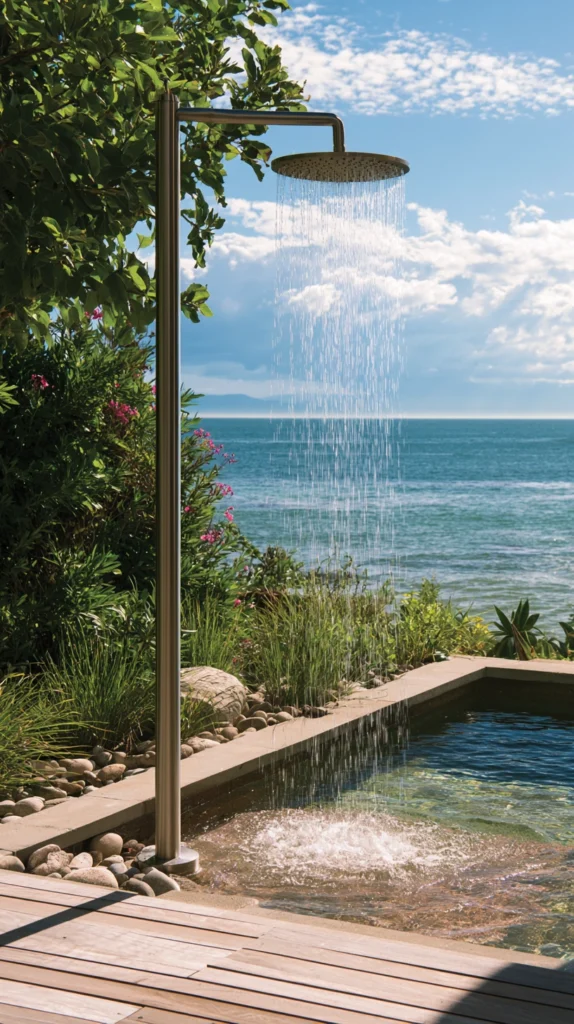
Budget: $200 – $800
A tall, freestanding shower tower — a single post or column rising to 2.5–3 metres with a large rainfall showerhead at the top that delivers water in a wide, gentle column — creates the most specifically rain-shower quality of all outdoor shower types. The rainfall head from height produces a quality of water delivery that references tropical rain — the wide fall area, the gentle pressure, the specific sound of water hitting a pebble or timber floor from a significant height — and in a tropical or coastal garden setting, the rainfall tower is the shower element that most completely produces the resort quality.
A stainless steel shower column with a rainfall head costs $150–$400. A copper pipe column with a rainfall head runs $100–$300. A timber post with a mounted rainfall head costs $60–$200 in materials. The rainfall head should be at least 30 centimetres in diameter — a smaller head produces a focused flow rather than the wide, gentle column of a genuine rainfall shower experience.
Style tip: Position the rainfall tower in the most open position available — away from overhanging trees or structures — so the wide delivery area of the rainfall head is not interrupted by surrounding objects. A rainfall shower head positioned beneath an overhang or near overhanging branches provides an irregular water delivery pattern that undermines the specific quality of the wide, even rainfall experience that the large head is specified to produce.
9. The Coastal Garden Shower With Planting
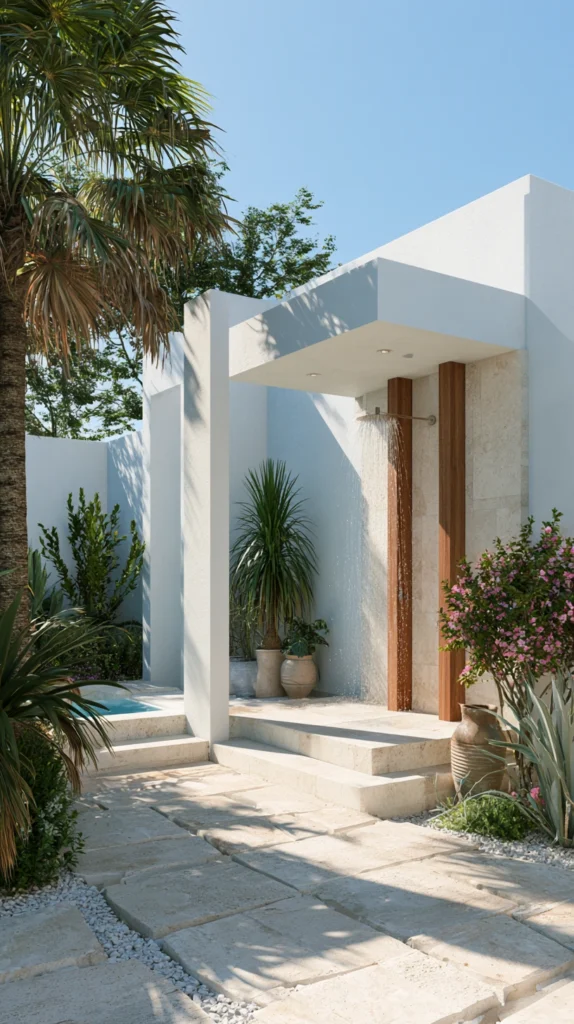
Budget: $100 – $500
An outdoor shower surrounded by coastal planting — sea holly, ornamental grasses, lavender, salt-tolerant sedums, pale-foliaged artemisia — creates the most specifically coastal garden atmosphere of all the beach-inspired shower environments. The coastal planting around the shower references the plant communities of dunes and cliff tops — the tough, salt-tolerant species that grow in the specific conditions of the coastal edge — and gives the shower the botanical authenticity that purely material coastal references cannot provide.
Sea holly costs $6–$12 each. Ornamental coastal grasses — Festuca glauca, Leymus arenarius — run $8–$15 each. Lavender costs $4–$8 each. Pale artemisia runs $5–$10 each. A planting of ten to twelve coastal species around the shower position costs $50–$150. The coastal planting requires excellent drainage — most coastal plants are adapted to free-draining, relatively poor soil, and the additional water from the shower drainage will suit them better than a conventionally planted border in heavier, richer soil.
Style tip: Use the drainage water from the shower to irrigate the coastal planting rather than routing it to the main garden drain. Coastal plants that are tolerant of occasional heavy watering benefit from the shower drainage in the same way that coastal plants benefit from the occasional rainstorm — they are adapted to periods of heavy moisture followed by periods of drought, and the shower drainage provides exactly this pattern.
10. The Surf Shack Outdoor Shower
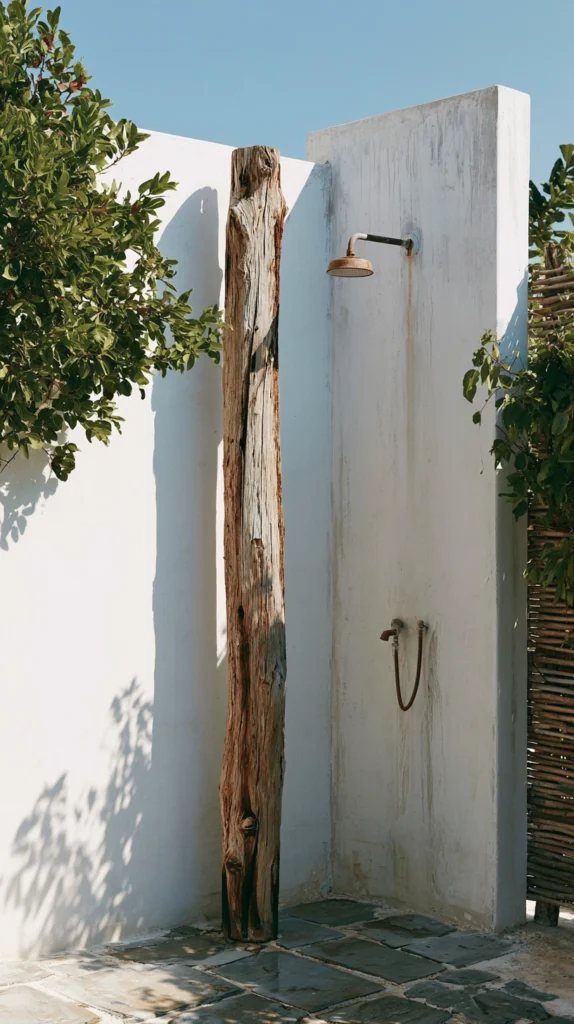
Budget: $80 – $400
A simple, utilitarian outdoor shower — a single showerhead on a timber post, a concrete or pebble floor, a towel hook at the correct height, and a shelf for soap — in the honest, functional aesthetic of a surf club or a beach hut rinsing station creates the most specifically Australian or Californian beach culture of all the outdoor shower references. The surf shack shower is not trying to be beautiful; it is trying to be useful, and the specific quality of honest utility in the right setting is as visually satisfying as any more elaborate design approach.
A pressure-treated timber post costs $10–$25. A chrome or stainless showerhead costs $20–$60. A concrete floor slab costs $30–$80 in materials. A single towel hook costs $5–$15. A small timber shelf for soap costs $8–$20. The surf shack shower requires good drainage — the functional quality of the shower depends on the water clearing the floor quickly, and a drain that cannot handle the shower flow rate produces the puddle quality of a poorly considered utility shower.
Style tip: Paint the timber post in the bright, primary colour of a beach hut — cobalt blue, pillar-box red, sunshine yellow — so the utilitarian quality of the shower is given the specific beach hut identity that the surf shack aesthetic is reaching for. An unpainted timber post reads as a post with a showerhead attached; the same post in a vivid primary colour reads as a beach shower.
11. The Solar Heated Outdoor Shower
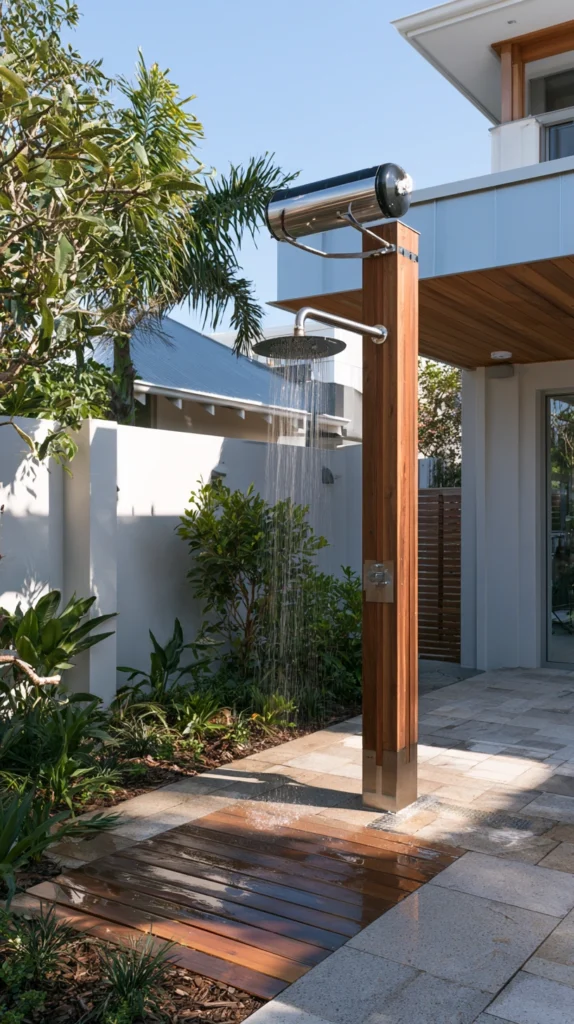
Budget: $150 – $600
A solar shower — a black water reservoir mounted in full sun that heats the water through solar radiation before delivering it through a showerhead below — creates the most sustainable and most specifically off-grid of all the outdoor shower options. The solar shower needs no plumbing connection to the house water supply, requires no energy beyond the sun, and produces water at genuinely warm temperatures on sunny days — the specific quality of warmth from solar heating that feels different from mains-heated water in a way that is difficult to describe and immediately apparent on use.
A commercial solar shower bag of 20 litres costs $20–$50. A purpose-built solar shower unit with a fixed reservoir costs $80–$200. A DIY black HDPE tank on a mounting frame costs $50–$150. Hang or mount the reservoir in the sunniest position available — a south-facing wall at maximum sun exposure will heat 20 litres to 45 degrees Celsius in four to six hours of good summer sun.
Style tip: Position the solar shower reservoir so it is invisible from the primary outdoor living area — the black tank mounted in full view is a practical installation that undermines the visual quality of the outdoor shower as a designed space. A reservoir hidden behind the shower structure, above a pergola beam, or against a fence in a discreet position provides all the functional benefit of solar heating without the visual cost of visible equipment.
12. The Teak and Stainless Steel Shower
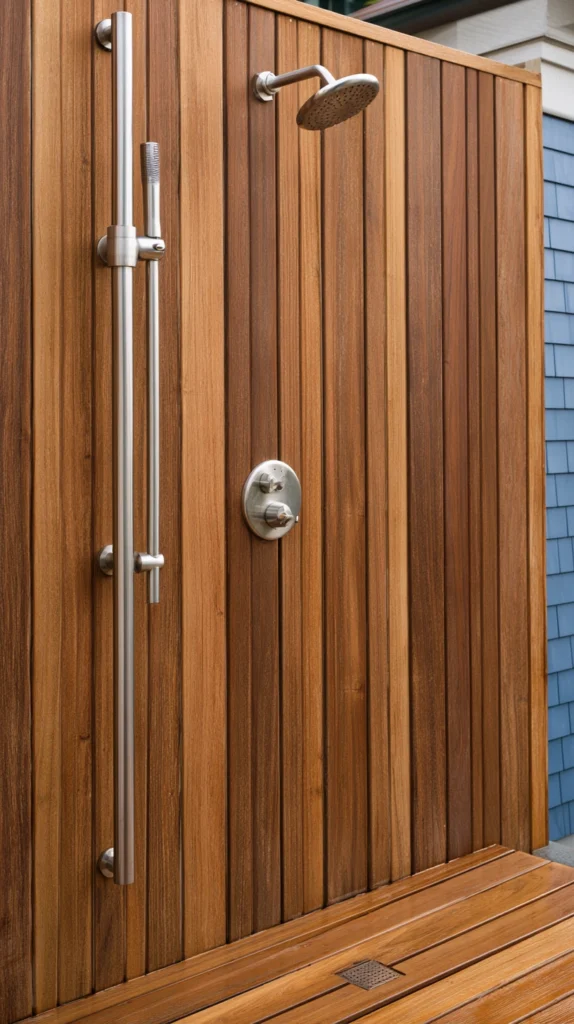
Budget: $300 – $1,500
A shower structure combining teak timber — the boat-building material most associated with the quality of nautical craftsmanship — with stainless steel fixtures creates the most specifically yacht club and most refined of all the coastal shower aesthetics. The teak and stainless combination reads as the material language of a well-maintained sailing vessel or a quality beach club — warm natural timber with precise, corrosion-resistant metalwork — and it produces a shower of genuinely premium quality that suits the most considered outdoor space.
A teak shower panel of 180 by 60 centimetres costs $80–$300. Stainless steel shower fixings and showerhead run $60–$200. A teak shower mat costs $30–$80. Teak requires an annual application of teak oil to maintain its golden colour — untreated teak weathers to a silver-grey that is beautiful in its own right but different from the warm golden quality that makes teak look specifically yacht-like rather than simply aged.
Style tip: Use brushed stainless steel rather than polished for all the metal elements of the teak shower. Polished stainless in an outdoor setting shows water marks, fingerprints, and mineral deposits from the water supply within days of installation; brushed stainless is more forgiving of these marks and requires significantly less maintenance to maintain its appearance through regular outdoor use.
13. The Outdoor Shower With Changing Area
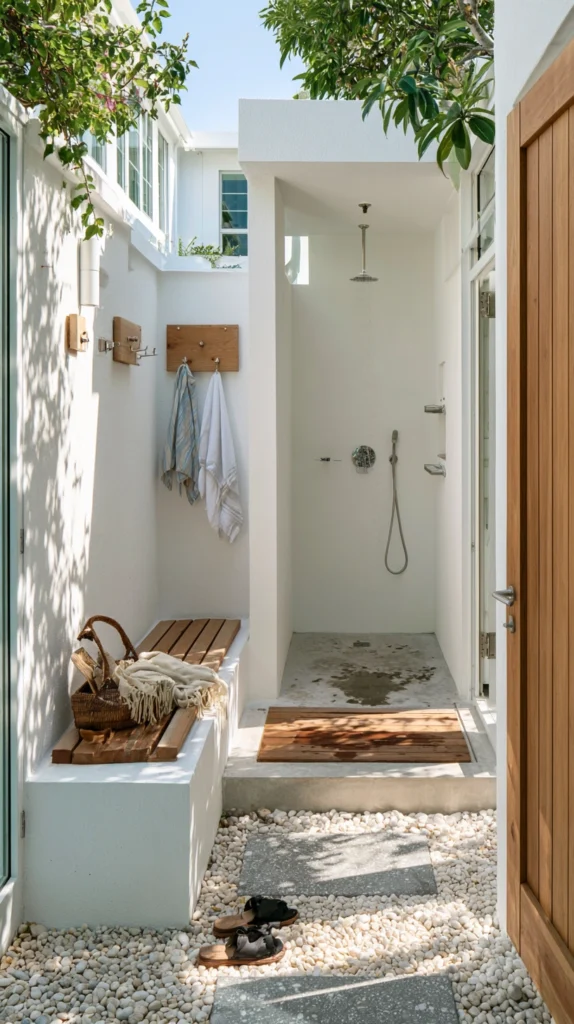
Budget: $200 – $1,000
An outdoor shower that incorporates a changing area — a small, semi-enclosed space beside the shower with a bench, a series of hooks for towels and clothing, and a non-slip mat — creates a genuinely functional coastal facility rather than simply a rinsing point. The changing area communicates that the outdoor shower was designed for complete outdoor use rather than for the minimum functional requirement, and it makes the transition between the pool, the garden, or the beach and the house a complete and comfortable experience rather than a wet compromise.
A timber changing bench costs $40–$120. A row of stainless or brass hooks costs $5–$15 each — four hooks run $20–$60. A teak or anti-slip mat for the changing area runs $20–$50. A privacy screen for the changing area — bamboo panels, a trellis with a climber — costs $40–$120. The changing area should be positioned on the dry side of the shower rather than in the splash zone — the bench and the hooks serve their purpose only if they remain dry during showering.
Style tip: Install a mirror in a weatherproof frame in the changing area — a stainless steel or teak-framed outdoor mirror costs $30–$80 and provides the changing area with the functional completeness of a genuine changing room. An outdoor mirror beside the shower communicates the full resort quality of the outdoor shower facility.
14. The Minimalist White Render Shower
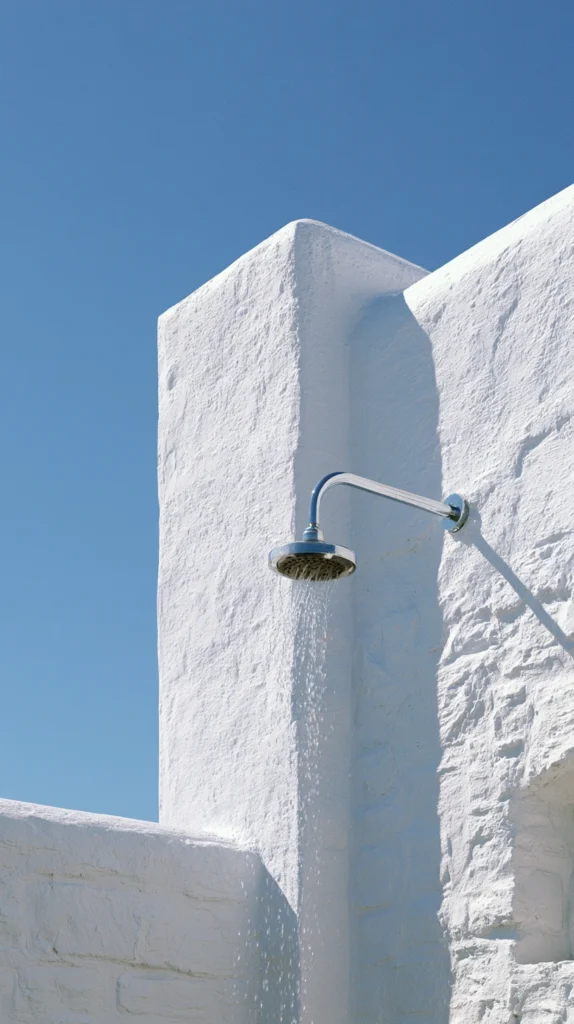
Budget: $300 – $1,500
A shower structure in white rendered block — simple, cubic, with a single showerhead on a chrome arm and a small teak ledge for soap — creates the most Ibiza or Santorini beach house of all the outdoor shower aesthetics. The white render references the whitewashed walls of Mediterranean coastal architecture — the architecture that is both the oldest and the most enduringly beautiful coastal building tradition — and in a sunny garden setting it produces the specific quality of light and warmth that whitewashed Mediterranean walls always communicate.
A rendered concrete block shower structure costs $300–$800 in materials and basic construction. White exterior render costs $20–$40 per bag — a small shower structure requires two to three bags. A chrome shower arm and head runs $30–$80. A teak soap ledge costs $15–$30. Apply two coats of exterior white masonry paint over the cured render to achieve the bright, consistent white of the Mediterranean reference rather than the off-white of a single render coat.
Style tip: Plant a bougainvillea or a climbing rose in a strong colour — deep magenta, vivid orange, or pure white — against the white render wall. The flowering climber against the white wall is the Mediterranean coastal combination that is simultaneously the oldest and the most reliably beautiful — the specific quality of a vivid flower colour against pure white render is one of those combinations that work entirely independently of fashion and taste.
15. The Boho Macramé and Timber Shower Screen
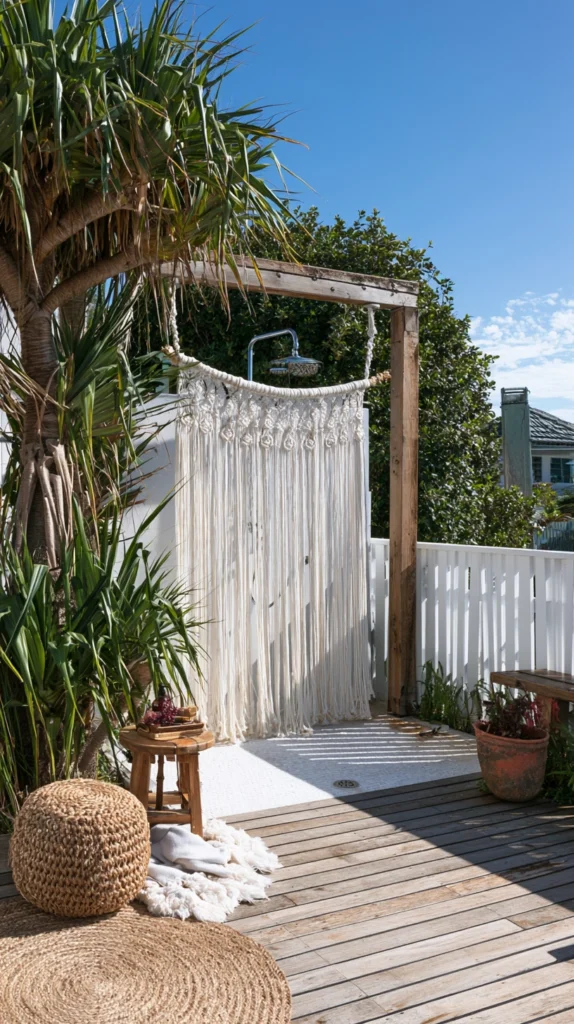
Budget: $80 – $400
A shower screen made from a large macramé panel — weather-treated, hung from a timber beam, providing visual privacy through the density of its knotted pattern rather than through solid screening — creates the most craft-specific and most specifically boho coastal of all the outdoor shower enclosures.
The macramé panel references the handmade quality of coastal artisanal culture — the knotted nets, the woven baskets, the handmade quality of things made by hand for the specific conditions of the coast — and in an outdoor shower context it provides a privacy solution of genuine textile beauty.
A large outdoor macramé panel of 150 by 120 centimetres costs $60–$200. Weather-treating the macramé with a water-resistant spray costs $10–$20. A timber beam from which to hang the panel costs $10–$25. A second panel at a right angle for two-sided privacy costs the same as the first. The macramé panel requires specific waterproofing treatment — natural cotton macramé without treatment develops mould within the first wet season in an outdoor shower position.
Style tip: Choose a macramé pattern with a medium knot density — open enough to allow air circulation that helps the panel dry between uses, dense enough to provide genuine visual privacy from the outside. A very open macramé pattern provides the aesthetic of the screen without the function; a very dense pattern provides privacy without allowing the panel to dry fully between showers, which accelerates mould development.
The beach-inspired outdoor shower earns its coastal quality not through the application of coastal decoration but through the honest use of coastal materials — the timber that weathers like driftwood, the pebble that references the shore underfoot, the open structure that allows the air and the light to reach the showering person in the way that a beach shower always does.
The material honesty is the coastal quality, and the outdoor shower built from the right materials, in the right position, with the right planting beside it, produces the specific pleasure of the beach in a backyard context more reliably than any number of decorative references to the sea could achieve without it