14 Small Backyard Ideas That Add Major Style
A small backyard is not a lesser version of a large one — it is a different design problem with its own specific logic and its own specific pleasures. The constraints of a small backyard — limited floor space, close boundaries, reduced planting area — are the conditions that most reliably produce the most resolved and most carefully considered outdoor spaces.
Every decision matters more when the space is small, and the decisions that are made well matter proportionally more than they would in a garden where average choices could be absorbed into a larger whole.
The fourteen ideas below are each chosen for their specific effectiveness in a small backyard — not ideas that work adequately at any scale but ones that work best precisely because the space is small and the close viewing distance and concentrated atmosphere of a small outdoor area amplifies every right decision and rewards every considered choice.
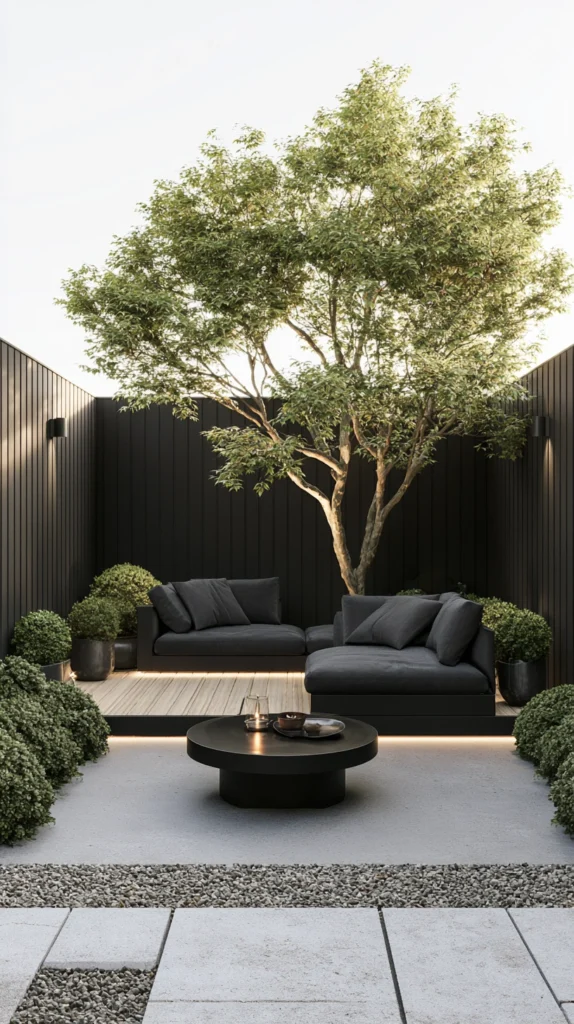
1. Paint All Boundaries One Bold, Consistent Colour
Budget: $30 – $100
The visual confusion of a small backyard with three or four fence panels in different conditions — some weathered grey, some natural timber, one previously painted in a faded green — is the most common source of the scattered, unresolved quality that makes small outdoor spaces feel smaller and more chaotic than they need to be.
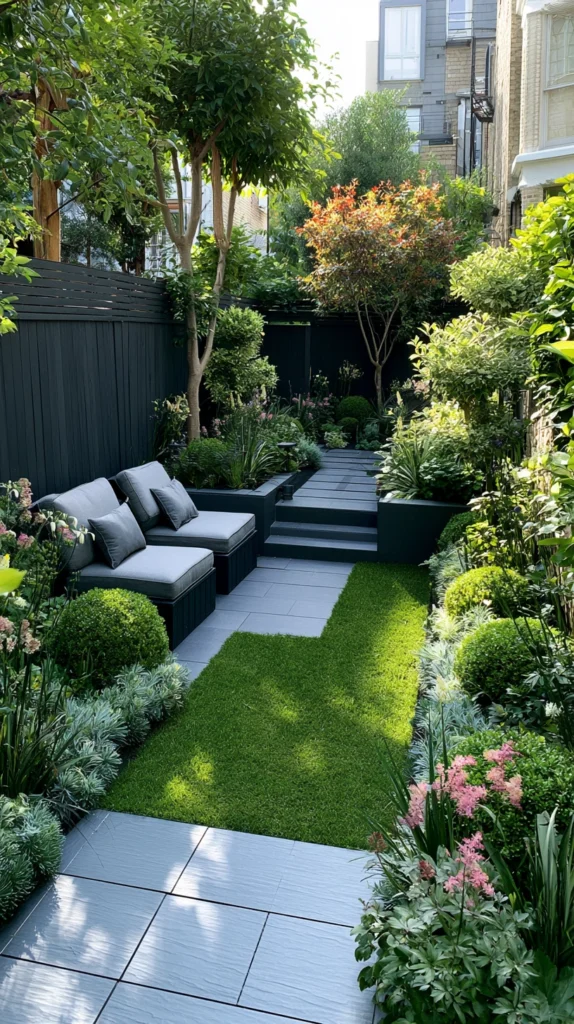
Painting every boundary surface in a single consistent bold colour creates an immediate sense of enclosure, intention, and considered design that transforms the space from a yard with boundaries into a room with walls.
Deep forest green, charcoal, warm terracotta, or navy are the most reliably effective choices for a small backyard boundary colour. A litre of exterior paint costs $15–$35 and covers a standard fence panel in two coats. Paint every fence, every wall section, and every rendered surface in the same colour in a single session — the consistency of the colour across all boundaries is what creates the room-like enclosure that makes a small backyard feel designed rather than bounded.
Style tip: Paint the back of any garden structures — sheds, raised bed sides, bin stores — in the same boundary colour rather than leaving them in their original finish. A shed painted in the boundary colour becomes part of the room’s wall. A shed left in natural timber or grey cladding becomes a visual interruption in the room’s continuity that draws attention to the small scale of the space rather than allowing it to recede behind a consistently coloured boundary.
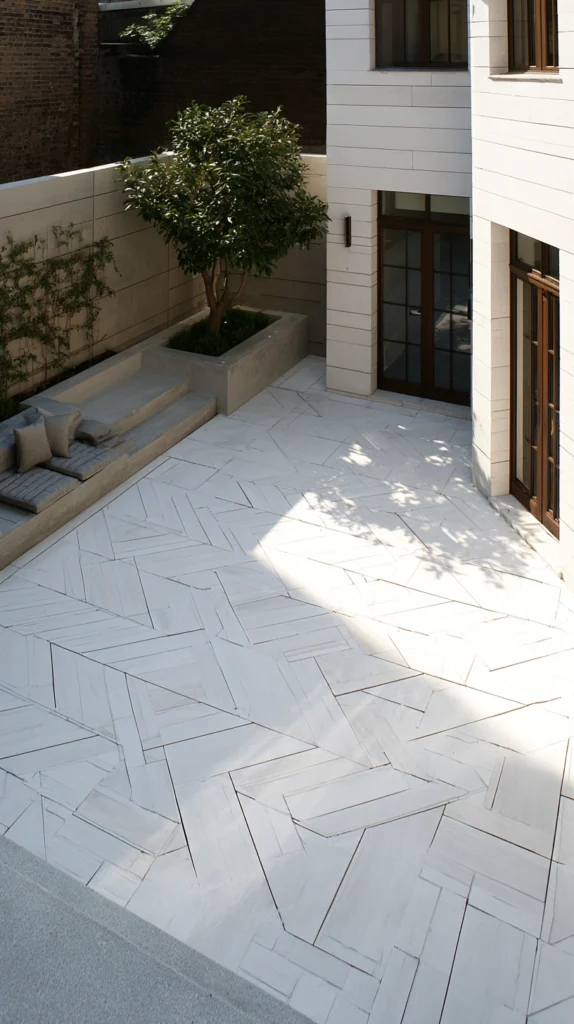
2. Use One Large Paving Format Throughout
Budget: $150 – $600
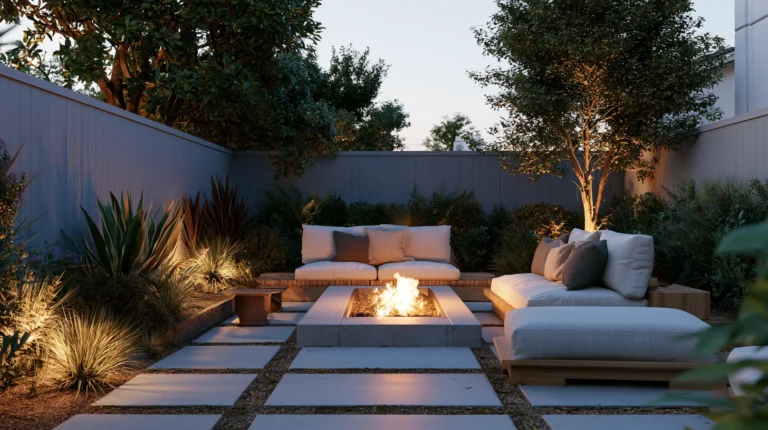
A single large paving format — 60×60 cm or 90×45 cm — laid throughout the small backyard floor area creates a surface that reads as more generous and more expensive than a smaller tile format in the same space. The fewer joints visible on a hard floor surface, the larger the floor appears — which is why the largest available tile format is always the right choice for the smallest available outdoor space, counterintuitive as that principle initially seems.
Large format porcelain outdoor tiles cost $25–$60 per square metre. A small backyard of 3×4 metres requires 12 square metres at $300–$720 in materials. Pale grey or warm stone tones are the most effective colour choices — very dark paving absorbs light and makes a small outdoor space feel enclosed rather than generous, while very pale paving shows every mark and requires more frequent cleaning than a mid-toned equivalent.
Style tip: Lay large format paving tiles on a diagonal orientation — 45 degrees to the boundary lines. The diagonal direction draws the eye across the widest available dimension of the small backyard rather than along the shortest, creating the impression of greater space than a parallel or perpendicular tile layout of the same format produces. The diagonal orientation adds no cost to the material and a modest additional cost to the labour.
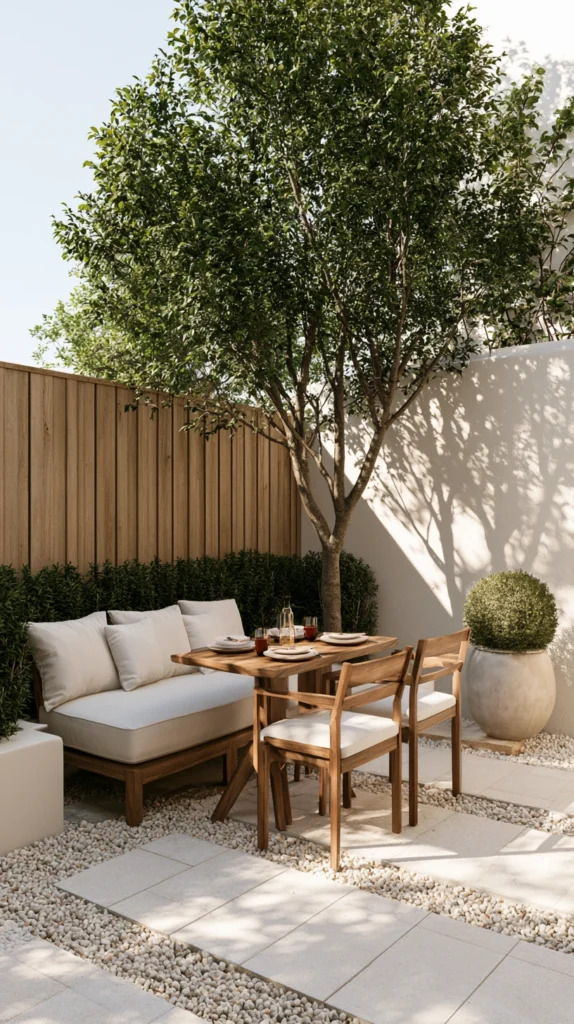
3. Create One Defined Destination
Budget: $80 – $400
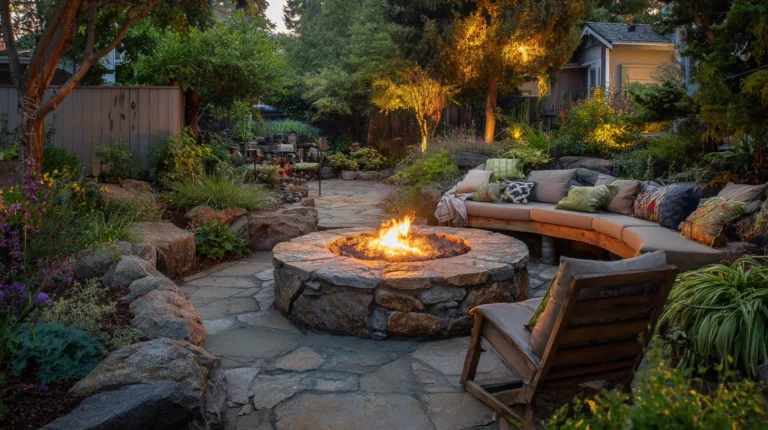
A small backyard needs a clear destination — a specific place that the outdoor space is organised around and toward. A dining table, a seating nook, a fire pit, or a water feature positioned deliberately as the primary destination gives the small space a narrative: you are going somewhere when you enter it, and that somewhere is worth the journey even when it is only ten steps from the back door. A backyard without a defined destination is simply an area between the house and the boundary fence.
A bistro table and two chairs positioned in the sunniest corner of the backyard costs $80–$200. A simple fire pit with two log seats costs $60–$150. A wall-mounted water spout with a small basin runs $100–$250. The destination should occupy one corner or end of the backyard rather than its centre — a central destination divides the small space into two awkward halves, while a corner destination gives the full floor area to one uninterrupted zone that leads to a clearly defined end point.
Style tip: Mark the arrival at the destination with a slight change of surface material — a square of darker paving, a small section of timber decking, or a defined gravel area — that signals the transition from the path to the destination zone. The material transition communicates the destination’s specific identity within the unified small backyard floor plan and makes the journey from the back door feel deliberate and sequential rather than a single undifferentiated surface traversed in ten steps.
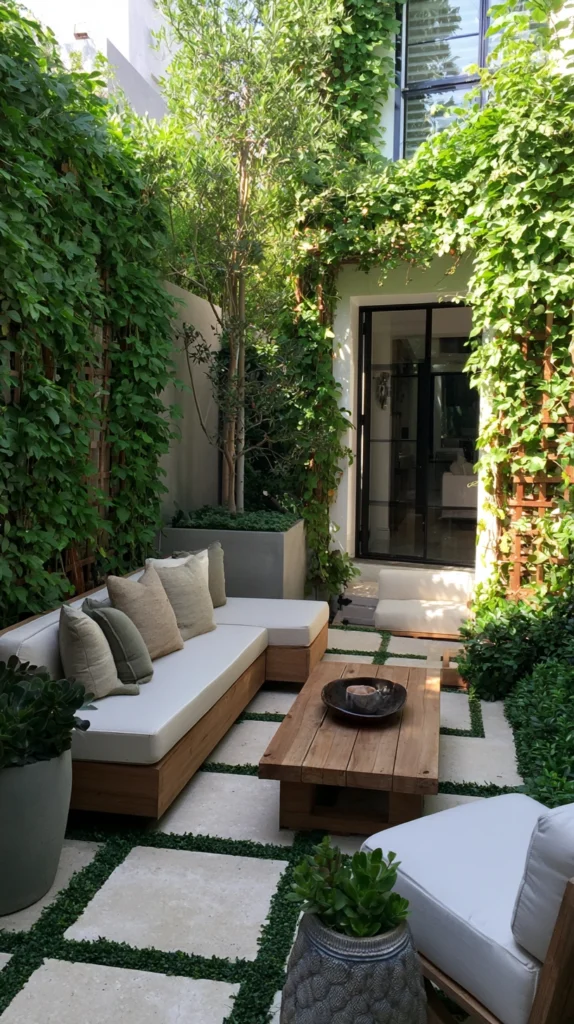
4. Grow Everything Vertically
Budget: $30 – $150
In a small backyard where ground space is the limiting constraint, the boundary fences and walls represent a planting surface many times larger than the total ground-level planting area available. Climbing plants on trellis panels, wall-mounted planter rails, vertical pocket planters, and espalier-trained fruit trees all use this vertical surface productively — providing greenery, flower, and fragrance at the level where they are most visible and most directly experienced from the main seating position.
A trellis panel fixed to a fence costs $15–$30. A climbing rose or clematis planted at its base costs $10–$25. A wall-mounted rail of four terracotta pot holders costs $20–$50. A vertical pocket planter for herbs costs $20–$40. Together three fence panels planted with climbers and one wall-mounted herb rail convert three fence surfaces and one bare wall into the most generously planted section of the small backyard — without consuming a single centimetre of the limited floor space below.
Style tip: Train climbing plants horizontally across the fence surface rather than allowing them to grow vertically toward the fence top. Horizontally trained climbers cover a greater surface area of the fence — filling the middle sections that vertical growth bypasses in the rush to reach the top — and produce significantly more flowering sideshoots than vertically trained stems of the same species and the same age. A horizontally trained fence climber covers three times the fence area and produces three times the flowers of an equivalent vertically trained plant within the same number of growing seasons.
5. A Mirror to Double the Depth
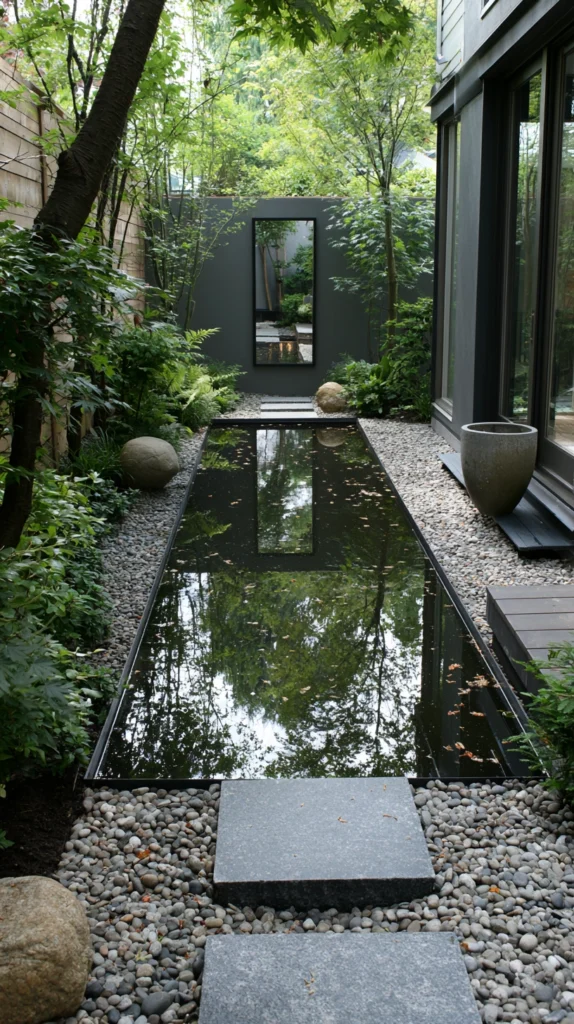
Budget: $40 – $150
An outdoor mirror positioned on the boundary fence at the far end of the small backyard’s main sight line doubles the apparent depth of the space from the primary viewpoint at the house end. The reflected image of the planting and paving in front of the mirror appears to continue beyond the boundary into a garden that does not exist — and in a small backyard where every square metre of visual space is precious, the apparent doubling of depth that a correctly positioned mirror creates is worth more than any physical extension of the same space at comparable cost.
An outdoor-rated arched mirror of 60×90 cm costs $40–$100. Fix to the boundary fence at eye level from the main seating position — approximately 150 cm to the mirror’s centre. Angle very slightly off the direct sight line axis so that the viewer at the house end sees the reflected garden rather than their own approaching reflection. Frame both edges of the mirror with climbing plants to soften the visible edge and make the reflection appear to be a view through an opening rather than a surface mounted on a fence.
Style tip: Position one terracotta pot with a bold plant directly in front of the mirror at a distance of 60–80 cm. The pot and plant appear in the mirror’s reflection and create the spatial ambiguity of an object that exists both in front of and behind the mirror surface — which is the most specifically surprising and most memorable spatial effect available in any small outdoor space and the one that makes visitors stop and look twice at the garden’s apparently impossible depth.
6. String Lights for an Evening Room
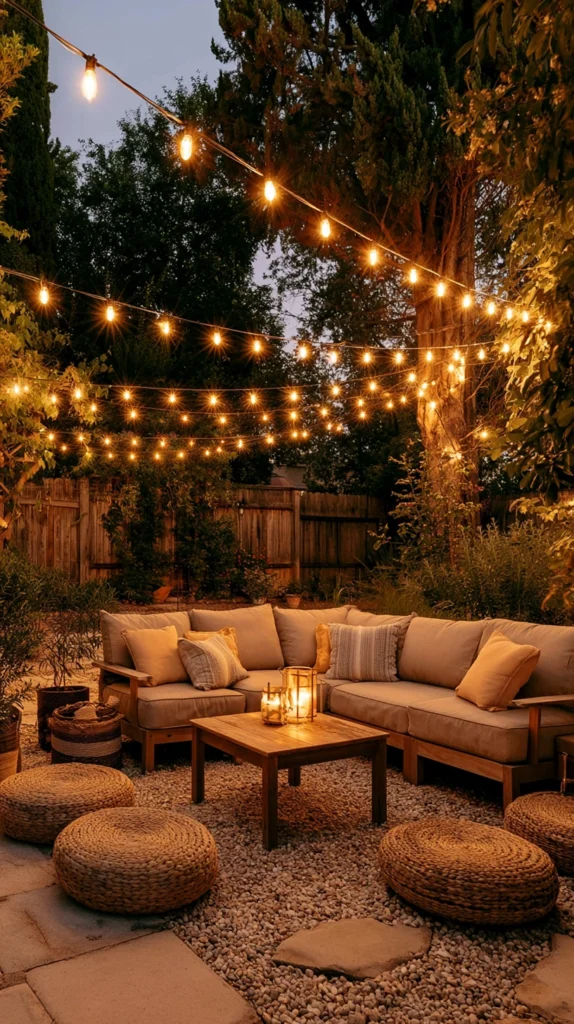
Budget: $25 – $80
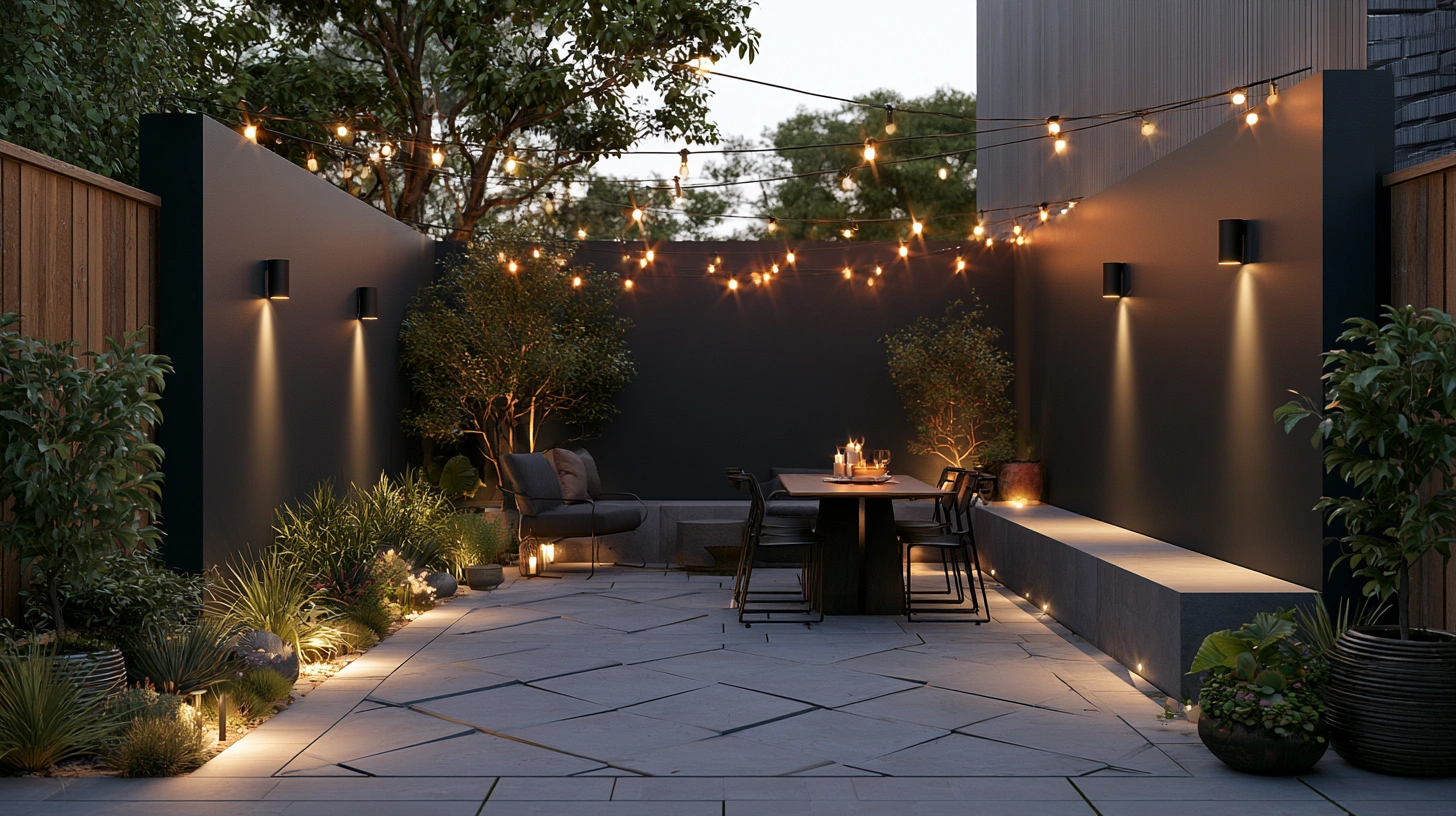
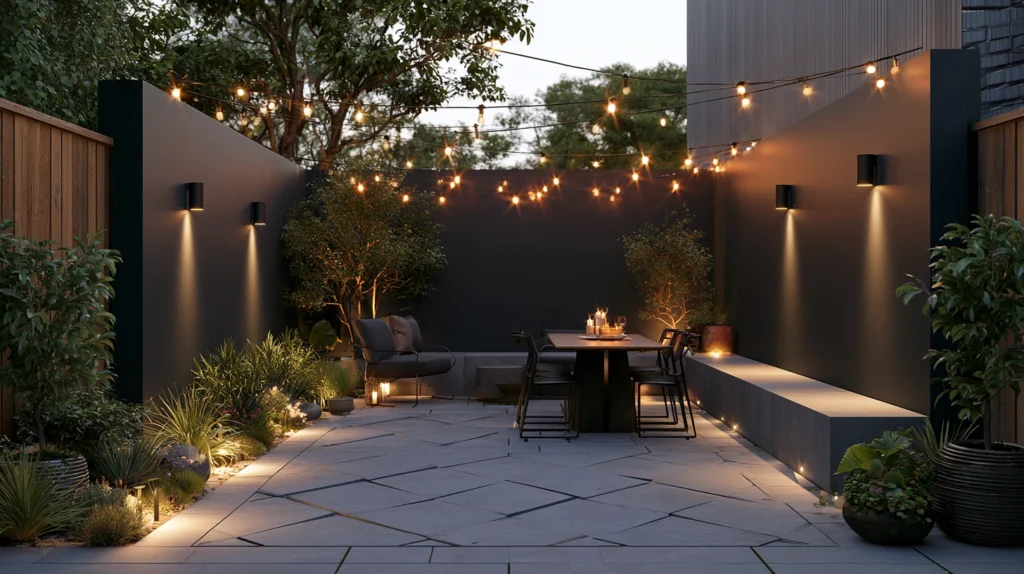
A small backyard lit with warm string lights at dusk becomes an outdoor room with a specific evening character that no amount of daytime styling produces. The overhead light at 2.2–2.5 metres, the warm Edison bulb glow, and the slight sag of the catenary line between two fence posts or wall hooks creates the atmosphere that makes every evening in a small backyard feel worth having — the atmosphere of a restaurant courtyard or a Mediterranean terrace, achievable in ten square metres with $30 of solar string lights and two hours of installation.
Solar warm white string lights in a 10-metre run cost $25–$50 and provide enough coverage for a full small backyard perimeter and a diagonal overhead run across the seating zone simultaneously. Install two timber fence post brackets ($8–$15 each) if no existing hanging points are at the right height and position for the overhead run. The lights should be warm white at 2700K exclusively — a single cool white bulb in an otherwise warm string interrupts the atmospheric quality of the whole installation.
Style tip: Run the string lights diagonally across the backyard from one corner to the opposite corner rather than parallel to the fence lines. A diagonal light run makes the covered area appear larger than a parallel run — the diagonal spans the widest available dimension of the small backyard — and creates a more interesting overhead composition from below than a straight line directly above the seating zone. The diagonal also prevents the lights from visually reducing the ceiling of the outdoor room to the fence width, which is the proportional problem that parallel fence-to-fence runs create in most small backyard light installations.
7. One Oversized Focal Point Pot
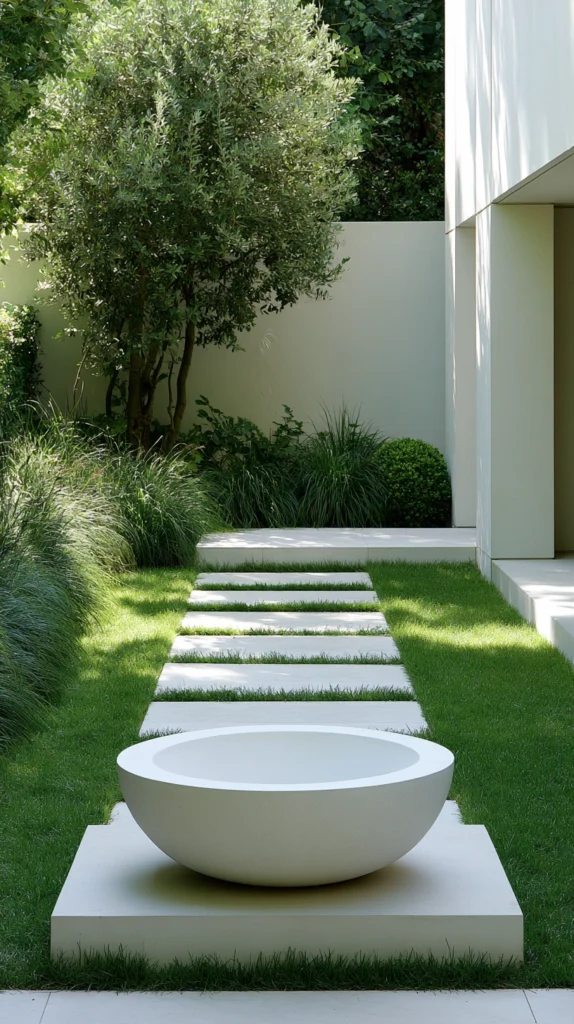
Budget: $40 – $200
One large pot — 50–60 cm diameter or above — planted with a single specimen plant and positioned as the garden’s deliberate focal point does more visual work in a small backyard than any collection of smaller containers. The large scale communicates confidence, the single plant communicates intention, and the generous pot communicates the quality of a decision that was made carefully rather than assembled from whatever was available at the garden centre.
A large glazed ceramic pot of 50 cm diameter costs $40–$100. A large terracotta pot of the same size runs $25–$70. A standard olive tree in a 15-litre nursery pot costs $30–$60 and can be transferred immediately to the display pot. A phormium or architectural agave costs $25–$50. A large ornamental grass in full plume — Cortaderia or Miscanthus — costs $20–$40. Each of these provides the year-round structural presence in the small backyard that makes the large pot worthwhile at every season of the year rather than only in the brief flowering period of a seasonal planting.
Style tip: Elevate the large focal point pot on a low plinth — a single engineering brick, a smooth stone, or a concrete block painted to match the boundary colour — so that the base of the pot sits 10–15 cm above the floor surface. The elevation creates a subtle presentation quality that a pot sitting directly on the paving surface lacks — the eye registers the elevation as a sign of deliberate placement rather than accidental positioning, and the small amount of visible space beneath the pot gives it a visual lightness that prevents it from appearing too heavy for the small backyard floor area it occupies.
8. A Defined Dining Zone With Proper Furniture
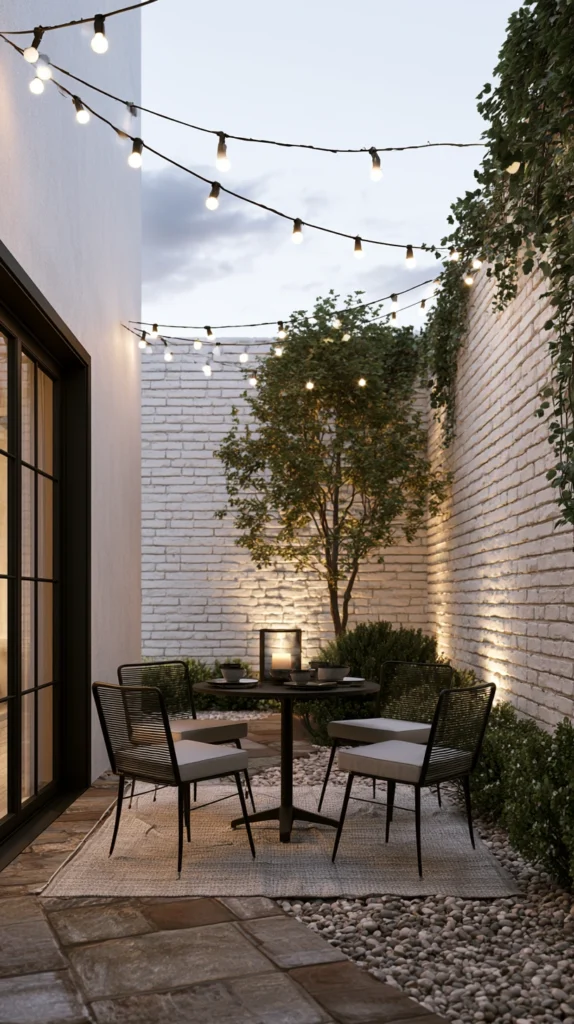
Budget: $150 – $600
A small backyard with a properly defined dining zone — a table sized for the space, matching chairs, an outdoor rug beneath the furniture to define the zone as a room, and string lights or a pendant above — transforms the entire character of the outdoor space from incidental to intentional. The small backyard that has a proper dining setup is immediately understood as a room that is used for a purpose. It invites the daily practice of eating outside that makes the small backyard feel genuinely integrated into daily life rather than an occasional-use outdoor area.
A round bistro table of 60–70 cm diameter seats two and suits the proportions of most small backyards better than a rectangular table of the same seating capacity — the rounded form occupies less visual floor space and allows movement around it more naturally in a tight area. A round table costs $80–$200. Two matching chairs run $40–$100 each. A small outdoor rug beneath the furniture costs $40–$100. A parasol or shade sail overhead for the midday hours costs $50–$150. The complete dining setup costs $250–$650 and makes every meal eaten outside feel significantly better than the same meal eaten beside a door in an area that has not been specifically arranged for the purpose.
Style tip: Always dress the outdoor dining table before a meal rather than eating directly from an undressed surface — a simple cloth runner, two candles, and a small jar of cut garden flowers costs nothing beyond the five minutes it takes to assemble and transforms the quality of the outdoor eating experience from functional to genuinely pleasurable. The dressed table communicates that the meal was worth preparing for, which makes the meal itself — and the backyard it is eaten in — feel considerably more worth having.
9. A Living Wall of Low-Maintenance Succulents
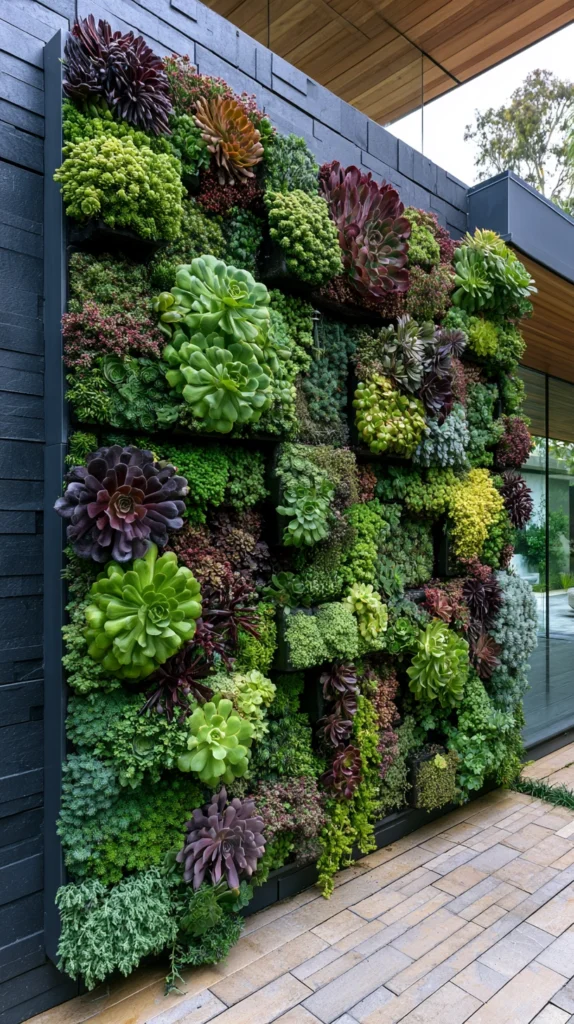
Budget: $50 – $200
A wall-mounted frame or panel of succulents — sempervivum, sedum, and echeveria planted in a shadow box frame or a modular pocket system fixed to the boundary fence — creates a living artwork at the scale of a picture wall that requires almost no watering, no feeding, and no replanting through the growing season. In a small backyard where ground planting space is minimal, a living succulent wall provides the visual richness of a planted surface at the height where it is most seen and most directly appreciated from the main seating position.
A shadow box frame of 60×45 cm planted with fifteen to twenty small succulents costs $40–$80 in frame and plant materials. A modular panel system of 60×60 cm with individual planting pockets costs $30–$60. Allow the planted frame to rest flat for six weeks after planting before hanging it vertically — succulent roots need time to anchor in the compost before the frame is oriented against gravity. Water once every two to three weeks in dry weather and virtually not at all from autumn through spring.
Style tip: Group two or three succulent frames in an asymmetric cluster on the same fence panel rather than spacing them individually across multiple panels. A cluster of two or three frames reads as a deliberate living wall composition. Three frames distributed singly across three different fence sections reads as individual planters placed wherever there was space. The cluster creates a focal point. The distribution creates furniture-on-a-wall.
10. Add a Fragrant Plant Within Arm’s Reach of Every Seat
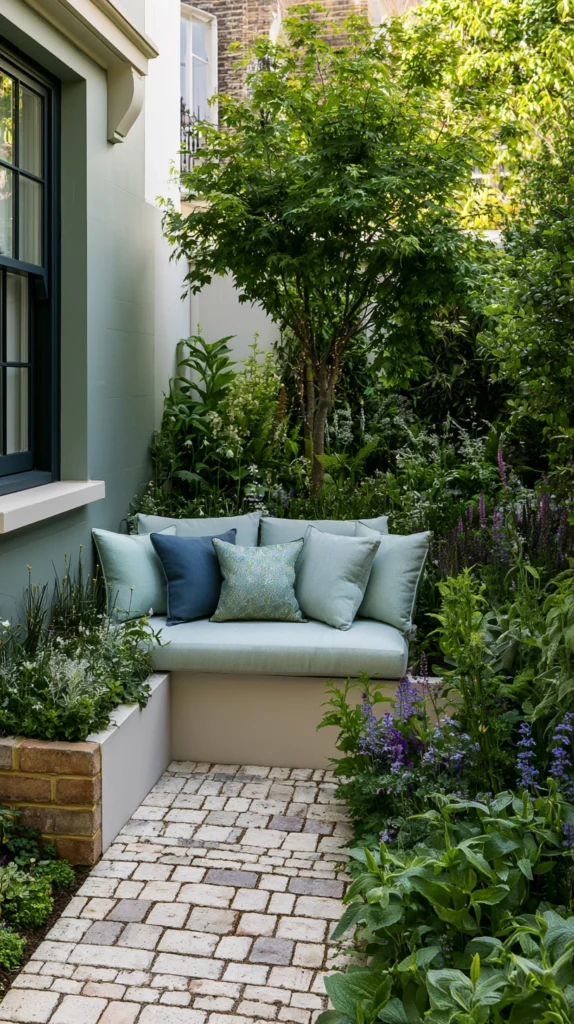
Budget: $20 – $80
The small backyard’s closest advantage over the large garden is proximity — in a small space, every plant is near enough to smell, to touch, and to hear in the wind. This proximity is the quality that transforms a small backyard from a limitation into an asset, and it is most fully exploited by positioning fragrant plants within arm’s reach of every seating position. The jasmine beside the chair, the lavender at the table edge, the rose over the gate — all experienced at the close range that only a small backyard makes possible.
Lavender in a pot beside the main seating position costs $5–$12. A scented climbing rose on the wall above the dining table costs $15–$40. Jasmine in a pot by the back door costs $10–$25. All three together cost $30–$77 and create a fragrant small backyard that is experienced most fully by sitting within it for thirty minutes on a warm summer evening — a quality of immersive sensory experience that a large garden, where the fragrant plants are distributed across a greater surface area, rarely produces with the same concentrated intensity.
Style tip: Choose evening-fragrant plants for the position closest to the main seating area — jasmine, tobacco plant, and night-scented stock all release their most intense fragrance after sunset when most people are using the small backyard seating for the evening hours. A plant that is most fragrant during the day but occupies the evening seating position provides its best quality when the seating position is unoccupied. Match the fragrance timing to the usage timing for the maximum sensory return on the planting investment.
11. A Gravel Surface With Planted Pockets
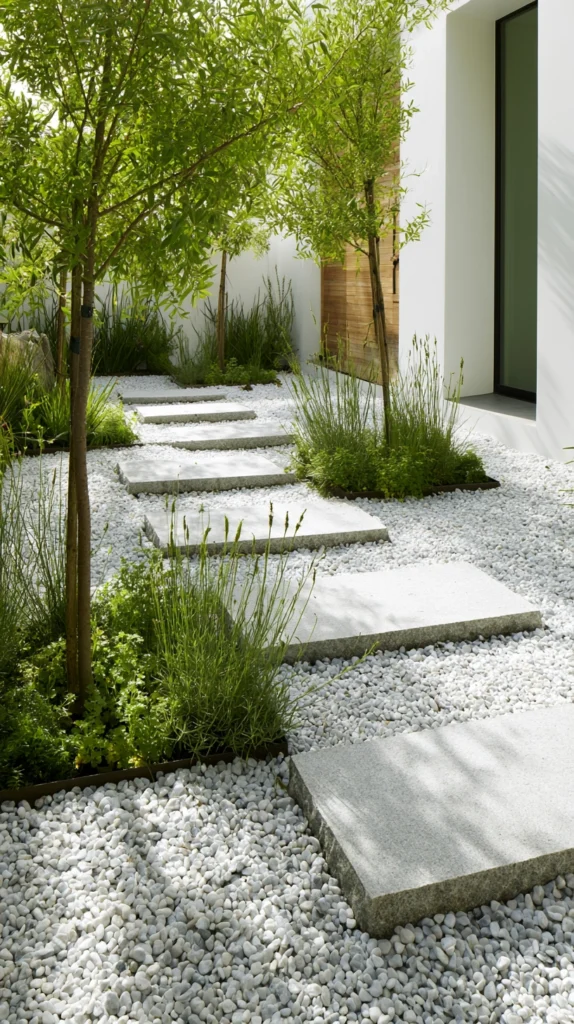
Budget: $60 – $200
A pale gravel surface covering the majority of the small backyard floor — with small pockets of planting cut through the membrane at specific positions — creates the most low-maintenance and most visually generous ground treatment available for a small outdoor space where ground-level planting is desired but practical bed maintenance is limited. The gravel provides the consistent, clean floor surface. The planted pockets provide the naturalistic quality of planted beds without the continuous maintenance that a conventional border demands.
Pale gravel at $20–$40 per large bag requires three to four bags for a standard small backyard at 5 cm depth. Weed membrane beneath the gravel costs $10–$20. Planted pockets cut through the membrane at three to five positions — each 30×30 cm — allow ornamental grasses, lavender, or architectural plants to grow as if from gravel garden soil. The planted-pocket-in-gravel approach reads as considerably more designed and more resolved than either a fully paved floor or a fully planted border in the same small backyard area.
Style tip: Cut the planted pockets in the gravel in an irregular pattern — asymmetrically positioned rather than evenly spaced — so they read as naturally occurring spaces in the gravel rather than predetermined planting positions. An irregular distribution of planted pockets makes the gravel garden appear to have developed organically over time. An evenly distributed set of planted pockets makes the garden appear to have been installed according to a measured grid — which is the quality that reveals the gravel and planted pocket combination as a design device rather than a natural condition.
12. A Feature Wall in a Contrasting Material
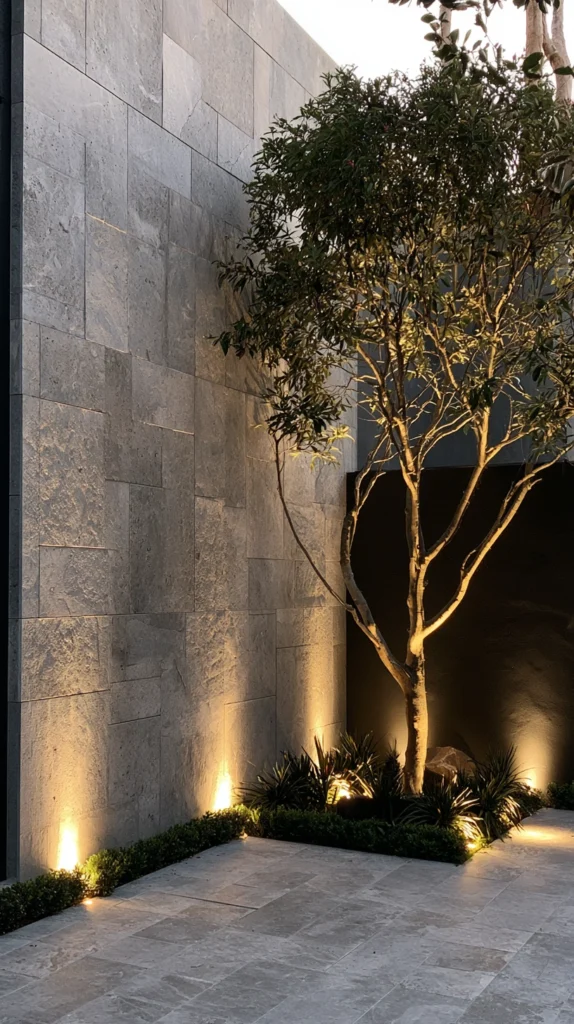
Budget: $100 – $500
One boundary wall treated in a contrasting material — reclaimed brick, natural stone cladding, board-formed concrete, or a rendered surface in a different colour from the other boundaries — creates the most architecturally interesting single feature available in a small backyard and the one that most effectively transforms the perceived character of the outdoor space from a yard into a room. The feature wall is the backyard’s most significant architectural decision and it earns its elevated cost through the quality and permanence of its contribution to the space.
A stone-clad feature wall panel of 1.5×2 metres costs $120–$300 in cladding material plus fixing cost. A rendered and limewashed feature wall costs $80–$200 in material plus application labour. A board-formed concrete feature wall panel in a small backyard costs $300–$600 professionally installed. The feature wall works most effectively as the primary backdrop to the main seating position — it frames the dining or seating zone from behind and creates the sense of a specific place within the backyard that the remaining boundary surfaces support without competing with.
Style tip: Add a single lighting fixture to the feature wall — a simple exterior wall sconce or an uplighter at the base — so that the wall’s material quality is visible in the evening as well as in daylight. A stone or rendered feature wall lit from a single warm source after dark has a completely different and equally beautiful character from its daytime appearance, and the capacity of the wall to provide two distinct evening and daytime experiences doubles the design return of the investment in the material and its installation.
13. Consistent Planting in One Colour Theme
Budget: $40 – $150
A small backyard planted in a single colour theme — all white, all blue and purple, all hot orange and yellow — creates a visual coherence that makes the limited planting area look designed rather than planted by accretion. In a large garden a colour-themed border is one design element among many. In a small backyard a consistent colour theme applied throughout every planting position — the pots, the border pockets, the window box, the hanging basket — creates the impression of a deliberately conceived planting scheme that has been executed with complete consistency across the whole space.
A white planting theme — white pelargoniums ($3–$6 each), white agapanthus ($10–$20), white cosmos sown from seed ($2–$4), and white climbing rose at the fence ($15–$35) — creates a small backyard that glows at dusk with the specific quality of white flowers in low light that makes the space feel genuinely beautiful through the hours when it is most used. The complete white planting scheme costs $35–$70 in plants and creates a garden colour statement that is specific, confident, and immediately distinguishable from a randomly assembled planting at any price.
Style tip: Include both tall and low plants within the colour theme — one or two tall structural plants at 1–1.5 metres beside lower ground-level planting at 30–60 cm — so the colour theme creates vertical layering as well as horizontal coverage across the small backyard’s planting positions. A colour theme applied only to low plants leaves the vertical space above eye level without the colour presence that makes the theme visible from both the seating position and from the house window above the garden.
14. Edit Ruthlessly and Trust the Space
Budget: $0
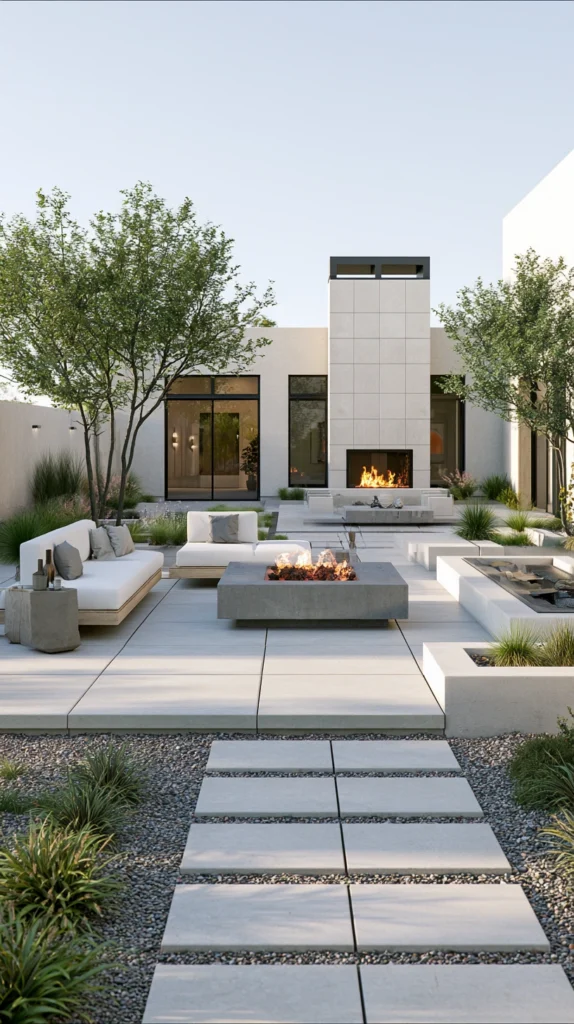
The small backyard achieves its major style most completely not by adding more but by editing everything that is not excellent and trusting the quality of what remains. A small backyard with three exceptional things — one bold fence colour, one large focal point pot, and one well-positioned dining setup — always looks more stylish than the same small backyard filled with twelve average decisions that compete for the same limited visual space. The constraint of the small backyard is its editor and its best ideas always emerge from respecting that constraint rather than trying to overcome it through accumulation.
Apply the edit: remove every object that is broken, every pot that is empty and not being used for a purpose, every tool or furniture piece that has been left in the garden rather than stored, and every plant that is not performing well enough for the prominent position it occupies. What remains after this editing is the small backyard’s actual quality — the baseline from which every investment in new style delivers a measurably higher return than the same investment made into a cluttered, unedited space of exactly the same dimensions.
Style tip: Photograph the small backyard from the back door, from the main seating position, and from the window above the garden before and after each edit and each addition. The photographs reveal the compositions that the eye inside the garden misses — the visual anchor that is pulling the attention downward, the object that is interrupting the sight line to the focal point, the area of floor that reads as unused rather than deliberately minimal. The camera always shows the small backyard more clearly than the eye that has grown accustomed to its current state.
The small backyard with major style is always the one where the limitations of the space were understood and respected rather than fought against. Every constraint became a decision point. Every decision point was taken seriously. And the result is a space that feels significantly more considered and significantly more beautiful than its dimensions initially suggested it could be — which is the specific pleasure that a well-designed small space provides and that no larger space of lesser quality can replicate at any scale.
Start with the boundary colour — it is the single decision that most immediately transforms the character of the small backyard and creates the room-like enclosure that everything else in the space depends on for its quality and its impact. Once the boundaries are right, everything placed within them looks better than it would have on the day before the paint was applied. That is the small backyard design principle most worth knowing.