15 Farmhouse Fall Bedroom Decor You’ll Want Now
My bedroom looked like a modern hotel room for years. Sleek platform bed, glossy white nightstands, nothing reclaimed, nothing worn, nothing that looked like it had ever belonged to anyone before me.
I tried adding one mason jar with fake flowers once. It sat on a glass-top dresser looking like a contradiction, not a styling choice, because nothing around it shared its material language at all.
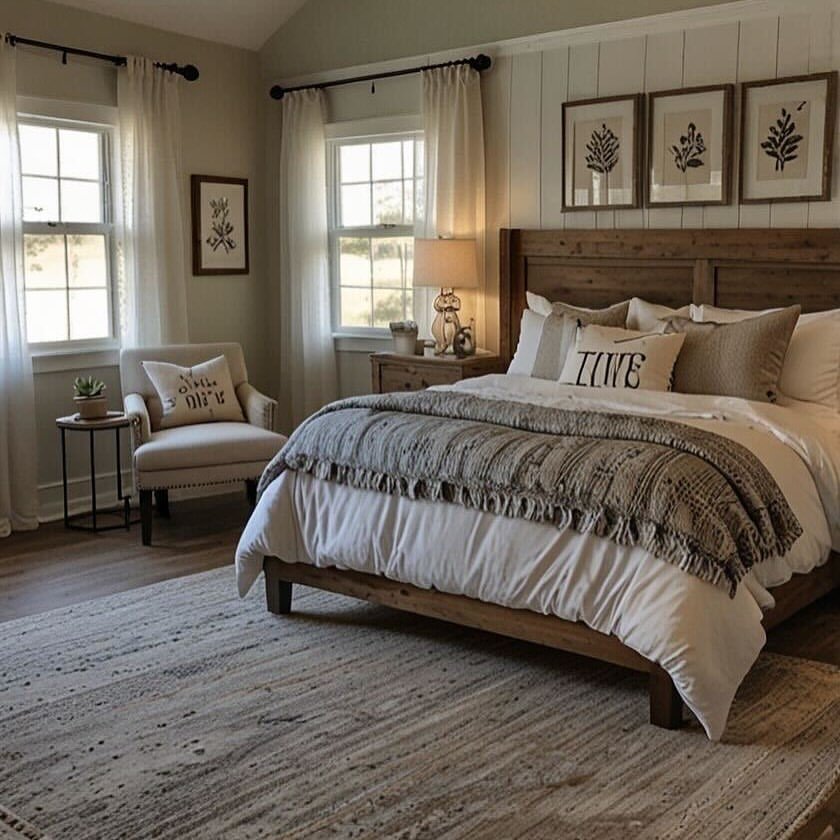
Then I learned that farmhouse fall bedroom decor depends on a consistent material vocabulary, not just a collection of individually rustic objects. Reclaimed wood, worn metal, natural fiber, and warm layered textiles, repeated throughout the room, are what actually create the look. One mason jar in a modern room never stood a chance.
Now my bedroom feels like it grew there over generations rather than being assembled in a single shopping trip, and fall specifically is when it looks its absolute best.
Let me show you 15 farmhouse fall bedroom ideas that bring genuine warmth and rustic character into a space, whether you’re starting from a blank modern room or simply want to lean further into a style you already love.
Why Farmhouse Style Specifically Suits Fall Bedrooms
The material alignment:
Why these two things naturally belong together:
- Farmhouse style already prioritizes the exact materials fall decor depends on: reclaimed wood, natural fiber, aged metal, and warm neutral textiles
- This means a genuinely farmhouse bedroom requires far less seasonal transformation to feel like fall than a more modern or minimal space would
The worn-in quality:
What farmhouse specifically contributes:
- A sense of age and use, whether genuine or carefully recreated, that pure seasonal color alone cannot achieve
- This worn-in quality is what separates a farmhouse fall bedroom from simply a room with orange pillows; the materials themselves carry the warmth, not just their color
The risk of going too literal:
What to avoid:
- Mass-produced “farmhouse style” decor, often signaled by stenciled signs and overly polished faux-distressed finishes, can tip into costume rather than genuine rustic character
- The difference between authentic and costume farmhouse almost always comes down to real materials and restraint, not how many wood-look signs occupy the walls
My revelation: Farmhouse fall bedroom style succeeds through consistent, genuine material choices repeated throughout the room, not through a collection of individually rustic-looking objects. Reclaimed wood, real metal, and natural fiber, used consistently, will always outperform mass-produced farmhouse-themed decor.
1. A Reclaimed Wood Headboard (The Bed’s Defining Architectural Element)
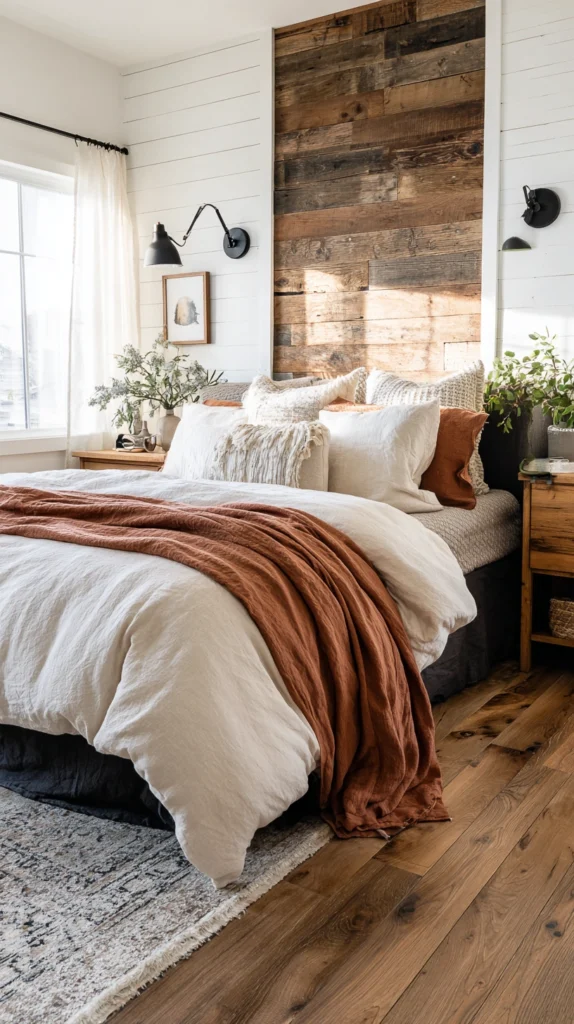
A headboard built from genuinely aged, reclaimed wood — the single piece most responsible for establishing the room’s farmhouse foundation.
My platform bed starting point:
What I had:
- A sleek, modern platform bed with no headboard at all, pillows simply stacked against the bare wall
- A bed that read as contemporary regardless of any other styling attempted around it
Why a reclaimed wood headboard specifically anchors this entire style:
The foundational-piece principle:
- The bed occupies the room’s largest single footprint, making its material language the most influential single decision in the entire space
- A genuinely aged wood headboard, with visible grain, nail holes, and natural color variation, establishes the farmhouse foundation that every other idea on this list builds from
Sourcing genuine reclaimed wood:
Where to find authentic material:
- Architectural salvage yards, often carrying old barn wood, fencing, or structural timber at reasonable per-board-foot pricing
- Facebook Marketplace and local classified listings, frequently featuring people clearing old barns or outbuildings who are happy to sell or even give away the wood
- Habitat for Humanity ReStore locations, which regularly receive donated reclaimed building material
Headboard construction approaches:
Building this piece:
- A simple plank headboard, several reclaimed boards mounted horizontally or vertically to a basic frame, requiring only basic carpentry skill
- A herringbone or chevron pattern, for those with more woodworking confidence, creating a more visually dynamic surface from the same reclaimed material
- Hiring a local carpenter or furniture maker to construct a custom piece, if DIY construction is not feasible, still using genuinely reclaimed material sourced as above
What makes reclaimed wood read as authentic versus fake:
Material authenticity markers:
- Genuine, irregular nail holes and saw marks, rather than uniformly distressed surfaces applied artificially to new wood
- Real color variation across individual boards, since reclaimed wood from different original sources rarely matches in tone perfectly
- A general lack of perfect symmetry or polish, which paradoxically signals more genuine age and history than a flawlessly finished surface would
Cost:
- Reclaimed wood (sufficient for a queen or king headboard): $80-250, depending on source and quantity
- Basic hardware and frame materials: $30-60
- Total: $110-310, or significantly less if wood is sourced free or very cheaply through local salvage opportunities
My reclaimed headboard result: Building a simple plank headboard from barn wood sourced through a local Facebook Marketplace listing, for about ninety dollars total including basic hardware, gave my previously modern platform bed an entirely different identity, every other farmhouse element I added afterward finally had a foundation to relate to.
Reclaimed Headboard Tips
Treating the wood for pests before bringing it indoors:
A necessary precaution with reclaimed material:
- Genuine old barn or structural wood occasionally harbors insects
- Inspecting carefully, and treating with an appropriate wood treatment or allowing an extended period of outdoor drying and inspection before installation indoors, prevents introducing any unwanted pest issue into the home
Sealing the wood to manage dust and splinters without erasing its character:
A practical finishing step:
- A clear matte sealer, rather than a glossy finish, protects against splinters and ongoing dust shedding from raw reclaimed wood while preserving the material’s authentic, weathered visual character
2. A Galvanized Metal or Vintage Enamel Pitcher as a Bedside Vase (Authentic Farmhouse Vessel)
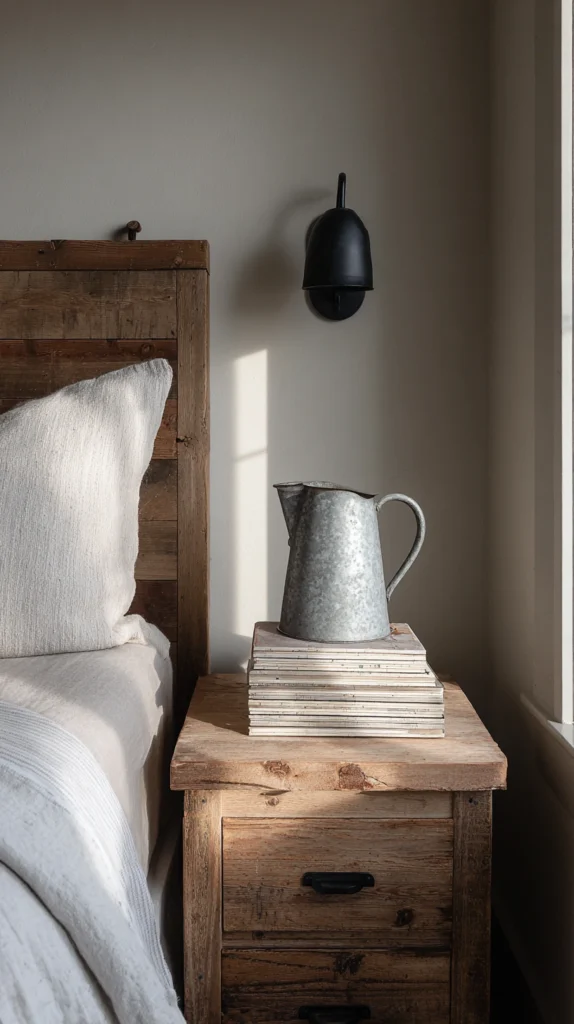
A genuine galvanized metal pitcher or vintage enamelware vessel, used to hold dried fall botanicals on the nightstand — replacing the generic mason jar with something carrying real farmhouse history.
My mason jar default:
What I had been using:
- A standard mason jar, the most commonly reached-for farmhouse vessel, technically appropriate but ubiquitous to the point of feeling generic
- A missed opportunity for a more specific, characterful vessel choice that would still fit the same material language
Why galvanized metal or enamelware specifically elevates this choice:
The specificity-over-default principle:
- Mason jars have become so universally associated with farmhouse decor that they often read as the most obvious, least considered choice available
- A galvanized pitcher or piece of chipped vintage enamelware carries the same authentic rustic material quality while feeling more specifically sourced and considered
What to look for:
Selecting the right piece:
- Genuine galvanized metal, showing some natural patina or slight surface irregularity, rather than a new, uniformly smooth reproduction
- Vintage enamelware, ideally with some visible chips or wear, in white, cream, or a faded color, adding both material and historical authenticity
Sourcing affordably:
Where to find genuine pieces:
- Estate sales and antique shops, frequently carrying genuine vintage galvanized and enamelware pieces at accessible prices ($8-30)
- Flea markets and barn sales, often the richest source for this specific category of object
What goes inside for fall:
Filling the vessel appropriately:
- Dried wheat stalks or pampas grass, echoing the broader fall botanical themes discussed throughout seasonal decor guidance
- A simple bundle of dried baby’s breath or similar delicate dried flower, if a softer, less dramatic fill is preferred
Cost:
- Vintage galvanized pitcher or enamelware piece: $8-30
- Dried botanical fill: $8-20
- Total: $16-50
My galvanized pitcher result: Replacing my mason jar with a small vintage galvanized pitcher found at an estate sale for twelve dollars, filled with dried wheat stalks, gave my nightstand a more specifically farmhouse, less generically Pinterest-default appearance, the slight surface wear on the pitcher itself added a layer of genuine character the mason jar had never provided.
Galvanized Vessel Tips
Checking for genuine versus reproduction patina:
Distinguishing authentic age from artificial finish:
- Genuine vintage galvanized metal shows irregular, organic wear patterns
- Some mass-produced “vintage-style” reproductions apply uniform, artificial distressing that, upon close inspection, looks notably different from authentic age; examining the piece closely before purchasing helps distinguish between the two
Lining the vessel if used to hold real water:
A practical consideration for vintage metal:
- If using a genuine vintage galvanized or enamel piece to hold actual water (for fresh rather than dried botanicals), checking for any rust or coating concerns, or using a smaller glass insert inside the vessel, protects both the water’s cleanliness and the vintage piece’s condition
3. A Quilted Patchwork Coverlet in Earthy Fall Tones (Handmade Texture Across the Bed)
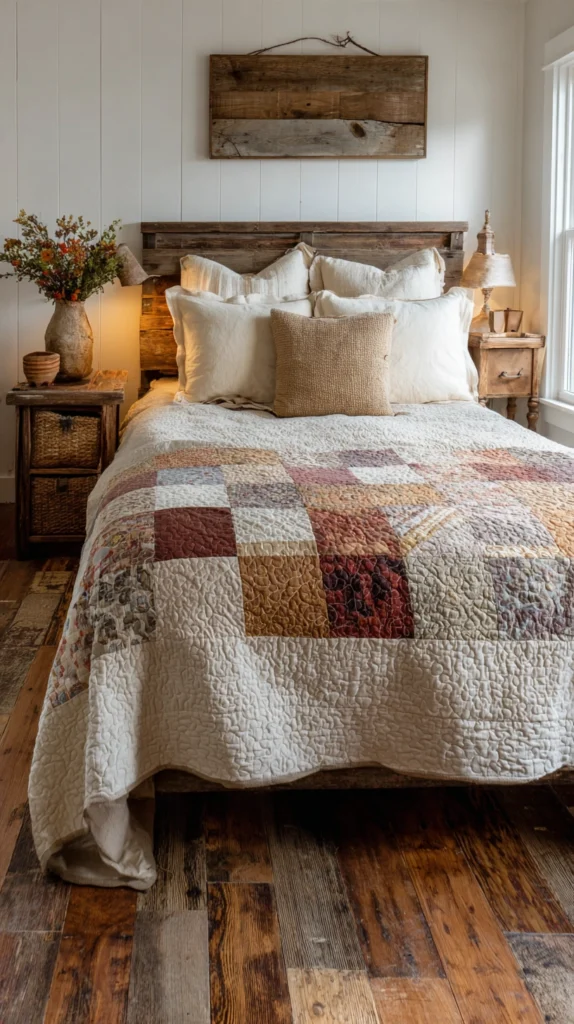
A genuine or genuinely handmade-style patchwork quilt, used as the primary or layered top bedding — bringing the handcraft tradition central to farmhouse style directly onto the bed.
My smooth, unpatched bedding:
What I had:
- A solid, smooth duvet cover with no patchwork or visible handcraft quality
- A missed opportunity to incorporate one of farmhouse style’s most historically authentic textile traditions
Why a patchwork quilt specifically matters for this style:
The historical and material authenticity:
- Quilting represents one of farmhouse and rural American textile tradition’s most direct, historically grounded crafts
- A genuine patchwork quilt, whether vintage or newly made in the traditional style, brings this specific handcraft history onto the bed in a way that smooth, mass-produced bedding cannot replicate
Vintage versus new patchwork quilts:
Choosing the right source:
- Genuine vintage quilts, sourced from estate sales or antique shops, carry real history and often show beautiful natural fading and wear ($40-150)
- New quilts made in traditional patchwork style by independent makers, if a vintage piece is not available or budget allows for a custom commission, can still achieve the same visual and material quality ($100-300)
Color palette for fall specifically:
What suits the season:
- Earthy browns, rust, and cream patchwork combinations, the most traditionally farmhouse and most clearly fall-appropriate color story
- Avoiding overly bright or pastel quilt patterns, which can feel more spring or summer appropriate than fitting this specific seasonal and stylistic combination
Placement and layering:
How to use the quilt within the broader bedding system:
- As the primary top layer, if the season and climate allow for this weight as the main covering
- Folded at the foot of the bed, layered over a simpler solid duvet, if additional warmth beyond the quilt alone is needed, connecting to broader layered bedding principles discussed in fall bedding guidance
Cost:
- Vintage quilt: $40-150
- New traditional-style quilt: $100-300
- Total: $40-300
My patchwork quilt result: Finding a vintage rust and cream patchwork quilt at an estate sale for sixty-five dollars and folding it at the foot of my bed over a simpler cream duvet brought genuine handcraft history and texture onto the bed, the slight fading and visible hand-stitching gave the bedding a quality that no new, smooth bedding purchase could have replicated.
Patchwork Quilt Tips
Inspecting vintage quilts for structural integrity before purchasing:
A practical secondhand sourcing consideration:
- Checking for any significant tears, weak seams, or extensive staining before purchasing a vintage quilt ensures the piece will hold up to continued display and occasional use, rather than deteriorating further
- Minor fading and soft wear are desirable character traits; structural damage is a more serious concern
Hand washing or professional cleaning rather than standard machine washing:
Preserving delicate vintage stitching:
- Genuine vintage quilts often require gentler care than modern bedding
- Hand washing in cold water, or seeking professional textile cleaning for particularly delicate or valuable pieces, protects the quilt’s longevity significantly compared to a standard machine wash cycle
4. A Vintage Ladder Used as a Blanket and Throw Display (Repurposed Farm Object as Storage)
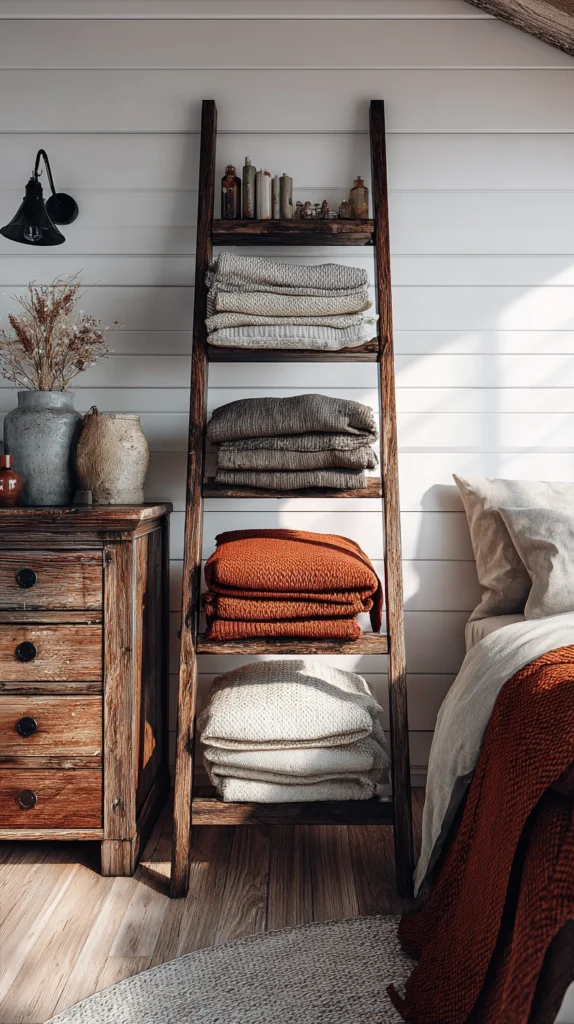
An old wooden ladder, leaned against the wall and used to display folded throws and blankets — one of farmhouse style’s most recognizable repurposed-object techniques, executed specifically for fall textile storage.
My closeted, hidden throw blanket storage:
What was happening:
- Extra throws and blankets stored in a closet, available for use but never visually contributing to the room’s styling between uses
Why a ladder display specifically suits this farmhouse need:
The repurposed-utility principle:
- Farmhouse style consistently celebrates the practice of repurposing genuinely old, formerly functional objects for new decorative or storage purposes
- An old wooden ladder, leaned against a wall and draped with folded blankets, transforms both a a storage need and a piece of genuine agricultural history into a single, visually compelling display
Sourcing an authentic vintage ladder:
Where to find the right piece:
- Estate sales and barn sales, frequently the best source for genuine old wooden ladders with real age and wear
- Antique shops, often carrying a curated selection at a higher but still generally reasonable price point
- Architectural salvage yards, occasionally carrying ladders alongside other reclaimed building material
What to look for in the ladder itself:
Selecting for both authenticity and safety:
- Genuine wood construction, with visible age, wear, and natural patina rather than a new reproduction
- Structural soundness sufficient to support the weight of folded textiles leaning against and draped over the rungs, even though the ladder itself is no longer being climbed
Styling the throws on the ladder:
Arrangement technique:
- Folding each throw or blanket loosely rather than precisely, allowing some natural drape and texture variation between the different rungs
- Choosing two to three different fall-toned throws (rust, cream, olive) rather than identical pieces, creating visual variety across the ladder’s height
Placement in the bedroom:
Where this piece works best:
- Leaned in a corner, similar to the corner-filling principle discussed in broader hobbitcore and cottage bedroom guidance
- Beside the bed, providing easy access to an extra throw on colder nights while also serving its decorative function
Cost:
- Vintage wooden ladder: $30-100, depending on size, age, and source
- Total: $30-100
My vintage ladder result: Finding an old wooden ladder at a barn sale for forty dollars and leaning it in my bedroom corner, draped with three different fall-toned throws, solved my hidden blanket storage problem while adding one of the most distinctly farmhouse, genuinely characterful objects in my entire room.
Vintage Ladder Tips
Securing the ladder against the wall if stability is a concern:
A practical safety measure:
- A small museum putty application or a discreet wall anchor strap, particularly in homes with children or pets, prevents the leaned ladder from tipping if bumped
- This securing should not be visible once in place, maintaining the casual, leaned appearance the styling depends on
Rotating which throws are displayed seasonally:
Keeping the display relevant year-round:
- While this list focuses on fall, the same ladder display technique works across every season simply by rotating which throws and colors are draped across it
- This adaptability makes the ladder itself a permanent fixture, with only the textile choices changing seasonally
5. A Distressed Wood Dresser With Original or Replaced Vintage Hardware (Furniture With Genuine Age)
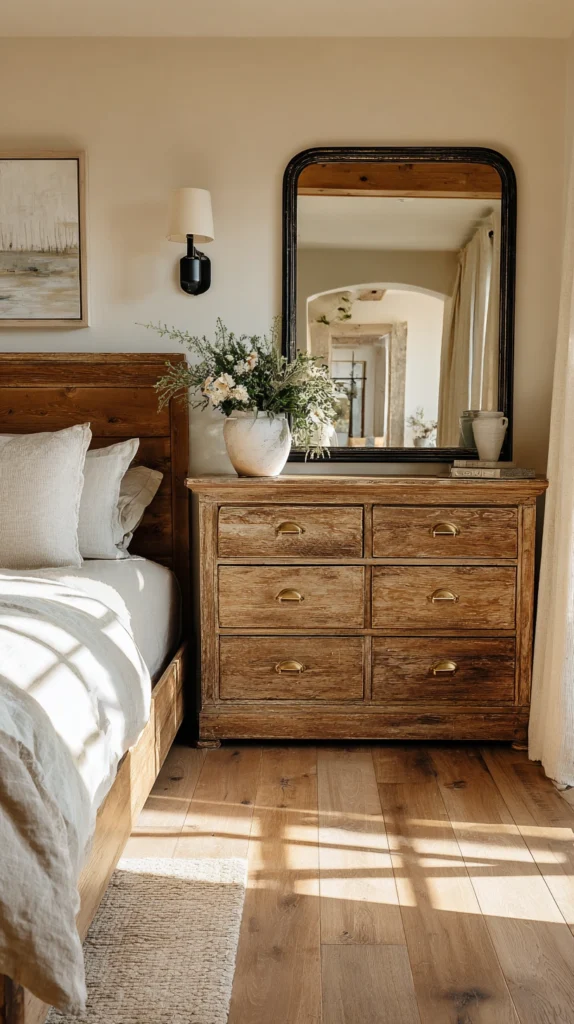
A dresser showing authentic wear, paired with either its original aged hardware or carefully sourced vintage replacement hardware — extending the genuine-age principle from the headboard to another major furniture piece.
My new, uniform dresser:
What I had:
- A new dresser, purchased from a major retailer, with a uniform, unmarked finish and modern brushed nickel hardware
- A piece that, while functional, contributed nothing to the room’s developing farmhouse and fall character
Why a genuinely aged dresser matters for this style specifically:
The furniture-as-history principle:
- Farmhouse style consistently values furniture that shows real age and use, treating these marks as evidence of a meaningful history rather than damage to be hidden
- A genuinely distressed or worn dresser, sourced secondhand, brings this exact quality into the room in a way new furniture, however well-made, cannot replicate without artificial intervention
Sourcing a genuinely aged piece:
Where to find authentic options:
- Estate sales, frequently offering genuinely old dressers with decades of real wear, often at very reasonable prices given the general decline in demand for older, heavier furniture among many buyers
- Antique shops, providing a curated selection at a generally higher but still often accessible price point
- Secondhand and consignment furniture stores, occasionally carrying solid older pieces overlooked by buyers seeking more modern styles
Original versus replacement hardware:
Choosing the right approach:
- If a piece retains its original hardware in reasonably functional and visually appealing condition, keeping this original hardware maintains the most direct historical authenticity
- If original hardware is missing, broken, or simply unappealing, sourcing genuine vintage replacement hardware (rather than new reproduction hardware) from antique shops or specialty hardware dealers maintains the same authentic quality
What to look for in the piece itself:
Selecting for genuine versus excessive damage:
- Visible wear, minor scuffs, and an aged patina to the wood finish, which read as character
- Avoiding pieces with serious structural damage (broken drawers, unstable joints) that would require extensive, costly repair beyond simply accepting cosmetic wear
Cost:
- Genuinely aged secondhand dresser: $60-250, depending on size, condition, and source
- Vintage replacement hardware, if needed: $15-50 for a full set
- Total: $75-300
My distressed dresser result: Finding a solid wood dresser at an estate sale for ninety dollars, retaining its original slightly tarnished brass pulls rather than replacing them, brought genuine decades of history into my bedroom, the worn finish and slightly uneven drawer fronts, rather than detracting from the piece, are now exactly what make it feel right within the room’s broader farmhouse fall character.
Distressed Dresser Tips
Testing drawer function before purchasing, regardless of cosmetic appeal:
A practical functionality check:
- However visually appealing a piece’s wear and age might be, confirming that drawers still open, close, and hold weight properly ensures the dresser remains genuinely usable, not merely decorative
- This check matters more for secondhand furniture than new pieces, where manufacturing defects are less likely but age-related wear is more variable
Conditioning the wood rather than refinishing it, if some restoration is desired:
Preserving character while improving condition:
- A simple wood conditioner or light wax application can refresh a dry, aged wood finish without removing the patina and wear marks that constitute the piece’s genuine character
- Full refinishing or sanding, by contrast, often removes exactly the qualities that made the piece desirable for this specific style in the first place
6. A Woven Jute or Sisal Area Rug (Natural Fiber Underfoot)
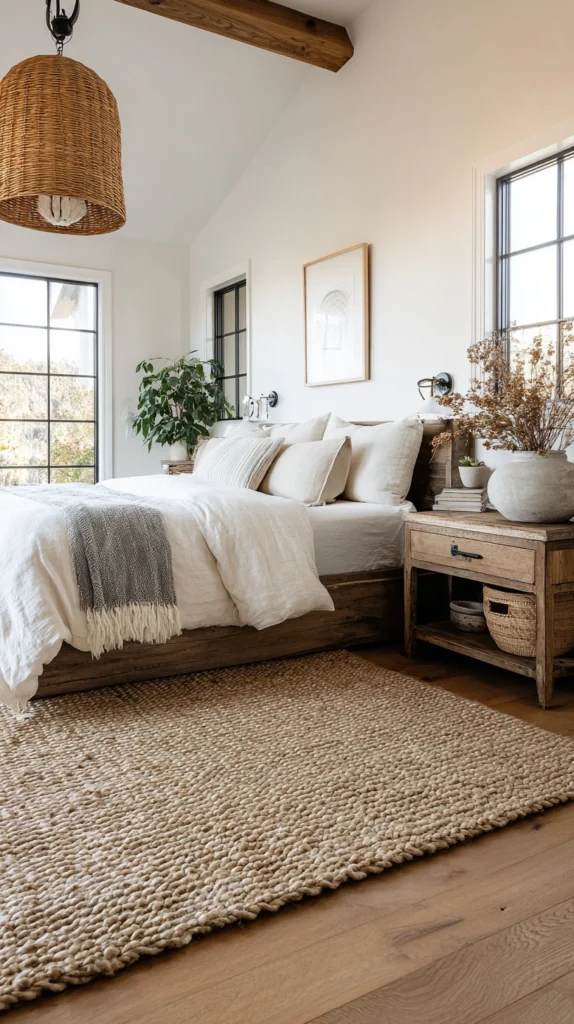
A rug made from genuine natural plant fiber, rather than synthetic material, anchoring the bedroom floor — extending the farmhouse material vocabulary to the one surface most often overlooked.
My synthetic, mass-produced area rug:
What I had:
- A standard synthetic fiber area rug, purchased for its pattern and color rather than any material consideration
- A surface that, while functional, contributed nothing to the room’s developing natural-material farmhouse story
Why natural fiber specifically matters for this particular surface:
The material consistency principle, applied to the floor:
- Farmhouse style’s authenticity depends heavily on genuine natural materials throughout: wood, metal, and fiber
- A synthetic rug, regardless of how appropriate its color or pattern might seem, breaks this material consistency at the one surface covering the largest area of the room
Jute versus sisal:
Understanding the material difference:
- Jute offers a softer, slightly more golden-toned natural fiber, generally more affordable and slightly less durable than sisal
- Sisal provides a more durable, slightly coarser texture, often at a somewhat higher price point, suiting higher-traffic areas particularly well
Color and pattern considerations:
What suits a farmhouse fall bedroom specifically:
- Natural, undyed jute or sisal in its inherent warm tan tone, the most authentic and versatile choice
- A simple woven pattern (herringbone or basketweave) rather than a printed design, maintaining the material’s natural, textural authenticity rather than introducing an artificial decorative layer
Layering over or beneath other rugs:
A practical approach for added softness:
- A natural fiber rug, while authentic and visually appropriate, can feel less soft underfoot than synthetic alternatives
- Layering a smaller, softer accent rug (a faux sheepskin, for example) on top of the larger natural fiber base rug provides both material authenticity and physical comfort, similar to layering techniques discussed throughout broader fall textile guidance
Cost:
- Jute or sisal area rug (bedroom size, approximately 5×7 or 6×9): $80-200
- Total: $80-200
My natural fiber rug result: Replacing my synthetic area rug with a natural jute rug in a simple herringbone weave, for about one hundred ten dollars, finally extended my room’s genuine material consistency to the floor, the warm, slightly rough natural texture underfoot also added a tactile authenticity that the previous synthetic rug, however nice its pattern, had never provided.
Natural Fiber Rug Tips
Using a rug pad for both safety and comfort:
A practical addition regardless of rug material:
- Natural fiber rugs, like any rug, benefit significantly from a rug pad underneath, preventing slipping and adding some cushioning that the fiber alone does not provide
- This addition is particularly worth considering given natural fiber’s generally firmer feel compared to many synthetic alternatives
Spot cleaning rather than deep washing, given the material’s properties:
Appropriate maintenance for natural fiber:
- Jute and sisal generally should not be fully saturated with water, which can cause the natural fibers to weaken or develop mildew
- Addressing spills and stains promptly with spot cleaning, and using dry cleaning methods for deeper maintenance, protects the rug’s longevity appropriately for this specific material
7. A Whitewashed or Shiplap Accent Wall (Architectural Texture Behind the Bed)
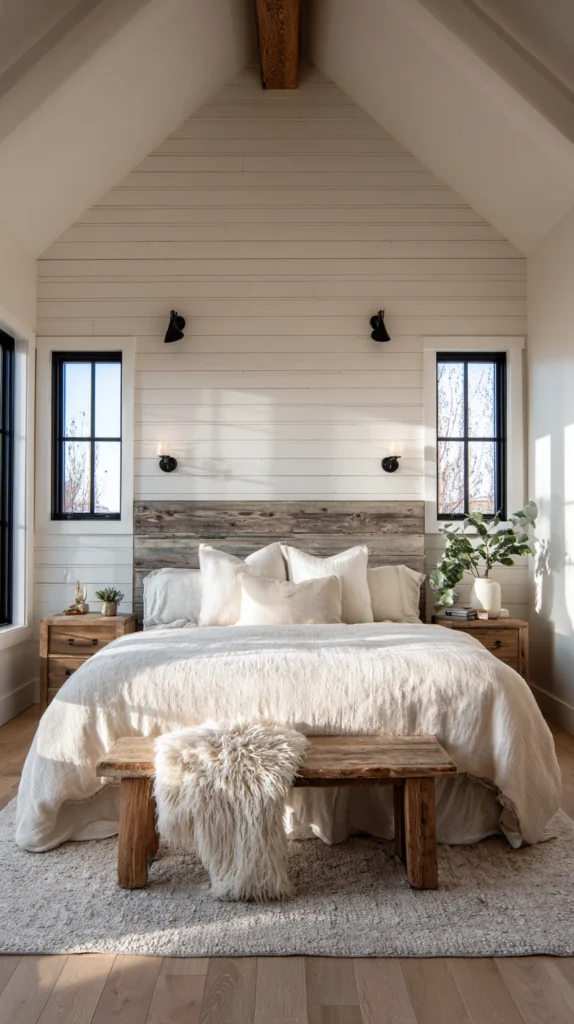
A wall treated with whitewash or actual shiplap paneling, providing architectural texture as the bed’s backdrop — bringing one of farmhouse style’s most recognizable architectural signatures directly into the bedroom.
My flat, smooth headboard wall:
What was missing:
- A plain painted wall behind the bed, providing no textural or architectural interest beyond flat color
- A missed opportunity for one of the style’s most visually significant and recognizable architectural treatments
Why shiplap or whitewash specifically defines this style architecturally:
The architectural signature principle:
- Shiplap paneling, in particular, has become one of the most immediately recognized visual signatures of farmhouse style specifically
- A whitewashed treatment, whether applied to actual shiplap or simply to existing wood paneling or even brick, provides a similar aged, textural quality consistent with the same overall aesthetic
Shiplap installation:
Building this treatment:
- Horizontal wood planks, installed with a small reveal gap between each board, mounted directly to the existing wall
- This can be executed in real, somewhat rough-sawn lumber for the most authentic texture, or in smoother, more refined boards for a slightly cleaner version of the same look
Whitewashing technique:
Achieving the aged, translucent white finish:
- Mix white paint with water at roughly a one-to-one ratio, or use a specifically formulated whitewash product
- Apply with a brush, working in sections, allowing some of the underlying wood grain to remain visible through the translucent finish
- Wipe back excess while still wet, adjusting the level of coverage and grain visibility to taste
Where to apply this treatment:
Placement decisions:
- The full headboard wall, for the most significant architectural impact, similar in scope to the headboard wall treatments discussed in broader fall bedroom guidance
- A single accent section, if a full wall feels like too significant a commitment, still providing meaningful texture without the full installation effort
Cost:
- Shiplap boards (one wall, materials only, basic pine): $80-200
- Whitewash paint or mixing materials: $25-50
- Total: $105-250 for a full wall treatment
My whitewashed shiplap result: Installing basic pine shiplap on my headboard wall and finishing it with a hand-mixed whitewash, for about one hundred forty dollars total in materials, gave my bed’s backdrop genuine farmhouse architectural texture, the visible wood grain showing through the translucent white finish provides exactly the aged, authentic quality this style depends on.
Shiplap and Whitewash Tips
Practicing the whitewash technique on a scrap board first:
Avoiding an uneven result on the actual installed wall:
- The wipe-back technique that creates whitewash’s characteristic translucent, grain-revealing finish takes some practice to execute evenly
- Testing on a scrap piece of the same wood before applying to the full installed wall prevents an unsatisfying first attempt on the actual visible surface
Choosing rougher-sawn lumber for more authentic texture:
A material selection consideration:
- Smooth, finished lumber, while easier to install and paint evenly, provides less visible grain and texture than rougher-sawn boards
- Rough-sawn or reclaimed lumber, even when whitewashed, retains more visible texture and authentic character than smoother alternatives
8. A Wire or Metal Egg Basket Repurposed as a Catch-All (Farmhouse Function for Everyday Items)
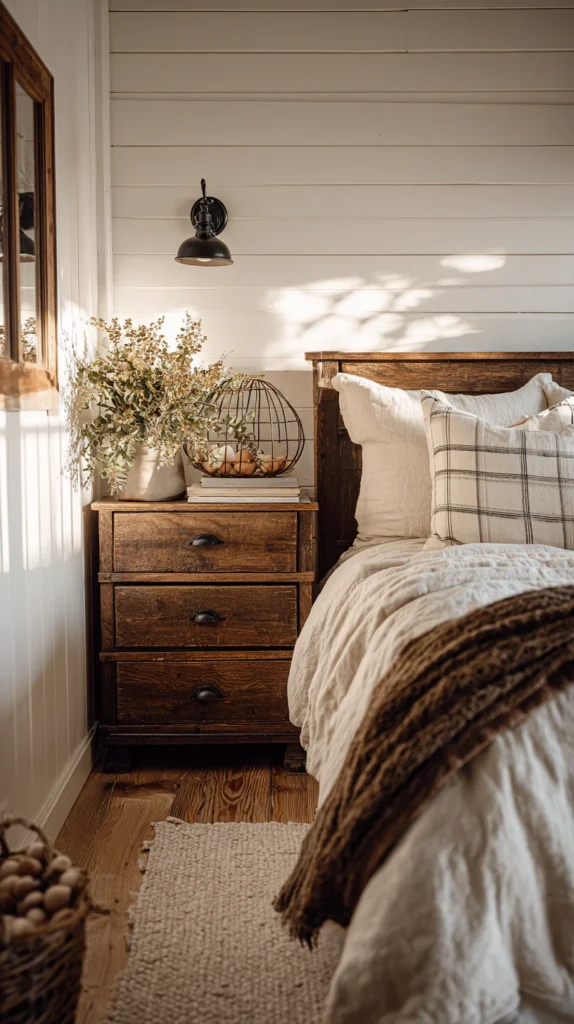
A genuine vintage wire egg-gathering basket, repurposed to hold everyday bedroom items — bringing authentic farm-utility object history into a purely modern, everyday function.
My generic plastic catch-all bin:
What I had been using:
- A plain plastic bin for holding miscellaneous bedroom items: spare phone chargers, hair accessories, and similar small daily-use objects
- A purely functional object contributing nothing to the room’s developing material and historical character
Why a genuine wire egg basket specifically suits this repurposing:
The authentic-utility-object principle, applied to everyday function:
- Farmhouse style frequently repurposes genuinely old agricultural or utilitarian objects for new household functions, similar to the ladder discussed in idea 4
- A vintage wire egg basket, originally designed for collecting and carrying eggs on an actual farm, brings this same authentic history into a now-everyday bedroom organizational function
Sourcing this specific object:
Where to find genuine examples:
- Antique shops and estate sales, frequently carrying genuine vintage wire baskets, often at very reasonable prices given how plentiful these once-common farm objects remain in secondhand markets
- Farm auctions and rural estate sales specifically, often yielding the richest and most affordably priced selection
What to look for:
Selecting the right piece:
- Genuine wire construction with some natural rust or patina, rather than a new reproduction with artificially applied aging
- A size appropriate to the intended bedroom function, since these baskets vary considerably in their original dimensions
Using it for modern bedroom needs:
Practical applications:
- Holding rolled extra blankets or throws, connecting to the same textile storage need addressed by the ladder in idea 4
- Containing magazines or current reading material, if a basket rather than the stacked-book approach discussed in nightstand styling guidance is preferred
- Storing miscellaneous small items that would otherwise clutter a dresser top or nightstand surface
Cost:
- Vintage wire egg basket: $10-35
- Total: $10-35
My wire basket result: Finding a genuine vintage wire egg basket at a farm estate sale for fifteen dollars, now used to hold a rolled extra throw blanket beside my bed, replaced my plain plastic catch-all bin with an object carrying real agricultural history, this small swap contributed more genuine farmhouse character than almost any purely decorative object purchase could have for the same modest cost.
Wire Basket Tips
Checking for sharp or broken wire before regular use:
A practical safety inspection:
- Genuine vintage wire baskets occasionally have broken or sharp wire ends from age and wear
- Inspecting carefully before bringing the piece into regular household use, and gently bending or addressing any sharp points, prevents an avoidable minor injury risk
Lining with fabric if the contents need more protection or a softer presentation:
An optional refinement:
- A simple piece of linen fabric, loosely lined inside the basket, can soften the presentation of its contents while still allowing the wire basket’s authentic exterior to remain the visible, defining feature
9. A Stack of Vintage Books With Worn, Aged Covers (Patina as Decor)
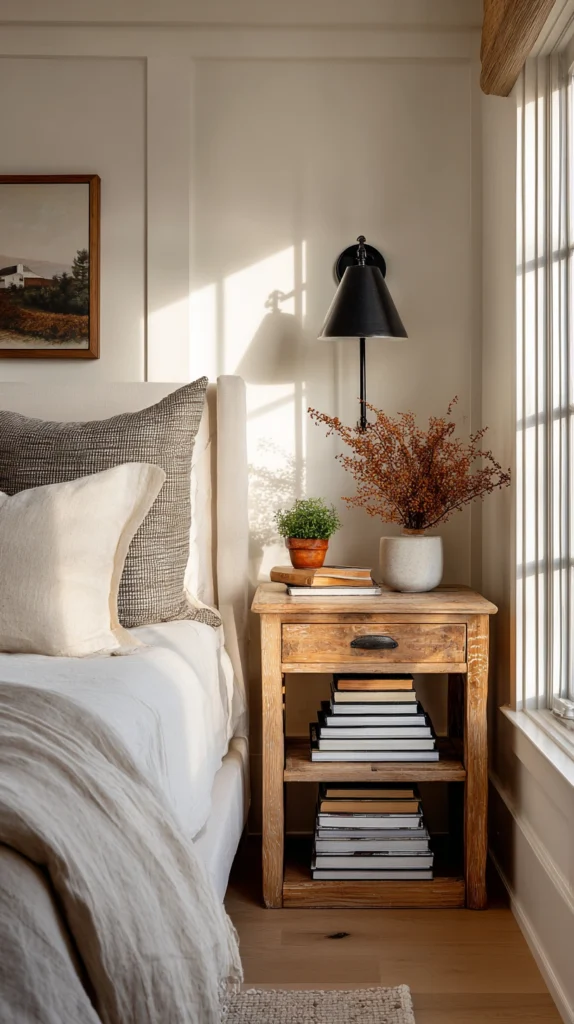
A small stack of genuinely old, worn-covered books, displayed as both reading material and visual texture — extending the genuine-age principle from furniture and vessels to the printed material throughout the room.
My new, glossy-covered book collection:
What was displayed:
- New books with bright, glossy modern cover designs, perfectly fine for actual reading but visually inconsistent with the worn, aged material language developing throughout the rest of the room
Why genuinely aged books specifically support this style:
The patina-throughout principle:
- Just as a worn dresser or a genuinely aged ladder contributes authentic character, a stack of old, worn-covered books does the same work at a smaller scale
- The faded, aged quality of older book covers and spines, particularly hardcovers from several decades ago, provides exactly the visual texture and history this style depends on
Sourcing affordably:
Where to find appropriately aged books:
- Estate sales and library sales, frequently offering large quantities of older books at very low individual prices
- Thrift stores, occasionally carrying older hardcover books with appropriately worn, faded covers
- Family hand-me-downs, if older books already exist somewhere in extended family collections, often the most meaningful and free source
What to look for specifically:
Selecting the right books:
- Genuinely aged, faded cloth or leather-look hardcover bindings, rather than glossy modern dust jackets
- Some natural wear and yellowing to pages, contributing to the overall aged, authentic appearance even when the stack is simply displayed rather than actively being read
Display and arrangement:
Where this fits within the room:
- A small stack on the nightstand, connecting directly to the book stack principles discussed in dedicated nightstand styling guidance, here specifically using aged rather than new editions
- On the dresser top or a small shelf, if additional display space beyond the nightstand allows
Why this works even for books not actively being read:
Acknowledging the dual decorative and functional value:
- While genuinely reading the current title remains valuable for the authenticity discussed in broader nightstand guidance, additional older books in the stack can serve a more purely decorative, textural function without requiring active reading
- This combination, one genuinely current read plus a few purely decorative aged volumes, balances authenticity with visual interest
Cost:
- Vintage books (per book, from estate or library sales): $1-5 each
- For a stack of four to six books: $4-30
My vintage book stack result: Replacing my glossy new book covers on display with a small stack of genuinely aged hardcovers found at a library sale for a combined twelve dollars, while keeping my actual current read, a newer title, tucked beneath them, added exactly the worn, patinated texture the rest of my room’s farmhouse materials had been developing.
Vintage Book Tips
Choosing spine colors that relate to the room’s broader palette:
A coordinating detail within the aged selection:
- Among the available older books at any given sale, selecting those with spine colors in warm, earthy tones (faded reds, browns, deep greens) that relate to the room’s overall fall color story adds a small additional layer of intentional coordination
Handling and storing to prevent further unwanted deterioration:
Balancing authentic age with reasonable preservation:
- While some wear and aging is the entire point of this styling choice, keeping the books away from direct sunlight and excessive humidity prevents accelerated, undesirable deterioration beyond the charming patina already present
10. A Cast Iron or Wrought Iron Wall Sconce (Aged Metal Lighting)
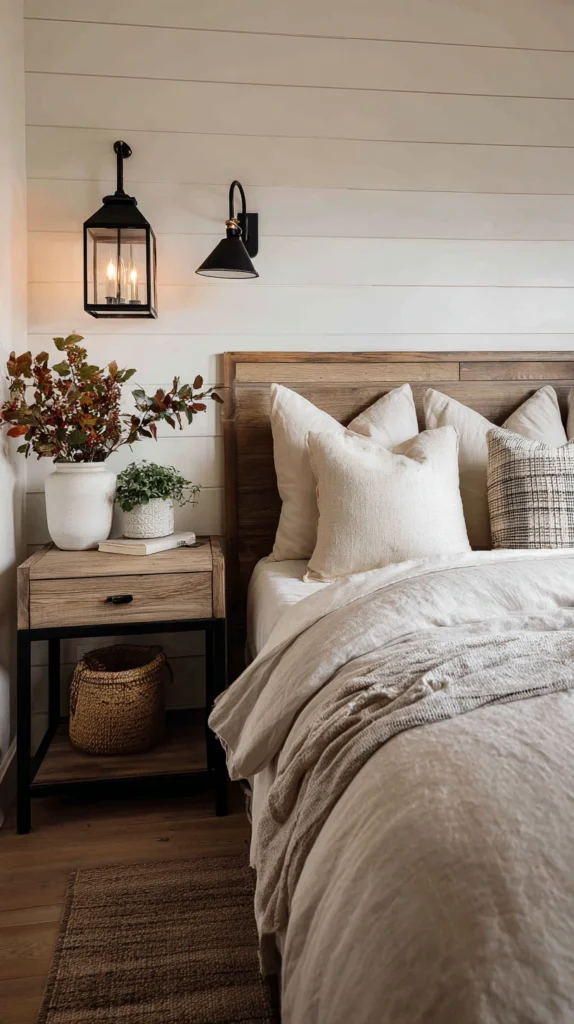
A wall-mounted light fixture in genuinely aged or aged-finish cast or wrought iron — bringing the metal material consistency principle specifically to the room’s lighting.
My modern brushed nickel sconce:
What I had:
- A contemporary brushed nickel wall sconce, technically functional but visually inconsistent with the developing farmhouse material story throughout the rest of the room
Why cast or wrought iron specifically suits this style’s lighting needs:
The material consistency principle, applied to lighting fixtures:
- Farmhouse style’s authentic metal language leans heavily toward darker, heavier, more handcrafted-feeling metals: cast iron, wrought iron, and aged black finishes
- A sconce in this material and finish family extends the same consistency already being established through the dresser hardware, the wire basket, and other metal elements throughout the room
Sourcing options:
New versus genuinely vintage:
- New wrought iron sconces, widely available and specifically designed to reference this aesthetic, at accessible and predictable pricing ($30-80)
- Genuinely vintage cast or wrought iron fixtures, sourced from architectural salvage or antique lighting specialists, for those wanting more authentic age, though often requiring rewiring by a qualified electrician for safe modern use ($40-150 plus rewiring cost)
Style and design considerations:
What to look for:
- Simple, relatively unadorned designs, generally suiting farmhouse style’s overall preference for function-forward, less ornate detailing compared to more elaborate traditional or Victorian iron fixtures
- A finish showing some texture or slight variegation, rather than a perfectly uniform, flat black paint, contributing to the same aged authenticity discussed throughout other material choices on this list
Installation considerations:
Practical electrical notes:
- New fixtures, wired to current safety standards, install following standard wall sconce installation procedures
- Genuinely vintage fixtures should be inspected and likely rewired by a qualified electrician before installation, ensuring both safety and code compliance while preserving the fixture’s authentic external appearance
Cost:
- New wrought iron-style sconce: $30-80
- Genuinely vintage fixture plus rewiring: $40-150 plus electrician labor
- Total: $30-250, depending on approach
My iron sconce result: Replacing my brushed nickel sconce with a simple new wrought iron design, for about fifty-five dollars, extended my room’s developing metal consistency to the lighting specifically, this single fixture swap connected visually to the wire basket, the dresser’s brass pulls, and other metal elements throughout the room in a way the previous nickel fixture never had.
Iron Sconce Tips
Coordinating the bulb’s warmth with the rest of the room’s lighting:
Maintaining consistency beyond just the fixture’s material:
- Choosing a warm 2700K bulb for this sconce, consistent with broader fall and farmhouse lighting principles discussed throughout seasonal bedroom guidance, ensures the light quality itself, not just the fixture’s appearance, supports the overall warm, aged atmosphere
Hiring a qualified electrician for any rewiring of vintage fixtures:
A non-negotiable safety step:
- Genuinely vintage electrical fixtures should never be installed without professional inspection and, typically, rewiring
- This is not an area for DIY shortcuts, given the genuine fire and shock safety risks involved with old, potentially deteriorated original wiring
11. A Galvanized or Tin Star, Hung Simply on the Wall (A Touch of Rustic Folk Symbol)
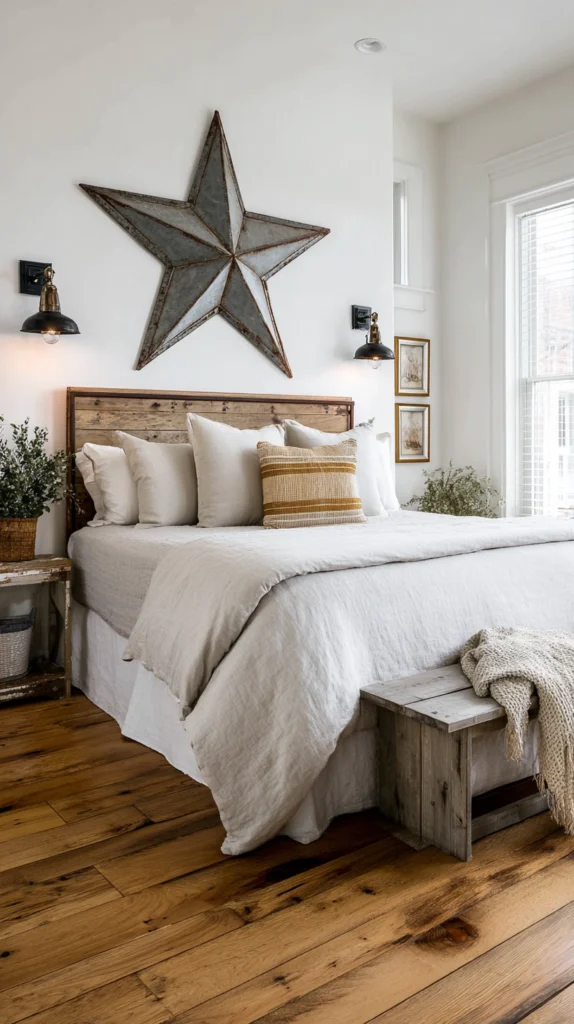
A single galvanized metal star, mounted simply on a wall — a recognizable but, used sparingly, genuinely effective farmhouse decorative symbol.
My initial hesitation about this specific object:
What concerned me:
- This particular decorative item has become so commonly associated with mass-produced, big-box farmhouse decor that I worried it would tip my room toward costume rather than genuine style
- Discovering that the difference came down entirely to material quality and restraint in how many were used, not the object itself being inherently problematic
Why a single, well-made star can still work despite this risk:
The quality-and-restraint distinction:
- A genuinely well-made galvanized or tin star, used as a single accent rather than as part of a larger collection or alongside other overly literal farmhouse symbols, retains the material authenticity this entire list has been building toward
- The specific risk with this object lies in cheap, mass-produced versions used in excess, not in one well-chosen piece used thoughtfully
Choosing the right piece:
What separates a quality version from a costume one:
- Genuine galvanized metal or aged tin, with some natural texture or patina, rather than a flat, uniformly painted reproduction
- A simple, relatively large scale (12 inches or larger), allowing the single piece to function as a genuine focal accent rather than a small, easily-overlooked trinket
Placement for restraint:
Where and how to use this specific object:
- One star only, mounted on an otherwise relatively simple wall, rather than grouped with multiple stars or alongside other overly literal symbols
- Positioned with adequate surrounding negative space, similar to broader restraint principles discussed throughout fall and luxury decor guidance, allowing the single object genuine visual presence
Sourcing affordably:
Where to find a quality version:
- Antique shops and architectural salvage, occasionally carrying genuine vintage barn stars originally used as structural reinforcement hardware on actual barns ($20-60)
- Quality reproduction options from farmhouse-style specialty retailers, if a genuinely vintage piece is not available, choosing the more substantial, better-made options within this category rather than the cheapest available version ($15-40)
Cost:
- Quality galvanized or tin star: $15-60
- Total: $15-60
My single barn star result: Mounting one substantial galvanized barn star, sourced from an architectural salvage yard for thirty-five dollars, on an otherwise simple section of wall, proved that this specific, sometimes over-used decorative symbol works perfectly well when chosen for genuine material quality and used singly rather than in excess, restraint turned out to be the entire deciding factor for this particular object.
Barn Star Tips
Resisting the urge to add a second or third star:
Maintaining the restraint this specific object requires:
- More than this single object firmly tips the room from genuine farmhouse character toward an overly literal, costume-adjacent theme
- This is one specific category where the broader restraint principle running throughout this entire list matters more than almost any other individual decision
Choosing genuine barn star history if available, for an extra layer of authenticity:
An optional deeper sourcing consideration:
- Original barn stars, which historically served a structural reinforcement function on actual barn construction, carry genuine agricultural history beyond purely decorative reproductions
- These authentic pieces, when available through architectural salvage, provide an even deeper layer of the genuine material history this entire style depends on
12. A Linen and Cotton Bedding Layer, Left Deliberately Wrinkled (Texture Over Crisp Perfection)
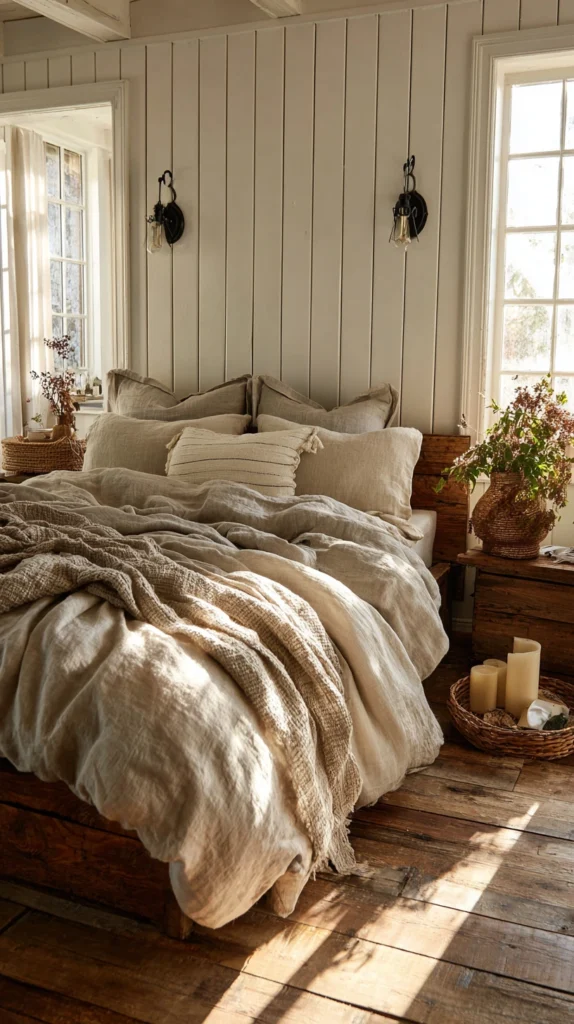
Natural linen or cotton bedding, styled with intentional, natural wrinkle rather than crisp, pressed perfection — applying the genuine, unpolished authenticity principle specifically to the bed’s primary textile surface.
My overly crisp, ironed bedding habit:
What I had been doing:
- Carefully ironing my bedding, pursuing a smooth, hotel-crisp appearance that, while technically neat, worked against the relaxed, lived-in quality this entire style depends on
Why deliberate wrinkle specifically suits farmhouse style:
The lived-in authenticity principle:
- Farmhouse style, much like the cottage and hobbitcore principles discussed in broader bedroom decor guidance, values a sense of genuine daily life and use over showroom-perfect presentation
- Linen and cotton bedding’s natural tendency to wrinkle, rather than being fought against with ironing, actually supports this exact aesthetic when allowed to remain
Material choice specifically:
Why linen and cotton over other fabrics:
- Linen wrinkles in a particularly soft, relaxed way that reads as intentional rather than simply unkempt
- Cotton, particularly a slightly heavier weave like a waffle or basket weave, provides similar natural texture and visible wrinkle without requiring linen’s specific care considerations
Color choices for fall:
What suits the season within this material approach:
- Warm oat, cream, or natural undyed tones, the most versatile farmhouse-appropriate base
- A deeper rust or terracotta duvet cover, if a more saturated fall color statement is desired while maintaining the same natural fiber and intentional wrinkle approach
How to style this deliberately:
Achieving the right look:
- Making the bed without excessive smoothing or pulling tight, allowing the natural fabric folds and creases to remain visible
- Folding back a corner of the top layer casually, rather than perfectly squared, suggesting recent or imminent use rather than untouched, static display
Cost:
- Linen duvet cover and sheet set: $80-200
- Cotton alternative (more affordable): $40-90
- Total: $40-200
My deliberately wrinkled linen result: Switching to a natural oat linen duvet cover and consciously stopping my ironing habit, letting the fabric’s natural creases remain visible after making the bed each morning, finally gave my bedding the relaxed, lived-in quality that a more crisply pressed alternative had been working against this entire time.
Wrinkled Linen Tips
Washing rather than ironing to manage extreme wrinkle if needed:
A middle-ground approach for those uncomfortable with maximum wrinkle:
- If completely unironed linen feels too far from personal comfort, a quick tumble in the dryer on low heat for a few minutes after washing softens the most extreme wrinkles while still preserving significant natural texture, compared to full ironing
Choosing a slightly heavier linen weight for more substantial, less flimsy wrinkle:
A material quality consideration:
- Very lightweight linen can wrinkle in a way that reads as thin or cheap rather than intentionally relaxed
- A mid-weight linen, providing more substantial drape and fold, generally produces more visually appealing, intentional-looking wrinkle than the lightest available weights
13. A Pressed Botanical or Vintage Seed Packet Art (Small-Scale Agricultural Reference)
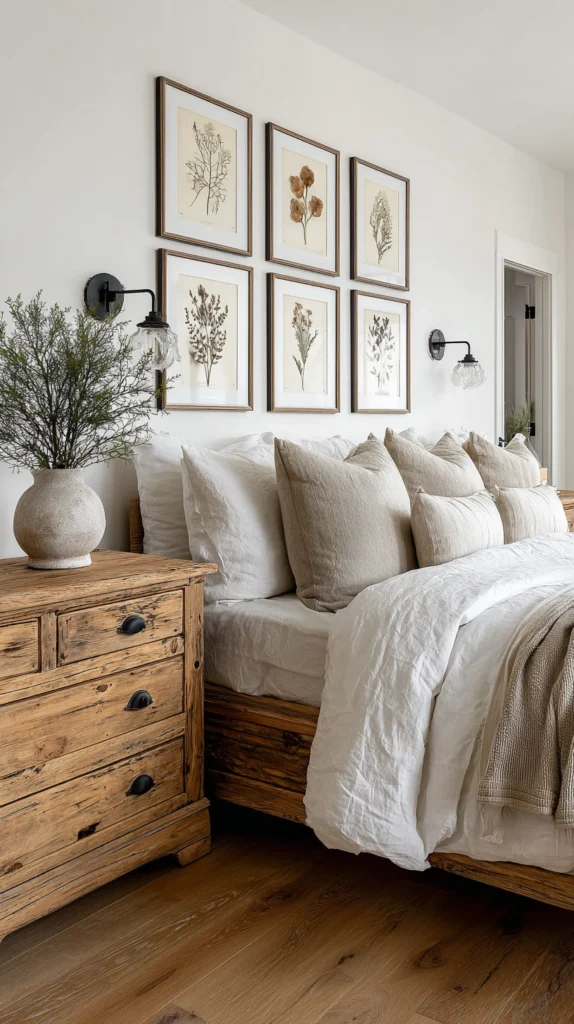
Small framed pieces featuring pressed botanicals or genuine vintage seed packet artwork — bringing agricultural and garden history into the room’s wall art specifically.
My generic decorative prints:
What I had displayed:
- Mass-produced decorative prints with no specific connection to agricultural or garden history, technically fine but contributing nothing beyond color and pattern to the room’s developing theme
Why pressed botanicals or seed packet art specifically suits this style:
The agricultural-reference principle:
- Farmhouse style’s historical roots are deeply agricultural, and small art pieces referencing actual plants, seeds, and garden history connect directly to this foundation in a way generic decorative prints cannot
- This category also tends to be genuinely affordable and accessible, whether through pressing actual botanicals or sourcing vintage seed packet imagery
Pressed botanical art:
Creating this yourself:
- Press actual flowers or leaves, ideally gathered during the appropriate season, between heavy books for several weeks
- Once fully dried and flattened, arrange and mount the pressed material on simple cardstock or directly visible within a frame
- Frame using simple glass-front frames, allowing the pressed material’s natural, somewhat irregular form to remain the visual focus
Vintage seed packet art:
Sourcing this alternative:
- Genuine vintage seed packets, sometimes found at antique shops, estate sales, or online vintage ephemera dealers, framed directly as small art pieces
- Reproduction prints of historical seed packet designs, widely available online, if genuine vintage originals are not accessible, still referencing the same agricultural visual history
Framing and arrangement:
Presentation considerations:
- Simple, consistent frames across multiple pieces, connecting to the broader frame consistency principles discussed in other apartment and bedroom decor guidance
- A small grouping, three to five pieces, arranged in a simple grid above the dresser or beside the bed, rather than scattered individually throughout the room
Cost:
- Pressed botanical materials and basic framing supplies (DIY): $15-40 for several pieces
- Vintage or reproduction seed packet prints, framed: $10-30 per piece
My pressed botanical result: Creating a small grouping of pressed fall leaves and seed heads, gathered locally and pressed over several weeks, then framed in simple matching black frames for about thirty dollars total in materials, gave my bedroom wall art a genuine, specific connection to the actual season and the agricultural history central to this entire style, far more meaningful than the generic prints it replaced.
Pressed Botanical Tips
Choosing botanicals with interesting, varied shapes for visual interest:
Selecting beyond just convenient availability:
- Seeking out specimens with genuinely interesting silhouettes, whether delicate ferns, structured seed heads, or simple colorful leaves, produces more visually compelling pressed art than grabbing whatever happens to be most immediately accessible
Protecting pressed material from fading with UV-resistant glass if displayed in bright light:
A practical preservation consideration:
- Pressed botanical material can fade further with extended light exposure
- Choosing UV-resistant glass for the frame, or positioning the display away from the most direct sunlight, helps preserve the pressed material’s appearance longer
14. A Vintage Milk Glass or Stoneware Crock on the Dresser (Substantial, Aged Vessel as Anchor)
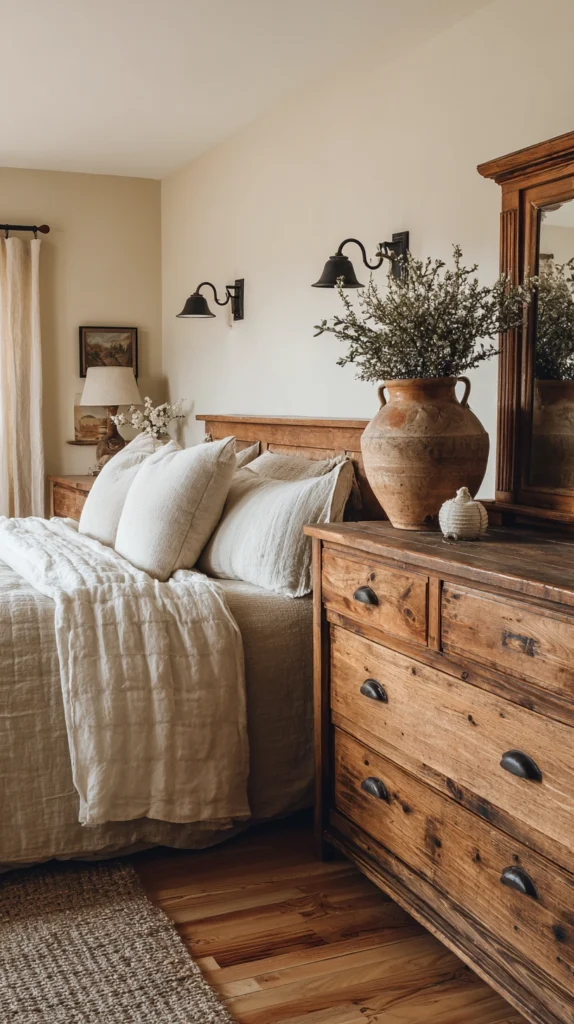
A genuine piece of vintage milk glass or stoneware crockery, displayed as a substantial decorative anchor on the dresser top — bringing another category of authentic farmhouse vessel into the room beyond the bedside pitcher discussed in idea 2.
My missing dresser-top anchor:
What was happening:
- A dresser top with smaller, scattered objects but no single substantial piece anchoring the overall arrangement
- A missed opportunity for a genuinely characterful larger vessel to provide the same anchoring function discussed for console tables in broader luxury and designer decor guidance, here executed specifically in farmhouse-appropriate material
Why milk glass or stoneware specifically suits this role:
The authentic-material-at-scale principle:
- Both milk glass and stoneware crockery represent genuine, historically common farmhouse and rural kitchen materials, now widely collected and available secondhand
- Their substantial size and weight, compared to smaller decorative objects, allows them to function as the same kind of anchoring presence a large vase or sculptural piece provides in more general decor guidance, here specifically in farmhouse-authentic material
Milk glass specifically:
What this material is and how to source it:
- A type of opaque or translucent white glass, historically popular for various household vessels, now widely collected at antique shops and estate sales
- Available in various shapes, vases, compotes, and covered dishes, providing flexibility in choosing a specific piece suited to the dresser’s available space
Stoneware crockery specifically:
An alternative or complementary material:
- Heavier, more rustic ceramic crocks, historically used for food storage and preparation, now available secondhand often at very reasonable prices given their substantial weight discourages some casual buyers
- A particularly suitable choice for holding dried botanicals at a larger scale than the bedside pitcher from idea 2 might accommodate
Styling this piece:
What to do with the vessel once placed:
- Filled with a larger arrangement of dried fall botanicals (substantial pampas grass stems, dried hydrangea, or similar larger-scale dried material)
- Left empty, if the piece’s own form and material are visually substantial enough to stand alone as a sculptural object, connecting to the purely aesthetic object principles discussed in broader decor guidance
Cost:
- Vintage milk glass piece: $10-40
- Vintage stoneware crock: $15-60, depending on size
- Total: $10-60
My stoneware crock result: Finding a substantial vintage stoneware crock at an estate sale for twenty-five dollars and filling it with a generous arrangement of dried pampas grass and wheat stalks, placed on my dresser top, finally gave that surface the anchoring presence it had been missing, every smaller object surrounding it now reads as intentionally arranged around this one substantial piece rather than competing for attention without any clear hierarchy.
Vintage Crock Tips
Checking for hairline cracks, particularly in stoneware:
A practical inspection step:
- Running fingers along the interior and exterior surfaces, and tapping gently to listen for a clear versus dull sound, helps identify hairline cracks that might not be immediately visible but could affect the piece’s structural integrity over time
Scaling the piece appropriately to the dresser’s actual size:
A proportion consideration:
- A crock or vessel too large for the available dresser surface can look overwhelming and impractical
- Measuring the dresser top before purchasing, and choosing a piece that leaves adequate surrounding space for other smaller objects, maintains proper proportion within the overall arrangement
15. A Hand-Stitched or Embroidered Throw Pillow With a Simple Farmhouse Phrase or Motif (Personal Handcraft Detail)
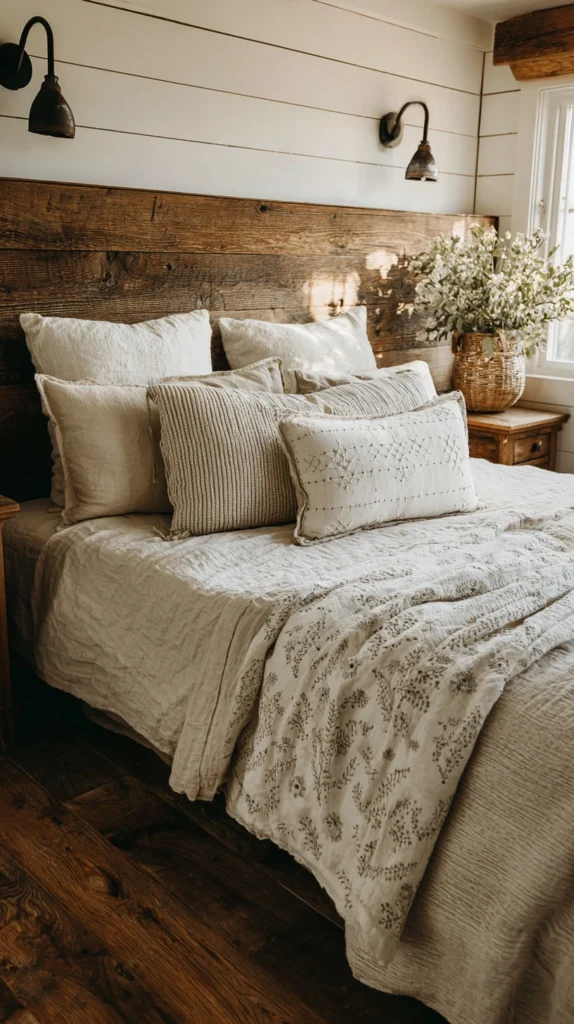
A single throw pillow featuring genuine hand-stitching or embroidery, rather than printed text or pattern — closing this list with the smallest-scale but perhaps most personally meaningful handcraft detail available.
My printed, mass-produced throw pillow:
What I had been using:
- A pillow with a printed farmhouse-style phrase, technically fitting the aesthetic’s common visual language but lacking any genuine handcraft quality
- A reminder that even within an otherwise carefully sourced, genuinely material-conscious room, this one object had remained purely mass-produced
Why genuine hand-stitching specifically matters for this final detail:
The handcraft-throughout principle:
- This entire list has built toward genuine material authenticity: real wood, real aged metal, real natural fiber
- A hand-stitched or embroidered pillow extends this same authenticity to the smallest, most personally crafted object category, completing rather than undermining the room’s overall genuine, handmade quality
Sourcing or creating this piece:
Options across skill and budget levels:
- Purchasing from independent embroidery or needlework artists, frequently found through Etsy or local craft fairs, supporting genuine handcraft at accessible prices ($20-60)
- Learning basic embroidery and creating the piece personally, for those interested in developing this specific skill, requiring only basic supplies and patience ($10-20 in materials)
- Sourcing a genuinely vintage hand-embroidered piece from an estate sale or antique textile dealer, carrying additional historical authenticity ($15-50)
Choosing the motif or phrase:
What suits this final, personal detail:
- A simple botanical motif (a wheat sheaf, a simple floral pattern) rather than text, if a more universally timeless image is preferred over a phrase that might feel dated over time
- A short, genuinely meaningful phrase, if text is desired, chosen for personal significance rather than the most commonly available, potentially overused farmhouse sayings
Fabric and color for the surrounding pillow:
Completing the piece:
- A natural linen or cotton base fabric, consistent with the broader natural fiber principles established throughout this list
- Warm, earthy embroidery thread colors (rust, deep gold, olive) coordinating with the room’s overall fall palette
Cost:
- Independent maker pillow cover: $20-60
- DIY materials: $10-20
- Vintage piece: $15-50
- Total: $10-60
My hand-embroidered pillow result: Commissioning a simple hand-embroidered wheat sheaf motif pillow cover from an independent Etsy maker for thirty-eight dollars, in natural linen with rust-toned thread, replaced my previous printed pillow with a piece carrying genuine handcraft quality, this small final detail completed the sense that every material throughout my room, down to its smallest textile accent, had been chosen with real intention rather than convenience alone.
Hand-Stitched Pillow Tips
Verifying genuine hand-stitching versus machine embroidery when purchasing:
A practical authenticity check:
- Some “hand-embroidered” listings actually feature machine embroidery designed to mimic the hand-stitched look
- Asking the seller directly, or examining stitch consistency closely (genuine hand-stitching typically shows slight, charming irregularity that machine work does not), confirms authentic handcraft before purchasing
Treating this as an opportunity to learn the skill personally, if time allows:
An alternative, more involved approach:
- Basic embroidery is a genuinely learnable skill with readily available beginner tutorials and modest material investment
- For those drawn to the broader handcraft values this entire farmhouse style depends on, learning to create this specific small object personally extends the authenticity even further than purchasing, however well-sourced the purchased alternative might be
Choosing Your Farmhouse Fall Bedroom Priorities
By foundational impact:
Build these first:
- Reclaimed wood headboard (idea 1): the room’s defining architectural anchor
- Shiplap or whitewashed accent wall (idea 7): the bed’s architectural backdrop
- Distressed wood dresser (idea 5): the second major furniture anchor
Then add material consistency:
- Galvanized pitcher or vessel (idea 2)
- Wire basket (idea 8)
- Iron sconce (idea 10)
- Vintage crock (idea 14)
Then layer texture and personal detail:
- Patchwork quilt (idea 3)
- Wrinkled linen bedding (idea 12)
- Pressed botanical art (idea 13)
- Hand-stitched pillow (idea 15)
Finally, the more advanced or restraint-dependent additions:
- Vintage ladder (idea 4)
- Natural fiber rug (idea 6)
- Vintage books (idea 9)
- Single barn star (idea 11), used with genuine restraint
By budget level:
Under $50:
- Galvanized vessel (idea 2), vintage books (idea 9), pressed botanical art (idea 13)
$50-200:
- Patchwork quilt (idea 3), iron sconce (idea 10), wire basket (idea 8), barn star (idea 11), hand-stitched pillow (idea 15)
$200-500:
- Reclaimed headboard (idea 1), distressed dresser (idea 5), natural fiber rug (idea 6), vintage ladder (idea 4), shiplap wall (idea 7)
Maintenance Through the Season
Weekly:
- Spot clean and reposition any shifted textiles
- Dust vintage metal and wood pieces
Monthly:
- Refresh dried botanical arrangements in vessels
- Check vintage furniture for any new wear requiring attention
Seasonal transition:
- Rotate throw colors on the vintage ladder display
- Reassess the dried botanicals throughout for freshness and visual appeal as fall progresses
My Complete Farmhouse Fall Bedroom Build
What I assembled across eight months:
Months 1-2 ($240):
- Reclaimed wood headboard
- Galvanized pitcher with dried wheat
Months 3-4 ($310):
- Distressed wood dresser
- Iron wall sconce
- Vintage crock for the dresser top
Months 5-6 ($265):
- Patchwork quilt
- Natural fiber rug
- Vintage ladder
Months 7-8 ($175):
- Shiplap and whitewash accent wall
- Pressed botanical art
- Hand-stitched pillow
Total investment: $990 across eight months Result: A bedroom with genuine, consistent farmhouse material character that intensifies naturally each fall Most important lesson: Genuine material sourcing, even gradually and secondhand, consistently outperformed any faster mass-produced farmhouse-style alternative
Getting Started This Weekend
Start with one genuine material change, not a collection of small objects.
This weekend:
Step 1 — Visit one estate sale or secondhand source:
- Look specifically for one substantial piece: a dresser, a vessel, or a piece of vintage furniture
- Prioritize genuine age and material over anything mass-produced and labeled “farmhouse style”
Step 2 — Assess your headboard wall:
- Determine whether a reclaimed wood headboard or a whitewash treatment is the more immediately achievable foundational project for your specific space and skill level
Step 3 — Begin the material audit:
- Walk through your current bedroom and identify any synthetic or overly polished materials that could eventually be replaced with genuine wood, metal, or natural fiber alternatives
My recommendation:
Begin with the bed itself, whether through a reclaimed headboard or simply a genuine patchwork quilt, since this single largest object in the room establishes the material foundation every other idea on this list depends on for its full effect.
Now go bring the genuine, material-driven warmth of farmhouse fall style into your bedroom.
Quick Summary
The 15 farmhouse fall bedroom ideas:
Foundational furniture and architecture:
- Reclaimed wood headboard (idea 1): the bed’s defining architectural element
- Distressed wood dresser (idea 5): furniture with genuine age
- Shiplap or whitewashed accent wall (idea 7): architectural texture behind the bed
Authentic vessels and vintage objects:
- Galvanized or enamel pitcher (idea 2): authentic farmhouse vessel
- Vintage ladder (idea 4): repurposed farm object as storage
- Wire egg basket (idea 8): farmhouse function for everyday items
- Vintage milk glass or stoneware crock (idea 14): substantial aged anchor
Textiles and handcraft:
- Patchwork quilt (idea 3): handmade texture across the bed
- Natural fiber rug (idea 6): natural fiber underfoot
- Wrinkled linen bedding (idea 12): texture over crisp perfection
- Hand-stitched pillow (idea 15): personal handcraft detail
Metal and lighting:
- Iron wall sconce (idea 10): aged metal lighting
- Single barn star (idea 11): rustic folk symbol, used with restraint
Personal and printed touches:
- Vintage books (idea 9): patina as decor
- Pressed botanical art (idea 13): small-scale agricultural reference
The two non-negotiable rules:
Choose genuine materials over mass-produced “farmhouse style” reproductions:
- Real reclaimed wood, real aged metal, and real natural fiber consistently outperform new items manufactured to merely resemble these qualities
Apply restraint, particularly with the style’s most recognizable symbols:
- One barn star, used thoughtfully, succeeds where three would tip into costume; this restraint principle applies throughout, but matters most with the style’s most immediately recognizable decorative shorthand
Common mistakes:
- Filling a room with new, mass-produced “farmhouse style” decor rather than seeking genuine reclaimed and vintage materials
- Using multiple overly literal farmhouse symbols (several barn stars, multiple stenciled signs) simultaneously, tipping the room toward costume
- Ironing and over-pressing natural fiber bedding, working against the relaxed, lived-in quality this style depends on
- Choosing synthetic materials for rugs, vessels, or other major elements simply because they are more convenient than sourcing genuine natural fiber or aged metal alternatives
- Overlooking the smallest-scale objects, like throw pillows or small art pieces, as opportunities to extend the same handcraft authenticity established through larger furniture choices
Remember: Genuine material authenticity, reclaimed wood, real aged metal, natural fiber, matters more than any individual object’s specific category in achieving this style convincingly, restraint with the most recognizable farmhouse symbols separates genuine character from costume more reliably than almost any other single decision, secondhand and vintage sourcing consistently provides both better authenticity and better value than new mass-produced alternatives, every scale of object throughout the room, from the headboard down to a single throw pillow, offers an opportunity to extend the same genuine handcraft and material quality, and fall specifically rewards this style because the season’s own color and textural priorities already align so closely with what farmhouse decor has always celebrated.