13 Fall Nightstand Styling Ideas
My nightstand held a phone charger and nothing else for years. One cord snaking off the edge, a water glass that migrated there occasionally, no sense that anyone had thought about this surface at all.
Tried adding a single candle once. It sat alone next to the charger looking like an afterthought, not a styled surface, because nothing around it gave the candle any reason to be there.
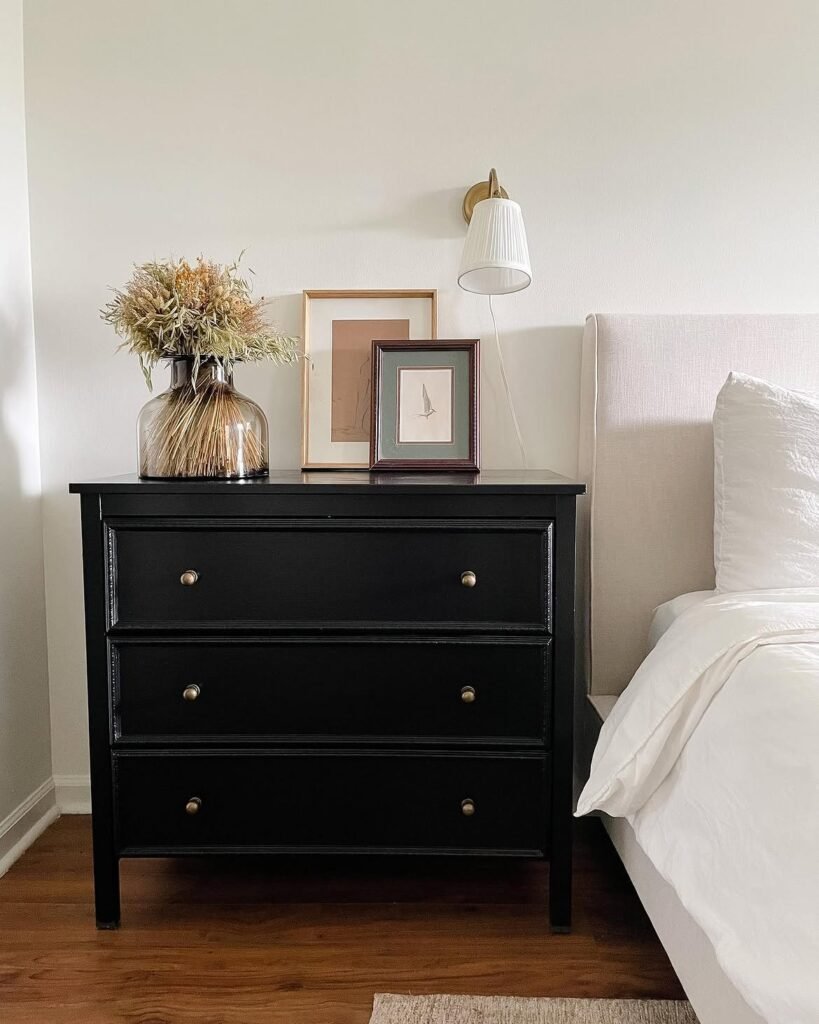
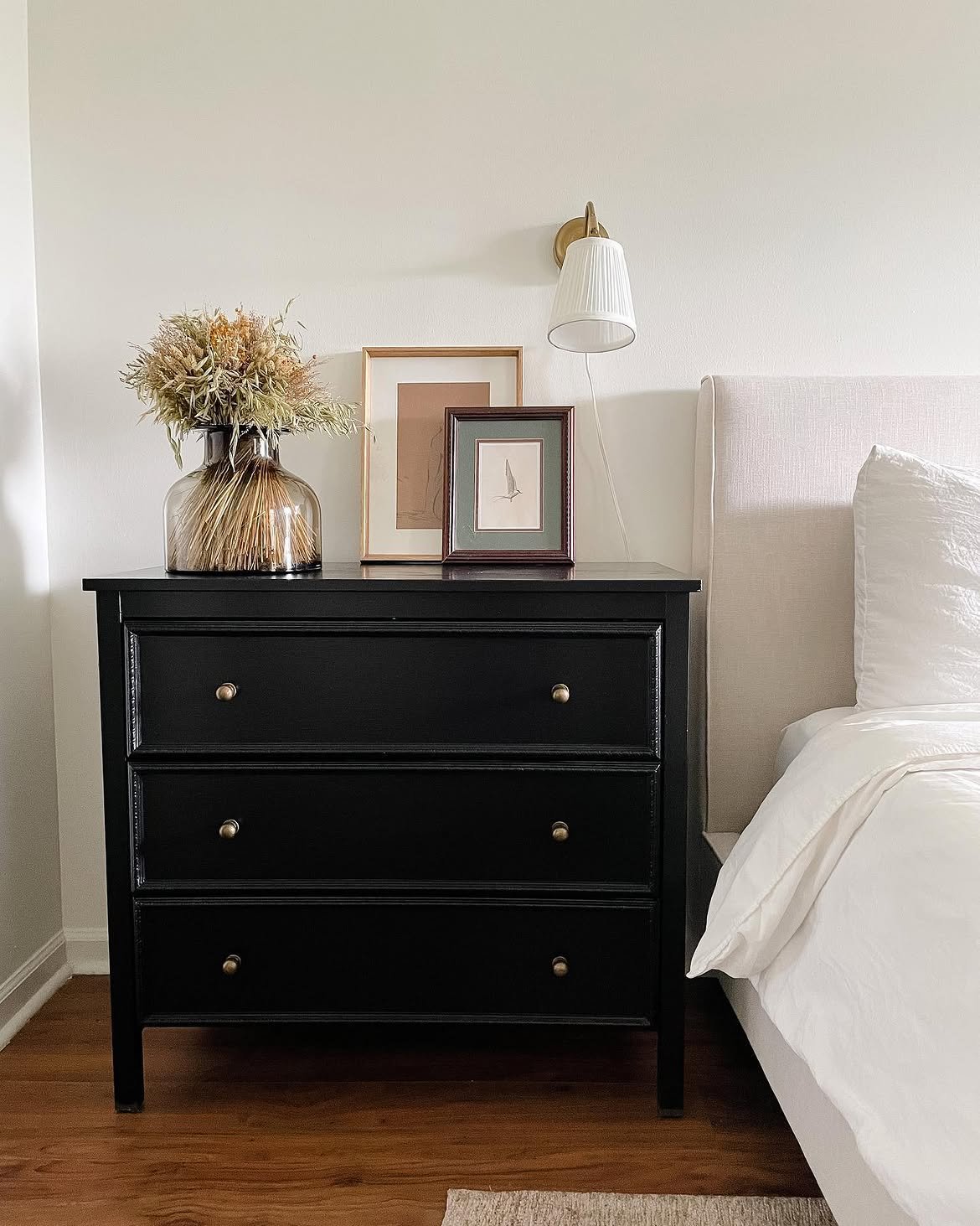
Then I learned that a nightstand is the smallest styled surface in the house, which means every single object on it carries disproportionate visual weight. Five objects, chosen with real intention, do more for this specific surface than a dozen scattered without one.
Now my nightstand is the first thing I see when I wake up and the last thing I see before I sleep, and it finally looks like both of those moments matter.
Let me show you 13 fall nightstand styling ideas that turn this smallest, most personal surface in the bedroom into something genuinely considered.
Why Nightstands Are Harder to Style Than They Look
The scale problem:
Why small surfaces are deceptively difficult:
- A nightstand typically offers only one to two square feet of usable surface
- Every object placed there carries far more visual weight, proportionally, than the same object would on a dresser or mantel
- A single wrong-scaled or poorly chosen item is far more noticeable here than it would be almost anywhere else in the house
The function-first constraint:
What a nightstand must accommodate regardless of styling:
- A lamp, almost always
- Something to hold a phone or charger
- Water, glasses, or other immediate nighttime needs
- This functional baseline leaves genuinely limited remaining space for anything purely decorative, which is precisely why each remaining choice matters so much
The personal-surface distinction:
Why this differs from styling a more public surface:
- A mantel or console is seen by guests; a nightstand is seen almost exclusively by the person sleeping beside it
- This privacy allows for more genuinely personal object choices than a more public surface might invite, but it also means the styling has nowhere to hide; there is no guest passing through quickly who will not notice if it looks thrown together
My revelation: A nightstand rewards extreme selectivity more than any other surface in the house, because its small size means there is no room for an object that is not earning its place. Five intentional objects will always outperform ten scattered ones on a surface this size.
1. The Five-Object Formula (Lamp, Book, Vessel, Small Object, Candle)
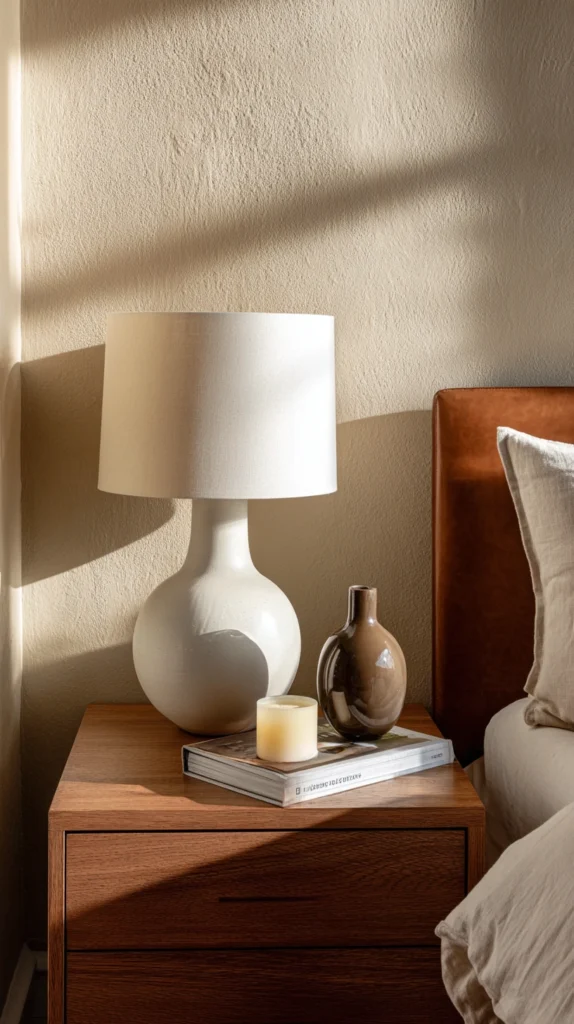
A specific, repeatable combination of five categories — the foundational structure most successful nightstand styling builds from, adapted here for fall.
My scattered-object starting point:
What I had:
- A lamp, a charger, a water glass, and whatever book happened to be nearby, with no consistent structure or limit
- Some nights three items, other nights seven, with no real thought given to why
Why exactly five categories, not more or fewer:
The proven proportion:
- Five objects fill a small nightstand surface without crowding it, while still providing enough visual interest to avoid looking sparse or unfinished
- This number, consistently referenced in broader styling guidance for small surfaces throughout the home, applies particularly well here given how little space a nightstand typically offers
The five categories specifically:
Lamp:
- The tallest element, almost always present regardless of any other styling decision, anchoring the surface’s height
Book or stack of books:
- The current read, ideally with a bookmark visible, suggesting genuine ongoing use rather than a styled prop
A vessel:
- A small vase, carafe, or cup, holding either water for practical use or a small dried botanical for purely decorative purposes
A small personal or decorative object:
- A meaningful small item, a piece of jewelry left out overnight, or a small seasonal object like a mini gourd
A candle:
- Ideally an LED option for bedroom safety, providing the final layer of warmth and atmosphere
Fall-specific execution of this formula:
Choosing each category for the season:
- The vessel might hold a small dried lavender or wheat stem instead of being empty
- The small object might be a tiny ceramic pumpkin or a smooth stone collected on a fall walk
- The candle might carry a warm, spiced fall scent if real, or simply a warm-toned LED if not
Why this formula scales to any nightstand size:
Adjusting for smaller or larger surfaces:
- A very small nightstand might combine the book and the small object into one stack, effectively achieving four visual groupings instead of five
- A larger nightstand can spread the same five categories with more breathing room between each, never needing to add a sixth category to fill the additional space
Cost:
- Most elements likely already owned (lamp, books, water glass)
- New additions specifically for fall (small dried botanical, mini gourd, LED candle): $15-35
- Total: $15-35
My five-object formula result: Reorganizing my previously scattered nightstand into exactly these five categories, adding only a small dried wheat stem in an existing cup and a mini ceramic pumpkin, gave the surface a sense of intention it had never had before, despite using almost entirely items I already owned.
Five-Object Formula Tips
Resisting the urge to add a sixth item “just because there’s room”:
Maintaining the discipline this formula depends on:
- Once five objects are in place and the surface looks complete, adding anything further usually crowds rather than enhances
- This restraint is more important on a nightstand than on almost any other surface, given how little space exists to absorb an additional item gracefully
Letting one category vary while keeping the others stable:
A practical seasonal rotation system:
- Rather than redesigning the entire nightstand each season, simply swapping the vessel’s contents or the small object specifically for fall keeps the formula consistent while still marking the season’s change
2. A Small Tray Containing the Entire Arrangement (Visual Boundary for a Tiny Surface)
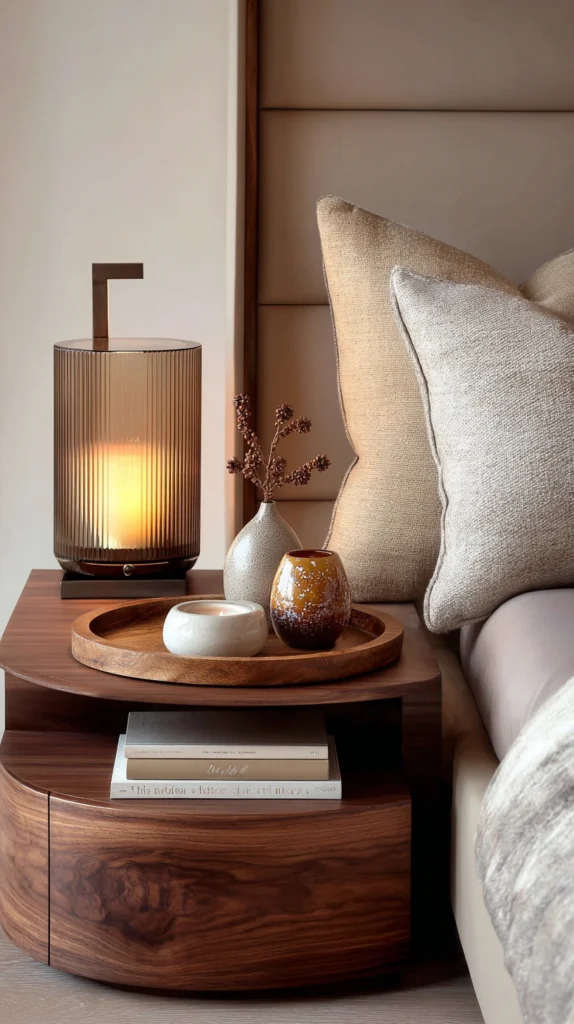
A small tray beneath the nightstand objects, defining their boundary — the single object most responsible for making a scattered surface look intentional.
My boundary-less nightstand:
What was happening:
- Objects placed loosely across the surface with no defined area, allowing them to drift and shift with each use
- The same five objects from idea 1, technically present, but reading as scattered rather than composed without this containing element
Why a tray specifically solves this for such a small surface:
The visual boundary principle:
- A tray creates a clear, defined zone for the styled objects, separating them visually from the practical, ever-changing items (a phone, reading glasses, a glass of water) that inevitably end up on the nightstand outside the tray’s boundary
- This separation allows the styled objects to remain visually composed even as the practical items around them change night to night
Tray material and size for this specific surface:
Choosing appropriately for nightstand scale:
- A tray noticeably smaller than would be used on a dresser or coffee table, typically 6-10 inches across, sized to fit comfortably within the nightstand’s limited footprint alongside the lamp
- Wood, for warmth consistent with the fall material palette discussed throughout broader seasonal decor guidance
- A simple round or oval shape, which tends to fit more gracefully into a small square or round nightstand surface than a rectangular tray competing with the surface’s own edges
What goes inside the tray boundary:
Organizing the five-object formula within this defined space:
- The vessel, the small object, and the candle from idea 1’s formula
- The book, if space allows, though this item often sits just outside the tray given its typically larger footprint
- The lamp generally remains outside the tray, since its cord and base often need more stable, independent placement
Sourcing affordably:
Budget options:
- Thrift stores for a small secondhand wood tray ($2-8)
- IKEA for an affordable new option in the right small scale ($4-10)
Cost:
- Small wood tray: $2-10
- Total: $2-10
My nightstand tray result: Adding a small thrifted wood tray beneath my vessel, small object, and candle, for three dollars, immediately made the same items I had already been using read as a composed vignette rather than a scattered collection, this remains the single highest-impact, lowest-cost change on this entire list.
Nightstand Tray Tips
Choosing a tray with a slight lip or edge:
A practical containment benefit:
- A tray with even a small raised edge prevents smaller objects from sliding off during the inevitable bumps and reaches that happen at a bedside table
- This small functional detail matters more here than it might on a more stationary surface like a mantel
Keeping the tray itself simple and unadorned:
Avoiding competition with the objects it contains:
- A heavily patterned or ornate tray can compete visually with the small objects arranged on top of it
- A simple, solid material tray lets the objects within it remain the visual focus, with the tray functioning purely as the supporting boundary
3. A Dried Botanical Sprig in a Small Bud Vase (Minimal Floral Commitment)
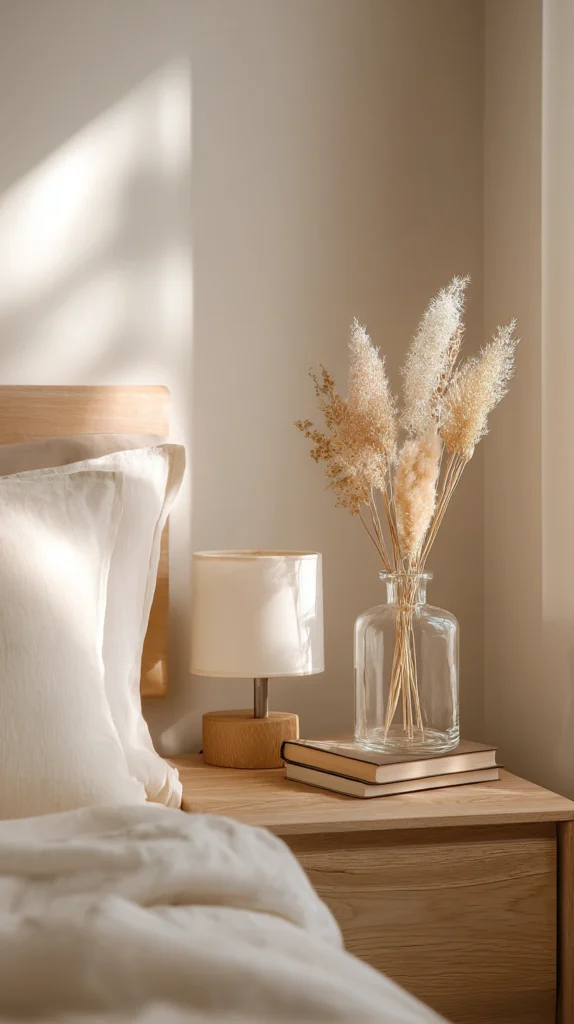
A single small dried stem in a tiny vase, replacing an empty corner of the nightstand — the smallest possible floral gesture, scaled appropriately to this particular surface.
My empty corner, scaled wrong attempts:
What I had tried first:
- A vase clearly intended for a dresser or table, far too large for the nightstand’s limited space, crowding out the lamp and other necessary items
- Learning that nightstand-scale florals require a genuinely tiny vessel, not simply the smallest vase already owned
Why scale matters disproportionately for this specific placement:
The small-surface multiplication effect:
- An oversized vase on a nightstand does not just look slightly too big; it visually dominates the entire remaining surface, crowding every other object into an awkward, compressed space
- A genuinely tiny vase, by contrast, contributes meaningfully to the surface without demanding disproportionate territory
Choosing the right scale specifically:
What counts as nightstand-appropriate:
- A bud vase under 6 inches tall, often closer to 4 inches, holding just one to three stems
- A small bottle or shot glass repurposed as a vase works just as well as a purpose-made bud vase, provided the scale is appropriately small
Fall stem choices for this tiny scale:
What works in such a small vessel:
- A single small sprig of dried lavender, also contributing a subtle fragrance discussed in broader bedroom scent guidance
- One small dried eucalyptus stem, trimmed short enough to suit the vase’s diminutive size
- A few dried baby’s breath stems, providing delicate texture without overwhelming the tiny vessel
Why dried rather than fresh for this specific placement:
A practical maintenance consideration:
- Nightstands are touched, bumped, and reached across constantly throughout the night
- A dried stem eliminates any water-spill risk in this particularly high-contact zone, while also requiring zero ongoing maintenance through the season
Sourcing affordably:
Budget options:
- A repurposed small glass bottle, already owned or thrifted for a dollar or two
- A single dried stem, purchased individually from a craft store rather than a full bunch, since only one or two stems are needed at this scale
Cost:
- Small vase or repurposed bottle: $2-8
- One to three dried stems: $2-6
- Total: $4-14
My tiny bud vase result: Replacing an oversized vase that had been crowding my lamp with a small repurposed glass bottle holding a single dried lavender sprig, for under six dollars total, finally gave this corner of the nightstand a botanical element scaled correctly to the surface, rather than fighting every other object for space.
Tiny Bud Vase Tips
Trimming stems shorter than feels natural:
A scale-specific cutting guideline:
- Stems that look appropriately sized in a larger vase will look oversized in a true nightstand-scale bud vase
- Trimming more aggressively than initially feels right, testing the proportion against the vase before finalizing the length, produces a better-scaled final result
Positioning away from the side most reached toward during the night:
A practical placement consideration:
- Placing this small vase toward the back or the side of the nightstand less frequently reached across (often the side away from where a phone or glasses typically go) reduces the chance of an accidental knock
4. A Small Stack of Books With the Top One Face-Down, Open (Suggesting Genuine, Ongoing Reading)
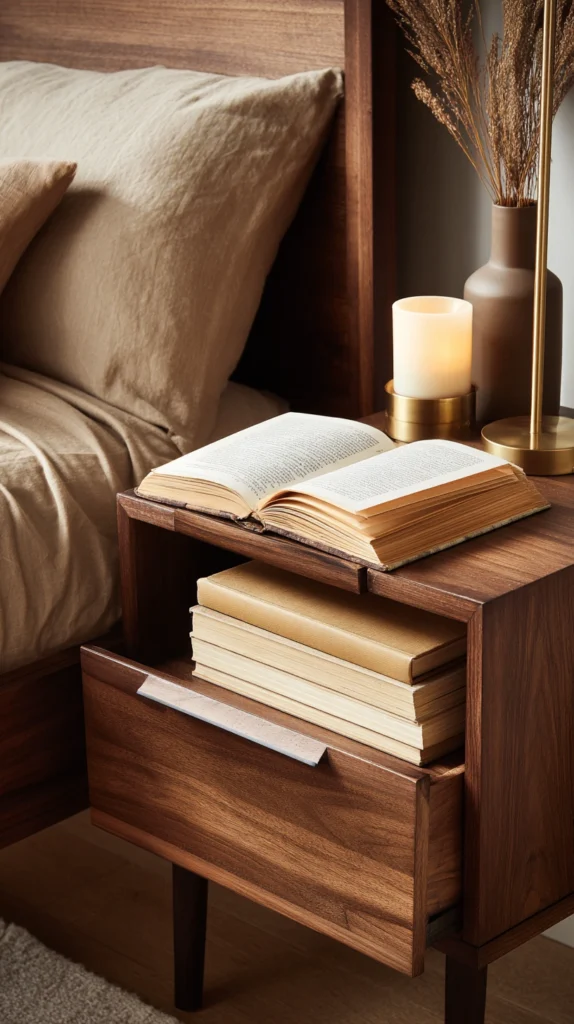
Books arranged to look actively read, not simply stacked for display — a small styling detail that changes how authentic the entire nightstand feels.
My too-perfect book stack:
What I had been doing:
- Books stacked perfectly, spines aligned, clearly arranged for appearance rather than suggesting any actual ongoing reading
- This precision, while neat, made the nightstand feel staged rather than genuinely lived-in
Why a slightly different arrangement reads as more authentic:
The lived-in versus staged distinction:
- A perfectly aligned, closed stack of books suggests display
- A stack with the top book left open, face-down, perhaps with a bookmark visible, suggests someone was actually reading moments before getting up
- This small detail does more to make the entire nightstand feel genuinely used, rather than arranged for a photograph, than almost any other single styling choice
Building the stack:
Practical arrangement:
- Two to three books stacked, with the bottom ones closed and properly stacked
- The top book left open to the current page, laid face-down, or with a bookmark or reading glasses resting on top
Choosing which books to display:
Selection criteria beyond just current reading:
- The book genuinely being read currently, regardless of its cover design, since this authenticity matters more than aesthetic perfection here
- If a second or third book is added purely for visual stacking purposes, choosing titles with appealing spine colors or textures that relate to the season’s color palette adds a coordinating touch without sacrificing the authenticity of the top, actively-read book
Fall-specific book themes, if relevant:
An optional seasonal touch:
- A book with a cover or theme that feels appropriately autumnal (a novel set in fall, a book about harvest or seasonal cooking) can add a small thematic coherence, though this should never come at the expense of displaying whatever is genuinely being read
Why this matters specifically on a nightstand:
The authenticity principle for this particular surface:
- Unlike a coffee table book display, intended partly for guests, a nightstand’s book arrangement is seen almost exclusively by the person using the bed
- An overly staged arrangement on a surface this private can feel slightly absurd, performing for an audience that does not exist; a more genuinely used-looking arrangement suits the surface’s actual private function
Cost:
- Already-owned books: $0
- Total: $0
My book stack result: Simply leaving my current book open and face-down on top of two other stacked titles, rather than closing and perfectly aligning everything each morning, made my nightstand look like an actual reading habit existed there, this costs nothing and takes less effort than the more precise arrangement it replaced.
Book Stack Tips
Choosing a bookmark with some visual interest:
A small additional detail:
- A simple, attractive bookmark (rather than a random receipt or torn paper) peeking out from the book adds a small additional visual element
- This is a low-cost addition, often just a few dollars, that contributes meaningfully to the overall styled but authentic appearance
Rotating the stack’s order as books are finished:
Maintaining the authentic, current quality:
- As one book finishes and a new one begins, moving the newly finished book to the bottom of the stack (or removing it to a shelf entirely) and placing the new current read on top keeps the arrangement genuinely reflective of actual reading habits over time
5. A Small Ceramic Dish for Jewelry or Nighttime Essentials (Function Disguised as Decor)
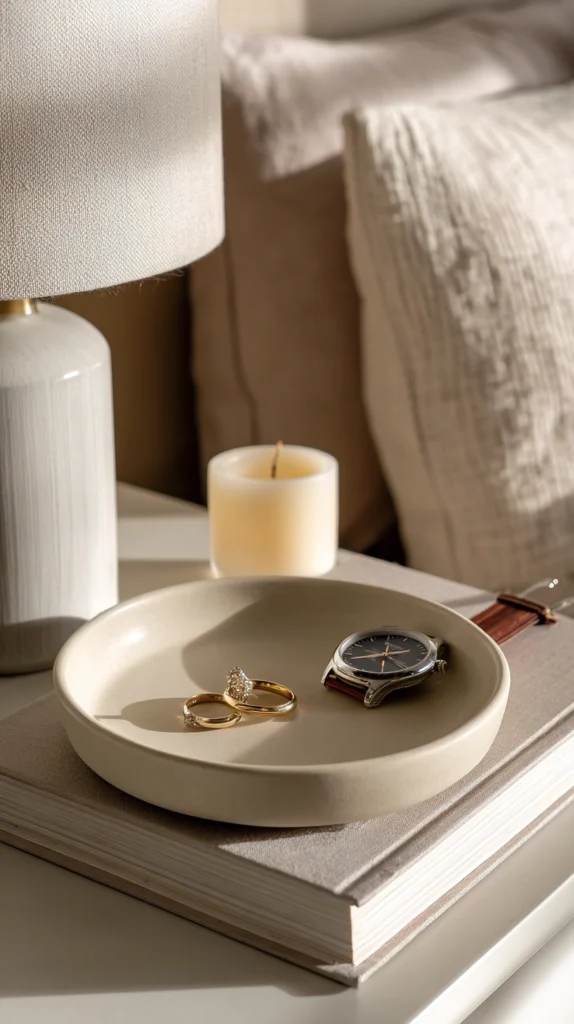
A small dish specifically for items removed before sleep — addressing a genuine nightly need while contributing a decorative object simultaneously.
My missing landing spot for nighttime removal items:
What was happening:
- Rings, a watch, or earrings removed before bed and placed loosely on the nightstand surface, with no dedicated spot
- These small items occasionally getting lost in bedding or sliding off the edge of the nightstand entirely
Why a small dish specifically solves this while also adding to the styling:
The dual-function principle:
- A small dish provides an obvious, dedicated landing spot for these specific nightly items, solving a genuine practical problem
- The dish itself, chosen with some aesthetic consideration, also becomes one of the five objects from idea 1’s formula, contributing to the overall styled appearance without requiring a purely decorative additional purchase
Material and style choices for fall:
What fits the season:
- A small ceramic dish in an earthy glaze (terracotta, deep cream, muted olive)
- A small brass or copper dish, adding warm metal tone consistent with broader fall material palettes
- A vintage or thrifted dish, adding character at minimal cost
Sizing appropriately:
Keeping this in proportion with the small surface:
- A dish no larger than 3-4 inches across, sized to hold just a few small items without becoming its own dominant object on the already-limited surface
Where this fits within the five-object formula:
Replacing or supplementing the vessel category:
- This dish can serve as an alternative to the bud vase from idea 3, if floral elements are not desired, or can sit alongside it as an additional small object if surface space allows
Sourcing affordably:
Budget options:
- Thrift stores for a small vintage ceramic or brass dish ($2-8)
- Etsy independent ceramicists for a small handmade dish, connecting to the broader handcrafted object principles discussed throughout fall decor guidance ($12-25)
Cost:
- Small dish: $2-25 depending on source
- Total: $2-25
My nightstand dish result: Adding a small thrifted brass dish for two dollars solved the nightly problem of my rings and watch sliding around loose on the nightstand surface, while also contributing a warm metal tone that coordinated with my room’s broader fall palette, this single small item served two purposes simultaneously for almost no cost.
Nightstand Dish Tips
Choosing a dish with a slightly textured or matte interior:
A practical grip consideration:
- A very smooth, glossy interior can allow small items like rings to slide around more than a slightly textured surface
- This small material detail affects how well the dish actually performs its intended function
Avoiding a dish so small that items frequently miss it:
A practical sizing balance:
- While keeping the dish appropriately small for the nightstand’s limited space, ensuring it remains large enough to reliably catch items placed into it in low light or while half-asleep prevents the dish from becoming merely decorative rather than genuinely functional
6. A Small Battery LED Candle With a Built-In Timer (Atmospheric Light Without Fire Risk)
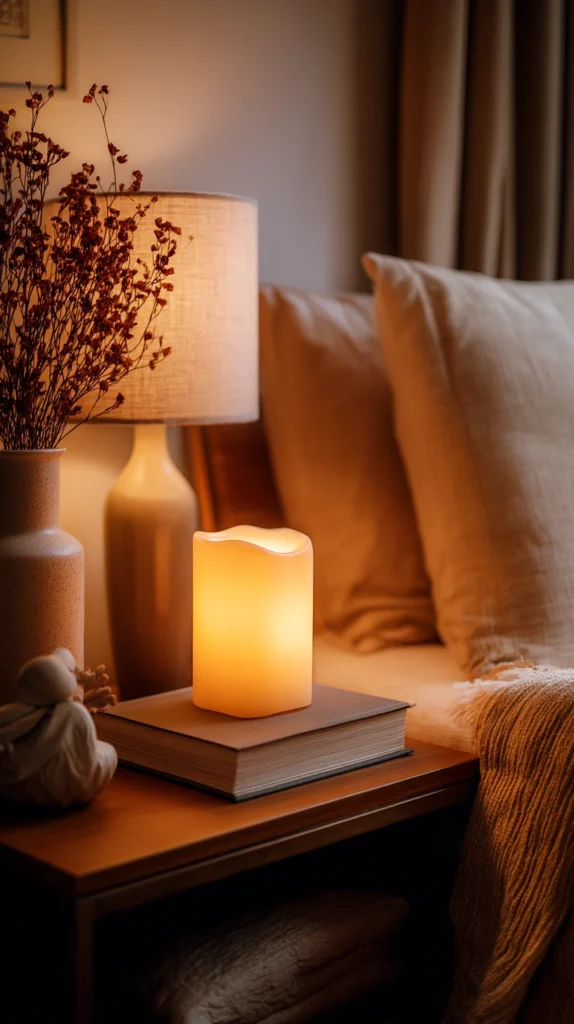
A flameless candle specifically chosen for nightstand proximity to bedding and skin — bringing flickering warmth to the surface closest to where someone actually sleeps.
My real-candle hesitation specifically at this distance:
What concerned me:
- A nightstand sits closer to bedding, pillows, and an actual sleeping person than almost any other surface in the home where candles might be considered
- This proximity made me specifically avoid any real flame at this particular location, even in rooms where I might use real candles elsewhere
Why LED candles matter even more here than on a dresser or mantel:
The proximity-specific safety principle:
- The nightstand’s close proximity to bedding and to an unconscious, sleeping person represents a meaningfully higher risk profile than other candle placements throughout the home
- This is one placement where the safety argument for LED over real flame is particularly strong, regardless of personal comfort with real candles elsewhere
Choosing a quality LED candle for this specific use:
What to look for:
- A genuinely realistic flicker effect, since a candle viewed up close on a nightstand, often the last thing seen before sleep, benefits from the most convincing available flame simulation
- A built-in timer function, allowing the candle to be set to turn off automatically after a set period, supporting the bedtime wind-down sequence without requiring a manual switch-off
Fall scent options, if choosing a scented LED version:
Selecting an appropriate fragrance:
- Many quality LED candles incorporate a wax-based scent element even without an actual flame
- A warm, calming fall scent (cedarwood, a subtle spice blend) at this close proximity contributes meaningfully to the bedtime atmosphere, connecting to broader bedroom scent guidance
Sizing for the nightstand specifically:
Choosing an appropriately small candle:
- A pillar candle no taller than 4-5 inches, sized to fit comfortably within the tray arrangement from idea 2 without dominating the small surface
Sourcing affordably:
Budget options:
- Amazon for reliable, realistic-flicker LED candles at accessible pricing ($8-20 for a single quality candle)
- Target and similar retailers for a wider in-person selection ($10-25)
Cost:
- LED candle with timer: $8-25
- Total: $8-25
My LED candle result: A small timer-equipped LED pillar candle, set to turn off automatically forty-five minutes after being switched on each evening, became the final step of my nightly wind-down routine, the realistic flicker viewed from the pillow each night, at this close range specifically, justified spending slightly more on a quality option than I might have for a candle placed further away.
LED Candle Tips
Testing the flicker quality at actual viewing distance from the pillow:
A specific verification step for this placement:
- Since this candle will be viewed from very close range while lying in bed, testing the flicker’s realism from that exact vantage point, rather than only from across the room, confirms whether the specific product’s quality justifies its placement this close to where it will actually be seen most often
Setting the timer to coincide with actual sleep timing:
Practical automation:
- Adjusting the timer duration to match how long it typically takes to actually fall asleep after lying down, rather than using a default or arbitrary setting, ensures the candle provides light exactly when wanted and switches off close to when it is no longer needed
7. A Small Framed Photo or Postcard Leaned Against the Wall (Personal Without Requiring Wall-Mounting)
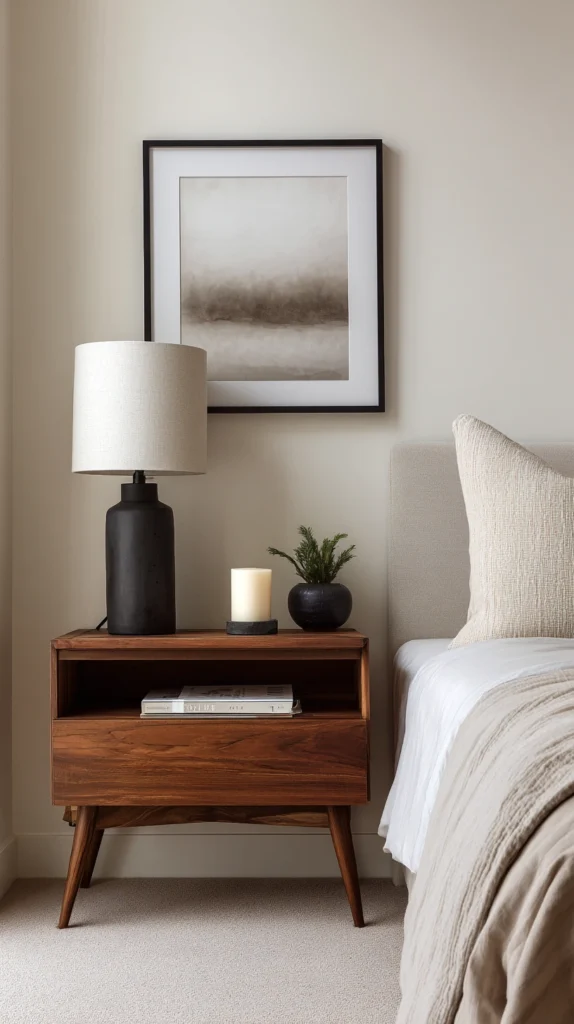
A small photo or printed image, simply leaned rather than hung — adding a personal visual element to the nightstand without requiring any wall installation.
My bare wall space above the nightstand:
What was missing:
- An empty section of wall directly behind the nightstand, with nothing personal or visual occupying it
- Hesitation about wall-mounting anything specifically in this spot, given how frequently the nightstand’s other items needed rearranging
Why leaning specifically suits this location:
The flexibility advantage:
- A leaned, rather than hung, photo or print can be easily moved, replaced, or temporarily set aside when reaching for something behind it
- This flexibility matters more on a nightstand than almost anywhere else, given how frequently this particular surface and the wall directly behind it get accessed
What to lean here:
Personal options:
- A small framed photograph, ideally something genuinely meaningful rather than purely decorative
- A postcard from a meaningful trip, simply leaned without even requiring a frame
- A small print in a fall-appropriate warm tone, if a more purely decorative (rather than personal) choice is preferred
Sizing for this specific spot:
Keeping the scale appropriate:
- A frame or print no larger than 5×7 inches, generally smaller than what might be chosen for a dresser-top display, given the nightstand’s more limited available space
Frame choice, if framing:
Material consistency:
- A simple wood or brass frame, coordinating with the broader warm metal and wood tones discussed throughout fall bedroom decor guidance
- A frameless approach (simply leaning an unframed photo or postcard) for an even more casual, low-commitment version of this idea
Cost:
- Already-owned photo or postcard: $0
- Small frame, if used: $5-20
- Total: $0-20
My leaned photo result: Leaning a small unframed photograph from a meaningful trip against the wall directly behind my lamp, at no cost since the photo was already printed and simply relocated from a drawer, gave the nightstand a genuinely personal visual element that the dish, candle, and other objects, however nicely chosen, could not provide on their own.
Leaned Photo Tips
Securing lightly if the nightstand experiences frequent vibration or bumping:
A practical stability consideration:
- A small piece of museum putty or a tiny adhesive dot, applied discreetly to the back, can prevent a leaned photo from sliding or falling if the nightstand surface experiences regular bumps
- This light securing still allows the photo to be removed and repositioned when needed, unlike a more permanent mounting solution
Choosing genuinely personal over purely aesthetic:
Maximizing the emotional value of this particular spot:
- Given the nightstand’s private, personal nature, this is one of the strongest opportunities in the entire bedroom to display something with real personal meaning rather than something chosen purely for its visual appeal
- A genuinely meaningful photo, even if less aesthetically polished than a purchased print, often contributes more to how the space feels overall
8. A Small Stack of Coasters or a Single Coaster (Protecting the Surface While Adding Texture)
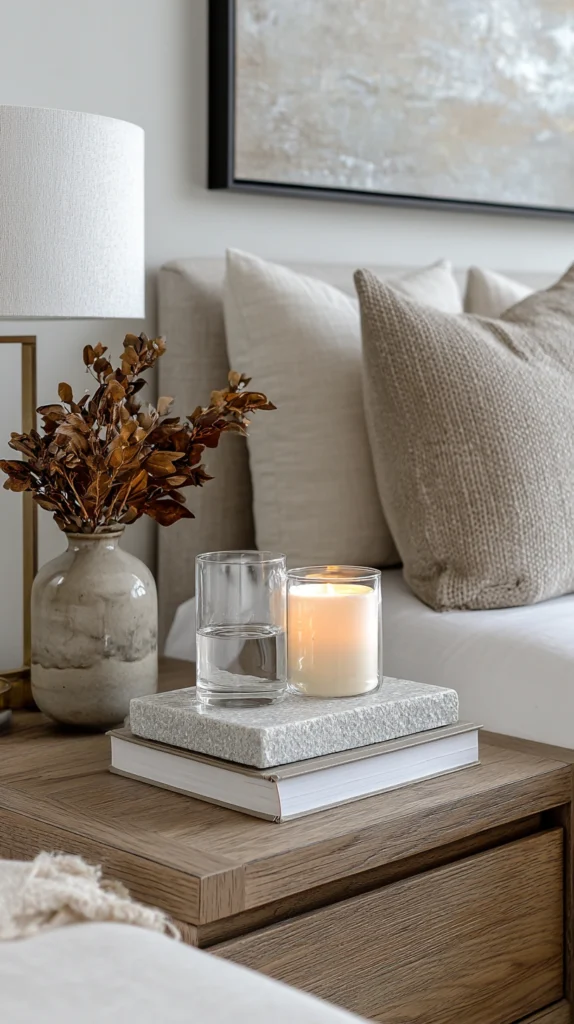
A coaster, chosen with some material interest, kept specifically for the water glass or mug — a purely functional item that, chosen well, also contributes texture to the small surface.
My unprotected nightstand surface:
What was happening:
- A water glass placed directly on the nightstand surface nightly, gradually causing visible water rings on the wood finish
- No dedicated coaster, despite this being one of the most consistent nightly uses of the surface
Why a well-chosen coaster contributes more than just protection:
The function-plus-texture principle:
- A coaster is needed regardless of any styling consideration, given the near-universal habit of keeping water at the bedside
- Choosing a coaster with genuine material interest (rather than a purely utilitarian plain cork or plastic option) means this necessary item also contributes positively to the overall textural variety on the small surface
Material choices for fall:
What works well at this specific scale and function:
- A small woven or rattan coaster, adding natural texture consistent with broader fall material themes
- A thin slice of natural wood, cut and finished specifically as a coaster, adding warm wood tone
- A small ceramic coaster in an earthy glaze, coordinating with the dish from idea 5 if both are present
Placement relative to the rest of the arrangement:
Where this fits within the overall composition:
- Positioned wherever the water glass or mug most consistently sits, which may be inside or outside the tray boundary from idea 2 depending on the nightstand’s specific layout and the person’s particular habits
Sourcing affordably:
Budget options:
- A set of woven or wood coasters, often sold in sets of four to six, providing enough for multiple nightstands or rotation if one becomes worn ($10-25 for a set)
- Thrift stores occasionally carry individual vintage coasters with more character than a new matched set ($1-4 each)
Cost:
- Single coaster or small set: $10-25
- Total: $10-25
My nightstand coaster result: Adding a small woven rattan coaster specifically for my nightly water glass, sourced as part of a set for under fifteen dollars, finally protected my nightstand’s wood finish from water ring damage while also contributing a natural texture element that the rest of my smoother ceramic and metal objects had been missing.
Nightstand Coaster Tips
Choosing a slightly larger coaster than the glass itself:
A practical sizing guideline:
- A coaster noticeably larger than the glass or mug it holds provides a more forgiving margin for slightly imprecise placement, particularly relevant for use in low light or while half-awake
- This small sizing consideration prevents the coaster from failing at its protective function due to the glass simply missing its edge
Replacing if it becomes visibly worn or stained:
Maintaining the surface’s overall polished appearance:
- A coaster showing significant water staining or wear undermines its own contribution to the styled appearance
- Periodically checking and replacing this relatively low-cost item keeps this small functional detail looking as intentional as the rest of the nightstand arrangement
9. A Small Bundle of Cinnamon Sticks Tied With Twine (Scent and Texture in One Object)
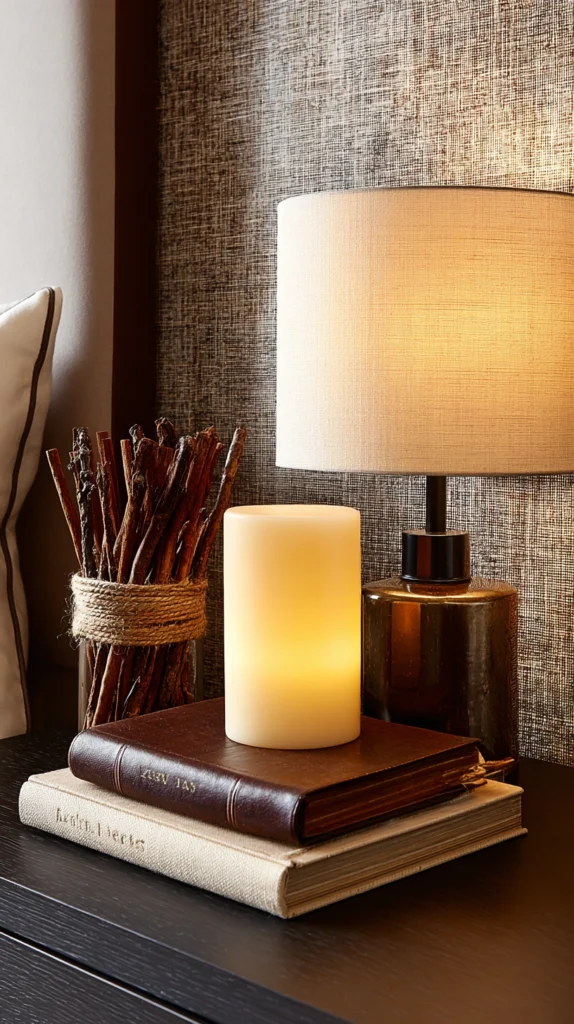
A small tied bundle of cinnamon sticks, placed among the other nightstand objects — bringing both visual texture and a warm fall fragrance to the surface without requiring a separate candle or diffuser.
My single-purpose nightstand objects:
What I had been doing:
- Every object on the nightstand served either a purely visual or a purely functional purpose, with the scent element handled entirely separately through a different room fragrance system
- This particular small bundle idea, adapted directly from broader fall scented decor guidance, brought fragrance directly onto the nightstand surface itself, integrated with the visual styling rather than separate from it
Why this specific object works well at nightstand scale:
The dual visual and olfactory contribution:
- A small bundle of cinnamon sticks contributes genuine visual texture and warm color, fitting naturally among the other small objects in the five-object formula from idea 1
- The same bundle simultaneously provides a continuous, gentle fragrance, requiring no flame, no electricity, and no ongoing maintenance beyond an occasional fragrance refresh
Making the bundle:
A simple construction process:
- Gather six to eight whole cinnamon sticks
- Tie tightly near one end with natural twine or thin jute
- Trim the ends evenly if desired for a tidier appearance
Sizing for the nightstand specifically:
Keeping this appropriately small:
- A bundle using fewer, shorter cinnamon sticks than might be used for a larger mantel or dresser display, sized to sit comfortably within the small remaining space on the nightstand without overwhelming the other objects
Placement within the overall arrangement:
Where this fits:
- Laid horizontally within the tray from idea 2, alongside the other small objects
- Standing upright in the small vessel from idea 3, if the bud vase is empty or being used for this purpose instead of a floral stem
Refreshing the scent:
Maintaining fragrance over the season:
- A drop or two of cinnamon essential oil applied directly to the sticks when the natural scent begins to fade extends this bundle’s fragrance contribution through the full season
Cost:
- Whole cinnamon sticks: $4-8
- Twine: already likely owned, or $2-3
- Total: $4-11
My cinnamon bundle result: A small bundle of six cinnamon sticks tied with jute twine, costing about five dollars, added warm color and texture to my nightstand tray while also providing a continuous, gentle fragrance that I now notice specifically each time I reach for my water glass or phone charger, this small object does more sensory work than almost anything else on the entire surface.
Cinnamon Bundle Tips
Keeping the bundle away from direct contact with the LED candle:
A practical placement consideration:
- Even though the LED candle from idea 6 poses no fire risk, keeping dried materials like cinnamon sticks at a slight distance from any heat-generating element (if a warming-style LED candle is used) preserves the bundle’s appearance and prevents any unnecessary degradation
Replacing the entire bundle after a few months rather than just refreshing oil indefinitely:
Knowing when to start fresh:
- While essential oil refreshing extends the bundle’s life somewhat, the cinnamon sticks themselves eventually become visually dull and less fragrant even with oil refreshing
- Replacing the bundle entirely every few months, rather than relying on indefinite oil refreshing, maintains both its visual and olfactory contribution at a consistently high level
10. A Small Succulent or Single Low-Light Plant (A Living Element in Miniature)
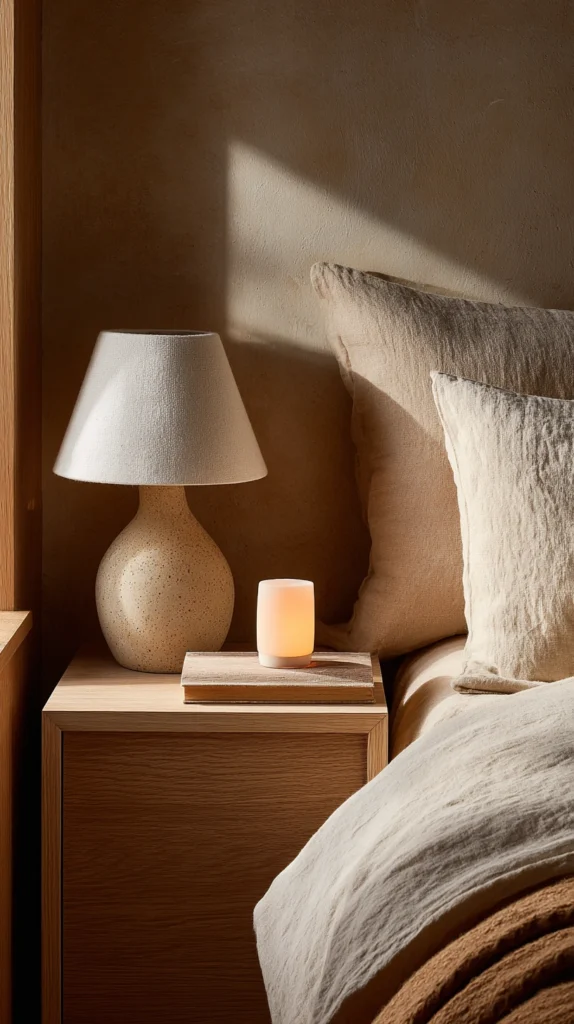
One very small, low-maintenance plant, scaled specifically for nightstand placement — bringing a living element to the surface without requiring significant care or space.
My plant-free nightstand:
What was missing:
- Every other surface in the bedroom had at least some living greenery, per broader fall bedroom plant guidance, except the nightstand specifically
- The nightstand’s particularly limited space and frequently lower light (often positioned away from windows) had discouraged adding a plant here specifically
Why a single small plant still works despite these constraints:
The miniature-scale solution:
- Rather than attempting a plant sized for a dresser or windowsill, choosing something genuinely tiny, in the 2-4 inch pot range, fits the nightstand’s limited space without crowding the other necessary items
- Selecting specifically for low-light tolerance, rather than assuming any plant will thrive in this typically dimmer location, addresses the light constraint directly
Best tiny, low-light plants for this specific placement:
What to choose:
- A small snake plant, even at this miniature scale, tolerating low light remarkably well
- A small ZZ plant, similarly tolerant and low-maintenance
- A small succulent, if the nightstand happens to receive at least some indirect natural light, though succulents generally need more light than the two options above
Pot choice for fall:
Coordinating with the rest of the nightstand’s material palette:
- A small terracotta pot, consistent with broader fall material themes
- A tiny ceramic pot in an earthy glaze, coordinating with the dish from idea 5 if both are present
Where this fits within the five-object formula:
Replacing or supplementing another category:
- This small plant can serve as the small object category from idea 1’s formula, or can be added as a sixth element only if the nightstand’s specific size genuinely accommodates it without overcrowding
Watering reminders for this specific placement:
A practical maintenance note:
- Since a nightstand plant is seen daily, it serves as its own watering reminder simply through regular visual contact, unlike a plant in a less frequently noticed location
- Still, setting an occasional calendar reminder for the specific watering interval this plant variety requires prevents unintentional neglect despite this frequent visibility
Cost:
- Small plant (2-4 inch pot): $4-10
- Tiny pot, if repotting: $2-8
- Total: $6-18
My nightstand plant result: Adding a tiny snake plant in a 3-inch terracotta pot, purchased for six dollars, brought a small living element to the one surface in my bedroom that had been missing it entirely, despite the nightstand’s typically lower light and very limited space, this specific low-light-tolerant variety has thrived there for months with minimal attention.
Nightstand Plant Tips
Confirming the pot has drainage, even at this small scale:
A practical plant health consideration:
- Even very small pots benefit from drainage holes and a small saucer underneath, protecting the nightstand surface from any water damage during watering
- This small precaution matters particularly given how close this plant sits to other objects and the wood or finished surface beneath it
Choosing artificial as an acceptable alternative if live plant care feels like too much:
A practical permission to simplify:
- A small, high-quality artificial plant in the same tiny scale provides much of the same visual softening and living-element appearance without any care requirement at all
- Given how many other functional and styled objects already compete for attention on this small surface, choosing the lower-maintenance artificial option here is a reasonable simplification, even for someone who maintains real plants elsewhere in the room
11. A Small Linen or Cotton Doily Beneath the Lamp (Soft Texture Beneath the Tallest Element)
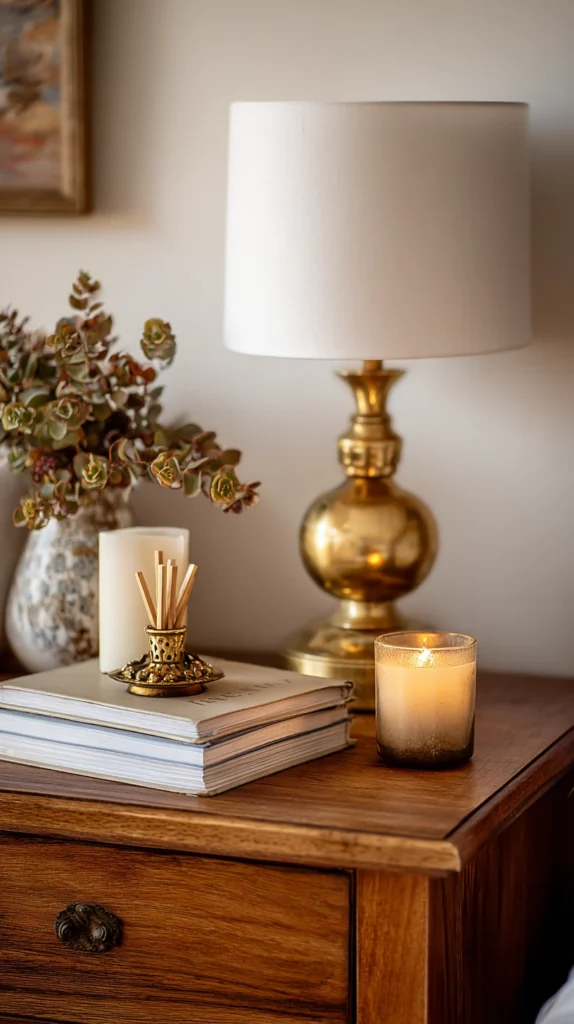
A small fabric piece placed beneath the lamp base specifically, distinct from the tray used for the other objects — adding a soft textile layer to the one object in the formula that the tray does not typically contain.
My lamp base sitting directly on bare wood:
What was happening:
- The lamp, the tallest and most visually dominant object on the nightstand, sat directly on the bare surface with no textile element beneath it at all
- Every other category in the five-object formula had received some material consideration, while the lamp itself remained the one item without any layering
Why this specific addition matters for the lamp particularly:
Completing the textile layering throughout the formula:
- A small doily or fabric square beneath the lamp base adds the same kind of soft, layered material interest already present in the tray, the coaster, and the cinnamon bundle
- This detail is easily overlooked precisely because the lamp is assumed to need no styling beyond its own design, when in fact the surface immediately beneath it offers one more small opportunity for textural layering
Material and pattern choices:
What suits this specific use:
- A small crocheted or knit doily in a warm cream or rust tone, leaning into a slightly vintage, handmade reference consistent with broader cottage-style decor principles
- A simple square of linen, cut and left with raw or simply hemmed edges, for a more minimal version of the same layering idea
- A small piece of vintage fabric, sourced secondhand, adding genuine age and character beneath this prominent object
Sizing relative to the lamp base:
Getting the proportion right:
- The fabric piece should extend only slightly beyond the lamp’s actual base, generally by half an inch to an inch on each side, rather than spreading so far that it competes with the tray or other nearby objects for surface territory
Sourcing affordably:
Budget options:
- Thrift stores and estate sales, which frequently carry vintage doilies and small linens at very low individual cost ($1-5 each)
- A simple linen fabric square, cut from a remnant or scrap piece already owned
Cost:
- Small doily or fabric square: $1-8
- Total: $1-8
My lamp doily result: Placing a small vintage crocheted doily, found at an estate sale for two dollars, beneath my lamp base added a soft textural layer to the one object in my nightstand arrangement that had never received any material consideration, this small, easily overlooked addition completed a sense of intentional layering across every single object on the surface, not just the ones inside the tray.
Lamp Doily Tips
Choosing a flat, low-profile fabric rather than anything thick or padded:
A practical stability consideration:
- A thick or padded fabric beneath a lamp base can create instability, particularly for a taller or top-heavy lamp design
- A flat, thin textile, such as a doily or simple linen square, provides the textural benefit without introducing any wobble risk
Securing lightly if the lamp is frequently adjusted or moved:
Preventing the fabric from sliding with regular use:
- A small piece of non-slip pad material, cut to the same size as the fabric and placed beneath it, can prevent the doily or linen square from sliding out of place as the lamp is turned on and off or occasionally repositioned
12. A Small Brass or Wood Match Striker With Cinnamon-Scented Matches (A Tiny Ritual Object)
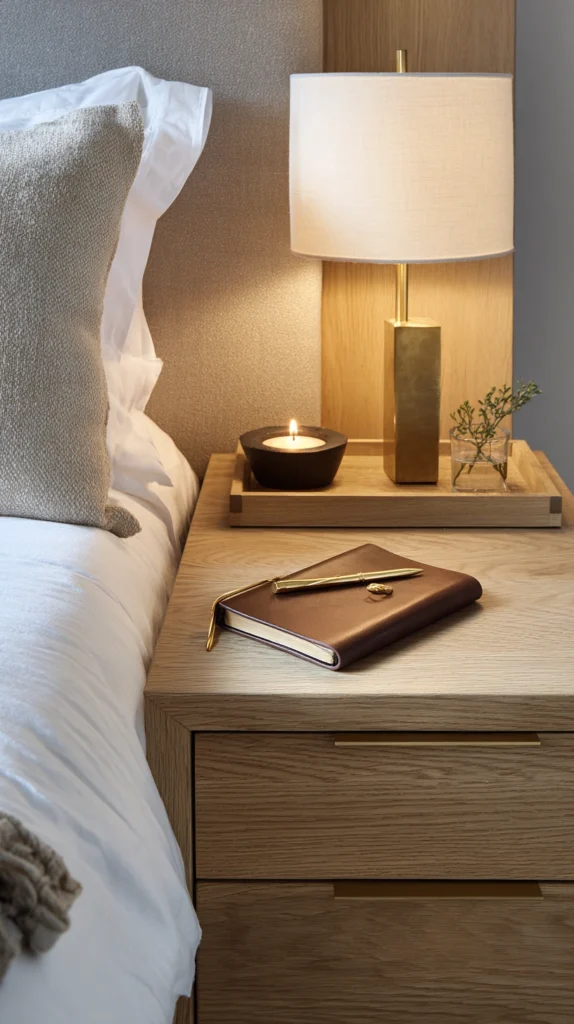
A small dedicated holder for matches, used specifically for lighting the LED candle’s real-flame alternative or any other small ritual — adding a tiny but genuinely functional ritual object to the nightstand’s collection.
My loose matchbook problem:
What was happening, for the occasions when a real flame element was used elsewhere in the bedroom:
- A plain cardboard matchbook, when needed, stored in a drawer rather than visible anywhere
- No small ritual object marking the act of lighting anything, despite how much this specific gesture is referenced throughout broader fall atmosphere and ritual guidance
Why a dedicated striker, even on a nightstand favoring LED candles elsewhere, still has a place:
Acknowledging occasional real-flame use:
- Even in a bedroom where the primary nightstand candle is LED for safety reasons (per idea 6), many people still occasionally use real flame matches for other small purposes: lighting incense, a candle elsewhere in the room positioned more safely, or simply as a small available ritual object
- A small brass or wood match striker, kept visible rather than hidden in a drawer, treats this occasional small ritual with the same intentionality given to every other object in the formula
What this object specifically is:
Understanding the format:
- A small cylindrical or boxed striker, often brass or turned wood, designed to hold long matches upright with a striking surface on the side or base
- This is a specific, somewhat old-fashioned object category, distinct from simply keeping a matchbook, that adds genuine vintage character to the small object category from idea 1’s formula
Color and material coordination:
Fitting this into the existing palette:
- A brass striker, coordinating with the dish from idea 5 if both are brass
- A wood striker, coordinating with the tray from idea 2 and any other wood tones present
Why this is positioned as optional, more advanced styling:
An honest assessment of this particular idea:
- Unlike most other ideas on this list, this specific object serves a narrower, more occasional function, and is included here specifically for those who do use real flame matches at least occasionally near the bedroom, rather than as a universally necessary addition
- For anyone exclusively using LED options throughout the bedroom, this idea can be skipped without any loss to the overall styling formula
Sourcing:
Where to find this specific item:
- Antique shops and estate sales for genuine vintage brass strikers ($8-25)
- Specialty home goods retailers for new wood or brass versions, often marketed specifically alongside candle accessories ($12-30)
Cost:
- Match striker: $8-30
- Long matches: $3-6
- Total: $11-36
My match striker result: Adding a small vintage brass match striker, found for twelve dollars at an antique shop, gave my nightstand a small object with genuine old-fashioned character, used only occasionally for lighting incense, but contributing its visual presence to the overall arrangement every single day regardless of how often it is actually used for its stated purpose.
Match Striker Tips
Keeping matches genuinely accessible, not purely decorative:
Maintaining authentic function:
- If this object is included, keeping it actually stocked with usable matches, rather than allowing it to become an empty decorative prop, maintains the same authenticity principle discussed regarding the book stack in idea 4
Skipping this idea entirely if no real-flame use exists in the bedroom:
An honest permission to omit:
- This is one of the more specialized ideas on this list, and forcing its inclusion purely for aesthetic reasons, without any genuine corresponding use, works against the authenticity principle that should guide every object’s inclusion on this particular surface
13. A Small Notebook and Pen for Late-Night Thoughts (A Functional Object With Genuine Daily Use)
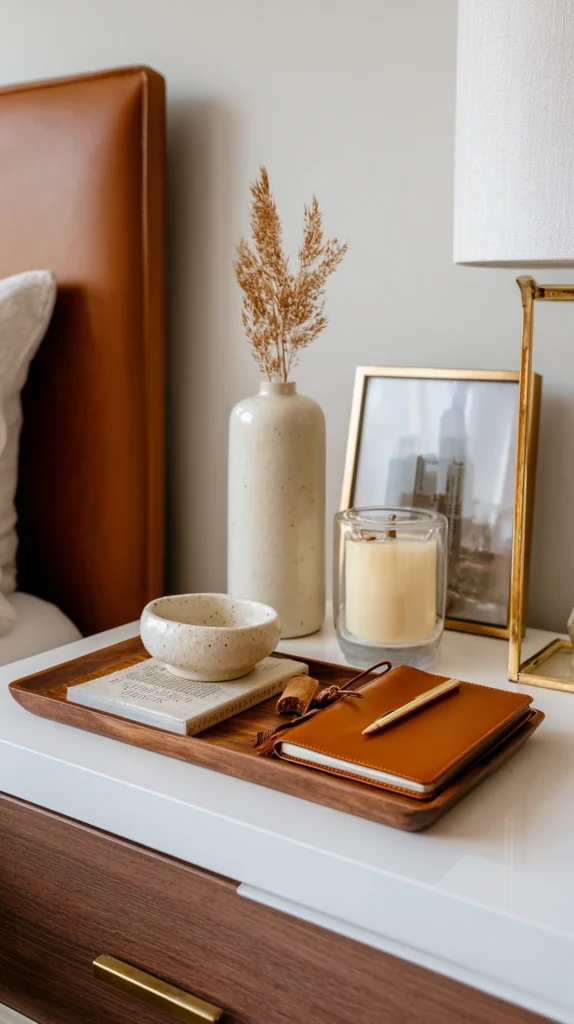
A small notebook, paired with a pen, kept specifically for jotting down thoughts before sleep or upon waking — closing the formula with an object whose use happens almost entirely within this private, personal surface’s specific context.
My missing capture system for nighttime thoughts:
What was happening:
- Thoughts, reminders, or ideas that occurred while lying in bed, either before sleep or upon waking, with no immediate way to capture them without reaching for a phone
- Reaching for a phone specifically worked against the warm-light, low-stimulation wind-down principles discussed throughout broader fall bedroom sleep guidance
Why a small notebook specifically suits this particular need:
The phone-alternative principle:
- A notebook and pen allow capturing a thought, reminder, or idea without introducing a phone screen’s bright light and potential for further scrolling distraction at exactly the moment sleep should be approaching
- This dual practical and atmospheric benefit makes this one of the more functionally significant objects on the entire list, despite its small size and low cost
Choosing the notebook itself:
What works well for this purpose:
- A small notebook, pocket-sized rather than a full journal, kept specifically and only for this bedside purpose
- A cover material and color coordinating with the broader fall palette (a leather or leather-look cover in cognac or rust, for example)
Pen selection:
A small additional consideration:
- A pen that writes reliably even at an angle or in low light, since this object’s use often happens in exactly those conditions
- A pen with some material interest (a simple brass barrel, for example) rather than a purely disposable plastic option, coordinating with other small metal accents elsewhere in the formula
Where this fits in the five-object formula:
A specific, functional small object:
- This notebook and pen combination can serve as the small object category from idea 1, particularly for anyone who genuinely uses this capture system regularly, given how much more functionally significant it is than a purely decorative small object choice would be
Why this idea closes the list appropriately:
Returning to the surface’s core private function:
- This final idea brings the list back to the nightstand’s most essential, private purpose: supporting whatever happens in the specific, quiet moments just before sleep and just after waking
- A notebook used for exactly this purpose embodies the entire premise discussed throughout this list, that the nightstand’s smallest, most personal objects often matter more than any larger styling gesture elsewhere in the room
Cost:
- Small notebook: $5-15
- Pen: $3-15
- Total: $8-30
My notebook and pen result: Keeping a small leather-covered notebook and a simple brass pen specifically for late-night and early-morning thoughts replaced my previous habit of reaching for my phone in those moments, this single functional addition did more for both my actual sleep quality and my nightstand’s sense of genuine, private purpose than almost any purely decorative object on this entire list.
Notebook and Pen Tips
Keeping this notebook exclusively for bedside use:
Maintaining the dedicated function:
- Using this specific notebook only for nighttime and morning thoughts, rather than also carrying it elsewhere for general note-taking, keeps its presence on the nightstand meaningful and consistently available exactly when needed
Reviewing and transferring notes periodically:
A practical maintenance habit:
- Periodically reviewing what has been jotted down and transferring anything genuinely important to a more permanent system (a calendar, a to-do list elsewhere) keeps this small notebook from becoming cluttered with outdated notes, while still serving its immediate, quick-capture purpose each night
Choosing Your Nightstand Styling Priorities
By what the nightstand is currently missing:
If currently cluttered and scattered:
- Start with idea 2 (the tray) to create immediate visual boundary and order
If currently too sparse or empty:
- Start with idea 1 (the five-object formula) to establish a complete, intentional structure
If lacking personal character:
- Add idea 7 (the leaned photo) for the most direct personal contribution
If lacking fragrance:
- Add idea 9 (the cinnamon bundle) for scent integrated directly into the visual styling
If reaching for a phone too often at night:
- Add idea 13 (the notebook and pen) for a genuine functional alternative
By budget level:
Under $20:
- Tray (idea 2), tiny bud vase (idea 3), cinnamon bundle (idea 9), the book stack technique (idea 4, free), and the lamp doily (idea 11) together cover most of the foundational structure
$20-60:
- Add the LED candle (idea 6), the nightstand dish (idea 5), a small plant (idea 10), and the notebook and pen (idea 13)
$60+:
- Incorporate higher-quality versions of each category, such as a handmade ceramic dish, a more elaborate framed photo display, or the vintage match striker (idea 12)
By how much surface space is actually available:
Very limited space (small nightstand, large lamp):
- Prioritize the tray (idea 2) and just two or three of the remaining categories, rather than attempting the full formula
- The book stack (idea 4) and a single small object often suffice when space is genuinely constrained
More generous surface space:
- The full five-object formula from idea 1, plus the coaster (idea 8), the lamp doily (idea 11), and a small plant (idea 10), can all coexist comfortably
Maintenance Through the Season
Weekly:
- Reset any items that have shifted with use
- Water the small plant if needed
- Check the LED candle’s battery and timer function
- Review and clear out the notebook if it has filled with notes
Monthly:
- Refresh the cinnamon bundle’s scent with a drop of essential oil
- Dust the tray, the doily beneath the lamp, and small objects
- Rotate the book stack if a new title has become the current read
Seasonal transition:
- Swap the dried botanical or small seasonal object (the mini pumpkin, for example) for a different seasonal choice as fall moves toward winter
- Reassess whether the overall five-object formula still feels right, or whether one category needs adjustment based on several weeks of actual use
My Complete Fall Nightstand Build
What I assembled over three weeks:
Week 1 ($25):
- Small wood tray
- Tiny bud vase with a dried lavender sprig
- Reorganized existing books into the authentic, slightly open stack arrangement
Week 2 ($35):
- LED candle with timer
- Small thrifted brass dish
- Cinnamon stick bundle
- Tiny snake plant
Week 3 ($20):
- Small vintage doily beneath the lamp
- Small notebook and pen for nighttime thoughts
Total investment: $80 across three weeks Result: A nightstand that finally felt considered rather than accumulated, using mostly small, inexpensive additions layered onto items I already owned Most impactful single change: The small wood tray, which transformed how composed everything else looked without changing a single other object
Getting Started This Weekend
Clear the surface completely before adding anything back.
This weekend:
Step 1 — Remove everything from the nightstand:
- See the bare surface and the lamp alone
- This reset makes it much easier to decide what genuinely deserves to return versus what had simply accumulated without intention
Step 2 — Add the tray first:
- Before any other decorative decision, place a small tray to establish the boundary discussed in idea 2
- This single step makes every subsequent addition look more composed by default
Step 3 — Build toward the five-object formula gradually:
- Return the lamp and current book first
- Add one or two additional categories from the five-object formula, choosing based on what already exists in the house before purchasing anything new
My recommendation:
The tray and the book-stack styling technique together cost little to nothing and take less than ten minutes to implement, providing the foundational structure that makes every subsequent addition to this small, high-impact surface look more intentional than it would otherwise.
Now go give your nightstand the considered, fall-appropriate styling it sees more than almost any other surface in the house.
Quick Summary
The 13 fall nightstand styling ideas:
Foundational structure:
- The five-object formula (idea 1): lamp, book, vessel, small object, candle
- A small containing tray (idea 2): the visual boundary that makes everything else look composed
Small decorative additions:
- A tiny dried botanical bud vase (idea 3): minimal floral commitment, correctly scaled
- A small ceramic dish (idea 5): function disguised as decor
- A cinnamon stick bundle (idea 9): scent and texture in one object
- A tiny low-light plant (idea 10): a living element in miniature
- A small doily beneath the lamp (idea 11): soft texture beneath the tallest element
Light and atmosphere:
- A timer-equipped LED candle (idea 6): atmospheric warmth without fire risk this close to bedding
- A small match striker (idea 12): a tiny ritual object for occasional real-flame use
Authenticity and personality:
- The slightly-open book stack (idea 4): suggesting genuine, ongoing reading
- A small leaned photo (idea 7): personal character without wall-mounting
Function with style:
- A textured coaster (idea 8): protecting the surface while adding material interest
- A small notebook and pen (idea 13): a genuine alternative to reaching for a phone
The non-negotiable rules for this specific surface:
Always:
- Choose genuinely small-scaled objects, since standard decorative item sizing is almost always too large for a nightstand
- Use LED rather than real flame for any candle element, given the proximity to bedding and a sleeping person
- Limit the total object count, generally to five or fewer, given how little space this surface actually offers
- Let at least one object serve a genuine personal or functional purpose, not purely decorative function
Never:
- Use an oversized vase, frame, or tray clearly intended for a larger surface
- Let purely decorative objects crowd out the genuine functional needs (lamp, water, phone) this surface must accommodate
- Style this surface as if for guests; its private, personal nature allows and rewards more authentic, less performed choices than a more public surface would
The nightstand formula:
A defining tray + the five-object structure + one genuinely personal element + safe, warm light = the smallest surface in the house, finally styled with the same intention as every larger one.
Common mistakes:
- Using decorative objects sized for a dresser or mantel, which overwhelm a nightstand’s actually limited space
- Real candles placed this close to bedding and a sleeping person, an unnecessary risk when realistic LED alternatives exist
- An overly perfect, staged book arrangement that feels performed rather than genuinely reflective of actual reading habits
- Forgetting that this surface’s privacy is an opportunity for more personal object choices, not a reason to skip styling consideration entirely
- Adding objects without removing anything, allowing the small surface to gradually become cluttered over time
- Including specialized objects, like a match striker, purely for aesthetic reasons without any genuine corresponding use
Remember: A nightstand’s small size means every single object carries more visual weight than it would anywhere else in the house, the five-object formula provides a reliable structure that prevents both overcrowding and an unfinished, sparse appearance, a small containing tray does more to make a scattered surface look composed than almost any other single addition, this surface’s deeply private nature makes it one of the best opportunities in the entire home for genuinely personal rather than purely decorative object choices, and the goal throughout is always restraint and intention on a surface that, more than any other, reveals immediately when either is missing.