13 Autumn Window Treatment Ideas for Bedrooms
The bedroom window changes its job as the seasons turn. In summer it is the source of early light and warm air. In autumn it becomes the surface that must hold heat in, filter the lower and harsher angle of the autumn sun, and contribute to the specific warmth and enclosure that the bedroom needs as the evenings draw in and the mornings turn cold.
The right autumn window treatment addresses all of these practical requirements while also bringing the season’s specific colour and material warmth into the room at exactly the surface where the outside world and the bedroom’s interior most directly meet.
The thirteen ideas below cover every approach to dressing a bedroom window for autumn — from heavier curtain fabric to layered treatments that combine multiple materials. Each includes a cost guide and a practical tip to help you apply the idea in the bedroom you actually have.
1. Heavyweight Velvet Curtains
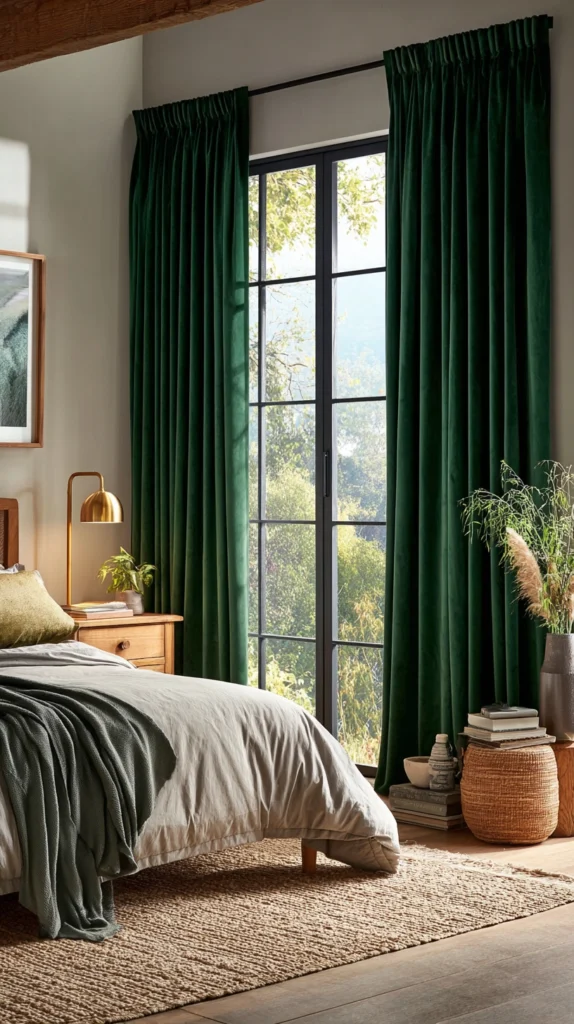
Budget: $150 – $600 per window
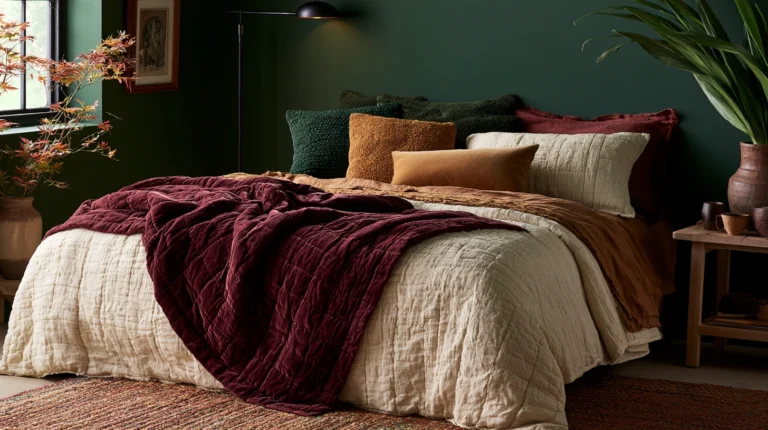
Velvet is the definitive autumn and winter bedroom curtain fabric — its dense pile traps air within the fabric structure and provides genuine thermal insulation at the window, its deep, rich colour range (burgundy, forest green, charcoal, navy) suits the season’s natural palette directly, and its soft, light-absorbing surface creates a bedroom atmosphere of considerable warmth and luxury that lighter fabrics cannot replicate at any weight or lining specification.
Quality velvet curtain fabric costs $25–$60 per metre. A standard window of 150 cm width requires 4–5 metres per curtain panel for full gathering, at $200–$600 for a pair of curtains in mid-range velvet. Made-to-measure velvet curtains from a specialist curtain maker cost $300–$800 per window including lining and heading. Choose a deep, saturated colour rather than a pale or pastel velvet — the fabric’s light-absorbing pile quality is most effective and most visually rich in deep tones, and pale velvet loses much of the material’s characteristic depth and warmth.
Window tip: Line velvet curtains with a thermal interlining rather than a standard cotton lining for maximum autumn and winter heat retention. The thermal interlining — a fleece-like layer sandwiched between the velvet face fabric and a standard lining — adds genuine insulating value to the window treatment beyond what the velvet’s own density provides, and the combination of velvet face and thermal lining creates a curtain that measurably reduces heat loss through the window during the coldest months of the year.
2. A Layered Sheer and Blackout Combination
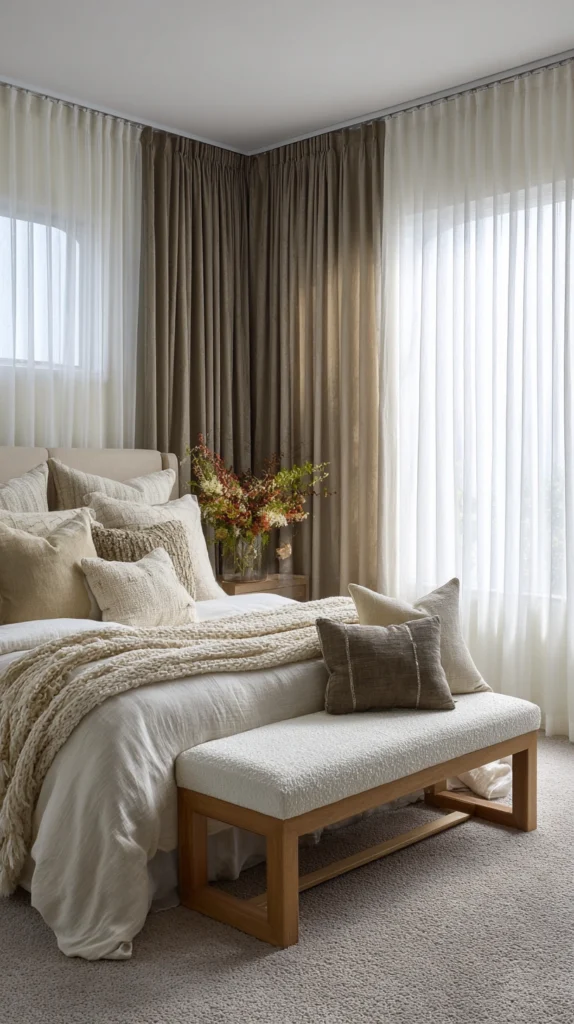
Budget: $80 – $350 per window
A layered window treatment — a sheer linen or voile curtain on an inner track closest to the glass, with a heavier blackout curtain on an outer track — provides the specific flexibility that autumn demands: light filtering and gentle privacy during the day when the sheer alone is drawn, and complete darkness and warmth retention at night when both layers are closed. The double-track system addresses the autumn bedroom’s two distinct daily requirements with two distinct fabric weights rather than compromising both with a single curtain weight.
A double curtain track system costs $30–$70 for a standard window width. Sheer linen voile panels cost $20–$50 per panel. Blackout curtain panels in a quality fabric cost $60–$150 each. The complete layered system for one window costs $170–$420 in tracks and both fabric layers. The sheer layer alone provides privacy and light diffusion during autumn daytime hours when full blackout is unnecessary, while the combined layer at night provides the complete darkness that supports good sleep through the longer autumn and winter nights.
Window tip: Choose a sheer fabric in a warm ivory or champagne tone rather than pure white for the inner layer of an autumn layered treatment. A warm-toned sheer filters daylight with a golden quality that suits the autumn season’s natural light more harmoniously than a cool white sheer, which can make autumn’s lower-angle, slightly cooler daylight feel even cooler and less inviting as it passes through the fabric into the bedroom.
3. A Wool Roman Blind
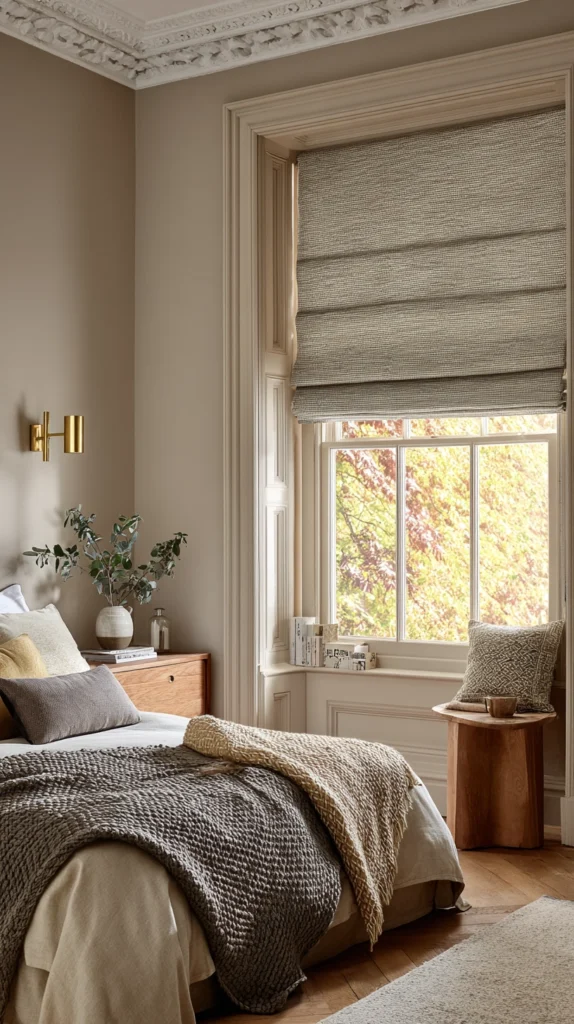
Budget: $100 – $400 per window
A Roman blind in a heavyweight wool or wool-blend fabric — folding into neat horizontal pleats when raised and providing a flat, tailored fabric panel when lowered — creates one of the most specifically autumnal and most architecturally tidy window treatments available for a bedroom. Wool’s natural insulating properties make it a genuinely practical choice for the season as well as an aesthetically appropriate one, and the Roman blind’s clean lines suit bedrooms where a more structured, less voluminous window treatment is preferred to full-length curtains.
A made-to-measure wool Roman blind for a standard window costs $150–$350. A DIY Roman blind kit with a wool or wool-blend fabric of your choice costs $80–$200 in materials for a competent home sewing project. Line the blind with a thermal or blackout lining for the insulating benefit that makes the wool’s natural warmth functionally significant rather than purely textural — an unlined wool blind looks appropriately autumnal but provides considerably less thermal benefit than the same blind with a proper lining specified.
Window tip: Choose a herringbone, houndstooth, or subtle check wool fabric rather than a plain weave for an autumn Roman blind. The textured weave patterns traditional to wool fabric production add a specific seasonal character that references the autumn and winter clothing fabric tradition — tweed jackets, wool coats — and creates a visual connection between the window treatment and the season’s broader material and textile associations that a plain wool weave does not provide with the same specificity.
4. Burnt Orange or Rust Linen Curtains
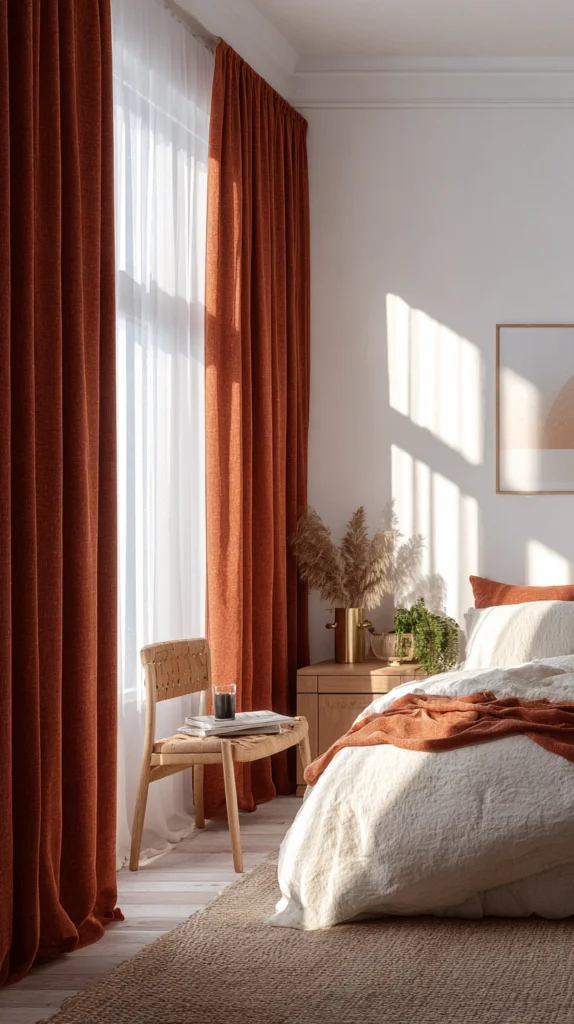
Budget: $100 – $400 per window
Linen curtains in a burnt orange, rust, or terracotta tone bring the season’s most directly autumnal colour into the bedroom window in a fabric that remains breathable and naturally textured even at this depth of colour. Linen in autumn tones — unlike velvet, which suits the deepest and darkest part of the season — works equally well from early autumn through to winter, and its lighter weight than velvet suits bedrooms in milder climates where full winter-weight curtaining is unnecessary for most of the autumn season.
Quality linen curtain fabric in autumnal dyed tones costs $20–$50 per metre. A standard window requires 4–5 metres per panel at $80–$500 for a complete pair depending on fabric quality and curtain maker costs. Linen curtains in this colour family suit a bedroom with warm timber furniture, brass or copper accessories, and a neutral or warm-toned wall colour — the rust and burnt orange tones read as autumnal and warm against a backdrop of cream, warm grey, or terracotta walls and clash less successfully against cool grey or blue bedroom palettes.
Window tip: Hang burnt orange or rust linen curtains from ceiling height rather than from the window frame top — the additional curtain length and the elevated hanging point make the warm colour read as a more significant and more confidently applied design decision than the same fabric hung at the more modest window-frame height. Ceiling-height curtaining is always the more impactful application for any strongly coloured curtain fabric, and autumn’s confident colour palette particularly benefits from the additional visual presence the height provides.
5. A Tartan or Plaid Curtain Panel
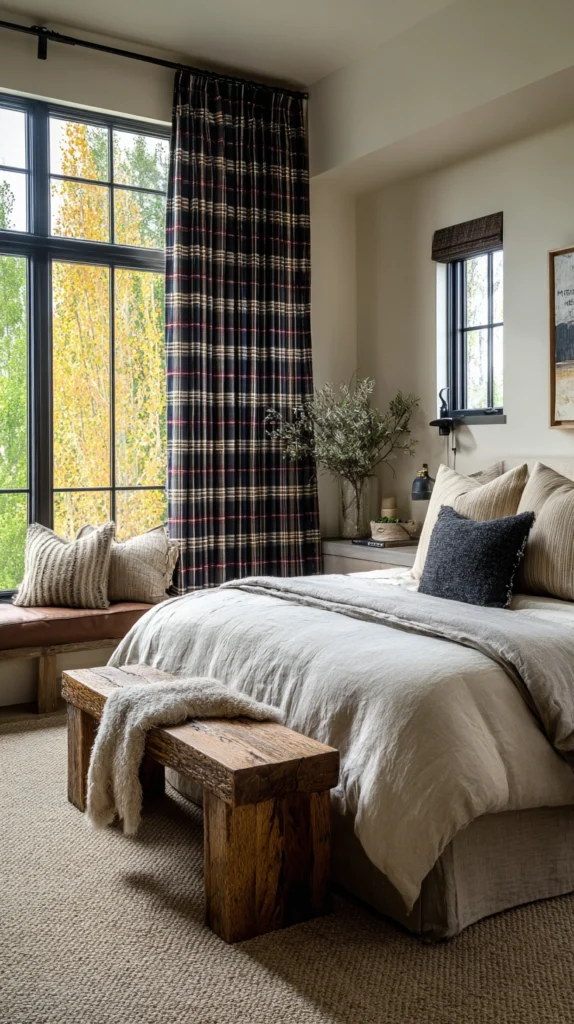
Budget: $80 – $350 per window
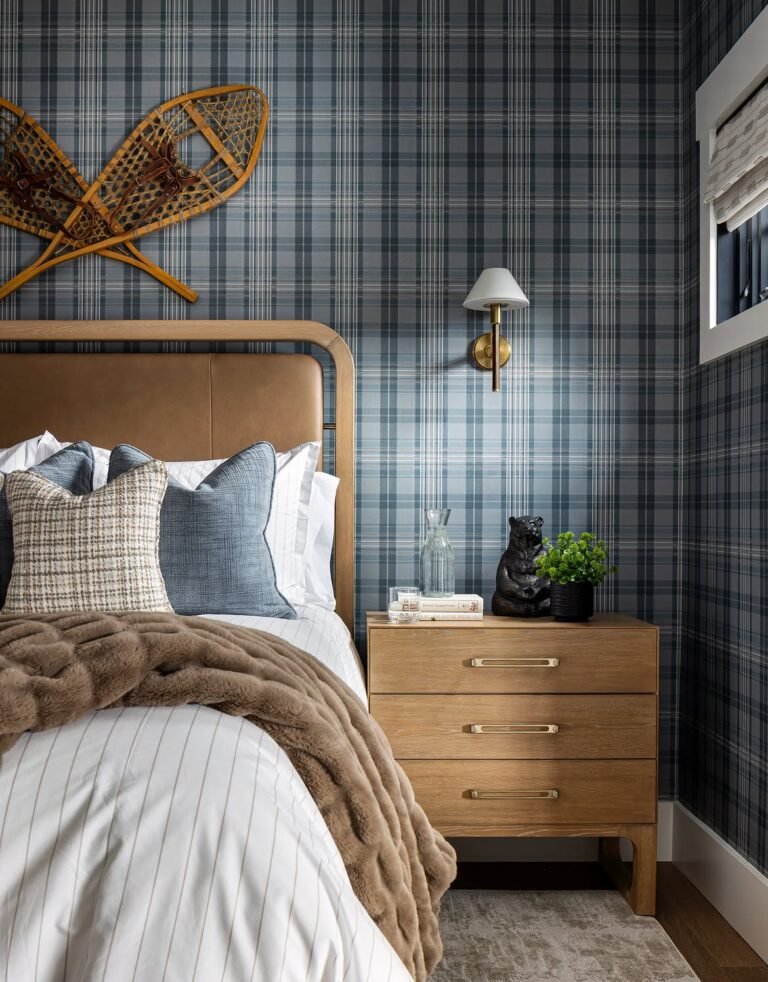
Tartan and plaid patterned curtains bring the most directly seasonal pattern association into the bedroom window — the pattern is inseparably linked to autumn and winter in the Western design vocabulary and its specific combination of deep, warm colours in a structured grid pattern creates a window treatment of genuine character and warmth. A tartan curtain in deep green, burgundy, and navy suits a traditional, country house, or lodge-style bedroom particularly well, while a more muted, smaller-scale plaid suits a more contemporary bedroom that still wants the season’s characteristic pattern reference.
A wool-blend tartan curtain fabric costs $25–$60 per metre. A standard window requires 4–5 metres per panel at $100–$600 for a complete pair. A pre-made tartan curtain panel from a homeware retailer costs $40–$100 per panel — a more accessible cost point than custom-made curtains in the same pattern family. Pair with plain, solid-coloured bedlinen and soft furnishings — the tartan or plaid pattern is busy and structured enough that it requires plain surroundings to be seen and appreciated fully rather than competing with other patterns in the same room.
Window tip: Match the dominant colour in the tartan pattern to one accent colour elsewhere in the bedroom — the bedside lamp, a cushion, or the headboard upholstery — rather than introducing the tartan as a completely isolated colour decision at the window alone. A single colour echo between the patterned curtain and one other room element creates the visual thread that makes the bold pattern read as integrated into a considered room scheme rather than as an unrelated decorative choice applied only to the window.
6. Layered Roman Shades With a Valance
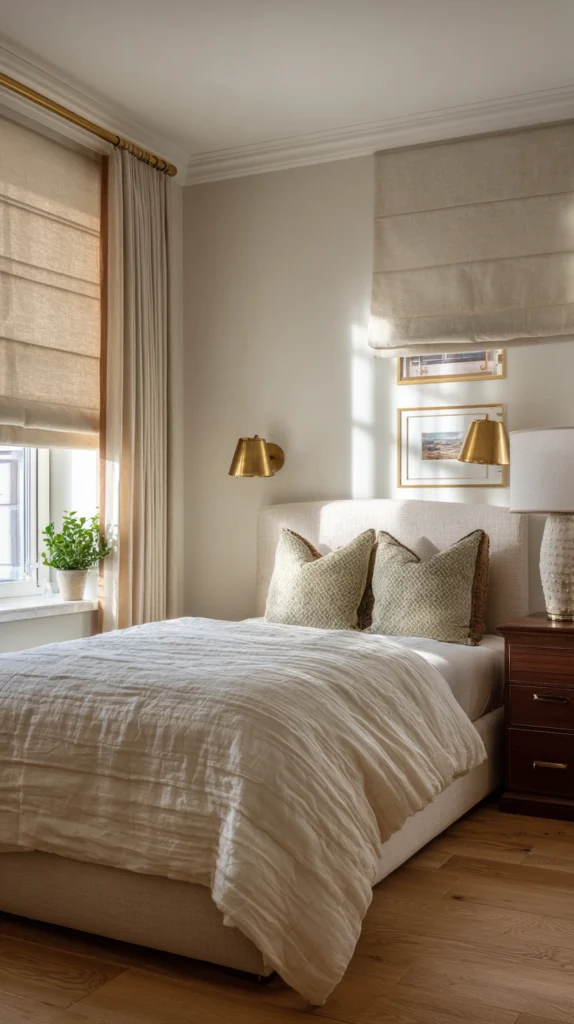
Budget: $120 – $450 per window
A Roman shade with a fabric valance above it — a horizontal pelmet covering the top mounting hardware in a coordinating or contrasting fabric — creates a window treatment with the clean, tailored quality of the Roman shade and the additional softness and finished quality that the valance provides at the window’s top edge. The valance also conceals any fairy lights or LED strip used behind it for the warm evening glow effect that suits an autumn bedroom particularly well as the evenings lengthen and the bedroom’s evening atmosphere becomes more significant to the room’s daily use.
A Roman shade in a quality autumn-toned fabric costs $100–$300. A coordinating fabric valance built on a simple timber pelmet board costs $50–$150 in materials for a DIY project. The complete shade and valance treatment costs $150–$450 per window. The valance height should be approximately 20–25 cm — tall enough to conceal the mounting hardware completely and to provide adequate space for any concealed lighting, while not so tall that it reduces the visible window glass area significantly during daytime hours when the shade is raised.
Window tip: Conceal a warm white LED strip inside the valance, directed downward to wash light over the top of the lowered shade fabric in the evening. The lit valance creates a warm glow at the top of the window treatment that is particularly atmospheric during the longer autumn evenings, and it provides ambient bedroom lighting that supplements the bedside lamps without requiring any additional floor or table space for an extra light source.
7. A Cozy Window Seat With Cushions and Throws
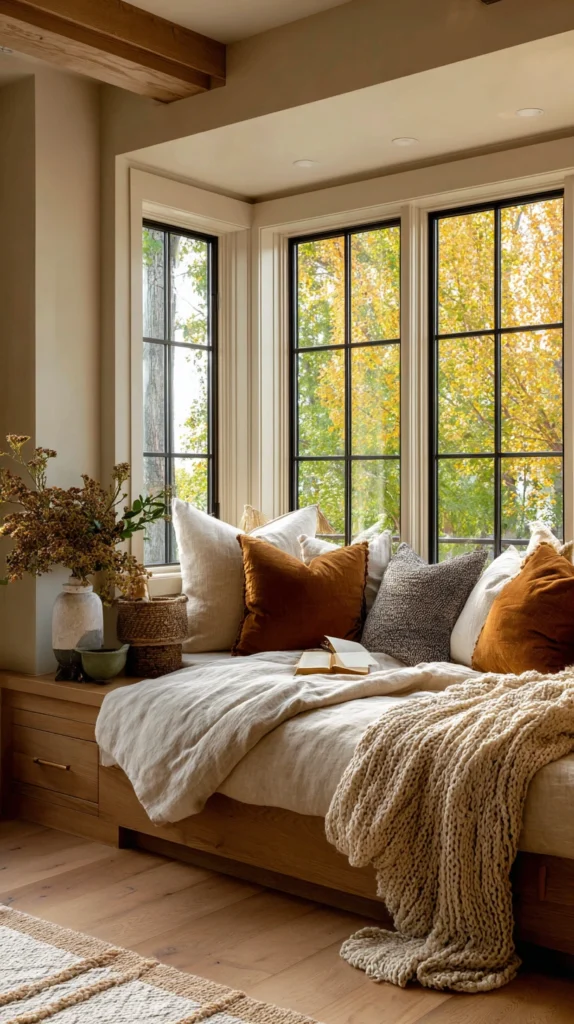
Budget: $100 – $400
If the bedroom window has a deep sill or a bay, dressing it as a cushioned window seat — with a fitted cushion, two or three scatter cushions in autumn tones, and a folded wool or knit throw — transforms the window from a treated surface into a destination within the bedroom. The autumn window seat, dressed for the season with deep, warm colours and tactile materials, becomes the room’s most inviting reading position during exactly the season when staying in and reading by the window is most genuinely appealing.
A fitted window seat cushion costs $40–$120 depending on the window’s dimensions. Two to three scatter cushions in mustard, rust, or deep burgundy velvet or wool cost $20–$45 each. A chunky knit or wool throw costs $30–$80. The complete autumn window seat dressing costs $130–$380 and requires no structural work if the window sill or bay seat base already exists — only the cushions, the throw, and the seasonal styling decisions about colour and texture that make the existing architectural feature specifically autumnal.
Window tip: Add a small reading light beside the window seat — a clip-on or wall-mounted fitting that does not require floor space — for the specific quality of autumn reading-by-the-window-as-the-light-fades that the season’s shortening days make especially appealing. The light should be warm 2700K and positioned to illuminate a book held at the seated reading position without creating glare on the window glass itself during the darker evening hours when the seat is most likely to be in use.
8. Café-Style Half Curtains
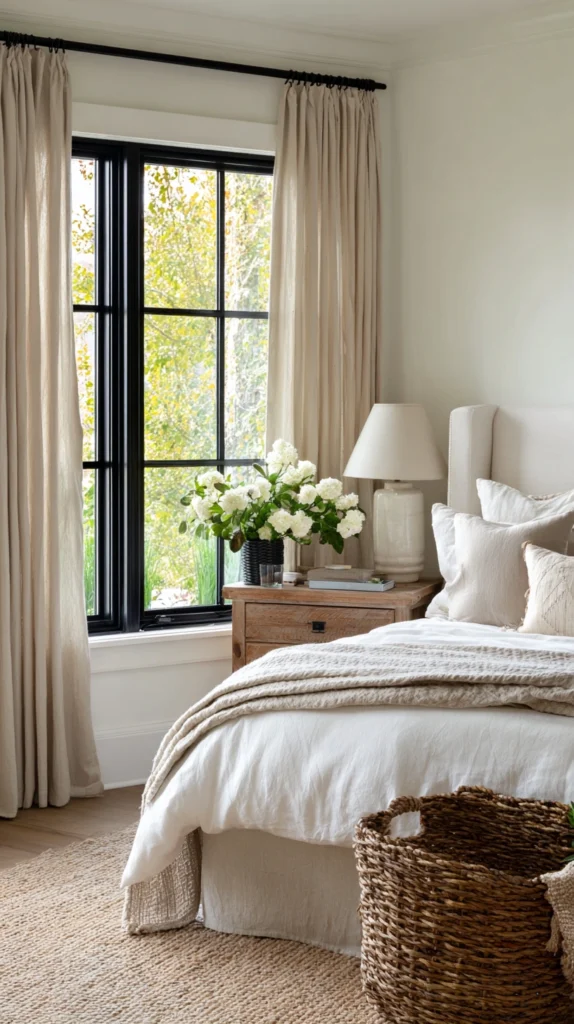
Budget: $40 – $150 per window
Café curtains — covering only the lower half of the window on a rod positioned at the window’s midpoint — provide privacy at eye level while leaving the upper half of the window completely clear for maximum daylight admission during autumn’s progressively shorter days. The half-curtain format suits a bedroom window facing a street or a neighbouring property where privacy at standing or seated eye level is needed but where the full window blackout of a complete curtain treatment is unnecessary or undesired during the daytime hours.
A café curtain rod costs $10–$25. A pair of café curtain panels in a quality autumn-toned fabric — gingham, ticking stripe, or a simple plaid — costs $30–$100. The reduced fabric requirement of a half-window treatment makes café curtains one of the most cost-effective autumn window treatments available, and the format suits country, farmhouse, and cottage bedroom aesthetics particularly well, referencing the kitchen café curtain tradition in a bedroom context where its practical privacy-with-light benefits are equally valuable.
Window tip: Add a simple roller blind behind the café curtain for evening privacy and blackout, used in combination with the café curtain that provides the daytime privacy and decorative quality. The roller blind lowered fully at night provides complete coverage and darkness while remaining invisible during the day when raised behind the café curtain — giving the bedroom window full functional flexibility across the autumn day’s changing privacy and light requirements without compromising either function.
9. Burlap or Jute Textured Curtains
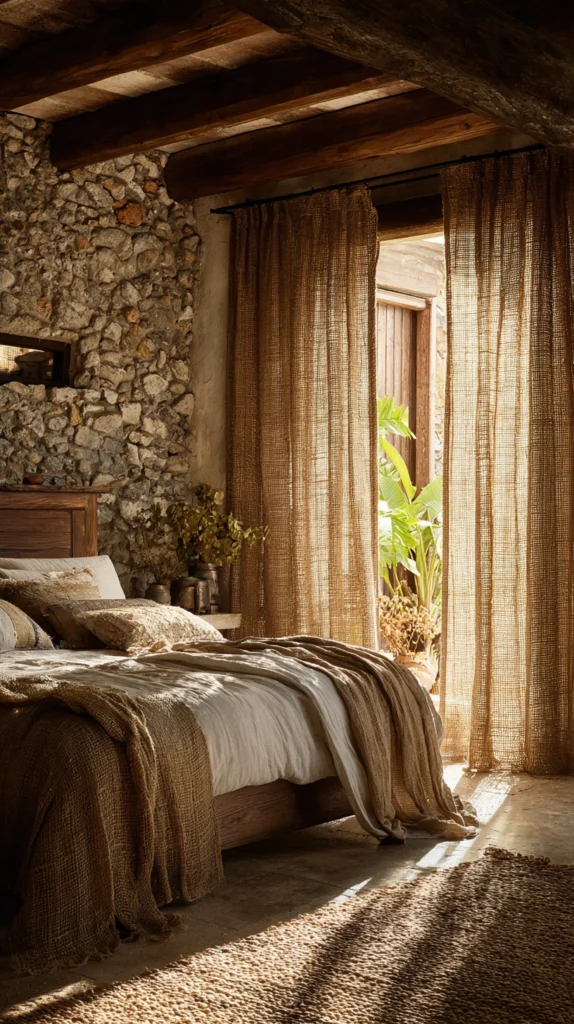
Budget: $50 – $200 per window
Curtains in a natural burlap, jute, or coarse linen weave bring the harvest season’s most directly material association into the bedroom window — the texture references hessian sacking, farmhouse storage, and the natural fibre traditions of the agricultural autumn in a way that no smoother or more refined fabric can replicate. The rustic, slightly rough texture suits a farmhouse, rustic, or natural bedroom aesthetic and provides a specifically tactile quality that visually warms the window even in a relatively pale, undyed natural tone.
Burlap or coarse jute curtain fabric costs $10–$25 per metre — one of the most affordable natural fibre options available for curtain making. A standard window requires 4–5 metres per panel at $40–$250 for a complete pair depending on whether the fabric is hemmed and finished professionally or as a simple unlined DIY project. Line with a standard curtain lining for improved drape and opacity — unlined burlap alone is relatively sheer and provides limited privacy, which the addition of a basic lining addresses without compromising the visible texture of the burlap face fabric.
Window tip: Add a row of small bells, dried wheat sheaves, or a simple jute tieback to burlap curtains for an autumn harvest styling detail that costs almost nothing and completes the seasonal reference that the fabric texture alone begins. A simple jute rope tieback with a dried seed head or a small bundle of wheat tucked into the knot brings the harvest season detail to the window treatment at a material cost of under $10 and a styling effort of under five minutes.
10. A Patterned Autumn Leaf Print Curtain
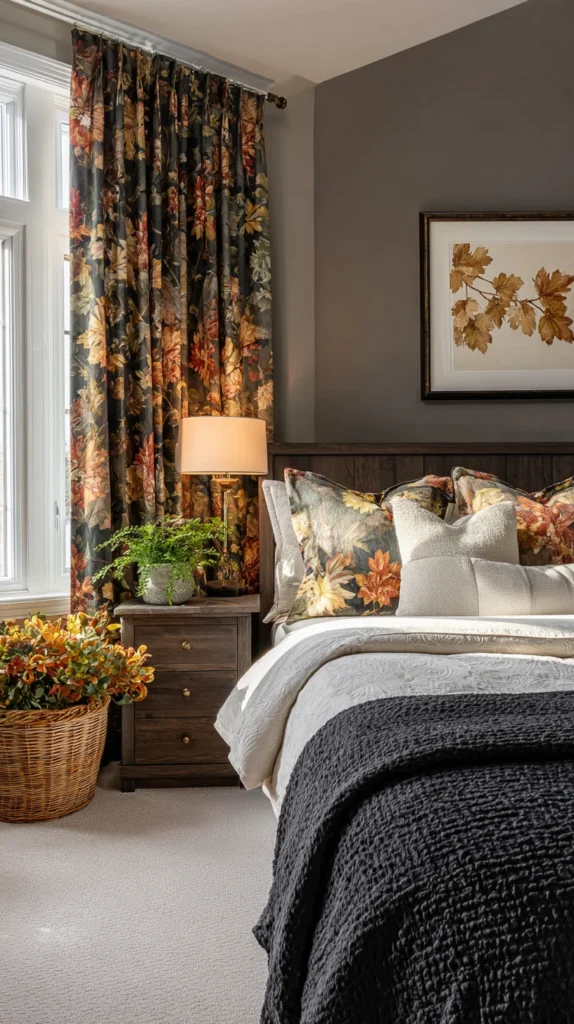
Budget: $80 – $350 per window
Curtains in a botanical print specifically depicting autumn leaves, acorns, or seasonal foliage bring the most directly representational and most literally seasonal pattern reference into the bedroom window. A well-chosen leaf print — in warm golds, deep rust, and forest green tones rather than a cartoonish or overly literal illustration style — creates a bedroom window treatment of genuine sophistication that references the season specifically without becoming a temporary decoration that must be replaced when the season changes.
A quality botanical leaf print curtain fabric costs $25–$55 per metre. A standard window requires 4–5 metres per panel at $100–$550 for a complete pair. Choose a print with a sophisticated, painterly illustration style — watercolour leaves, a botanical illustration plate aesthetic — rather than a graphic or overly stylised leaf motif, which is more likely to read as seasonal decoration rather than as a genuine fabric design with year-round visual merit beyond its specific autumnal association.
Window tip: Choose a leaf print fabric with a relatively dark or deep-toned background — charcoal, deep green, or warm brown — rather than a pale or white background. A dark-background leaf print suits the bedroom’s need for warmth and enclosure during autumn evenings far more effectively than the same pattern on a pale background, which can read as more appropriate to a spring or summer floral aesthetic despite the specifically autumnal subject matter of the leaves themselves.
11. A Layered Curtain and Blind Combination
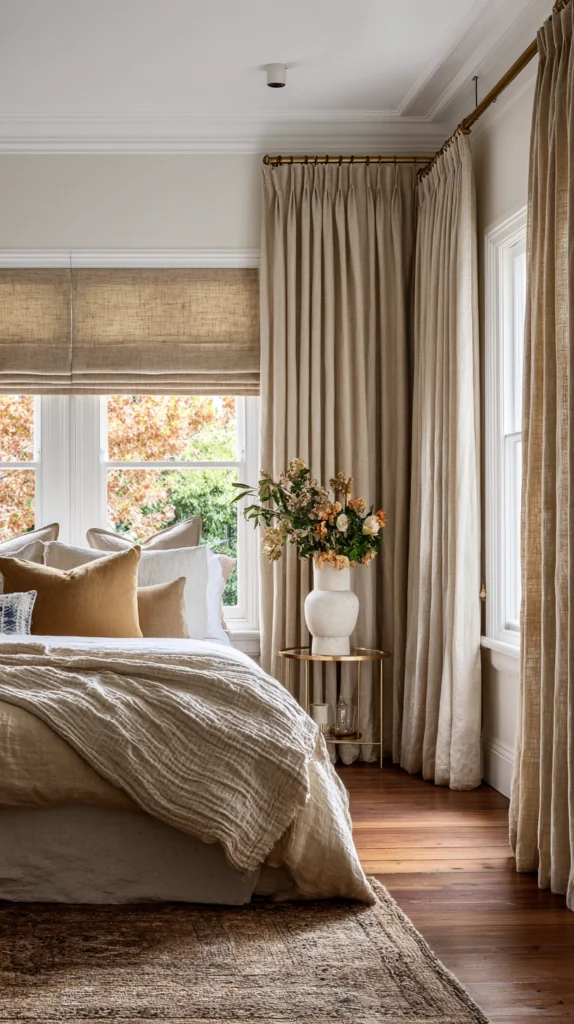
Budget: $150 – $500 per window
Combining a full-length curtain with a fitted blind on the same window — the blind mounted inside the window recess and the curtain hung outside it on a track or pole — provides the most completely flexible and most thermally effective autumn window treatment available. The blind provides precise daily light control and a clean architectural finish to the window itself. The curtain provides the additional thermal layer, the softening fabric texture, and the visual generosity of full-length drapery that the blind alone cannot supply.
A fitted Roman or roller blind for the window recess costs $60–$200. A full-length curtain on a pole or track outside the recess costs $90–$300 in fabric and hardware. The combined treatment costs $150–$500 per window and provides the autumn bedroom with the complete functional range from full daylight (blind raised, curtain open) through filtered privacy (blind lowered, curtain open) to complete blackout and thermal retention (blind lowered, curtain closed) — the full spectrum of light and temperature control that a single window treatment alone cannot provide across an entire autumn and winter season’s range of daily conditions.
Window tip: Choose contrasting rather than matching fabrics for the blind and curtain in a layered treatment — a plain linen blind with a patterned or textured curtain, or a patterned blind with a plain curtain. Matching fabrics on both elements of a layered treatment can read as an unnecessary duplication of the same material applied twice. Contrasting fabrics read as two distinct functional layers that have each been chosen specifically for their own purpose, which is the more sophisticated and more clearly intentional design outcome for any layered window treatment.
12. A Wool Throw Draped Over a Simple Curtain Rod
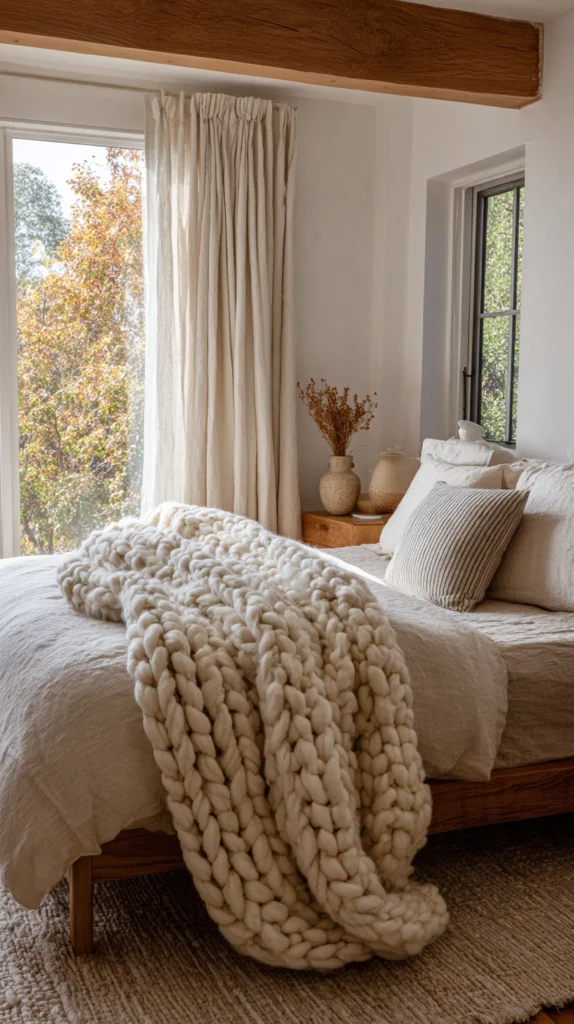
Budget: $30 – $100
For a temporary, low-cost, or rental-friendly autumn window treatment, draping a chunky knit wool throw or blanket directly over a simple tension rod fitted inside the window frame creates an immediately warm, textural, and genuinely autumnal window covering without any sewing, any custom curtain making, or any permanent fixing. The throw provides genuine thermal benefit from its wool fibre density and creates a specifically cozy, lived-in bedroom quality that is achievable in an afternoon at minimal cost.
A tension rod fitted inside the window recess costs $5–$15. A quality chunky knit wool throw of sufficient width to cover the window costs $25–$80. The complete treatment costs $30–$95 and requires no drilling, no permanent fixing, and no specialist skill — making it the most accessible and most immediately reversible autumn window treatment available for any rental property or temporary living situation where investment in custom curtains is not justified by the length of occupancy.
Window tip: Choose a throw in a cable knit or chunky rib texture rather than a flat woven blanket for the draped tension rod treatment. The dimensional, textured surface of a cable or rib knit reads more clearly and more specifically as an intentional window treatment from across the room than a flat blanket, which can read simply as a blanket that happens to be hanging over the window rather than as a considered design decision applied to the window specifically.
13. Smart Blinds With Seasonal Scheduling
Budget: $150 – $500 per window
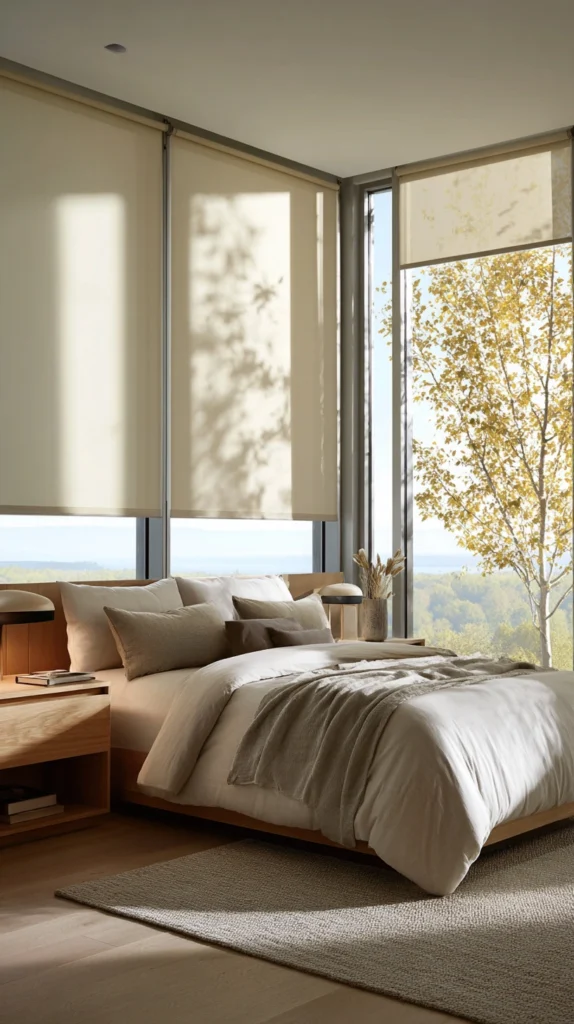
Smart blinds — automated roller, Roman, or Venetian blinds controlled from a phone app and capable of scheduled operation — address the autumn bedroom’s specific challenge of changing daylight hours by automating the blind’s position to match the season’s actual sunrise and sunset times rather than requiring manual adjustment as the daylight hours shift through the autumn weeks. The smart blind opens automatically as autumn’s later sunrise occurs and closes automatically as the earlier sunset approaches, maintaining the bedroom’s optimal light and privacy conditions without any daily manual intervention.
A smart roller blind motor retrofit for an existing blind costs $80–$150. A complete smart blind system including the blind itself costs $150–$400 per window. App-based scheduling allows the blind position to be set for sunrise-linked opening and sunset-linked closing, which automatically adjusts week by week through the autumn as the actual daylight hours change — eliminating the manual recalibration that a fixed-time schedule would otherwise require as the season progresses from September’s longer days toward December’s shortest ones.
Window tip: Set the smart blind’s autumn evening closing time to begin gradually 15–20 minutes before actual sunset rather than precisely at the sunset moment. The gradual pre-sunset closing accounts for the practical reality that the room benefits from beginning its evening enclosure slightly before full darkness, capturing the last of the warm late-afternoon light through a partially closed blind before completing the full closure as darkness genuinely falls — a more graceful transition than an abrupt full closure timed to the exact astronomical sunset moment.
The autumn bedroom window treatment that works best is always the one that addresses the season’s actual functional requirements — warmth retention, light management through shortening days, and the specific atmospheric warmth that autumn evenings call for — rather than the one that simply references the season’s colour palette without improving the window’s practical performance. The most successful autumn window treatments do both simultaneously: they look like the season and they perform for the season’s specific demands on light, temperature, and the bedroom’s daily rhythm.
Choose the treatment that suits the bedroom’s existing window architecture, the climate of the specific location, and the practical balance between daytime light and evening warmth that the household’s actual use of the bedroom requires. The window dressed correctly for autumn becomes one of the most quietly satisfying details in the whole room — present in every glance toward the window through the season’s shortening days and felt in the warmth it helps retain through every one of the season’s increasingly cold nights.