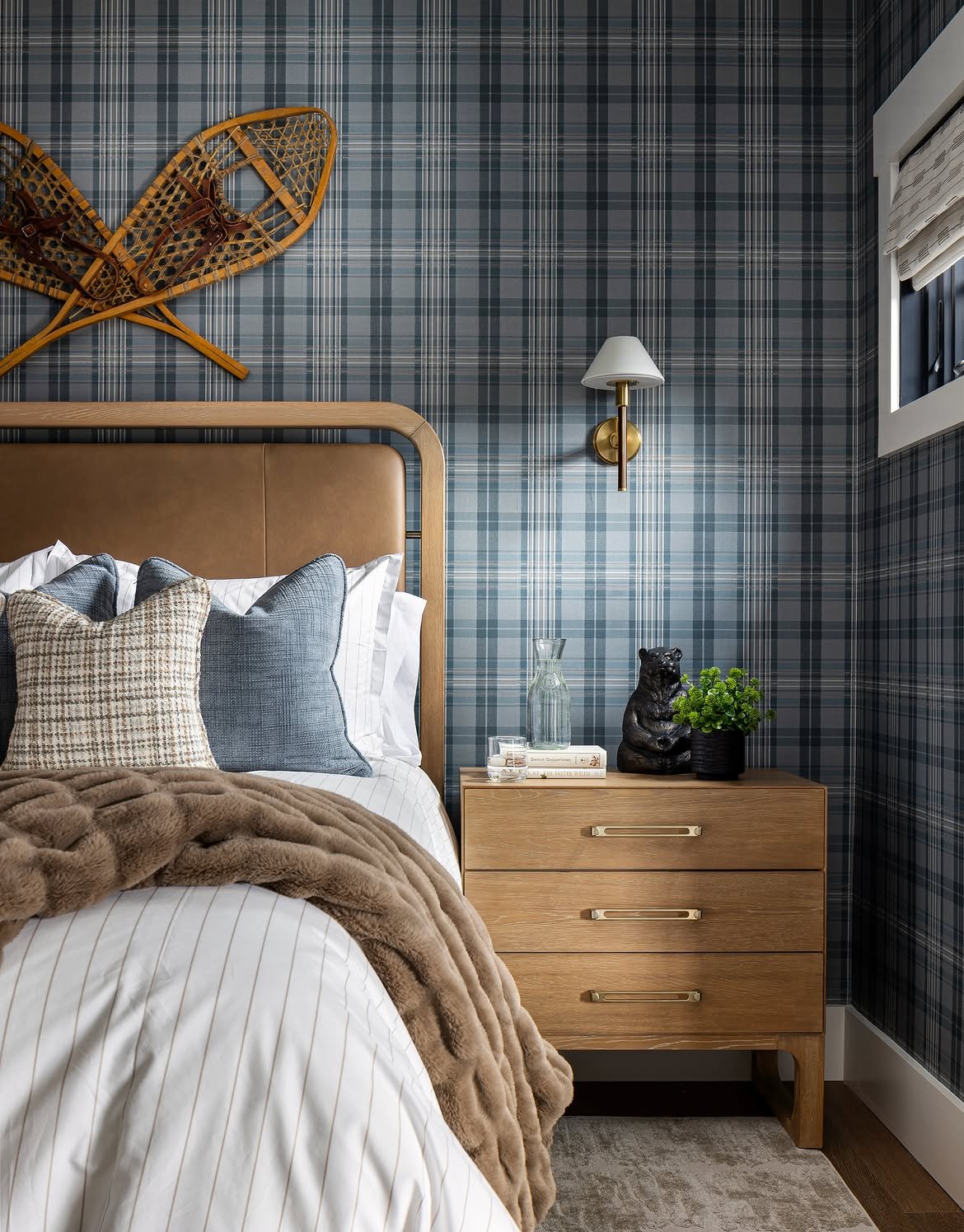
10 Plaid and Flannel Bedroom Decor Inspiration Ideas
My bedroom had no pattern anywhere for years. Solid white duvet, solid beige walls, solid gray rug, nothing for the eye to follow except flat, uninterrupted color.
Tried adding one plaid throw pillow once. Sat alone against an otherwise pattern-free bed, looking accidental rather than intentional, a single checked square in a room that had given it nothing to relate to.
Then I learned that plaid and flannel work as a complete material and pattern language, not a single seasonal accessory. Scale, color family, and where the pattern repeats throughout the room all matter as much as the plaid itself.
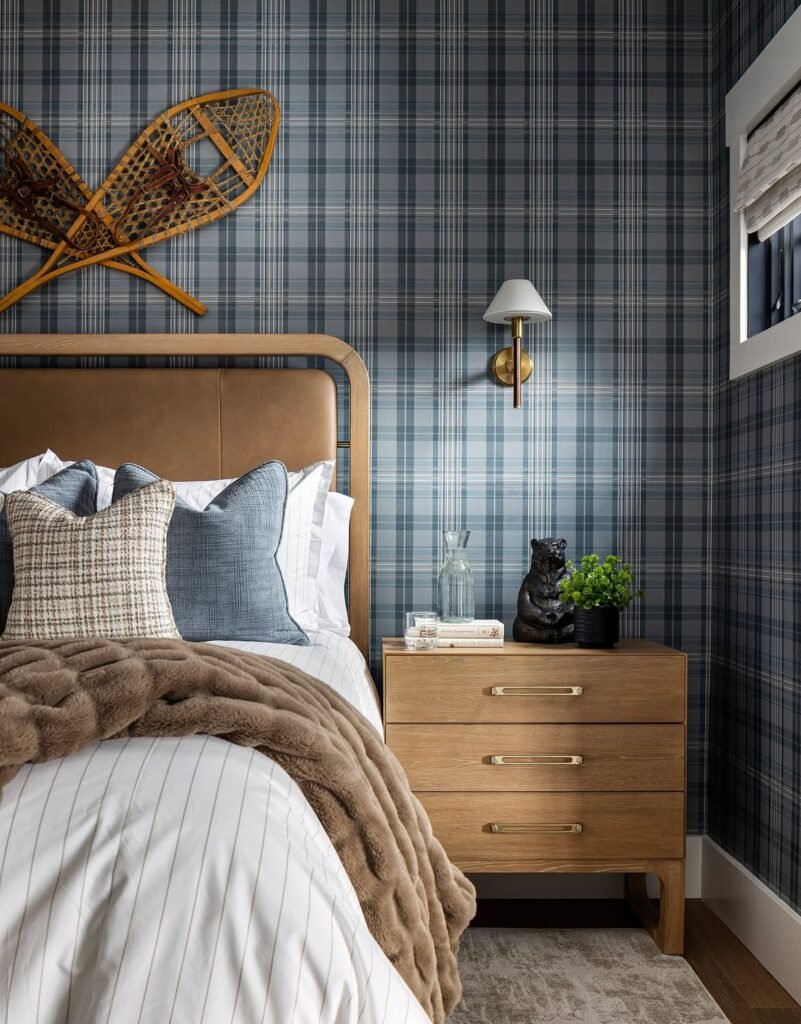
Now my bedroom has genuine warmth and pattern throughout, and it never once reads as a lumberjack costume or a flannel shirt exploded across the furniture.
Let me show you 14 ways to bring plaid and flannel into a bedroom with the same intention and restraint that makes any pattern actually work.
Why Plaid in a Bedroom Often Goes Wrong
The all-or-nothing problem:
What happens most often:
- Either one small plaid object, isolated and looking random against an otherwise pattern-free room
- Or plaid on every surface simultaneously, overwhelming the room and reading as costume rather than considered design
The scale mismatch issue:
Why plaid specifically struggles with scale:
- A tiny plaid print can disappear into visual noise from across a room
- An oversized plaid can dominate a small bedroom entirely
- Getting the check size right for the specific surface and room size matters more with plaid than with most other patterns
The color temperature trap:
What separates sophisticated plaid from costume plaid:
- Bright red and black plaid reads as flannel shirt or lumberjack reference immediately
- Muted, tonal, or unexpected color combinations within the same plaid structure read as considered and current
- This single color decision determines more about how plaid is perceived than almost any other factor
My revelation: Plaid and flannel succeed in a bedroom when the pattern repeats with variation across multiple surfaces in a coordinated but not matched way, using a color palette that avoids the most obvious red-and-black cliché. Isolation and over-saturation are the two failure modes; everything in between tends to work.
1. A Flannel Sheet Set as the Foundation Layer (Pattern Where It Is Felt First)
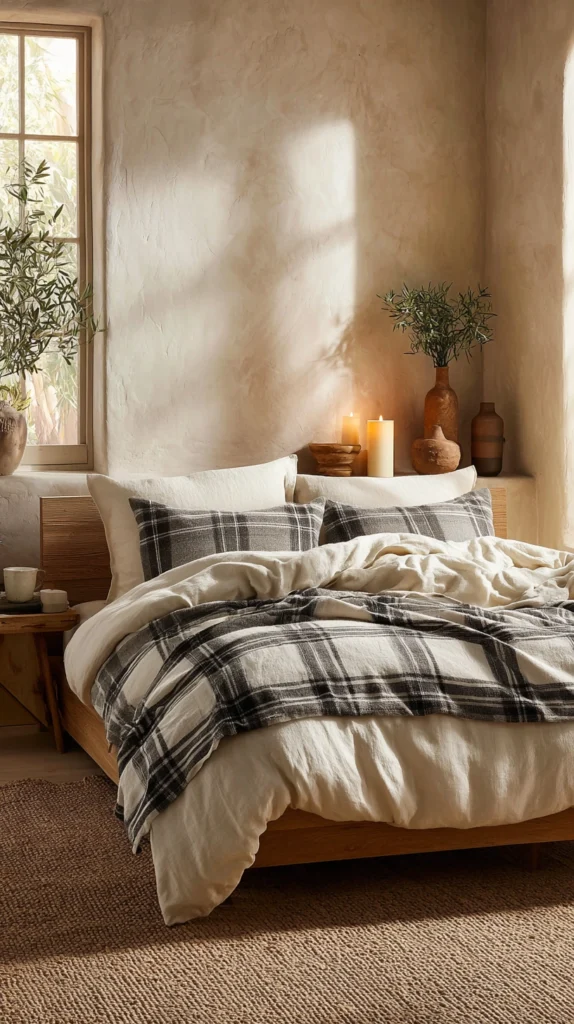
Plaid flannel sheets, used as the base layer beneath other bedding — bringing the pattern into the bed at the level closest to the body, where it is experienced through touch as much as sight.
My missing foundational layer:
What I had:
- Solid white sheets beneath a solid duvet, with the only plaid element being a single throw pillow
- No pattern anywhere actually touching the bed’s primary sleeping surface
Why starting with the sheets specifically makes sense:
The felt-before-seen principle:
- Flannel sheets provide genuine warmth, making this a functional fall and winter choice independent of the pattern decision
- Choosing a plaid flannel specifically, rather than a solid flannel, means the pattern begins at the most intimate layer of the bed, even though much of it will be covered by the duvet during actual use
Plaid scale for sheets specifically:
What works at this scale:
- A smaller-scale plaid or tartan, since sheets are viewed up close and at various angles as they shift with use
- Buffalo check, with its larger squares, can also work but reads more casual and rustic than a finer tartan weave
Color choices that avoid the cliché:
Best options:
- Cream and rust tartan (warm without being the expected red and black)
- Charcoal and cream buffalo check (sophisticated, neutral-leaning)
- Forest green and navy tartan (rich, more unexpected than traditional red plaid)
Where this pattern shows once the bed is made:
Visible plaid moments:
- A folded-back portion at the head of the bed, where the flat sheet turns over the duvet
- Pillowcases, fully visible at the bed’s head regardless of how the duvet is arranged
- Any portion of the flat sheet visible at the foot, if the duvet does not extend the full length
Sourcing affordably:
Budget options:
- Target and L.L. Bean for reliable plaid flannel sheet sets in classic tartan patterns ($35-70)
- Pendleton-licensed flannel bedding, if available, for a more heritage-specific plaid reference ($60-120)
Cost:
- Flannel plaid sheet set: $35-90
- Total: $35-90
My flannel sheet result: Switching to a charcoal and cream buffalo check flannel sheet set, visible at the pillowcases and the folded-back sheet edge, brought genuine pattern into the bed at its most physically experienced layer, the warmth and the pattern arrived as a single decision rather than two separate purchases.
Flannel Sheet Tips
Washing before first use for maximum softness:
A practical first step:
- New flannel softens considerably after one or two washes
- This is true regardless of pattern, but worth noting since plaid flannel is often purchased specifically for this cozy, soft quality
Choosing a pillowcase-visible pattern scale:
A specific sizing consideration:
- Since pillowcases are the most consistently visible plaid surface once the bed is made, choosing a check size that reads clearly at pillow scale, neither too tiny to register nor too large to fit awkwardly within the pillow’s dimensions, matters specifically for this piece
2. A Wool Plaid Blanket Folded at the Foot of the Bed (The Classic Layering Move)
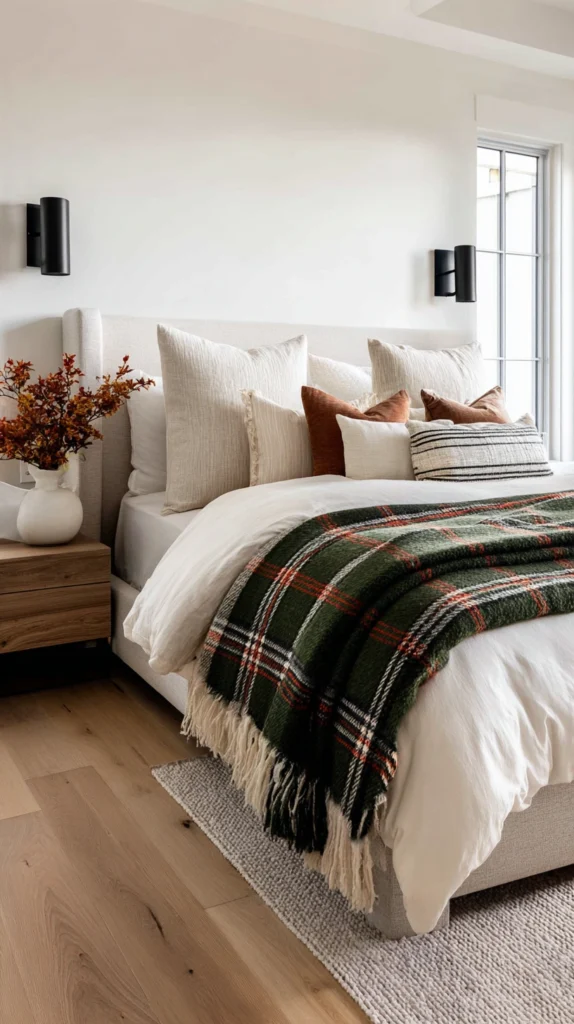
A genuine wool plaid blanket, folded and placed at the foot of the bed — the single most recognizable plaid bedroom styling gesture, done with quality material.
My thin, synthetic plaid blanket disappointment:
What I had tried first:
- A thin, synthetic plaid throw, visually fine in photographs but unconvincing in person
- The lightweight, slightly shiny synthetic material undermined the substantial, heritage quality genuine wool plaid is meant to convey
Why genuine wool specifically matters for this particular use:
The material authenticity principle:
- A wool plaid blanket carries real weight and a slightly rough, substantial hand-feel that synthetic alternatives cannot replicate
- This is the one plaid bedroom item where material quality is almost as important as the pattern itself, since the entire point is conveying genuine, lasting warmth and craftsmanship
Heritage brands and their significance:
Why certain brands carry specific weight here:
- Pendleton and Faribault Woolen Mill both produce genuine wool plaid blankets with long American manufacturing histories
- This heritage is part of what makes these specific brands’ blankets read as authentic rather than costume-like, even though the visual pattern itself (a classic tartan or buffalo check) is widely available from many sources
Color and pattern selection:
Choosing the specific plaid:
- A traditional Pendleton-style tartan in muted, earthy tones (rust, cream, forest green combinations) rather than the most saturated, bright versions
- Buffalo check in black and cream, if a slightly more casual, farmhouse-adjacent reference is preferred over a more traditional tartan
The folding technique:
How to display this specific blanket:
- Fold the blanket in half lengthwise
- Fold in thirds again, creating a substantial rectangular shape
- Place at the foot of the bed, allowing slight natural looseness rather than a perfectly pressed, severe fold
- Optionally drape one corner slightly open, revealing more of the pattern than a fully closed fold would show
Why this specific styling move works so reliably:
The proven formula:
- This particular combination (solid bedding, one substantial folded plaid blanket at the foot) is one of the most consistently successful plaid bedroom styling choices because it isolates the pattern to one clearly intentional object, rather than risking the all-or-nothing problem discussed in the introduction
Sourcing:
Where to find genuine wool plaid blankets:
- Pendleton directly, or through retailers carrying their blanket line ($150-280)
- Faribault Woolen Mill, similarly positioned at a premium but genuine price point ($120-250)
- Vintage and secondhand sources (estate sales, vintage shops) for genuine older wool plaid blankets, often at a significant discount to new pricing while carrying additional authentic character ($30-90)
Cost:
- New heritage brand wool blanket: $120-280
- Vintage or secondhand option: $30-90
- Total: $30-280
My wool plaid blanket result: Replacing my thin synthetic throw with a vintage Pendleton-style wool plaid blanket, found at an estate sale for fifty-five dollars, immediately elevated the entire bed’s perceived quality, the weight and texture difference between genuine wool and synthetic plaid is significant enough to notice even without touching it, simply from how the fabric falls and folds.
Wool Plaid Blanket Tips
Checking for moth damage on vintage finds specifically:
A practical secondhand sourcing consideration:
- Genuine wool is susceptible to moth damage, particularly in older blankets that may have been stored without protection
- Inspecting carefully for small holes or thin, weakened areas before purchasing any vintage wool blanket prevents bringing home a piece that will continue deteriorating
Airing out vintage wool before bringing it into the bedroom:
A practical hygiene step:
- Airing a secondhand wool blanket outdoors for a day, or having it professionally cleaned, before placing it in the bedroom addresses any musty storage smell and ensures it is genuinely ready for display and use
3. A Tartan Accent Chair in the Reading Corner (Pattern as Furniture, Not Just Textile)
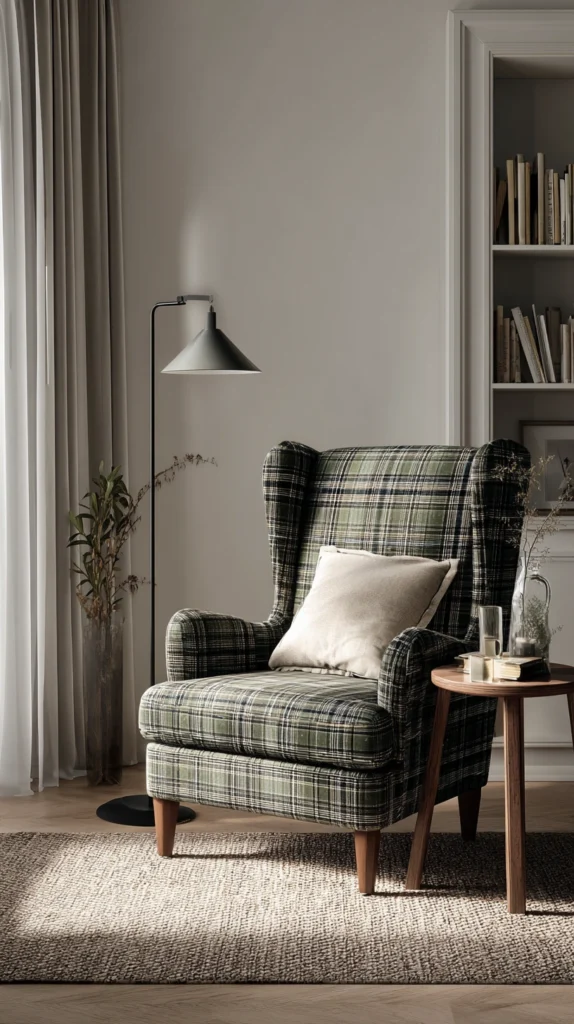
An armchair upholstered in a tartan or plaid fabric, positioned within the bedroom’s reading corner — moving the pattern from a textile accessory into the room’s actual furniture.
My textile-only plaid limitation:
What I had not considered:
- Every plaid element in my bedroom existed as a removable textile (a throw, a pillow cover)
- No permanent furniture piece carried the pattern, missing an opportunity for a more substantial, architectural plaid statement
Why an upholstered chair specifically elevates the plaid presence:
The permanence and scale advantage:
- A piece of furniture upholstered in plaid carries more visual weight and permanence than any removable textile
- This single piece can function as the room’s primary plaid statement, allowing other textiles throughout the room to remain solid or much more subtly patterned, supporting the introduction’s principle about avoiding pattern overload
Choosing the right chair style:
What works well with plaid upholstery:
- A wingback chair, whose traditional silhouette pairs naturally with the heritage associations plaid carries
- A smaller armchair or slipper chair, if a more compact footprint suits the available bedroom space
- This connects directly to the bedroom reading corner concept discussed in broader fall bedroom guidance, here specifically executed with plaid as the chair’s defining material choice
Plaid scale and color for upholstery specifically:
Sizing the pattern to a larger surface:
- A medium to large-scale plaid or tartan reads more successfully on substantial upholstered furniture than an extremely fine, small check, which can look busy or indistinct at this scale
- Muted, complex tartan patterns (incorporating three or more colors in a traditional weave) often work particularly well on a chair specifically, since the larger surface area allows the full complexity of the pattern to be appreciated
Reupholstering an existing chair versus buying new:
A budget consideration:
- Reupholstering an existing chair frame in a chosen plaid fabric is often more affordable than purchasing a new chair pre-upholstered in plaid, particularly if the existing chair has a structurally sound frame
- This approach also allows complete control over the specific plaid pattern and fabric weight chosen, rather than being limited to whatever pre-upholstered options happen to be commercially available
Sourcing affordably:
Budget approaches:
- A secondhand chair frame from a thrift store or estate sale, reupholstered in plaid fabric purchased separately by the yard
- Plaid upholstery-weight fabric, available through fabric retailers and typically costing $15-40 per yard depending on quality and source
Cost:
- Secondhand chair frame: $20-80
- Reupholstery labor (if not DIY) and fabric: $200-500
- Or a new pre-upholstered plaid chair: $300-900
- Total: $220-900 depending on approach
My tartan chair result: Reupholstering a secondhand wingback chair frame in a muted forest green and cream tartan fabric, for a combined cost of about two hundred eighty dollars including professional upholstery labor, gave my reading corner a substantial, architectural plaid presence that allowed every other textile in the room to remain solid, this single furniture piece now carries the room’s entire plaid statement.
Tartan Chair Tips
Requesting fabric samples before committing to a full reupholstery order:
Avoiding a costly color or pattern mismatch:
- Most fabric retailers provide swatches or small samples before a full yardage purchase
- Viewing the actual fabric sample in the bedroom’s specific lighting, rather than relying on a screen image alone, prevents an expensive reupholstery disappointment
Choosing a durable upholstery weight specifically:
A practical fabric selection criterion:
- Plaid fabric intended for clothing or lighter home textile use often lacks the durability needed for upholstery, which experiences more friction and wear than a throw blanket or pillow
- Specifically seeking fabric labeled for upholstery use, with an appropriate durability rating, ensures the reupholstered piece holds up to regular use over time
4. A Plaid Wallpaper Accent Wall Behind the Headboard (Pattern at Architectural Scale)
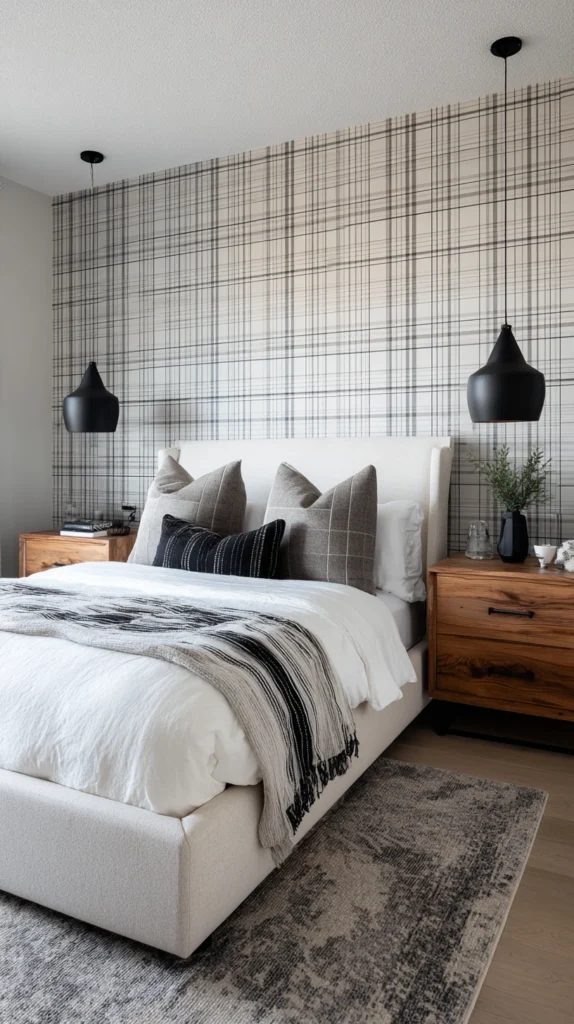
Plaid or tartan wallpaper applied to the wall directly behind the bed — bringing the pattern to its largest possible scale within the room, used as architecture rather than textile.
My hesitation about plaid at this scale:
What held me back initially:
- Concern that plaid wallpaper across an entire wall would be visually overwhelming, given how much smaller-scale plaid textile elements already existed in the room
- Discovering that a single architectural-scale plaid application, used in isolation from competing patterns elsewhere, actually reads as more sophisticated than the same pattern repeated in many smaller textile forms
Why wallpaper-scale plaid specifically can work where multiple smaller plaid objects might not:
The single-large-gesture principle:
- One significant pattern statement, occupying a single wall, reads differently than the same pattern repeated across several smaller, separate objects throughout the room
- This single architectural gesture can actually simplify the room’s overall pattern story, becoming the one clear statement that everything else (kept solid or very subtly textured) supports
Plaid wallpaper pattern and color selection:
What works at this scale:
- A more muted, sophisticated tartan rather than a bold, high-contrast buffalo check, which can become visually overwhelming across a full wall’s surface area
- Tonal plaid wallpapers, where the pattern is created through subtle variation within a single color family rather than high-contrast color combinations, often work particularly well at this larger architectural scale
Where to find quality plaid wallpaper:
Sourcing options:
- Schumacher and Thibaut both offer sophisticated, design-forward plaid and tartan wallpaper options, typically at a premium price point ($150-300 per double roll)
- Spoonflower for custom or independent designer plaid wallpaper options, often at a more accessible price and available in peel-and-stick format for renters ($35-60 per yard)
The peel-and-stick option for renters:
A practical accessibility note:
- Given that this is a more dramatic, less universally appealing choice than most other ideas on this list, the renter-friendly peel-and-stick format is particularly valuable here, allowing the look to be tested and easily removed if it does not ultimately suit the space or a future tenant’s preference
What surrounds this wallpaper:
Supporting the single architectural statement:
- Solid-colored bedding, in a color drawn from within the wallpaper’s plaid palette
- Minimal additional pattern elsewhere in the room, allowing this wall to remain the clear, singular pattern statement
- Simple, solid-colored or natural wood furniture, avoiding any competing pattern on adjacent pieces
Cost:
- Quality designer plaid wallpaper (full wall, materials only): $300-900
- Peel-and-stick budget alternative: $100-250
- Total: $100-900
My plaid wallpaper result: Applying a muted, tonal gray and cream tartan peel-and-stick wallpaper to the wall behind my bed, for under two hundred dollars in materials, created a single, sophisticated architectural plaid statement that, combined with otherwise entirely solid bedding and furniture throughout the rest of the room, avoided the overwhelming quality I had originally feared this scale of pattern application might produce.
Plaid Wallpaper Tips
Testing a sample on the actual wall before full installation:
A critical verification step for this larger commitment:
- Most wallpaper companies, including Spoonflower specifically, offer sample swatches before a full purchase
- Taping this sample directly to the intended wall and observing it across several days and lighting conditions confirms the pattern reads as intended at this significant scale before committing to the full installation cost
Limiting additional plaid elsewhere in a room using this technique:
Maintaining the single-statement principle:
- If choosing this architectural-scale plaid wall treatment, deliberately limiting or eliminating additional plaid textiles elsewhere in the same room (per the broader pattern restraint discussed throughout this list) prevents the overall room from tipping into pattern overload
5. A Buffalo Check Window Treatment (Pattern Framing Natural Light)
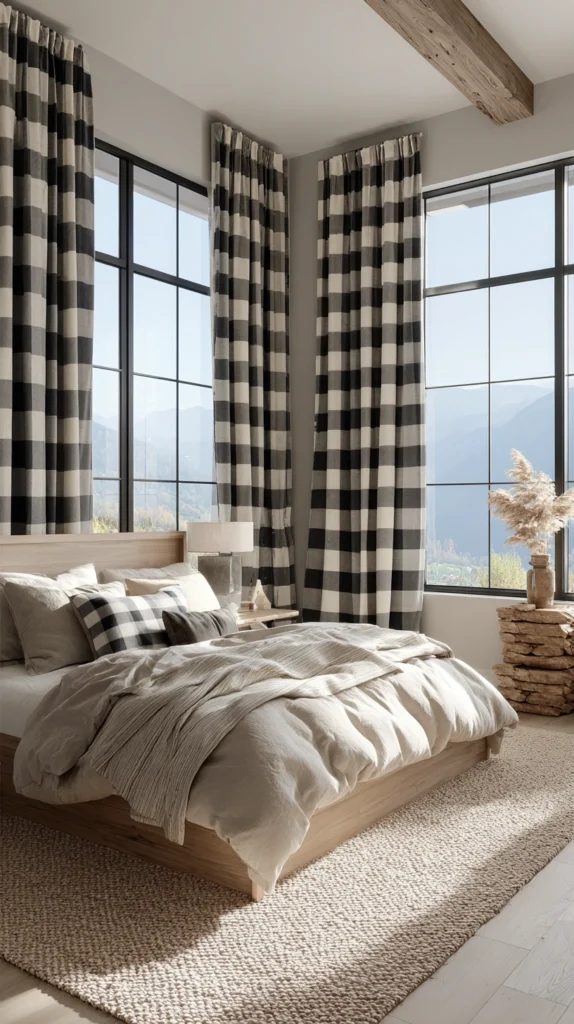
Curtains in a classic buffalo check pattern, framing the bedroom window — bringing plaid into the room’s architectural framing rather than only its furniture or bedding.
My pattern-free window:
What was missing:
- Solid curtains, or no curtains at all, leaving the window as one more pattern-free surface in an otherwise still relatively plain bedroom
- An opportunity to add the room’s plaid story at a different scale and location than the bed itself
Why curtains specifically suit a buffalo check pattern:
The drape-and-movement consideration:
- Buffalo check’s larger-scale pattern remains clearly readable even as curtain fabric moves and folds, unlike a very fine, small-scale plaid that can lose definition once gathered into curtain folds
- This larger scale also means the pattern registers clearly from across the room, where curtains are typically viewed, rather than requiring close-up inspection
Color choices for window treatments specifically:
What works well framing natural light:
- Black and cream buffalo check, the most classic version, providing strong graphic definition against typical wall colors
- A softer rust and cream version, if a warmer, less stark contrast is preferred for the specific room’s overall palette
Curtain weight and lining considerations:
Practical fabric choices:
- A medium-weight cotton buffalo check, substantial enough to drape well without being so heavy it becomes difficult to manage
- Adding blackout lining behind the patterned fabric, if bedroom darkness for sleep is a priority, without compromising the visible pattern from the room side
Hanging height and length for maximum impact:
Getting the proportions right:
- Mounting the curtain rod close to the ceiling, rather than just above the window frame, makes the window and the pattern itself appear larger and more architecturally significant
- Floor-length curtains, rather than stopping at the windowsill, give the pattern more visible surface area to be appreciated
Sourcing affordably:
Budget options:
- Target and IKEA both regularly carry buffalo check curtain panels in standard sizes ($25-50 per panel)
- Etsy independent sellers for custom-sized buffalo check curtains, if standard sizing does not fit the specific window ($40-90 per panel)
Cost:
- Buffalo check curtain panels (pair): $50-150
- Total: $50-150
My buffalo check curtain result: Hanging black and cream buffalo check curtain panels, mounted close to the ceiling for maximum height, brought a substantial, clearly visible plaid pattern into the room at the window specifically, distinct from the bed’s pattern story, this gave the room a second, complementary plaid moment rather than concentrating the entire pattern presence in one single location.
Buffalo Check Curtain Tips
Coordinating but not exactly matching the bed’s plaid, if both are present:
A pattern-mixing consideration specific to this combination:
- If both window treatments and bedding feature plaid, choosing two different but related patterns (a buffalo check at the window, a finer tartan on the bed, for example) rather than identical matching patterns creates the same collected, intentional variety discussed throughout broader pattern-mixing guidance
- Sharing at least one color between the two distinct plaid patterns maintains cohesion despite this intentional variation
Considering room darkness needs before finalizing fabric weight:
A practical sleep consideration:
- Lightweight cotton buffalo check alone provides minimal light blocking
- Adding a separate blackout lining, or layering a plain blackout panel behind the patterned curtain, addresses sleep-darkness needs without requiring the patterned fabric itself to serve this function
6. A Plaid Area Rug Anchoring the Room (Pattern Underfoot)
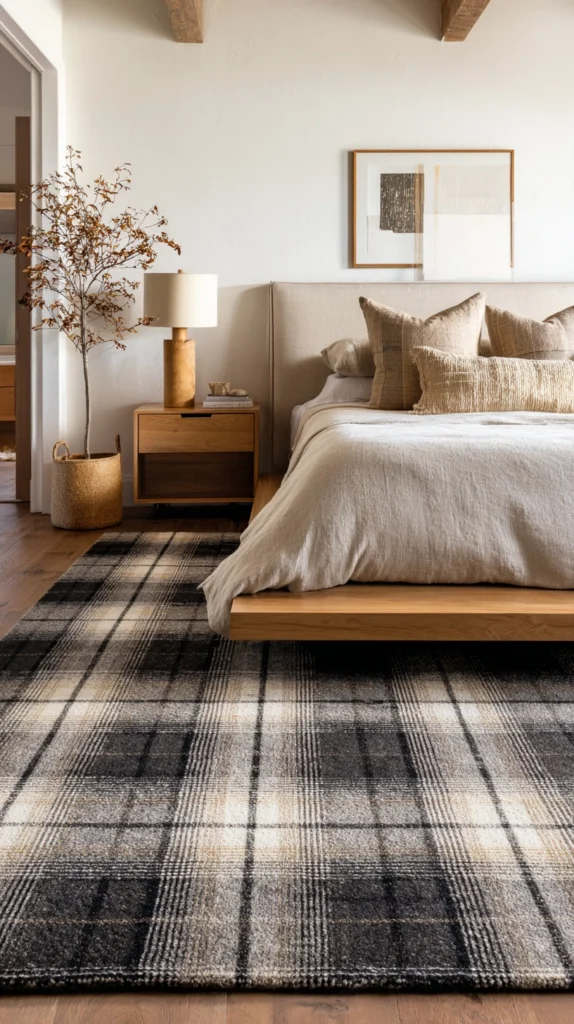
A rug in a muted plaid or tartan pattern, placed beneath or beside the bed — extending the pattern story to the floor, the surface most often overlooked in pattern planning.
My pattern-free floor:
What was missing:
- A solid neutral area rug, providing no pattern contribution at all to the room’s overall plaid story
- The floor represented genuinely unused potential for adding pattern at a scale and location distinct from the bed and window treatments
Why a rug specifically works well for a more subtle plaid contribution:
The walked-on, viewed-from-above consideration:
- A rug is typically viewed from above and at a greater overall distance than bedding or curtains, meaning even a relatively bold pattern tends to read as somewhat more subdued once installed on the floor
- This natural visual softening makes rugs a relatively forgiving place to introduce plaid, even for those hesitant about bolder pattern elsewhere in the room
Pattern and color scale for rugs specifically:
What works well underfoot:
- A muted tartan in soft, blended colors (heathered grays, soft rust, muted forest green) tends to read as sophisticated rather than costume-like once spread across a floor’s larger surface area
- Avoiding the most stark, high-contrast buffalo check at this scale, since the strong graphic contrast can feel overly bold spread across an entire floor area in a way it does not when contained to a smaller curtain panel or pillow
Rug placement options:
Where this pattern works in the bedroom:
- A rug extending from beneath the bed outward, with the bed’s legs sitting partially on the rug
- A smaller accent rug specifically in the reading corner discussed in idea 3, distinct from a larger rug elsewhere in the room
- Layered over a solid jute or sisal base rug, similar to layering techniques discussed in broader fall textile guidance, adding the plaid pattern as a smaller accent rug on top of a larger neutral base
Material considerations:
What fits this specific application:
- Wool rugs hold pattern definition particularly well and provide the same substantial, heritage-appropriate quality discussed regarding the wool blanket in idea 2
- A flatweave construction, rather than a high pile, tends to display plaid patterns with the clearest definition
Sourcing affordably:
Budget options:
- Ruggable for a washable plaid rug option, particularly practical for a bedroom ($150-300)
- Target and World Market for more budget-accessible plaid area rug options ($60-180)
Cost:
- Plaid area rug (bedroom size, approximately 5×7 or 6×9): $80-300
- Total: $80-300
My plaid rug result: Adding a muted heathered gray and soft rust tartan rug beneath my bed, extending out to define the room’s main walking area, brought pattern to the floor at a scale and softness that felt appropriately subtle compared to the bolder buffalo check curtains, this single addition completed the room’s plaid story across all three primary surfaces: bed, window, and floor.
Plaid Rug Tips
Sizing the rug generously relative to the bed:
A common rug-sizing principle, particularly relevant with pattern:
- A rug too small for the bed it sits beneath can look disconnected and awkward regardless of pattern
- Following standard rug sizing guidance (extending at least 18-24 inches beyond the bed’s sides where possible) ensures the pattern reads as an intentional floor feature rather than an undersized afterthought
Choosing washable or treated rugs for easier maintenance:
A practical bedroom-specific consideration:
- Bedrooms see regular foot traffic and occasional spills or accidents
- A rug specifically designed for easier cleaning (such as Ruggable’s washable cover system) reduces the maintenance burden compared to a traditional wool rug requiring professional cleaning for any significant staining
7. A Plaid Flannel Robe Displayed on a Hook (Function as Visible Pattern)
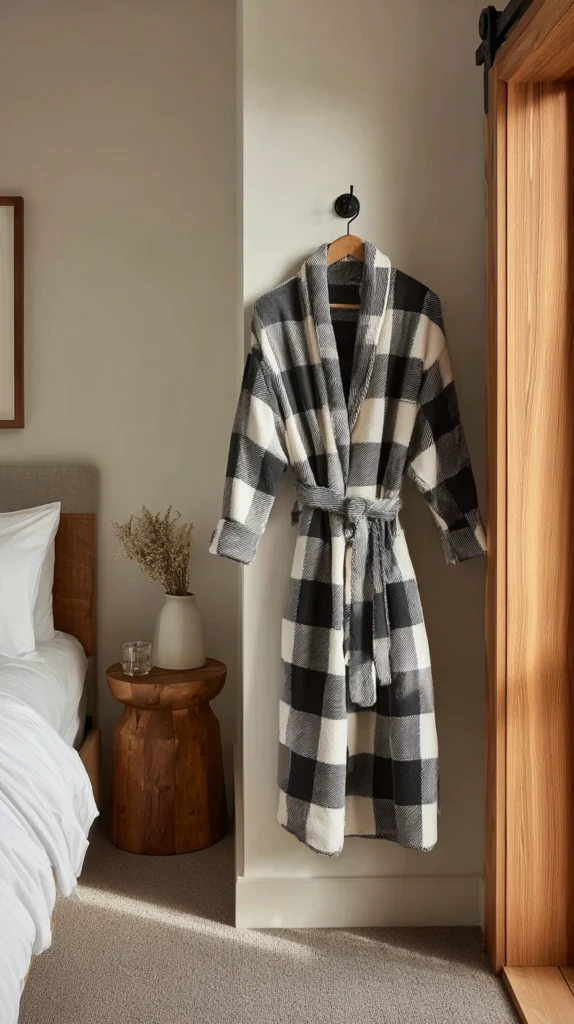
A plaid flannel robe, hung visibly on a door or wall hook rather than stored in a closet — bringing pattern into the room through an everyday functional item, at essentially no additional cost.
My hidden everyday plaid item:
What was happening:
- A plaid flannel robe, owned and used regularly, but always stored out of sight in a closet between uses
- No visible textile presence on the room’s walls or door beyond what had already been established through bedding and curtains
Why this idea costs essentially nothing yet adds genuine pattern presence:
The zero-additional-purchase principle:
- This requires only a simple hook, an extremely inexpensive item, and the use of a robe likely already owned
- Unlike most pattern-adding categories, this idea can often be implemented for the cost of the hook alone, similar to the hanging textile concept discussed in broader budget bedroom guidance
Hook selection:
Practical options:
- A simple adhesive hook, requiring no drilling, particularly useful for renters
- A small decorative hook in a warm metal finish if a more polished appearance is desired over a purely utilitarian option
Why a robe specifically works well for this purpose:
The substantial, draping quality:
- A robe’s larger fabric area and natural draping quality when hung shows off plaid pattern more fully than a smaller item like a scarf might
- The garment’s inherently cozy, fall-and-winter association also reinforces the room’s overall warm, seasonal plaid theme
Placement:
Where this works in the bedroom:
- On the back of the bedroom door, the most common and practical placement
- On a small section of wall near the closet, if door space is unavailable
Choosing which plaid robe to display, if multiple are owned:
Selecting for maximum visual impact:
- If choosing between several owned robes, selecting the one with the boldest or most visually interesting plaid pattern, rather than the most frequently worn but visually plainest option, maximizes this essentially free idea’s decorative contribution
Cost:
- Hook: $3-12
- Robe: often already owned, $0
- Total: $3-12
My displayed robe result: Hanging my existing plaid flannel robe on a simple adhesive hook on the back of my bedroom door, for a total cost of about six dollars, added genuine, substantial pattern presence to an otherwise bare door, this remains one of the lowest-cost ideas on this entire list while still meaningfully contributing to the room’s overall plaid story.
Displayed Robe Tips
Choosing a chunkier, more substantial flannel weight if purchasing new:
A material quality consideration:
- If purchasing a robe specifically for this dual decorative and functional purpose, choosing a heavier flannel weight provides both better actual warmth when worn and a more substantial, visually appealing drape when hung on display
Rotating between multiple robes if owned:
Keeping the display feeling fresh:
- If more than one plaid robe is owned, periodically swapping which one is displayed on the hook prevents the same single item from feeling static, while still maintaining the overall plaid presence this idea contributes
8. A Plaid Lumbar Pillow in an Unexpected Color Combination (Avoiding the Cliché Through Color Alone)
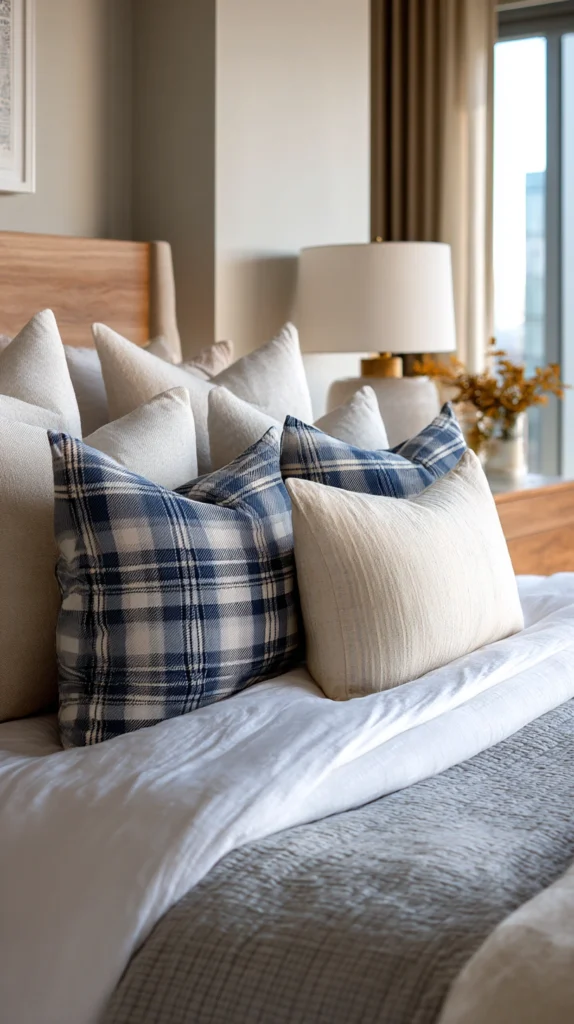
A single decorative lumbar pillow in plaid, specifically chosen in a non-traditional color combination — demonstrating how color choice alone can separate sophisticated plaid from costume-reading plaid.
My red and black plaid pillow regret:
What I had tried first:
- A red and black buffalo check pillow, the single most common and expected plaid color combination
- Despite being a perfectly nice pillow individually, it consistently read as more “flannel shirt” or “lumberjack” than “considered bedroom decor”
Why color combination matters more than pattern structure for avoiding cliché:
The specific psychological association:
- Red and black plaid carries an extremely strong, specific cultural association with flannel work shirts and a particular rustic, masculine aesthetic
- The identical check pattern structure, executed instead in unexpected colors, loses this specific association almost entirely while keeping the pattern’s inherent visual interest
Color combinations that avoid the cliché:
Unexpected but sophisticated options:
- Dusty blue and cream (cool, calm, distinctly different from the warm red-black association)
- Mustard and charcoal (warm but clearly distinct from traditional red-black)
- Blush and gray (notably softer and more contemporary than any traditional plaid color story)
- Sage green and oat (earthy and current, far removed from rustic lumberjack reference)
Why a lumbar pillow specifically suits this experimentation:
Low commitment, high visibility:
- A single lumbar pillow represents a relatively small investment compared to larger items like curtains or a rug
- Despite this small size, a lumbar pillow’s placement (typically front and center against other pillows) gives it disproportionate visibility relative to its actual size
Pairing with the rest of the bedding:
Building the full pillow arrangement:
- Surrounding solid-colored pillows in tones drawn from the unexpected plaid combination (a blush and gray plaid lumbar pillow, for example, paired with solid blush and solid gray pillows on either side) ties the unconventional pattern choice into a cohesive overall arrangement
Sourcing affordably:
Budget options:
- Etsy independent makers, who often produce plaid pillow covers in far more varied and unexpected color combinations than major retailers typically stock ($15-35)
- Custom-made from fabric purchased by the yard, if a very specific, hard-to-find color combination is desired ($10-25 in materials for a DIY cover)
Cost:
- Plaid lumbar pillow cover: $15-35
- Insert, if needed: $8-15
- Total: $23-50
My unexpected plaid pillow result: Replacing my red and black buffalo check pillow with a dusty blue and cream tartan version, sourced from an independent Etsy maker for twenty-two dollars, kept the exact same pattern structure and scale while completely changing how the plaid was perceived, the color shift alone moved it from “costume reference” to “considered decor choice” without altering anything else about the pillow.
Unexpected Plaid Color Tips
Testing the color combination against existing bedding before purchasing:
A practical verification step:
- Holding a fabric swatch or product photo against the room’s existing solid bedding colors, ideally in the room’s actual lighting, confirms the unexpected combination genuinely coordinates before committing to the purchase
Extending the unexpected color logic to other plaid items if successful:
Building a consistent, sophisticated palette:
- Once one unexpected plaid color combination proves successful, applying the same logic (choosing colors outside the traditional red-black or muted earth-tone default) to any additional plaid items throughout the room maintains this more current, considered quality consistently rather than only in one isolated piece
9. A Plaid Headboard Upholstery (Pattern as the Bed’s Primary Frame)
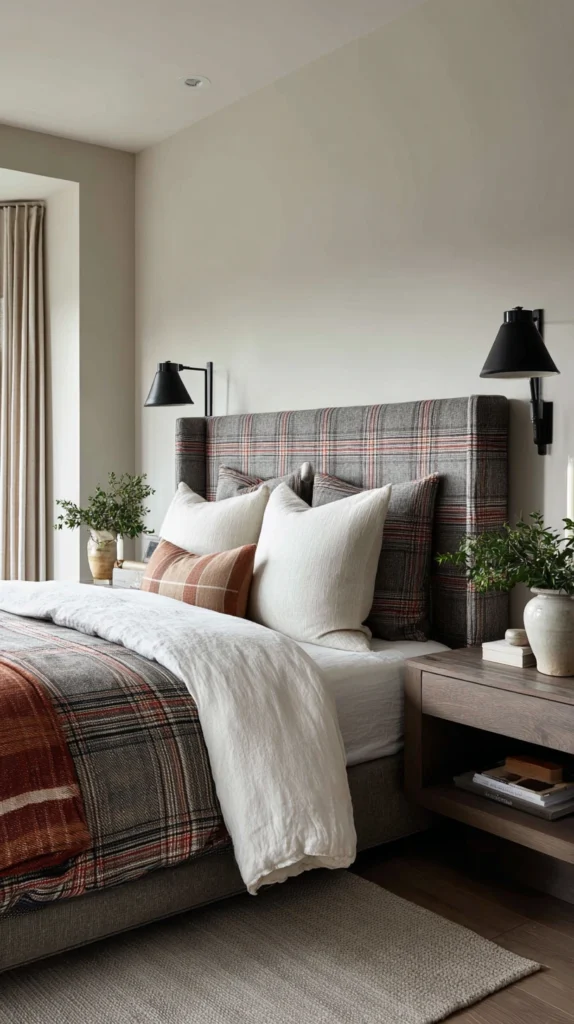
An upholstered headboard covered in plaid fabric — similar in concept to the tartan chair from idea 3, but applied to the bed’s own architectural frame rather than a separate seating piece.
My plain upholstered headboard:
What I had:
- A solid linen upholstered headboard, providing comfortable support but no pattern contribution
- An opportunity to bring plaid directly into the bed’s primary structure, rather than only through removable textiles layered on top of it
Why a plaid headboard specifically creates a different effect than plaid bedding:
The permanent-frame principle:
- Unlike a duvet cover or sheets, which can be swapped seasonally, an upholstered headboard represents a more permanent design decision
- This permanence means the headboard becomes the bed’s consistent, unchanging plaid anchor, with bedding able to rotate between solids and other patterns throughout the year while the headboard’s plaid presence remains constant
Plaid scale for a headboard specifically:
Sizing the pattern to this substantial surface:
- Similar to the chair upholstery discussion in idea 3, a medium to large-scale plaid generally reads more successfully across a headboard’s substantial surface area than an extremely fine check
- A headboard’s typically simpler, often rectangular or gently curved shape (compared to a chair’s more complex contours) can actually accommodate slightly bolder, larger-scale plaid than upholstered furniture with more intricate shaping
New upholstered headboard versus reupholstering an existing frame:
Budget and customization considerations:
- Purchasing a new headboard pre-upholstered in a plaid fabric offers convenience but limits color and pattern choice to whatever is commercially available
- Reupholstering an existing headboard frame, similar to the chair approach in idea 3, allows complete control over the specific plaid chosen but requires either DIY skill or professional upholstery labor
Coordinating with the rest of the room:
Building around this permanent plaid anchor:
- Since the headboard will remain a constant plaid presence, choosing primarily solid or very subtly textured items elsewhere (per the broader pattern-restraint principle) allows this single permanent feature to anchor the room without requiring constant pattern-matching as other elements change seasonally
Sourcing affordably:
Budget approaches:
- A new upholstered headboard from a retailer like West Elm or Article, if a plaid option happens to be available in current collections (variable availability, $300-700)
- Reupholstering an existing or secondhand headboard frame in fabric purchased separately ($150-450 including materials and labor, or significantly less for a DIY approach with basic upholstery skills)
Cost:
- New pre-upholstered plaid headboard: $300-700
- Reupholstery of existing frame: $150-450
- Total: $150-700
My plaid headboard result: Reupholstering my existing linen headboard frame in a muted rust and charcoal tartan fabric, for about two hundred dollars including professional labor, gave my bed a permanent, substantial plaid presence that remains constant regardless of which duvet cover or seasonal bedding I rotate through, this single change anchored the room’s plaid story at its most architecturally significant point.
Plaid Headboard Tips
Choosing a fabric with adequate durability for headboard use specifically:
A practical wear consideration:
- A headboard experiences regular contact (leaning against it, pillows pressed against it) that requires more durable fabric than a purely decorative throw pillow might need
- Selecting upholstery-weight plaid fabric, similar to the durability discussion in idea 3, ensures the headboard holds up well to this regular use over time
Considering a removable, washable headboard cover as a lower-commitment alternative:
An option for those uncertain about permanent reupholstery:
- Some headboard styles accommodate a fitted slipcover, allowing the plaid pattern to be tested and easily changed without the full commitment and cost of actual reupholstery
- This lower-commitment option suits those wanting to try this idea before investing in a more permanent installation
10. A Plaid Storage Bench or Ottoman at the Foot of the Bed (Pattern With Built-In Function)
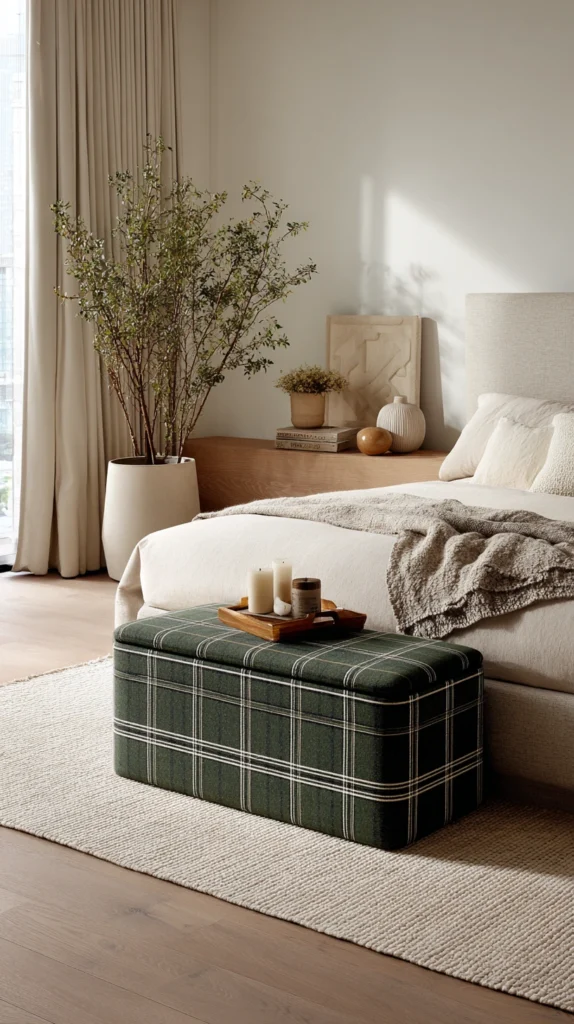
A storage bench or ottoman upholstered in plaid, positioned at the foot of the bed — combining genuine storage function with another substantial plaid surface, distinct from the headboard and chair.
My missing foot-of-bed furniture:
What was absent:
- An empty space at the foot of the bed, with no bench or storage piece occupying it
- An opportunity for both additional storage and another plaid surface, positioned at a different height and location than the headboard or chair
Why a bench specifically suits this particular spot:
The functional and visual fit:
- A bench or storage ottoman at the foot of the bed provides a practical surface for setting out clothes, sitting while putting on shoes, or simply additional storage for extra bedding or blankets
- This functional furniture piece, when upholstered in plaid, becomes a third distinct plaid surface in the room (alongside the headboard from idea 9 and the chair from idea 3, if both are present), positioned at a notably different height and visual zone than either
Plaid pattern choice relative to other room plaid elements:
Coordinating multiple plaid surfaces:
- If the headboard and chair already carry their own plaid patterns, choosing a third, related but distinct plaid for the bench (sharing a color with one or both of the other patterns, but not identical to either) maintains the intentional pattern-mixing variety discussed throughout this list
- Alternatively, if this bench represents the room’s only substantial furniture-based plaid statement, a bolder or more eye-catching pattern choice can work well here without competing against other patterned furniture
Storage function specifics:
What this piece typically offers:
- A lift-top storage bench, providing enclosed space for extra blankets, off-season clothing, or other bedroom storage needs
- A simpler, non-storage upholstered bench, if storage is not specifically needed and a purely seating and surface function is sufficient
Sourcing affordably:
Budget options:
- Secondhand storage benches, reupholstered in chosen plaid fabric, following the same reupholstery approach discussed in ideas 3 and 9
- World Market and similar retailers occasionally carry pre-upholstered plaid benches directly, though availability varies by current collection ($150-400)
Cost:
- Secondhand bench frame plus reupholstery: $150-350
- New pre-upholstered option: $150-400
- Total: $150-400
My plaid storage bench result: Reupholstering a secondhand storage bench in a forest green and cream tartan, chosen to share the cream tone with my existing buffalo check curtains while introducing a distinct pattern, gave the foot of my bed both genuine practical storage and a third coordinated plaid surface, completing the room’s furniture-based plaid presence across headboard, chair, and now this bench as well.
Plaid Storage Bench Tips
Measuring available foot-of-bed space carefully before purchasing:
A practical sizing consideration:
- Bench width should generally not exceed the bed’s own width, and adequate clearance for walking around the bed should remain after the bench is placed
- Measuring this space precisely before any purchase or reupholstery commitment prevents an oversized piece that crowds the room’s circulation
Choosing a bench height that allows comfortable seated shoe-tying:
A functional usability detail:
- A bench too low or too high makes the common use of sitting briefly to put on or remove shoes uncomfortable
- A seat height in the range of 16-19 inches generally accommodates this function comfortably for most adult users
Choosing Your Plaid and Flannel Approach
By commitment level:
Lowest commitment, easiest to change:
- Plaid lumbar pillow (idea 8)
- Displayed flannel robe (idea 7)
- Flannel sheet set (idea 1)
Moderate commitment:
- Wool plaid blanket (idea 2)
- Buffalo check curtains (idea 5)
- Plaid area rug (idea 6)
Higher, more permanent commitment:
- Tartan accent chair (idea 3)
- Plaid wallpaper accent wall (idea 4)
- Plaid headboard upholstery (idea 9)
- Plaid storage bench (idea 10)
By budget level:
Under $50:
- Displayed robe (idea 7)
- Plaid lumbar pillow (idea 8)
$50-200:
- Flannel sheets (idea 1)
- Buffalo check curtains (idea 5)
- Vintage wool blanket (idea 2)
$200-500:
- Tartan accent chair, if reupholstering a secondhand frame (idea 3)
- Plaid area rug (idea 6)
- Plaid headboard reupholstery (idea 9)
- Plaid storage bench (idea 10)
$500+:
- Plaid wallpaper, particularly designer options (idea 4)
- New pre-upholstered furniture pieces in plaid
By how many plaid surfaces to combine:
Single statement (recommended starting point):
- Choose just one idea (the wool blanket, idea 2, or the chair, idea 3, are both particularly strong single-statement choices) and keep everything else in the room solid
Two coordinated surfaces:
- Bedding plus curtains (ideas 1 and 5), choosing related but distinct patterns sharing one color
- Chair plus rug (ideas 3 and 6), positioned in different zones of the room
Three or more surfaces (most advanced, requires careful coordination):
- Headboard, chair, and bench (ideas 9, 3, and 10), each carrying a related but distinct plaid, unified by shared color rather than identical pattern
Avoiding the Most Common Plaid Bedroom Mistakes
The all-red-and-black trap:
Why this specific combination causes the most cliché results:
- This is the single most culturally loaded plaid color combination, carrying the strongest specific association with flannel work shirts
- Choosing nearly any other color combination, even while keeping an identical pattern structure, avoids this particular association almost entirely
The everything-matches-exactly trap:
Why identical pattern repetition looks less sophisticated than related variation:
- Multiple items in the exact same plaid pattern and colorway can read as a purchased matching set rather than a considered, collected room
- Choosing related but distinct plaid patterns (sharing color, varying scale or structure) across different surfaces produces a more sophisticated result than exact matching
The isolated-single-object trap:
Why one plaid item with no supporting context looks accidental:
- A single plaid pillow or throw with absolutely nothing else relating to it in color or pattern can look randomly placed rather than intentionally chosen
- Ensuring at least the immediate surrounding colors (solid bedding, nearby furniture) relate to or complement the plaid item’s specific color palette grounds it within an intentional overall scheme
Maintenance Through the Season
Weekly:
- Fluff and reposition plaid pillows and folded throws
- Check that displayed robe or hanging textiles remain neatly arranged
Monthly:
- Wash flannel sheets and any washable plaid textiles per their care instructions
- Vacuum or spot clean plaid rugs as needed
Seasonal transition:
- Assess which plaid elements feel specifically tied to fall and winter versus which work as year-round room features
- Store seasonal-only items (certain throws, possibly the most overtly winter-weight wool blanket) while keeping permanent furniture-based plaid (headboard, chair) in place year-round
My Complete Plaid and Flannel Bedroom Build
What I assembled across several months:
Month 1 ($75):
- Flannel sheet set in buffalo check
- Displayed flannel robe on a door hook
Month 2 ($145):
- Vintage wool plaid blanket from an estate sale
- Unexpected-color plaid lumbar pillow
Month 3 ($330):
- Buffalo check curtains
- Plaid area rug
Month 4-5 ($480):
- Reupholstered tartan accent chair
Total investment: $1,030 across five months Result: A bedroom with genuine, sophisticated plaid presence across multiple surfaces, none of which individually or collectively reads as costume or cliché Most important lesson: Color combination choice mattered more than any other single decision in determining whether the plaid read as considered design or flannel-shirt reference
Getting Started This Weekend
Start with one item, in an unexpected color, before expanding.
This weekend:
Step 1 — Choose one starting item:
- A single plaid lumbar pillow (idea 8) or a flannel sheet set (idea 1) both represent low-commitment, easily evaluated starting points
Step 2 — Choose the color combination deliberately:
- Actively select something other than red and black
- Hold the chosen item against existing bedding colors before purchasing to confirm coordination
Step 3 — Live with this single item for two weeks:
- Assess whether the pattern feels successfully integrated or still somewhat isolated
- Use this assessment to decide whether to add a second, related plaid surface or to keep this single item as the room’s sole pattern statement
My recommendation:
Begin with the color decision, not the pattern decision. Once a sophisticated, non-cliché color combination is identified, nearly any of the ten ideas on this list, in that chosen palette, will read as considered rather than costume; starting with pattern alone, before settling on color, risks defaulting toward the most expected and least successful combination.
Now go bring genuine plaid and flannel warmth into your bedroom without a single flannel-shirt reference in sight.
Quick Summary
The 10 plaid and flannel bedroom ideas:
Bedding layer:
- Flannel sheet set (idea 1): pattern at the felt-first layer
- Wool plaid blanket folded at the foot (idea 2): the classic layering move, done in genuine wool
Furniture and architecture:
- Tartan accent chair (idea 3): pattern as furniture, not just textile
- Plaid wallpaper accent wall (idea 4): pattern at architectural scale
- Plaid headboard upholstery (idea 9): pattern as the bed’s primary frame
- Plaid storage bench (idea 10): pattern with built-in function
Window and floor:
- Buffalo check curtains (idea 5): pattern framing natural light
- Plaid area rug (idea 6): pattern underfoot, naturally softened by scale
Low-cost and accessory:
- Displayed flannel robe (idea 7): function as visible pattern, nearly free
- Unexpected-color plaid lumbar pillow (idea 8): avoiding cliché through color alone
The two non-negotiable rules:
Avoid red and black as the default color combination:
- This single combination carries the strongest cliché association; nearly any other color choice, in an identical pattern structure, avoids this entirely
Coordinate through shared color, not identical pattern, across multiple surfaces:
- Related but distinct plaid patterns, sharing one color across different room surfaces, read as sophisticated and collected; identical matching patterns everywhere read as a purchased set
Common mistakes:
- Defaulting to red and black plaid simply because it is the most commercially available option
- Adding a single isolated plaid item with nothing else in the room relating to its color palette
- Combining too many different plaid scales and colors simultaneously without any shared coordinating color
- Choosing plaid pattern before considering color, leading toward the most expected and least sophisticated combination by default
- Underestimating how much fabric quality (genuine wool versus synthetic) affects how convincing and substantial a plaid item appears, particularly for blankets and upholstery
Remember: Color combination determines more about how plaid is perceived than the pattern structure itself, red and black carries a specific cultural association that nearly any other color choice avoids entirely, coordinating multiple plaid surfaces through shared color rather than identical matching pattern produces a more sophisticated result, genuine wool and quality upholstery fabric matter disproportionately for plaid specifically since the material’s authenticity reinforces or undermines the pattern’s perceived sophistication, and the most successful plaid bedrooms treat the pattern as a considered material language repeated with variation throughout the room, not a single seasonal accessory or an attempt to recreate every surface in matching flannel.