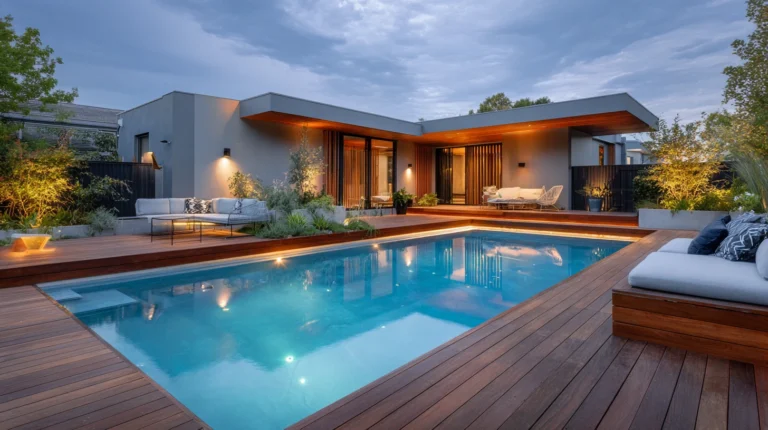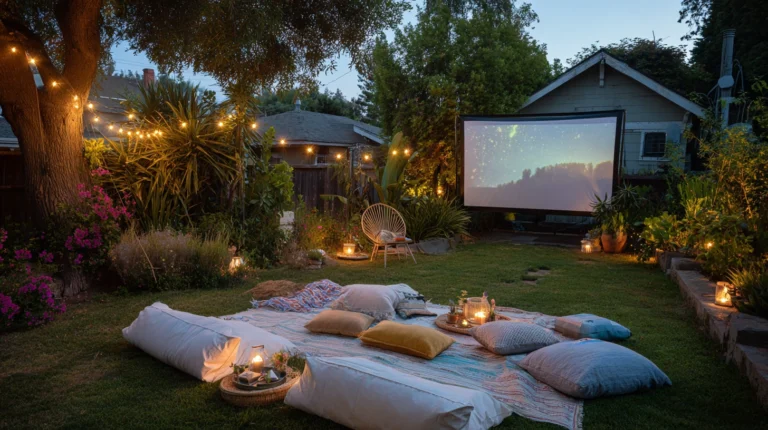
14 Summer Outdoor Game Area Ideas for Families
A dedicated outdoor game area does something that general garden space rarely achieves on its own — it gives the whole family a reason to be outside at the same time, doing the same thing, for an extended period.
The garden that contains a specific place to play, compete, and gather becomes a garden that is genuinely used rather than simply maintained. Children stay outside longer, adults join in more readily, and the garden earns its place as a functional room in the life of the household rather than a decorative space viewed primarily from the kitchen window.
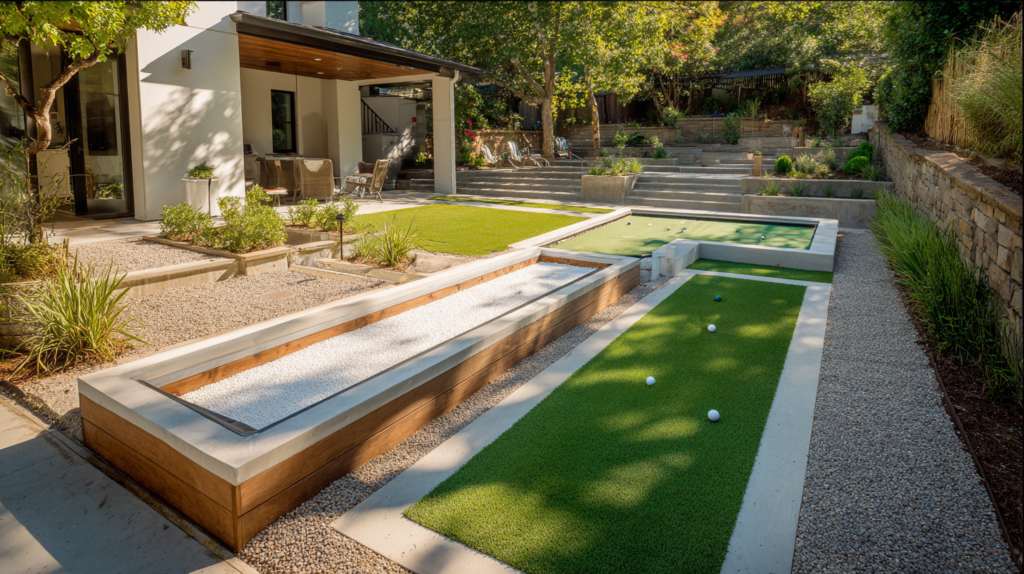
The best outdoor game areas are the ones that suit the specific family using them — their ages, their competitive instincts, the scale of the available space, and the budget available for the initial setup. Every idea below is designed to be genuinely achievable, genuinely enjoyable, and genuinely worth the investment of space and money it requires.
1. The Lawn Bowling and Bocce Court
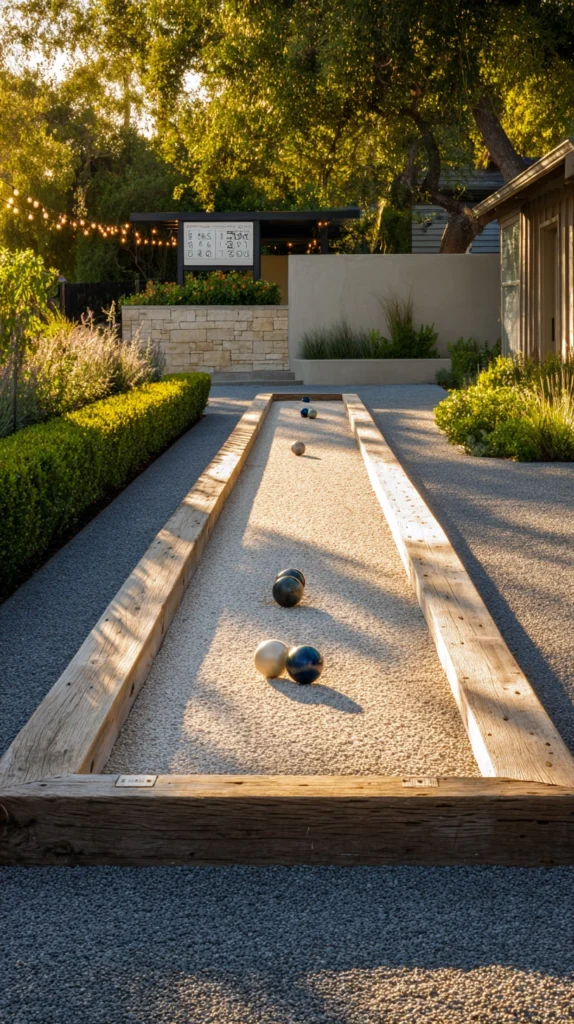
Budget: $40 – $200
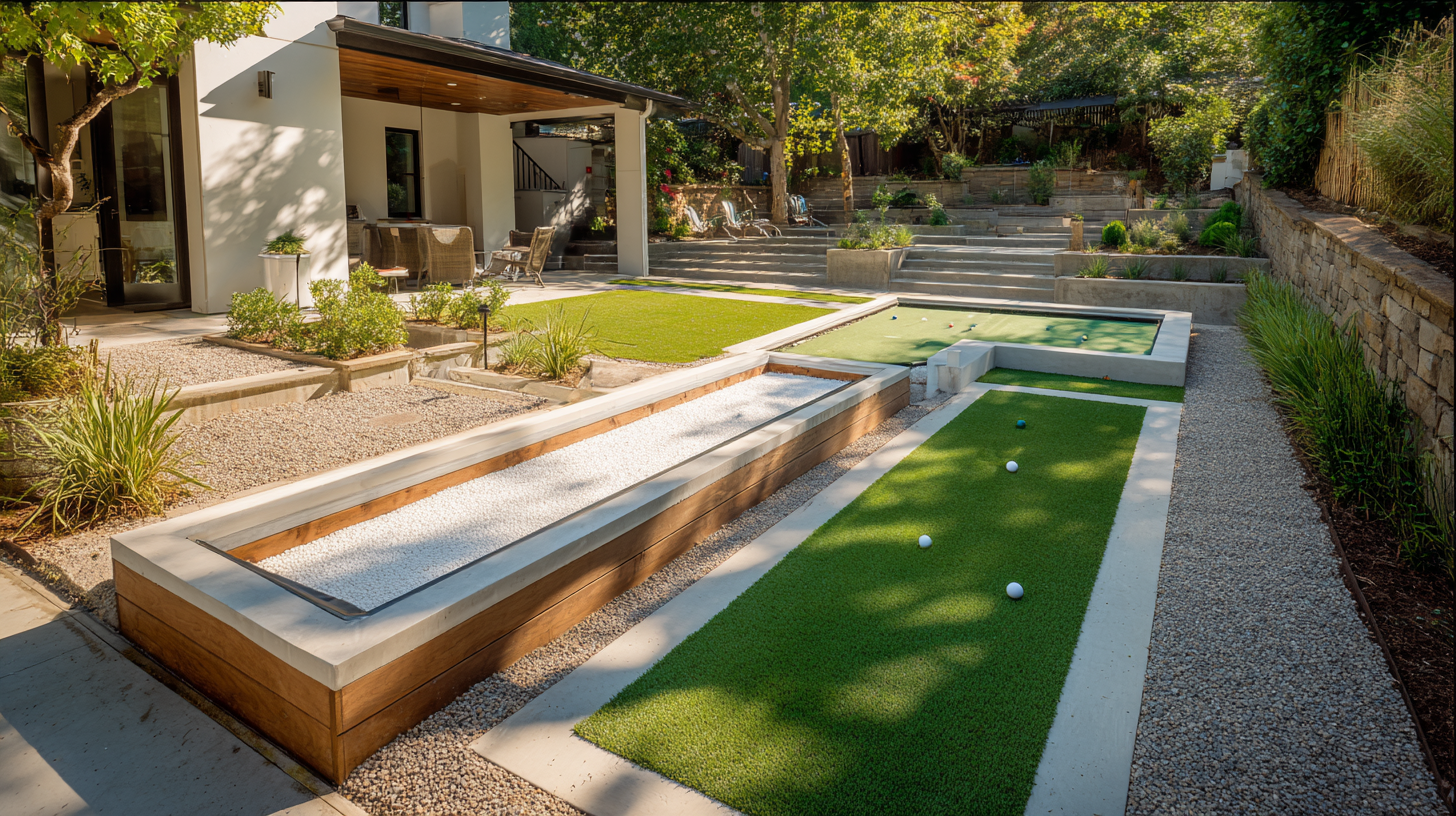
A defined bocce or lawn bowling court — a rectangular strip of lawn approximately 3 metres wide and 10–12 metres long, with low timber or metal edge rails marking the boundaries — creates a dedicated game space with genuine competitive depth that suits every age group from young children to grandparents. Bocce requires no athletic ability, can be played at any pace, and produces the kind of close, contested games that keep everyone engaged for far longer than the initial expectation.
A quality bocce ball set in a carrying case costs $30–$80 for eight balls and a pallino. Define the court edges with low timber battens staked into the lawn or painted white lines applied with line-marking spray. A compacted gravel surface — crushed decomposed granite or fine grit — provides a more consistent playing surface than lawn and suits serious play, though lawn bocce is entirely enjoyable and requires no surface preparation.
Styling tip: Install a simple scoreboard — a small chalkboard on a post at one end of the court — for keeping the running score. A visible scoreboard changes the atmosphere of any garden game from casual to genuinely competitive, which is usually the thing that keeps people playing for the second and third game rather than drifting away after the first.
2. The Trampoline Enclosure Area
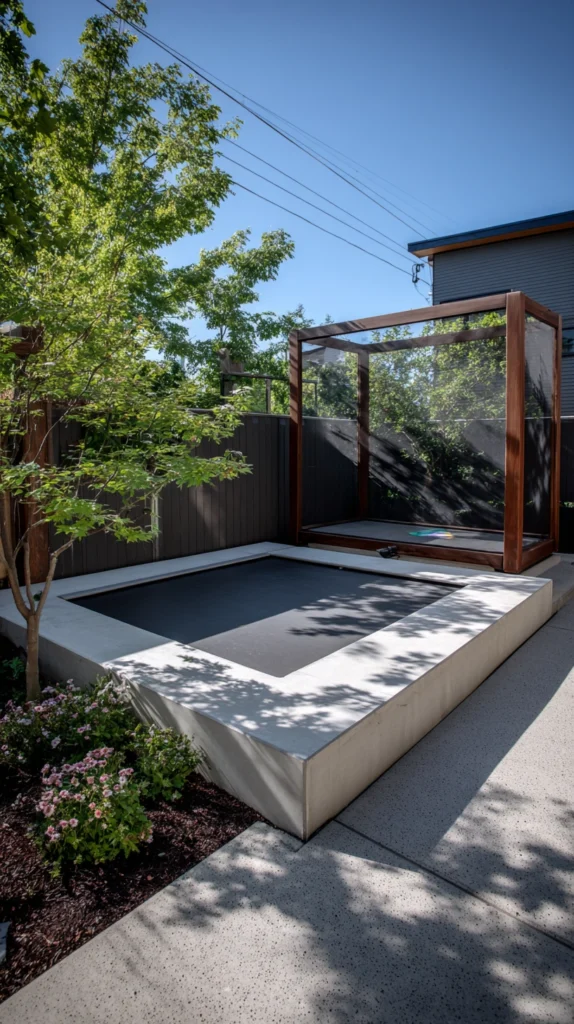
Budget: $200 – $800
A trampoline enclosed within a defined garden area — surrounded by soft landscaping, separated from the main garden by a low hedge or planting, and positioned on a level, well-drained surface — is the single most consistently used piece of outdoor play equipment available for families with children. The trampoline that is integrated thoughtfully into the garden design rather than simply placed on the nearest flat area of lawn becomes a feature rather than an eyesore — and a feature that children will use independently, without adult organisation, on every suitable day throughout the summer.
In-ground trampolines — sunk so the jumping surface sits flush with the lawn level — cost significantly more than above-ground versions but eliminate the safety hazard of the elevated platform and integrate into the garden so seamlessly that the space serves as a conventional lawn when the trampoline is covered. Above-ground trampolines with full enclosure nets cost $200–$600 and remain the most practical choice for most families.
Styling tip: Surround the trampoline with a soft-fall surface — bark mulch, rubber chippings, or artificial grass — in a defined circle extending at least one metre beyond the trampoline edge on all sides. The soft-fall surface prevents the muddy, bare-earth ring that develops around every trampoline on natural lawn within a single season and gives the trampoline area a finished, designed appearance rather than the worn, apologetic look of an afterthought.
3. The Giant Outdoor Games Station
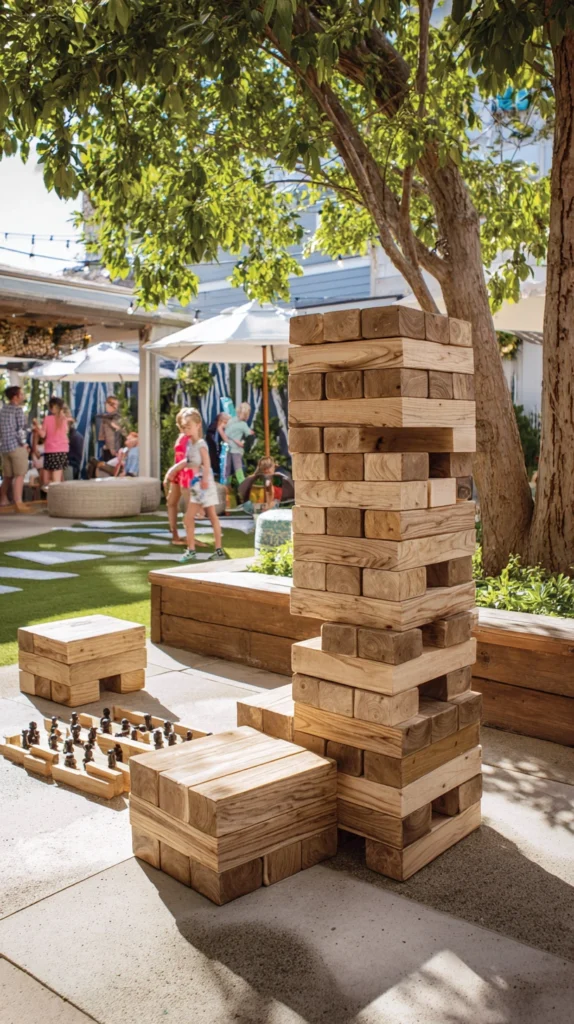
Budget: $50 – $250
A dedicated area equipped with a collection of giant-scale outdoor versions of familiar games — giant Jenga, giant Connect Four, giant draughts, giant dominoes — creates a game station with immediate visual impact and almost universal appeal. The giant scale of familiar games has a particular magic — the same game that is perfectly enjoyable at standard table size becomes genuinely exciting when the pieces are the size of a small child and the towers are taller than most of the players.
A giant Jenga set costs $30–$80 and can be stored in a simple wooden crate beside the game area. A giant Connect Four costs $40–$100. Both are fully weatherproof in their standard commercial versions and can live outside through the summer season without requiring storage after every use. Position the game station on a level, hard-wearing surface — decking, paving, or compacted gravel — rather than on lawn where the pieces sink into soft ground.
Styling tip: Display the giant games as part of the garden aesthetic rather than stacking them out of sight between sessions. A large Jenga tower left standing on the patio communicates that games are available and welcome — it is simultaneously a decoration and an invitation to play. Games that are visible encourage spontaneous play; games that require assembly and retrieval from storage get used less frequently.
4. The Water Play Area
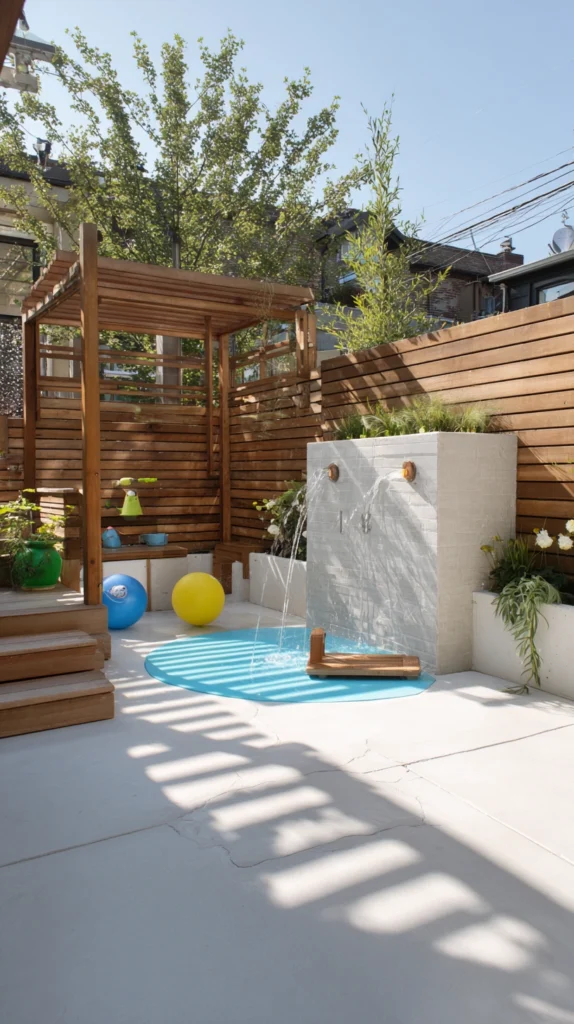
Budget: $30 – $200
A dedicated water play area — a paddling pool on a sunny patio, a water table for younger children, a splash pad mat connected to the garden hose, or a series of water toys and water guns stored in a defined area beside an outdoor tap — is the most reliably popular outdoor game option for families with children through most of the age range. Water play in summer heat requires no organisation, no instructions, and no adult participation to be immediately and intensely enjoyable for every child who encounters it.
A large paddling pool costs $30–$80 and provides a genuine cooling and playing space on hot days. A splash pad mat — a flat inflatable mat with built-in sprinkler jets connected to the garden hose — costs $20–$50 and suits smaller outdoor spaces where a paddling pool is not practical. Position the water play area on a surface that drains freely — decking with gaps, gravel, or sloped paving — to prevent a permanently wet, muddy area developing around the play zone.
Styling tip: Provide a defined storage area beside the water play zone — a galvanised metal tub, a large basket, or a waterproof storage box — for water toys, guns, and accessories. Water toys left scattered across the lawn become lawn mowing hazards and trip hazards within hours of the first play session. A defined storage point beside the play area that children can reach independently establishes a natural tidying habit that keeps the garden safe and organised.
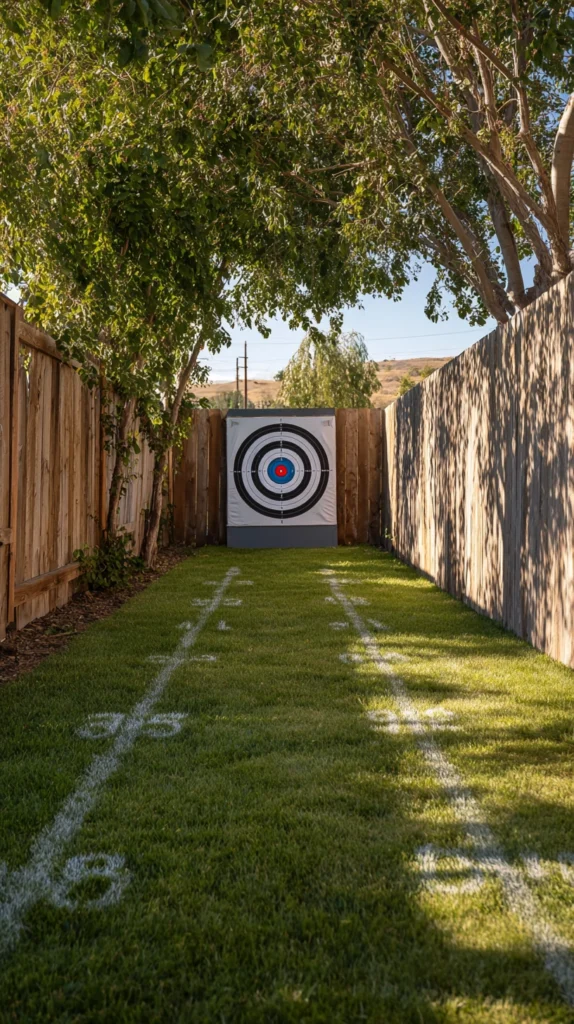
5. The Archery or Target Practice Range
Budget: $40 – $200
A target practice area — a foam archery target on a stand at the end of the garden, a bean bag toss target board, a tin can alley shooting range for foam dart guns, or a painted target on a wooden board — creates a game area with genuine focus and genuine challenge that suits competitive children and adults equally well. Target games have the particular quality of being completeable in a single focused session and repeatable indefinitely as the player attempts to beat their previous score.
A foam archery target on a metal stand costs $30–$80 and suits a garden where there is a clear 10–15 metre range with a solid backdrop — a fence, a wall, or dense planting — behind the target. A bean bag toss board costs $20–$50 and requires no backing structure. Both create a defined game objective that structures outdoor play time in a way that general free play does not provide.
Styling tip: Mark a series of throwing or shooting lines at different distances from the target — 5 metres, 8 metres, and 12 metres — for different levels of challenge. The multiple distances allow the game to be scaled to different ages and abilities within the same family, keep the game interesting as skills improve, and create natural competitions between players of different abilities.
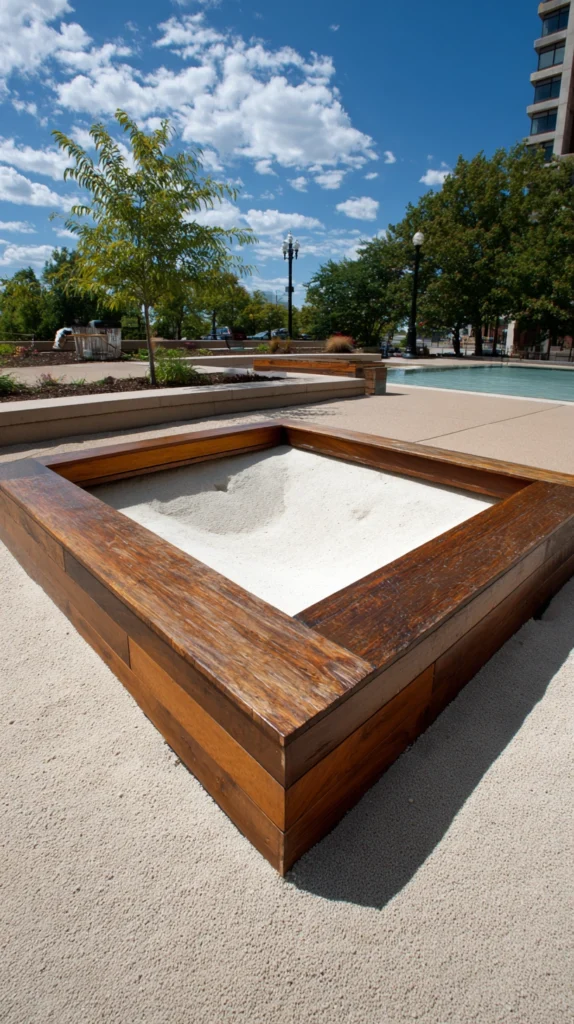
6. The Sand Play and Digging Area
Budget: $40 – $200
A dedicated sand pit or sand play area — a timber-framed sand pit filled with kiln-dried play sand, a large shallow trough sunk flush into the garden surface, or a raised sand table at child height for younger players — is the most open-ended and the most consistently engaging outdoor play area available for families with young children. Sand play requires no instructions, no rules, and no competitive framework — it is entirely self-directed and entirely absorbing for children at almost every age below ten.
A timber sand pit frame built from treated softwood costs $30–$80 in materials and takes an afternoon to build. Fill with kiln-dried play sand — not building sand or beach sand, which contains potentially harmful bacteria — at approximately 20–25 centimetres depth. A close-fitting cover of treated timber or marine ply ($20–$40) keeps the sand dry and prevents cats from using the pit as a litter tray between play sessions.
Styling tip: Bury the sand pit frame so its top edge sits flush with the surrounding lawn or paving surface rather than projecting above it. A flush-fitted sand pit is less visually intrusive, less of a trip hazard, and easier to cross when walking through the garden than a raised frame. The flush fitting also allows sand to be swept or raked back into the pit from the surrounding surface when it is displaced during play.
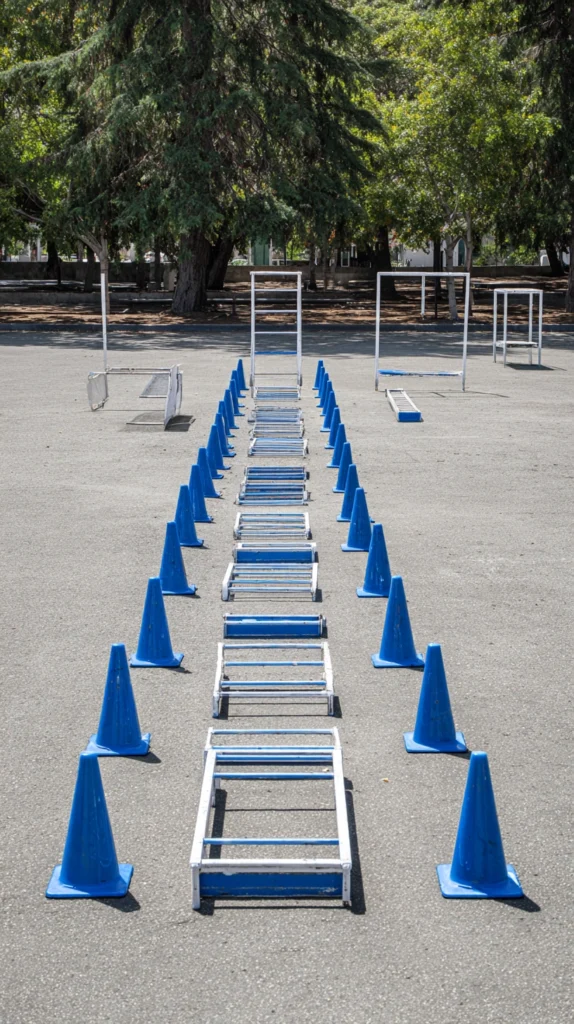
7. The Obstacle Course Area
Budget: $30 – $150
A permanent or semi-permanent obstacle course laid out in the garden — a series of physical challenges using balance beams, stepping stones, tunnel crawls, hurdle jumps, climbing nets, and agility poles — creates an outdoor game area of extraordinary physical and imaginative value. An obstacle course can be completed as a timed challenge, modified and extended as skills improve, and reconfigured in different sequences to keep the experience fresh throughout the summer.
Agility equipment for a garden obstacle course costs $30–$80 for a basic set of flat disc cones, agility poles, and hurdle stakes. A balance beam of treated timber costs $20–$40 to make from basic materials. A crawl tunnel costs $15–$30. The total investment for a varied, challenging obstacle course is modest and the equipment stores compactly in a single garden bag between sessions.
Styling tip: Time each family member’s completion of the course and record the results on a scoring board — a small chalkboard fixed to a fence post at the start or end of the course. The scored time creates a competitive framework that motivates repeated attempts and continuous improvement, and a family leaderboard that persists through the summer creates a running narrative of progression and competition that individual timed sessions alone cannot provide.
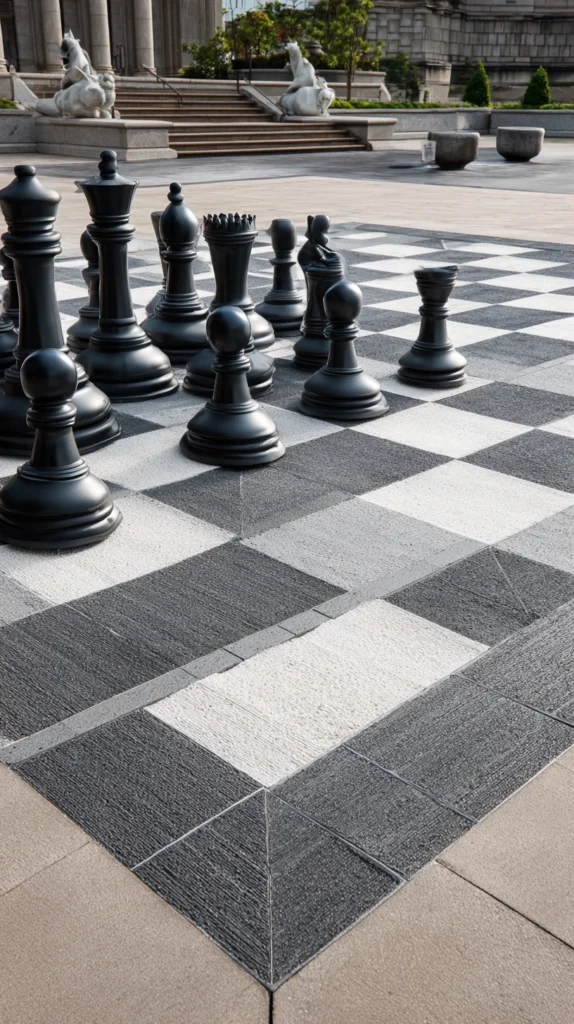
8. The Outdoor Chess and Strategy Game Area
Budget: $40 – $200
A giant outdoor chess set — on a defined chequered board surface painted or inlaid into paving, decking, or a dedicated gravel square — creates a game area of genuine intellectual depth and genuine visual drama. An outdoor chess board at one end of the garden, with large pieces stored in a nearby chest or basket, is both a playing area and a garden feature — the board is visually interesting and the pieces, even at rest, communicate something about the character of the household.
A painted outdoor chess board on existing paving costs $10–$30 in exterior paint and can be applied in a morning using masking tape to create the square grid. A giant chess piece set in weatherproof resin costs $80–$200. The combination creates a dedicated strategic game area that suits the older end of the family age range and adults who genuinely enjoy chess at a scale that makes the outdoor setting feel like the right place to play it.
Styling tip: Position the chess board at the end of the garden furthest from the main play areas — the chess and strategy area benefits from a degree of separation from the noise and activity of more energetic game zones. A quiet corner beside a hedge or a planted border, with a bench or two chairs beside the board for spectators, creates the right atmosphere for a game that rewards concentration and unhurried thought.
9. The Outdoor Fitness and Climbing Area
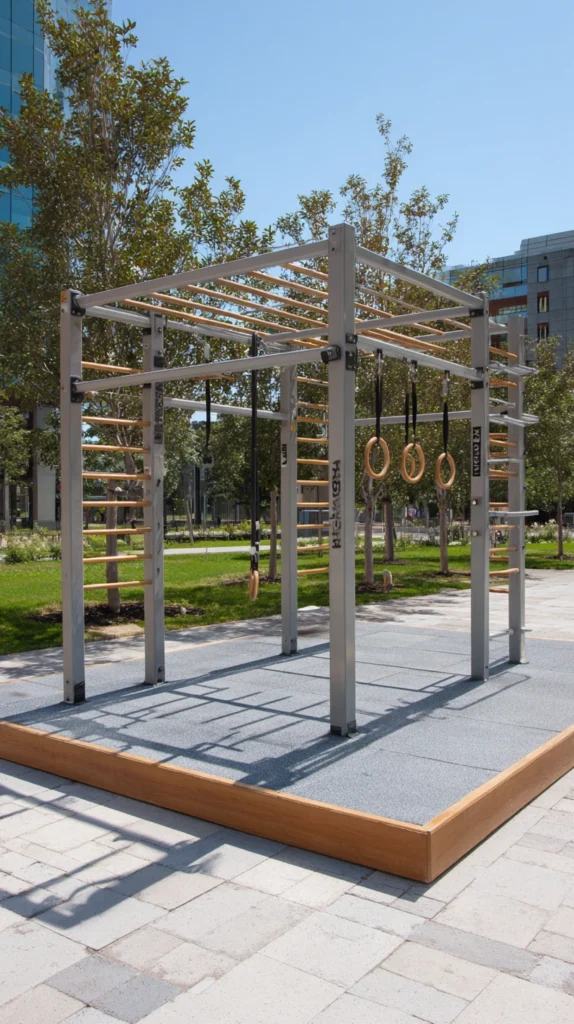
Budget: $150 – $800
A garden climbing frame or outdoor fitness area — combining monkey bars, a climbing wall section, parallel bars, a balance beam, and gymnastic rings — creates a structured outdoor exercise space that suits children who need physical challenge and families who want to incorporate outdoor fitness into daily routine. A quality climbing and fitness area is used spontaneously and independently by children who would otherwise need organised activity to get them outside, making it one of the highest-return garden investments available.
A modular timber climbing frame costs $150–$400 for a basic structure that can be extended over time. A steel calisthenics frame with pull-up bars, parallel bars, and rings costs $200–$500 and suits older children and adults. Both require installation on a level surface with an appropriate soft-fall area beneath and around the structure — rubber chippings or bark mulch at a depth of at least 30 centimetres provides the necessary impact absorption.
Styling tip: Integrate the climbing area into the garden planting rather than isolating it on bare lawn or bare rubber chippings. Climbing plants on the timber uprights, low planting around the soft-fall boundary, and a defined path connecting the climbing area to the rest of the garden make the structure feel like a designed garden feature rather than a piece of playground equipment parachuted into the domestic space.
10. The Badminton and Net Games Area
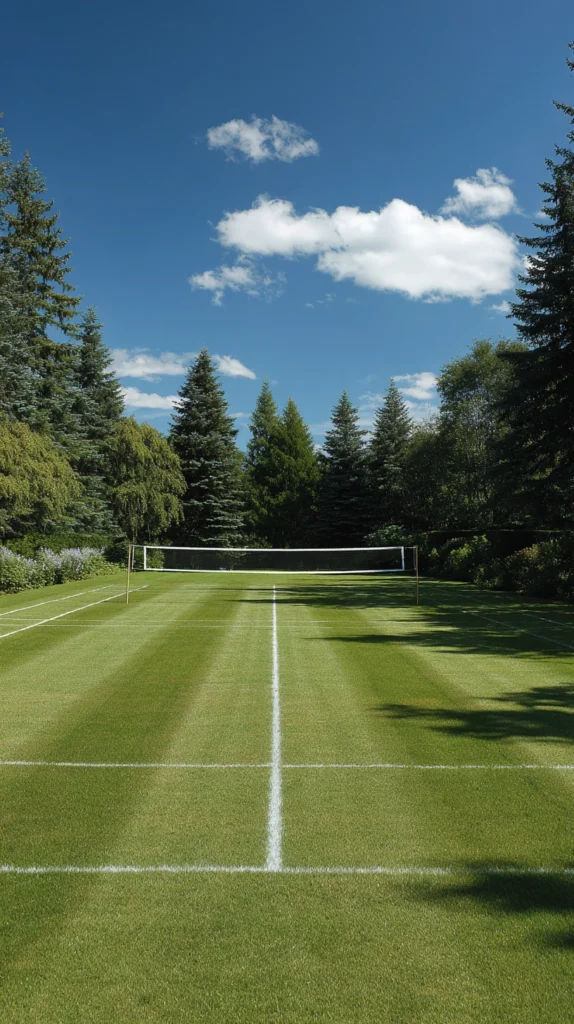
Budget: $30 – $150
A defined net games area — a section of lawn large enough for badminton, volleyball, or beach ball games, with a portable net that can be set up and taken down quickly — creates a game zone that suits almost every family age range and provides the most aerobic and the most social outdoor game available for a domestic garden. Net games are inherently inclusive — they require cooperation as well as competition, accommodate significant differences in ability within the same game, and generate the kind of extended, energetic play that keeps children and adults active for an entire afternoon.
A portable badminton net with poles, pegs, and a carry bag costs $20–$50 and sets up in under ten minutes on any flat lawn area. A portable volleyball net costs $30–$80. Both require a minimum lawn width of approximately 5 metres — most standard suburban gardens can accommodate a badminton court on the long axis. Mark the court boundaries with flat disc cones rather than permanent lines to preserve the multi-use quality of the lawn.
Styling tip: Store the net, poles, and equipment in a weatherproof storage box ($30–$60) positioned permanently at the edge of the defined game lawn — a dedicated storage point beside the playing area means the net can be set up in minutes without requiring a trip to the garage or the shed. Equipment stored out of sight is used less frequently; equipment stored beside the game area is set up spontaneously and used constantly.
11. The Putting Green
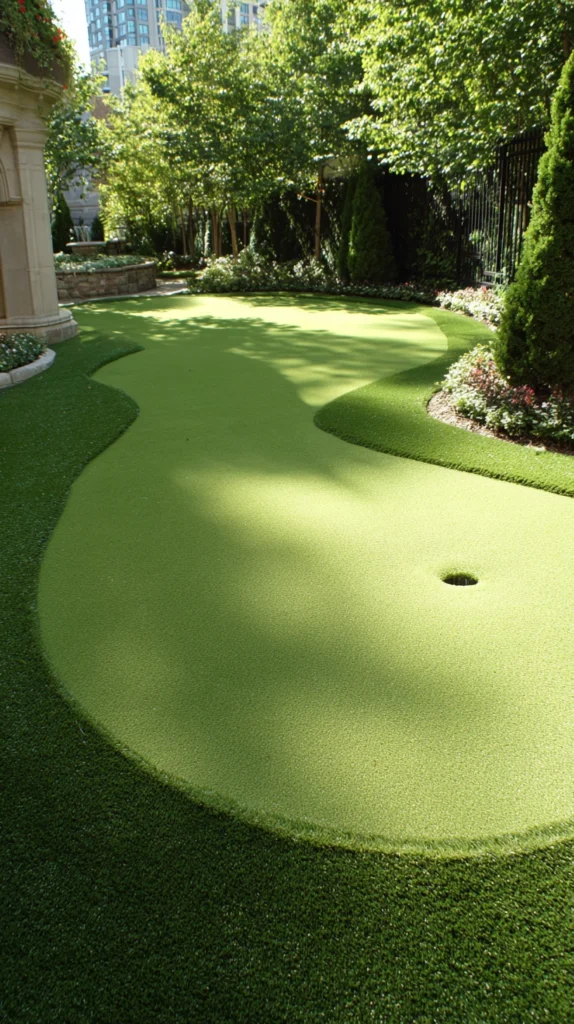
Budget: $100 – $600
A garden putting green — a section of lawn, decking, or artificial turf shaped into a putting surface with one or two holes — creates a dedicated golf practice area that suits the father or family member who plays golf seriously, the children who are learning, and anyone who finds the combination of precision, repetition, and gentle competition that putting provides genuinely enjoyable. A garden putting green is used independently, requires no partner or team to be enjoyable, and produces the kind of focused, quiet outdoor practice that benefits from being accessible at any time.
Artificial putting green turf on a prepared flat substrate costs $40–$120 per square metre for a quality, consistent surface. Pre-formed putting green kits with two or three holes, border edging, and artificial turf cost $100–$400 for a complete installation. Position the putting green on the sunniest, most level area of the garden and edge it clearly — with low timber edging, a brick border, or a change of surface material — to define it as a dedicated game area within the larger garden.
Styling tip: Install a small ball return ramp or a practice net at the far end of the garden for chip and approach practice alongside the putting green — the combination of a putting surface and a chipping target creates a complete short game practice facility that is significantly more engaging than a putting green alone. The chip and approach target costs $20–$40 as an add-on and transforms the single-use practice area into a varied practice facility.
12. The Outdoor Performance and Stage Area
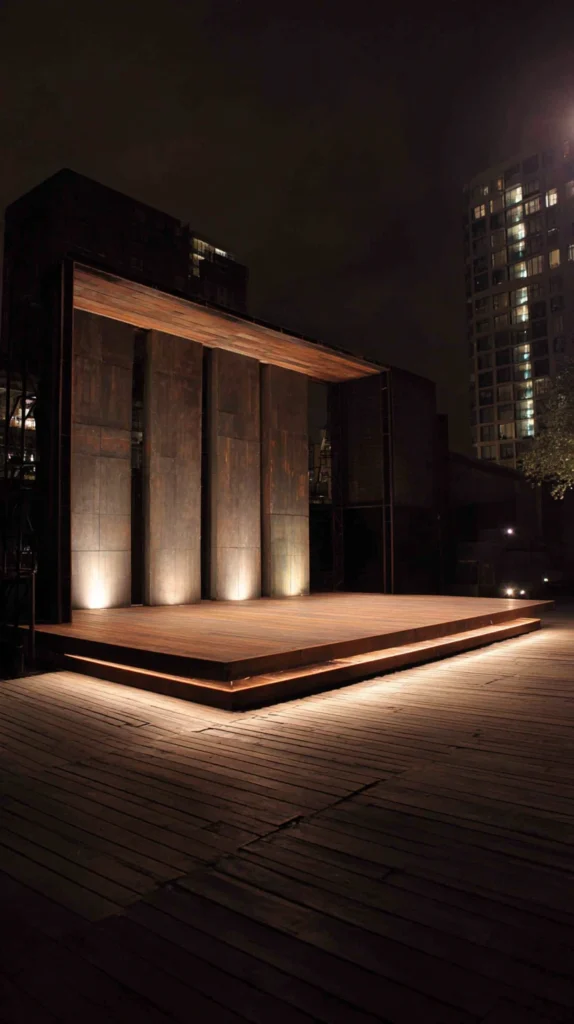
Budget: $50 – $300
A defined performance area in the garden — a flat, level surface slightly elevated above the surrounding lawn, with a simple backdrop structure, outdoor fairy lights framing the stage, and seating arranged for the audience — creates an outdoor stage that suits families with children who love performing, singing, dancing, and putting on shows. The outdoor stage communicates that performance is valued, that creativity has a dedicated space, and that an audience will always be provided.
A simple stage platform of treated timber decking — one course of decking boards raised 15–20 centimetres above ground level — costs $80–$200 to build and provides the physical definition of a stage area that communicates to children that this space is for performing. A garden arch or bamboo frame as a backdrop costs $20–$60 and creates the proscenium arch effect that defines the performance space from the audience space.
Styling tip: Keep the performance area decorated permanently with string lights or bunting that communicate the festive, special character of the stage even when no performance is in progress. A stage area that looks like a stage even when empty invites spontaneous performance; one that looks like a plain piece of decking requires more imagination to activate as a creative space.
13. The Family Campfire and Storytelling Circle
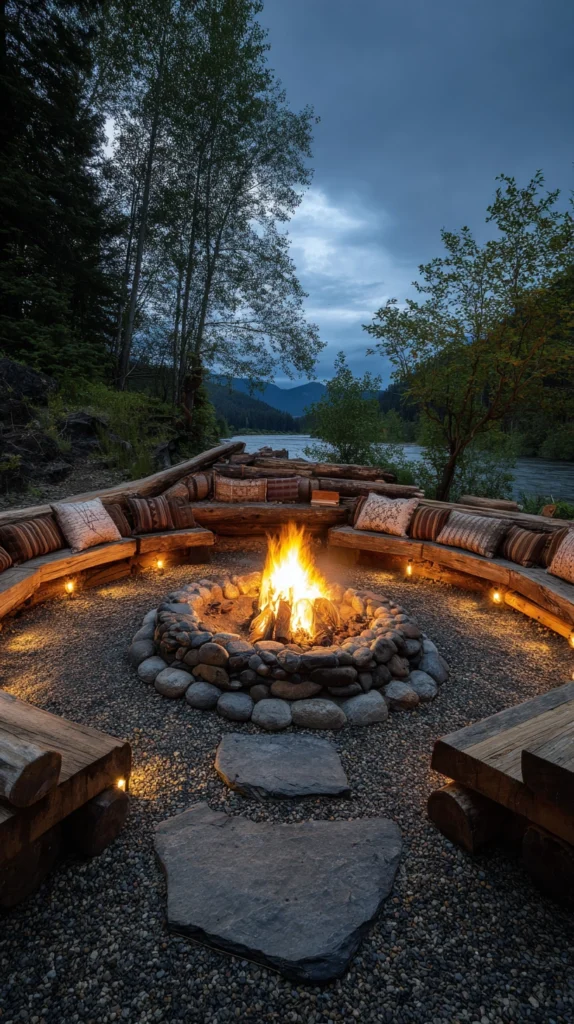
Budget: $60 – $300
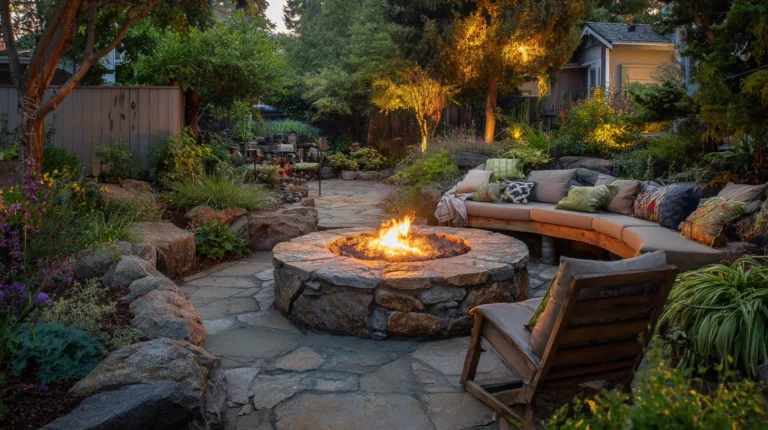
A permanent campfire circle — a fire pit at the centre, surrounded by a ring of log seats, stone benches, or low timber stools — creates a dedicated gathering and storytelling space that is as much a social game area as a physical one. The campfire circle is where families gather after dark, where stories are told and remembered, where marshmallows are toasted and conversations happen that would not happen anywhere else. It is the oldest game area available and remains the most enduringly powerful.
A stone or brick fire ring costs $50–$150 to build from reclaimed materials. Log sections cut from a felled garden tree, finished with a coat of exterior wood preserver on the base to prevent ground rot, cost nothing beyond the cutting and provide seating with a natural, settled character that purpose-made garden furniture lacks. Gravel or bark mulch around the fire circle defines the space and provides a clean, dry surface beneath every seat.
Styling tip: Plant the campfire circle boundary with fragrant species — lavender, rosemary, night-scented stock, or jasmine — that release fragrance in the warm evening air when the fire is lit and the family is gathered. The combination of woodsmoke and garden fragrance creates an olfactory atmosphere of extraordinary richness that no candle or diffuser can replicate and that becomes one of the defining sensory memories of summer evenings in the family garden.
14. The Dedicated Kids’ Zone
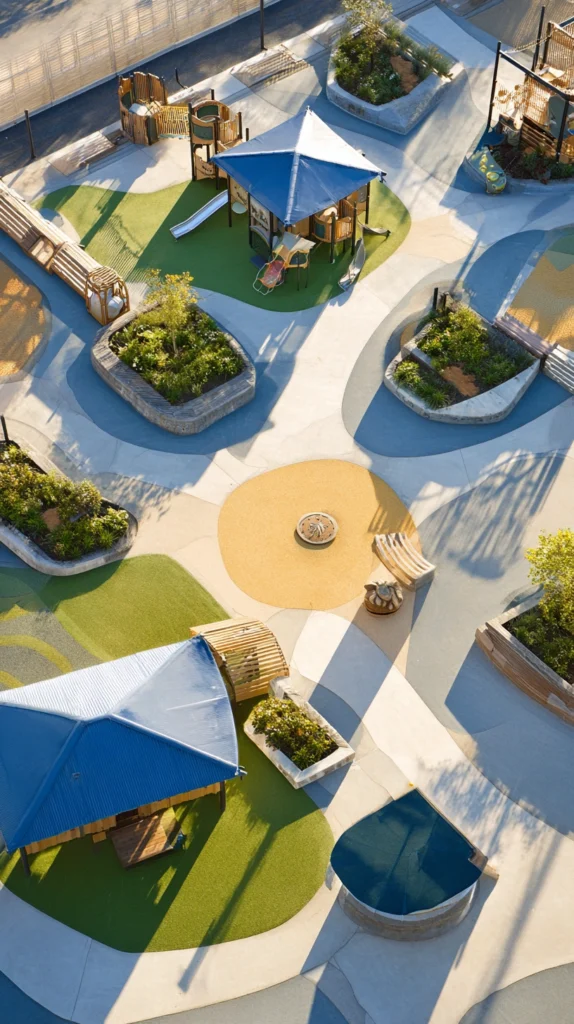
Budget: $100 – $500
A clearly defined children’s play zone — a bounded area of the garden containing multiple different play elements specifically chosen for the ages of the children in the family — creates the most usable and the most genuinely enjoyed game area available for families with young children. The zone boundary — a low fence, a change of surface material, a row of planted shrubs — separates the children’s active play area from the rest of the garden and creates a space that belongs specifically to them, which communicates a respect for their need for independent play that shared family spaces cannot provide.
Equip the zone according to the ages of the children — sand pit and water table for toddlers, climbing frame and swing for primary school age, sports equipment and giant games for older children. The most effective children’s zones contain three to five different activity types that provide options when the primary game loses its appeal — the variety is what keeps children in the zone independently rather than drifting inside or requiring adult engagement to remain interested.
Styling tip: Involve the children in designing and equipping the dedicated play zone rather than presenting them with a completed space. Children who have chosen the equipment, helped lay the surface, and contributed to the design of their play zone have a significantly stronger ownership relationship with the space — they use it more consistently, take better care of it, and invest more creative energy in the play that happens within it than children for whom the zone was entirely adult-designed and adult-presented.
A summer outdoor game area is ultimately an investment in the quality of time the family spends outside together — in the spontaneous competitions, the collaborative building, the genuine laughter, and the specific kind of physical freedom that a garden designed for play provides. The most successful game areas are the ones that fit the family so naturally that they are used without conscious decision — where going outside and playing is simply what happens, because the garden makes it the obvious and the most appealing available choice.