14 Magenta Living Room Decor Ideas for a Bold Vibrant Space
Magenta is a colour that asks something of the person who chooses it. It does not permit half measures, does not disappear quietly into a room, and does not wait for other colours to lead. It is vivid, warm, and entirely unambiguous about what it intends to do to a space — which is to fill it with energy, warmth, and a quality of visual vitality that no softer or more restrained palette can approach.
A room with magenta in it is a room that has been decided upon, and that decisiveness is one of the most attractive qualities any interior can possess.
The challenge of magenta in a living room is the same as the challenge of any genuinely saturated colour — knowing how much to use and what to put beside it. Used as a single unrelenting wall colour in all four walls of a small room without any material or tonal relief, magenta can become oppressive.
Used with the right companions — warm whites, deep neutrals, complementary tones, natural materials — it becomes one of the most exciting and most genuinely beautiful decorating choices available. Every idea below addresses both the opportunity and the challenge, showing how to use magenta with enough confidence to capture its energy and enough skill to make it genuinely liveable.
1. The Magenta Feature Wall
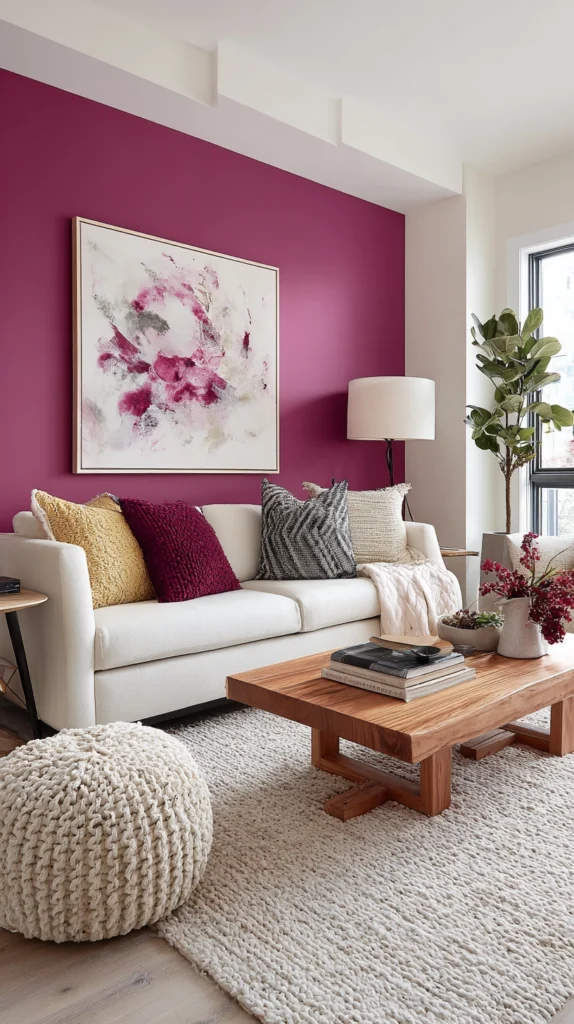
Budget: $20 – $150
A single magenta feature wall is the most immediately achievable and the most easily tested introduction of the colour into a living room. It provides the full visual impact of magenta at large scale without the commitment of four painted walls, and it creates a backdrop of extraordinary warmth and energy for whatever furniture and accessories are placed in front of it. A magenta wall behind the main sofa, behind a fireplace, or at the end of a long room creates a focal point of genuine boldness that transforms the character of the entire space from the moment it is painted.
A flat or eggshell finish in a quality magenta — warm rather than cool, with enough red to prevent it from reading as purple and enough pink to prevent it from reading as red — costs $20–$40 per tin. Dulux’s ‘Flamboyant’, Farrow and Ball’s ‘Rectory Red’ (at the warmer end), and Little Greene’s ‘Carmine’ are all in the correct register. Apply in two coats for full, even coverage and allow the full drying time between coats for the deepest, most saturated finish.
Styling tip: Balance a magenta feature wall with furniture and accessories in the warmest possible neutrals — warm white, ivory, natural linen, soft cream — rather than cool greys or stark whites. Cool neutrals beside magenta create a clinical, slightly harsh contrast; warm neutrals create a relationship of genuine comfort and visual sophistication that allows the magenta to read at its warmest and most beautiful.
2. The Magenta Velvet Sofa Statement
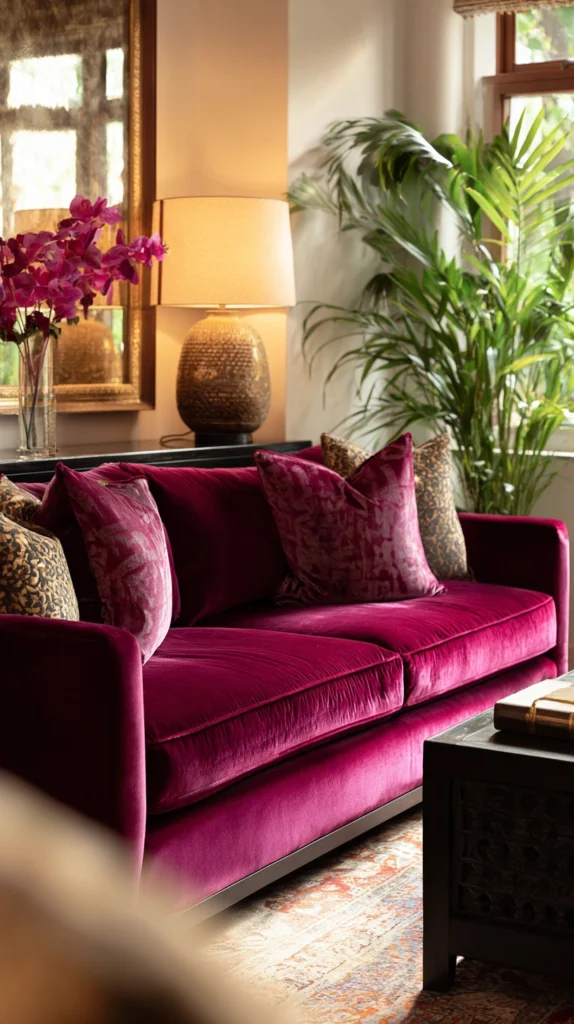
Budget: $400 – $2,500
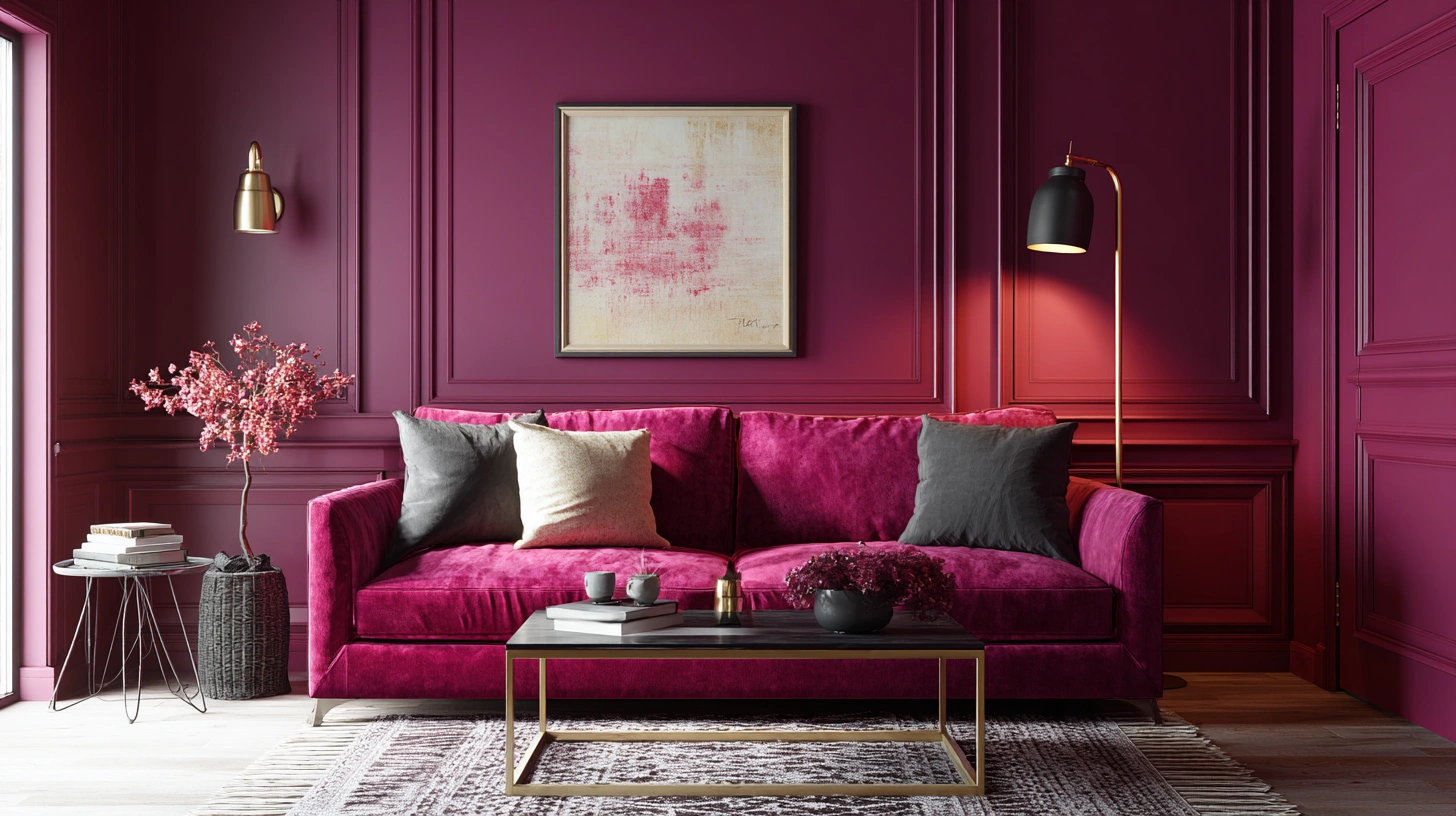
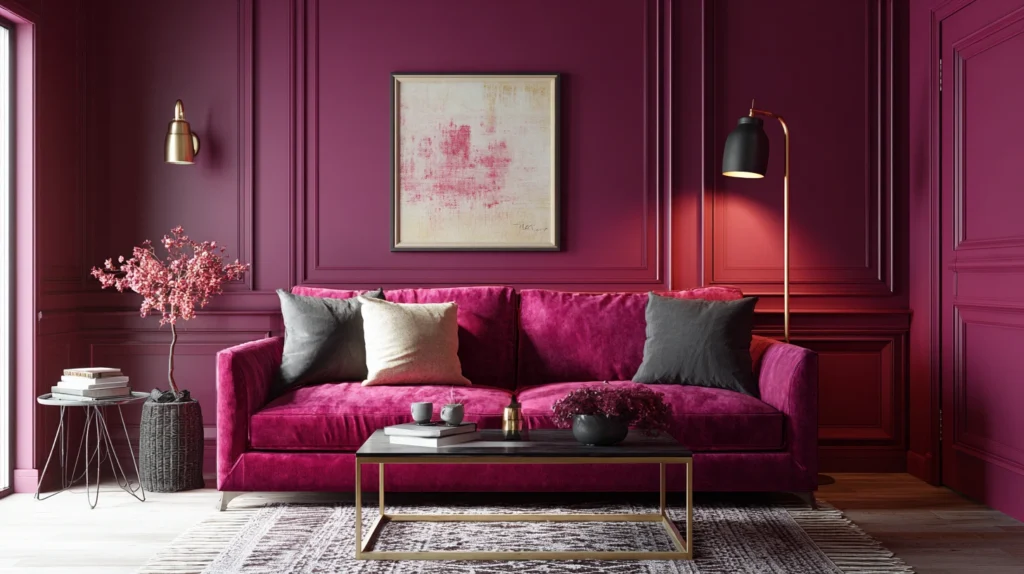
A magenta velvet sofa is the single most powerful statement piece available in the magenta living room — and one of the most genuinely spectacular pieces of furniture available in any colour at any price. Velvet’s light-responsive surface — darker where the pile faces toward the viewer, lighter where it falls away — means that magenta velvet shifts between deep crimson and vivid fuchsia depending on the viewing angle and the quality of the light, creating a sofa that looks different from every position in the room and at every time of day. No other upholstery fabric handles magenta with anything approaching the same beauty.
A quality velvet sofa in magenta costs $400–$2,000 depending on the manufacturer and the size. The investment is justified by the sofa’s dual function as the room’s most-used piece of furniture and its most visually dominant decorating statement. A magenta velvet sofa against warm white walls with natural timber flooring is one of those rare combinations that is simply and undeniably beautiful — it needs nothing else to be extraordinary.
Styling tip: Pair a magenta velvet sofa with cushions in deep jewel tones rather than paler or lighter shades — emerald green, deep sapphire, rich amber, dark teal — for a combination of saturated colour beside saturated colour that creates genuine visual excitement. Pale cushions beside a magenta sofa look washed-out and timid; deep jewel tones communicate that the bold palette was chosen with confidence and followed through completely.
3. The Magenta and Gold Combination
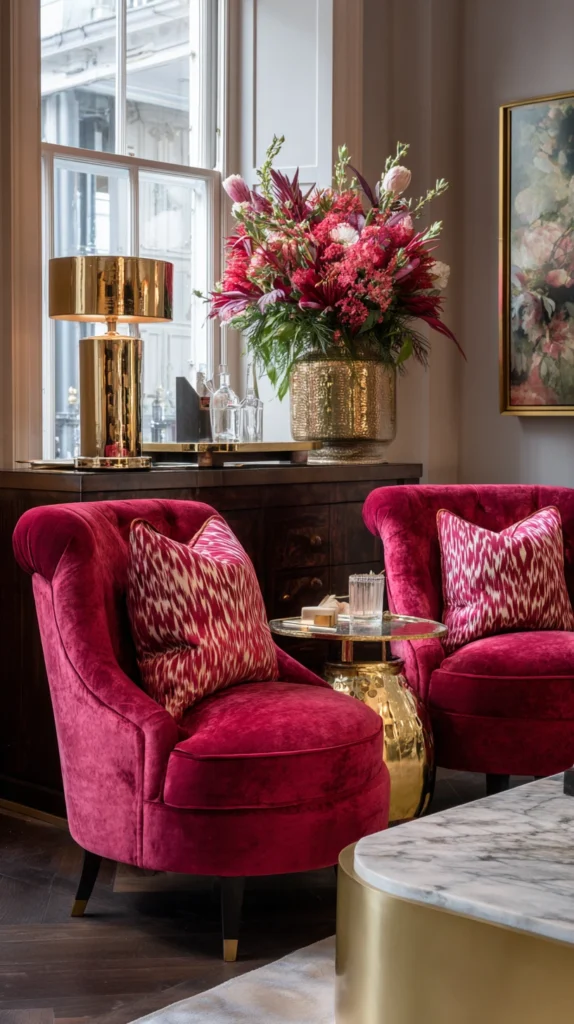
Budget: $200 – $1,500
Magenta and gold is one of the most naturally glamorous and most historically resonant colour combinations in interior design — the warm pink-red of magenta and the warm amber of gold create a relationship of mutual amplification in which each makes the other appear richer and more vivid than either would alone. The combination appears throughout the decorative arts traditions of India, Persia, and the Ottoman empire, and it brings the visual richness of those traditions into a domestic living room with immediate and powerful effect.
Magenta textiles beside gold-framed mirrors, brushed brass accessories, and amber glass candleholders create the magenta and gold combination at every scale without requiring the walls to be painted. Warm gold curtain rods, brass table legs, and gold-rimmed ceramic accessories distribute the gold element throughout the room and create the material warmth that makes magenta’s natural vitality feel genuinely luxurious rather than simply vivid.
Styling tip: Choose warm, amber gold rather than cool, yellow gold for the magenta and gold combination — warm gold has enough red in its tone to complement the warm red of magenta, creating a harmonious relationship between the two colours. Cool yellow gold beside magenta creates a slightly discordant combination that reads as unintentional rather than considered. The difference between warm and cool gold is visible at close range and critical to the success of the combination.
4. The Magenta Cushion Collection
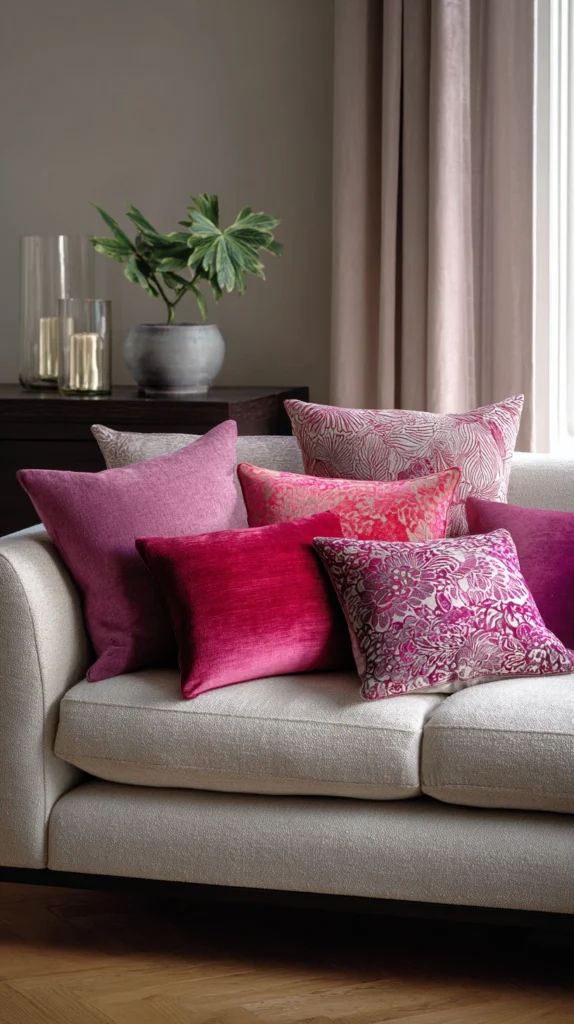
Budget: $60 – $300
A collection of magenta cushions — in varying tones from pale rose-magenta to deep fuchsia-magenta, in varying textures from velvet to linen to embroidered cotton — on a sofa in a deep neutral colour (charcoal, deep teal, forest green, warm black) creates the most controlled and the most easily updated magenta living room treatment available. The cushion collection delivers the full energy of the colour at the most accessible scale, allows the level of intensity to be adjusted by adding or removing individual cushions, and can be changed entirely at any point without any structural commitment to the colour.
The contrast between a deep neutral sofa and magenta cushions creates the most vivid and the most graphic expression of the colour available at cushion scale — the dark sofa provides the backdrop that allows the magenta to read at its most saturated and most brilliant. A magenta cushion on a pale sofa is a pleasant addition; on a dark sofa it becomes a genuinely striking design element.
Styling tip: Mix different tones of magenta within the cushion collection rather than using a single consistent tone throughout — pale rose-magenta, true magenta, and deep fuchsia-magenta together create a tonal variation within the colour family that reads as richer and more sophisticated than a single flat magenta throughout. The tonal variation is the detail that transforms a colour exercise into a genuinely considered decorating decision.
5. The Magenta and Deep Green Complementary Pairing
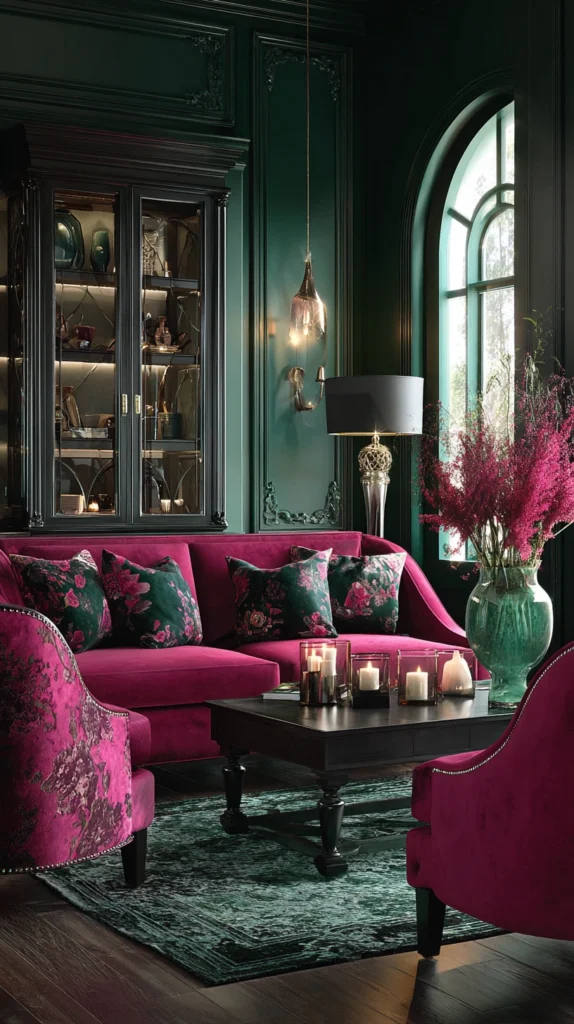
Budget: $200 – $1,200
Magenta and deep green is one of the most powerful complementary colour pairings available in interior design — the two colours sit nearly opposite each other on the colour wheel and each makes the other appear more vivid by contrast. A living room in which magenta and deep green are used together — magenta upholstery beside forest green walls, or deep green velvet cushions on a magenta sofa, or magenta accessories against botanical green wallpaper — creates a room of extraordinary visual intensity and botanical warmth.
The botanical dimension of the magenta and green combination is one of its most appealing qualities — both colours appear together in the natural world with a frequency and a vitality that give the combination an organic credibility that more artificial colour pairings lack. The magenta of a tropical flower against deep green foliage, the fuchsia of a bougainvillea against a dark hedge — the combination is a direct quotation from the natural world and communicates that origin with immediate conviction.
Styling tip: Balance the visual intensity of the magenta and green combination with generous amounts of natural material — jute rugs, rattan accessories, wooden furniture, terracotta plant pots. The natural materials provide visual and tactile relief from the intensity of the two saturated colours and ground the combination in the earthy, organic world from which it draws its natural authority.
6. The Maximalist Magenta Living Room
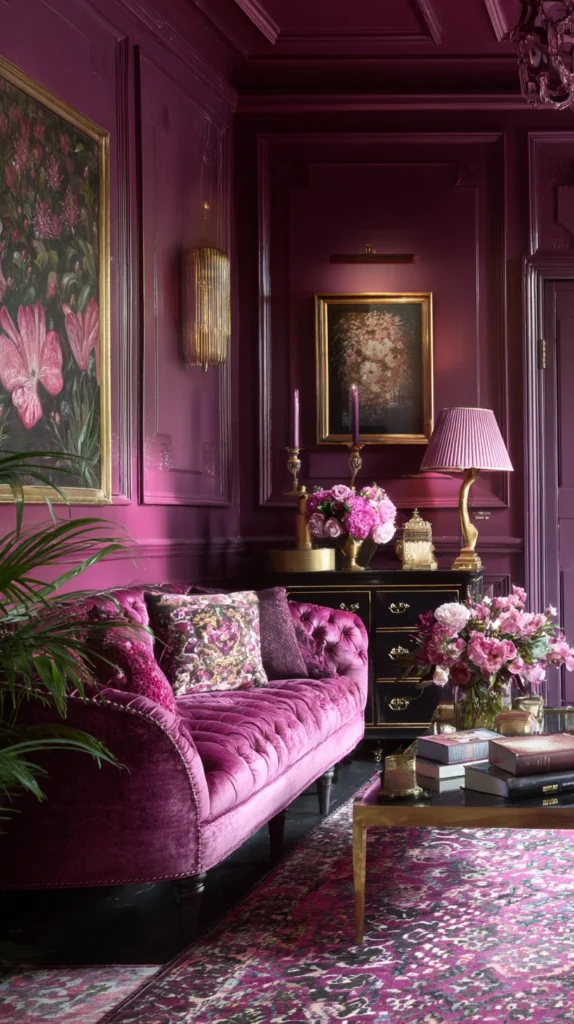
Budget: $400 – $3,000
A fully committed maximalist magenta living room — magenta on all four walls, patterned magenta upholstery, magenta and contrasting colour textiles layered across every surface, magenta floral prints, magenta ceramics, and magenta candles throughout — creates an interior of extraordinary intensity and genuine theatrical impact. The maximalist magenta room is not for everyone and it does not pretend to be — it is for the person who understands that the most beautiful rooms are the ones that have made a decision and followed it through completely, regardless of whether that decision is universally approved.
The success of the maximalist magenta room depends on the discipline of the palette rather than its restraint — every element must belong to the magenta family or to a carefully chosen complementary colour rather than introducing tones that dilute the focus. A maximalist room in which every element confidently references the same palette creates genuine coherence; one in which additional colours are introduced to ‘balance’ the magenta simply creates a less committed version of a different palette.
Styling tip: Paint the ceiling in a tone one shade lighter than the magenta walls in a fully painted maximalist magenta room. A ceiling in the same magenta tone as the walls creates a cave-like enclosed quality that can feel oppressive in a small room; a slightly lighter ceiling tone maintains the enveloping quality of the fully coloured room while providing enough relief to prevent the space from feeling suffocating. The distinction is subtle but the difference in the experienced quality of the room is significant.
7. The Magenta and White Graphic Room
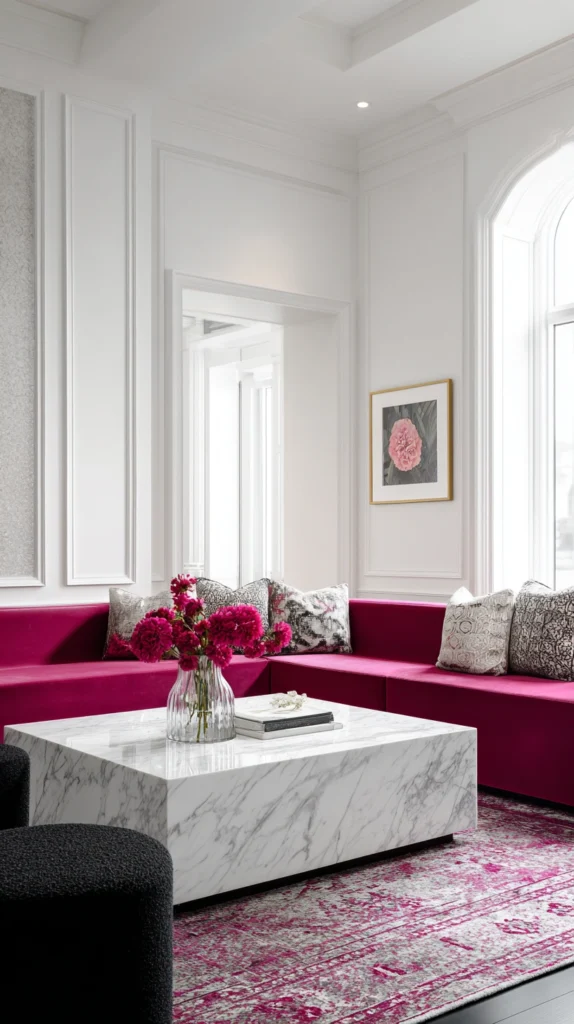
Budget: $150 – $800
Magenta and white in their most graphic expression — magenta against bright white in crisp, bold combinations that create a room of maximum visual contrast and contemporary energy — is the cleanest and the most modern version of the magenta living room. White walls with magenta accessories, white upholstery with magenta cushions, white-painted furniture beside a magenta statement vase — the magenta and white graphic room uses the contrast between the two colours to create a visual clarity and a graphic boldness that suits contemporary architecture with particular natural authority.
The graphic quality of magenta against bright white references the world of print and graphic design — bold colour blocks, vivid against clean backgrounds, colour used as a visual event rather than an atmosphere. It is a more designed and a more intentionally visual approach to the colour than the atmospheric, material-rich approaches of other versions on this list, and it suits living rooms with strong architectural lines and minimal ornamentation with complete natural logic.
Styling tip: Use magenta in concentrated masses rather than distributed small accents in the magenta and white graphic room — a single large magenta floor vase, a full-width magenta cushion collection, a single large magenta artwork — rather than scattering small magenta objects across multiple surfaces. Concentrated masses of colour read as bold, graphic decisions; scattered small accents read as uncertainty about how much colour to use. The graphic room requires commitment to scale.
8. The Magenta Accent in a Neutral Room
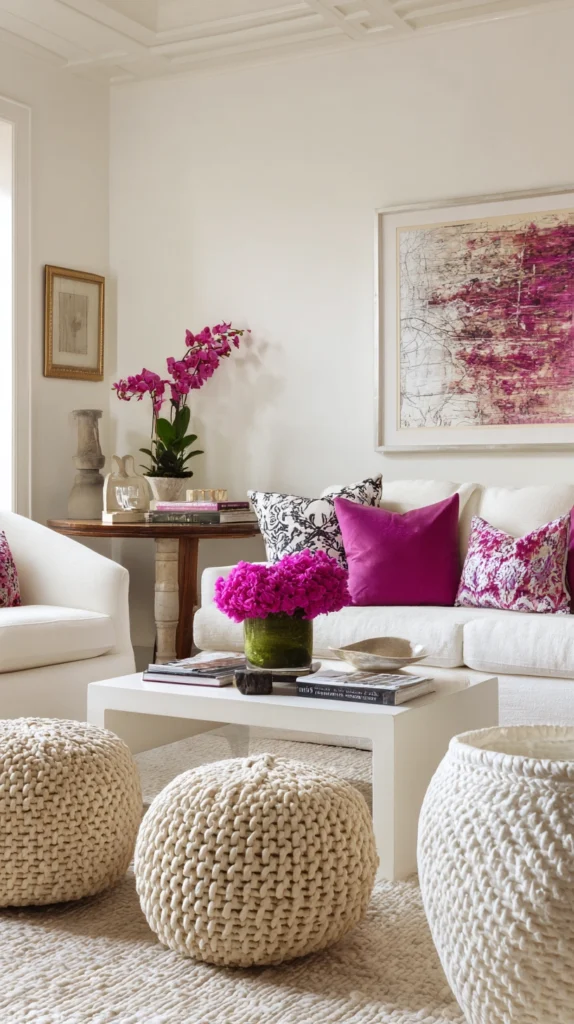
Budget: $60 – $400
The most restrained and the most accessible version of the magenta living room — a primarily neutral room in warm whites, creams, and natural materials, with magenta introduced through two or three carefully chosen accent pieces that provide colour vitality without dominating the space. A magenta lamp shade, a single large magenta artwork, and a magenta vase on the coffee table create enough colour presence to define the room’s personality without requiring commitment to the full intensity of a magenta-saturated scheme.
The magenta accent in a neutral room works on the principle that a single vivid colour in a neutral context is perceived more intensely and more beautifully than the same colour surrounded by other colours competing for attention. The neutral room provides the visual silence within which the magenta reads at its most vivid and its most luminous — like a single voice in a quiet room that would be inaudible in a crowd.
Styling tip: Repeat the magenta accent in at least three separate positions in the neutral room — not clustered together but distributed at different heights and different distances across the space. A magenta accent that appears in only one position reads as an anomaly; the same accent appearing in three positions reads as a deliberate colour decision that has been considered and applied throughout the room. The repetition is what transforms an accent into a palette.
9. The Magenta and Terracotta Warm Palette
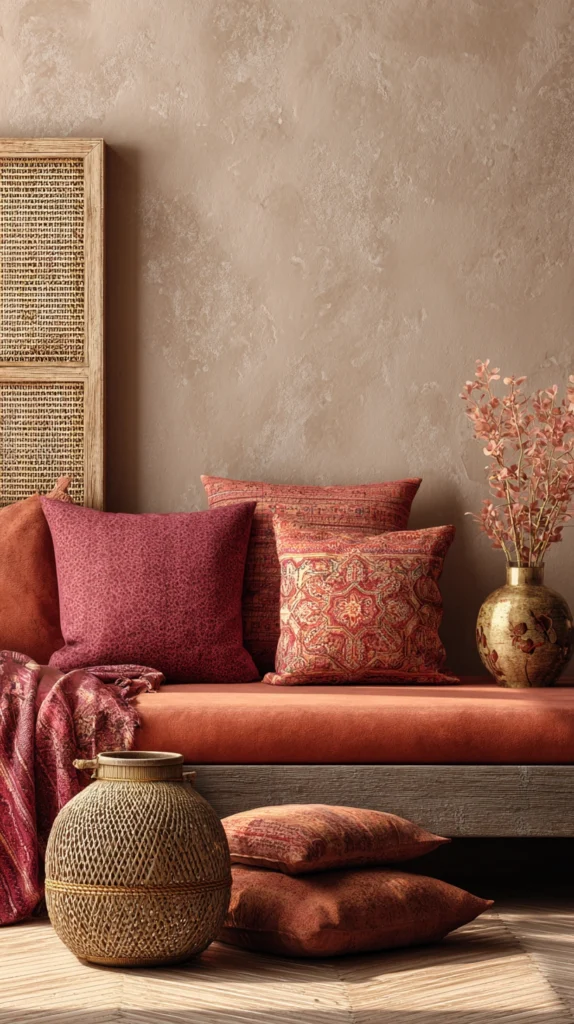
Budget: $150 – $800
Magenta and terracotta is a combination of extraordinary warmth and earthiness — both colours share the red-warm undertone that makes them natural companions, and the combination creates a room that references the palette of sun-baked Mediterranean landscapes, Moroccan interiors, and the warm pigments of traditional decorative arts traditions. A living room that moves between magenta, terracotta, burnt orange, and warm pink across its walls, upholstery, and accessories creates a colour environment of intense thermal warmth that is genuinely unique in the interior design palette.
Magenta cushions beside terracotta ceramic accessories, a burnt orange throw beside magenta upholstery, warm pink walls beside terracotta plant pots — the warm red family of colours layered together creates a room that glows with reflected warmth even in cool northern light. The combination suits rooms with natural timber floors and handmade ceramic accessories that reinforce the earthy, material warmth of the palette.
Styling tip: Ground the magenta and terracotta palette with sage green or dusty olive accents — a sage green plant in a terracotta pot, a dusty olive cushion among the magenta and terracotta textiles — to provide the natural foliage counterpoint that the warm red palette benefits from. The sage green is not a contrasting colour in this context; it is the natural companion of both magenta and terracotta in the Mediterranean landscape that the palette references, and its presence reinforces the organic, earthy character of the whole scheme.
10. The Magenta and Navy Blue Dramatic Pairing
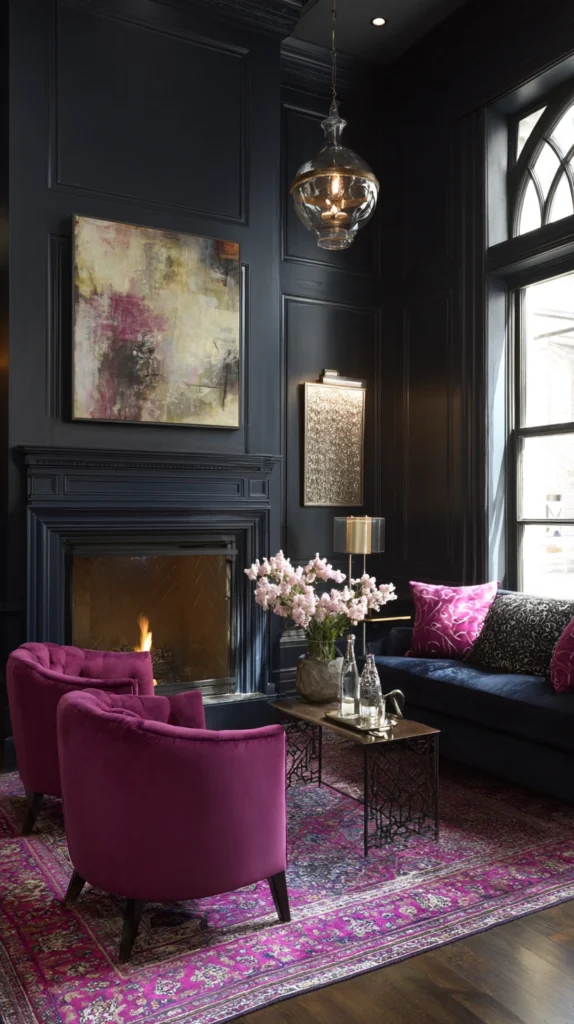
Budget: $200 – $1,200
Magenta and navy blue creates one of the most dramatically beautiful and most genuinely unexpected colour combinations available in living room design. The two colours share enough visual weight to occupy the same room without one overwhelming the other, and their contrast — the warm vibrancy of the magenta against the cool depth of the navy — creates a room of extraordinary visual tension and glamour. It is a combination used in couture fashion and theatrical costume design with consistent success, and it translates into an interior context with the same dramatic power.
Magenta upholstery against navy blue walls, or navy cushions on a magenta sofa, or magenta and navy textiles layered together in the cushion and throw arrangement — all three approaches create the combination at different scales and different levels of commitment. The most dramatic version — magenta sofa against navy walls — requires the most commitment and produces the most spectacular result.
Styling tip: Introduce gold or brass metallic accents alongside the magenta and navy combination — brass lamp bases, gold-framed mirrors, brass candleholders. The warm gold provides a third colour that belongs naturally to both magenta and navy and creates visual connections between the two main colours that make the combination feel designed rather than simply contrasted. Gold between magenta and navy is the material that makes the combination feel like a complete palette.
11. The Magenta Botanical Living Room
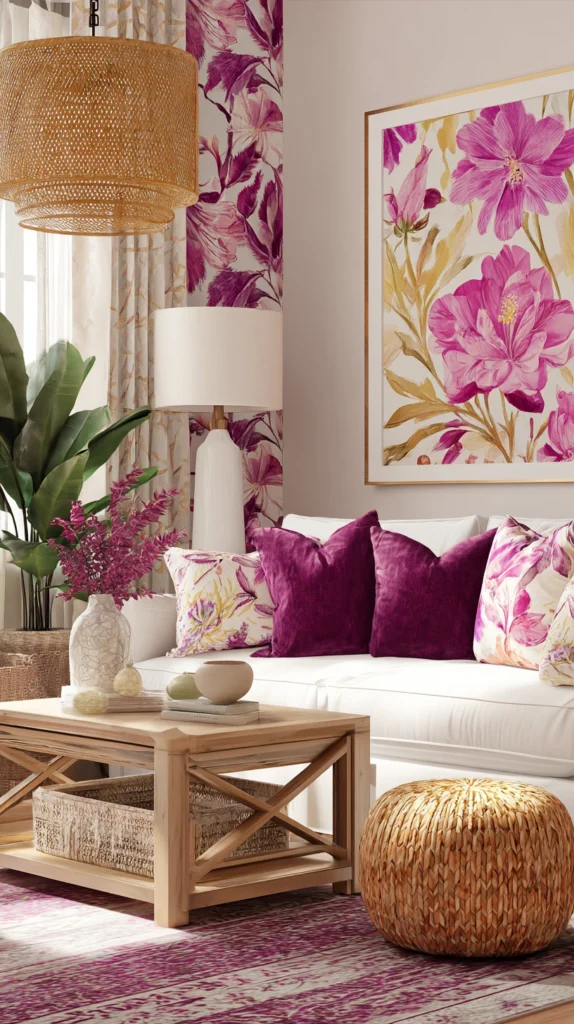
Budget: $150 – $700
A living room in which magenta is expressed primarily through flowers, plants, and botanical elements — fresh magenta flowers in every available vessel, botanical prints with magenta blooms, flowering indoor plants in magenta tones, dried fuchsia and magenta botanicals as permanent features — creates a colour-saturated room in which the energy of the magenta comes from the natural world rather than from painted surfaces or upholstered furniture. The botanical magenta room is the most organic and the most specifically alive version of the colour available in any interior.
Fresh magenta flowers — peonies, dahlias, zinnias, cosmos, sweet Williams — are available through most of the growing season and create a room of extraordinary natural colour intensity when arranged generously throughout the space. A large arrangement of magenta dahlias on the coffee table, a bunch of magenta sweet peas on the windowsill, and a posy of magenta zinnias on the side table creates a room in which the colour is present at every scale and in every position without requiring a single painted wall.
Styling tip: Combine fresh magenta flowers with deep green foliage — long eucalyptus stems, tropical leaves, garden greenery — for arrangements in which the colour contrast between the magenta blooms and the deep green foliage is as vivid and as natural as the same contrast in the garden. The green foliage amplifies the vibrancy of the magenta blooms in exactly the same way that dark green leaves amplify the colour of tropical flowers in the natural world.
12. The Magenta Statement Rug
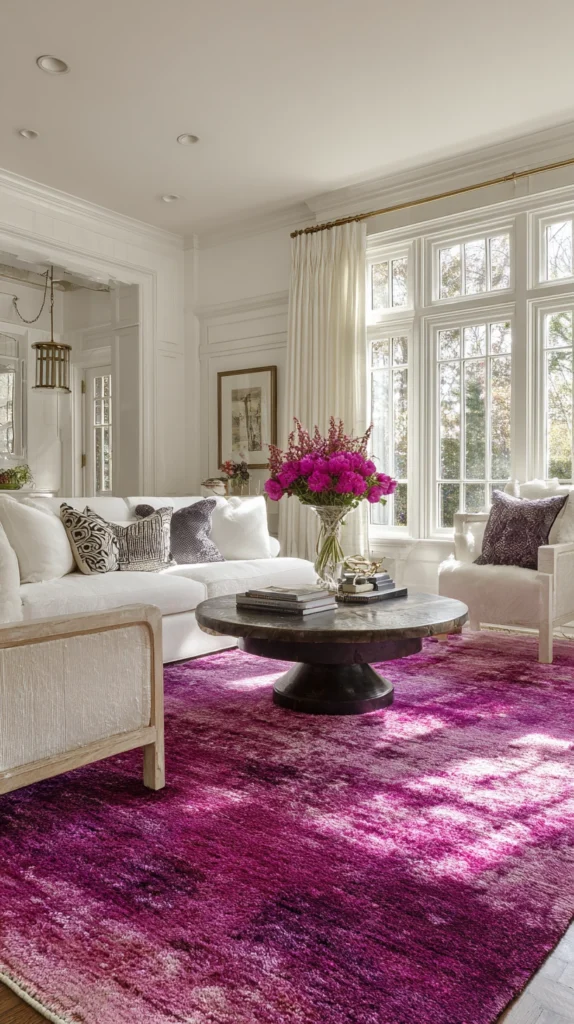
Budget: $80 – $500
A large magenta rug as the centrepiece of the living room seating arrangement — in a plain flat weave, a geometric pattern, a traditional floral, or an abstract design, all in magenta as the dominant colour — creates a bold, colourful foundation for the entire room without requiring paint, wallpaper, or upholstery changes. The rug introduces magenta at floor level, beneath the furniture rather than in front of it, which creates the most architecturally integrated and the most spatially grounded colour presence available.
A large magenta flat-weave rug costs $80–$200 for a quality living room size. A magenta patterned wool rug costs $150–$500. Both transform the character of a neutral room immediately and allow the existing furniture to remain unchanged while the room’s colour palette is defined by the new floor surface. The rug as the primary colour decision is also the most easily changed — a rug can be rolled up and replaced with minimal effort if the colour experiment does not produce the intended result.
Styling tip: Choose a rug size that extends at least 30 centimetres beyond the furniture legs on all sides of the seating arrangement. A magenta rug that barely fits beneath the furniture looks meanly scaled and reduces the impact of the colour; a generous rug that extends beyond the furniture edges creates a defined colour zone within the room that reads as a deliberate design decision and provides the spatial scale that makes the colour genuinely powerful.
13. The Magenta and Blush Tonal Living Room
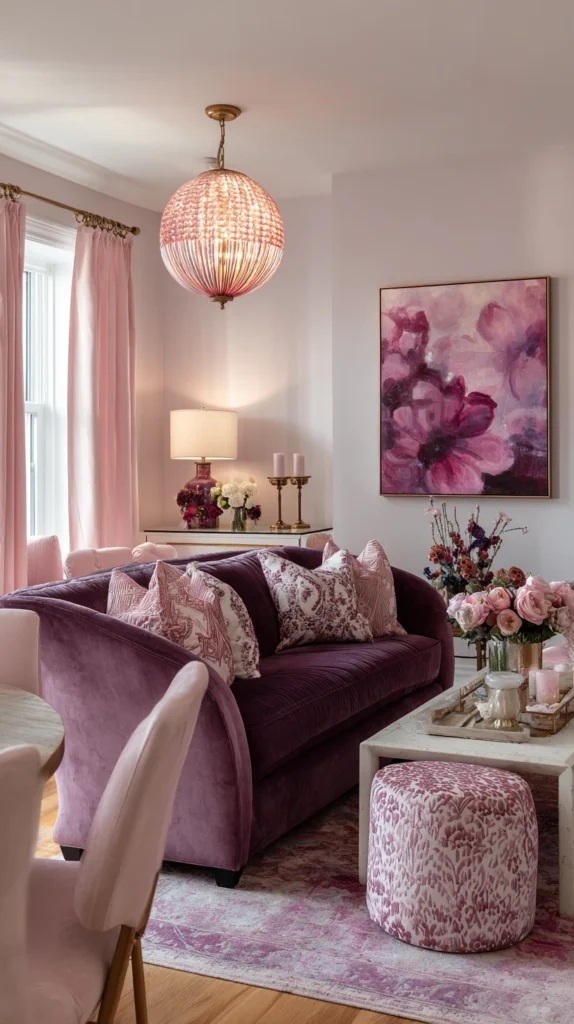
Budget: $200 – $1,000
A living room that uses magenta and blush as tonal companions — both members of the warm pink family, arranged from the deepest magenta through to the palest blush across the walls, upholstery, cushions, and accessories — creates a room of extraordinary pink richness that reads as a considered tonal gradient rather than a single flat colour. The journey from deep magenta to pale blush across a single room creates the impression of a single colour at many different distances from the viewer — as though the room itself is receding from maximum saturation to the gentlest possible suggestion of the same hue.
Magenta accent cushions on a dusty rose sofa against pale blush walls creates the three-point tonal gradient at its most architecturally structured — deepest at the most concentrated point, palest at the most expanded. The same tonal principle can be applied in any arrangement of the three tones across the room’s surfaces and materials.
Styling tip: Introduce a warm white or ivory as the neutral that sits between the tonal pink elements rather than a true white or grey. Warm white understands and supports the pink family; cool white and grey introduce an undertone that reads as discordant rather than supporting in a room where every other surface is warm and pink-toned. The neutral is not passive in a tonal room — it is the colour that either reinforces or undermines the tonal harmony of everything around it.
14. The Magenta Living Room With Natural Counterpoints
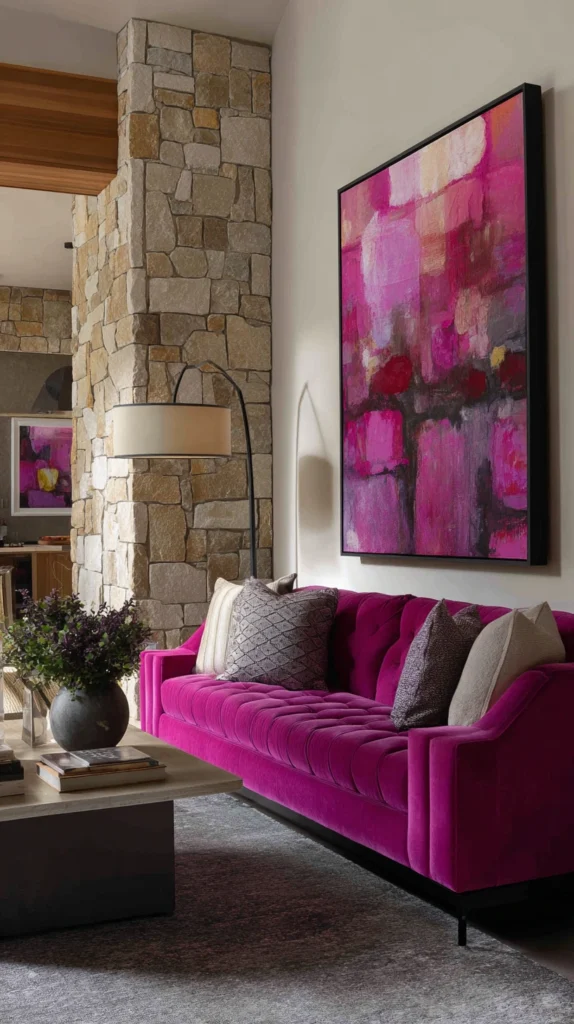
Budget: $200 – $1,000
A magenta living room in which the colour’s intensity is balanced and grounded by generous natural material counterpoints — raw timber furniture, woven natural rugs, terracotta and unglazed ceramic accessories, linen upholstery on secondary pieces, natural stone surfaces, and living plants in undecorated pots — creates the most habitually comfortable and the most enduringly beautiful magenta living room available. The natural materials do not dilute the magenta — they give it the grounded context that allows it to be genuinely liveable rather than merely spectacular.
The psychological effect of natural materials beside saturated colour is well documented — the organic, imperfect, warm qualities of wood, stone, ceramic, and textile provide the visual and tactile resting points that allow the eye and the mind to inhabit a vivid colour environment without fatigue. A magenta room without natural material counterpoints can be beautiful for thirty minutes; the same room with generous natural materials can be genuinely pleasurable to live in for years.
Styling tip: Position the most prominent natural material element — a large natural timber coffee table, a substantial jute rug, a terracotta floor lamp base — at the visual centre of the magenta room rather than at its periphery. The natural material at the centre provides the grounding point from which the eye can comfortably explore the magenta intensity at the room’s edges — it is the visual anchor that makes the whole composition habitable and the detail that most experienced interior designers cite as the critical difference between a magenta room that works and one that overwhelms.
Magenta in a living room is ultimately an act of decorating courage — the courage to commit to a colour that makes no attempt at subtlety and asks no permission to dominate the space it occupies. That courage, exercised with enough knowledge of the materials and companion colours that allow magenta to perform at its best, creates rooms of genuine and enduring vitality that no softer or more cautious palette can approach.
The room that commits fully to magenta — that uses it with confidence, grounds it with natural materials, and gives it the right companions — becomes a room that people remember and return to with the specific pleasure of being somewhere that was genuinely decided upon.