15 Minimal Luxe Decor Ideas for a High-End Look
Minimal luxe is the interior aesthetic built on a single principle: fewer things, better things. Not austerity — which removes comfort along with clutter — but the specific quality of a room where every object has been chosen with complete intention, every surface has been edited to reveal only what earns its place, and the materials present in the room are genuinely excellent rather than simply adequate.
A room decorated on this principle communicates wealth not through accumulation but through restraint, and restraint is always the harder and always the more impressive achievement.
The fifteen ideas below are the specific design decisions that produce the minimal luxe aesthetic in any room — each one as applicable to a modest apartment as to a large house, and each one achievable through editing and intention as much as through significant financial investment.
1. Choose One Hero Material and Use It Consistently
Budget: $50 – $500 depending on material
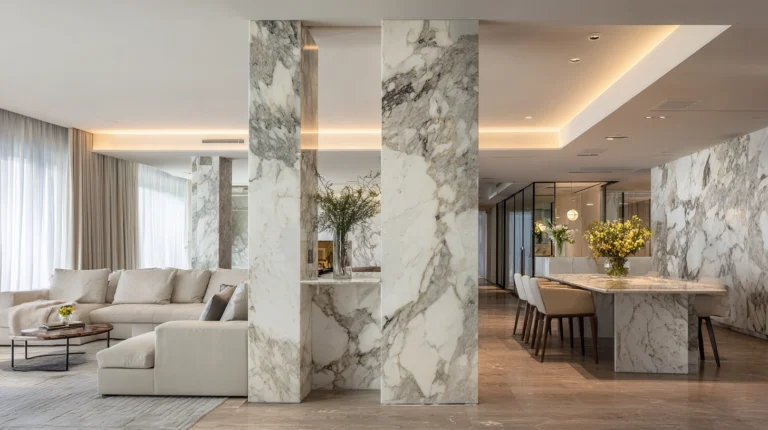
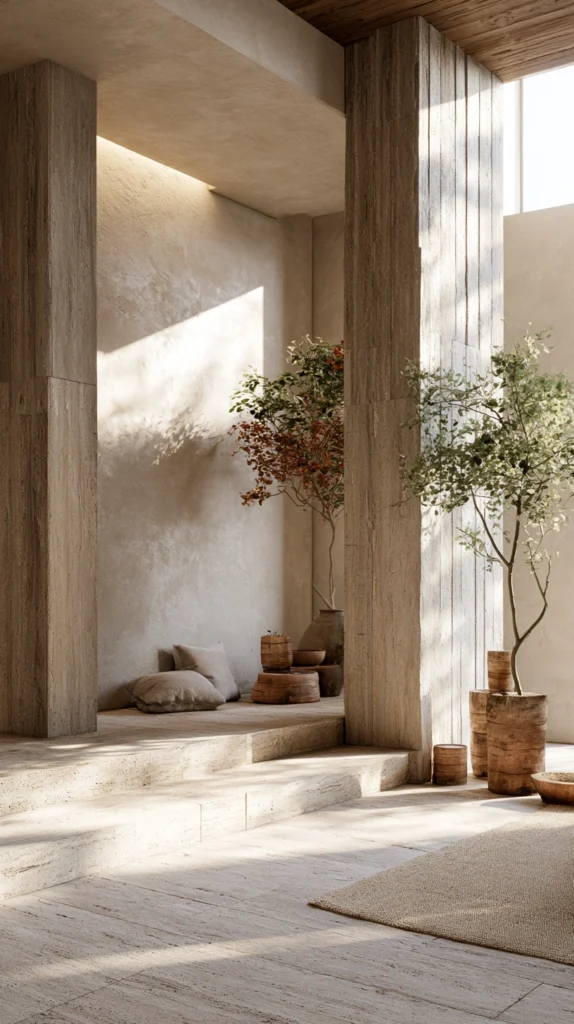
The most immediately recognisable quality of a genuinely luxurious minimal interior is that it is built around one dominant material used consistently — travertine throughout the surfaces of one room, limewashed plaster on every wall, a single marble tone in the kitchen and bathrooms, or aged oak flooring that runs from room to room without interruption. The consistency of one excellent material across multiple applications communicates the confidence of a clear decision made without compromise.
The hero material does not need to be expensive. Concrete, limewash, natural timber, and white plaster are all modest in cost and all produce the unified, material-led quality of a minimal luxe interior when used consistently across a significant surface area. The expense is in the application quality — the flawlessly smooth limewash, the perfectly level concrete floor, the precisely fitted timber — rather than in the material cost per square metre.
Design tip: Introduce the hero material in the largest available surface first — the floor, the wall, or the ceiling — before using it in smaller accent applications. A hero material established at scale anchors the room’s aesthetic identity from the first glance. The same material introduced only in small accent pieces lacks the authority to define the room’s character and reads as a motif rather than a design intention.
2. Invest in One Exceptional Sofa
Budget: $800 – $5,000
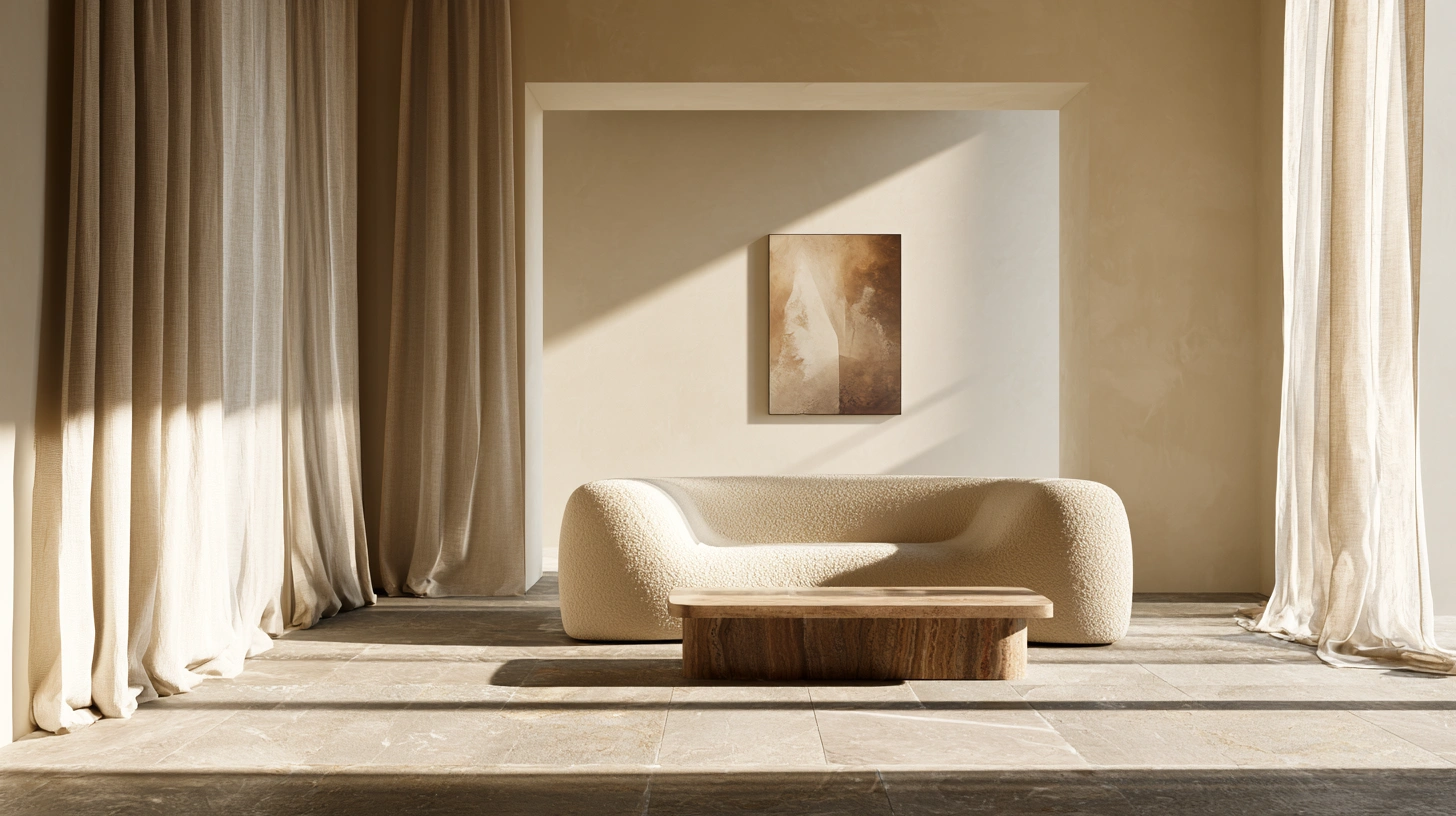
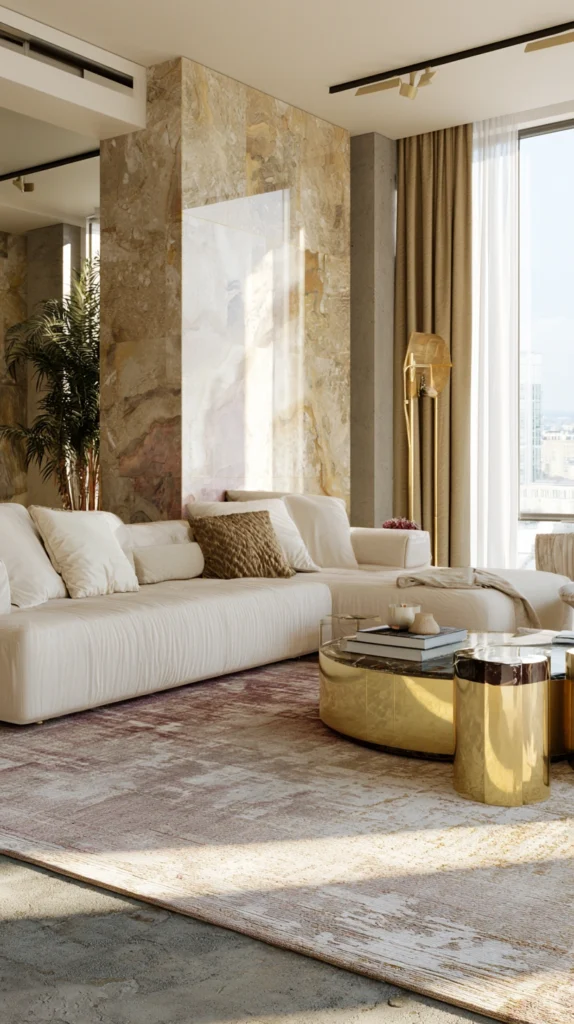
In a minimal luxe living room the sofa is the primary object — it occupies the most floor space, it is the most used piece of furniture in the room, and it is the object most closely associated with the quality of life the room is designed to provide. A single exceptional sofa in a genuine fabric — full linen, quality boucle, or a fine wool blend — in a simple, well-proportioned form communicates the entire aesthetic intention of the room more completely than any number of additional decorative objects arranged around an average sofa.
A well-made sofa in a quality fabric from a reputable manufacturer costs $800–$2,000 at the accessible end of the market and $2,000–$5,000 for genuine high-end pieces. The quality markers: a hardwood frame (not engineered timber), high-density foam or feather-wrapped cushions, a fabric with genuine weight and drape, and legs in solid timber or metal rather than plastic. An exceptional sofa purchased once lasts twenty years. An average sofa replaced every eight years costs more in total and looks less impressive throughout its shorter lifespan.
Design tip: Choose a sofa in a plain, solid tone rather than a pattern or texture that dates quickly. The most enduring minimal luxe sofa colours are warm cream, stone grey, and deep charcoal — tones that suit every seasonal textile layering through the year and that appear in the rooms that have looked genuinely luxurious for the longest time rather than those that peaked in the year of their decoration.
3. Replace All Visible Cables and Clutter With Seamless Storage
Budget: $100 – $600
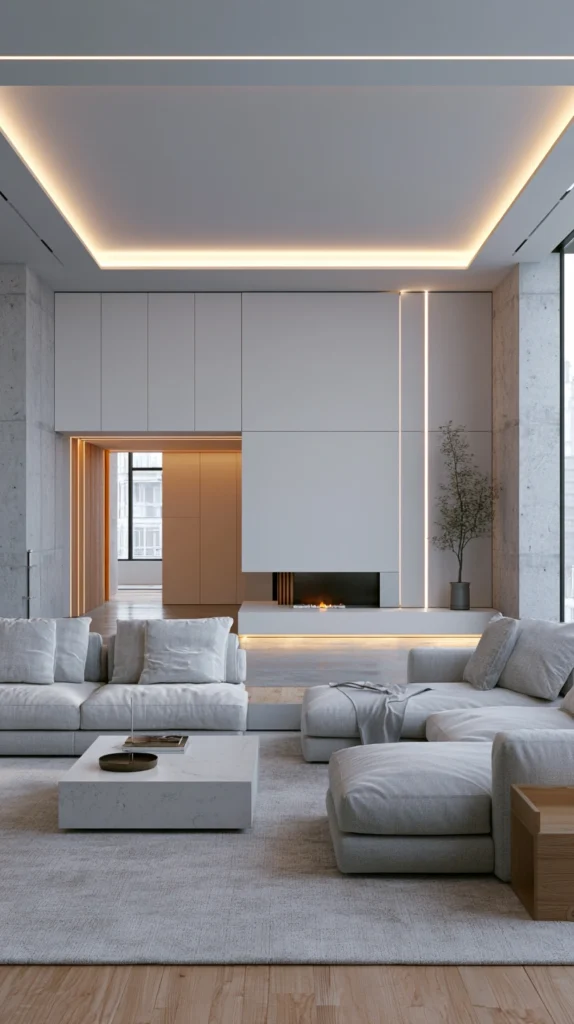
The single most immediate difference between a room that reads as genuinely luxurious and one that does not is the absence of visible clutter, cables, and functional objects that are not beautiful enough to be on display. Technology cables, remote controls, charging leads, and everyday domestic objects are present in every home — in the minimal luxe room they are simply not visible. This is achieved through deliberate storage decisions rather than by having fewer possessions.
A floating media unit with concealed cable management costs $200–$600. Cable management trunking that runs cables invisibly along the skirting costs $15–$30. A small woven basket or lidded box on every surface where objects accumulate costs $10–$30 each. The investment in concealment is always less expensive than the aesthetic cost of visible clutter in a room that is otherwise carefully designed — and the impact of removing visible cables and clutter from even one room is dramatic enough to make the concealment effort worthwhile at any quality level of the room’s other contents.
Design tip: Conduct a visual audit of every surface in the room from the main doorway before making any purchase decisions. Stand at the threshold and note every object that draws the eye for the wrong reason — the tangled cable, the stacked remote controls, the accumulated magazines, the out-of-place object that has been there so long it has become invisible. These objects are the primary targets for the concealment investment and their removal produces more visual improvement per pound spent than any decorative addition to the same room.
4. Use Linen Curtains From Ceiling to Floor
Budget: $80 – $400 per window
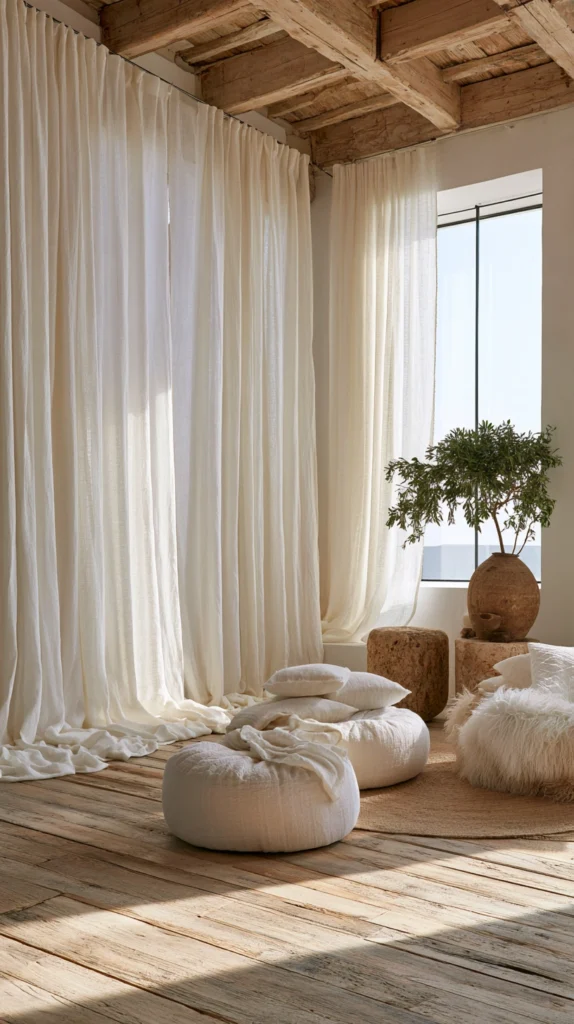
Floor-to-ceiling curtains in a quality linen — hung from a track or pole fixed at ceiling height rather than at window-frame height — is the single most dramatic window treatment upgrade available for any room. The full-height hang makes ceilings appear higher, windows appear larger, and the room appear more generously proportioned than any alternative window treatment at comparable or higher cost. Linen in particular suits the minimal luxe aesthetic with its natural texture, its slight irregularity of weave, and its unforced elegance in any light condition.
Linen curtain fabric in an undyed or warm stone tone costs $20–$50 per metre. A standard window of 120 cm width requires 3–4 metres per curtain panel for a full gather from ceiling to floor. A custom-made linen curtain costs $150–$400 per panel from specialist curtain makers. A ceiling-fixed curtain track or pole costs $30–$80. The combination of quality linen and ceiling-height hanging produces a window treatment that looks significantly more expensive than its actual cost and that improves the proportional quality of the room more completely than any other change to the same window area.
Design tip: Allow linen curtains to puddle slightly on the floor — 3–5 cm of excess length pooling at the base — rather than cutting them to a precise clearance above the floor surface. The slight puddle communicates an abundance of material that is one of the specific signals of genuine luxury in any textile context. It also accommodates the natural variation in floor level and curtain shrinkage that means a precisely floor-length curtain frequently appears too short in practice.
5. Choose Art That Surprises at Close Range
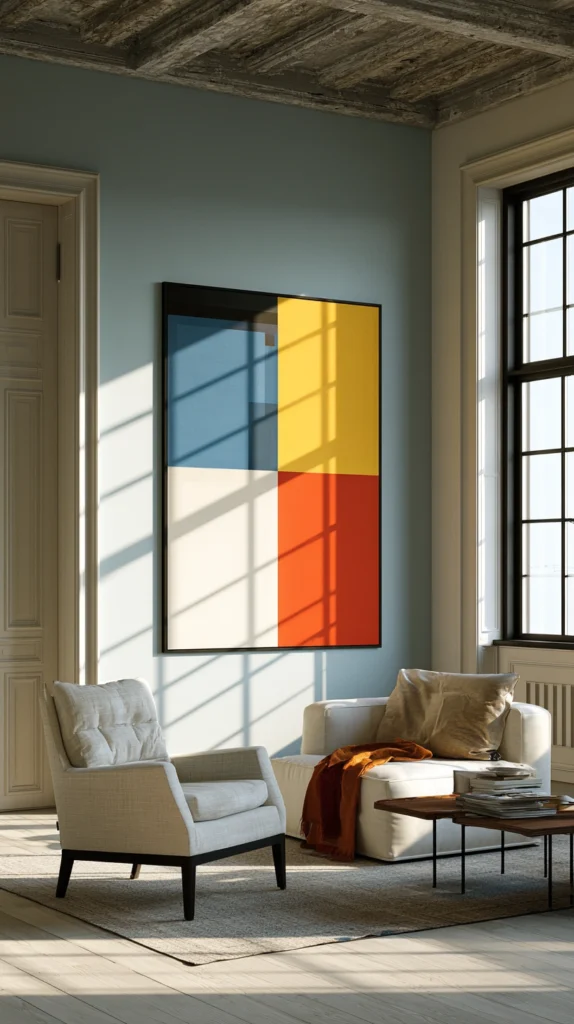
Budget: $100 – $1,000
Artwork in a minimal luxe room earns its place by rewarding close attention — a piece that looks interesting from across the room and genuinely compelling at close range signals both the quality of the work and the discernment of the person who chose it. Large-scale abstract works, fine art photography, and original works from independent artists all satisfy this requirement. A generic print-on-demand poster does not, regardless of its subject matter, because it communicates nothing about the specific sensibility of the person who selected it.
An original small-format work from an emerging artist costs $150–$500 and is infinitely more interesting as a room element than a large reproduction print at twice the price. A fine art photograph printed on quality paper in a simple frame costs $80–$300 and introduces a level of visual complexity that mass-produced graphic prints consistently lack. One piece chosen carefully is always more impressive than five pieces assembled quickly — and the minimal luxe principle that one excellent thing outperforms many adequate things is nowhere more directly demonstrable than in the choice of living room artwork.
Design tip: Hang a single large artwork rather than a gallery wall in a minimal luxe interior. The gallery wall — however well executed — communicates multiplicity, which is the quality the minimal luxe aesthetic is specifically designed to edit away. One large work on one wall, given sufficient surrounding white space to be seen without competition, communicates the singular confidence that is the aesthetic’s defining quality. The surrounding empty wall is not wasted space — it is the context that makes the artwork most powerful.
6. Invest in Exceptional Bedlinen
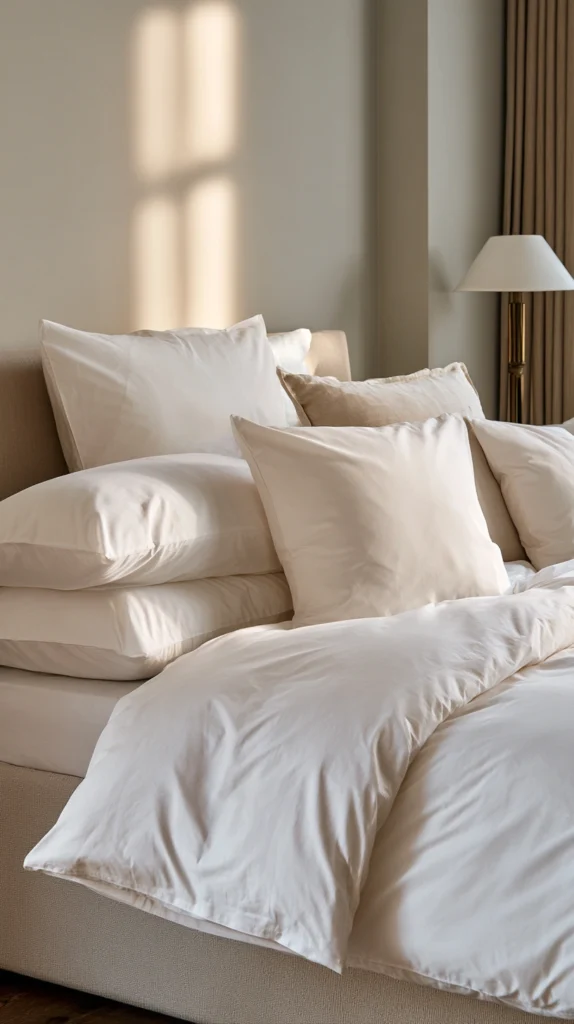
Budget: $80 – $400
The bedroom is the room most directly experienced through touch rather than sight — which makes the quality of the bedlinen the most sensorially significant investment available in any room of the home. A bed dressed in genuine percale or sateen linen at 400 thread count or above, in a tonal colour scheme of two or three warm neutrals, is the most immediately luxurious sleeping environment available regardless of the quality of the surrounding furniture and decoration.
A quality percale duvet cover costs $80–$200. Matching fitted and flat sheets run $60–$150. Two to four pillowcases at $25–$60 each. The complete bedlinen set in a quality fabric costs $200–$450 and produces a bed that looks genuinely hotel-quality in person and in photographs. Choose white or warm cream as the primary bedlinen colour — the hotel convention exists because white linen looks better washed, wears more evenly across pieces from different production batches, and suits every bedroom colour scheme from neutral to deeply coloured walls with equal success.
Design tip: Iron the top sheet and pillowcases before making the bed — the crisp, smooth surface of pressed linen communicates the quality of the fabric more directly than any other single maintenance act. An unironed quality sheet looks similar to an ironed average sheet at casual glance. An ironed quality sheet looks unmistakably excellent. The ten minutes of pressing required is the single highest-return investment of time available in the bedroom’s daily maintenance routine.
7. Edit Every Surface to Three Objects Maximum
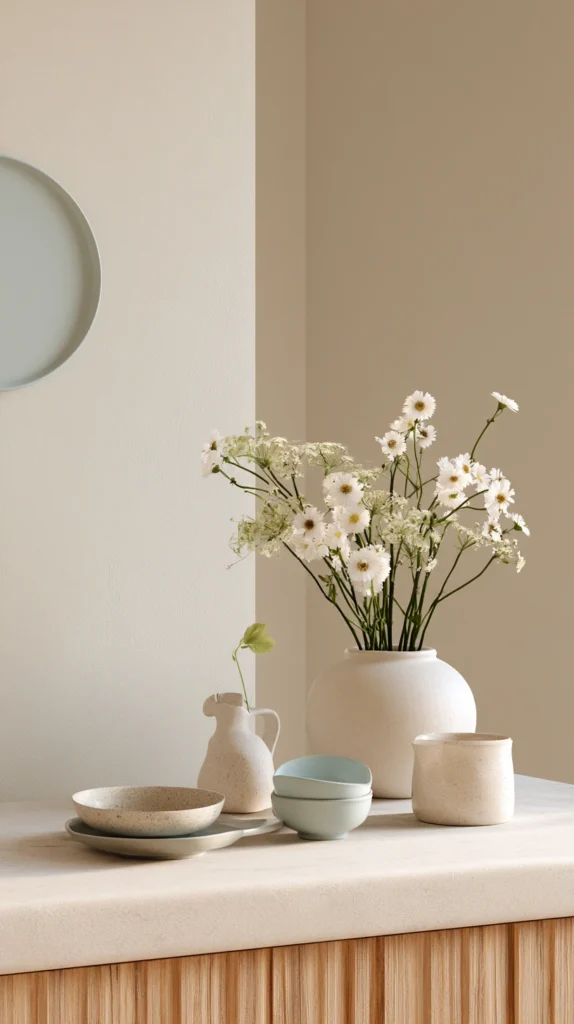
Budget: $0
The most consistently visible difference between a room that looks luxurious and one that looks merely comfortable is the density of objects on every surface. In a genuinely luxurious room, every surface has at most three objects on it — ideally one or two — and each object is given enough surrounding space to be seen individually. This is not a rule about having fewer possessions. It is a rule about display: only the best things visible, everything else stored.
Apply the three-object maximum to every surface simultaneously — every shelf, every table, every windowsill, every mantlepiece. Remove everything that does not pass the single test: is this the best possible object for this position? Objects that do not pass the test go into a drawer, a cabinet, or a beautiful basket. The room that remains after this editing is not sparse — it is precise. The distinction between sparse and precise is everything in the minimal luxe aesthetic and it is determined entirely by the quality of the objects that remain rather than by the number removed.
Design tip: Group the three maximum objects on any surface in an odd-numbered arrangement — one or three, never two. A single object on a surface looks placed. Two objects looks paired and slightly formal. Three objects looks arranged with intention — there is a compositional logic of height, proportion, and material relationship in three objects that two cannot create and that becomes self-evident the moment it is applied. This is one of the most reliable and most cost-free styling principles in any interior aesthetic.
8. Layer Textiles in a Tonal Palette
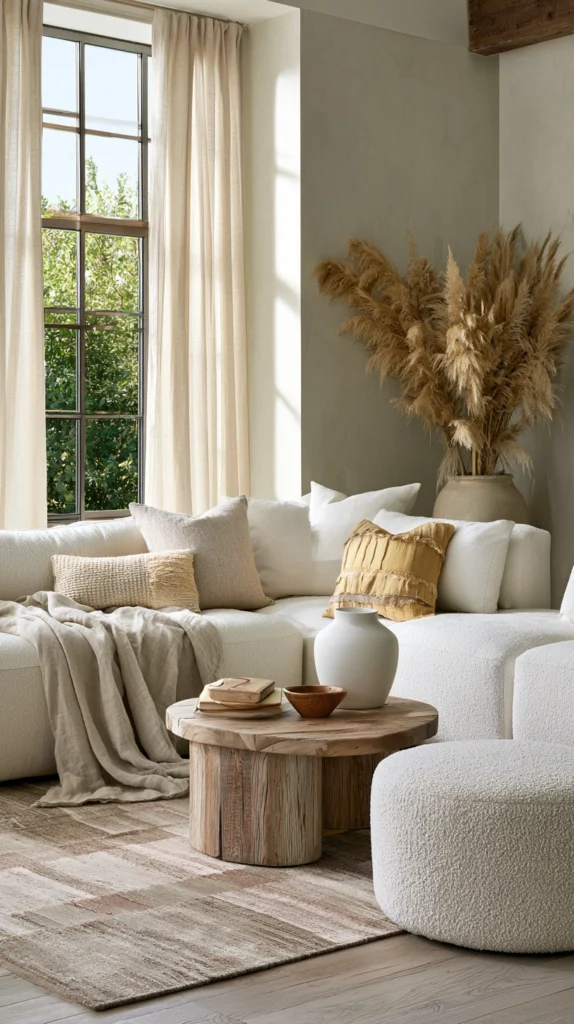
Budget: $100 – $400
The minimal luxe textile approach is built on tonal layering rather than colour variety — building a textile scheme from three or four tones of the same colour family, differentiated by texture and weight rather than colour, creates a room of remarkable richness and sophistication within a visually restrained palette. Cream linen beside warm white cotton beside natural jute beside a pale wool throw — the tonal similarity unifies the palette while the textural variation prevents it from being flat or boring.
A tonal textile layer for a living room might include a stone linen sofa cover ($150–$400), two cream boucle cushions ($40–$80 each), a natural jute rug ($80–$200), and a pale oatmeal wool throw ($60–$120). Every piece is in the warm neutral family — nothing contrasts, everything complements — and the variation between the woven jute, the looped boucle, and the smooth linen creates all the visual interest the room’s textile layer needs without any colour variation at all.
Design tip: Add exactly one accent colour to an otherwise tonal textile scheme — a single cushion, a single vase, or a single plant in a deeper or more saturated tone from the same warm family. One accent in a tonal room reads as a deliberate punctuation. Two accents begins to feel like the start of a different colour scheme. The restraint of the single accent is the discipline that preserves the tonal unity of the minimal luxe textile palette.
9. Use Statement Lighting as Sculpture
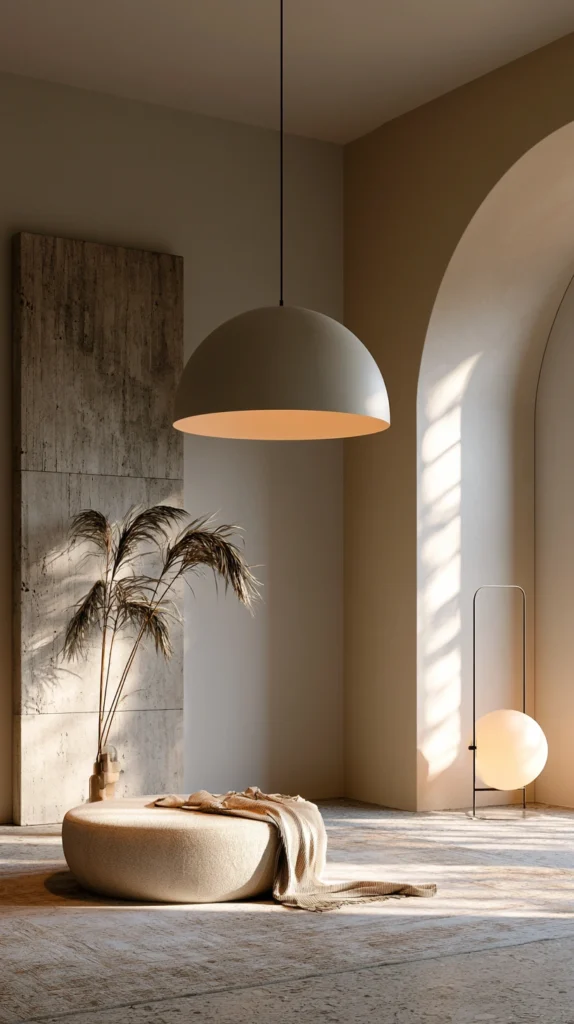
Budget: $150 – $1,000
In a minimal luxe room, every light fitting is chosen as much for its daytime sculptural quality as for its nighttime light output — the pendant, the floor lamp, and the wall sconce are all three-dimensional objects visible at all hours, and their form contributes to the room’s aesthetic throughout the day rather than only after dark. A beautiful pendant fitting switched off and seen against a plain wall during the day is as much a decorative element as the art beside it.
Sculptural pendant lights in handblown glass, woven rattan, or cast stone cost $150–$600 from independent lighting designers and specialist retailers. A statement floor lamp in a warm metal with a simple shade runs $120–$400. The sculptural quality of the fitting — its form, its material, its proportion relative to the room — is the primary selection criterion for a minimal luxe lighting approach, with light output quality as the secondary consideration that confirms or rules out the chosen piece as a functional object as well as a sculptural one.
Design tip: Install one pendant light rather than a three-pendant cluster above a dining table or in a living room. A single, considered pendant of generous scale — 50–70 cm diameter — reads as a sculptural decision. Three smaller pendants in a row reads as a lighting solution. The minimal luxe principle of singular confidence over plural adequacy applies as directly to lighting choices as to any other design decision in the room.
10. Choose Furniture With Visible Joinery and Craft Quality
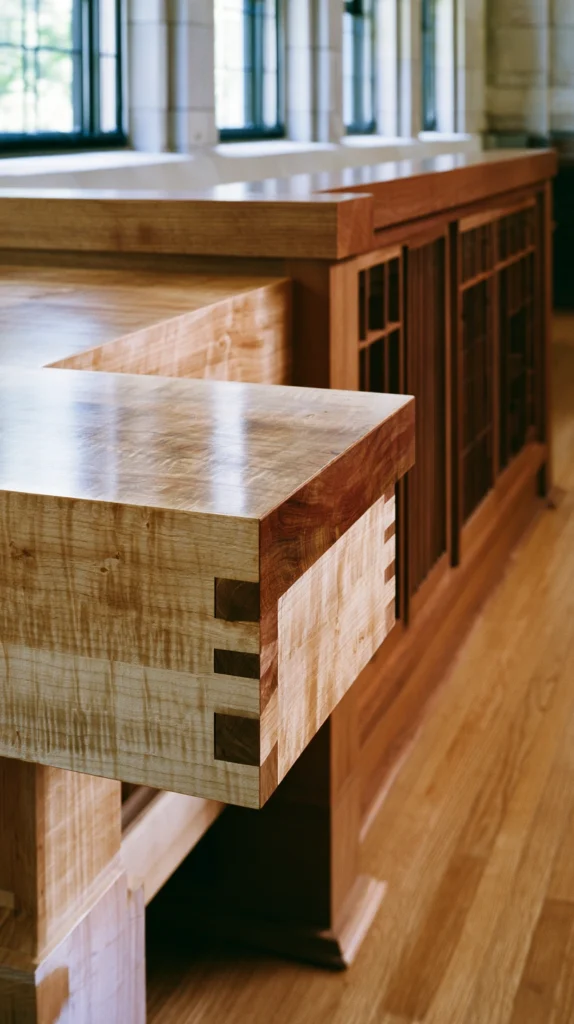
Budget: $200 – $2,000 per piece
Furniture in a minimal luxe room earns its place through the visible quality of its making — a dovetail joint at the corner of a timber drawer, a hand-stitched seam on an upholstered panel, a perfectly flush mitred corner on a stone surface edge. These details are invisible in a room that is simply well-furnished and entirely visible in a room that is genuinely well-made. They communicate craft quality in the same way that visible stitching on a handmade garment communicates quality of workmanship — through the evidence of human skill and attention applied at close range.
Furniture pieces with visible craft quality are available at every price level — a well-made secondhand cabinet with hand-cut dovetails costs less than a new flat-pack alternative and communicates more. A commissioned coffee table from a local maker costs $400–$800 and produces a piece that is specific to the room it is made for in a way that no catalogue piece achieves. The minimal luxe principle is never that furniture must be expensive — it is that every piece present must be genuinely good, and genuinely good furniture is available at many price points.
Design tip: Remove any furniture piece that cannot be identified as good when examined at close range — furniture that only reads as acceptable from a distance is always the element that prevents a room from achieving its maximum quality. A room with five exceptional pieces and empty floor space where three average ones used to stand is always more impressive than a fully furnished room where the quality is inconsistent. Edit furniture as ruthlessly as you edit objects on surfaces.
11. A Monochromatic Room in One Warm Tone
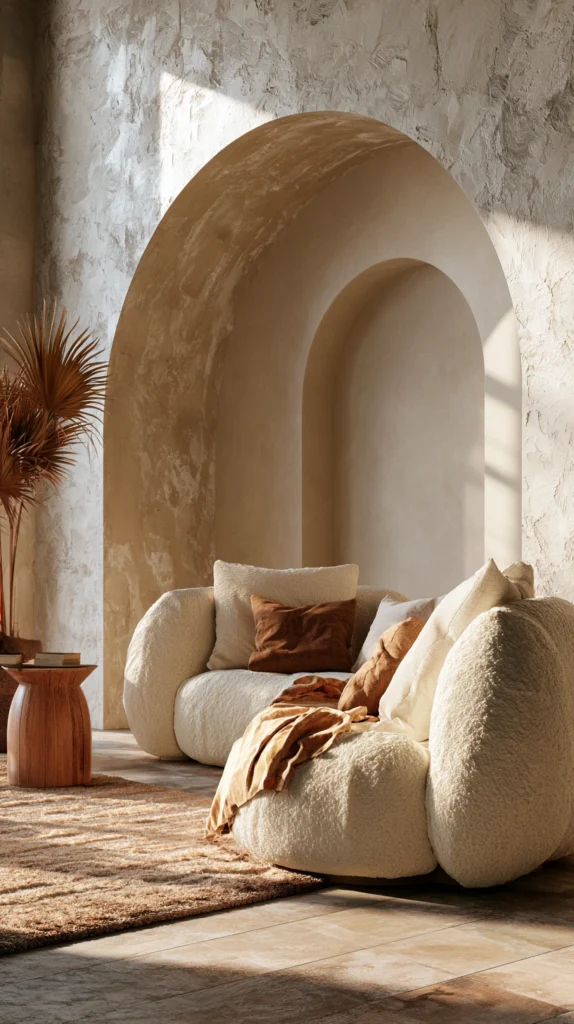
Budget: $100 – $600
A room decorated entirely within one warm colour family — walls, textiles, furniture, and accessories all in the same tone at different intensities and in different materials — is the most specifically luxurious and most most confidently minimal decorating approach available. The consistency of a genuinely monochromatic room communicates a level of design intention that multi-toned schemes rarely achieve because it requires every individual decision to be made in relationship to every other. There is nowhere to hide in a monochromatic room — and that is precisely what makes it so impressive when it works.
A warm putty monochromatic scheme layers wall colour in a warm greige with linen curtains in a slightly warmer stone tone, a sofa in warm cream boucle, a natural jute rug, and accessories in aged brass and pale terracotta. Every object is in the warm family — nothing is cool, nothing is contrasting — and the variation between the six or seven tones within the same warm range creates all the visual interest the room needs within a palette of extraordinary coherence and confidence.
Design tip: Introduce texture variation as the primary source of visual interest within a monochromatic warm scheme — rough plaster beside smooth ceramic beside woven linen beside polished brass. The textural contrast keeps a monochromatic room visually stimulating without introducing colour variation that would break the palette. A monochromatic room with high textural variety is one of the most sophisticated and most interesting rooms available within any decorating aesthetic.
12. Scent as an Invisible Luxury Layer
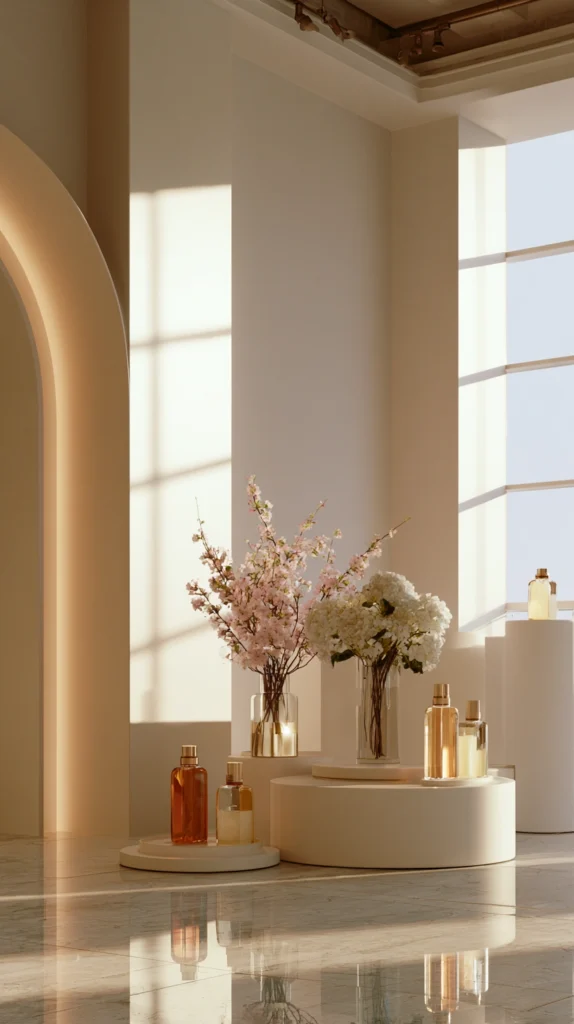
Budget: $30 – $150
The most luxurious rooms are experienced through every sense — and scent is the sense most directly connected to the emotional response that makes a room feel genuinely exceptional rather than simply beautiful. A room with a consistent, subtle, well-chosen fragrance communicates luxury in a way that every visual element of the room supports but cannot replicate. Every hotel room that feels expensive has a signature scent. The home that applies the same principle achieves a quality of ambient luxury that no amount of additional decoration produces on its own.
A quality reed diffuser in a sophisticated fragrance — not generic vanilla or lavender, but something more specific and less expected: oud, fig, neroli, cedar, or smoked amber — costs $30–$80 and lasts six to eight weeks. A high-quality soy wax candle in a simple vessel costs $25–$60 and serves as both fragrance source and visual object simultaneously. Position the diffuser in the corner of the room farthest from the main entry point so the fragrance develops gradually as the room is entered rather than hitting immediately at the threshold.
Design tip: Use the same fragrance consistently rather than rotating through different scents seasonally. A room that always smells the same creates a specific sensory identity — the fragrance becomes associated with the room and eventually with the experience of being in the home. Seasonal rotation provides variety at the cost of the specific association that builds over time and that is one of the most powerfully and most immediately evocative luxury signals available in any domestic interior.
13. Replace Overhead Lighting With Lamps at Every Seating Position
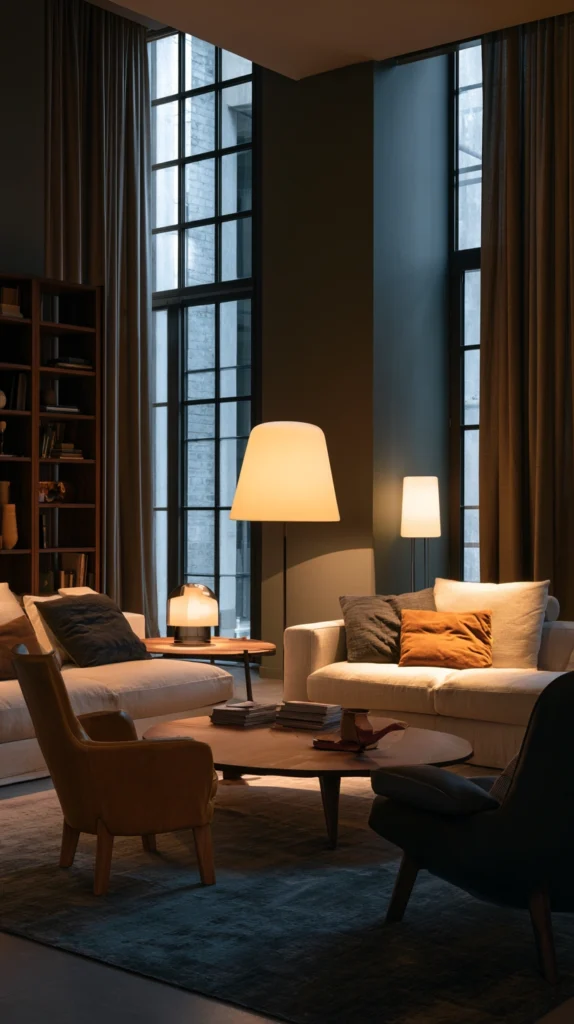
Budget: $120 – $600
The overhead light is the enemy of the luxurious interior. It illuminates everything equally, flattens every texture and every shadow, and makes a room feel functional rather than atmospheric regardless of how carefully everything else has been chosen and arranged. The minimal luxe room uses overhead lighting only for tasks and uses lamps — table lamps and floor lamps positioned at every seating position — for all ambient and atmospheric lighting. The difference in room quality between these two approaches is one of the most dramatic and most immediately visible improvements available for any existing room.
A pair of matching table lamps in ceramic or stone bases with simple drum shades costs $80–$200 total. A floor lamp with a natural fibre shade positioned beside the main reading position costs $100–$250. Fit all lamp bulbs at 2700K or below and set the overhead light on a dimmer ($15–$30 to fit) reduced to 20 percent whenever the lamps are in use. This combination creates the layered, warm, multi-source lighting quality that makes every room it is applied to look immediately more luxurious than it did under the single overhead fitting it replaces.
Design tip: Set all table and floor lamps to the same colour temperature throughout a room — 2700K warm white in every fitting. A single lamp with a different colour temperature bulb interrupts the visual warmth of the room’s lighting scheme in a way that is immediately perceptible even to people who cannot identify its technical cause. Consistent colour temperature across all light sources is the technical implementation of the minimal luxe principle of considered consistency applied to the lighting layer of the room’s design.
14. Let Negative Space Be a Design Decision
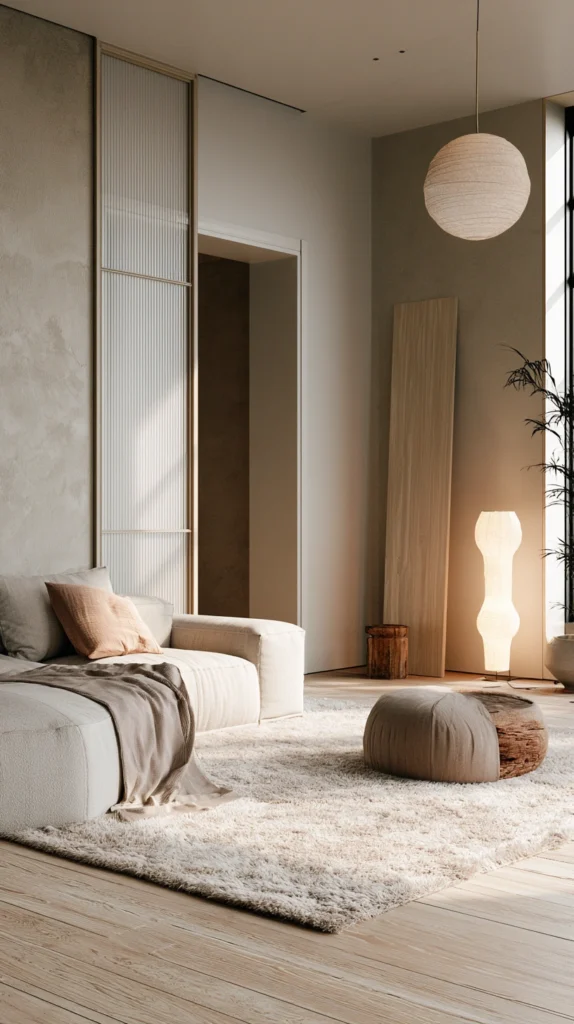
Budget: $0
The most counter-intuitive and most powerful minimal luxe design principle is the deliberate use of empty space as a design element rather than as an absence of decoration. A clear floor between two pieces of furniture, a bare wall section beside a single artwork, an empty shelf length in an otherwise curated display — these empty elements are not failures of decoration but active contributors to the visual quality of the room. They give other elements room to be seen, to be approached, and to be appreciated individually rather than collectively.
Negative space costs nothing to create beyond the willingness to remove objects from positions where they have accumulated without earning their place. Apply it to every zone of the room: the floor between the sofa and the window, the wall between the two doorways, the shelf section beside the books. The empty zone should feel considered rather than forgotten — which is determined by the quality of what is immediately adjacent to it rather than by anything placed within it. Good negative space is always next to something excellent.
Design tip: Photograph the room with the intention of identifying where the negative space is most needed rather than where additional decoration might go. The photograph reveals compositions that the eye inside the room misses — the cluttered corner that reads as a visual anchor pulling the eye downward, the overfull shelf that competes with the artwork beside it, the floor object that interrupts the visual flow from the doorway to the window. The camera always shows the room more objectively than the eye that has grown accustomed to it.
15. Buy One Thing You Cannot Afford and Nothing Else
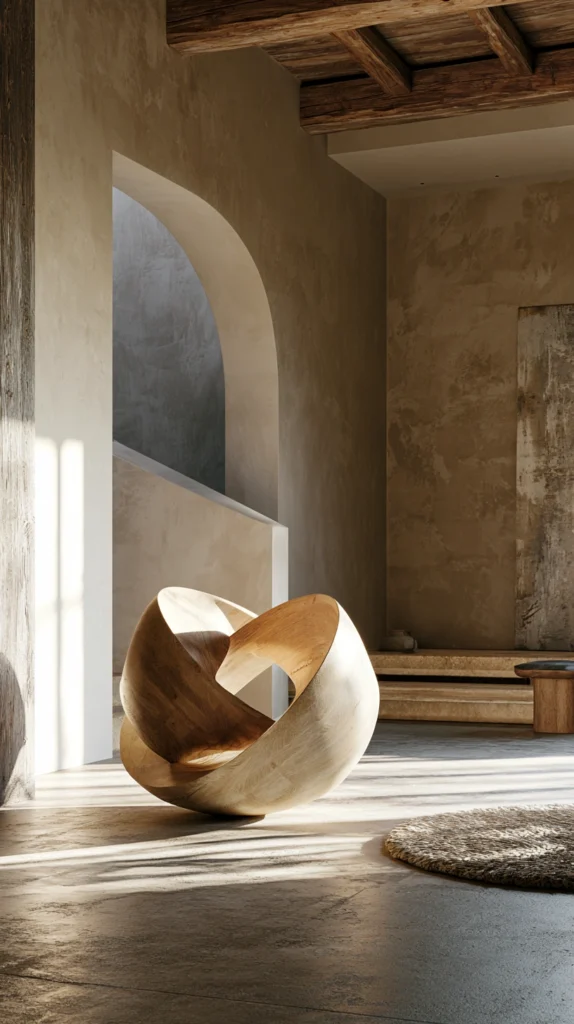
Budget: variable
The minimal luxe principle expressed most directly: one genuinely exceptional object in a room filled with carefully edited essentials communicates the aesthetic’s intention more convincingly than any number of well-priced approximations of luxury. The single thing that cannot be afforded — a piece of original art, a handmade ceramic, a specific fabric, a light fitting that costs twice the budget — announces its quality in a room whose restraint allows it to be heard. Surrounded by excess, exceptional things disappear. Surrounded by space and simplicity, they are seen completely.
This does not require a large budget. A handmade ceramic vessel from an independent potter costs $80–$200 and in the right room makes the same impression as a piece from a luxury gallery. A vintage textile of genuine quality found at a market costs $30–$150 and brings a level of material richness that no new equivalent at three times the price replicates. The investment in the one genuine thing, in a room that has been edited to give it room to speak, is always the most efficient and most impressive use of the available decorating budget at any level.
Design tip: Position the one exceptional object in the primary sight line of the room — the first thing visible on entering from the main doorway, or the object the eye rests on from the main seating position. An exceptional object placed out of the way communicates that it was not important enough to be given a good position. The same object in the room’s most prominent position communicates that the person who placed it understood its quality. Position is the final act of curation that determines whether the exceptional thing is truly seen.
The minimal luxe interior is always an act of confidence — the confidence to choose fewer things, to give each one more space, to resist the instinct to add when the correct instinct is to remove. It is easier to accumulate than to edit and the room that results from careful editing of good choices is invariably more impressive and more genuinely luxurious than the one assembled from many adequate choices without a guiding principle of quality and restraint.
Begin by removing. Take one afternoon and edit every surface in your most used room to three objects maximum. Live with the result for two weeks before adding anything. Then add one exceptional thing — the most genuinely good object available within the current budget — and place it in the best position in the room. That is the beginning of a minimal luxe interior and it requires no expenditure beyond the cost of the single exceptional thing.