Warm, Grounded, and Quietly Beautiful: 15 Summer Earth-Tone Decor Ideas for a Natural Feel
Summer decorating has a tendency to reach immediately for the obvious — the bright turquoise, the hot coral, the sharp white of a beach house catalogue. These are not bad choices. But they are loud ones, and loudness is not always what a summer interior needs.
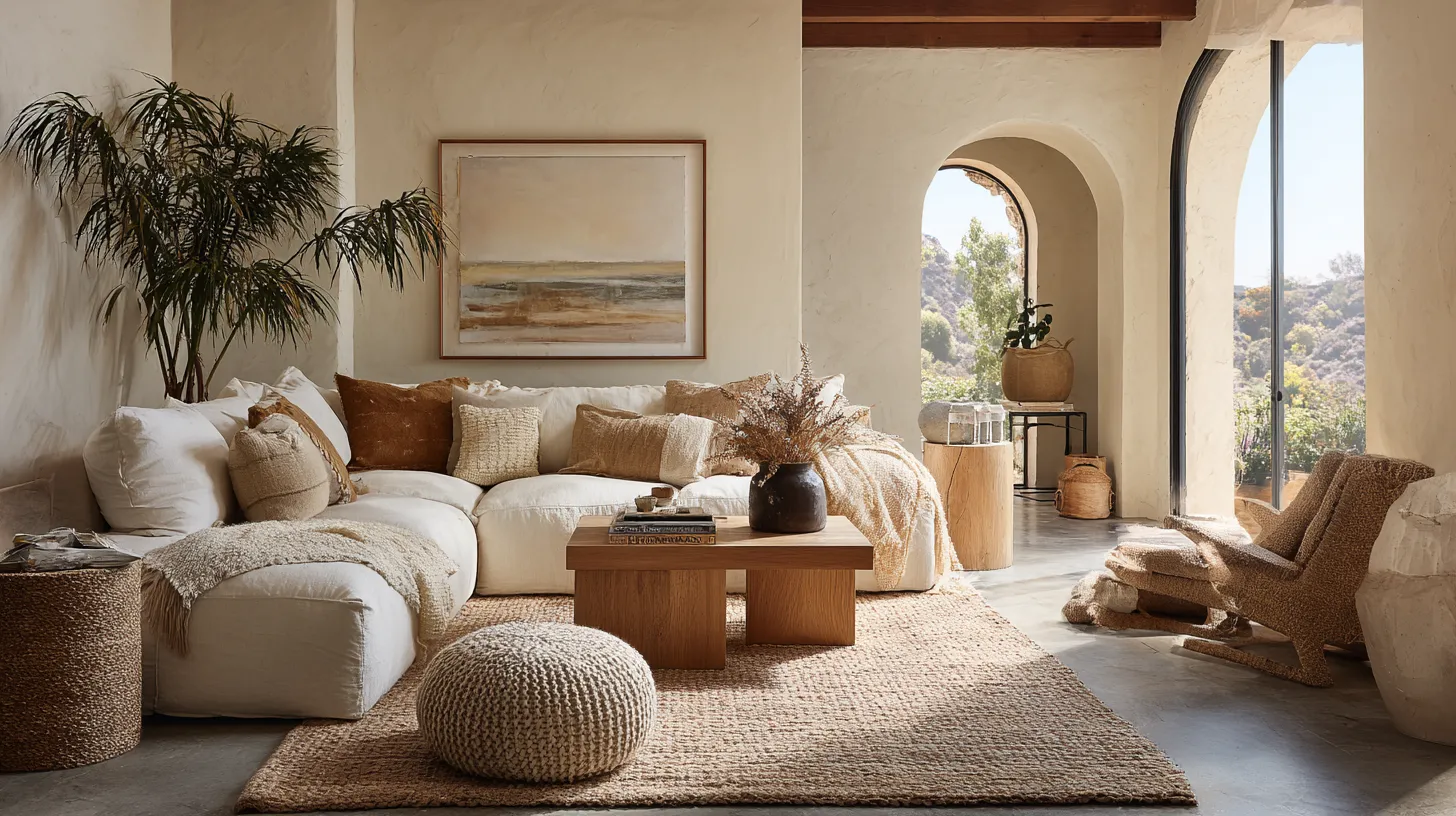
Earth tones in summer do something different. They bring the warmth of the season indoors without the visual noise, and they create a room that feels connected to the natural world — to dry grass and warm stone and terracotta baked in the sun — in a way that brighter palettes never quite achieve.
The fifteen ideas below cover every room and every application of the summer earth-tone palette, from a painted wall to a single ceramic object on a shelf. Each one covers what you will need, what it will cost, and a practical tip to make it genuinely work in a real home rather than a styled photograph.
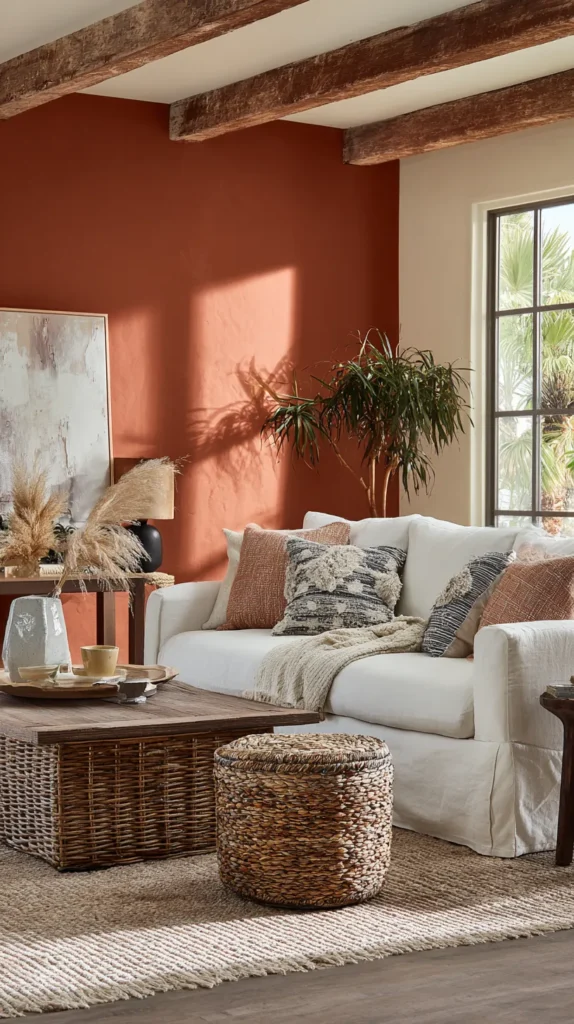
1. The Terracotta Accent Wall
Budget: $30 – $120
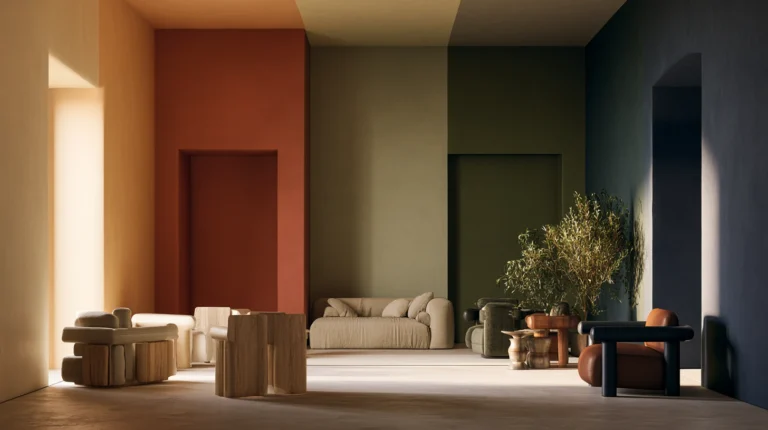
A terracotta feature wall — behind the sofa, behind the bed, or on the chimney breast — is the earth-tone room’s most immediate and most impactful single decision. The colour communicates warmth, age, and the particular beauty of a material that has been shaped by fire and worn smooth by time.
One to one and a half litres of a quality terracotta paint covers a standard feature wall in two coats for $20 – $50. The remaining walls in a warm white — with a yellow rather than a blue undertone — maintain the room’s lightness while the feature wall provides its warmth and depth.
Decor tip: Test terracotta in the room at the time of day it receives the least natural light rather than the most. Terracotta under bright afternoon sun reads as vivid and energising. The same colour in the evening under artificial light reads as deeply warm and enveloping — and both readings should be acceptable before the full wall is committed.
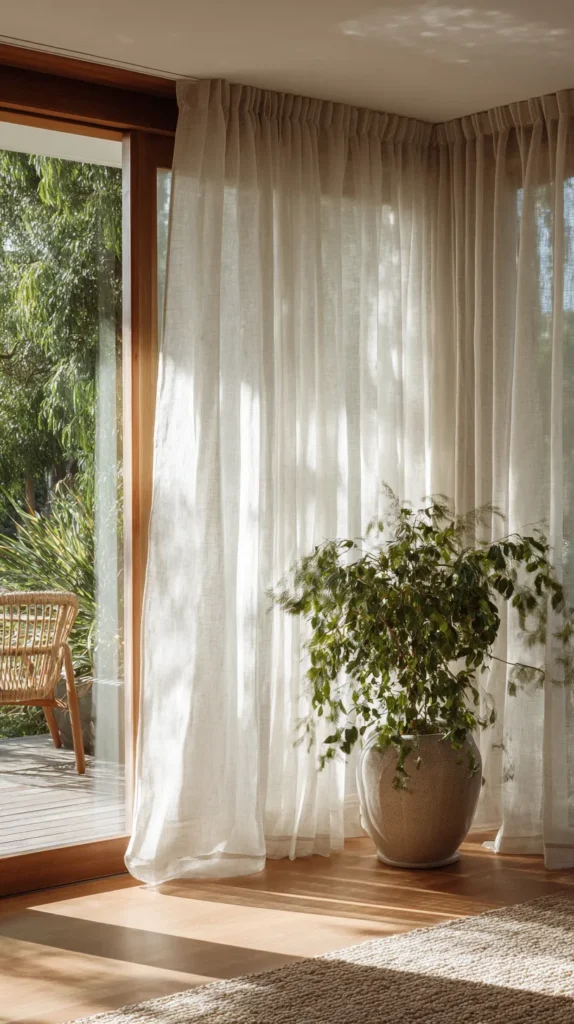
2. The Sandy Linen Curtain
Budget: $40 – $200
Floor-to-ceiling linen curtains in a warm sand or undyed natural tone bring the earth palette to the room’s largest textile surface and filter incoming summer light into something golden and diffused rather than harsh and direct. A room with sandy linen curtains at the window is a room that is warm at every hour of the day.
Linen curtain panels in a natural or sandy undyed tone cost $25 – $60 per panel. Two panels per window — hung from ceiling-height rods to maximise the apparent height of the room — sit at $50 – $120 per window. A ceiling-mounted rod positioned 10 to 15 centimetres below the ceiling makes the room feel considerably taller than a rod mounted at window frame height.
Decor tip: Choose a linen with a slight texture — a loose weave or a slubbed finish — rather than a smooth fabric in the same tone. Texture in a sandy linen curtain catches the summer light and produces a surface that changes quality throughout the day. A smooth fabric in the same colour is flat and static by comparison.
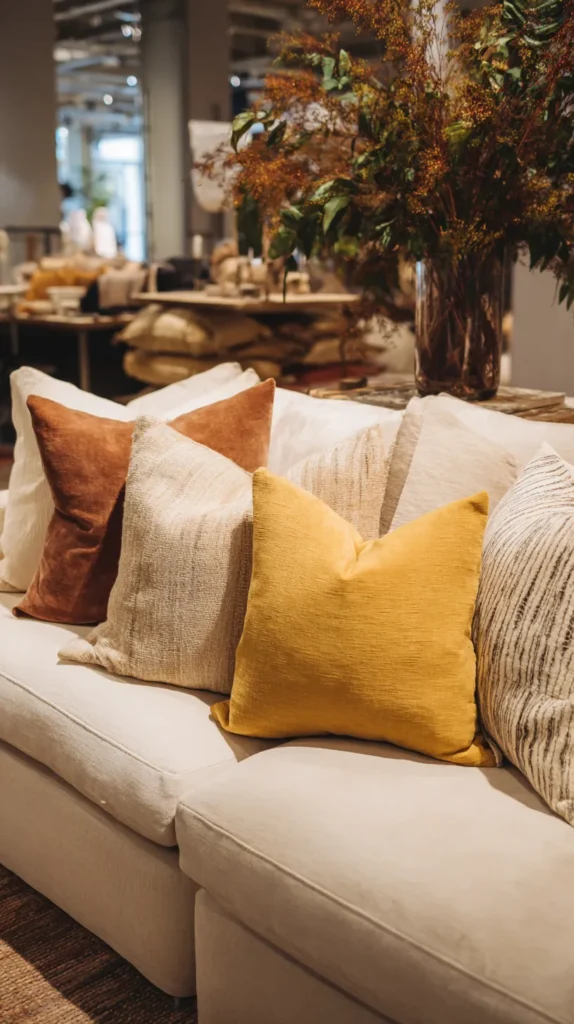
3. The Warm Ochre Cushion Collection
Budget: $40 – $200
A sofa refreshed with cushions in warm ochre, burnt sienna, and sandy yellow — the three tones that define the summer earth palette at its most golden — changes the temperature of a neutral living room immediately and at minimal cost. The cushion is the most accessible decorating tool available and the one with the highest visual return relative to its investment.
Linen or cotton cushion covers in warm ochre cost $15 – $40 each. A set of four — two in ochre, one in burnt sienna, one in sandy cream — sits at $60 – $160 for a sofa arrangement that reads as complete and considered. A woven or tapestry cushion in a geometric earth-tone pattern adds texture for $20 – $50.
Decor tip: Combine three different fabric textures within the cushion collection — a smooth linen, a woven cotton, and a bouclé or textured knit — in the same ochre and sienna palette. The texture variation within a single colour family produces more visual interest than a range of colours in a single fabric type.
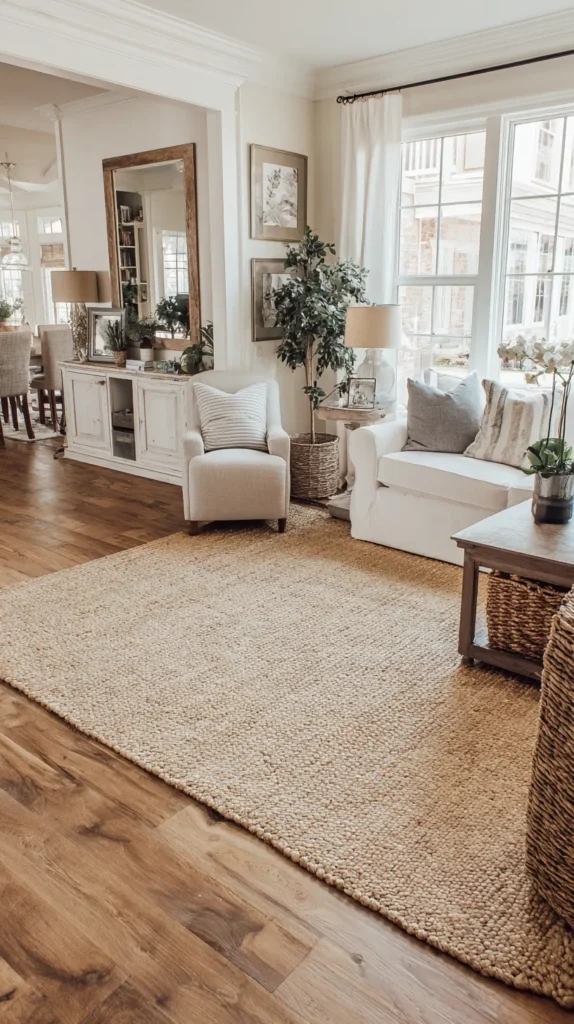
4. The Jute and Sisal Rug Layer
Budget: $40 – $300
A natural jute or sisal rug is the summer earth-tone floor’s most reliable foundation — warm in tone, open in weave, and honest in its material in a way that synthetic alternatives never approach. Layered with a smaller flatweave kilim or a faded vintage rug on top, the jute base creates a floor that reads as both grounded and collected.
A natural jute rug in a standard living room size costs $60 – $200. A smaller kilim or flatweave layer in rust, ochre, and terracotta tones — $40 – $120 — sits on top and provides the colour and the pattern that the jute base layer supports. The two together cost less than a single mid-range rug and produce a floor considerably more interesting than either piece alone.
Decor tip: Vacuum a jute or sisal rug in the direction of the weave rather than across it. Vacuuming against the grain pulls fibres loose over time and creates a frayed surface within a single season. A consistent pass in one direction keeps the weave tight and extends the rug’s life significantly.
5. The Terracotta Pot and Plant Display
Budget: $20 – $120
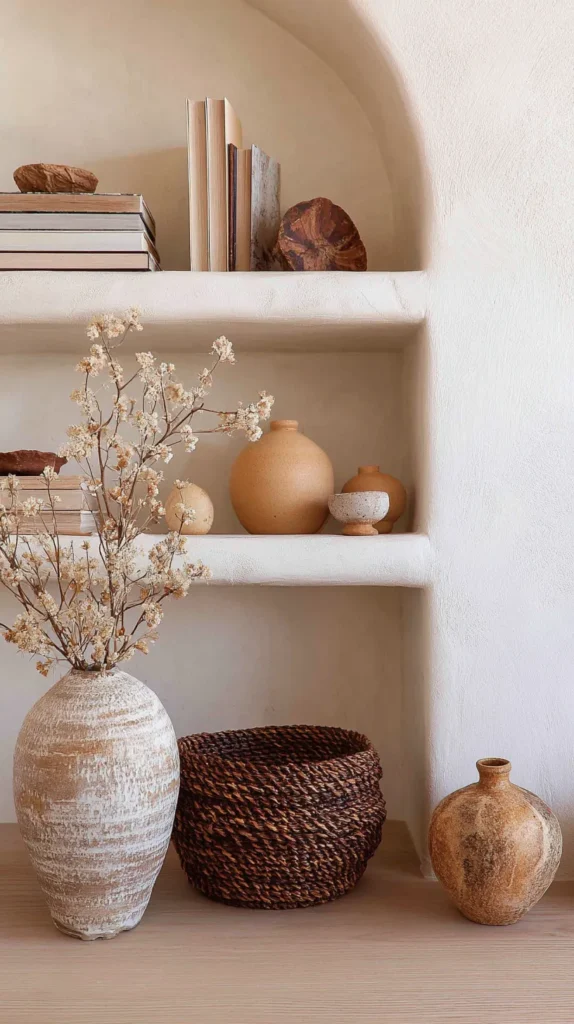
A cluster of terracotta pots — in graduated sizes, holding trailing plants, structural succulents, and seasonal herbs — is the earth-tone home’s most living decorative element and the one that brings genuine organic warmth to any surface it occupies. The unglazed terracotta is warm, porous, and beautiful in the particular way of materials that are honest about what they are.
Terracotta pots in standard nursery sizes cost $3 – $8 each. A collection of five to seven pots in graduated sizes — $15 – $56 in pots — holds a combination of trailing pothos, a small monstera, a rosemary plant, and two or three succulents for $20 – $60 in plants. The total display investment sits at $35 – $116 for a living installation that improves every week it remains in the room.
Decor tip: Allow terracotta pots to develop their natural white mineral deposits rather than cleaning them off. The white salt marks that appear on the exterior of a used terracotta pot are the evidence of genuine use — water passing through the porous clay and depositing minerals on the surface. They read as beautiful and authentic rather than neglected, and they give the pot a history that a new, clean surface does not have.
6. The Warm Stone and Pebble Vignette
Budget: $10 – $60
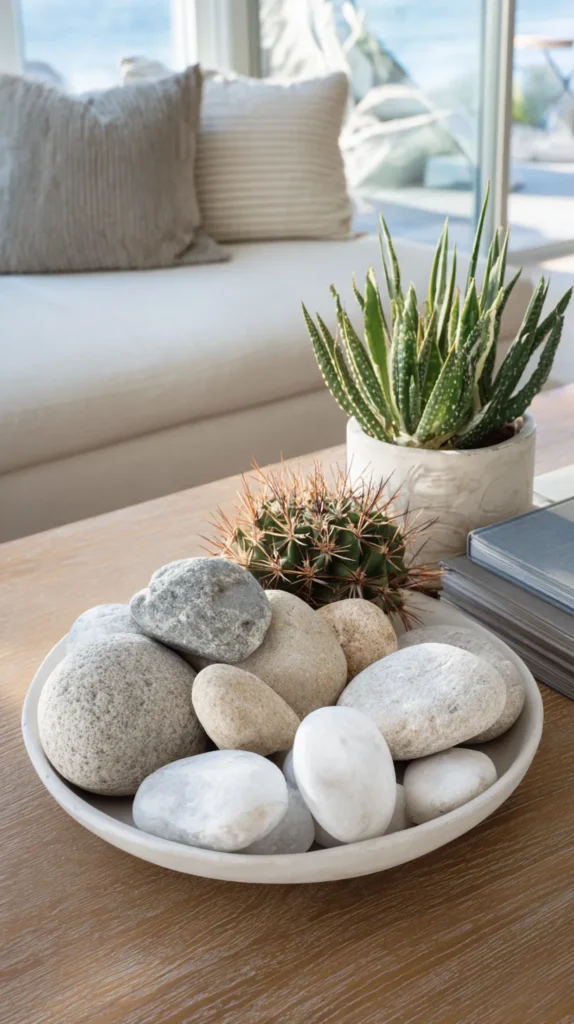
A shelf or side table vignette built around warm stones and pebbles — collected from a beach, a riverbank, or a garden path — is the earth-tone home’s most honest and most free decorative element. A smooth river stone beside a terracotta vessel beside a dried botanical is a small landscape of natural materials that costs almost nothing and communicates the season directly.
A shallow ceramic tray to hold the arrangement costs $8 – $20. Collected stones and pebbles — free if gathered personally. A small dried botanical beside the stones — a sprig of dried lavender, a piece of driftwood, a dried seed head — adds $3 – $10. A single beeswax or neutral-toned candle completes the vignette for $5 – $15.
Decor tip: Limit the vignette to five objects at most. A stone vignette with seven or eight pieces reads as a collection of things. The same arrangement with three to five objects reads as a composition. The editing is the act of deciding which pieces genuinely belong and which are simply present — and the piece removed is almost always immediately obvious once the count is applied.
7. The Warm White and Cream Wall Palette
Budget: $40 – $200
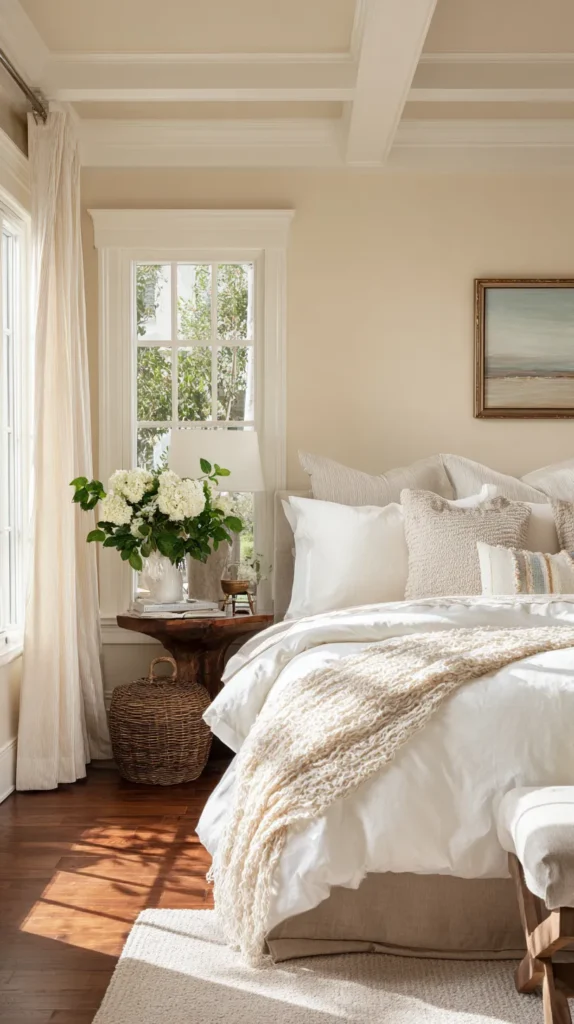
A room painted in a warm white or a deep cream — with a yellow or ochre undertone rather than a grey or blue one — is the earth-tone palette’s most versatile and most liveable foundation. It reads as bright without the clinical coldness of pure white and warm without the commitment of a saturated earth colour on every wall.
A quality warm white in an eggshell finish costs $20 – $50 per 2.5-litre tin — sufficient for a standard room in two coats. The warm undertone in the paint interacts with natural timber furniture, terracotta accessories, and earthy textiles to produce a room that feels cohesive from every angle and in every light condition.
Decor tip: Paint a large swatch — at least 40 centimetres square — directly on the wall and observe it across three different times of day before committing to the full room. A warm white observed only in midday light can appear cool and neutral. The same warm white observed in morning light and evening artificial light reveals its true undertone — and the undertone is what determines whether it works with the earth-tone palette or pulls against it.
8. The Dried Botanical Arrangement
Budget: $15 – $80
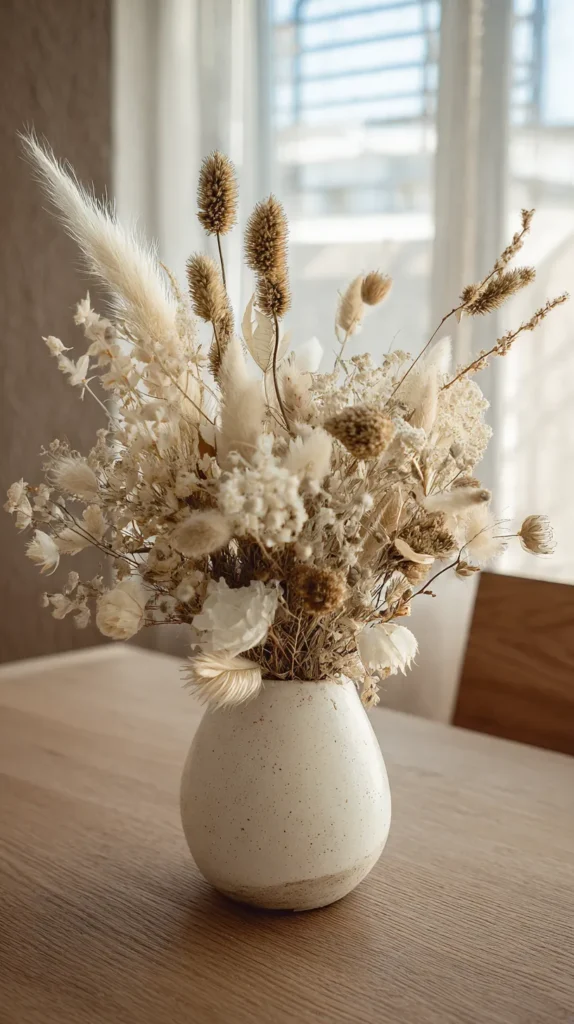
A tall ceramic or terracotta vase filled with dried botanicals — pampas grass, bleached wheat stalks, dried bunny tail grass, cotton stems, and dried seed heads — is the summer earth-tone room’s most generous decorative gesture and its most photographed moment. The natural, undyed tones of dried botanicals occupy the same warm palette as the room around them and require no water, no maintenance, and no seasonal replacement for months.
Dried pampas grass bundles cost $15 – $40 depending on size. Bleached wheat stalks and dried grasses add $8 – $20 for complementary texture. A tall terracotta or warm ceramic floor vase — $20 – $60 — is both the vessel and a decorative object independently. Total arrangement investment: $43 – $120 for a corner installation that lasts through the full summer and beyond.
Decor tip: Shake dried pampas gently before arranging and apply a light mist of hairspray to the finished plumes to reduce shedding. Without this step, pampas can shed significantly over the first few weeks, particularly in rooms with air conditioning or moving air currents. The hairspray treatment costs almost nothing and extends the clean life of the arrangement considerably.
9. The Raw Timber and Driftwood Shelf Display
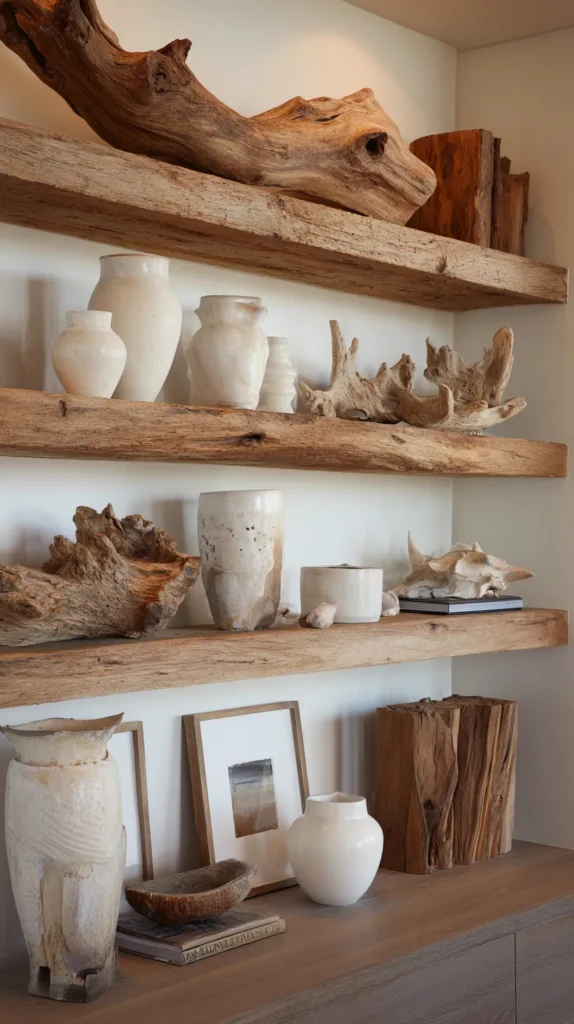
Budget: $20 – $150
A shelf styled around raw timber and driftwood objects — a piece of driftwood as a horizontal anchor, a small timber sculpture, a wooden candle holder, a stack of books with natural-toned spines — brings the warm, unfinished material quality of the earth palette to the vertical surfaces of the room without requiring paint or significant investment.
A piece of driftwood as the shelf’s central object costs $5 – $20 from a florist or online, or nothing if collected personally. A wooden candle holder or small carved object — $10 – $30. A small stack of two to three books with complementary linen or natural spines — free if already owned. Two or three terracotta or ceramic objects filling the remaining shelf space — $15 – $40 in total.
Decor tip: Mix raw, unfinished timber objects with one smooth, polished surface — a ceramic vessel, a glass object, a polished stone — within the same shelf display. An entirely raw, unfinished shelf can read as rough rather than natural. One smooth element provides the contrast that makes the raw material of everything around it read as deliberate and beautiful rather than simply unfinished.
10. The Woven Rattan and Basket Collection
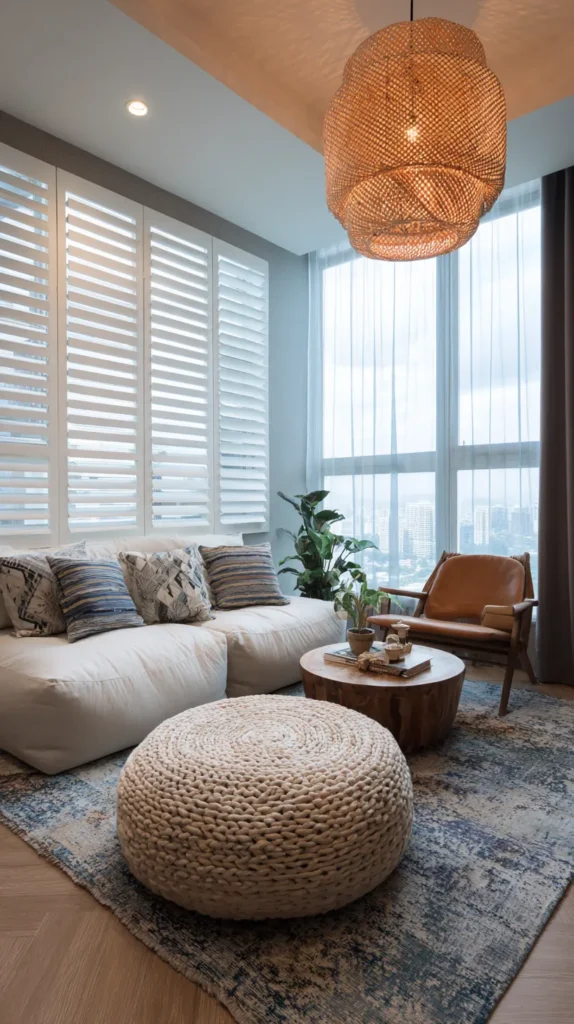
Budget: $30 – $200
Rattan, wicker, and woven seagrass baskets and furniture pieces bring the warm, textural quality of natural woven materials to the earth-tone room in a form that is simultaneously decorative and functional. A rattan side table, a seagrass storage basket, a woven laundry hamper, and a rattan tray on the coffee table are all practical objects that contribute to the room’s material warmth simply by existing in it.
A rattan side table costs $30 – $80. A large seagrass storage basket — $20 – $50. A rattan tray for the coffee table — $15 – $40. A woven pendant lampshade — $25 – $80 — brings the natural material to the ceiling and filters the light to a warm, dappled quality that glass or metal shades cannot produce. Total rattan and woven material investment across the room: $90 – $250.
Decor tip: Combine rattan and wicker with at least one smooth, refined surface nearby — a ceramic vase, a polished stone, a glass carafe. Without contrast, a room full of woven and textured materials reads as rustic rather than natural. The distinction between rustic and natural is in the editing — one or two smooth surfaces within a predominantly textured room is the calibration that makes the difference.
11. The Earth-Tone Gallery Wall
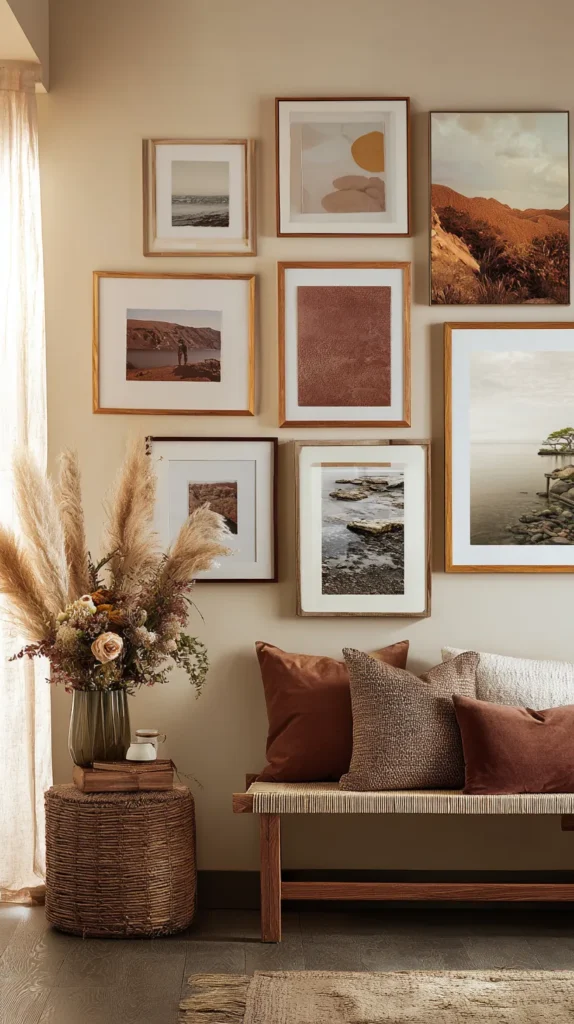
Budget: $30 – $200
A gallery wall built around the earth-tone palette — botanical prints in ochre and sage, abstract watercolours in terracotta and sand, photography with a warm-toned palette, small oil paintings on wooden panels — brings the colour story to the wall in layers of meaning and visual interest that paint alone cannot produce.
Frames in warm gold, aged brass, and natural timber — $5 – $20 each. A set of eight frames in varying sizes for a standard gallery wall costs $40 – $160 in total. Prints in the earth-tone palette — downloaded free from public domain archives or purchased from independent printmakers for $5 – $20 each — fill the frames. The gallery wall works as an earth-tone installation without requiring a single earth-tone wall behind it.
Decor tip: Lay the gallery wall arrangement on the floor before committing anything to the wall. Photograph the arrangement from above and use the image as a precise reference when hanging. This floor-test step costs nothing and prevents the frustrating process of repositioning frames and filling unnecessary holes in a freshly decorated wall.
12. The Beeswax and Natural Candle Station
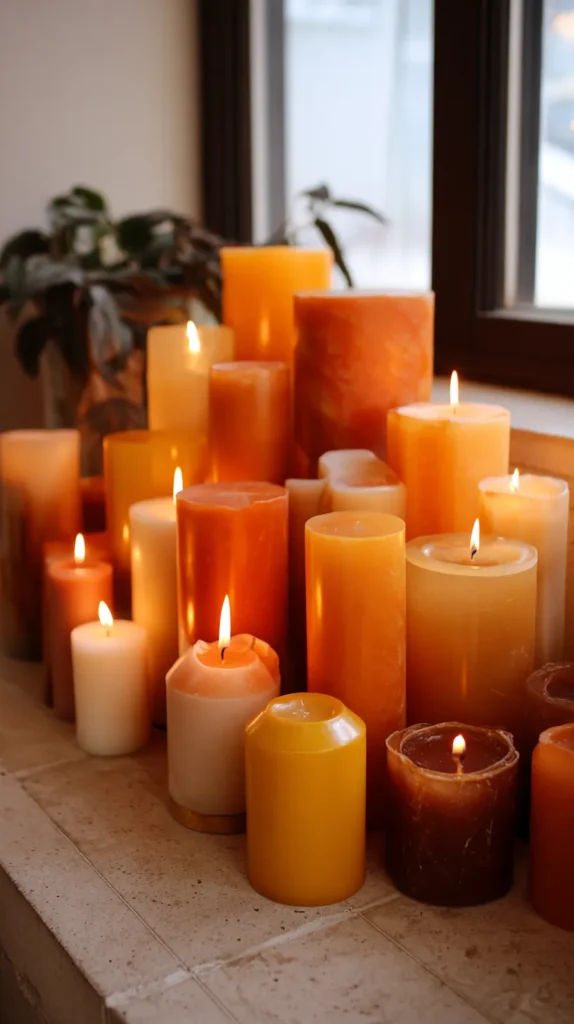
Budget: $20 – $100
A candle station in the earth-tone home — beeswax pillar candles in warm honey and ivory, a cluster of earth-tone candle holders in terracotta and brass, and the particular warm scent of real beeswax — is both a decorative installation and a fragrance source. Beeswax candles produce a warm amber light that is closer to firelight than any LED alternative and a scent that is naturally honey-sweet without being artificially fragrant.
Beeswax pillar candles cost $8 – $20 each. A terracotta candle holder — $5 – $15. A brass candlestick at a complementary height — $10 – $25. A shallow wooden or slate tray to anchor the station — $10 – $25. Total candle station investment: $33 – $85 for a surface that changes character completely when the candles are lit in the evening.
Decor tip: Trim the wick to 5 millimetres before every lighting. An untrimmed wick produces a flame larger than the candle is designed for, which burns the wax too quickly and produces more soot than a trimmed wick. A wick trimmer costs $8 – $15 and is the single most effective tool for improving the performance of any candle.
13. The Linen and Cotton Summer Throw
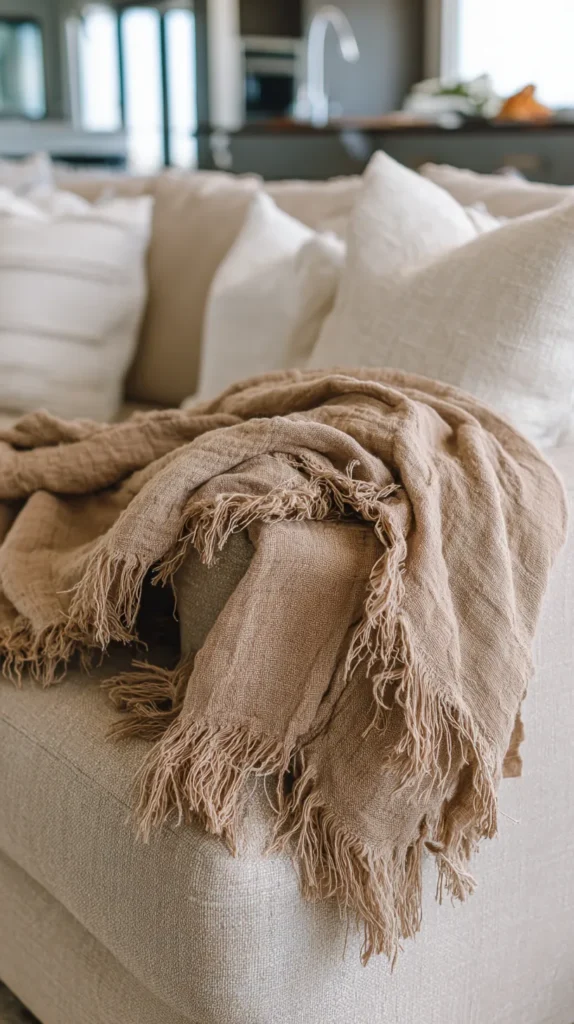
Budget: $30 – $120
A summer throw in a natural linen or cotton — in undyed natural, warm sand, or a muted stripe of ochre and cream — draped over the arm of the sofa or folded at the foot of the bed, introduces the earth-tone palette through the most tactile and most inviting textile application available. It is the object that makes a room look not only warm but genuinely comfortable.
A quality linen throw in a natural or sandy tone costs $40 – $90. A cotton gauze throw in a warm stripe — lighter and more summery than a linen equivalent — runs $30 – $70. A woven cotton throw in a simple earth-tone geometric — $35 – $80 — adds pattern at the textile level without requiring a patterned surface anywhere else in the room.
Decor tip: Fold the throw in a specific, deliberate way rather than draping it casually. A tightly folded rectangular throw placed with the folded edge facing outward takes ten seconds and produces a result that reads as intentional. A casually thrown blanket reads as left there by accident — a distinction that matters considerably for the overall impression of the room.
14. The Warm Ceramic and Stoneware Collection
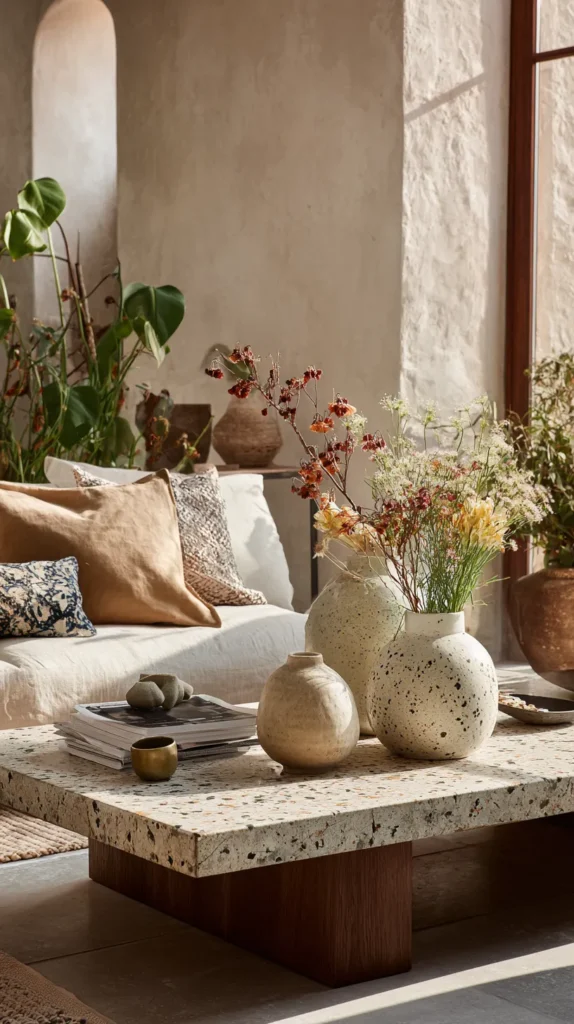
Budget: $30 – $200
A collection of stoneware and ceramic objects — in warm terracotta, sandy cream, and deep earthy brown glazes — distributed across the kitchen counter, the open shelf, and the side table produces the earth-tone home’s most tactile and most material-honest decorative layer. Stoneware is the pottery of the earth palette — heavy, warm, slightly irregular, and entirely honest about its origins.
Handmade stoneware mugs from a craft market cost $8 – $25 each. A large stoneware serving bowl in a warm glaze — $25 – $60. A ceramic bud vase in a terracotta or sandy tone — $10 – $30. A stoneware candle holder — $10 – $25. A collection of six to eight pieces distributed thoughtfully across the home’s surfaces costs $70 – $200 and reads as a material decision rather than an accessory purchase.
Decor tip: Choose stoneware with visible maker’s marks, slight irregularities in the glaze, and the general evidence of having been made by hand rather than produced by machine. The imperfection of handmade stoneware is the quality that most directly communicates the earth-tone aesthetic — honest, unpolished, and made from real materials by real hands.
15. The Fully Committed Summer Earth-Tone Room
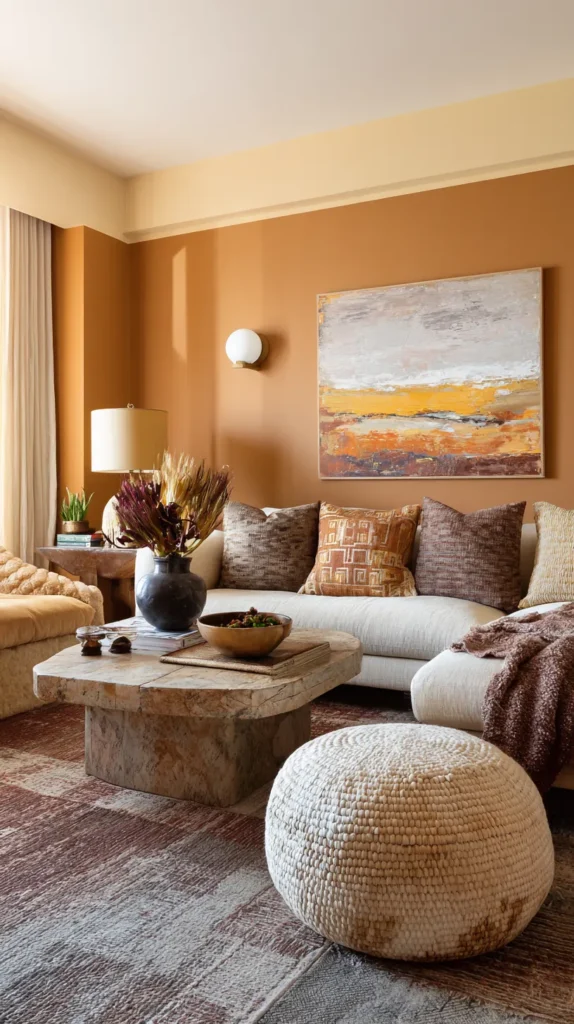
Budget: $200 – $2000
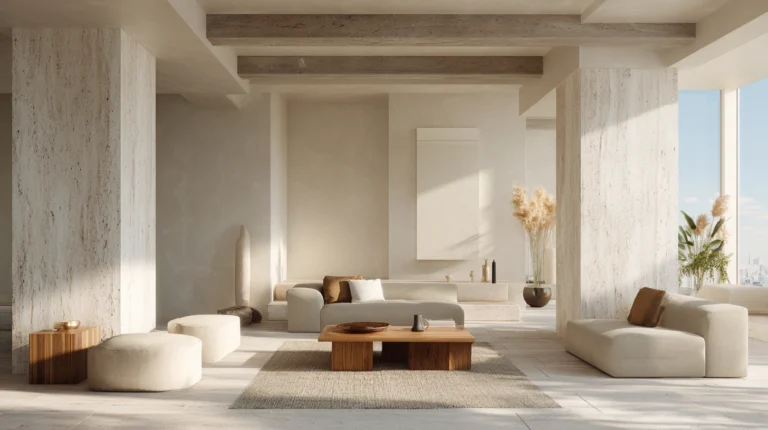
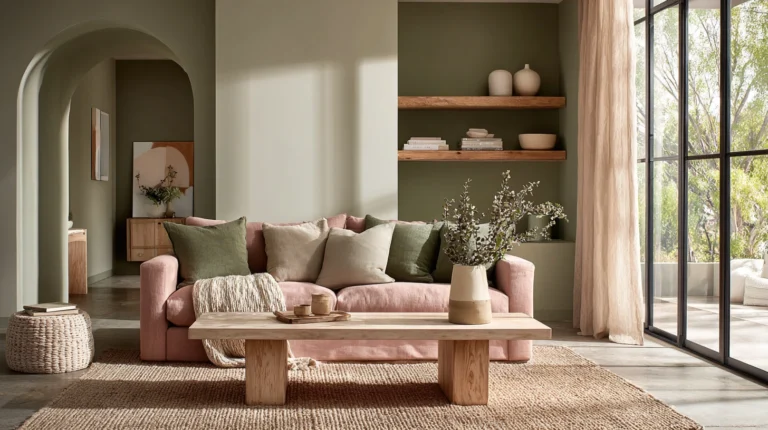
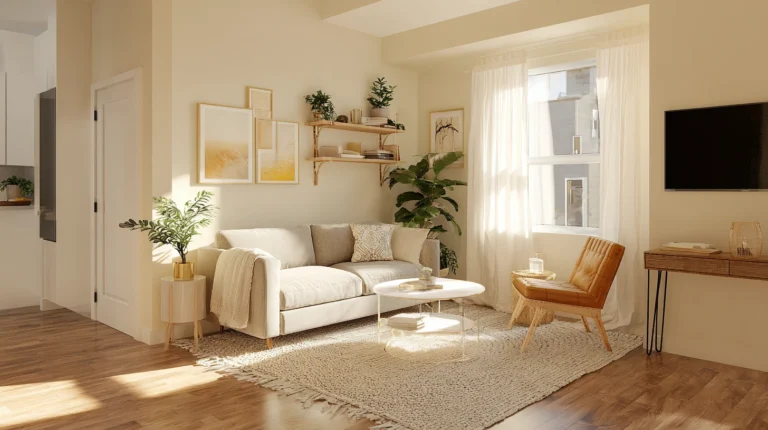
The fully committed summer earth-tone room — terracotta or warm ochre walls, sandy linen curtains, a jute rug layered with a kilim, a sofa dressed in ochre and sienna cushions with a natural linen throw, open shelves of stoneware and dried botanicals, terracotta pots of trailing plants in every corner, and beeswax candles on every surface — is the room that makes a visitor exhale on arrival without quite knowing why.
Paint: $40 – $120. Curtains: $80 – $200. Rug and kilim layer: $100 – $320. Cushions and throw: $100 – $250. Ceramics and stoneware: $70 – $200. Plants and terracotta pots: $35 – $116. Dried botanicals: $43 – $120. Candles and holders: $33 – $85. Total investment for a fully committed earth-tone room: $501 – $1411.
Decor tip: Build the earth-tone room from the floor upward rather than from the walls outward. The rug determines the palette. The cushions respond to the rug. The wall colour supports the cushions. A room built from the floor up is always more resolved than one where the wall colour was chosen first and everything else was assembled around it afterward.
Earth tones in summer are not a compromise between the season’s warmth and the interior’s comfort. They are the fullest possible expression of both simultaneously — the colour of warm stone and dry grass and terracotta in the afternoon sun brought indoors and made liveable.
They require no trend cycle to validate them and no particular moment to be appropriate. They are always in season because they are drawn from the season itself — from the ground, the bark, the clay, and the light of a warm afternoon that belongs entirely to the months when the world outside is at its most generous.
Choose one idea from this list. Apply it with full commitment. The room will tell you what to add next.