15 Colorful Garden Path Ideas That Turn Every Step Into a Beautiful Journey
There is something a garden path does that no other single element manages quite as well. It gives the garden direction. A planted border, however beautiful, simply exists. A path through it — or beside it, or between two of them — turns the garden into somewhere that has places to go, reasons to move through it, and the particular pleasure of arriving somewhere that was worth the walk.
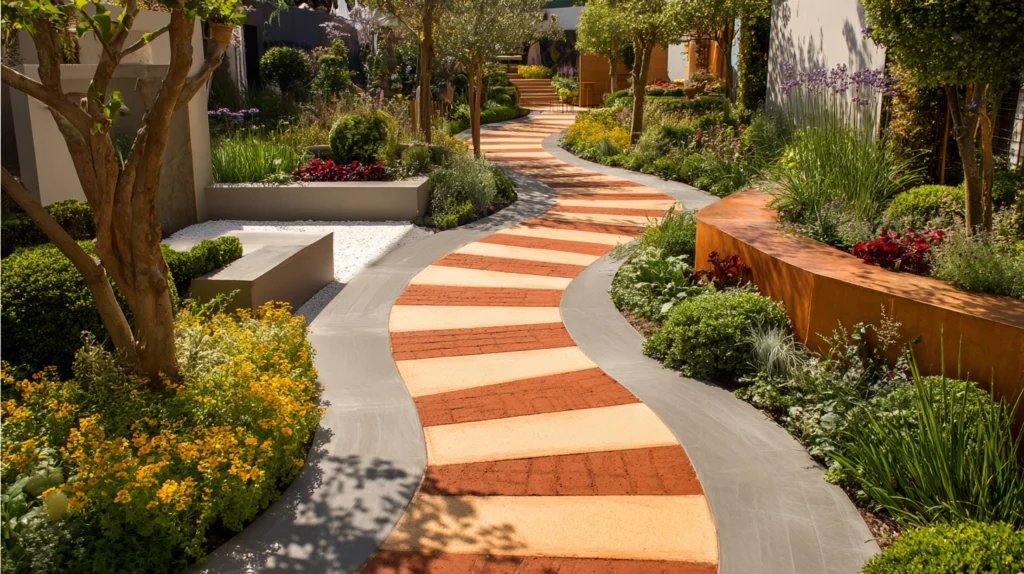
A colourful garden path takes this one step further. Not juast direction but decoration, not just function but genuine visual pleasure underfoot and on each side. The path that is itself beautiful — in its surface material, its edging, its flanking planting — makes every journey through the garden worth making, regardless of the destination.
Each idea below is a specific approach to a colourful garden path. Each includes what you will need, what it will cost, and a practical tip to make the whole thing work as well as it deserves.
1. The Wildflower Bordered Grass Path
Budget: $20 – $80
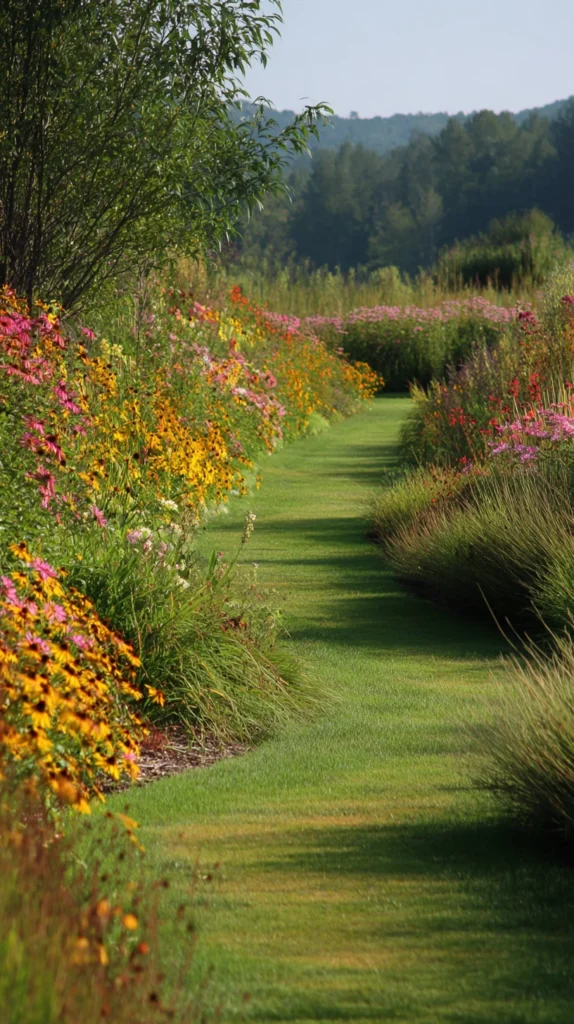
A mown grass path through an unmown wildflower area — or a grass path with wildflower seed sown densely on both sides — creates the most naturally colourful path available at the lowest cost. The path is the negative space; the wildflower banks on each side are the colour, and by midsummer a well-established wildflower border beside a grass path produces a display of cornflower blue, poppy red, ox-eye white, and field yellow that no planted border approaches in its quality of natural abundance.
Wildflower seed mix costs $5–$15 per packet — enough to sow a generous border on both sides of a 5-metre path. A half-moon lawn edger ($12–$20) cuts the clean line between the mown path and the wildflower bank. Sow directly onto cleared, raked soil in spring and resist weeding for the first six weeks — wildflowers and weeds are indistinguishable at the seedling stage.
Style tip: Vary the mown path width along its length — slightly wider at a junction or a turning point, narrower along the straight sections — so the path feels like a discovered route through the wildflowers rather than a measured installation. The width variation is the naturalistic detail that makes a grass and wildflower path read as genuinely organic.
2. The Rainbow Mosaic Stepping Stone Path
Budget: $40 – $200
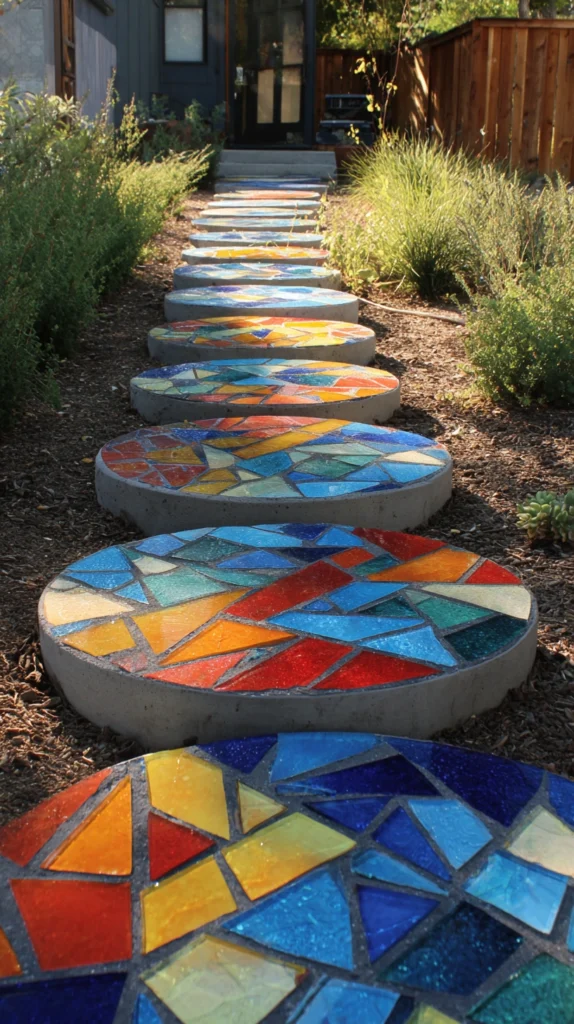
Concrete stepping stones decorated with a mosaic of coloured ceramic tile pieces — laid into the concrete surface before it sets, or applied with exterior tile adhesive after — create a path of permanent, weatherproof colour that is as individual as the maker. Each stone can carry a different colour combination, a different pattern, or a consistent element repeated across the whole path. The mosaic stepping stone path is the most handmade and most personal of all the colourful path options.
Plain concrete stepping stones cost $3–$8 each. Broken ceramic tiles for the mosaic cost $0–$10 depending on whether they are salvaged or purchased. Exterior tile adhesive and grout run $15–$30 for the quantities a standard path requires. Apply the tile adhesive and grout on a warm, dry day — both require a minimum temperature of 5 degrees Celsius to cure correctly and will fail to bond in damp or cold conditions.
Style tip: Limit each stepping stone to two or three colours rather than using every available tile colour on each stone. A mosaic stepping stone in two or three coordinated colours reads as designed; one in every available colour reads as randomly assembled. The colour discipline applied at the individual stone level gives the whole path its visual coherence.
3. The Lavender Edged Gravel Path
Budget: $60 – $250
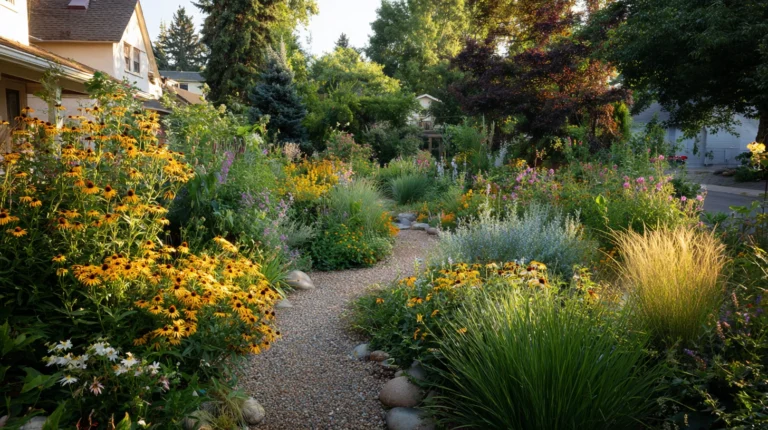
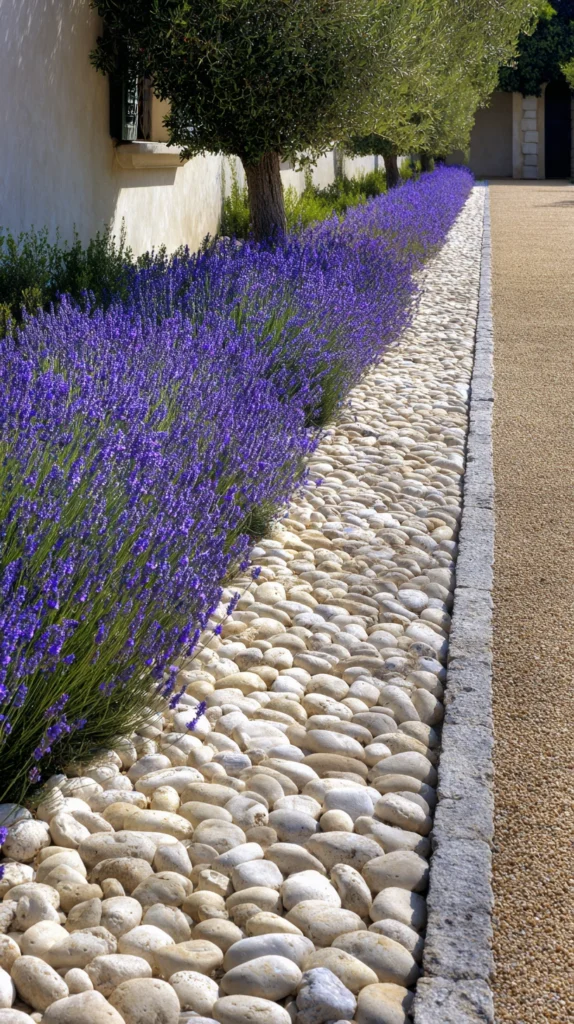
A gravel path edged on both sides with lavender — planted at the path edge so that the stems brush against anyone walking along it, releasing fragrance with every step — creates the path that is most complete in its sensory experience. The lavender provides colour in the purple-blue of its flowers and the silver-grey of its foliage year-round, fragrance in summer, and the specific tactile pleasure of soft stems against the leg that makes walking the path an experience rather than a transit.
Decorative gravel costs $8–$15 per 25-kilogram bag. Lavender plants in a 9-centimetre pot cost $4–$8 each — a path of 5 metres edged on both sides requires twelve to sixteen plants. Plant the lavender so its outer edge aligns with the path edge — the stems will eventually grow slightly over the path surface, which is the position that produces the fragrance-releasing contact with passing legs.
Style tip: Choose a single lavender variety for the entire path rather than mixing varieties of different heights and flower colours. A path edged with a consistent variety — all Hidcote at 40 centimetres, or all Munstead at 30 centimetres — reads as a planted design decision. Mixed varieties at different heights and in slightly different purple tones read as plants that arrived at different times without coordination.
4. The Painted Concrete Path
Budget: $30 – $150
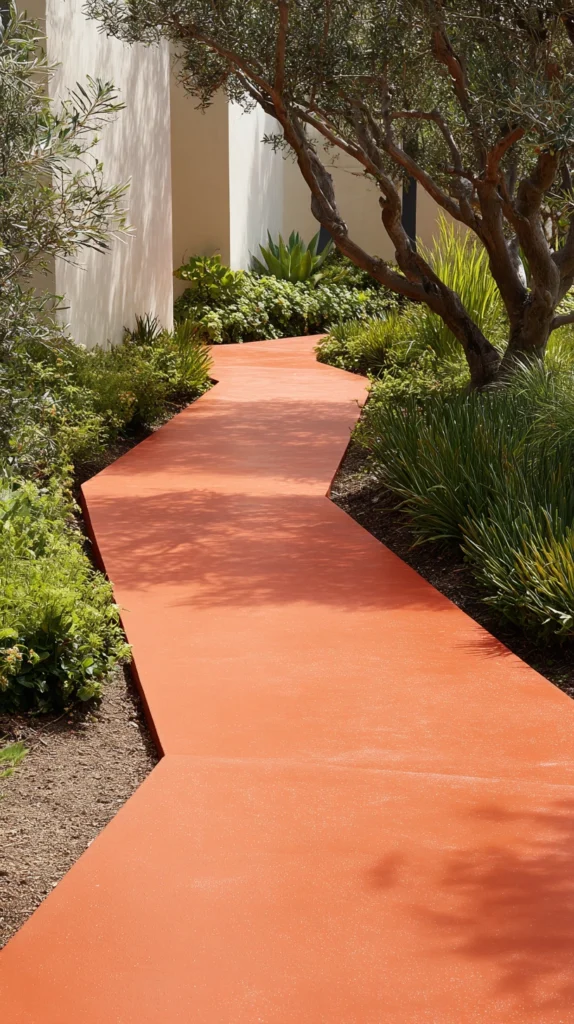
An existing concrete path painted in a deliberately chosen colour — terracotta, cobalt, sage green, warm cream — transforms the most utilitarian of all path surfaces into a designed garden element. Painted concrete is not a compromise; it is a design choice that some of the most considered gardens make deliberately, and a concrete path in the right colour, properly prepared and properly painted, looks considerably more considered than an unpainted concrete path surrounded by beautiful planting.
Exterior masonry or concrete paint costs $25–$60 per 2.5-litre tin. A non-slip additive ($5–$8 per packet) mixed into the paint is essential for any outdoor paved surface — painted concrete without non-slip additive becomes dangerously slippery when wet. Prepare the concrete surface by cleaning thoroughly and applying a concrete primer before the colour coat — unprepared concrete absorbs paint unevenly and the finish peels within the first season.
Style tip: Choose a path colour that relates to a dominant planting colour in the adjacent border rather than a colour chosen independently of the garden palette. A terracotta path beside a border with terracotta dahlias and orange crocosmia reads as part of the garden; the same path in an unrelated colour reads as a path that was painted without reference to the garden around it.
5. The Flowering Ground Cover Path Edge
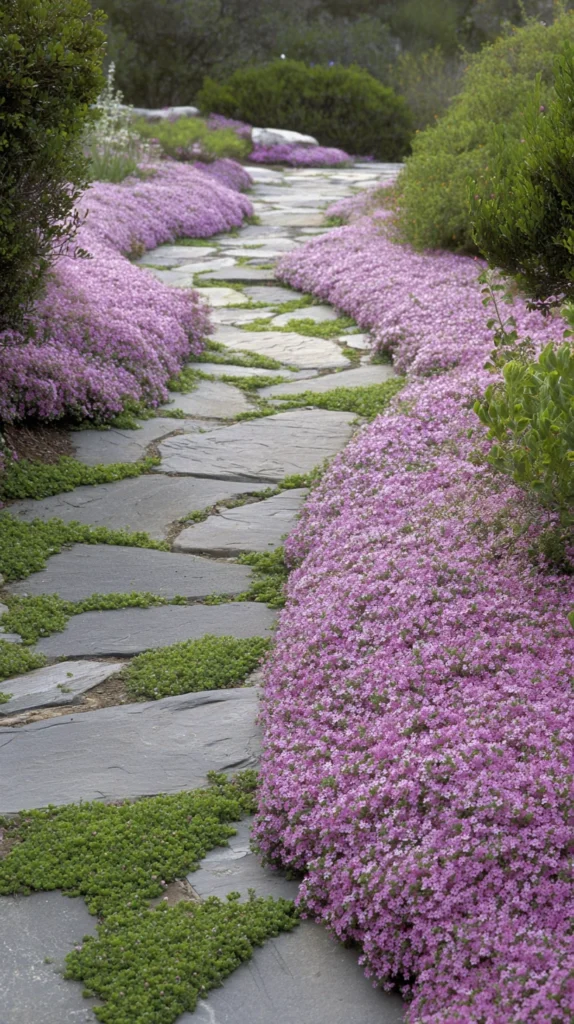
Budget: $30 – $150
A path edged with low flowering ground covers — thyme, chamomile, creeping phlox, ajuga, or alyssum — that spread slightly over the path surface creates the softest and most garden-integrated of all the colourful path edges. The creeping plants fill the gap between the path material and the border planting, eliminate the sharp edge that most paths have, and produce flowers at path level where they are seen most directly and most closely.
Creeping thyme plants cost $3–$6 each. Chamomile plug plants run $2–$4 each. Creeping phlox costs $4–$8 each. Plant in groups of three to five at each path edge rather than as individual plants at regular intervals — the group planting achieves the spreading, colony-like quality of mature ground cover faster than evenly spaced individual plants.
Style tip: Choose scented ground covers for the path edge wherever the path is wide enough to allow the plants to establish without being constantly trodden on. Thyme and chamomile release their fragrance when lightly stepped on — plants positioned at the very edge of the path, where occasional foot contact is likely but not constant, provide the fragrance benefit without the damage that regular heavy foot traffic causes.
6. The Brightly Coloured Paver Path
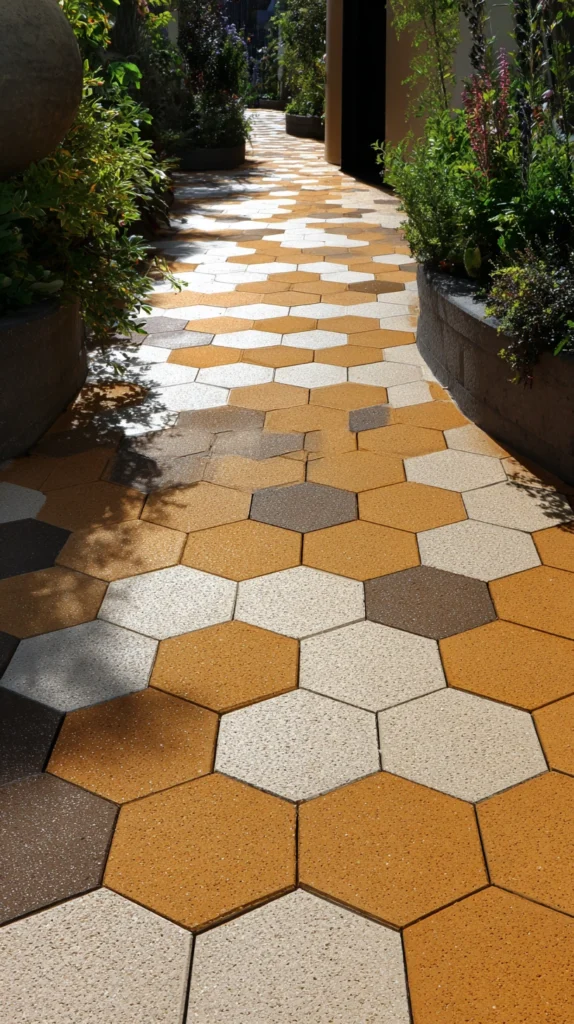
Budget: $80 – $400
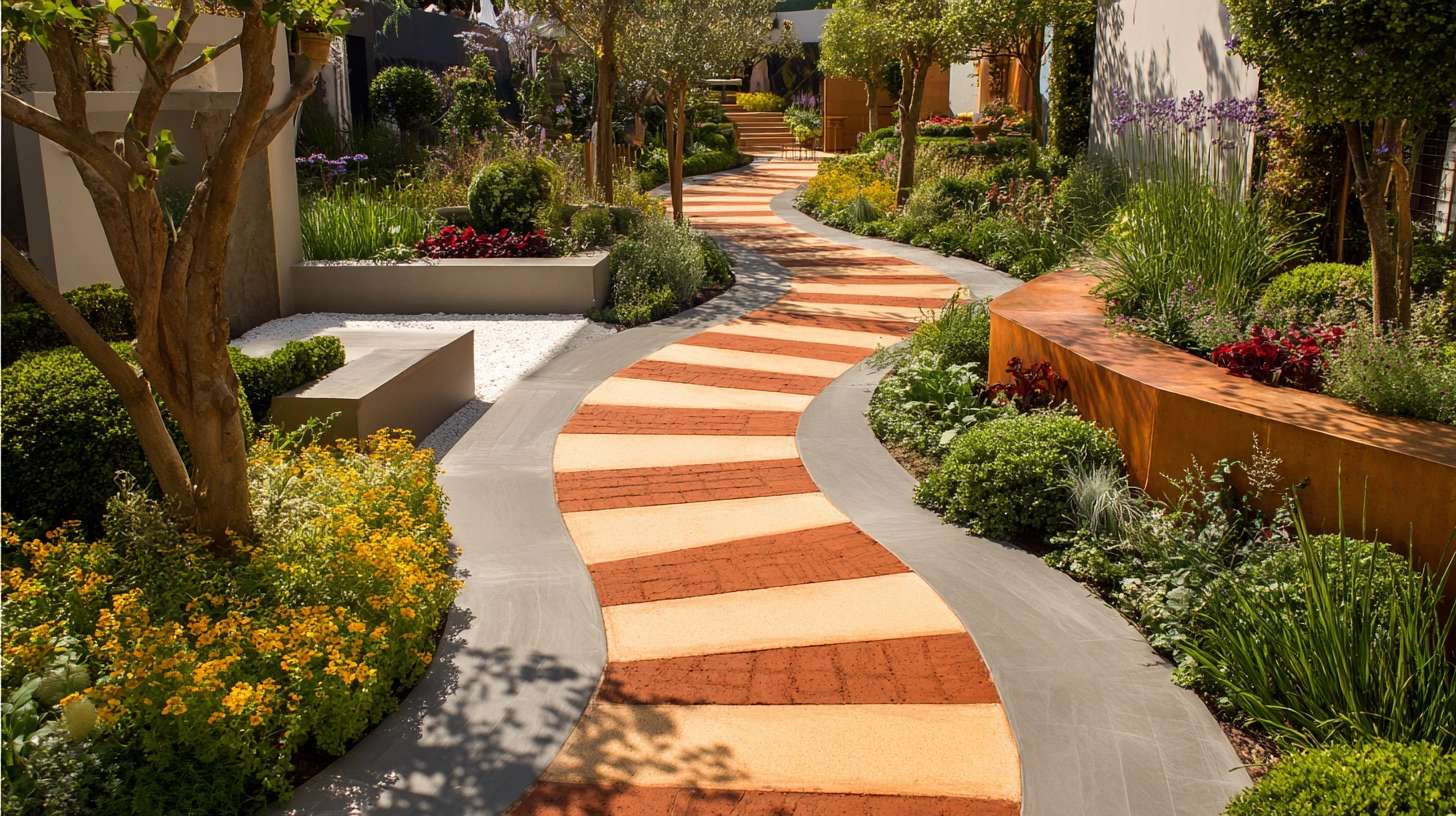
Concrete pavers in terracotta, warm ochre, dusty pink, or pale sage — the range of colours available from specialist paving suppliers — laid in a simple pattern create a path whose colour comes from the material rather than from the planting. A coloured paver path is the most permanent and most maintenance-free of all the colourful path options, requiring no annual planting, no seasonal maintenance, and no care beyond an occasional clean.
Coloured concrete pavers in a standard 40 by 40 centimetre size cost $3–$8 each depending on colour and quality. A 5-metre path of 60-centimetre width requires approximately twenty pavers — $60–$160 in materials. Lay on a compacted sharp sand bed of at least 5 centimetres in depth — a sand bed shallower than 5 centimetres allows pavers to sink and become uneven after the first winter frost cycle.
Style tip: Mix two coordinating paver colours in a simple pattern — alternating terracotta and pale cream, or alternating ochre and warm grey — rather than using a single colour throughout. A two-colour paver combination produces a path with visual rhythm that a single colour lacks, and the pattern reads as designed rather than simply coloured.
7. The Stained Glass Style Resin Path
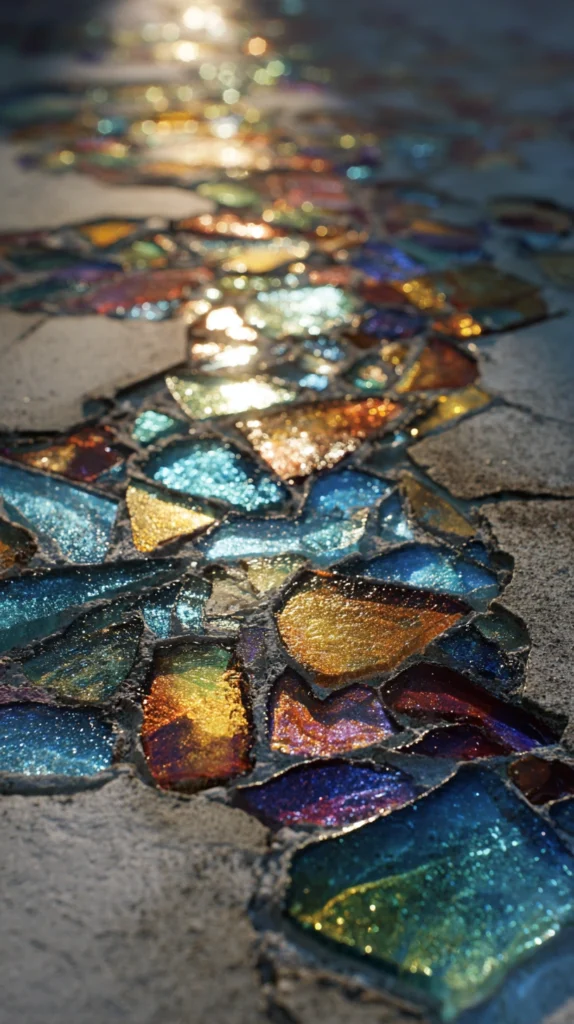
Budget: $80 – $400
A resin-bound path incorporating coloured glass aggregate — small pieces of recycled coloured glass mixed into the resin binder — creates a path surface that catches the light in the manner of stained glass, producing flashes of blue, green, amber, and clear light as the sun angle changes through the day. The coloured glass aggregate path is the most visually dynamic of all the colourful path surfaces because its appearance changes continuously with the light.
A resin-bound glass aggregate kit for a 3-square-metre path costs $80–$200. Coloured glass aggregate in specific colours costs $15–$30 per kilogram. A forced-action mixer hire for the day runs $30–$50 and is necessary for consistent mixing — hand mixing produces an uneven distribution of glass that affects both the appearance and the durability of the finished surface. Apply in a single continuous pour rather than in sections.
Style tip: Choose a glass aggregate colour that relates to the garden’s dominant flower colour for the peak viewing season. A blue glass aggregate path through a garden that peaks in blue and purple in June reads as designed into the garden’s seasonal palette; the same path in an unrelated colour reads as a material choice made without reference to the garden’s own colour story.
8. The Cottage Garden Brick Path
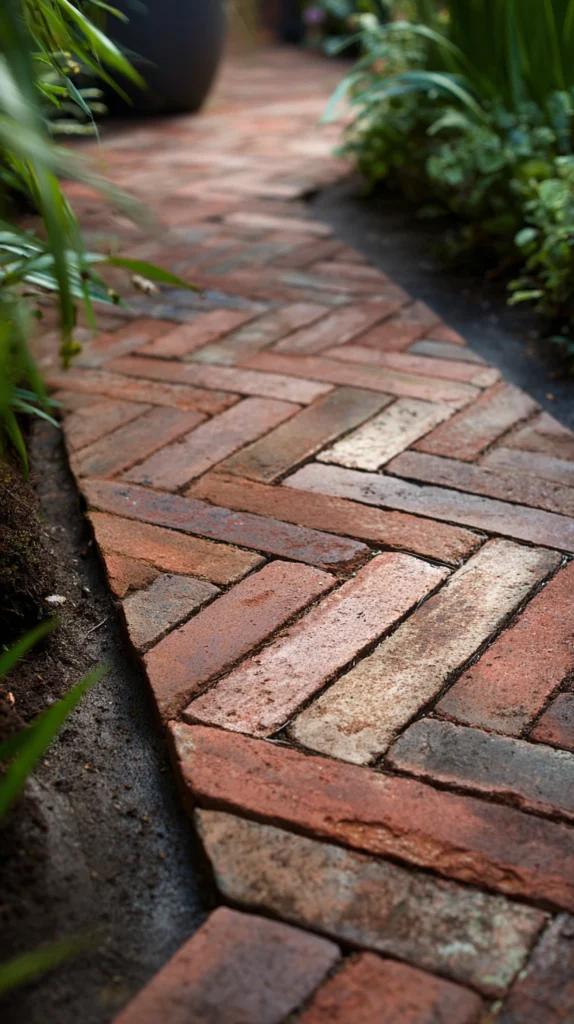
Budget: $60 – $300
A path of warm red or terracotta bricks — laid in a herringbone or running bond pattern, with low flowering plants allowed to establish in the joints — creates the most classic and most enduringly beautiful coloured path available to an informal garden. Brick brings its own colour — the warm red-orange of fired clay — and provides the perfect surface for the crack-colonising plants that give a cottage garden path its characteristic softness.
Reclaimed bricks cost $0.30–$1 each from salvage yards. New terracotta pavers run $1–$3 each. Sharp sand for the laying bed costs $5–$10 per bag. Allow creeping thyme, chamomile, or mind-your-own-business to self-seed into the brick joints rather than grouting — the colonised brick path is more beautiful than the grouted version and the plants provide the additional colour that the brick alone begins.
Style tip: Lay the herringbone pattern at 45 degrees to the path direction rather than perpendicular to it. A diagonal herringbone draws the eye along the path and gives the paving a sense of movement and direction; a perpendicular herringbone reads as static. The diagonal is the laying direction decision that makes the brick path actively lead the visitor through the garden rather than simply mark the route.
9. The Daffodil and Tulip Spring Bulb Path
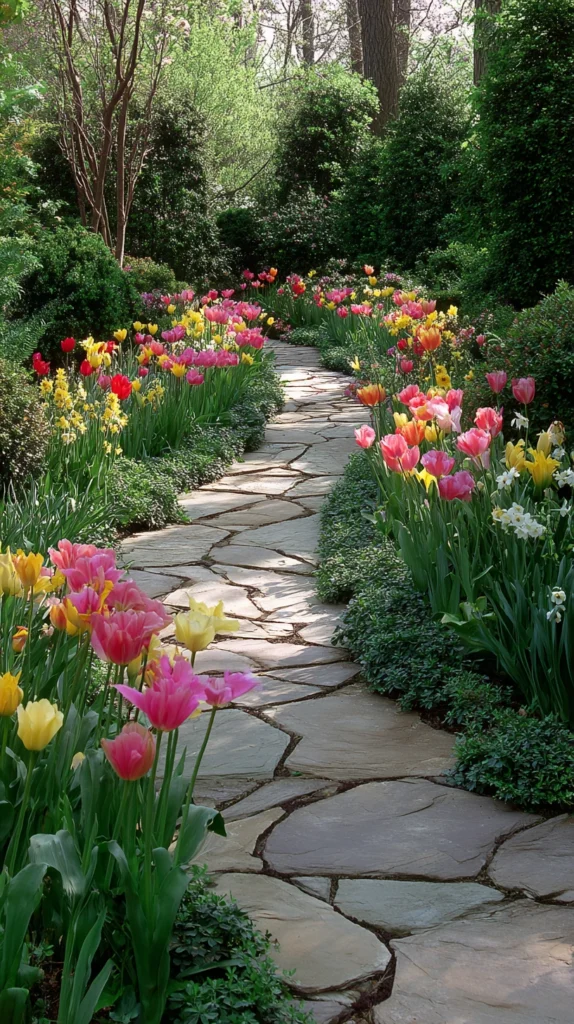
Budget: $30 – $120
A path edged with spring bulbs — daffodils, tulips, hyacinths, muscari — planted in the autumn for the most colourful spring display available to any garden, creates a path that is genuinely spectacular for six to eight weeks and then subsides gracefully into the foliage of summer perennials planted in the same border. The bulb-edged path is a seasonal rather than permanent solution, but the six weeks of spring colour it provides are the most concentrated and most vivid of the gardening year.
Spring bulb collections for path edging cost $10–$30 for enough to edge a 5-metre path on both sides. Plant in October or November at the depth recommended on the packet — bulbs planted too shallow fail to flower reliably in subsequent years. Allow the foliage to die back completely before cutting it — the six weeks of dying foliage are the investment in next year’s flowers.
Style tip: Plant the path bulbs in a single colour on each side rather than in a mixture — all yellow daffodils on one side, all white narcissus on the other, or all purple muscari throughout — for a path display with graphic clarity rather than the softer abundance of a mixed planting. The single-colour path edge reads as a designed decision; the mixed-colour planting reads as a selection of available bulbs.
10. The Japanese Inspired Coloured Gravel Path
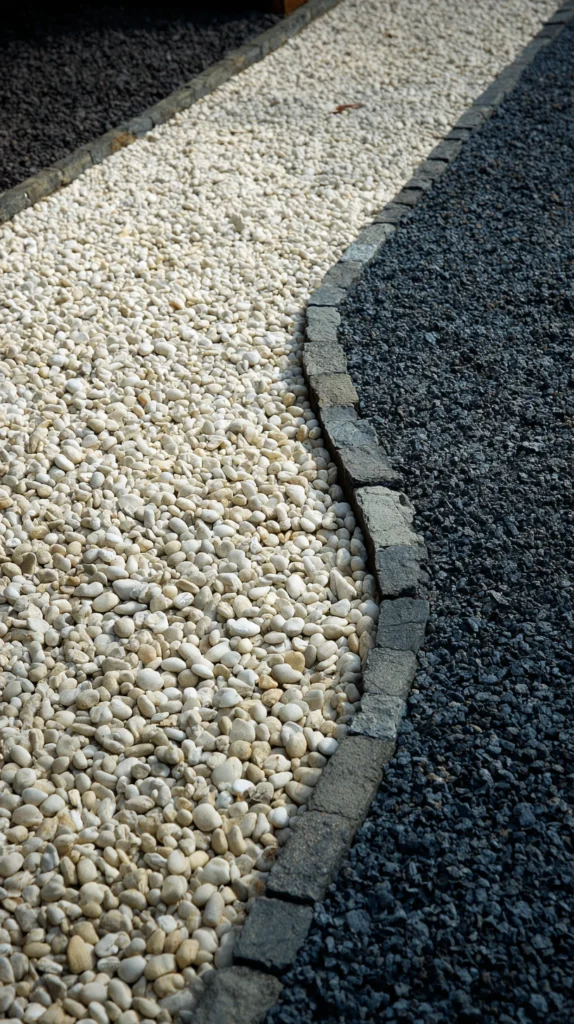
Budget: $50 – $200
A Japanese-style path using different coloured gravels to define zones and directions — pale cream gravel for the main path, dark charcoal gravel for the border, white gravel raked in the traditional karesansui pattern beside a stepping stone route — creates a path of extraordinary visual sophistication through the contrast and composition of natural stone colours rather than through planting.
Pale cream gravel costs $8–$15 per bag. Charcoal or black slate chips run $10–$18 per bag. White decorative gravel costs $8–$15 per bag. The division between different gravel colours requires a thin metal or timber edge to prevent the colours from migrating into each other over time — the clean edge between contrasting gravel colours is the design detail that gives the Japanese path its graphic precision.
Style tip: Limit the Japanese gravel path to two contrasting colours rather than three or more. Two gravel colours in strong contrast — pale and dark, warm and cool — create the graphic tension that gives the Japanese path its power. Three or more colours dilute the contrast and produce a path that reads as decorative rather than composed.
11. The Sunflower Lined Summer Path
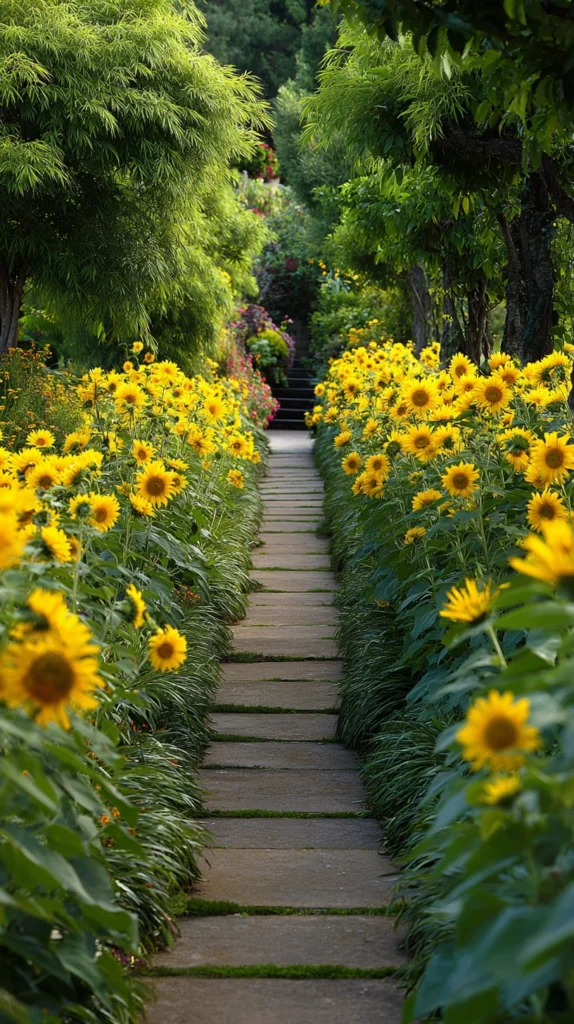
Budget: $10 – $50
A path with sunflowers growing on both sides — direct-sown from seed in spring, growing to their full 150–200 centimetre height by July and August — creates the most joyful and most specifically summer path available to any garden. The sunflower path is unambiguously seasonal, unambiguously bold, and unambiguously easy — sunflowers grow from seed without fail in any reasonable summer and require no special soil preparation or specialist knowledge.
Sunflower seeds cost $2–$4 per packet — enough for a generous double border along a 5-metre path. Sow directly at the path edge in April or May after the last frost. Stake individual plants once they reach 60 centimetres — a sunflower in a windy position without staking falls across the path before it flowers. The stake is the five-minute investment that keeps the path usable through the summer.
Style tip: Mix tall single-headed sunflower varieties with shorter multi-headed branching varieties on the same path. The tall varieties provide the dramatic height and scale of a sunflower path; the branching varieties provide the continuous supply of smaller flowers over a longer period. The two growth habits together produce a path that is abundant from July through September rather than spectacular for two weeks in August.
12. The Moroccan Tile Path
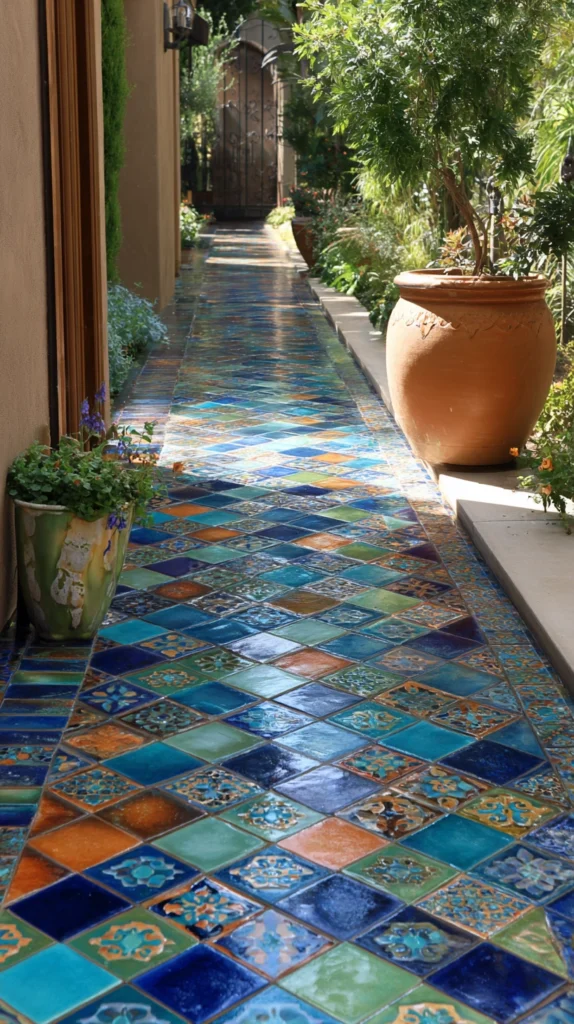
Budget: $100 – $500
A path surface of hand-painted Moroccan-style ceramic tiles — in the characteristic geometric patterns of the zellige tradition in deep blue, turquoise, terracotta, and white — creates the most richly coloured and most specifically Mediterranean of all garden path surfaces. The Moroccan tile path suits a sheltered courtyard or a terrace more than an open garden, and in the right setting it reads as the most considered of all garden floor treatments.
Moroccan-style outdoor ceramic tiles in a standard 20 by 20 centimetre size cost $3–$8 each. A 3-metre path requires approximately 75 tiles — $225–$600 in tile costs. Exterior tile adhesive and grout rated for outdoor use runs $25–$50. Seal the tile surface and the grout with an exterior stone sealer before use — unsealed ceramic in a garden path absorbs moss and algae growth into the grout that is very difficult to remove once established.
Style tip: Use a dark grout — charcoal or near-black — rather than white grout with Moroccan tiles outdoors. White grout between coloured patterned tiles turns grey with moss and environmental staining within the first season and is visually very difficult to restore. Dark grout ages gracefully and allows the tile pattern to read clearly rather than through a grey background that was once white.
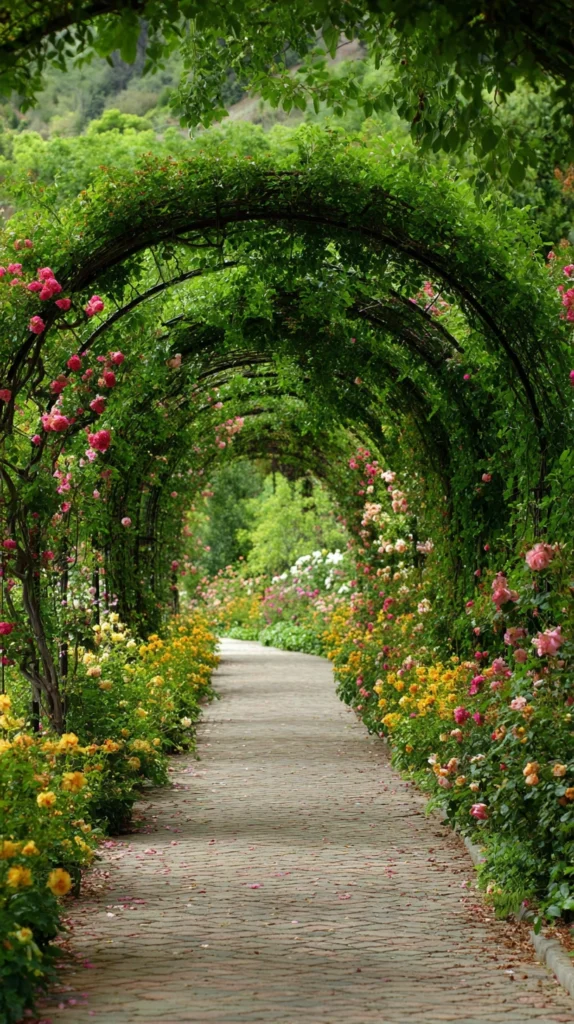
13. The Rose Arch Garden Path
Budget: $100 – $500
A path passing beneath one or more arches planted with climbing roses — so that the path is enclosed above by flowering growth, and walking it in June means walking through rose blossoms at head height — is the most architecturally and most romantically ambitious of all the colourful path ideas. The rose arch path transforms a garden route into an experience of passing through something beautiful rather than simply walking toward it.
A metal rose arch costs $30–$80. A timber arch runs $50–$150. A climbing rose in a 5-litre pot costs $15–$35 — two roses per arch, one on each side. A path of three arches at 2-metre intervals with a repeat-flowering climbing rose on each post costs $200–$500 in total and creates a tunnel effect by the second or third growing season. Plant the roses on the outside of the arch posts so they climb upward and over the arch rather than growing through the centre of the arch opening.
Style tip: Choose a single rose variety for all the arches on a path rather than different varieties at each arch. A path of arches all planted with the same rose — the same flower colour, the same flowering season, the same growth habit — reads as an architectural garden feature. Arches planted with different rose varieties at each position read as a rose collection that happens to be arranged in arches.
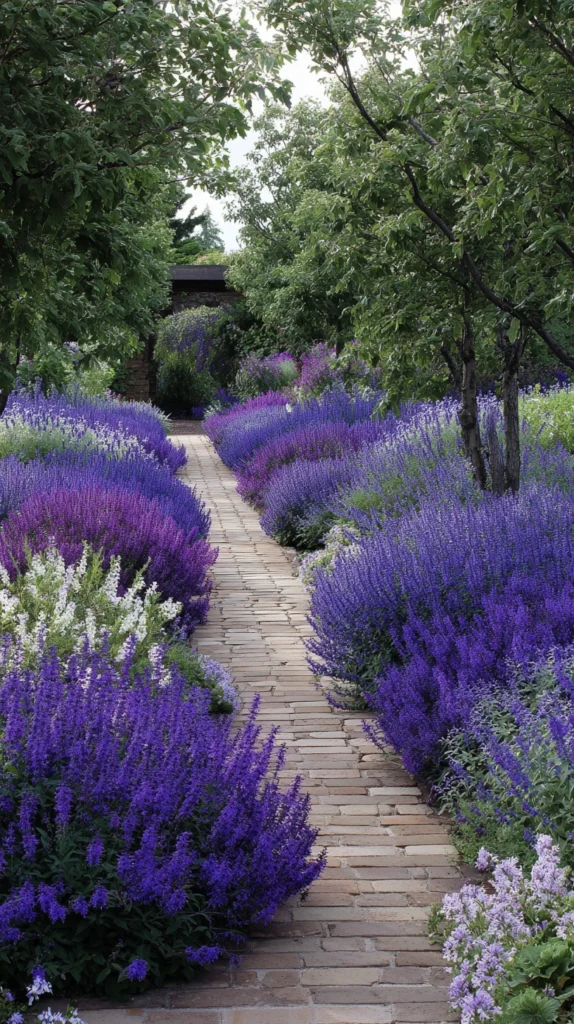
14. The Salvia and Catmint Blue Path
Budget: $30 – $150
A path edged densely with salvia and catmint — both in the specific blue-purple tone that is the most useful colour in a summer garden — creates the most cooling and most specifically summer-afternoon path available. Blue-purple path edging reads as the colour of lavender fields, of Mediterranean herb gardens, of the specific quality of late afternoon light in a warm-climate garden. It cools the eye on a hot day in a way that no other colour does.
Salvia nemorosa plants cost $5–$10 each. Nepeta (catmint) runs $4–$8 each. A generously edged 5-metre path on both sides requires twelve to sixteen plants — $60–$130 in total. Cut back both plants by one-third after the first flowering flush in June — the cut-back produces a second flush of flower in August that extends the blue path edging well into the autumn season.
Style tip: Position the salvia at the back of the path edge and the catmint at the front. The salvia grows upright and taller; the catmint sprawls slightly and softens the path edge. The height difference between the two plants — salvia behind, catmint in front — creates the layered effect of a planted border rather than the flat edge of a single-species planting.
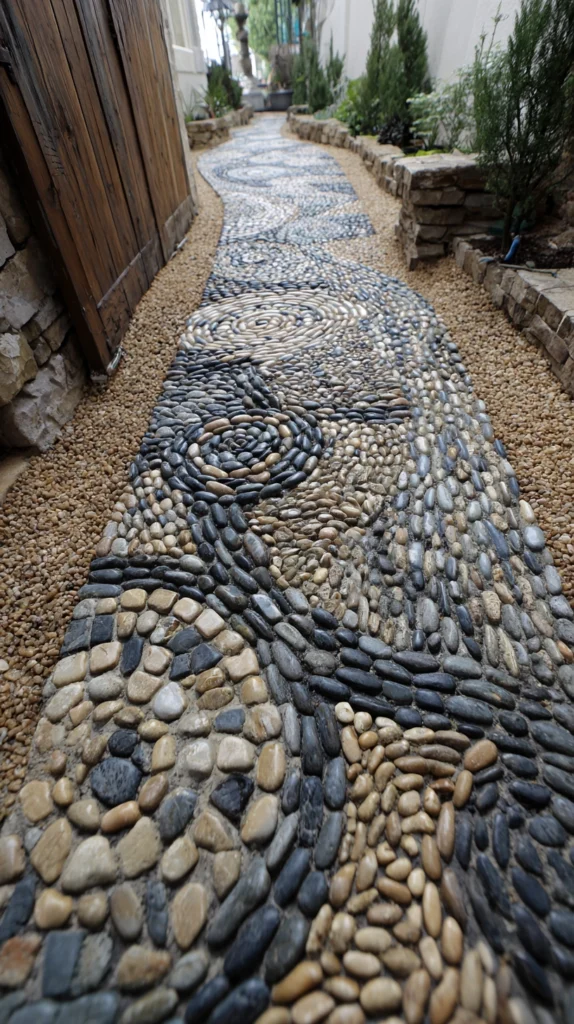
15. The Pebble Mosaic Colour Art Path
Budget: $30 – $150
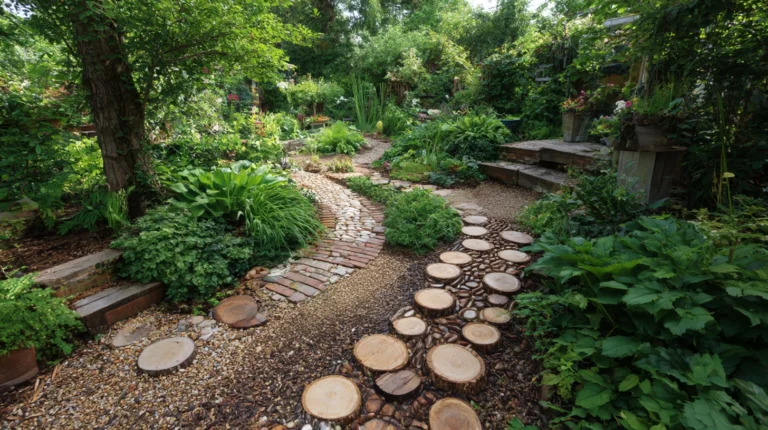
A path of pebbles set on edge in a sand and cement bed — arranged in patterns using the natural colour variation of different pebble types, from pale cream through warm buff to dark charcoal, from white quartz to black flint — creates a path of permanent, maintenance-free colour that uses the geological palette of natural stone rather than the botanical palette of plants. The pebble mosaic path is the most ancient and most enduring form of colourful garden path, with a history stretching back to the courtyard gardens of medieval Spain.
River pebbles in a colour mix cost $8–$15 per kilogram. A mortar bed of sharp sand and cement costs $10–$15 in materials. Separate the pebbles by colour group before laying rather than working from a mixed pile — the pattern is only possible when the colours are organised. Keep all pebbles at a consistent height by pressing each one to the same depth using a straight timber batten across the surface before the mortar sets.
Style tip: Design the pebble mosaic pattern on paper first at the correct scale before beginning the laying. A pebble mosaic pattern drawn at 1:1 scale on paper, placed beneath a sheet of glass or plastic, can be worked from directly during laying — each pebble placed according to the drawing rather than placed by eye. The drawn pattern produces a more precise and more satisfying result than a pattern worked out during laying.
The colourful garden path earns its place not just as a route through the garden but as a destination in itself — the path that is worth walking for the pleasure of walking it, not only for where it leads. Whether the colour comes from the surface material, the edging planting, the seasonal bulbs, or the arches overhead, the path that gives the garden its colour also gives it its character.
Choose the approach that suits the garden’s own style and the season it performs in best. Lay it carefully, edge it well, and plant it generously. A path that was made with intention becomes the garden’s spine — the element that organises everything else around it and that makes the garden feel like somewhere that was designed for the pleasure of being in it.