15 Small Living Room Layout Hacks That Instantly Create More Space
There is a specific frustration that a small living room produces in the people who live in it — not the frustration of not having enough space, which is simply a fact, but the frustration of not being able to make the space that exists feel like enough.
The small living room that has been furnished and arranged without specific knowledge of how small spaces work always feels smaller than it is. The same room, arranged with the understanding of how light, scale, colour, and furniture placement interact in compact spaces, often feels genuinely adequate and sometimes feels generous.
The difference is entirely a matter of decisions. Not expensive decisions or structurally complicated ones — decisions about where to place the sofa, what colour to paint the walls, how high to hang the curtains, whether to use one large rug or two small ones.
These are the decisions that make the small living room feel small or feel larger than it is, and they are available at every budget level to every person willing to make them with the specific knowledge of how small spaces behave.
Each idea below is a specific, actionable layout hack for the small living room. Each includes what you will need, what it will cost, and a practical tip to make it work as well as the more spacious room it is designed to help create.
1. The Furniture Against the Wall Myth
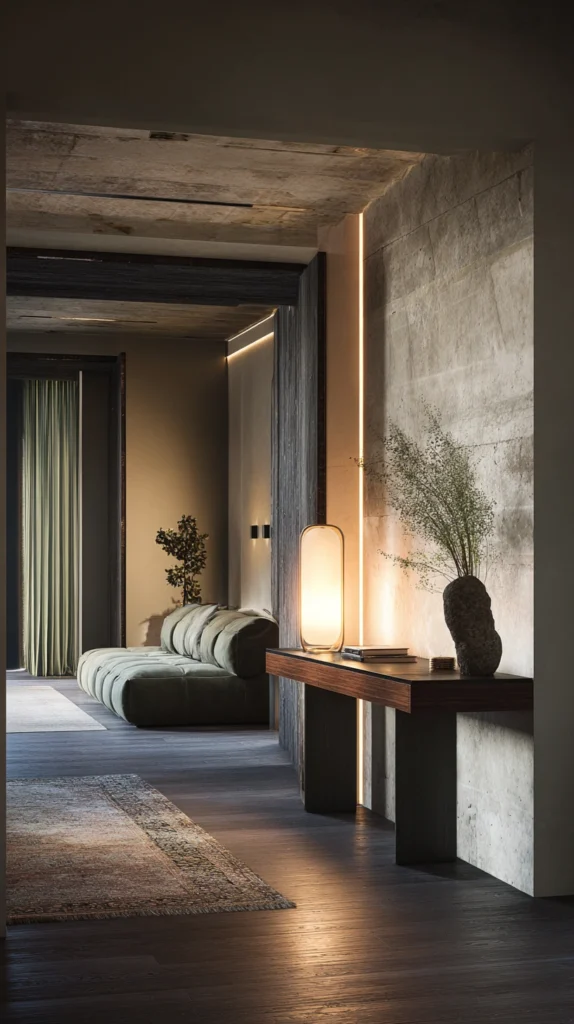
Budget: $0
The most consistently repeated small living room layout mistake is pushing all furniture against the walls in the belief that this maximises the central floor space and makes the room feel larger. It does the opposite.
Furniture pushed to the perimeter of a small room creates a large empty central area that reads as unused floor rather than as space, and the furniture arranged at the room’s edges has no relationship to each other that creates the conversational grouping that a living room requires.
Pull the sofa at least 30 centimetres away from the wall behind it — ideally 45–60 centimetres. This creates a narrow passage behind the sofa that functions as circulation space, allows the sofa to anchor the room rather than decorate the perimeter, and produces a furniture arrangement of genuine conversational logic rather than a perimeter of separate pieces. The room will look smaller in the photograph and feel larger in use.
Style tip: Place a narrow console table in the gap between the sofa and the wall — at 25–30 centimetres in depth, a console fits precisely in this space and provides a surface for a lamp, which gives the gap between the sofa and the wall a function rather than simply a dimension. The lamp behind the sofa also creates the quality of lit depth that makes the room feel deeper than its measured distance.
2. The Single Large Rug Rule
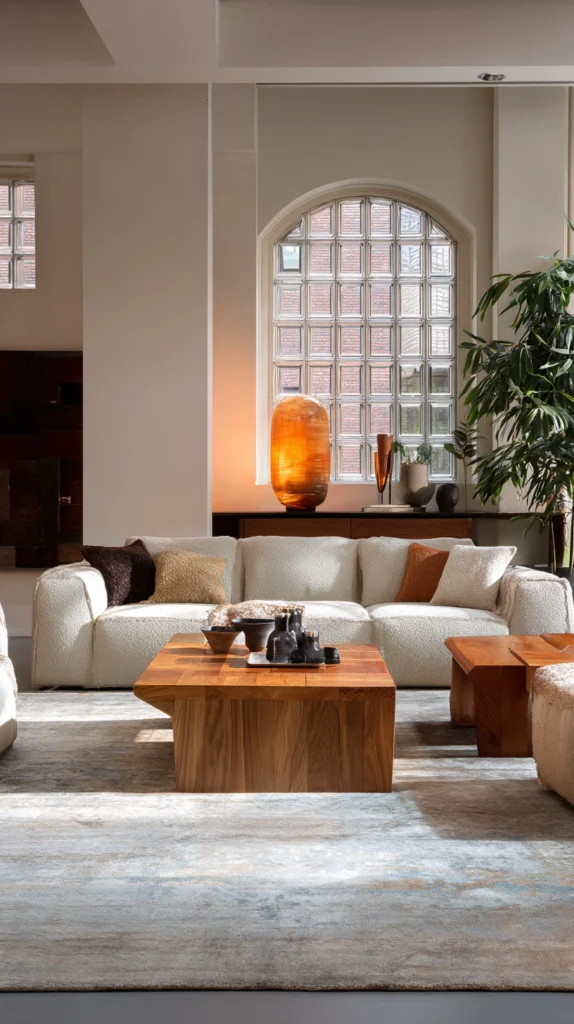
Budget: $80 – $300
Two small rugs in a small living room produce two small zones that read as smaller than the room; one correctly sized rug produces a single defined zone that reads as the full living room. The rug size is the single layout decision most consistently compromised in small living rooms and the one whose compromise is most visible and most consistently unhelpful to the perceived size of the space.
A correctly sized living room rug should extend at least 20 centimetres beyond each side of the sofa and have all front furniture legs sitting on its surface. In a small living room this typically means a rug of 160 by 230 centimetres minimum — larger than most small living room occupants instinctively choose. A flatweave or low-pile rug of this size costs $80–$200 and produces a significantly more spacious-feeling room than two smaller rugs at half the combined cost.
Style tip: Choose a rug with a subtle pattern or a texture rather than a plain colour. A plain rug in a small living room shows every piece of debris, every footprint, and every indication of use — in a compact space that cannot distribute the evidence of daily life across a large floor area, a plain rug reads as perpetually untidy. A subtle pattern conceals the evidence of use while maintaining the calm, expansive quality of a well-chosen floor surface.
3. The Ceiling Height Curtains
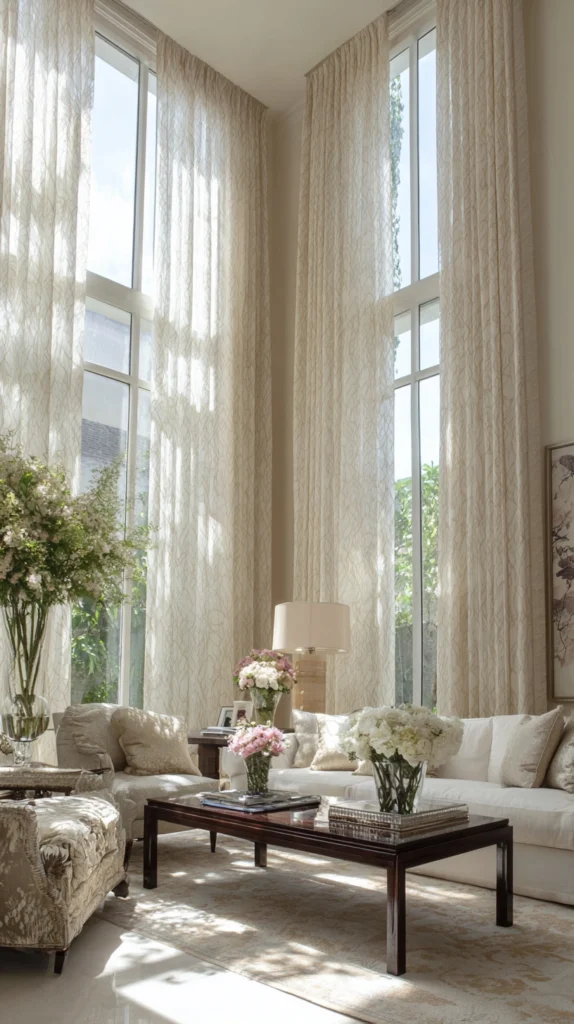
Budget: $0 – $60
Hanging curtains from the ceiling rather than from above the window frame — so the fabric begins at the ceiling line and falls to the floor — makes the ceiling appear higher and the window appear larger simultaneously. This is the single most effective visual trick available to a small living room because it costs almost nothing to implement with existing curtains and produces a change in the room’s perceived proportions that is immediately apparent.
Rehang existing curtains on a ceiling-mounted pole rather than a window-mounted one — the cost is one pole ($20–$40) and thirty minutes of work. If purchasing new curtains, choose a drop of the full ceiling-to-floor measurement rather than window-to-floor. The ceiling-height curtain creates the impression of a taller room regardless of the window size, and in a small living room with low ceilings, the perceived height is as important to the sense of space as the actual floor area.
Style tip: Choose curtains in a tone close to the wall colour rather than in a contrasting or patterned fabric. A curtain that reads as an extension of the wall rather than as a separate element against the wall makes the wall appear to extend to the curtain’s full width — effectively widening the perceived wall surface. A contrasting curtain creates a visual boundary at the window edge that reduces the perceived width of the room.
4. The Reflective Surface Strategy
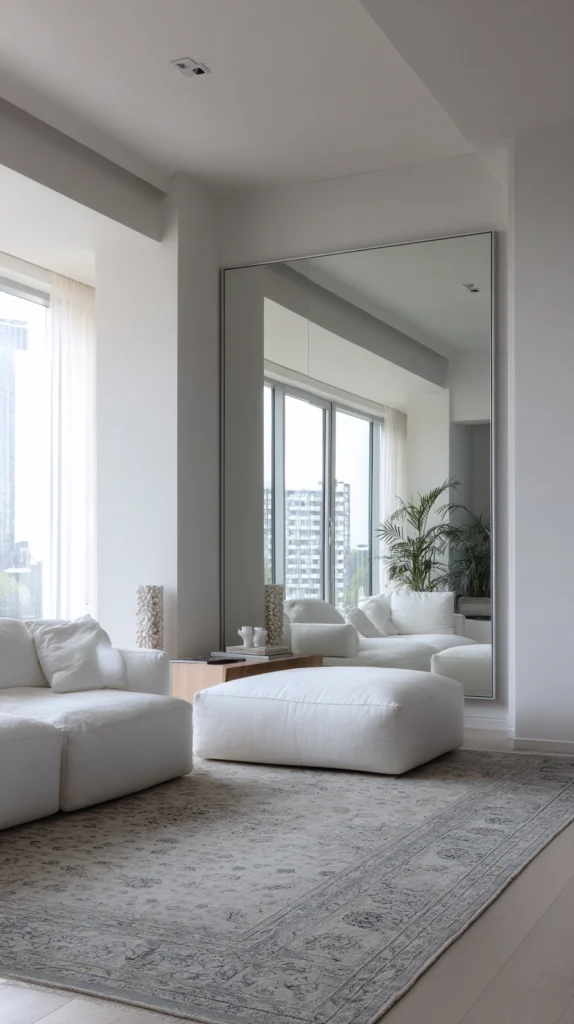
Budget: $20 – $200
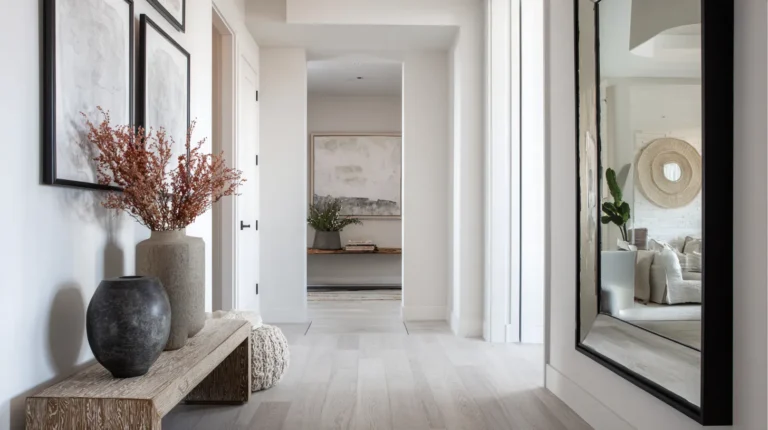
Mirrors and reflective surfaces in a small living room increase the perceived depth of the space by creating the impression of additional room beyond the reflective surface. A large mirror on the wall opposite the window doubles the natural light in the room and creates a reflected view that the eye reads as depth rather than as a reflection. The mirror is the small living room’s most effective and most immediately impactful space-expanding element.
A large rectangular mirror of 60 by 120 centimetres costs $30–$100. A floor-leaning mirror of 45 by 150 centimetres runs $25–$80. A round mirror of 80–100 centimetres in diameter costs $40–$150. Position the mirror to reflect the room’s best element — the natural light from the window, the most attractive furniture arrangement, the view of the garden — rather than to reflect a wall or a doorframe. A mirror that reflects something worth reflecting doubles the quality of what it reflects; one reflecting a blank wall doubles nothing of value.
Style tip: Position a mirror at the end of the small living room’s longest dimension rather than on the wall beside the sofa. A mirror at the far end of the room creates the impression of a room that continues beyond the mirror; one on the side wall creates an impression of width rather than depth. In a typically rectangular small living room, depth is the more valuable impression.
5. The Dual-Purpose Furniture Selection
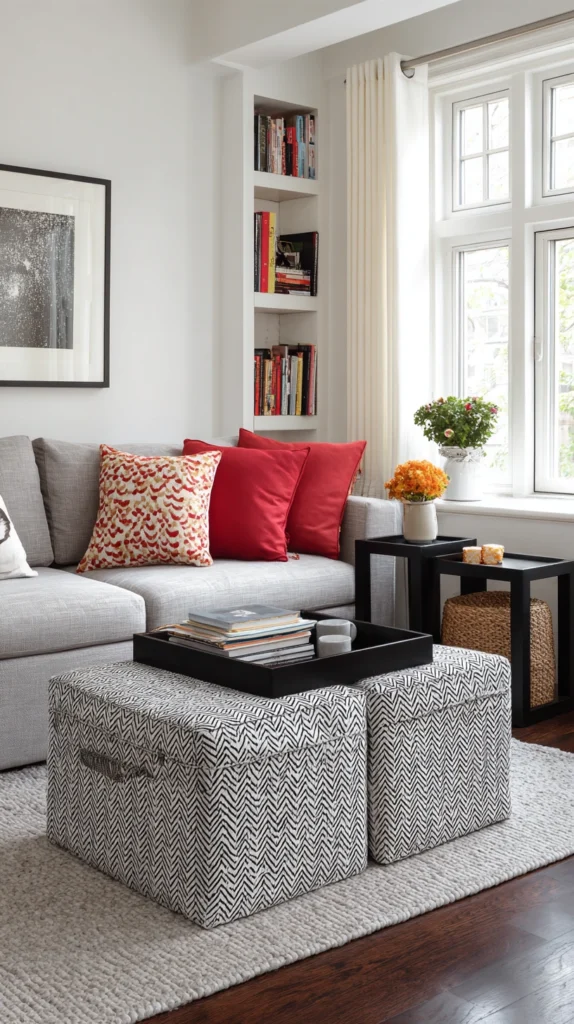
Budget: $100 – $500
Every piece of furniture in a small living room should ideally perform two functions rather than one — the storage ottoman that serves as coffee table and seating and storage, the sofa bed that provides guest accommodation without a dedicated guest room, the nesting tables that provide multiple surfaces and collapse to one when not needed. Dual-purpose furniture in a small living room is not a compromise; it is the design intelligence that allows a small space to perform the functions of a larger one without requiring the square footage.
A large storage ottoman costs $80–$250 and replaces the coffee table while providing storage for the cushions, throws, and objects that the small living room cannot afford to have visible. A sofa bed runs $400–$1,200 and provides the guest room that a small apartment cannot dedicate a separate room to. Nesting tables cost $60–$200 and provide three surfaces in the footprint of one. The dual-purpose selection requires assessing every planned furniture purchase against the question of what second function it could be chosen to perform.
Style tip: Choose a storage ottoman in a material and colour that suits the sofa rather than the floor — the ottoman reads as part of the sofa arrangement when it relates to the sofa in material and tone, and as a separate floor-level object when it contrasts with the sofa and relates to the rug. The ottoman that belongs to the sofa arrangement contributes to the perceived size of the seating area; the one that belongs to the floor contributes to the perceived busyness of the floor.
6. The Vertical Space Utilisation
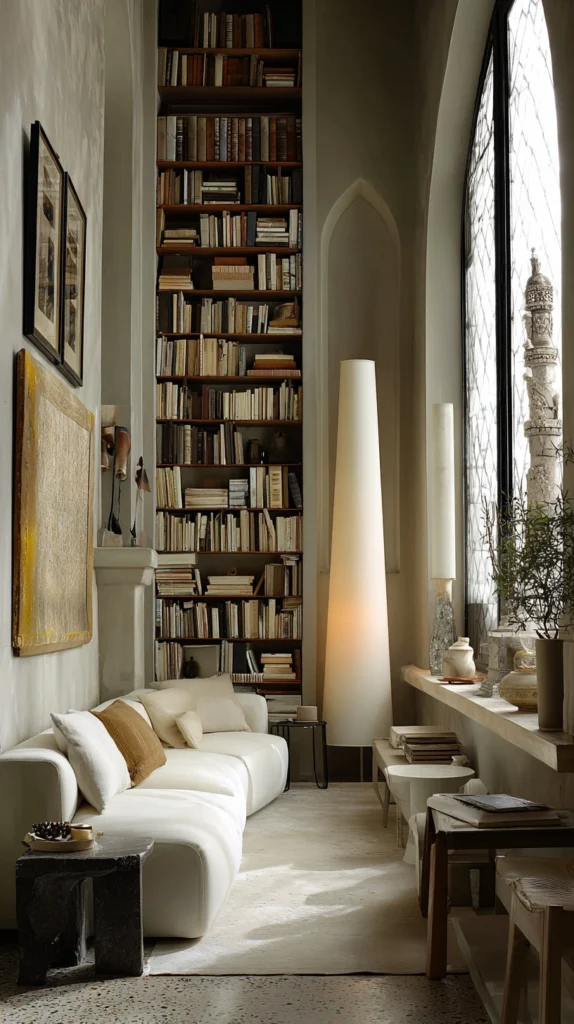
Budget: $60 – $300
A small living room with low furniture — a low sofa, a low coffee table, low side tables — looks smaller than the same room with furniture that uses the vertical dimension of the space. Shelving that reaches the ceiling, a tall floor lamp, curtains that begin at the ceiling, and a bookshelf of 200 centimetres rather than 150 centimetres all exploit the vertical dimension that a small living room possesses regardless of its floor area and that most small living room layouts ignore in favour of the horizontal.
Floor-to-ceiling shelving using adjustable bracket systems costs $60–$200 for a standard wall span. A tall floor lamp of 170 centimetres or more runs $60–$180. Built-in shelving from floor to ceiling costs $200–$600 in materials and basic carpentry. The vertical utilisation of a small living room requires accepting that the upper shelves will store things that are accessed infrequently — the principle is that the vertical dimension of the room should be occupied rather than wasted, and the occasional use of upper storage is worth the permanent visual contribution of occupied vertical space.
Style tip: Paint the shelving or the bookcase in the same colour as the wall behind it rather than in a contrasting colour or in white. A bookcase that reads as part of the wall rather than as a piece of furniture in front of it adds the storage and the visual interest of a full bookcase without the visual bulk of an object occupying floor space — the wall-coloured bookcase reads as a designed wall with depth rather than as furniture.
7. The Light Colour on Walls and Ceiling
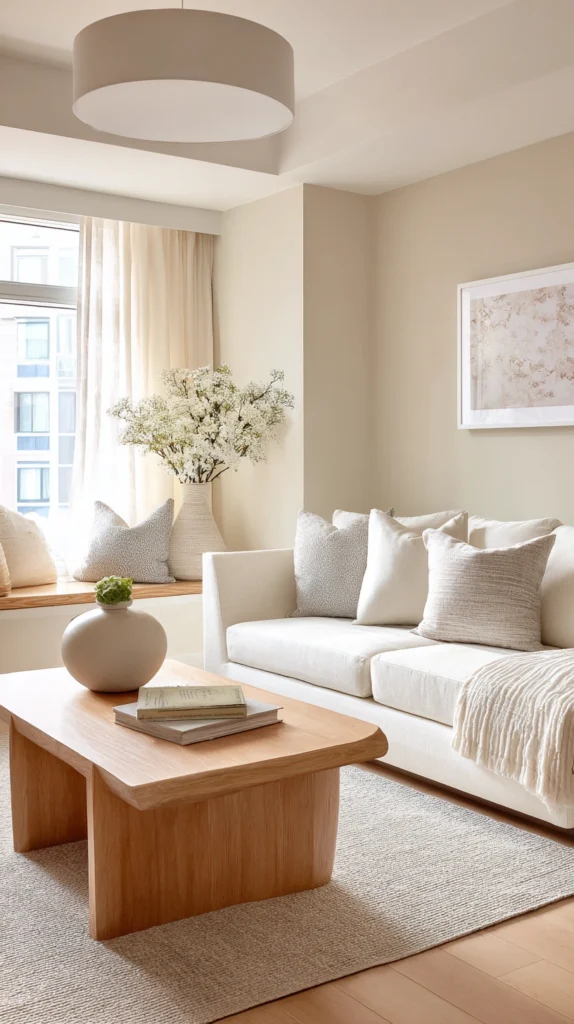
Budget: $25 – $80
Light colours on the walls and ceiling of a small living room reflect more of the available natural and artificial light back into the space, making the room feel brighter and more open than the same room in darker colours. This is a simple physical fact about how light behaves on surfaces, and the pale living room is not merely a stylistic preference but a practical response to the specific limitations of compact spaces. The pale room reads as larger because it is more evenly illuminated — there are fewer areas of relative shadow that the eye reads as walls closing in.
Warm white or off-white paint costs $25–$60 per 2.5-litre tin. A full living room requires two to three tins. The ceiling should be in the same pale tone as the walls or slightly lighter — a ceiling that is the same colour as the walls extends the perceived height of the room by eliminating the visual boundary between the two planes. A white ceiling above pale walls creates a clear boundary that stops the eye; a same-colour ceiling continues the pale surface upward without interruption.
Style tip: Choose warm white rather than cool white for the small living room walls. Warm white — slightly cream, slightly ivory — reflects warm light back into the room and creates the quality of a room bathed in gentle warmth. Cool white reflects cool light and creates a quality of clinical brightness that makes the room feel institutional rather than domestic. The temperature of the white is the specification that most determines whether the pale room reads as cozy and spacious or as small and clinical.
8. The Furniture Leg Visibility Principle
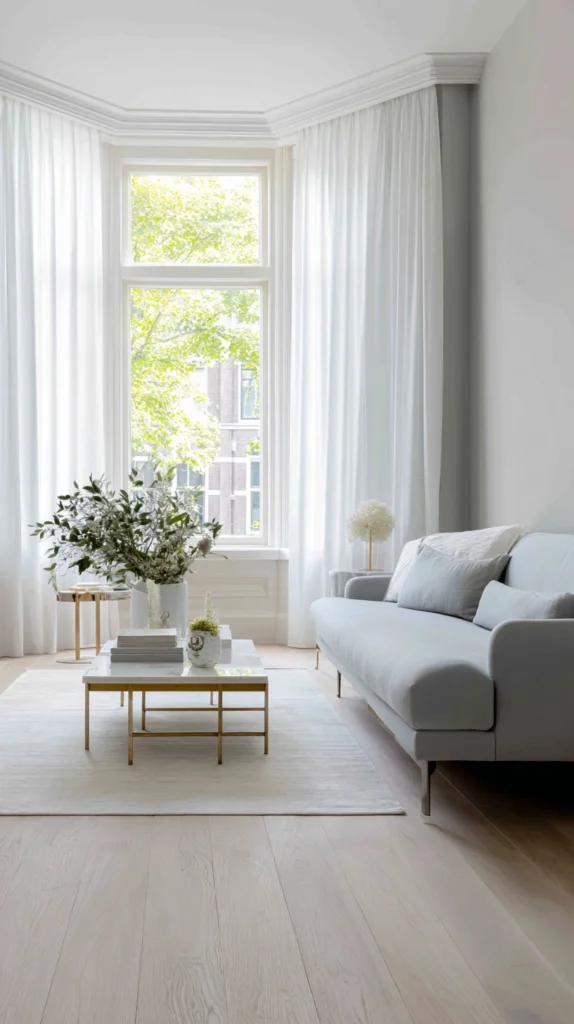
Budget: $0 – $200
Furniture with visible legs — a sofa on legs, a coffee table on legs, chairs on legs — creates more perceived floor space than the same furniture without legs because the eye can see the floor beneath the furniture rather than assuming it is simply absent. The floor visible under a raised sofa is floor that reads as present; the floor under a floor-standing sofa base is floor that reads as concealed. In a small living room where every visible centimetre of floor contributes to the perceived size of the space, the visibility of the floor beneath the furniture is a significant and consistently underestimated space-creating device.
A sofa on legs costs the same as a sofa without them — the leg specification is a selection criterion rather than an additional cost. Replacing the existing sofa base with an alternative is rarely practical, but choosing legs for the next sofa is a design decision available at every budget level. Coffee tables and side tables with slender legs rather than solid bases cost the same as equivalent tables with solid bases — the leg specification is again a selection criterion.
Style tip: Choose furniture legs in a consistent material and finish throughout the small living room — all timber, all metal in the same finish — rather than mixing leg materials across different pieces. Consistent leg material creates the visual continuity of a furniture arrangement selected as a set; mixed leg materials create the visual disconnection of furniture assembled from different sources without a unifying principle. In a small room where every element is visible in a single glance, the visual continuity of consistent details reads as more spacious than the visual complexity of inconsistent ones.
9. The Sofa Size Calibration
Budget: $0 – $800
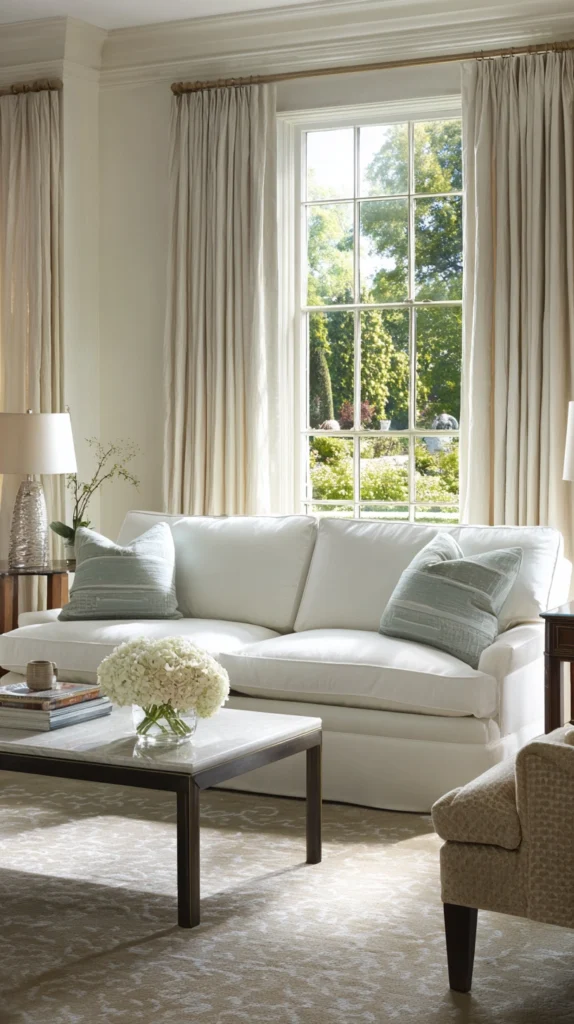
A sofa that is too large for the small living room — longer than the wall it is against, deeper than the circulation space allows, scaled to a room that is not the room it occupies — is the single most common and single most significant layout problem in compact living rooms. The oversized sofa makes every other furniture and layout decision worse by consuming the floor space, the circulation space, and the visual space of a room that does not have any of these to spare.
The correct sofa size for a small living room is determined by the distance between the sofa position and the opposite wall or furniture piece — 150–200 centimetres of clear floor between the front of the sofa and the opposite element is the minimum for comfortable use, and this distance must be measured before the sofa is chosen rather than after it is delivered. A two-seat sofa of 150–165 centimetres in length suits most small living rooms better than the standard three-seat sofa of 200–220 centimetres that most people default to.
Style tip: If the existing sofa is too large to replace, position it on the diagonal rather than parallel to the longest wall. A diagonal sofa placement in a rectangular small room creates two circulation paths rather than one, opens the corners of the room to visual access, and produces the impression of a room that is being used creatively rather than a room where the furniture cannot quite fit. The diagonal is the layout option available when the furniture cannot be changed but the arrangement can.
10. The Built-In Storage Wall
Budget: $300 – $1,500
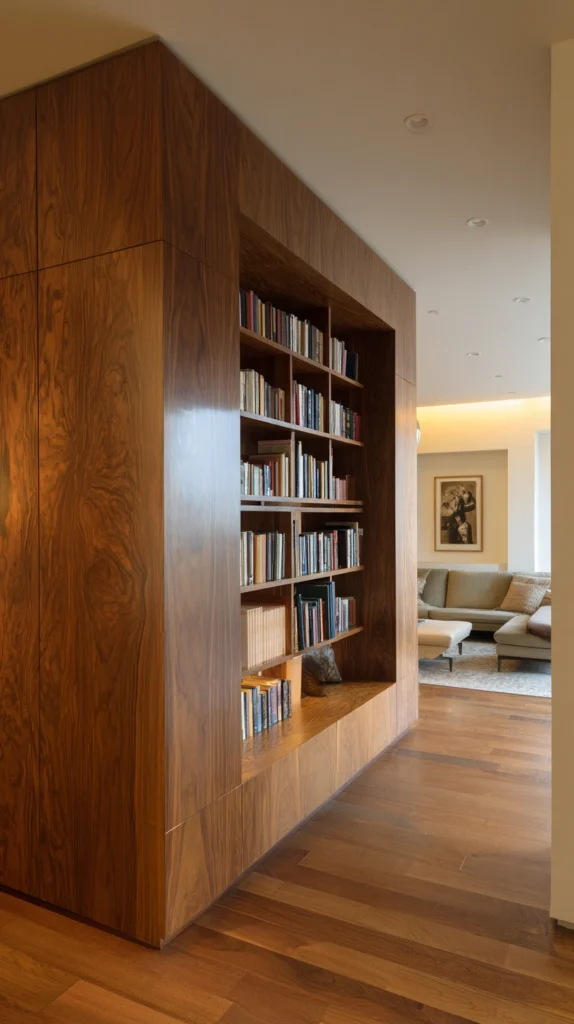
A full wall of built-in storage — floor-to-ceiling cupboards with flush-fronted doors, or a combination of closed storage below and open shelving above — eliminates the need for multiple freestanding storage pieces that collectively consume significantly more floor space than a single continuous built-in. The built-in storage wall is not a feature added to the small living room; it is a wall that has been made useful, and the distinction is the design logic that separates a small room with adequate storage from one that is overwhelmed by the furniture required to provide it.
Built-in cupboard doors in MDF with a flush finish cost $100–$300 for a standard wall width. The cupboard carcasses behind them cost $150–$400. A built-in shelving and cupboard combination for a full living room wall runs $400–$1,200 in materials and basic carpentry. Paint the built-in storage in the same colour as the wall so the storage reads as a wall with openings rather than as furniture covering a wall — the wall-colour built-in is the detail that makes the storage disappear visually while remaining fully functional.
Style tip: Choose push-to-open or recessed-grip cupboard mechanisms rather than visible handles for the built-in storage wall. A storage wall without visible handles reads as a designed wall surface; one with visible handles reads as a cupboard wall. The absence of hardware is the detail that most consistently produces the expansive quality of a wall that happens to open rather than a cupboard that happens to be wall-sized.
11. The Focal Point Clarity
Budget: $0 – $100
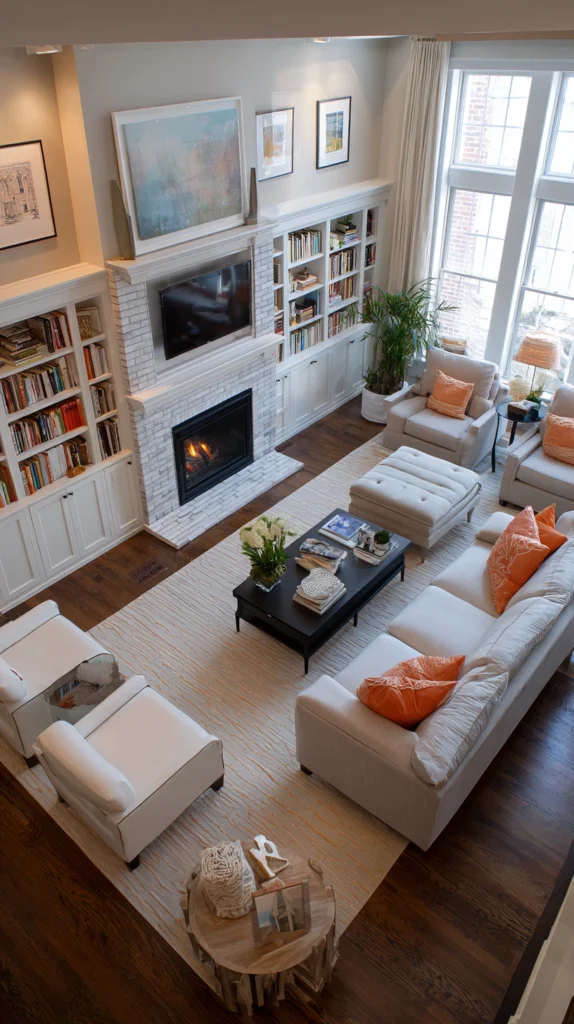
A small living room with multiple competing focal points — the television, the fireplace, the gallery wall, the view from the window — creates the visual complexity of a room that cannot decide what it is for, and visual complexity makes a room feel smaller by requiring more visual processing of a smaller space. A small living room with one clear focal point — the television, or the fireplace, or the window — and all furniture oriented toward it has the compositional clarity of a room that knows what it is doing, and that clarity reads as spacious because it requires no effort to understand.
Identifying and clarifying the focal point costs nothing — it requires removing or repositioning the elements that are competing with it rather than purchasing anything additional. Covering the television when not in use ($30–$60 for a fabric panel) allows the fireplace or the window to be the focal point during the hours the television is not needed. Repositioning the gallery wall to a secondary wall rather than the primary wall removes the competition between the gallery and the primary focal point.
Style tip: Orient all seating toward the single focal point rather than toward a compromise between two competing ones. A sofa that is angled toward the fireplace rather than directly facing the television creates the quality of a room designed for living in rather than for watching in, and the orientation communicates the room’s primary function more clearly than any decoration or styling can.
12. The Transparent Furniture Element
Budget: $60 – $300
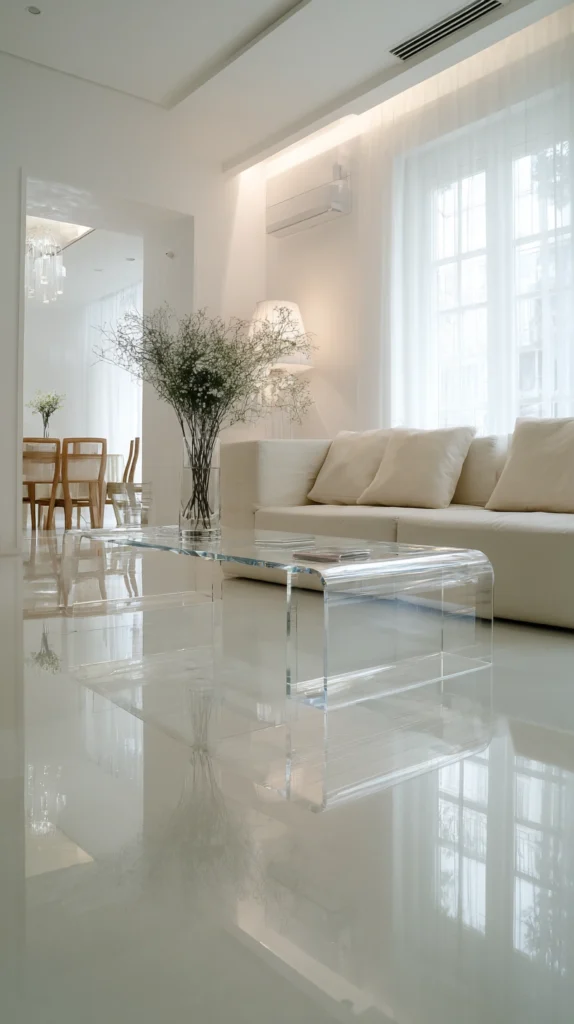
A piece of transparent furniture — a glass or acrylic coffee table, a lucite side table, a glass console — occupies the floor space of a conventional solid piece while reading as visually absent. The floor beneath the transparent piece is fully visible through it, and the eye registers this as floor rather than as furniture — the transparent piece is present as a surface but absent as a visual obstacle. In a small living room where floor visibility is one of the primary space-creating qualities, the transparent piece contributes that visibility without sacrificing the function.
A glass-top coffee table on a slim metal frame costs $80–$250. An acrylic or lucite side table runs $60–$200. A glass console table costs $100–$350. The transparent piece works best as the coffee table — the room’s central floor-level object and the one whose presence or absence most directly affects the perceived amount of clear floor in the space. A transparent coffee table surrounded by conventional solid furniture reads as a design choice; the same transparent piece in a room of otherwise transparent furniture reads as a theme.
Style tip: Keep the glass or acrylic surface completely clear rather than styling it with the objects that typically occupy a solid coffee table. A transparent table styled with objects loses its space-creating quality because the objects are read against the floor rather than the table surface, which reads as clutter hovering above the floor rather than objects on a surface. The transparent table performs best when it is performing only its spatial function.
13. The Monochrome or Tonal Colour Scheme
Budget: $0 – $100
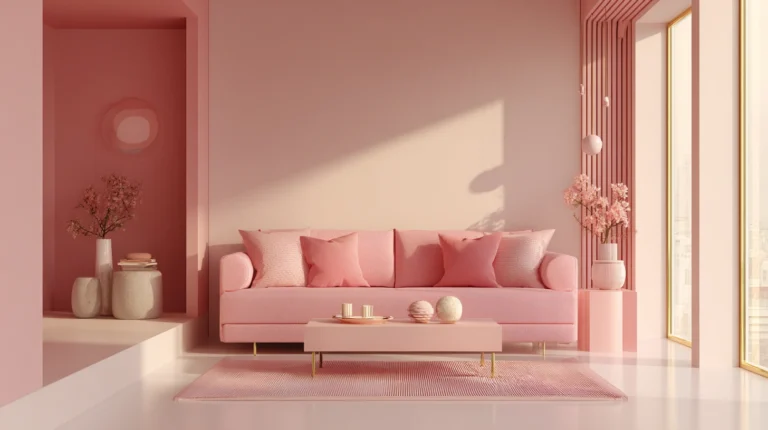
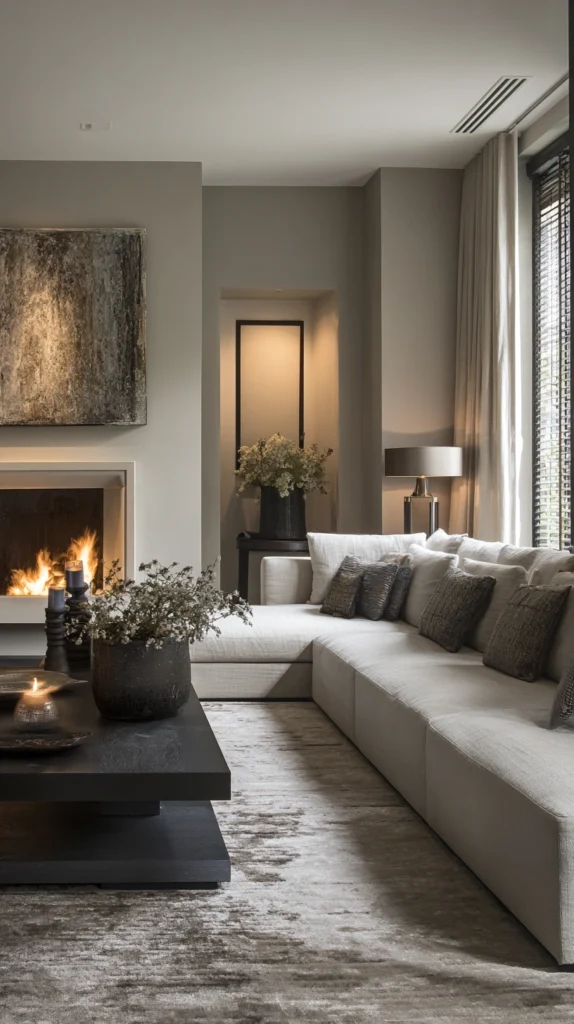
A small living room in a single tonal colour scheme — all walls, furniture, rugs, and textiles in related tones of the same colour family — reads as larger than the same room in multiple contrasting colours because the eye travels across a continuous tonal field rather than stopping at each colour boundary. The monochrome or tonal scheme is the colour strategy that most effectively makes a small room read as a single continuous space rather than a collection of different-coloured objects in a small area.
The tonal scheme costs nothing to implement with existing furniture if the existing palette is already within a single colour family — the implementation is the editing of anything that falls outside the palette rather than the purchase of anything new. Cushion covers in the room’s dominant tone cost $15–$30 each if replacements are needed. A throw in the same tonal family runs $30–$80. The tonal edit of the existing room is the first step before any purchase is considered.
Style tip: Include the full tonal range of the chosen colour family rather than a single mid-tone. A room in all the same mid-tone reads as uniform; a room that moves from the palest version of the colour at the ceiling through the full tonal range to the deepest tone at the floor reads as a composed tonal sequence with genuine depth. The tonal range is the colour composition that makes the monochrome scheme feel designed rather than defaulted to.
14. The Clear Circulation Path
Budget: $0
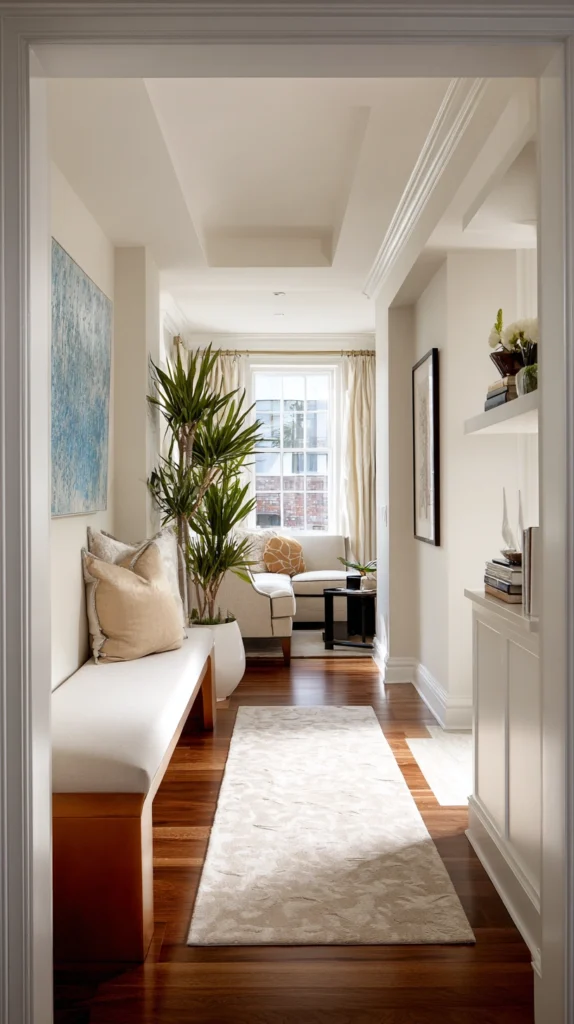
A small living room where the path from the door to the sofa, from the sofa to the window, and from the sofa to the dining area is clear — with no furniture obstructing any of these routes — reads as more spacious than the same room where the circulation paths are narrow, indirect, or partially obstructed. The clear circulation path is not a luxury of the large living room; it is a requirement of the small one, because a room where movement is constrained reads as too small for its furniture regardless of its actual dimensions.
Walk from the primary entrance of the living room to the sofa, from the sofa to the window, and from the sofa to every door that the room connects to. Any path that requires turning sideways, stepping around a piece of furniture, or redirecting to avoid an obstacle is a path that is too narrow for comfortable use. Remove or reposition any furniture that creates this constraint — the furniture piece that is preventing clear circulation is producing more negative impact on the room’s perceived size than its function justifies.
Style tip: The minimum acceptable circulation path width for comfortable use is 80 centimetres — the width that allows two people to pass each other without turning sideways. The ideal circulation path in a living room is 90–100 centimetres. Any route narrower than 80 centimetres is the first furniture repositioning priority regardless of any other layout consideration.
15. The Consistent Lighting Plan
Budget: $40 – $200
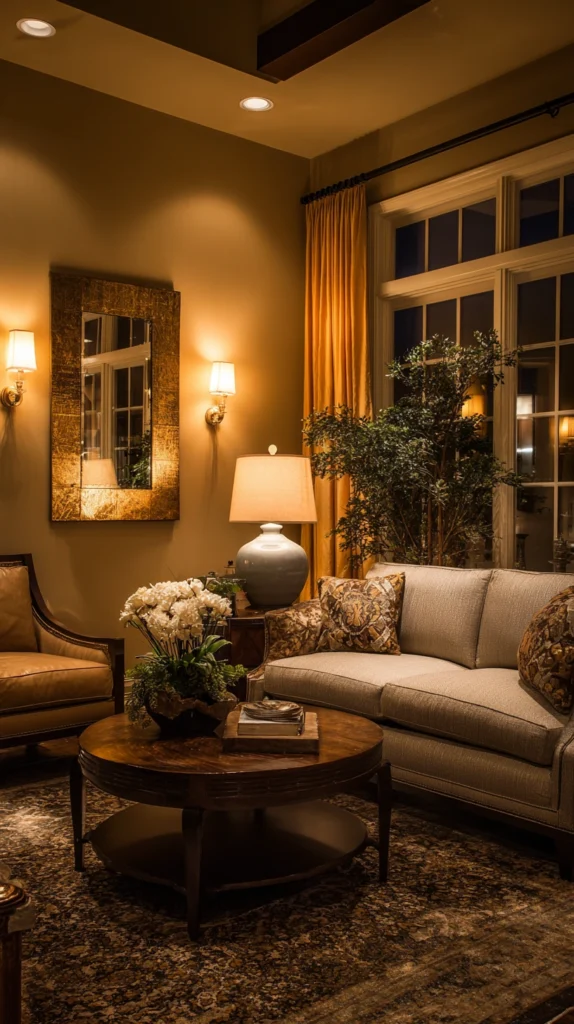
A small living room that is unevenly lit — bright in one area and dark in another — reads as smaller than a room of consistent brightness because the dark areas read as the limit of the room rather than as parts of it that happen to be less lit. A consistent lighting plan — light sources distributed so the full floor area of the room is illuminated to approximately the same warm level — makes the room read as its full size rather than as the size of its brightest zone.
A floor lamp at the darkest corner of the small living room costs $60–$180 and immediately improves the perceived size of the space by making the darkest area visible rather than apparently absent. A table lamp at the end of the sofa furthest from the window runs $30–$80. Smart bulbs in every fitting that connect to the same dimmer scene cost $8–$15 each and allow all light sources to be adjusted simultaneously to the same warm level. The consistent lighting plan requires every room corner to be addressed — a room with three well-lit corners and one dark one is a room with a dark corner.
Style tip: Position a mirror adjacent to the lamp at the room’s darkest corner so the lamp illuminates both the corner and the reflected space behind the mirror simultaneously. A floor lamp in a dark corner produces warm light at that corner; the same lamp with a large mirror beside it produces warm light at the corner and the visual impression of a further room beyond it — the double contribution of the lamp and mirror combination that costs little additional to the lamp alone.
The small living room that feels larger than it is has not been enlarged. It has been understood — its specific limitations addressed with specific decisions, its qualities of light and proportion used rather than compromised, its furniture selected and placed with the logic of the space rather than the logic of the furniture catalogue. The size of the room has not changed; only the decisions made within it, and the decisions are the difference between a room that feels like a constraint and one that feels like a considered choice.
Begin with the layout decisions that cost nothing — pull the sofa from the wall, clear the circulation paths, remove the competing focal point. Observe the room after each change before making the next. The small living room that was arranged with specific attention to how small spaces work is almost always a room that its occupants stop apologising for and start genuinely enjoying — which is the only measure of a layout decision that matters.