13 Living Room Color Trends Designers Are Obsessed With in 2026
Colour in the living room has shifted. After years of safe greige and cautious off-white, designers in 2026 are working with intention — choosing colours that do something specific to a room rather than simply not offending anyone.
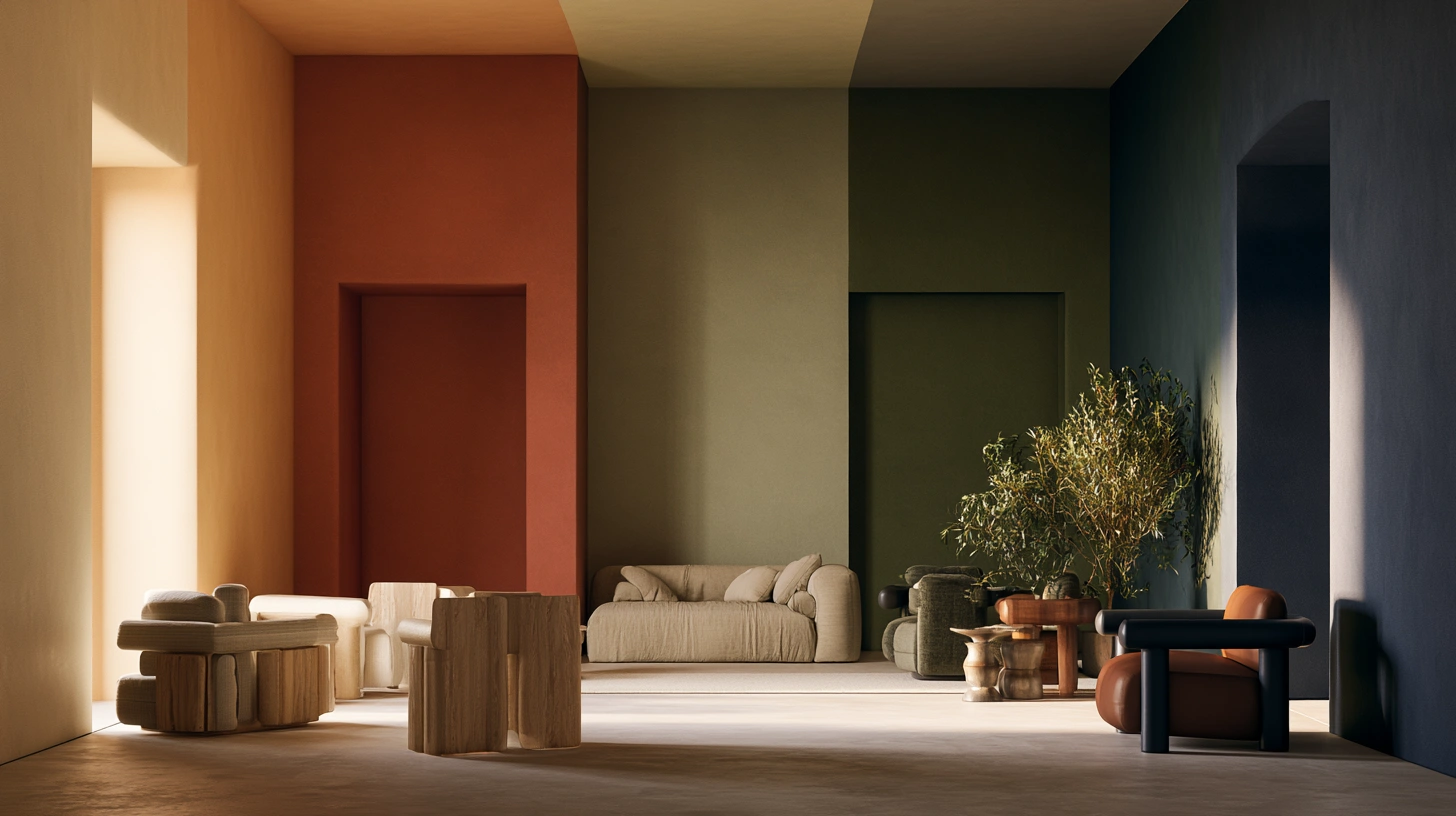
The trends this year are not about bold statements for their own sake but about the particular quality of atmosphere each colour creates: the warmth of a deep terracotta in evening light, the quiet authority of a near-black green on a single wall, the way a warm putty tone makes every piece of furniture look better than it did on a white background.
The thirteen colours and approaches below are the ones appearing most consistently across leading interior designers’ portfolios, showhouses, and editorial features in 2026. Each includes what to pair it with and a practical tip for applying it in a real living room rather than a photoshoot.
1. Warm Putty and Greige Evolved
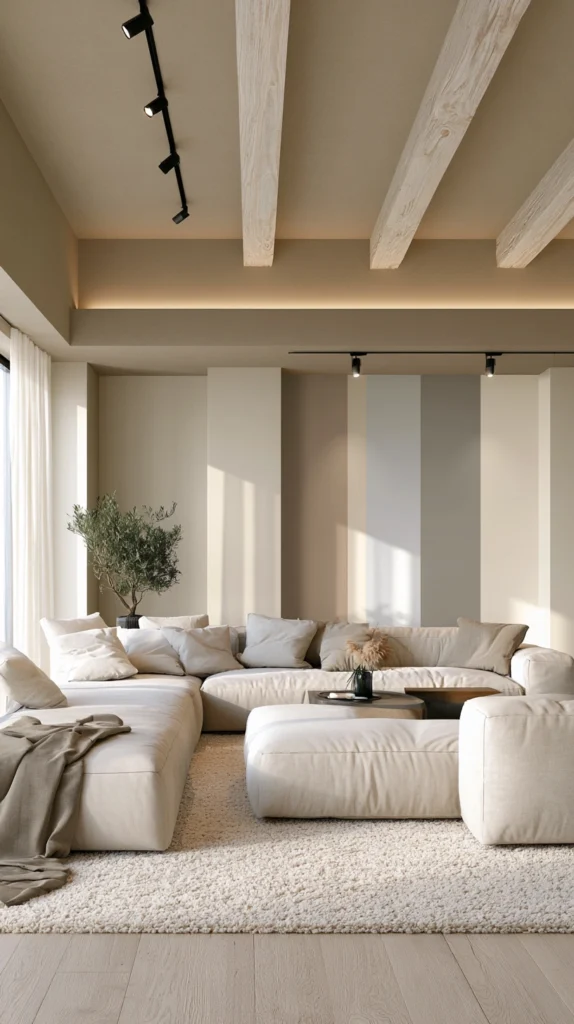
Key tones: Farrow and Ball String, Dulux Warm Putty, Benjamin Moore Pale Oak
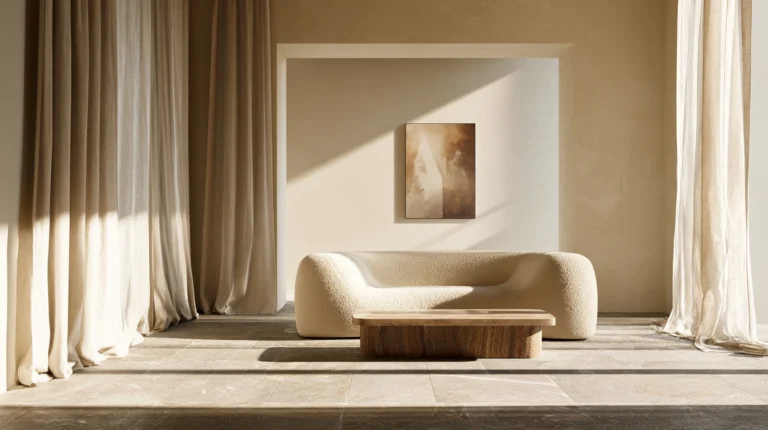
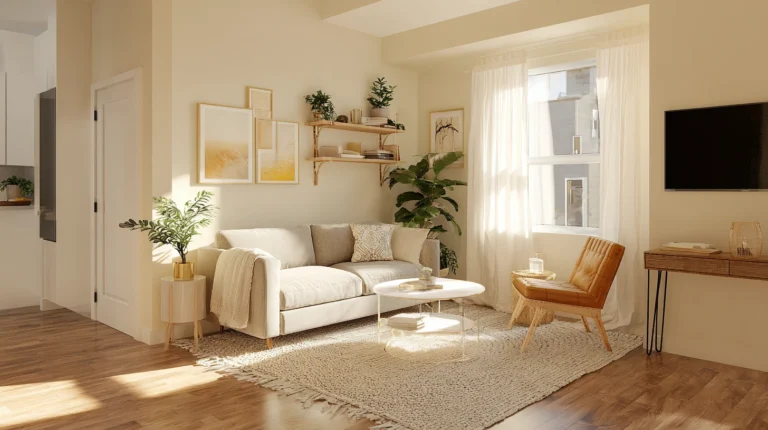
The greige moment is not over — it has evolved. The flat, cool greiges that dominated the previous decade have been replaced by warmer, more complex putty tones that have genuine depth in different light conditions. These colours read almost white in full morning light and shift toward a warm biscuit in the afternoon and a soft gold under evening lamplight — a quality that makes them feel alive rather than neutral and that suits living rooms used across the full range of daily light conditions.
Warm putty works with almost any furniture colour and material — natural timber, dark leather, linen in warm tones, and both cool and warm metallics all read well against it. It is the background choice that makes other colours and materials look more considered rather than competing with them, which is why designers return to its variations year after year regardless of what other colours are trending around it.
Design tip: Apply warm putty in an eggshell finish rather than matt for a living room that is regularly used. Eggshell provides a very slight sheen that reflects warm lamplight back into the room in the evening — creating a quality of ambient warmth in artificial light that a matt finish on the same colour does not achieve. The difference is subtle in daylight and significant after dark, which is when the living room colour matters most.
2. Deep Terracotta and Burnt Sienna
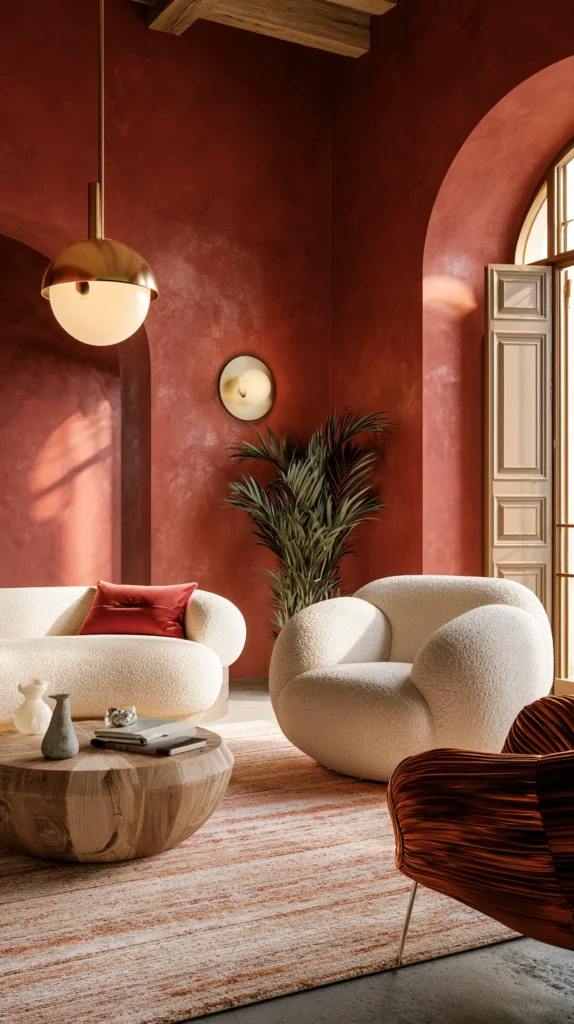
Key tones: Little Greene Pompeian Ash, Farrow and Ball Preference Red, Annie Sloan Antoinette
Terracotta has moved from an accent to a full wall commitment in 2026’s most admired living rooms. The deep, baked-earth tones of burnt sienna and aged terracotta — not the orange-terracotta of the early 2000s but a more complex, darker version closer to Pompeian fresco — create the warmest, most enveloping wall colour available for a living room that is used primarily in the evening. In lamplight these colours glow in a way that no other warm tone approaches.
Deep terracotta pairs most successfully with natural linen in off-white and pale sand tones, with dark timber flooring and furniture, and with brass and antique gold hardware throughout the room. Avoid cool-toned accessories — white ceramics, chrome fixtures, grey textiles — which create an uncomfortable visual tension with the warm wall tone that pulls the room’s palette in two incompatible directions simultaneously.
Design tip: Use deep terracotta on three walls rather than four — leaving the wall opposite the main seating position in a lighter complementary tone. Three walls of a deep warm colour create enclosure and warmth without producing the slightly oppressive quality that four identical walls of a saturated dark tone can generate in a standard-sized living room. The lighter fourth wall also creates a natural focal point backdrop for artwork or a television without requiring a separate feature wall treatment.
3. Soft Black and Near-Black
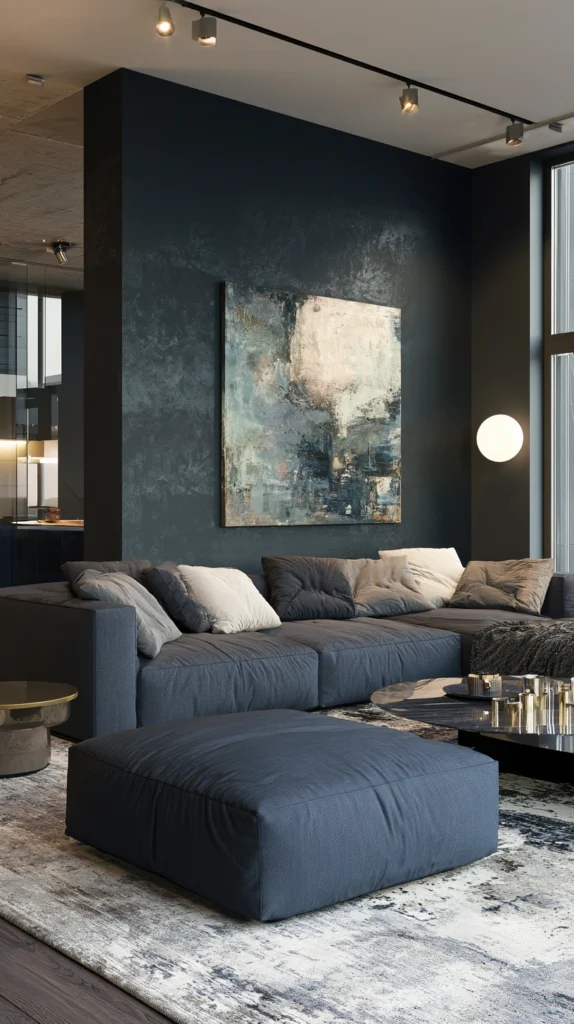
Key tones: Farrow and Ball Railings, Little Greene Obsidian, Dulux Midnight Hour
Near-black — the very dark navy, green, or charcoal that reads as black from a distance but reveals its true colour in direct light — is the designer’s choice for a living room feature wall in 2026. It creates a depth and drama that true black rarely achieves because the underlying colour gives the dark tone warmth and complexity rather than the flatness of a pure black surface. Railings reveals its deep navy in morning light; Obsidian shows its green undertone in afternoon sun.
A near-black feature wall behind the main sofa or the fireplace alcove creates one of the most sophisticated living room backdrops available — it makes artwork pop, gives furniture visual weight, and creates the sense of depth and intention that decorators associate with genuinely well-designed rooms. The rest of the room stays light — warm white walls, natural materials, pale textiles — so that the near-black wall reads as a deliberate architectural decision rather than an attempt to disguise a poorly lit room.
Design tip: Apply near-black paint in two to three full coats with a short pile roller for the most consistent, deepest finish. Dark colours applied in a single coat show roller marks and uneven coverage that are invisible on lighter tones but immediately visible on a near-black surface in raking light. Allow each coat to dry completely before applying the next and finish with a final cut-in by brush at all edges for the clean, precise line that makes a dark feature wall look professionally executed.
4. Sage and Muted Olive Green
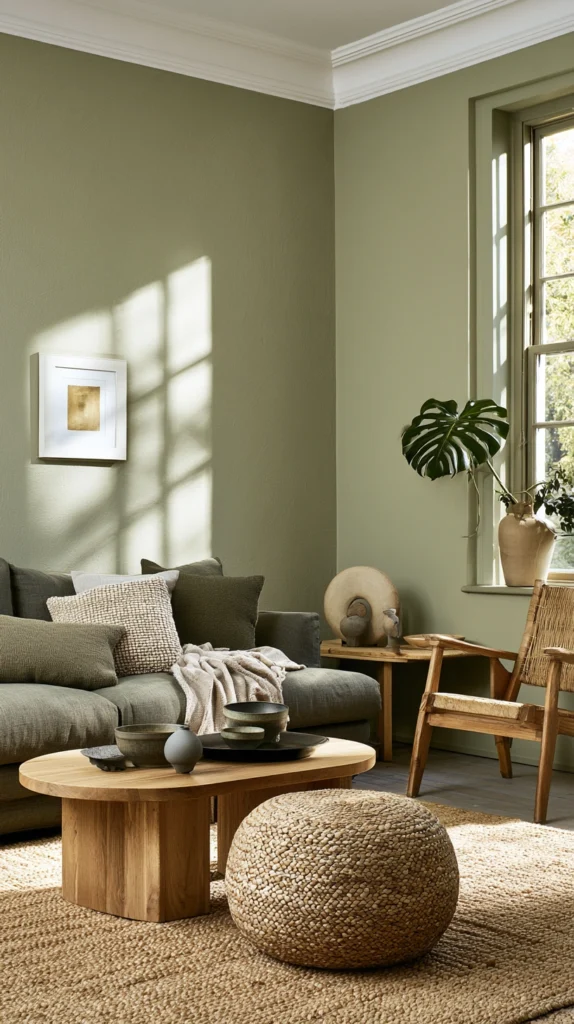
Key tones: Farrow and Ball Mizzle, Little Greene Sage, Fired Earth Vert de Terre
Sage green has been the most consistent living room colour trend of the past several years and in 2026 it has matured into a more complex, more muted olive-inflected range that designers are using across full rooms rather than single walls. The muted olive-sage tones have a complexity that simpler sage shades lack — they shift between green and grey and occasionally brown depending on the light quality and the colours in the room around them, which makes them among the most interesting wall colours available for a living room that changes character through the day.
Muted sage and olive pair best with warm timber and cane furniture, undyed linen, natural fibre flooring, and terracotta or warm stone accessories. The combination of sage walls, natural timber, and linen is the defining interior palette of 2026 and it appears in every context from entry-level to high-end across the full range of living room styles. It is not going away because it is genuinely excellent — restful, sophisticated, and compatible with almost every furniture style and natural material available.
Design tip: Test sage and olive green paint swatches on the north-facing and south-facing walls of the room simultaneously before committing. Sage green reads entirely differently in north light (where it appears blue-grey and cool) and south light (where it appears warm and genuinely green). A colour that looks perfect in one light condition may be disappointing in another — and both conditions occur in most living rooms through the same day. The swatch test prevents the most common sage-green painting disappointment.
5. Dusty Plum and Aubergine
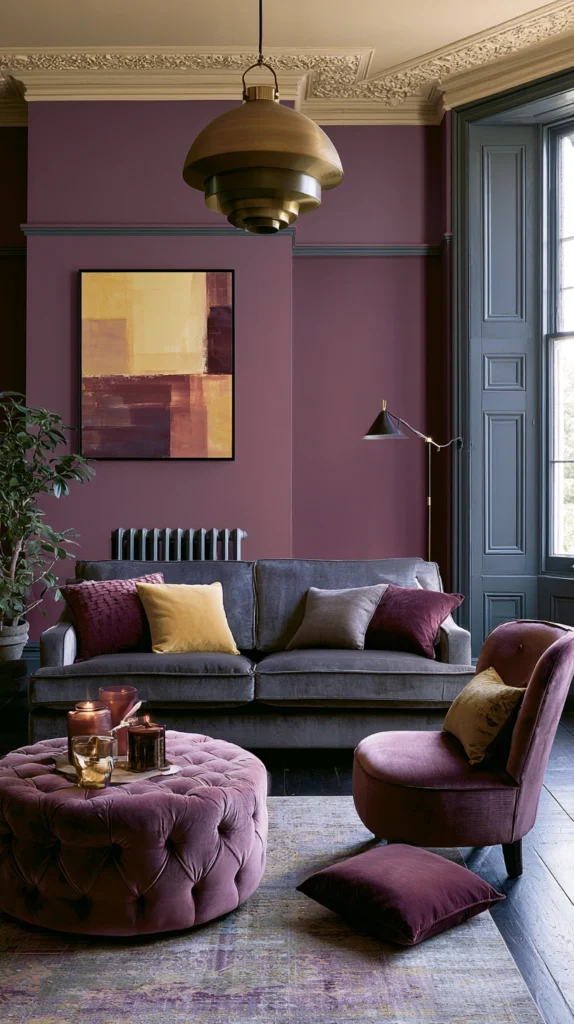
Key tones: Farrow and Ball Brassica, Little Greene Purple Brown, Fired Earth Porphyry
Deep purple-brown and dusty plum tones are emerging as the most unexpected and most confident living room colour choice of 2026 — appearing in the most photographed show houses and editorial shoots of the year in full-room applications that would have seemed impossibly brave five years ago. At their best these colours have the deep, enveloping quality of a very expensive wine — complex, warm, and completely different from anything else in the current colour vocabulary.
Dusty plum works in living rooms with warm timber floors, dark leather or velvet upholstery in complementary tones of burgundy and deep caramel, and brass or antique bronze hardware throughout. It suits rooms with good natural light — the complexity of the colour reveals itself most fully in conditions where daylight illuminates the room fully for at least part of the day. In a north-facing room with limited natural light, dusty plum can read as simply dark rather than revealing the complexity that makes it interesting in better-lit conditions.
Design tip: Combine dusty plum walls with natural raw linen curtains in an undyed warm cream tone rather than white or off-white. Pure white beside a deep plum wall creates a harsh contrast that makes both colours look less sophisticated than they are individually. Warm, undyed linen provides the tonal transition that allows the deep wall colour to feel luxurious rather than heavy and that keeps the room feeling warm rather than theatrical in full daylight conditions.
6. Warm White With Depth
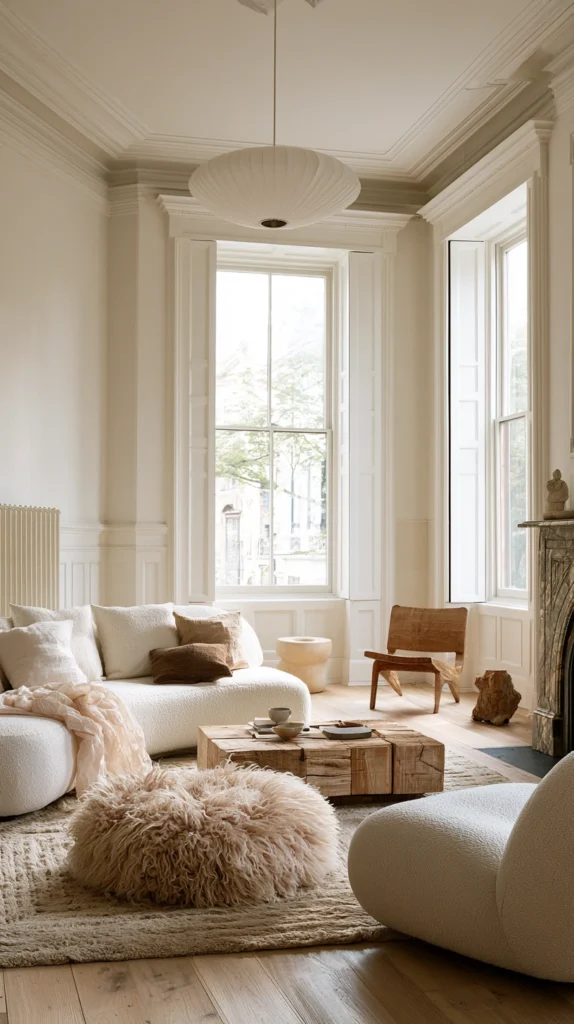
Key tones: Farrow and Ball Wimborne White, Little Greene Slaked Lime, Benjamin Moore Chantilly Lace Warm
The flat, bright whites that dominated minimalist interiors for two decades are being replaced by warm whites with genuine complexity — tones that have enough yellow, pink, or grey in them to read as white in strong light while appearing as a distinct, sophisticated warm tone in the evening and in lower natural light. These are whites that look deliberately chosen rather than defaulted to, and they make every material and every piece of furniture in the room read better than flat brilliant white produces.
Warm whites with depth suit every living room style from contemporary to traditional and they are the most consistently useful background colour available for anyone who wants the flexibility of a neutral backdrop without the visual coldness of a bright or blue-toned white. They also work in both high-contrast schemes (with dark furniture and bold artwork) and in tonal, monochromatic arrangements of layered natural materials — which makes them the most genuinely versatile living room colour available at any point in the colour trend cycle.
Design tip: Apply warm white paint in a consistent finish throughout the room — ceiling, walls, and woodwork all in the same colour but different finishes rather than different colours for each surface. Ceiling in matt, walls in eggshell, and woodwork in full eggshell or satin creates the sophisticated tonal variation of a single colour at different sheens that is significantly more considered than the standard white ceiling plus coloured walls plus brilliant white woodwork arrangement that most rooms default to without any deliberate decision being made.
7. Chocolate Brown and Dark Mocha
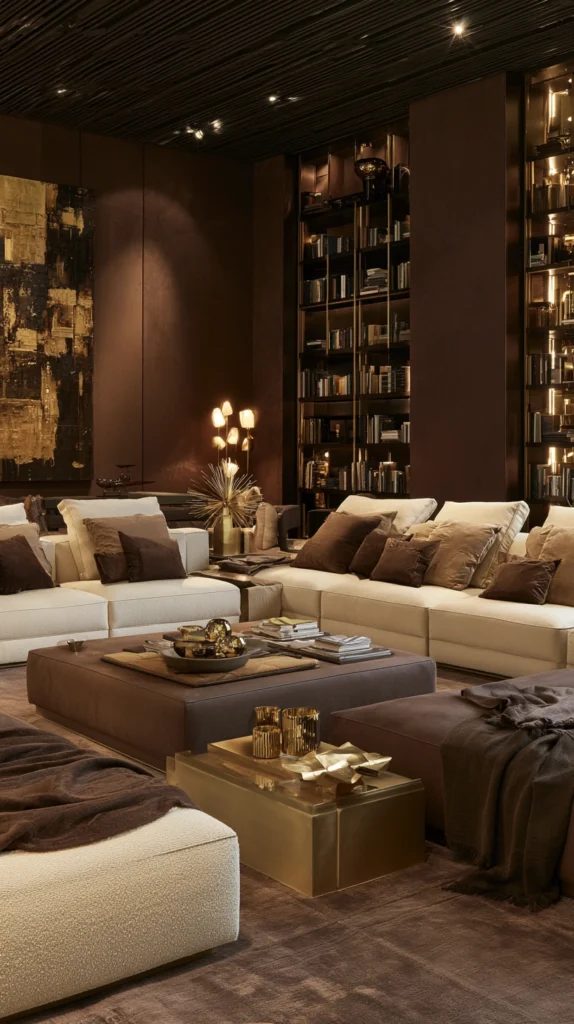
Key tones: Farrow and Ball Broccoli Brown, Little Greene Mahogany, Fired Earth Truffle
Deep chocolate brown and dark mocha are the most specifically luxurious living room wall colours available in 2026 and the ones that designers are applying most confidently in full-room schemes where the surrounding furniture and accessories are chosen specifically to complement the depth and warmth of the wall tone. When executed correctly — with warm cream textiles, natural brass, aged timber, and a wool rug in complementary tones — a chocolate brown living room has a quality of warmth and intimacy that is genuinely unmatched by any other colour at equivalent depth.
Dark mocha and chocolate work best in living rooms with a ceiling height of at least 2.5 metres — in rooms with lower ceilings the dark walls can read as oppressive rather than enveloping. They suit evening-oriented living rooms where the artificial light quality matters as much as the daylight quality — these colours are at their absolute best under warm lamplight, where they produce a depth and richness that makes the room feel genuinely exceptional. In flat overhead light the same colours appear simply dark.
Design tip: Paint the ceiling in the same chocolate or mocha tone as the walls for a fully immersive, cocooning effect rather than leaving it white. A white ceiling above deep chocolate walls creates an uncomfortable visual break that emphasises the ceiling height in the wrong direction — drawing the eye upward to the contrast rather than allowing it to rest within the wrapped, enveloping quality that makes a fully painted dark room feel intimate and considered rather than simply dark.
8. Pale Blue-Grey and Coastal Mist
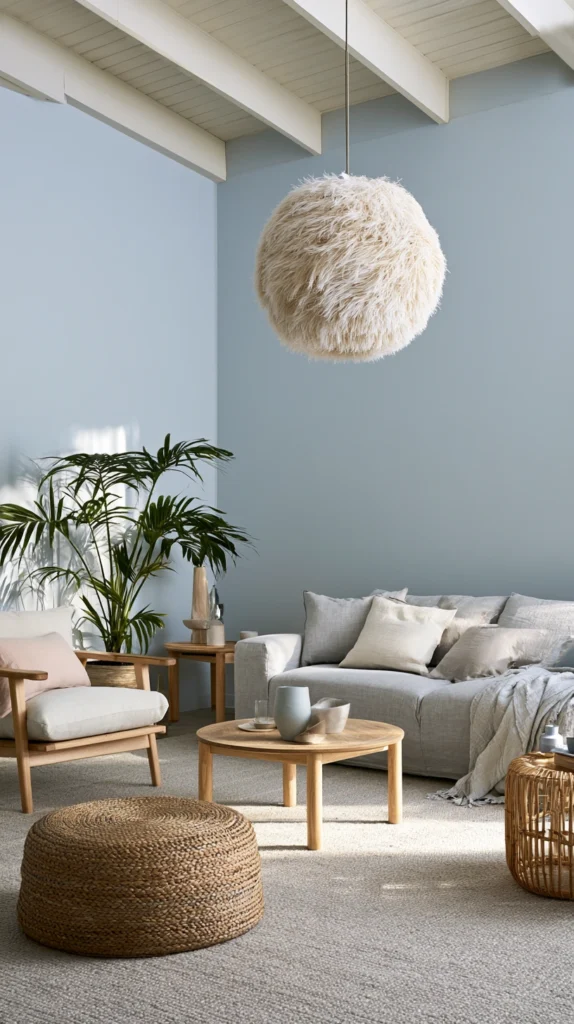
Key tones: Farrow and Ball Borrowed Light, Little Greene Pale Lucie, Dulux Coastal Mist
Pale blue-grey — the tone of sea mist, of overcast coastal sky, of weathered maritime timber — has emerged as one of the most restful and most consistently flattering living room colours in 2026. It has the quality of creating an optically cooler, slightly more spacious room atmosphere than any warm-toned neutral, while retaining enough warmth in its grey base to avoid the clinical quality of a pure cool grey in domestic conditions. It suits both modern and traditional living room schemes equally well.
Pale blue-grey works particularly well in south and west-facing rooms that receive strong, warm afternoon light — the cooler undertone of the wall colour balances the warmth of the incoming sun and creates an even, comfortable light quality through the hours when warm-toned walls can feel slightly overwhelming. In north-facing rooms the same colour reads as genuinely cool and may require a stronger warm accent in the textiles and accessories to prevent the room from feeling cold rather than restful.
Design tip: Pair pale blue-grey walls with warm natural materials — cane, rattan, natural timber, undyed cotton — rather than with cool or industrial materials that amplify the cooler quality of the wall colour. The most consistently successful pale blue-grey living rooms are the ones where every material in the room has genuine warmth of its own, providing the balance to the wall colour that prevents the room from feeling cold while allowing the restful, airy quality of the blue-grey to remain the dominant atmospheric note.
9. Rich Teal and Deep Peacock
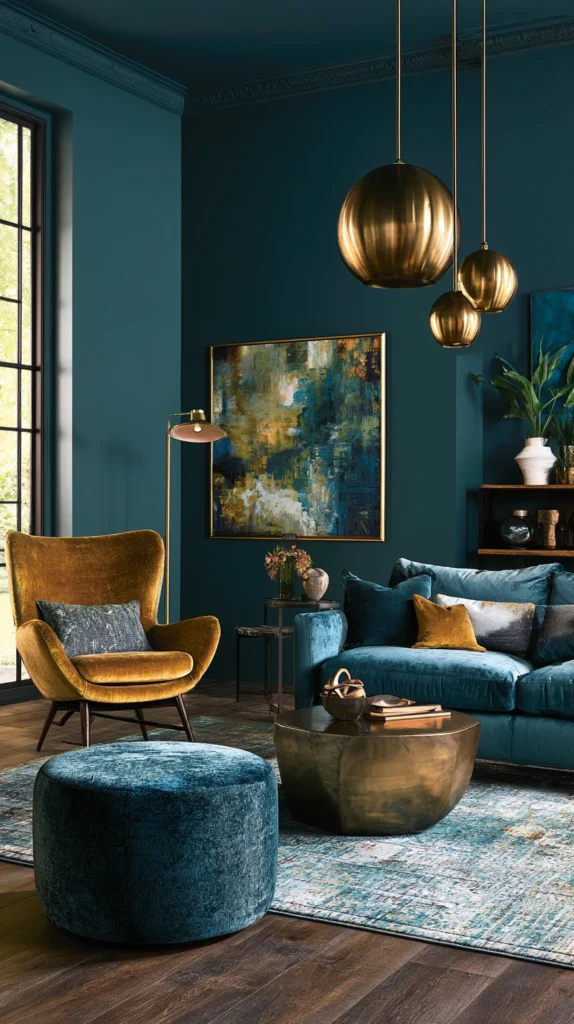
Key tones: Farrow and Ball Vardo, Little Greene Peacock Blue, Fired Earth Teal
Rich teal — the deep blue-green that sits between the two most authoritative colours in the interior palette — is making a strong appearance in the most confident 2026 living room schemes. It has the depth and seriousness of navy without its coldness, and the visual richness of a deep green without its potential for heaviness in rooms with limited natural light. In the right room and under the right lighting conditions, a teal wall has a gemstone quality — the kind of colour that makes everyone who enters the room notice something has been decided rather than defaulted to.
Deep teal works best in living rooms with warm accent colours — a terracotta cushion, a burnt orange throw, brass candlesticks — that provide the complementary warmth the cool wall colour lacks. The combination of deep teal and warm earthy accents is one of the most sophisticated and most visually balanced interior palettes available and it appears throughout the most highly regarded editorial interior photography of 2026. A full room in deep teal requires confidence in the commitment — but the rooms that make it work are consistently among the most memorable living spaces in any interior photography of the year.
Design tip: Use deep teal on the wall behind the main sofa and fireplace alcove rather than on all four walls for a first teal commitment. The single teal wall — with the remaining walls in a complementary warm off-white or stone — provides the full visual impact of the colour at its most concentrated without requiring the room to be entirely replanned around the deeper commitment of an all-teal scheme. It also allows the colour to be assessed in the actual room conditions before any decision about extending the treatment is made.
10. Warm Stone and Sand
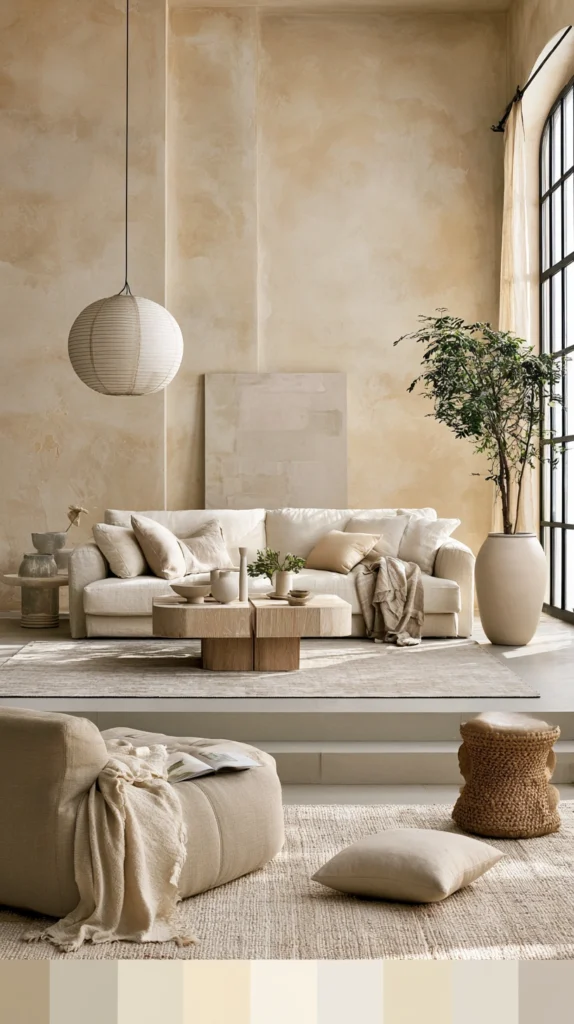
Key tones: Farrow and Ball Dead Salmon, Little Greene Sandstone, Fired Earth Sunstone
Warm stone and sand tones — the colours of natural limestone, of sandy desert soil, of the interior of an old stone building — are among the most grounding and most enduringly satisfying living room colours available. They are warm without being vivid, complex without being demanding, and they suit both natural and artificial light with an evenness that more saturated colours rarely achieve. They are also the most forgiving backdrop for mixed furniture styles — almost anything looks good against a warm stone wall.
Stone and sand tones reached a particular sophistication in 2026 with the move toward deeper, more complex versions of the palette — colours with more red or more grey in them than simple beige — that have a specific quality of warmth and aged material richness not present in lighter or more neutral equivalents. These are the tones of old plaster, of worn stone flags, of a room that has been lived in and loved rather than recently decorated. In practice they suit both newly decorated and long-established rooms equally — which is one of their most useful qualities.
Design tip: Layer warm stone walls with textiles and accessories in two or three tones drawn from the same warm family — pale sand, mid terracotta, and deep rust — rather than introducing cool or contrasting tones as accent colours. A monochromatic warm tonal scheme in the sand-to-terracotta range is one of the most sophisticated and most quietly impressive approaches to living room colour available and it is significantly easier to execute successfully than any multi-tone scheme that introduces cool or contrasting colours as design elements.
11. Forest Green and Bottle Green
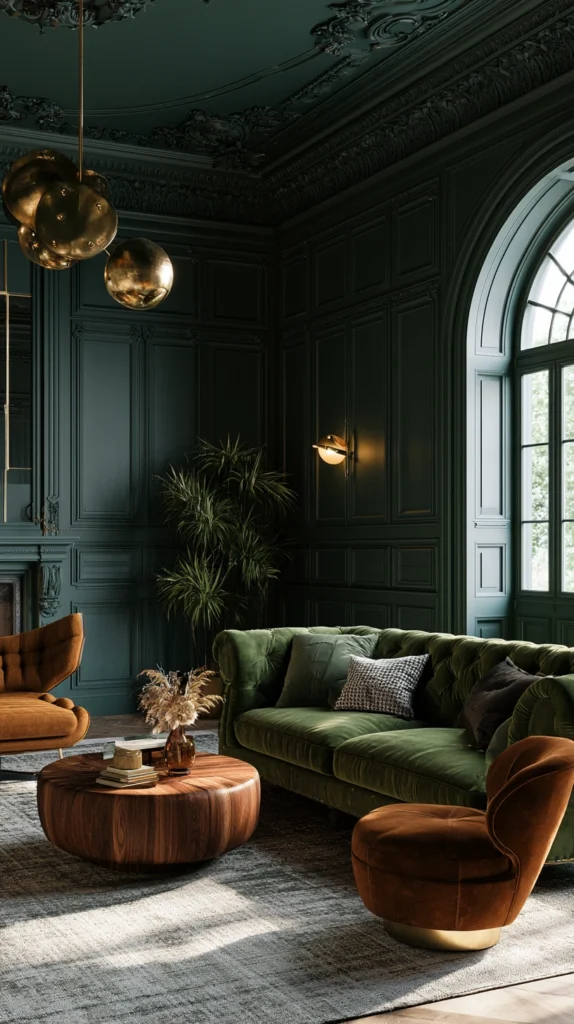
Key tones: Farrow and Ball Calke Green, Little Greene Jewel Beetle, Annie Sloan Amsterdam Green
Deep forest and bottle greens are the most authoritative living room colours in the 2026 palette — they have been building for several years and have now arrived at a point where they are being used by designers with complete confidence in full-room applications that include ceiling, joinery, and walls in a single sweeping treatment. A living room painted throughout in a deep forest green — with warm brass fixtures, natural timber, and aged leather — is the most consistently admired and most specifically desirable interior aesthetic of 2026.
Forest and bottle greens suit every living room style from Georgian town house to contemporary apartment and they work equally well in north and south-facing rooms. The depth and complexity of a well-chosen forest green shifts through every light condition without ever losing its fundamental character — it is always green, always rich, and always more interesting at the next viewing than it was at the last. This consistency across light conditions is one of the qualities that makes it the most satisfying living room colour to live with over time.
Design tip: Paint all joinery — skirting boards, door frames, window reveals, and built-in shelving — in the same forest green as the walls for a fully committed scheme rather than leaving woodwork in white. The all-green treatment where walls and joinery are the same colour creates a seamlessly wrapped room that feels genuinely designed rather than painted. White woodwork against dark green walls creates a graphic contrast that looks designed but prevents the full atmospheric quality of the all-green room from developing — which is the quality that makes these rooms so specifically striking in person.
12. Blush Pink and Dusty Rose
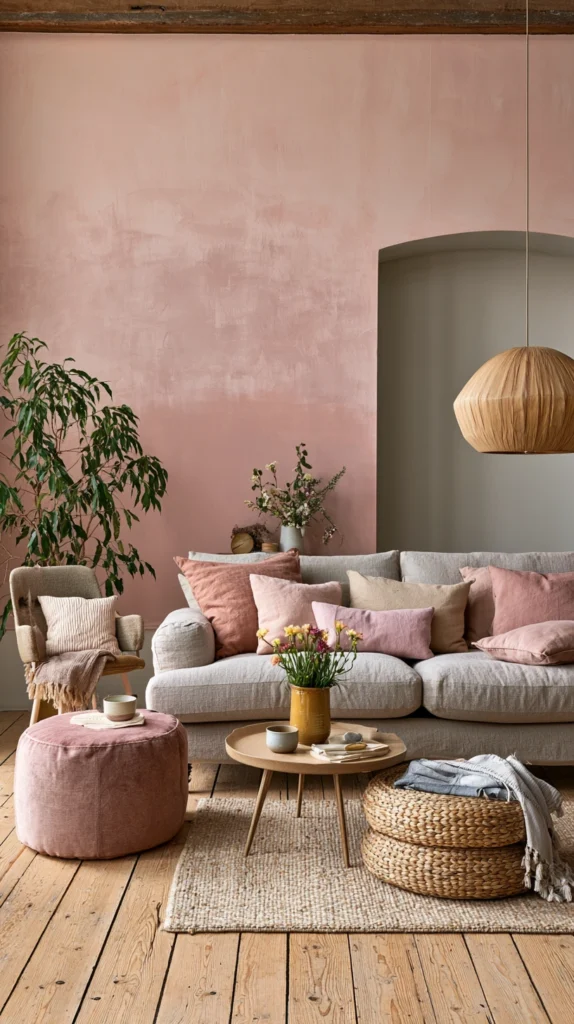
Key tones: Farrow and Ball Setting Plaster, Little Greene Hellebore, Paint and Paper Library Petal
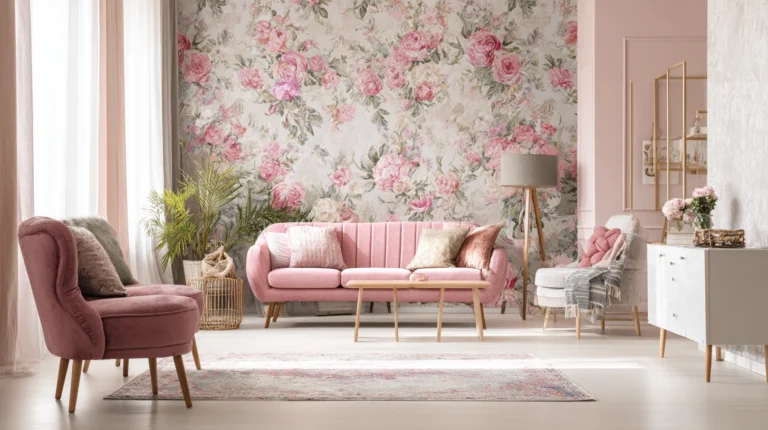
Blush pink and dusty rose tones — not the sweet, millennial pink of the previous decade but a more complex, more faded, almost terracotta-inflected version closer to aged fresco or plaster — are appearing in the most sophisticated living room interiors of 2026. At their best these colours have a quality of warmth and softness that is uniquely flattering to both the room and the people in it, and they work in evening lamplight with a warmth that few other colours approach.
The new dusty pinks of 2026 suit living rooms with dark timber flooring, aged leather furniture, and textiles in warm natural tones — the contrast between the pale, warm pink wall and the darker, richer tones of the furniture and floor creates a visual balance that makes the pink appear sophisticated rather than sweet. Avoid pairing these tones with grey — the cool-grey-and-pink combination that characterised the previous pink interior trend is specifically what the 2026 dusty rose palette is designed to move away from.
Design tip: Apply dusty rose and blush pink in a limewash or colour wash finish rather than standard emulsion for the most sophisticated result. The textured, slightly uneven surface of a limewash finish gives these colours the quality of aged plaster or fresco that makes them most appealing — a flat emulsion application of the same colour can look simply pink, while a limewash application looks considered and intentional in a way that references both material quality and interior design history simultaneously.
13. Inky Indigo and Dark Midnight Blue
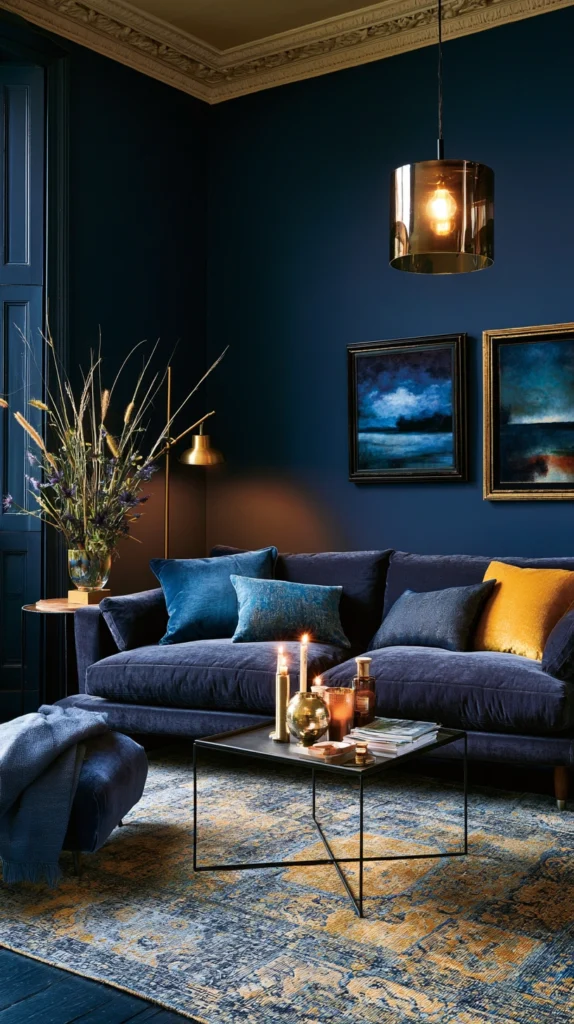
Key tones: Farrow and Ball Hague Blue, Little Greene Hicks Blue, Fired Earth Indigo
Inky indigo and dark midnight blue are the most specifically dramatic and most directionally confident living room colour choices in 2026 — deep enough to create a genuinely immersive, enveloping room experience while retaining enough blue warmth to avoid the coldness that pure dark navy can produce in a domestic living space. These are the blues of the night sky at last light, of deep ocean water, of a room that has been designed specifically for the hours after dark.
Dark midnight blue works best in living rooms with warm lamplight as the primary evening light source — the combination of a deep indigo wall and the warm golden light of a well-positioned table lamp creates one of the most atmospheric and most specifically beautiful room conditions available in any interior aesthetic. Pair with brass and antique gold throughout, warm cream and natural linen textiles, and aged timber furniture with visible grain — every warm, natural material in the room amplifies the depth and warmth of the dark blue wall rather than competing with it.
Design tip: Apply inky indigo and dark midnight blue with a brush rather than a roller for the final finishing coat — a brush-applied finish shows the natural texture of the application in a way that adds depth to very dark colours and gives the painted surface a quality closer to a crafted finish than the uniform flatness of a roller-applied equivalent. The slight texture variation of a brush finish on a very dark colour creates the rich, layered quality that makes dark blue rooms feel genuinely exceptional rather than simply dark.
The consistent thread through every colour on this list is confidence — the willingness to make a specific, committed choice and to build the room around it rather than choosing a colour that offends no one and therefore excites no one either. The living rooms that designers are genuinely proud of in 2026 are the ones where a colour decision was made clearly, executed well, and supported by materials and textiles that understood what the colour was trying to do. That clarity of intention is always the most admired quality in any living room, regardless of the specific colour that carries it.
Choose the colour that most immediately describes the atmosphere you want the room to produce — the warmth of deep terracotta, the authority of forest green, the drama of midnight blue — and commit to it fully. A half-committed colour choice always looks less impressive than the same colour used with complete conviction. The room that knows what it is always looks better than the one that is still deciding.