15 Cozy Reading Nook Ideas for Every Space
A reading nook is not simply a chair beside a bookshelf. It is a specific place in the home where the conditions for reading — comfortable seating, adequate light, some degree of enclosure, and proximity to books — have been deliberately assembled in the same position.
The reading nook signals that reading is valued in this household, that someone thought carefully about the conditions under which it happens, and that one corner of the home has been designed specifically for the pleasure of sitting still with a book rather than as a general-purpose overflow of the adjacent room.
The fifteen ideas below cover every scale and every architectural condition — from a built-in window seat in a bay to a simple chair in a rented flat — giving every space the possibility of a reading nook that genuinely works rather than one that exists primarily as a decorative concept.
1. The Classic Bay Window Seat
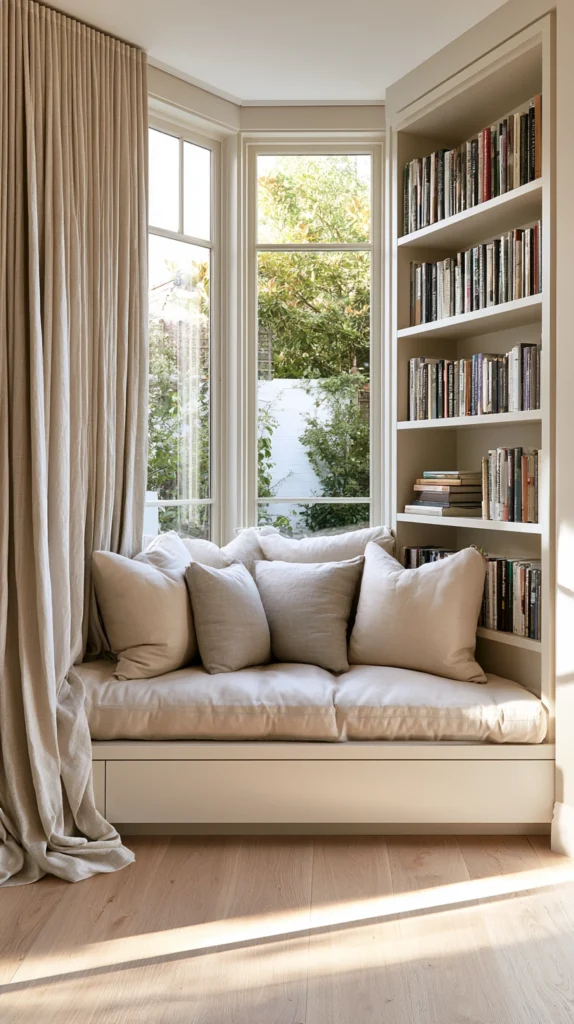
Budget: $200 – $800
A bay window seat — a cushioned bench built across the full width of a bay window alcove — is the most universally aspirational and most architecturally satisfying reading nook available. The natural light from three window directions, the slight separation from the main room provided by the bay’s recess, and the built-in quality of a fitted cushioned bench combine to create a reading position that no freestanding chair arrangement quite replicates in terms of comfort, light, and sense of enclosure.
A basic built-in bay window seat in painted MDF — with a 10 cm foam and fabric cushion — costs $200–$500 in materials and is achievable as a DIY project with basic carpentry skills. A professionally built version with under-seat storage drawers and upholstered cushion runs $500–$1,200. Add two side cushions or bolsters at each window reveal to create the enclosed, sheltered feeling of a proper nook rather than a bench that happens to be positioned in a window.
Nook tip: Keep the bay window glazing unobstructed — no blinds, no curtains, and no objects on the sill — to preserve the full natural light quality that makes a bay window seat the most desirable reading position in the house. Install ceiling-height curtains on the wall on each side of the bay rather than inside it, so the bay can be enclosed for privacy in the evening without the curtains consuming any of the daylight from the interior reading position during the day.
2. A Corner Armchair With a Floor Lamp
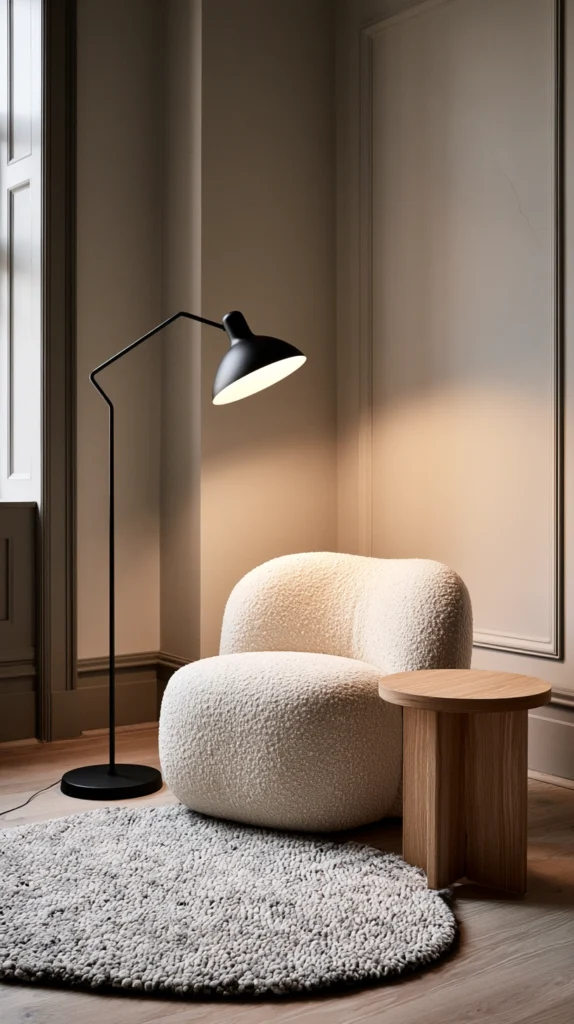
Budget: $150 – $600
The simplest and most immediately achievable reading nook in any space — a comfortable armchair positioned in the corner of a room, with a quality floor lamp positioned over the shoulder to provide direct, well-directed reading light, and a small side table for a drink and the current book — creates a reading position of genuine quality from components that require no construction, no built-in furniture, and no structural modification of any kind to the room that contains them.
A good armchair in a quality fabric costs $150–$400 from independent furniture retailers and secondhand markets. A quality arc floor lamp with a directional shade costs $80–$200. A small side table or wooden crate at 45–55 cm height runs $30–$80. Position the chair at 45 degrees to the corner rather than flat against one wall — the angled position creates a slight sense of enclosure from both walls behind it while maintaining an open, inviting orientation toward the room, which is the balance that makes a reading corner feel sheltered without feeling isolated.
Nook tip: Choose a floor lamp with a directional, adjustable head rather than a shade that distributes light broadly in all directions. Reading requires focused light on the page rather than ambient light in the room — a directional lamp that can be adjusted to place the light source directly over the shoulder at the correct angle for the reading position is significantly more effective than a broadly dispersed shade of the same wattage in the same position. The quality of the reading light is always the most important functional variable in any reading nook.
3. A Built-In Alcove Nook With Bookshelves
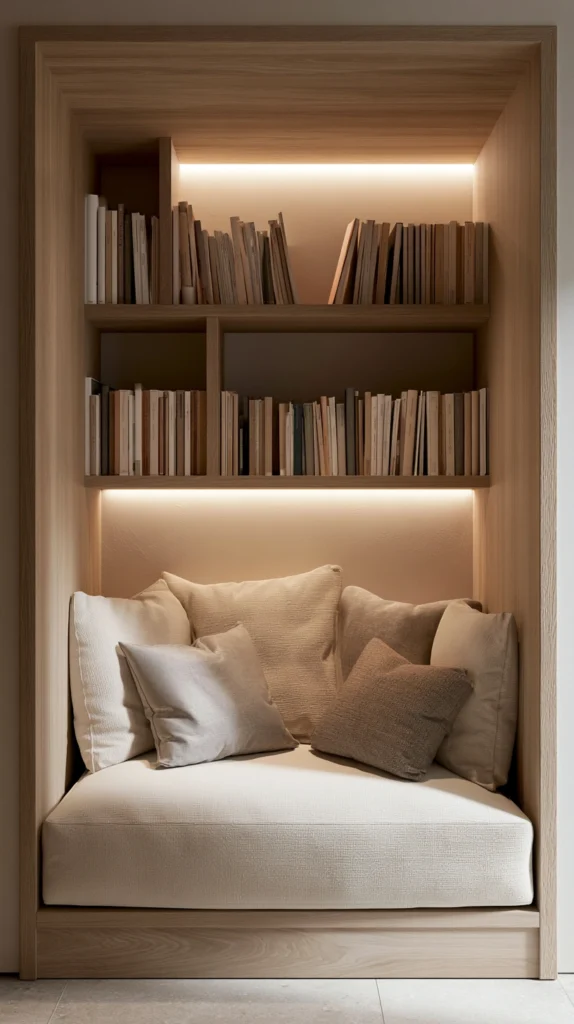
Budget: $400 – $1,500
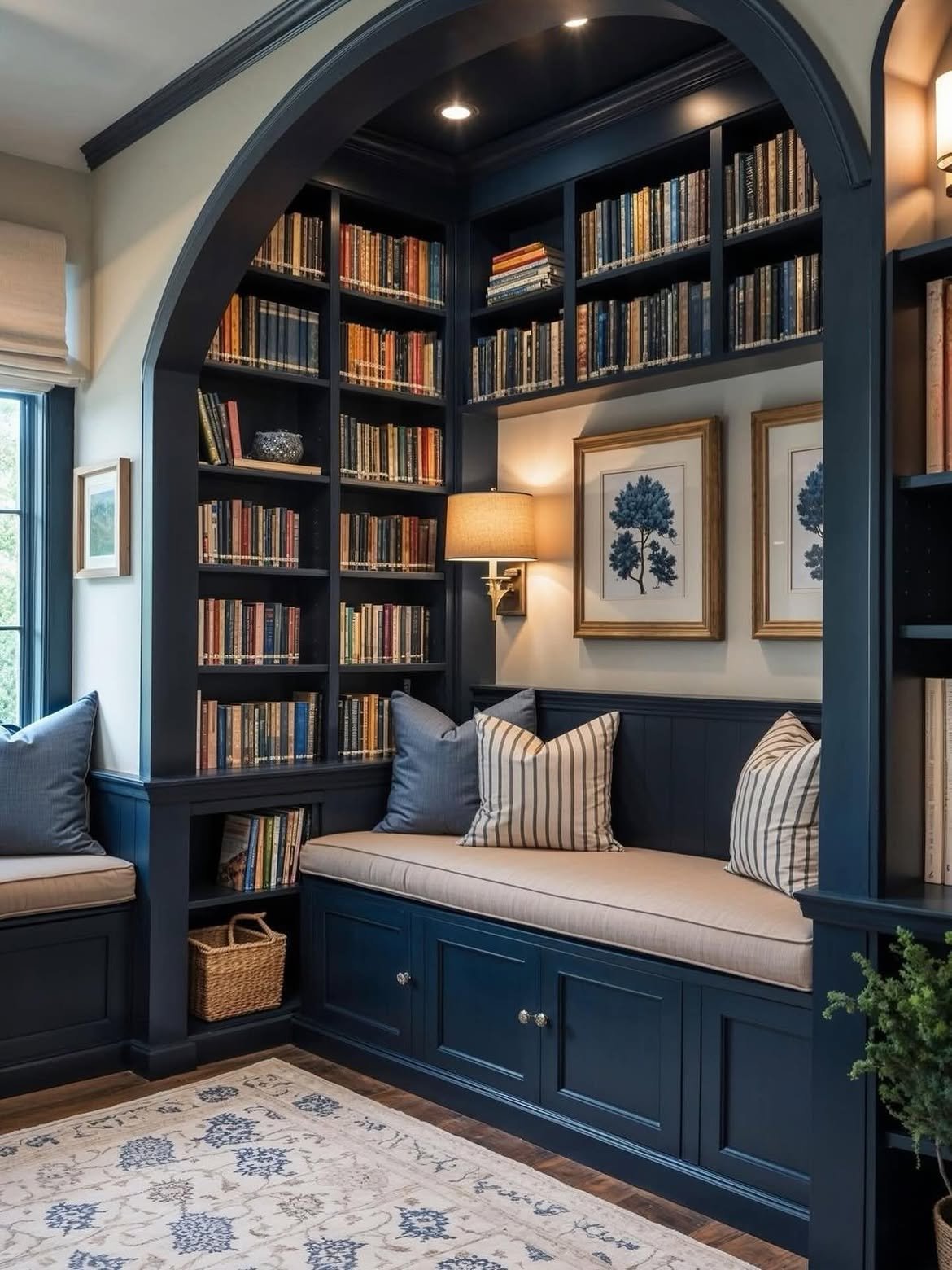
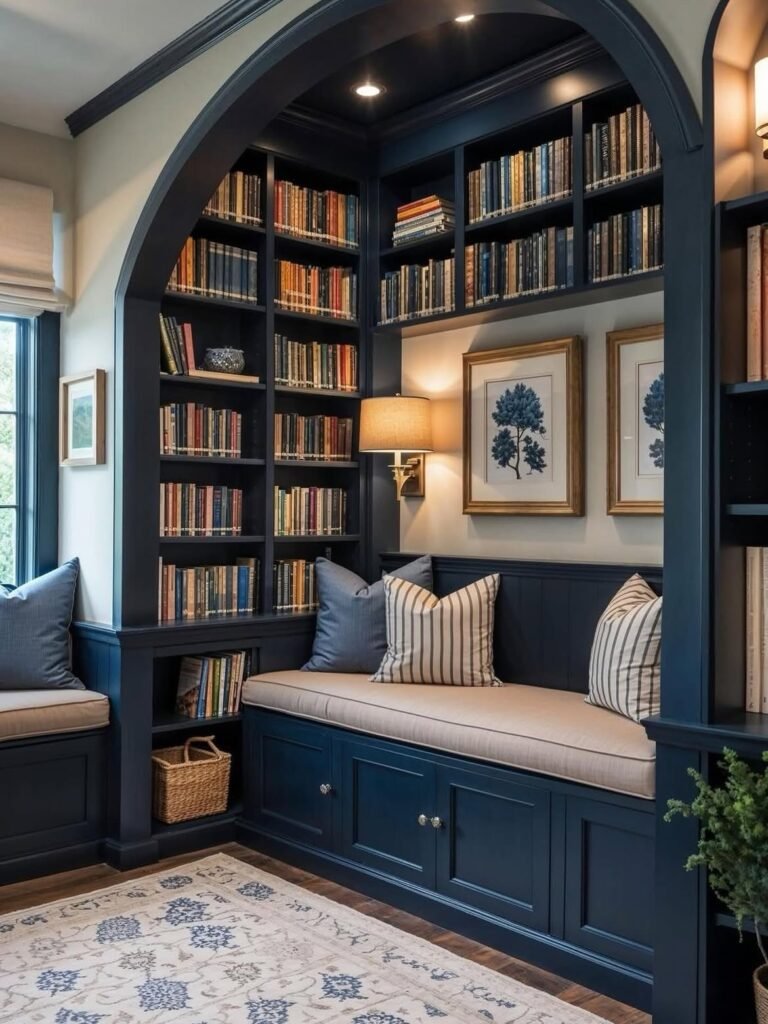
A reading nook built into a chimney breast alcove — with a fitted cushioned seat at its base and shelves above — is the most space-efficient and most specifically book-lover’s reading nook available. The alcove provides the three walls of enclosure that create the nook’s sheltered quality. The shelves provide immediate proximity to a personal library. The cushioned seat at the base provides the seating surface that makes the whole installation purposeful rather than purely decorative.
A custom-built alcove reading nook in painted MDF with fitted shelves and a cushioned seat costs $400–$900 in materials and a competent DIY installation. A professionally built version with higher-quality finishes and concealed lighting costs $800–$1,500. The nook width should be a minimum of 70 cm for comfortable seated reading — narrower than 70 cm becomes physically constraining and prevents the relaxed, settled posture that makes reading genuinely comfortable for extended periods.
Nook tip: Install a small reading light within the alcove nook rather than relying on the room’s main lighting — a wall-mounted adjustable spotlight or a small clip-on light on one of the shelves above the seat provides the targeted illumination that a built-in alcove nook requires. The enclosure that makes the nook feel sheltered and cozy also reduces the ambient light available from the room’s main sources — a dedicated nook light compensates for this and makes the alcove position functional at all hours rather than only during the day.
4. A Window Seat With Floor-to-Ceiling Curtains
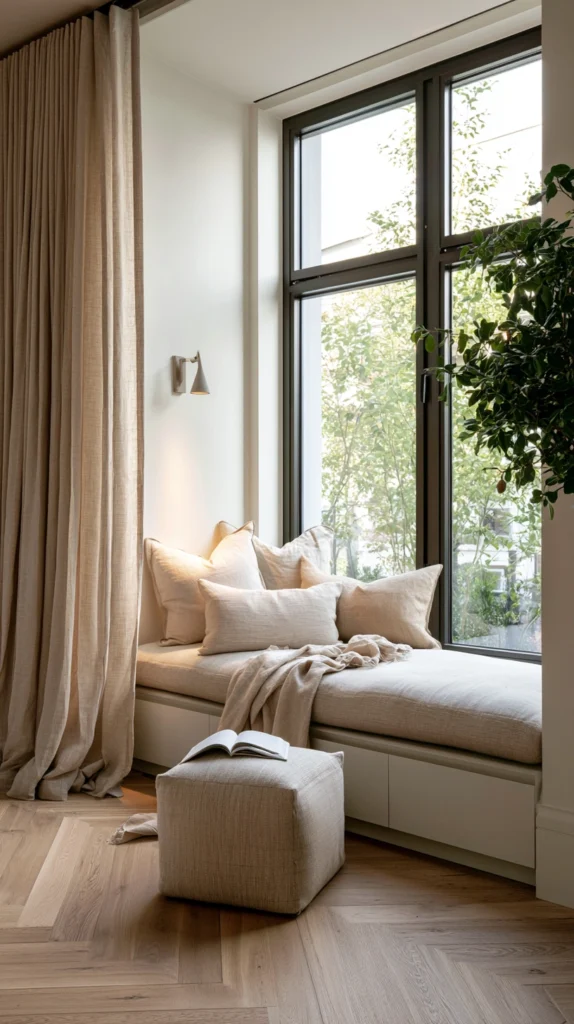
Budget: $150 – $500
A reading nook created at a standard window — not a bay — by installing a fitted cushioned bench seat across the full window width and hanging full-height curtains on each side that can be drawn across to create a semi-enclosed reading tent — transforms a plain window and a section of unused floor beneath it into one of the most atmospheric and most genuinely cozy reading positions available in any room. Drawing the curtains halfway creates a private reading world within the shared household space without requiring a dedicated room.
A fitted window seat of 90–120 cm width cost $100–$250 in materials. Ceiling-height curtain panels in a quality fabric — linen, velvet, or thick cotton — cost $60–$150 each. A ceiling-mounted track on each side of the window costs $25–$50 per side. The curtains should be thick enough to provide genuine light control when drawn — thin curtains that admit daylight eliminate the reading tent atmosphere that makes this nook idea so specifically appealing for an enclosed, concentrated reading experience at any time of day.
Nook tip: Add a reading light mounted on the wall between the window and the curtain line — positioned so it is within the curtained reading zone when the curtains are drawn rather than outside it. A reading light that is outside the curtained zone provides no functional benefit to the reading position within it. A light mounted inside the zone creates a self-contained reading world with its own specific light source that makes the drawn-curtain reading nook genuinely usable on dark afternoons and winter evenings.
5. A Hammock Chair in a Conservatory
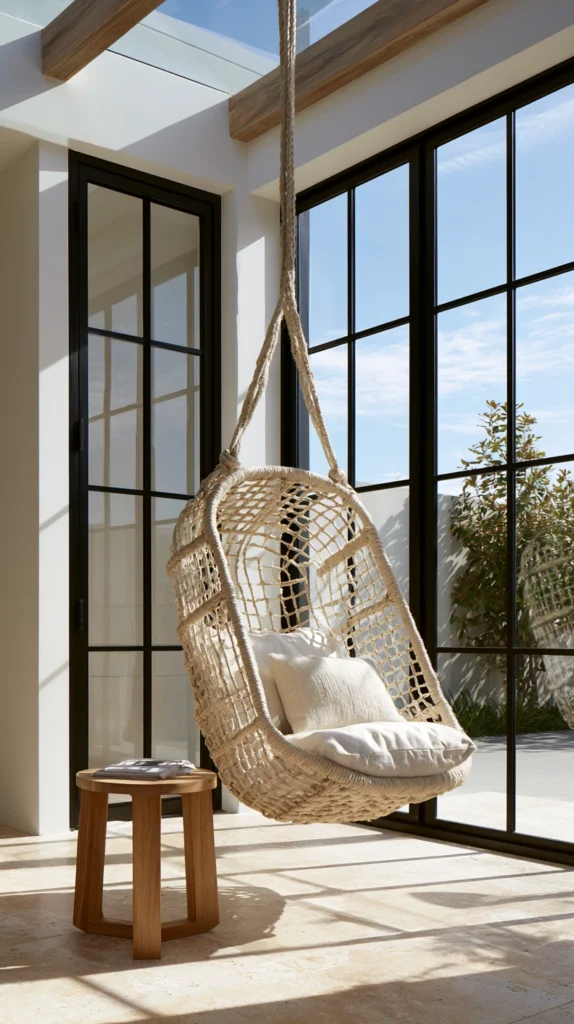
Budget: $60 – $200
A hanging egg chair or hammock chair suspended from the structural beam of a conservatory — surrounded by houseplants and positioned to make the most of the conservatory’s natural light — creates the most garden-connected and most specifically summery of all reading nook positions. The suspended seat invites a quality of relaxed reading that a static chair rarely achieves, and the conservatory’s glass ceiling creates the specific quality of all-directional natural light that makes reading genuinely comfortable without the direct sun exposure of an outdoor reading position.
A cotton or macramé hammock chair costs $60–$150. A rattan or wicker egg chair costs $80–$200. A ceiling hook and chain for suspension costs $15–$30. Add a small wooden crate or side table at arm’s reach for a drink and the current book, and a pile of cushions in the seat and around the base for maximum comfort at every reading posture. The conservatory hammock chair is the reading nook that most consistently generates the response that the home is worth having — it is genuinely used and genuinely loved wherever it is installed.
Nook tip: Position the hammock chair toward the north or east of the conservatory rather than the south or west, where afternoon sun exposure makes sustained reading uncomfortable without shade. A conservatory reading chair in full afternoon west sun is pleasant for thirty minutes and then hot — the same chair on the shaded side of the conservatory is pleasant for two hours and exactly the quality of reading experience the position is intended to create throughout the afternoon and evening hours.
6. An Under-Stair Reading Den
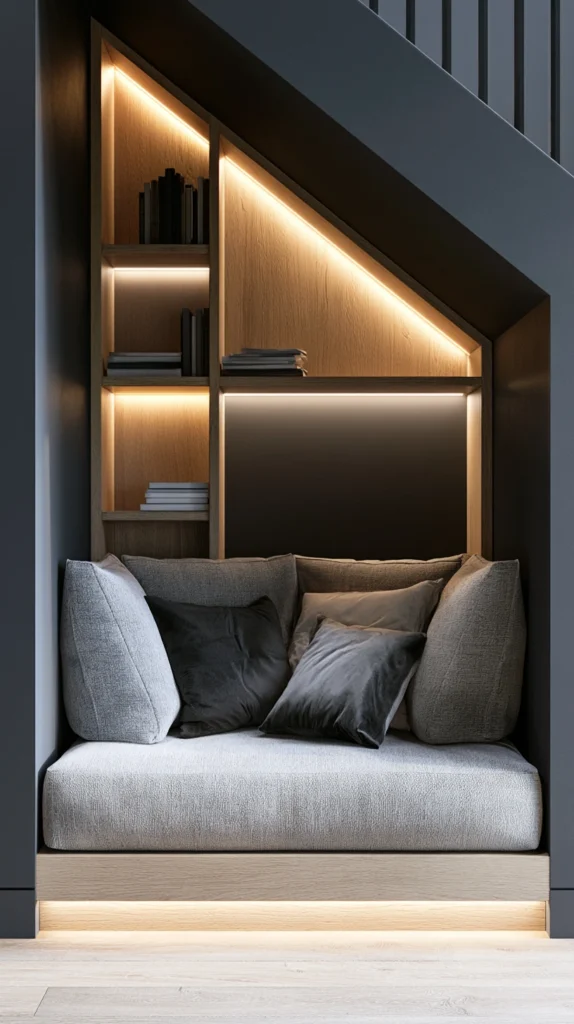
Budget: $200 – $800
The under-stair void — the triangular space beneath a staircase that descends from hallway to upper floor — is the most common completely unused volume in most homes and one of the most naturally sheltered, enclosed, and specifically appropriate spaces available for a small reading den. Fitted with a cushioned low seat at the deepest point, a small shelf for books, and a reading light, the under-stair reading den becomes the most personal and most specifically characterful reading nook available in any home that has one.
Converting an under-stair void into a reading den requires adding a fitted cushioned seat ($100–$200), a small shelf system within the available height ($50–$150), a reading light ($30–$80), and a curtain or door at the opening to create closure and enclosure ($40–$100). The total conversion cost sits between $220 and $530 for a space that would otherwise be storing unused items in a position that is both architecturally interesting and practically ideal for the intimate, enclosed reading experience a proper den provides.
Nook tip: Line the walls and ceiling of the under-stair reading den with the same dark paint or fabric as the surrounding woodwork — the monochromatic dark treatment creates the cave-like enclosure that makes the den feel genuinely separate from the rest of the house rather than simply a recessed section of the hallway. A dark-lined den with a warm reading light is one of the most specifically cozy interior experiences available in any domestic space, regardless of the scale or quality of the rest of the home around it.
7. A Daybed Nook in the Bedroom
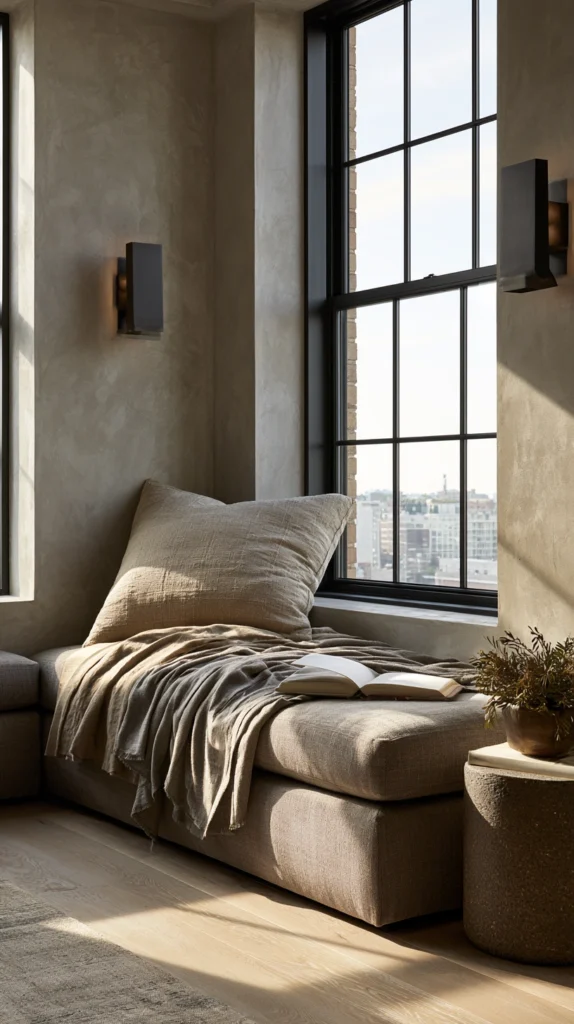
Budget: $200 – $700
A daybed positioned at the foot of the main bed, at a bedroom window, or along a bedroom wall — dressed with a reading pillow, two or three cushions, a lightweight throw, and a lamp on the adjacent wall or table — creates a dedicated daytime reading position in the bedroom that preserves the bed itself as a sleep surface rather than blurring the functional boundaries between reading, lounging, and sleeping that a bed used for all three purposes inevitably produces.
A simple timber or metal daybed frame costs $200–$500. A good quality daybed mattress costs $100–$250. A reading bolster pillow for back support costs $30–$70. A wall-mounted adjustable reading light above the daybed costs $40–$100. The daybed positioned at the bedroom window creates the most successful reading position of the three options — the natural light quality from the window and the slightly elevated sitting position above the lower sill creates the light conditions and the sense of elevated viewpoint that suit concentrated daytime reading most effectively.
Nook tip: Position the reading bolster at the end of the daybed nearest the light source rather than at the wall end — most people instinctively lean toward the light when reading, and a bolster at the light-source end of the daybed supports the posture that the light naturally creates rather than working against it by providing back support in the position the reader is leaning away from.
8. A Tent Canopy Nook for Children
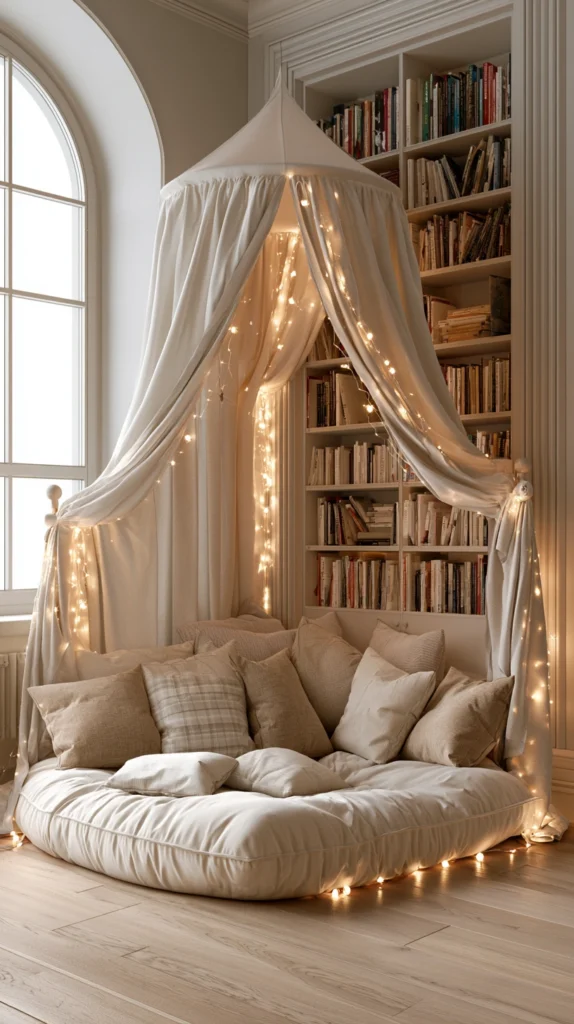
Budget: $30 – $100
A reading nook for children created by draping a lightweight fabric canopy over a simple frame above a floor-level cushion — creating a fabric tent or teepee reading space — provides the enclosed, private, specifically child-scaled reading environment that makes reading feel like an adventure rather than an obligation. Children’s reading nooks at floor level, with fairy lights inside the canopy and a pile of cushions to lie on, are consistently among the most-used and most-loved spaces in any home that has them.
A canopy tent frame in timber or PVC costs $20–$60 from children’s furniture retailers. Fabric to drape the frame costs $10–$25 per metre. Battery fairy lights for the interior cost $8–$20. A large floor cushion or cushion pile for seating costs $20–$60. The total children’s reading tent costs $58–$165 and creates a reading space that children move from reluctant to enthusiastic reading in a smaller amount of time than any other single intervention in the domestic reading environment — because the space makes reading feel like something that happens in their world rather than in an adult one that has been made slightly smaller for them.
Nook tip: Position the children’s reading tent in the room the child spends most time in — the bedroom or the playroom — rather than in the household’s main library or study. A reading nook that requires a child to travel to a separate room creates a threshold of effort that the natural reading habit does not overcome for most children. A tent in the bedroom is used spontaneously and daily. The same tent in a separate room is used occasionally and with purpose — which is a significant reduction in the frequency and naturalness of the reading habit the nook is designed to encourage.
9. A Loft Bed With a Reading Nook Beneath
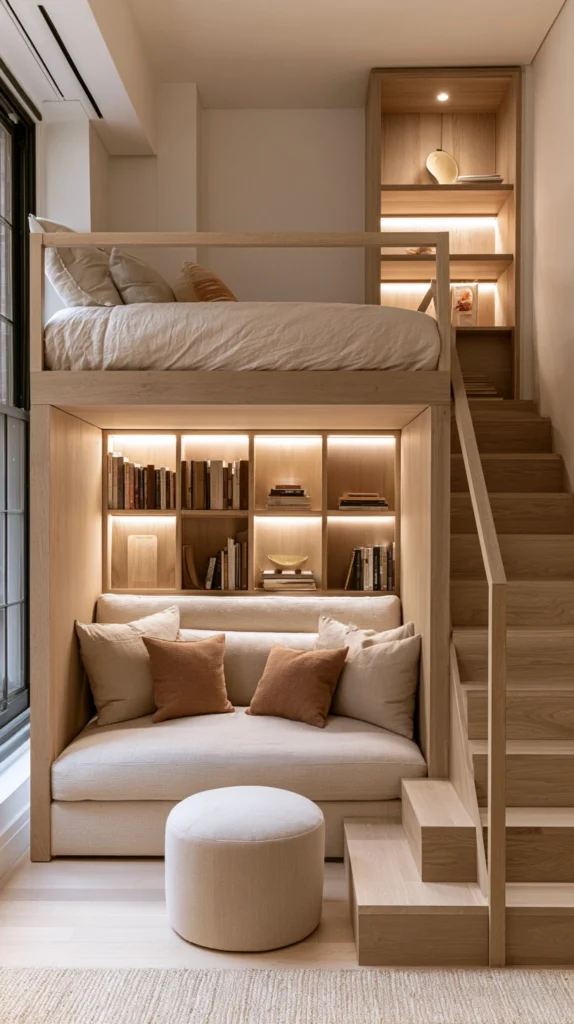
Budget: $300 – $1,200
A raised loft bed — with a reading nook, a desk, or a play area built into the space beneath the sleeping platform — creates two specific functional zones from the footprint of one bed. The reading nook beneath the loft is naturally sheltered by the platform above it, enclosed on two or three sides by the bed structure, and at exactly the human scale that makes the space feel most specifically like a private room within a room. It is the children’s reading nook equivalent of the under-stair den for adults.
A loft bed with a built-in reading corner below costs $300–$800 in flat-pack form from children’s furniture retailers. A custom-built version in painted timber with bookshelves, a reading light, and a cushioned seat below costs $600–$1,200. The reading nook beneath a loft bed is most effective when the upper sleeping platform is at least 160 cm above the floor — providing enough headroom in the nook space for a child to sit upright comfortably and eventually for an adult to access the nook area for bedtime reading without uncomfortably restricted headroom.
Nook tip: Add a curtain rail at the front edge of the loft bed frame to allow a curtain to be drawn across the nook opening — creating the complete sense of private enclosure that makes the under-loft nook feel most specifically like a child’s own separate space within the shared bedroom. The curtain costs $15–$30 and requires a simple track or tension rod at the loft bed frame — its effect on the child’s engagement with the nook and with reading within it is disproportionate to its modest installation cost.
10. A Garden Shed Reading Room
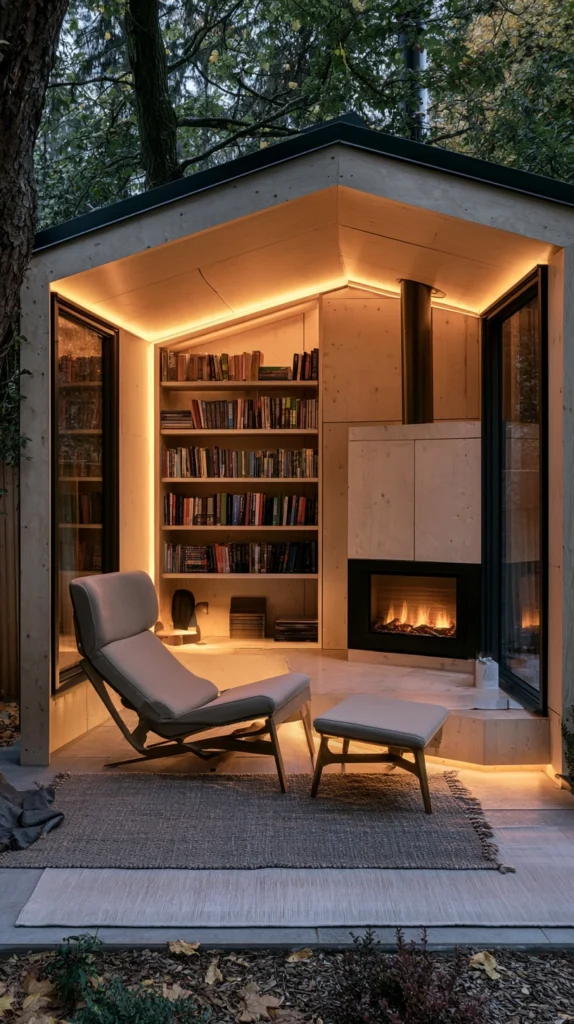
Budget: $200 – $1,000
A garden shed converted into a reading room — painted inside and out in a warm colour, insulated and lined, fitted with a comfortable armchair and a small bookshelf, and lit by a single warm lamp and a table of candles — creates the most completely separate and most specifically dedicated reading space available to any home with garden access. The physical separation from the household — even ten metres from the back door — creates a quality of reading concentration and quiet that no interior room in a shared home can fully replicate during the hours when other household members are present and active.
A standard garden shed converted to a reading room requires insulated lining panels ($50–$150), interior paint ($20–$40), a comfortable chair ($80–$300), a small bookshelf ($30–$80), an electric heater for winter use ($40–$100), and a lamp ($40–$100). The total conversion cost sits between $260 and $770 for a reading space that provides the specific quality of being genuinely, completely alone with a book in a way that no interior room shares with anyone else in the home can provide at any other cost.
Nook tip: Install a small wood burner or log-effect electric stove in the shed reading room rather than a standard electric heater if the building regulations and shed construction allow it. The physical warmth, the visual quality of a small fire, and the specific atmosphere of a wood-heated small room creates a reading environment of extraordinary coziness that makes the shed reading room the most desired space in the house on cold autumn and winter evenings — which is precisely when reading is most pleasurable and most consistently sought out.
11. A Library Wall Nook in a Home Office
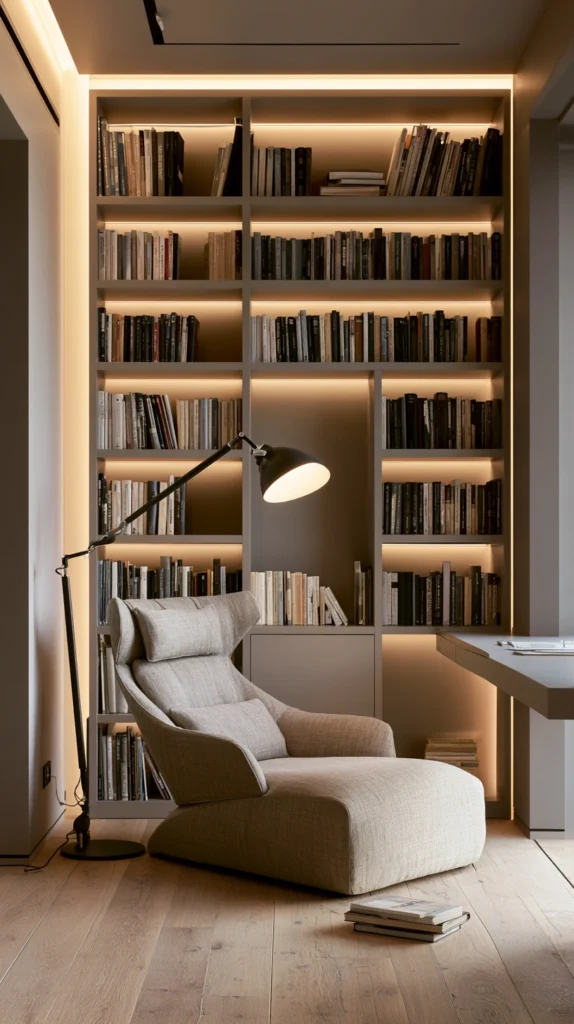
Budget: $300 – $1,000
A home office fitted with floor-to-ceiling bookshelves on one wall — with a reading chair and floor lamp positioned in the corner adjacent to the shelving, at a 90-degree angle to the desk — creates a space with two distinct functional zones: the desk for work and the chair for reading. The proximity of the reading chair to the bookshelf creates the most specifically library-like domestic reading environment available, and the physical separation between the desk (work) and the chair (reading) makes the home office functional for both activities without the two zones interfering with each other.
Floor-to-ceiling bookshelves in a standard home office alcove or along one wall cost $200–$600 in materials. A quality reading armchair costs $150–$400. A floor lamp costs $80–$200. Position the chair beside rather than opposite the bookshelf — a chair directly facing the shelves creates the slightly uncomfortable feeling of being watched by one’s own library. A chair at 90 degrees to the shelving has the books within arm’s reach without making them the primary visual focus of the reading position.
Nook tip: Keep the reading chair position completely clear of any desk equipment, screens, or work materials — the physical and visual separation of the two zones is what makes the home office work as both a workspace and a reading space. A reading chair in a home office that has spread into the chair’s space with work materials is no longer a reading chair — it is overflow storage for a desk that has become too small for the work it contains, and the reading nook it was intended to be ceases to function the moment the first work object is placed in it.
12. A Staircase Landing Nook
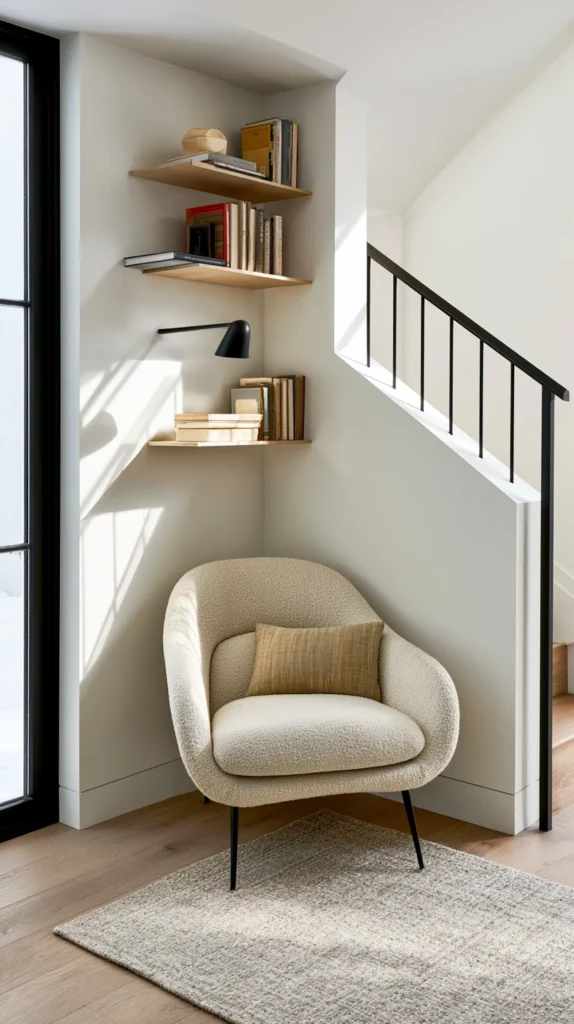
Budget: $100 – $400
A half-landing or upper landing that is wide enough to accommodate a chair — more common in older Victorian and Edwardian houses than in modern builds — is one of the most naturally sheltered and most pleasingly elevated reading positions in any home. The landing height provides a viewpoint over the stairwell, the surrounding walls create a natural enclosure, and the slightly transitional quality of a landing — between the public downstairs and the private upper rooms — gives the reading position a specific character that neither a room nor a corridor reading spot provides.
A single comfortable reading chair on a landing costs $100–$300. A wall-mounted reading light costs $40–$100. A small floating shelf for books costs $20–$50. A landing reading nook of this specification costs $160–$450 and requires no construction — only the decision that the landing space is wide enough and the will to furnish it as a reading position rather than as a circulation area. In homes with generous landings it is one of the most consistently under-utilised reading nook opportunities available at the lowest possible intervention cost.
Nook tip: Add a small rug to the landing reading position to define the nook zone within the circulation space of the landing. A rug beneath the chair creates a visual boundary that signals the reading position as a specific place rather than a chair that happens to be on the landing — the same functional object in the same location reads entirely differently with and without the rug beneath it, and the rug is always the less expensive option relative to any structural modification that could achieve a similar spatial definition.
13. A Bathtub Reading Nook
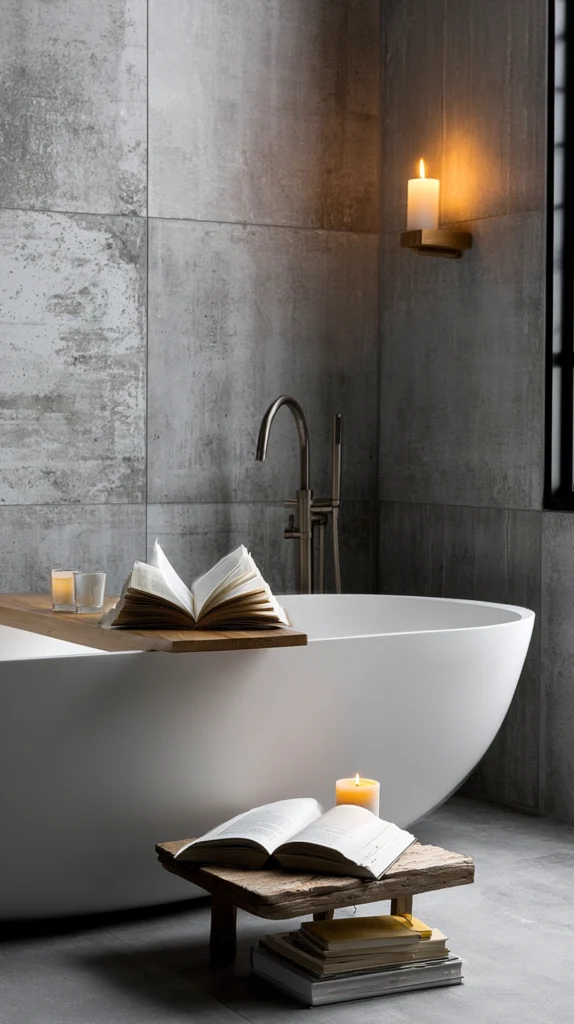
Budget: $30 – $150
The bath is one of the most consistently used and most under-styled reading positions in any home — the combination of warm water, horizontal position, and the particular quality of quiet that a closed bathroom door provides makes the bath one of the most naturally conducive environments for reading available in any domestic space. Creating a proper bathtub reading nook — with a bath caddy for the book and a drink, a waterproof reading light if the main bathroom light is positioned unhelpfully, and a towel rack within arm’s reach — turns the daily bath into a genuinely designed reading experience.
A bamboo or timber bath caddy with a book rest and a drink holder costs $20–$60. A waterproof bath reading light or suction-mounted book light costs $10–$30. A small ceramic dish on the bath edge for a candle costs $5–$15. A heated towel rail within arm’s reach of the bath costs $40–$100 and ensures that the reading bath does not end in the uncomfortable scramble for a towel that ends the reading experience on a slightly unfortunate note rather than the relaxed conclusion it deserves.
Nook tip: Keep a small waterproof basket or basket-lined shelf within arm’s reach of the bath for two or three current books, a pair of reading glasses if required, and whatever other small items make the bath reading experience complete. The basket that makes the bathtub reading nook genuinely usable costs $8–$20 and eliminates the most common reason the bathtub reading experience does not happen despite being genuinely wanted — the friction of assembling the right objects before getting into the bath rather than finding them already in place.
14. A Curtained Closet Reading Nook
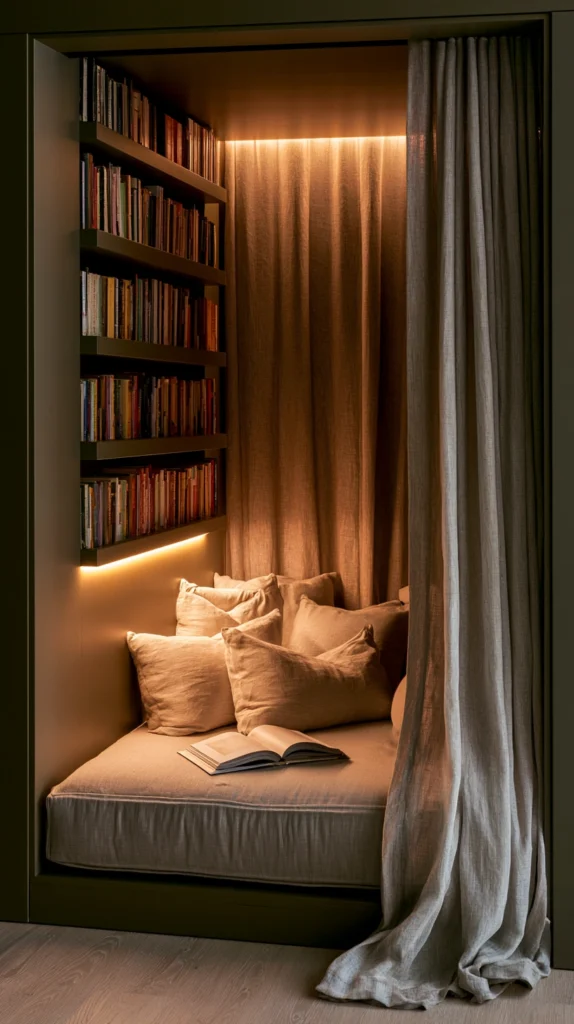
Budget: $50 – $200
An unused bedroom closet — with its doors removed and replaced by a curtain, its internal rod and shelving replaced by a cushioned seat and a shelf for books, and a small light fitted to the interior — becomes one of the most intimate and most completely enclosed reading nooks available in any home with a spare closet to convert. The closet’s natural enclosure on three sides, its ceiling-height walls, and its human scale create the most sheltered reading environment available without any structural construction — only the removal of the doors and the addition of a seat, a shelf, and a light.
A closet conversion to a reading nook requires: a cushioned bench seat ($60–$150), a small bookshelf ($20–$50), a battery or plug-in interior light ($15–$40), and a curtain to replace the doors ($20–$60). Total conversion cost: $115–$300 for one of the most specifically enclosed and most genuinely nook-like reading spaces available. The closet reading nook is the closest domestic equivalent to the library carrel — the private reading enclosure that creates a specific quality of reading concentration available nowhere else in the home.
Nook tip: Paint the interior of the closet nook in a dark, warm colour — charcoal, deep green, or midnight blue — before fitting the seat and the shelf. The dark interior creates the cocoon-like quality that makes the closet nook so specifically enclosed and so specifically restful as a reading environment — the dark walls recede and the space contracts around the reader in exactly the way that the reading experience itself is most fully supported by its immediate physical environment. A dark nook interior is one of the most counterintuitive and most consistently successful cozy interior design decisions available at any scale.
15. A Complete Reading Room
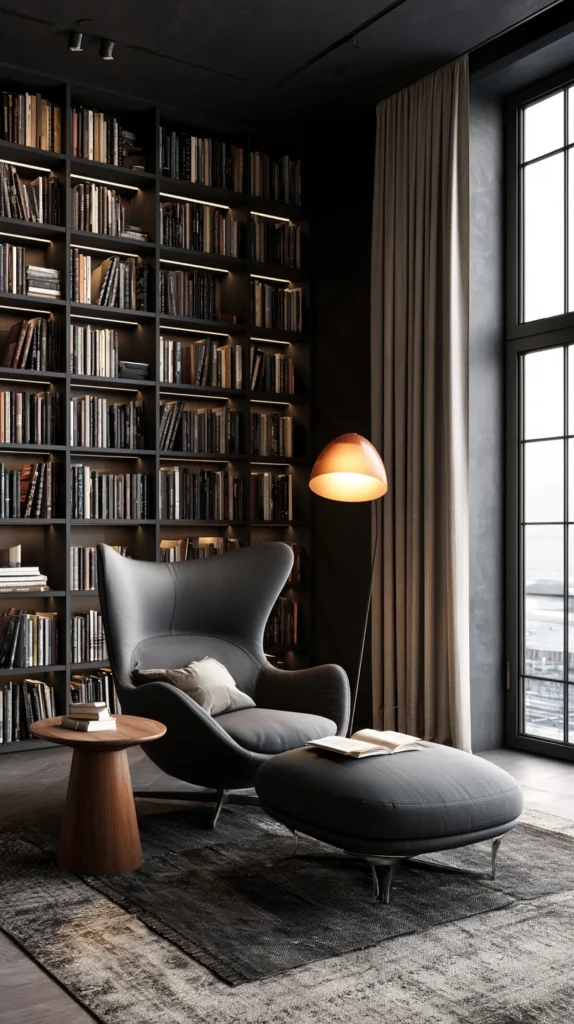
Budget: $500 – $3,000
A complete dedicated reading room — a spare bedroom or study converted entirely to the purpose of reading — with floor-to-ceiling bookshelves on every available wall, a deeply comfortable reading chair in the best-lit position, a good reading light, a small table for a drink and a candle, and a door that closes — is the most complete and most specifically generous reading environment available in any home that has the space to create it. It is not a room with a bookshelf. It is a room that exists specifically for books and for the reading of them.
A modest reading room requires shelving ($200–$600), a quality reading chair ($150–$400), a floor lamp ($80–$200), and whatever minor construction or decoration is needed to make the room feel like a designed space rather than a repurposed bedroom — paint in a warm dark tone ($40–$80), new lampshades ($20–$50), a rug ($80–$200), and curtains ($80–$200). The total reading room investment sits between $650 and $1,730 and produces the single most specifically satisfying and most consistently used space in any home that creates one.
Nook tip: Paint the reading room in one of the deepest, darkest colours available — a near-black green, a deep inky blue, or a dark warm burgundy. The dark room with warm lamplight is the reading environment that most completely creates the sense of being inside the world of the book rather than in a room of the house where reading is happening. The dark walls recede. The lamplight warms. The books surround. And the door closes on everything else. There is no more specifically cozy domestic environment available in any home at any budget than a properly made reading room — and it begins with the decision to make one.
The reading nook that works is always the one that was made by someone who understands what reading actually needs — not the most beautiful chair or the most extensive library, but a specific quality of light, a degree of enclosure, a surface for a drink, and enough proximity to books that the next one is always within arm’s reach.
Those conditions are achievable in every space on this list, at every budget on this list, by every person who decides that reading is worth the five minutes of furniture rearrangement or the weekend of simple construction that the right nook requires.
Choose the idea that suits the space you actually have rather than the space you wish you had. A chair, a lamp, and a book — in the right position, with the right light — is always enough to begin. The rest follows from the habit that the right reading position makes possible.