13 Pool Deck Plant and Pot Combo Ideas
There is a version of a pool deck that exists purely as a hard surface — concrete or timber or stone running to the water’s edge with nothing softening it, nothing growing beside it, nothing between the built and the natural except a gap where a plant should be. It functions perfectly well as a place to swim from and dry off on, but it does not feel like somewhere to spend an afternoon that has nothing to do with swimming.
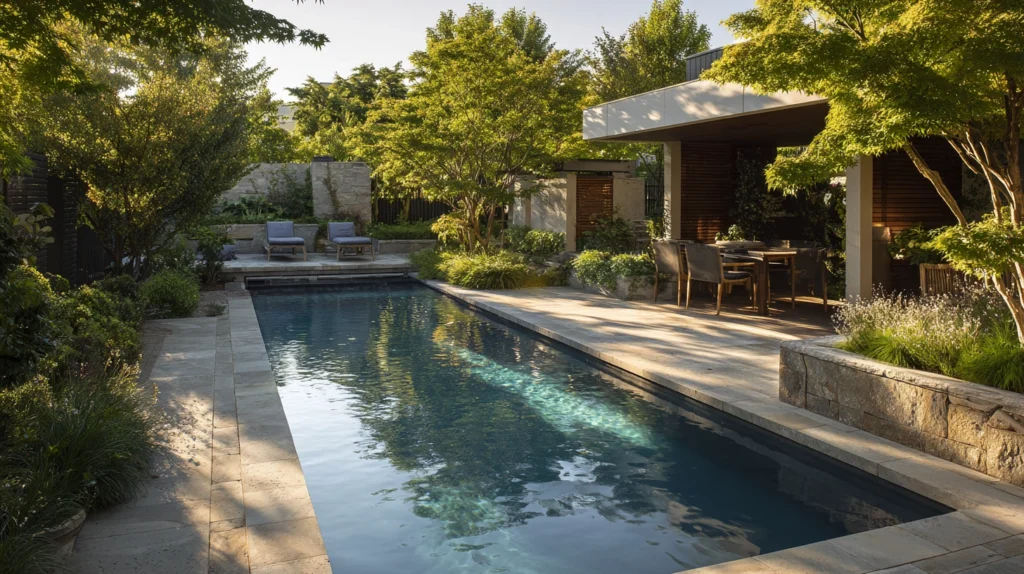
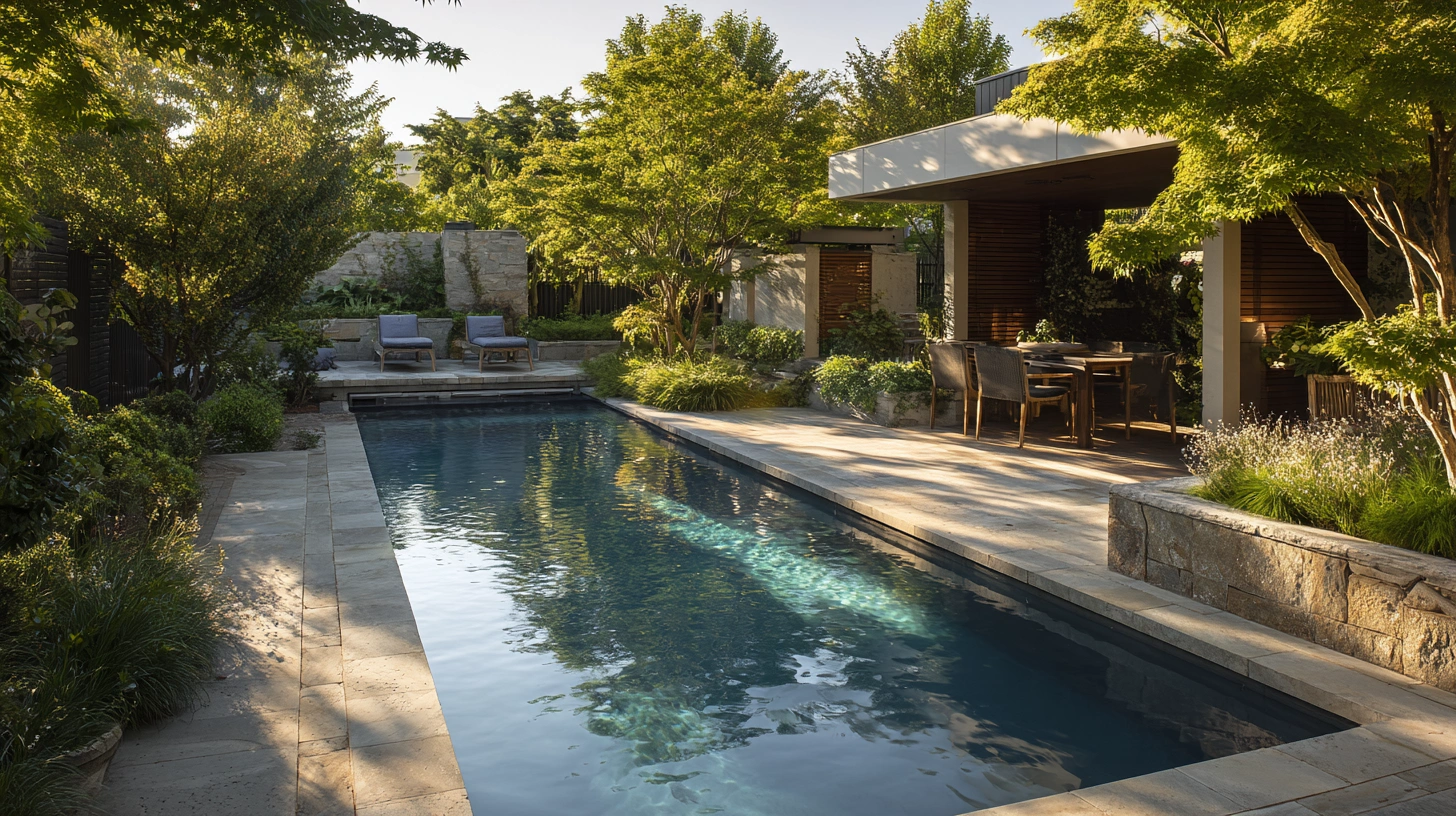
Plants change that. Not in an overwhelming, garden-centre way, but in the specific way that a well-chosen pot in the right position softens a hard edge, frames a view, provides shade where there was none, and turns a pool surround into a place rather than a surface. The combination of pot and plant matters as much as either element alone — the wrong pot undermines a beautiful plant and the wrong plant defeats even the most considered vessel.
Each idea below includes the plant, the pot, the combination logic, what it will cost, and a practical tip to make the whole thing thrive in the particular conditions a pool deck creates.
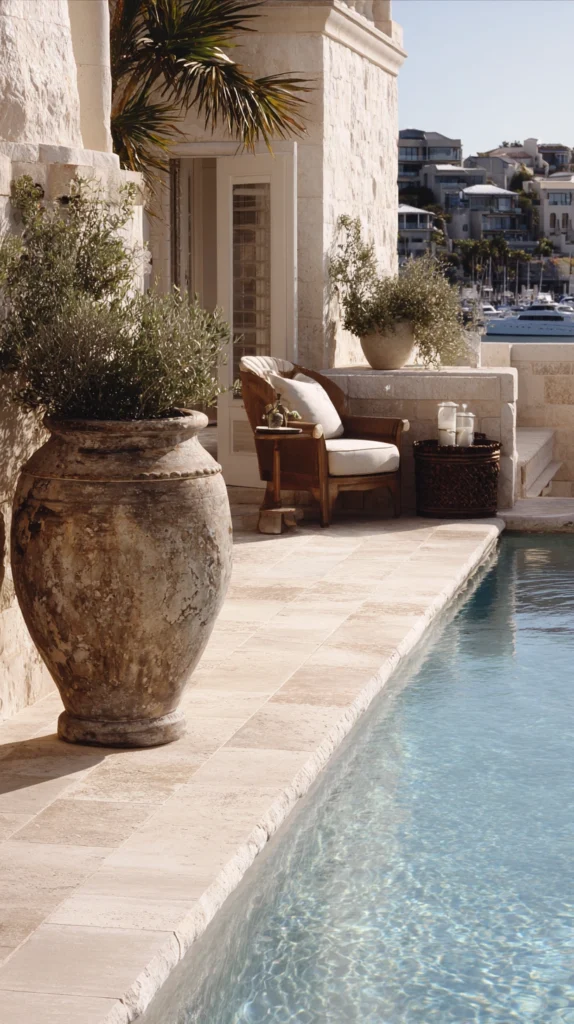
1. The Tall Olive Tree in a Terracotta Urn
Budget: $80 – $300
A mature olive tree in a large terracotta urn is the closest a pool deck gets to the feeling of a Mediterranean resort without any structural work. The silvery-green foliage moves beautifully in the lightest breeze, the gnarled trunk adds age and character that younger plants cannot replicate, and terracotta in sunlight beside water has a warmth that no other pot material achieves. A single olive tree at the corner of a deck anchors the entire space.
A semi-mature olive tree in a 30-litre pot costs $60–$150. A large terracotta urn of 50 centimetres or above in diameter runs $40–$120. Olives are drought-tolerant once established and require almost no maintenance beyond an occasional trim to maintain shape. Plant in a free-draining compost mixed with grit — olives in waterlogged growing medium develop root rot more quickly than almost any other tree.
Style tip: Choose an urn with a slightly narrower neck than its widest diameter — the classic amphora proportion — rather than a straight-sided cylinder. The curved profile of a traditional urn gives the pot visual weight and elegance that a cylinder of the same volume lacks, and the narrower neck slows moisture evaporation from the surface of the growing medium considerably.
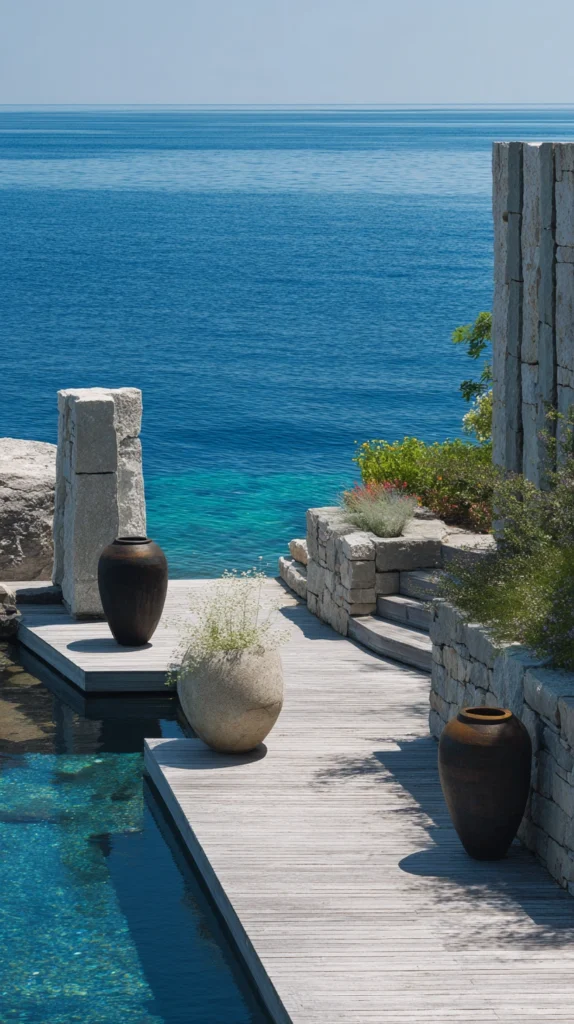
2. The Agapanthus in a Glazed Blue Pot
Budget: $40 – $150
Agapanthus — the African lily — produces tall stems of blue or white trumpet flowers from midsummer onward that sit at exactly the right height for a pool deck: above the railing, above the lounger back, at a level where they are visible from the water as well as from the deck surface. Planted in a glazed blue pot, the flower colour and the vessel colour create a monochromatic combination that reads as intensely summery and effortlessly considered.
Agapanthus plants cost $8–$20 each. A glazed ceramic pot in cobalt, navy, or teal in a 35-centimetre diameter costs $25–$70. Plant three to five agapanthus bulbs per pot — they flower more prolifically when slightly root-bound, and a pot that seems full at planting will produce a significantly better display than one with generous space to spare. Feed with a high-potassium liquid fertiliser every two weeks from the moment the first flower stems appear.
Style tip: Position agapanthus pots where they will receive at least six hours of direct sun daily. A shaded agapanthus produces leaves but rarely flowers, and a non-flowering agapanthus in a blue pot is simply a grass-like plant in a blue pot — the combination only works when the flowers are present.
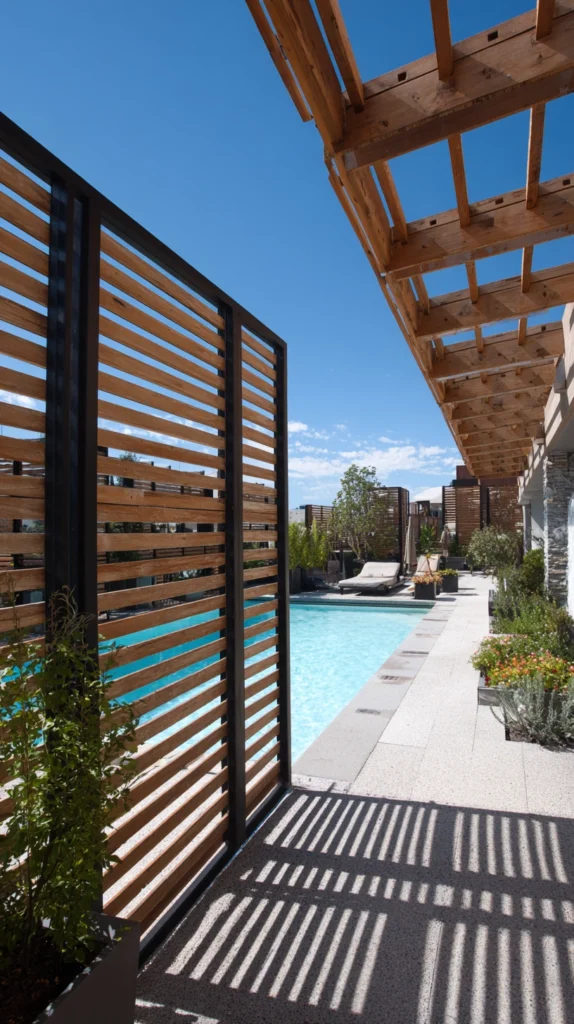
3. The Dwarf Bamboo in a Long Zinc Trough
Budget: $50 – $180
A long zinc trough planted with dwarf clump-forming bamboo creates a living privacy screen along the edge of the deck that filters the view from outside without blocking the breeze or the light. The zinc ages from bright galvanised silver to a soft pewter grey within a single season outdoors, and that aged tone sits naturally alongside timber decking, pale stone, and the blue of pool water in a way that no painted or powder-coated container manages.
A zinc trough in a 100-centimetre length costs $30–$80. Dwarf Fargesia bamboo plants cost $15–$35 each — plant three to four per metre of trough length for immediate density. Drill additional drainage holes in the base of the trough before planting — zinc troughs as sold often have insufficient drainage for the volume of growing medium they contain, and bamboo in waterlogged conditions yellows rapidly and develops root problems within a single season.
Style tip: Line the inside of the zinc trough with a layer of bubble wrap before adding growing medium — not to retain moisture but to insulate the roots from the heat the zinc absorbs in direct sun. A zinc container in full summer sun can reach temperatures that damage roots even when the growing medium appears adequately moist, and the insulation layer prevents the thermal stress that causes bamboo to drop leaves suddenly in midsummer.
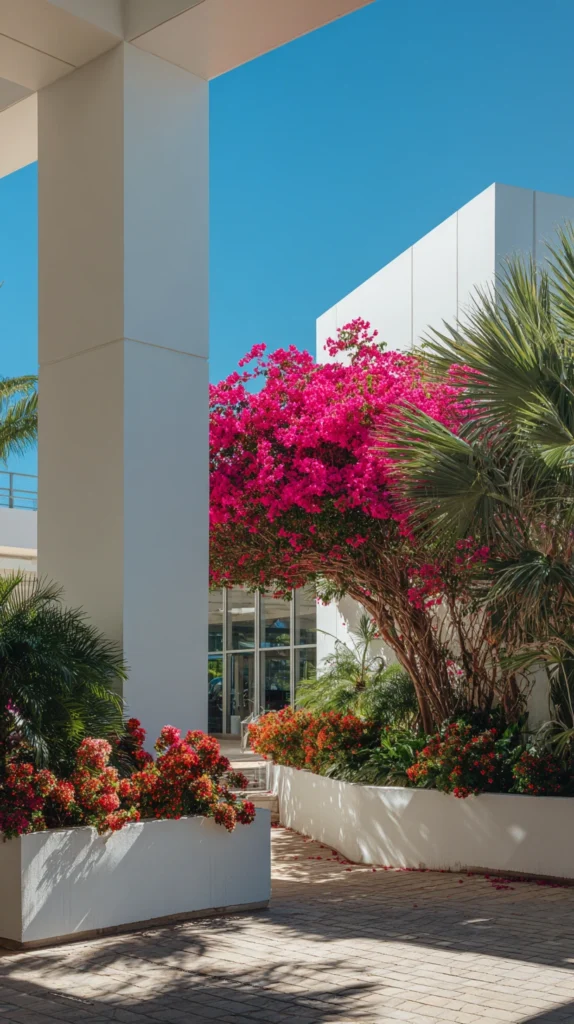
4. The Bougainvillea in a White Rendered Pot
Budget: $60 – $200
Bougainvillea trained up a simple wire frame or obelisk in a large white rendered pot produces the most vivid colour available to a pool deck — shocking pink, deep magenta, burnt orange, or white — in a combination that is both tropical and architectural. The white pot acts as a clean, neutral base that makes any bougainvillea colour appear more intense, and the rendered surface gives the pot a weight and solidity that plastic or thin ceramic cannot replicate.
A bougainvillea plant in a 5-litre pot costs $15–$40. A large white rendered concrete or fibreclay pot in a 45-centimetre diameter runs $40–$120. A simple metal obelisk for training costs $15–$35. Bougainvillea requires full sun and deliberately lean watering — it produces more flowers under mild drought stress than when generously watered, which makes it uniquely suited to a pool deck where it may receive splashback but relatively little deliberate irrigation.
Style tip: Allow the bougainvillea to climb above the height of the obelisk rather than cutting it back to the frame. A plant that has been allowed to arch and trail above its support structure looks abundant and established; one cut back hard to the frame looks constrained and recently pruned regardless of how healthy it is.
5. The Succulent Bowl in a Shallow Concrete Dish
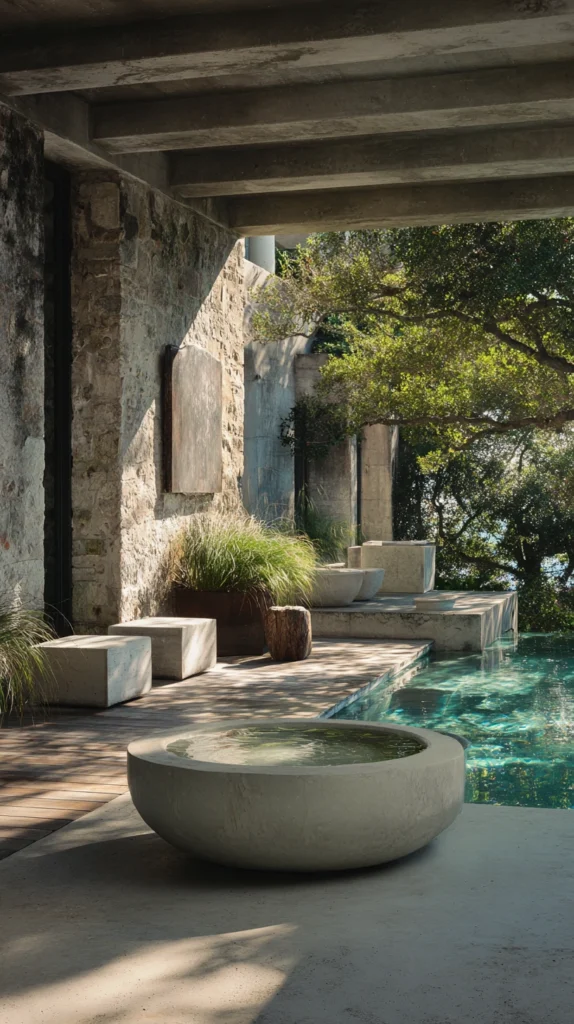
Budget: $25 – $80
A wide, shallow concrete dish planted with a mixed collection of succulents — echeverias, sedums, aeoniums, small aloes — creates a living arrangement of sculptural quality that requires almost no maintenance and thrives in the intense sun and reflected heat of a pool deck. The concrete dish ages attractively, developing patches of moss and algae at the edges that give it an organic quality entirely at odds with its industrial material.
A shallow concrete or reconstituted stone dish of 45–60 centimetres in diameter costs $20–$60. Mixed succulent plants cost $2–$6 each — a dish of this size holds eight to twelve plants. Use a cactus and succulent compost mixed with extra horticultural grit in equal measure — standard multipurpose compost retains too much moisture for succulents exposed to the direct sun and reflected heat of a pool deck.
Style tip: Position the tallest, most architectural succulent — a single aeonium, a small aloe — at the centre or slightly off-centre of the dish, and fill around it with lower-growing rosette forms. A succulent arrangement with a clear height hierarchy reads as planted with intention; one where all plants are at the same height reads as a collection rather than a composition.
6. The Lemon Tree in a Classic Black Pot
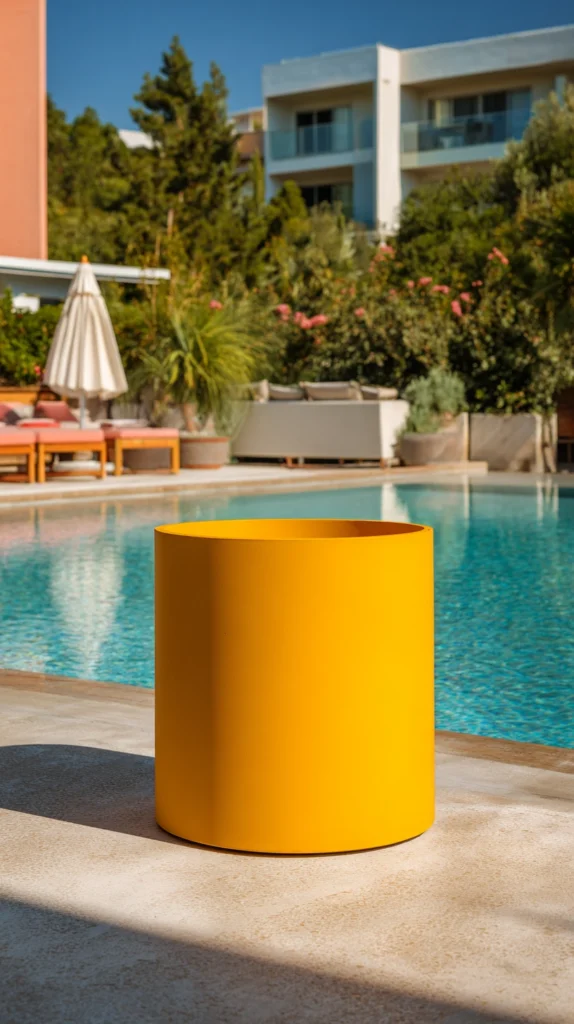
Budget: $80 – $250
A lemon tree in a matte black pot on a pale stone or light timber deck creates one of the most striking plant and pot combinations available — the deep green of the citrus foliage, the bright yellow of the fruit, and the dense matt black of the pot against a light surface is a colour combination of real graphic power. Lemon trees also produce blossom with an extraordinary fragrance that carries across a pool deck on warm evenings and justifies the pot entirely on scent alone.
A lemon tree in a 10-litre pot costs $30–$80. A matte black fibreclay or powder-coated metal pot of 40–50 centimetres diameter runs $40–$120. Feed with a citrus-specific liquid fertiliser ($10–$20 per bottle) every two weeks from spring to early autumn — citrus in containers deplete their growing medium of nutrients rapidly and visibly, yellowing leaves being the first sign that feeding has been insufficient or too infrequent.
Style tip: Choose a pot with a matte or satin finish rather than a gloss black. A gloss black pot in direct pool deck sun shows every water mark, every fingerprint, and every splash from the pool immediately, requiring constant cleaning to maintain its appearance. A matte finish hides all of these and improves slightly as it weathers rather than looking progressively more neglected.
7. The Ornamental Grass in a Brushed Steel Cylinder
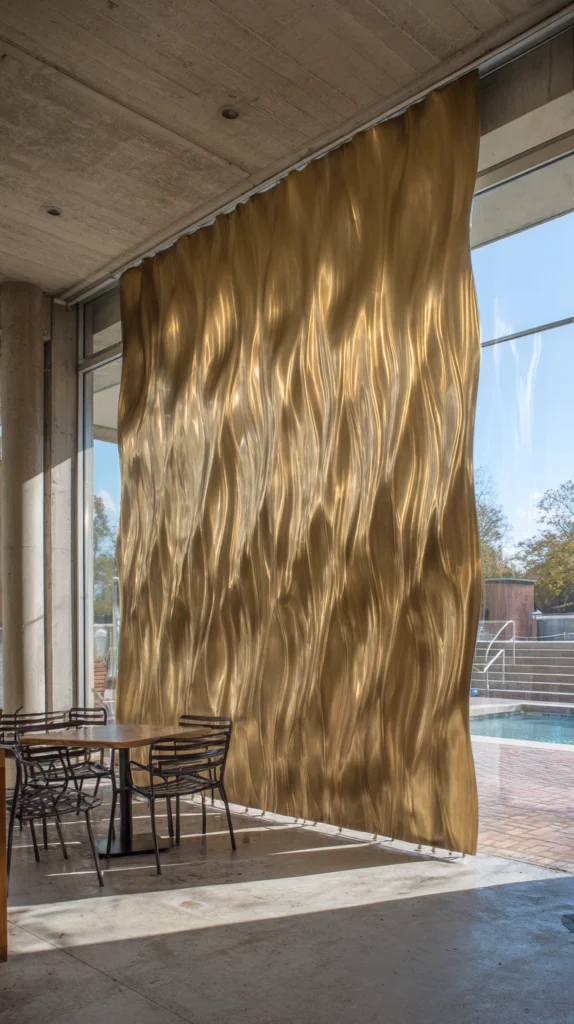
Budget: $40 – $150
A tall ornamental grass — Pennisetum, Miscanthus, or Calamagrostis — planted in a brushed steel cylinder produces a combination that is simultaneously contemporary and natural. The grass moves in any air movement, creating the only element on a pool deck that responds directly and visibly to the breeze, and the brushed steel cylinder reflects pool water light in a way that no other pot material does. Positioned near the water’s edge, the combination of reflective pot and moving grass creates a dynamic that static plantings never achieve.
A tall ornamental grass in a 5-litre pot costs $15–$35. A brushed steel cylinder of 35 centimetres in diameter and 40 centimetres tall runs $30–$80. Ornamental grasses in containers need dividing every two to three years — the central growth dies back while the outer ring remains vigorous, and a grass that has not been divided for several years develops a hollow centre that no amount of feeding or watering corrects.
Style tip: Cut ornamental grasses back to 10–15 centimetres from the growing medium in late winter before new growth begins. A grass that has been left uncut accumulates dead material at the base that suppresses new growth, and the combination of dead old growth and new live growth produces a messy, half-finished look that persists through the entire growing season. A clean cut in late winter produces a clean, vigorous plant by midsummer.
8. The Geranium Collection in Painted Terracotta
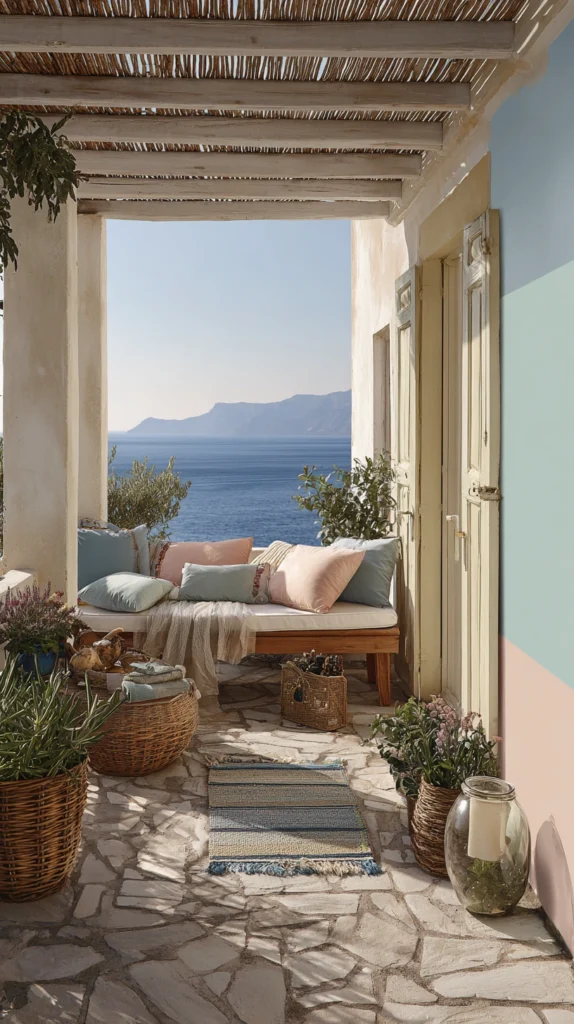
Budget: $30 – $100
A collection of scented-leaf or zonal geraniums in terracotta pots painted in two coordinating colours — all white and pale blue, or all terracotta and cream, or all sage green and white — produces one of the most traditional and most reliably effective pool deck planting combinations. Geraniums flower continuously from late spring to first frost with minimal care, tolerate the reflected heat and occasional splashing of a pool deck, and scented-leaf varieties release their fragrance whenever their leaves are brushed.
Geranium plants cost $3–$8 each. Standard terracotta pots in various sizes cost $2–$8 each. Exterior sample paint in the chosen colour runs $5–$10 per pot. Deadhead the spent flower heads every five to seven days — geraniums that are deadheaded consistently produce new flower stems within days of each deadheading; those left to set seed invest their energy in seed production rather than the next flush of flowers.
Style tip: Paint the pots in the chosen colour before planting rather than after. Paint applied to an empty, dry pot adheres more evenly and can be applied to all surfaces including the base and the interior rim without navigating around plants and growing medium. A pot painted after planting always has uneven coverage on the underside and interior edges that is visible when the pot is lifted.
9. The Bird of Paradise in a Woven Seagrass Pot Cover
Budget: $60 – $200
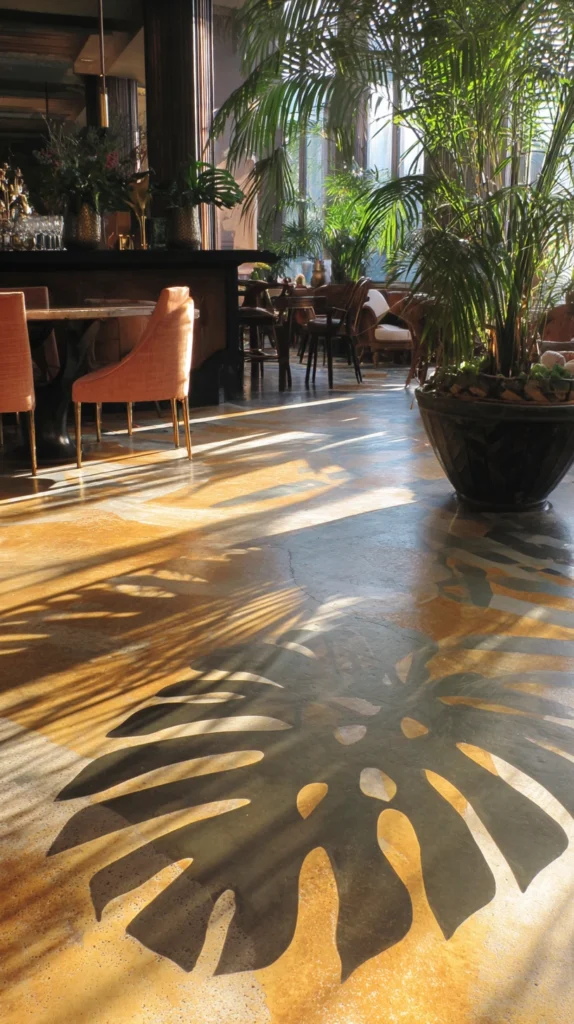
A bird of paradise plant — Strelitzia reginae — in a large woven seagrass or rattan pot cover produces the most unambiguously tropical combination on this list. The large, paddle-shaped leaves move dramatically in the wind and cast strong shadows on the deck surface, and the woven natural fibre of the pot cover introduces texture and warmth that hard ceramic and metal containers cannot provide. The orange and blue flowers, when they appear, are among the most extraordinary in the plant world.
A bird of paradise in a 10-litre pot costs $30–$80. A large woven seagrass pot cover of 35–45 centimetres internal diameter runs $20–$60. Use the pot cover over a standard plastic nursery pot with drainage holes rather than planting directly into the woven cover — seagrass deteriorates rapidly when in permanent contact with wet growing medium and replacing only the woven cover rather than replanting is considerably simpler.
Style tip: Position bird of paradise in the most sheltered position on the deck rather than the most exposed. The large leaves that make the plant so dramatic are also vulnerable to wind damage — torn and tattered leaves develop brown edges that do not recover and remain on the plant for the entire season. A sheltered position preserves the graphic quality of the foliage that makes the combination work.
10. The Hydrangea in a Wooden Half Barrel
Budget: $40 – $150
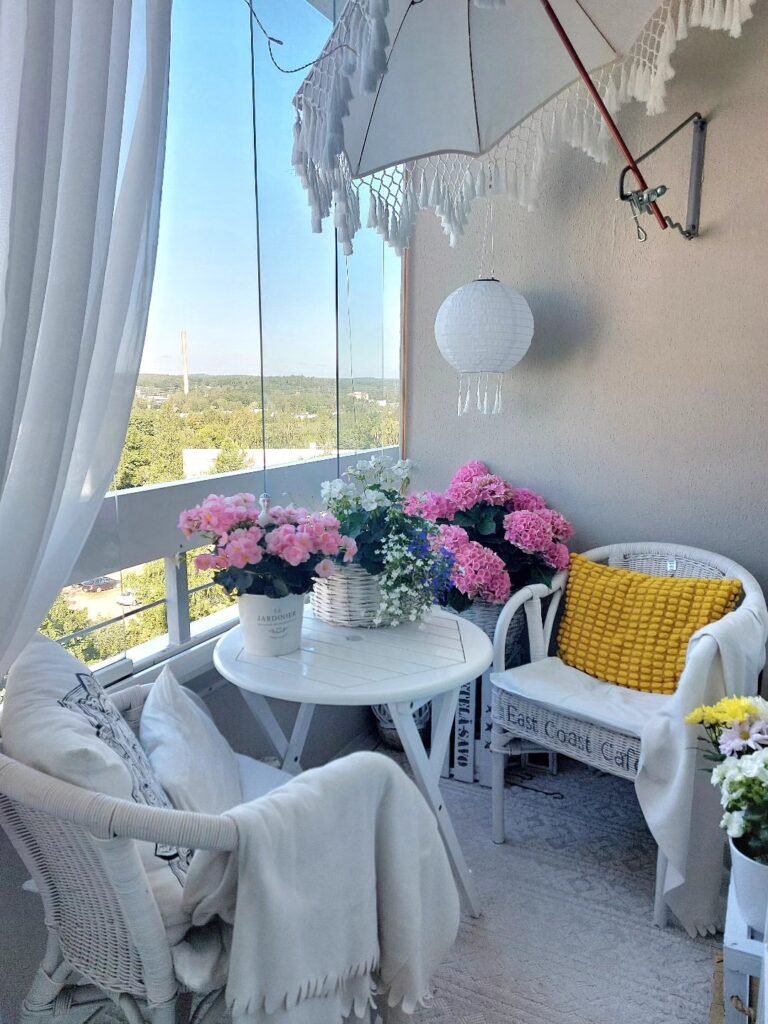
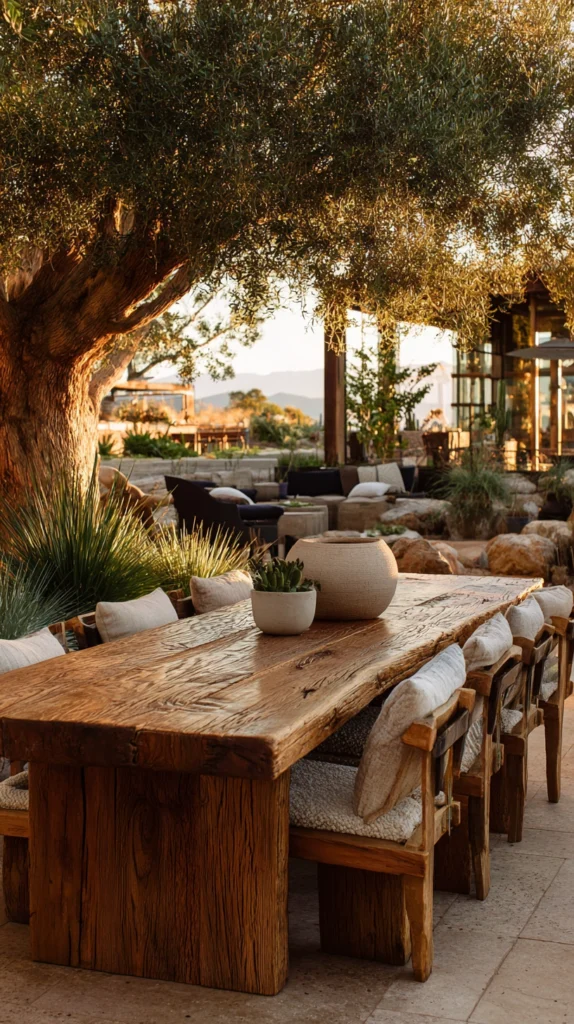
A hydrangea in a wooden half barrel is the most generous-looking planting combination on a pool deck — the large mophead flower clusters in white, blue, or pink provide a scale of colour that most container plants cannot achieve, and the wooden barrel has a solidity and a natural quality that suits a deck environment directly. A single large hydrangea in full bloom needs no companion planting and no additional decoration — it is complete in itself.
A mophead hydrangea in a 5-litre pot costs $15–$40. A wooden half barrel of 50 centimetres in diameter runs $25–$60. Line the interior of the barrel with a plastic liner with drainage holes before filling — unlined wooden barrels allow growing medium to dry out rapidly through the stave gaps in hot weather and eventually cause the staves to separate as the wood dries and shrinks. Hydrangeas require consistent moisture and wilt dramatically when water-stressed, so moisture retention is the critical factor in barrel planting.
Style tip: Choose hydrangea varieties based on the colour of the pool water and the deck surface rather than simply on personal preference. Blue hydrangeas beside blue water and pale stone is a harmonious combination; pink hydrangeas provide contrast that makes both the plant and the water appear more vivid. Neither is wrong, but the relationship between the flower colour, the water, and the deck surface is worth considering before the plant is purchased.
11. The Trailing Lobelia in a Hanging Copper Planter
Budget: $30 – $100
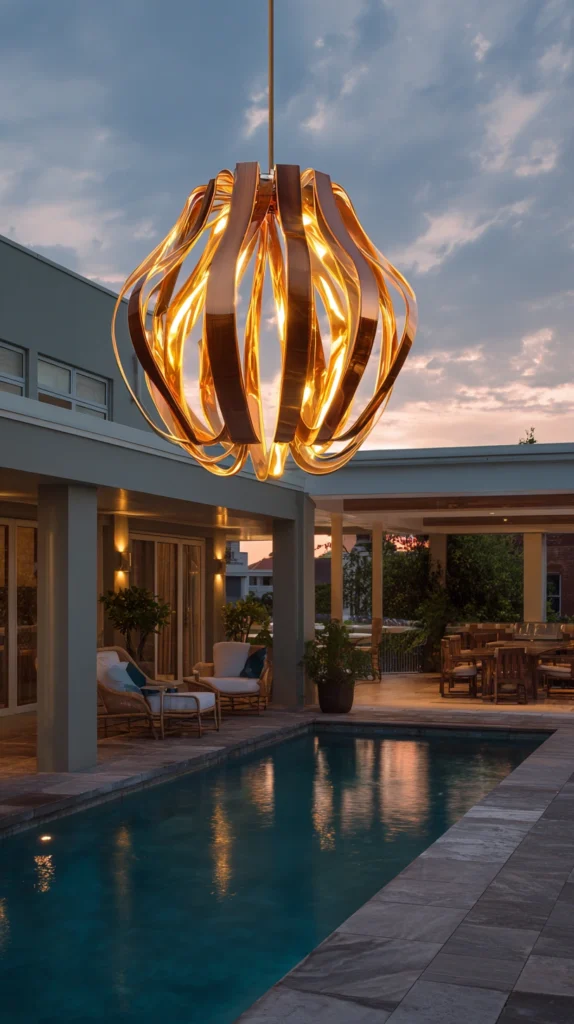
A hanging copper planter filled with trailing lobelia — cascading blue, white, or deep purple — suspended at eye height from a pergola beam, a parasol pole, or a wall bracket brings colour to the vertical dimension of the pool deck that ground-level and deck-level pots cannot reach. The copper planter develops a patina of verdigris in the moisture-rich environment of a pool deck that no amount of deliberate ageing can replicate, and the combination of aged copper and blue trailing flowers is quietly beautiful.
A copper-finish hanging planter costs $15–$40. Trailing lobelia plants cost $2–$4 each — a 30-centimetre planter needs six to eight plants for immediate density. Water hanging planters daily in summer — they lose moisture far more rapidly than ground-level pots due to air movement around all surfaces including the base, and lobelia that dries out completely rarely recovers its trailing growth to the density it had before the stress.
Style tip: Line the hanging planter with a coconut fibre liner ($3–$6) before adding growing medium rather than using the plastic insert that comes with most hanging baskets. A coconut fibre liner allows planting through the sides of the basket as well as the top, and lobelia planted through the sides of the basket cascades outward from the very base of the planter rather than only from the top, producing a much fuller and more satisfying sphere of trailing colour.
12. The Phormium in a Square Dark Slate Pot
Budget: $50 – $180
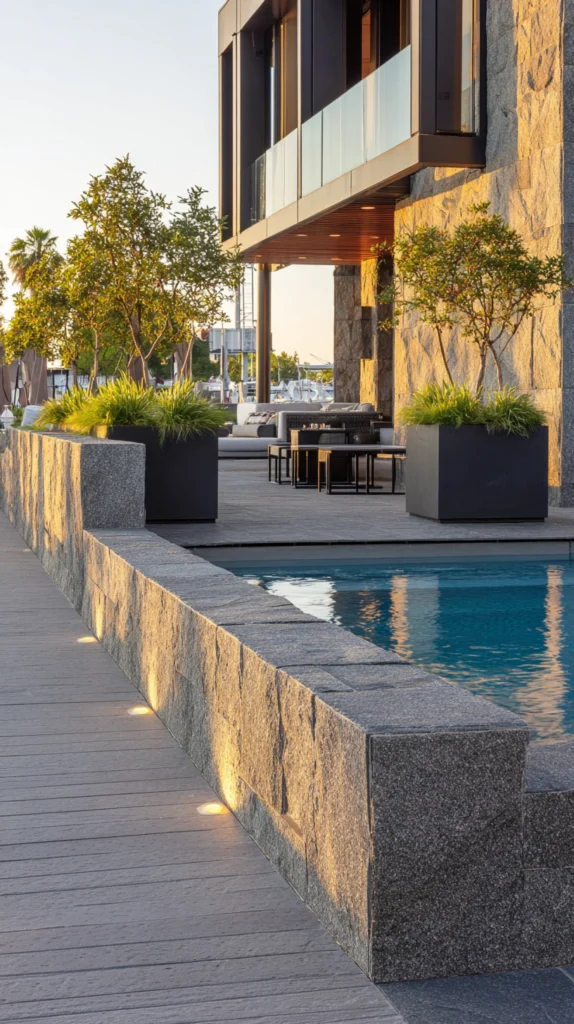
A phormium — New Zealand flax — in a square dark slate or dark fibreclay pot produces one of the most architectural plant and pot combinations available for a contemporary pool deck. The long, sword-shaped leaves in bronze, burgundy, green, or variegated combinations rise vertically from the pot and hold their form in wind that would devastate a softer plant, and the square pot with its clean corners and dark surface reads as a deliberate design element rather than simply a container.
A phormium in a 5-litre pot costs $15–$40. A square dark slate-effect fibreclay pot of 35–40 centimetres costs $35–$80. Phormiums tolerate salt air, reflected heat, and occasional drought with equanimity — they are one of the most genuinely tough plants available for an exposed pool deck and one of the few that look better, not worse, after a summer of wind and sun.
Style tip: Plant a single phormium per square pot rather than grouping multiple plants. The architectural quality that makes phormium valuable as a pool deck plant comes from the strong vertical lines of its leaves emerging from a single crown — multiple plants in the same pot produce a confused mass of foliage rather than the clean, directional growth that a solo specimen provides.
13. The Mixed Herb Pot in a Weathered Stone Trough
Budget: $35 – $120
A large weathered stone trough planted with a generous mix of culinary herbs — rosemary, thyme, sage, oregano, and a central standard bay — placed near the poolside dining or entertaining area is the most practical planting combination on this list. Herbs growing within reach of where food is prepared and eaten are used; herbs growing in a pot at the opposite end of the garden are appreciated in theory and ignored in practice. The weathered stone trough suits every deck material and every architectural style.
A reconstituted stone trough of 60–80 centimetres in length costs $30–$80. Herb plants cost $2–$4 each — a trough of this size holds six to eight plants comfortably. A standard bay tree at the centre costs $15–$35. Fill with a free-draining compost and grit mixture — Mediterranean herbs in moisture-retentive compost in the full sun of a pool deck develop root rot rather than the drought-tolerant root systems that make them productive and long-lived.
Style tip: Position the trough at the prevailing wind side of the dining area rather than the lee side. Herbs release their aromatic oils when their foliage moves in a breeze, and a trough positioned where the wind passes through it before reaching the seating area carries the scent of rosemary and thyme to everyone seated there without requiring anyone to touch the plants. The positioning is the detail that makes the scented herb trough genuinely pleasurable rather than merely decorative.
The best pool deck planting is not the most ambitious or the most varied — it is the combination that suits the deck material, the pool colour, the prevailing light, and the maintenance commitment of the person responsible for keeping it alive. One well-chosen pot in a genuinely good position, planted with something that thrives in those specific conditions, does more for a pool deck than a dozen pots assembled without that consideration.
Choose combinations that the conditions support, position them where they contribute most, and water consistently through the weeks when the pool is most in use. The deck will feel like somewhere worth lingering long after the swimming is done.