Small Space, Big Impact: 15 Tiny Patio Ideas to Transform Your Outdoor Space
There is a particular design challenge that a tiny patio presents — and a particular design opportunity that the same tiny patio offers. The challenge is obvious: limited square footage, awkward proportions, and the persistent temptation to either overload the space with furniture or leave it so sparse that it reads as unfinished.
The opportunity is less obvious but considerably more interesting: a small space, designed with genuine intention, can achieve a quality of atmosphere and completeness that a larger, more casually arranged outdoor area rarely matches.
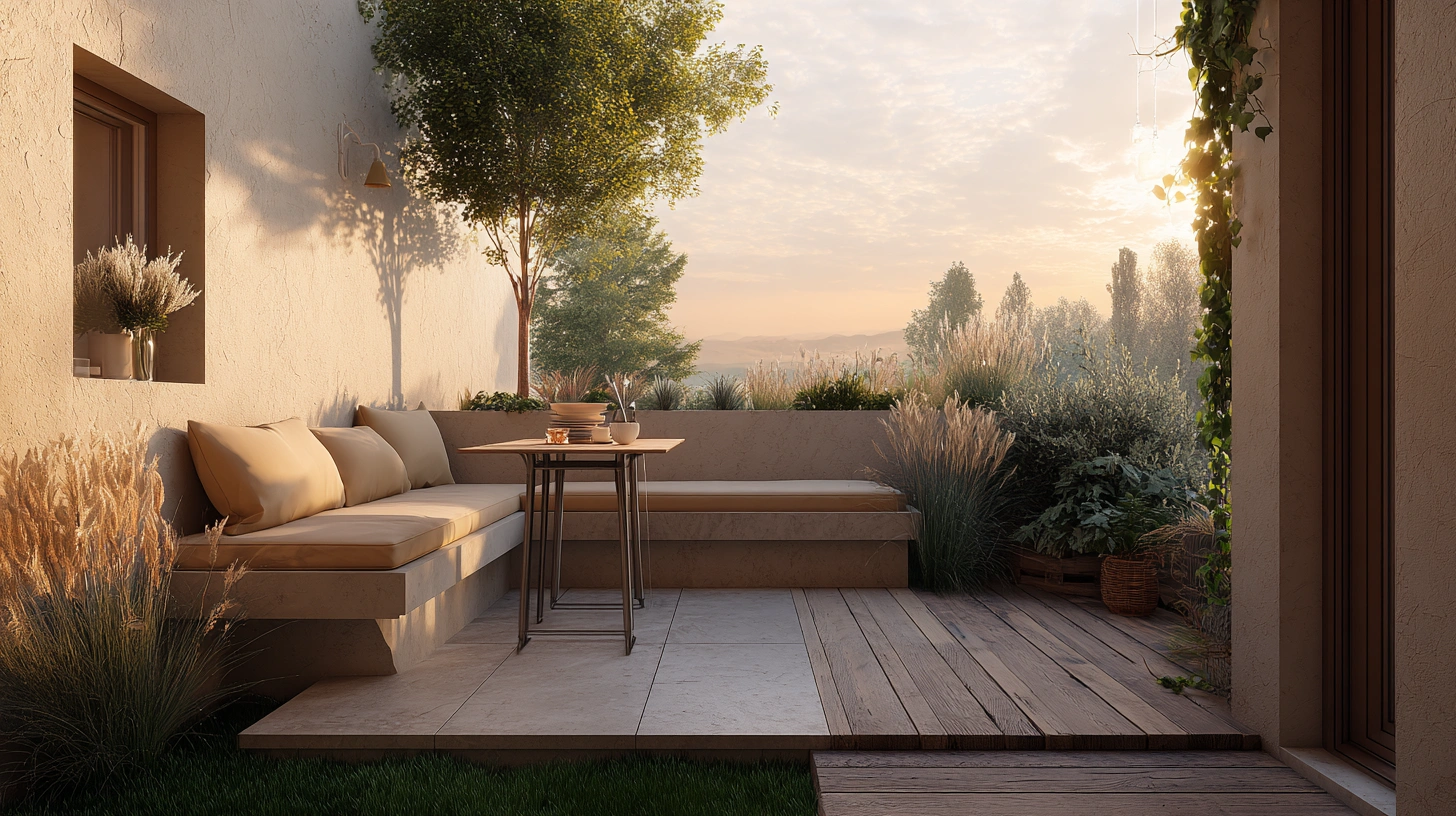
The tiny patio rewards precision. Every object placed in it matters more than it would in a larger space. Every colour choice, every material decision, and every plant placement carries more visual weight. The result, when those decisions are made well, is an outdoor room that feels designed rather than assembled — and that is genuinely one of the most satisfying things a small outdoor space can be.
The fifteen ideas below cover every approach to the tiny patio — from furniture choices and flooring to planting and lighting — and each one is built on the principle that small does not mean compromised.
1. The Bistro Table and Two Chairs Setup
Budget: $60 – $400
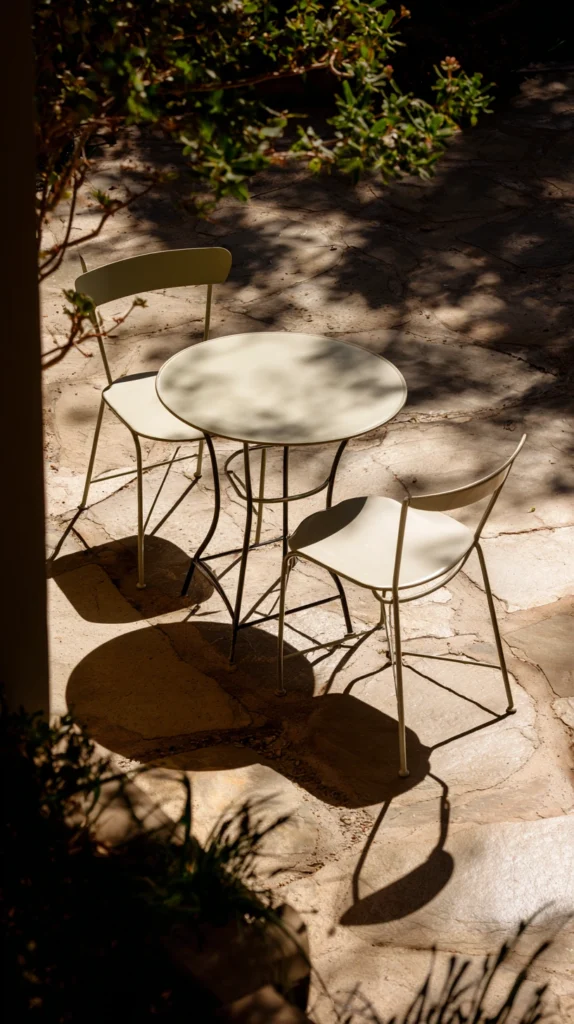
A bistro table and two chairs — the most space-efficient seated outdoor arrangement available — turns even the smallest patio into a genuine dining and gathering destination. A round bistro table of 60 to 70 centimetres in diameter provides sufficient surface for two place settings, two cups of coffee, or a small selection of drinks without consuming the patio’s floor space disproportionately.
A cast iron or steel bistro table and two matching chairs cost $80 – $300 for a quality set. A rattan or aluminium version runs $60 – $250. A marble-topped bistro table — $150 – $400 — is the most beautiful and most weather-resistant option available and reads immediately as a considered design decision rather than a practical purchase.
Decor tip: Choose a round bistro table rather than a square or rectangular one for a tiny patio. A round table has no corners to navigate around, takes up less perceived visual space than a rectangular table of equivalent surface area, and allows two people to sit at any orientation relative to each other rather than being fixed in a face-to-face arrangement. The round form is always the more socially generous and the more spatially efficient choice for a small outdoor setting.
2. The Vertical Garden Wall
Budget: $40 – $300
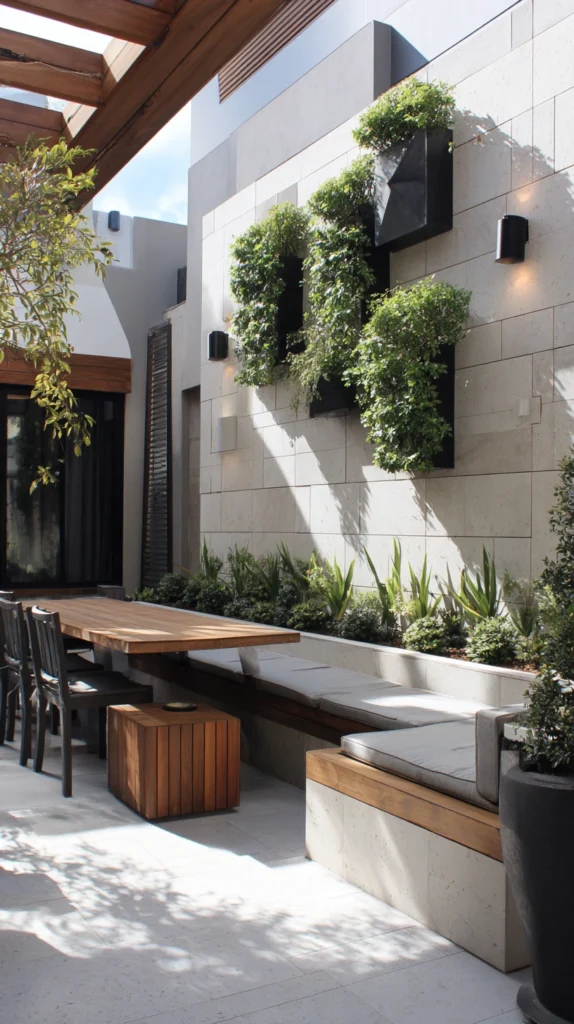
A vertical garden — plants growing upward on a wall-mounted frame, a trellis, or a pocket planter system rather than outward across the patio floor — is the tiny patio’s most efficient use of growing space and its most visually dramatic transformation. A blank fence or wall covered with climbing plants, wall-mounted planters, or a modular vertical garden system doubles the garden’s planting capacity without consuming a single square centimetre of floor space.
A wooden trellis panel mounted to the fence — $15 – $40 — supports climbing plants for a full season. A wall-mounted pocket planter in a felt or fabric material — $20 – $60 — holds twelve to sixteen individual plants in a space of approximately 60 by 90 centimetres. A modular vertical garden frame system in powder-coated steel — $60 – $200 — provides a more permanent and more structured installation.
Decor tip: Plant the vertical garden with a combination of trailing and upright species rather than all trailing or all upright. Trailing plants — trailing nasturtium, trailing lobelia, or a cascading succulent — fill the lower pockets and soften the edges of the installation. Upright plants — herbs, small flowering species, or structural succulents — fill the upper pockets and give the installation height and definition. The combination of both produces a vertical garden that reads as a planted wall rather than a collection of individual pockets.
3. The All-Weather Outdoor Rug
Budget: $30 – $150
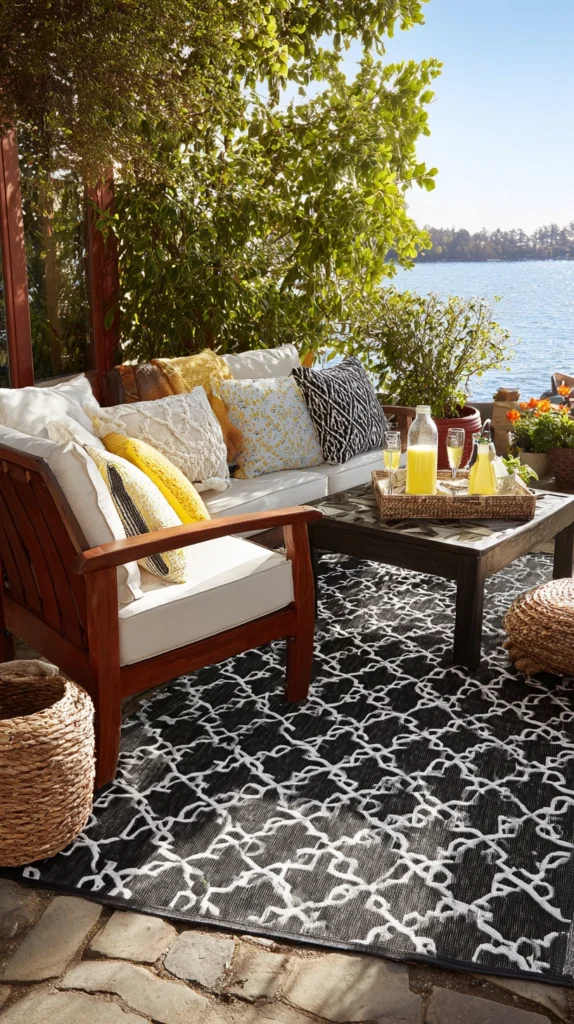
An outdoor rug — a flatweave polypropylene or recycled plastic rug in a pattern or colour that references the patio’s aesthetic — is the single most effective way to define the tiny patio as a room rather than a section of concrete or decking. The rug creates a visual boundary that says this is the floor of a designed space, not simply the outdoor ground.
A flatweave outdoor rug in a standard small patio size — 150 by 240 centimetres — costs $40 – $120. A smaller version for a bistro arrangement — 120 by 180 centimetres — runs $30 – $80. Both are fade-resistant, waterproof, and can be hosed clean and returned to the patio surface within an hour — a practical specification that a natural fibre rug in the same position cannot match.
Decor tip: Choose an outdoor rug that extends at least 30 centimetres beyond the front legs of the furniture placed on it. A rug that is too small for the furniture arrangement — where only the front two legs of each chair touch the rug — produces an impression of insufficient scale that makes both the rug and the furniture look smaller than they are. A rug generous enough to anchor the full furniture arrangement reads as correctly proportioned and gives the patio floor the grounded quality it requires.
4. The Privacy Screen Planting
Budget: $30 – $200
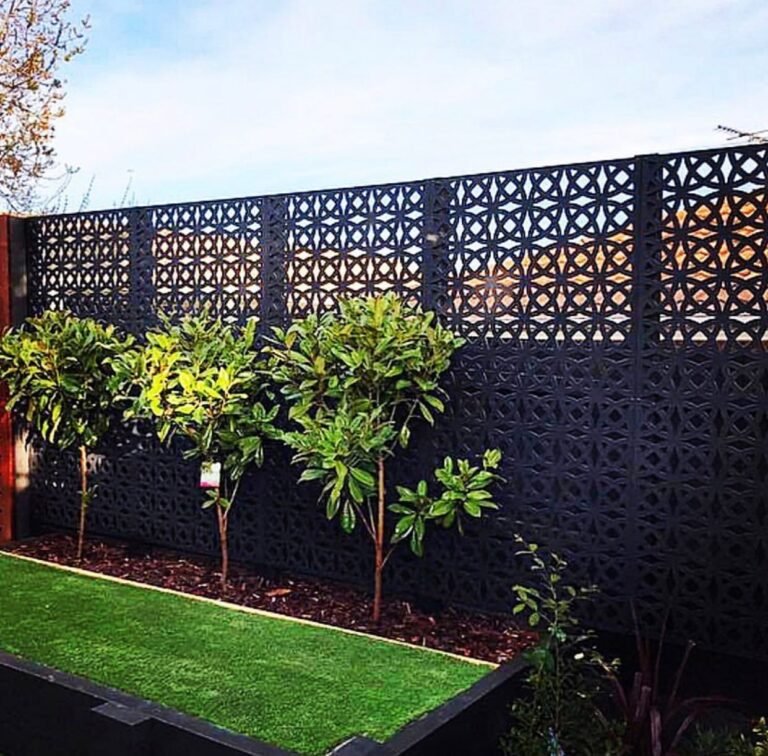
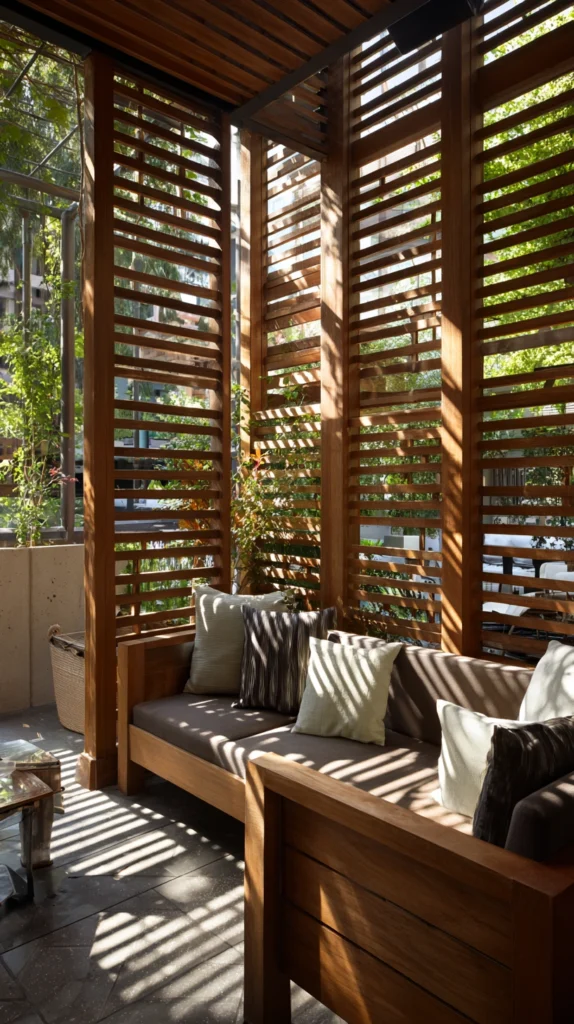
A tiny patio without privacy is a tiny patio that feels exposed rather than intimate — and intimacy is the quality that makes a small outdoor space genuinely usable for the long, relaxed hours it is designed for. A privacy screen — a tall trellis with climbing plants, a row of tall potted bamboo, or a bamboo screening panel — creates the enclosure that transforms an exposed outdoor corner into a sheltered outdoor room.
A 1.8-metre bamboo screening panel costs $15 – $40 mounted to an existing fence. A row of three large bamboo plants in floor pots — $20 – $50 per plant — provides a living screen that grows denser each season. A trellis planted with fast-growing jasmine or climbing roses — $15 – $40 for the trellis plus $15 – $30 per plant — provides fragrance alongside privacy within one growing season.
Decor tip: Position the privacy screen on the side of the patio most exposed to neighbouring views rather than on the side that receives the best light. A privacy screen that blocks the primary light source of a tiny patio creates a shaded enclosure rather than a sheltered outdoor room — which is a significantly less pleasant result. Privacy and light should be considered together, with the screen placed to provide the maximum enclosure at the minimum light cost.
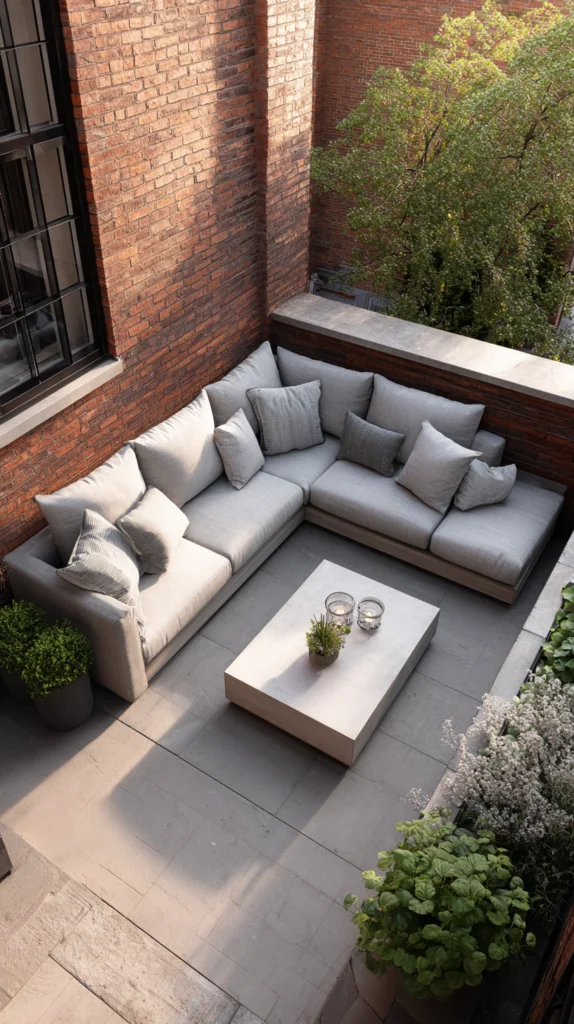
5. The Corner Sofa for Small Spaces
Budget: $150 – $1000
A small L-shaped corner sofa — scaled for a tiny patio, with a total footprint of approximately 1.5 by 1.5 metres — uses the corner of the patio as efficiently as any piece of outdoor furniture available. It seats three to four people in a defined social arrangement, leaves the centre of the patio open, and creates the impression of a fully furnished outdoor room without consuming the full floor area.
A compact rattan corner sofa set in a synthetic all-weather weave costs $150 – $500 for a two-piece L-shaped configuration. An aluminium-framed version with weatherproof cushions — $300 – $1000 — is more durable and more precisely scaled to tight patio dimensions. A low coffee table at the centre of the L — $30 – $100 — completes the seating arrangement without adding significant floor space consumption.
Decor tip: Choose a corner sofa with storage in the seat base rather than a solid base for a tiny patio. A corner sofa with lift-up cushion storage provides the outdoor room with its only concealed storage solution — the location where cushions, outdoor accessories, and garden tools can be stored between uses without requiring a separate storage box that would otherwise consume additional floor space.
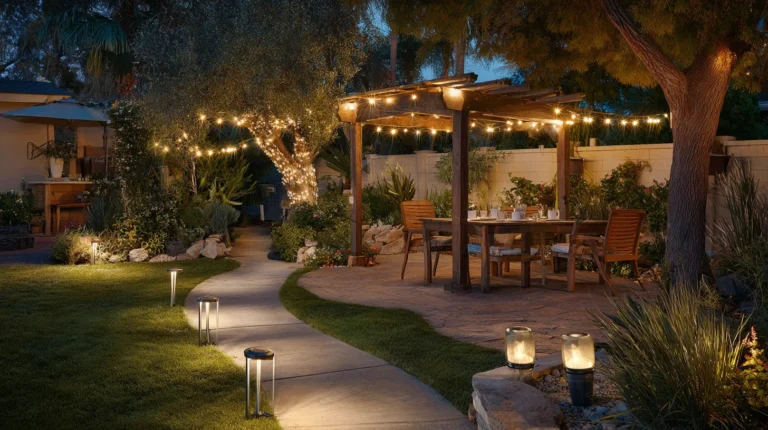
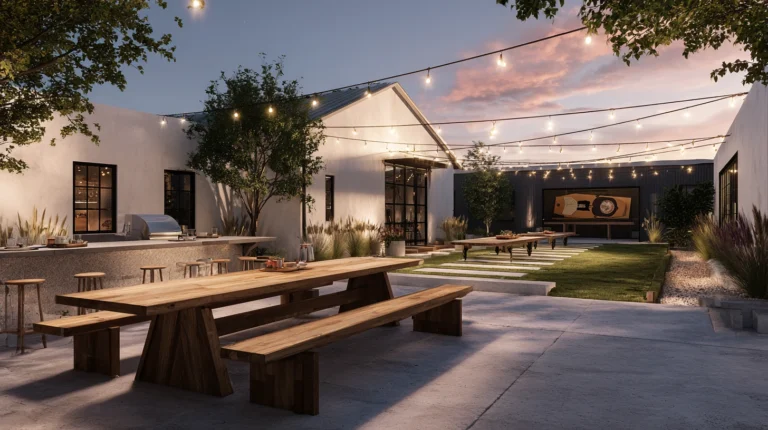
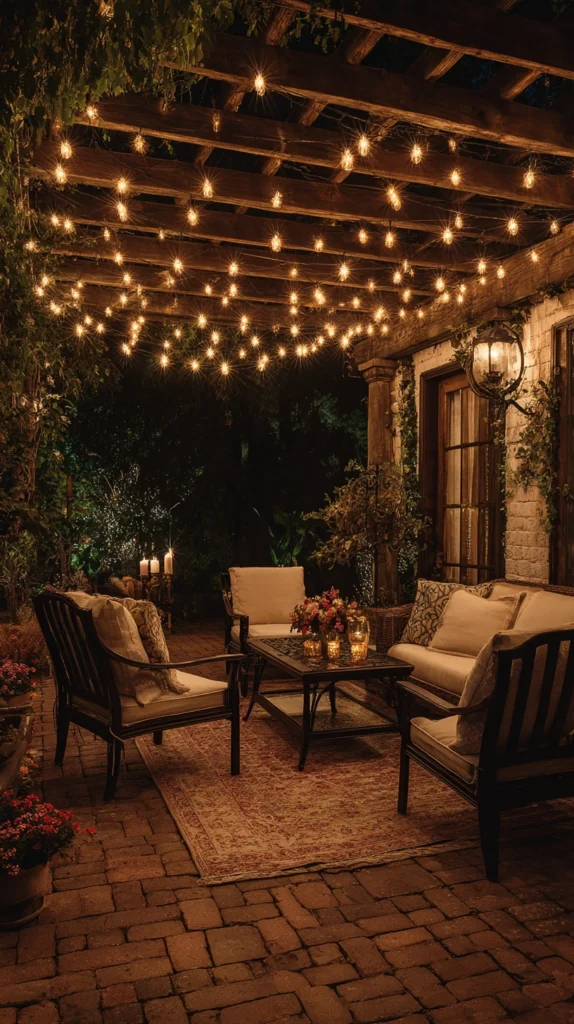
6. The Overhead String Light Canopy
Budget: $20 – $120
String lights strung across the overhead space of a tiny patio — from wall to wall, from fence post to fence post, or from a central hook to each corner — create a canopy of warm light that transforms the patio from a daytime outdoor space into an evening destination. A tiny patio with string lights overhead feels larger, warmer, and more complete after dark than it does in daylight.
Outdoor-rated string lights with globe bulbs — $20 – $60 per 10-metre length. Two to three lengths draped in a loose grid across a standard tiny patio — $40 – $120 in total — provide sufficient coverage for a warm, diffused overhead light source. Warm filament-style bulbs at 2200K produce the golden glow that makes an outdoor space feel genuinely magical rather than merely illuminated.
Decor tip: Fix the string lights at a consistent height of approximately 2.2 to 2.4 metres above the patio floor — high enough to clear a standing adult’s head, low enough to feel intimate rather than distant. A string light canopy that is too high reads as outdoor event lighting. The same lights at the correct intimate height reads as the ceiling of an outdoor room — which is precisely the quality a tiny patio string light installation should communicate.
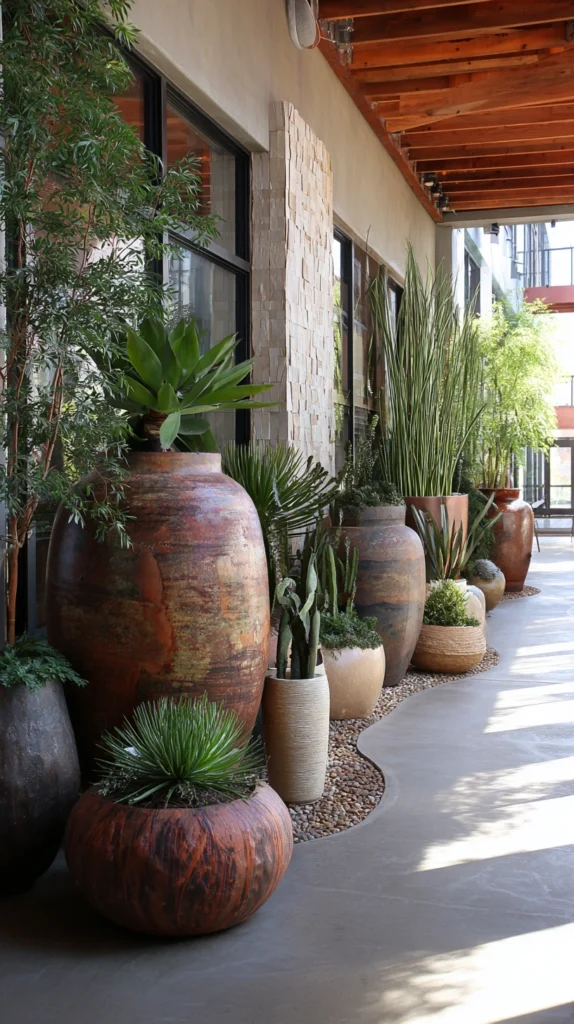
7. The Potted Plant Collection
Budget: $30 – $200
A curated collection of potted plants — in varying heights, in complementary containers, placed at the patio’s perimeter to define its edges without consuming its central space — is the tiny patio’s most important softening element and the one that most directly communicates whether the space has been designed or simply furnished. Plants at the perimeter make the central space feel larger, not smaller.
Large terracotta or ceramic pots — $8 – $40 each — hold statement plants: a standard bay tree, a large rosemary topiary, a trained olive tree, or an architectural agave. Medium pots — $5 – $20 each — hold seasonal flowering plants or herbs. A collection of five to seven pots in the same material — all terracotta or all ceramic in a single glaze colour — costs $40 – $160 in pots and $20 – $80 in plants.
Decor tip: Use the same pot material throughout the tiny patio collection rather than mixing terracotta, ceramic, plastic, and rattan. A tiny patio with seven pots in seven different materials reads as a garden centre display. The same seven pots all in terracotta reads as a considered design decision. The material consistency is what unifies the collection and gives the patio floor its coherence.
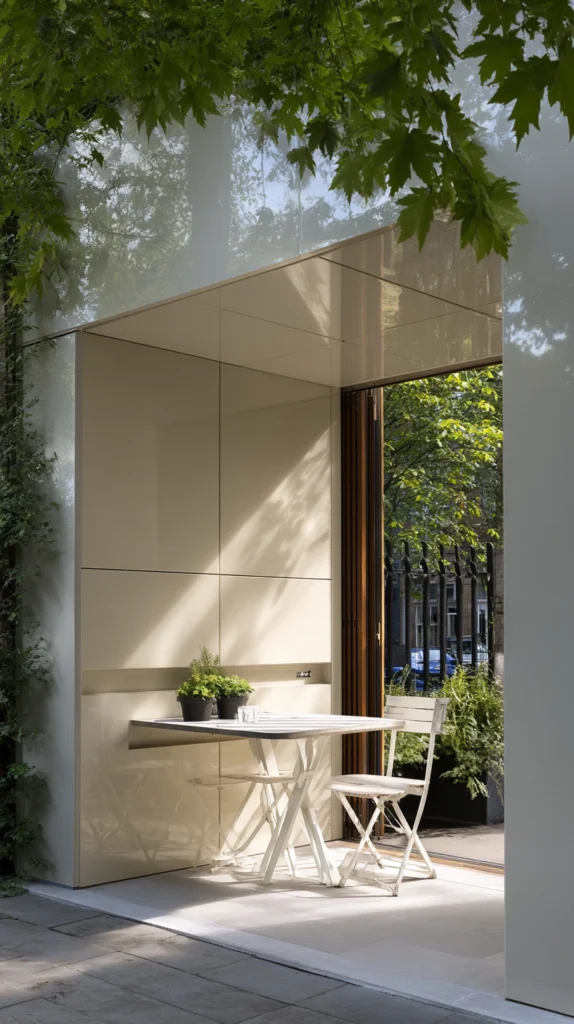
8. The Wall-Mounted Fold-Down Table
Budget: $40 – $200
A wall-mounted fold-down table — mounted to the fence or the exterior wall of the house at a standard table height, hinged to fold flat against the wall when not in use — provides the tiny patio with a full-sized dining or working surface that consumes zero floor space when the patio is being used for anything other than dining. It is the most spatially efficient table solution available for a small outdoor space.
A timber fold-down wall table in a weather-treated pine or hardwood costs $40 – $120 DIY in materials. A manufactured version in powder-coated steel with a slatted timber surface — $60 – $200 — requires only wall fixings and a spirit level for installation. Folded flat against the wall, it protrudes approximately 10 centimetres — insufficient to reduce the usable floor area of the patio in any meaningful way.
Decor tip: Install the fold-down table on the wall that receives the most shade during the hours of most frequent use rather than on the most convenient wall for installation. A dining table in direct afternoon sun produces a surface that is too hot to eat from and a seating position that is too bright to face comfortably. A table in dappled or full shade at the same hour provides the most pleasant outdoor dining environment regardless of the specific installation complexity.
9. The Outdoor Mirror Trick
Budget: $30 – $200
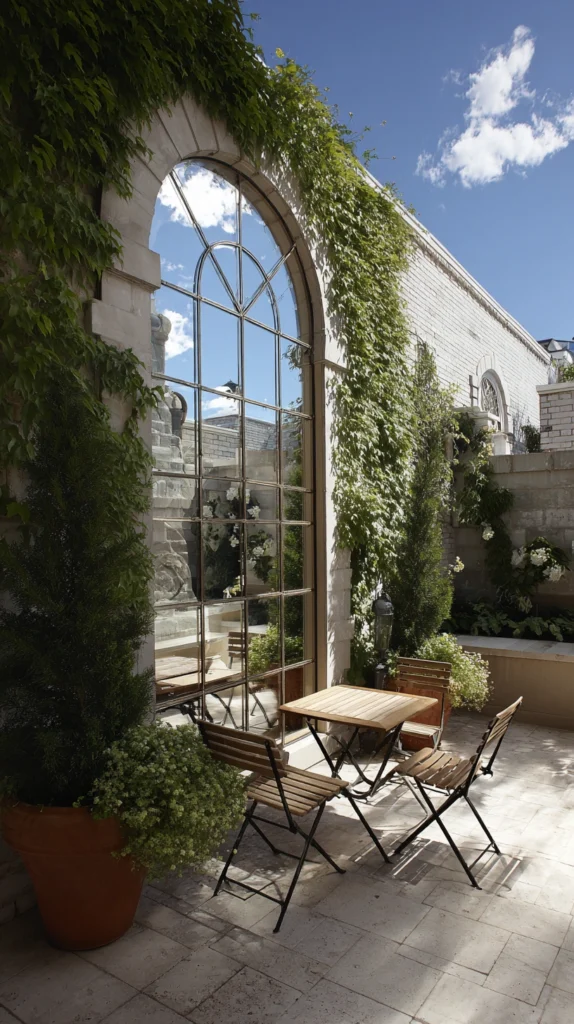
A large outdoor mirror — mounted on the fence or the wall of the house at the far end of the tiny patio — reflects the plants, the sky, and the space back into itself and creates the visual impression of a patio that extends beyond its actual boundary. It is the oldest spatial expansion trick in interior design applied to an outdoor context, and it works with equal effectiveness in both settings.
A weather-resistant outdoor mirror in a simple frame — $30 – $100 for a standard size. A large arched outdoor mirror — $80 – $200 — is the most current format and the one that produces the most dramatic visual expansion effect. The mirror should be mounted at a height that reflects the sky and the overhead planting rather than directly reflecting the viewer — a reflection of sky and plants creates depth, while a direct reflection of the viewer creates the impression of surveillance rather than space.
Decor tip: Frame the outdoor mirror with climbing plants — training a small-leaved ivy or a climbing rose around the mirror’s edge — so that the reflection appears to be a window into a garden beyond rather than a reflective surface mounted on a wall. The framing plant blurs the mirror’s edge and enhances the illusion of depth that the reflection creates, producing a more convincing and more beautiful spatial expansion effect than an unframed mirror achieves.
10. The Raised Platform Deck Insert
Budget: $100 – $800
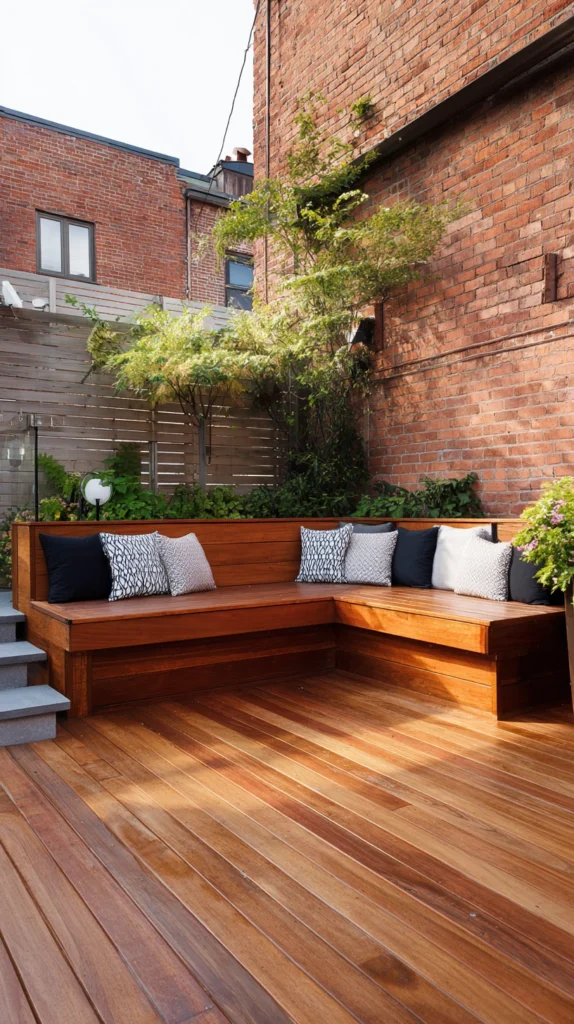
A small raised timber or composite deck platform — inset into an existing concrete or stone patio surface, or built as a defined zone within a larger outdoor area — creates a warm, defined floor surface within the tiny patio that immediately elevates the quality of the space above the existing hard surfacing. A deck platform of 1.5 by 2 metres is sufficient to anchor a bistro arrangement or a small sofa grouping with a quality floor that reads as designed rather than poured.
Composite decking boards in a warm timber tone — $30 – $60 per square metre in materials. A simple timber frame to support the boards — $20 – $40 in materials. A 1.5 by 2 metre deck platform requires approximately 3 square metres of decking — $90 – $180 in decking plus $30 – $60 in frame materials. A professional installation of the same platform adds $100 – $200 in labour.
Decor tip: Use composite decking rather than natural timber for a tiny patio platform that will receive high traffic and direct weather exposure. Composite decking does not warp, split, or require annual oiling — the maintenance demands of natural timber in a small, heavily used outdoor space are disproportionate to the aesthetic advantage that genuine timber provides over a high-quality composite alternative.
11. The Herb and Edible Garden Corner
Budget: $20 – $100
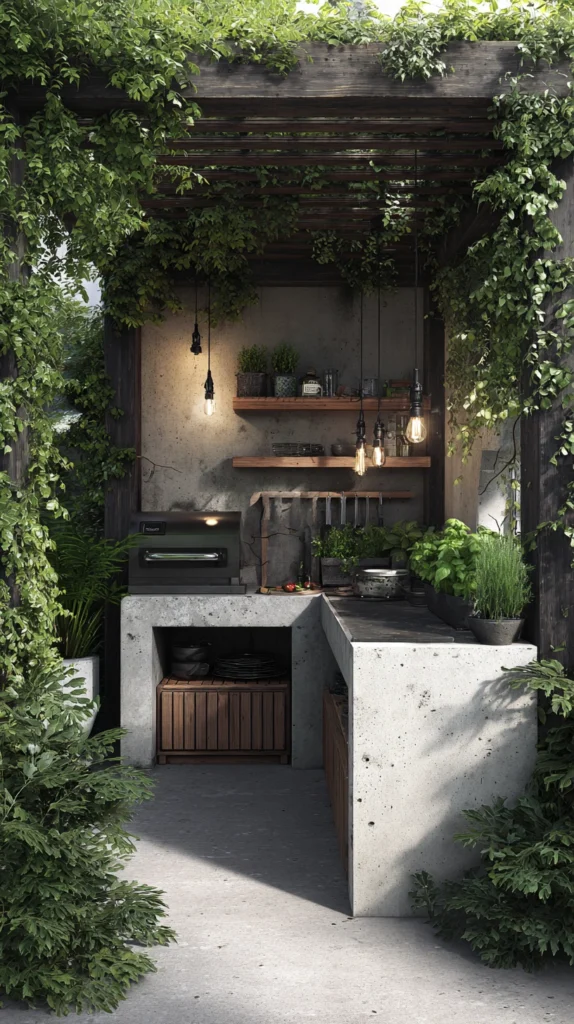
A corner of the tiny patio given over to an edible garden — tiered herb planters, a wall-mounted strawberry planter, a climbing bean on a small trellis, and a pot of cherry tomatoes beside the bistro table — makes the patio genuinely productive as well as beautiful and creates the particular pleasure of a space where cooking and gardening overlap in the most direct possible way.
A tiered herb planter in terracotta or timber — $15 – $40 — holds six to eight herb varieties in a footprint of approximately 40 by 40 centimetres. A wall-mounted strawberry planter — $10 – $25 — produces fruit at eye height without consuming floor space. A cherry tomato plant in a large pot — $5 – $15 for the plant, $8 – $20 for the pot — produces fruit throughout summer at the cost of daily watering and weekly feeding.
Decor tip: Plant the herb corner with species that are actually used in the kitchen rather than those that look most attractive in the planter. A herb planter stocked with rosemary, thyme, basil, mint, and flat-leaf parsley is used daily and maintained by use — harvesting keeps the plants compact and productive. A planter stocked with decorative herbs that are rarely harvested becomes overgrown and woody within a single season.
12. The Shade Sail Solution
Budget: $30 – $200
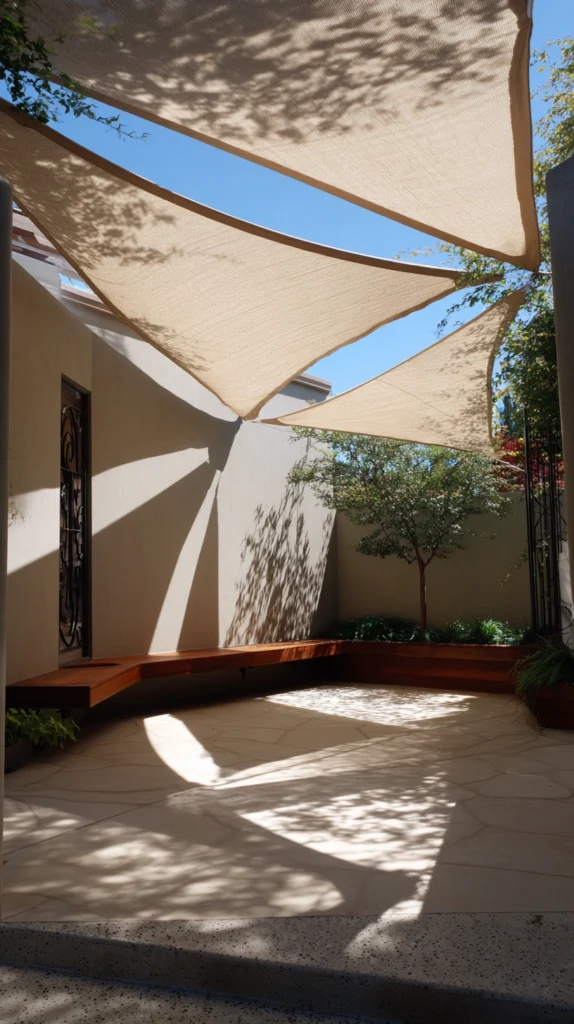
A shade sail — a tensioned triangle or rectangle of UV-resistant fabric stretched between three or four anchor points above the tiny patio — creates the overhead shelter that transforms the space from a surface exposed to full sun into an outdoor room with a ceiling. In a tiny patio context, the shade sail also defines the boundary of the space from above, creating a sense of enclosure that the patio’s small floor area alone cannot produce.
A UV-resistant polyester shade sail in a standard small size costs $30 – $80. Stainless steel fixing hardware — eye bolts and turnbuckles — adds $15 – $40 per anchor point. A 3 by 3 metre shade sail, appropriate for a standard tiny patio, covers the full floor area and provides meaningful shade during the peak sun hours of an afternoon. A sloped installation — one corner higher than the others — sheds rain effectively and maintains the sail’s tension after wet weather.
Decor tip: Choose a shade sail colour that complements the patio’s overall palette rather than contrasting with it. A neutral sail in sand, warm grey, or natural white reads as a architectural canopy that suits almost any patio aesthetic. A strongly coloured sail — red, blue, or green — reads as the dominant decorating decision of the entire patio, which means it must be chosen to work with every other element of the space rather than simply being the colour available at the most accessible price.
13. The Lighting Layer System
Budget: $40 – $200
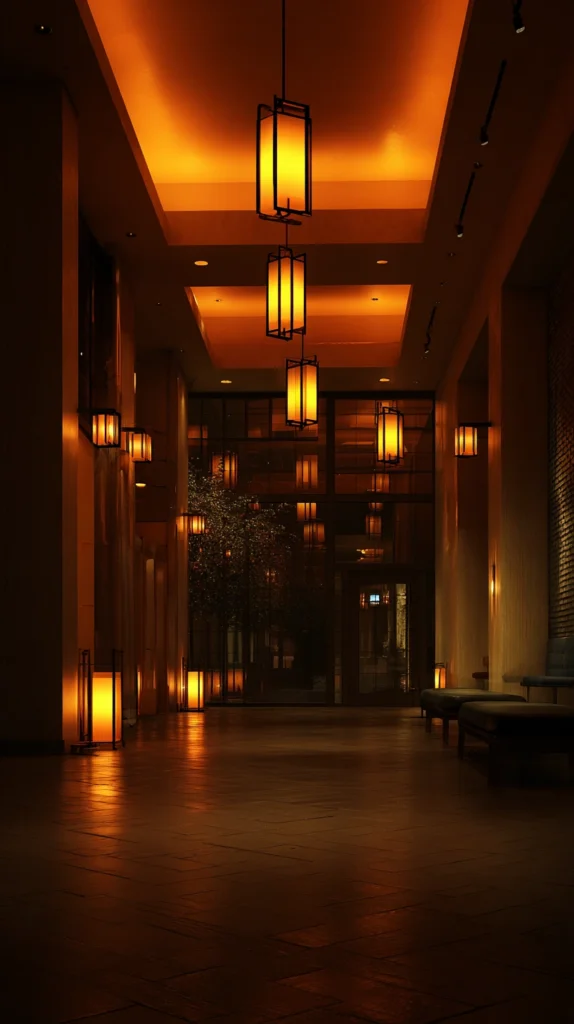
A tiny patio lit by a single source — a wall-mounted exterior bulkhead or an overhead security light — is a functional outdoor space and nothing more. A tiny patio lit by multiple sources at different heights — string lights above, solar lanterns at floor level, a candle cluster on the table, and a small uplighter beside the largest plant — is an outdoor room with atmosphere, warmth, and a genuine reason to be in it after dark.
Solar lanterns at floor level — $8 – $20 each, a set of three for $24 – $60. A candle cluster on the bistro table — $15 – $40 for candles and hurricane glass holders. A solar uplighter beside the statement plant — $10 – $25. String lights above — $20 – $60. Total layered lighting investment: $69 – $185 for a patio that is as beautiful at 10pm as it is at noon.
Decor tip: Use warm light sources throughout the tiny patio lighting scheme — warm white string lights, amber candles, warm-toned solar lanterns — rather than mixing cool and warm sources. A tiny patio lit by multiple warm sources produces a unified, enveloping quality of light that reads as deeply inviting. The same patio lit by a mix of cool white solar lights and warm candles produces a colour temperature conflict that reads as dissonant even when the observer cannot articulate precisely why.
14. The Foldable and Stackable Furniture Strategy
Budget: $60 – $400
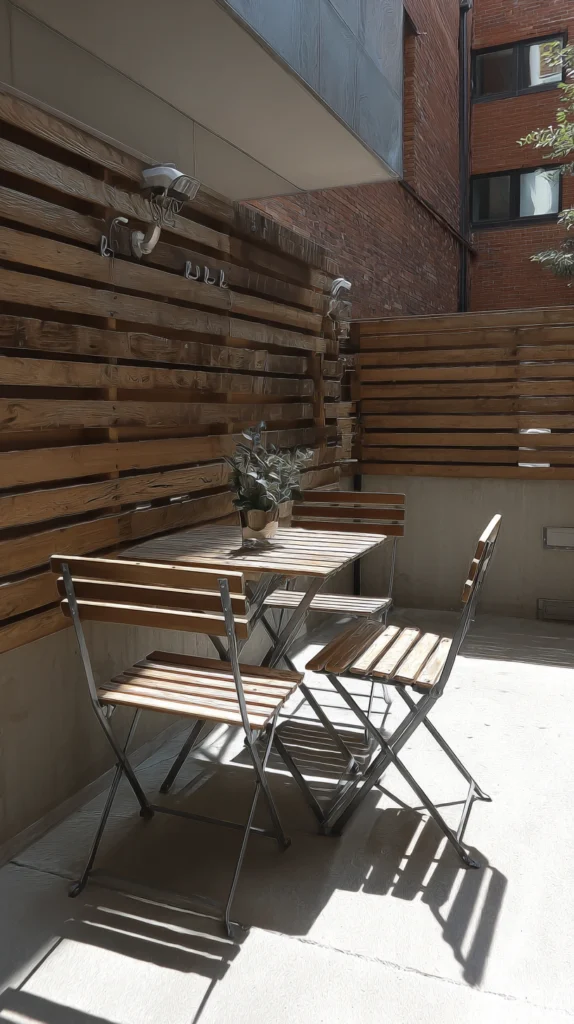
A tiny patio furnished with foldable and stackable pieces — chairs that fold flat against the wall when not in use, a table that extends for dining and contracts for daily use, a bench that doubles as a storage box — retains the maximum possible floor space for circulation and flexibility while providing sufficient seating and surface area for every use the patio is required to accommodate.
Folding garden chairs in powder-coated steel or teak — $20 – $60 each — hang from wall-mounted hooks when not in use. An extending bistro table — compact at 60 centimetres in diameter, extending to 90 centimetres for dining — costs $80 – $200. A storage bench that seats two and holds cushions inside — $60 – $150 — provides seating, storage, and surface area in a single footprint of approximately 120 by 45 centimetres.
Decor tip: Install two or three wall-mounted hooks at chair height on the fence or exterior wall beside the patio specifically for storing folded chairs. Folded chairs leaned against the wall on the patio floor consume almost as much space as opened chairs and create a visual disorder that defeats the purpose of having foldable furniture. Wall-mounted hooks remove the folded chairs from the floor entirely — making the full patio floor available whenever the chairs are not in active use.
15. The Fully Designed Tiny Patio
Budget: $300 – $2000
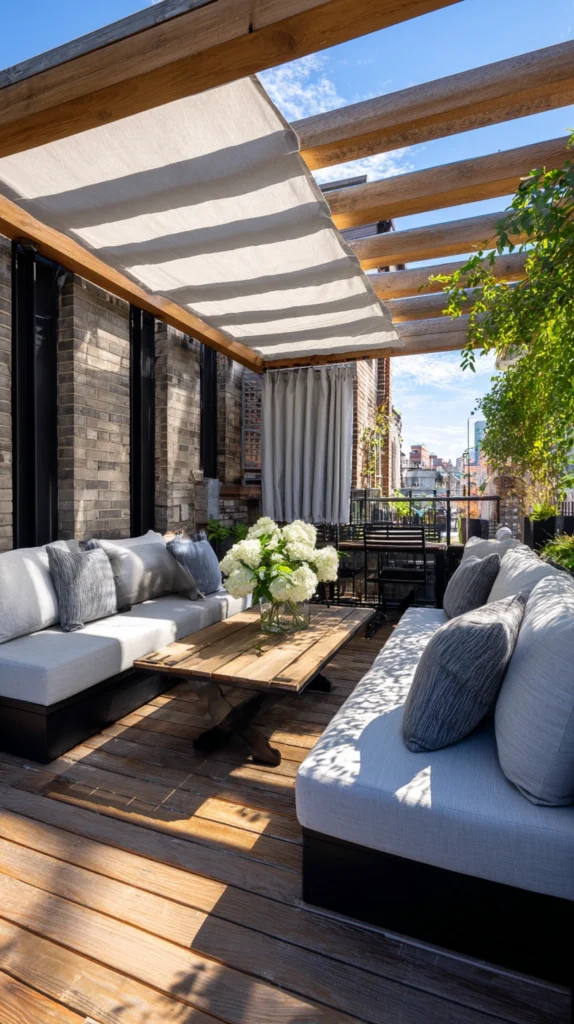
A tiny patio fully committed to its own potential — a composite deck platform with an outdoor rug, a bistro table and two chairs, a corner sofa with built-in storage, a vertical garden on the fence, a shade sail above, string lights within the sail’s canopy, a collection of terracotta pots at the perimeter, a wall-mounted mirror at the far end, a fold-down table for additional dining capacity, and layered lighting at every level — is not a small outdoor space making the best of limited square footage. It is a genuinely designed outdoor room that happens to be compact.
The individual investments across all elements: decking $150 – $240, rug $30 – $80, bistro set $80 – $300, corner sofa $150 – $500, vertical garden $40 – $200, shade sail $30 – $200, string lights $40 – $120, pots and plants $60 – $200, mirror $30 – $200, lighting layers $69 – $185. Total fully designed tiny patio: $679 – $2225.
Decor tip: Prioritise the elements that change the space most fundamentally — the deck platform, the shade sail, the vertical garden, and the string lights — before investing in furniture and accessories. The structural and overhead elements of a tiny patio design produce the most significant spatial transformation per pound spent. Furniture and accessories, however beautiful, sit within a space that the structural decisions have already defined — and the quality of those structural decisions determines the quality of everything placed within them.
A tiny patio does not need to apologise for its size. It needs to be designed for it — with furniture scaled to its proportions, plants placed at its perimeter, light layered at every height, and every square centimetre treated as the valuable outdoor space it actually is.
The patio that has been genuinely thought about — where every object was chosen for it, every plant was positioned with the space in mind, and every light source was placed to serve the specific atmosphere of that specific outdoor room — always outperforms a larger space designed with less intention.
Size is not the variable that determines the quality of an outdoor room. Intention is. Apply it fully and the tiny patio will become the most used and most loved space the home contains.