15 Fresh Spring Outdoor Pillow and Cushion Ideas
There is an argument to be made that outdoor cushions and pillows are the single most cost-effective transformation tool available to anyone who wants to refresh their exterior living space for spring. Furniture is expensive, structural changes are expensive, re-landscaping is expensive.
But a new set of outdoor cushions — chosen with genuine care and a clear sense of the atmosphere you’re trying to create — can completely reinvent the feeling of a patio, terrace, balcony, or garden seating area for a fraction of the cost of any other intervention, and can be changed again next season if your tastes evolve or the mood demands something different. The catch, as with all things that seem simple, is that the choosing matters enormously.
The wrong cushions — wrong in color, wrong in scale, wrong in fabric quality, wrong in the relationship they bear to the furniture and the space they inhabit — make an outdoor space look worse than no cushions at all. The right ones make it look like someone who genuinely understands how spaces work has been quietly in charge. Here are fifteen ideas for getting it right this spring.
1. Commit to a Palette Before You Buy a Single Cushion
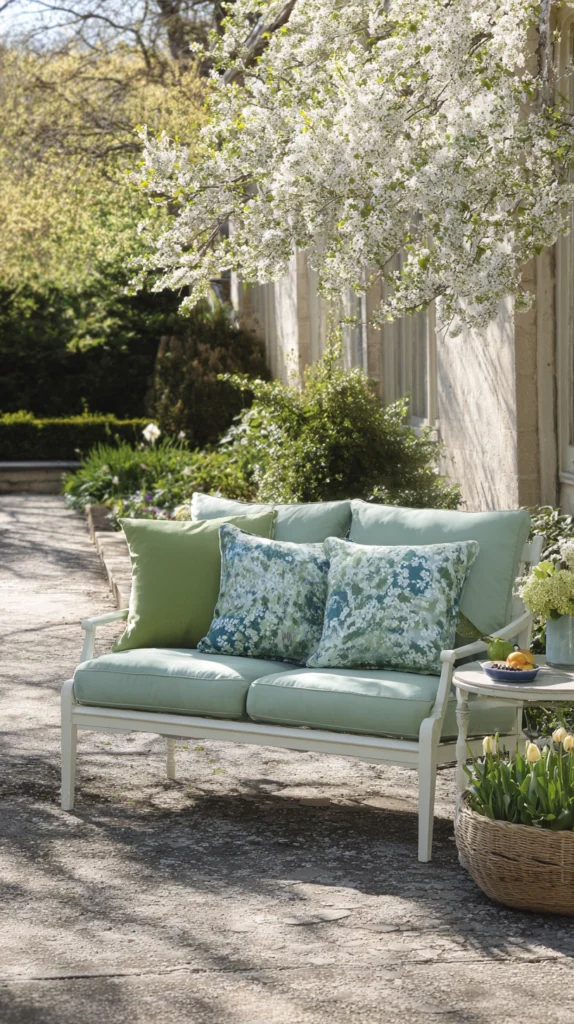
The most common outdoor cushion mistake is shopping without a color commitment — picking up individual pieces that appeal in isolation and discovering, once assembled, that they create visual noise rather than visual harmony.
Before purchasing anything, decide on a palette of two or three colors that will run consistently through all the cushions and pillows in the space, and then shop within that palette with discipline.
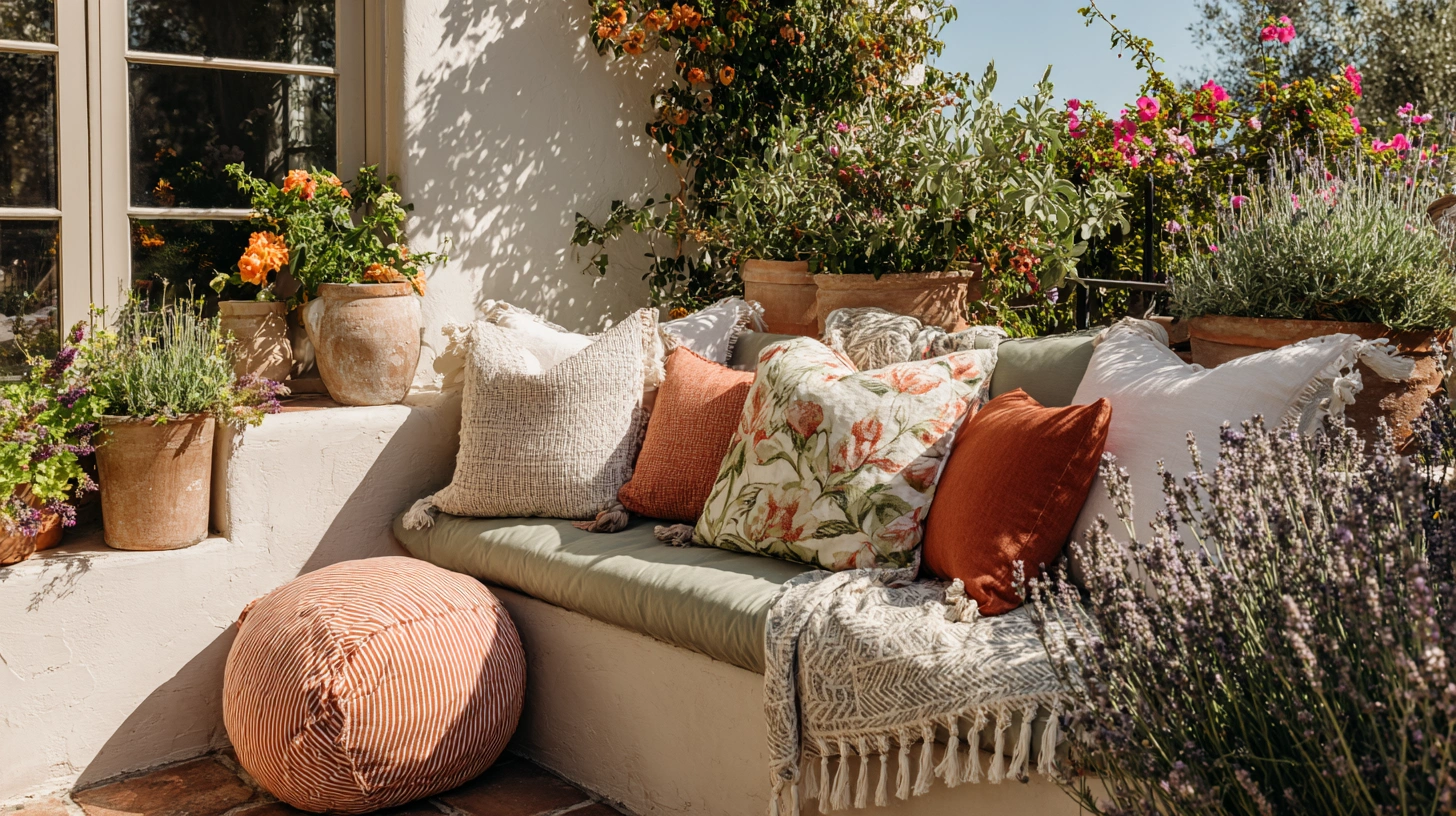
Spring palettes that work particularly well outdoors include soft sage green, warm white, and terracotta; dusty blue, cream, and natural linen; blush pink, sage, and pale yellow; and the classic combination of navy, white, and a warm accent in coral or ochre.
Within your chosen palette, vary the pattern — a solid, a stripe, a botanical print, and a simple texture can all coexist beautifully as long as they share the same color language. The palette is the organizing principle that makes a collection of different cushions read as a considered scheme rather than an accumulation of individual purchases.
2. Invest in Genuinely Weatherproof Fabric
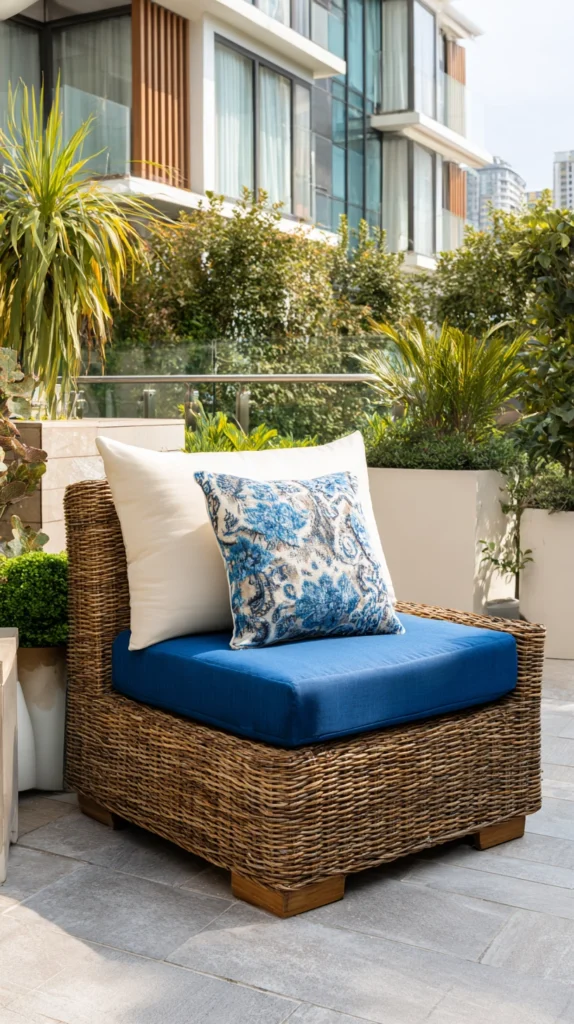
Outdoor cushion fabric is an area where the difference between adequate and excellent is significant enough to justify the price gap, and where the consequences of choosing inadequately are immediately apparent and persistently annoying.
Solution-dyed acrylic fabrics — of which Sunbrella is the most well-known but by no means the only quality option — are the gold standard for outdoor upholstery because the color is embedded in the fiber rather than printed on the surface, making them resistant to UV fading, moisture, mold, and mildew in ways that cheaper alternatives simply cannot match.
A set of quality outdoor cushions in a solution-dyed fabric will look as good in its third spring as it did in its first. A set of budget cushions in a printed polyester fabric will show fading, pilling, and moisture damage within a single season. The mathematics of cost-per-year of use consistently favor the quality investment, and the aesthetic mathematics favor it even more decisively.
3. Layer Different Sizes for Visual Depth
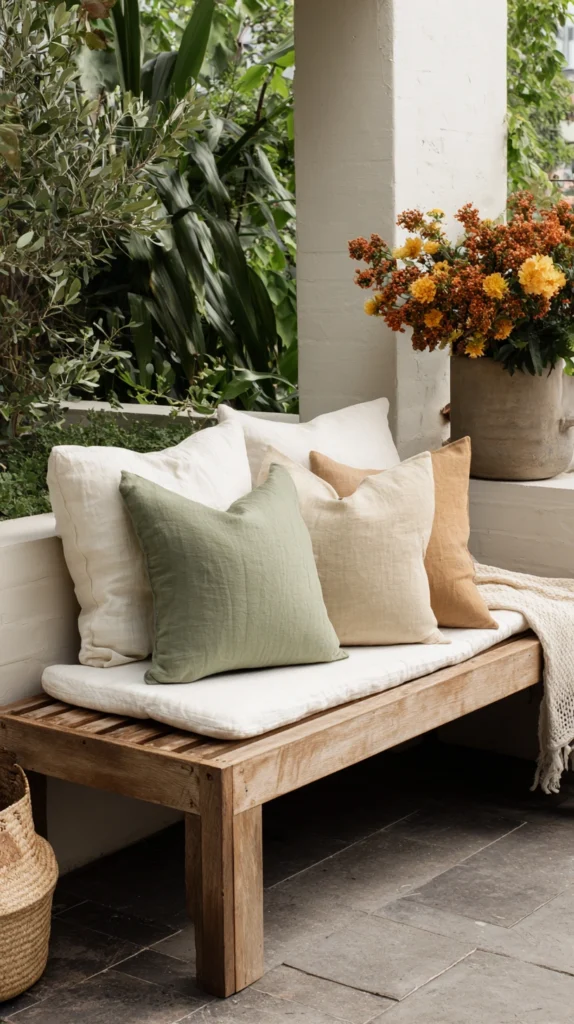
The outdoor sofa or seating arrangement that receives a single set of identically sized cushions looks dressed but not styled — comfortable perhaps, but not interesting. Layering different cushion sizes creates the kind of depth and dimension that turns a functional seating arrangement into something that looks genuinely designed.
The back layer should be the largest — standard square cushions in a generous size that provide actual back support and visual presence. In front of these, a medium rectangular lumbar cushion adds another layer. At the front, a small accent pillow in a bolder print or contrasting texture provides the punctuation.
This three-layer approach, borrowed directly from interior sofa styling, works equally well outdoors and creates a seating area that looks as considered and inviting as any well-dressed interior sofa. The key is ensuring that each layer is visible above the one in front of it, which requires sufficient back support from the sofa frame for the rear cushions to lean against.
4. Use Botanical Prints as the Statement Layer
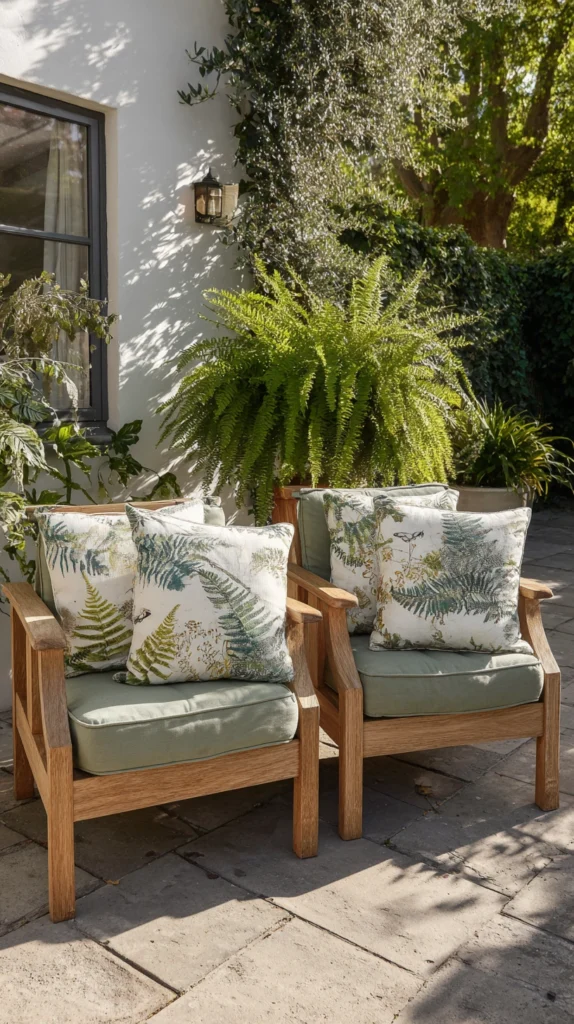
Spring’s most natural graphic language is botanical, and outdoor cushions in botanical prints — detailed illustrations of leaves, flowers, ferns, and garden plants rendered in the manner of antique natural history illustrations — bring the garden’s vocabulary into the seating arrangement in a way that feels deeply appropriate to the season and the setting.
The botanical print cushion should function as the statement layer — the piece with the most visual complexity and the most color, used sparingly against simpler solids and textures so that it can be appreciated rather than lost. One or two botanical print cushions against a backdrop of solid sage green and natural linen creates a combination of considerable spring beauty.
The same botanical print repeated across every cushion in the arrangement loses the impact entirely. Restraint in the use of pattern — even a pattern you love — is what allows the pattern to remain pleasurable rather than becoming overwhelming.
5. Try Stripes in Unexpected Color Combinations
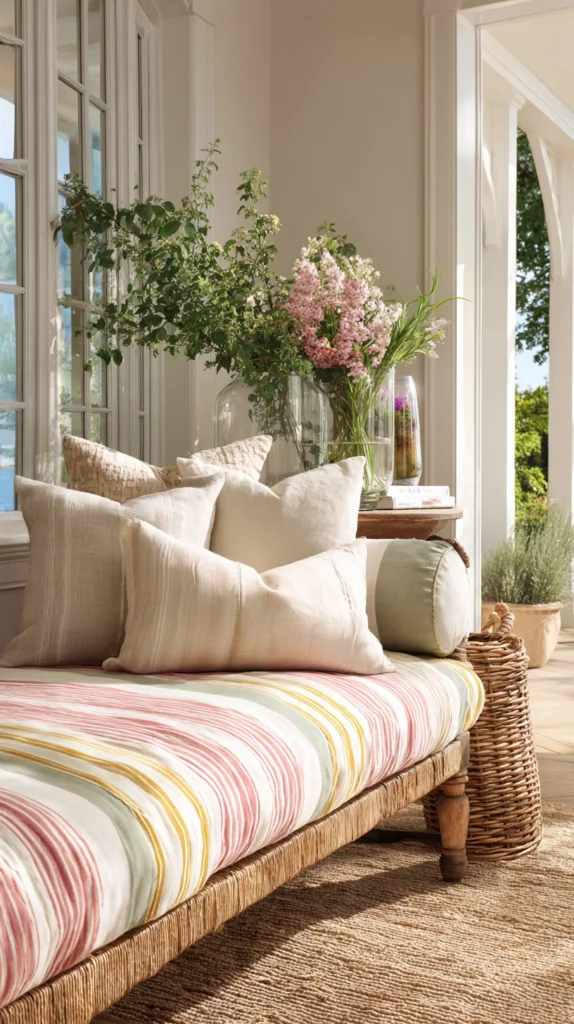
The outdoor stripe is a classic for very good reasons — it is graphically strong, works at any scale, suits both traditional and contemporary furniture, and photographs beautifully in the natural light of an outdoor setting. But the stripe does not need to be the predictable navy and white of the conventional garden furniture cushion.
Spring opens up a much broader palette of stripe combinations that feel fresh and current: a wide stripe in sage and warm white with a narrow terracotta accent stripe. A ticking stripe in the palest blue and cream.
A bold stripe alternating dusty pink and natural linen. A multi-stripe in soft ochre, warm white, and moss green. These combinations bring the freshness and optimism of the season into a format that is reliably elegant, and they work particularly well on deep-seated sofas and daybeds where the large cushion surface area gives the stripe enough space to read with proper impact.
6. Introduce Texture Through Weave and Embellishment
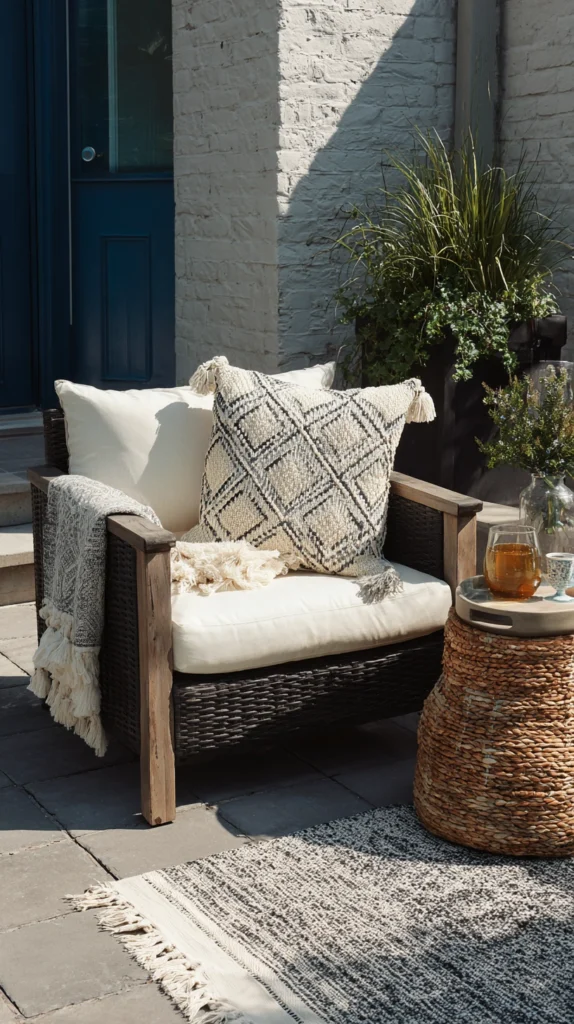
Color and pattern are the obvious tools of outdoor cushion styling, but texture — the physical surface quality of the fabric and any embellishment applied to it — adds a dimension of tactile interest that makes a seating arrangement more appealing in person than in any photograph.
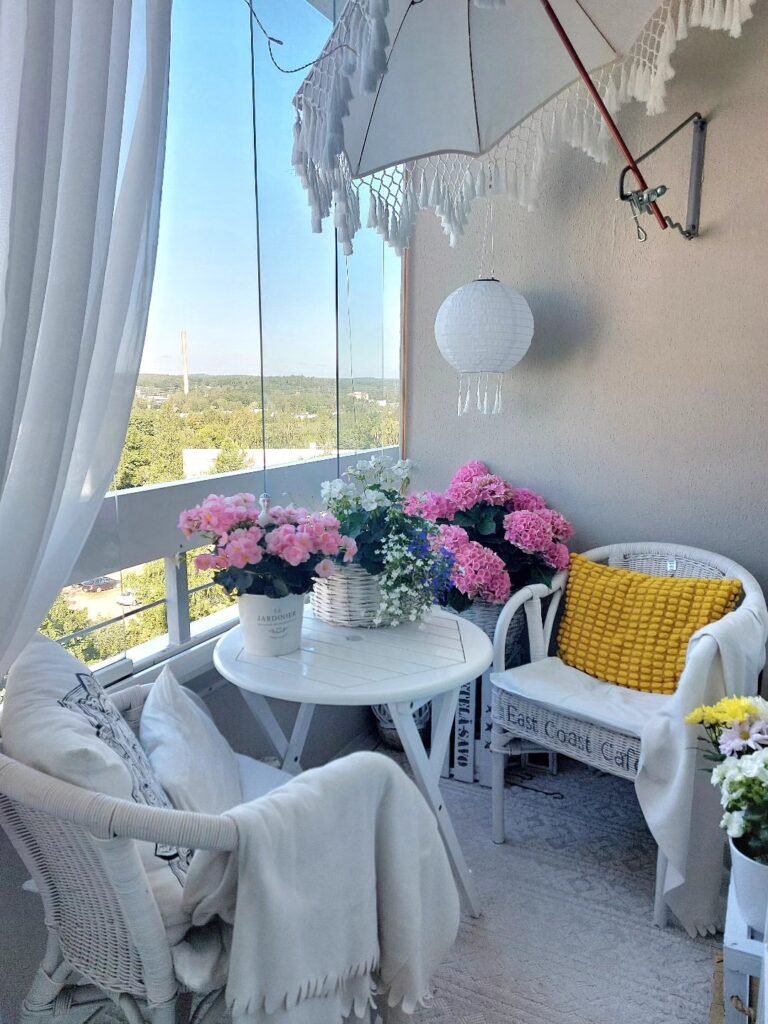
A cushion in a woven jacquard fabric with a subtle geometric texture. A simple solid cushion with a border of fringing or tassels in a complementary color. A flat-woven outdoor cushion with the slightly rough, honest texture of natural fiber.
These textural variations, introduced alongside smooth solid fabrics and printed surfaces, create a layered material richness that elevates the seating arrangement from merely colorful to genuinely luxurious. Fringing and tassels deserve special mention because they introduce movement — they sway in the slightest breeze — and that movement adds a liveliness to the seating area that static cushions alone cannot achieve.
7. Coordinate Indoor and Outdoor Cushion Palettes
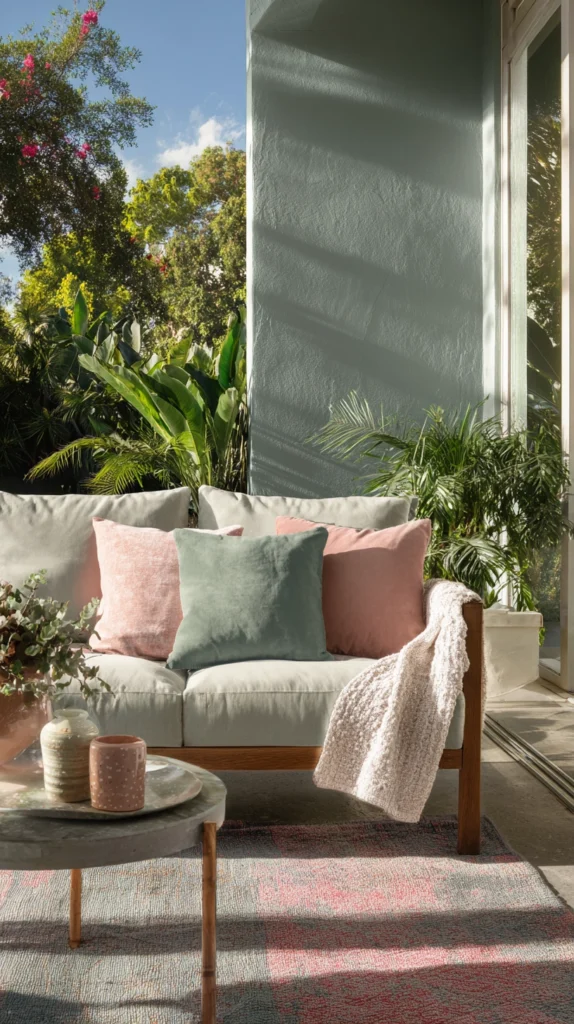
One of the most effective and most consistently overlooked outdoor cushion strategies is the deliberate coordination of indoor and outdoor cushion palettes so that the interior and exterior spaces read as a continuous, connected environment rather than two separate rooms with incompatible personalities.
When you can see the outdoor seating from the interior living space — through glass doors or a large window — the visual relationship between the two sets of cushions is constantly visible, and harmony between them makes both spaces feel more expansive and more considered.
This doesn’t mean identical cushions indoors and out, but rather a shared color or a shared pattern element — the same botanical print in different scales, the same color palette in different fabric weights, the same stripe in an indoor linen and an outdoor acrylic — that creates a visual conversation between the two spaces.
8. Mix Patterns with Confidence and a Simple Rule
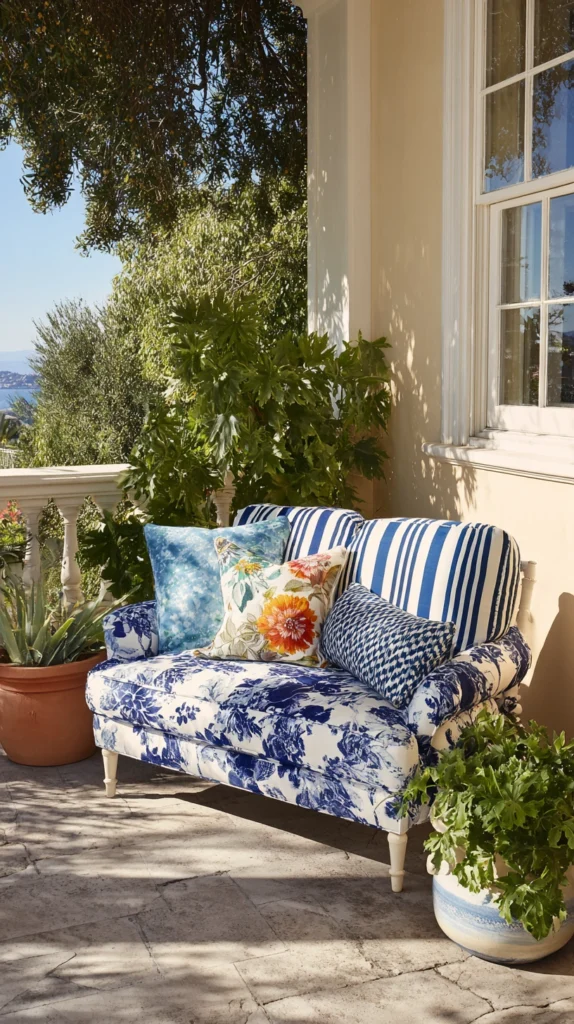
Pattern mixing is the outdoor cushion skill that separates the genuinely stylish from the merely functional, and it is considerably more achievable than most people assume once you understand the single rule that makes it work: vary the scale of patterns while keeping the color palette consistent.
A large-scale botanical print, a medium-scale stripe, and a small-scale geometric check can coexist in total harmony on the same seating arrangement as long as all three patterns share at least two colors.
The variation in pattern scale creates visual interest and prevents any single pattern from dominating. The shared color palette creates the coherence that prevents the combination from feeling chaotic. Practice this rule once and it becomes intuitive — the eye learns quickly to recognize the difference between patterns that harmonize and patterns that compete, and the knowledge is genuinely liberating.
9. Consider Round and Bolster Forms
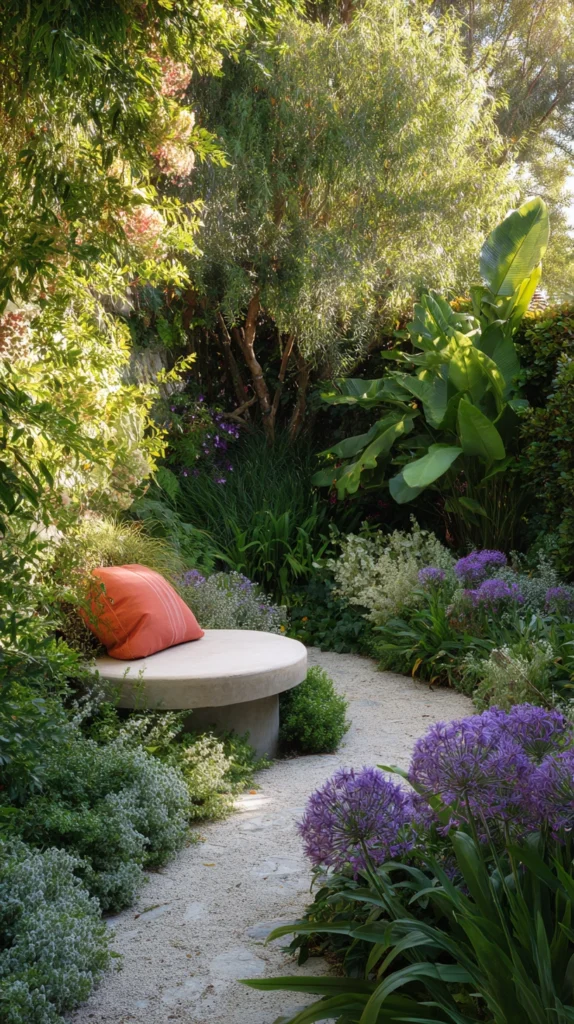
Square and rectangular cushions are the default outdoor pillow format, and for good reason — they are versatile, stackable, and suited to most seating geometries. But introducing a round cushion or a bolster into an otherwise rectangular arrangement adds a formal variation that changes the visual rhythm of the seating area in a subtly sophisticated way.
A round cushion in a contrasting color or a particularly beautiful fabric placed at the center of a sofa arrangement draws the eye and creates a focal point within the broader composition.
A bolster at either end of a daybed or outdoor sofa mimics the elegant formality of interior furniture styling and gives the piece a finished, hotel-like quality that standard square cushions alone rarely achieve. These alternative forms are most effective when used as accents — one or two among a larger collection of conventional forms — rather than as the primary cushion format.
10. Use Outdoor Lumbar Pillows for Practical Elegance
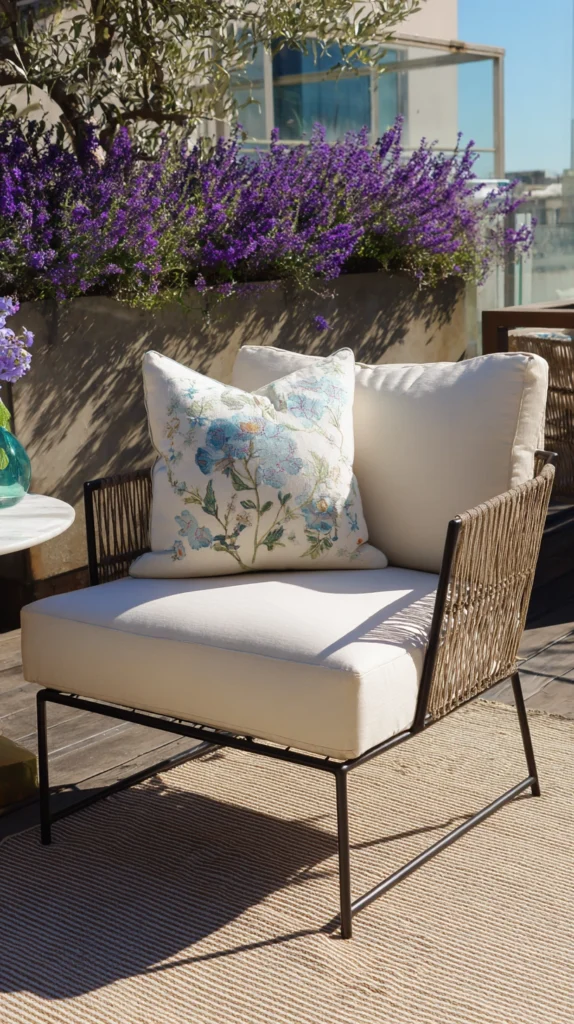
The lumbar pillow — long, narrow, rectangular, designed to support the lower back — is perhaps the most practically motivated cushion form available, and yet in the right fabric and color it is also one of the most elegant.
Placed horizontally across the back of an outdoor sofa seat or tucked into the small of the back in a deep-seated chair, a lumbar pillow provides genuine postural support during the extended sitting that good outdoor entertaining produces, while adding a horizontal design element that breaks the visual uniformity of a row of square cushions.
For spring, a lumbar in a simple botanical embroidery — delicate stitched flowers or leaves on a linen or linen-look performance fabric — brings a handcrafted, artisanal quality to the outdoor seating that printed fabrics cannot replicate. It is the kind of detail that guests notice without knowing exactly why the arrangement looks as good as it does.
11. Play with Scale on Deep Sofas and Daybeds
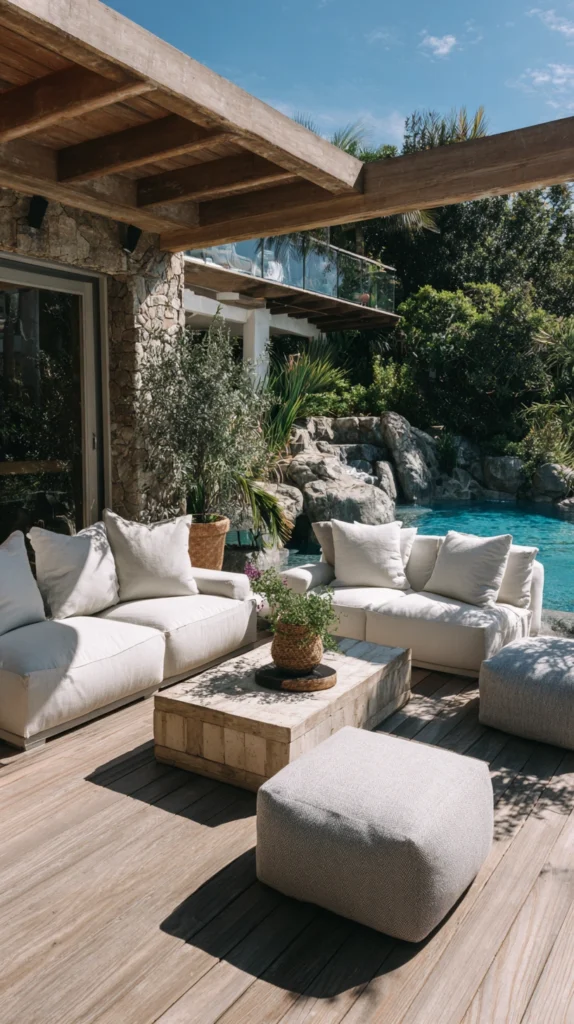
Deep outdoor sofas and daybeds offer a canvas large enough to support genuinely oversized cushions, and using cushions that are properly scaled to the furniture — rather than the standard sizes that suit a more modest chair — makes an enormous difference to the proportional rightness of the arrangement.
An oversized square cushion that would look comically large on a standard armchair looks exactly right on a deep, wide outdoor sofa, and the generosity of scale communicates comfort and abundance in a way that smaller cushions simply cannot.
When shopping for outdoor cushions for large furniture pieces, resist the pull toward standard sizes and source or commission cushions that are genuinely proportioned to the furniture they will inhabit. The visual result — a sofa that looks properly dressed rather than tentatively accessorized — justifies the slightly greater effort of non-standard sizing.
12. Refresh with New Covers Rather Than New Cushions
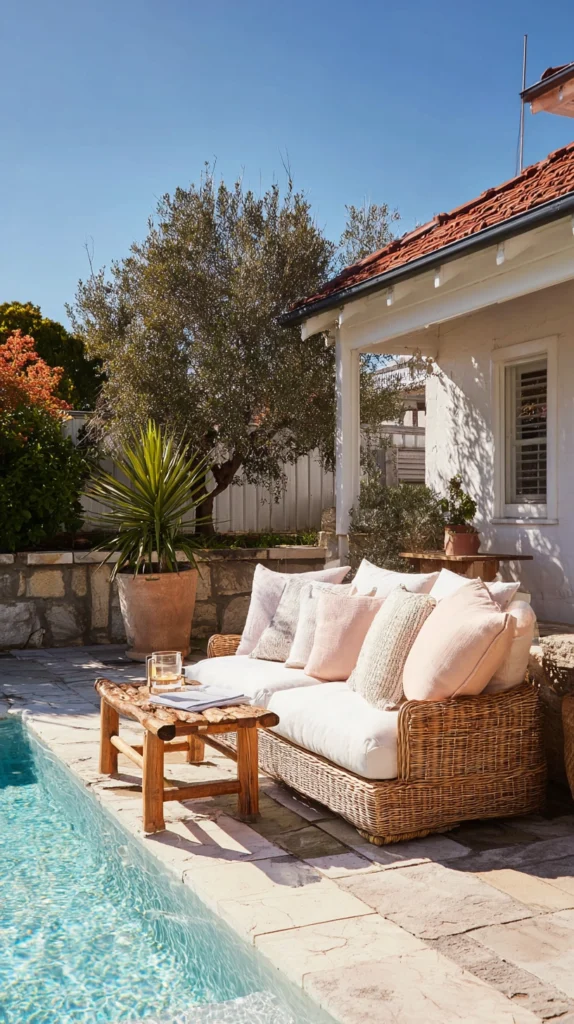
For outdoor cushions that are structurally sound but whose covers have faded, become dated, or simply no longer suit the direction you want to take the space, replacing the covers rather than the entire cushion is a practical and economical approach to seasonal refreshment that is underutilized relative to how well it works.
Many quality outdoor cushion brands offer replacement covers sized to their standard cushion inserts, and the market for custom outdoor cushion covers has expanded significantly in recent years.
Refreshing covers at the start of each spring — choosing a new color story, updating the pattern selection, adding a texture or embellishment that wasn’t there before — gives the outdoor space a seasonal freshness without the cost of entirely new cushions and without the waste of discarding inserts that are still in perfectly good condition.
13. Add Outdoor Throw Pillows to Dining Chair Seats
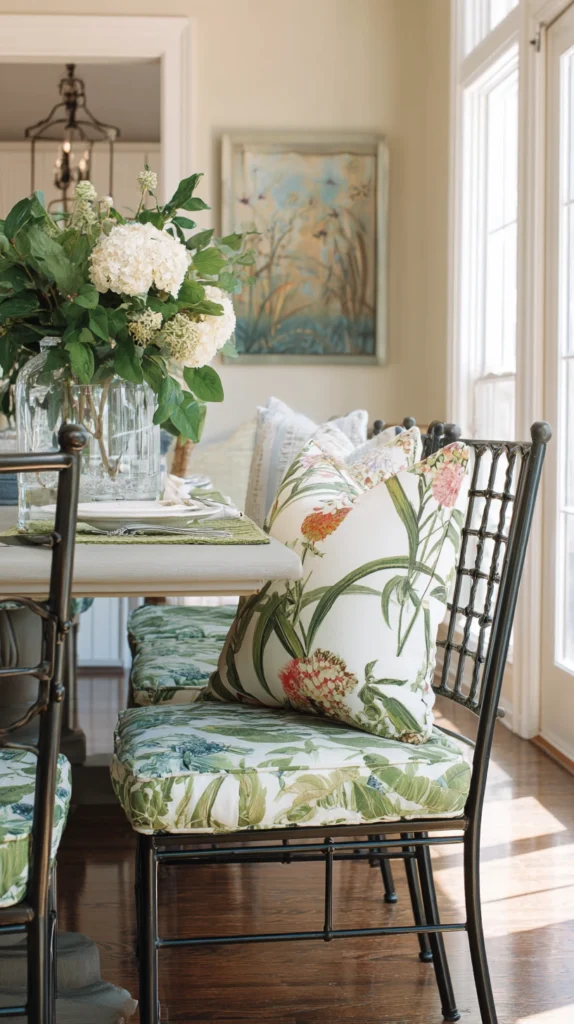
The outdoor dining chair is one of the most frequently overlooked candidates for cushion styling, because it is primarily associated with function — you sit on it to eat — rather than comfort or aesthetics.
But a well-chosen seat pad or thin cushion on an outdoor dining chair improves both the comfort and the visual appeal of the dining area significantly, and in spring the addition of a botanical print or simple stripe seat cushion to a set of metal or timber dining chairs transforms the overall character of the outdoor dining zone from purely functional to genuinely inviting.
Tie-on cushions with simple fabric ties at the back legs are the most practical format for dining chairs, as they remain securely positioned during use and can be easily removed, stacked, and stored when not needed. Choose a fabric that coordinates with the sofa cushions nearby so the overall terrace reads as a unified environment.
14. Store and Care for Cushions Properly
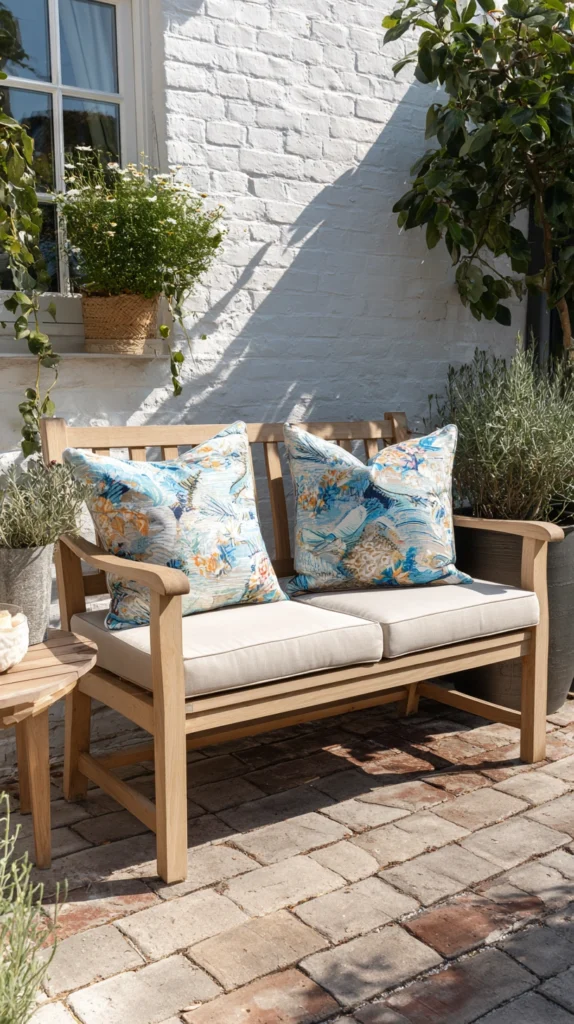
The most beautiful outdoor cushions in the world will not remain beautiful for long without a proper storage and care routine, and establishing this routine at the beginning of the spring season — rather than after the damage has already occurred — is the practical investment that protects all the aesthetic investment that precedes it.
Even quality weatherproof fabrics benefit from being stored indoors or in a dedicated outdoor storage box during extended periods of rain, and from being brought inside entirely at the season’s end.
Cushion inserts should be stored upright to allow airflow and prevent compression. Covers should be brushed free of debris before storage and washed according to the manufacturer’s instructions at the end of the season. A cedar block in the storage box discourages mold and pests during off-season storage. These habits take very little time and extend the life of quality outdoor cushions by years.
15. Let the Garden Inform the Final Edit
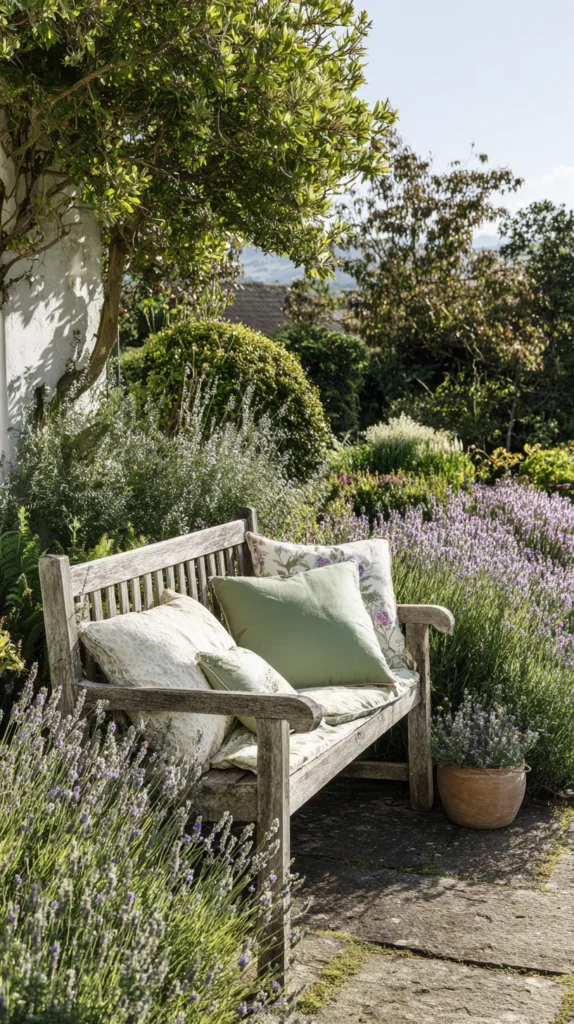
The last and most grounding principle of outdoor cushion selection is the one that is most easily forgotten in the enthusiasm of spring shopping: the cushions should be chosen in relation to the garden and planting that surrounds the seating area, not in isolation from it. The colors and textures of the plants growing around and behind the seating arrangement are the most important context within which the cushions will be seen, and cushions that harmonize with that living context will always look more resolved and more beautiful than those chosen without reference to it.
Sage green cushions beside a planting of lavender and silver-leaved herbs. Soft apricot and cream cushions against a backdrop of climbing roses in blush and white. Terracotta and warm yellow cushions beside sun-baked paving and Mediterranean herbs. The garden is already doing extraordinary color work — the cushions should join that conversation, not interrupt it.