14 DIY Garden Path Ideas Using Cheap Materials
There is something a garden path does that no other single element manages quite as well. It gives the garden intention. A lawn with a mown edge and a border full of plants is a pleasant thing, but a path through it — even a simple one, even an inexpensive one — turns it into somewhere that has been thought about.
The good news is that a path does not need to cost much to work well. Some of the most beautiful garden paths in existence are made from materials that cost almost nothing: reclaimed bricks, salvaged timber, gravel bought by the bag, stepping stones cut from a single slab. What they require is not money but care in the laying and a clear idea of where the path needs to go.
Each idea below includes what you will need, what it will cost, and a practical tip to make the whole thing last.
1. The Gravel and Stepping Stone Path
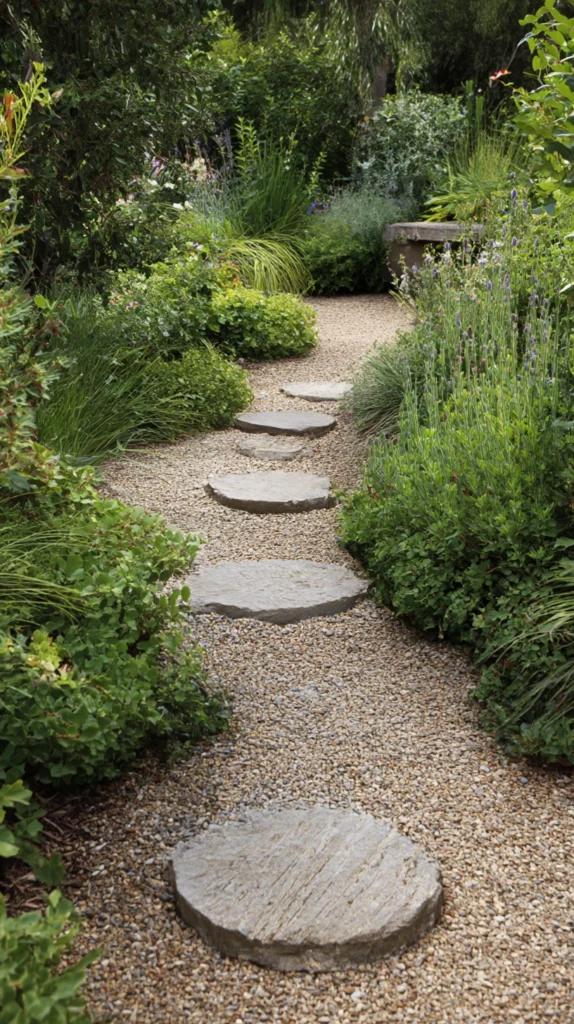
Budget: $30 – $100
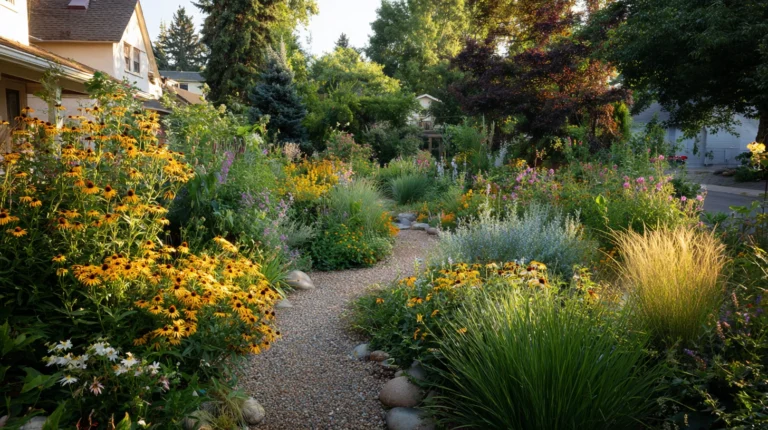
Lay a weed-suppressing membrane along the path route, cover it with a 5-centimetre layer of decorative gravel, and set large flat stepping stones at a comfortable stride interval through the centre. The gravel fills the space between stones, suppresses weeds, and drains freely. The stones give firm footing when the gravel is wet.
Decorative gravel costs $8–$15 per 25-kilogram bag. Large stepping stones run $3–$8 each. A weed membrane roll costs $10–$20. The path takes an afternoon to lay and requires almost no maintenance beyond an occasional top-up of gravel where foot traffic displaces it toward the edges.
Style tip: Choose stepping stone sizes that require one comfortable stride between each — not a stretch and not a shuffle. A path where the stone spacing matches natural walking pace feels effortless; one where it does not feels awkward every single time it is used.
2. The Reclaimed Brick Path
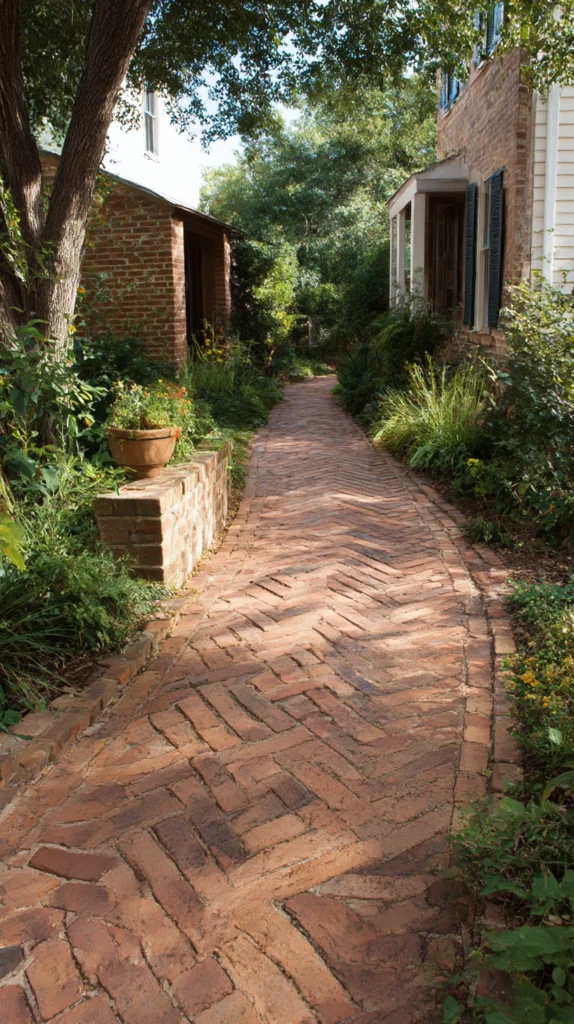
Budget: $20 – $80
Second-hand bricks laid in a simple herringbone or running bond pattern on a bed of compacted sand produce one of the most handsome and durable garden paths available. Reclaimed bricks have an immediate warmth and character that new bricks take decades to develop, and they are available cheaply from architectural salvage yards, demolition sites, and online classified listings.
Reclaimed bricks cost $0.20–$0.80 each — a one-metre-wide path running 3 metres requires around sixty bricks. Sharp sand for the laying bed runs $5–$10 per bag. Brush dry kiln-dried sand into the joints after laying to lock the bricks together and prevent individual bricks from rocking underfoot.
Style tip: Lay a single row of bricks lengthways along each edge of the path as a soldier course before filling the centre. The edging course contains the pattern, prevents the outer bricks from spreading over time, and gives the path a defined, finished border that a pattern laid edge to edge never quite achieves.
3. The Bark Chip Woodland Path
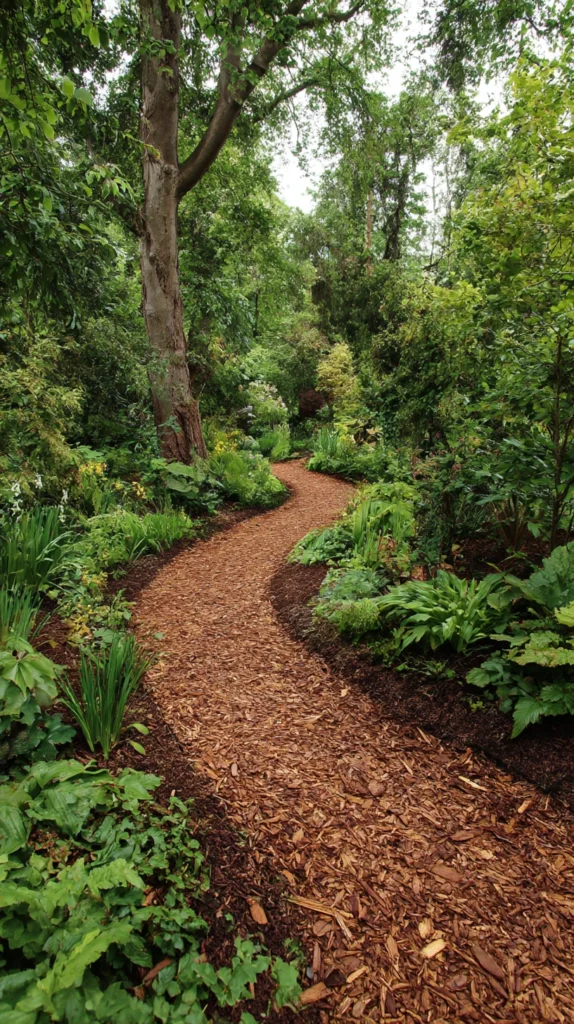
Budget: $15 – $60
A path of bark chippings laid 8–10 centimetres deep on a weed membrane is the softest, most natural-looking path material available and the fastest to install. It suits informal gardens, shaded areas, and the routes between raised beds where a hard surface would look out of place and feel unnecessarily permanent.
A large bag of bark chippings costs $8–$15 and covers roughly 1 square metre at the right depth. A weed membrane beneath prevents the chips from working into the soil below as they compact. Bark paths need topping up every one to two years as the material decomposes — budget for a refresh each spring and the path looks consistently well-kept for almost nothing.
Style tip: Edge the bark path with a simple timber board, a row of logs, or a metal garden edge to contain the chips. Without an edge, bark migrates steadily onto the lawn and into the borders with every footfall and every rain shower, and the path gradually loses its definition over a single season.
4. The Log Slice Stepping Path
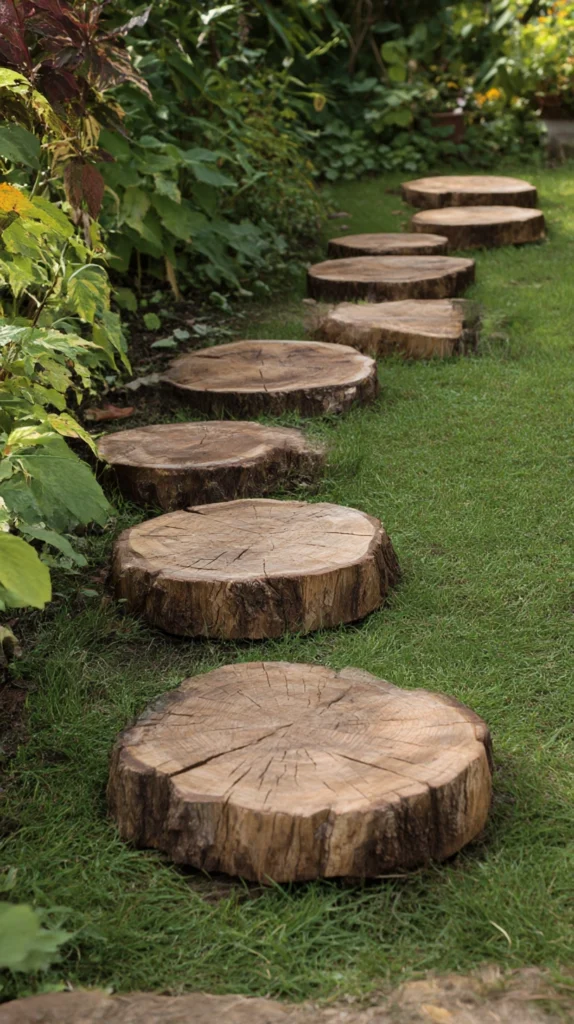
Budget: $10 – $50
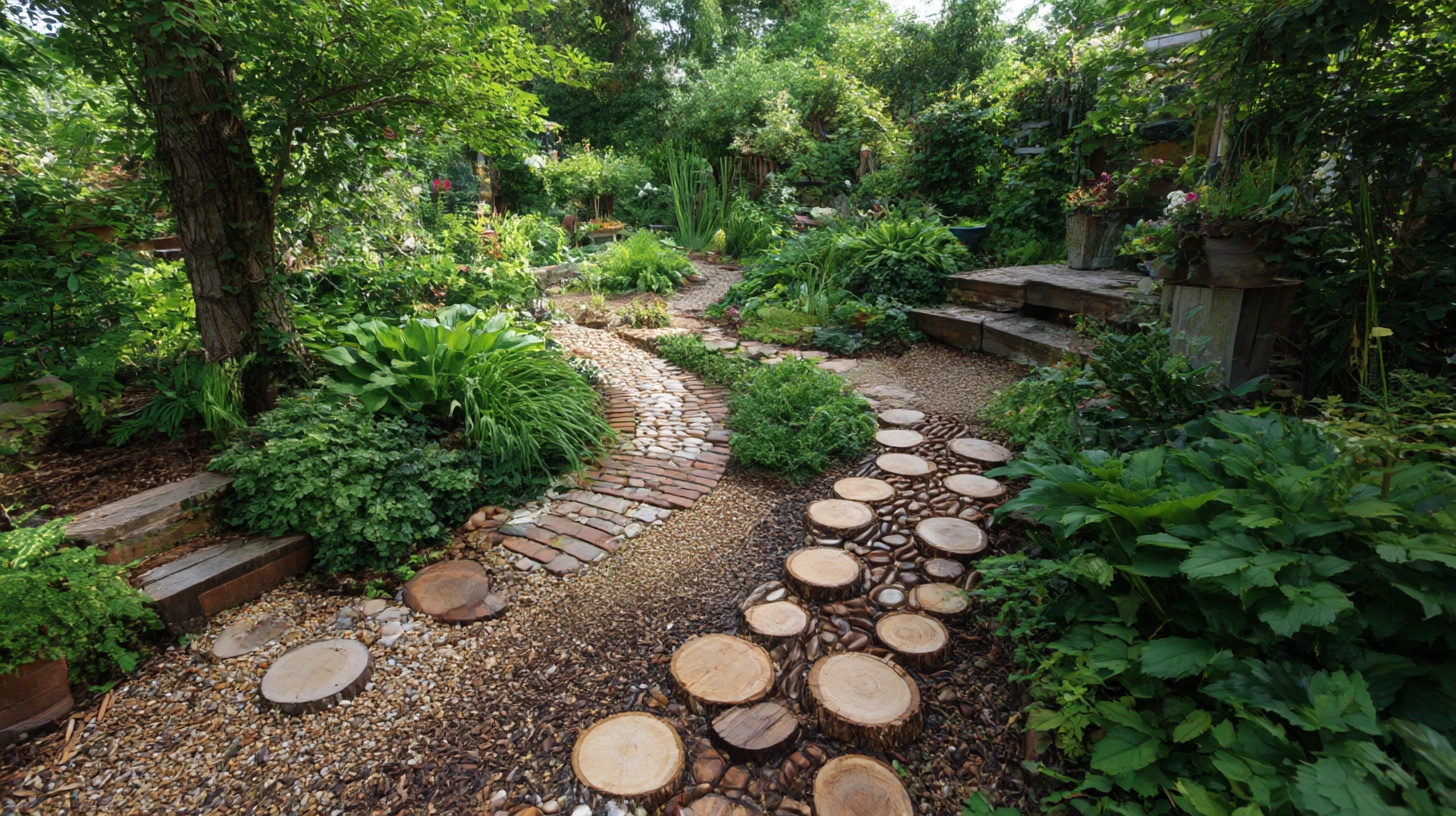
Cross-sections of a felled tree trunk — cut into 8–10 centimetre thick rounds — laid as stepping stones through a border, a woodland area, or a lawn create a path that looks entirely of the garden rather than added to it. If you have access to a chainsaw and a fallen tree, the material cost is zero. If purchasing, timber yards and firewood suppliers often sell log slices cheaply or give them away.
Log slices cost $0–$3 each from timber yards or firewood suppliers. A sharp sand bed beneath each slice ($5–$10 for a bag) levels them and improves drainage. Treat the cut face of each slice with exterior wood preservative ($8–$15 per tin) before laying — untreated softwood log slices in contact with damp soil rot within two seasons, while treated hardwood rounds last five to eight years.
Style tip: Set each log slice so its surface sits 1–2 centimetres below the surrounding lawn level rather than flush with or above it. A slightly recessed stepping stone allows a mower to pass over it without catching the blade — a detail that saves considerable frustration every time the grass is cut.
5. The Concrete Paver Path
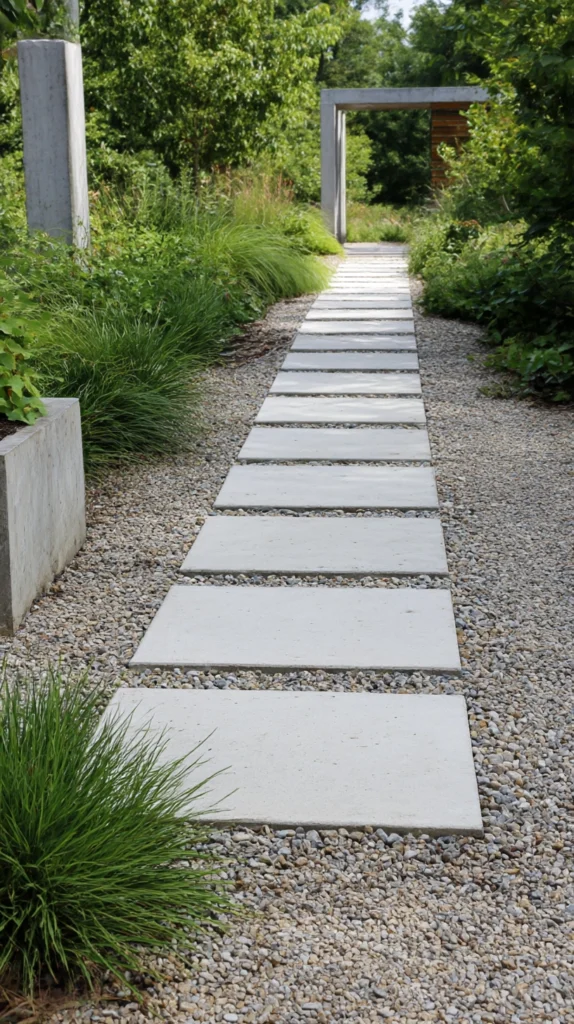
Budget: $25 – $100
Standard grey concrete pavers are the least expensive hard path material available and, laid with a degree of creativity — offset rather than aligned, combined with gravel joints, or bordered with a contrasting material — look considerably better than their utilitarian origins suggest. They are also among the most durable path materials in any climate.
Concrete pavers in a standard 45 by 45 centimetre size cost $2–$5 each. A compacted hardcore base ($10–$20 per bag) beneath each paver prevents sinking in soft ground. Spacing pavers 3–4 centimetres apart and filling the gaps with gravel or planting with creeping thyme ($2–$3 per plant) transforms a basic concrete path into something that reads as a considered design decision.
Style tip: Lay pavers in a brick-bond offset pattern — each row staggered by half a paver length — rather than in a grid. An offset pattern is structurally stronger, hides any slight size variation between individual pavers, and looks more intentional than a grid, which requires every joint to align perfectly to read as designed rather than approximate.
6. The Mown Grass Path
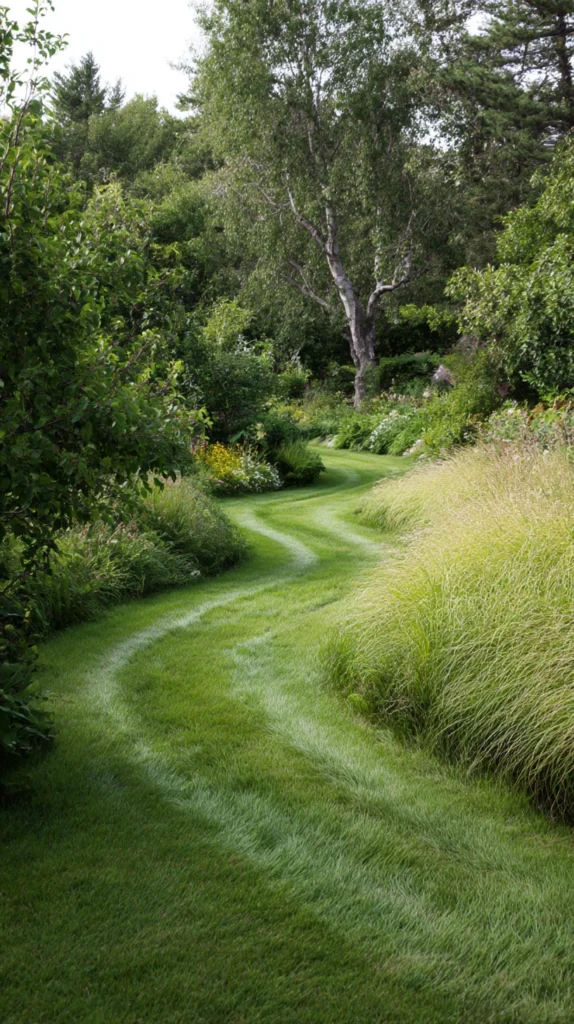
Budget: $0 – $20
The simplest path in any garden with a lawn is a strip of grass kept mown shorter than the surrounding area. No materials, no laying, no installation — simply a consistent mowing line that establishes over a season into something that reads clearly as a path. In a meadow garden or a large lawn, a mown grass path is the most natural and most beautiful option available.
The only cost is a lawn edging tool ($10–$20) to keep the path edges crisp. Mow the path strip two settings shorter than the surrounding grass — the height contrast creates the visual definition that makes the path readable. Edge the sides with a half-moon edger or a spade twice a season to keep the line clean and prevent the longer grass from creeping inward.
Style tip: Curve the path rather than running it in a straight line even in a relatively formal garden. A gently curving mown grass path through a lawn creates a sense of movement and destination that a straight line does not — it draws the eye forward and makes the garden feel larger than its actual dimensions.
7. The Slate Chipping Path
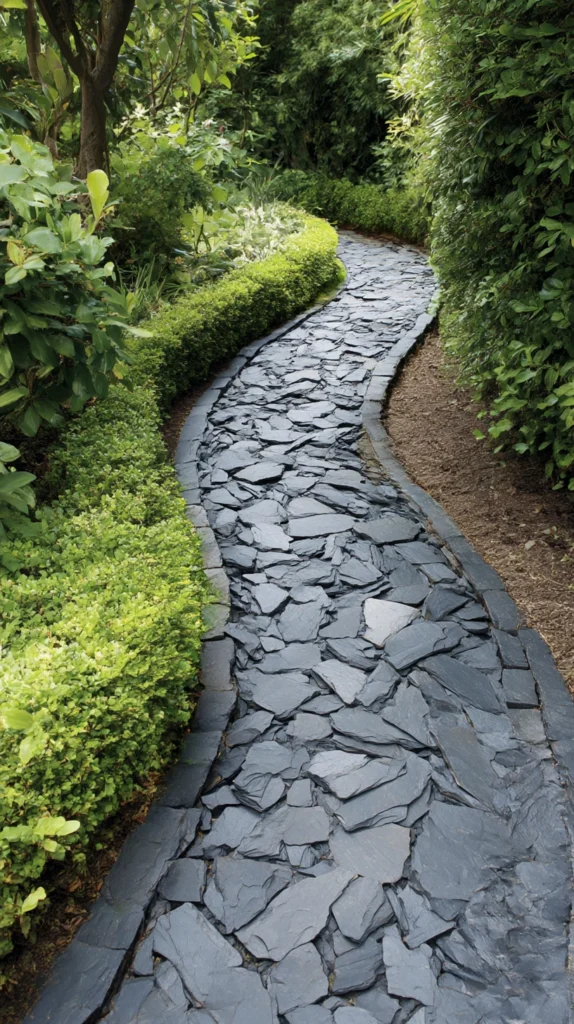
Budget: $30 – $90
Blue-grey slate chippings laid on a membrane create a path with a cool, contemporary quality that gravel and bark cannot match. The angular, flat form of slate chippings compacts more firmly underfoot than rounded gravel and produces less scattering with foot traffic — a practical advantage on a frequently used path as well as a visual one.
A 20-kilogram bag of slate chippings costs $10–$18 and covers approximately 0.6 square metres at a 5-centimetre depth. Metal path edging ($8–$15 per 2-metre length) defines the path boundary and prevents the chippings from spreading into adjacent planting. Lay the membrane with a 10-centimetre overlap at the joins rather than a butted edge — overlapped membrane leaves no gap for weeds to find.
Style tip: Use slate chippings against planting with warm-toned foliage — rust, copper, lime green — rather than blue or silver plants. The cool grey-blue of the slate creates its strongest visual contrast against warm tones, and that contrast is what gives the path its contemporary quality. Paired with similarly cool planting, the distinction between path and border becomes less clear.
8. The Recycled Tile Mosaic Path
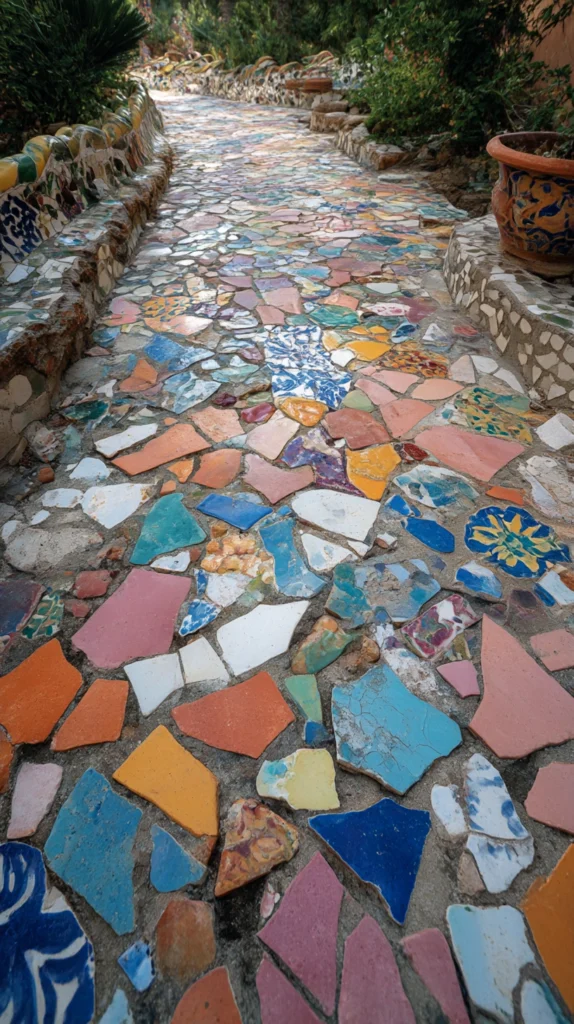
Budget: $10 – $50
Broken ceramic tiles — collected from skips, salvaged from bathroom renovations, or deliberately smashed from charity shop finds — laid as a mosaic in a sand and cement bed create a path surface that is entirely unique and costs almost nothing. The mosaic technique requires no artistic skill: a random arrangement of broken pieces with consistent grout joints reads as pattern rather than accident.
Broken tiles cost $0–$10 depending on source — tile shops and builders often give away offcuts and breakages. Exterior tile adhesive runs $8–$15. Exterior grout costs $6–$12. Keep the tile pieces large — palm-sized rather than small fragments — for a path mosaic. Small pieces create too many grout joints, which collect dirt and moss rapidly, and the overall effect becomes visually busy rather than decorative.
Style tip: Limit the mosaic to two or three tile colours or patterns rather than using every available piece regardless of colour. A path mosaic in two complementary tones reads as a design decision; one assembled from every available scrap reads as a collection of leftovers, regardless of how carefully the pieces are arranged.
9. The Cobblestone and Mortar Path
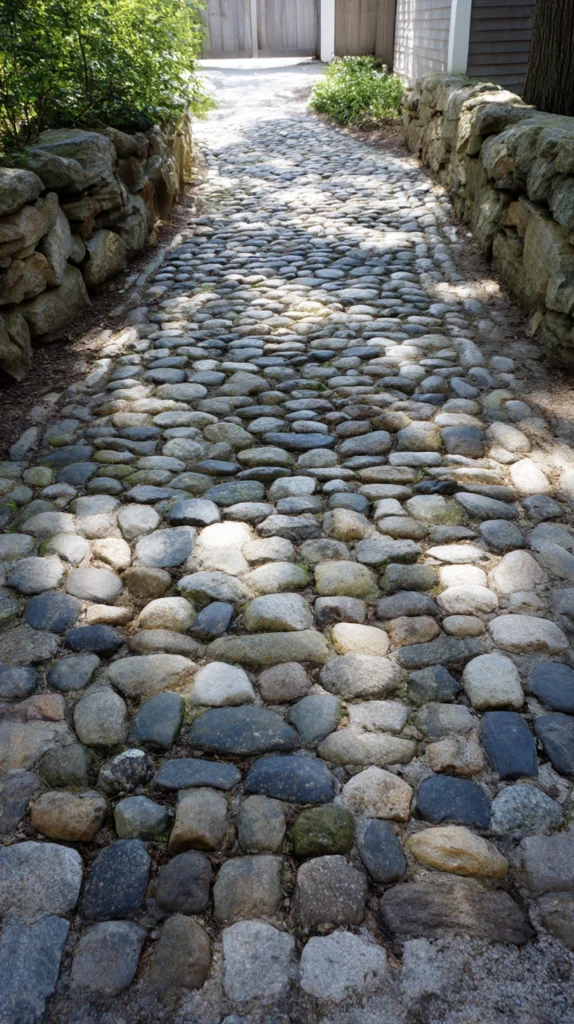
Budget: $40 – $120
Rounded cobblestones or Belgian setts set in mortar create the most durable and characterful path surface on this list. Once laid, a cobblestone path requires no maintenance and improves with age — the stones weather and the mortar joints gather moss in a way that looks better with every passing year rather than worse.
Cobblestones cost $15–$40 per square metre depending on size and source. Reclaimed Belgian setts from salvage yards run $8–$20 per square metre. A mortar mix of three parts sharp sand to one part cement ($10–$20 in materials) provides the setting bed. Set cobbles tightly together so the mortar joint between them is no wider than 1 centimetre — wide joints collect debris and the path surface loses the compact, solid quality that makes cobblestone paths so satisfying underfoot.
Style tip: Lay a single row of larger cobbles or setts along each edge of the path as a border before filling the centre with smaller ones. The border course contains the pattern visually and structurally, and the contrast between the border stones and the field stones gives the path a finished, professional quality that a single uniform size laid edge to edge never quite achieves.
10. The Gabion Edge Path
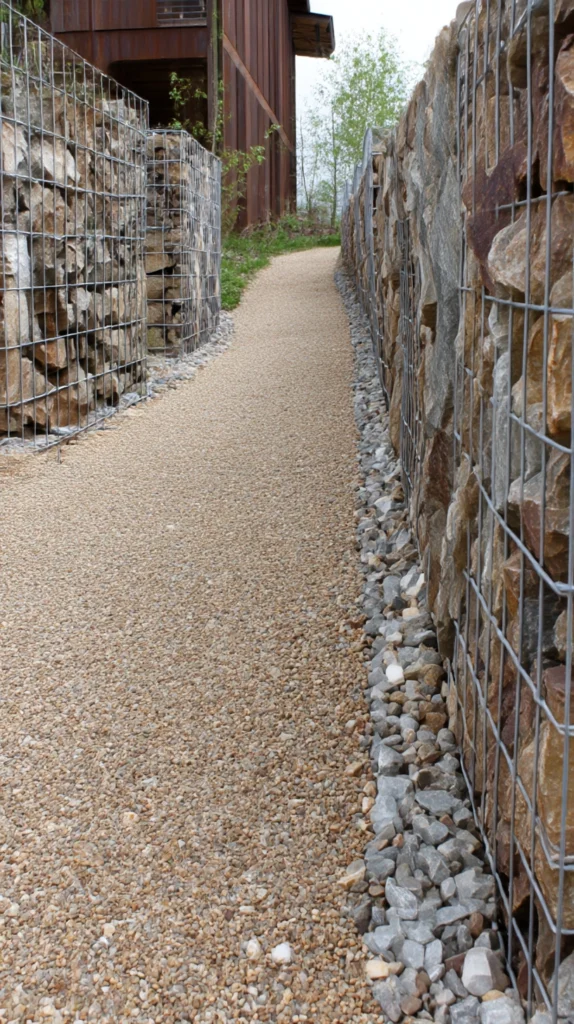
Budget: $50 – $180
A gravel path edged with simple gabion baskets — wire mesh cages filled with stones, rocks, or rubble — creates a substantial, architectural path boundary that doubles as a low retaining structure on sloped ground. Gabions look industrial in the best sense: honest about their materials, solid in appearance, and surprisingly beautiful when the stones inside them are chosen with care.
Wire gabion baskets in a 30 by 30 by 30 centimetre size cost $8–$15 each. Fill stones — flint, granite offcuts, river rock — cost $10–$20 per 25-kilogram bag. A path edged with a single row of gabion baskets on each side, filled with contrasting stone, costs $60–$150 for a 3-metre path length. Fill the baskets tightly so the stones do not shift when the wire is compressed — a loosely filled gabion basket rattles and sags within a season.
Style tip: Mix two stone sizes within each gabion basket rather than filling with a uniform size — larger stones at the front face and smaller stones packed behind them. The larger stones create the best visual surface while the smaller ones behind them improve packing density and prevent the basket from bulging outward under the weight of its own contents.
11. The Stepping Stone Grass Path
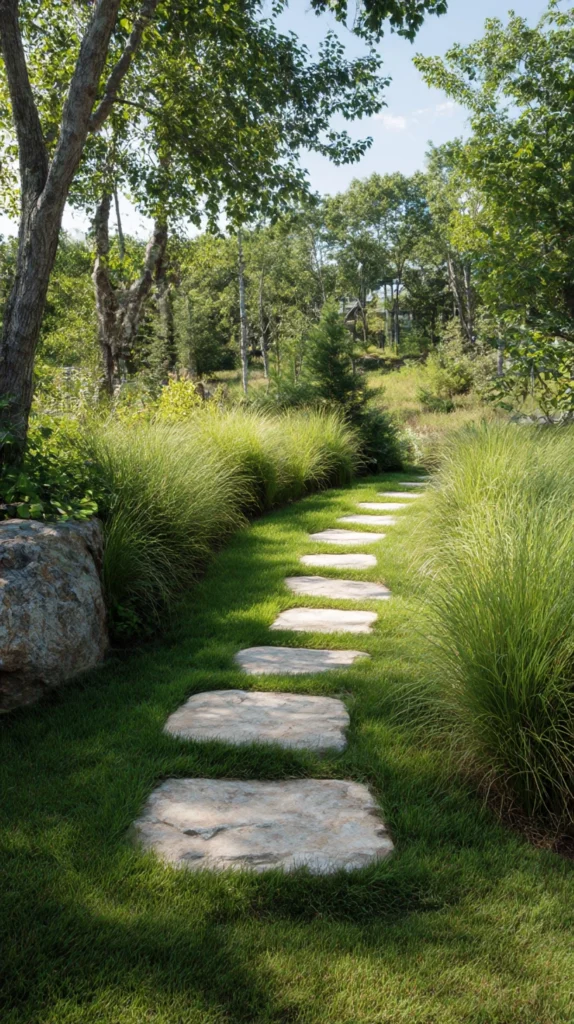
Budget: $20 – $80
Individual stepping stones set directly into a lawn — cut out a stone-shaped section of turf, remove 5 centimetres of soil, bed the stone on sharp sand, and replace — create a path that disappears into the garden and reads as part of the lawn rather than an addition to it. It is the least visually intrusive path option and the one that integrates most naturally into an established garden.
Irregular natural stone slabs cost $3–$8 each. A bag of sharp sand for bedding costs $5–$10. Set each stone so its surface sits fractionally below lawn level — a stone that protrudes above the grass surface is a mowing obstacle and a tripping hazard. Check the level with a short spirit level across each stone before compacting the sand bed fully.
Style tip: Vary the size and shape of the stepping stones rather than using identical pieces. A path of matched, identical stepping stones looks manufactured; a path of stones in varied sizes and shapes looks found — as if the stones were placed individually and with consideration for each one, which is exactly the quality that makes a stepping stone path feel like it belongs in the garden.
12. The Railroad Tie Path
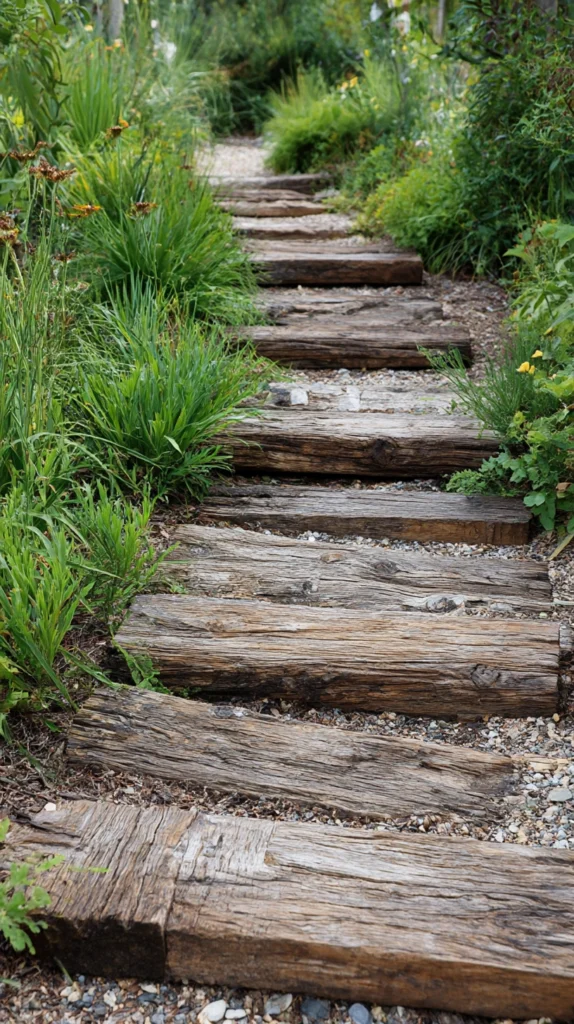
Budget: $30 – $100
Short lengths of reclaimed railway sleeper or landscape timber laid crossways across the path direction — like the sleepers of a railroad track — create a robust, informal path that suits vegetable gardens, allotments, and informal yards where character matters more than formality. The timber provides clean, firm footing, contains the path edges, and looks better with age as it weathers to a silver-grey.
Reclaimed railway sleepers cost $15–$40 each — cut to 60-centimetre lengths, each sleeper provides two or three path sections. A circular saw or a handsaw with a long blade makes the cuts ($0 if already owned). Set each section on a compacted gravel base rather than directly on soil — timber in direct contact with damp soil degrades from the base upward, and a gravel bed extends the life of the sections considerably.
Style tip: Leave a 3–5 centimetre gap between each timber section and fill it with fine gravel or plant it with a low creeping plant such as thyme or chamomile. A gap between the timber sections allows drainage, prevents the sections from heaving against each other in frost, and gives the path a more relaxed, garden quality than sections laid tight against each other.
13. The Pebble Mosaic Feature Path
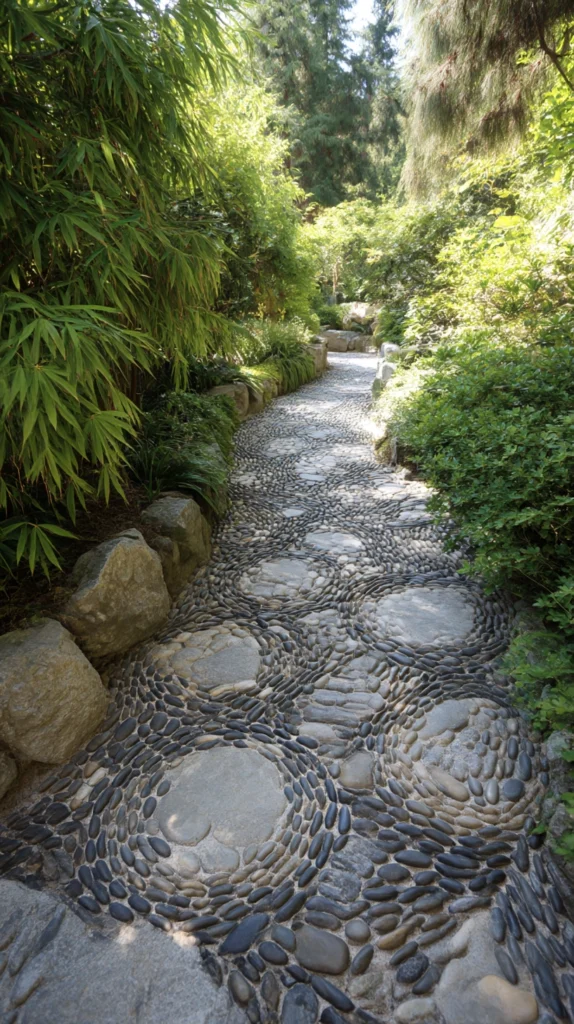
Budget: $20 – $70
Smooth pebbles set on edge in a sand and cement bed — their long axis vertical so only the narrow end is visible from above — create a path surface of exceptional texture and permanence. Set-on-edge pebbles produce the traditional pebble mosaic effect seen in Mediterranean courtyards and cottage gardens, and the technique requires no specialist skill beyond patience and a willingness to press each pebble firmly into the mortar before it sets.
River pebbles in a consistent size cost $8–$15 per kilogram. A mortar bed of sharp sand and cement ($10–$15 in materials) sets firm within 24 hours. Keep all pebbles at a consistent height by pressing each one to the same depth — a straight timber batten laid across the surface after setting and pressed gently down levels any high points before the mortar cures.
Style tip: Sort the pebbles by size before laying rather than working from a single mixed pile. Consistent pebble sizes within each section of the path produce a more even surface and a more regular pattern than mixed sizes, and the sorting takes ten minutes that saves an hour of adjusting individual stones during laying.
14. The Resin Bound Gravel Path
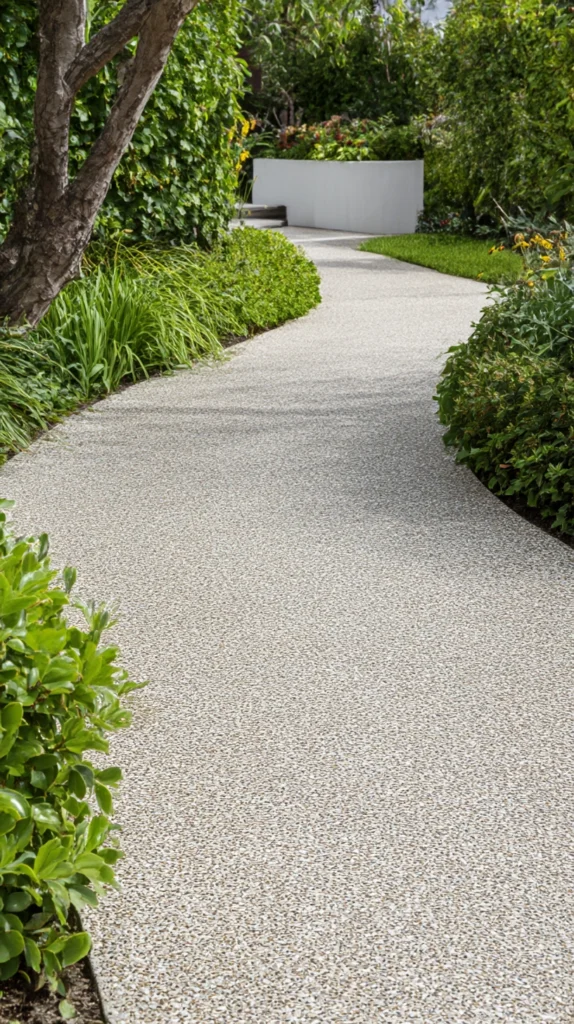
Budget: $60 – $200
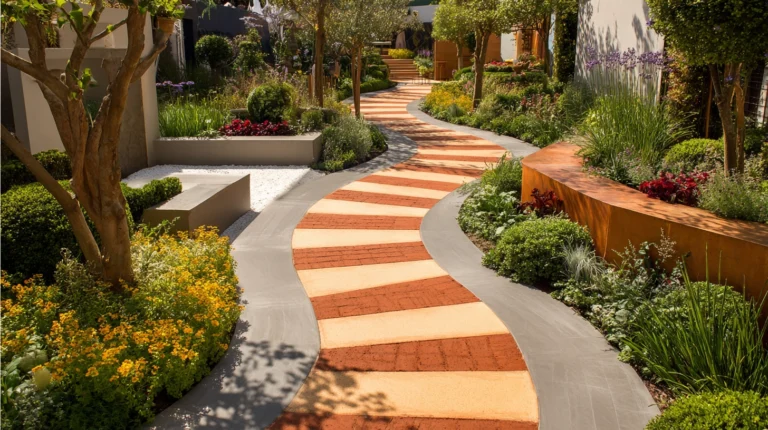
Resin-bound gravel — decorative aggregate mixed with a clear UV-stable resin and trowelled onto a prepared surface — produces the smoothest, most weed-resistant, and most professional-looking DIY path finish available. It is the most technical installation on this list but within the capability of anyone who has used a trowel, and the result lasts ten to fifteen years with no maintenance beyond an occasional sweep.
A resin-bound gravel kit for a 4-square-metre path costs $60–$120. A hired forced-action mixer ($20–$40 per day) ensures the resin and aggregate are combined consistently — hand mixing produces an uneven result that affects both the appearance and the durability of the finished surface. Apply to a sound, stable base — existing tarmac, concrete, or a new compacted MOT Type 1 sub-base — rather than directly onto soil or loose gravel.
Style tip: Apply the resin-bound surface in a single continuous pour rather than in sections. A join line between two separately mixed and applied sections is always visible once the surface cures, regardless of how carefully the sections are blended at the join. Mix enough material to complete the entire path in one operation before beginning, and work quickly — most resin-bound systems have a working time of fifteen to twenty minutes before the mix becomes unworkable.
A garden path does not need to be expensive to be good. It needs to go somewhere worth going, to be comfortable underfoot in all weathers, and to look as if it was put there with intention rather than necessity. Get those three things right and the material almost does not matter.
Choose what suits the garden and the budget, lay it carefully, and edge it well. A path with a clean edge always looks better than a path without one, regardless of what it is made from.