14 Lantern and Candle Setups for a Patio That Glows Through Extra Time
There is a specific moment on a summer evening when the decision gets made. The food is finished, the glasses are refilled, and someone could reasonably stand up and go inside — but the light is doing something good and the air is warm and the conversation has found the particular rhythm that only comes after a few hours together. Nobody moves. The evening earns another hour, then another, and eventually the night has been thoroughly used rather than simply allowed to pass.
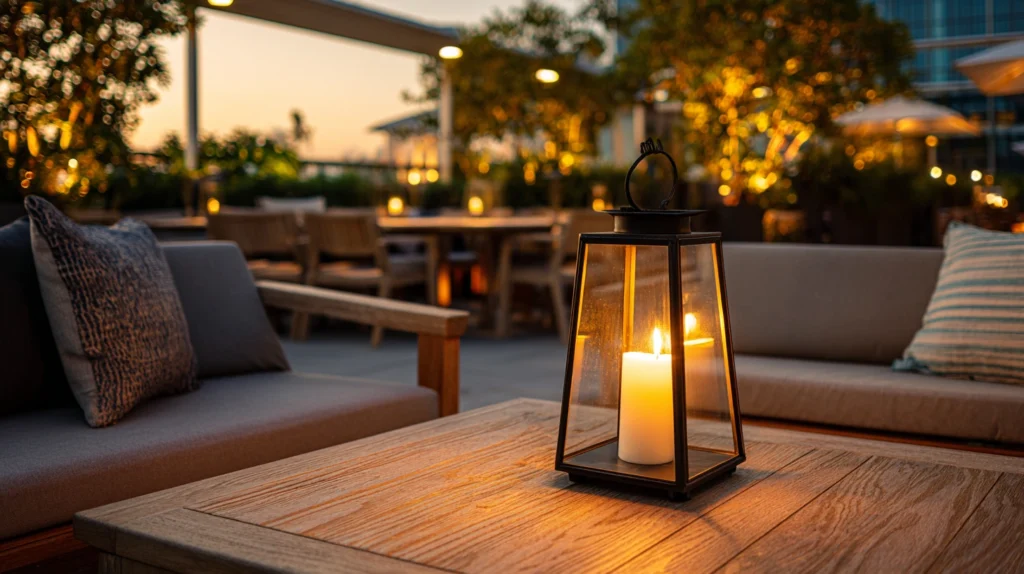
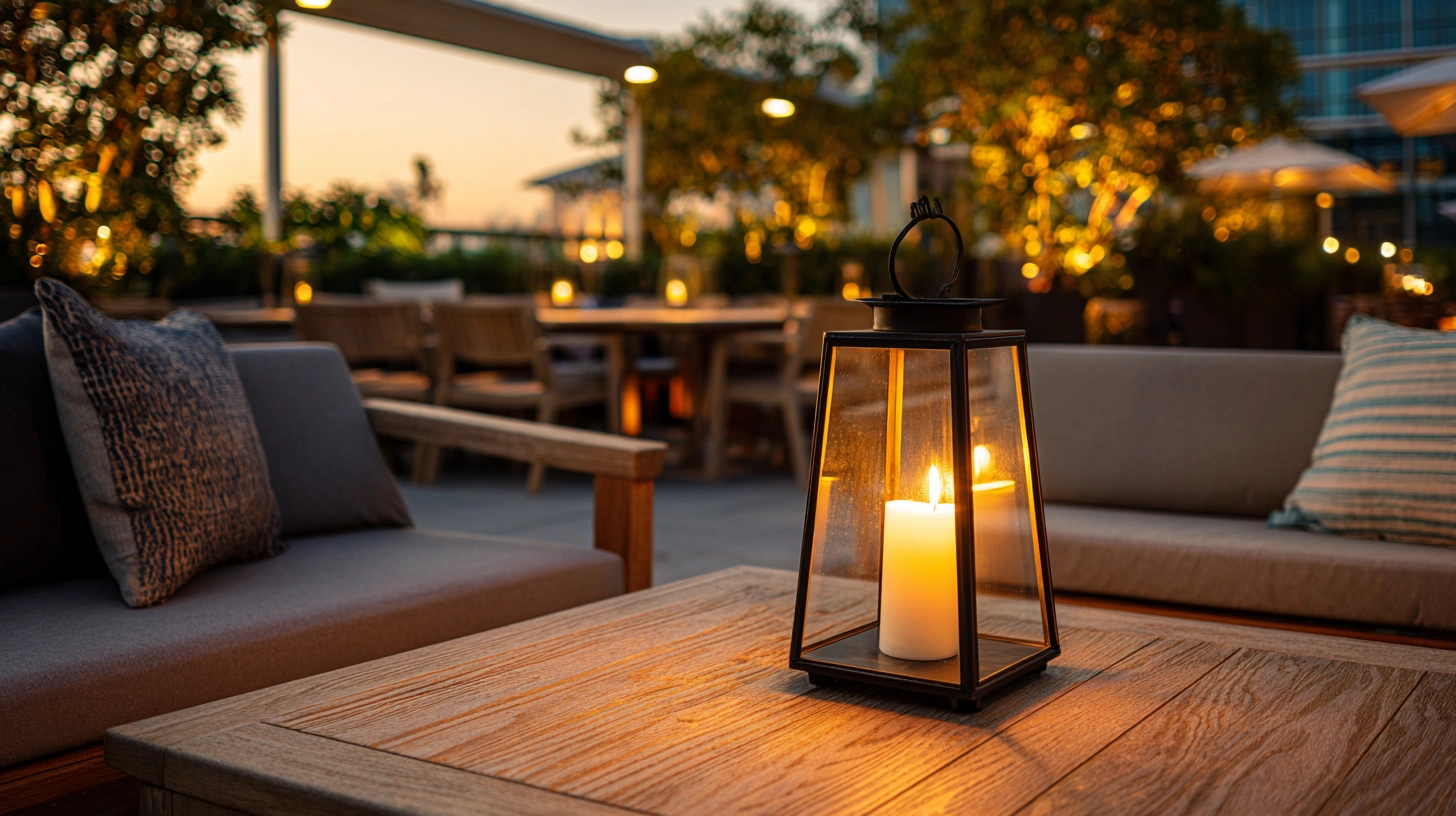
That moment is created by light more than by any other single element. Not bright light, not overhead light, not the flat illumination of a security lamp or a patio spotlight — but the warm, low, flickering light of candles and lanterns arranged with some thought about where people will be sitting and what they will want to look at. It costs almost nothing to get right and makes an enormous difference to whether an evening stays outside or retreats indoors.
Each setup below includes what you will need, what it will cost, and a practical tip to make the whole thing work through the long hours when it matters most.
1. The Lantern Centrepiece Cluster
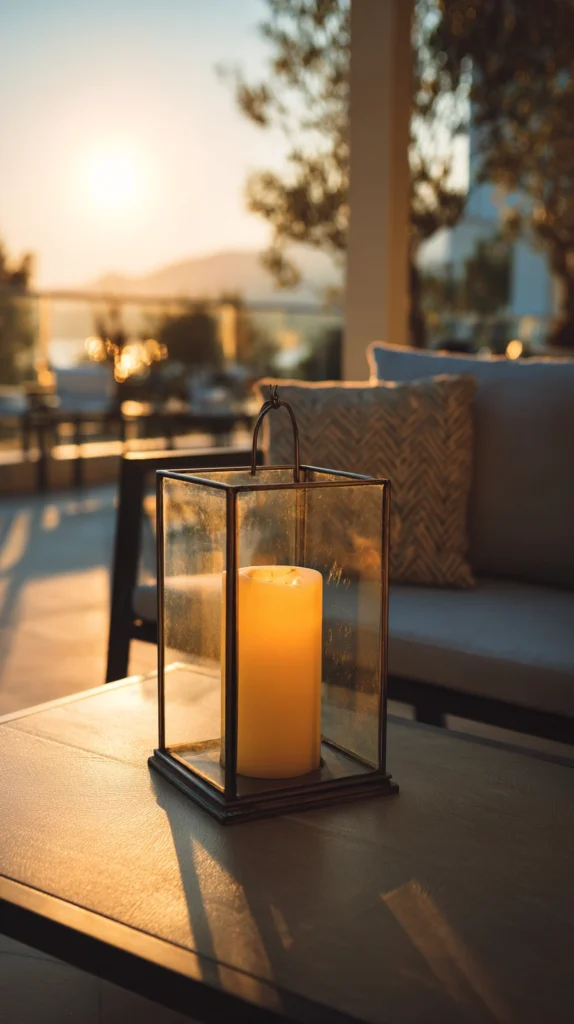
Budget: $30 – $120
Three or five lanterns of varying heights grouped at the centre of the patio table — with candles inside them burning at different levels — create a centrepiece that does the work of both decoration and illumination simultaneously. The varying heights give the arrangement depth; the odd number gives it visual balance; the warm light from multiple sources softens every face around the table in a way that a single central candle never manages.
Glass lanterns with metal frames cost $8–$25 each. Moroccan-style punched metal lanterns run $10–$30 each. Pillar candles for the interior cost $3–$8 each. Group lanterns on a low wooden board or a tile so they read as a single composed arrangement rather than objects placed in proximity. Leave enough table space around the cluster for glasses and plates — a centrepiece that takes up more than a third of the table surface is a centrepiece that gets moved mid-evening.
Style tip: Use candles of different heights within the cluster rather than cutting all candles to the same level. A taller candle visible above the lantern top, a medium candle level with the lantern sides, a lower candle visible only through the glass — the varied heights create a layered light source with visual interest that uniform candle heights flatten entirely.
2. The Floor Lantern Perimeter
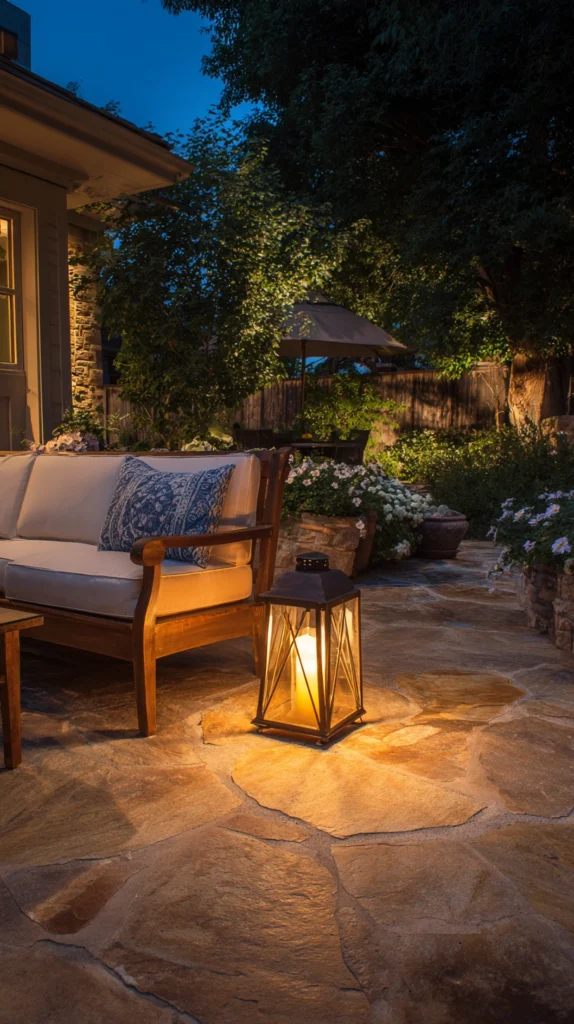
Budget: $25 – $100
A ring of floor lanterns placed around the perimeter of the seating area — on the ground, not on tables or raised surfaces — defines the boundary of the outdoor room with warm light at ankle height. The low position of the light source creates a glow that rises from the ground upward, which is the opposite of overhead lighting and produces a completely different and considerably more flattering atmosphere.
Large floor lanterns cost $15–$40 each. A perimeter of six to eight lanterns around a standard patio seating area costs $90–$320. Solar-powered LED versions ($10–$20 each) eliminate the need for candles entirely and switch themselves on at dusk — the light quality is slightly cooler than candlelight but the convenience for a regularly used patio is significant. Space lanterns evenly at intervals of approximately 60–80 centimetres for a continuous glow rather than isolated pools of light.
Style tip: Place one lantern slightly inside the perimeter line rather than maintaining a perfect circle or square. A single lantern pulled inward breaks the regularity of the arrangement and makes the whole setup look placed with care rather than measured with a tape. Deliberate imperfection reads as considered; perfect regularity reads as mechanical.
3. The Candlelit Dining Table Runner
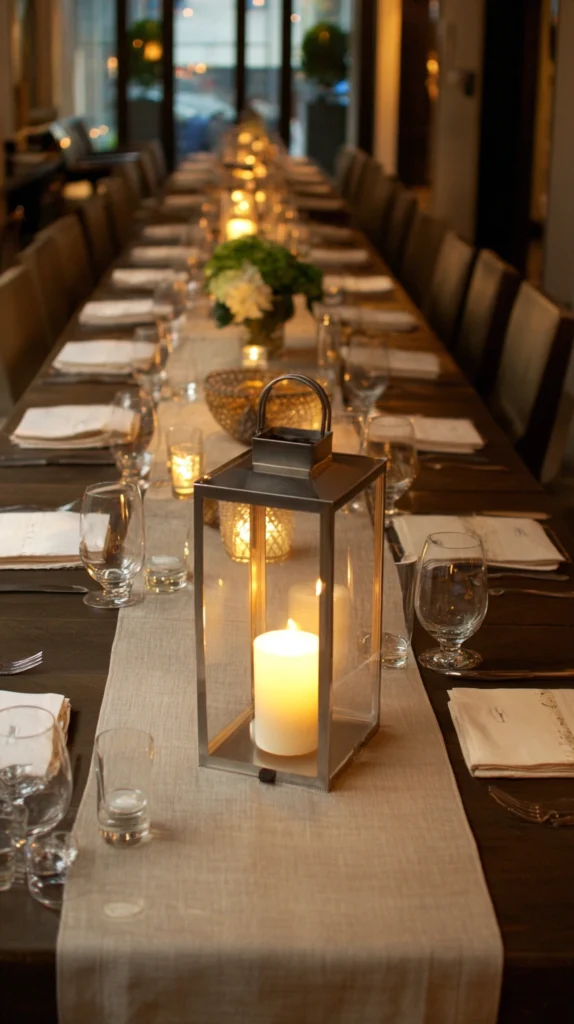
Budget: $20 – $80
A row of small candles — tea lights in glass holders, votives, small pillar candles — running the full length of the dining table in a straight line creates the most classic and most reliably beautiful patio dining setup. The repetition of identical light sources at consistent intervals has a formal quality that works with any table setting, and the combined light of eight or ten small candles produces significantly more illumination than the same number of candles grouped in one place.
Tea light holders in clear glass cost $1–$3 each. A box of fifty tea lights runs $5–$10. For a more considered version, a set of identical small hurricane vases filled with sand or pebbles and a single tea light in each costs $15–$40 for the full table length. Keep the candle line central on the table with at least 20 centimetres of clear space on each side so the candles sit between rather than among the plates and glasses.
Style tip: Alternate the height of the holders very slightly along the runner rather than using identical heights throughout — two taller vases, two shorter, two taller — in a repeating rhythm. The alternating height creates a gentle visual interest along the table length that a perfectly uniform line lacks and draws the eye along the table rather than stopping it at the centrepiece.
4. The Hanging Lantern Canopy
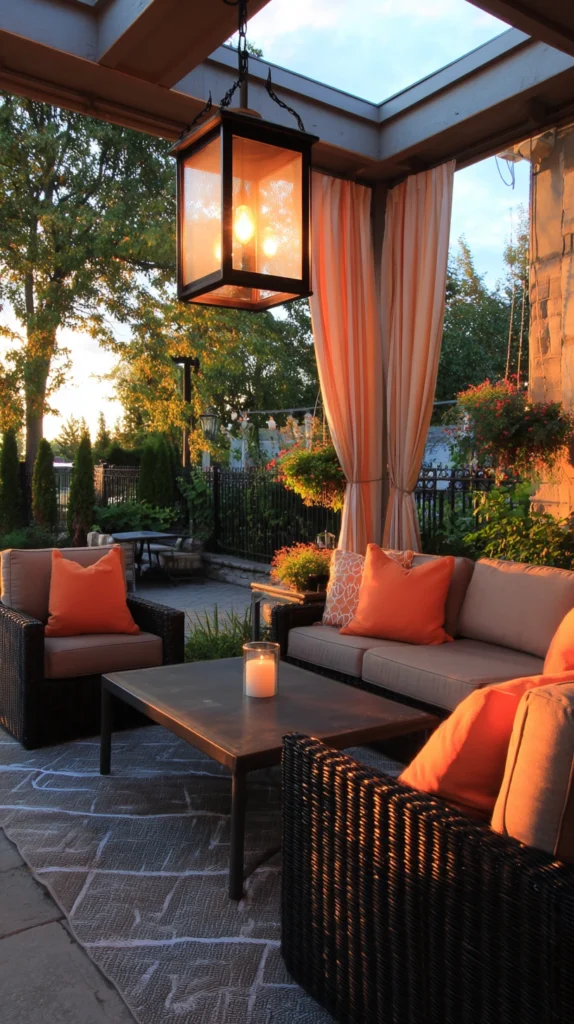
Budget: $40 – $180
Glass or metal lanterns suspended at different heights from a pergola beam, a tensioned wire, or a simple timber frame overhead create a lantern canopy that lights the space from above and at multiple levels simultaneously. Hanging lanterns move slightly in the breeze, which causes the light inside them to shift and flicker in a way that static lanterns cannot replicate, and the combination of movement and warm light produces an atmosphere that is difficult to achieve by any other means.
Glass hanging lanterns with a hook top cost $10–$30 each. A set of five suspended at varying heights on a 2-metre wire span costs $50–$150. S-hooks ($3–$5 for a pack) allow lanterns to be repositioned and height-adjusted without tools. Use pillar candles rather than tea lights in hanging lanterns — a tea light burns for approximately four hours and requires replacing during the evening, which disrupts the atmosphere; a pillar candle burns for eight to twelve hours and lasts the full night.
Style tip: Hang lanterns at three distinct heights rather than grading them gradually from tallest to shortest. Three height levels — high, mid, and low — create a composed arrangement with genuine depth; a gradual graduation from one height to another reads as a single diagonal line rather than a three-dimensional canopy.
5. The Moroccan Lantern Path
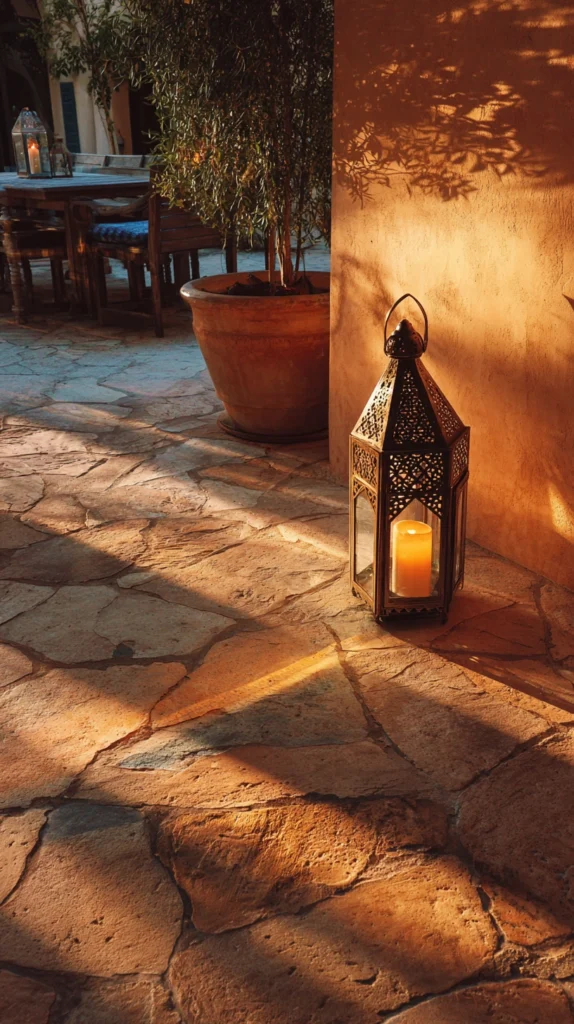
Budget: $30 – $120
A line of punched metal Moroccan lanterns placed along the path leading to the patio seating area creates a lit approach that makes arriving at the space feel like arriving somewhere worth reaching. The perforated metal of a Moroccan lantern throws patterns of light and shadow onto the surrounding ground and walls that no other lantern type produces, and those moving patterns animate the outdoor space in a way that solid-sided lanterns cannot.
Punched metal Moroccan lanterns cost $10–$30 each. A path of six lanterns — three on each side — costs $60–$180. Place them at consistent intervals and at the same distance from the path edge on both sides. Tea lights burn for long enough for most evenings; for extended occasions use a citronella tea light ($8–$15 for a pack of twenty) which adds the practical benefit of deterring insects from the path zone.
Style tip: Choose lanterns in one metal finish rather than mixing brass, copper, and black throughout. A path of lanterns in a single consistent finish reads as a designed lighting scheme; mixed finishes read as lanterns that accumulated from different sources. If mixing is unavoidable, alternate consistently — brass, black, brass, black — rather than randomly.
6. The Wind-Proof Candle Wall
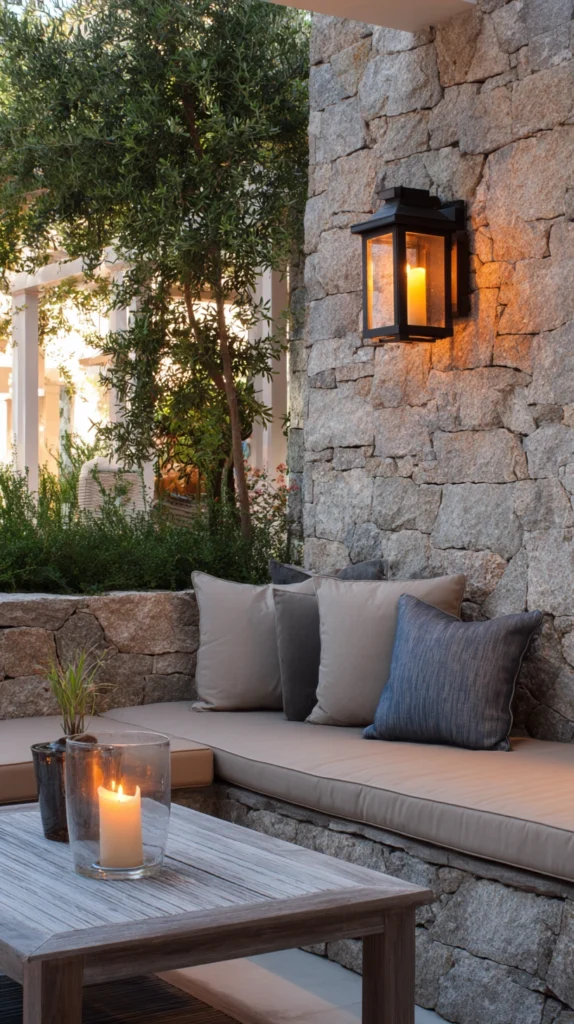
Budget: $25 – $100
Glass storm lanterns — tall, cylindrical, with enough height to protect the candle flame from all but the most direct wind — fixed to the fence or wall around the patio at seated eye height create a ring of protected candlelight that lasts the full evening regardless of the breeze. The common failure of outdoor candles is not the candle quality but the wind exposure, and a lantern designed specifically for wind resistance solves this completely.
Tall glass storm lanterns of 25–35 centimetres in height cost $8–$20 each. Wall-mounting brackets for lanterns run $5–$12 each. A ring of eight lanterns mounted at 120-centimetre height on the surrounding fence costs $100–$250 in total. Use pillar candles of a diameter that fits within the lantern with at least 2 centimetres of clearance on all sides — a pillar candle touching the glass sides of the lantern transfers heat to the glass that can crack it and creates an uneven burn pattern that shortens the candle life significantly.
Style tip: Mount the wall lanterns at a consistent height of 110–130 centimetres from the ground — just above seated eye level rather than at standing eye level. A lantern at standing eye height is a navigation light; one at seated eye level is an atmospheric one. The difference in mounting height is 30–40 centimetres and the difference in the quality of the light it produces in the seating area is considerable.
7. The Floating Candle Bowl
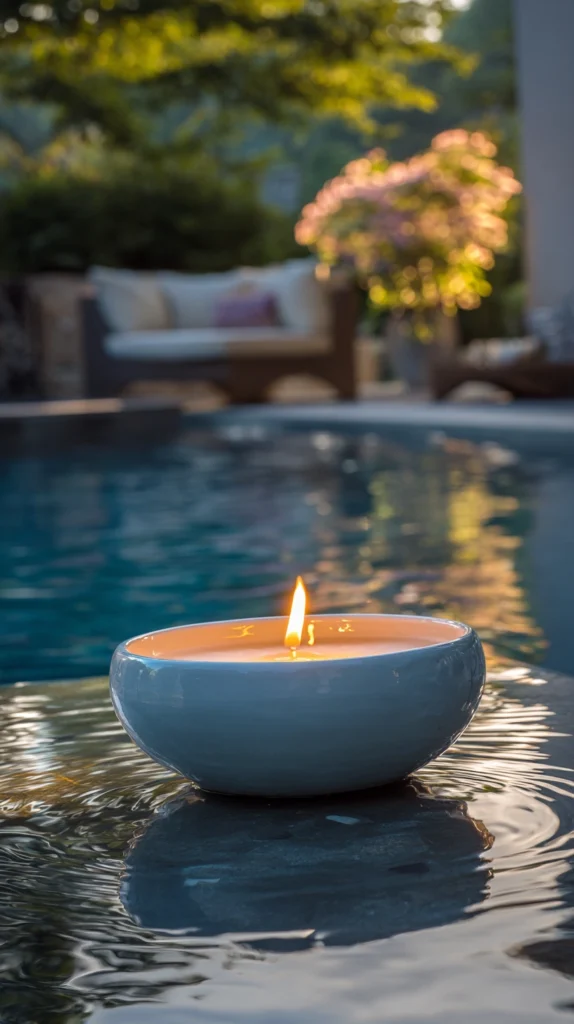
Budget: $15 – $50
A large, low bowl — ceramic, concrete, or glass — filled with water and floating candles, with flower heads or petals scattered on the surface, creates a centrepiece of extraordinary simplicity and beauty that costs almost nothing and can be assembled in five minutes. The water surface reflects the candle flame and doubles its visual impact, and the slight movement of floating candles as air disturbs the water surface produces a flickering quality more complex than any fixed candle achieves.
A large ceramic or concrete bowl of 40–60 centimetres in diameter costs $15–$40. Floating candles cost $5–$12 for a pack of ten. Fresh flower heads from the garden — roses, dahlias, marigolds — cost nothing if cut from existing plants. Fill the bowl in its final position rather than carrying it full of water — a large bowl of water carried across a patio reliably spills on arrival, disrupting the arrangement before the evening begins.
Style tip: Use an odd number of floating candles rather than filling the surface completely. Three or five candles on a large water surface, surrounded by flower heads, read as a composed arrangement with breathing room; a surface packed with floating candles read as maximised capacity rather than considered placement.
8. The Lantern and Log Setup
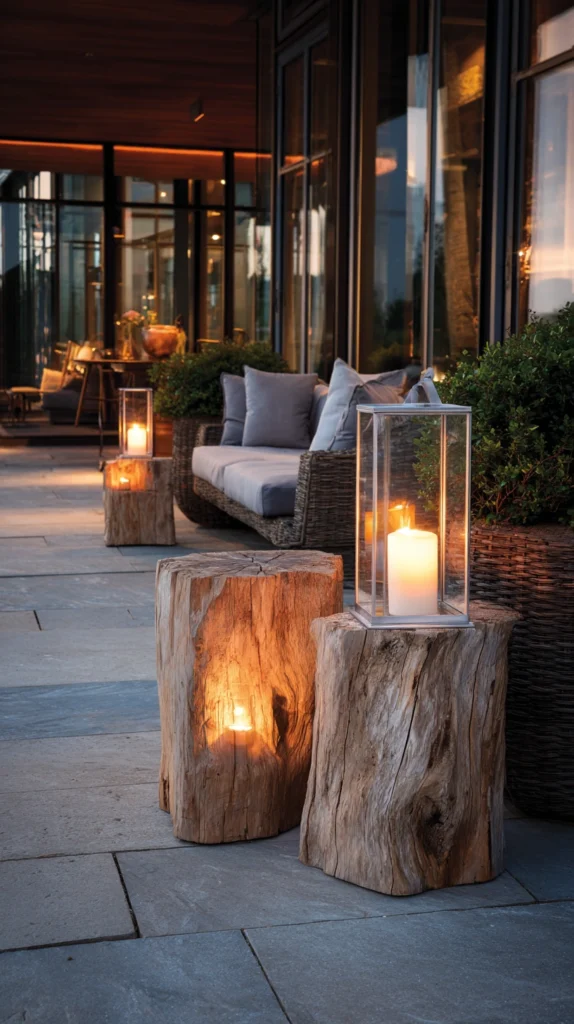
Budget: $20 – $70
Short log rounds used as individual candle platforms — a single lantern or a cluster of votives placed on the flat top of each log — scattered through the patio seating area at different heights create a natural, organic lighting arrangement that suits informal garden settings in a way that glass and metal alone never quite manages. The combination of timber and candlelight has an immediate warmth and a campfire quality that more polished setups lack.
Log rounds of 15–25 centimetres in height and diameter cost $2–$5 each from timber yards or firewood suppliers. Three or four distributed through the seating area costs $6–$20. Sand the top face of each log smooth enough to hold a lantern or votive holder without rocking — a lantern that tips on an uneven surface spills hot wax and extinguishes the candle, which resolves the atmosphere problem more decisively than any wind.
Style tip: Vary the log heights throughout the arrangement rather than using rounds of consistent height. Logs of three different heights — low, medium, and high — create the vertical variation that makes the lighting arrangement feel composed. Uniform height logs distributed through the space look like objects that were placed without considering their relationship to each other.
9. The Festoon and Candle Combination
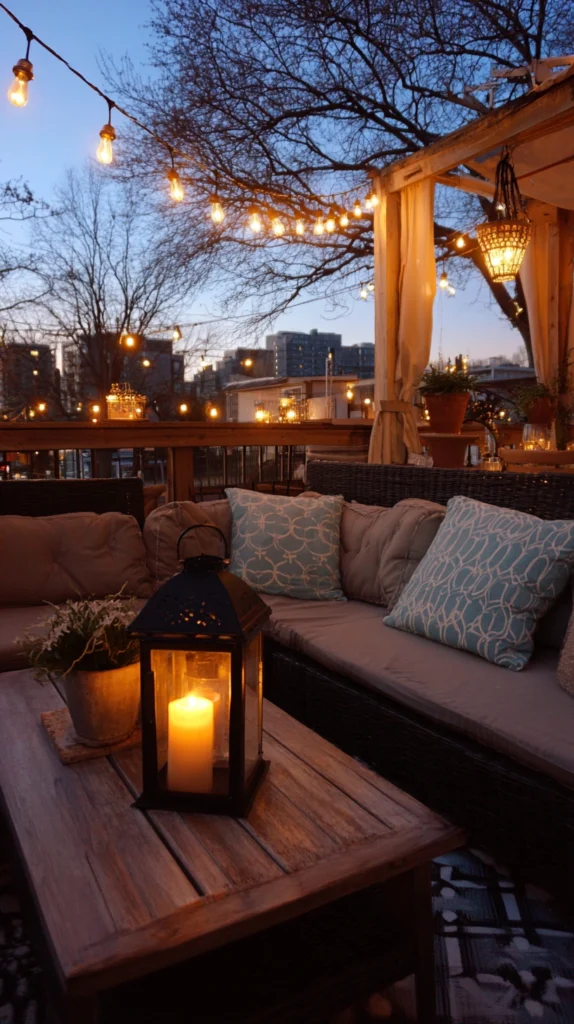
Budget: $35 – $150
Warm white festoon lights strung overhead combined with candles at table and floor level create a two-tier lighting scheme that provides enough ambient illumination to see clearly while maintaining the intimate, flickering atmosphere that candles alone provide. The festoon lights handle the practical requirement; the candles handle the atmosphere; the combination of the two achieves something that neither manages independently.
A 5-metre festoon light string costs $20–$50. Candles at table and floor level add $15–$40 to the total. The critical balance is keeping the festoon lights dim enough that they support rather than dominate the candlelight — a festoon string on a dimmer switch ($10–$20 for an outdoor dimmer) allows the brightness to be adjusted as the evening progresses and the sky darkens.
Style tip: Switch the festoon lights on before sunset and the candles at dusk. Festoon lights turned on after dark make an immediate visual statement that can feel abrupt; ones that have been glowing gently through the last light of the evening are already part of the atmosphere rather than an addition to it. The candles lit at dusk complete a transition that began at sunset.
10. The Citronella Candle Ring
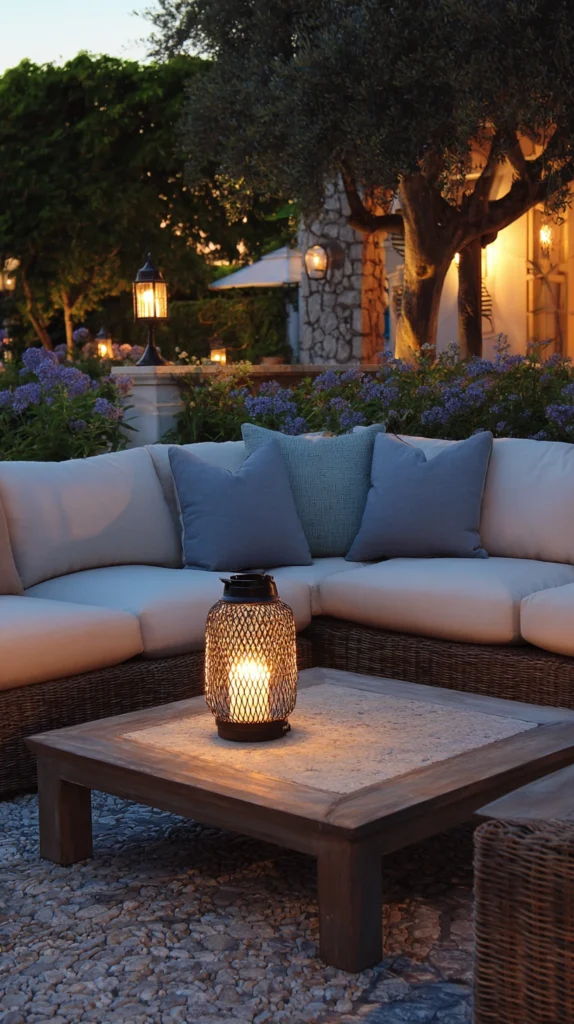
Budget: $20 – $70
A ring of citronella candles in matching containers placed around the outer edge of the seating area — close enough to create a protective perimeter but far enough from guests that the citronella scent is a background presence rather than an overwhelming one — allows an outdoor evening to extend well past the point where insects would otherwise end it. The candles serve simultaneously as lighting, insect deterrent, and the visual boundary markers of the outdoor room.
Large citronella pillar candles cost $8–$20 each. Citronella candles in coloured glass jars run $5–$15 each. A perimeter of six to eight candles costs $30–$120. Use citronella candles on the outer ring and regular candles at the table centre — the functional candles at the perimeter, the atmospheric ones at the social centre, so the scent of citronella remains in the background while the light from all sources contributes to the overall effect.
Style tip: Place citronella candles at the upwind side of the seating area rather than distributing them uniformly around the perimeter. The scent carries downwind into the seating zone more effectively than candles placed on the lee side, and concentrating the deterrent upwind uses fewer candles to achieve the same protective effect.
11. The Lantern Tree
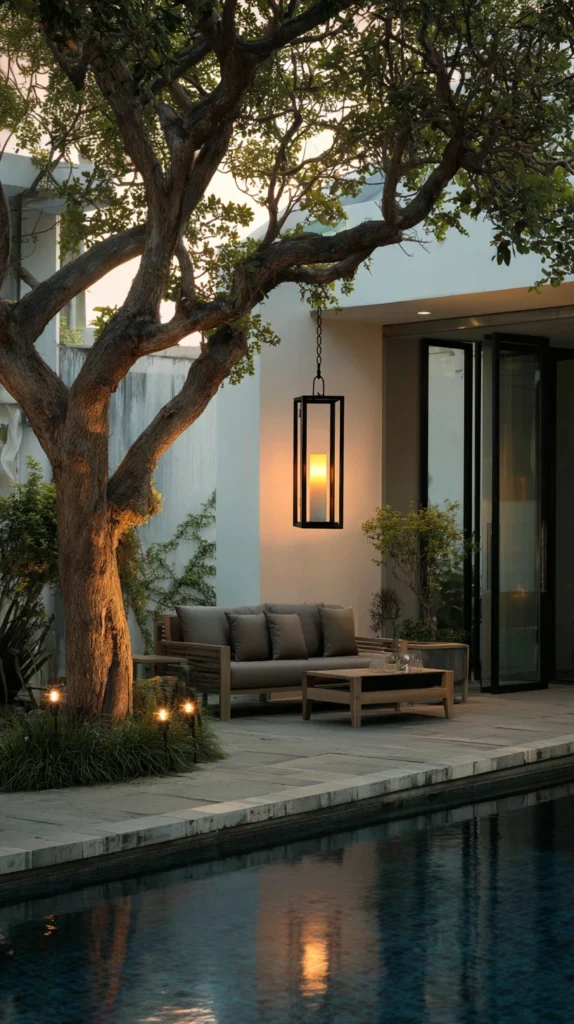
Budget: $25 – $100
A small ornamental tree or a large potted shrub decorated with hanging lanterns — one lantern per main branch, suspended on varying lengths of garden twine — creates a light installation that is part garden feature and part illumination. The lanterns move independently in the breeze, the foliage behind them catches the light and becomes visible in a way that unlit trees are not after dark, and the combination of living plant and warm light is one that no manufactured light fitting can replicate.
Small glass lanterns for hanging cost $5–$12 each. Garden twine runs $3–$6 per reel. A tree with eight to twelve branches accommodates eight to twelve lanterns — enough to make the installation read as intentional from across the patio. Vary the length of the twine from branch to lantern between 10 and 40 centimetres so the lanterns hang at different levels rather than in a uniform horizontal band.
Style tip: Choose the tree or shrub for the lantern installation based on its structure rather than its species. A tree with well-spaced, roughly horizontal branches at accessible heights is the right candidate — one with dense, vertical, or very high branching makes hanging and lighting the lanterns impractical and produces a cluttered result regardless of how carefully it is styled.
12. The Table Edge Tea Light Run
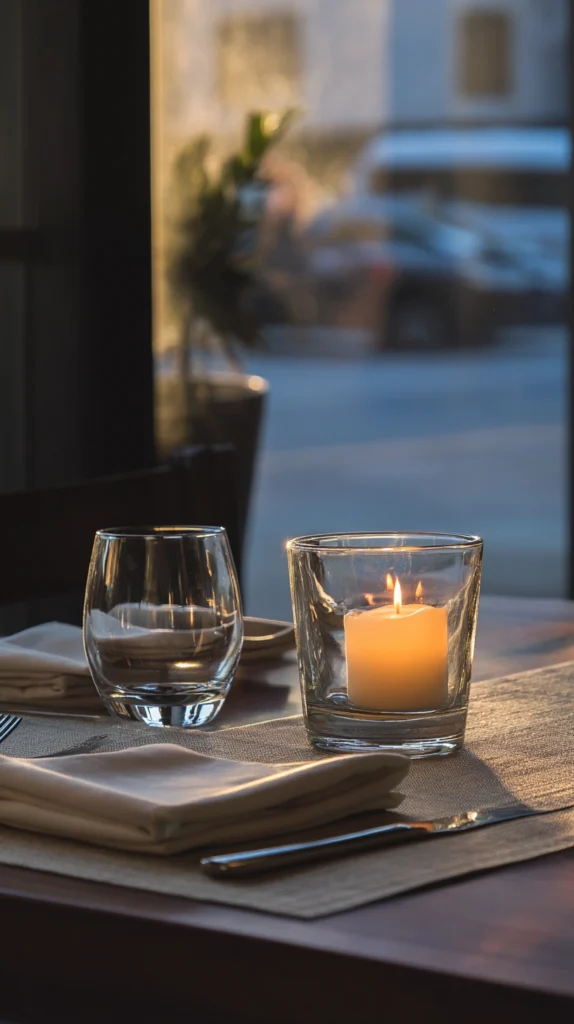
Budget: $10 – $35
A continuous line of tea lights in small glass holders placed along the edge of the patio table — not in the centre but along both long edges — frames the table with light rather than centring it, which produces the unexpected effect of making the table itself seem to glow from its edges. The light at the perimeter of the table illuminates the faces of people seated around it rather than the tablecloth, which is always the more useful and more flattering direction for candlelight to travel.
Tea light holders in clear or coloured glass cost $1–$3 each. A set of twelve lining both long edges of a standard table costs $12–$36. Position the holders 5 centimetres in from the absolute table edge so they are not at risk of being knocked off by a chair or a reaching arm, and space them at 15-centimetre intervals for a continuous rather than interrupted line of light.
Style tip: Use coloured glass tea light holders — amber, deep red, cobalt, or green — rather than clear ones for the edge run. Coloured glass casts a tinted light onto the table surface below each holder that clear glass does not, and the pooled colour from eight or ten coloured holders along the table edge creates an effect of warmth and saturation that clear holders, for all their elegance, cannot achieve.
13. The Firepit Centrepiece
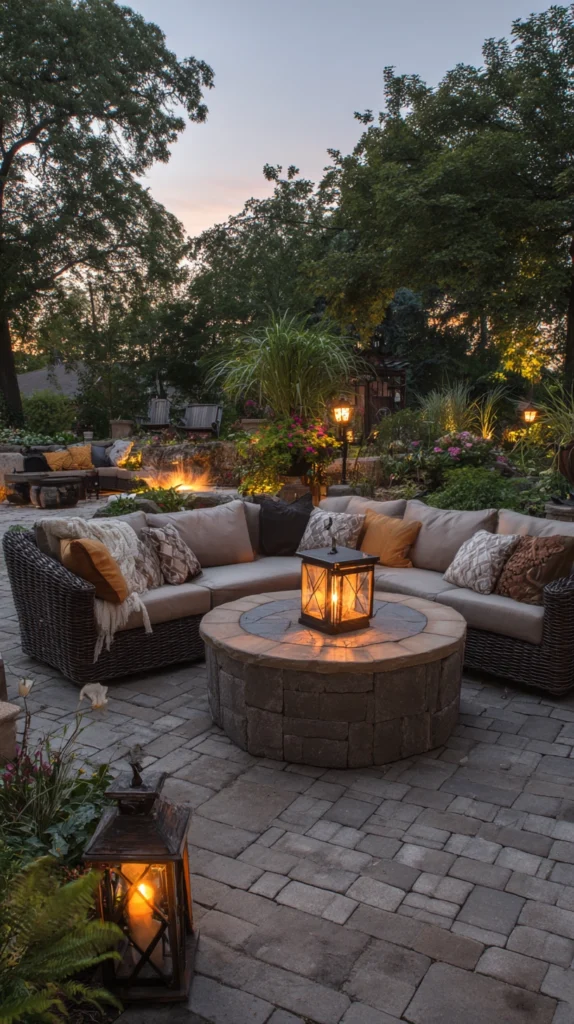
Budget: $60 – $300
A small portable fire pit positioned at the centre or edge of the patio seating area — not as the primary heat source but as the primary light source — gives the evening a focal point that no collection of candles and lanterns, however well-arranged, can replicate. Fire at the centre of a group of people is one of the oldest social technologies in existence and it works as well on a suburban patio as it ever did anywhere else.
A small tabletop fire bowl costs $30–$80. A portable steel fire pit of 45–60 centimetres in diameter runs $40–$150. A bioethanol tabletop fire ($40–$100) produces no smoke and no ash, making it suitable for smaller or more enclosed patios where smoke drift would be a problem. Position the fire pit so the smoke rises away from the primary seating direction and ensure at least 50 centimetres of clearance between the fire and any lanterns, candles, or fabric elements.
Style tip: Light the fire pit before guests arrive rather than after they are seated. A fire that is already established and glowing when guests come outside is part of the welcome; a fire being coaxed from kindling while guests stand around in their chairs holding drinks is a performance that delays the evening and slightly undermines the atmosphere the fire is intended to create.
14. The Midnight Candle Reserve
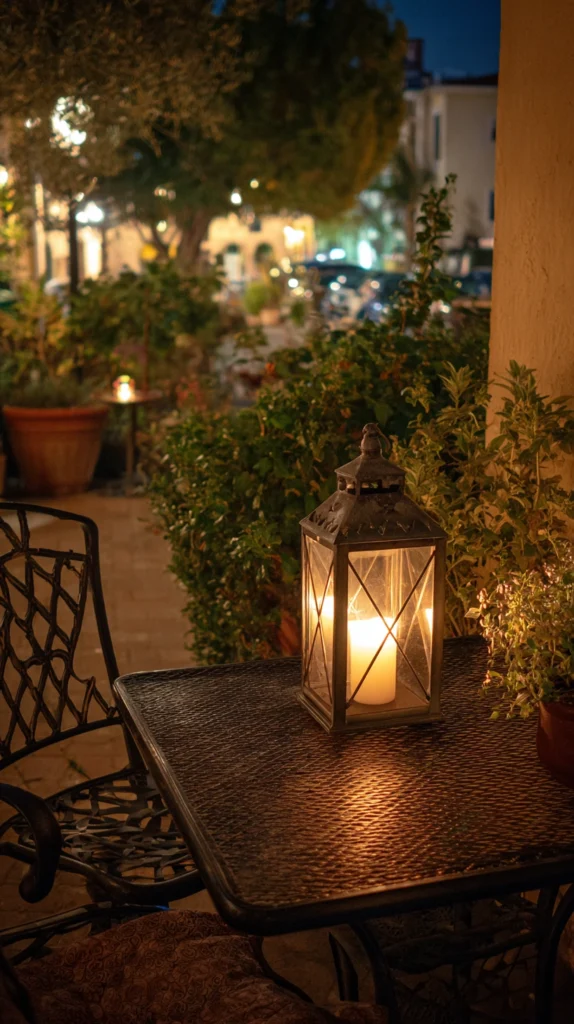
Budget: $10 – $30
Keep a basket or box of additional candles, tea lights, and matches in a weatherproof container within reach of the patio seating area so that as the evening extends past its original intention and the original candles burn low, the light can be renewed without going inside. An evening that dims gradually and is then refreshed — new candles lit from the stubs of the old ones — signals that the night is not finished rather than winding down, and that signal is often what keeps people outside for the extra hour that makes the evening worth remembering.
A weatherproof storage tin costs $5–$15. A supply of twenty tea lights ($3–$6) and four replacement pillar candles ($8–$15) provides the midnight reserve. Keep a long-handled lighter ($5–$10) in the tin rather than matches — relighting outdoor candles in any breeze with matches is an exercise in frustration that a long lighter eliminates entirely.
Style tip: Refresh all the candles at the same time rather than individually as each one burns out. A patio where candles are replaced one by one throughout the evening gives the impression of gradual decline even as new candles are added; one where all candles are renewed simultaneously at a natural pause — a lull in conversation, the moment between dinner and dessert — gives the evening a second act that feels deliberate rather than remedial.
The best patio lighting is not the most elaborate or the most expensive — it is the kind that makes people forget to check the time, that makes the garden look its most beautiful version of itself, that turns a patio into the place everyone wanted to end up even if they did not know it when they arrived.
Get the candles at the right height, keep the light warm and low, and make sure there are enough of them to last the whole evening. The conversation will do the rest.