15 Porch Seating Makeover Ideas
There is a particular quality that a well-used porch has and an unused one lacks, and it is not furniture or cushions or the right paint colour. It is the feeling that someone actually sits there. That the chair facing the street was chosen deliberately, that the table beside it is at exactly the right height for a glass, that the whole arrangement was put together by someone who intended to spend time in it rather than simply to have it available.
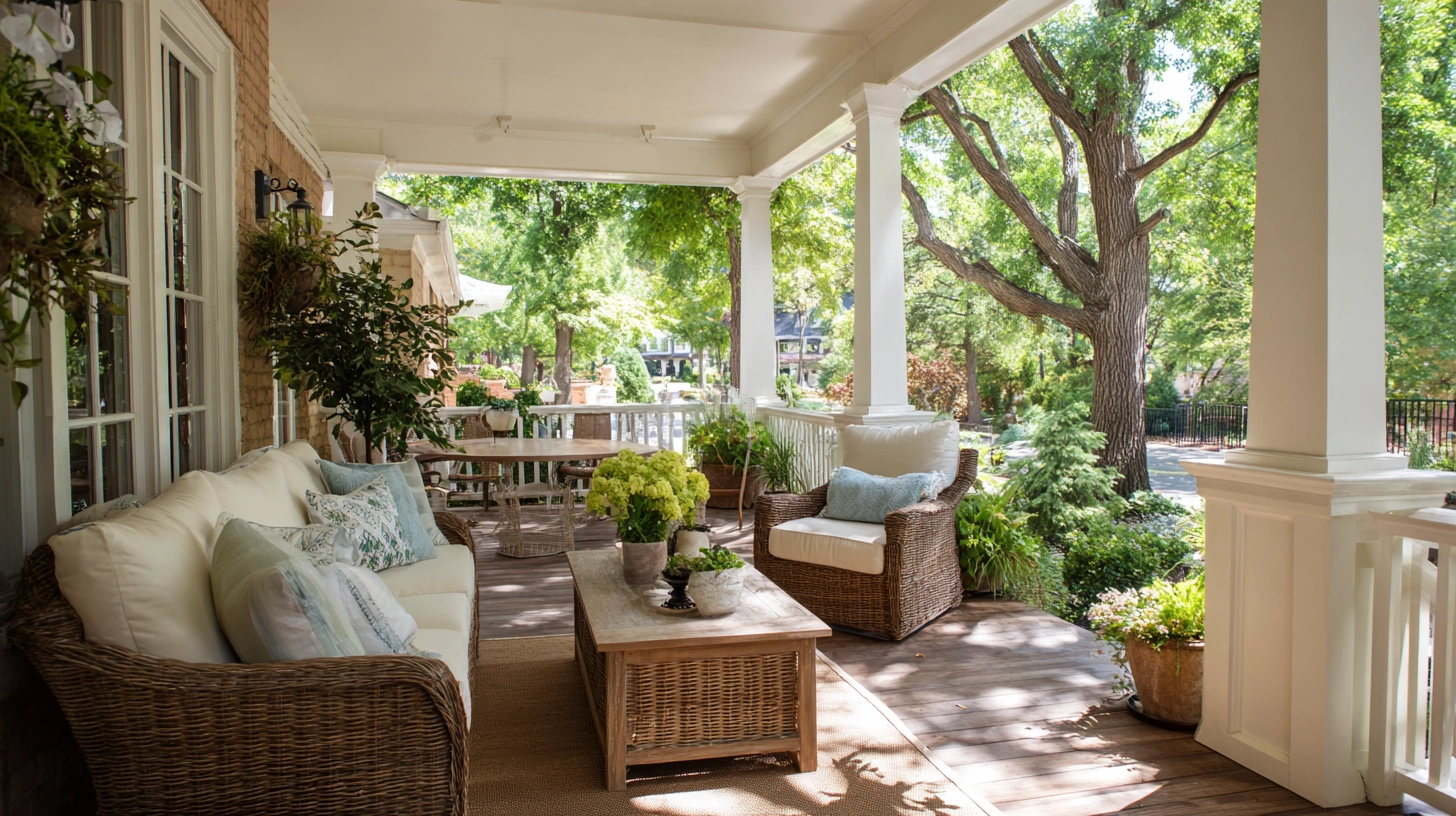
Most porches fail not because they lack the right pieces but because the pieces they have were never arranged with intention. A chair pushed against the wall, a mat that does not quite fit, a light that barely reaches the seating area — these are the details that make a porch feel like a threshold rather than a room, and fixing them costs less and takes less time than most people expect.
Each idea below includes what you will need, what it will cost, and a practical tip to make it work as well as the idea deserves.
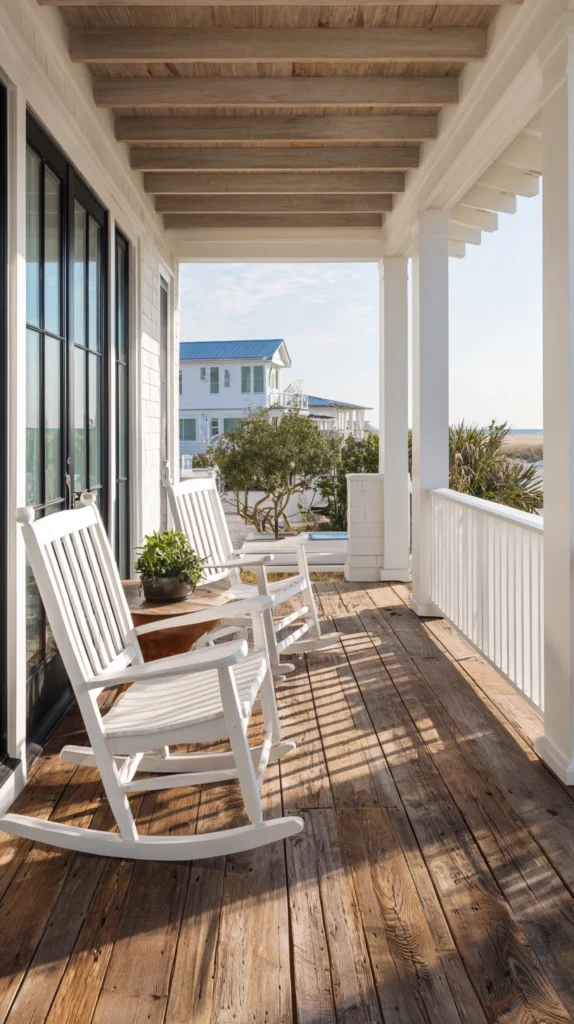
1. The Classic Rocking Chair Pair
Budget: $100 – $500
Two rocking chairs facing the same direction — outward toward the garden, the street, or whatever the porch faces — is the most traditional and most immediately understood porch seating arrangement in existence. It communicates welcome and permanence simultaneously, and the slight movement of a rocking chair gives a porch the quality of being occupied even when it is not in use.
A pair of wooden rocking chairs costs $80–$200. Resin or poly lumber versions — weatherproof, splinter-free, requiring no maintenance — run $150–$400 for a pair. A small side table between them ($25–$60) completes the arrangement. Position the chairs so they face the most interesting view from the porch — the street, the garden, the mountains, the neighbour’s roses — rather than facing the house wall, which defeats the entire purpose of being outside.
Style tip: Place both chairs at the same slight angle toward each other rather than perfectly parallel. Two chairs facing dead ahead are for watching; two chairs angled very slightly inward are for talking — and a porch that invites conversation rather than passive observation is always the more used one.
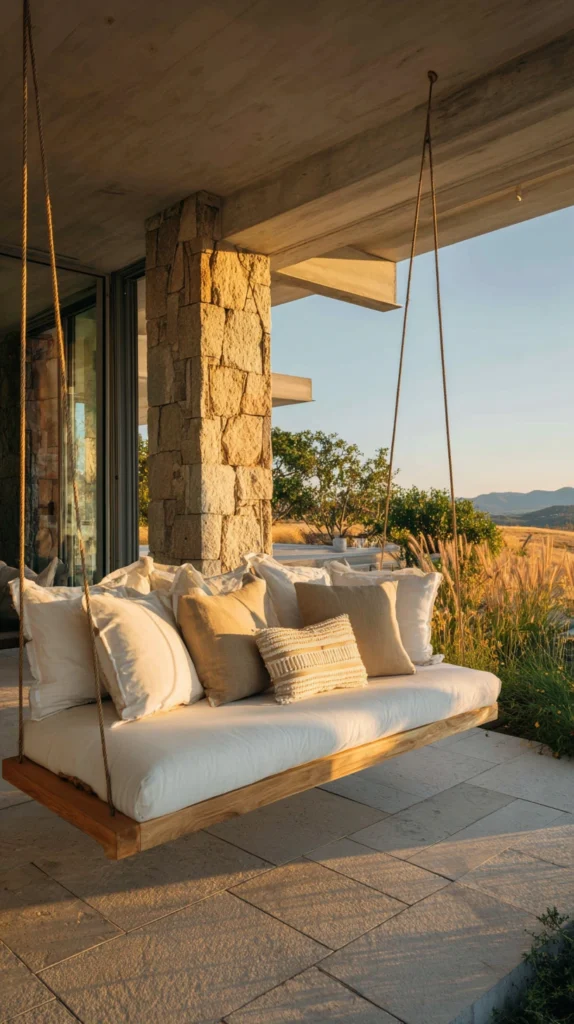
2. The Porch Swing
Budget: $80 – $400
A porch swing hung from the ceiling joists of a covered porch is the single most transformative seating addition available to the right space. It takes up no floor space when in motion, provides seating for two or three people, and has the particular quality of making time pass differently — slower, more deliberately — than any static chair manages. A porch with a swing becomes a destination rather than a transitional space.
A basic wooden porch swing costs $80–$150. A painted or stained version with a more considered finish runs $150–$300. Swing hanging hardware — two heavy-duty eye bolts, two S-hooks, and two lengths of chain or rope rated to at least 500 kilograms ($20–$40 total) — must be fixed into the structural joists of the porch ceiling rather than simply into the ceiling board. Locate the joists with a stud finder before drilling and use lag screws of at least 10 centimetres into solid timber.
Style tip: Hang the swing so its seat is 43–48 centimetres from the porch floor — standard chair seat height. A swing hung too high requires an ungainly climb to get into; one hung too low is difficult to swing from comfortably. Measure from the floor to the seat before tightening the final hardware and adjust the chain length accordingly before the swing is loaded.
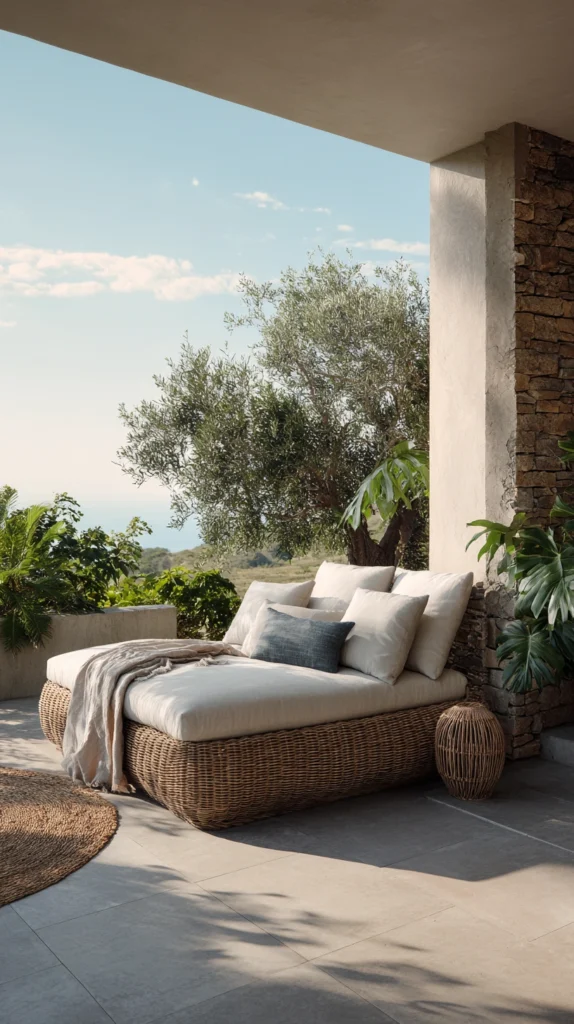
3. The Daybed Lounger
Budget: $100 – $600
A daybed on a covered porch — a deep, cushioned platform wide enough to lie on — turns the porch from a sitting space into something closer to an outdoor room. It is the most generous seating option on this list in terms of the quality of the experience it provides, and the most unambiguous signal that the porch is a place to spend an afternoon rather than simply pass through.
A basic outdoor daybed frame in powder-coated steel costs $100–$250. A timber version runs $200–$500. A waterproof foam cushion of at least 10 centimetres thickness ($60–$120) provides the comfort that makes the difference between a daybed that is used and one that is sat on occasionally. Position the daybed where it receives afternoon shade rather than direct sun — a daybed in full afternoon sun is unusable for most of the day during summer and defeats the purpose of having one.
Style tip: Add a canopy or a simple curtain rail above the daybed rather than leaving it open to the porch ceiling. A daybed with a soft canopy above it — a length of sheer fabric suspended from two ceiling hooks — becomes a genuinely private and enclosed space within the larger porch that has a quality of retreat that an open daybed never achieves.
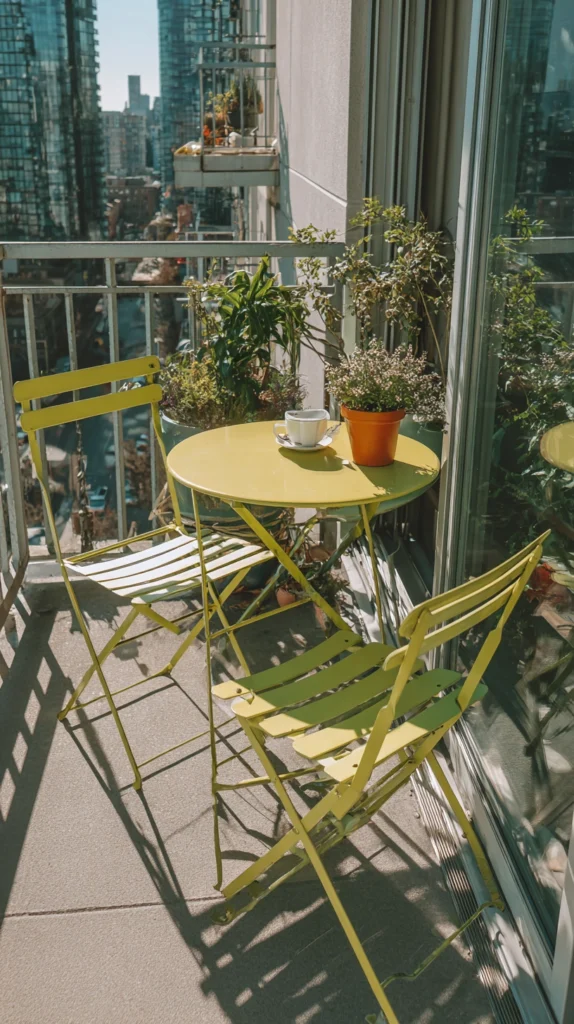
4. The Bistro Table and Chair Set
Budget: $60 – $250
A small bistro table and two chairs on a porch — the classic French café configuration — creates a proper outdoor dining and sitting arrangement in the smallest possible footprint. On a porch too narrow for a full seating group, a bistro set positioned in one corner with a plant beside it and a light above it is a complete outdoor room in itself.
A basic steel bistro set costs $50–$120. A cast iron version with more visual weight and better weather resistance runs $120–$250. Spray paint for metal in any colour ($8–$15 per can) refreshes a rusted or faded set to near-new condition in an afternoon. A bistro table without a central hole for a parasol is more versatile on a covered porch — the parasol hole serves no purpose under a roof and collects water and debris.
Style tip: Choose a bistro set in a finish that contrasts with the porch floor rather than blending into it. A black iron set on a dark timber porch disappears into the background; the same set on pale painted boards or light concrete reads as a deliberate, considered addition. The contrast between the furniture and the floor is what gives a small bistro set its visual presence.
5. The Built-In Bench
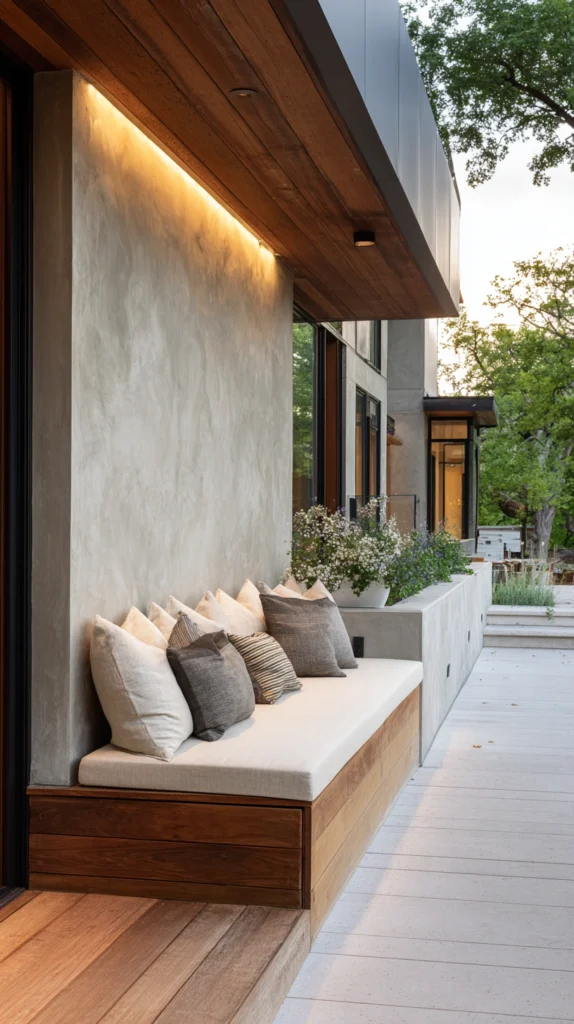
Budget: $80 – $300
A built-in bench along one wall or the railing edge of a porch — constructed from simple timber, painted to match the porch trim, and fitted with a cushion — provides seating that looks as if it was always there rather than added later. Built-in furniture gives a porch an architectural completeness that freestanding pieces rarely achieve, and the bench doubles as storage if the seat is built with a hinged lid above a deep box below.
Timber for a simple bench frame costs $30–$80 in materials. Exterior paint to match the porch trim runs $10–$20. A fitted outdoor cushion costs $25–$60. Build the bench at 43–45 centimetres in seat height and at least 45 centimetres in seat depth — a shallower bench is uncomfortable for sitting for any length of time and tends to be used as a shelf rather than a seat.
Style tip: Round the front corners of the bench seat — a 5-centimetre radius on each front corner — rather than leaving them square. Rounded corners are more comfortable against the backs of legs, are safer in a space where people move around in low light, and give the bench a slightly more finished and considered quality than the same bench with sharp corners throughout.
6. The Adirondack Chair Grouping
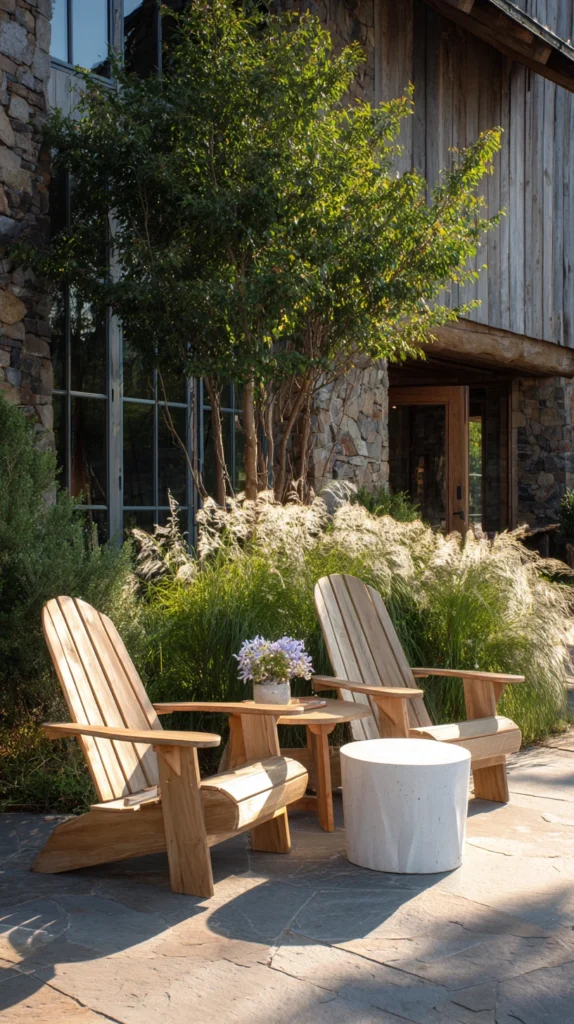
Budget: $80 – $400
Two or three Adirondack chairs grouped around a low fire pit table or a simple wooden side table create the most relaxed and most genuinely comfortable porch seating arrangement available. The low seat, the reclined back, and the wide flat arms of the Adirondack chair are designed for exactly the kind of extended sitting — a long afternoon, an evening that stretches later than planned — that a good porch should make possible.
A basic wooden Adirondack chair costs $40–$100. A poly lumber version in any colour runs $80–$200 and requires no painting, sealing, or seasonal storage. A low side table of matching height costs $25–$60. The wide flat arms of Adirondack chairs eliminate the need for individual side tables for each seat — a drink, a book, and a phone all sit comfortably on the arm without a separate surface.
Style tip: Paint Adirondack chairs in a colour that relates to the porch trim or the house exterior rather than choosing a colour in isolation. A porch with white trim and green Adirondack chairs reads as a considered colour scheme; green chairs on a porch with no other green reads as chairs that were purchased without reference to their surroundings.
7. The Wicker and Rattan Conversation Set
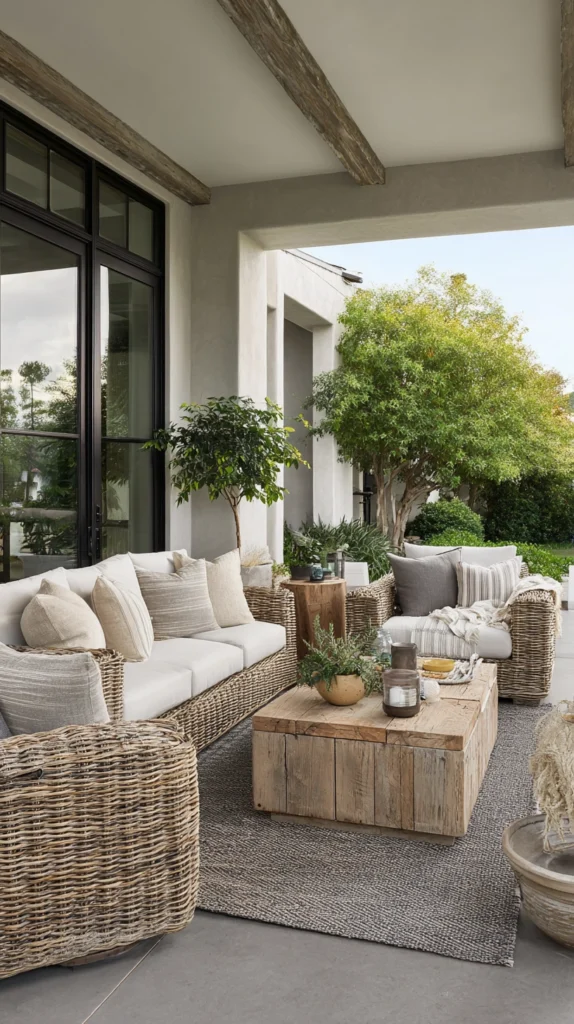
Budget: $150 – $800
A wicker or synthetic rattan conversation set — a loveseat or sofa, two chairs, and a coffee table — on a covered porch creates an outdoor living room of such completeness that the boundary between inside and outside becomes genuinely blurred. Guests who would never normally linger on a porch will settle into a proper sofa and stay for hours, which is the highest measure of success any porch seating arrangement can achieve.
A synthetic rattan conversation set in a standard four-piece configuration costs $150–$400. A higher quality all-weather wicker version runs $300–$800. Cushions in an outdoor fabric — solution-dyed acrylic is the most fade and moisture-resistant — cost $40–$120 for a full set. Store cushions in a weatherproof box ($40–$80) during extended rain rather than leaving them on the furniture — outdoor fabric resists moisture but deteriorates faster than necessary when left saturated for days at a time.
Style tip: Arrange the conversation set so the sofa or loveseat faces the view rather than the wall. A sofa facing outward from the porch invites guests to look at the garden or the street; one facing another chair or the house wall creates a closed arrangement that works for conversation but misses the entire point of being outside.
8. The Painted Floor Statement
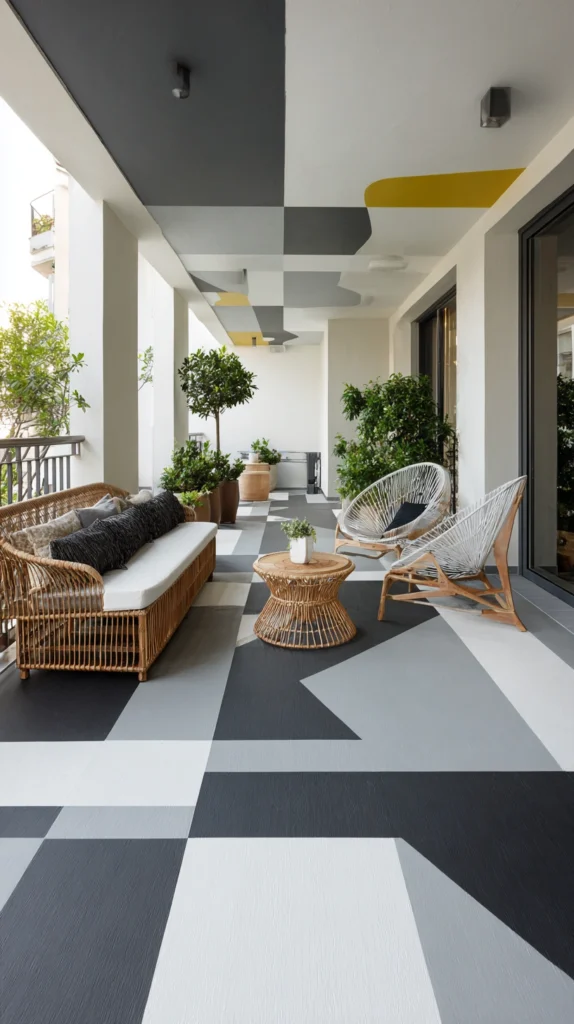
Budget: $20 – $80
Before any furniture is considered, paint the porch floor in a colour or pattern that gives the space its own identity distinct from the house interior. A porch floor in deep charcoal, warm terracotta, sage green, or classic porch grey — or painted with a simple geometric pattern in two colours — becomes the foundation that makes every piece of furniture placed on it look more considered than it would on a bare or neutral surface.
Porch and floor paint in a specialist formula costs $20–$60 per litre — sufficient for a standard porch floor with two coats. A simple geometric pattern using painter’s tape ($5–$10) requires only one additional colour. Clean and prime the floor thoroughly before painting — a freshly cleaned and primed floor takes paint evenly and produces a finish that lasts for several seasons; paint applied to a poorly prepared surface peels within months regardless of the paint quality.
Style tip: Paint the porch floor two to three shades darker than the porch ceiling. A dark floor and a light ceiling make the porch feel like a room with genuine height and depth; a pale floor and a pale ceiling collapse the visual contrast between surfaces and make the space feel flat and unresolved.
9. The Hanging Chair
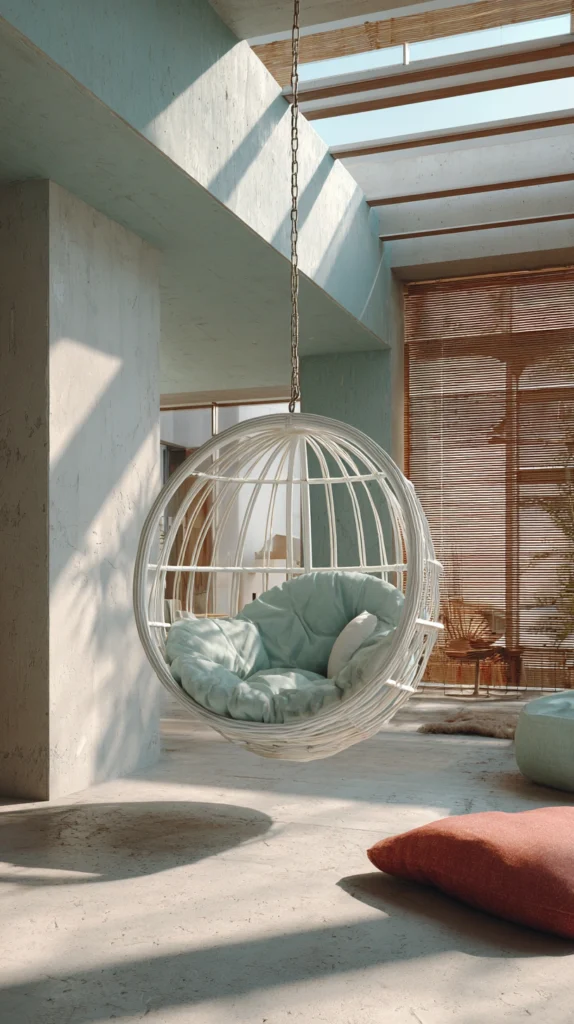
Budget: $80 – $300
A single hanging egg chair or hammock chair suspended from a porch ceiling joist is the most distinctive and most photographed seating option on this list, and for good reason — it occupies a vertical rather than a horizontal footprint, provides the particular pleasure of suspended seating, and makes the porch feel genuinely different from any interior room. A porch with a hanging chair is remembered; one without is simply described.
A hanging egg chair in wicker or synthetic rattan costs $80–$200. A hanging hammock chair in woven cotton runs $40–$100. The fixing requirements are the same as a porch swing — a heavy-duty eye bolt into the structural ceiling joist, rated for at least twice the expected load. A single hanging chair requires one fixing point rather than two, which simplifies installation considerably.
Style tip: Add a small footstool or ottoman ($20–$40) directly below the hanging chair. A hanging chair without a footrest requires the occupant to keep their feet on the floor or tuck them up, neither of which is as comfortable as a suspended position with legs supported. A footstool converts a hanging chair from a novelty into the most comfortable seat on the porch.
10. The Layered Outdoor Rug
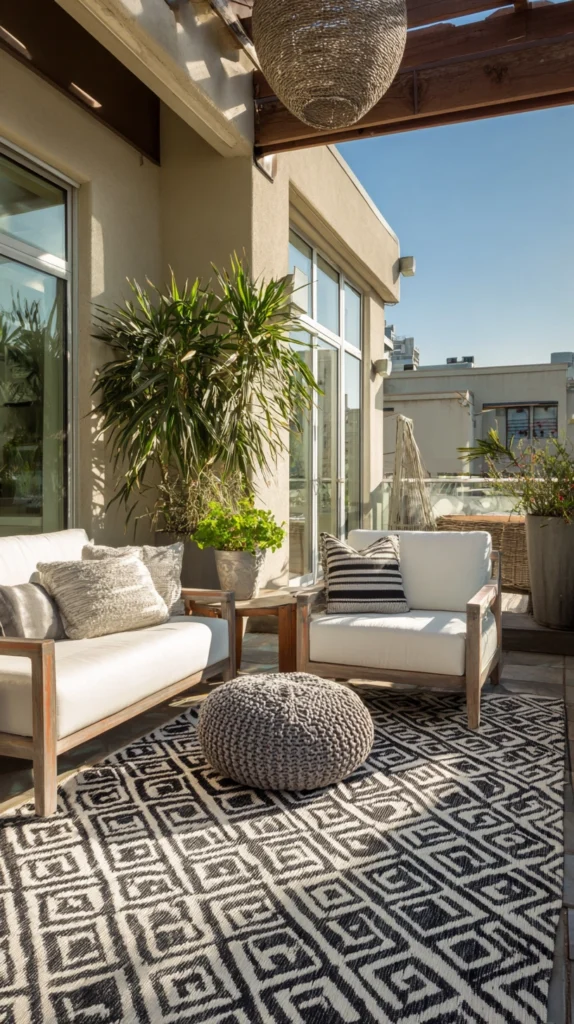
Budget: $30 – $150
A large outdoor rug — or two rugs layered at an angle, with a smaller patterned rug over a larger neutral one — defines the seating area of a porch as a room within a room and makes every piece of furniture placed on it feel more cohesive and more intentional. A porch without a rug is a collection of furniture pieces on a floor; the same furniture on a rug is a seating arrangement.
A large outdoor rug in a 180 by 270 centimetre size costs $40–$120. A smaller patterned rug for layering over it runs $25–$60. Outdoor polypropylene rugs are hose-cleanable, fade-resistant, and dry quickly — the only practical choice for an uncovered or semi-covered porch where rain and moisture are regular visitors. Secure the corners with double-sided outdoor rug tape ($8–$15) or heavy plant pots at each corner to prevent lifting in wind.
Style tip: Choose a rug large enough that all front legs of every piece of furniture in the seating area sit on it. A rug that is too small for the furniture arrangement it anchors floats beneath the furniture rather than grounding it, and the seating area looks as if the rug was an afterthought rather than the foundation. When in doubt, buy one size larger than seems necessary.
11. The String Light Canopy
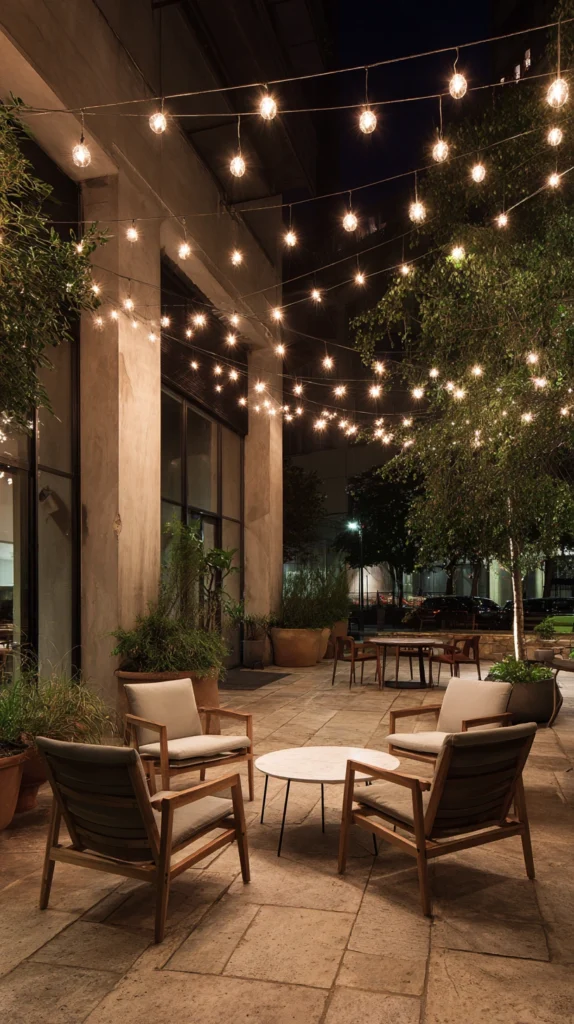
Budget: $20 – $80
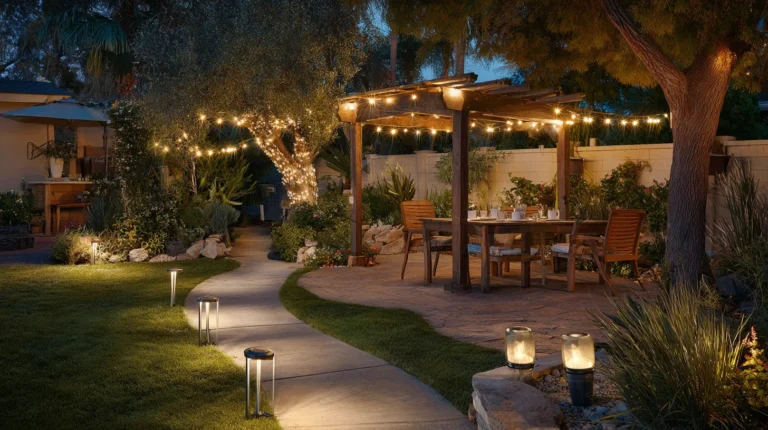
Warm white string lights or festoon bulbs strung across the porch ceiling — from one post to another, from the house wall to the railing edge — transform the porch into its best self after dark. A porch that is beautiful in daylight and dark at night is a half-used space; one with a proper light plan is available and inviting at every hour.
Outdoor string lights on a 10-metre reel cost $10–$25. Festoon lights with individual Edison-style bulbs run $20–$60 for a 5-metre length and produce a warmer, more substantial glow. Connect to a weatherproof outdoor socket via a timer ($8–$15) so the lights come on at dusk without requiring any manual action — lights that need to be switched on individually every evening are switched on less reliably than lights that simply appear.
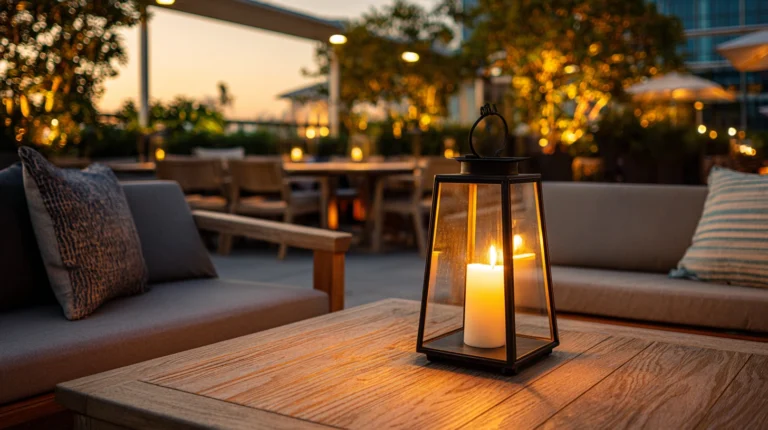
Style tip: Add a secondary light source below the string lights rather than relying on them alone. A lantern on the side table, a candle on the floor, a wall sconce beside the door — the combination of overhead and lower light sources gives the porch evening atmosphere that string lights alone, however warm, cannot fully achieve.
12. The Privacy Trellis Screen
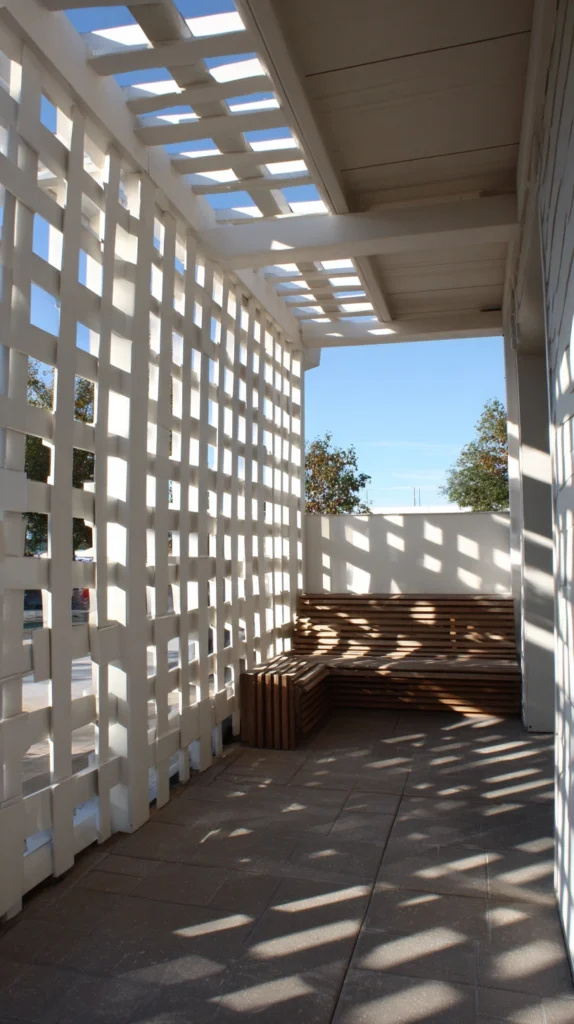
Budget: $40 – $150
A trellis panel fixed to the open side of a porch — planted with a fast-growing climber or left as a graphic timber screen — creates privacy without enclosing the space and gives the seating arrangement a sense of shelter and definition that an entirely open porch never provides. A porch with one screened side and one open side has the feeling of a room with a view, which is the most desirable quality a porch can possess.
A timber trellis panel in a standard 180 by 90 centimetre size costs $15–$35. Two panels side by side cover most porch side openings adequately. A fast-growing annual climber — sweet peas, morning glory, black-eyed Susan vine — costs $3–$8 per plant and covers a standard panel within eight to ten weeks of planting. Fix the trellis to a frame of 50 by 50 millimetre timber posts ($10–$20 in materials) rather than directly to the porch structure if permanent fixing is undesirable.
Style tip: Paint the trellis in a colour that matches the porch trim rather than leaving it in its natural timber state. A trellis painted to match the surrounding woodwork reads as an architectural element of the porch; one left natural reads as something attached to the porch. The paint is what integrates the screen into the space rather than making it look added.
13. The Side Table Collection
Budget: $30 – $150
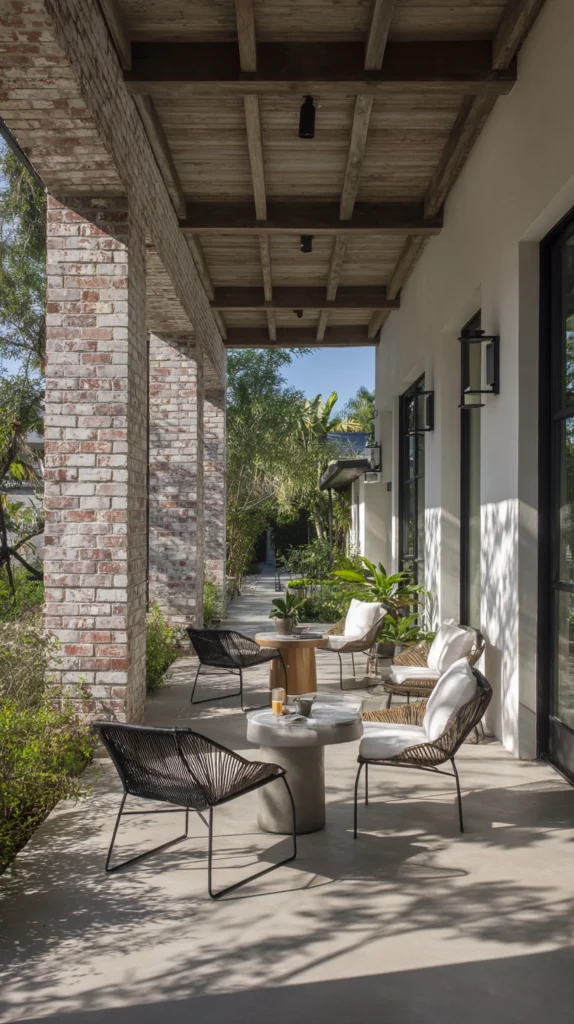
A small collection of side tables — two or three in varying heights but a consistent material — positioned throughout the porch seating area so every seat has something within reach to put a glass on eliminates the most persistent friction of porch sitting: nowhere to put things down. A porch where every seat is within reach of a surface is a porch where people settle in rather than perching temporarily.
Individual side tables in metal, rattan, or timber cost $15–$40 each. A set of two or three nesting tables ($30–$80) provides maximum flexibility in the smallest storage footprint. Choose a consistent material across all tables rather than mixing — two rattan tables and one metal one look like a collection assembled over time rather than a considered set, regardless of how well the individual pieces work on their own.
Style tip: Vary the heights of the side tables rather than using identical heights throughout. A table at exact arm height for a seated person is useful for drinks; a shorter table serves as a footstool as well as a surface; a taller table works beside a standing guest or a swing occupant. Varied heights mean every surface is more useful than a uniform height would allow.
14. The Refreshed Cushion Set
Budget: $40 – $200
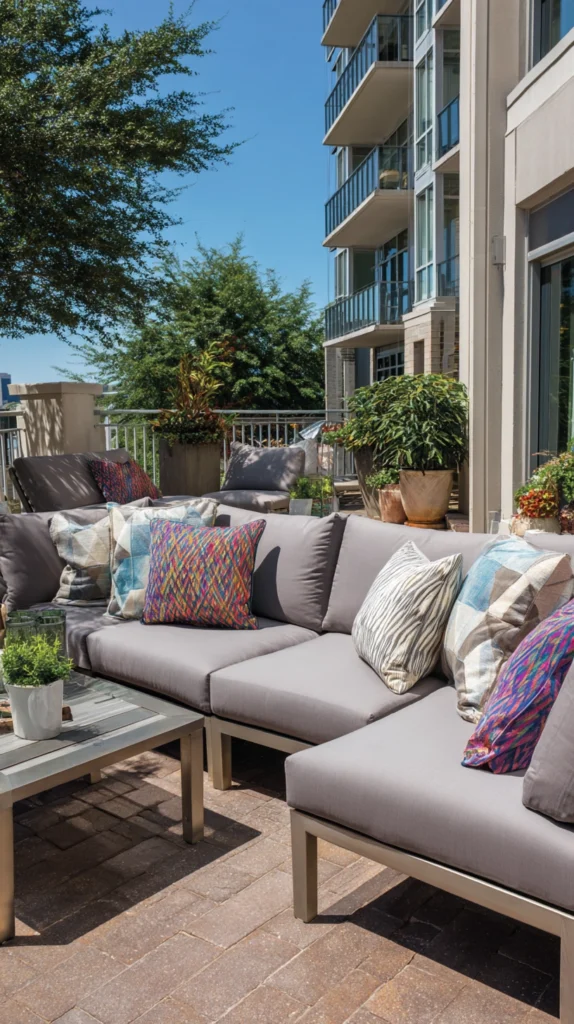
New cushions — not new furniture, just new cushions — on existing outdoor chairs or a bench will do more for the appearance of a tired porch than any other single change. Cushion covers fade, flatten, and develop a mildewed quality faster than any other porch element, and the gap between a porch with fresh cushions and one with sun-bleached, flat-compressed versions of the same cushion is the gap between a space that looks maintained and one that looks resigned.
Outdoor cushions in solution-dyed acrylic fabric cost $15–$40 each. A full set for a conversation group runs $60–$150. Deep seat cushions of at least 10 centimetres thickness hold their shape and their comfort significantly longer than thinner versions — the initial cost difference between a 6-centimetre and a 10-centimetre cushion is recovered within a single season by the difference in durability and comfort.
Style tip: Choose a cushion cover that is zippered and removable rather than one with a fixed cover. A washable cushion cover extends the life of the insert significantly — the insert stays fresh when the cover is regularly removed and washed, while a fixed cover that cannot be removed accumulates mildew from the inside out regardless of how well the exterior is cleaned.
15. The Potted Plant Frame
Budget: $30 – $120
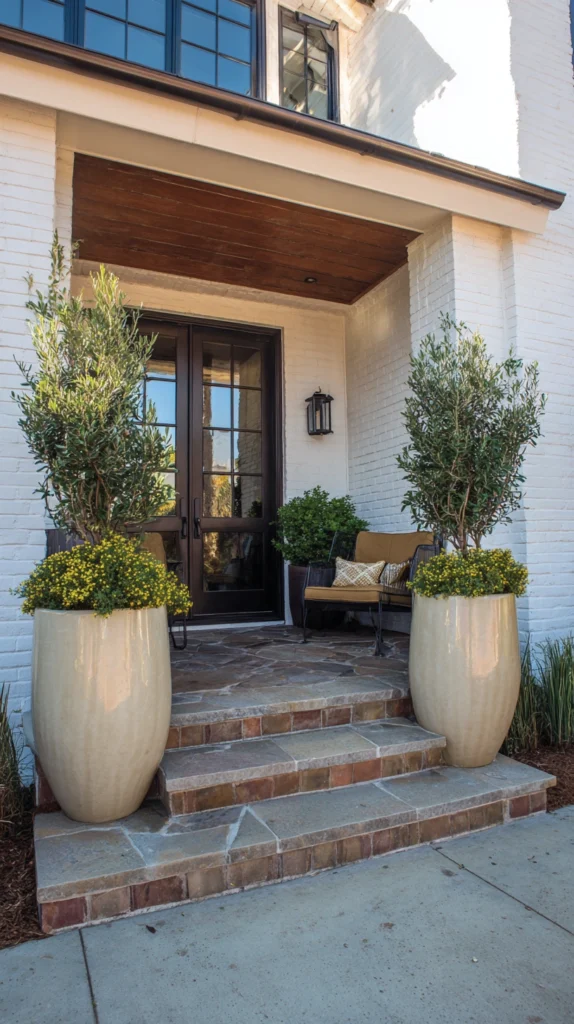
A pair of large potted plants — one on each side of the porch entrance or flanking the seating area — frames the space in a way that architectural elements alone rarely achieve. Plants at the edges of a porch seating area define the boundaries of the space, soften the transition between the built porch structure and the open garden or street, and give the arrangement a sense of completion that the same furniture without the plants consistently lacks.
Large outdoor pots in a consistent material and finish cost $20–$50 each. Architectural plants suitable for flanking — clipped box spheres, standard bay trees, tall grasses, columnar evergreens — cost $15–$50 each depending on size and maturity. Choose plants that suit the light conditions of the specific porch honestly — a deeply shaded north-facing porch needs shade-tolerant plants, and a sun-loving plant placed there will decline steadily regardless of how well it is maintained.
Style tip: Use the largest pots the porch scale allows rather than modest ones. A pair of genuinely large pots flanking a porch entrance reads as a considered architectural gesture; the same plants in small pots reads as decoration. The scale of the pot relative to the porch opening is what determines whether the flanking effect reads as intentional or insufficient.
The best porch makeover is not the most expensive one or the most completely transformed one — it is the one that makes someone look at the porch from the street, or from the garden, and feel that it has been thought about. That the person who lives behind it spent an afternoon considering where the chair should go and what should be on the table beside it and whether the light was right for evenings.
That consideration is what turns a porch from a threshold into a room. It costs less than most people think and takes less time than most people expect, and the version of the front of the house it produces is the one that was always possible.