13 Ways to Boost Your Front Porch Curb Appeal Without Breaking the Budget
There is a particular moment, arriving home after a long day, when the front of the house either welcomes you or simply exists. The difference between the two is not a new door or a fresh render or a landscaped front garden — it is the accumulation of small details that signal someone lives here and cares about it. A swept path. A plant that is actually thriving. A light that comes on at the right moment. A door colour that was chosen rather than inherited.
Most curb appeal advice points toward the expensive end of the spectrum — new paving, replaced windows, professional landscaping. But the improvements that make the most consistent difference to how a front porch looks and feels are the modest ones: the things that cost an afternoon and twenty pounds and produce a result that is visible from the street and noticed every single day.
Each idea below includes what you will need, what it will cost, and a practical tip to make the improvement last as long as the effort deserves.
1. The Repainted Front Door
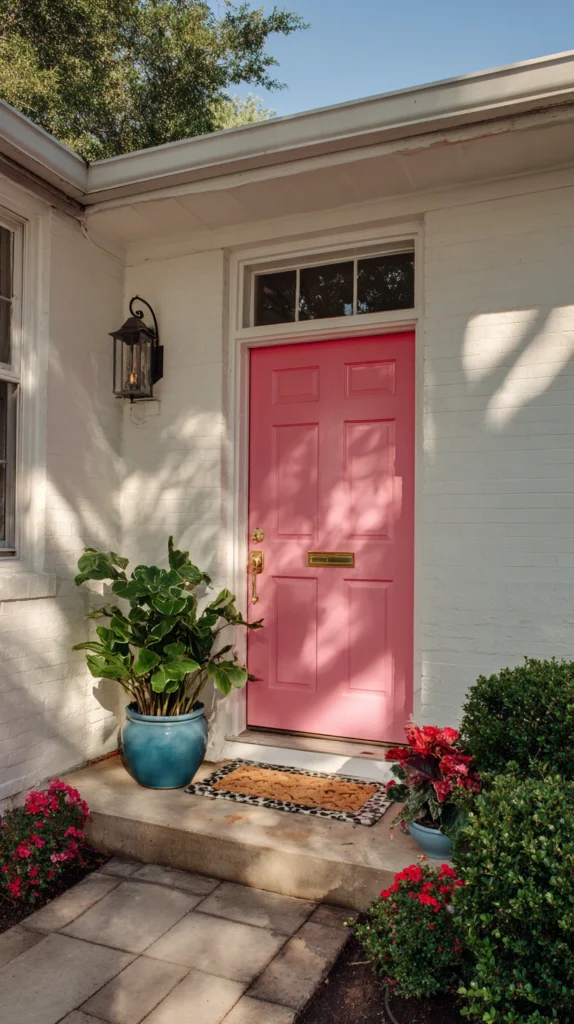
Budget: $20 – $80
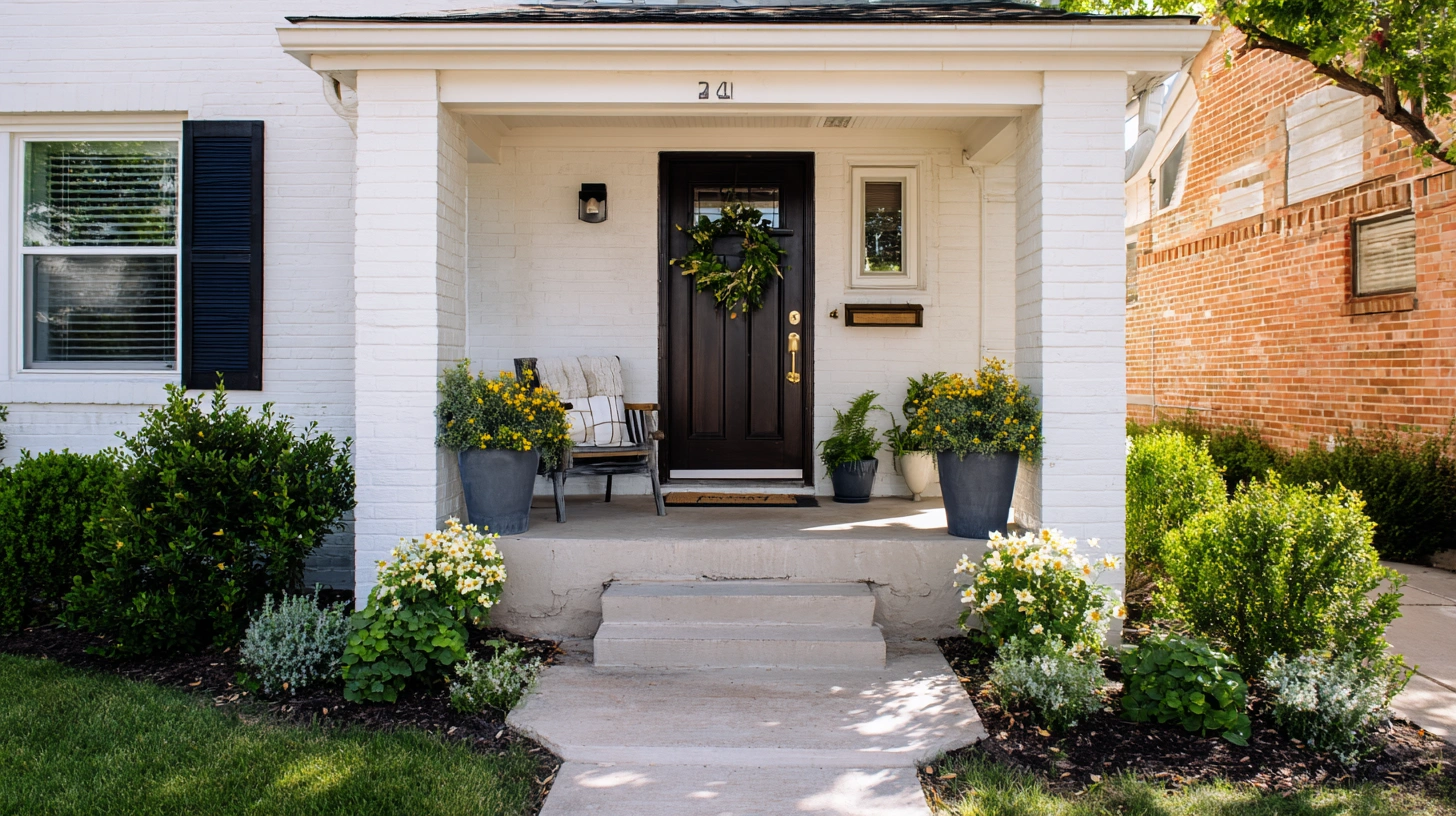
A freshly painted front door in a deliberately chosen colour is the single highest-return curb appeal investment available to any front porch. It costs almost nothing, takes an afternoon, and produces a result visible from the end of the street that communicates more about the house and its occupants than any other single element of the exterior. A door that has been painted with intention reads differently from one that simply has not yet been replaced.
Exterior gloss or eggshell paint in a sample pot covers a standard door twice and costs $8–$15. A full litre of exterior door paint runs $15–$35. Sand any flaking areas back to bare timber, wipe clean, and apply one coat of primer ($8–$12) before the colour coat on bare or previously unpainted wood. Two thin coats of the chosen colour produce a more durable and more even finish than one thick coat, which drips on vertical surfaces and takes days to cure on a door in regular use.
Style tip: Choose a door colour that contrasts with the house facade rather than blending into it. A house with red brick benefits from a door in deep navy, forest green, or charcoal rather than a tone that reads as part of the brickwork. A white or pale render facade suits almost any strong colour. The contrast between the door and the facade is what gives the colour its impact — a door that blends into the wall it sits in has been painted without making a decision.
2. The Potted Plant Pair
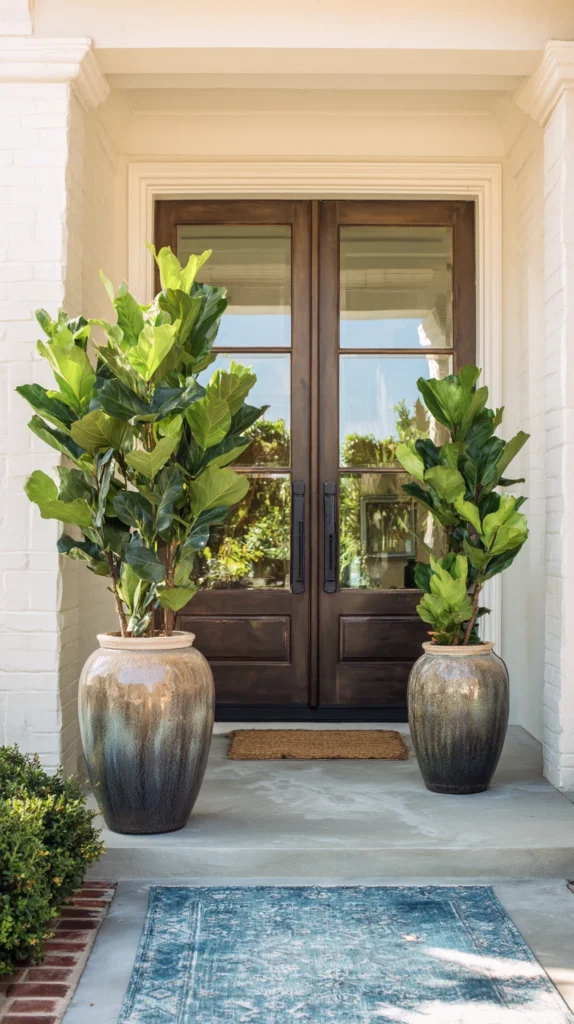
Budget: $30 – $150
A pair of identical pots flanking the front door — planted with matching plants, in matching containers, positioned at the same distance from the door on each side — creates the most immediate and most effective visual upgrade available to a front porch without touching the architecture. The symmetry signals care, the plants signal life, and the combination of the two tells anyone approaching the house that the people inside pay attention to it.
Terracotta pots of 30–40 centimetres diameter cost $8–$20 each. Box balls in a 3-litre pot run $10–$25 each. Standard bay trees cost $20–$50 each. Seasonal flowering plants — tulips in spring, geraniums in summer, ornamental kale in autumn — cost $3–$8 each. The pair format requires both pots to be identical in size and both plants to be in the same condition — a matching pair where one plant is thriving and one is declining looks worse than no plants at all.
Style tip: Choose the pot size based on the door width rather than the available floor space. The pot diameter should be roughly one-fifth of the door width — a 90-centimetre door suits a 40–45 centimetre pot, a 75-centimetre door suits a 30–35 centimetre pot. A pot that is proportionally correct for the door reads as architectural; one that is too small for the door width reads as decorative in a way that does not earn its position.
3. The Door Number Upgrade
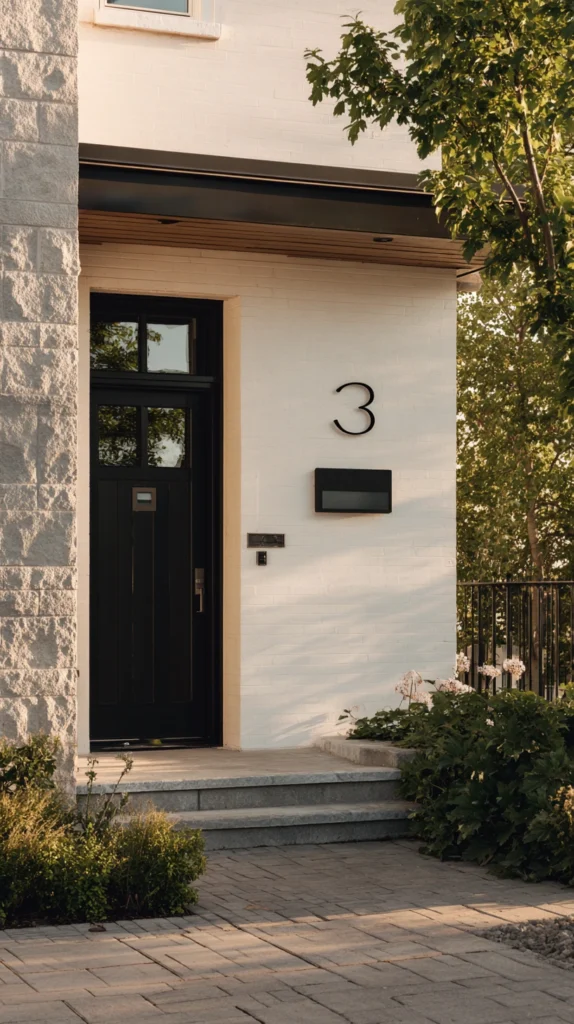
Budget: $15 – $60
Replacing a faded, rusted, or standard-issue house number with a set of properly sized, properly finished numerals in a considered material — brushed brass, matte black, polished chrome, painted timber — is one of the cheapest and most visible improvements available to any front porch. The house number is read by everyone who approaches the house and its quality communicates the care that has or has not gone into everything else visible from the street.
A set of individual house numbers in brushed brass costs $5–$15 per digit. A matte black version runs $4–$12 per digit. A single ceramic number plaque costs $15–$40. Position the numbers at eye height — approximately 150–160 centimetres from the ground — and centred on the door panel or to the right of the door rather than in an arbitrary position determined by an existing fixing hole. A number set at the right height and centred on its surface reads as installed; one positioned by the nearest existing hole reads as replaced.
Style tip: Choose a number finish that relates to the door furniture — the letterbox, the knocker, the handle — rather than selecting it independently. A brushed brass number set beside a chrome knocker and a black letterbox reads as three separate decisions; a brass number set beside a brass knocker and a brass letterbox reads as a metal palette that was chosen. The coherence of the metal finishes on the door is the detail that elevates a repainted door from a simple improvement to a considered one.
4. The Swept and Weeded Path
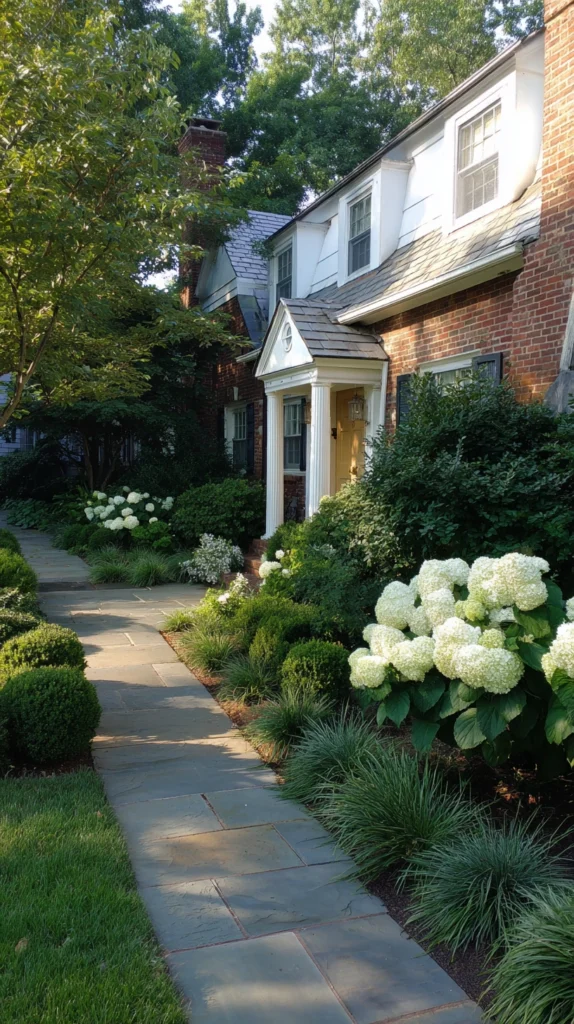
Budget: $0 – $20
The path to the front door is walked every day and assessed unconsciously on every approach — its condition communicates more about the maintenance of the property than any single visual feature. A swept path with clear edges and no weeds growing in the joints tells a story of regular attention; one with moss between the slabs and grass growing into the edges from both sides tells a different story regardless of how good the door colour is.
A stiff broom costs $8–$15 if not already owned. A bottle of path weed killer for the joints runs $8–$15 and lasts through the season. A half-moon edging tool ($12–$20) cuts a clean line between the path and the grass that a spade approximates but does not achieve. Edge the path once at the start of the season to establish the line, then maintain with a strimmer every three to four weeks.
Style tip: Apply a jointing compound to the path joints after clearing the weeds rather than simply removing them and leaving the joints empty. Kiln-dried sand brushed into the joints ($8–$12 for a bag) prevents new weed seeds from establishing, fills the gap that weeded joints leave, and gives the path the uniformity that makes it read as maintained rather than recently attended to.
5. The Letterbox Upgrade
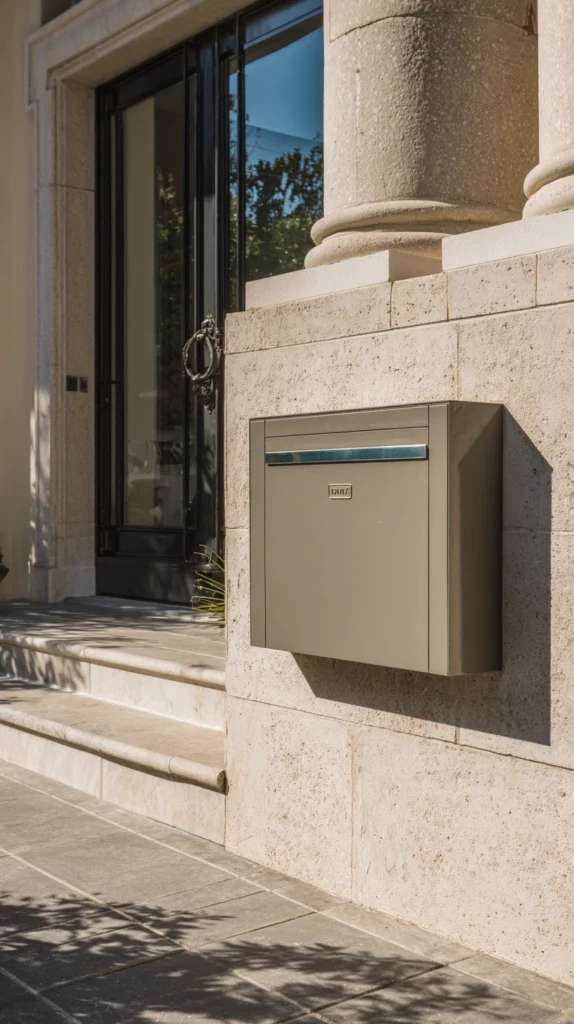
Budget: $20 – $80
A letterbox — or mail slot — in the front door or beside it is an object handled by visitors and delivery workers daily and observed by anyone standing at the door. A letterbox that is rusted, that does not close properly, that is the original builder’s fitting in brushed aluminium on a door that has been repainted in navy gloss, is a detail that undermines every other improvement made to the front porch. A new one in the right finish costs almost nothing and takes twenty minutes to install.
A standard internal flap letterbox in brushed brass costs $15–$35. A matte black version runs $15–$30. An external post-mounted letterbox in a complementary finish costs $25–$80. Choose a letterbox size that is genuinely functional — large enough to accept A4 envelopes and small parcels — rather than the smallest available, which is always the cheapest and always the one that does not fit the post, resulting in letters bent in half or left sticking out in the rain.
Style tip: Replace the letterbox, the knocker, and the door handle in the same session rather than individually. The three pieces of door furniture are always seen together and their collective finish is always read as a single decision. Replacing one at a time produces a door with three different stages of improvement visible simultaneously — the new piece looking conspicuously newer than the unchanged ones beside it.
6. The Outdoor Light Upgrade
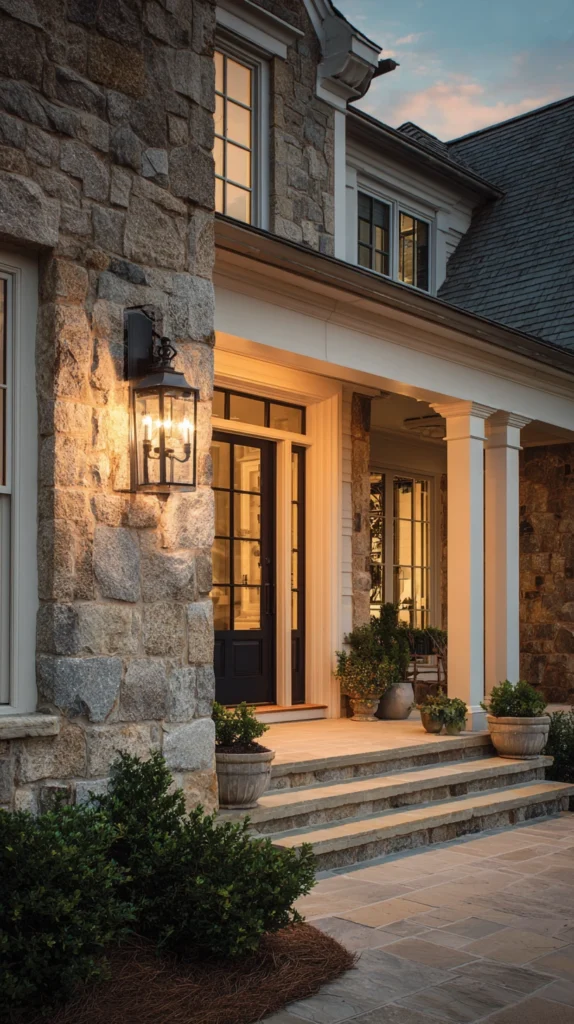
Budget: $30 – $150
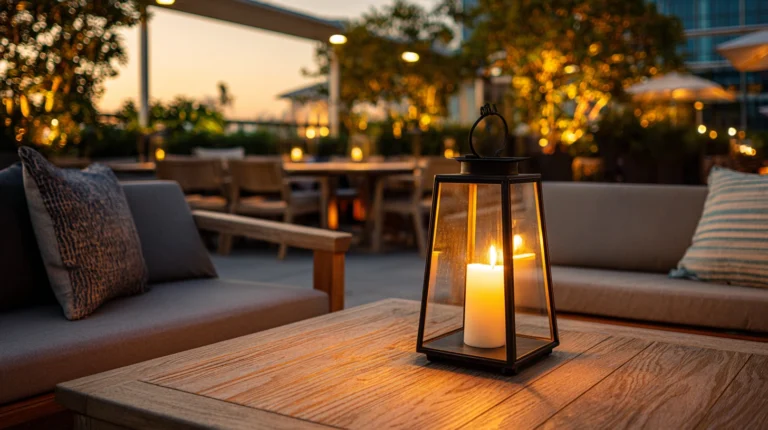
A porch light that is proportional to the door, in a finish that relates to the other door furniture, and that produces a warm rather than a cool light transforms the front porch in the hours of low light and darkness that account for a significant proportion of daily arrivals and departures. A wall lantern beside a front door is one of the most noticed details of any house exterior, and the quality of its design communicates as clearly as the door colour.
A wall-mounted exterior lantern in a classic or contemporary style costs $30–$80. A larger statement lantern runs $60–$150. LED bulbs at 2700K — the warm white temperature that reads as welcoming rather than institutional — cost $5–$10 each. Fit the light on the side of the door opposite the handle so it illuminates the lock and the step without shining into the eyes of anyone entering — a light positioned on the handle side creates glare precisely at the moment when fumbling for keys makes it most unwelcome.
Style tip: Install a dusk-to-dawn sensor or a smart bulb ($8–$20) in the porch light so it comes on automatically at the right time rather than requiring manual switching. A porch light that is on when it should be on is welcoming every evening without effort; one that requires remembering to switch on is dark on the evenings when it is most needed and on during the days when it serves no purpose.
7. The Window Box Addition
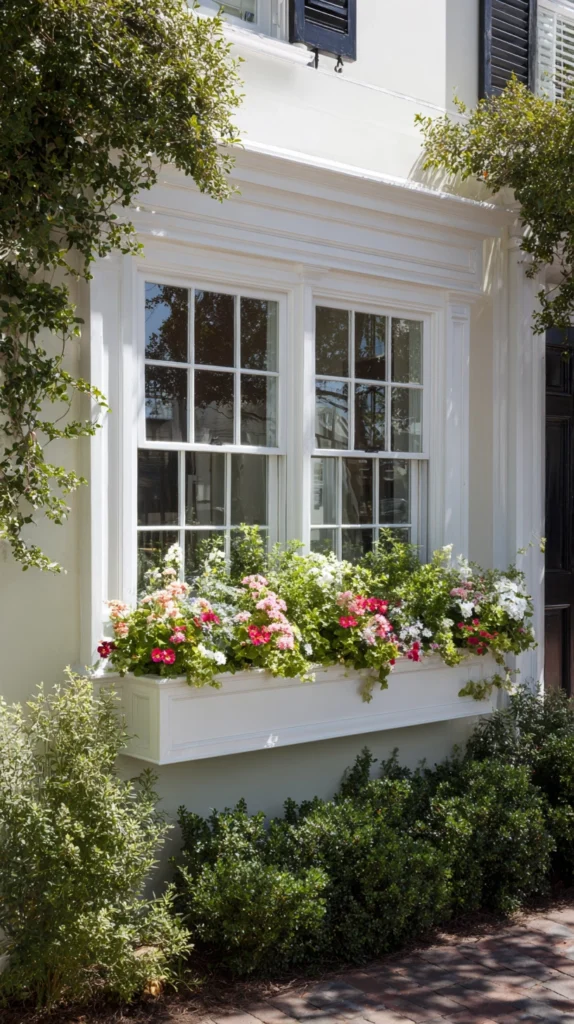
Budget: $25 – $100
A window box below the front window of the house — planted with seasonal flowers in colours that relate to the door colour and the house palette — adds a level of horticultural intention to the front elevation that porch pot plants alone cannot provide. A window box is visible from the street in a way that door pots are not, and a well-planted one does more to establish the house as a cared-for property than any other planting addition available to the front of a building.
A timber window box of 60–90 centimetres in length costs $15–$35. A self-watering version runs $25–$60. Seasonal flowering plants cost $2–$5 each — a box of this size needs six to eight plants for immediate density. Line timber window boxes with a plastic liner before filling to prevent moisture from leaching through the wood and staining the facade below. A liner also extends the life of the timber box significantly by preventing permanent moisture contact with the wood.
Style tip: Plant the window box in a single colour rather than a mix of every available seasonal plant. A window box in all-white flowers reads as deliberate; one in every available colour reads as what was on the shelf at the garden centre. The single-colour discipline produces a result that looks professional at street distance in a way that a mixed colour box does not — the individual flowers may be beautiful but the combination reads as unedited.
8. The Pressure Washed Path and Porch
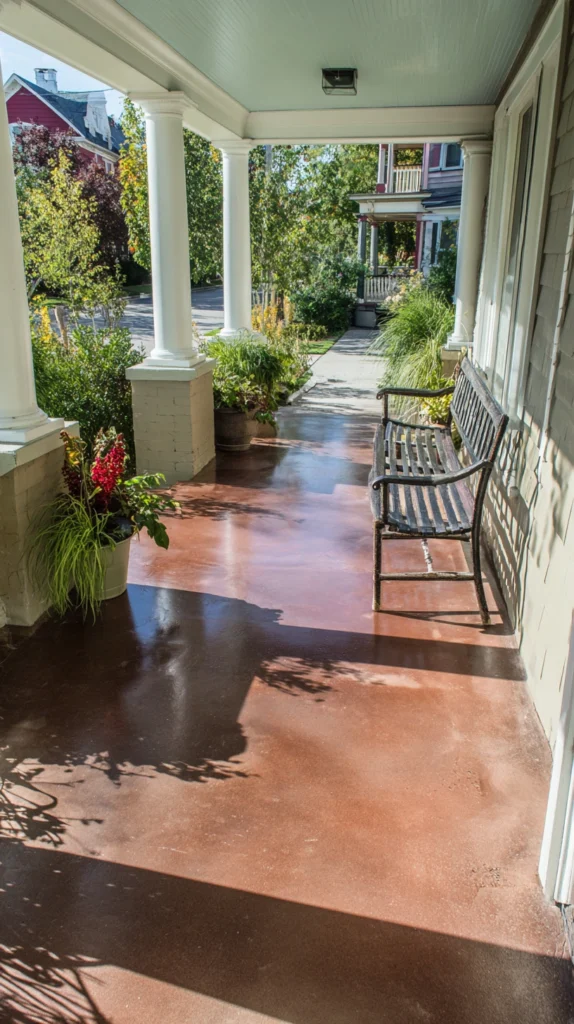
Budget: $0 – $60
A pressure washer applied to the path, the porch floor, the steps, and the front wall below the window removes the accumulated grey film of atmospheric pollution, moss, and algae that settles on all exterior surfaces and makes even recently repainted and well-maintained properties look older and less cared-for than they are. Pressure washing does not improve the surface — it reveals it, and what it reveals is almost always better than what was covering it.
Pressure washer hire costs $25–$60 per day. Purchase of a basic electric pressure washer runs $60–$150. Many hardware shops and tool hire companies offer half-day rates. Work from the highest surface downward — wall first, then steps, then path — so the debris washed from higher surfaces does not re-contaminate cleaned lower ones. Allow all surfaces to dry completely before assessing whether paint or sealant is needed — wet surfaces always look better than dry ones and the assessment of what requires further treatment is only accurate when the surface is fully dry.
Style tip: Pressure wash before repainting the door rather than after. The residual moisture and debris from pressure washing settles on surrounding surfaces including the door, and a door repainted before the path and porch are washed will need cleaning before the paint cures properly. The sequence — clean everything first, then paint — produces a better result with less remedial work.
9. The Seasonal Wreath or Door Decoration
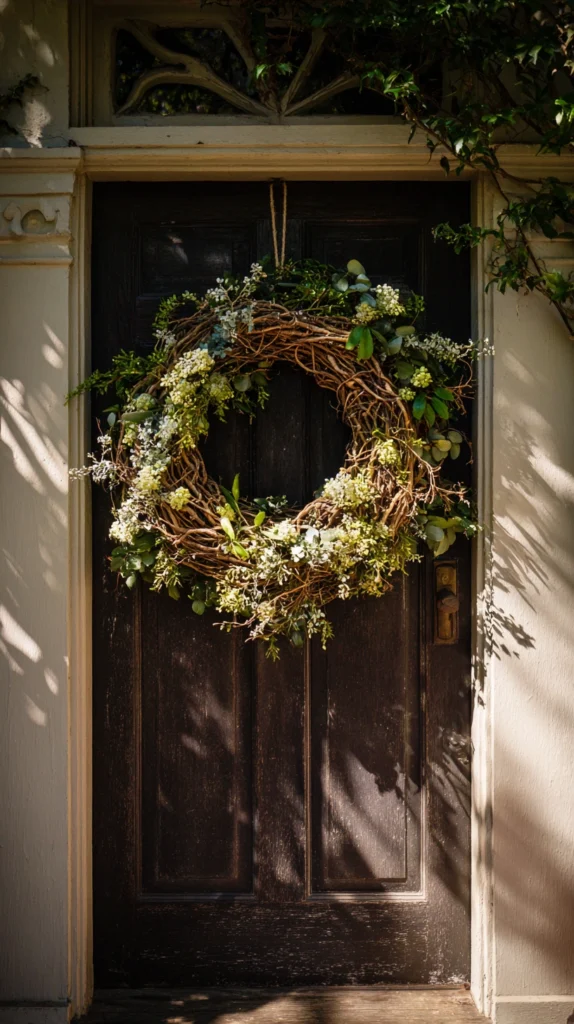
Budget: $15 – $60
A wreath or door decoration that acknowledges the current season — not a permanent fixture, but something that changes through the year to reflect what is growing and what the season looks like — gives the front door the quality of being tended rather than fixed. A summer wreath of dried grasses, seed heads, and garden flowers; an autumn one of dried leaves and rosehips; a winter one of evergreen and berries: each says the same thing in a different seasonal language.
A plain grapevine wreath base costs $8–$15. Dried grasses, seed heads, and garden material cost nothing if collected from the garden. Fresh flowers for seasonal wreaths run $8–$20 per bunch. A wreath hook that fits over the top of the door without marking the paint surface costs $3–$8. Hang the wreath on the door rather than on the wall beside it — a door wreath is part of the door; a wall wreath is an ornament beside it, and the two communicate different things about the intention behind them.
Style tip: Make the wreath from a single material rather than a variety of mixed elements. A wreath made entirely from dried pampas and grasses reads as considered and contemporary; one assembled from every available dried flower, ribbon, and bauble reads as a craft project regardless of the quality of the individual elements. The single material constraint produces a more sophisticated result with less effort.
10. The Step Refresh
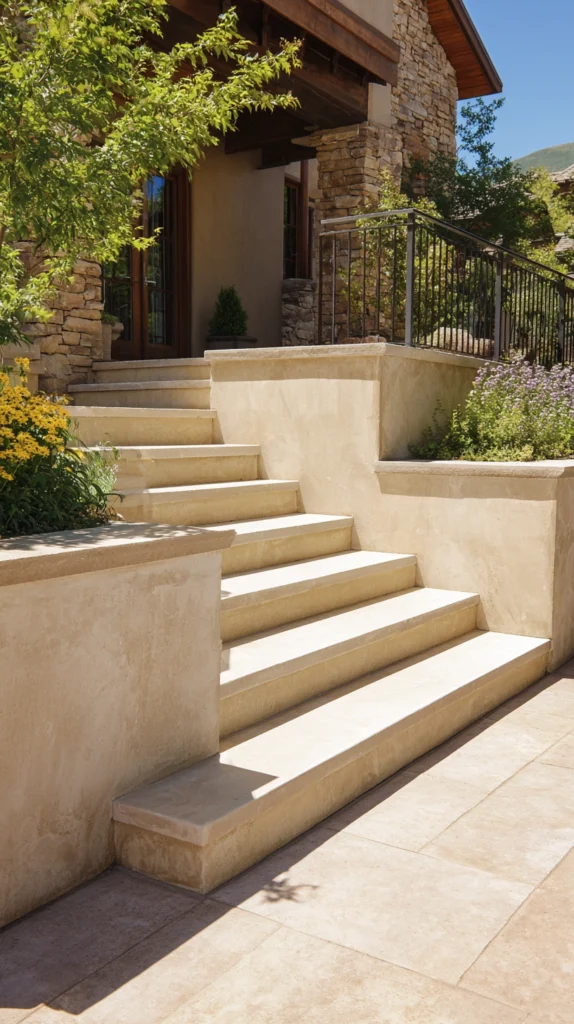
Budget: $10 – $50
Front steps — particularly in older properties where the stone or concrete has been worn smooth, stained, or damaged — respond well to a single treatment that makes the largest difference in the shortest time: a thorough clean with a stiff brush and a path cleaner, followed where appropriate by a coat of step paint in a tone that relates to the house palette. A clean, painted step is the foundation of the front porch impression in a way that nothing positioned above it fully compensates for.
Step and path cleaner costs $8–$15 per bottle. Step paint in grey, charcoal, terracotta, or natural stone tones runs $15–$35 per litre. Non-slip additive ($5–$8 per packet) mixed into the step paint is essential for any step that receives rain — a painted step without non-slip additive becomes more slippery than an unpainted one, which is the improvement that makes the situation materially worse than before it was made.
Style tip: Paint the riser — the vertical face of the step — in the same colour as the door rather than the step paint. A step with a painted riser in the door colour creates a deliberate visual link between the ground level and the door that reads as a design decision rather than a maintenance choice, and the touch of door colour repeated at the base of the steps makes the approach to the front door feel more composed than steps painted entirely in a neutral tone.
11. The Trellis and Climber Addition
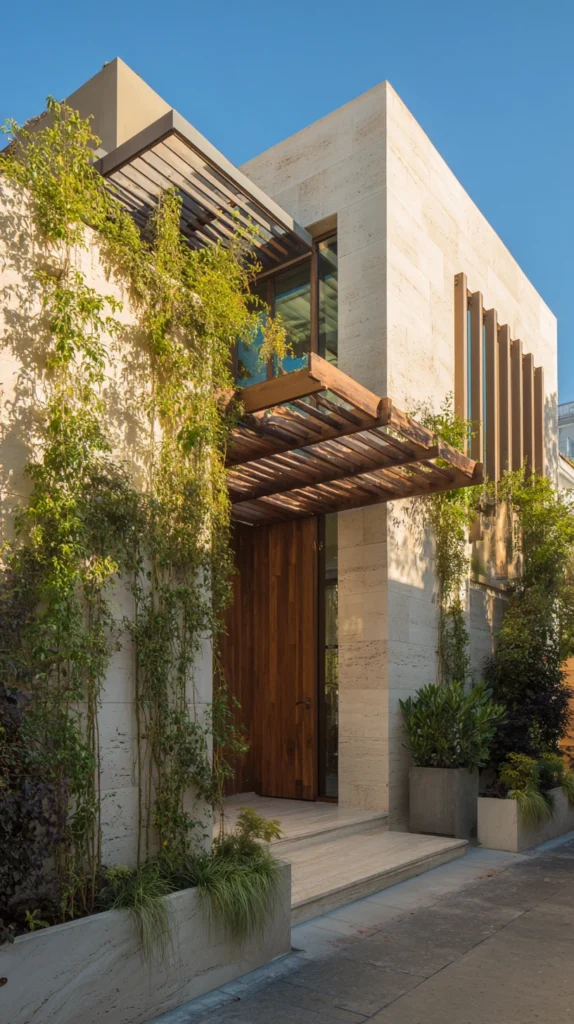
Budget: $25 – $100
A trellis panel fixed beside the front door — planted with a climbing rose, a clematis, or a jasmine — softens the hardest surface of any house exterior (the flat facade beside the door) and adds the specific quality of a house that has been lived in long enough for something to grow up its walls. A climbing plant beside a front door is one of the most universally pleasing things a house exterior can contain, and a newly planted climber on a new trellis reads as the beginning of something that will only improve.
A timber trellis panel of 180 by 60 centimetres costs $10–$25. A climbing rose in a 3-litre pot runs $12–$30. A clematis costs $10–$20. Fix the trellis 10 centimetres away from the wall rather than flat against it — the gap allows air to circulate behind the plant, prevents moisture from sitting against the wall face, and gives the climber room to thread through the trellis from behind as well as from the front.
Style tip: Choose a climber with a fragrance that reaches the path as well as the door. A jasmine beside the front door releases its scent on warm evenings in a way that reaches anyone approaching well before they arrive at the door; a scentless climber provides visual interest only. The additional dimension of fragrance at the front porch — the smell of the house before you reach it — is one of the details that makes a house feel genuinely welcoming rather than simply well-maintained.
12. The House Name or Number Plate
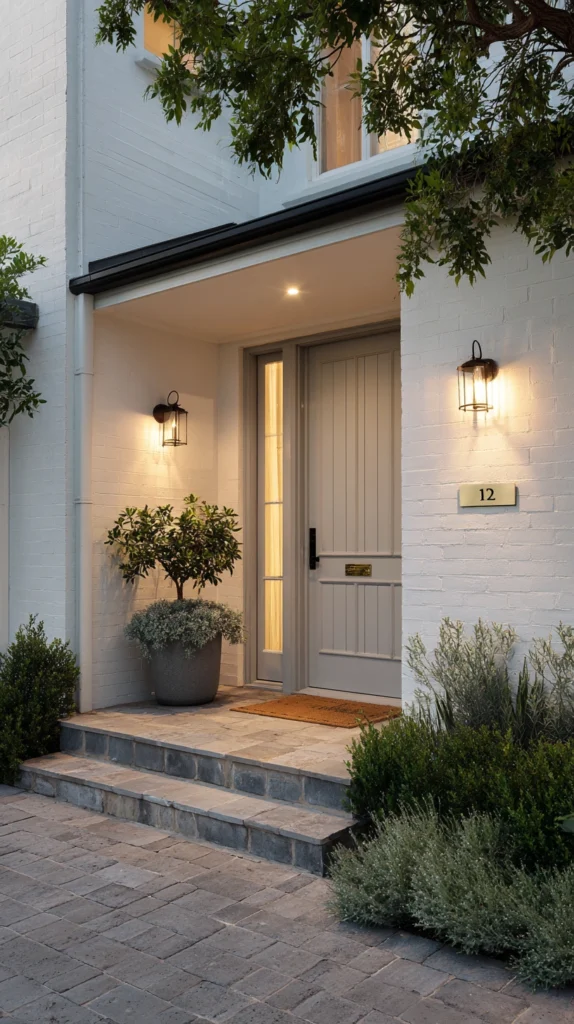
Budget: $20 – $100
A proper house name or number plate — slate, ceramic, cast iron, or hand-painted timber — positioned at eye height beside the door or on the garden gate gives the front of the house a completeness and a character that individual stick-on numbers never achieve. It is the detail that makes a house look as if it has been finished rather than still in progress, and in streets where every other house has builder’s-standard aluminium numbers, a considered name plate is the detail that makes one house distinguishable from the next.
A slate house name plate with painted or engraved lettering costs $20–$60. A ceramic version runs $25–$80. A cast iron number plaque costs $15–$50. Choose lettering in a style that suits the age and character of the house rather than the lettering that is most available — a Victorian terrace with a gothic-serif name plate reads as considered; the same house with a sans-serif contemporary font reads as chosen from the nearest available option without reference to the building it is fixed to.
Style tip: Position the name or number plate at 150–160 centimetres from the ground on the wall beside the door rather than on the door itself. A plate on the wall is visible when the door is open as well as when it is closed; one on the door is concealed when the door is open, which includes every occasion when a visitor is standing at the threshold and needs to confirm they are at the right address.
13. The Entrance Mat Upgrade
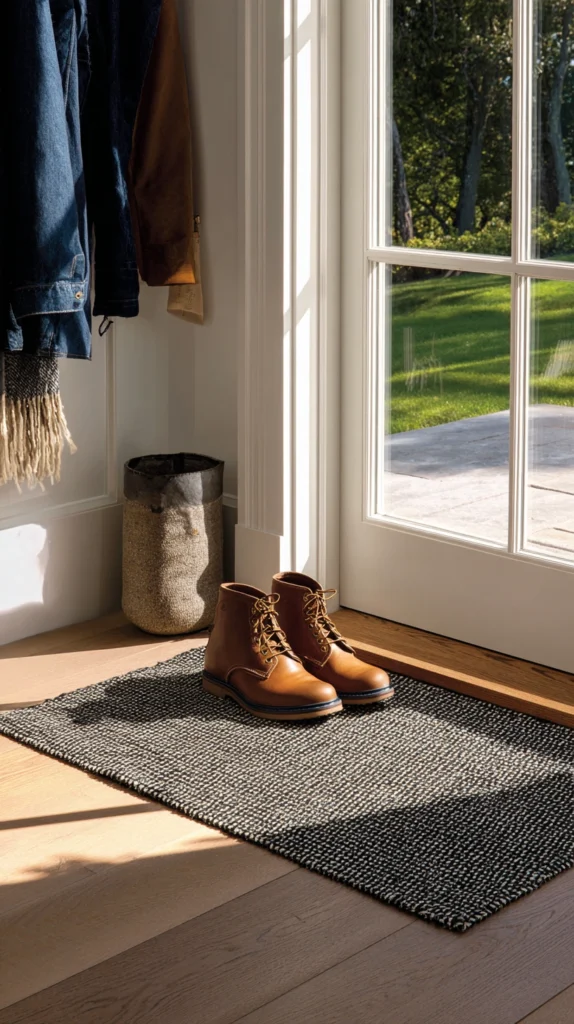
Budget: $15 – $60
A front door mat — properly sized for the door, positioned centrally, in a material and a design that suits the house rather than the most generic available — is the last object a visitor sees before they enter and the first one they see on leaving. Its quality is noticed without being identified as the source of a positive impression, and its absence or inadequacy is noticed immediately in a way that is difficult to articulate but consistently felt.
A coir mat with a printed or woven design costs $15–$35. A rubber-backed entrance mat in a considered pattern runs $20–$50. A mat that is too small for the door — the most common mat error — reads as an afterthought; one that is approximately as wide as the door itself reads as chosen for the space. The standard guidance is a mat that extends to within 10 centimetres of each door frame on both sides.
Style tip: Replace the entrance mat at the start of each season rather than when it reaches the end of its life. A mat that has seen a full winter — salt, mud, wet boots, grit — has a quality of exhaustion that no amount of brushing restores, and a new mat at the start of spring costs $15–$35 and produces the front porch impression of a house that has been refreshed rather than merely endured. The mat is the most frequently replaced and least expensive element of a front porch, and treating it as a seasonal item rather than a permanent fixture keeps the front of the house at its best version of itself.
The best front porch curb appeal is not achieved in a single project on a single weekend — it is the result of several small improvements each of which is noticeable on its own and compounding when combined. A repainted door, a proper light fitting, a matching pair of plants, a swept path: four things, each achievable for less than the cost of a takeaway, that together produce the front of a house that people notice in the way that good things are noticed — not with analysis, but with the simple impression that something here has been cared about.
Start with the one improvement that will make the most difference from the street, complete it properly rather than approximately, and then move to the next. The porch will accumulate the quality of attention gradually and hold it for longer than any single dramatic improvement would.