14 Modern Luxury Dining Room Ideas That Make Every Meal Feel Like an Occasion
There is a version of a dining room that does what dining rooms were always meant to do — not just provide a surface and some chairs, but create the specific conditions under which people sit down, slow down, and give their full attention to the meal and to each other. The modern luxury dining room is not about the cost of the furniture or the rarity of the materials. It is about the quality of the decisions made: where the light falls, how the table relates to the ceiling above it, what the chairs communicate about the comfort expected of the person sitting in them.
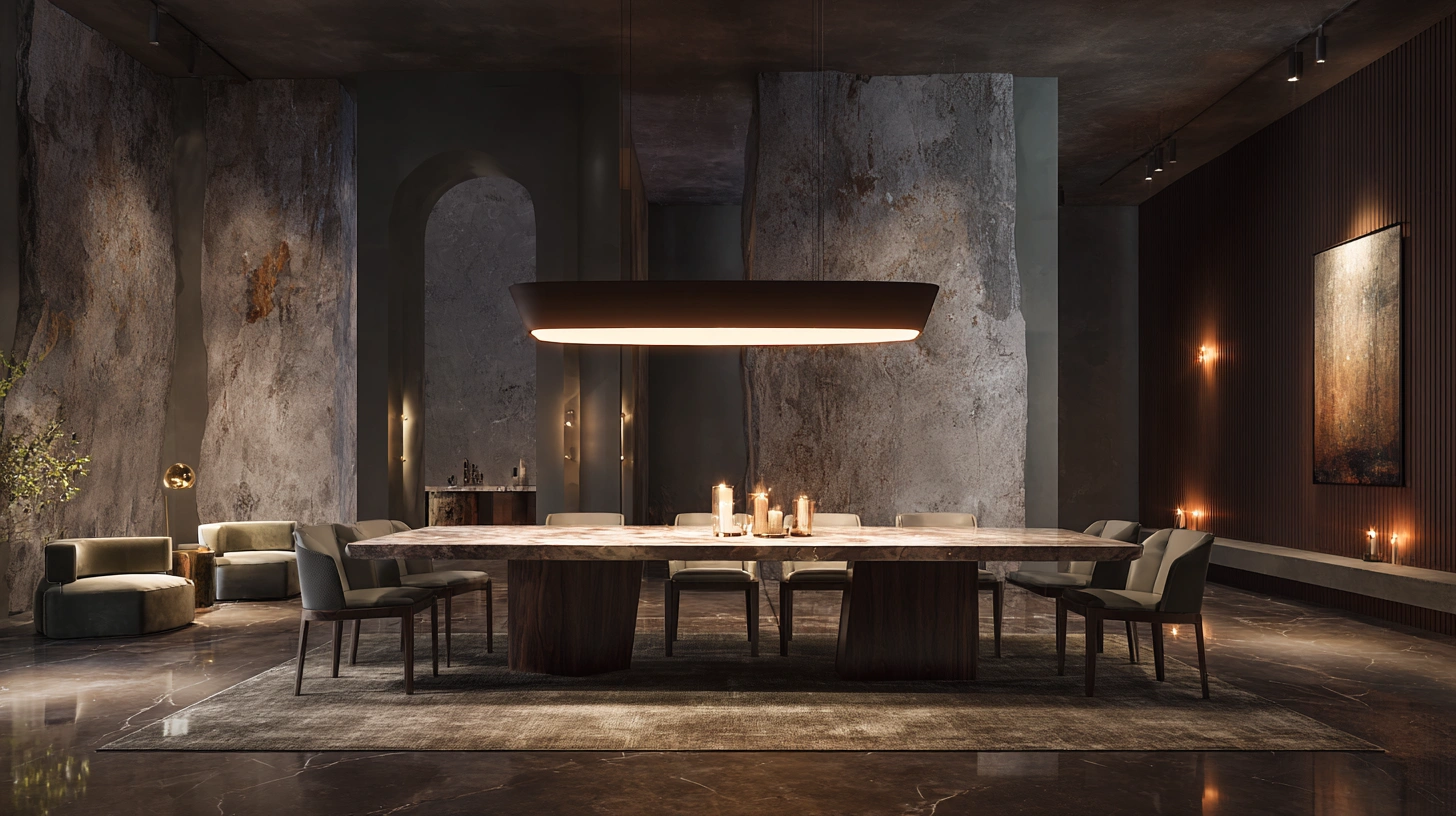
Luxury in a dining room is experienced rather than observed. The quality of the seat padding at hour two of a long dinner. The colour temperature of the light at eight o’clock when the candles are lit and the overhead has been dimmed. The way the table surface handles the transition between serving and the quiet moment after the main course is cleared. These are the details that separate a dining room that hosts meals from one that hosts occasions.
Each idea below addresses a specific design decision within the modern luxury dining room. Each includes what you will need, what it will cost, and a practical tip to make it work as well as the aspiration it is reaching for.
1. The Statement Dining Table
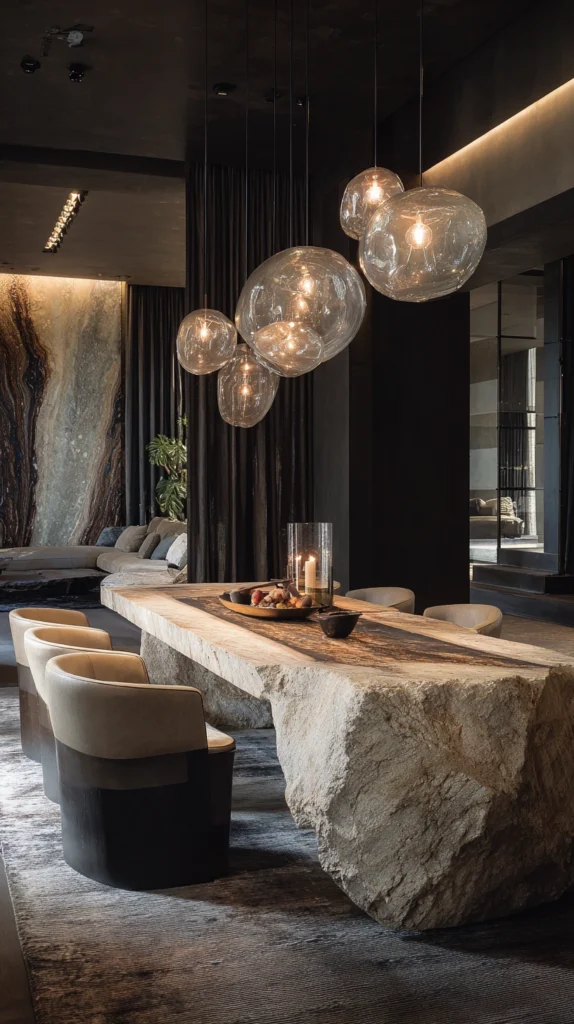
Budget: $1,500 – $15,000
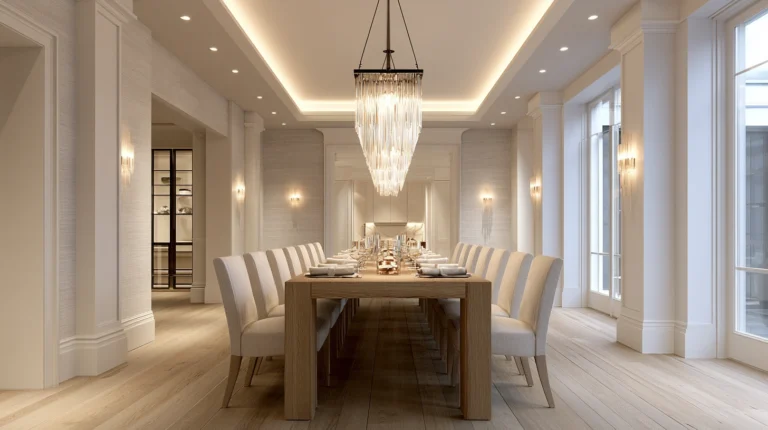
The dining table is the room’s primary object and the one on which every other decision in the room depends — the ceiling height required above it, the light fitting specified for it, the chairs chosen around it, the rug scaled to it. In a modern luxury dining room the table is not selected last; it is selected first and everything else is arranged in relation to it.
A solid marble-top dining table on a steel or stone base costs $3,000–$12,000. A live-edge timber table on a hand-forged steel base runs $2,000–$8,000. A glass-top table on a sculptural stone or metal base costs $1,500–$6,000. The table surface material determines the maintenance requirement as much as the aesthetic — marble requires sealing and careful management of acidic liquids; live-edge timber requires oiling; glass requires consistent cleaning. Choose the material that suits the actual use rather than the aspirational use.
Style tip: Size the table for the room rather than for the typical dinner party. A table that seats twelve in a room that comfortably accommodates eight creates a cramped and formal environment on the six occasions per year when twelve are present and an oversized, under-inhabited space for the other three hundred and fifty-nine days. The right table size is the one that fills the room appropriately at its most regular use, not at its most ambitious.
2. The Sculptural Pendant Light
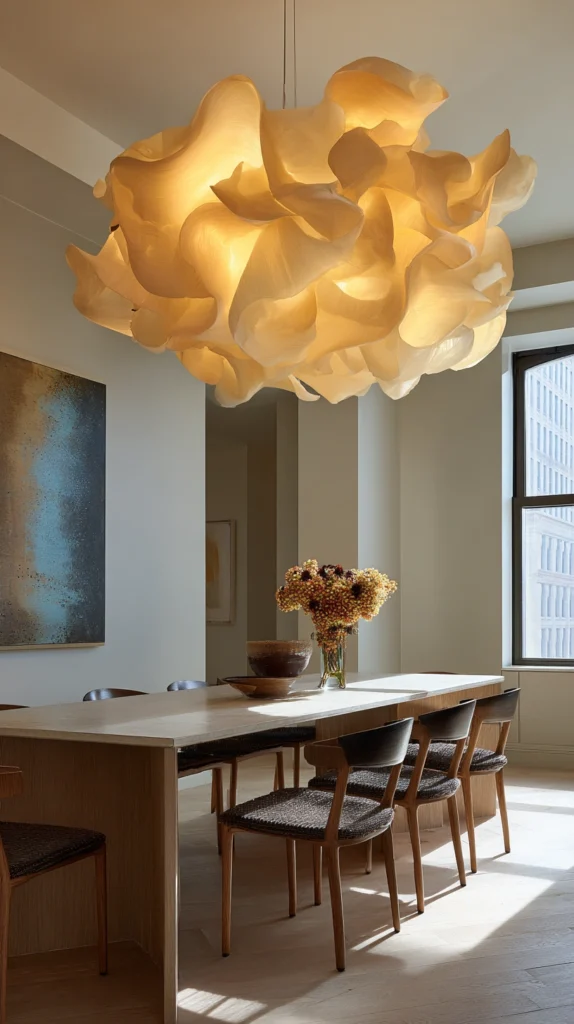
Budget: $500 – $8,000
The pendant light above the dining table is the room’s signature piece — the object that is seen before any other when entering the room, that sets the design register for everything below it, and that determines the quality of the light during the hours when the dining room is at its most important. In a modern luxury dining room the pendant is not a light fitting; it is a ceiling sculpture that also illuminates.
A large-scale sculptural pendant in hand-blown glass costs $800–$4,000. A cluster of smaller pendants arranged asymmetrically runs $500–$3,000 for the cluster. A custom-designed bespoke pendant in patinated bronze or brushed steel costs $2,000–$8,000. Hang the pendant so its lowest point sits 70–80 centimetres above the table surface — lower than most electricians default to. The conventional installation height of 90 centimetres or above produces light that illuminates the table from too great a distance; 70–80 centimetres produces the intimate pool of light over the table surface that the luxury dining room requires.
Style tip: Specify the pendant on a dimmer that is separate from any other room lighting so the table light can be adjusted independently through the meal. The luminance over the dining table at the beginning of a dinner — bright enough to see the food clearly — is different from the right luminance for the conversation that follows, and the dimmer is the tool that manages that transition without the social interruption of standing up to adjust a switch.
3. The Upholstered Dining Chair
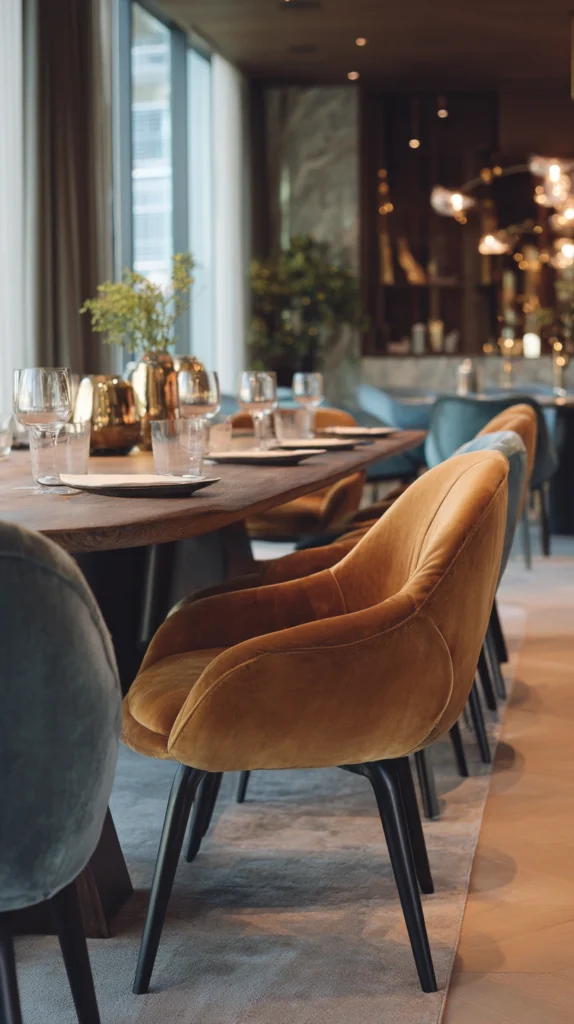
Budget: $300 – $3,000 per chair
The dining chair is the object that determines whether the dining room is genuinely used or merely occupied. A chair that is uncomfortable after forty-five minutes ends the dinner at forty-five minutes regardless of the quality of the food, the conversation, or the light. A chair that is comfortable at hour three keeps the dinner at hour three, and the extended dinner is the measure of a dining room that succeeds.
A fully upholstered dining chair in a quality wool or velvet fabric costs $400–$1,200 each. A leather dining chair runs $500–$2,000 each. A chair with an upholstered seat and a timber or metal back — the hybrid that balances comfort and visual lightness — costs $300–$900 each. The seat pad depth is the comfort specification that most determines whether a chair sustains a long dinner — a pad of less than 50 millimetres feels adequate for the first hour and inadequate for the second. Specify a minimum of 60 millimetres for any dining chair that will be used for dinners of more than two courses.
Style tip: Choose a dining chair fabric that is rated for commercial use rather than residential use if the dining room is used regularly for entertaining. Commercial-grade fabrics are specified for the level of wear that regular seating produces and maintain their appearance through years of use that residential-grade equivalents show within months. The difference in cost per chair is $50–$150; the difference in longevity is three to five years.
4. The Dark Painted Dining Room
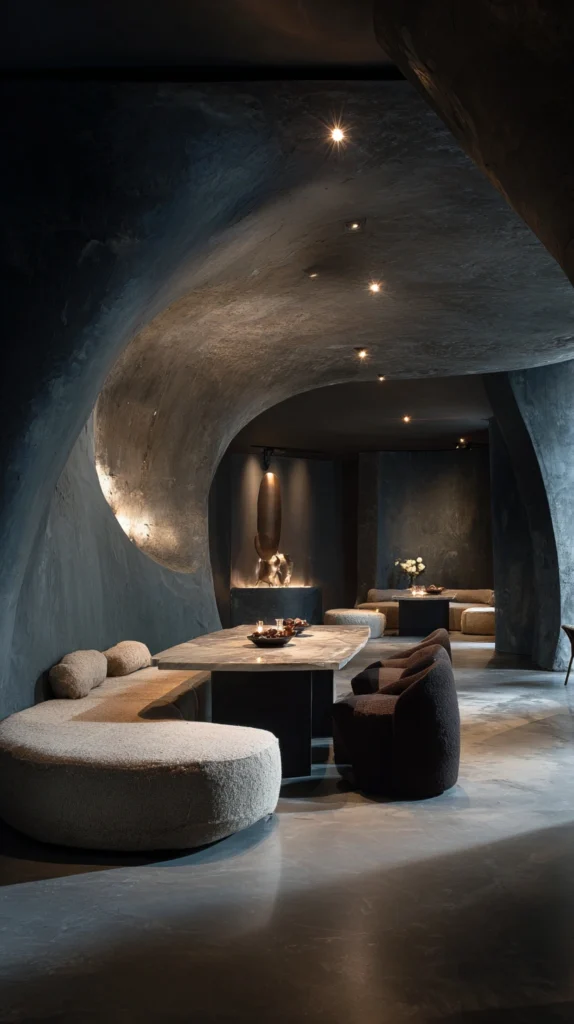
Budget: $200 – $800
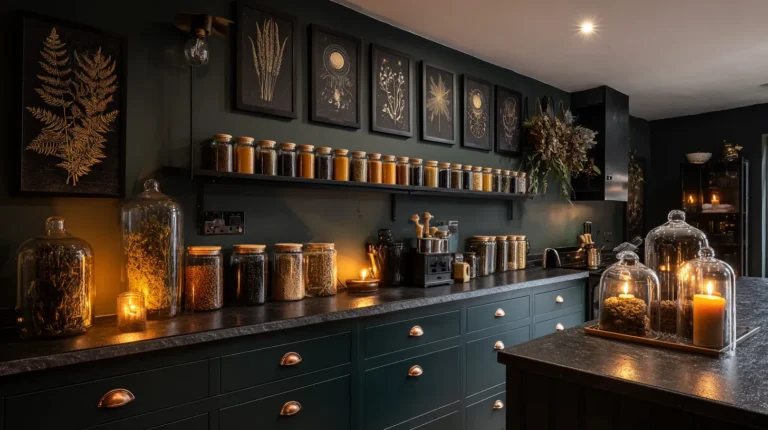
Painting the dining room walls — and ideally the ceiling — in a deep, rich, absorptive colour creates the specific quality of enclosure and intimacy that the luxury dining room requires. A dark dining room is not a gloomy one; it is a room that concentrates the light rather than distributing it, that makes the candles on the table and the pendant above it the primary light sources rather than competing with ambient wall light, and that wraps the people at the table in a colour depth that pale rooms cannot approach.
Dark paint in a quality matt or eggshell finish costs $60–$150 per 2.5-litre tin. A dining room of 4 by 4 metres requires approximately three tins for two coats on walls and ceiling — $180–$450 in paint. Deep teal, charcoal, inky navy, forest green, and warm plum are the colours that work best in a dining room context — all dark enough to absorb light from the walls rather than reflecting it, all rich enough to read as deliberate rather than simply dark.
Style tip: Paint the ceiling the same colour as the walls rather than leaving it white. A dark-walled room with a white ceiling has the visual effect of an incomplete decision — the darkness of the walls creates an expectation of enclosure that the white ceiling undermines. A room where walls and ceiling are the same dark colour wraps the diners in a continuous coloured environment that makes the table and its lighting the clear focus of attention.
5. The Marble or Stone Flooring
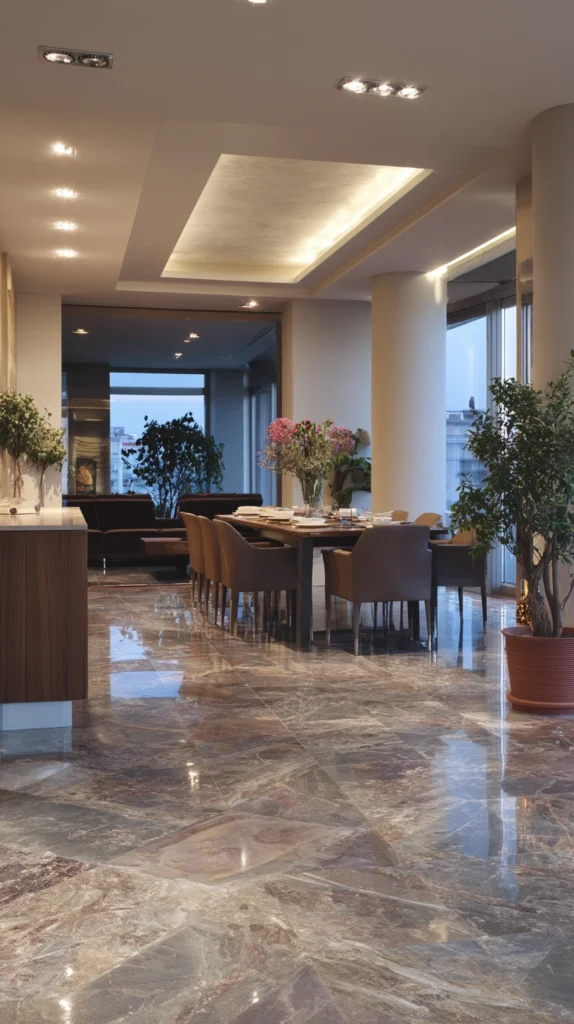
Budget: $2,000 – $15,000
The floor of a luxury dining room is the largest horizontal surface in the space and the one that most directly communicates material quality when entered. A dining room with a marble or natural stone floor communicates a quality of permanence and investment that timber, tile, or any manufactured floor covering cannot approach — the stone is not imitating anything, it is not managing to resemble something more expensive, it simply is what it is.
Large-format Carrara marble tiles of 60 by 120 centimetres cost $80–$200 per square metre. Honed limestone in a warm grey or cream tone runs $60–$150 per square metre. A French pattern of four tile sizes in travertine costs $80–$180 per square metre. All natural stone floors require a penetrating sealer applied before use and refreshed annually — unsealed stone in a dining room context absorbs spills that produce permanent staining within the first formal dinner.
Style tip: Lay the stone floor in a consistent running bond at 45 degrees to the room’s primary axis rather than parallel to the walls. The diagonal layout makes the floor more dynamic, draws the eye toward the table at the room’s centre, and makes the room read as larger than the same stone laid parallel to the walls. The diagonal is the installation decision that the floor carries for its lifetime and that costs nothing additional at the time of laying.
6. The Bespoke Sideboard
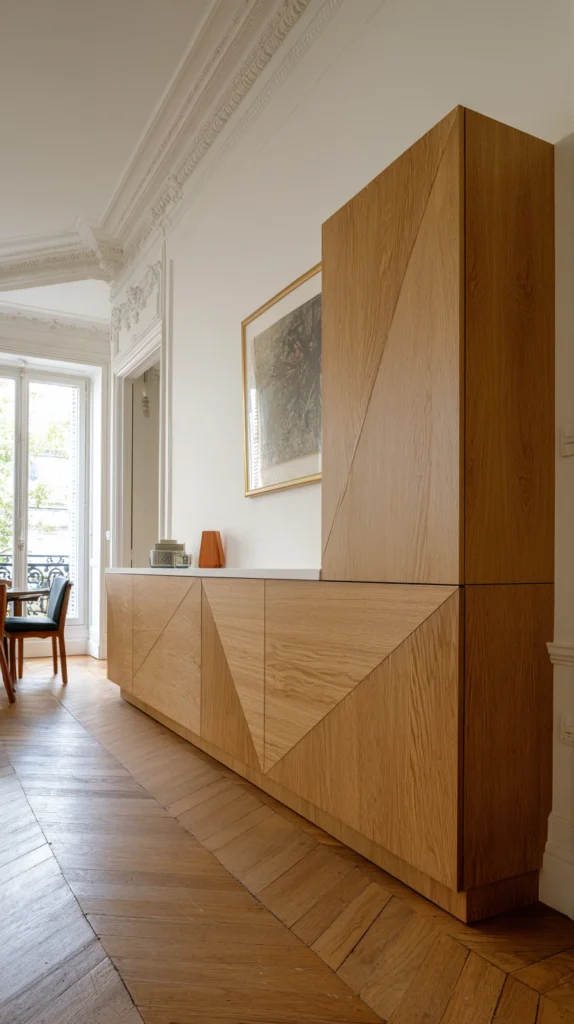
Budget: $2,000 – $12,000
A bespoke sideboard — designed specifically for the dimensions and the material palette of the dining room, with the internal configuration specified for the actual storage requirements of the household — is the piece of furniture that completes the luxury dining room as a functional environment rather than simply a visual one. The sideboard holds the linens, the serving pieces, the wine, and the dozens of domestic objects that the dining room needs to function for the full range of occasions it is required to host.
A bespoke sideboard in solid timber with stone or metal detailing costs $3,000–$10,000. A designer furniture-maker version in a combination of materials runs $5,000–$15,000. A quality production sideboard from an established furniture brand costs $2,000–$6,000. Specify the internal configuration before the sideboard is made — the number of drawers, the height of the internal shelves for the specific serving pieces the household owns, the provision for wine storage if relevant — so the sideboard is useful from the first day rather than requiring adaptation after delivery.
Style tip: Size the sideboard so it leaves at least 90 centimetres of clear floor between its front edge and the nearest dining chair when the chairs are pulled back from the table. A sideboard that creates a corridor of less than 90 centimetres between itself and the dining chairs produces a circulation problem that becomes apparent only at the first formal dinner — the moment when the host needs to pass between the sideboard and the table while guests are seated.
7. The Art-Focused Dining Room
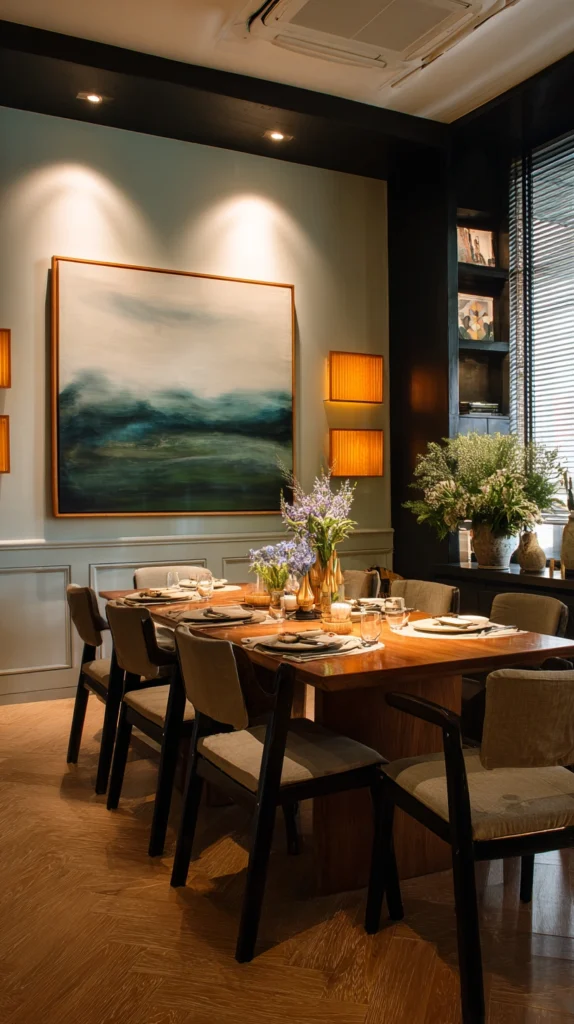
Budget: $500 – $5,000 for display and lighting
A single significant artwork on the wall that the seated diners face — or a considered gallery of works on the primary wall visible from the table — gives the dining room a cultural dimension that pure interior design cannot. The artwork in the dining room is not decoration; it is the focal point for the sustained attention of seated guests over an extended meal, and its quality and its relevance to the household determines whether it adds to the conversation or is simply present.
Gallery lighting for a single large artwork costs $200–$800 in track lighting or picture light fittings. A custom framing job for a significant print or original work runs $300–$1,000. The artwork itself varies from the reproduction print at $50–$500 to the original work at any price. Whatever is chosen should be large enough to command the wall it occupies — the dining room artwork that is too small for its wall reads as underpowered and communicates the tentative rather than the confident.
Style tip: Light the dining room artwork separately from the table light — on its own circuit with its own dimmer — so it can be lit or dimmed independently of the overhead pendant. A dining room where the artwork and the table are on the same dimmer produces an aesthetic problem: the light level correct for the artwork illumination is different from the level correct for the table, and the compromise between the two serves neither well.
8. The Wainscoting or Wall Panelling
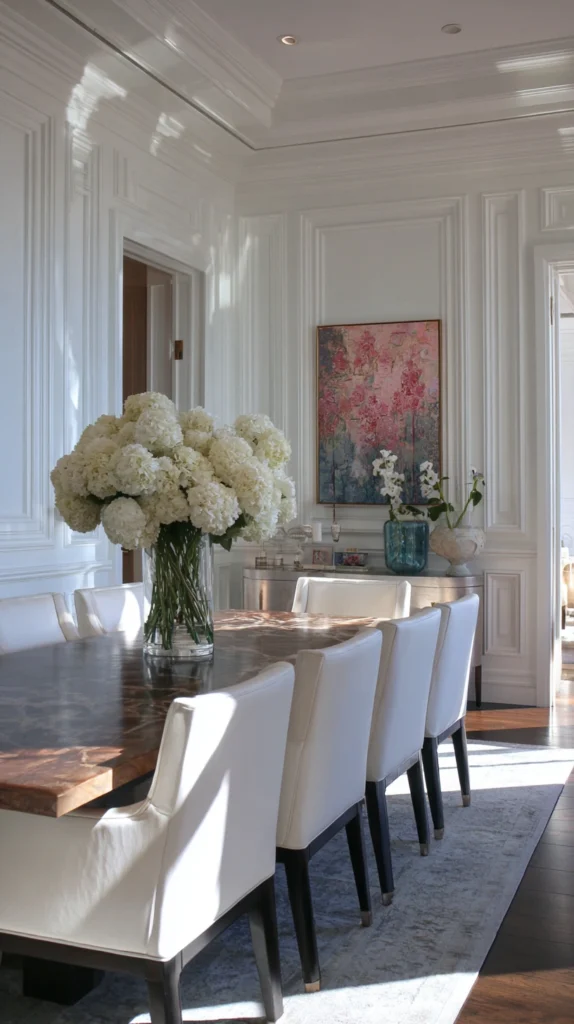
Budget: $1,000 – $6,000
Timber wall panelling — wainscoting at chair-rail height, full-height panelling, or a coffered panel arrangement — gives the dining room the architectural weight that a smooth painted wall cannot provide. Panelling is the element that most directly communicates the sense that the dining room was designed rather than simply decorated, and it provides the acoustic absorption that makes conversation at a dinner table possible without the raised voices that hard-surfaced dining rooms demand.
Painted MDF panelling in a standard wainscoting height costs $60–$120 per linear metre including materials and basic installation. Solid timber panelling runs $150–$400 per linear metre. A coffered panel arrangement on the primary dining room wall costs $2,000–$6,000 for a standard 4-metre-wide wall. Paint the panelling in the same colour as the walls above — or in a tone two shades deeper — rather than in a contrasting colour. A contrasting panelling tone divides the wall into two visually competing elements; the same or deeper tone reads as a single wall with depth rather than two walls with different purposes.
Style tip: Extend the wainscoting or panelling around all four walls of the dining room rather than applying it to a single feature wall. A single panelled wall in an otherwise plain room reads as a feature that was applied; panelling on all four walls reads as an architectural decision that defines the room. The continuity around the room is the quality that transforms panelling from decoration into architecture.
9. The Double-Height Ceiling Dining Room
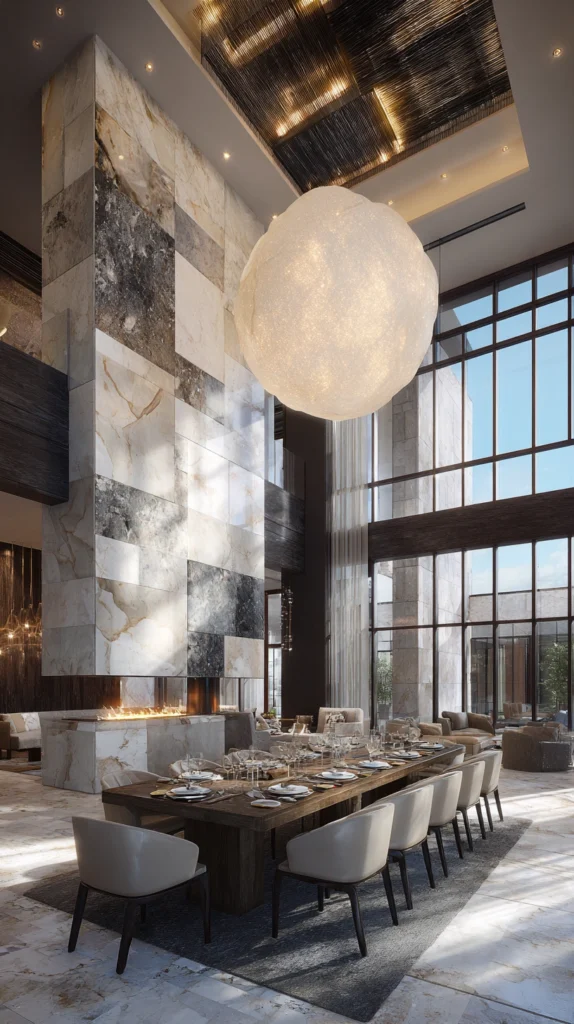
Budget: $0 if the height exists; $3,000–$15,000 to create
A dining room with a double-height or vaulted ceiling creates the specific quality of occasion that a standard 2.4-metre ceiling cannot — the height above the table gives the pendant room to be genuinely large, creates the sense of a special room within the house, and produces the acoustic quality of a room designed for celebration rather than daily use. Where the height exists, it should be exploited; where it does not, it is the most transformative structural investment available to a dining room.
Removing a ceiling to expose roof structure or a higher floor above costs $3,000–$10,000 in structural and finishing work. Installing a double-height void between two floors runs $8,000–$20,000 including structural engineering. Painting an existing ceiling in a dark colour and specifying a large pendant at the correct height below it creates the visual impression of ceiling height without structural change — the pendant positioned correctly is the element that makes the room feel tall rather than the measured distance to the ceiling.
Style tip: In a double-height dining room, specify a pendant that is large enough in diameter to visually bridge the height above the table. A small pendant in a double-height space reads as lost; a pendant whose diameter is at least one-third of the table width creates the visual connection between the ceiling height and the table surface that makes the height feel intended rather than accidental.
10. The Integrated Wine Display
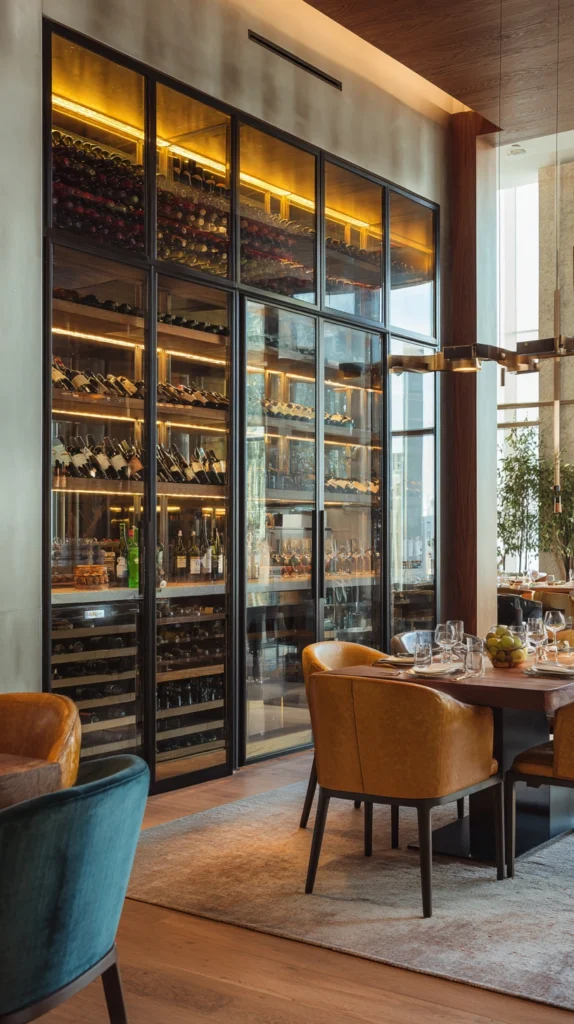
Budget: $1,500 – $10,000
A wine storage element integrated into the dining room — a glass-fronted cellar cabinet built into the wall, a temperature-controlled wine column beside the sideboard, or a wine rack incorporated into the partition between the dining room and the kitchen — gives the dining room the functional completeness of a room designed for serious entertaining rather than occasional dining. The wine displayed in the dining room is part of the occasion before it is opened.
A temperature-controlled wine column of 60 centimetres in width, in a stainless steel or panel-ready finish, costs $1,500–$4,000. A custom glass-fronted cellar cabinet built into an alcove runs $3,000–$8,000. A wine rack incorporated into a joinery partition costs $2,000–$6,000. Specify the wine storage at the correct temperature for the wines actually stored — a single temperature of 12–14 degrees Celsius suits most red and white wines for short to medium storage, and a dual-zone unit that costs $500–$1,000 more than a single-temperature equivalent is only necessary for a serious collection with mixed storage requirements.
Style tip: Light the wine storage with a warm LED source visible through the glass — either a strip light inside the cabinet or a glass-fronted version with integrated lighting. Wine displayed in a lit cabinet is wine that participates in the atmosphere of the dining room; the same wine in an unlit cabinet is a storage unit that happens to be visible. The lighting of the wine is the detail that makes the display decorative as well as functional.
11. The Herringbone or Parquet Timber Floor
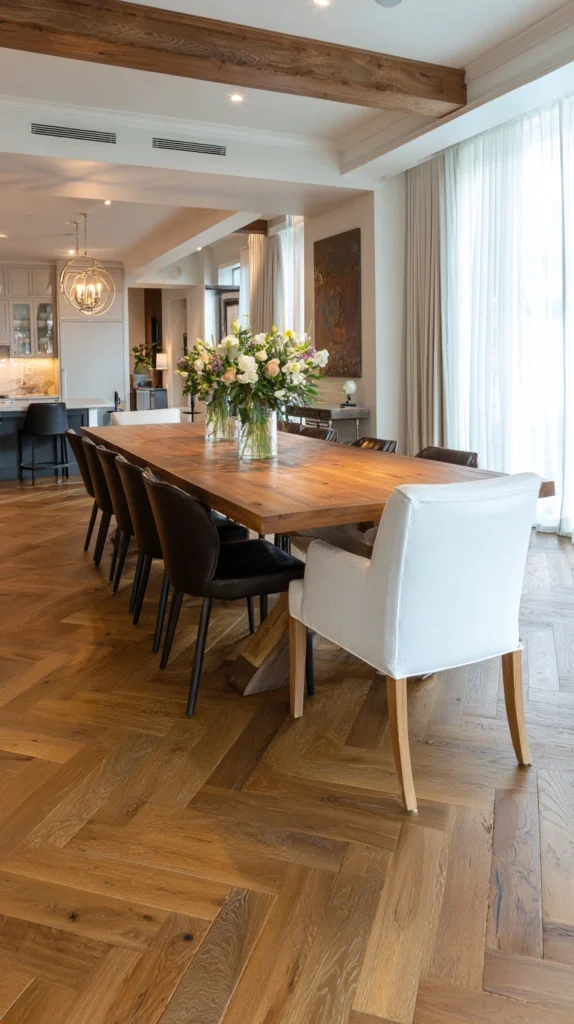
Budget: $1,500 – $8,000
A herringbone or parquet timber floor in a wide-plank European oak — in a tone that relates to the furniture and the wall colour — gives the dining room a floor pattern of considerable sophistication at a cost that is significantly less than natural stone while producing a warmth and a texture that stone cannot provide. The herringbone pattern in particular has the quality of something that was made with intention — the complexity of the laying pattern communicates craftsmanship rather than simply coverage.
Wide-plank European oak herringbone flooring costs $80–$200 per square metre in materials. Installation by a specialist floor layer adds $30–$60 per square metre. An engineered timber herringbone floor — more dimensionally stable than solid timber in rooms with underfloor heating — runs $60–$150 per square metre in materials. Install underfloor heating beneath any timber floor in a dining room before laying the timber — retrofit of underfloor heating beneath a finished timber floor is possible but disruptive and expensive, and the cost of installation during the original floor laying is modest compared to the disruption of retrofit.
Style tip: Choose a herringbone block width that is proportional to the room size — a wider block in a larger room, a narrower block in a smaller one. A standard herringbone with 70 by 210 millimetre blocks suits a room of 4 by 4 metres or larger; a smaller block of 50 by 150 millimetres suits a more modest dining room where the larger block would read as coarse. The block proportion determines whether the floor pattern reads as refined or as oversized for its context.
12. The Layered Table Lighting
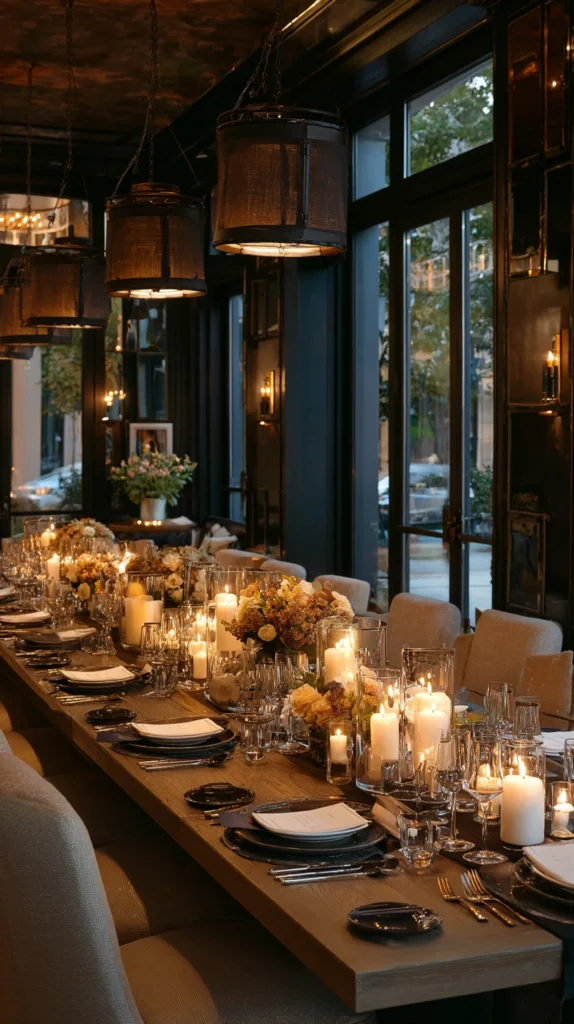
Budget: $100 – $500
The pendant light above the dining table provides the primary illumination, but the layered table setting — candelabras, taper candles in individual holders, a low arrangement of votives — provides the secondary light that makes the difference between a lit dining room and an atmospheric one. The layered table lighting is the detail that most directly produces the quality of a special occasion and that costs almost nothing relative to the architectural investment of the room around it.
A pair of table candelabras in silver, brass, or patinated bronze costs $80–$300. Individual taper candleholders in a consistent material run $15–$40 each. Votive holders for the table centre cost $5–$15 each. Use taper candles of a consistent height — all new at the start of a formal dinner — rather than a collection of tapers at different stages of burning. The visual uniformity of equal-height candles communicates that the table was prepared; the randomness of mixed heights communicates that the candles were gathered from wherever they were found.
Style tip: Arrange the table lighting so it does not obstruct the sightlines between guests across the table. A candelabra that is taller than the eye level of a seated person blocks the view between the guests on either side of it, which is the arrangement detail that most undermines the conversation that the dining room was designed to facilitate. The table lighting should illuminate the guests as much as the table, and it can only do that if it sits below the eye level of the seated diner.
13. The Acoustic Considered Dining Room
Budget: $500 – $4,000
A luxury dining room that is beautiful but acoustically harsh — where the hard surfaces of marble, glass, timber, and plaster combine to create a reverberation that makes conversation at a formal dinner an exercise in raised voices and strained attention — is a dining room that fails at its primary social purpose regardless of the quality of its visual design. The acoustic treatment of a dining room is not an afterthought; it is a design requirement.
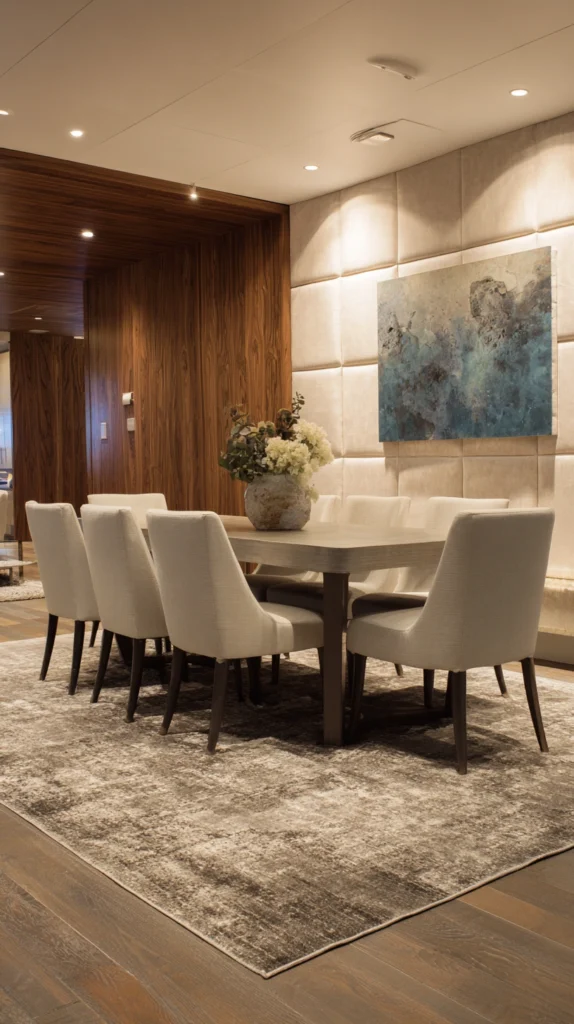
A large wool or silk rug beneath the dining table costs $500–$3,000. Full upholstered dining chairs contribute absorption — six upholstered chairs absorb significantly more sound than six hard chairs of equivalent comfort. Acoustic panels in a decorative fabric, fitted within the wall panelling or behind the artwork, cost $500–$2,000. The rug is the most effective and most accessible acoustic treatment — a dining room with a rug has a reverberation time approximately 30 percent shorter than the same room without one.
Style tip: Specify a rug that extends at least 60 centimetres beyond the chair positions on all sides rather than simply beneath the table footprint. Chairs pulled back from the table during a dinner are pulled back onto the rug — not off it — and the acoustic contribution of the rug’s area extends to the full zone occupied by the diners. A rug that ends at the table legs provides the aesthetic of an under-table rug without the acoustic contribution of a correctly sized one.
14. The Considered Table Setting
Budget: $500 – $5,000 for the complete setting
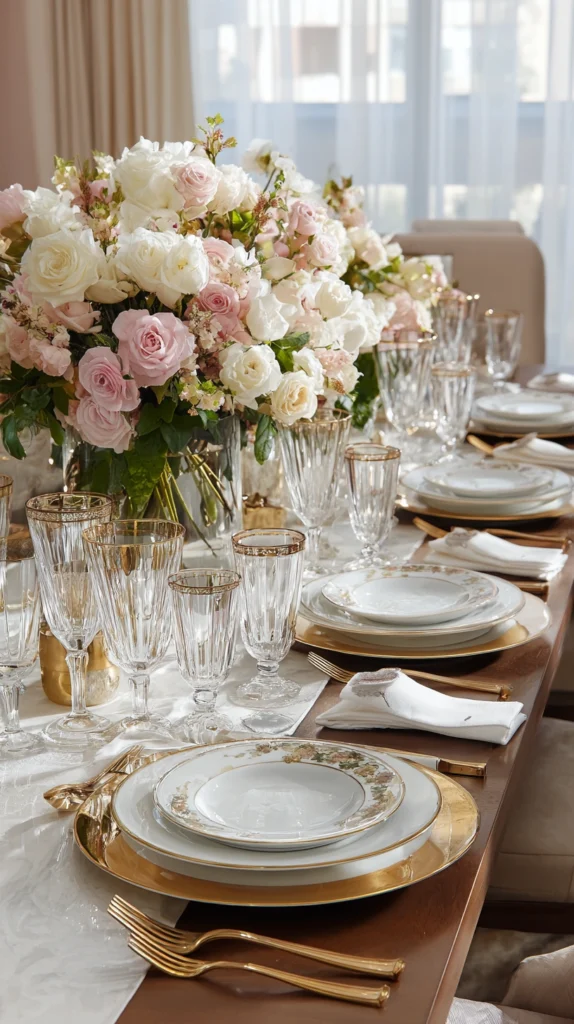
The luxury dining room is completed not by the architecture or the furniture but by the table itself — the quality of the linen, the weight of the cutlery, the soundlessness of the crystal glass, the way the china sits on the surface as if it was made for the table rather than chosen to fill it. The table setting is the final layer of the dining room and the one experienced most directly and most personally by every person who sits at it.
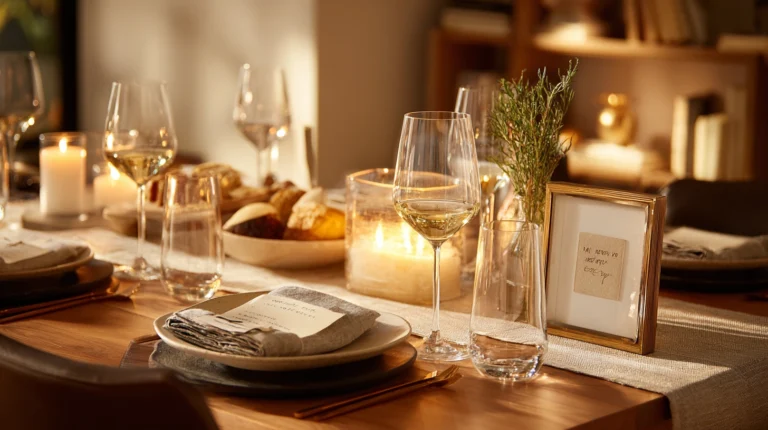
A set of twelve dinner plates in a quality porcelain costs $300–$1,200. Crystal wine glasses run $30–$150 each. A full set of silver-plated or solid silver cutlery for twelve costs $500–$5,000. A set of linen tablecloths and napkins in a weight that drapes properly — at least 200 grams per square metre — runs $200–$800. Press the linen before each use rather than after laundering — pressed linen that has been stored folded for weeks needs re-pressing before the dinner, and the pressed quality of the tablecloth at the beginning of the evening is part of the occasion in the same way that the pendant light and the dark painted walls are part of it.
Style tip: Store the dining table setting in the dining room rather than in a remote cupboard. China stored in the kitchen, linen in the airing cupboard, and crystal in the sitting room sideboard creates a table-setting assembly process at the beginning of every formal dinner that becomes the obstacle between the intention to use the dining room properly and the actual frequency with which it happens. A dining room with everything it needs for a formal dinner within it is a dining room that is used formally more often — and the frequency of formal use is the measure of whether the investment in the room was worthwhile.
The luxury dining room earns its description not from the cost of its components but from the quality of the experience it consistently produces — the dinner that begins at eight and is still at the table at midnight, the occasion that generates the conversation that is still being referenced a year later, the meal that made the effort of cooking and setting and planning feel entirely worth it.
Every decision in the room — the table height, the chair padding, the pendant position, the wall colour, the acoustic treatment — is a decision about the quality of that experience. Make each one with the person who will be sitting in the chair, eating from the plate, and talking across the candlelight as the reference point rather than the room itself, and the luxury dining room will be genuinely that — luxurious in the original sense of a space designed for the fullest possible enjoyment of the time spent in it.