13 Summer Minimal Luxe Decor Ideas for a High-End Look
There is a quality that the most considered interiors achieve that cheaper or less resolved ones never quite manage, and it has nothing to do with the price of the furniture or the rarity of the materials. It is the quality of sufficiency — the sense that everything in the room is there because it is genuinely needed and genuinely good, and that the discipline required to reach this state was harder and more deliberate than the accumulation it replaced.
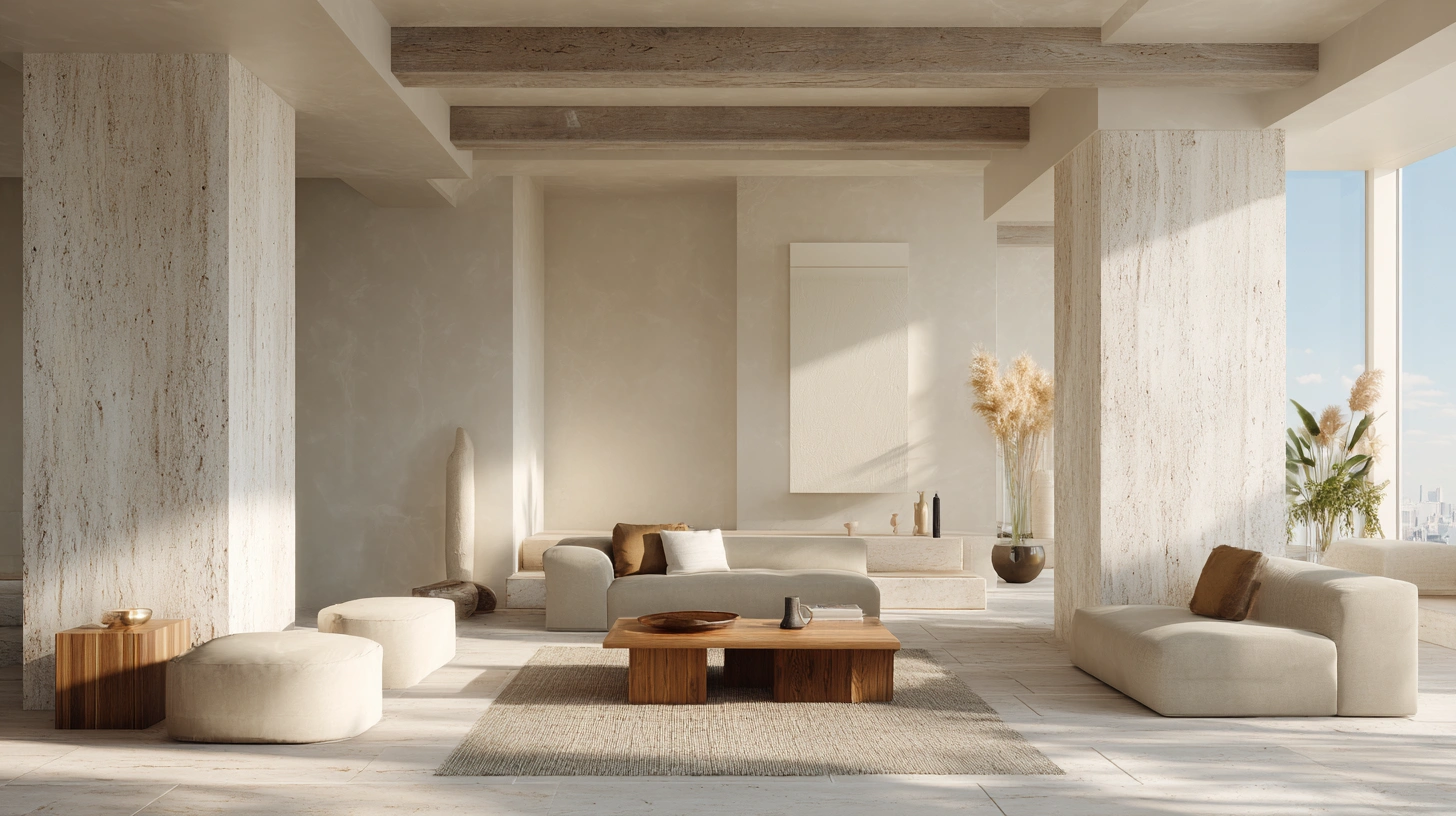
Minimal luxe is not minimalism in the austere, everything-removed sense. It is the specific visual register of a room where every object that remains has been chosen with seriousness, where the surfaces are clear because what is on them deserves the attention that clearance provides, and where the luxury is communicated through texture and material quality rather than through quantity and visual noise.
In summer, this register becomes especially appropriate — the light is better, the surfaces are more visible, and the room that has been pared to its best version of itself takes advantage of both.
Each idea below is a specific approach to one element of the minimal luxe summer interior. Each includes what you will need, what it will cost, and a practical tip to make it work as well as the aesthetic it is reaching for.
1. The Single Oversized Artwork
Budget: $100 – $2,000
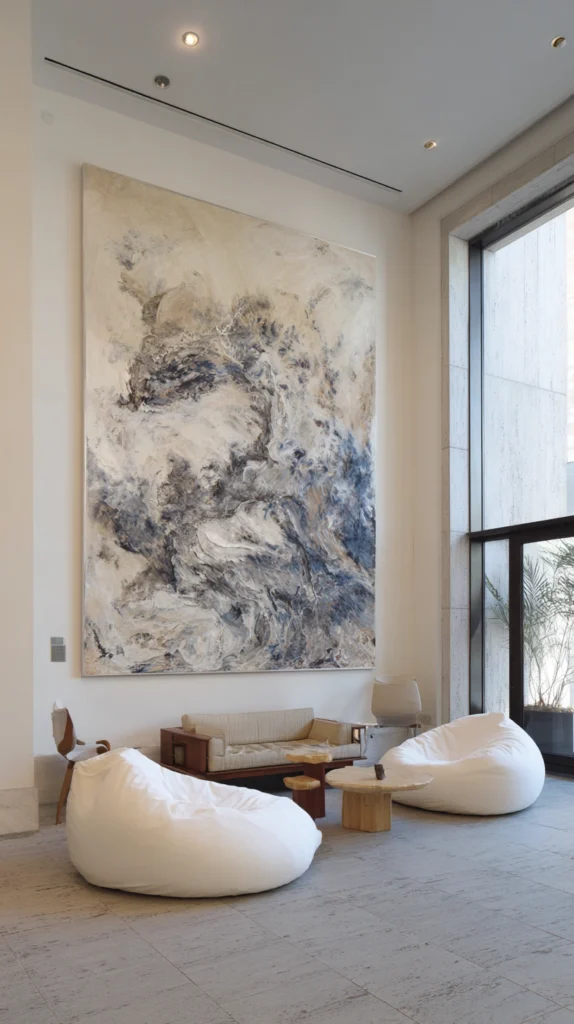
One piece of artwork — genuinely large, at least 100 by 120 centimetres, positioned on the most visible wall of the room — communicates the confidence that is the foundation of minimal luxe. The single large artwork does not compete; it presides. It makes the decision about what the room’s primary visual focal point is, removes the visual negotiation between multiple smaller pieces, and gives the wall beneath it room to breathe in a way that a gallery arrangement never does.
A large canvas print from a quality art print supplier costs $100–$400. An original work of equivalent scale runs $500–$5,000. A large-format photograph printed on aluminium dibond — a flat, archival format with no frame required — costs $200–$800 and suits the minimal luxe aesthetic specifically because the frameless finish removes the decorative element that a framed print always carries. Position the centre of the artwork at 145–150 centimetres from the floor — the standard gallery hanging height that aligns the work with the eye of a standing person.
Style tip: Choose an artwork with a limited colour palette — two or three tones at most — that relates to but does not exactly match the room’s own palette. An artwork that is too coordinated with the room reads as designed into a scheme; one that introduces a slightly unexpected tone within a controlled palette reads as chosen for its own quality rather than for its coordination, which is the distinction that separates collected from decorated.
2. The Linen Upholstery Reupholster
Budget: $300 – $1,500
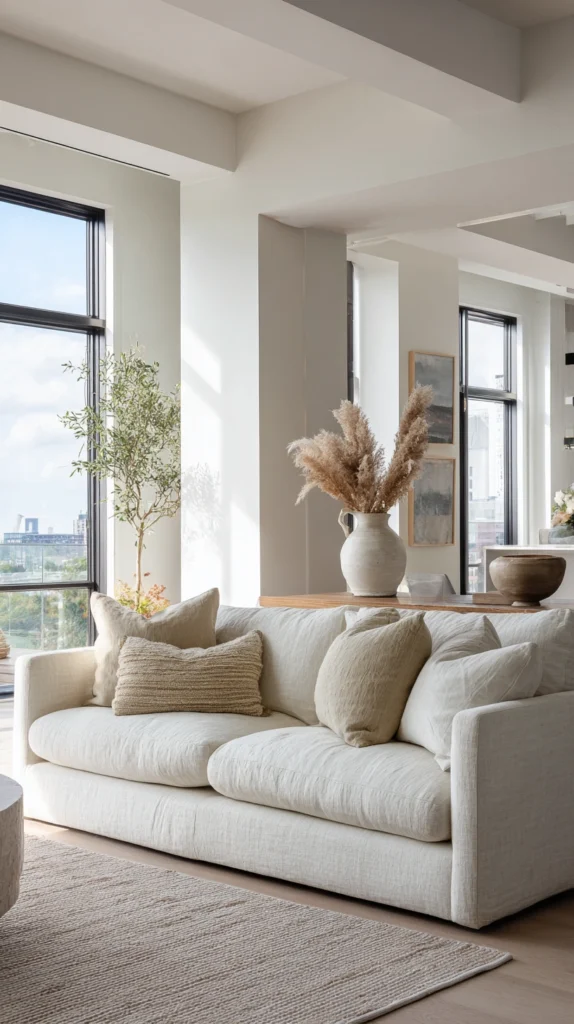
Reupholstering a significant piece of furniture — the sofa, the primary armchair, the headboard — in a high-quality natural linen in an undyed or warm neutral tone transforms the piece from its current iteration into the summer version of itself. Linen upholstery has a texture and a tone that communicates quality at close range and simplicity at a distance — the specific combination that minimal luxe requires.
Belgian linen for upholstery in a medium-weight construction costs $25–$60 per metre. A standard three-seater sofa requires approximately 12–15 metres — $300–$900 in fabric. Reupholstery labour runs $400–$800 for a sofa at a quality upholsterer. A pre-washed linen — which has been processed to remove the initial stiffness — drapes with more natural ease than unwashed linen and should be specified rather than standard linen where the option exists.
Style tip: Choose an undyed or naturally pigmented linen rather than a dyed version in a specific colour. The natural linen tone — which ranges from pale cream to warm oat depending on the specific flax — has a warmth and an organic variation that a dyed linen in an equivalent colour lacks. The natural variation within the fibre is the detail that gives the upholstery its handmade, material-honest quality.
3. The Stone or Marble Accessory Collection
Budget: $80 – $600
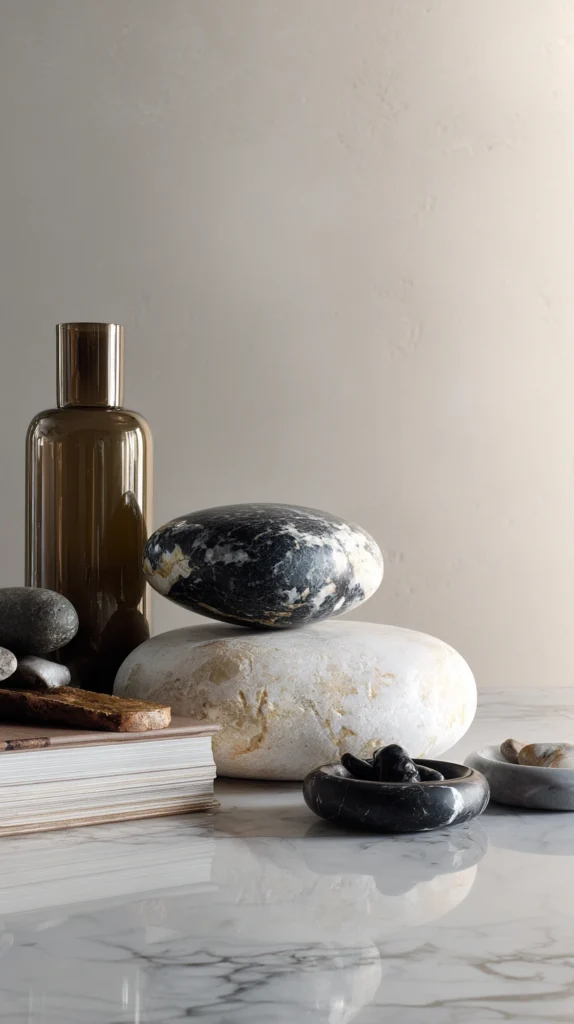
A collection of stone and marble accessories — a marble tray, a travertine candle holder, a stone bowl, an alabaster vessel — arranged on a single surface creates a material moment of genuine luxury at a cost considerably below architectural stone while communicating the same material quality at the scale of everyday objects. Natural stone in its smaller accessory form is the most accessible expression of the minimal luxe material palette.
A marble tray in Carrara white costs $30–$80. A travertine candle holder runs $25–$60. An alabaster bowl costs $40–$150. A small pieced-marble decorative object runs $20–$60. Arrange all stone accessories on a single surface — the coffee table, the console, the bedside — rather than distributing them across the room. A collection of stone objects in one position reads as a material statement; the same objects distributed across the room read as individual purchases.
Style tip: Limit the stone collection to one or two stone varieties rather than mixing every available stone type. Carrara marble alongside travertine reads as two stone varieties with a material relationship — both are calcite-based, both are warm, both have veining of a related character. The same Carrara marble alongside onyx, granite, and slate reads as four unrelated stones that happened to be collected, and the lack of material relationship undermines the coherence that minimal luxe requires.
4. The Neutral Monochrome Palette
Budget: $100 – $500 to implement
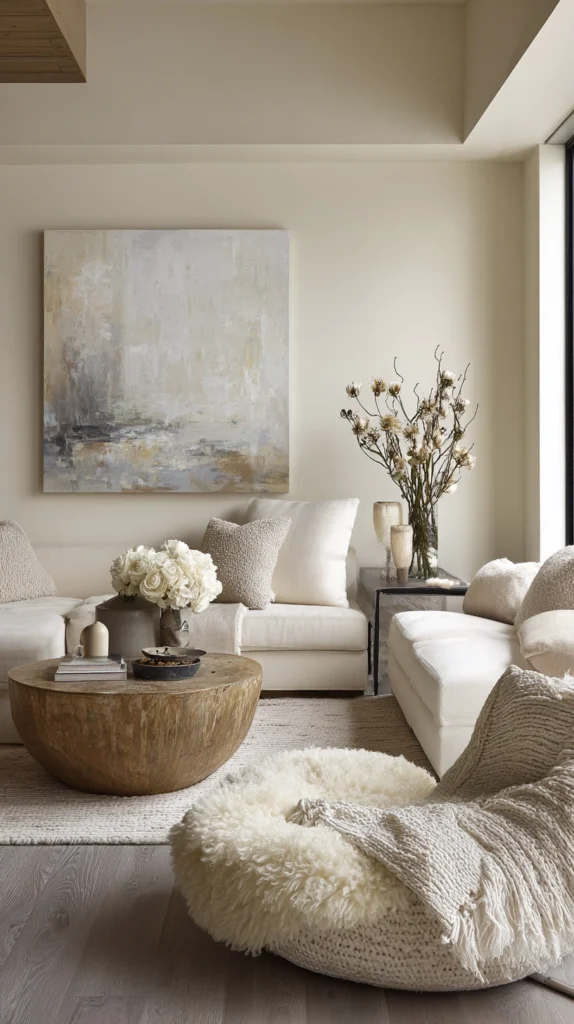
Editing the room’s palette to a monochrome of warm neutrals — all tones from pale cream to warm linen to deep sand, in varying materials and textures — is the most fundamental minimal luxe intervention available to any room. The monochrome palette reads as disciplined and considered rather than accidental, and the interest within it comes from the variation of texture at the same tone rather than from the variation of colour across multiple tones.
The neutral monochrome implementation requires removing rather than purchasing — eliminating anything in the room that introduces a colour outside the chosen neutral range. The additions required are modest: a cushion in a slightly deeper neutral tone ($15–$30), a throw in the correct linen colour ($25–$60), a candle in cream rather than the current colour ($10–$25). The discipline is the cost; the purchases are relatively modest.
Style tip: Introduce the full tonal range of the neutral palette — from the palest white through every shade to the deepest warm sand — rather than limiting it to a single mid-tone neutral. A room in all the same mid-tone reads as beige; one that moves from near-white at the ceiling through the full neutral range to the deepest tone at the floor reads as a considered tonal composition that uses the full depth of the neutral spectrum.
5. The Quality Bedding Upgrade
Budget: $200 – $800
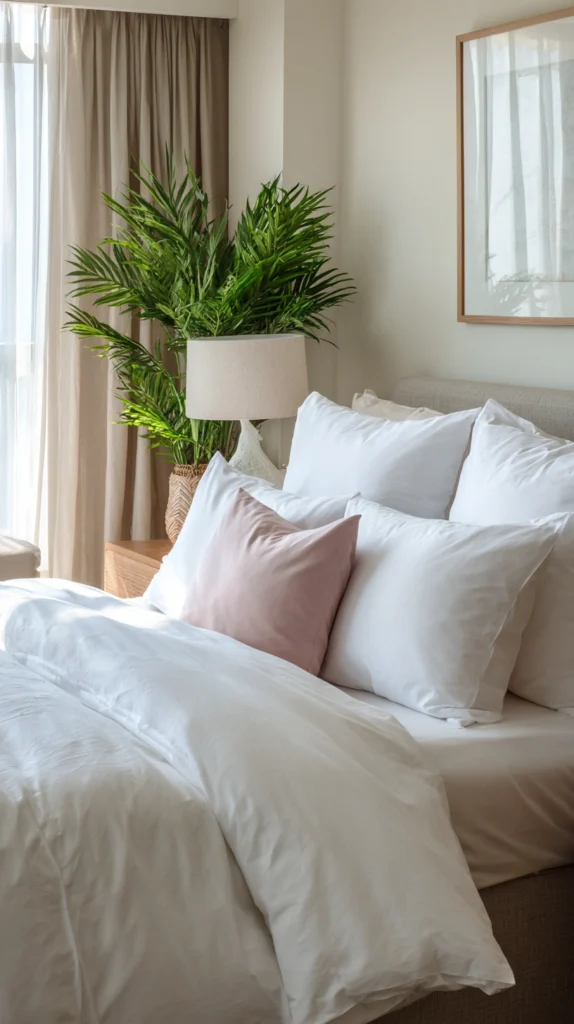
High thread count linen or percale cotton bedding — in white or warm natural, perfectly pressed, with matching pillow cases and a folded throw at the foot — is the single most impactful quality upgrade available to a bedroom for summer. The bed is the room’s largest surface and the most directly experienced object in it, and the quality of the bedding is felt rather than observed — which makes it the most genuinely luxurious element in the room regardless of what surrounds it.
Belgian linen bedding in a 200 thread count costs $150–$400 for a complete double set. Egyptian cotton percale at 400 thread count runs $200–$600. A matching linen throw for the foot of the bed costs $60–$150. Press the bedding while still slightly damp — linen ironed from damp achieves a relaxed, smooth finish that ironing from dry cannot replicate — and make the bed in the hotel style: flat sheet tucked with hospital corners, duvet pulled smooth, pillows stacked precisely.
Style tip: Choose bedding that is one tone warmer than pure white — ivory, warm natural, or the palest cream — rather than a stark brilliant white. Brilliant white bedding reads as clinical in natural light and turns yellow quickly in UV exposure. Warm white or natural linen reads as considered and maintains its tone through regular washing in a way that brilliant white cannot without chemical whitening.
6. The Sculptural Single Vase
Budget: $30 – $400
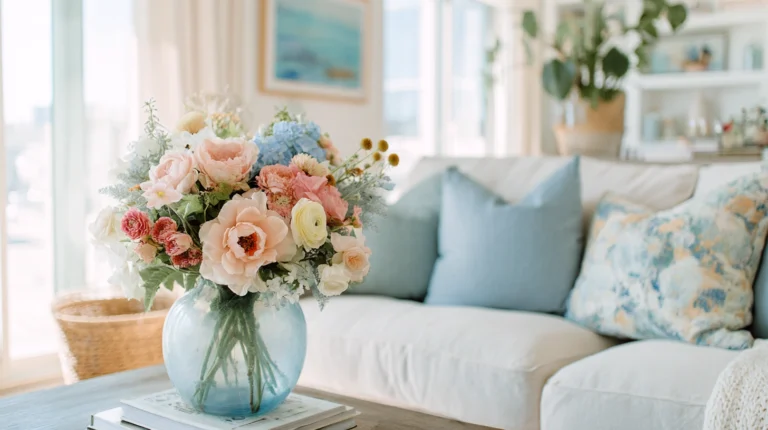
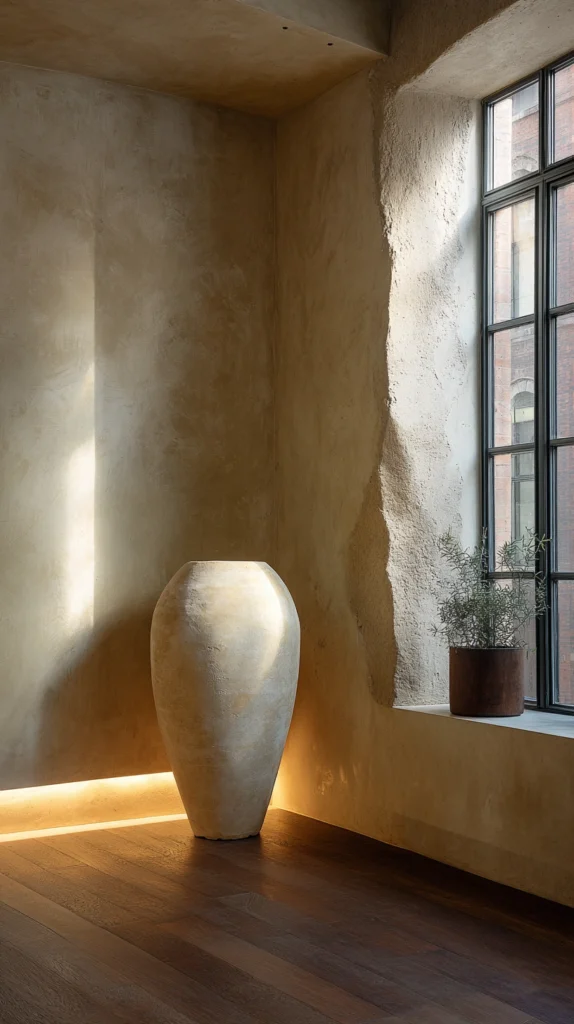
One large ceramic or glass vase — genuinely large, 40–60 centimetres in height — placed on the floor, on the console, or on the sideboard with a single architectural stem or a loose gathering of one flower variety communicates the minimal luxe floral arrangement more precisely than any elaborately arranged bouquet. The single vase with a considered stem is not a less expensive or less skilled version of a full floral arrangement; it is a different and more disciplined aesthetic statement.
A large ceramic vase in a matte glaze costs $40–$200 depending on size and maker. A hand-thrown version from an independent ceramicist runs $80–$400. A single stem of pampas, a branch of eucalyptus, five stems of one summer flower: the botanical content costs $5–$25. The quality of the vase is more important than the quality of the stem at the minimal luxe level — a beautiful vase with a simple stem reads as luxurious; a generic vase with an elaborate arrangement reads as floral rather than minimal.
Style tip: Position the large vase on the floor rather than on a surface wherever the room layout allows. A large vase on the floor reads as genuinely large — it occupies the vertical dimension from the floor upward; the same vase on a table is elevated by the table height and reads as a vase on a surface rather than as an architectural element of the room. The floor position is the placement that gives the minimal luxe vase its spatial authority.
7. The Concealed Storage Solution
Budget: $500 – $3,000
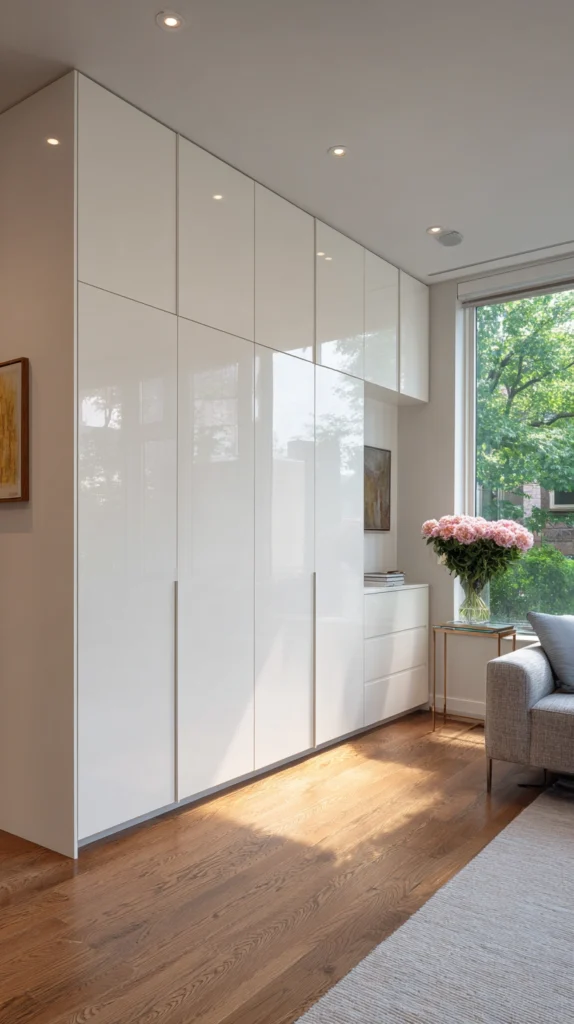
Minimal luxe requires surfaces to be clear, and surfaces can only be consistently clear if the objects that would otherwise occupy them have somewhere considered to go. A bespoke or semi-bespoke storage solution — a built-in cupboard, a custom joinery unit, a sideboard with adequate depth for the actual objects stored in it — is the investment that makes the minimal aesthetic sustainable rather than aspirational.
A built-in cupboard with flush-fronted doors in an MDF or timber finish costs $800–$3,000 depending on size and specification. A quality production sideboard with adequate storage runs $600–$2,000. Flat-fronted doors without visible handles — push-to-open, or with a recessed grip — are the joinery specification that most directly expresses the minimal luxe aesthetic. A door with a decorative handle is a door with a decorative statement; one without communicates the surface as a continuous plane rather than a functional object.
Style tip: Line the interior of visible storage — glass-fronted sections, open shelves — with the same paint colour as the interior of the room rather than leaving it in the raw joinery finish. A shelving interior in the wall colour reads as a considered extension of the room’s palette; one in raw MDF or standard white reads as unfinished regardless of the quality of the surrounding joinery.
8. The Warm Metallic Accent
Budget: $100 – $600
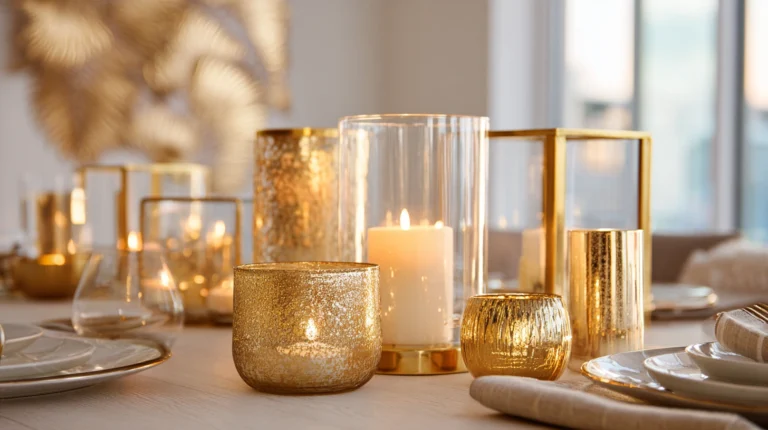
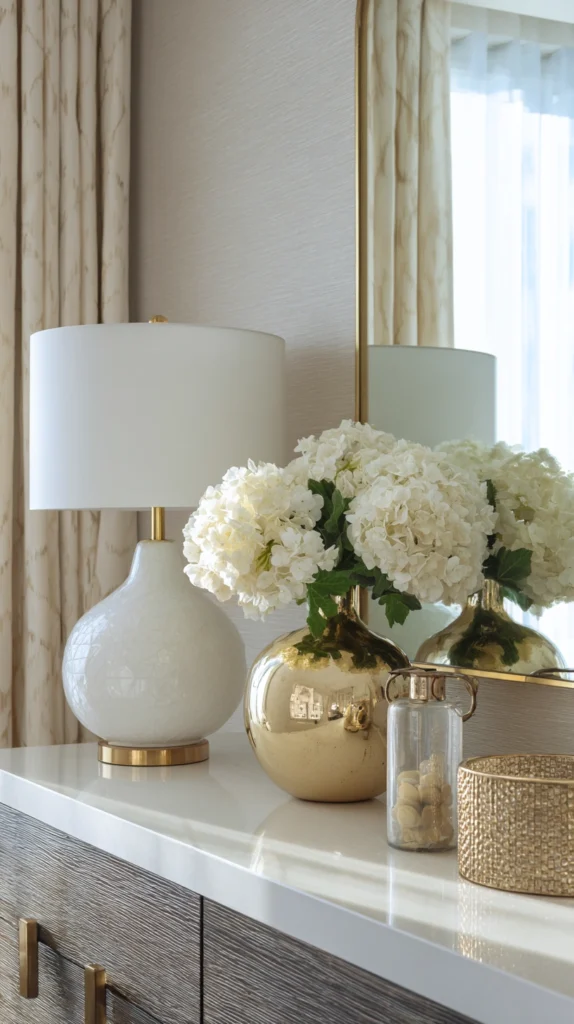
One metallic accent — in brushed brass, antique gold, warm bronze, or aged copper — introduced through a single lighting fixture, a pair of hardware elements, or a decorative object, gives the minimal luxe interior the warmth and the material contrast that a purely neutral palette risks losing. The warm metal is not a colour addition; it is a material one, and the distinction is what keeps it within the minimal luxe register rather than pushing it toward decoration.
A brushed brass table lamp costs $80–$300. A pair of brass cabinet handles runs $20–$60. A bronze or copper decorative bowl costs $40–$200. The warm metallic accent works in a minimal luxe interior when it is used consistently in one metal finish throughout the room rather than mixing gold, silver, and copper. A single metal finish — all brushed brass, or all antique bronze — reads as a considered choice; mixed metals read as accumulated from different sources.
Style tip: Position the warm metallic accent in the light — near the window, below the pendant, where the natural or artificial light catches the surface and produces the warm reflective quality that metal’s contribution to an interior requires. A brass lamp in a dark corner looks dull; the same lamp in good light produces the warm ambient glow that justifies its presence in a minimal interior that has otherwise eliminated all decorative elements.
9. The Quality Floor Covering
Budget: $400 – $4,000
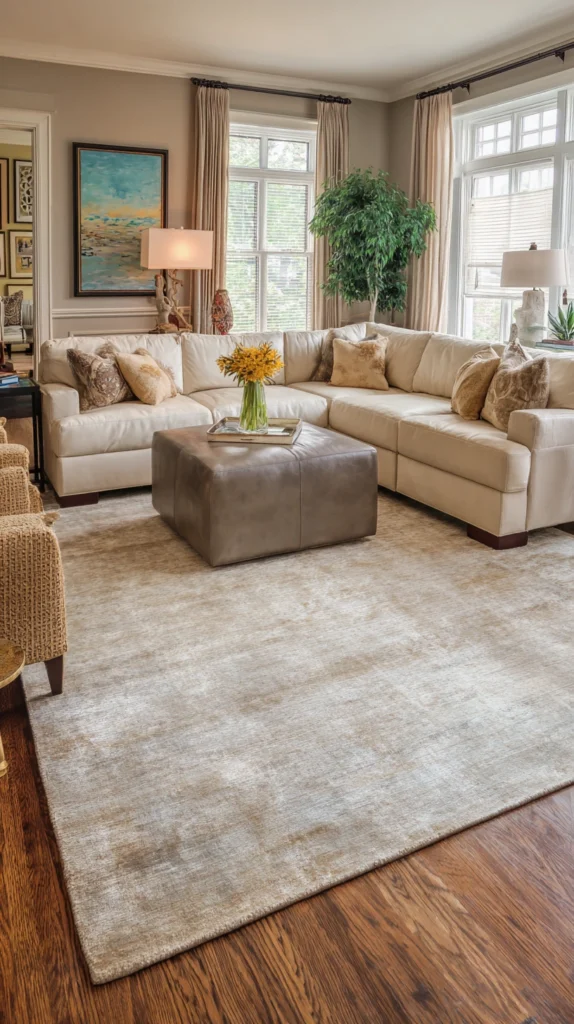
A quality rug — in a natural fibre, a hand-knotted wool, or a flat-woven pure cotton — at the correct size for the furniture arrangement it anchors, in a tone that sits within the room’s neutral palette, is the floor-level luxury element that gives the minimal interior its sensory warmth at the point where the room is most directly experienced by the body. A bare floor, however beautiful, does not provide the tactile quality that a well-chosen rug introduces at foot and eye level simultaneously.
A hand-knotted wool rug in a neutral tone costs $400–$2,000 for a standard 200 by 300 centimetre size. A flat-woven cotton kilim runs $150–$600. A natural fibre rug in jute or seagrass costs $80–$300. The rug size is the specification that most determines its visual success — too small and the furniture arrangement floats above it; correctly sized, with all furniture legs on the rug, the arrangement is anchored and the room reads as complete.
Style tip: Choose a rug with a subtle texture or a very low-contrast pattern rather than a plain or a high-contrast one. A plain rug shows every mark and piece of debris that lands on it — in a minimal interior, where surface cleanliness is part of the aesthetic, a plain rug requires daily attention to maintain its appearance. A subtly textured or low-contrast patterned rug conceals the inevitable evidence of use while maintaining the calm, settled quality that the minimal luxe floor covering requires.
10. The Considered Book Edit
Budget: $0 – $100
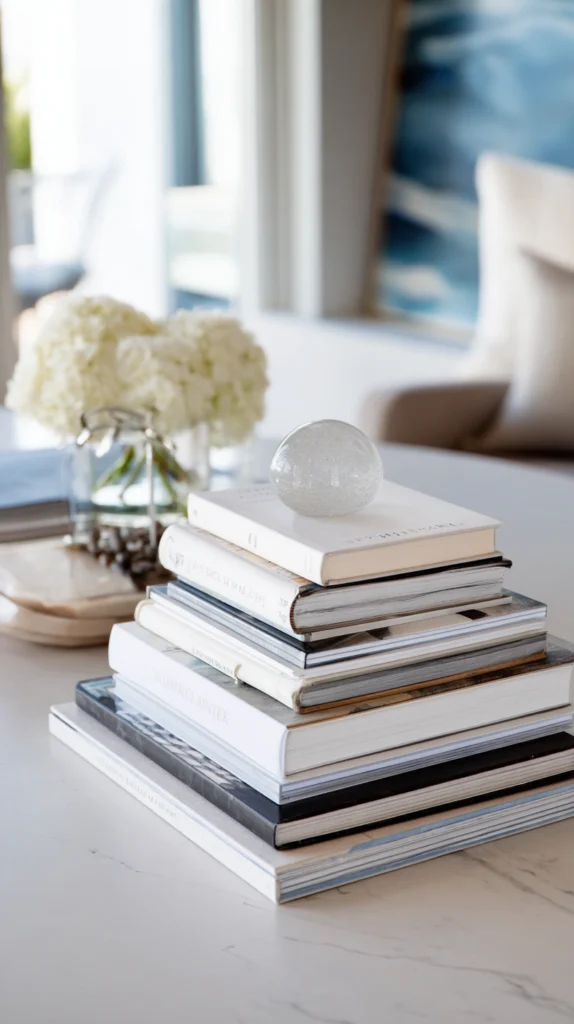
A small number of books — five to eight, chosen for both their content and their physical quality, arranged in a single stack or a small group on the coffee table or the console — communicates the minimal luxe approach to the book as object as well as text. The book collection in a minimal luxe interior is not a library; it is a selection, and the selection communicates the specific taste and the specific current interests of the person who made it.
Books already owned cost nothing to select and arrange. New art, photography, or architecture books cost $30–$100 each. Remove the dust jackets from books with beautiful hardcover boards beneath — many hardcovers have cloth bindings in deep colours or embossed titles that are more beautiful than the paper jacket over them, and the jacket-free arrangement gives the book stack a consistency of material quality that mixed jackets and boards never achieves.
Style tip: Arrange the book stack horizontally — books lying flat, stacked by decreasing size from largest at the bottom to smallest at the top — with one small object on the top: a smooth stone, a small ceramic, a single crystal. The object on the stack is the full stop of the arrangement, and the arrangement without it reads as unresolved. The object on top costs almost nothing and produces the composed quality that the stack without it consistently lacks.
11. The High-Quality Candle Ritual
Budget: $30 – $200
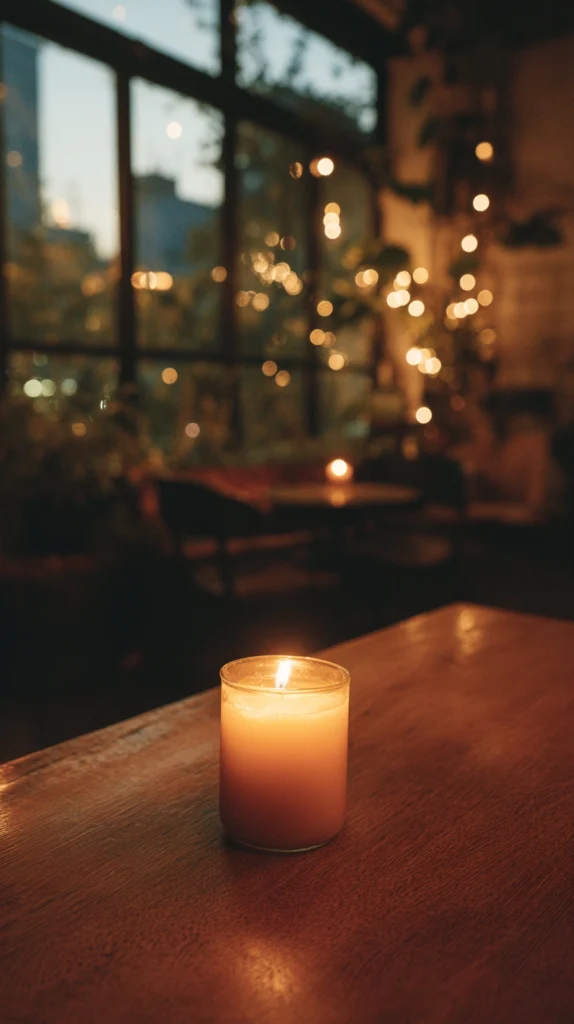
A single large candle — in a quality container or as a sculptural pillar, in an unscented beeswax or a lightly fragranced natural wax, lit at the same time each evening as the room transitions from its daytime to its evening state — is the minimal luxe approach to candlelight. Not a collection, not a cluster, not a variety of sizes and scents: one candle, chosen for its quality and its visual weight, positioned where its light reaches the surfaces that benefit most from warm flame.
A large beeswax pillar candle costs $25–$80. A quality scented candle in a ceramic or concrete vessel runs $30–$120. A single cast-iron or brass candleholder for a taper costs $20–$60. The ritual of lighting the same candle at the same time each evening is the practice that gives the minimal luxe room its sense of intentional daily life — the room that is managed rather than simply occupied.
Style tip: Trim the candle wick to 6 millimetres before each lighting rather than lighting from whatever length the previous burning left. An untrimmed wick produces a larger flame that generates more soot, burns the candle faster, and produces an uneven wax pool that affects the burn quality of subsequent lightings. A trimmed wick produces a clean, steady flame that extends the life of the candle and maintains the quality of its fragrance and its light throughout its burning life.
12. The Refined Textile Layering
Budget: $100 – $500
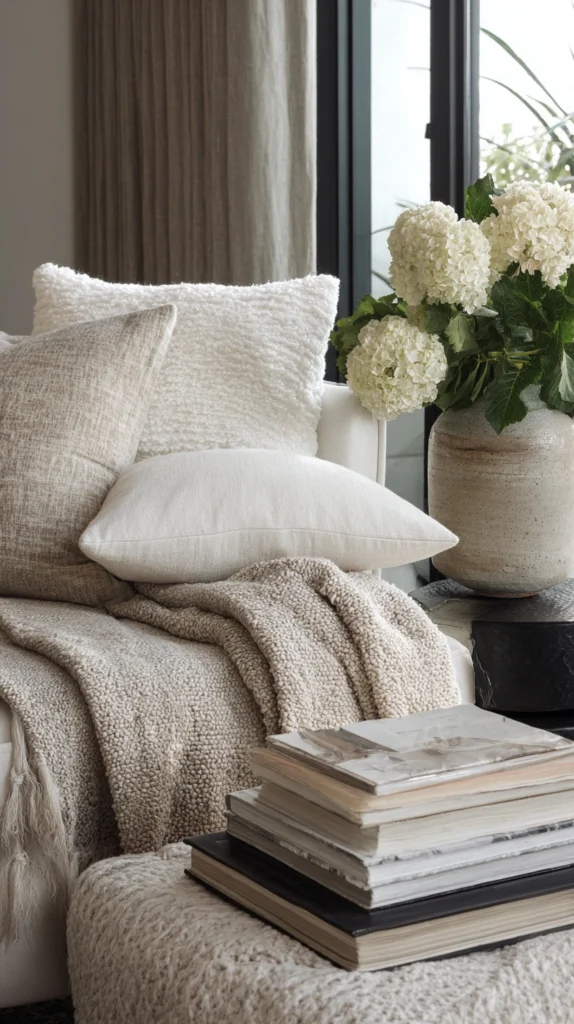
Two or three textiles — a linen throw, a wool or cashmere cushion, a cotton weave blanket — in the same neutral palette but different textures, layered on the primary seating, create the warmth of material depth without the visual complexity of colour variation. The textile layering in a minimal luxe interior is about the contrast between surfaces at the same tone: the smooth linen against the slightly nubbled weave against the soft pile of a cushion.
A linen throw in natural costs $30–$80. A cashmere or fine wool cushion in cream or warm white runs $60–$200. A woven cotton blanket in an open weave costs $40–$100. Layer the textiles so the smoothest material is closest to the body — the linen nearest the skin, the woven cotton as the middle layer, the nubbled throw as the outermost visual element — because the tactile experience of the layering, as well as the visual, is what the minimal luxe textile approach is producing.
Style tip: Wash all textiles before layering to establish the final washed tone and hand-feel of each piece. New textiles from different sources vary in their as-new condition — one may be stiffer, one may be brighter — and the variation makes the layered collection look less considered than it is. A wash cycle for all pieces simultaneously establishes the used quality that gives the layered collection its worn-in, naturally settled appearance.
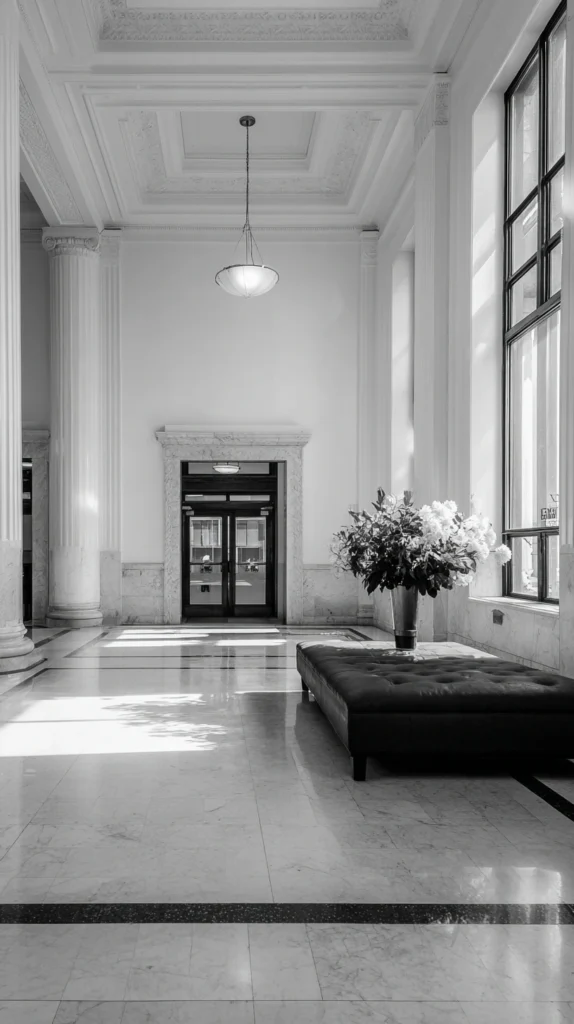
13. The Negative Space Commitment
Budget: $0
The final and the most important element of minimal luxe is not an addition — it is a commitment to negative space. To the wall that has nothing on it. To the surface with one object where three could fit. To the corner that has been left empty because the room is better without anything in it. Negative space is not an absence of decision; it is the hardest decision, because it requires resisting the accumulation that domestic life naturally produces and maintaining the discipline of sufficiency against the persistent pressure of more.
The negative space commitment costs nothing in purchases and everything in discipline. It is maintained by a regular edit — once per season, every object in the room is assessed against the criterion of whether it earns its position — and by the resolve to return to the edit what the edit removed rather than allowing it to creep back over the weeks that follow.
Style tip: Designate one wall in the primary room as permanently clear — no art, no shelving, no furniture pushed against it — and resist any pressure to use it. The clear wall is the room’s breathing space and its most dramatic luxury gesture, because in a culture of maximum occupation of every available surface, a wall that is deliberately left empty communicates the confidence that minimal luxe is built on. The empty wall costs nothing and says everything about the intention behind the room that contains it.
The minimal luxe summer interior is not achieved in one project or one purchase. It is approached incrementally — one surface edited, one object upgraded, one wall cleared — and it requires the maintenance of a standard rather than the completion of a task. The room that achieves minimal luxe is not finished; it is sustained, and the sustaining is the practice that produces and keeps the quality that the aesthetic promises.
Begin with the largest surface in the room and edit it to what is genuinely needed and genuinely good. Then move to the next surface. The room will find its register gradually, and the version it produces — clear, material, considered, and quietly certain of itself — is the version that summer light was made to fall on.