Styled, Filled, and Perfectly Placed: 14 Summer Decorative Bowl Styling Ideas for Every Room
A bowl is one of the most quietly powerful objects in a room. It defines a surface, contains a collection, and communicates something about the person who placed it there — all without saying a word and often without costing very much at all.
In summer especially, a well-chosen bowl styled with intention becomes one of the most versatile decorating tools available. It can hold the season’s fruit, the garden’s flowers, the beach’s shells, or simply sit empty and let its own form do the talking.
The fourteen ideas below cover a styled bowl for every room and every summer aesthetic — from the kitchen counter to the bedroom shelf, from a shallow terracotta dish to a generous glass centrepiece.
1. The Citrus Bowl Kitchen Centrepiece
Budget: $15 – $60
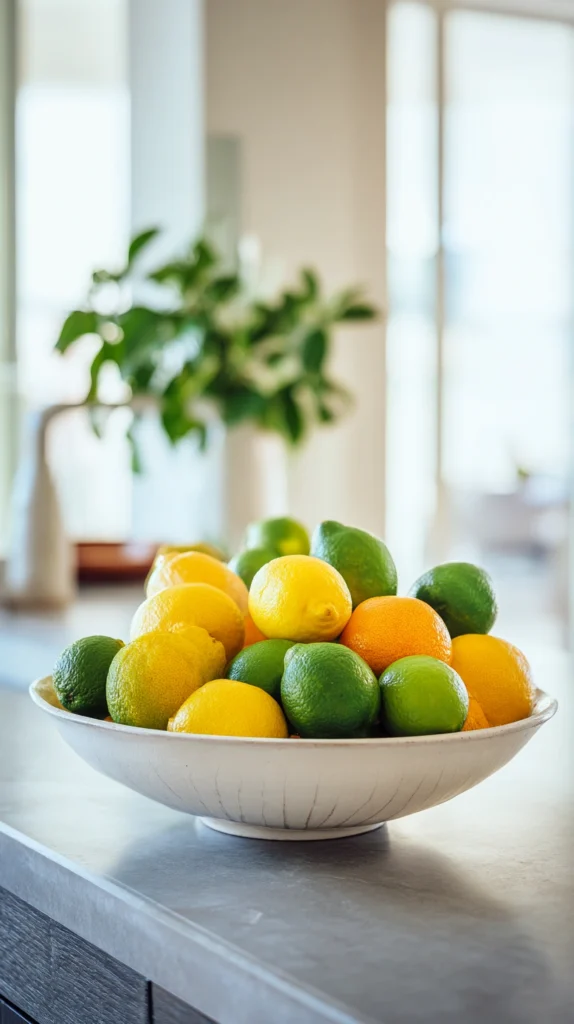
A wide, generous bowl on the kitchen counter or the dining table — filled to slightly overflowing with lemons, limes, oranges, and a few sprigs of fresh rosemary tucked between them — is summer’s most honest and most beautiful kitchen centrepiece. It smells extraordinary, costs almost nothing to maintain, and doubles as the kitchen’s most useful fruit storage solution.
A wide ceramic or wooden bowl in a pale or natural finish costs $10 – $35. The citrus fruit to fill it — $5 – $15 per weekly refresh. The herbs tucked between the fruit — free from the garden or $2 – $5 from a supermarket. Total investment: $17 – $55 for a centrepiece that is genuinely useful, genuinely seasonal, and genuinely beautiful.
Decor tip: Fill the bowl to slightly beyond its rim rather than to a tidy, contained level. A citrus bowl filled generously — with one lemon resting against the rim at a slight angle and the arrangement rising above the bowl’s edge — reads as abundant and alive. A bowl filled to two-thirds capacity reads as provisionally stocked rather than generously offered.
2. The Shell and Sea Glass Coastal Bowl
Budget: $10 – $50
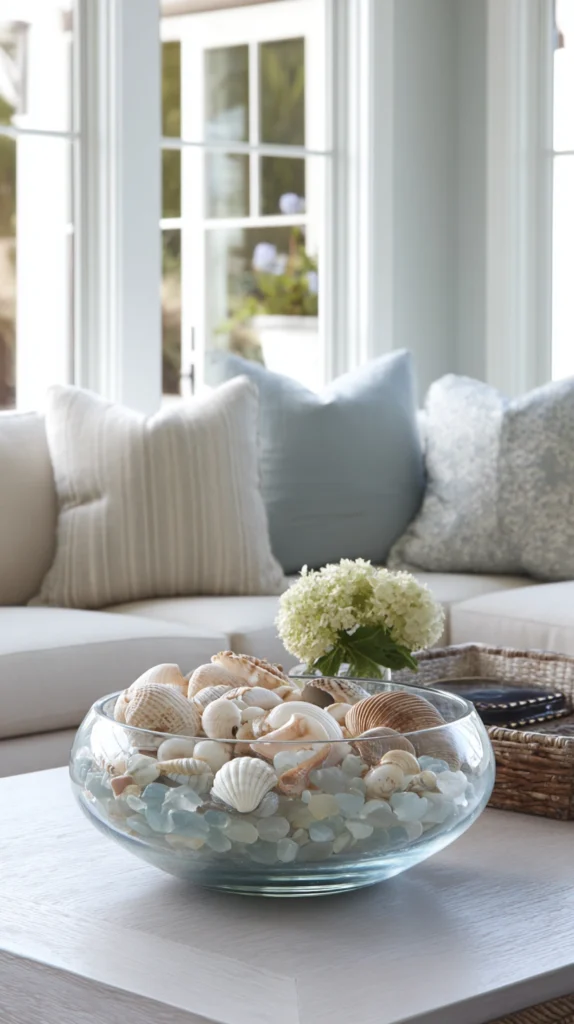
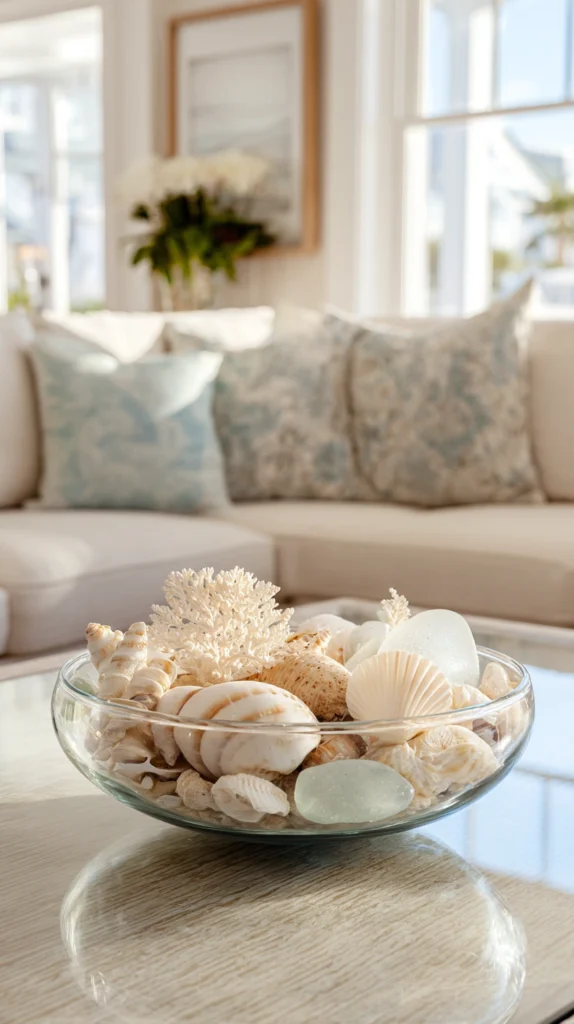
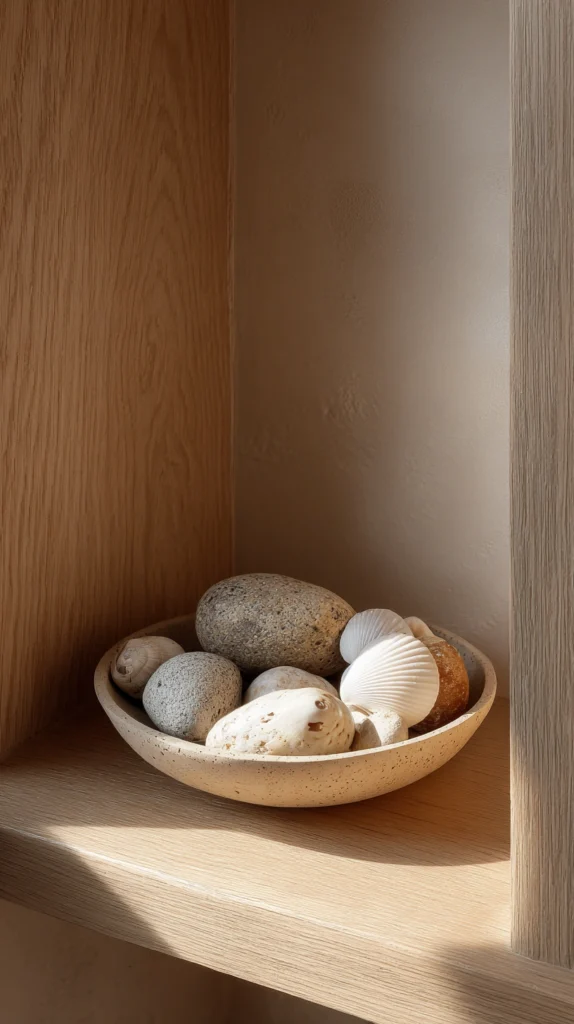
A shallow bowl of shells and sea glass — placed on a coffee table, a bathroom shelf, or a bedroom side table — is the most naturalistic and most affordable summer bowl styling available. Each piece carries the memory of a specific place, and a bowl of genuinely collected natural objects communicates something about the person who gathered them that no purchased display can replicate.
A shallow ceramic or glass bowl costs $8 – $20. Shells and sea glass gathered personally cost nothing. A purchased shell and sea glass assortment from a craft supplier — for those without beach access — runs $8 – $25. A few smooth white pebbles mixed into the shells add texture variation and ground the arrangement with the weight of real stone.
Decor tip: Group shells by colour rather than by type or size within the bowl. A bowl of shells sorted into white and cream tones reads as curated and considered. A bowl of shells in every colour and size reads as the contents of a child’s bucket at the end of a beach day — which is charming in its own way but a different aesthetic entirely from the one a summer decorative bowl is working toward.
3. The Floating Flower Bowl
Budget: $15 – $60
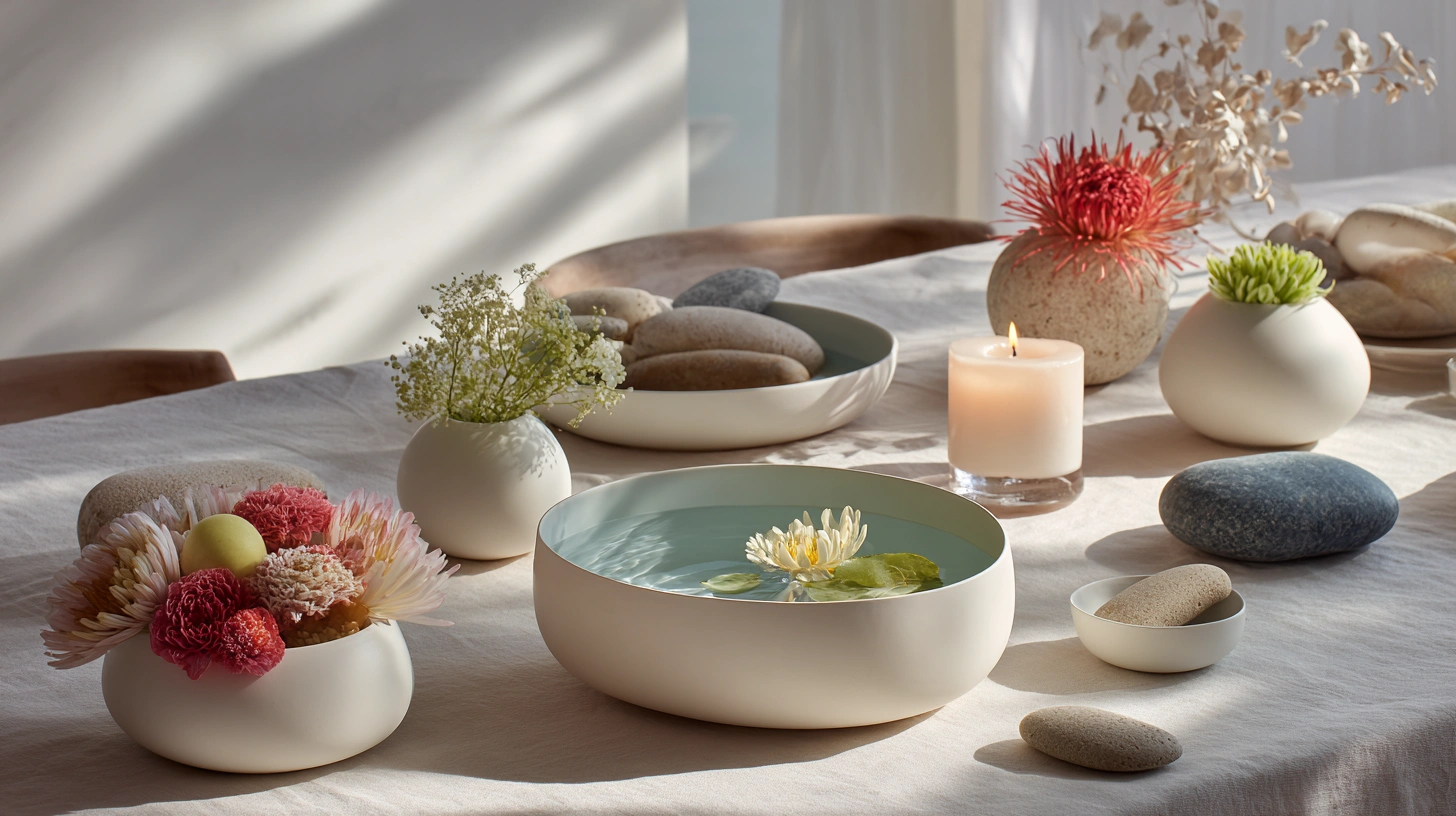
A wide, low bowl filled with water and floating flower heads — garden roses, dahlias, gardenias, or magnolia blossoms laid on the surface — is one of the most immediately beautiful and most effortlessly achieved summer table arrangements available. The flowers float with a stillness and a grace that a vase arrangement rarely matches, and the water surface reflects both the flowers and the light above them.
A wide, low ceramic or glass bowl — at least 25 centimetres in diameter — costs $10 – $30. A bunch of summer flowers with generous heads — garden roses, dahlias, or camellias — costs $5 – $20. A few floating candles added to the water transform the arrangement from a daytime centrepiece into an evening one for $3 – $8 additional.
Decor tip: Cut the flower stems very short — leaving just one to two centimetres below the head — before placing them on the water surface. A flower head with a long stem attached sinks rather than floats because the stem’s weight pulls the head downward. A head cut close to the calyx floats level and stable throughout the day, maintaining the arrangement’s surface quality from morning to evening.
4. The Dried Botanical and Stone Bowl
Budget: $10 – $60
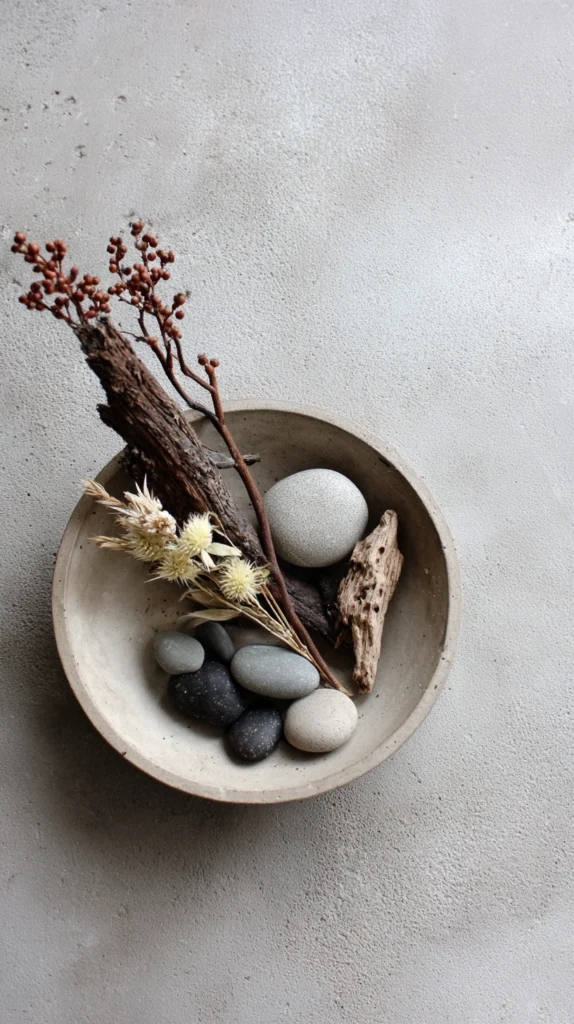
A wide, shallow bowl holding a composition of dried botanicals and smooth stones — a piece of driftwood, a cluster of dried lavender, a few seed heads, and three or four smooth river stones — is the summer bowl arrangement that requires the least ongoing maintenance and produces the most quietly beautiful result. It is assembled once and remains beautiful for months.
A wide ceramic or wooden bowl costs $8 – $25. Dried lavender bundles — $5 – $10. Dried seed heads — free from the garden or $3 – $8 purchased. Smooth river stones — free if collected or $5 – $10 for a bag. A piece of driftwood — free if gathered or $5 – $15 from a florist. Total arrangement investment: $18 – $68 for a display that requires nothing but occasional dusting.
Decor tip: Position the largest object in the bowl first — the piece of driftwood or the largest stone — and arrange everything else around it rather than filling the bowl from the outside in. A composition built around a central anchor object reads as intentionally arranged. The same objects placed without a focal point read as loosely gathered. The anchor is what gives the arrangement its visual centre of gravity.
5. The Summer Fruit and Herb Bowl
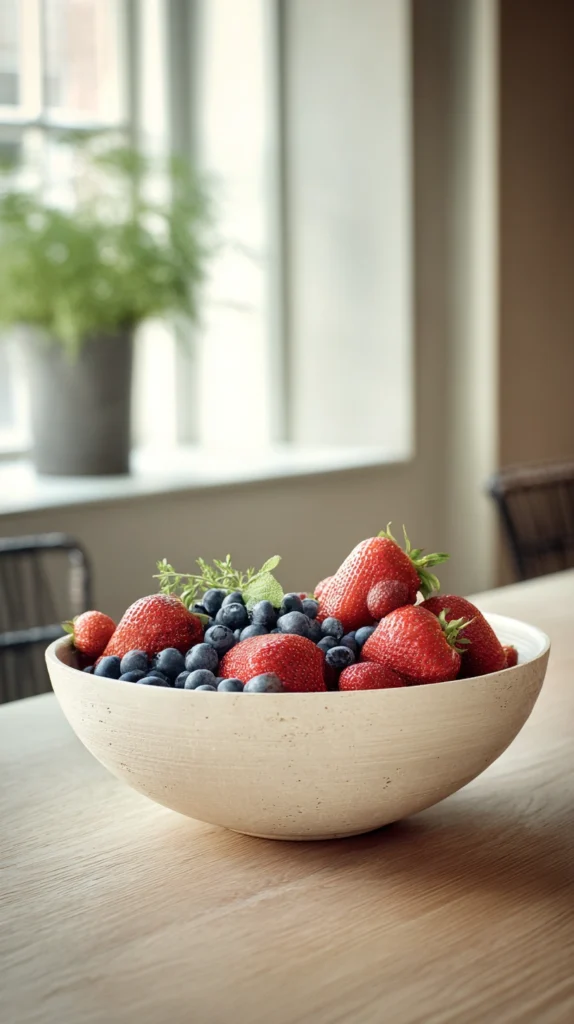
Budget: $10 – $50
A ceramic or wooden bowl holding a combination of summer fruit and fresh herbs — figs and basil, peaches and mint, strawberries and lemon thyme — is the kitchen table’s most sensory and most seasonal styling moment. The combination of fruit colour, herb fragrance, and the particular warmth of summer produce in a beautiful bowl makes the table feel genuinely abundant.
A wide, generous bowl in a warm natural material costs $10 – $30. Seasonal summer fruit — $5 – $15. Fresh herb sprigs tucked between the fruit — free from the garden or $2 – $5. The arrangement is refreshed weekly as the fruit is eaten and replaced, which keeps the display current with what is genuinely in season rather than what was in season when it was first assembled.
Decor tip: Choose fruit at slightly different stages of ripeness for the most visually interesting bowl arrangement. A bowl where every fig is perfectly ripe and uniformly dark purple reads as a grocery display. A bowl where some figs are deep purple, some still pale green, and one is split slightly at the base reads as a genuine harvest — which is the quality that makes a fruit bowl feel genuinely abundant rather than merely full.
6. The Marble Bowl Entryway Moment
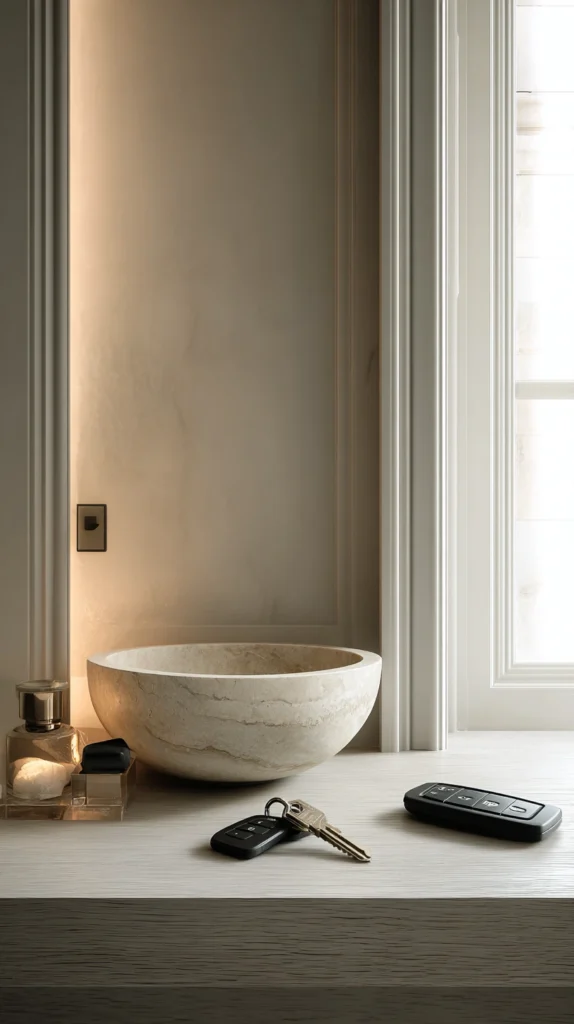
Budget: $20 – $100
A marble or stone bowl in the entryway — holding keys, a smooth pebble, a small candle, and nothing else — is the catch-all bowl elevated to the level of a genuine decorative object. The marble material communicates permanence and quality, and the restraint of its contents communicates that the home beyond the entryway has been considered with the same intention.
A marble or stone bowl in a standard entryway size costs $20 – $60 from homeware stores. A small candle beside the bowl — not in it — $8 – $20. A single smooth pebble or a dried botanical as the bowl’s sole decorative element — $0 – $10. The keys that will live in the bowl are already owned. The bowl is the investment.
Decor tip: Establish a strict limit of three functional objects in the entryway bowl — keys, one card, and one other item — and return anything additional to its correct location rather than allowing the bowl to become a depository for the contents of every arriving pocket. A marble bowl holding three objects reads as designed. The same bowl holding twelve objects reads as the surface where decisions go to be delayed.
7. The Terracotta Bowl Garden Herb Display
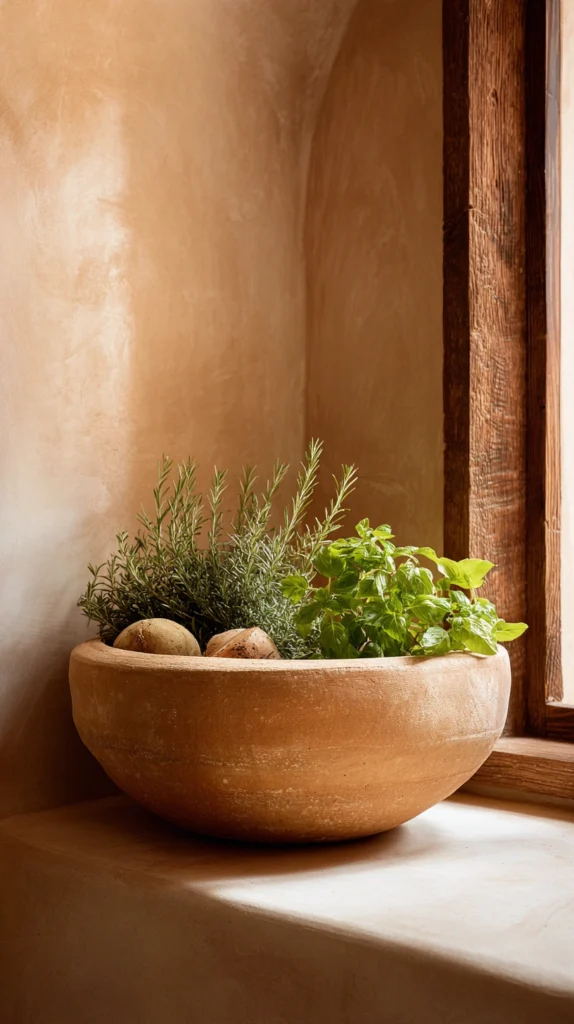
Budget: $10 – $50
A large terracotta bowl — unglazed, with the warm earth tone of the fired clay visible at every surface — planted with a collection of summer herbs and placed on a kitchen windowsill, a garden step, or an outdoor table, brings the most honest and most ancient of all ceramic materials to the summer styling moment in its most appropriate and most beautiful application.
A large unglazed terracotta bowl with drainage holes costs $8 – $20. Herb plants in small pots — rosemary, thyme, basil, and mint — cost $2 – $6 each, with four plants filling a standard bowl for $8 – $24. A layer of fine gravel on the surface of the potting mix — $3 – $8 for a small bag — gives the planting a clean, finished appearance that bare soil does not provide.
Decor tip: Allow the terracotta bowl to develop its natural white mineral deposits and weathering marks rather than cleaning them off. The pale mineral marks that appear on used terracotta are evidence of water passing through the porous clay — they read as genuinely used and genuinely earthy rather than neglected, and they give the bowl the particular patina of something that has been growing things for a long time.
8. The Glass Bowl Candle and Water Feature
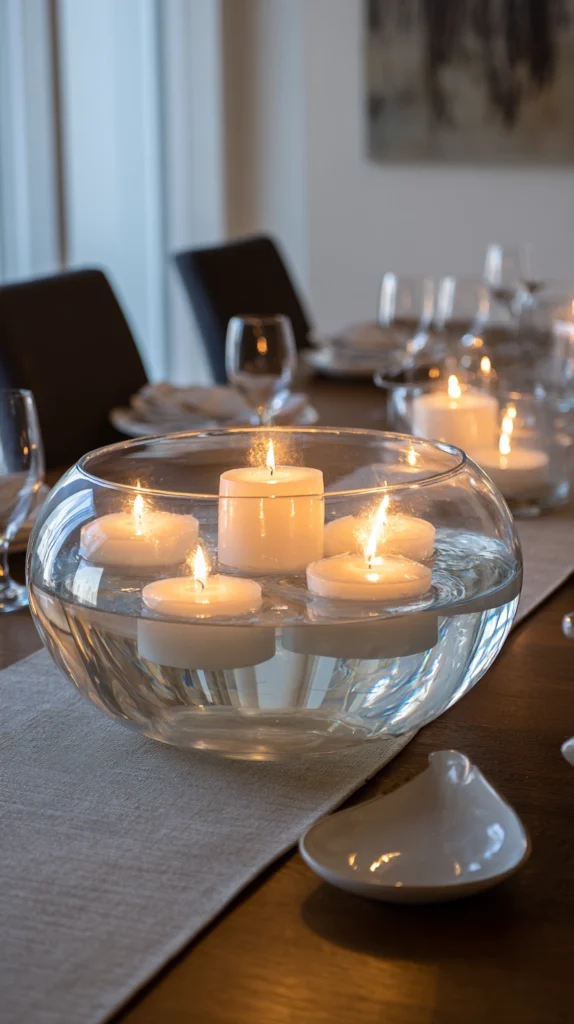
Budget: $20 – $80
A large glass bowl filled with water, floating candles, and lemon slices or flower petals — placed on the dining table or the coffee table — is the summer bowl arrangement that changes most dramatically between day and evening. In daylight, it is a still, clear object. At dusk, with the candles lit, it becomes a moving, glowing centrepiece.
A large clear glass bowl costs $10 – $30. Floating candles in white or ivory — $5 – $15 for a pack of ten. Lemon slices or rose petals to float alongside the candles — $2 – $8. Total bowl arrangement investment: $17 – $53 for a display that transforms the table atmosphere at the lighting of a match.
Decor tip: Light the floating candles thirty minutes before guests arrive rather than immediately before they sit down. Floating candles take ten to fifteen minutes to settle into a stable burn and produce their full, warm light. Candles lit at the moment of arrival are still establishing themselves when the first impression of the table is being made — and the first impression of the table is one of the most important impressions of any dinner.
9. The Wooden Bowl Living Room Focal Point
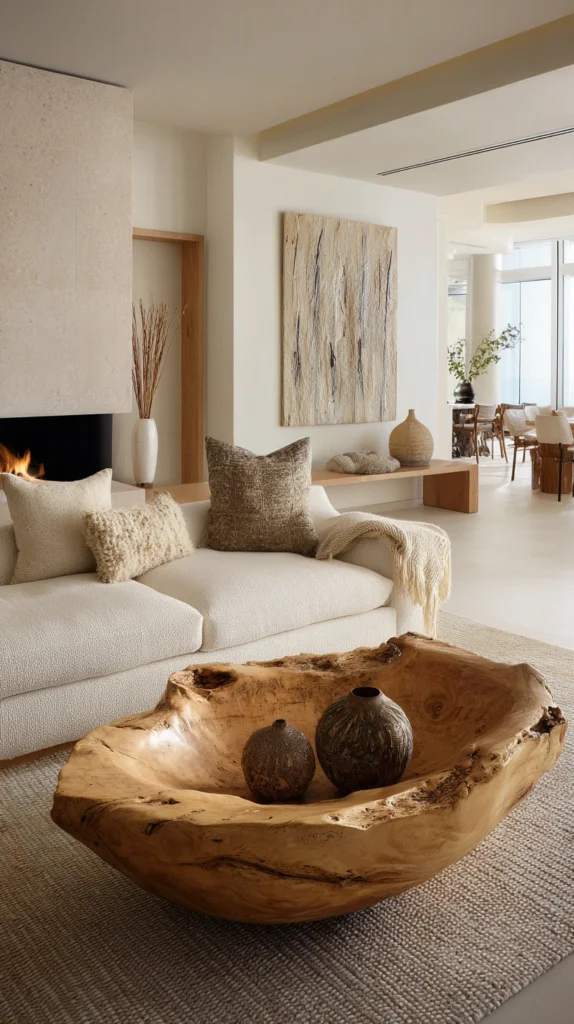
Budget: $25 – $150
A large, beautifully formed wooden bowl — in olive wood, walnut, or mango wood, placed on the coffee table or the living room sideboard — is the summer decorating object that does the most work with the least contents. A genuinely beautiful wooden bowl can sit empty and read as the room’s most considered object because the form and the material are sufficient on their own.
A hand-carved olive wood bowl costs $25 – $80 depending on size and provenance. A turned walnut bowl — $40 – $150. A mango wood bowl in a large format — $30 – $100. Any of these requires no styling contents to justify its presence on the surface — though a handful of smooth stones, a few walnuts still in their shells, or a cluster of dried seed heads adds a seasonal layer that complements the bowl without competing with it.
Decor tip: Oil a wooden bowl with a food-safe wood oil — walnut oil, mineral oil, or a dedicated bowl finishing oil — before first use and every three to four months thereafter. An oiled wooden bowl maintains its depth of colour, its resistance to cracking, and its smooth surface quality. An unoiled wooden bowl becomes dry, pale, and faintly rough within a single season in a centrally heated or air-conditioned interior.
10. The Bedroom Trinket Bowl
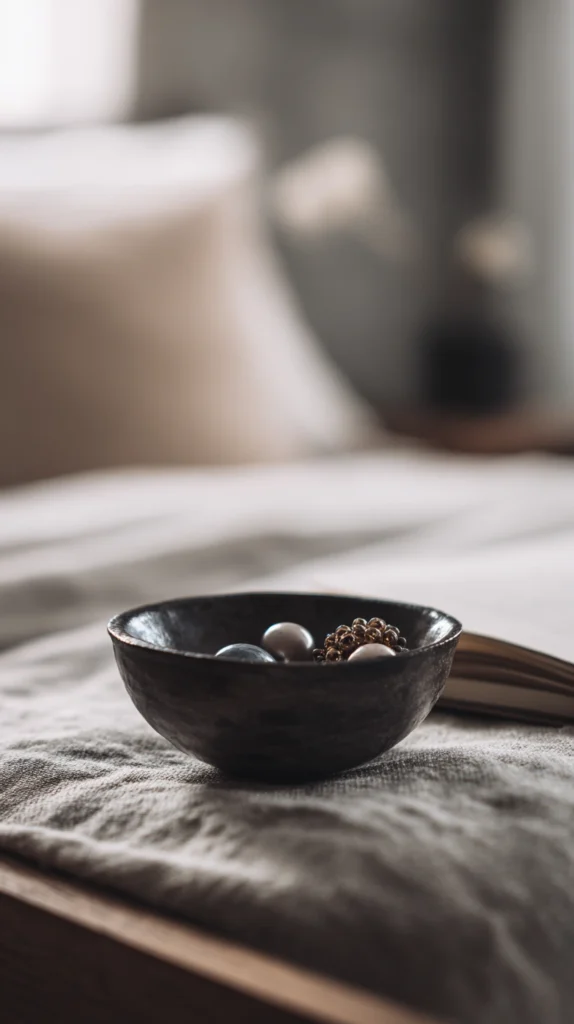
Budget: $10 – $50
A small ceramic or stone trinket bowl on the bedside table or the bedroom dresser — holding a ring, a hair clip, a small stone from somewhere that mattered, and nothing else — is the bedroom’s most personal and most intimate bowl moment. It holds the objects that are taken off at the end of the day and put on at the beginning of the next, and the bowl that holds them should be worthy of that daily ritual.
A small handmade ceramic dish in a pale glaze costs $10 – $30 from a craft market. A small marble or alabaster trinket bowl — $15 – $40. A shallow brass dish — $10 – $30. Any of these three material options suits the bedroom context — the choice between them is a matter of which material language the rest of the bedroom’s surfaces speak.
Decor tip: Limit the trinket bowl’s contents to three to five objects and remove anything that is not genuinely worn daily. A trinket bowl holding the jewellery and accessories of daily life reads as a functional, beautiful object. The same bowl holding six months of accumulated small objects — old receipts, forgotten earrings, miscellaneous coins — reads as a surface where decisions are postponed. The bowl is only as beautiful as the editing discipline applied to what it contains.
11. The Woven Basket Bowl Outdoor Table
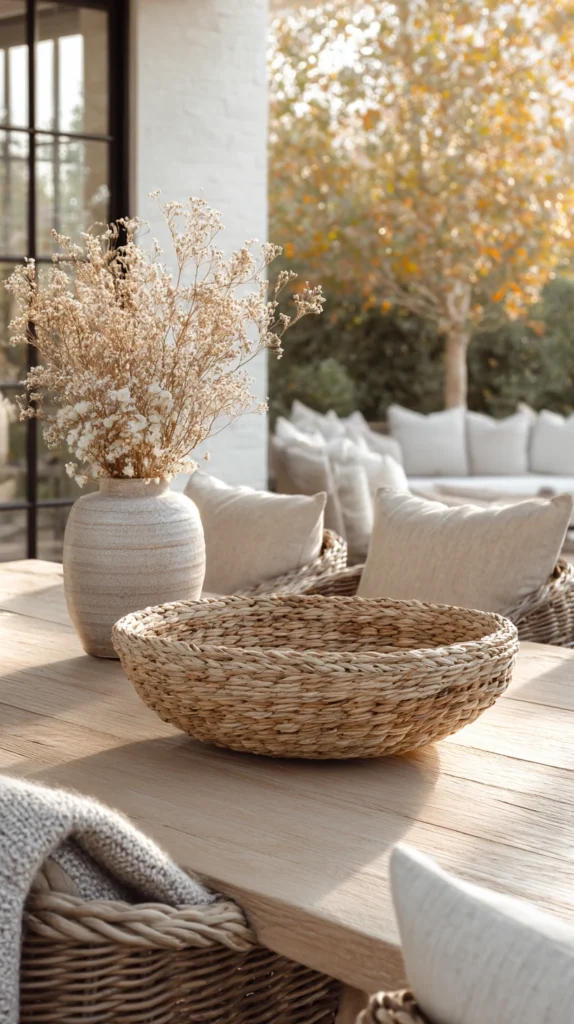
Budget: $15 – $80
A large woven basket bowl — seagrass, rattan, or water hyacinth — placed at the centre of an outdoor dining table or on an outdoor sideboard, styled with seasonal fruit, fresh herbs, or a cluster of garden flowers in a small vase tucked inside it, brings the warm, natural material language of woven craft to the summer outdoor table in its most relaxed and most appropriate form.
A large woven seagrass or rattan bowl costs $15 – $40. The contents — seasonal fruit, fresh herbs, a small vase of garden flowers — cost $5 – $20 depending on what is chosen. A weather-resistant lining inside the basket — a ceramic plate or a folded linen cloth — protects the weave from moisture if the contents include anything damp.
Decor tip: Choose a woven basket bowl with a flat base rather than a rounded one for outdoor table use. A flat-based basket bowl sits stable on a table surface regardless of the material below it. A rounded-base basket bowl rocks on any surface that is not perfectly flat — which most outdoor table surfaces are not — and shifts its contents with every breeze or every person leaning on the table edge.
12. The Bathroom Counter Bowl
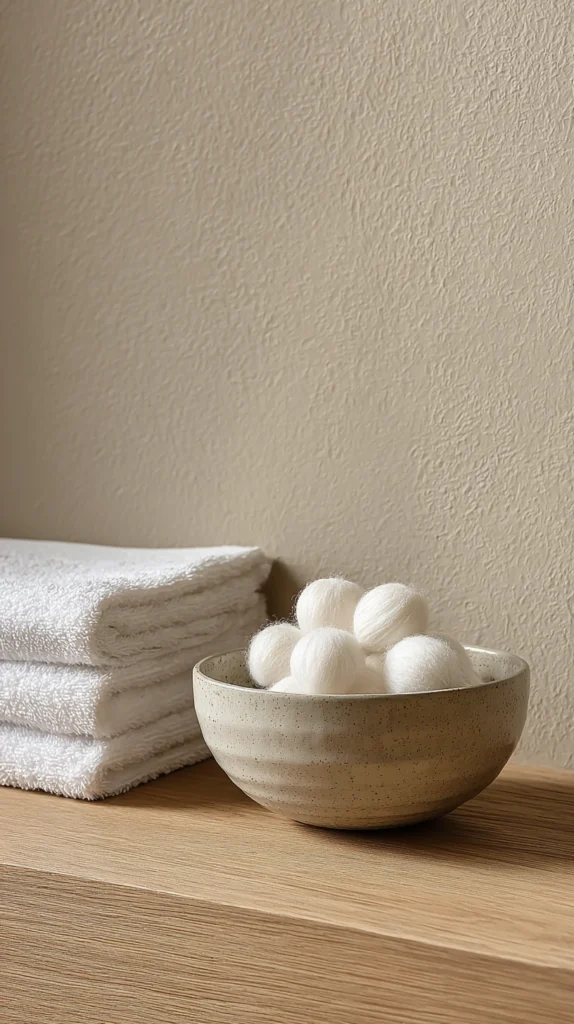
Budget: $15 – $80
A ceramic or stone bowl on the bathroom counter — holding cotton balls in a clean white pile, a bar of beautiful soap resting on the rim, and a small dried botanical tucked inside — turns the most functional of all bathroom surfaces into a considered, beautiful one. The bathroom counter bowl is the simplest expression of the principle that every surface in the home deserves an object that was chosen for it.
A wide ceramic bathroom bowl in a pale, clean glaze costs $15 – $40. A quality bar of soap — $5 – $15 — rests on the bowl’s rim rather than inside it, leaving the bowl’s interior for the cotton balls. A small sprig of dried lavender or eucalyptus — $3 – $8 — provides the botanical element and the fragrance that makes the bathroom counter feel genuinely considered rather than merely functional.
Decor tip: Replace the cotton balls in the bathroom bowl before they run visually low rather than waiting until the bowl is nearly empty. A bowl brimming with clean white cotton balls reads as freshly stocked and genuinely abundant. The same bowl with a sparse scattering of cotton balls at the base reads as depleted — and depletion is the opposite of the quality a well-styled bathroom surface is working toward.
13. The Children’s Nature Bowl
Budget: $5 – $30
A wide, low bowl on a child’s shelf or a low windowsill — filled with objects collected from the natural world: interesting stones, a feather, a dried leaf, a piece of bark, a small pine cone, and whatever else arrived in a pocket after a walk — is the most personal and most constantly changing bowl display in the home. It is a record of curiosity and a celebration of the natural world at the scale of a child’s attention.
A wide, low ceramic or wooden bowl costs $5 – $20. The contents — entirely free, entirely personal, and entirely subject to daily rearrangement by the child who collected them. A small magnifying glass resting beside the bowl — $5 – $10 — invites closer examination of the collection and communicates that looking carefully at small natural things is worthwhile, which is one of the most important things a home can communicate to a child.
Decor tip: Refresh the nature bowl with the child at the beginning of each week — removing objects that have lost their interest and adding newly collected ones from the most recent walk or garden visit. A nature bowl refreshed regularly remains a living record of ongoing curiosity. A nature bowl left unchanged for months becomes a static display — and static displays hold no particular interest for a child who has already examined every object in them.
14. The Fully Committed Summer Bowl Styling Room
Budget: $80 – $400
A home where every room has a bowl styled with the summer season in mind — a citrus bowl in the kitchen, a shell bowl in the bathroom, a floating flower bowl on the dining table, a wooden bowl on the coffee table, a trinket bowl on the bedside table, and a nature bowl on the child’s shelf — is a home that has been considered at the object level across every surface, in every room, for the full duration of the season.
The investment across all bowl moments: kitchen citrus $17 – $55, shell bowl $10 – $50, floating flower $17 – $53, wooden bowl $25 – $150, trinket bowl $10 – $50, nature bowl $5 – $30. Total: $84 – $388 for a home where the season has been genuinely invited in rather than simply acknowledged.
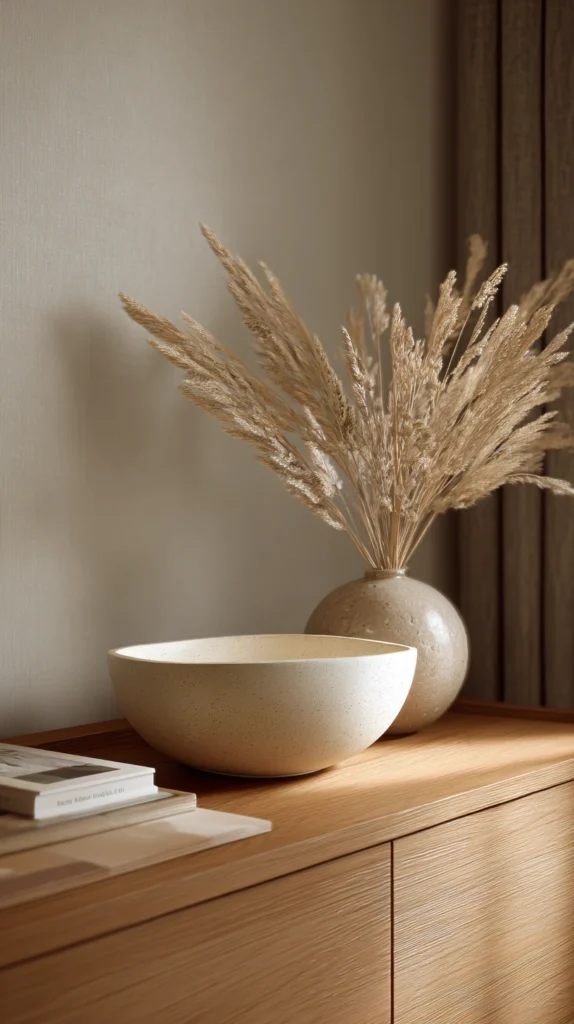
Decor tip: Choose bowls from a consistent material family across the home — all ceramic, or all natural materials, or all a combination of ceramic and wood — rather than mixing glass, ceramic, metal, and plastic in different rooms. A home where every room’s bowl shares a material language reads as coherently designed. A home where every room’s bowl is in a different material reads as decorated room by room without a connecting aesthetic thread.
A decorative bowl is not a container. It is a decision about what the surface it sits on is for and what the room around it values.
Style it with the season’s best materials — the citrus, the shells, the flowers, the fruit, the smooth stones — and change it as the season changes. A bowl refreshed is a room refreshed, and a room refreshed costs nothing beyond the willingness to pay attention to what the season is currently offering.
Begin with one bowl in one room. Choose it carefully. Fill it with intention. The rest of the home will follow.