15 Summer Entryway Ideas That Keep Your Home Fresh and Organized
The entryway is the room that does the most work and receives the least credit. It is where the outside world meets the inside home — where shoes come off, bags are dropped, keys are deposited, and the mental transition from out there to in here begins.
In summer, it carries additional demands: sandy shoes, damp swimwear, sunscreen tubes, insect repellent, and the particular accumulation of outdoor life that the warmest and most active months of the year generate in abundance.
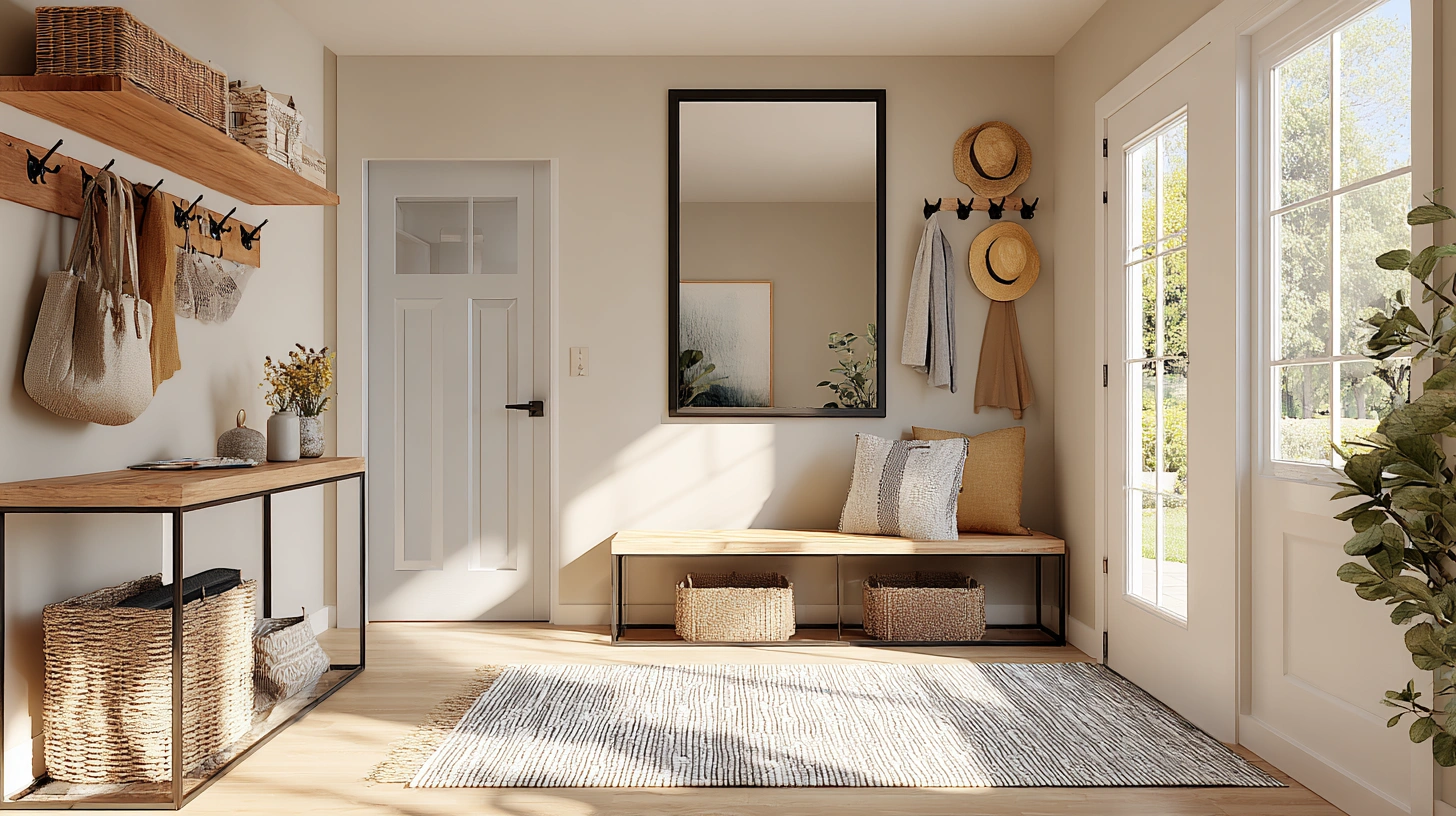
A summer entryway that is genuinely organised and genuinely fresh does not happen by accident. It requires storage that suits the specific objects summer produces, a colour and material palette that references the season without requiring seasonal redecoration, and a clarity of arrangement that makes the transition between inside and outside as smooth and as pleasant as the season itself deserves.
Every idea below addresses both the practical and the decorative demands of the summer entryway simultaneously — because the two are inseparable in any space that is genuinely well considered.
1. The Rattan and Natural Fibre Refresh
Budget: $40 – $200
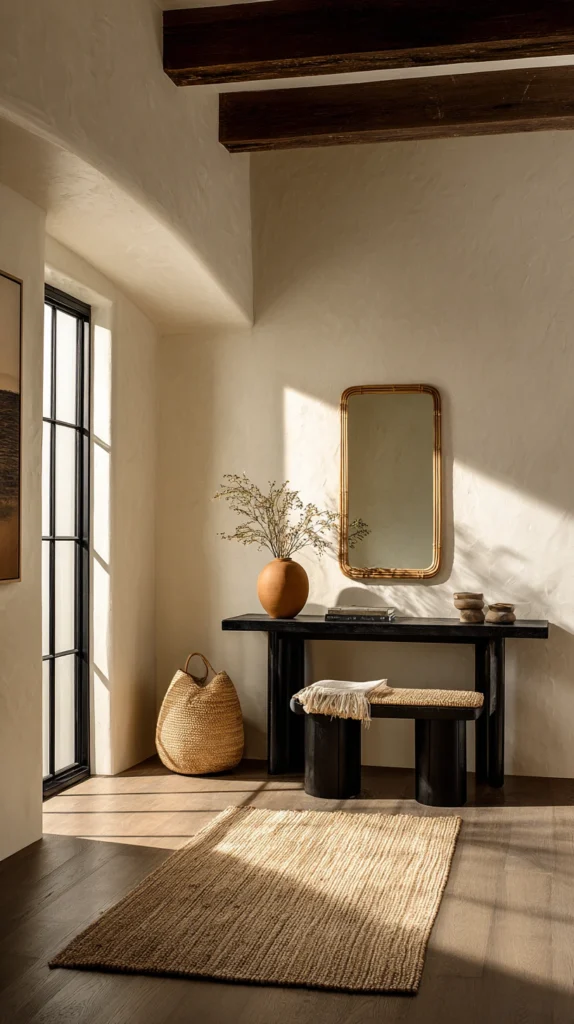
Replacing or supplementing existing entryway accessories with rattan, seagrass, jute, and woven natural fibre pieces — a rattan console table, a jute runner, a seagrass storage basket, a woven rattan mirror frame — creates an immediate summer atmosphere in the entryway that feels genuinely seasonal without requiring a full redecoration. Natural fibre materials have a warmth and an organic texture that references the outdoor world in a way that painted or lacquered surfaces do not, and they suit the summer entryway’s function as a transitional space between inside and outside with particular natural logic.
A jute runner in a natural, undyed tone costs $20–$50 for a standard hallway length and is significantly more durable than sisal while providing a very similar visual quality. A rattan mirror costs $40–$120 and creates the most immediately impactful single change available to an entryway surface — it reflects light, adds natural texture, and provides the practical last-look function that the entryway mirror has always served.
Styling tip: Layer two different natural fibre textures in the same entryway rather than using a single one throughout — a jute runner over a seagrass mat, a woven rattan basket beside a smooth sisal storage cube. The contrast between different weave densities and different natural fibre types creates visual richness within a consistent material palette that single-material schemes cannot achieve.
2. The Summer Colour Palette Update
Budget: $20 – $120
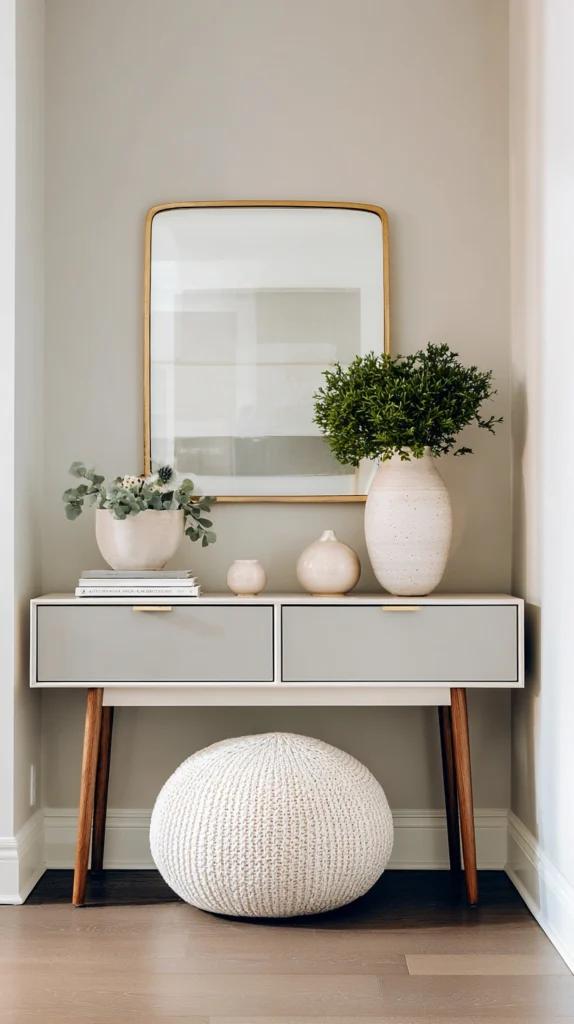
A summer entryway colour update — introducing pale aqua, warm coral, soft sage, sun-bleached lemon, or natural sand into the space through paint, textiles, or accessories — creates an immediate seasonal mood without any structural change. The entryway is the ideal room for a seasonal colour refresh because its small scale means that even a single painted console, a changed runner, or a new set of hooks in a summer colour has a disproportionately large impact on the overall atmosphere of the space.
Paint a single piece of furniture — the console table, the coat rack frame, the shelf unit — in a summer colour for the season and repaint it in a deeper, warmer tone for autumn. A small tin of chalk paint ($15–$25) covers one piece of furniture in two coats and can be changed completely at the end of the season without primer or sanding. The seasonal furniture colour change costs almost nothing and creates a genuinely different entryway atmosphere with each passing season.
Styling tip: Choose the summer colour update based on what is visible through the front door when it is open — the garden, the street planting, the outdoor colour palette of the immediate environment. An entryway colour that connects to the colours visible beyond the front door creates a visual transition between outside and inside that makes the space feel like a genuine bridge between the two rather than an abrupt shift from one world to another.
3. The Shoe Storage Solution
Budget: $30 – $200
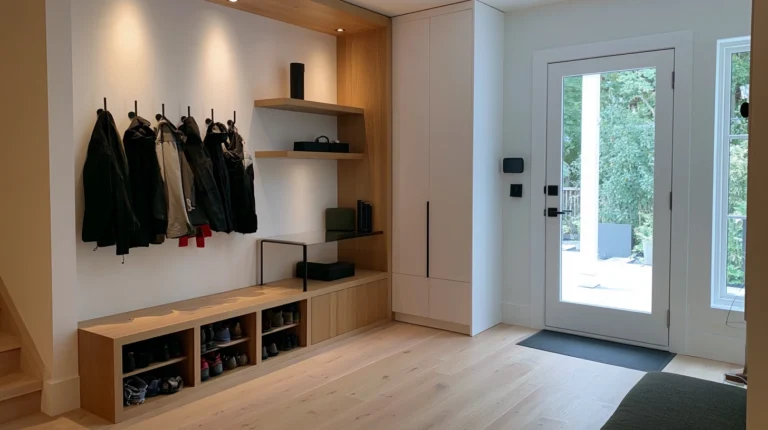
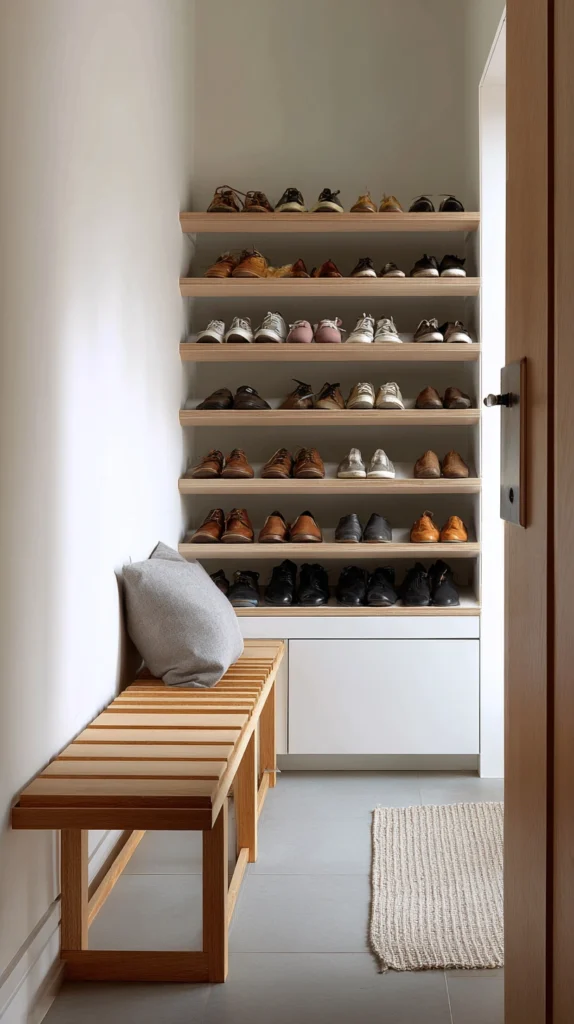
Summer generates more shoe variety than any other season — flip flops, sandals, trainers, walking boots, water shoes, and the specific footwear of every outdoor activity the household pursues — and an entryway without a proper shoe storage system becomes, by July, a floor-level obstacle course of discarded footwear that makes the space feel chaotic regardless of how well everything else is organised. A dedicated shoe storage system that accommodates the full summer footwear range is the single most practically impactful entryway improvement available.
A low open-front shoe rack at floor level costs $20–$60 and provides immediately accessible storage for the frequently worn pairs. A bench with internal shoe storage costs $60–$150 and adds seating for putting shoes on and taking them off — the combination of storage and seating is the most functional and the most spatially efficient entryway furniture investment available. A wall-mounted angled shoe ledge system costs $40–$100 and suits narrow hallways where floor space is genuinely limited.
Styling tip: Limit the visible shoe storage in the entryway to the shoes in active current rotation — the three or four pairs used most frequently in the past week — and move less frequently used footwear to a secondary storage location. An entryway shoe rack containing fifteen pairs of shoes communicates that the storage system has been overwhelmed; the same rack containing four or five current pairs communicates that the entryway is genuinely organised and under control.
4. The Hook and Hang Wall System
Budget: $30 – $150
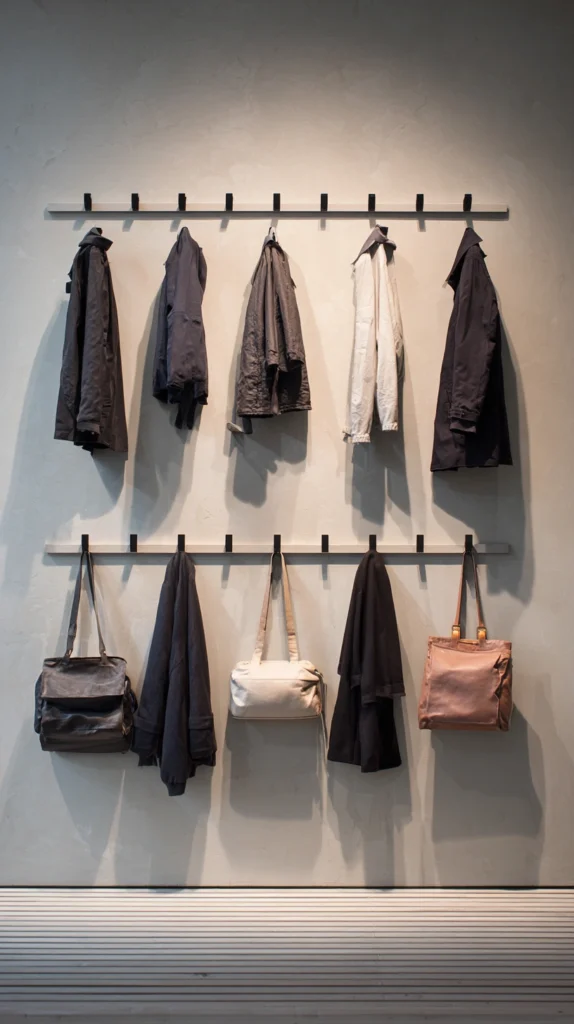
A properly considered hook wall — enough hooks for every regular user of the entryway plus two or three additional hooks for guests, arranged at heights suited to the full range of household members from children to adults, and strong enough to hold the genuinely heavy bags and outdoor equipment that summer produces — solves the most persistent practical problem of any entryway simultaneously. A hook wall that is genuinely sufficient for the household’s needs means that coats, bags, hats, and equipment go on hooks rather than on the floor, chairs, or stairs where they would otherwise accumulate.
Shaker-style peg rails provide the most flexible and the most visually attractive hook system available — they can be added to at any point, they suit every interior style, and they are available in natural timber, painted wood, or powder-coated metal at modest cost ($20–$60 for a standard length). Space hooks generously — a minimum of 15 centimetres between hooks for bags and coats — rather than maximising the number of hooks per metre of wall, which creates a dense arrangement where items cannot hang freely.
Styling tip: Install the hook rail at two different heights — a high rail at adult shoulder height for coats, bags, and adult outdoor equipment, and a low rail at child height for children’s bags, jackets, and smaller items. The two-height system serves every household member independently, reduces the competition for hook space that creates the floor-level pile, and keeps the entryway wall organised at every height from floor to ceiling.
5. The Summer Botanical Display
Budget: $20 – $100
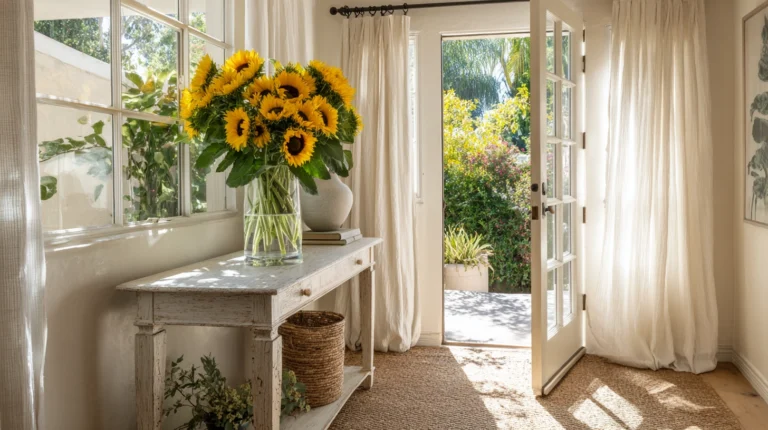
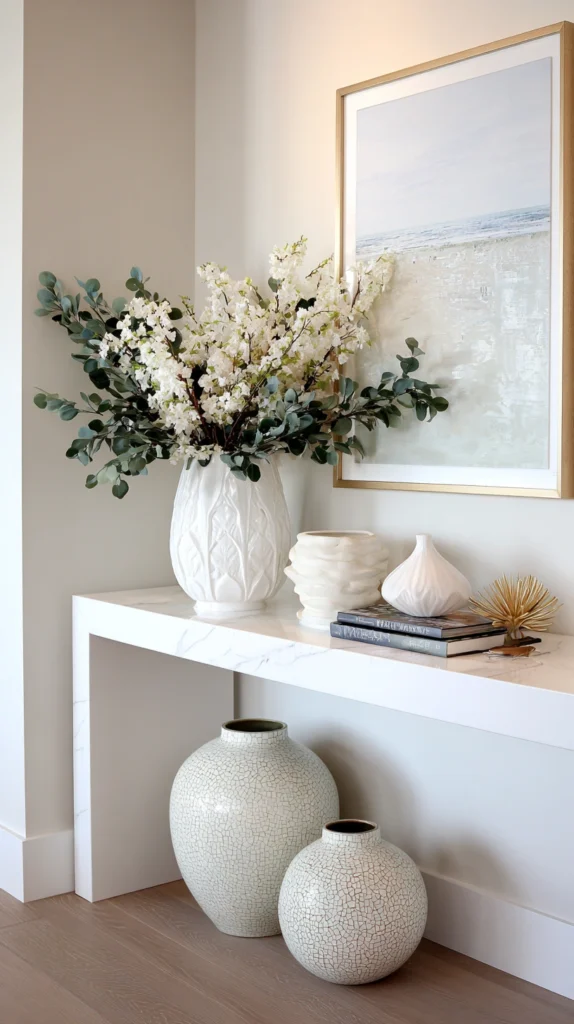
A summer botanical display in the entryway — a generous bunch of garden-cut flowers in a simple ceramic vase, a single architectural plant on the console, or a small collection of potted herbs that can be used in summer cooking — brings the vitality and the fragrance of the summer garden into the transitional space where it is experienced most immediately on arrival home. The botanical element communicates care and seasonal attention in the most direct and the most universally appreciated way available to any entryway decoration.
Sunflowers, zinnias, sweet peas, dahlias, and cosmos — the flowers of the summer garden — cost very little when cut from the garden or bought at a farmers market and last five to seven days in a clean vase. Replace weekly rather than allowing them to pass their best — a fresh bunch of flowers communicates care, while an overblown or wilting arrangement communicates the opposite. The frequency of replacement is the commitment; the reward is an entryway that smells and looks genuinely alive every day of the summer.
Styling tip: Choose a vase that is consistently used in the entryway throughout the summer rather than a different vessel for every arrangement. A consistent vase becomes part of the permanent character of the space; the flowers change within it week by week, providing the seasonal variation without disrupting the overall composition of the entryway. The vase is the fixed element; the flowers are the seasonal content.
6. The Organised Sports and Activity Equipment Zone
Budget: $40 – $200
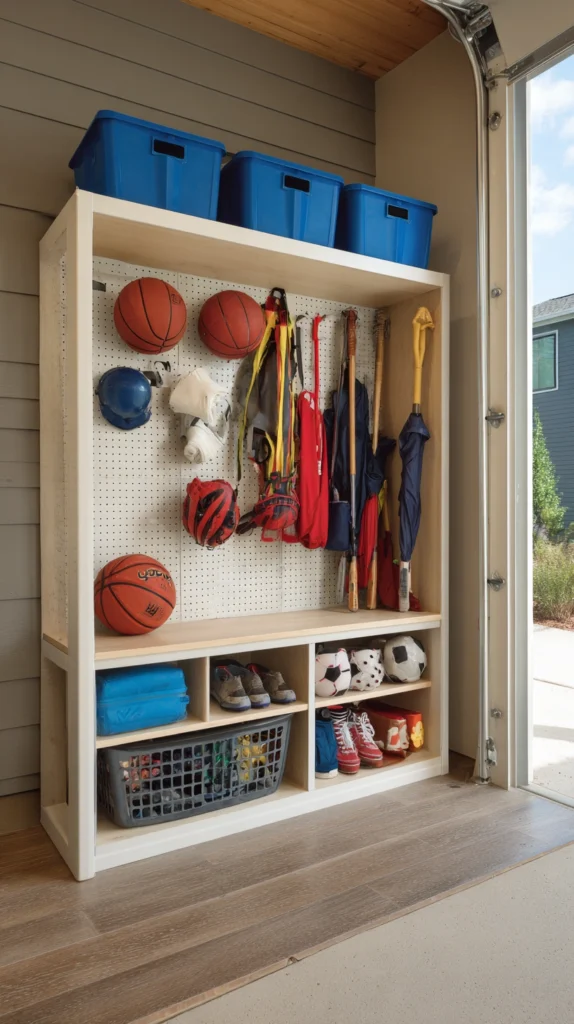
Summer generates a category of outdoor equipment that no other season produces in the same quantity — cricket bats, racquets, footballs, kites, frisbees, water bottles, swim bags, cycling helmets, and the accumulated equipment of every outdoor activity the household pursues through the warmest months. An entryway without a specific storage solution for this category will be overwhelmed by it within weeks of summer beginning; one with a defined equipment zone keeps it contained and accessible simultaneously.
A large galvanised metal tub or deep wicker basket beside the door provides a single, clearly defined home for sports equipment and outdoor toys — deep enough to contain cricket bats and racquet handles, wide enough to hold multiple items without requiring careful organisation. It costs $20–$50 and communicates to every household member that equipment goes in the tub rather than on the floor, which is the entire practical intervention required.
Styling tip: Label the equipment storage — a small handwritten card or a chalk label on a tag attached to the basket — with the category of what it contains. Labelled storage is used correctly by every household member including children; unlabelled storage is used for whatever does not have an obvious home, which gradually transforms the equipment tub into a general miscellaneous repository that solves nothing.
7. The Entryway Bench With Storage
Budget: $80 – $400
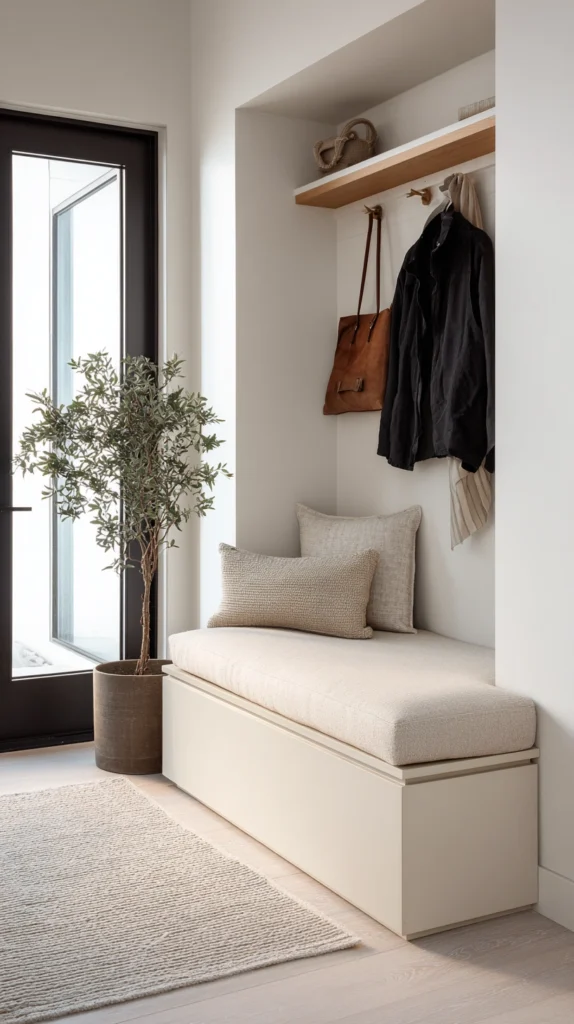
An entryway bench with integrated storage — a hinged seat that opens to a storage compartment below, or a slatted seat with drawers or cubby holes beneath — is the most space-efficient and the most functionally complete piece of entryway furniture available. It provides seating for putting on and removing shoes, surface storage for keys, sunglasses, and small daily-carry objects, and internal storage for the seasonal equipment and footwear that benefits from being contained rather than displayed.
A painted timber bench with internal storage costs $80–$200 from furniture retailers or can be built from basic materials for $40–$80. A rattan or wicker storage bench costs $60–$150 and suits the summer entryway’s natural material palette. Position the bench directly beside the door rather than against the far wall — the bench used for shoe removal needs to be immediately accessible at the point of entry, not a destination reached after crossing the entryway in outdoor shoes.
Styling tip: Place a small cushion or seat pad on the bench surface rather than leaving it bare timber or bare rattan. A seat pad in a summer fabric — striped cotton, linen, outdoor-grade canvas — adds both comfort and colour to the bench surface and communicates that the piece was chosen for the space rather than simply providing functional seating. Replace the seat pad seasonally — a fresh pad at the beginning of summer is a very low-cost entryway refresh.
8. The Scent and Fresh Air Strategy
Budget: $15 – $80
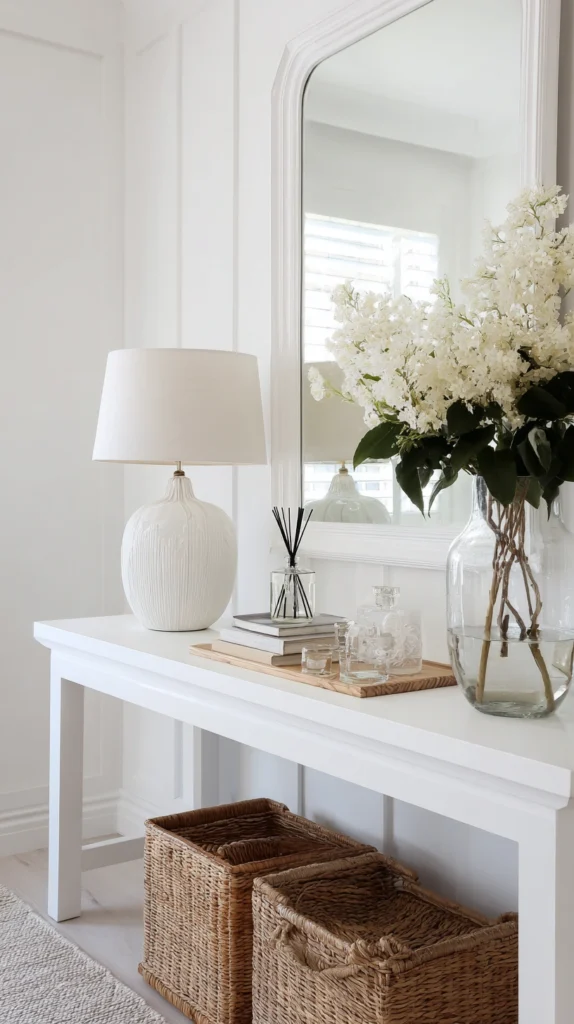
The summer entryway has particular scent challenges — sunscreen, insect repellent, wet swimwear, sports shoes, and the general intensity of summer outdoor life can accumulate in a small hallway space with unfortunate results. A deliberate scent strategy — a diffuser with a clean, fresh fragrance, a bowl of dried lavender or potpourri, a fragrant potted plant on the console, or simply a regular habit of opening the entryway window — transforms the first sensory impression of the home from something to be apologised for into something genuinely welcoming.
Reed diffusers in clean, light summer fragrances — white tea, sea salt, fresh linen, citrus and herb — cost $15–$40 and provide a consistent background fragrance for four to six weeks. A potted gardenia or jasmine plant ($15–$30) provides a natural fragrance of extraordinary richness for the duration of its flowering period and doubles as a botanical display. A small bowl of dried lavender from the garden costs nothing beyond the gathering and provides a gentle, natural fragrance that suits the summer entryway perfectly.
Styling tip: Match the entryway fragrance to the garden if possible — if lavender grows beside the front door, a lavender-scented diffuser inside creates a seamless sensory transition from outside to inside. If roses flank the entrance path, a light rose fragrance in the diffuser reinforces the connection between the garden and the home in a way that guests notice immediately even when they cannot identify what creates the effect.
9. The Summer Reading and Activity Basket
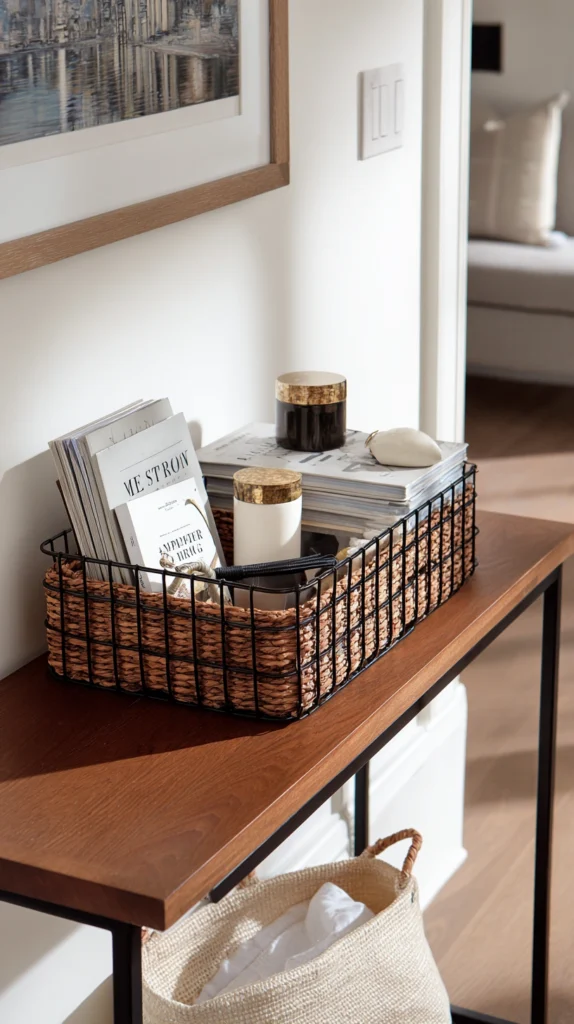
Budget: $20 – $80
A basket or tray in the entryway dedicated to the items that leave and return with the household through the most active season of the year — sunglasses, a sunscreen tube, a water bottle, a hat, a light cardigan for cooler evenings, keys, and the book currently being read — creates an organised departure point that ensures nothing essential is forgotten on the way out and nothing accumulates across multiple surfaces on the way back in. The summer departure basket is a practical system disguised as a decorative element.
A large, shallow tray on the console surface works equally well as a basket — contained, flat, visible. The key quality of the summer activity tray is that it is large enough to hold everything that needs to live there without overflow, visible enough to be checked habitually on the way out, and positioned close enough to the door that use is automatic rather than deliberate.
Styling tip: Edit the contents of the summer departure basket weekly — removing what has accumulated that does not belong there and ensuring that the genuinely needed items are present and accessible. A basket that is never edited becomes a miscellaneous collection of objects that does not serve its intended function; one that is reviewed weekly remains a genuinely useful departure point for every summer outing.
10. The Gallery of Summer Memories
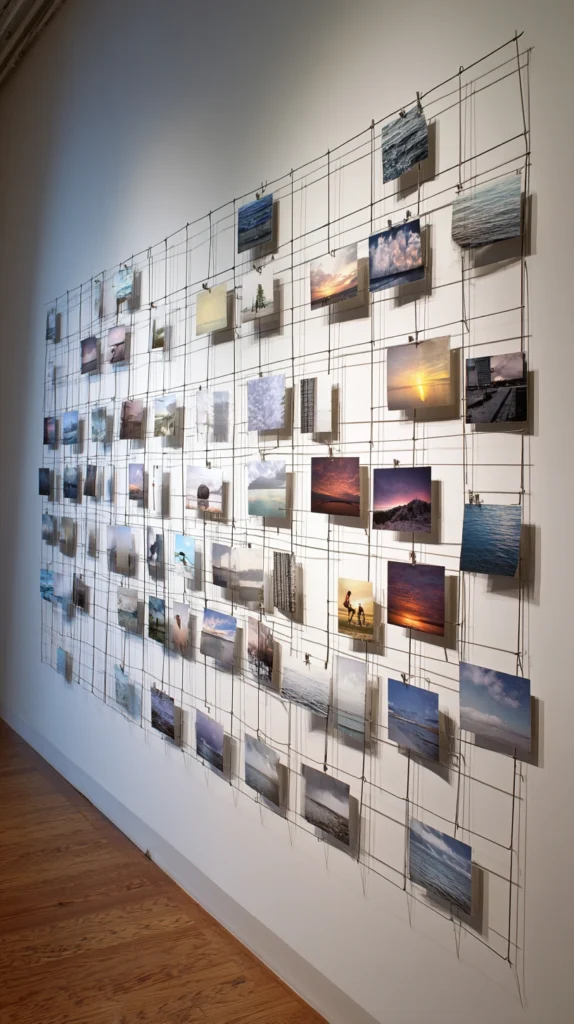
Budget: $20 – $100
A rotating display of summer photographs — printed and framed or clipped to a wire, updated through the summer as new images are taken — creates an entryway gallery that documents the season as it unfolds and communicates the life being lived within the home in the most personal and the most immediately legible way available. The summer memory gallery turns the entryway wall from a purely transitional surface into one that is worth looking at every time the space is passed through.
Use a magnetic wire photo display ($15–$30) strung between two small hooks for photographs that can be added, removed, and rearranged without frames — the informal clip display suits the seasonal, changing character of a summer photo gallery better than a formal framed arrangement, and the ability to add new images throughout the summer keeps the display alive and current throughout the season.
Styling tip: Print photographs at a consistent size — all 4×6 inches, all 5×7, or all square — for a gallery that looks composed rather than randomly assembled. Consistent sizing creates visual order within an arrangement that is otherwise intentionally informal and changeable, and the order communicates that the display was considered rather than simply accumulated.
11. The Light and Mirror Combination
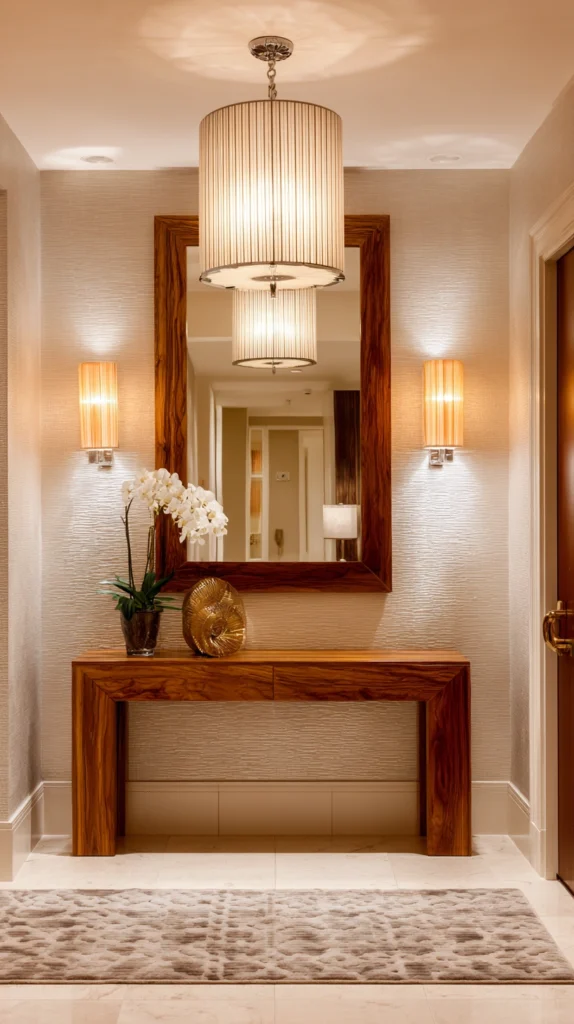
Budget: $60 – $300
A large mirror paired with a dedicated entryway light — a wall sconce on either side of the mirror, a pendant light above it, or a table lamp on the console beneath it — creates the most light-filled and the most flattering entryway atmosphere available. Summer entryways receive varying natural light depending on their orientation, and a well-lit mirror in the entryway ensures the space is always bright, welcoming, and genuinely useful for the last-look function that every entryway mirror serves.
A warm white wall sconce on either side of a large mirror costs $30–$80 each and creates a classic vanity light arrangement that flatters the face and fills the entryway with warm, even light. A vintage-style pendant light above the mirror costs $40–$120 and creates the most characterful single light fixture available in the space — visible from the moment the door is opened and setting the tone for the whole interior from the first moment of arrival.
Styling tip: Specify all entryway lighting at 2700K colour temperature — warm white — rather than cooler white or daylight spectrum. Warm white light in an entryway creates a welcoming, flattering atmosphere that communicates the warmth of the home; cool white light creates a slightly clinical, institutional quality that no amount of warm decoration can entirely counteract.
12. The Seasonal Welcome Mat
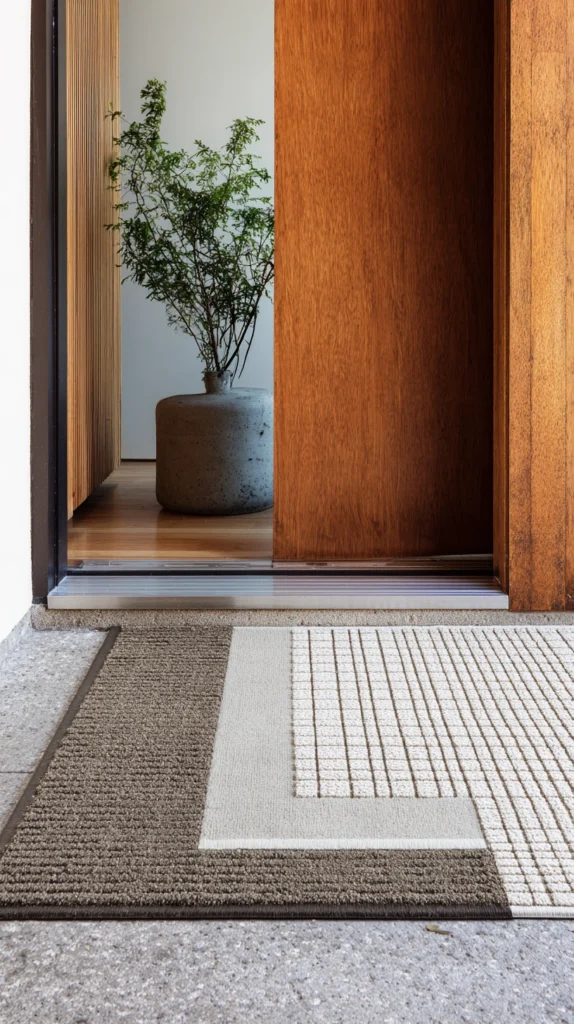
Budget: $15 – $80
A high-quality door mat — both an exterior mat outside the front door and an interior mat immediately inside it — is the most practical and the most consistently overlooked entryway investment available. Summer brings more outdoor dirt, sand, grass, and mud into the home than any other season, and a proper mat system — one designed to scrape and absorb rather than simply provide a surface — captures the majority of it before it reaches the entryway floor or travels into the rest of the home.
An exterior coir mat with a deep pile and a solid rubber backing costs $20–$50 and removes the majority of mud and debris from shoes before the door is opened. An interior cotton or microfibre mat costs $15–$40 and absorbs the remaining moisture and fine particles that pass the exterior mat. The two-mat system costs less than a single decorative mat and performs many times better at its primary function.
Styling tip: Choose a summer welcome mat with a botanical motif, a coastal pattern, or a simple typographic message that suits the season and the character of the home. A seasonal mat communicates that the entryway is attended to and updated — it is a very small decorating gesture with a disproportionately large impact on the first impression the home makes, because the mat is always the first surface that a visitor’s eyes encounter at close range.
13. The Organised Sunscreen and Summer Essentials Station
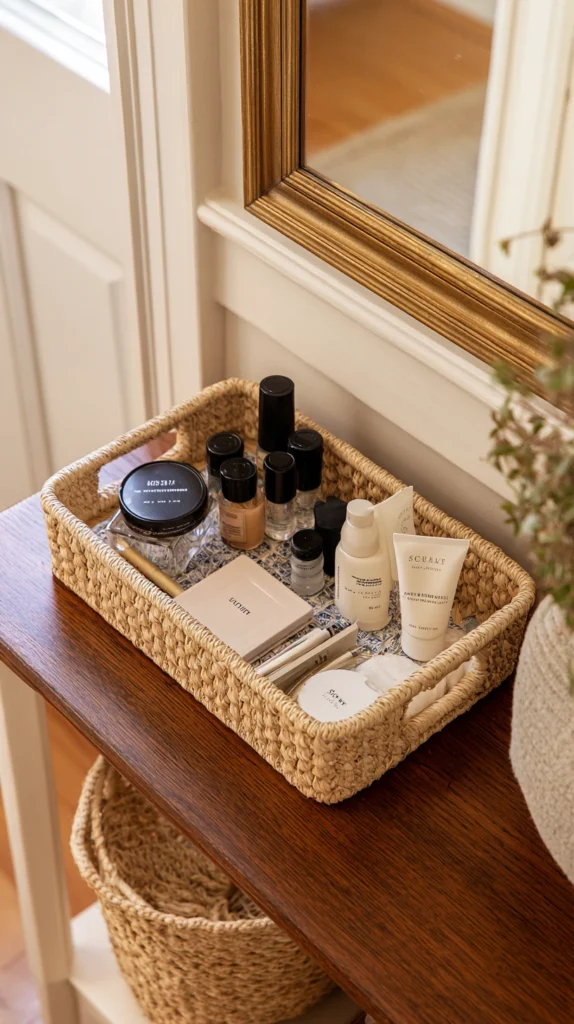
Budget: $15 – $60
A small, dedicated station for summer essentials — sunscreen, lip balm, insect repellent, a small first aid kit, and a hair tie or two — organised in a small tray or basket at the entryway console or shelf creates a reminder system that ensures these items are applied before leaving and returned to their place on arrival. The summer essentials station is the entryway equivalent of the keys bowl — a defined home for the small objects that need to be accessible every time the front door opens.
A small ceramic tray or wooden dish costs $5–$15 and provides sufficient contained storage for the summer essentials without requiring a dedicated piece of furniture. Position it beside the keys bowl, the departure basket, or wherever the household’s established departure ritual already centres — the essential station works best when it is integrated into the existing exit routine rather than established as a separate system requiring a deliberate detour.
Styling tip: Decant sunscreen into a smaller, more attractive bottle — a frosted glass pump bottle costs $3–$8 and transforms the functional object into something that suits the aesthetic of a considered entryway. The original tube or bottle communicates that the object is there for convenience rather than consideration; the decanted version communicates that even the functional objects in the entryway have been thought about.
14. The Summer Textile Swap
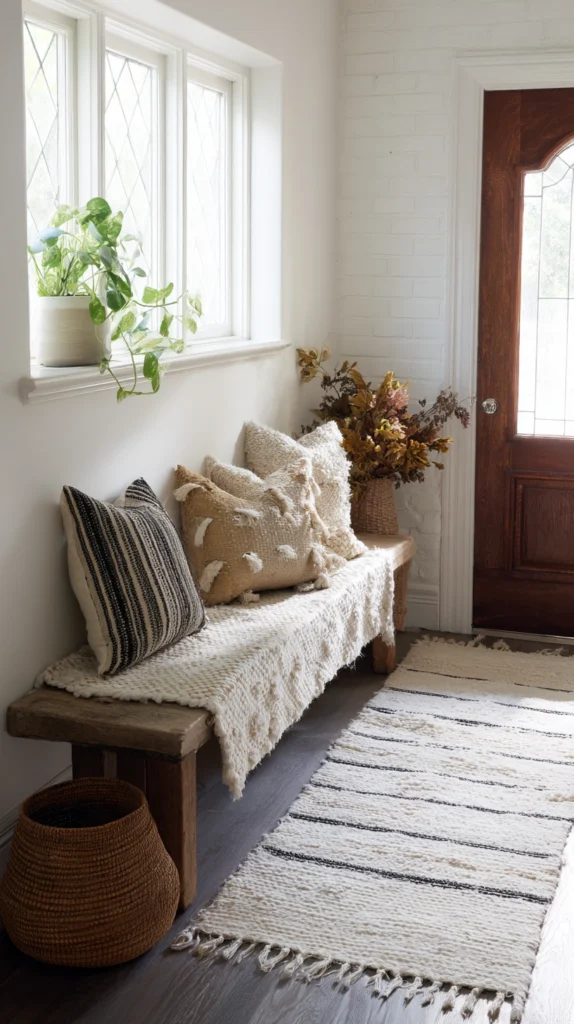
Budget: $30 – $150
Swapping the entryway textiles for the season — replacing a heavy wool runner with a cotton flat weave, changing a thick felt door mat for a woven cotton alternative, updating a padded bench cushion in a winter fabric for one in a light linen or outdoor-grade canvas — creates an immediate seasonal shift in the atmosphere of the space that colour and decoration alone cannot achieve. Textiles carry temperature — visually and literally — and the transition from heavy to light in the entryway communicates summer as directly as any decorative choice.
A cotton flat weave runner in a summer colour or pattern costs $25–$60 for a standard hallway length and is fully machine washable — a significant practical advantage in a space that takes the full impact of summer outdoor life on every surface. A linen bench cushion costs $20–$50 and provides both comfort and the particular quality of casual, relaxed summer domesticity that heavier fabrics in darker tones cannot convey.
Styling tip: Store the winter entryway textiles — runner, mats, heavy cushion covers — in a vacuum-storage bag at the beginning of summer to free up the storage space they would otherwise occupy for the summer season and to preserve them in clean condition for return to use in autumn. The vacuum bag system keeps the seasonal textile rotation manageable and ensures the stored items are ready to use immediately when the season changes back.
15. The Command Centre Wall
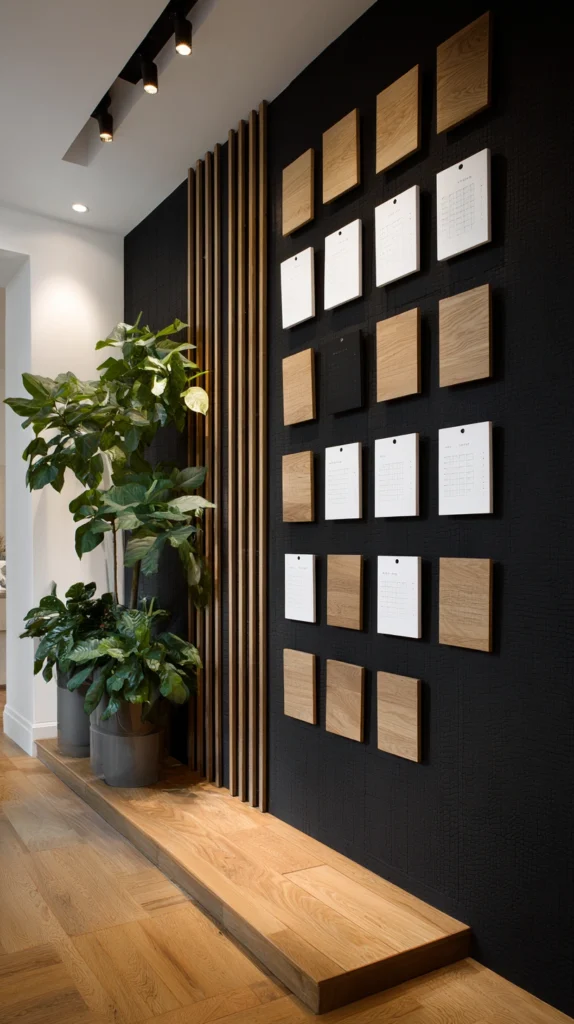
Budget: $40 – $200
A household command centre on the entryway wall — a wall calendar for summer activities and family scheduling, a cork board for current invitations, tickets, and important cards, a chalk or whiteboard for daily notes and reminders, and a key hook system that serves every household member — creates the most practically functional wall installation available in the entryway and transforms the space from a purely transitional area into a genuine household organisation hub. In summer, when the schedule is full of activities, trips, and events, a visible command centre in the space everyone passes through is the most effective organisational tool available.
A framed cork board costs $15–$40 for a standard size. A wall calendar costs $10–$25. A small chalk panel costs $15–$30. All three mounted in a consistent arrangement on a single entryway wall create a functional installation that costs under $100 in total and performs a household organisational function that no digital equivalent entirely replaces — the visible, physical reminder at the point of departure is more reliably noticed than any phone notification or app alert.
Styling tip: Frame the command centre elements consistently — all in the same frame style and colour, or all mounted on a single painted backing panel — so the functional wall installation reads as a composed design element rather than a collection of practical boards attached to the wall without relationship to each other. The framing is the detail that determines whether the command centre looks deliberately designed or accidentally assembled, and it costs almost nothing additional to the overall installation.
The summer entryway that works is the one that has been set up with honest attention to what the household actually does every time it uses the space — what comes in, what goes out, what accumulates, what needs to be found quickly, and what creates the mood of the transition between inside and outside. The decoration serves the organisation and the organisation enables the decoration. When both are working together, the summer entryway becomes the most genuinely useful room in the home — the one that makes every arrival feel like returning to somewhere worth being, and every departure feel like setting out from somewhere well prepared.