16 Small Living Room Layout Ideas to Maximize Space
Small living rooms require strategic planning and creative thinking to accommodate seating, storage, entertainment, and circulation without feeling cramped or cluttered. The right layout transforms limited square footage into functional, comfortable spaces that feel larger than their actual dimensions while serving all the purposes living rooms must fulfill.
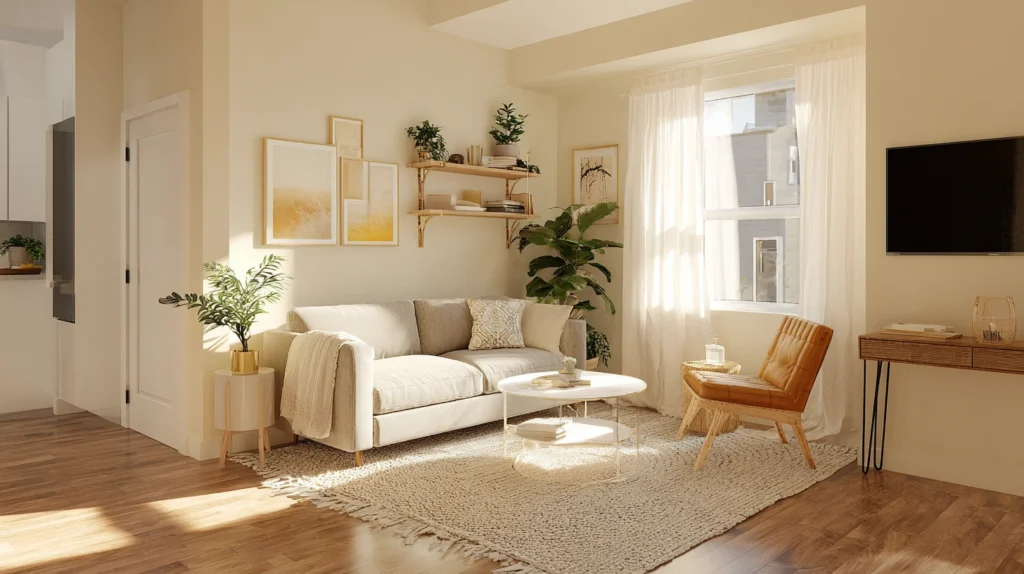
Effective space planning considers traffic flow, furniture scale, visual balance, and multi-functional elements that work harder in compact environments than they would in spacious rooms. These 16 small living room layout ideas demonstrate how thoughtful furniture arrangement, clever space utilization, and design techniques create the illusion of expanded space while maximizing every available inch for practical living.
1. Float Furniture Away from Walls
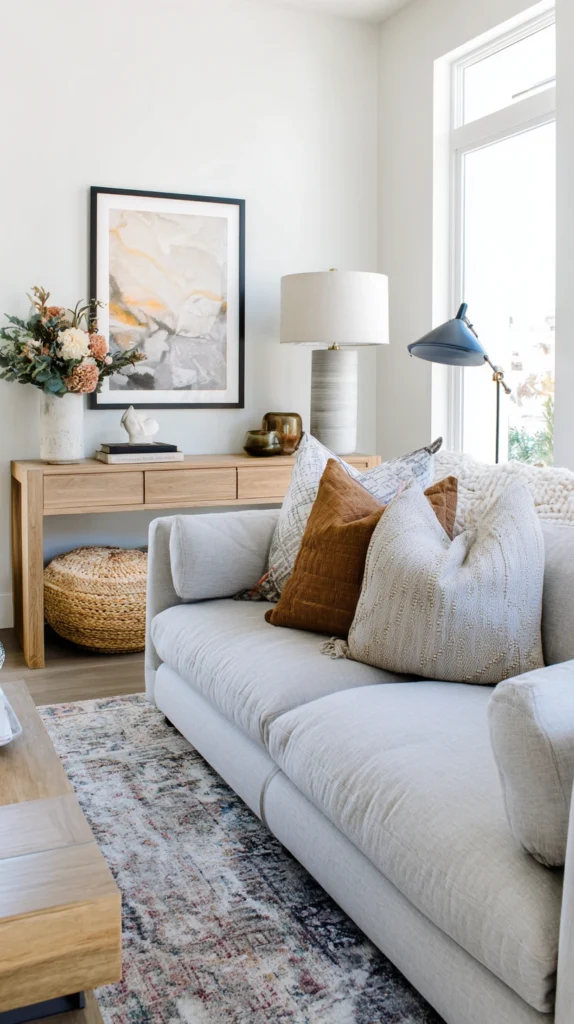
Create more spacious feelings by floating sofas and chairs slightly away from walls rather than pushing everything against perimeters as instinct suggests. Position the sofa several inches from the wall allowing space for a narrow console table behind it providing surface area and visual breathing room.
The floating arrangement creates defined conversation areas while the space flowing around furniture makes rooms feel larger than wall-hugging layouts. Use area rugs anchoring furniture groupings together despite the spacing, ensuring the arrangement feels intentional rather than randomly positioned.
2. Corner Sectional Arrangement
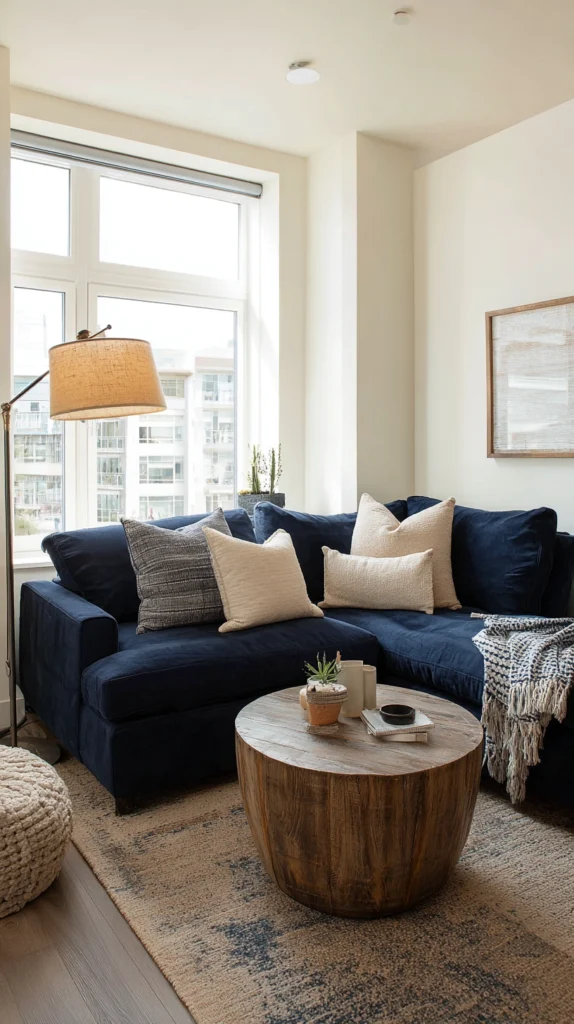
Maximize seating capacity in small footprints by positioning L-shaped sectionals in corners creating substantial seating without consuming excessive floor space. Choose compact sectionals with narrow arms and tight backs rather than oversized versions designed for sprawling family rooms.
The corner placement leaves the room’s center open maintaining clear sight lines and traffic flow while the wraparound seating accommodates more people than individual pieces would. Add a round coffee table or ottoman in front preventing the sharp angles sectionals can create while maintaining accessibility from all seating positions.
3. Dual-Purpose Furniture Solutions
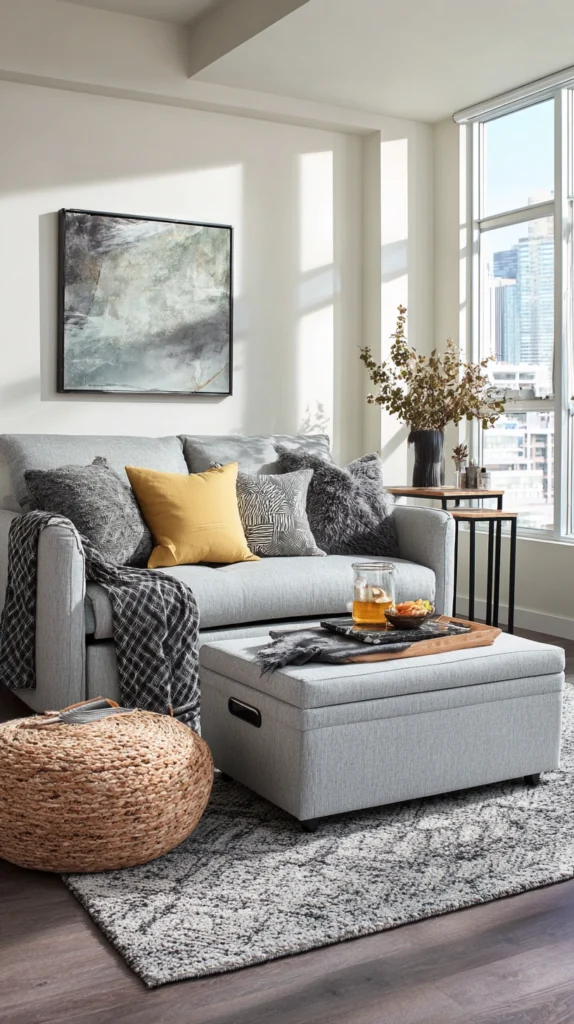
Incorporate furniture serving multiple functions eliminating the need for separate pieces that would overcrowd limited spaces. Choose ottomans with hidden storage replacing traditional coffee tables while providing seating, surface area, and organization in single pieces.
Select sofa beds or daybeds allowing living rooms to convert into guest accommodations without dedicating permanent space to beds. Use nesting tables that separate when needed but stack together when not in use, or lift-top coffee tables providing work surfaces and storage within existing furniture footprints.
4. Vertical Storage Emphasis
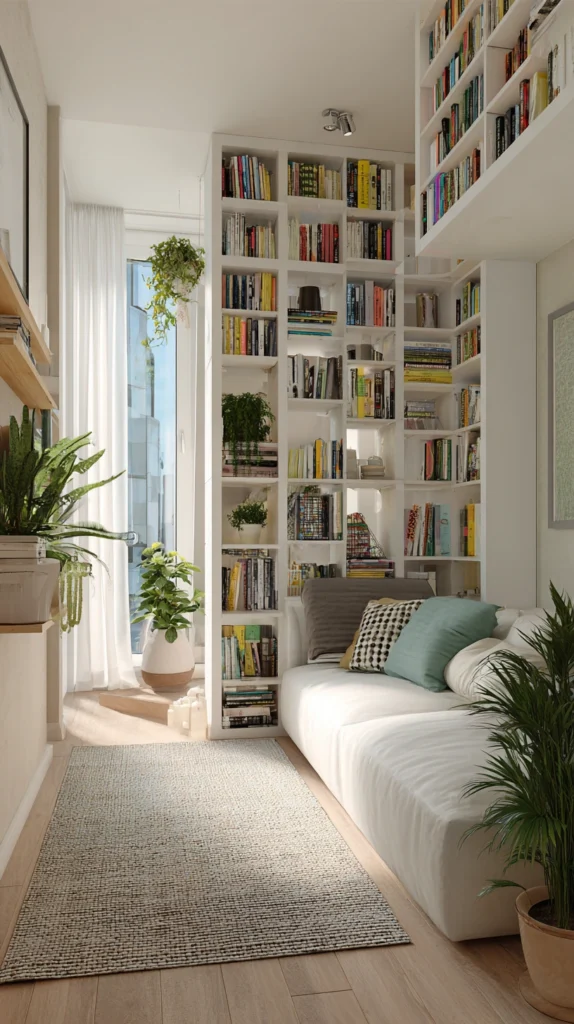
Draw eyes upward through tall bookcases, floor-to-ceiling shelving, or stacked storage making rooms feel taller while maximizing storage capacity without consuming floor space. Install floating shelves at various heights displaying books, plants, and decorative objects creating visual interest while keeping surfaces clear.
Choose tall narrow bookcases rather than wide short versions, using vertical orientation to store the same amount while occupying less wall length. The upward emphasis creates the illusion of higher ceilings making the entire room feel more spacious and less confined.
5. Clear Furniture Choices
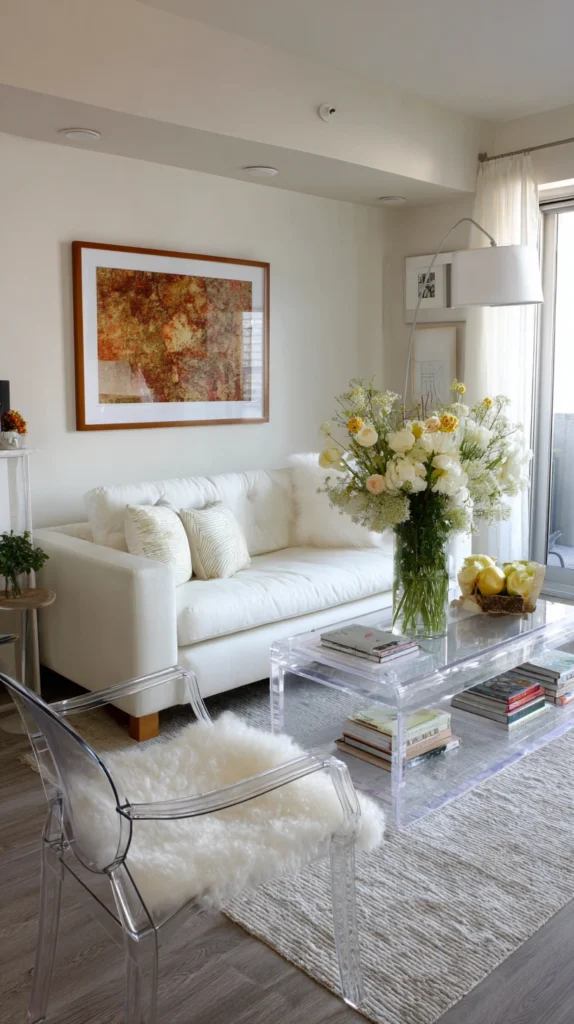
Select furniture with exposed legs, glass tops, or acrylic components allowing visual flow beneath and through pieces making the room feel less crowded. Choose sofas and chairs with visible legs elevating furniture off the floor creating the perception of more space compared to skirted pieces sitting directly on floors.
Use glass or acrylic coffee tables and side tables maintaining function while remaining nearly invisible preventing visual clutter. The transparent and elevated furniture creates lightness and airiness that solid pieces sitting on floors cannot achieve in tight quarters.
6. Symmetrical Seating Arrangement
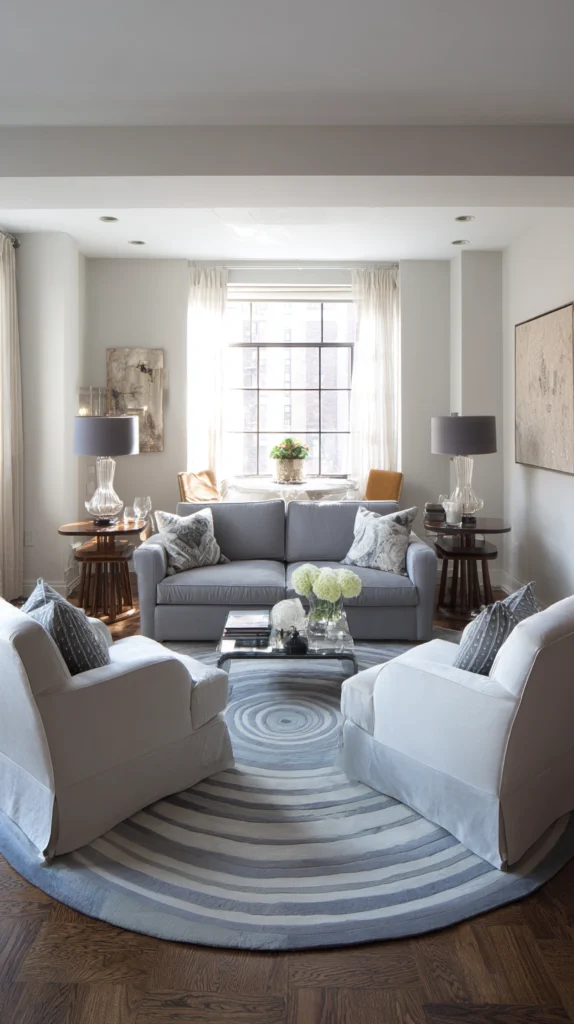
Create balanced, orderly layouts through symmetrical furniture placement around a central focal point like fireplaces, televisions, or windows establishing visual calm. Position matching chairs flanking a sofa, identical end tables on either side, or twin lamps creating mirrored arrangements that feel composed and intentional.
The symmetry tricks the eye into perceiving order and spaciousness while the predictable pattern provides comfort and visual rest. Center the arrangement around the room’s natural focal point ensuring the layout enhances rather than fights against architectural features.
7. Angled Furniture Placement
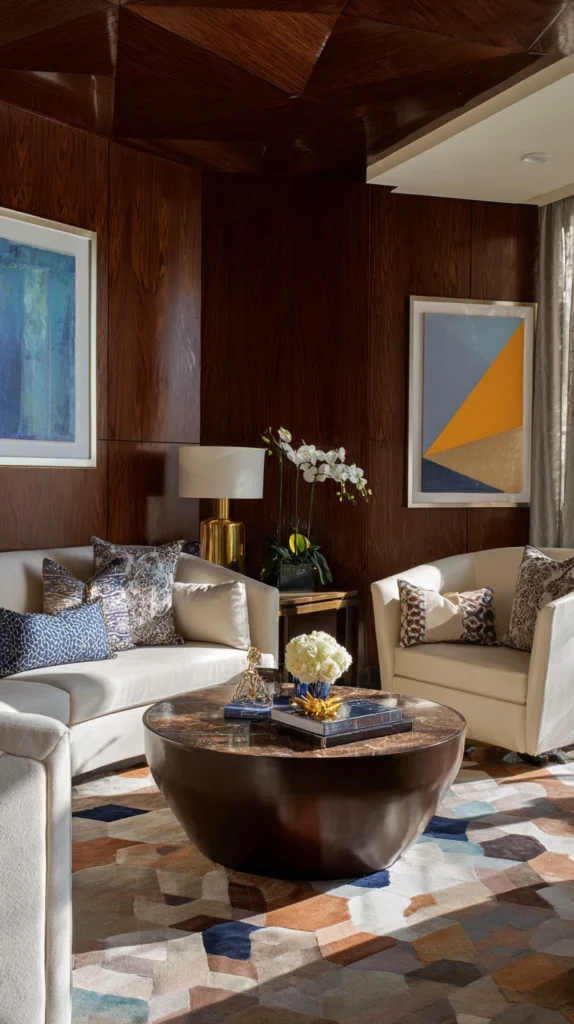
Break free from parallel wall placement by positioning furniture at angles creating dynamic interest while sometimes fitting pieces into spaces where straight placement won’t work. Angle a loveseat across a corner maximizing seating while the diagonal orientation creates visual variety and often improves traffic flow.
Position chairs at slight angles to sofas creating conversational intimacy while the varied orientations add energy to otherwise static rectangular rooms. Ensure angled pieces don’t obstruct pathways or create awkward dead spaces behind them, maintaining functionality alongside visual interest.
8. Minimalist Single Sofa Focus
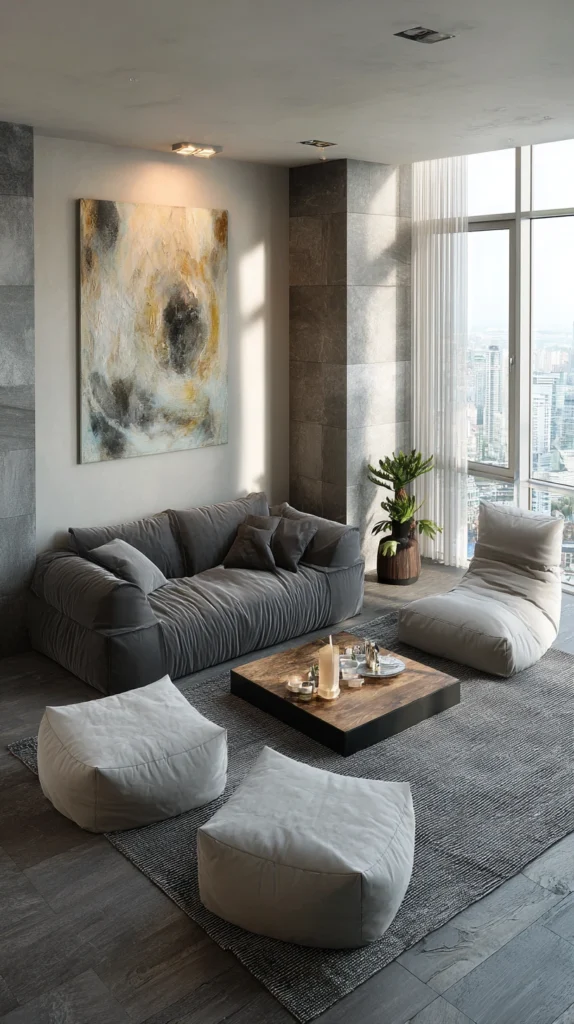
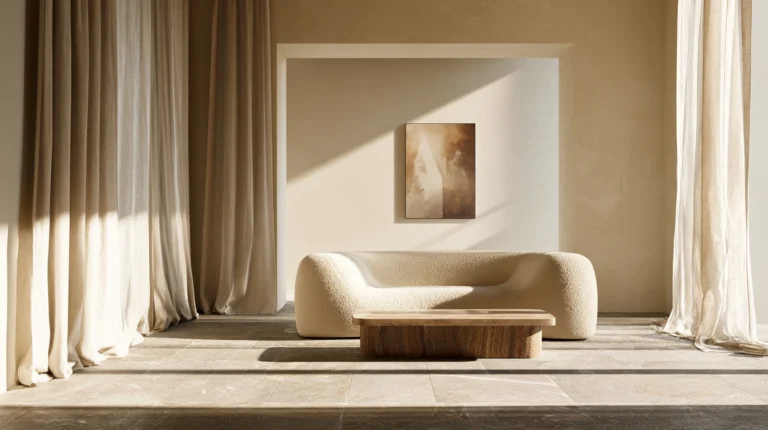
Embrace simplicity in very small spaces by featuring a single quality sofa as the primary seating supplemented with lightweight chairs, stools, or floor cushions brought in when needed. Choose a beautifully designed sofa worthy of being the room’s focal point since it will dominate the limited space available. Add two small armchairs or slipper chairs that can be easily moved creating flexible seating arrangements adapting to different activities and guest numbers. The restrained approach prevents overcrowding while the minimal furniture allows the room to breathe maintaining comfortable circulation and visual calm.
9. Built-In Bench Seating
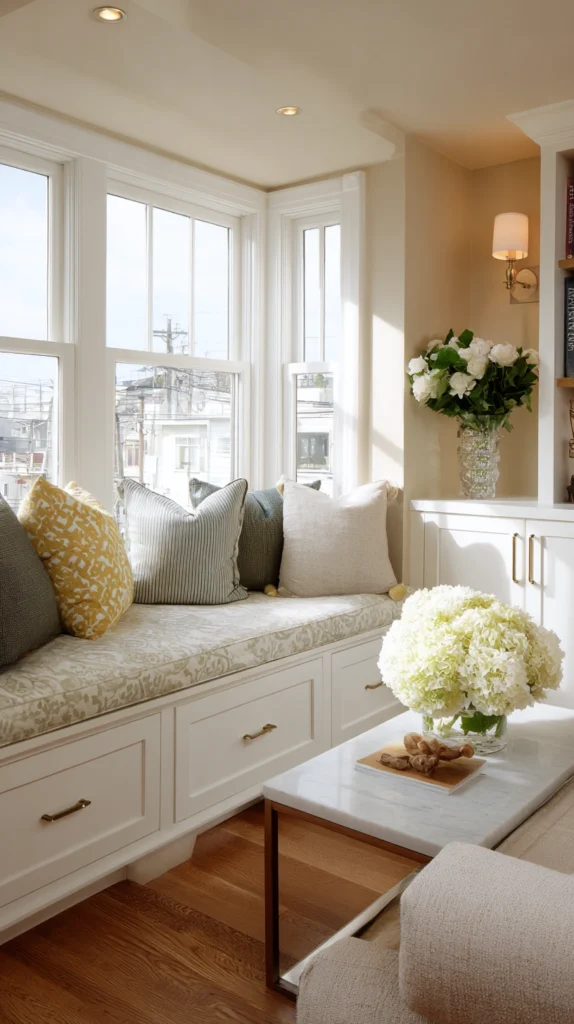
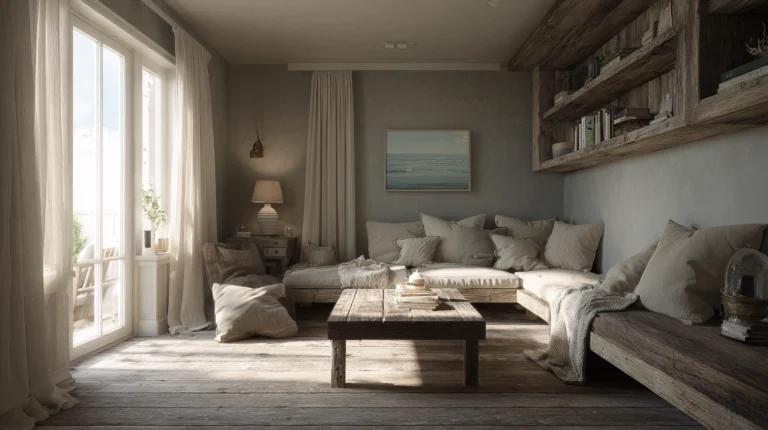
Incorporate window seats, banquettes, or built-in benches along walls creating permanent seating that doesn’t consume floor space like freestanding furniture. Design with lift-up tops or drawers beneath providing hidden storage for blankets, books, games, or seasonal items maximizing functionality.
Add comfortable cushions and throw pillows transforming utilitarian seating into cozy spots for reading, conversation, or simply relaxing while enjoying views. The built-in approach frees floor space for a smaller coffee table and perhaps one accent chair creating functional living rooms in remarkably compact footprints.
10. Open Shelving Entertainment Center
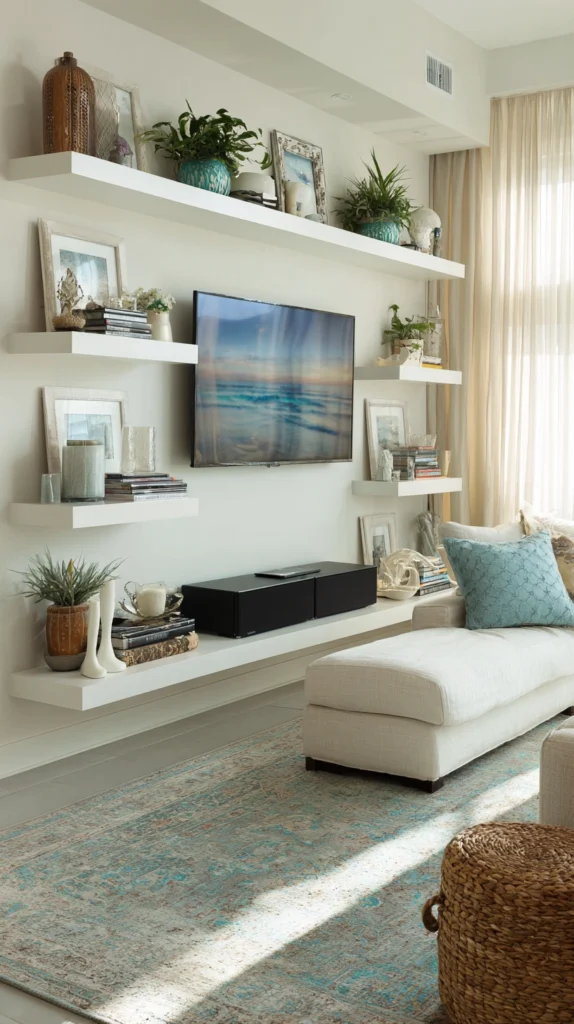
Replace bulky entertainment centers with streamlined open shelving or wall-mounted components creating media storage without the visual weight solid cabinets impose. Mount the television on the wall eliminating the need for a console beneath, then install floating shelves on either side for components, books, and decorative objects.
Choose slim media consoles with open shelving rather than closed cabinets maintaining storage while creating lighter visual impact. The open design allows wall color to show through preventing the dark solid mass closed cabinets created in small spaces.
11. Conversation Circle Layout
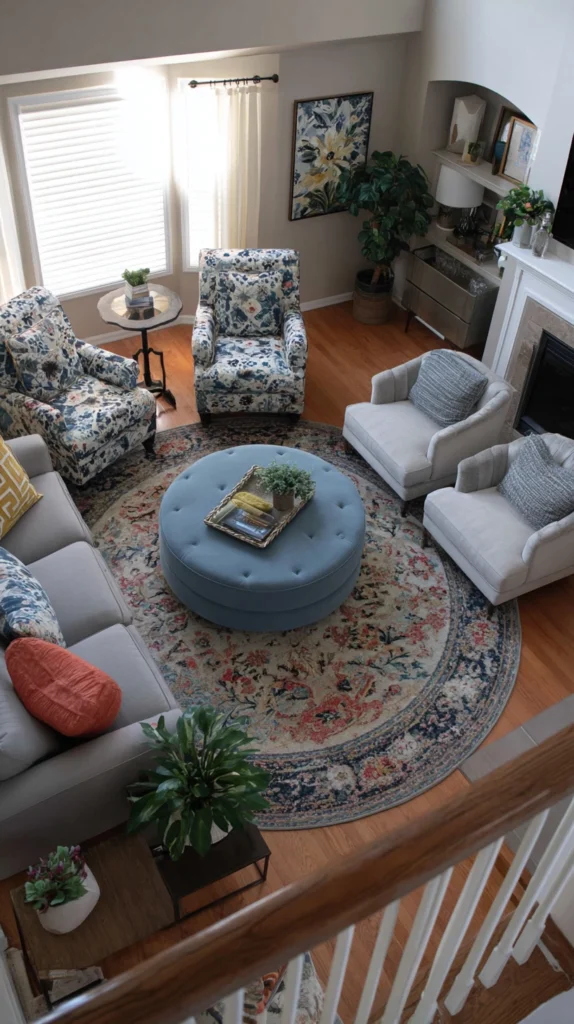
Arrange seating in a circular or curved pattern rather than linear formations creating intimate conversation areas that feel cohesive and purposeful. Position chairs and sofas equidistant from a central coffee table or ottoman ensuring everyone enjoys equal access and engagement in conversations.
The circular arrangement naturally draws people together while the curved traffic flow around the outside feels more graceful than sharp rectangular pathways. Use curved or round furniture pieces reinforcing the circular theme while softening the angular quality most rooms naturally possess.
12. Multi-Zone Open Layout
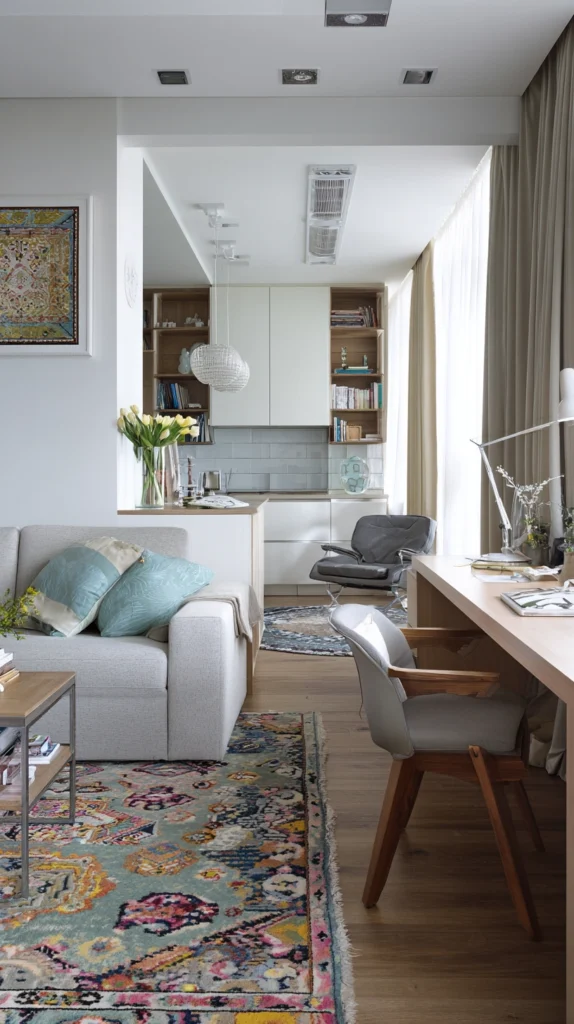
Divide small living rooms into distinct zones for different activities using furniture placement, area rugs, or lighting rather than walls or partitions. Create a seating conversation zone with sofa and chairs, a work zone with a small desk and chair, and perhaps a reading nook with a comfortable chair and lamp.
Use area rugs defining each zone visually while maintaining the open flow that makes small spaces feel larger than divided rooms. Ensure adequate circulation between zones preventing layouts where accessing one area requires navigating awkwardly through another.
13. Narrow Console Behind Sofa
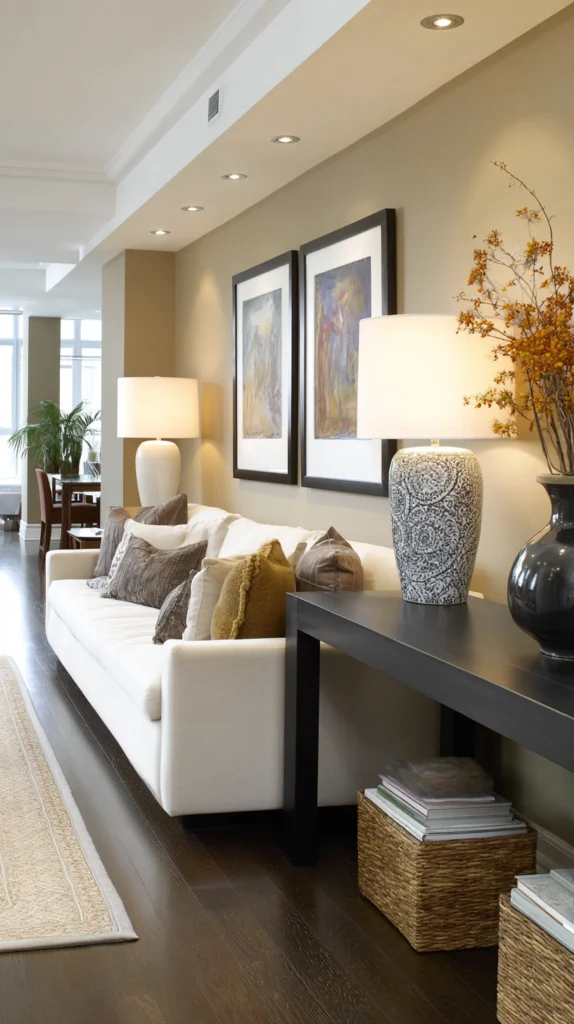
Position sofas away from walls with narrow console tables behind them creating display surfaces, storage, and visual separation without blocking circulation or consuming excessive space. Use consoles holding lamps providing task lighting for reading, decorative objects adding personality, or storage baskets organizing remotes and magazines.
The slim profile typically under 12 inches deep provides function without the bulk wider pieces would impose. Choose consoles in coordinating finishes creating cohesive appearances rather than looking like furniture randomly positioned throughout the room.
14. Loveseat and Chairs Combination
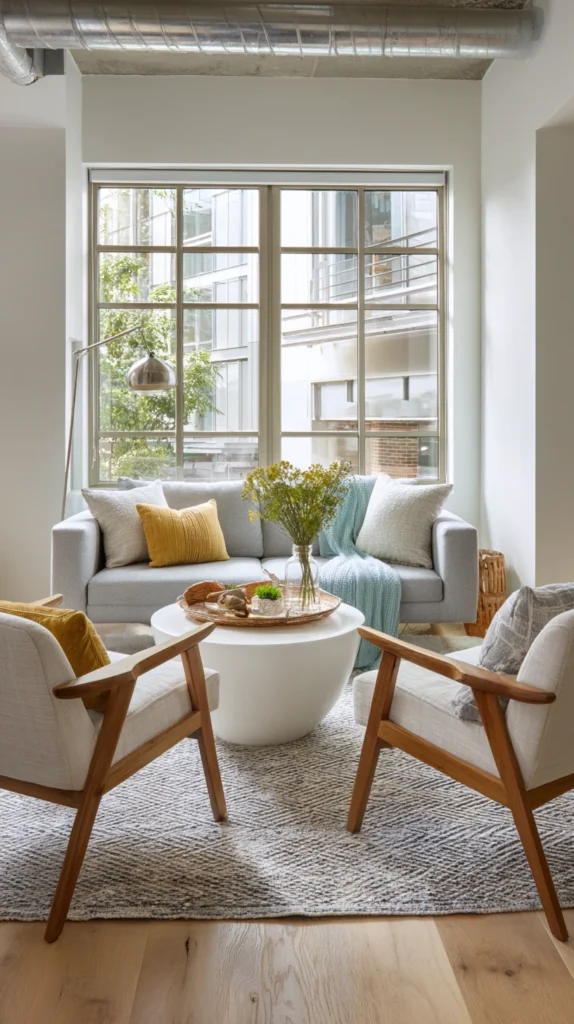
Create flexible seating arrangements using a loveseat paired with two armchairs rather than a full-sized sofa dominating the space with single large pieces. The smaller-scale loveseat leaves room for additional seating while the separate chairs can be repositioned easily for different conversational groupings or activities.
Choose chairs on casters or lightweight construction allowing effortless rearrangement adapting the layout to movie watching, entertaining, or intimate conversations. The combination typically provides similar seating capacity to a sectional while offering more flexibility and lighter visual impact.
15. Wall-to-Wall Minimalism
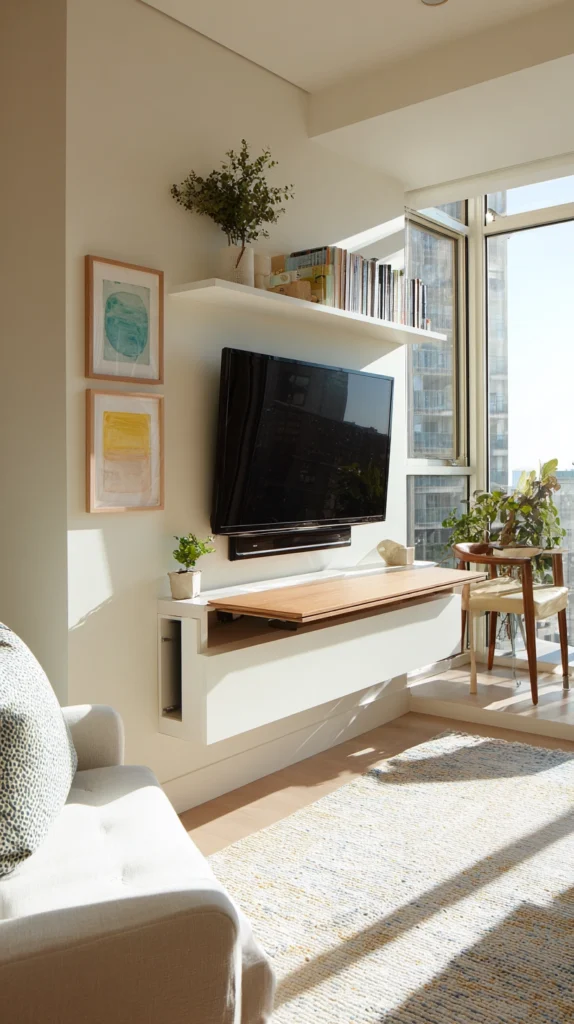
Embrace extreme minimalism in very tight spaces by mounting everything possible to walls including televisions, shelving, and even folding furniture that stows flat when not needed. Install fold-down desks that disappear against walls when not in use, wall-mounted drop-leaf tables serving as consoles or dining surfaces, or Murphy beds in living rooms doubling as guest rooms.
The approach requires discipline maintaining minimal possessions but rewards with remarkably flexible spaces that feel larger than their measurements. Choose multi-functional furniture and rigorous editing ensuring the few pieces present work exceptionally hard earning their place.
16. L-Shaped Layout for Flow
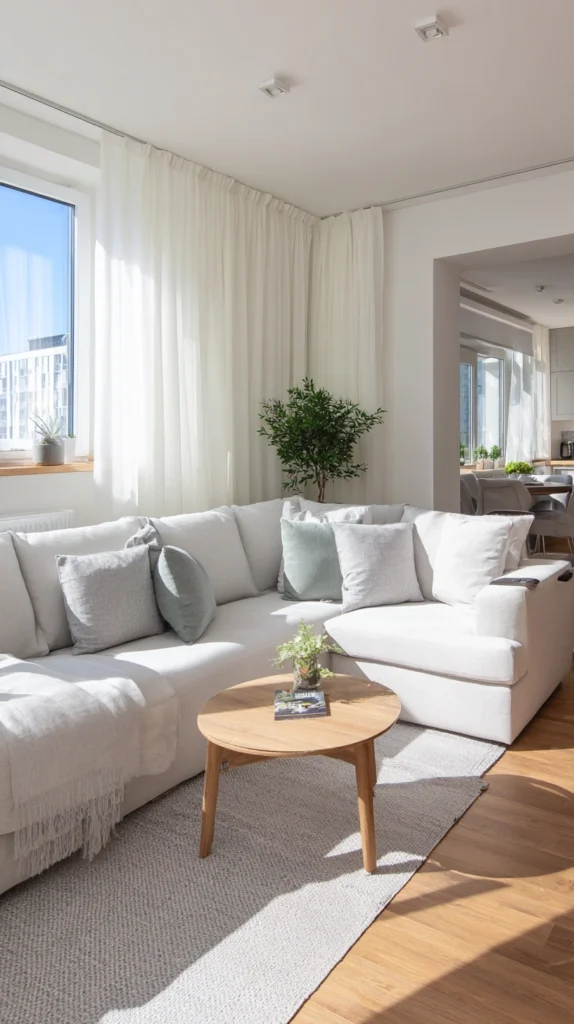
Arrange furniture in L-shaped configurations along two perpendicular walls leaving the remaining space completely open maximizing floor area and traffic flow. Position a sofa along one wall and a loveseat or two chairs along the adjacent wall creating the L with a coffee table in the corner where they meet.
The open arrangement allows easy movement through the room while the L-shape naturally creates conversation seating facing each other. Use the open areas for activities, additional seating brought in when entertaining, or simply as breathing room making the space feel less confined.
Maximizing Small Living Rooms
Successfully laying out small living rooms requires measuring spaces carefully before purchasing furniture ensuring pieces fit proportionally without overwhelming available space. Consider traffic patterns maintaining at least 30 inches for primary pathways and 18 inches for secondary routes preventing awkward navigation. Edit possessions ruthlessly keeping only furniture and decorative items serving clear purposes or bringing genuine joy, as clutter quickly destroys the spacious feeling good layouts create.
Choose furniture appropriate for small spaces with narrow arms, exposed legs, and proportions matching room scale rather than trying to squeeze standard-sized pieces into undersized areas. Most importantly, embrace the coziness small living rooms naturally provide rather than fighting against limited square footage, creating intimate comfortable spaces that feel intentionally snug rather than regrettably cramped.