13 Stylish Throw Pillow and Rug Combinations
The relationship between the rug and the throw pillows is the most directly controllable colour and texture decision in any living room — and the one that most immediately communicates whether the room has been thoughtfully assembled or simply furnished.
A rug and pillow combination that works creates a visual conversation between the floor and the sofa that ties the entire room together. One that doesn’t create a colour conflict that makes even the most expensive furniture look slightly wrong. Getting this pairing right is less about following rules and more about understanding a small number of principles that apply consistently across every style and every budget.
The thirteen combinations below are the pairings that work — each one grounded in a specific colour or texture logic, each one described in enough practical detail to replicate immediately in a real room. Costs and a styling tip are included throughout.
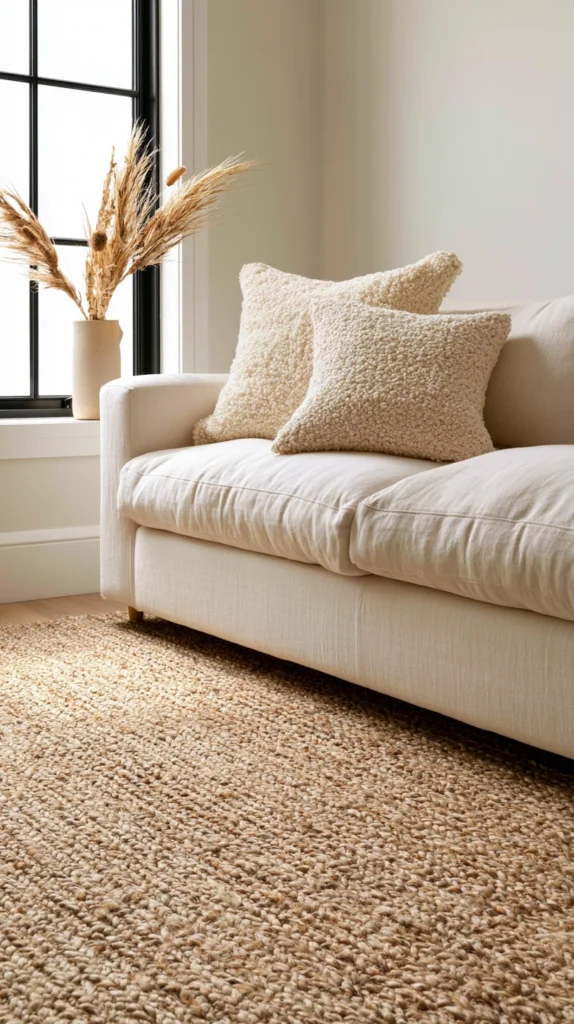
1. Cream Boucle Pillows on a Natural Jute Rug
Budget: $80 – $300 for the combination
The warmest and most universally successful tonal combination available — two or three cream boucle cushions on a sofa above a natural, undyed jute rug creates a layered texture arrangement within a single warm neutral family that suits every sofa colour from dark charcoal to pale stone. The boucle provides softness at the sofa level. The jute provides structure and weight at the floor level. The tonal similarity between the two materials unifies the palette while the textural contrast between them keeps it visually interesting.
A pair of cream boucle cushion covers costs $30–$80. A quality natural jute rug of 160×230 cm costs $80–$200. The combination works on a sofa of almost any colour — the cream and natural jute tones are compatible with deep navy, warm terracotta, sage green, and mid-grey sofas equally, making this the most versatile pillow-rug pairing available for a room where the sofa colour is fixed and the accessories need to work with it.
Style tip: Add one cushion in a slightly deeper, warmer tone — a sandy caramel or pale terracotta — to the cream boucle pair. The single deeper cushion provides the tonal depth that prevents an all-cream cushion arrangement from disappearing against a pale sofa and creates a colour relationship with the warm jute floor surface that makes the vertical and horizontal planes of the room feel visually connected rather than independently chosen.
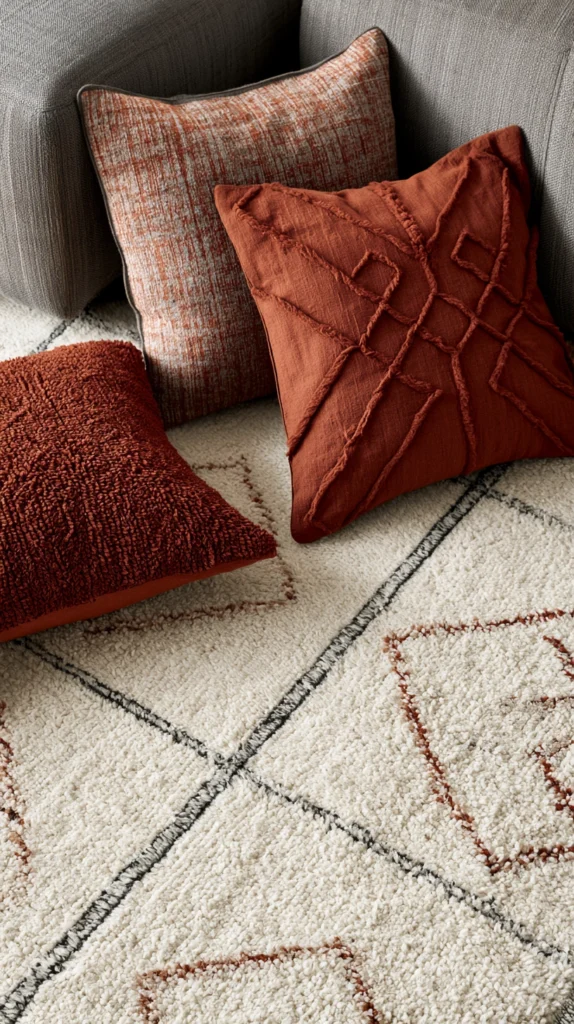
2. Deep Rust Pillows on a Moroccan Berber Rug
Budget: $120 – $500 for the combination
A classic Moroccan Berber rug — cream wool with geometric black or dark brown pile patterns — provides a neutral, textural floor surface that works as a backdrop for almost any cushion colour. Deep rust is the most reliably beautiful cushion colour against a Berber rug because it echoes the warmth of the rug’s wool base while providing a colour depth that the cream rug surface itself lacks. The combination is warm, characterful, and specifically evocative of a particular worldly, well-travelled aesthetic.
A genuine Moroccan Berber rug costs $200–$600 for a standard 160×230 cm size from specialist Moroccan rug retailers and online platforms. Deep rust velvet or linen cushion covers cost $20–$50 each. Two rust cushions with one complementary deep terracotta cushion creates the right colour density for a sofa of three or four cushions total — enough warmth to draw the eye down to the rug without making the sofa appear to compete with the rug’s geometric patterning for visual attention.
Style tip: Keep the sofa itself neutral when using a patterned Moroccan Berber rug — a plain linen, cotton, or velvet sofa in cream, stone, or charcoal. A patterned sofa beside a patterned rug creates a visual competition between the two that neither wins convincingly. The plain sofa acts as a visual rest between the cushion colours at seat height and the rug pattern at floor level — preserving the clarity of both elements in the room’s overall composition.
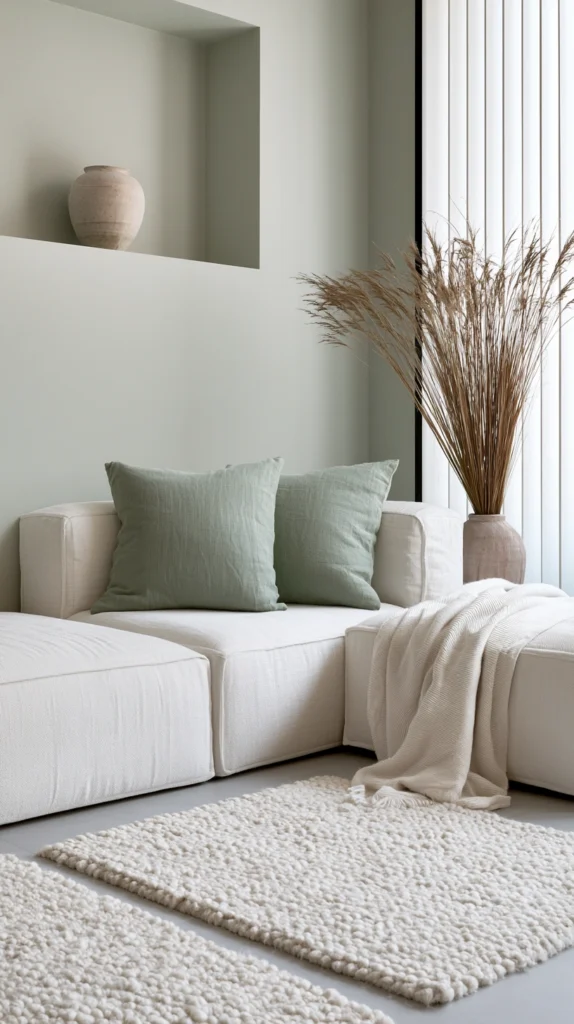
3. Sage Green Pillows on a Wool Loop Pile Rug
Budget: $100 – $400 for the combination
Sage green cushions — in linen or stone-washed cotton — on a sofa above a cream or warm white wool loop pile rug creates the most restful and most specifically contemporary combination on this list. The muted, complex green of genuine sage and the soft, slightly irregular loop surface of a quality wool rug produce a pairing of material and colour that reads as understated, considered, and completely unforced — the three qualities that define the best minimal and Scandinavian-influenced interior styling.
Sage green linen cushion covers cost $20–$50 each. A wool loop pile rug of 160×230 cm in cream or natural white costs $120–$300. The combination works best on a sofa in a warm neutral — cream, oatmeal, or pale stone — where the sage green provides the only colour note in an otherwise tonal arrangement. On a darker sofa the same sage cushions risk appearing too pale and losing the clear colour relationship with the rug that makes the pairing work from the main viewpoint of the room.
Style tip: Add one sage green trailing plant — a pothos or string of pearls — in a simple ceramic pot beside the sofa to carry the sage colour from the cushion level down to the floor level and across to the plant level simultaneously. The repetition of the sage green tone at multiple heights in the room creates a colour thread that ties the cushions, the rug, and the plant into a single visual narrative rather than a collection of separately chosen elements.
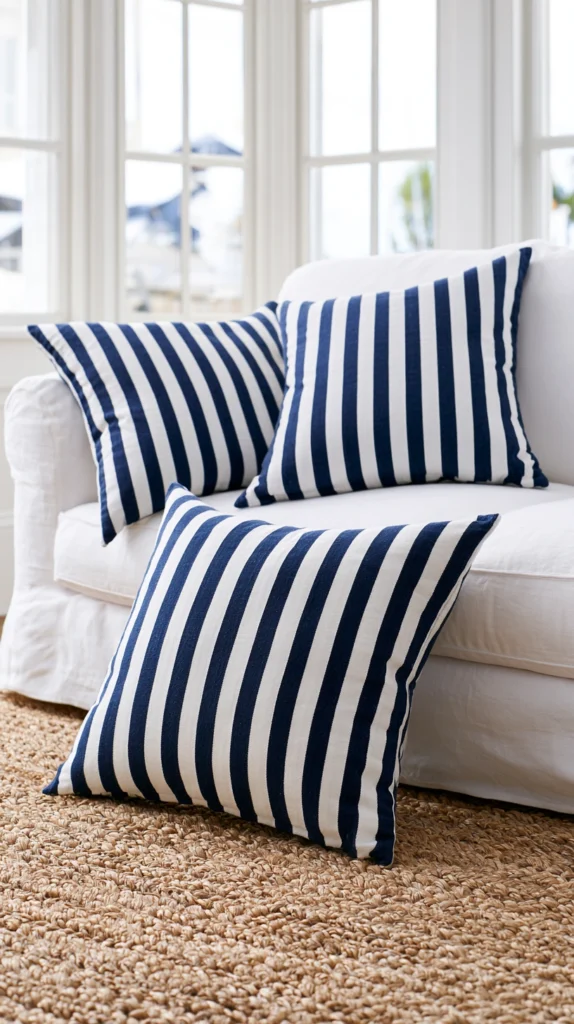
4. Navy and White Striped Pillows on a Flatweave Cotton Rug
Budget: $60 – $250 for the combination
A classic navy and white stripe cushion paired with a flatweave cotton rug in natural or cream creates the freshest and most specifically coastal living room pairing available. The stripe provides the pattern. The flatweave provides a neutral, textural floor surface that complements the stripe’s geometry without competing with it. Together they create a room that feels clean, considered, and genuinely summer-appropriate without requiring any overtly nautical decoration elsewhere in the space.
Navy and white striped linen cushion covers cost $20–$40 each. A flatweave cotton or dhurrie rug of 160×230 cm costs $60–$180. The stripe works best on a white or pale linen sofa where it reads against a compatible background — on a navy sofa the stripe disappears and on a terracotta sofa it creates a colour conflict. Mix two stripe widths — one wide stripe cushion and one narrow stripe cushion on the same sofa — for a more interesting arrangement than a pair of identically striped covers.
Style tip: Choose a rug in a warm white or natural cream rather than a cool bright white to pair with navy stripe cushions. A cool bright white rug beside navy cushions creates a high-contrast pairing that feels slightly rigid and formal. A warm white or natural cream softens the contrast and allows the navy to read as a considered colour choice rather than a graphic statement, which suits a living room context more comfortably than a purely graphic approach to the pairing.
5. Terracotta and Mustard Mixed Pillows on a Vintage Kilim
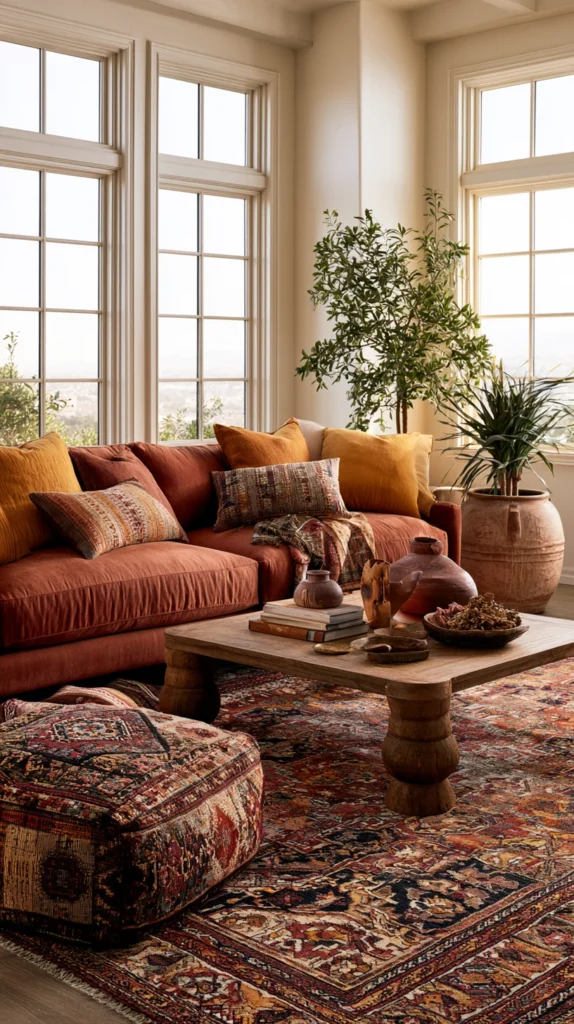
Budget: $150 – $600 for the combination
The most abundant and most characterful combination on this list — a vintage or vintage-style kilim rug with its rich geometric patterning in warm earthy tones beneath a sofa dressed with terracotta velvet and mustard linen cushions creates an interior with the warmth of a North African medina and the comfort of a well-loved sitting room. The kilim provides the pattern vocabulary. The cushion colours echo the rug’s dominant tones and carry them upward to the sofa level.
A vintage kilim rug costs $150–$500 depending on size and origin from antique markets, rug dealers, and online vintage platforms. A new reproduction kilim costs $80–$200. Terracotta velvet cushion covers cost $20–$45 each. Mustard linen covers run $18–$40 each. The key to this combination is selecting cushion colours that genuinely appear within the kilim’s pattern rather than approximately adjacent to them — hold the cushions beside the rug to check the colour relationship before purchasing.
Style tip: Use the kilim combination with a plain mid-toned sofa rather than a sofa in a colour that appears in the kilim pattern. A sofa in a colour that is also in the kilim creates a visual confusion between the rug, the sofa, and the cushions — the colours no longer have clear hierarchies and the eye cannot easily identify which element is the room’s colour anchor. A sofa in a warm grey, deep charcoal, or cream provides the neutral backdrop from which the kilim colours and the cushion colours read most clearly.
6. Blush Pink and Ivory Pillows on a Shag Pile Rug
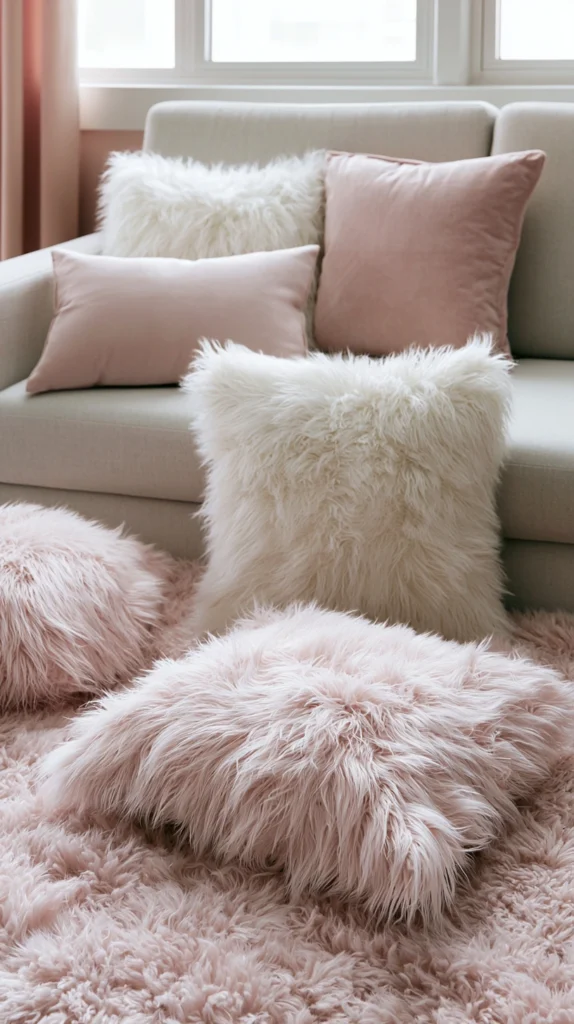
Budget: $120 – $450 for the combination
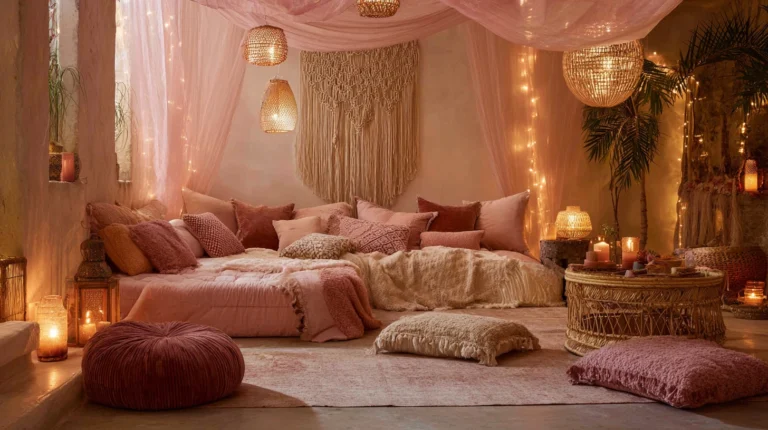
Two blush pink cushions in a stone-washed linen beside one ivory cushion in a ribbed cotton texture, above a cream or ivory high-pile shag rug — creates one of the softest, most specifically cozy and most photographable living room pairings available. The shag pile’s generous texture at floor level echoes the soft quality of the linen cushions at sofa level. The blush and ivory colour relationship is close enough to read as tonal and different enough to provide the visual distinction that makes the pairing interesting.
Blush pink linen cushion covers cost $18–$40 each. An ivory ribbed cotton cushion cover costs $15–$35. A cream or ivory shag pile rug of 160×230 cm costs $100–$300. This combination works best in a bedroom or a smaller living room where the soft, feminine quality of the pairing suits the room’s scale and intended atmosphere — in a large, high-ceilinged living room the same combination can appear slightly delicate relative to the room’s proportions and may need the addition of one deeper tone to provide the visual weight the space requires.
Style tip: Vacuum a shag pile rug in one direction only using a suction-only setting without a rotating brush attachment. A rotating brush mat breaks the shag pile fibres and creates the tangled, uneven surface that makes a high-pile rug look worn before its time. A suction-only pass in one consistent direction separates the pile fibres and maintains the full, even surface quality that makes a shag pile rug look luxurious rather than simply fluffy.
7. Charcoal and Stone Pillows on a Black and White Abstract Rug
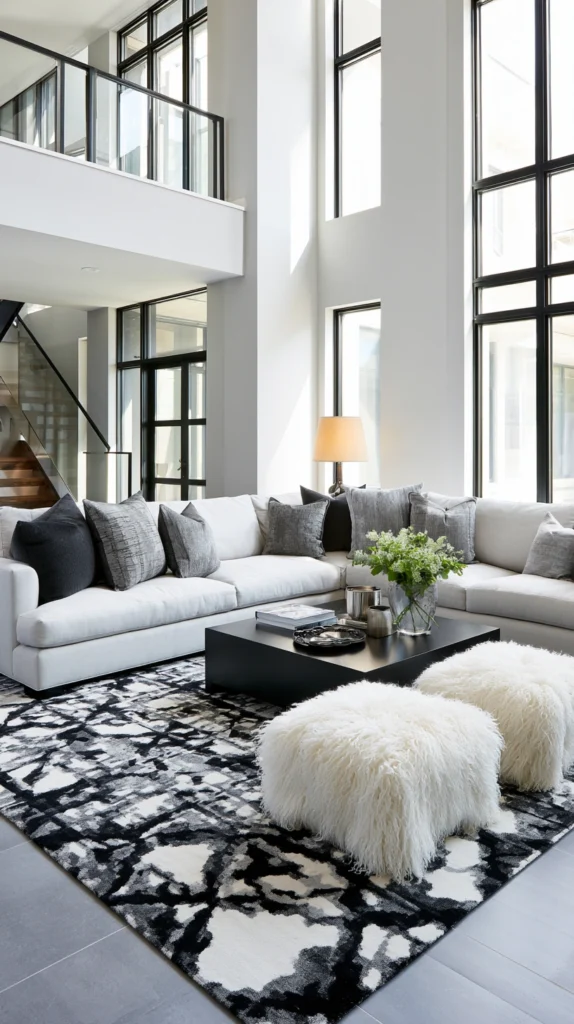
Budget: $100 – $400 for the combination
A bold black and white abstract or geometric rug beneath a sofa dressed with charcoal and warm stone cushions creates the most specifically graphic and most contemporary of the combinations on this list. The cushions echo the rug’s darkest and lightest tones without repeating its pattern — creating the tonal connection between floor and sofa without the visual competition of matching the pattern at a different scale.
Charcoal linen cushion covers cost $20–$45 each. Warm stone cotton covers run $18–$40 each. A black and white abstract or geometric flatweave rug costs $80–$250 from contemporary rug retailers. This combination requires the sofa to be either mid-grey or a warm neutral — a charcoal sofa with charcoal cushions makes the cushions disappear, and a cream sofa with a black and white rug creates a high-contrast arrangement that reads as either very intentional or slightly stark depending on the quality and warmth of everything else in the room.
Style tip: Add one warm metal accent — a brass lamp, a copper tray, an antique gold frame — near the sofa to prevent the charcoal-and-stone-on-black-and-white combination from reading as cold. The monochromatic palette of this pairing is its strength but also its risk — without a warm material accent nearby it can appear colour-drained in natural light. One brass or warm gold object is consistently the most effective remedy and the most visually appropriate addition to a contemporary graphic living room scheme.
8. Burnt Orange and Ochre Pillows on a Hand-Knotted Wool Rug
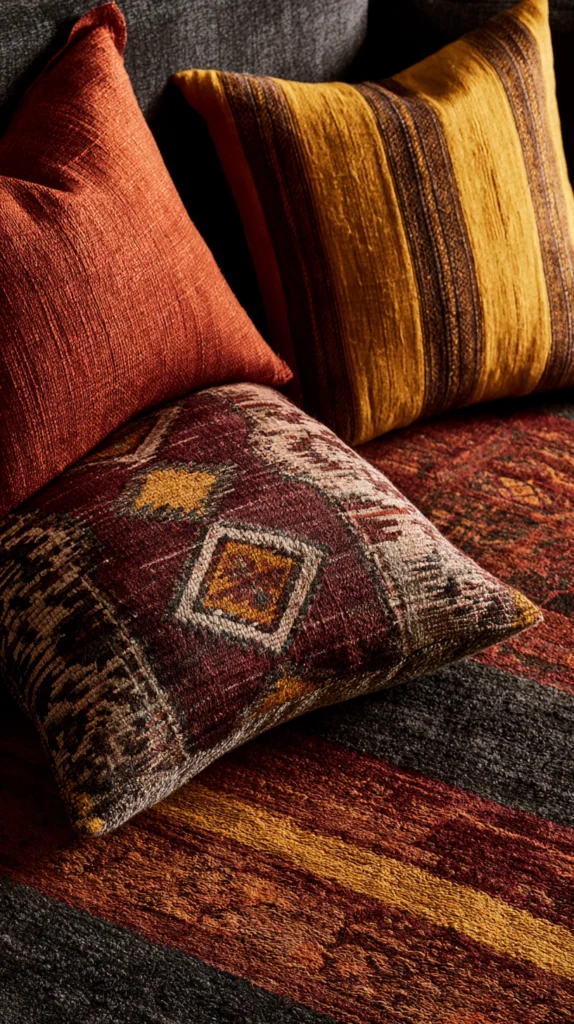
Budget: $200 – $800 for the combination
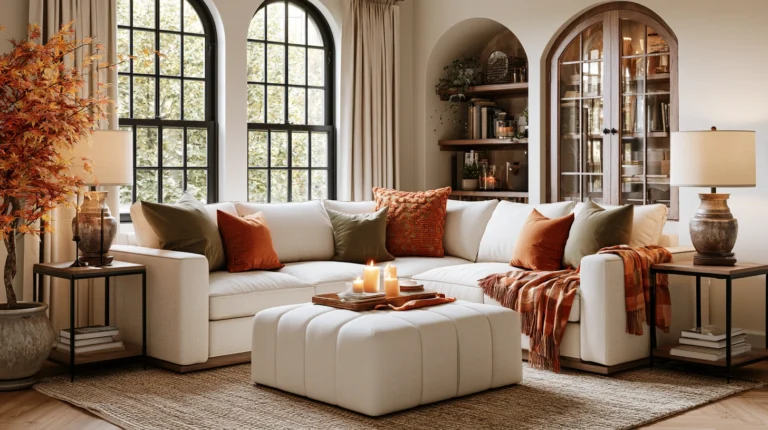
A hand-knotted wool rug in warm earthy tones — burgundy, terracotta, and gold geometric patterns on a dark ground — beneath a sofa dressed with burnt orange velvet and ochre linen cushions creates the most richly coloured and most warmly autumnal of all the combinations on this list. In winter lamplight this pairing has a depth and warmth that no cooler colour combination approaches, and it makes a room feel genuinely sheltered from the cold in a way that is physical as well as psychological.
A genuine hand-knotted wool rug costs $250–$600 for a 160×230 cm size from specialist dealers. A good quality machine-made equivalent costs $100–$250. Burnt orange velvet cushion covers cost $25–$50 each. Ochre linen covers run $20–$45 each. Use two burnt orange cushions and one ochre cushion rather than equal numbers — the asymmetric distribution of the two tones creates a more interesting arrangement than a perfectly even split between the two colours at the sofa level.
Style tip: Position the cushion with the most saturated colour — the burnt orange velvet — at the end of the sofa rather than in the centre. An end-positioned accent cushion creates a visual anchor at the sofa’s extremity that draws the eye along the full length of the furniture piece. A centrally positioned saturated cushion creates a bulls-eye effect that makes the sofa arrangement look symmetrical and slightly formal — which suits some interior styles and works against the warmth and informality that the burnt orange and hand-knotted rug combination is specifically designed to create.
9. Forest Green and Cream Pillows on a Natural Sisal Rug
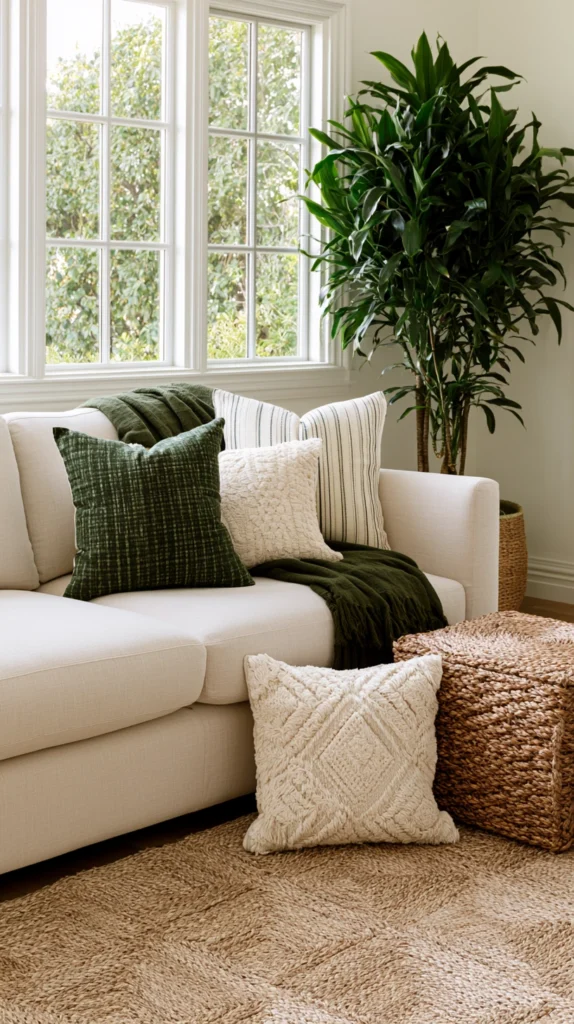
Budget: $100 – $350 for the combination
Forest green velvet cushions beside cream textured cushions, above a natural sisal rug — the pairing that references the landscape most directly of any combination on this list. The deep green brings the quality of foliage into the interior. The cream cushion provides the tonal contrast that allows the green to be clearly seen without visual competition. The natural sisal provides the floor element that connects the palette to the natural world that inspired it.
Forest green velvet cushion covers cost $25–$55 each. Cream textured cotton or boucle covers run $20–$45 each. A natural sisal rug of 160×230 cm costs $80–$200. The combination works on a sofa in charcoal, dark navy, cream, or warm grey — all of which provide a compatible background for the forest green and cream combination at the sofa level without creating any colour conflict with the natural sisal at the floor level below.
Style tip: Add a small indoor plant in a dark ceramic pot beside the sofa to complete the nature-referencing quality of the forest green and sisal combination. The plant carries the green tone from the cushion level to the floor level in an organic, living form that no additional cushion or textile element provides — and the dark ceramic pot creates a material and tonal relationship with the sisal rug beneath it that completes the connection between the floor plane and the sofa level in the most natural way available.
10. Warm Lavender and Grey Pillows on a Flatweave Striped Rug
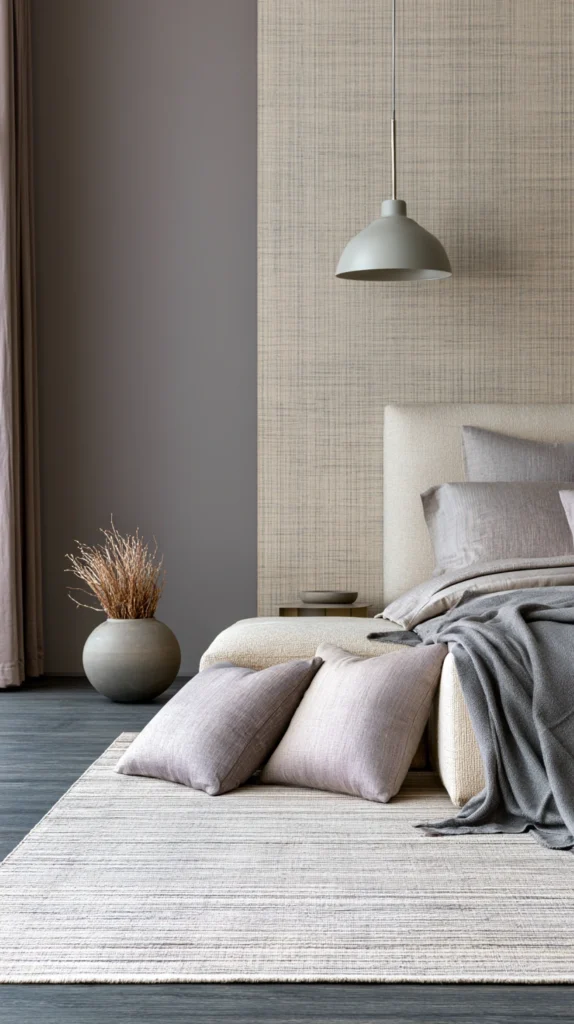
Budget: $80 – $280 for the combination
A flatweave rug in warm grey and cream stripes beneath a sofa dressed with muted lavender and warm grey cushions creates a combination of quiet sophistication that suits a bedroom or a smaller, more intimate sitting room particularly well. The stripe provides a gentle pattern at the floor level. The lavender cushions provide the colour note that prevents the combination from remaining entirely neutral. The grey in both the rug and the cushions creates the shared tonal element that makes the pairing cohesive rather than coincidental.
Muted lavender linen cushion covers cost $18–$40 each. Warm grey textured cotton covers run $15–$35 each. A flatweave wool or cotton striped rug of 160×230 cm costs $60–$180. The key is choosing a lavender that is muted and warm rather than bright or cool — a lavender with a slight grey or mauve undertone sits beside the warm grey of the rug harmoniously, while a vivid or cool lavender creates a colour tension with the warm grey stripe that prevents the pairing from achieving the quiet, composed quality it is designed to produce.
Style tip: Pair the lavender and grey combination with warm white or cream woodwork and walls rather than cool white. Cool white beside muted lavender emphasises the blue undertones of the lavender and makes the grey in the combination appear cooler and less resolved than it does on a warm white background. Warm white or cream walls allow the lavender to read as the muted, complex tone it is — sophisticated rather than simply pale purple.
11. Mixed Linen Neutrals on a Vintage Persian Rug
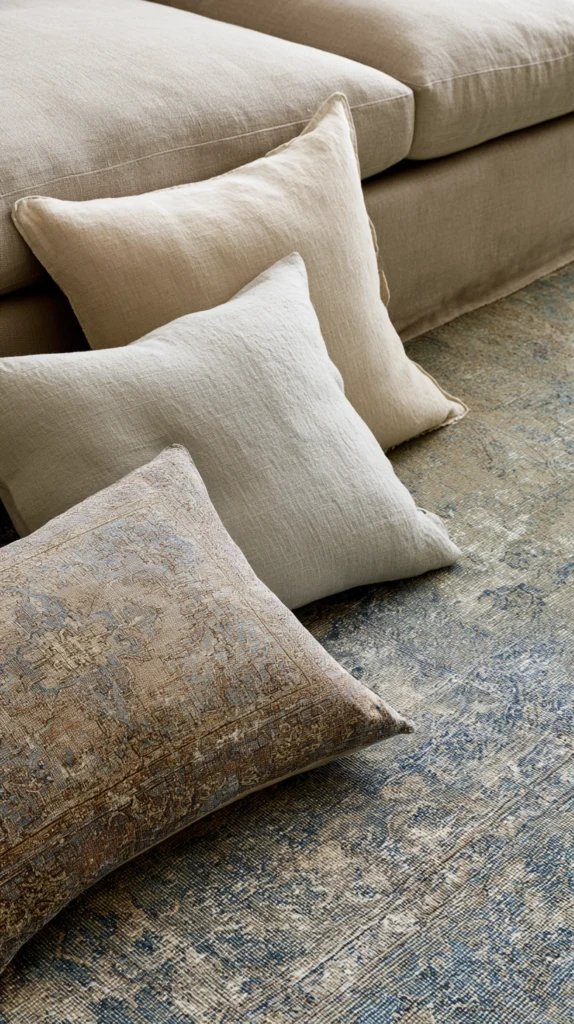
Budget: $200 – $800 for the combination
A vintage Persian rug — in the warm, faded tones of genuine age rather than the vivid colours of a new reproduction — beneath a sofa dressed with a collection of mixed linen neutral cushions in cream, stone, warm white, and pale caramel creates the most effortlessly sophisticated and most genuinely collected of all the combinations on this list. The cushions ask nothing of themselves — they are quiet, warm, and completely consistent in their restraint. The Persian rug does all the design work and the neutral cushions simply allow it to be the most important element in the room’s visual composition.
A genuine vintage Persian rug costs $300–$1,000 depending on size, age, and condition from antique dealers, estate sales, and specialist rug platforms. A good quality reproduction in a faded palette costs $150–$400. Mixed linen neutral cushion covers in four different warm tones cost $15–$40 each. The single most important purchase decision in this combination is the rug — the cushions are deliberately modest and the rug needs to reward that modesty by being genuinely exceptional.
Style tip: Do not add any patterned cushions to a sofa above a Persian rug. The Persian rug’s pattern complexity is the entire decorative statement of the combination — any patterned cushion introduced above it competes with rather than complements the rug and creates a visual density that prevents either pattern from being clearly read. Plain cushions in the rug’s quieter tones are the only correct cushion choice above a genuinely patterned floor covering of any kind.
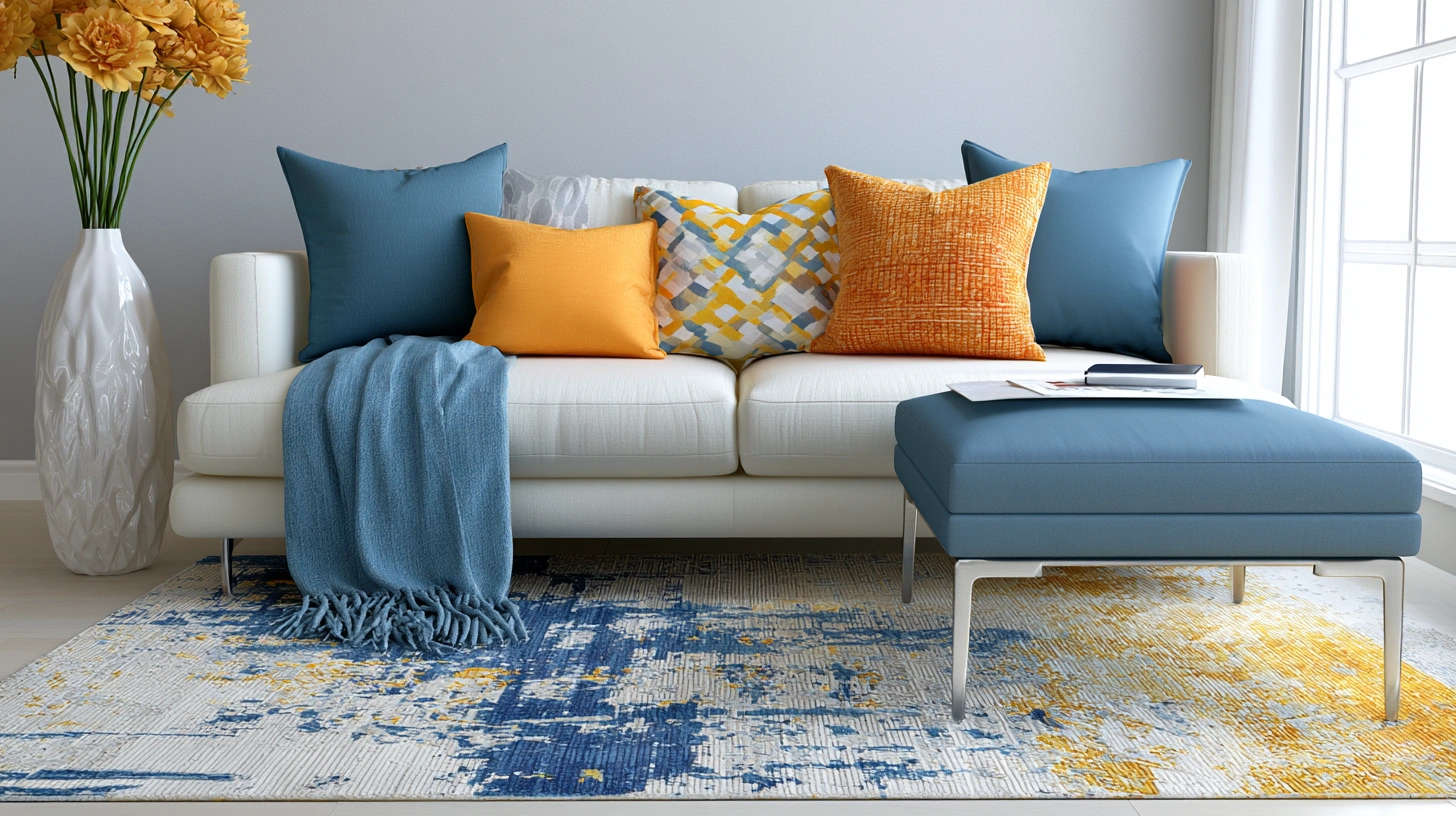
12. Cobalt Blue Pillows on a Warm Sand Wool Rug
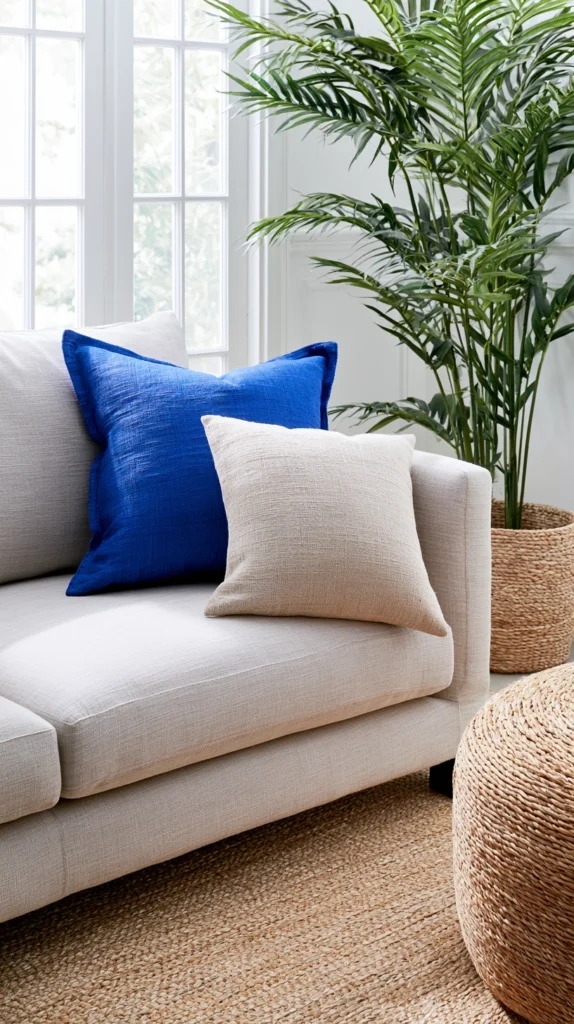
Budget: $100 – $350 for the combination
Cobalt blue linen cushions above a warm sand or camel wool rug is the combination built on one of the most reliably beautiful complementary colour relationships available in interior design. Blue and warm sand reference the sea and the beach — the most complete natural complementary pairing in the coastal visual vocabulary — without requiring a single nautical decorative prop anywhere else in the room. The complementary contrast between the blue and the warm floor creates a visual energy that the tonal combinations elsewhere on this list deliberately avoid.
Cobalt blue linen cushion covers cost $20–$45 each. A warm sand or camel wool flatweave rug of 160×230 cm costs $100–$280. Use two cobalt cushions alongside two or three neutral cushions in cream or warm white — the cobalt as colour accent within an otherwise neutral cushion arrangement, rather than filling the entire sofa with the complementary contrast. Two cobalt cushions in a sofa of five looks considered and intentional. Five cobalt cushions on the same sofa looks like a commitment to a colour scheme that doesn’t allow for change.
Style tip: Choose a cobalt that has a slight warm or teal undertone rather than a pure cool blue. A warm cobalt — one with a trace of green or yellow in it — sits beside a warm sand rug without the slight visual tension that a pure cool blue creates on a warm-toned floor surface. The undertone adjustment is visible only on a colour card or a fabric swatch and is entirely invisible in the finished room — but the visual harmony it produces between the cushion and the rug is immediately perceptible from the room’s main viewpoint.
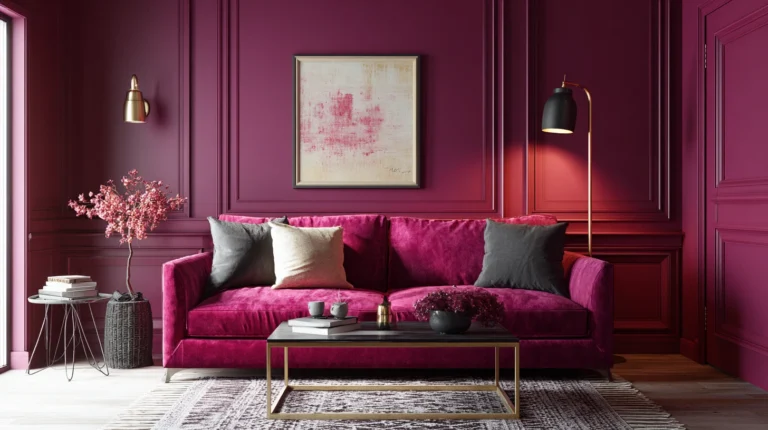
13. Burgundy, Camel, and Cream Pillows on a Layered Rug
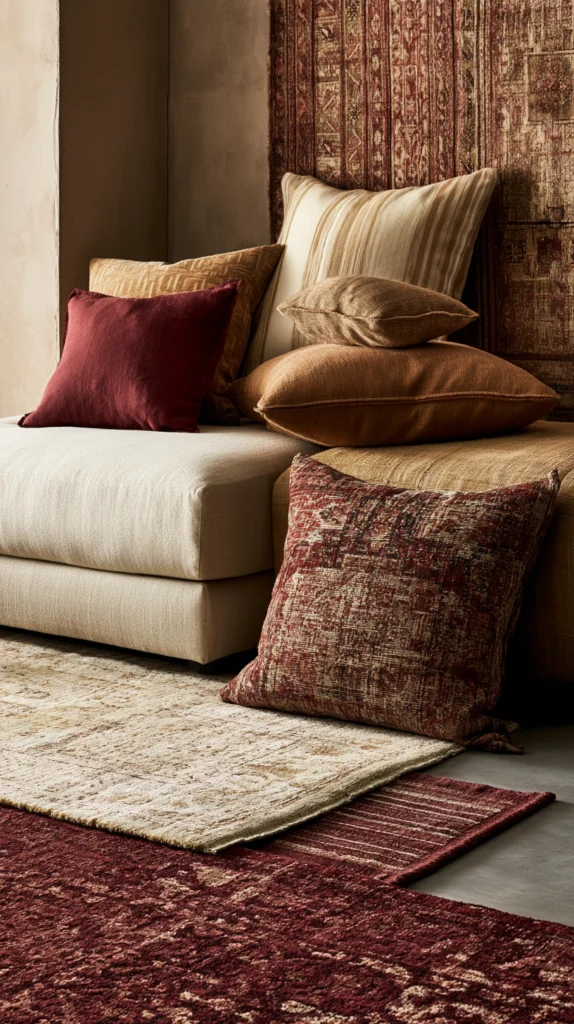
Budget: $150 – $600 for the combination
The layered rug approach — a smaller patterned rug placed on top of a larger natural or plain rug — beneath a sofa dressed with burgundy velvet, warm camel linen, and cream textured cushions creates the most maximally layered and most specifically rich combination on this list. The layered rug creates visual depth and pattern interest at the floor level. The three-colour cushion arrangement mirrors that depth at the sofa level. The two planes together produce a room of considerable warmth and complexity within a clear, warm colour family.
A large natural or sisal base rug of 200×300 cm costs $120–$300. A smaller vintage or printed pattern rug of 120×180 cm to place on top costs $80–$250. Burgundy velvet cushion covers cost $25–$55 each. Camel linen covers run $20–$45 each. Cream textured cotton covers cost $15–$35 each. The layered rug technique suits living rooms with hard flooring — timber, stone, or tile — where a single rug provides insufficient warmth and visual weight relative to the floor surface area the room exposes around it.
Style tip: Place the pattern rug on the base rug at a slight angle — 5 to 10 degrees off parallel to the base rug’s edge — rather than perfectly aligned. The slight angle creates the casual, collected quality that makes a layered rug arrangement look styled rather than assembled. Two perfectly aligned rugs one on top of the other looks like a rug placed on top of a rug mat. Two rugs at a slight angle to each other looks like a deliberate layering decision made by someone who understood what they were doing.
The throw pillow and rug pairing that works is always the one built on a clear underlying logic — tonal relationship, complementary contrast, shared material quality, or colour echo between the floor and the sofa level.
The combinations that feel random are the ones where the logic is absent. Once the logic is identified and applied, the specific choice of colours and materials is always secondary to the relationship between them — and a modest combination built on a clear relationship always looks more considered and more deliberate than an expensive combination assembled without one.
Start with the rug — it is the largest colour and texture decision in the room and everything above it is chosen in relation to it. Find the rug you love most for the room you have, then choose the cushions that honour the rug’s dominant tones without competing with its character. That sequence, applied to any of the thirteen combinations above, produces a living room that looks genuinely styled from its first arrangement through every rearrangement that follows it.