13 Fall Wreath Ideas for Every Front Door
I bought the same generic orange-and-brown faux wreath from a big box store for four autumns in a row.
It looked fine. It also looked exactly like the one on three other houses on my street, which I didn’t notice until a neighbor mentioned it at a block party.
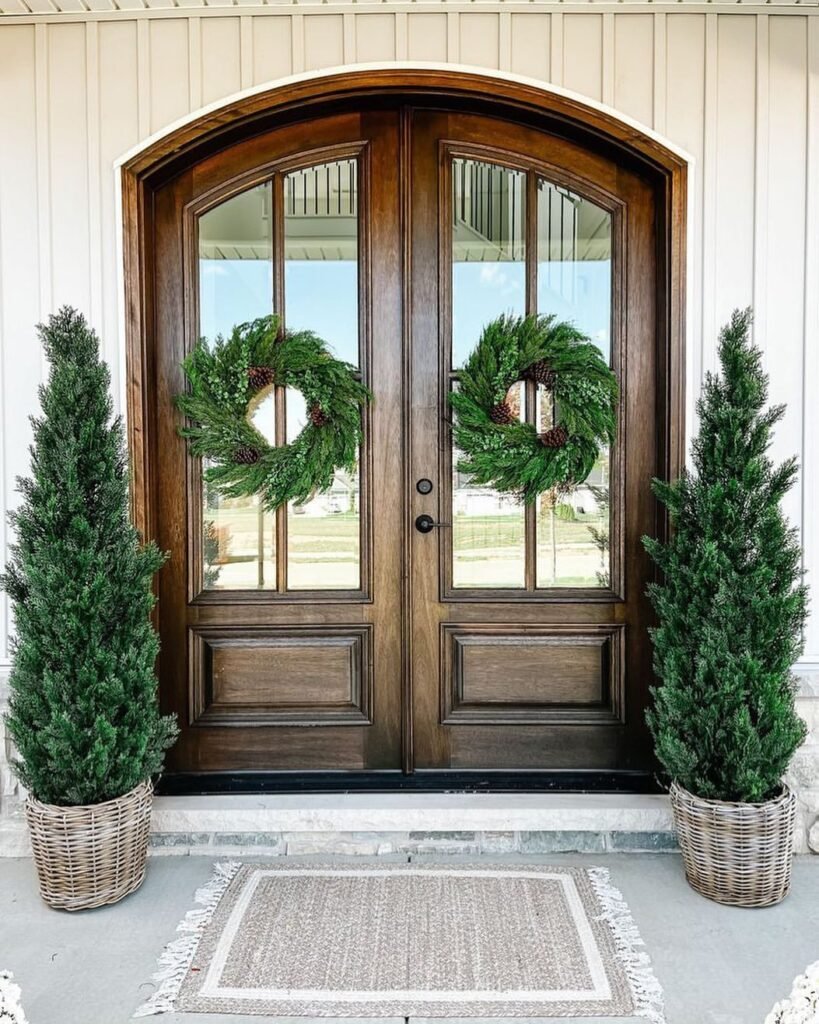
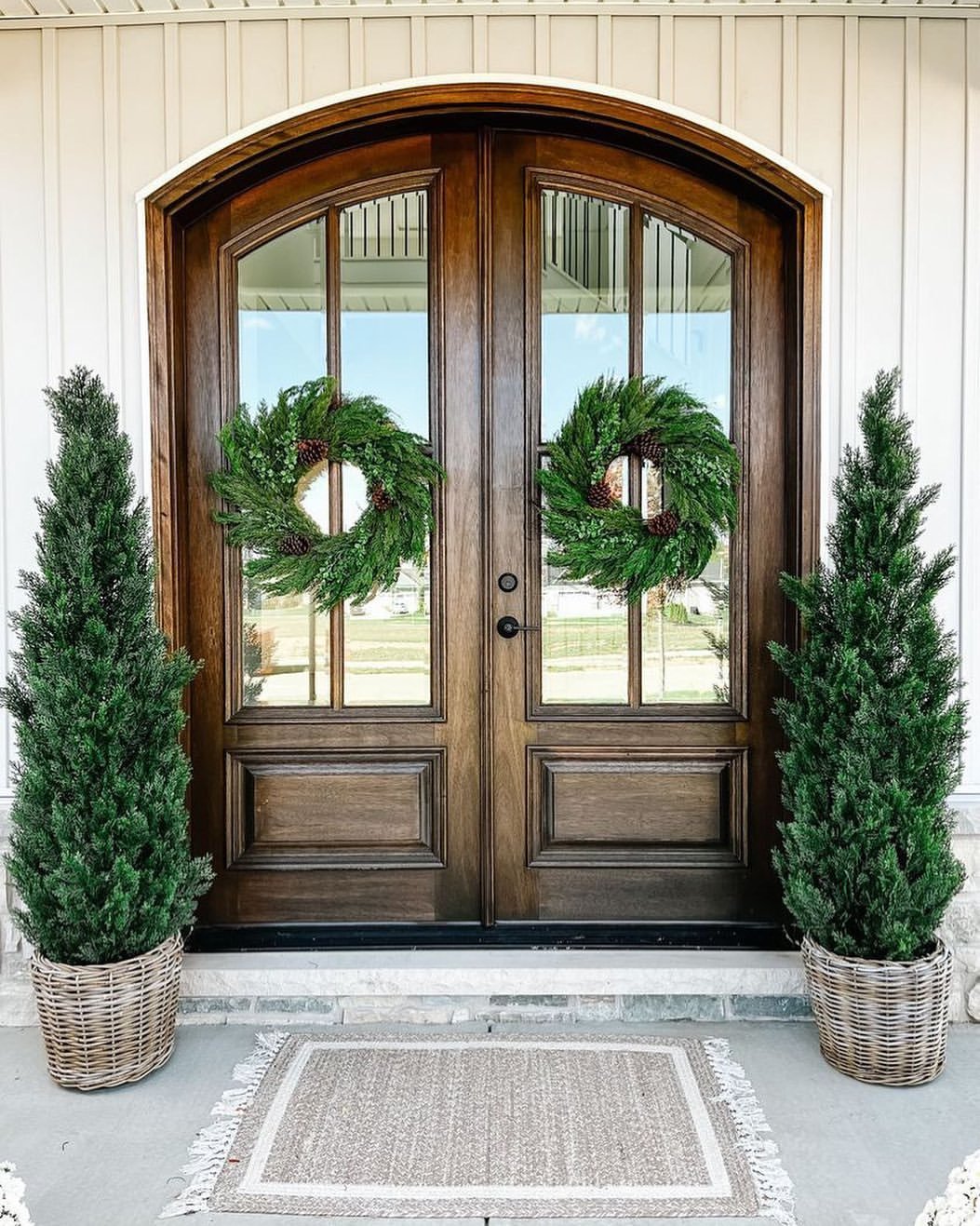
Last fall I finally sat down and actually thought through what I wanted my door to say before buying anything, instead of grabbing whatever was on the seasonal display at the front of the store.
I ended up building a wreath myself for the first time, and the compliments I got that October taught me more about what actually makes a fall wreath work than four years of store-bought defaults ever did.
Here are 13 fall wreath ideas that go beyond the standard orange leaf ring, along with the real details on how to build or source each one.
What Separates a Forgettable Wreath From One People Actually Notice
Before getting into specific styles, it helps to understand a few principles that apply across every wreath idea on this list.
- Texture variation matters more than color variation, since a wreath built entirely from smooth silk leaves reads as flat no matter how good the color palette is
- A wreath needs a clear focal point, whether that’s a bow, a cluster of larger elements, or an asymmetrical design choice, rather than perfectly even distribution all the way around
- Scale relative to your door matters, since an undersized wreath gets visually lost on a larger door while an oversized one can overwhelm a smaller entry
- Weatherproofing decisions depend heavily on your door’s actual sun and rain exposure, which varies significantly even between two houses on the same street
- The best wreaths often mix natural and preserved materials with just a few faux elements, rather than going fully artificial or fully fresh
- Proportion to your door frame matters as much as the wreath’s own design, since even a beautifully built wreath can look off if it’s hung too high, too low, or off-center relative to the door’s actual dimensions
Keep these principles in mind as you look through the ideas below, since the same base concept can look completely different depending on how these details are handled.
1. A Dried Citrus and Cinnamon Wreath
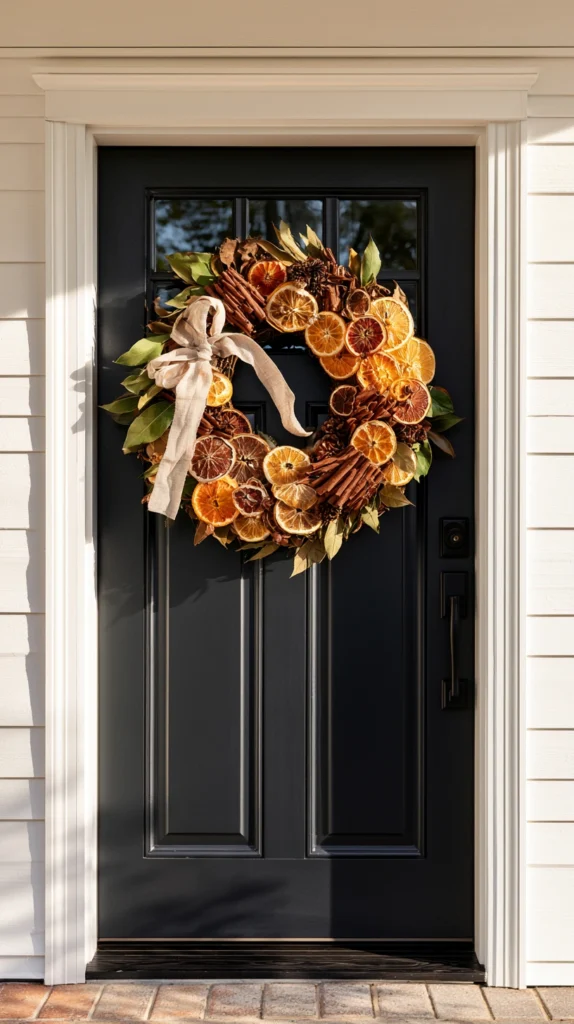
Dried orange and lemon slices, paired with whole cinnamon sticks, create a wreath with genuine texture and a warm, spiced scent that greets guests before they even reach the door.
How it comes together:
- Slice oranges and lemons thin, about a quarter inch, and dehydrate them in a low oven or dehydrator until fully dry and slightly leathery
- Attach dried citrus slices to a grapevine or straw wreath base using hot glue or floral wire, overlapping slightly for fullness
- Tuck bundles of whole cinnamon sticks, tied with twine, into gaps between the citrus slices
- Add a few dried bay leaves or eucalyptus sprigs for green contrast against the warm orange and brown tones
Where it works best:
- Covered porches or entries with some protection from direct rain, since dried citrus can reabsorb moisture and soften over time
Watch out for:
- Skipping full dehydration, since citrus slices that aren’t completely dry will mold within days rather than lasting the full season
Budget: $15–$30 for a wreath base, citrus, and cinnamon, most of which can be prepped at home for very little cost
2. A Monochromatic Neutral Wreath
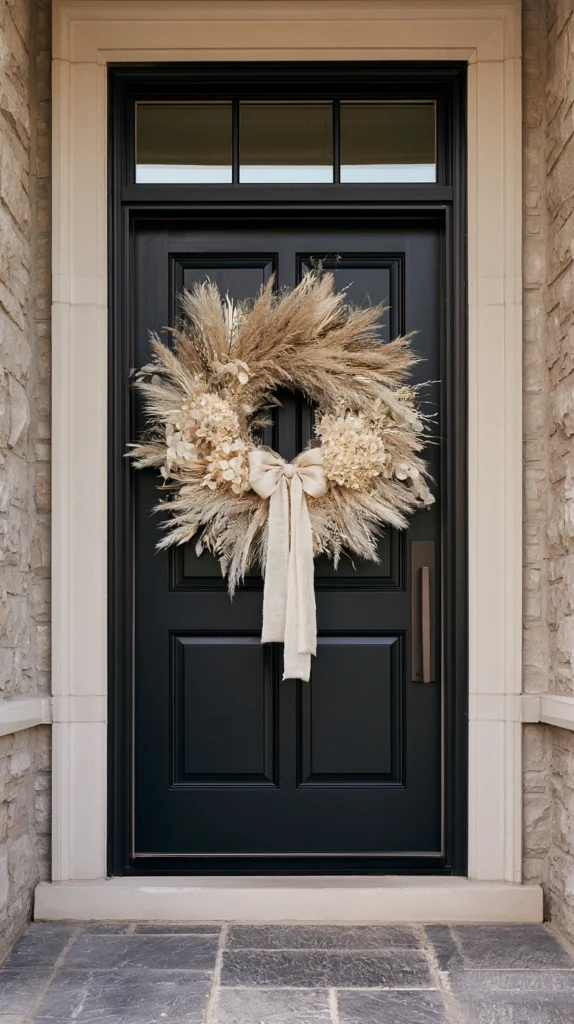
Instead of the traditional orange and red palette, a wreath built entirely in cream, beige, and soft white tones creates an elevated, modern take on fall that fits a broader range of home exteriors.
How it comes together:
- Start with a base of dried pampas grass or bleached wheat stalks for the primary texture
- Add cream-toned dried hydrangea or preserved eucalyptus, avoiding any traditional orange or red accents entirely
- Include a neutral linen or muslin ribbon as the focal bow, rather than a patterned or brightly colored one
- Layer in a few different textures, like dried lunaria or bunny tail grass, to keep the monochromatic palette from feeling flat
Where it works best:
- Modern farmhouse or minimalist home exteriors, where a traditional bright fall palette might clash with the overall aesthetic
Watch out for:
- Using materials with too similar a texture throughout, which is the main risk with any monochromatic design since color variation isn’t available to create visual interest
Budget: $30–$60 depending on the specific dried and preserved materials sourced
3. A Fresh Eucalyptus and Mum Wreath
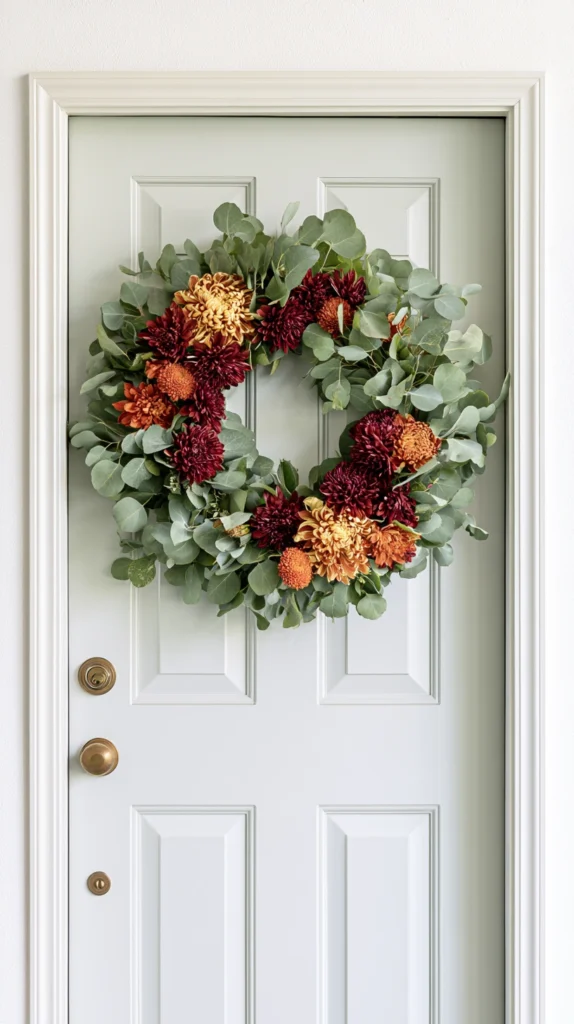
Fresh eucalyptus paired with hardy fall mums creates a wreath with genuine fragrance and vivid color, best suited for shorter display periods or households willing to refresh materials partway through the season.
How it comes together:
- Build a base using fresh eucalyptus stems wired onto a wire wreath frame, overlapping generously for fullness
- Add small potted or cut mum blooms in deep orange, burgundy, or gold, wired in at intervals around the wreath
- Mist the wreath lightly every few days to extend the fresh material’s life as long as possible
- Plan to replace mum blooms roughly every two to three weeks, since fresh flowers won’t last the entire fall season without some refreshing
Where it works best:
- Shaded entries protected from direct afternoon sun, which significantly extends how long fresh material stays vibrant
Watch out for:
- Full sun exposure, which can wilt fresh mums within just a few days regardless of how often the wreath is misted
Budget: $25–$45 initially, plus $10–$15 for each round of bloom refreshing through the season
4. A Woven Wheat and Grain Wreath
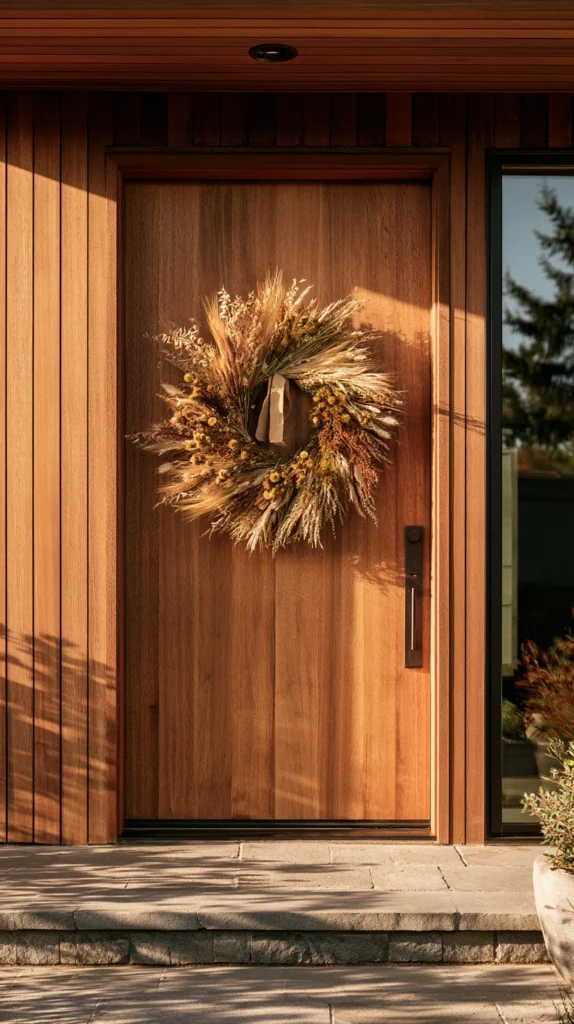
A wreath built from dried wheat stalks and other grains creates a distinctly harvest-themed look with strong natural texture, tying directly into the traditional agricultural roots of fall imagery.
How it comes together:
- Source dried wheat, oat, or barley stalks, either bundled from a craft supplier or dried yourself if you have access to a garden or farm source
- Wire small bundles of stalks onto a straw or wire wreath frame, layering bundles so the grain heads face outward in a consistent direction
- Add a few dried flower accents, like strawflower or globe amaranth, in warm gold or rust tones for subtle color variation
- Finish with a simple burlap or jute ribbon bow to keep the overall material palette cohesive
Where it works best:
- Rural, farmhouse, or rustic-style homes, where the harvest imagery ties naturally into the broader exterior aesthetic
Watch out for:
- Storing improperly between uses, since dried grain wreaths are prone to shedding and can attract pests if stored in a damp basement or garage
Budget: $20–$40 for grain bundles and a wreath base
5. A Berry and Branch Wreath
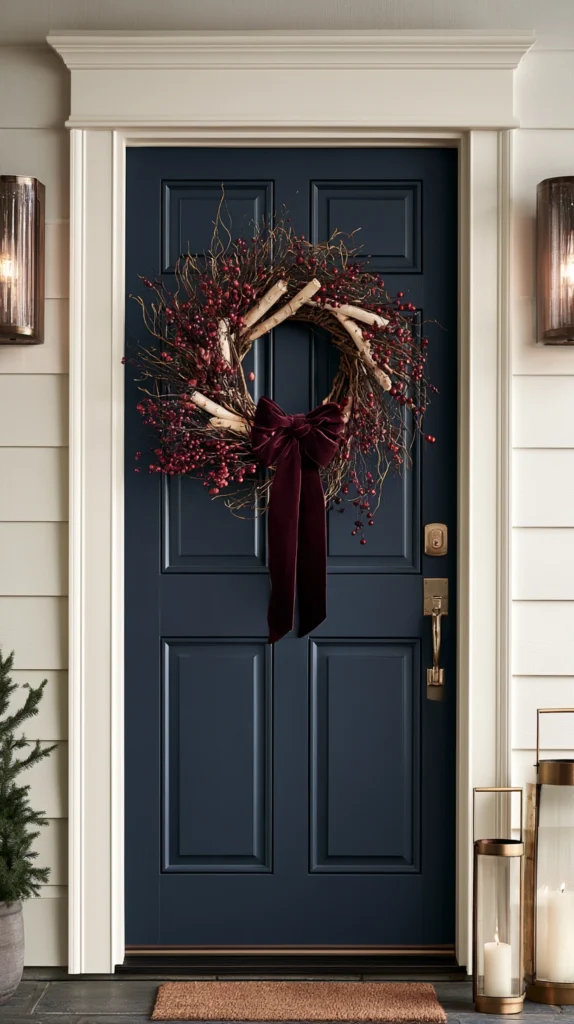
Combining dried or faux berry clusters with bare branches creates a wreath that transitions naturally from fall into the earliest weeks of winter, extending its useful display window.
How it comes together:
- Use a base of curly willow or birch branches, wired into a circular wreath shape or purchased as a pre-made branch wreath form
- Add clusters of berries, whether dried rose hips, faux winterberry, or preserved bittersweet vine, tucked throughout the branch structure
- Keep the branch structure loose and somewhat open rather than densely packed, letting the natural branch shapes remain visible
- Add a single ribbon accent in a deep red or burgundy tone as the wreath’s focal point
Where it works best:
- Any front door, since the neutral branch base and berry accents work across a wide range of home exterior styles
Watch out for:
- Omitting a focal point entirely, since a wreath built only from branches and scattered berries without one clear anchor point can read as unfinished
Budget: $25–$50 depending on whether branches are sourced from your own yard or purchased pre-made
6. A Layered Ribbon Wreath With Minimal Florals
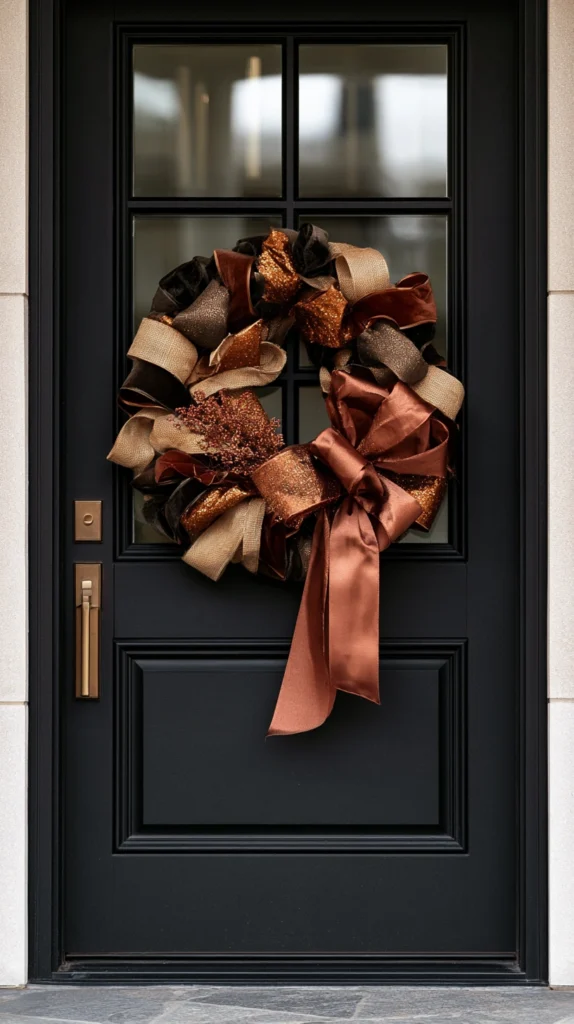
For a more graphic, modern take on a fall wreath, layering multiple ribbon textures and widths as the primary visual element, with just a few floral accents, creates a distinctly different look from a traditional foliage-heavy design.
How it comes together:
- Choose two to three ribbon types in complementary fall tones, like a wide burlap, a narrower velvet, and a thin metallic accent ribbon
- Wrap and layer ribbons around a simple wire or foam wreath base, varying the wrap tightness and spacing for visual texture
- Add just a few floral or leaf accents at one focal point, rather than distributing them evenly around the full ribbon base
- Finish with a single larger bow at the bottom or top of the wreath as the clear focal point
Where it works best:
- Modern or transitional home exteriors, where a bold, graphic ribbon design fits better than a heavily textured natural wreath
Watch out for:
- Choosing ribbon materials not rated for outdoor use, since indoor craft ribbon can fade or fray quickly when exposed to sun and weather
Budget: $20–$45 depending on ribbon quality and quantity used
7. A Preserved Boxwood and Pumpkin Wreath
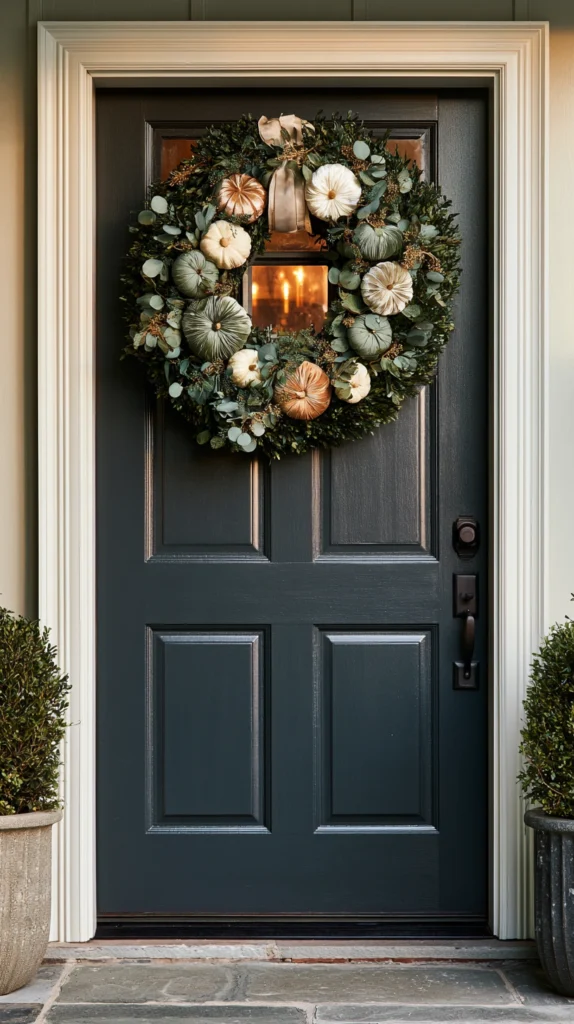
Preserved boxwood, which holds its green color without any watering or maintenance, paired with small faux pumpkins creates a wreath that looks fresh and lush while requiring virtually no upkeep through the season.
How it comes together:
- Use a preserved boxwood wreath base, either purchased pre-made or built by wiring preserved boxwood sprigs onto a wire frame
- Attach small faux pumpkins, in a mix of sizes and colors like white, sage green, and traditional orange, at intervals around the wreath
- Add a few sprigs of dried or preserved eucalyptus for additional texture variation against the dense boxwood
- Secure pumpkins with hot glue or floral wire, checking periodically that they haven’t loosened from wind exposure
Where it works best:
- Traditional or classic home exteriors, where the lush greenery paired with pumpkin accents fits a widely appealing, timeless aesthetic
Watch out for:
- Choosing lightweight faux pumpkins that are prone to blowing away in wind, rather than ones with enough weight or secure attachment points
Budget: $35–$70 depending on whether the boxwood base is purchased pre-made or built individually
8. A Dried Hydrangea Wreath
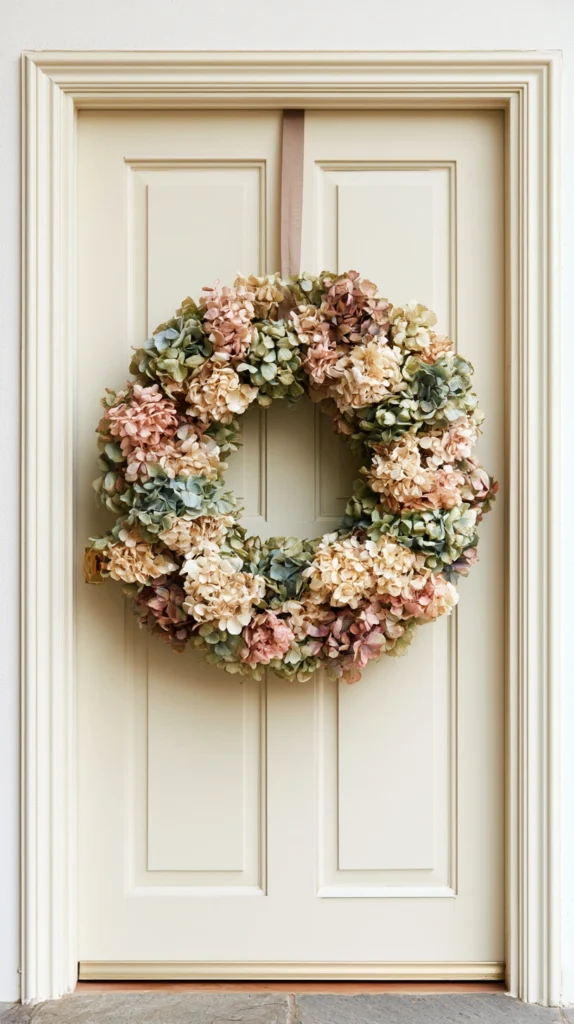
Dried hydrangea blooms, with their naturally papery texture and soft, muted color transitions, create a romantic, textural wreath that ages beautifully rather than looking worn out as the season progresses.
How it comes together:
- Source dried hydrangea blooms, either grown and air-dried yourself or purchased from a florist or craft supplier
- Wire full hydrangea heads directly onto a straw or wire wreath frame, overlapping generously since dried hydrangea compresses less densely than fresh material
- Choose blooms with a natural color gradient, from cream to soft pink to muted green, for visual variation without needing additional floral accents
- Add a simple, thin ribbon in a complementary muted tone rather than a bold or bright color that would compete with the hydrangea’s soft palette
Where it works best:
- Covered entries protected from heavy rain, since dried hydrangea can absorb moisture and lose its shape if repeatedly soaked
Watch out for:
- Handling dried hydrangea roughly during attachment, since the papery petals are more fragile than fresh blooms and can crumble under too much pressure
Budget: $25–$55 depending on whether hydrangea is home-grown and air-dried or purchased already dried
9. A Rustic Grapevine and Leaf Wreath
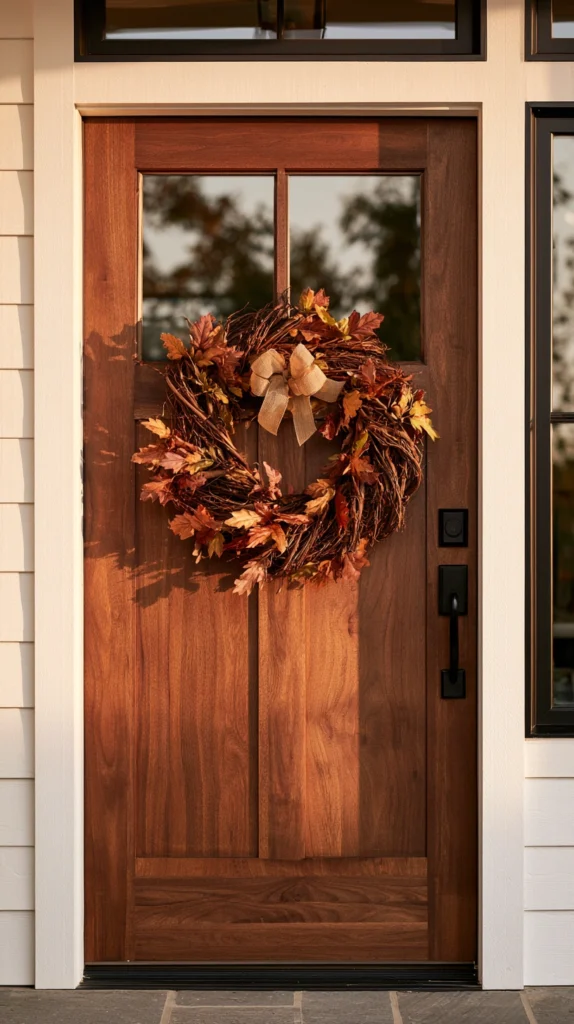
A grapevine base, left partially bare and paired with scattered faux or dried leaves, creates a naturally textured, effortless-looking wreath that leans into imperfection rather than a fully covered, dense design.
How it comes together:
- Start with a bare grapevine wreath base, chosen for one with good natural texture and some visible twisting detail
- Add a moderate amount of dried or high-quality faux leaves in a mix of fall tones, attaching them in loose clusters rather than covering the entire base
- Leave sections of the grapevine base visible and uncovered, which is intentional to this rustic style rather than a sign of an unfinished wreath
- Add a simple raffia or jute bow, keeping the overall material palette natural and unpolished
Where it works best:
- Farmhouse, cottage, or cabin-style homes, where the intentionally rustic, undone look fits the broader exterior aesthetic
Watch out for:
- Overcompensating by covering the entire grapevine base with leaves, which defeats the purpose of this specific rustic, textural style
Budget: $15–$35 depending on the grapevine base quality and leaf material chosen
10. A Velvet Pumpkin and Deep Jewel Tone Wreath
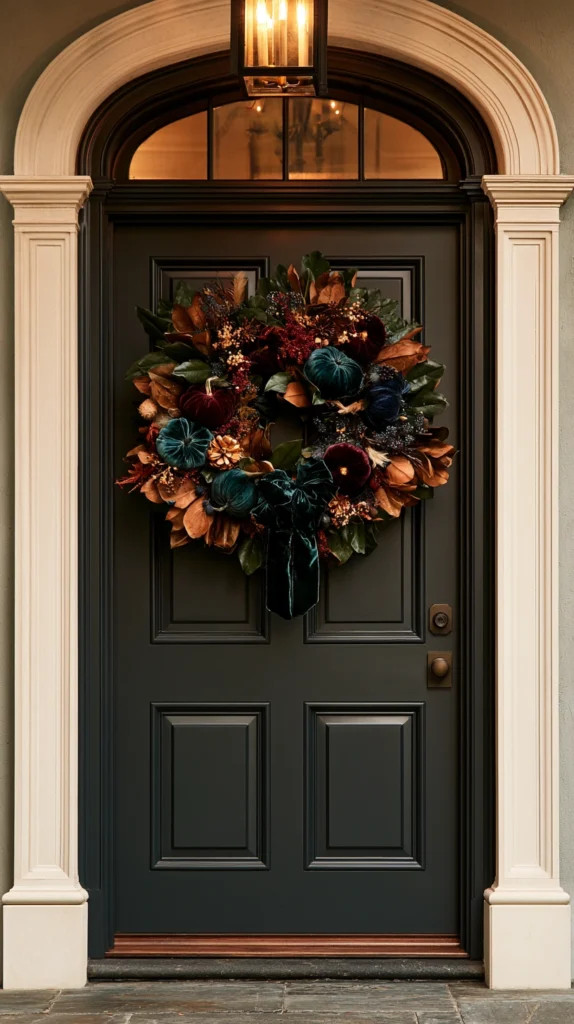
Small velvet pumpkins paired with deep jewel-toned ribbon and florals create an elegant, richly colored wreath that moves away from the traditional bright orange fall palette entirely.
How it comes together:
- Use a base of preserved greenery, like boxwood or magnolia leaves, in a deep, dark green tone
- Add small velvet pumpkins in jewel tones like deep burgundy, emerald, or navy, secured at intervals around the wreath
- Include a few dried flower accents in complementary deep tones, like dried amaranthus or dark dahlia
- Finish with a rich velvet ribbon bow in a matching jewel tone as the wreath’s clear focal point
Where it works best:
- Formal or traditional home exteriors, where the deeper, richer color palette suits a more elegant overall look than a bright, casual fall design
Watch out for:
- Choosing velvet pumpkins not treated for outdoor use, since standard craft velvet can fade and develop water spots quickly when exposed to weather
Budget: $30–$65 depending on the number and quality of velvet pumpkin accents used
11. A Herb and Foliage Wreath With a Subtle Fragrance
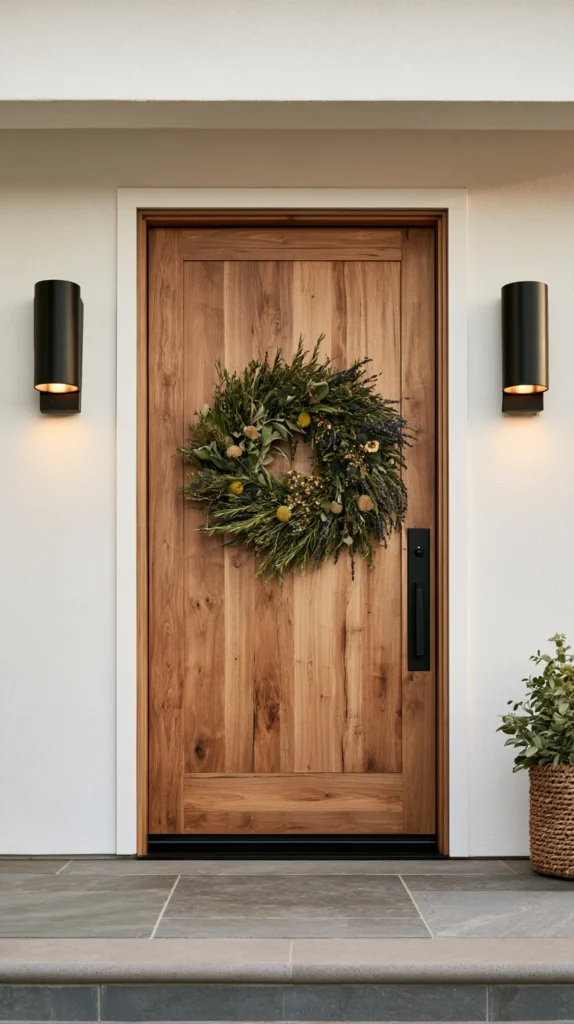
Building a wreath primarily from fragrant dried herbs, like sage, rosemary, and lavender, creates a subtly scented entry that feels distinctly different from a purely visual floral design.
How it comes together:
- Source dried herb bundles, either grown and air-dried yourself or purchased from a farmers market or specialty supplier
- Wire herb bundles onto a straw or wire wreath frame, layering different herb types for both scent and texture variation
- Add a few dried flower accents, like yarrow or strawflower, for subtle color without overwhelming the herbal base
- Hang the wreath somewhere guests will brush past closely, like beside rather than directly on the door, to fully appreciate the subtle fragrance as they pass
Where it works best:
- Cottage-style homes or entries with a covered walkway where guests naturally pass close to the wreath before reaching the door itself
Watch out for:
- Hanging in full, direct sun, which can fade dried herbs’ color and diminish their fragrance faster than a shaded or partially covered location
Budget: $15–$30 depending on whether herbs are home-grown or purchased already dried
12. A Mixed Metal Accent Wreath
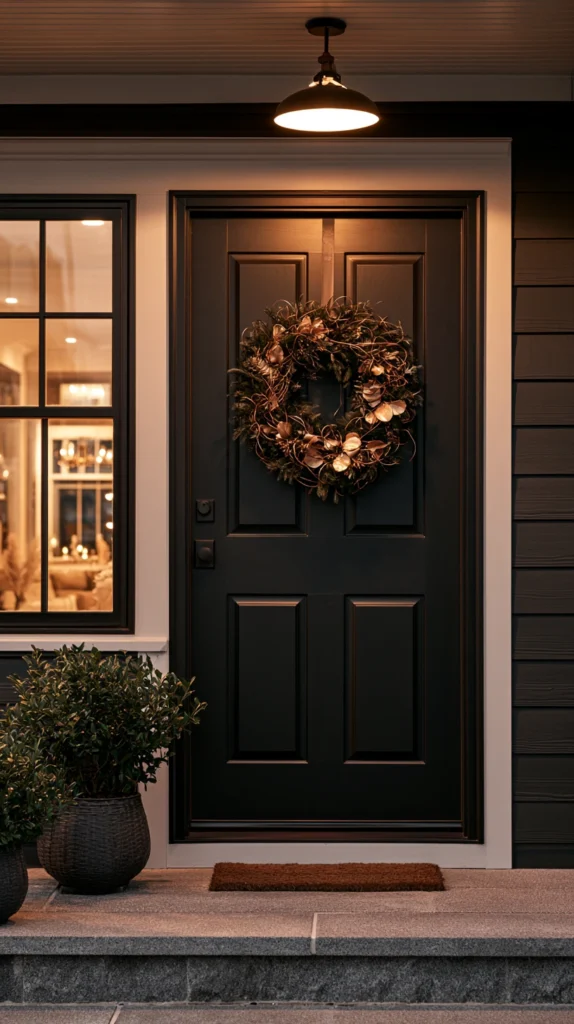
Adding small metallic accents, like copper wire detailing or small gold leaf clusters, to a traditional foliage base creates a wreath with subtle shine that catches evening porch light beautifully.
How it comes together:
- Build a base using preserved or dried foliage in warm brown and rust tones
- Wrap sections of the wreath frame with thin copper or gold wire, creating a subtle metallic thread running through the greenery
- Add a few faux gilded leaves or small metallic accent picks at the wreath’s focal point
- Choose a metallic ribbon, in a matte rather than glossy finish, to tie the metal accents together cohesively
Where it works best:
- Entries with porch lighting that will illuminate the wreath in the evening, since the metallic accents are specifically designed to catch and reflect light
Watch out for:
- Using overly shiny, glossy metallic elements in full daylight, which can look more like costume decor than an elegant design accent
Budget: $25–$50 depending on the amount of metallic detailing added
13. A Personalized Family Wreath With a Meaningful Focal Element
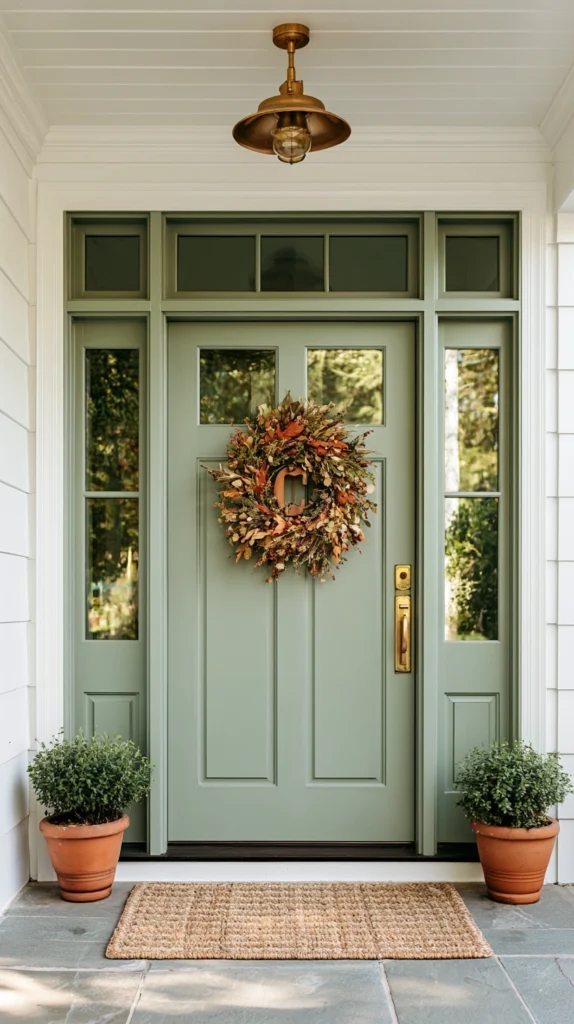
Beyond any specific material or color palette, incorporating a personal, meaningful element, like a monogram, a family photo charm, or a hand-lettered sign, transforms a fall wreath from a seasonal decoration into something that feels genuinely personal to your household.
How it comes together:
- Choose any base style from this list that fits your home’s aesthetic, whether that’s foliage, grain, or dried florals
- Add a single personalized focal element, like a wooden monogram initial, a small custom sign, or a family name plaque, positioned as the wreath’s clear centerpiece
- Keep the surrounding material relatively simple and understated so the personalized element remains the visual focus rather than competing with a busy design
- Consider updating the personalized element yearly, like adding a small tag with the current year, to build a meaningful, evolving tradition over time
Where it works best:
- Any front door, since this idea is more about the personal touch than any specific material palette or home style
Watch out for:
- Choosing a personalized element too small to actually read from the street or front walkway, which defeats the purpose of making it the wreath’s focal point
Budget: $20–$60 depending on the base wreath style chosen and the personalized element sourced or custom-made
Matching a Wreath Style to Your Door’s Actual Exposure
Before finalizing any wreath idea, consider how much sun and rain your specific front door actually receives throughout the day.
- Full sun exposure favors faux or well-preserved materials over fresh or delicate dried elements, which fade and degrade far faster under direct sunlight
- Fully covered, shaded entries can support a wider range of materials, including fresh florals and more delicate dried elements that wouldn’t survive direct weather elsewhere
- Entries with heavy rain exposure benefit from wreaths built with weatherproof ribbon and sealed or faux materials, since repeated soaking degrades most natural dried materials quickly
- North-facing doors in colder climates may need extra consideration for how materials handle repeated freeze-thaw cycles through the later part of the season
- Doors with a storm door in front actually offer more protection than people expect, since the extra glass layer shields delicate materials from wind and direct rain while still displaying the wreath clearly
Take a few days to actually observe your door’s exposure pattern before buying materials, since assumptions based on general compass direction alone sometimes miss the effect of nearby trees, overhangs, or neighboring structures that shift the real sun and rain exposure.
Building a Wreath That Actually Lasts the Full Season
A few small habits extend the life of almost any fall wreath, regardless of which specific style you choose.
Bring the wreath inside briefly during any severe weather event, like a heavy storm, rather than leaving delicate materials exposed to conditions well beyond typical fall weather.
Check attachment points, like hot glue spots or wire wraps, every few weeks, since wind and temperature changes can loosen elements gradually over a long display season.
Store the wreath properly once the season ends, using a dedicated wreath storage container or a simple garment bag, rather than tossing it into a bin where delicate elements can get crushed for next year.
Take a quick photo of the finished wreath before storing it, since a reference photo makes it much easier to restyle or repair the same wreath the following year without trying to remember exactly how everything was originally arranged.
Budgeting for Multiple Wreaths Across One Home
Many homes have more than one entry point that could use a wreath, from a front door to a garage service entrance to a back patio door, and coordinating styles across all of them takes a bit of planning.
Choose one dominant style for the main entry, then select a simplified, smaller-scale version of the same materials for secondary doors, rather than mixing completely unrelated wreath styles across the same home’s exterior.
This approach keeps material costs lower overall, since buying slightly more of the same core materials in bulk is typically more economical than sourcing entirely separate supplies for each individual wreath.
Choosing the Idea That Actually Fits Your Home
With thirteen distinct directions to choose from, the easiest way to narrow down a final choice is to think about your home’s existing exterior palette and style first, rather than starting from a wreath you simply liked in a photo.
A wreath that complements your door color, your home’s architectural style, and the amount of weather exposure your entry actually receives will hold up better and look more intentional than one chosen purely because it looked appealing online.
The wreath that finally broke my four-year streak of identical store-bought defaults wasn’t the most elaborate idea on any list I’d seen. It was simply the one that actually matched my own front porch, my own door color, and the amount of afternoon sun my entry gets every single day that fall.