15 Thanksgiving Table Setting Ideas That Feel Elegant
Our first hosted Thanksgiving table was mismatched plates, a plastic tablecloth, and a centerpiece grabbed last-minute from the grocery store.
The food was good. The table looked like an afterthought, and I noticed it every time I sat down that day.
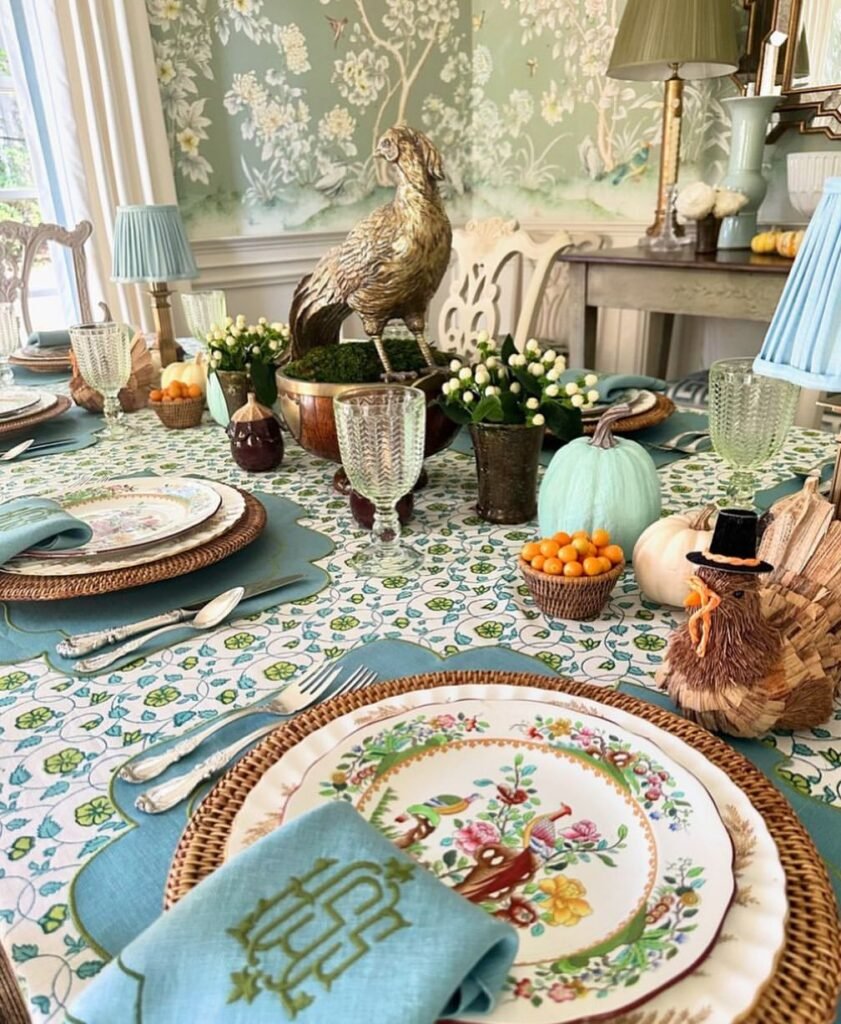
The following year I spent one afternoon actually planning the table itself, and the whole meal felt different because of it.
Nobody remembers the plastic tablecloth years later, but everyone still mentions the year the table finally looked the part.
Here are 15 ways to build a Thanksgiving table that feels elegant without requiring a professional stylist.
What actually makes a holiday table read as elegant
Elegance at the table comes from restraint and coordination, not from spending the most money.
- A limited, intentional color palette does more work than a table covered in every fall decoration available
- Height variation across the centerpiece keeps sightlines open for actual conversation across the table
- Layering real materials, like linen, wood, and brass, adds more richness than a single flat tablecloth alone
Once the palette and structure are decided, the rest of the table comes together quickly.
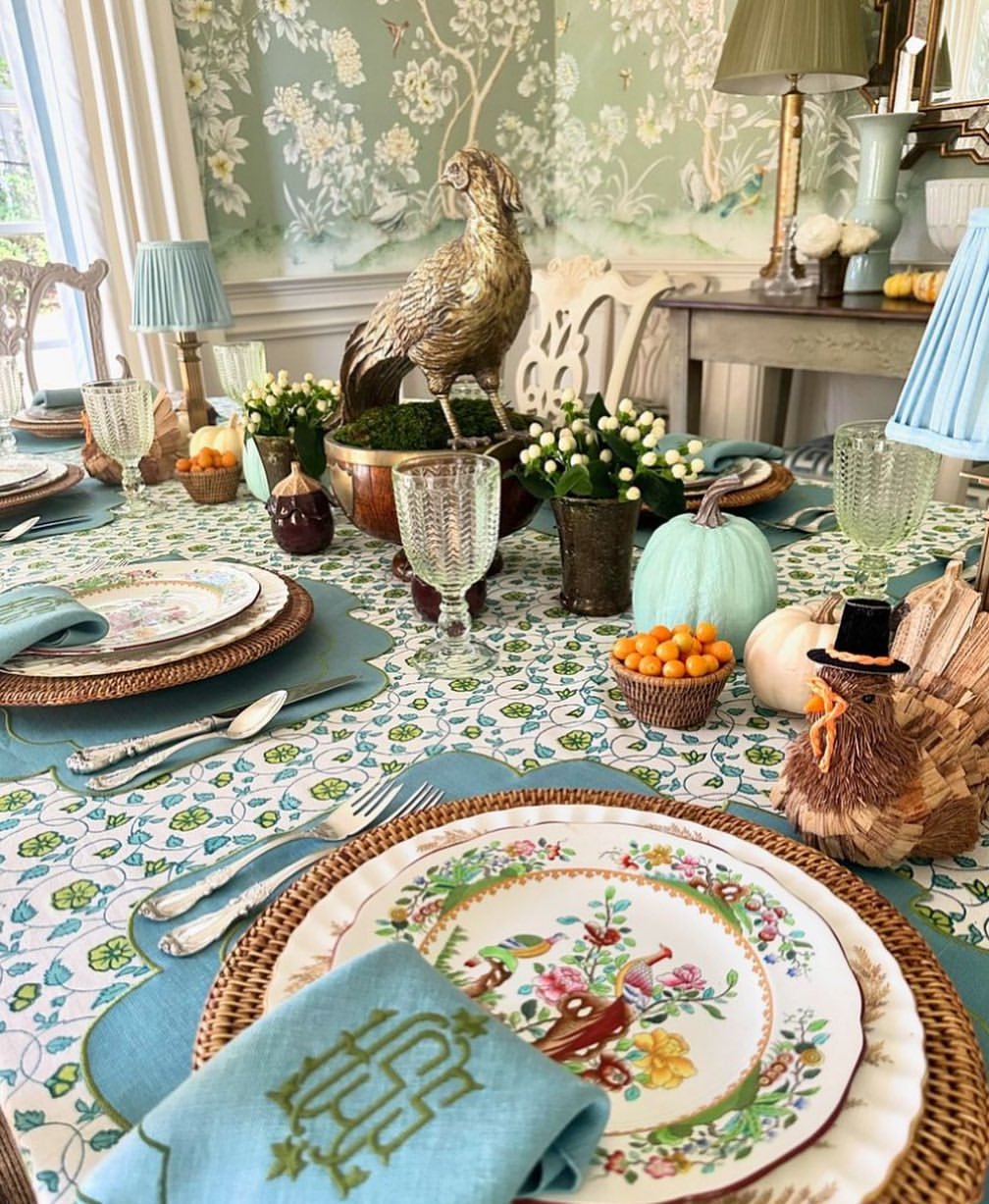
1. Neutral Linen Tablecloth With Layered Textures
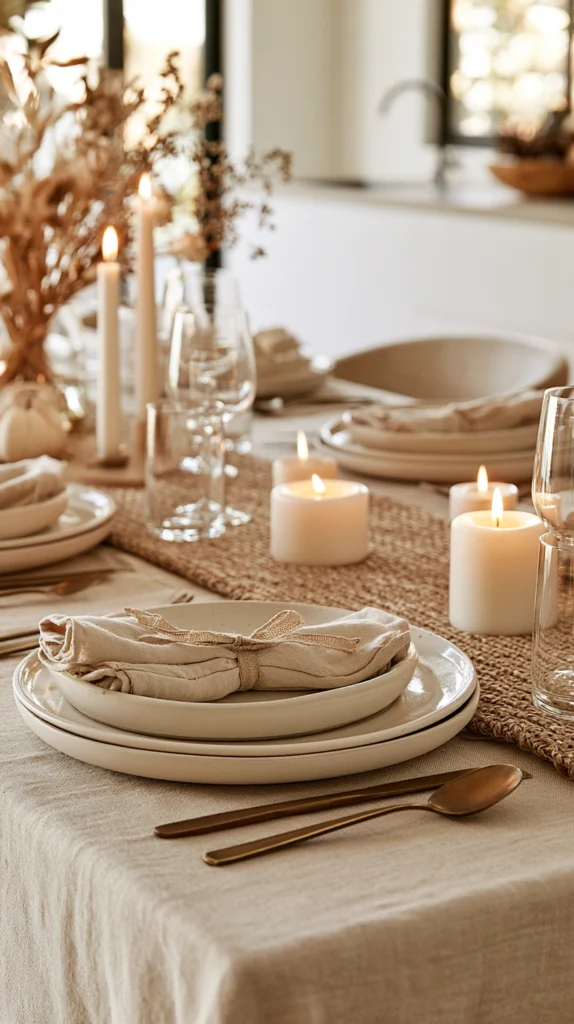
A foundation built on fabric rather than color.
Build it:
- A linen tablecloth in a warm ivory or oatmeal tone, left slightly wrinkled rather than pressed flat
- A table runner in a complementary but distinct texture, like a loosely woven cotton, laid down the center
- Cloth napkins folded simply and tied with a thin piece of twine or ribbon at each place setting
Why texture layering outperforms a single flat tablecloth:
- Linen’s natural texture catches candlelight in a way a smooth polyester cloth never quite manages
- Layering a runner over the base cloth adds visual depth without introducing a second competing color
- Simple napkin ties give each place setting a small, considered detail without much added cost
Cost breakdown: A linen tablecloth and matching napkins run $40 to $80 depending on table size and fabric quality.
2. Brass and Gold Flatware for Warm Metallic Shine
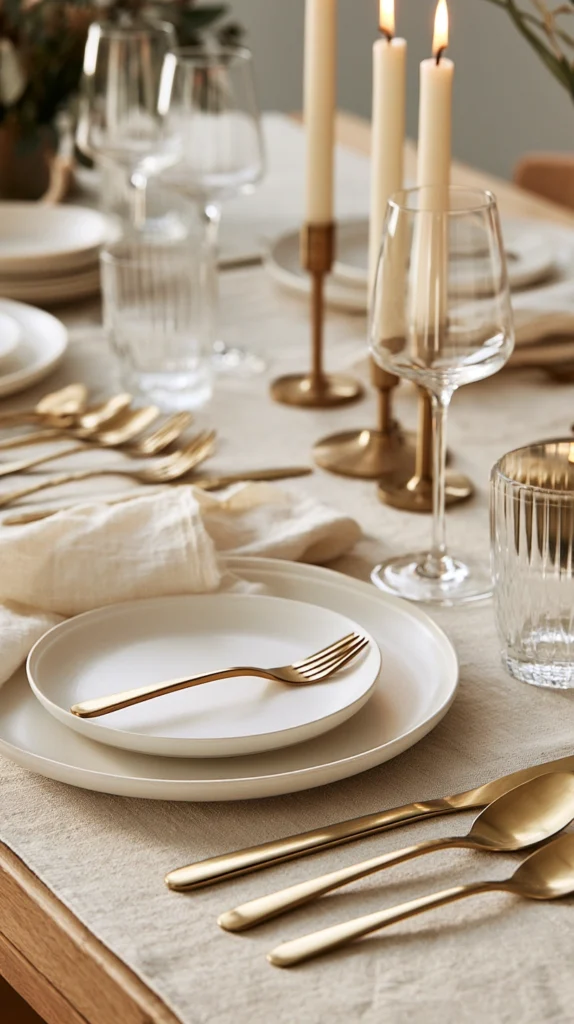
Hardware at the table treated as a genuine design choice.
Build it:
- A full flatware set in a brushed gold or antique brass finish, rather than standard stainless steel
- Paired with simple white or cream dinnerware, letting the flatware provide the table’s metallic accent
- Wiped down before the meal to avoid fingerprints showing under warm candlelight
Why metallic flatware elevates even a simple table setup:
- The warm tone catches candlelight and reflects it back across the table far more than plain stainless
- It photographs beautifully for anyone taking table pictures before the meal begins
- It’s a detail that reads as intentional and elegant without requiring a full dinnerware replacement
Cost breakdown: A gold or brass-finished flatware set runs $40 to $100 depending on place setting count and material quality.
3. Low, Elongated Centerpiece for Clear Sightlines
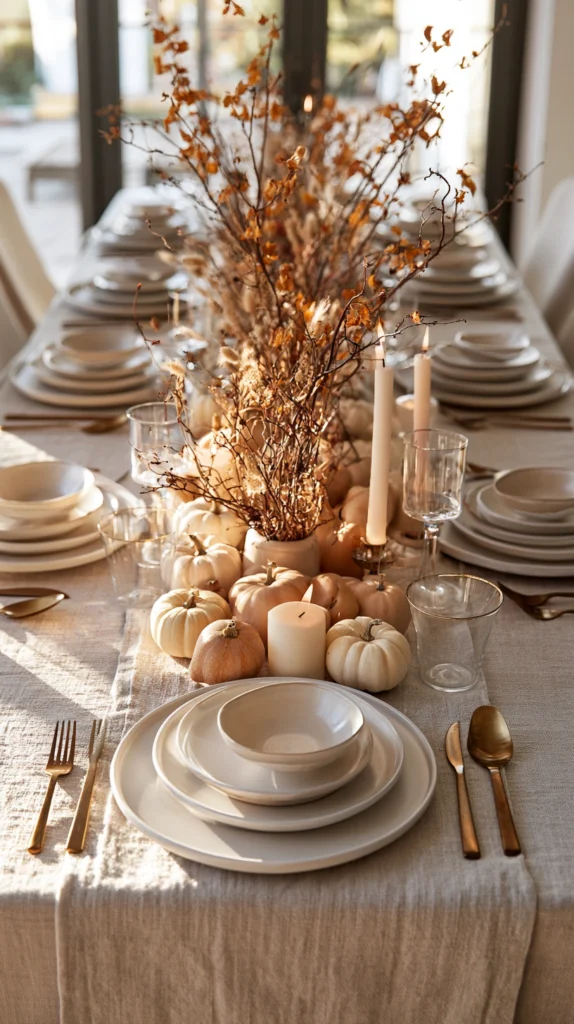
A centerpiece built specifically to keep conversation flowing.
Build it:
- A low, elongated arrangement of seasonal branches, dried grasses, and a few small pumpkins or gourds
- Kept under 12 inches tall throughout its full length, ensuring guests can see across the table easily
- Arranged directly down the table’s center rather than clustered in one single spot
Why height matters more than volume for a centerpiece’s success:
- A tall, dramatic arrangement often looks impressive in photos but actually blocks conversation once everyone sits down
- An elongated, low design still delivers a full, generous look while keeping every sightline open
- It also leaves more usable table space for passing dishes, since the arrangement doesn’t dominate the center
Cost breakdown: A low centerpiece using seasonal branches and small gourds runs $25 to $50 depending on floral additions.
4. Taper Candles in Varying Heights
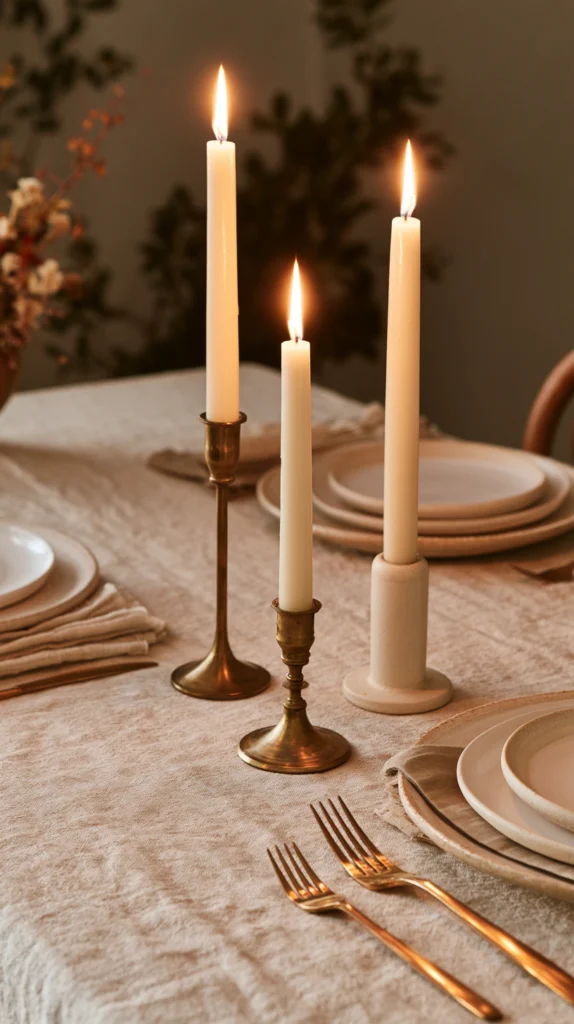
Candlelight used deliberately rather than as an afterthought.
Build it:
- Taper candles in warm ivory or deep amber tones, placed in simple brass or ceramic holders of varying heights
- Positioned down the table’s length, interspersed with the centerpiece rather than clustered in one area
- Lit just before guests are seated, allowing the room’s other lights to be dimmed for the meal itself
Why varied candle heights add more elegance than a single uniform row:
- The height variation mimics the same layered structure found in a well-designed centerpiece
- Warm candlelight flatters both food and faces far more than overhead lighting alone
- It signals a clear transition from casual gathering to the formal seated meal once the candles are lit
Cost breakdown: Taper candles and simple holders run $20 to $50 depending on quantity and holder material.
5. Individual Place Cards With Botanical Accents
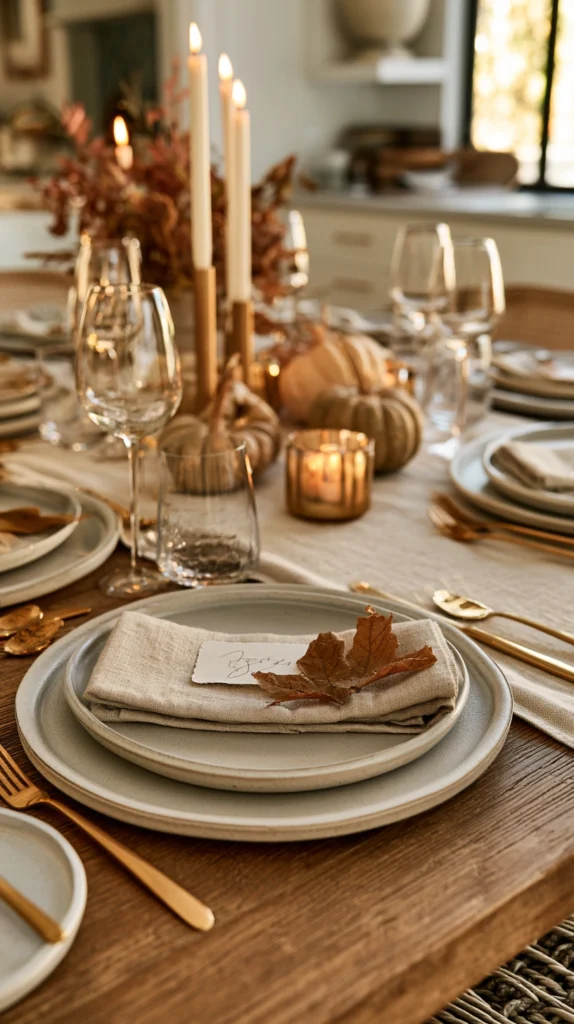
A small, personal touch at each setting.
Build it:
- Simple handwritten or printed place cards, one per guest, in a card stock that complements the table’s overall palette
- A small sprig of rosemary, a mini pumpkin, or a single dried leaf placed beside or beneath each card
- Positioned directly on the folded napkin or plate, ensuring guests find their seat without confusion
Why place cards add elegance even at an informal family gathering:
- They eliminate the slightly awkward moment of guests deciding where to sit themselves
- A small botanical accent turns a purely functional card into a genuine decorative detail
- It signals a level of thoughtful planning that guests notice even if they can’t quite articulate why the table feels more special
Cost breakdown: Card stock and small botanical accents for place cards run $10 to $25 depending on quantity.
6. Mixed Vintage and Modern China
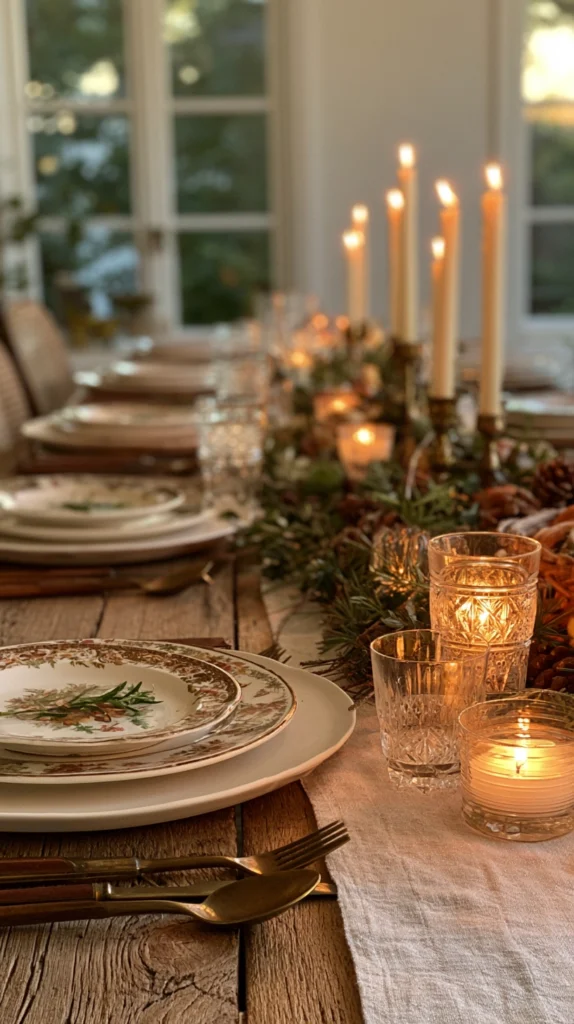
A curated blend rather than a single matching set.
Build it:
- A modern white dinner plate as the base, layered with a vintage patterned salad or dessert plate on top
- Vintage pieces sourced from thrift stores or family collections, mixed intentionally rather than perfectly matched
- Kept to one or two patterns maximum to avoid the table feeling scattered rather than curated
Why mixing china eras adds more personality than a uniform set:
- It gives the table genuine history and character, especially if the vintage pieces carry family significance
- Layering plates this way is a technique borrowed directly from professional table styling
- It allows a modern, versatile dinnerware set to stay in regular use while still bringing out special pieces for the holiday
Cost breakdown: Vintage patterned plates run $3 to $10 each at thrift stores, an affordable way to add character to an existing modern set.
7. Deep Jewel-Toned Accent Napkins
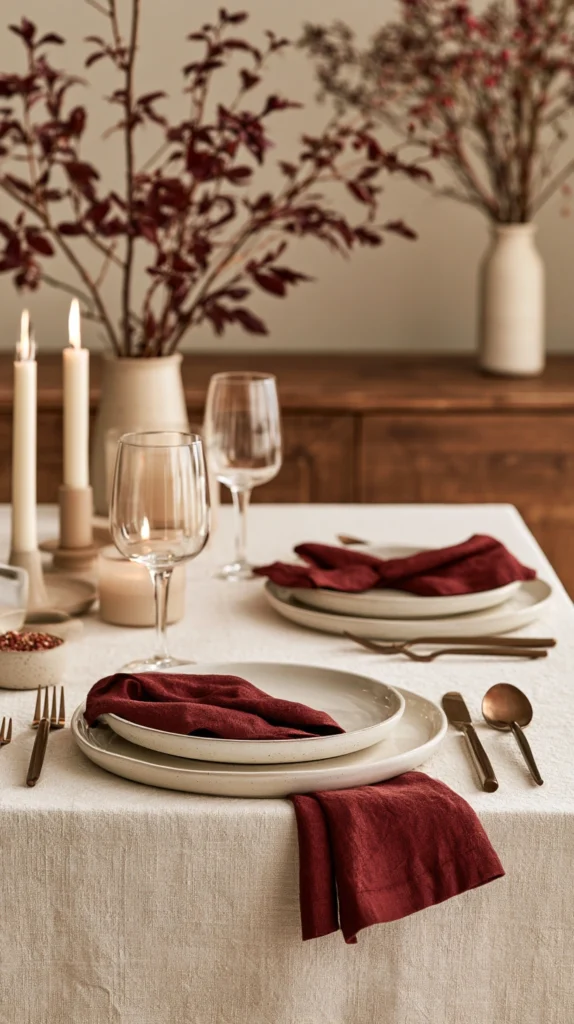
Color introduced through a single small textile element.
Build it:
- Cloth napkins in a deep burgundy, forest green, or navy tone, contrasting against a neutral tablecloth
- Folded simply and placed either on the plate or beside the flatware, depending on the overall place setting style
- The single jewel tone repeated nowhere else on the table except perhaps a matching candle or ribbon accent
Why one bold color note works better than scattering multiple colors:
- It gives the table a clear focal color without overwhelming the neutral base established by the tablecloth and dinnerware
- Jewel tones specifically evoke the same rich, autumnal feeling associated with the holiday itself
- It’s an easy way to update the table’s whole feeling from year to year just by swapping the napkin color
Cost breakdown: A set of jewel-toned cloth napkins runs $20 to $40 depending on quantity and fabric quality.
8. Wooden Chargers Beneath Each Place Setting
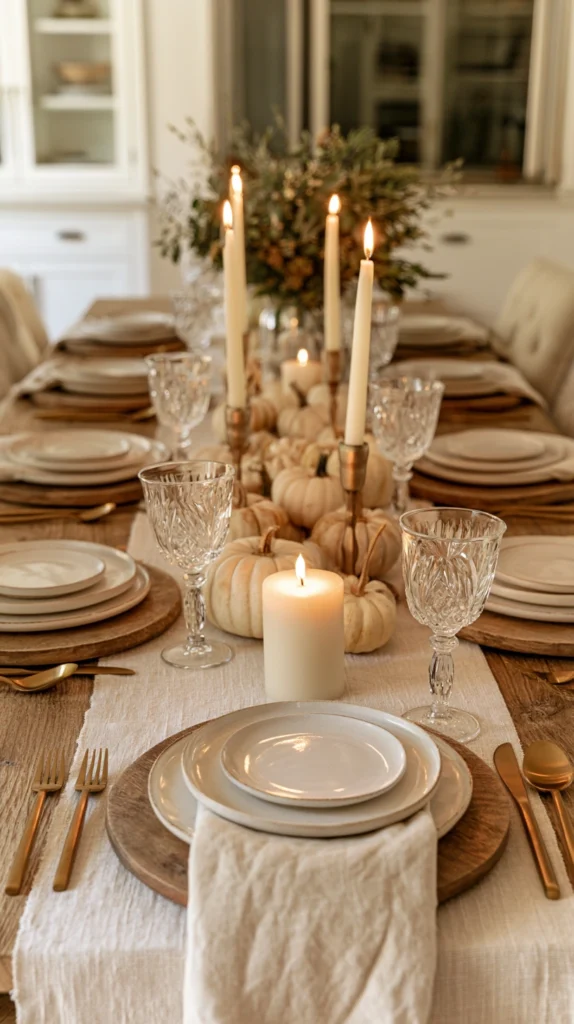
A natural material layer beneath the dinnerware itself.
Build it:
- Round or square wood chargers placed beneath each dinner plate
- A natural or lightly stained finish, letting the wood grain remain visible rather than painted over
- Wiped clean immediately after the meal to prevent staining from spills during the meal itself
Why wood chargers add warmth that a fabric placemat alone doesn’t:
- The visible grain introduces genuine natural texture, echoing the same material warmth found in reclaimed wood furniture trends
- It elevates each place setting individually, giving structure to the table even before the food arrives
- It pairs naturally with a fall harvest theme, connecting the table setting to the season itself
Cost breakdown: A set of wood chargers runs $30 to $70 depending on quantity and finish quality.
9. Dried Floral and Grass Arrangements Instead of Fresh Flowers
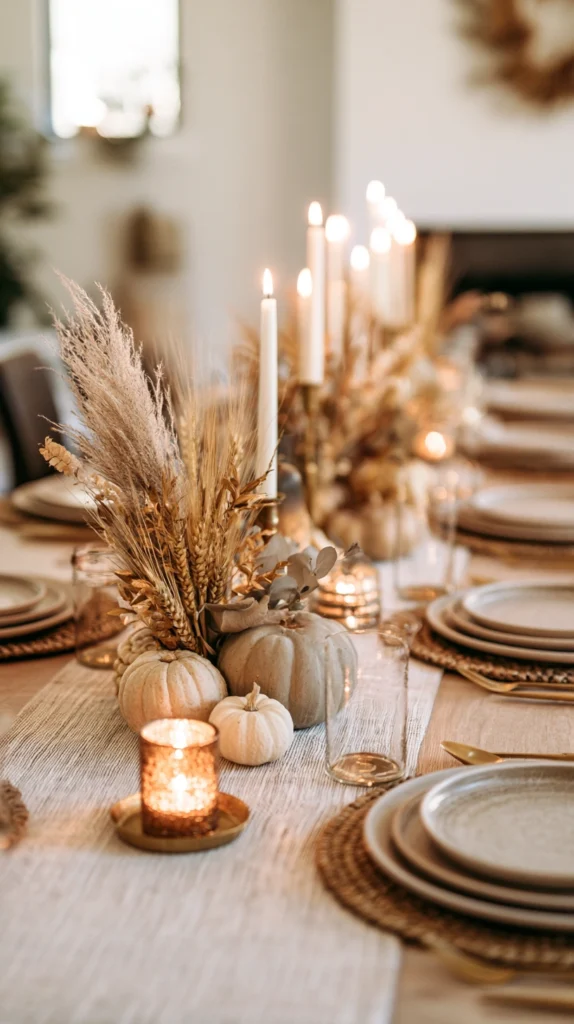
Seasonal materials chosen for their longevity and texture.
Build it:
- Dried pampas grass, wheat stalks, and preserved eucalyptus arranged in a low vase or laid directly on the table runner
- Muted, faded tones that naturally complement the table’s overall warm neutral palette
- Assembled well in advance of the meal itself, since dried materials don’t require last-minute fresh flower care
Why dried arrangements suit a Thanksgiving table particularly well:
- They can be prepared days ahead of the actual holiday, reducing last-minute stress on the day itself
- The muted, textural quality feels more directly tied to an autumn harvest theme than bright fresh florals
- They can be reused or stored for the following year, unlike fresh flowers that wilt within days
Cost breakdown: Dried floral and grass stems run $3 to $8 each, typically $30 to $50 for a full table arrangement.
10. Monochrome White and Cream Table With Textural Contrast
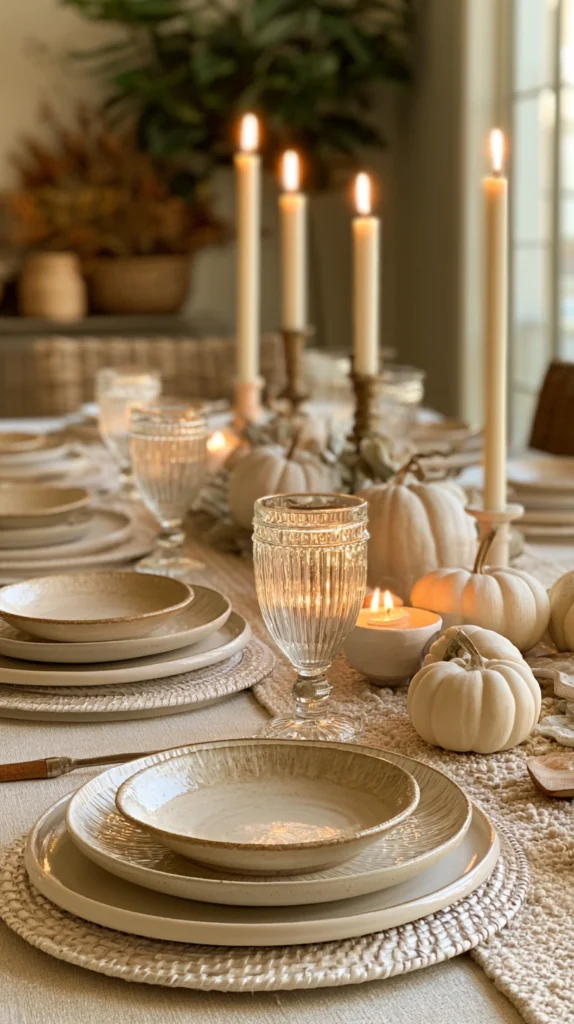
An entirely tonal palette relying on texture rather than color for interest.
Build it:
- White dinnerware, ivory linens, and cream-toned candles, all within the same narrow tonal range
- Textural variety introduced through a woven table runner, a ribbed glass water goblet, and a slightly nubby napkin fabric
- A single small natural accent, like a white pumpkin or dried white flower, tying the whole look together
Why a monochrome approach can feel more elegant than a colorful table:
- It photographs beautifully and reads as calm and considered rather than busy
- Relying on texture rather than color forces genuine attention to material quality throughout the table
- It’s a versatile palette that works equally well for a small family gathering or a larger formal dinner
Cost breakdown: A monochrome table setup runs comparably to any other style, typically $60 to $150 depending on existing dinnerware and linens already owned.
11. Individual Mini Pumpkins as Place Setting Favors
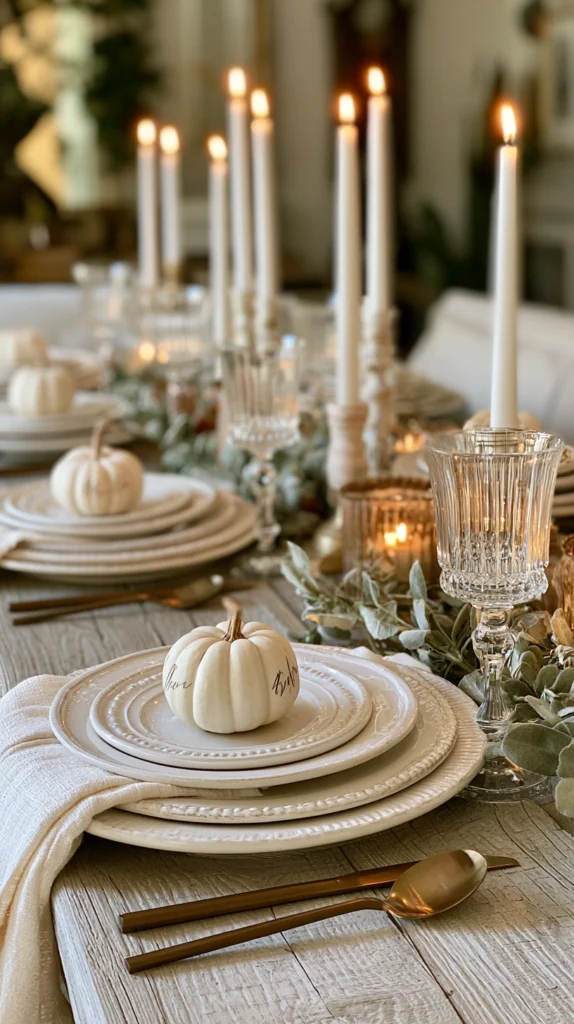
A small, edible-adjacent detail for each guest.
Build it:
- One small decorative pumpkin per place setting, sized to sit comfortably beside the plate
- A guest’s name written directly on the pumpkin in gold paint pen, doubling as both favor and place card
- Left as a small take-home item at the end of the meal rather than purely decorative
Why a small pumpkin favor adds warmth without feeling overdone:
- It gives each place setting a genuine individual touch rather than a purely uniform table arrangement
- The dual function as both decor and place card streamlines the table setup
- Guests taking a small pumpkin home extends the holiday’s warmth beyond just the meal itself
Cost breakdown: Mini decorative pumpkins run $2 to $4 each, typically $20 to $40 for a full table of guests.
12. Layered Glassware for a Formal Multi-Course Feel
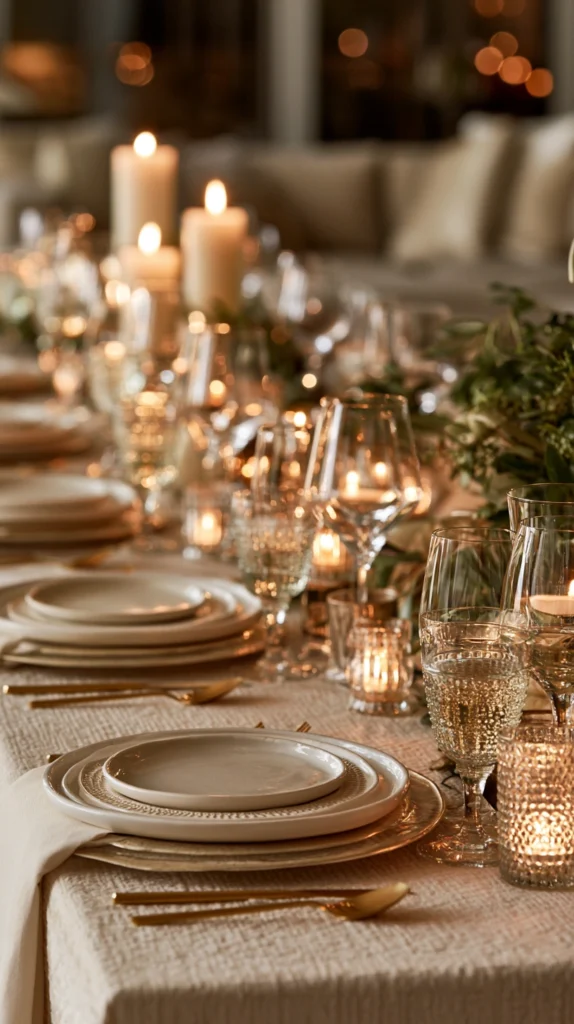
Multiple glass styles at each setting, echoing a formal restaurant table.
Build it:
- A water goblet, white wine glass, and red wine glass positioned at each place setting in a small triangular cluster
- Simple, unadorned glass shapes rather than heavily cut crystal, keeping the look elegant but not overly ornate
- Positioned consistently at every place setting for a cohesive, considered look across the whole table
Why multiple glasses signal a more formal, elevated meal:
- It mirrors the layered glassware arrangement found in formal restaurant place settings
- It gives guests a clear, considered option for both water and wine without needing to ask for extra glassware mid-meal
- The consistent placement across every setting reinforces the table’s overall sense of intentional design
Cost breakdown: A basic three-glass set per place setting runs $15 to $30 per guest if purchased new, considerably less if pieces are already owned.
13. A Runner of Fall Foliage Down the Table’s Center
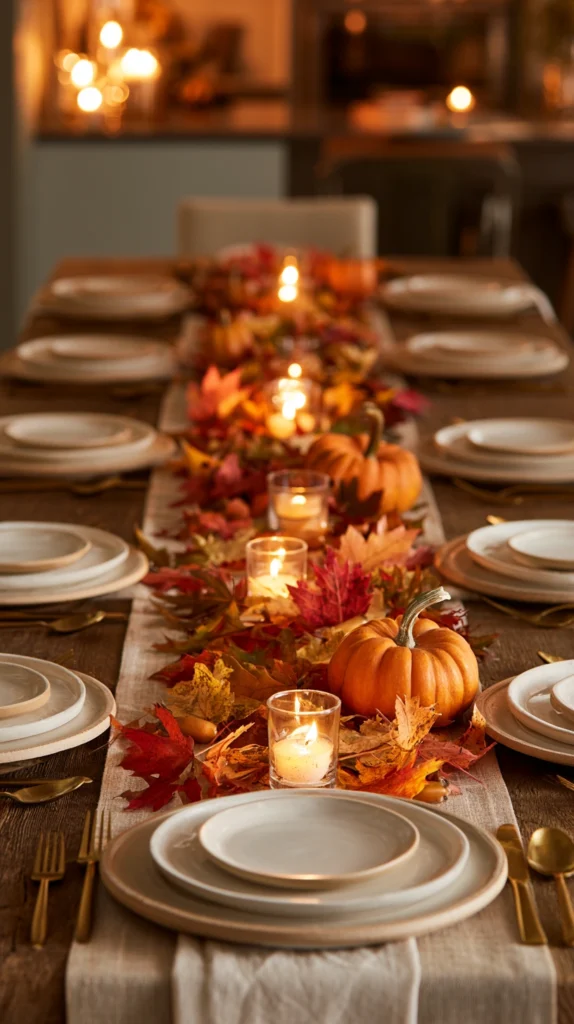
Fresh or preserved leaves used as the table’s main linear design element.
Build it:
- A loose runner of fall leaves, either fresh-cut or preserved, laid directly down the center of the table
- Small votive candles nestled among the leaves at intervals for added warmth and light
- Kept low and contained within a narrow strip, avoiding leaves spilling too far into the place setting areas
Why a foliage runner adds seasonal richness without a formal floral arrangement:
- It’s one of the most budget-friendly centerpiece options, especially if leaves are gathered directly from the yard
- The organic, slightly irregular shape of real leaves adds a natural, unforced feeling to the table
- Nestled candles add warmth and light directly within the runner rather than requiring separate candle holders
Cost breakdown: A foliage runner costs little to nothing if leaves are gathered locally, with votive candles adding $10 to $20 for a full table length.
14. Menu Cards at Each Place Setting
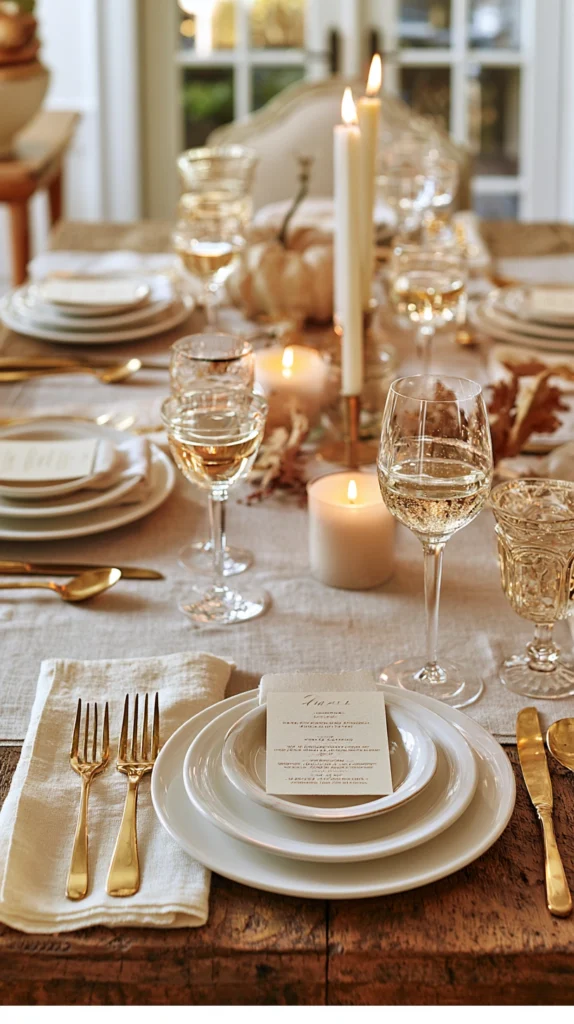
A small printed detail describing the meal itself.
Build it:
- A simple printed or handwritten card listing the day’s dishes, placed at each setting or shared between every two guests
- Card stock and font kept consistent with any place cards already used elsewhere on the table
- Framed with a small botanical detail, like a pressed leaf, matching the rest of the table’s accents
Why a menu card adds a genuinely elegant, restaurant-like touch:
- It gives guests something to look forward to and discuss before the meal actually arrives at the table
- It’s a detail that costs very little but signals real thought and effort behind the meal’s presentation
- It doubles as a lovely keepsake for guests to take home after the holiday
Cost breakdown: Printed menu cards run $10 to $20 for a full table depending on paper quality and printing method.
15. A Coordinated Color Story From Table to Room
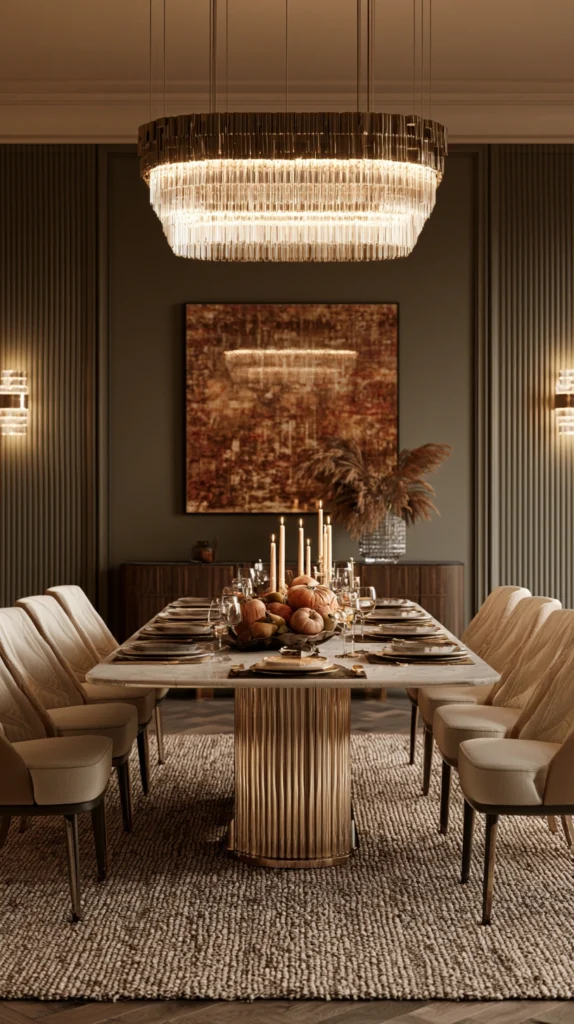
Extending the table’s palette into the surrounding room itself.
Build it:
- The table’s chosen color palette, whether warm neutrals or deep jewel tones, echoed in nearby decor like a mantel arrangement or entryway display
- Lighting throughout the dining room dimmed to match the warm candlelight established at the table
- Background music and scent, like a simmering pot of cinnamon and clove, chosen to reinforce the same warm, cohesive feeling
Why extending the palette beyond just the table matters:
- It keeps the elegant feeling from stopping abruptly at the table’s edge, extending it through the whole hosting experience
- Coordinated lighting throughout the room reinforces the same warm, intentional mood established by the table’s candles
- It signals genuine hosting effort that guests notice the moment they walk into the space, not just once they sit down
Cost breakdown: No significant added cost beyond what’s already invested in the table itself, since this is primarily a coordination effort across existing decor.
Getting started this weekend
You don’t need every element on this list before the table starts feeling elegant.
- Start with a linen tablecloth and a low, elongated centerpiece that keeps sightlines open
- Add taper candles and jewel-toned napkins once the base layer is settled
- Save details like menu cards and place setting favors for closer to the actual holiday
My own table took one afternoon of planning to completely change how the whole meal felt, and it’s been worth repeating every year since.
Budget reality
An elegant Thanksgiving table can be built on almost any budget.
- Under $50: Foliage runner, dried floral arrangement, place cards with botanical accents
- $50-100: Linen tablecloth and napkins, taper candles, wood chargers
- $100-200: Brass flatware set, layered glassware, mixed vintage china pieces
- $200+: A fully coordinated table extending into the surrounding room’s decor and lighting
Most of the elegance comes from restraint and coordination, not from the total amount spent.
What actually makes the table feel elegant
It was never really about filling every inch of the table with decoration.
It’s the low centerpiece that keeps everyone talking across the table, the candlelight catching the brass flatware, the single jewel-toned napkin doing more work than a table full of scattered color ever could.
Choose one simple palette, build the table around it with restraint, and let the details fill in from there.