13 Vertical Garden Ideas for Tiny Yards
There is a point, in every small garden, when the ground runs out before the ambition does. Every bed is planted, every border is full, every square metre of soil is already spoken for — and yet the walls, the fences, the gates, and the structures that define the space are bare from top to bottom and represent more growing surface than the ground beneath them will ever provide. A tiny yard looked at horizontally is a small garden. The same yard looked at vertically is something else entirely.
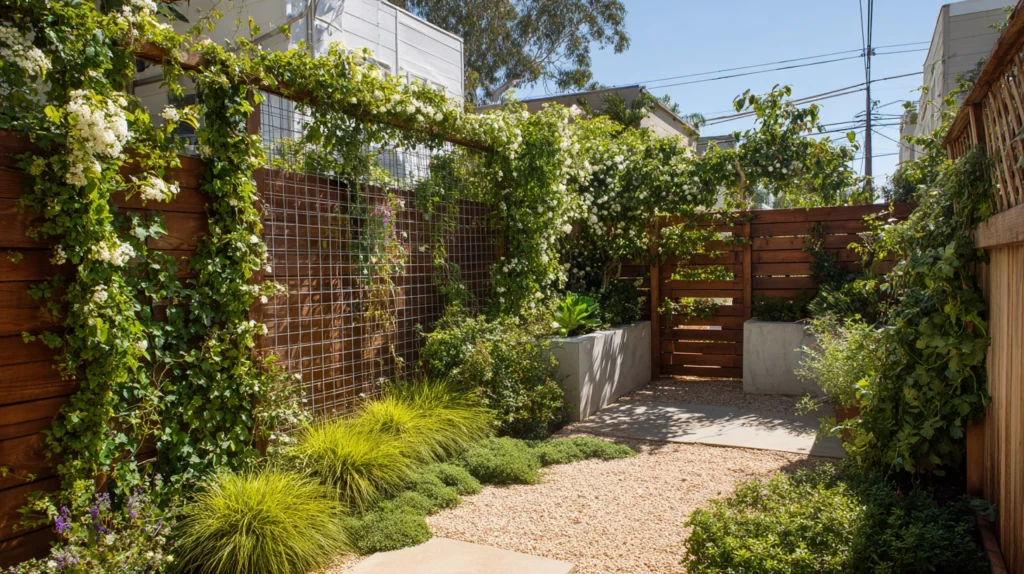
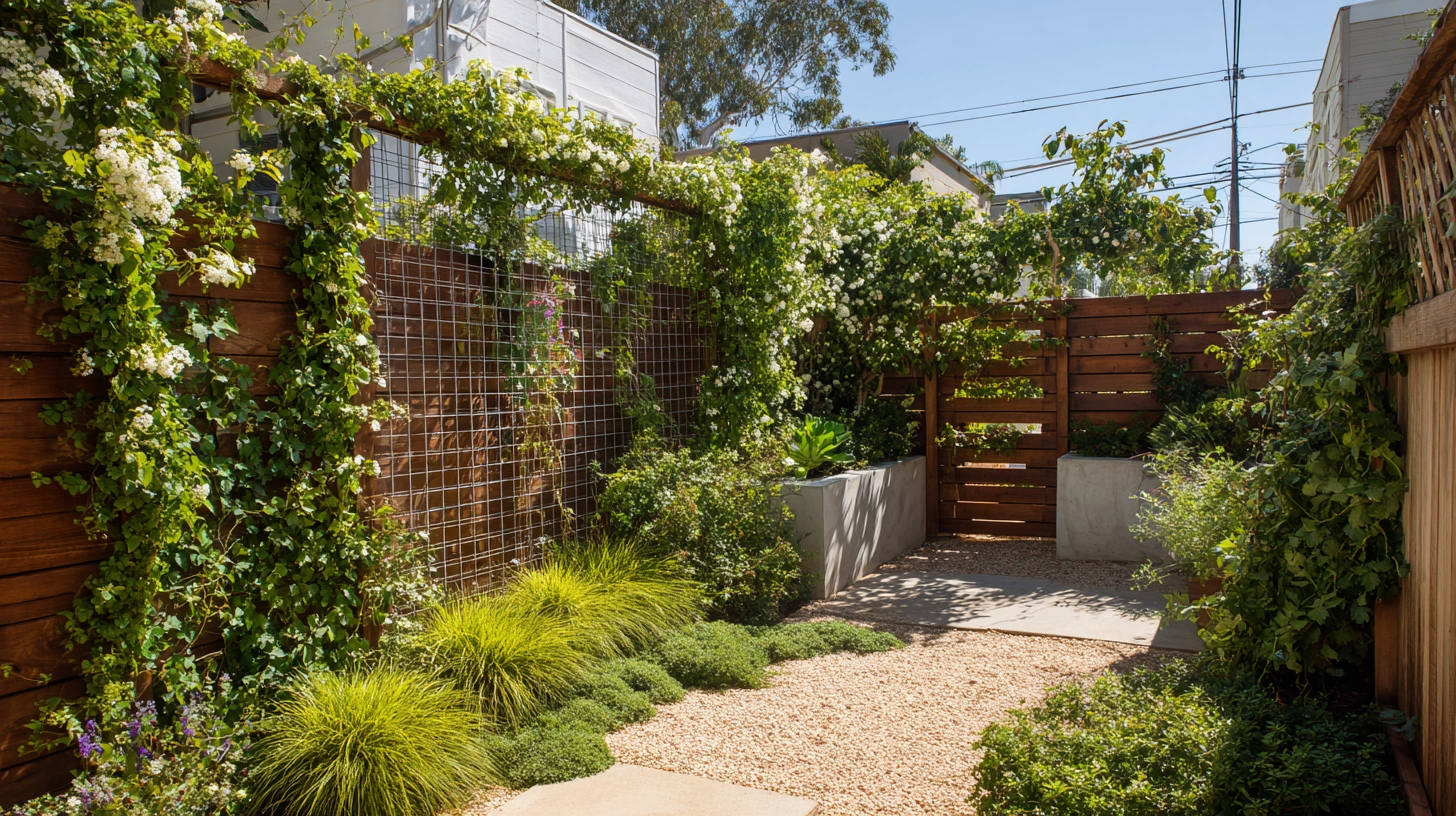
Vertical gardening is not a compromise forced on people without space. It is a genuinely different approach to growing things that produces results the horizontal garden cannot — coverage of ugly surfaces, privacy from above, fragrance at face height rather than underfoot, and the particular pleasure of a wall that is alive rather than inert. The ideas below work in the smallest of urban yards, on balconies, against house walls, on fence panels, and in narrow side returns where a conventional garden would be impossible.
Each idea includes what you will need, what it will cost, and a practical tip to make the whole thing grow as well as it deserves to.
1. The Climbing Plant Fence Cover
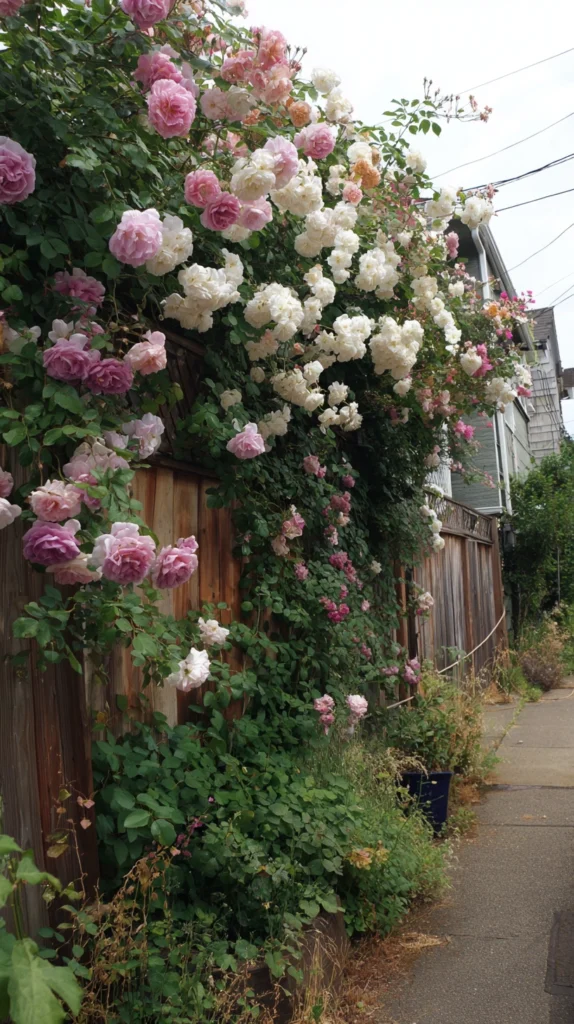
Budget: $20 – $80
A climbing plant trained against a fence or wall is the oldest, simplest, and most reliably beautiful form of vertical gardening available. It requires nothing more than a plant, a means of support, and the patience to train the new growth in the direction you want it to go. Given a season or two, a single climbing rose, a clematis, or a wisteria covers more surface area than any planted bed of the same cost and does so with flowers, fragrance, and a living quality that no other garden element can match.
A climbing rose costs $15–$40. A clematis runs $10–$25. A wisteria — slower to establish but exceptional once it does — costs $15–$35. Vine eyes screwed into the fence and connected by horizontal wires at 30-centimetre intervals ($8–$15 in total) provide the training framework that allows the plant to spread across the full width of the fence rather than climbing straight up the nearest vertical. Fix the lowest wire 30 centimetres from the ground and train the first shoots horizontally rather than vertically to encourage bushy, even coverage rather than a single tall stem.
Style tip: Choose a climbing plant whose peak flowering season coincides with the time of year you use the yard most. A wisteria that flowers magnificently in April and May is a joy if you are regularly in the garden in spring; it is a background feature for most of the year if the yard is used primarily in summer. A repeat-flowering climbing rose that blooms from June to October earns its wall space in the months that matter most.
2. The Pallet Vertical Planter
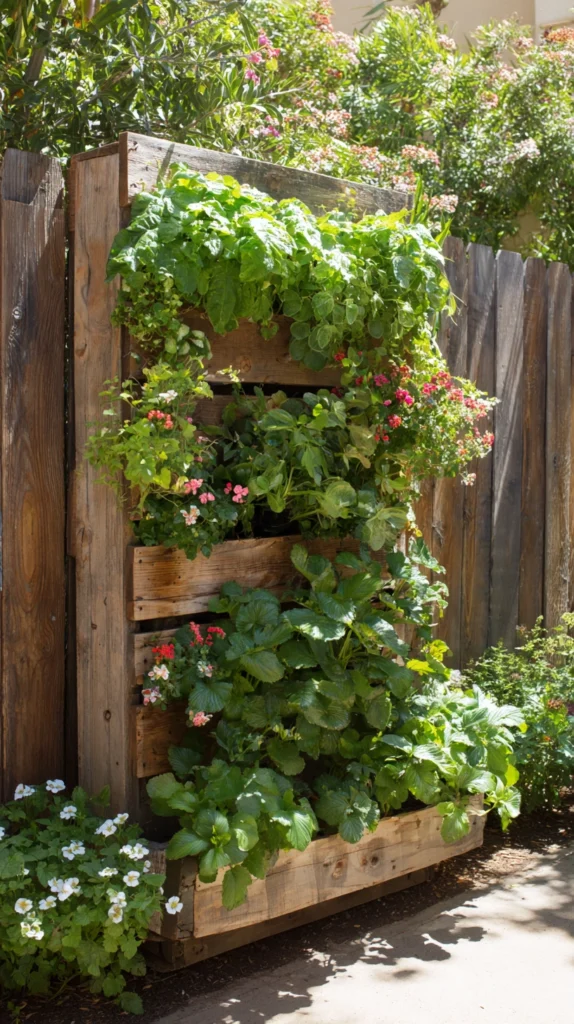
Budget: $10 – $50
A heat-treated wooden pallet stood upright against a fence or wall, its gaps filled with landscape fabric stapled to the back and sides to form planting pockets, then filled with compost and planted with herbs, strawberries, succulents, or trailing annuals, is the most widely replicated vertical garden idea for good reason: it costs almost nothing, works immediately, and looks considerably better once planted than the bare pallet suggests it will. It is also genuinely customisable — painted, stained, or left natural, it suits any yard aesthetic from rustic to contemporary.
A heat-treated pallet costs $0–$10. Landscape fabric to line the pockets runs $5–$10. Staple gun and staples cost $10–$20 if not already owned. Compost to fill the pockets requires $8–$15 per bag. Plant into damp compost and water gently for the first two weeks while the roots establish — a newly planted pallet garden loses moisture rapidly through the exposed fabric sides, and plants that are allowed to dry out completely in the first fortnight rarely recover fully.
Style tip: Lay the pallet flat on the ground for two to three weeks after planting before standing it upright. The horizontal period allows roots to establish in the compost before gravity begins pulling the growing medium downward, and plants that have anchored themselves in a flat position hold the compost in place far more effectively once the pallet is vertical than those transplanted directly into an upright structure.
3. The Wire Trellis Wall System
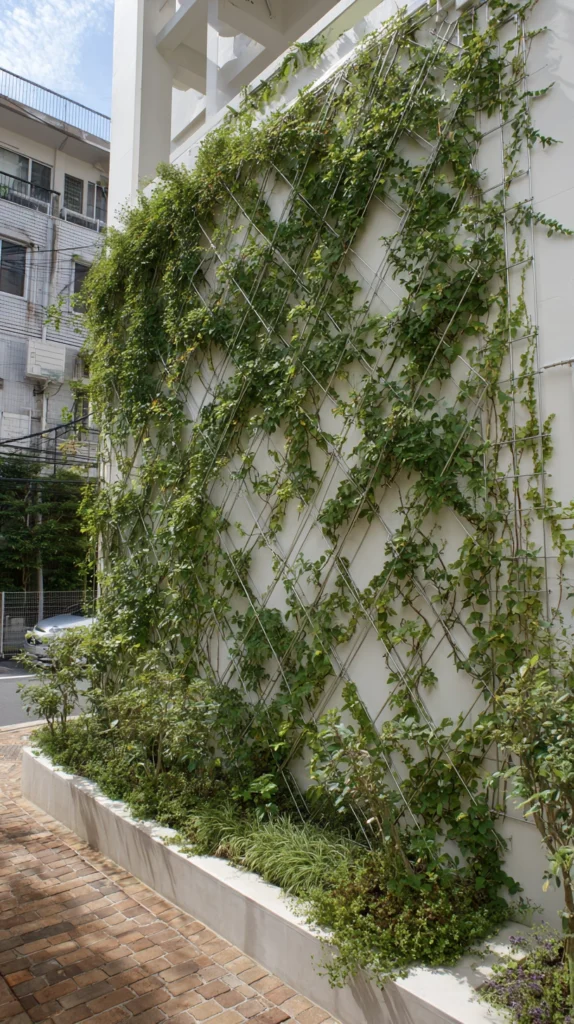
Budget: $30 – $100
A grid of stainless steel wire stretched horizontally and vertically across a wall or fence, fixed at intervals with tensioning bolts, creates a permanent and almost invisible support system that can train any climbing or wall plant without the visual bulk of a timber trellis. It is the most architectural vertical garden support available and suits contemporary, minimalist yards in particular — the plants read against the wall rather than against a secondary structure, and the garden reads as a single composed surface rather than a collection of elements.
Stainless steel wire in a 1.5-millimetre gauge costs $8–$15 for a 10-metre reel. Vine eye bolts to fix the wire to the wall run $5–$10 for a pack. Tensioners to keep the wire taut over long spans cost $3–$6 each. Drill the vine eyes into mortar joints rather than into brick or stone faces — mortar is easier to repair if the fixings ever need to be moved, and fixings in mortar joints are as structurally sound as those in the masonry itself for the loads a wire trellis carries.
Style tip: Space the horizontal wires 30 centimetres apart rather than the 45-centimetre spacing that most instructions suggest. Closer spacing gives climbing plants more frequent contact points with the support, produces more even coverage across the wall surface, and allows shorter-internode plants that might bridge a 45-centimetre gap with difficulty to establish easily.
4. The Pocket Felt Planter Wall
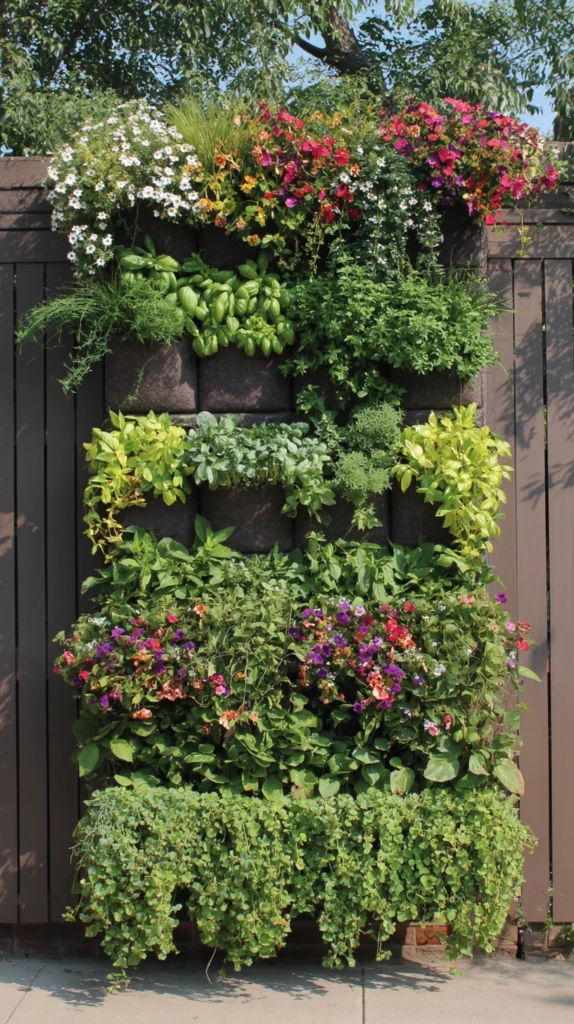
Budget: $25 – $80
A panel of pocket felt — a sheet of UV-stabilised felt fabric with pre-formed planting pockets arranged in a grid — fixed to a wall or fence with screws through reinforced eyelets creates an instant vertical garden that can be planted immediately and begins looking established within weeks. Pocket felt panels are lighter than any rigid planting system, require no structural support beyond four wall fixings, and can be removed, replanted, and repositioned without tools.
A 12-pocket felt panel costs $20–$40. A 24-pocket panel runs $35–$70. Fix the panel to a wall batten ($5–$8 for a length of 25 by 50 millimetre timber) rather than directly to the wall surface — the batten creates a gap between the felt and the wall that allows air to circulate behind the panel and prevents moisture from sitting against the wall surface, which in a rented property or a building with interior rooms behind the wall matters considerably.
Style tip: Plant the lower pockets with moisture-tolerant plants and the upper pockets with drought-tolerant ones. Water applied to the top of a felt panel migrates downward through the fabric and accumulates in the lower pockets, which receive both their own watering and the drainage from every pocket above them. Ignoring this moisture gradient produces waterlogged lower pockets and dry upper ones regardless of how carefully the watering is managed.
5. The Espalier Fruit Tree
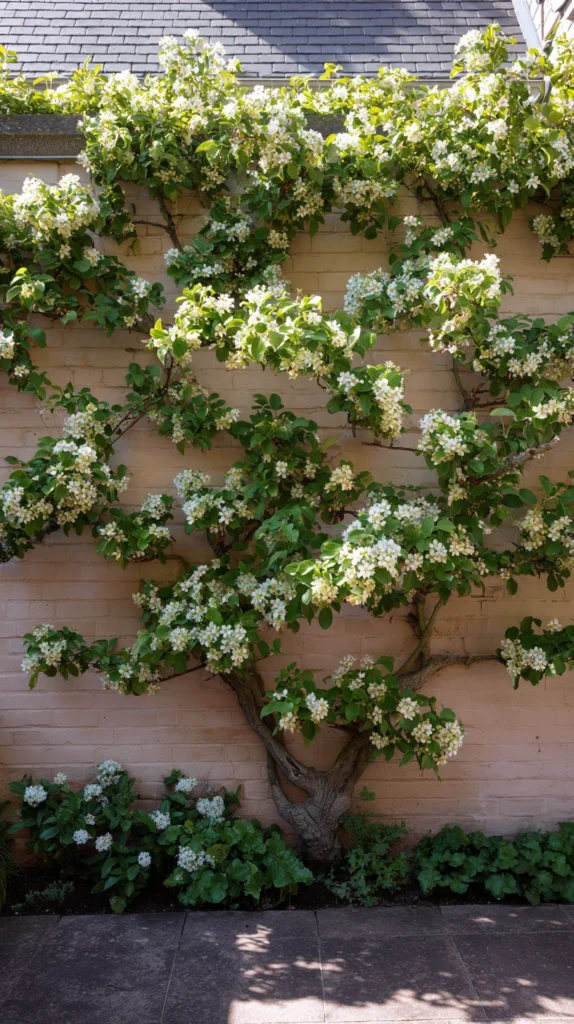
Budget: $40 – $150
An espalier fruit tree — a tree trained flat against a wall or fence in a formal pattern of horizontal tiers — is the most productive vertical garden element available in terms of fruit per square metre of wall space, and one of the most visually striking throughout every season. Spring blossom flat against a warm wall, summer foliage in a precise geometric pattern, autumn fruit hanging at eye height: no other vertical planting produces this quality of seasonal change within such a controlled and architectural form.
A young apple, pear, or cherry tree sold specifically for espalier training costs $30–$80. Horizontal training wires at 40-centimetre intervals across the wall cost $10–$20 in wire and fixings. The training itself requires no specialist knowledge — the basic principle of tying new growth horizontally to the wires and removing growth that points away from the wall takes twenty minutes per year and produces results within two to three seasons that look as if a professional trained them.
Style tip: Choose a wall with a warm aspect — south or west-facing — for an espalier fruit tree. The wall absorbs heat during the day and radiates it back to the trained branches at night, extending the growing season, improving fruit set, and in the case of peaches and apricots makes it possible to grow fruit in climates that would otherwise be too cool. A north-facing wall is unsuitable for espalier fruit and will produce disappointing results regardless of the training quality.
6. The Hanging Gutter Garden
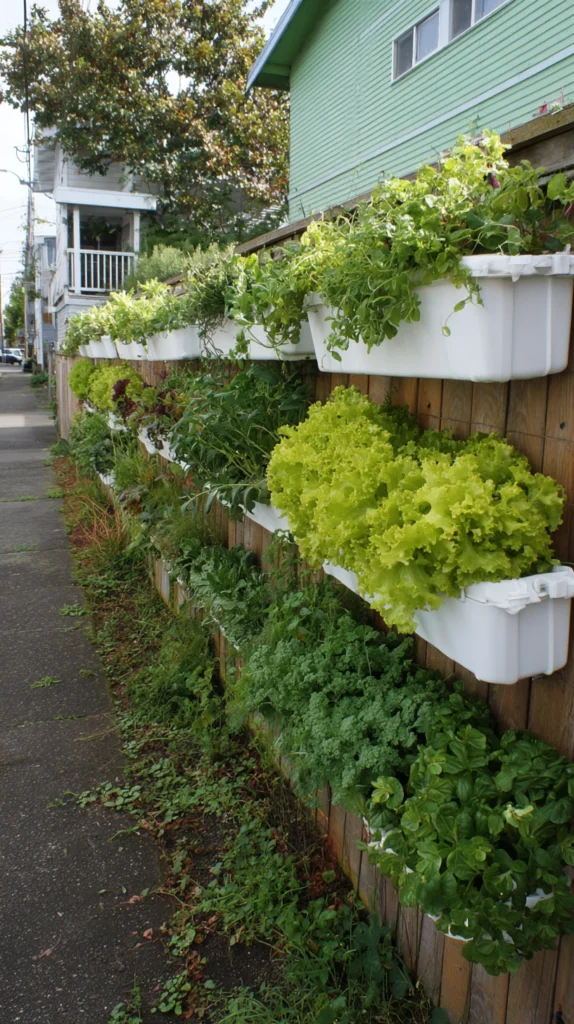
Budget: $20 – $70
Lengths of plastic or metal guttering fixed horizontally to a fence or wall at staggered heights, filled with compost and planted with salad leaves, herbs, strawberries, or shallow-rooted annuals, create a productive and visually interesting vertical garden from one of the least expensive building materials available. The gutter format is particularly well suited to salad and herb growing because the shallow depth of the channel suits shallow-rooted plants perfectly, and the long, narrow format produces a generous harvest from a minimal wall footprint.
A 2-metre length of plastic guttering costs $5–$10. End caps to seal the gutter sides run $1–$2 per pair. Brackets to fix the gutter to the wall or fence cost $2–$4 each, with two brackets per length required. Drill drainage holes every 15 centimetres along the base of each gutter length before filling — a sealed gutter with no drainage becomes waterlogged within a single rainstorm and kills shallow-rooted plants faster than drought would.
Style tip: Stagger the gutter lengths so that each tier is offset horizontally from the one above and below it rather than aligned in a straight vertical column. Offset tiers allow each gutter to receive direct light rather than being shaded by the one above it, and the overlapping horizontal pattern creates a more dynamic visual composition than a straight vertical stack.
7. The Modular Wall Planter System
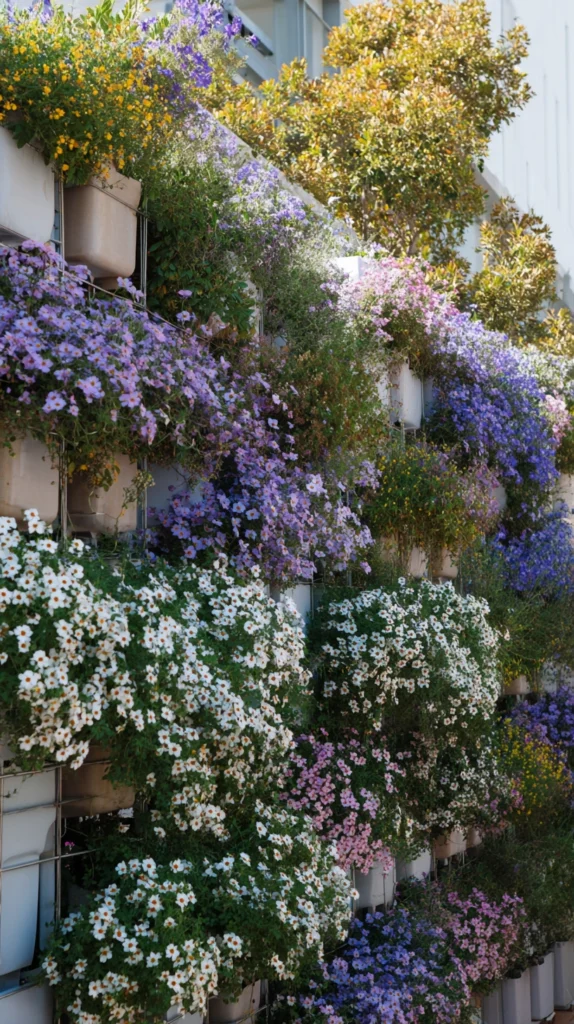
Budget: $40 – $200
Interlocking modular wall planters — individual units that fix to a wall rail system and can be rearranged, added to, and replanted without disturbing the overall structure — provide the most flexible vertical garden format available. The rail and unit system means the configuration of the wall garden can change with the season and with the growing needs of the plants, and the modular format allows the garden to start small and expand gradually without requiring any structural changes to the fixing system.
A starter set of six modular planters with a rail system costs $40–$100. Individual additional units run $8–$20 each. A full wall of 24 units runs $150–$200. Choose a system with removable inner liners rather than fixed containers — liners that can be slid out of the wall unit for replanting, composting, and rinsing make seasonal maintenance considerably less awkward than systems that require the whole unit to be removed from the wall each time replanting is needed.
Style tip: Use the modular system to create a gradient of colour across the wall rather than planting in a random or uniform pattern. A vertical garden where the flower or foliage colour moves from pale at the top to deep at the bottom, or from warm tones on one side to cool on the other, reads as a composed piece of planting design rather than a collection of individual pots that happen to be arranged vertically.
8. The Bamboo Screen Garden
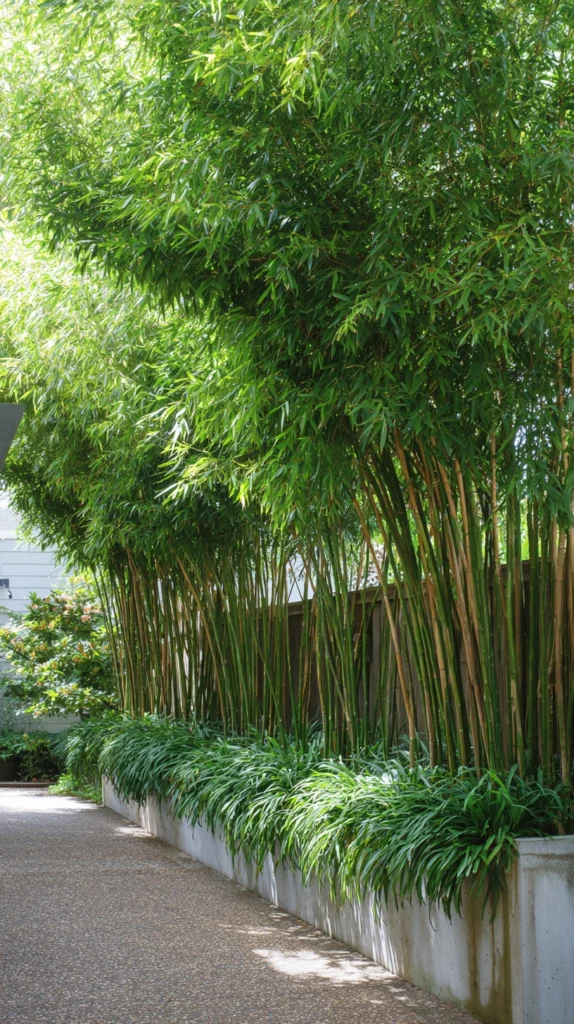
Budget: $30 – $100
A panel of live bamboo — planted in a long, narrow trough container and allowed to grow upward — creates a living screen of extraordinary speed and density that provides privacy, wind shelter, and a vertical garden element simultaneously. In a tiny yard where the views into neighbouring properties are a constant concern, a bamboo screen addresses the privacy problem and the bare-wall problem in a single planting decision. Some bamboo varieties grow 60–90 centimetres in a single season and reach screening height within two years.
A clump-forming bamboo (non-invasive) in a 3-litre pot costs $15–$35. A long trough container of at least 40 centimetres depth to restrict the root system costs $20–$50. Plant clump-forming varieties only — running bamboo planted in a container without root restriction will eventually escape the container and become one of the most persistent removal problems in gardening. Clump-forming varieties listed as Fargesia species are the reliable non-invasive choice.
Style tip: Plant bamboo in a container that is deliberately too small rather than generously sized. Bamboo in a restricted container grows more densely upward and produces the tight, screening quality that makes it valuable as a privacy plant. Bamboo in a large container spreads laterally and produces a clump that is wide at the base and sparse at the height where screening is needed.
9. The Living Moss Wall
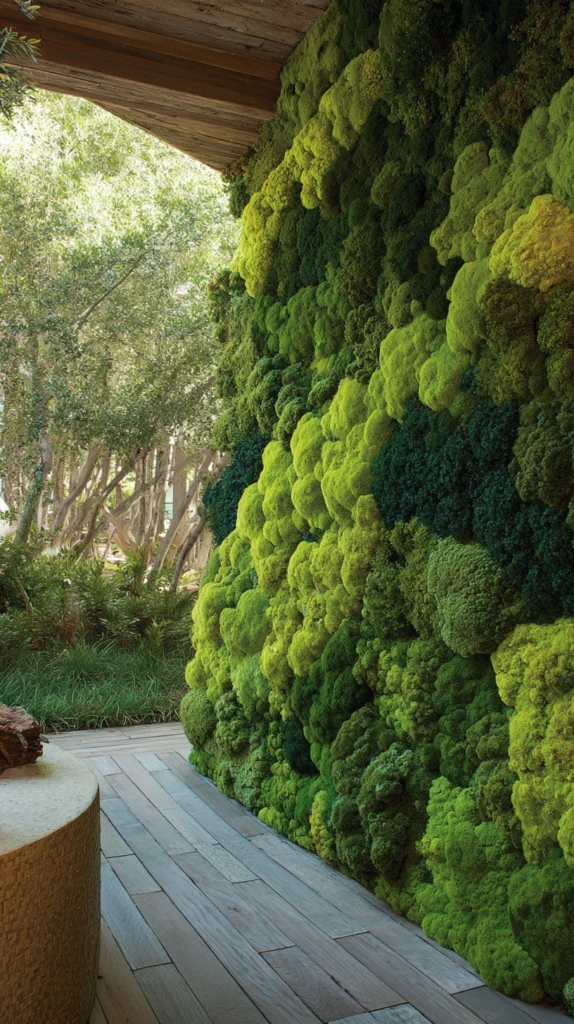
Budget: $25 – $100
A panel of preserved or living moss — sheet moss, cushion moss, or reindeer moss — fixed to a wooden backing board and mounted on a fence or wall creates the most tactile and visually unusual vertical garden element on this list. Preserved moss requires no watering, no feeding, and no maintenance beyond an occasional misting in very dry conditions; living moss requires indirect light and consistent moisture but grows and changes with the seasons in a way that preserved moss cannot.
A preserved moss panel in a 60 by 40 centimetre size costs $30–$80. A living moss sheet for self-installation costs $15–$40 and requires a moisture-retentive backing such as a coir mat ($8–$15) fixed to a timber frame. Mount living moss panels on a north or east-facing wall — moss is a shade and moisture-loving plant that deteriorates rapidly in direct sun and dries to a crisp brown in the conditions that most other vertical garden plants prefer.
Style tip: Mix two or three different moss varieties on the same panel rather than using a single type. Sheet moss, cushion moss, and reindeer moss have different textures and growth forms that create a surface of genuine depth and visual interest; a single moss variety across an entire panel reads as a uniform texture that becomes invisible at normal viewing distance.
10. The Reclaimed Ladder Planter
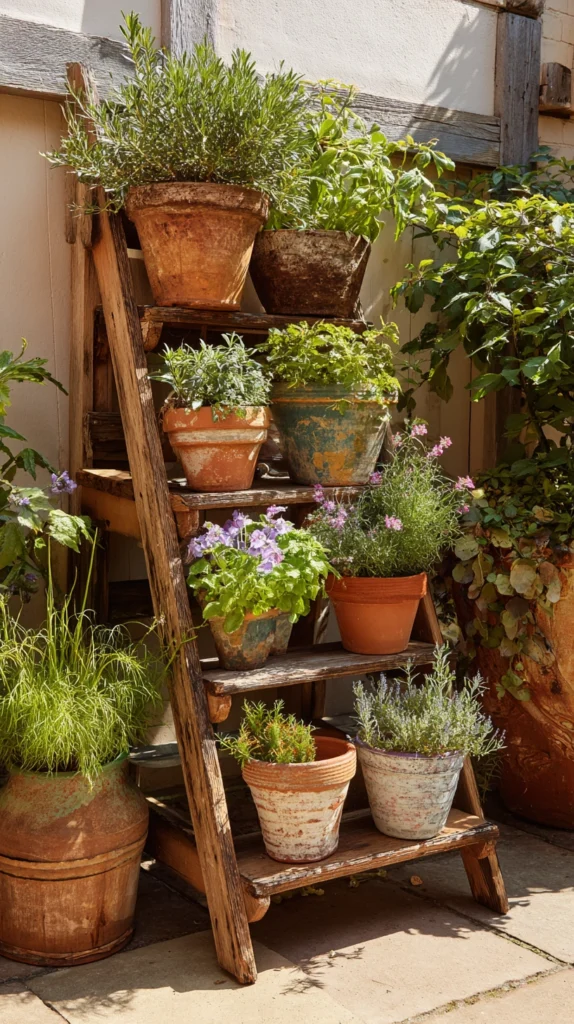
Budget: $15 – $60
An old wooden or metal ladder — leaned against a wall or fence and stabilised with a single fixing at the top — becomes an instant vertical planter when pots are placed on each rung. The graduated height of the rungs provides natural tier variation, the ladder structure requires no building or installation beyond leaning and fixing, and the repurposed quality of an old ladder gives the display a character that purpose-built plant stands rarely achieve regardless of their cost.
An old ladder costs $0–$20 from a car boot sale, a secondhand shop, or a classified advertisement. A single screw eye fixed to the wall and a loop of wire around the top rung stabilises the ladder against toppling ($3–$5 in fixings). Paint the ladder in an exterior finish before use ($8–$15 for a small tin) if the wood is untreated or the metal is beginning to rust — a coat of paint extends the life of the ladder by years and gives the planter display a finished quality that raw timber never quite achieves.
Style tip: Use pots of graduating sizes on the ladder rungs rather than identical containers at every level. Larger pots at the base, smaller pots toward the top, echoes the natural proportion of a planted border and gives the ladder display a visual stability that uniform containers at every level lack — the same instinct that makes a tall plant at the back and a low plant at the front of a border feel right applies to the vertical format of a ladder planter.
11. The Fence Panel Succulent Garden
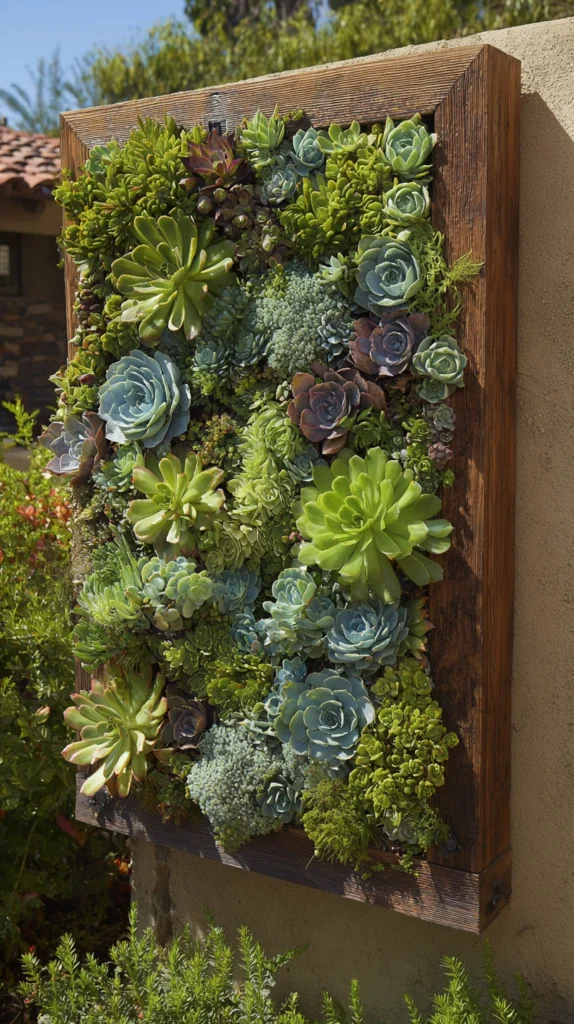
Budget: $30 – $120
A collection of succulents — sedums, sempervivums, echeverias — planted into a shallow wooden frame filled with a gritty growing medium and fixed flat against a fence in a south or west-facing position creates a living picture that requires almost no maintenance and survives conditions that would destroy any other planting. Succulents in a vertical frame tolerate the shallow growing medium depth, the variable moisture of an outdoor position, and weeks without watering with equanimity that makes them uniquely suited to the neglect that vertical wall gardens sometimes inevitably receive.
A shallow timber picture frame of 60 by 40 centimetres costs $10–$25 to build from reclaimed timber. Chicken wire stapled across the back of the frame ($5–$10) supports the growing medium. A mix of topsoil and horticultural grit in equal parts ($8–$15) provides the right drainage. Sempervivum plants (houseleeks) cost $2–$4 each and are fully hardy outdoors year-round in most climates — buy eight to twelve plants for a 60 by 40 centimetre frame.
Style tip: Lay the planted frame flat for six to eight weeks before mounting it vertically — the same principle as the pallet planter, allowing roots to anchor in the growing medium before gravity applies. Succulents establish slowly and a frame mounted vertically immediately after planting will shed growing medium and plants within the first watering.
12. The Herb Spiral
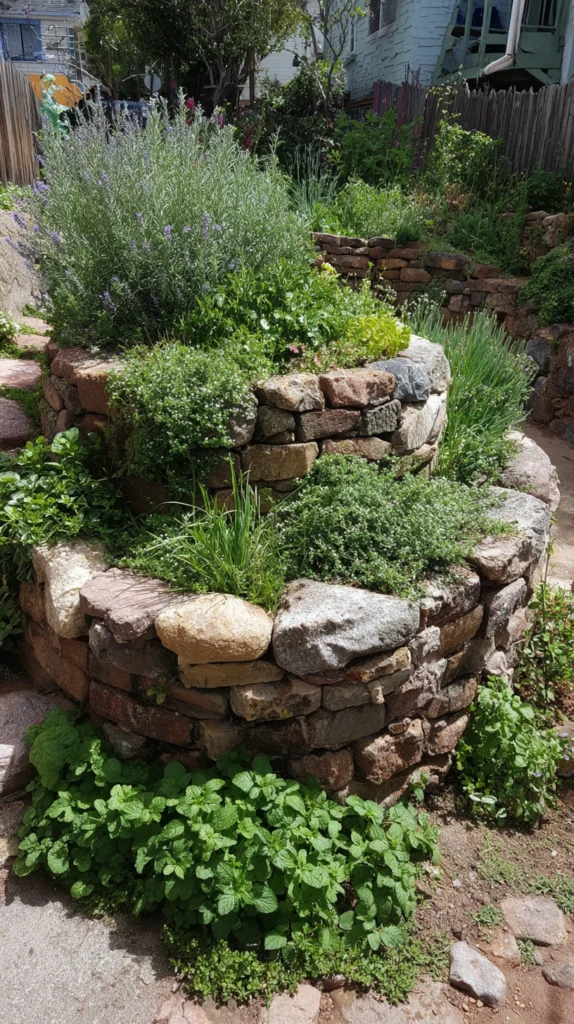
Budget: $30 – $120
A herb spiral — a three-dimensional spiral structure built from bricks, stones, or timber that rises from ground level to a peak of 60–90 centimetres — creates multiple distinct growing environments in a single small footprint: dry and free-draining at the sunny top, moisture-retentive and partially shaded at the base. Each environment suits a different group of herbs, which means a herb spiral plants itself correctly if you simply put the right herbs in the right position — Mediterranean herbs at the top, moisture-loving herbs at the base — and produces a genuinely diverse herb collection in the footprint of a single large container.
Reclaimed bricks or stones to build the spiral cost $0–$20. A bag of topsoil and a bag of horticultural grit ($15–$25 total) fill the structure. Herb plants cost $2–$4 each — a standard herb spiral requires eight to twelve plants. Integrate a small water reservoir at the base of the spiral by burying a half-submerged pot — it creates the moist conditions that chives, mint, and parsley prefer without requiring separate watering for the base plants.
Style tip: Orientate the spiral so it opens toward the south rather than the north. A south-opening spiral means the inner curve of the spiral — where heat and light are most concentrated — faces the sun, maximising the warm microclimate at the top of the structure where heat-loving Mediterranean herbs perform best. A north-opening spiral wastes the structural advantage the spiral creates.
13. The Trellis Room Divider
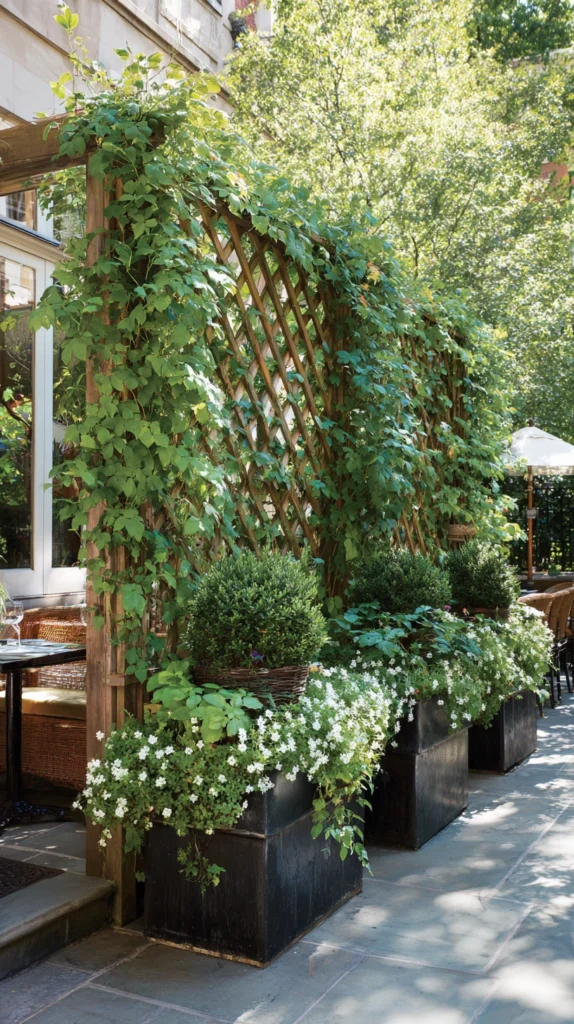
Budget: $30 – $100
A freestanding trellis panel — fixed between two heavy planters filled with compost and a climbing plant — creates a vertical garden element that also functions as a room divider within the tiny yard, separating a dining area from a growing space, a seating corner from a utility area, or simply breaking up the flat uniformity of a small rectangular yard into two zones that each feel more complete than the undivided whole. A trellis divider planted with a fast-growing annual climber covers within a single season and disappears into the garden in a way that a fence or a solid screen never does.
A timber trellis panel in a 180 by 90 centimetre size costs $15–$35. Two large planters to anchor it cost $15–$30 each. A fast-growing annual climber — sweet peas, black-eyed Susan vine, morning glory — costs $3–$8 per plant and covers a standard trellis panel from base to top within eight to ten weeks of planting. Sweet peas in particular are worth choosing for a divider trellis — the fragrance they produce at head height from midsummer onward is the most valuable thing a small garden can contain.
Style tip: Plant the climber on both sides of the divider trellis rather than on one face only. A trellis planted on one side has a front and a back; one planted on both sides is the same from every angle and integrates into the yard as a garden feature rather than a screen with an unfinished reverse. Two plants, one on each side, trained to grow toward each other through the trellis, produce denser coverage and a more complete vertical garden than a single plant trained across one face.
The best vertical garden is not the most complex one or the most planted one — it is the one that makes the walls and fences of a small yard feel like they belong to the garden rather than simply containing it. A fence that grows, a wall that flowers, a bare surface that becomes a habitat and a harvest: these are the things that turn a tiny yard from a space you pass through into one you stay in.
Start with the surface that bothers you most — the blank fence, the ugly wall, the side return that catches light but grows nothing — and put something living on it this season. The yard will feel larger immediately. It always does.