15 Summer Water Feature Ideas That Turn Your Backyard Into a Peaceful Retreat
There is a particular quality that water brings to a garden that nothing else provides. Not the visual quality — though a well-positioned water feature is beautiful — but the acoustic one. The sound of moving water does something to the experience of being outside that is difficult to articulate and immediately felt: it masks the ambient noise of the urban environment, it fills the silence that an empty garden has, and it creates a quality of presence that makes the garden feel genuinely inhabited rather than simply maintained.
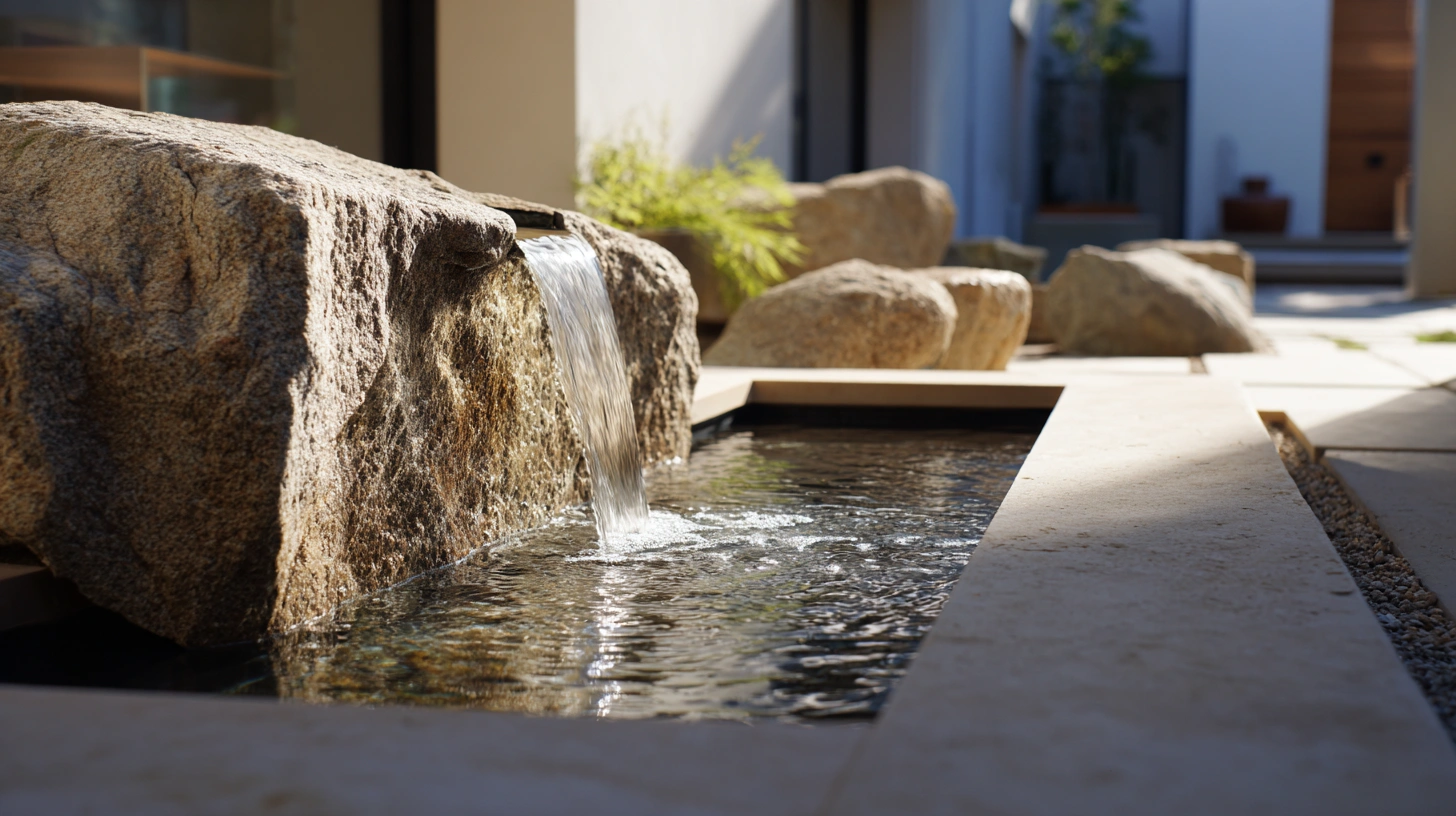
In summer, when the garden is most used and most worth being in, a water feature earns its position more completely than in any other season. The cool sound of water on a hot afternoon, the reflection of the evening sky in a still pool, the particular pleasure of watching something move continuously without effort or intention — these are the specific gifts that water gives a garden, and they cost less and require less space than most people assume.
Each idea below is a specific approach to one type of garden water feature. Each includes what you will need, what it will cost, and a practical tip to make the whole thing work as well as the peaceful retreat it is reaching for.
1. The Self-Contained Bubble Fountain
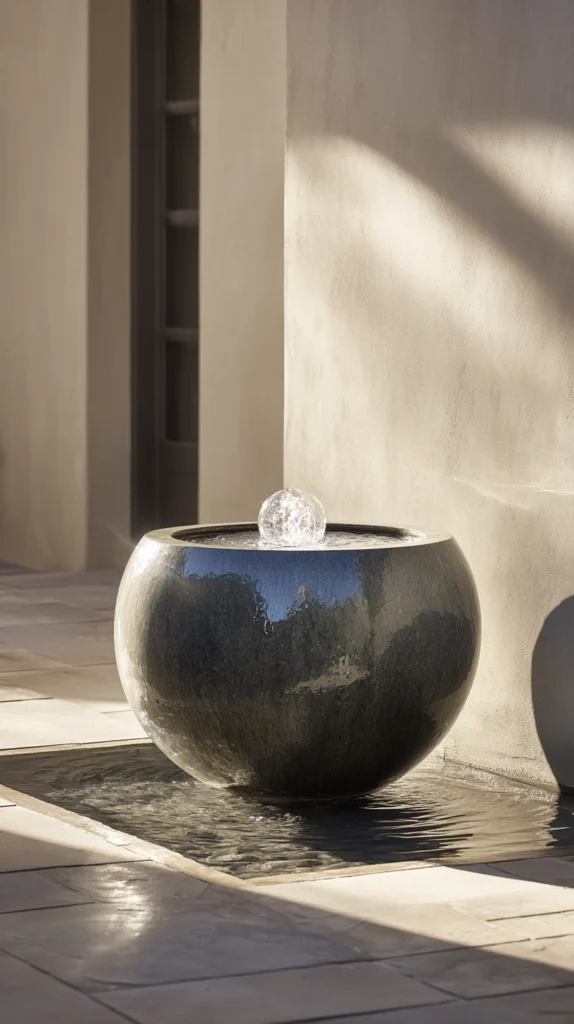
Budget: $80 – $400
A self-contained bubble fountain — a sealed reservoir beneath a decorative stone, slate, or ceramic surface from which water wells upward, trickles over the feature, and returns to the reservoir below — is the safest, lowest-maintenance, and most compact water feature available. It requires no pond, no open water, no fish, and no specialist knowledge. The water circulates continuously on a submersible pump and the only maintenance is topping up the reservoir every week or two as water evaporates.
A millstone or pebble fountain kit costs $80–$250 and includes the reservoir, the pump, and the surface feature. A ceramic pot fountain runs $100–$300. A slate pillar fountain costs $150–$400. Position on a level surface in partial shade — a bubble fountain in full afternoon sun loses water to evaporation significantly faster and requires more frequent topping up than one in a shadier position.
Style tip: Surround the base of the self-contained fountain with a collection of smooth river pebbles in the same stone family as the feature itself. The pebbled surround conceals the reservoir edge, extends the visual scale of the feature, and prevents the splash zone from creating a muddy ring around the base that all fountains produce without a properly finished surround.
2. The Wildlife Pond
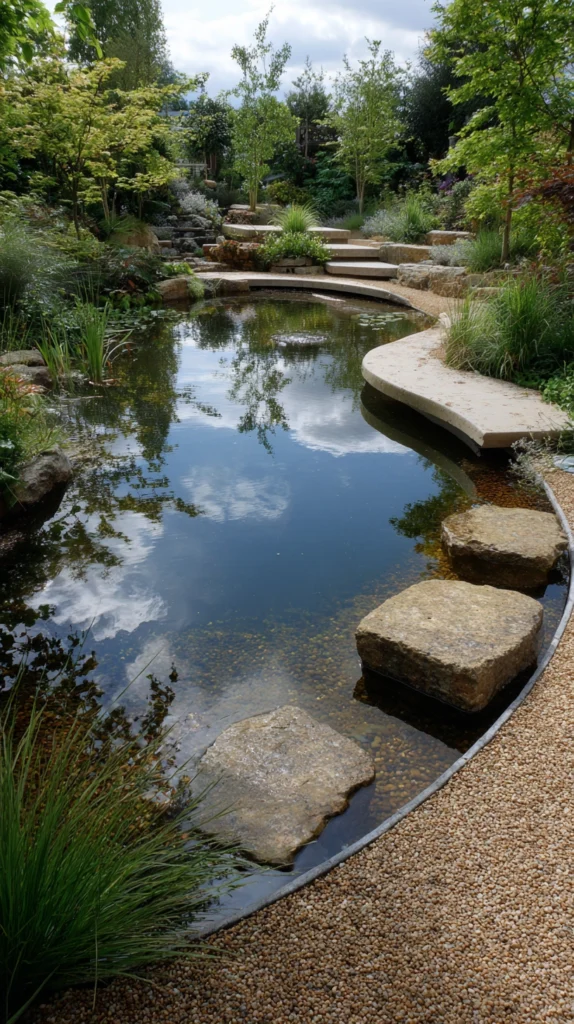
Budget: $100 – $600
A wildlife pond — an informal, irregularly shaped pool with shallow margins for wildlife access, planted with native aquatic species, and positioned in partial sun — is the most ecologically valuable and most naturally beautiful of all water features. A wildlife pond attracts frogs, newts, dragonflies, birds, and an extraordinary range of invertebrates within weeks of filling, and the living community it supports gives the garden a quality of genuine natural vitality that a sterile decorative fountain cannot approach.
A flexible pond liner costs $30–$100 depending on size. Native aquatic plants — water mint, marsh marigold, water iris — run $5–$12 each. A pond of 2 by 1.5 metres requires a liner of 4 by 3.5 metres — measure length and width plus twice the maximum depth plus 30 centimetres overlap on each side. No pump is required for a wildlife pond — the biological balance of native planting and wildlife keeps the water clear without filtration.
Style tip: Create at least one very shallow beach entry point at one edge of the wildlife pond — a gradual slope from the surrounding ground down to the pond floor, covered with small pebbles — so that small birds, hedgehogs, and frogs can enter and exit safely. A pond with no shallow access is a wildlife trap as much as a wildlife habitat; the beach entry is the detail that makes the pond genuinely hospitable rather than merely decorative.
3. The Raised Pool with Seating Edge
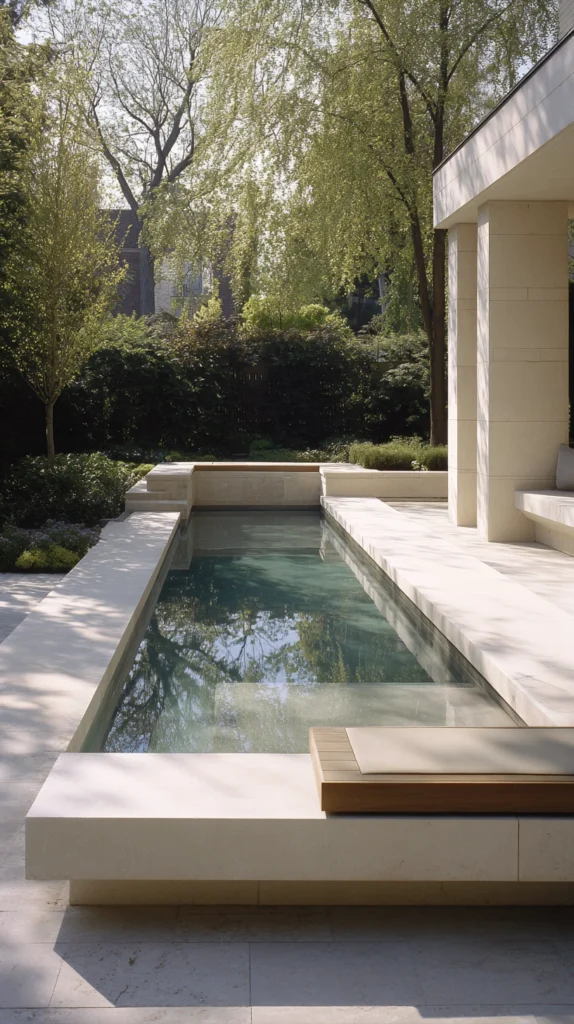
Budget: $300 – $2,000
A raised formal pool — built from brick, stone, or rendered block to a height of 45–60 centimetres, with a coping stone wide enough to sit on — combines the function of a water feature with the function of garden seating, and produces a garden element that earns its space twice. The pool provides the water sound and the visual reflection; the coping provides a seat from which to appreciate both at close range.
A brick raised pool of 1.5 by 1 metres costs $300–$800 in materials and basic construction. A rendered and tiled version runs $500–$1,500. A submersible pump for water movement costs $30–$80. Fit the coping stone in a smooth, comfortable material — polished granite, smooth limestone, or a quality buff sandstone — rather than a rough-textured stone that is uncomfortable to sit on for any length of time. The coping material is a seating decision as much as a visual one.
Style tip: Position the raised pool at the corner of a patio or seating area rather than at its centre. A pool at the centre of a seating area divides the space and prevents the furniture arrangement from surrounding it comfortably; one at the corner provides the sound and the visual interest without requiring the surrounding seating to accommodate it as an obstacle.
4. The Rill and Channel Feature
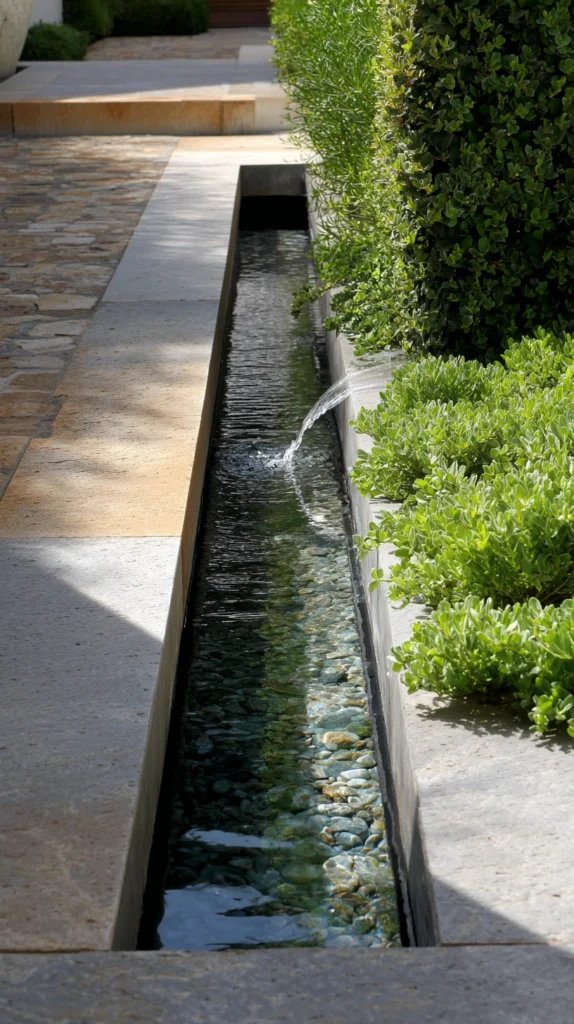
Budget: $200 – $1,500
A rill — a narrow, formal channel of water running through the garden at ground level, carrying water from one end to the other in a continuous slow flow — is the most architecturally considered of all garden water features. A rill provides the sound of moving water at the lowest possible profile, connects two areas of the garden with a continuous visual line, and is the one water feature that improves a formal or contemporary garden rather than looking incidental within it.
A simple concrete or steel rill of 5 metres in length and 15 centimetres in width costs $200–$600 in materials. A natural stone rill runs $600–$2,000. The rill requires a slight slope along its length — a fall of 1–2 centimetres per metre is sufficient for a visible flow without excessive water speed. A submersible pump at the lower end returns water to the upper end continuously.
Style tip: Design the rill to run perpendicular to the primary garden view — across the sight line rather than along it — so that the water feature is crossed rather than followed. A rill that runs away from the viewer along the primary sight line leads the eye but does not engage it; one that crosses the sight line must be stepped over or around and creates a moment of deliberate garden experience that the along-the-line version does not.
5. The Stock Tank Plunge Pool
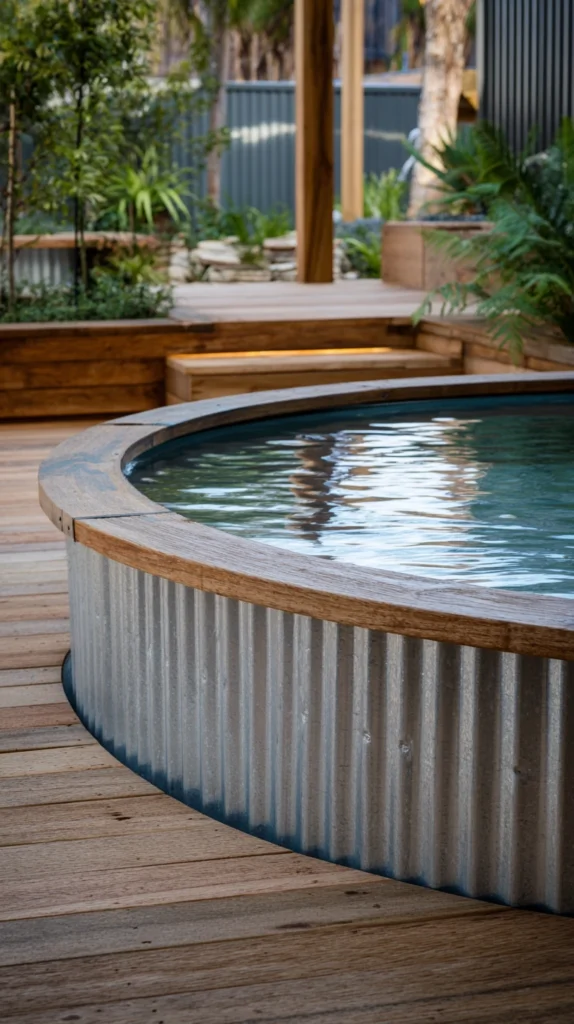
Budget: $400 – $1,500
A large galvanised stock tank — the agricultural water trough used for livestock, available in sizes from 1 to 3 metres in diameter — converted into a backyard plunge pool with a simple filtration system and appropriate chemical treatment creates a cooling water feature and a functional pool in the same modest budget. The stock tank pool is the water feature that earns the most pleasure per pound spent of anything on this list.
A galvanised stock tank of 2.4 metres in diameter costs $400–$800. A small pool filter system runs $150–$400. Chemical starter kit costs $30–$60. A timber deck surround built around the tank to cover the galvanised edge and create a coping surface costs $100–$300 in materials. Test and treat the water chemistry weekly — a stock tank pool at the size most commonly used in domestic settings has the same chemistry management requirements as a conventional pool.
Style tip: Install a small recirculating fountain within the stock tank pool — a simple fountain head on a submersible pump that creates a gentle bubble of water at the surface. The moving water prevents stagnation in warm weather, reduces the chemical treatment required to maintain water clarity, and provides the sound of water that elevates the stock tank from a decorative pool to a genuine water feature.
6. The Japanese Tsukubai Basin
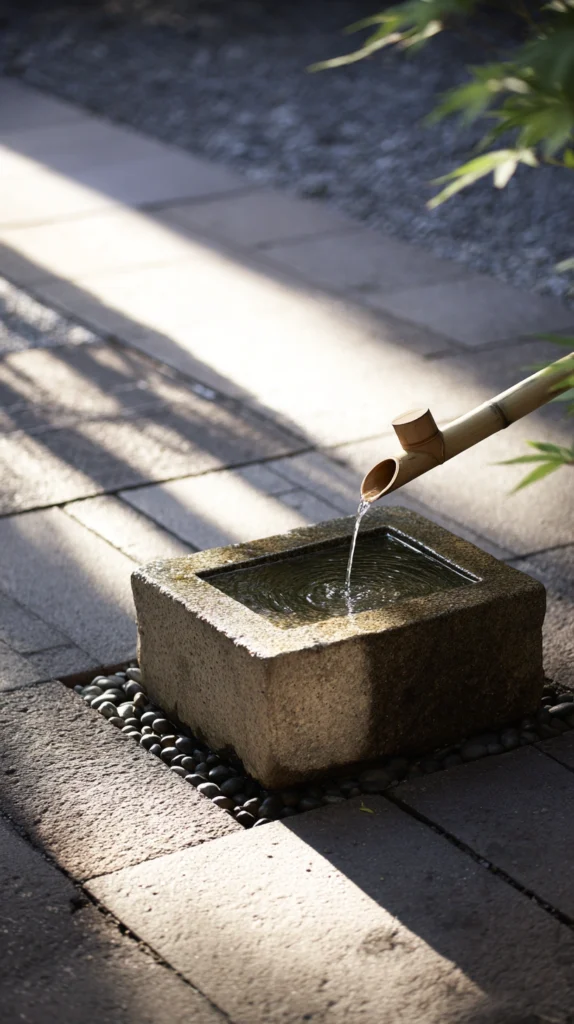
Budget: $80 – $400
A tsukubai — the low stone water basin of the Japanese garden, traditionally positioned beside the tea house for ritual hand-washing, adapted here as a garden water feature of extraordinary simplicity and calm — creates the most quietly beautiful of all garden water features at the most modest scale. Water flows from a bamboo spout into the stone basin, overflows gently into a surrounding bed of pebbles, and returns via a hidden pump to begin again. The sound is a trickle; the effect is profound.
A natural stone basin or a reconstituted stone tsukubai costs $60–$200. A length of bamboo cane for the spout costs $3–$8. A small submersible pump runs $20–$50. Position the tsukubai in a shaded or semi-shaded position with a backdrop of ferns, moss, or bamboo — the Japanese water basin requires a specific setting of cool, green, shaded planting to read as the water feature of a considered garden rather than as a stone bowl with a pump in it.
Style tip: Set the stone basin into the ground slightly — buried to one-third of its depth — rather than resting on the ground surface. A basin that appears to emerge from the ground reads as found and placed; one resting on the surface reads as positioned. The partial burial is the installation detail that gives the tsukubai its settled, ancient quality.
7. The Wall-Mounted Fountain
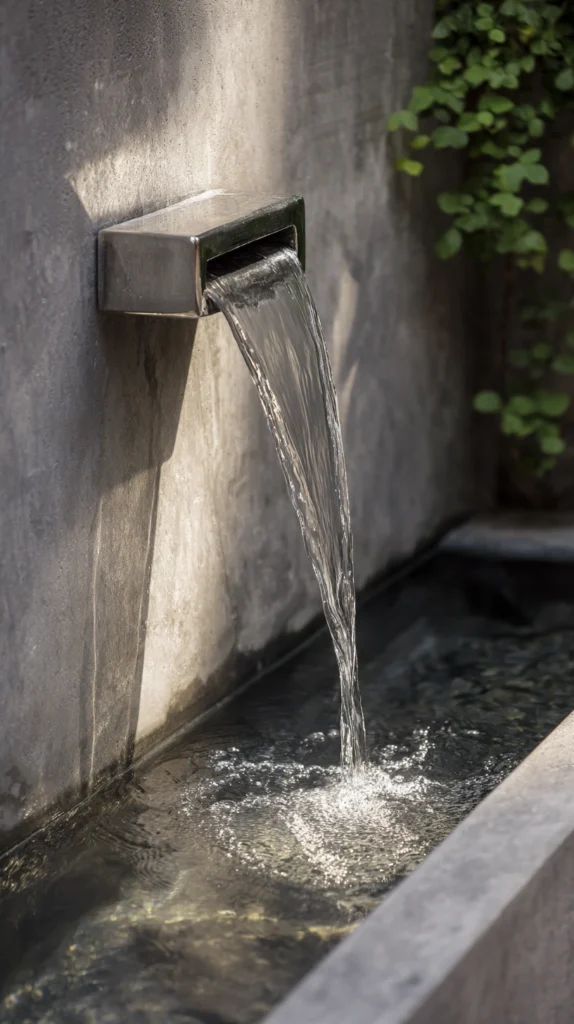
Budget: $100 – $600
A fountain mounted to a garden wall — water emerging from a decorative mask, a lion’s head, a simple spout, or a geometric form, falling into a basin below and recirculating — creates a water feature that uses vertical surface rather than ground area, suits the smallest garden and the narrowest courtyard, and provides the specific pleasure of a fountain that is heard from inside the house through an open window.
A cast iron wall fountain in a classical style costs $100–$300. A contemporary stainless steel or ceramic wall fountain runs $150–$500. A reservoir basin below the wall fitting costs $40–$100. A small submersible pump runs $20–$50. Fix the wall fitting into solid masonry rather than render or cladding — the vibration of the pump transmitted through the water and the fixing creates a noise problem if the fixing is inadequate for the wall type.
Style tip: Position the wall fountain at a height where the sound of falling water is audible from the primary seating area. A fountain mounted too high drops water from too great a height and produces a harsh splash rather than a gentle flow; one mounted too low produces only a quiet trickle. The height that produces the most pleasant sound — typically 40–60 centimetres of fall — should be tested with a temporary hose before the permanent fitting is fixed.
8. The Reflecting Pool
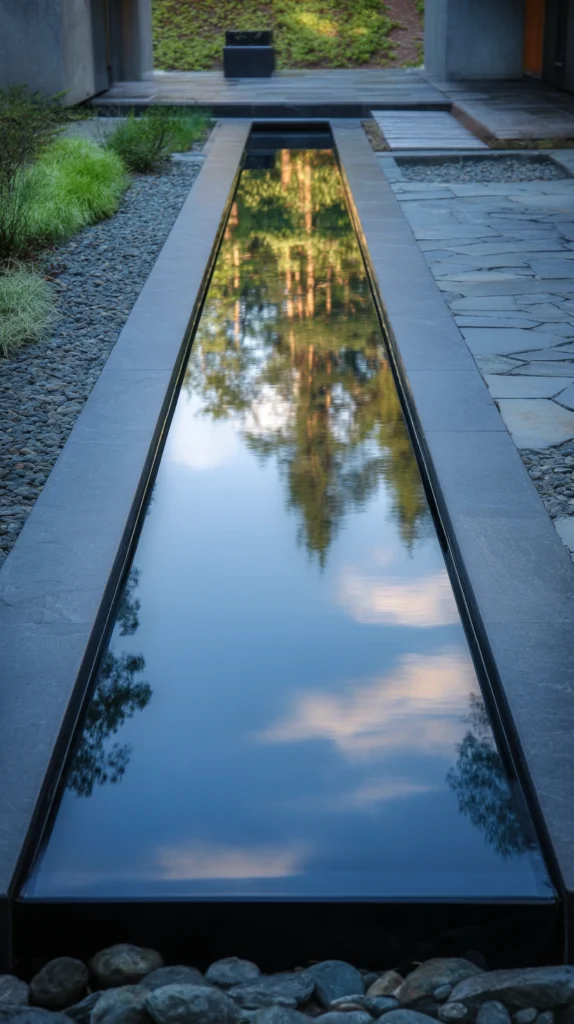
Budget: $150 – $1,000
A shallow, still reflecting pool — with no moving water, no pump, no fountain — creates the most visually spectacular of all garden water features through the single quality of perfect reflection. A still pool reflects the sky, the clouds, the surrounding planting, and the changing light of the day in a way that transforms the garden visually by effectively adding a mirror of sky to the garden floor. The reflecting pool is the water feature that does the most with the least equipment.
A preformed fibreglass reflecting pool in a formal rectangular shape costs $150–$400. A liner-based reflecting pool of 2 by 1 metres costs $80–$200 in liner and edging materials. The reflecting pool is painted or lined in black or very dark blue rather than the light blue of conventional pools — the dark surface produces the mirror quality that a pale surface absorbs rather than reflects. No pump, no planting, no fish — stillness is the point.
Style tip: Position the reflecting pool where it captures the sky view that is most interesting at the time of day the garden is most used — the western sky in the evening, the morning sky at the east. A pool that reflects a blank sky in one direction and a flowering border in the other has a correct orientation and an incorrect one, and the correct orientation is always the one that faces the more interesting view.
9. The Waterfall Feature
Budget: $200 – $2,000
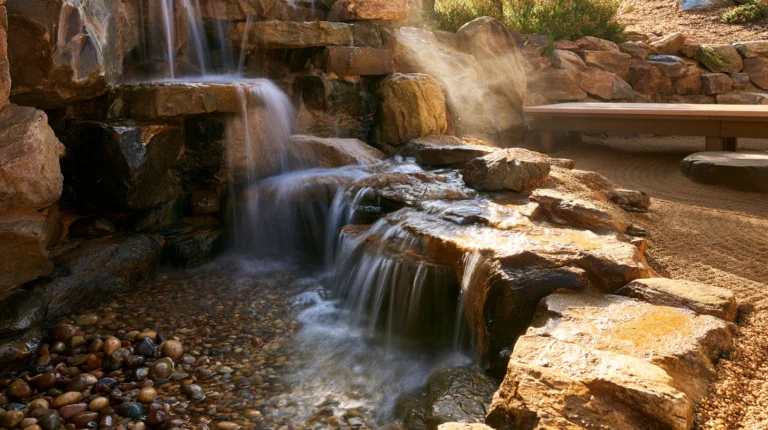
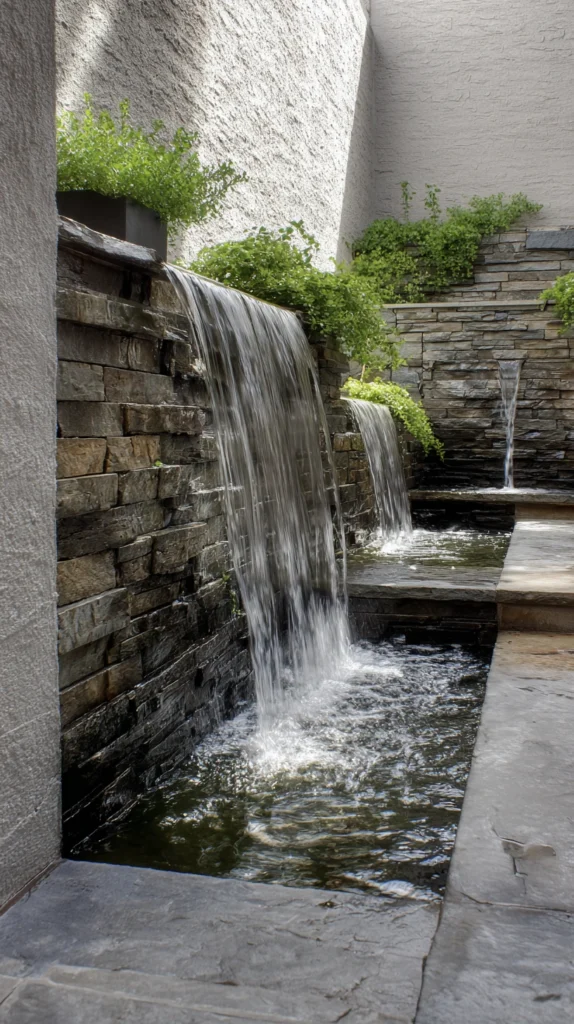
A waterfall — water flowing over a stack of flat stones, a sculpted rock face, or a custom fabricated steel or stone lip — creates the most dramatic sound of all water feature types and the one that most effectively masks urban noise. A well-designed waterfall sounds like a garden away from the city; a poorly designed one sounds like a leaking tap. The difference is in the width and the consistency of the water flow across the fall surface.
A natural stone waterfall feature using flat sandstone or limestone slabs costs $200–$800 in stone plus $80–$200 for the pump and reservoir. A manufactured resin waterfall feature runs $150–$400. The pump must be rated for the height of the waterfall — a pump specified for a 30-centimetre head of water will fail to push water to the top of a 60-centimetre waterfall, and the correct pump specification is the technical decision that determines whether the waterfall flows correctly.
Style tip: Overlap the flat stones of the waterfall so each stone slightly overhangs the one below it rather than sitting flush. The overhanging edge produces the characteristic free-falling water sound of a natural waterfall; flush-stacked stones produce a sliding water sound that reads as a water feature rather than as something geological. The slight overhang is the stone-setting detail that makes the difference between the two.
10. The Container Water Garden
Budget: $30 – $200
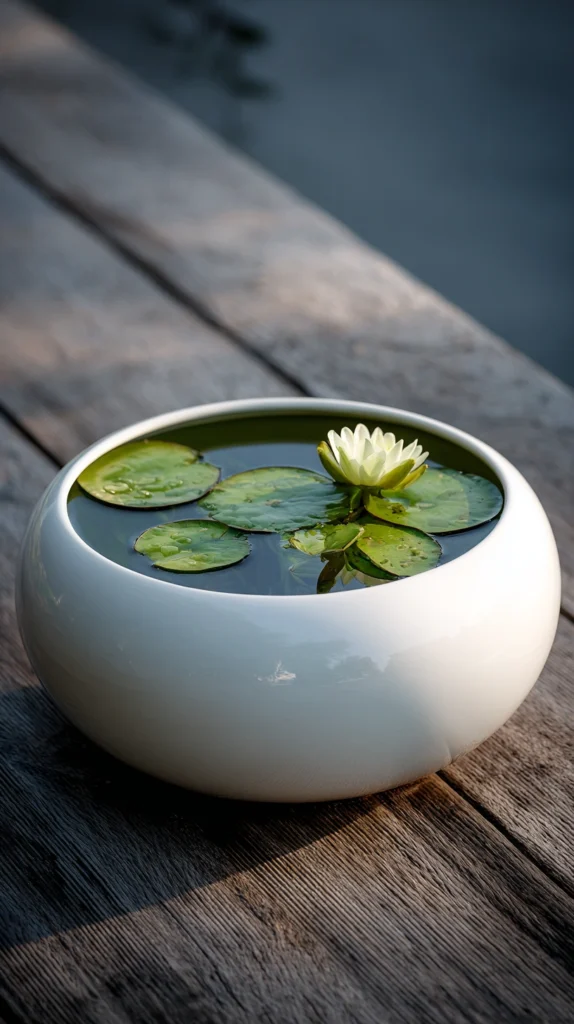
A large ceramic pot, an old tin bath, a wooden half-barrel, or any watertight vessel filled with water and planted with dwarf water lilies, water hyacinth, or floating aquatic plants creates a self-contained water garden at the smallest possible scale. The container water garden is the water feature for the balcony, the small courtyard, the apartment terrace — wherever a conventional pond would be impossible, a container water garden provides the reflection, the aquatic planting, and the still water quality that a larger installation provides.
A large ceramic pot of 50 centimetres in diameter costs $30–$80. A half-barrel costs $20–$50. A dwarf water lily costs $8–$20. Water hyacinth runs $5–$12. Fill with tap water and allow to stand for 48 hours before adding plants — the chlorine in fresh tap water dissipates in that time and the water becomes safe for sensitive aquatic plants and any wildlife that arrives subsequently.
Style tip: Add one small submerged oxygenating plant — hornwort, water starwort — to the container water garden alongside the surface plants. The oxygenating plant keeps the water clear by competing with the algae for nutrients and releasing oxygen into the water, and a container water garden with oxygenating planting maintains its clarity through the summer without any additional treatment or filtration.
11. The Solar Fountain Feature
Budget: $30 – $150
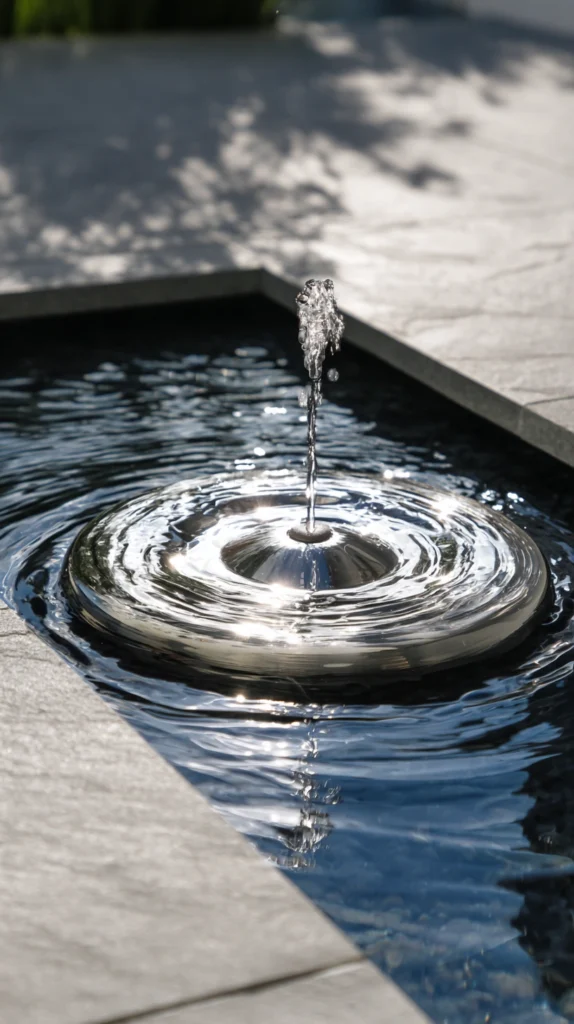
A solar-powered fountain — a small pump attached to a solar panel that circulates water whenever the sun is shining — is the water feature that requires no electricity connection, no mains power, and no running cost. It operates automatically on sunny days when the garden is most used, stops automatically on cloudy days when it is least needed, and can be moved to wherever the garden receives the best sun rather than being constrained by the location of an electrical outlet.
A solar fountain kit with a pump and a panel costs $25–$80. A solar fountain for a larger existing pond runs $40–$150. Position the solar panel where it receives direct sun for at least five hours per day — the fountain performance is directly proportional to the light intensity reaching the panel, and a partially shaded panel produces a weak, intermittent flow rather than a consistent one.
Style tip: Choose a solar fountain kit with a battery backup rather than a direct-drive version. A direct-drive solar fountain stops every time a cloud passes over the panel, producing an intermittent, stuttering flow that is more noticeable and more frustrating than no fountain at all. A battery backup version stores energy during sunny periods and maintains a consistent flow through brief periods of cloud, which produces the continuous, pleasant water sound that the feature was purchased for.
12. The Bog Garden Water Feature
Budget: $80 – $350
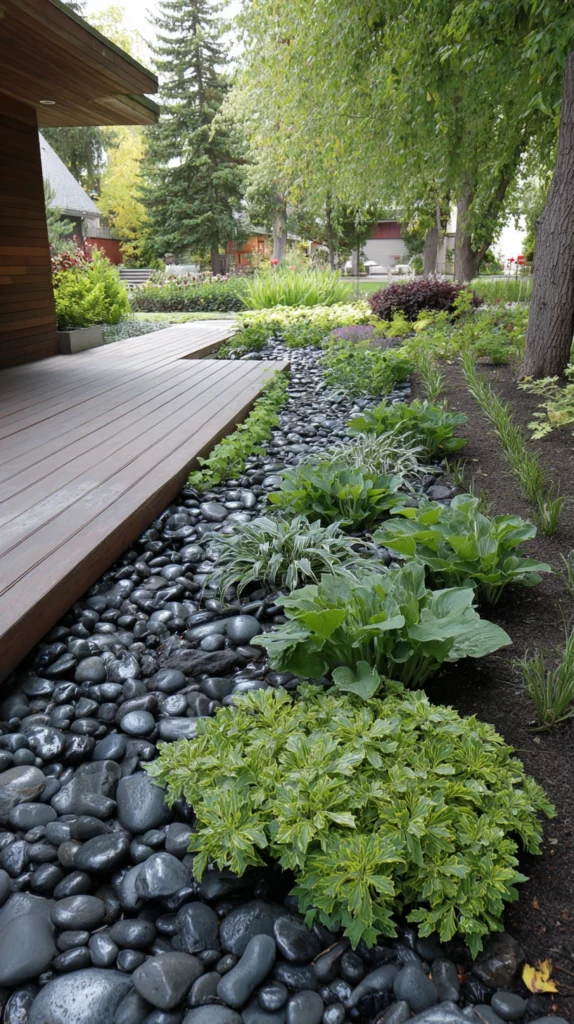
A bog garden — a permanently moist planted area created by lining a shallow excavation with a punctured pond liner and filling with moisture-retentive compost — provides the lush, moisture-loving planting that creates the most dramatic foliage display in a summer garden without requiring an open water surface to manage. Gunnera, astilbe, rodgersia, marsh marigold, and iris all thrive in bog conditions and produce a planting of tropical lushness at a British-garden scale.
A bog garden liner — a standard pond liner punctured every 30 centimetres to allow slow drainage rather than total water retention — costs $30–$80. Moisture-loving plants cost $8–$20 each. A bog garden of 3 by 2 metres planted with five to seven species costs $150–$300 in total. Connect the bog garden to a downpipe or a soakaway so that excess rainfall drains slowly through rather than creating a waterlogged anaerobic environment.
Style tip: Position the bog garden beside a dry garden area — a gravel planting, a drought-tolerant border — so that the visual contrast between the two growing conditions is visible simultaneously. The lush, moisture-loving planting of the bog garden reads most dramatically against the dry, architectural planting of a drought-tolerant area, and the juxtaposition of the two conditions creates the most interesting and most educationally honest garden composition.
13. The Swimming Pond
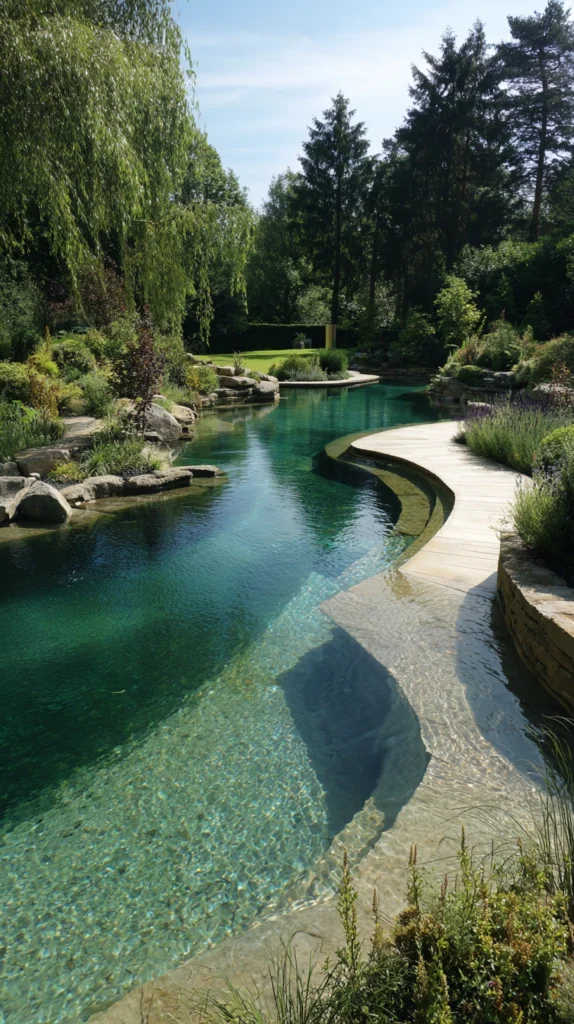
Budget: $3,000 – $20,000
A natural swimming pond — a pool for human swimming with an adjacent regeneration zone of aquatic planting that filters the water biologically rather than chemically — creates the most complete and most genuinely natural water feature available to a domestic garden. The swimming pond is swum in, looked at, listened to, and lived alongside simultaneously, and it provides the ecological richness of a wildlife pond with the recreational facility of a conventional pool.
A basic natural swimming pond of 40 square metres — including 20 square metres of swimming zone and 20 square metres of regeneration planting — costs $5,000–$15,000 installed by a specialist. A DIY version using a pond liner and purchased aquatic plants costs $3,000–$8,000 in materials. The biological balance of the swimming pond requires two to three growing seasons to fully establish — the water clarity improves consistently through the first three years as the regeneration zone planting matures.
Style tip: Design the swimming pond with a gradual entry slope at one end rather than a vertical drop at all edges. The gradual slope allows wildlife access alongside human access, provides a shallow paddling zone for children, and creates the most natural and most welcoming approach to the water. A pond that can be entered gradually rather than descended into is a pond that is used more frequently and more naturally by every member of the household.
14. The Formal Canal Pool
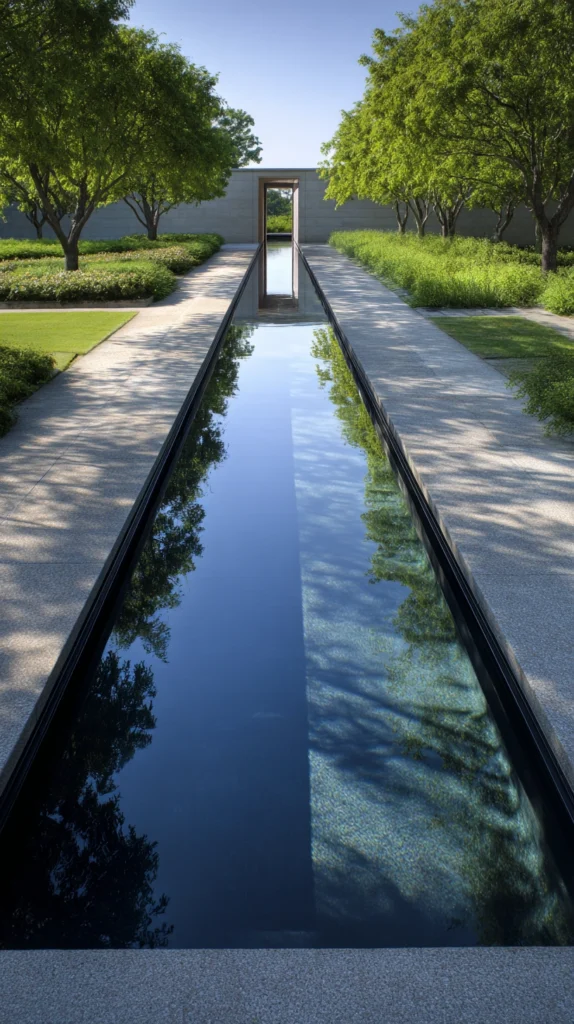
Budget: $400 – $3,000
A formal rectangular canal pool — long and narrow, running along the length of a garden boundary or through the centre of a formal garden design — creates the most classical and most spatially dramatic of all garden water features. The canal pool reflects the sky in a long, horizontal band of light that changes the proportions of the garden visually, making it appear wider than its measured dimensions and adding a sense of depth that no other garden element provides.
A rendered and waterproofed concrete canal of 4 metres by 60 centimetres costs $400–$1,500. A steel-sided version in corten or stainless steel runs $800–$3,000. A submersible pump for gentle recirculation costs $30–$80. The formal canal pool requires a level site — a canal that is not level shows the uneven water surface as a visible slope that undermines the formal precision the design depends on. Check the site level with a spirit level before beginning construction.
Style tip: Flank the canal pool with low clipped box or yew hedging on each long side rather than with informal planting. The formal canal is an architectural element of the garden and it reads most powerfully alongside the clipped precision of formal hedging — the combination of the still water and the clipped green walls creates the specific quality of a classical garden that neither element achieves independently.
15. The Patio Millstone Water Feature
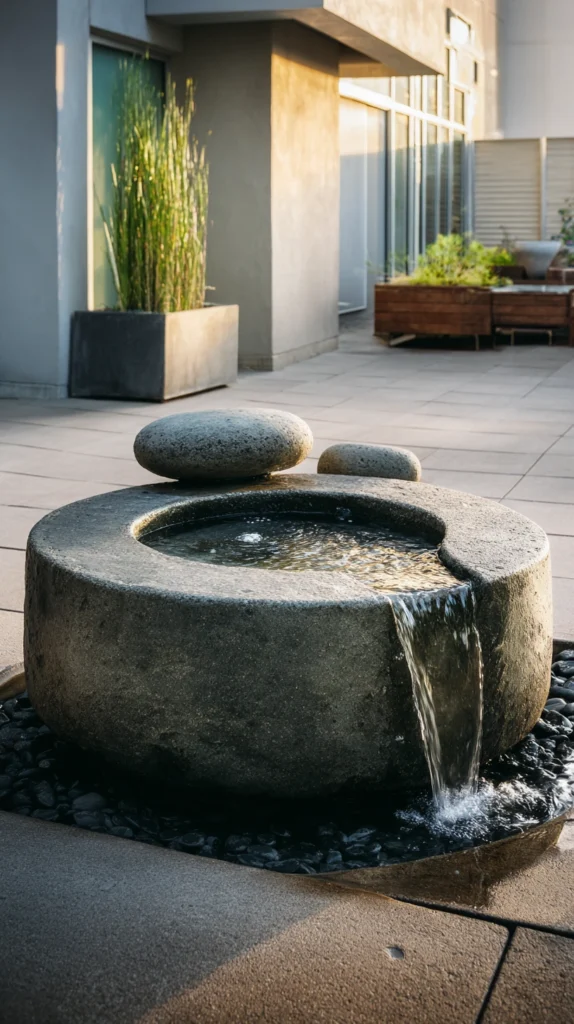
Budget: $100 – $500
A millstone water feature — a genuine reclaimed millstone or a reconstituted stone equivalent, with water welling up through the central hole and flowing across the textured surface before draining into a hidden reservoir below — creates the most satisfying combination of visual interest, tactile quality, and water sound available at the patio scale. The millstone is the water feature that looks most as if it belongs to the garden rather than having been placed in it, and its low profile allows it to sit at patio level without creating an obstacle.
A reclaimed millstone costs $100–$300. A reconstituted stone version runs $80–$200. A complete millstone fountain kit — reservoir, pump, and connections — costs $100–$300. Level the reservoir box in the ground before installing — a millstone that tilts even fractionally produces an uneven flow across its surface that concentrates on one side and leaves the other dry, which reduces both the visual and the acoustic quality of the feature.
Style tip: Plant moisture-tolerant ground cover around the millstone base rather than surrounding it with bare stone or gravel. Creeping jenny, mind-your-own-business, or baby tears planted at the millstone edge grows gradually into the surrounding area, softens the junction between the stone and the garden, and creates the impression of a feature that has been in the garden long enough for the planting to have grown around it — which is the impression that makes a water feature feel genuinely part of the garden rather than recently installed.
The water feature that works is not the most elaborate or the most expensively specified. It is the one that sounds right from the seating area, that catches the light at the right time of day, that suits the scale and the style of the garden around it, and that asks no more of its owner in maintenance than the garden can realistically provide.
Choose the water that suits the garden, position it where it will be heard and seen from the places the garden is most used, and maintain it consistently through the summer months when it is earning its keep. The garden with moving water is always a more pleasant garden to be in than the garden without it, and the specific quality of that pleasantness — the coolness, the sound, the particular peace of watching something move without effort — is available to every backyard regardless of its size or its budget.