14 Zen-Inspired Backyard Waterfall Ideas for a Calm Relaxing Vibe
There is a particular quality of stillness that a Zen garden produces — not the stillness of absence but the stillness of presence, of a space so deliberately composed and so specifically considered that the mind arrives at quietness not by force but by finding nothing within the garden to agitate it.
The Zen garden is the designed environment that most honestly understands what genuine rest requires: simplicity, natural materials, the sound of water, and the particular quality of a space that communicates, without words and without explanation, that this is a place specifically made for the recovery of the self.
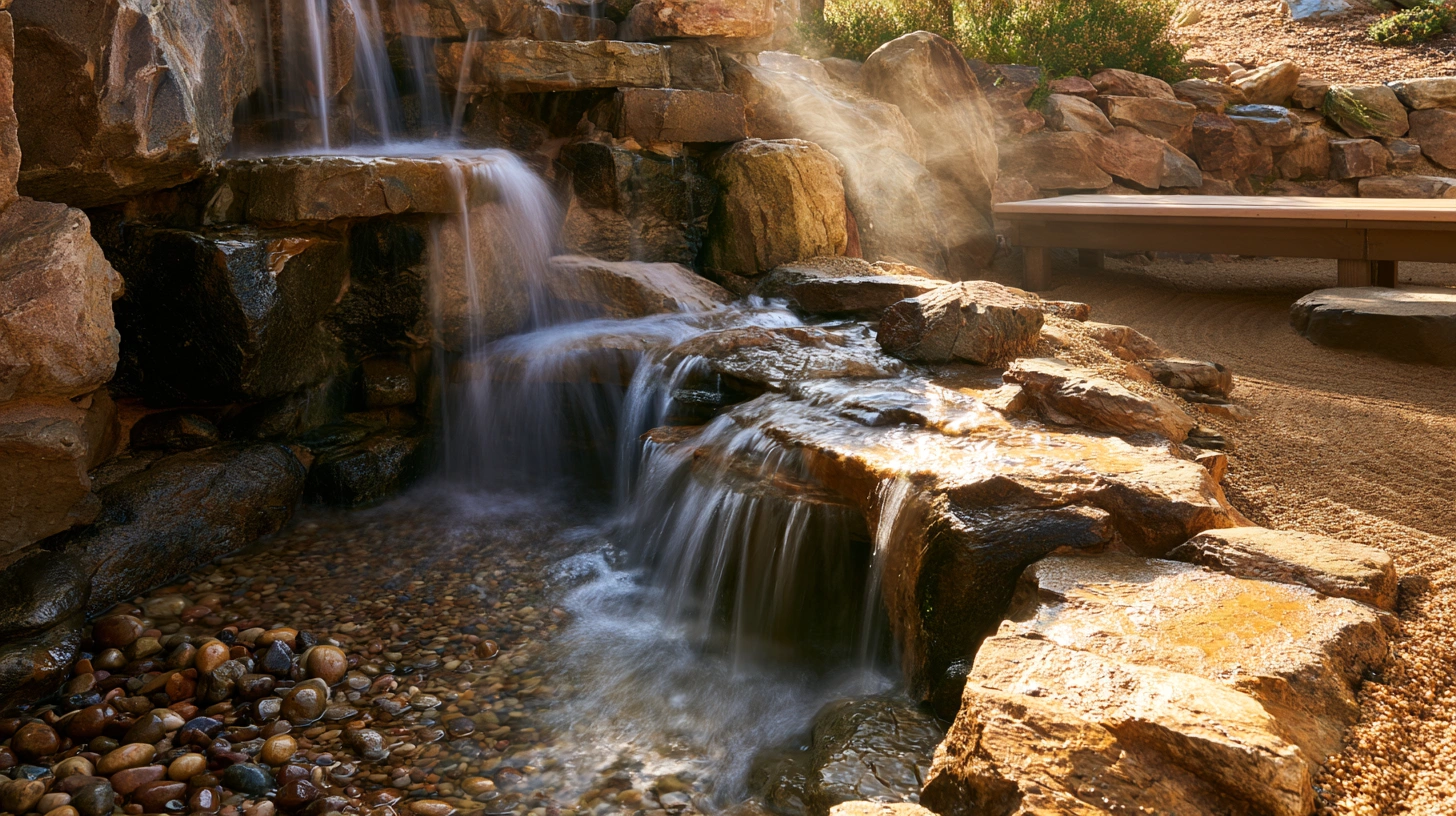
Water is central to this tradition not as decoration but as philosophy — the moving element within the still garden, the sound that prevents silence from becoming emptiness, the material that demonstrates the Zen principle of constant change within constant presence. A waterfall in a Zen-inspired backyard is not a feature. It is a practice — a daily reminder that what is genuinely at rest is never static, and that the most calming sound in the world is the sound of water finding its natural path through stone.
The fourteen ideas below cover every scale, every material, and every budget for a Zen-inspired backyard waterfall — each one built on the principle that simplicity, natural materials, and precise execution are the three qualities that separate a genuinely calming water feature from one that merely looks the part.
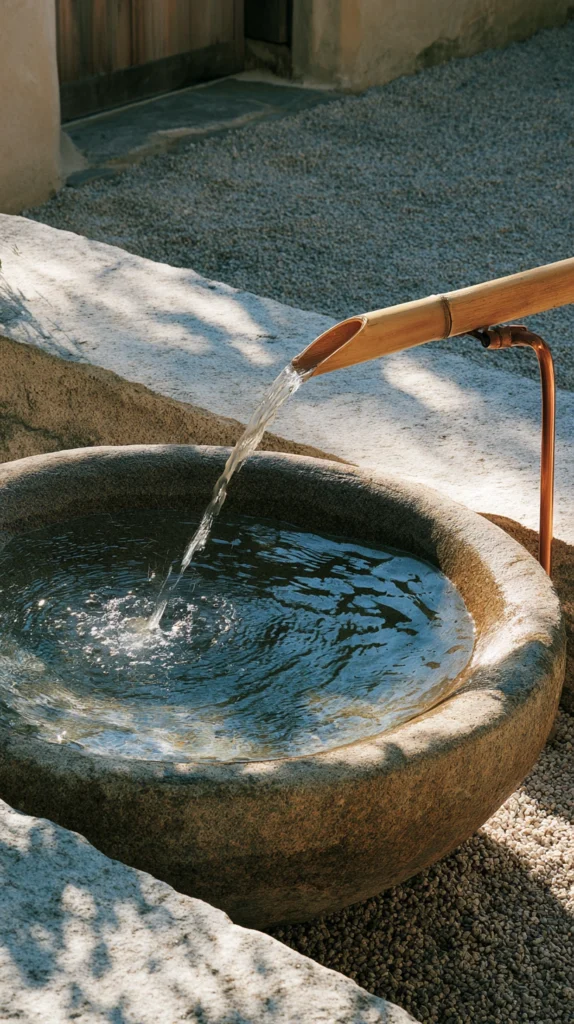
1. The Shishi-Odoshi Bamboo Deer Scarer
Budget: $80 – $400
The shishi-odoshi — a pivoting bamboo pipe that fills with water, tips to deliver the water to a stone basin below, and returns to its upright position with a resonant knock against a striker stone — is the most specifically Japanese and the most philosophically complete Zen water feature available. Its sound is deliberately irregular — the interval between each knock determined by the water flow rate and varying slightly with each cycle — which prevents the mind from habituating to it in the way it habituates to a constant sound. Each knock is an arrival.
A bamboo pipe for the shishi-odoshi — $10 – $30 from a garden supplier. A striker stone — a smooth, flat natural stone — $10 – $30. A stone or ceramic basin to receive the water — $30 – $100. A small submersible pump in the basin — $25 – $60. A copper pipe to deliver water to the bamboo’s inlet — $5 – $15. A simple bamboo frame to mount the pivoting element — $10 – $30. Total investment: $90 – $265 for the most meditative water sound available at any price point.
Styling tip: Adjust the pump flow rate until the shishi-odoshi fills and tips at intervals of eight to twelve seconds — the rhythm that most closely approximates the naturally meditative quality of the traditional deer scarer. Too fast a cycle — tipping every two or three seconds — produces a sound that is busy and slightly urgent. Too slow — every twenty seconds or more — produces a sound that is anticipated rather than arrived at. The eight-to-twelve second interval produces the correct quality of rhythmic surprise.
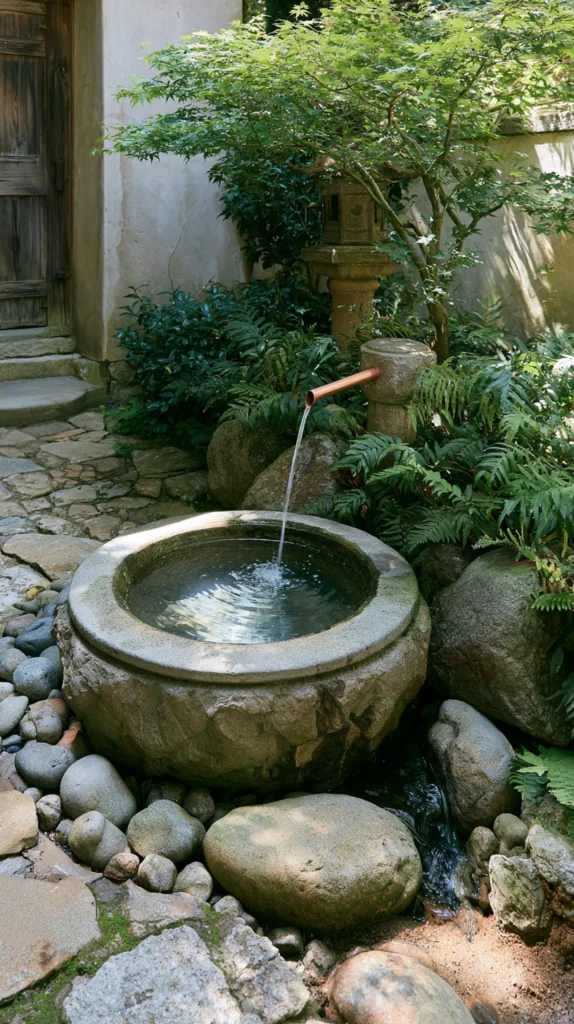
2. The Tsukubai Stone Basin Feature
Budget: $150 – $800
A tsukubai — a low stone basin traditionally used for ritual hand-washing before entering a Japanese tea house — with a bamboo or copper spout delivering water from a slight height, the water surface in the basin used for quiet reflection, and surrounding moss, stones, and a lantern completing the composition, is the most quintessentially Japanese and the most spatially compact Zen water feature available for a domestic garden.
A natural stone basin — hollowed granite, carved sandstone, or a found stone with a natural depression — $80 – $300. A bamboo or copper spout — $15 – $50. A submersible pump to recirculate from the basin — $25 – $60. Surrounding moss and low planting — $10 – $30 in plant materials. A simple stone lantern beside the basin — $40 – $150. Total investment: $170 – $590 for a composition of considerable meditative quality.
Styling tip: Surround the tsukubai with a surface of rounded pebbles or fine gravel rather than garden soil or mixed planting — so that the immediate area around the basin reads as a designed, considered composition rather than simply a basin placed in the garden. The raked gravel or pebble surround communicates that the tsukubai is a focal point of deliberate contemplation rather than an incidental water feature, which is the quality that makes the Zen garden element specifically different from a decorative one.
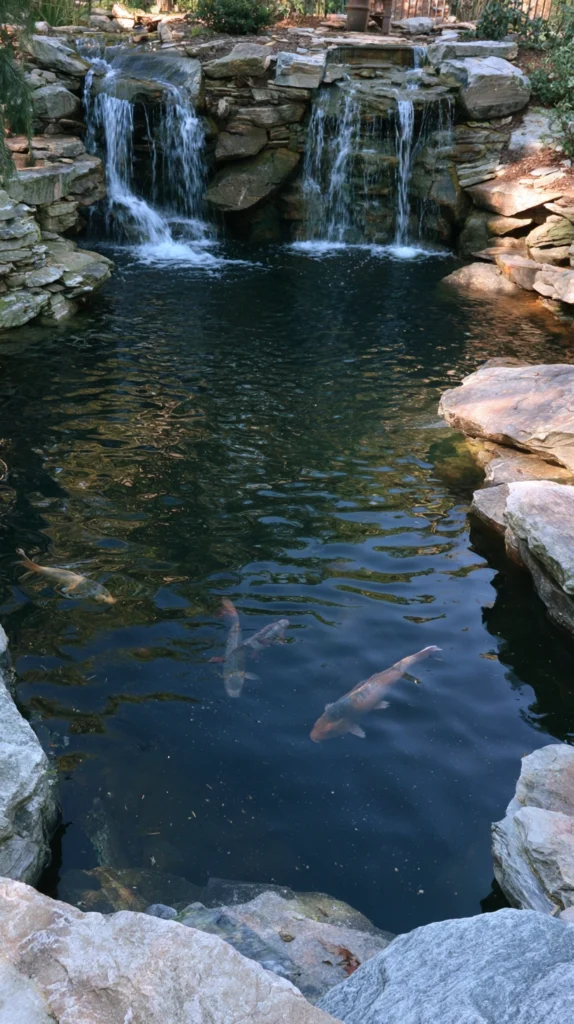
3. The Koi Pond Waterfall
Budget: $1000 – $10000
A koi pond with a natural rock waterfall — the waterfall providing the oxygenation the koi require while simultaneously producing the most specifically Zen of all pond atmospheres — is the natural rock waterfall at its most culturally coherent within the Japanese garden tradition. The koi themselves contribute to the meditative quality of the feature — their slow, deliberate movement through the water creating an element of living observation that no static feature can provide.
A koi pond with flexible liner — $200 – $800 depending on size. Natural rocks for the waterfall — $150 – $500. A filtration system appropriate for koi — $200 – $800. A pump with both filtration and waterfall duties — $150 – $500. Koi fish — $20 – $200 each depending on variety and size. Aquatic planting — $10 – $30 per plant. Total investment: $730 – $2830 in materials plus professional installation if required.
Styling tip: Choose koi in a limited colour palette — all orange, or all white and orange, or a single variety — rather than the full spectrum of available koi colours for a Zen-inspired pond. A pond of koi in a consistent or limited colour palette reads as a deliberate design decision. A pond of koi in every available colour reads as a collection — which is beautiful but in a different register from the simplicity and the restraint that the Zen aesthetic requires from every element within it.
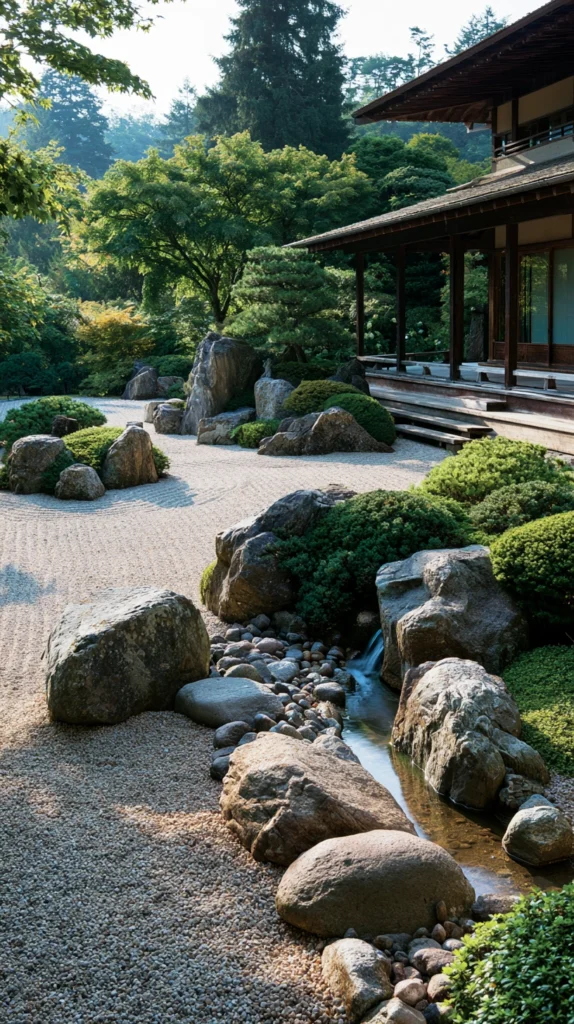
4. The Raked Gravel and Stone Dry Garden Feature
Budget: $100 – $600
A dry garden — raked gravel or decomposed granite representing water, large stones placed within it representing islands or mountains, and a small water feature at one end where actual water emerges from between stones and trickles briefly before disappearing into the gravel — combines the traditional karesansui dry garden format with a single, minimal water element that provides sound without compromising the dry garden’s fundamental aesthetic. The contrast between the represented water of the raked gravel and the actual water of the small feature is itself a Zen principle — the relationship between form and reality.
Raked gravel or decomposed granite — $20 – $50 per bag, three to five bags for a standard dry garden area. Feature stones — $30 – $100 each, three to five stones. A small submersible pump for the water element — $25 – $60. A stone through which water seeps — $20 – $60. Raking tools — $10 – $30. Total material cost: $105 – $340 for a dry garden with a minimal water element.
Styling tip: Rake the gravel in patterns that suggest water movement — parallel lines in the open areas, circular patterns around the base of each stone, and convergent lines where two flow patterns meet. The raking is not merely maintenance in a Zen garden. It is the practice — the daily act of attention that maintains the garden’s quality and the gardener’s relationship with it. A raked dry garden visited daily is a practice. One raked occasionally is a decoration.
5. The Bamboo Grove and Trickling Water Feature
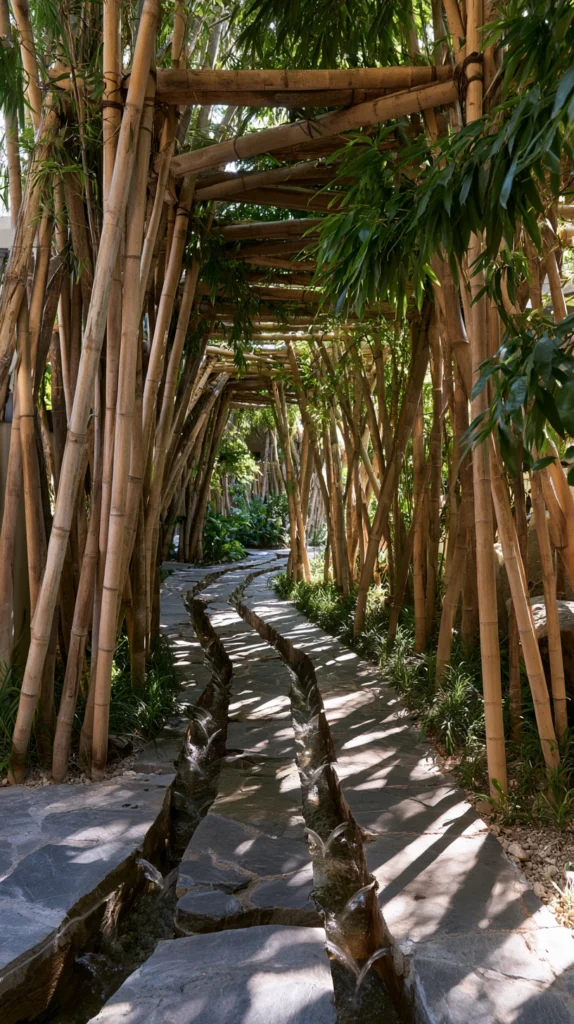
Budget: $200 – $1500
A bamboo grove with a trickling water feature at its base — water emerging from between bamboo culms at ground level, flowing across a surface of smooth flat stones into a small pebble reservoir, with the sound filtered and softened by the surrounding bamboo — produces the most specifically Japanese forest atmosphere available in a domestic garden. Bamboo’s particular quality — the sound of its culms moving against each other in a breeze, its dense shade, its vertical rhythm — combines with water to produce an environment of genuine tranquillity.
Black bamboo or golden bamboo plants — $20 – $60 each, five to seven plants for a grove effect. A water delivery system at the base — a small pump and drip pipe — $40 – $100. Smooth flat stones — $30 – $80. A pebble reservoir — $40 – $100. Total investment: $230 – $640 for a bamboo and water combination of considerable meditative quality.
Styling tip: Choose clumping bamboo varieties — specifically non-spreading species — for a domestic garden bamboo grove rather than running bamboo varieties that spread through underground rhizomes. Running bamboo planted in a residential garden without root barriers can colonise neighbouring gardens within three seasons and is extremely difficult to remove once established. Clumping bamboo grows in a contained, expanding clump that remains manageable and beautiful without requiring constant containment intervention.
6. The Zen Waterfall and Meditation Seat
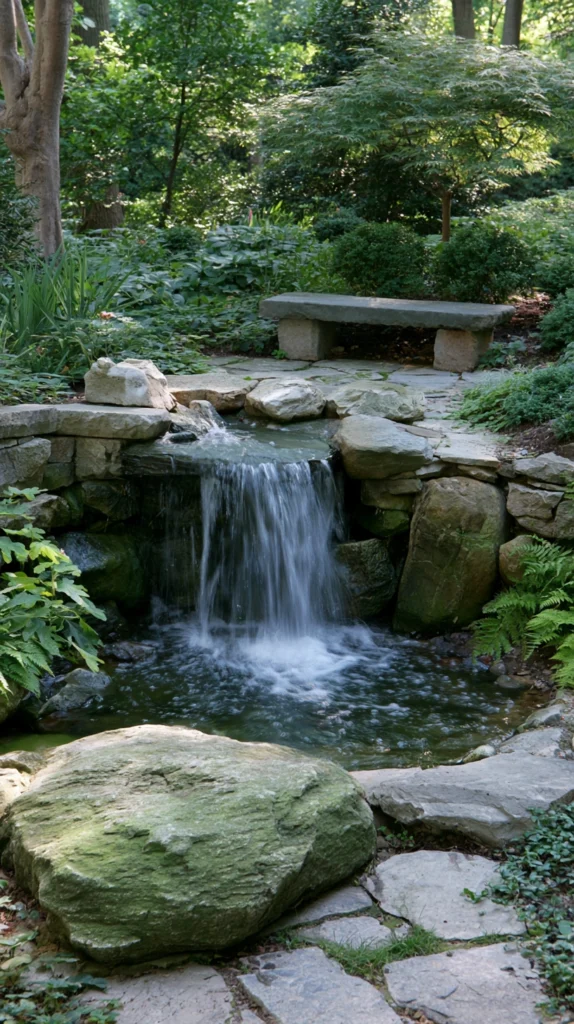
Budget: $300 – $3000
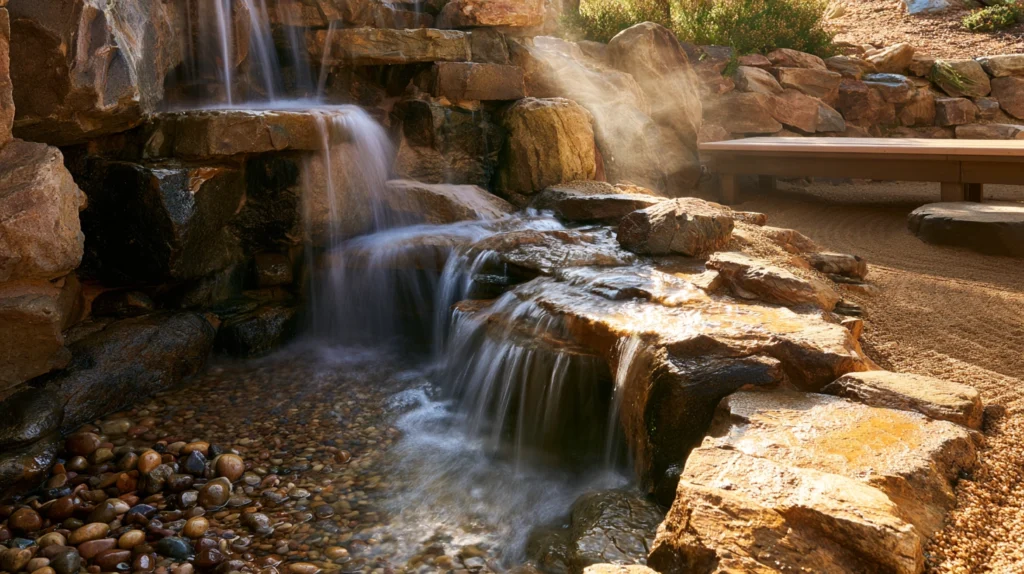
A Zen waterfall with a dedicated meditation seat — a flat natural stone bench or a simple timber platform positioned at the specific distance and angle from the waterfall that produces the best quality of sound and the most restful visual relationship — is the backyard water feature that most directly acknowledges that the purpose of a Zen garden feature is not display but practice. The seat is as important as the waterfall. The quality of the seated experience determines whether the feature serves its purpose.
A natural rock or blade waterfall — $200 – $1500 depending on format. A flat natural stone bench or simple timber platform — $80 – $300. Surrounding gravel or moss planting to define the meditation zone — $30 – $100. Total investment: $310 – $1900 for a water feature and seated position designed as a single composed element.
Styling tip: Test the seated position beside the waterfall at the time of day when meditation is most likely to occur before fixing the bench position permanently. The quality of the sound, the quality of the view, and the quality of the light from the seated position determine whether the space is genuinely used for the purpose it was designed for. A meditation seat positioned for appearances rather than for the actual seated experience is a seat that is observed rather than occupied — which is not the purpose of a Zen garden element.
7. The Mossy Stone Waterfall Garden
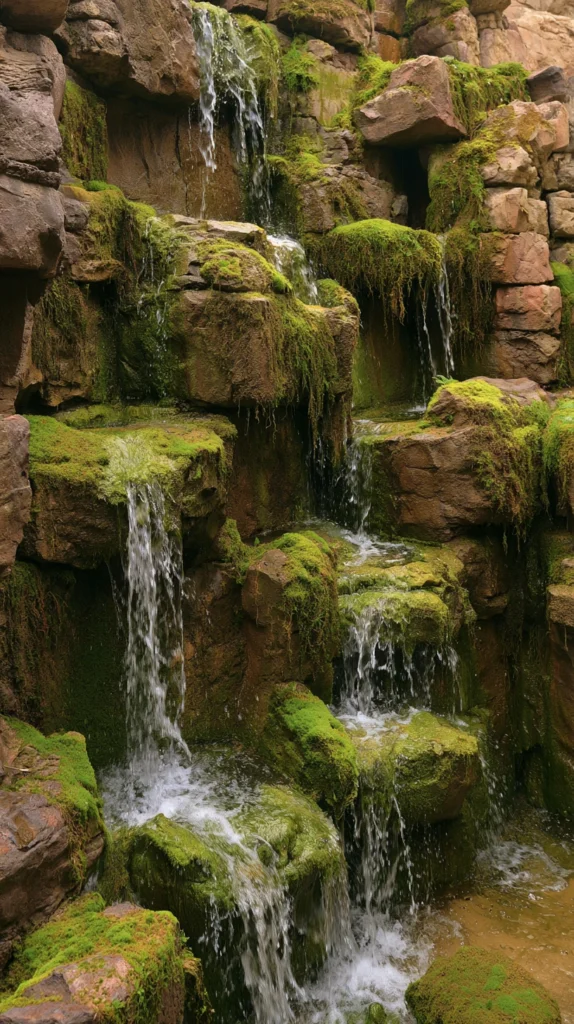
Budget: $300 – $2000
A mossy stone waterfall garden — large, irregular stones kept permanently moist by a slow drip system, their surfaces colonised by moss over the first two seasons, a small water trickle audible but not immediately visible within the moss-covered stone arrangement — is the most specifically ancient and the most patiently beautiful Zen water feature available. It is not a feature that reveals its quality immediately. It is a feature that reveals it slowly, as the moss establishes and the water darkens the stone and the garden begins to look as though it has been there for longer than it has.
Large irregular stones — $60 – $200 in stone materials. A drip irrigation pipe for permanent moisture — $20 – $60. Moss plants — collected from a local source or purchased — $5 – $20 per square section. Buttermilk solution for encouraging moss spread — $2 – $5 in buttermilk. A small pump and reservoir — $40 – $120. Total material cost: $127 – $405 for a feature that becomes more beautiful with every month.
Styling tip: Apply a mixture of blended moss, buttermilk, and water to the stone surfaces at installation — painting the mixture onto every surface where moss establishment is desired. The mixture provides the growing medium and the pH environment that moss spores need to germinate and establish. In a moist, shaded location, moss established this way covers the stone surface within four to six weeks of application. Without the buttermilk treatment, moss colonisation is slower and less uniform.
8. The Japanese Garden Bridge and Stream
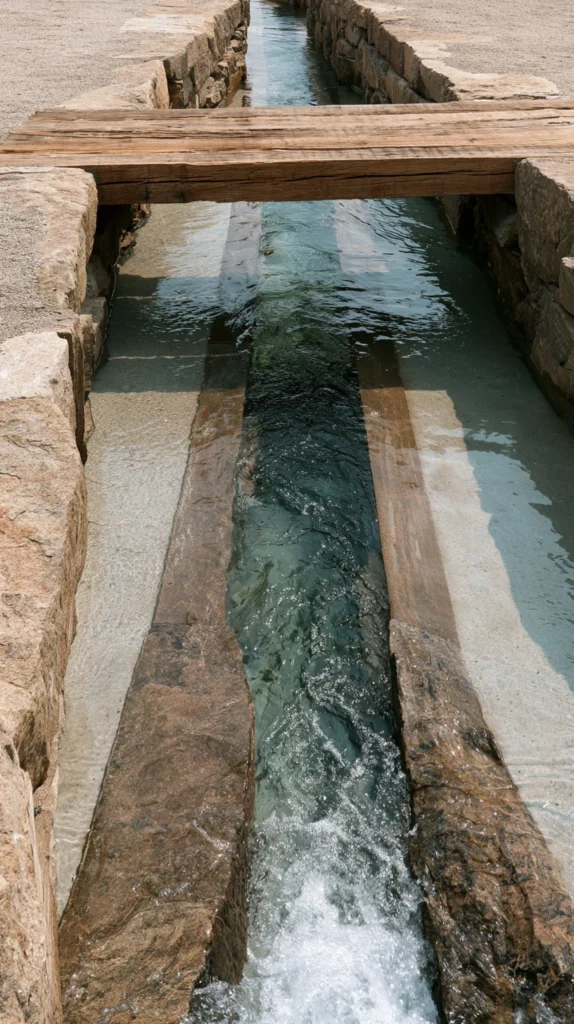
Budget: $500 – $5000
A Japanese garden bridge over a small natural stream — the stream fed by a waterfall at its upper end, the bridge providing a crossing point that is simultaneously a viewing platform from which the water can be observed from above — is the most structurally complete and the most experientially rich Zen water feature format available. The bridge changes the relationship between the observer and the water — from beside to above — and this change of perspective is a specifically Zen quality of the Japanese garden tradition.
A simple timber or stone bridge — $100 – $400 in materials. A natural stream with flexible liner — $100 – $300 per linear metre. A waterfall at the stream’s head — $200 – $800. A pool at the stream’s base — $200 – $600. A pump from pool to waterfall head — $80 – $300. Stream margin planting — $8 – $20 per plant. Total investment for a two-metre stream with bridge: $780 – $2820.
Styling tip: Build the bridge at the precise width that requires deliberate, slow crossing rather than at a width that allows hurried transit. A narrow bridge — 40 to 50 centimetres wide — requires the person crossing it to pay attention to their footing and to the water below. This enforced attentiveness is a Zen garden design principle — the garden element that slows the body slows the mind. A wide bridge that allows hurried crossing misses the point of the bridge entirely.
9. The Stone Lantern and Water Reflection Garden
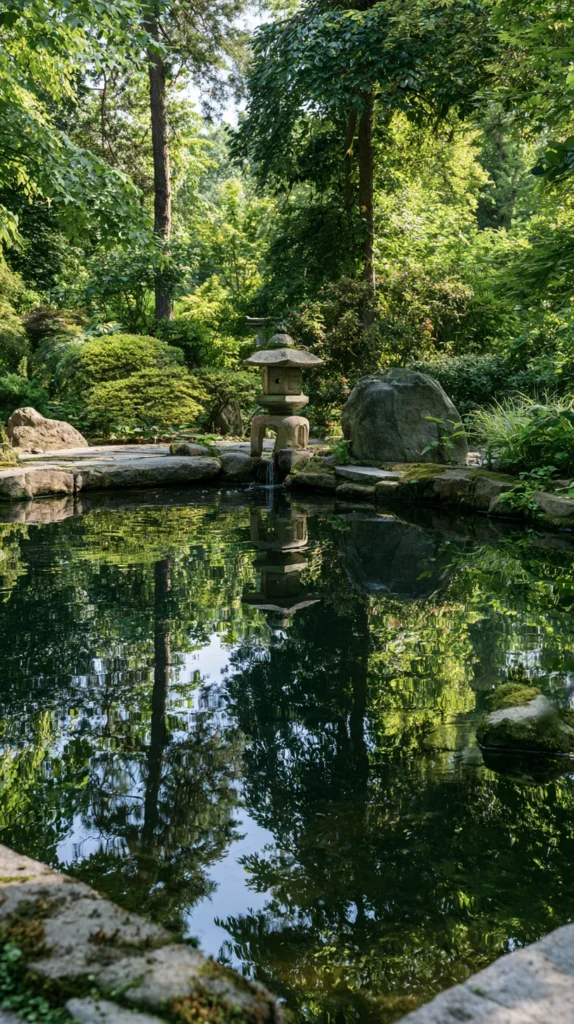
Budget: $200 – $1500
A stone lantern beside a still reflective pool — a traditional yukimi-doro or kasuga lantern placed at the water’s edge, the lantern’s reflection visible in the pool surface, and a small waterfall or seep at one end of the pool providing just enough water movement to animate the reflection without destroying it — produces the most specifically Japanese garden aesthetic of all the Zen water feature formats. The reflected lantern in moving water is a specifically Zen image — the form visible but impermanent, present but changing.
A stone lantern in a traditional style — $80 – $300. A reflective pool with a dark liner — $100 – $400. A small seep or drip waterfall at one pool end — $50 – $150. Pool coping stones — $50 – $200. Aquatic planting — lotus, water iris — $10 – $30 per plant. Total investment: $290 – $1080 for a reflective water garden of considerable meditative quality.
Styling tip: Specify the pool liner in black rather than a standard blue or grey — a black liner produces the most mirror-like reflection from a still water surface. A blue or grey liner produces a coloured surface that reads as a water feature. A black liner produces a surface that reflects — and a reflecting pool beside a stone lantern in a Zen garden is a philosophical object as well as an aesthetic one. The reflection is not incidental. It is the point.
10. The Minimalist Single-Rock Waterfall
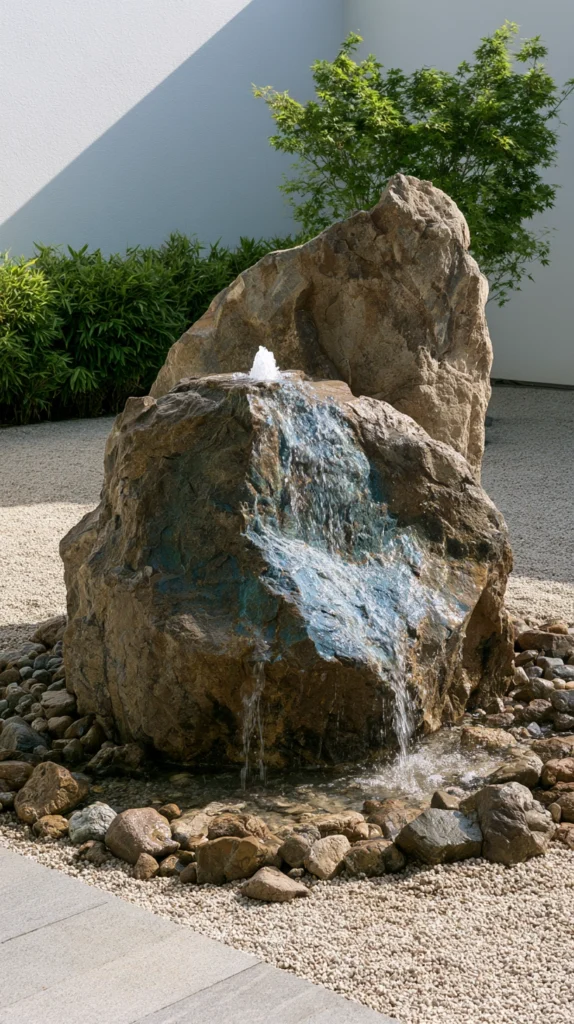
Budget: $100 – $500
A single, perfectly chosen natural stone — placed at the centre of a simple pebble reservoir, water bubbling quietly from the stone’s drilled summit and flowing across the stone’s natural surface — is the Zen-inspired backyard waterfall at its most minimal and its most specifically honest. The aesthetic principle of wabi-sabi — the beauty of imperfect, impermanent, and incomplete things — is expressed most directly in a single natural stone with a simple water source. Nothing is added. Nothing is unnecessary. The stone is enough.
A single natural stone of suitable character — $30 – $150. A pebble reservoir kit — $50 – $120. Smooth river pebbles — $15 – $30. A submersible pump — $25 – $60. Flexible pipe from pump to stone outlet — $5 – $15. Total investment: $125 – $375 for a feature of extraordinary simplicity.
Styling tip: Choose the single stone with care rather than speed — taking the time to find a stone of genuine natural character, with an interesting surface, an interesting form, and the specific quality of a stone that looks as though it was placed by water rather than by a human hand. A stone of genuine character turns a simple water feature into a contemplative object. A stone without particular character turns the same water feature into a simple garden ornament. The difference is entirely in the stone selection.
11. The Gravel Path and Water Sound Garden
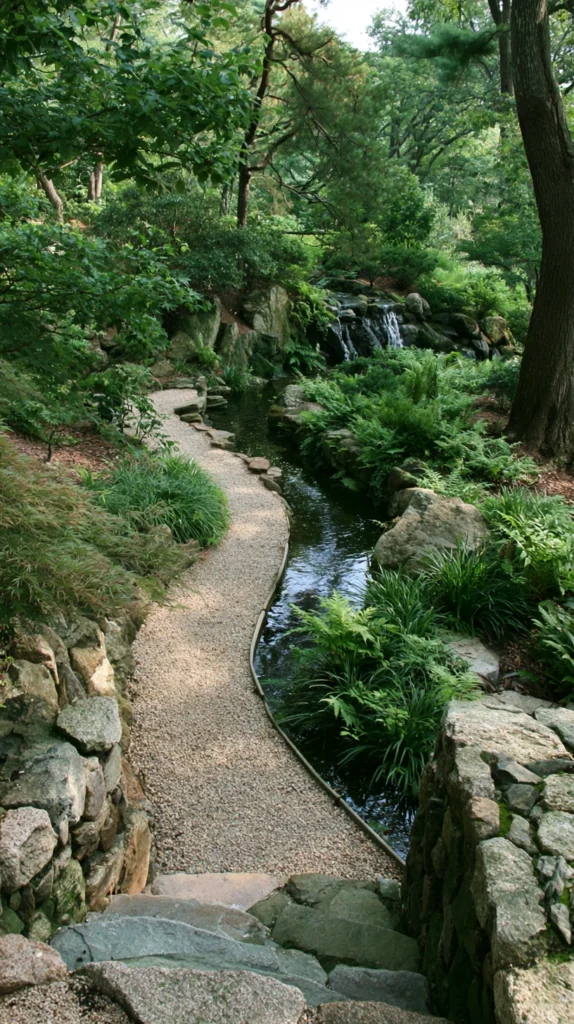
Budget: $200 – $1500
A garden designed around the experience of walking toward a water sound — a raked gravel path leading to a Zen water feature, the sound of the water heard before the feature is seen, the path’s curve preventing a direct sight line to the water source — is the most experientially complete Zen backyard water feature design. The approach is as important as the arrival. The anticipation created by hearing water before seeing it is specifically and intentionally meditative.
A raked gravel path — $30 – $80 per linear metre in gravel and edging materials. Stepping stones within the path — $10 – $30 each. A Zen water feature at the path’s destination — $100 – $500 depending on format. Screening planting that prevents a direct sight line — bamboo or a clipped hedge — $20 – $50 per plant. Total investment: $250 – $1200 for a path and water feature designed as a single experiential sequence.
Styling tip: Plant the screening element at a point along the path that conceals the water feature until the person on the path is approximately three steps from it — close enough that the sound is already fully present but the source is still hidden. A screen that reveals the water feature from ten metres away provides the sound but removes the anticipation. One that conceals it until the final three steps allows the sound to build to its full presence before the visual source arrives — which is the most specifically meditative version of the garden approach sequence.
12. The Courtyard Zen Water Feature
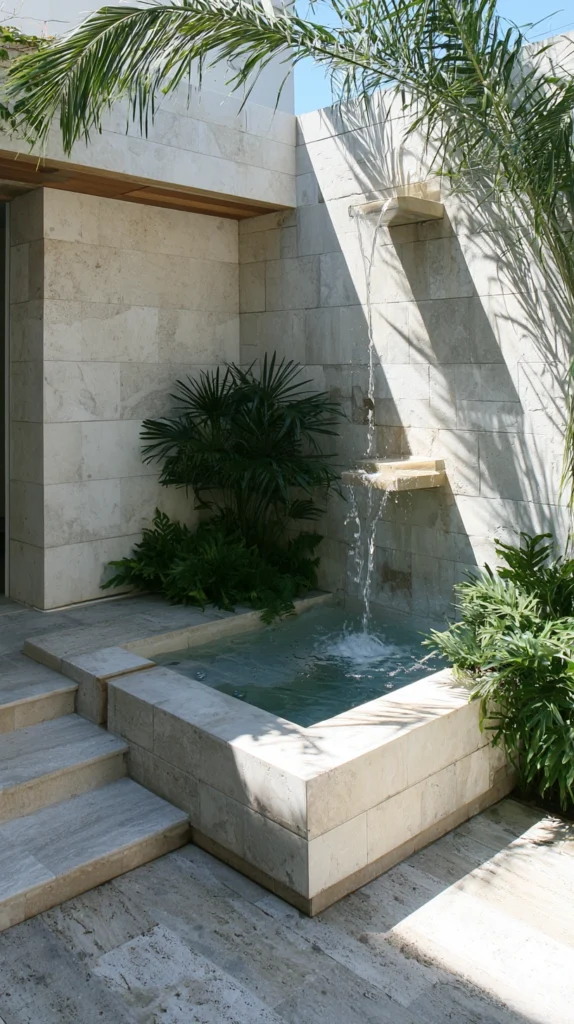
Budget: $300 – $3000
A Zen water feature in a small courtyard — a wall-mounted bamboo spout, a stone basin at the base, surrounding raked gravel, moss between the stones, and a single carefully chosen specimen plant — produces the most spatially complete Zen garden environment available in a confined outdoor space. The courtyard’s enclosure is a Zen quality rather than a limitation — the walled space concentrating the sound, the light, and the atmosphere of the water feature in a way that an open garden cannot.
A wall-mounted bamboo spout — $20 – $60. A natural stone basin — $50 – $200. Raked gravel for the courtyard surface — $20 – $50 per bag, two to four bags. Moss planting — $5 – $15 per section. A specimen plant — a cloud-pruned pine, a Japanese maple, or a clipped azalea — $40 – $150. A small pump — $25 – $60. Total investment: $160 – $535 for a complete Zen courtyard composition.
Styling tip: Limit the courtyard Zen garden to three plant species maximum — ideally one tree or large shrub, one ground cover, and one accent plant — rather than a varied planting scheme. The Zen garden aesthetic requires restraint in planting as it requires restraint in every other element. A courtyard with three carefully chosen plant species reads as a considered composition. A courtyard with twelve species reads as a small mixed border — which is beautiful but in a different register from the deliberate simplicity the Zen aesthetic is working toward.
13. The Evening Lantern and Water Garden
Budget: $200 – $1500
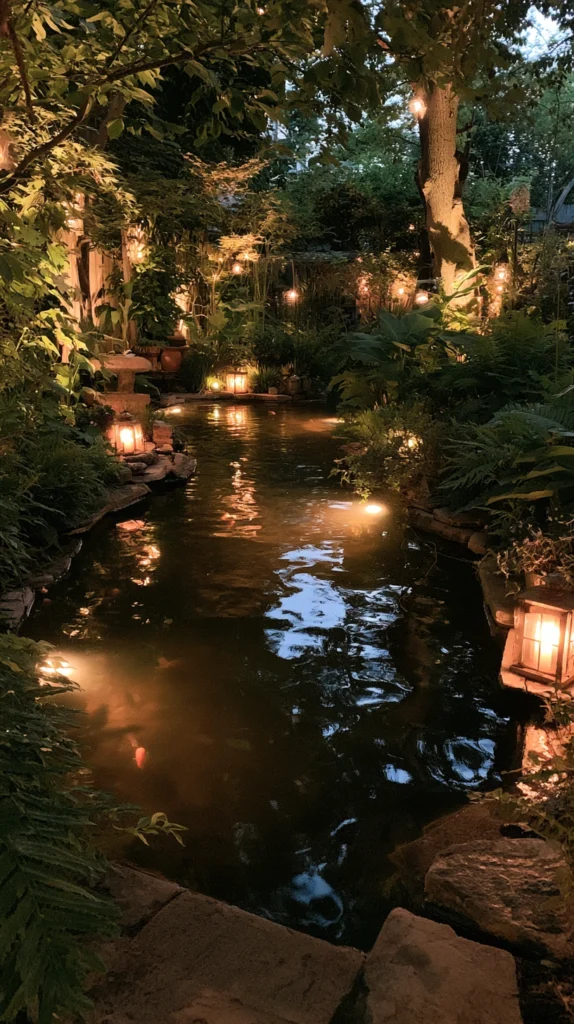
A Zen water garden designed specifically for evening use — with stone lanterns providing warm ambient light, the waterfall sound more prominent in the quiet of the evening, and a dark-lined reflective pool catching the lantern light and the night sky — is the backyard Zen water feature that delivers its most specifically meditative quality at the hours when meditation is most needed and most rewarding. The evening garden is a different garden from the daytime one, and designing for both is the mark of a garden that was genuinely thought about.
Solar or candle stone lanterns — $30 – $100 each, two to three required. A reflective dark-lined pool — $100 – $400. A natural rock waterfall providing evening sound — $150 – $500. Low-voltage path lights along the approach — $10 – $25 each. Underwater LED lighting in the pool — $30 – $80. Total investment: $320 – $1105 for an evening water garden of considerable atmospheric quality.
Styling tip: Position the stone lanterns so that their light falls on the water surface rather than away from it — the lantern at the pool’s edge with its light directed downward toward the water produces a pool surface that glows from within. A lantern positioned away from the water illuminates the surrounding garden but leaves the water surface dark. The light on the water is the specific quality that makes an evening Zen water garden genuinely extraordinary rather than simply pleasantly lit.
14. The Complete Zen Backyard Water Garden
Budget: $1000 – $10000
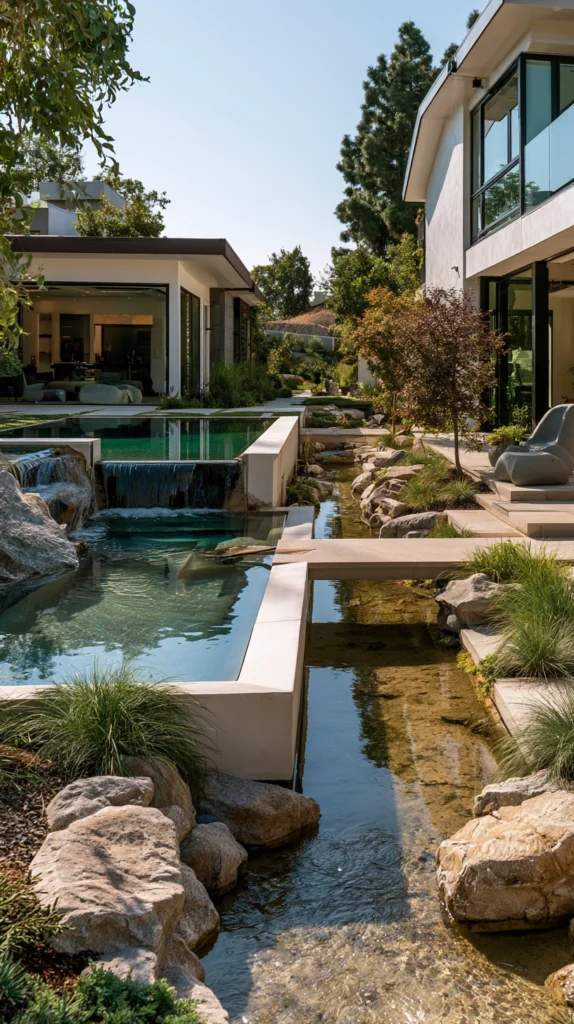
The complete Zen backyard water garden — a raked gravel entry garden with a dry stone arrangement leading to a bamboo-screened inner zone, a shishi-odoshi beside a tsukubai stone basin, a koi pond at the garden’s heart with a natural rock waterfall at one end, a stone lantern at the pond’s edge reflected in the dark-lined water surface, a Japanese maple providing seasonal colour and the specific quality of dappled light, a timber bridge crossing the stream that connects the waterfall inflow to the main pond, and a flat stone meditation seat positioned at the distance from the waterfall that produces the most specifically meditative sound quality — is not a backyard water garden. It is a practice space.
Raked gravel entry zone: $100 – $300. Bamboo screening: $100 – $300. Shishi-odoshi and tsukubai: $160 – $400. Koi pond: $300 – $1000. Natural rock waterfall: $300 – $1500. Stone lantern: $80 – $300. Japanese maple: $60 – $300. Timber bridge: $100 – $400. Meditation seat: $80 – $300. Stream connection: $200 – $800. Planting throughout: $200 – $600. Total investment: $1680 – $6200 for a Zen water garden of genuine meditative completeness.
Styling tip: Build the complete Zen water garden in stages over two to three seasons rather than installing every element simultaneously. Each stage — the entry gravel, the first water element, the pond and waterfall, the planting — is given time to establish and to be lived with before the next is added. A Zen garden built in stages develops a quality of settledness and belonging that a garden installed all at once cannot produce — each element having had time to become genuinely part of the place before the next arrives. This is not merely a practical consideration. It is a specifically Zen approach to the creation of a Zen garden.
Whatever combination of these fourteen ideas finds its way into the backyard, the principle beneath all of them is the same one that the Zen garden has always understood — that genuine calm is not produced by eliminating activity but by replacing undirected activity with directed, conscious presence in a space designed specifically to support it.
A Zen-inspired backyard waterfall is not the most dramatic water feature available. It is not the most architecturally assertive or the most visually spectacular. What it is — when built with genuine understanding of what it is for — is the most specifically useful, the most consistently rewarding, and the most honestly designed for the human need it is intended to serve.
Place the water carefully. Choose the stone honestly. Sit beside it consistently.
The stillness it produces is not the stillness of the feature. It is the stillness the feature makes possible in the person who sits beside it — and that is the only stillness that matters.