14 Modern Living Room Decor Ideas Pinterest Users Are Saving Like Crazy
The living room ideas that get saved most on Pinterest are never the most elaborate or the most expensive — they are the ones that feel simultaneously aspirational and achievable. A combination that someone can look at and immediately begin planning how to replicate in their own home.
The ideas on this list share that quality: each one has a clear visual logic, a specific material or colour decision at its centre, and enough simplicity in its execution to feel genuinely within reach rather than the exclusive province of a professional interior designer and an unlimited budget.
The fourteen ideas below are drawn from the most consistently saved modern living room images circulating in 2026 — each one grounded in a design principle that works in a real home as effectively as in the editorial photograph that made it famous. Costs and a practical tip are included throughout.
1. The Boucle Sofa Moment
Budget: $400 – $2,000
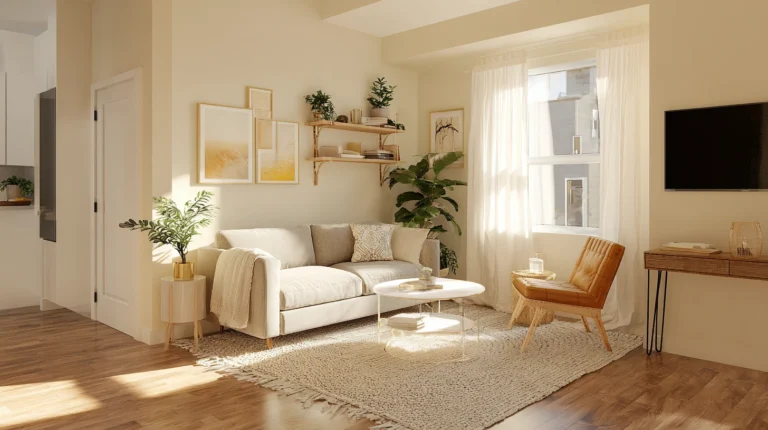
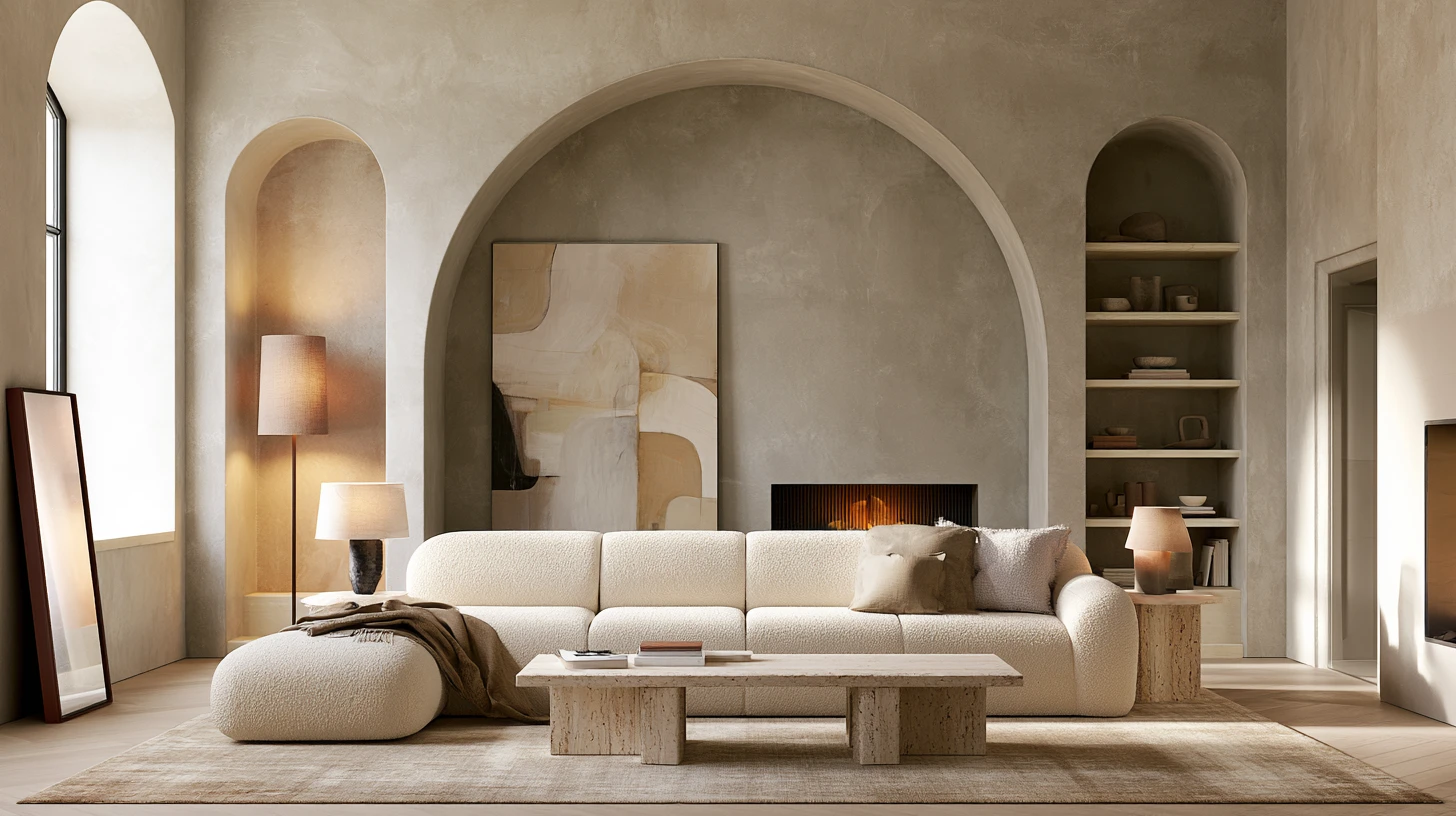
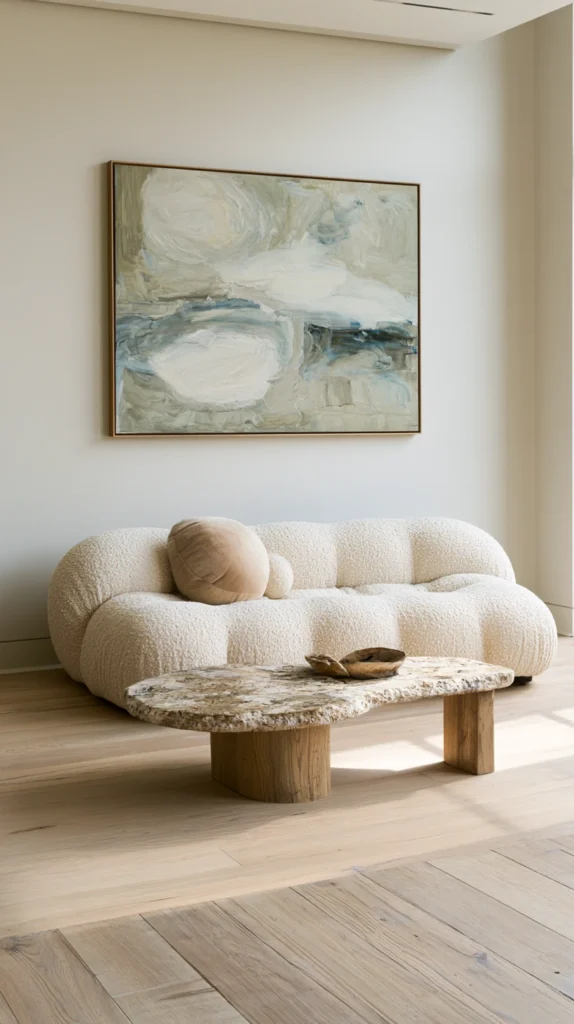
Boucle fabric — the looped, textural weave that has dominated high-end interior photography for several years — remains the most saved sofa aesthetic on Pinterest in 2026. The combination of the soft, tactile surface, the warm cream or oatmeal tone of most boucle pieces, and the curved, organic sofa forms it is most commonly applied to creates an immediate visual warmth that photographs exceptionally well and performs in a real living room with equal success.
Entry-level boucle sofas in a two-seat or small three-seat format cost $400–$900. Mid-range versions with better frame construction and denser boucle weave run $900–$1,500. High-end versions cost $1,500–$2,000 and above. Position the boucle sofa as the room’s primary focal point with a low-profile coffee table in natural timber or travertine in front of it and a single large-scale artwork behind it — the combination is the most consistently reproduced modern living room arrangement in current editorial interior photography.
Style tip: Keep every other textile in the room in a complementary calm tone when using a boucle sofa as the statement piece. Boucle’s visual richness comes from its texture rather than its colour — adding competing textures or colours in the surrounding cushions, throws, and rugs dilutes the textural quality that makes boucle so specifically compelling. One texture as the dominant note, with everything else in a supporting role, is the principle that makes the boucle sofa arrangement look as curated in a real home as it does in its Pinterest original.
2. Arched Doorways and Curved Architectural Details
Budget: $100 – $800
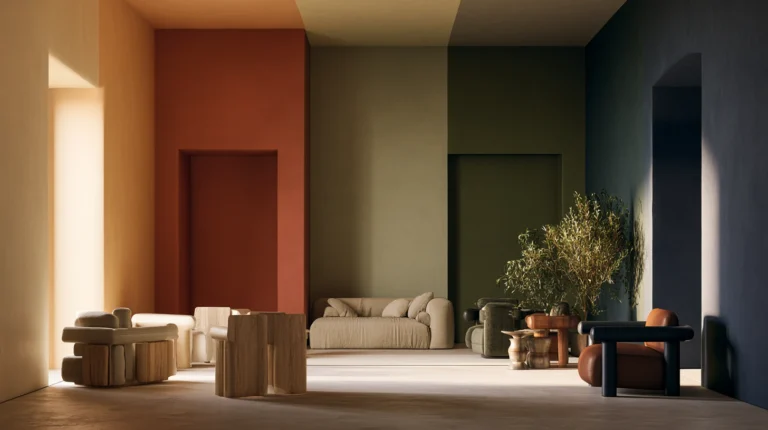
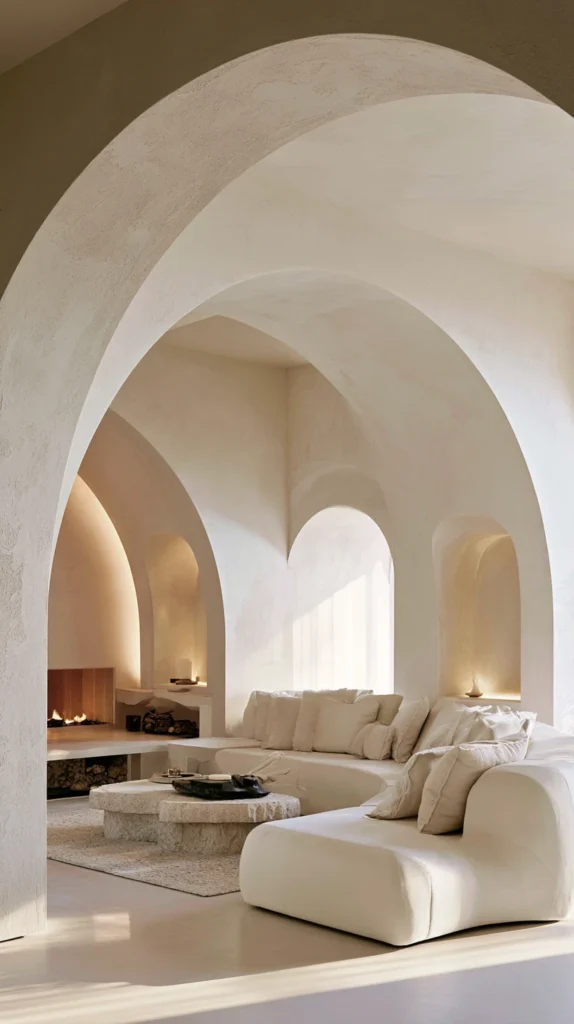
Arched doorways, curved alcoves, and rounded architectural details are among the most saved interior design images of 2026 — the soft arc of a plastered arch against a plain wall has become one of the most recognised signatures of the contemporary organic interior aesthetic. Whether part of the original building or added through renovation, curved architectural details give a living room a warmth and visual interest that right-angle construction cannot achieve at the same cost.
A simple plasterboard arch over an internal doorway costs $150–$400 in materials and a weekend of work for a competent DIYer. A half-arch alcove added to a chimney breast recess costs $200–$600. A curved plaster detail at the junction of wall and ceiling — the coved cornice updated — costs $100–$300 per room. None of these requires structural work and each one transforms the visual character of the room with a detail that photographs as significantly more expensive and more designed than the material cost alone suggests.
Style tip: Paint an added arch or curved architectural detail in the same colour as the surrounding wall rather than in white or a contrasting tone. A monochromatic arch — wall colour and arch colour identical — reads as a sophisticated architectural detail. A white arch on a coloured wall reads as a decorative addition. The distinction between the two is entirely determined by the paint decision and the architectural quality of the monochromatic treatment is available at zero additional cost above the white alternative.
3. A Gallery Wall of Mixed Frames and Art
Budget: $50 – $300
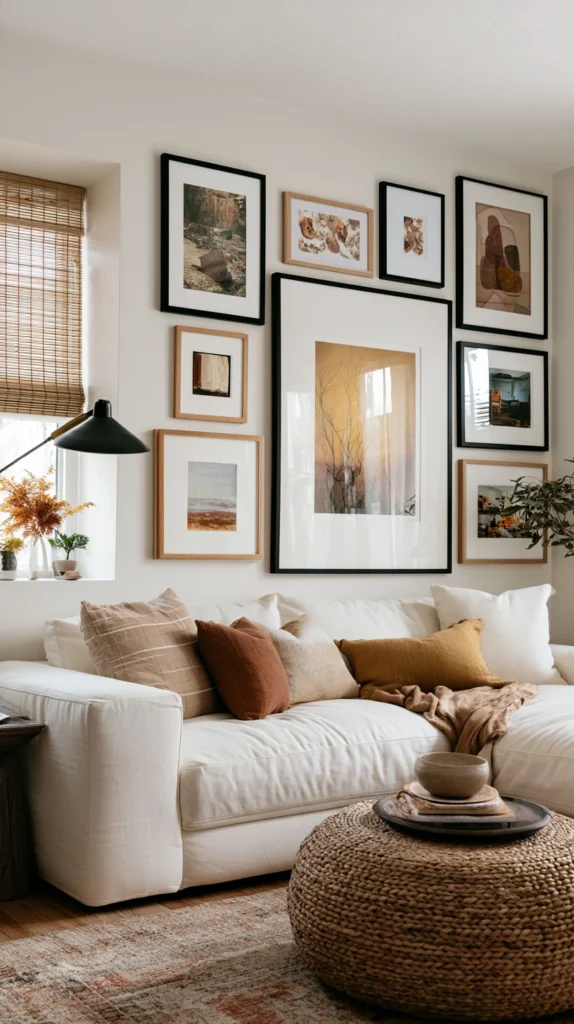
The gallery wall continues to generate enormous Pinterest save volumes in 2026 — but the aesthetic has matured significantly from the earlier scatter-of-frames approach toward something more considered and more specifically edited. The gallery walls being saved most in 2026 are those with a clear underlying logic: all frames in one finish (all black, all natural timber, all antique gold), artwork in a consistent colour story, and a clear compositional centre around which the other pieces are arranged.
A gallery wall of five to seven prints in matching black frames costs $50–$150 in frames plus the cost of the prints themselves — which can be as low as $0 for downloadable art printed at home or as high as $200 for original prints from independent artists. A grouping of seven pieces in an asymmetric arrangement with the largest piece off-centre at the top creates the most consistently admired gallery wall composition. Lay the arrangement on the floor before committing any nails to the wall.
Style tip: Include one oversized piece in the gallery wall rather than creating an arrangement of similarly sized frames. One piece significantly larger than the others — at least double the size of the next largest — creates a compositional anchor that gives the whole arrangement a clear hierarchy and visual stability. A gallery wall of identically sized pieces has a democratic flatness that reads as assembled rather than composed. The oversized anchor piece is the editorial decision that makes the difference.
4. The Japandi Shelf Arrangement
Budget: $50 – $250
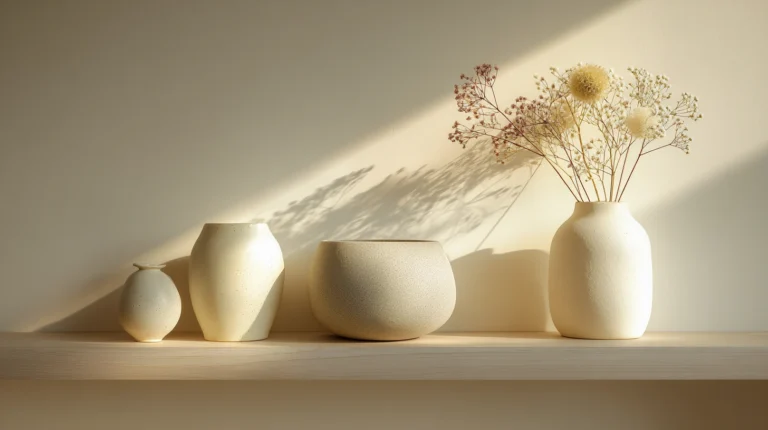
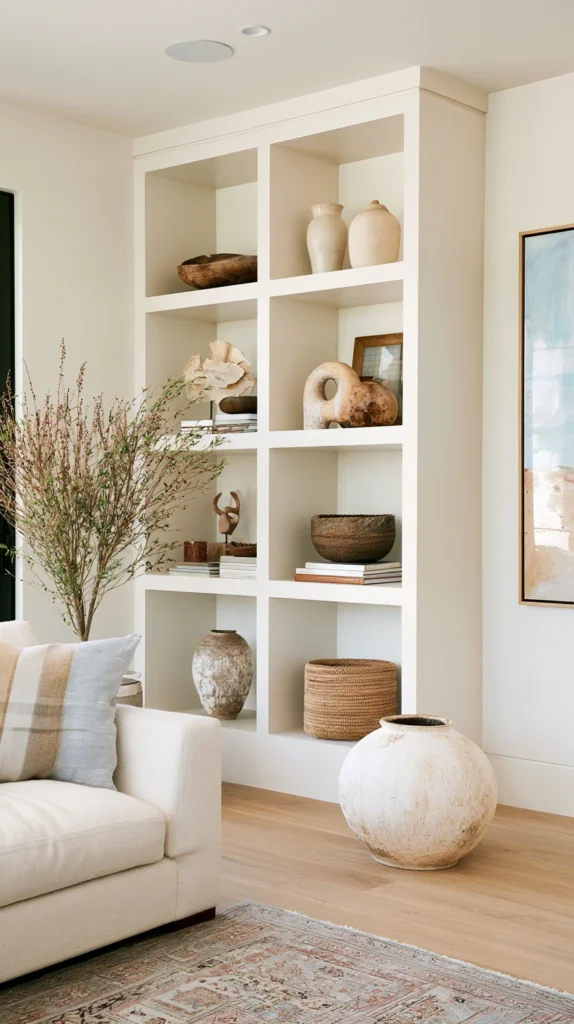
Japandi — the Japanese-Scandinavian aesthetic that combines minimalist restraint with natural warmth — has become the most consistently saved shelf styling approach in 2026. The principle is radical editing: three to five objects on a shelf rather than fifteen, each object in a natural material, each given enough surrounding space that it can be seen individually rather than as part of a crowd. The Japandi shelf looks like it has been curated by someone who has thought carefully about every object rather than filled by someone who simply has a lot of things.
A Japandi shelf arrangement uses: one ceramic vessel in matte white or warm clay ($15–$40), one small sculptural object in natural stone or timber ($10–$30), one dried botanical element — a stem of pampas grass, a branch, or dried flowers in a simple vessel ($5–$20), and one book or small stack of two, spine-inward for a clean end surface ($0 — use existing books). Empty space accounts for at least 40 percent of the shelf surface. This 40 percent empty rule is the Japandi principle that most directly distinguishes its shelf aesthetic from any other styling approach.
Style tip: Arrange the three to five objects in a Japandi shelf display at varying heights — one tall, one medium, one low — rather than at the same height across the shelf surface. Varying object heights create a skyline profile to the arrangement that reads clearly from across the room, while objects at a consistent height create a flat, undifferentiated surface regardless of the quality of the individual pieces. Height variation is the compositional principle that gives any shelf arrangement visual interest at a distance.
5. Limewash Walls
Budget: $80 – $250 per room in materials
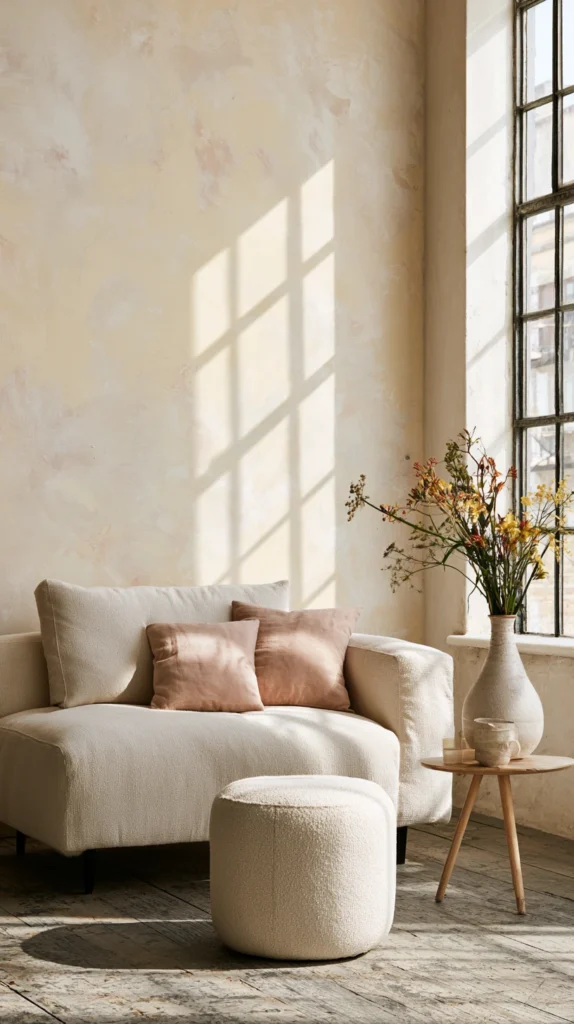
Limewash paint — the ancient technique of applying thinned lime paint in multiple translucent layers to create a textured, slightly uneven surface with extraordinary depth — is the most saved wall finish in 2026 for the way it transforms a flat wall into a surface that appears to have both age and substance. The mottled, cloud-like variation of a limewash surface changes character with the light through the day in a way that flat emulsion never approaches, and it produces the closest approximation to old European plaster available through a DIY paint application.
Proprietary limewash paint products — Portola Paints, Farrow and Ball Limewash, Annie Sloan Wall Paint applied in the limewash technique — cost $60–$120 per litre and cover approximately 8–12 square metres in a two-coat application. Application requires a wide brush and an irregular, overlapping stroke technique — the method is straightforward and genuinely forgiving, and the slightly uneven result produced by first attempts is virtually indistinguishable from an expert application because the aesthetic value is in the variation rather than the uniformity.
Style tip: Apply limewash in the colour that is 20–30 percent darker than the final intended tone — limewash dries significantly lighter than it applies wet, and the characteristic clouding and variation of the finish only reveals itself fully once the paint is completely dry. Test the dried result on a sample board rather than directly on the wall to assess the final colour before committing to a full room — the wet-to-dry colour shift of limewash is larger than for any other paint type and genuinely surprising if encountered for the first time on a finished wall.
6. The Oversized Floor Mirror
Budget: $80 – $400
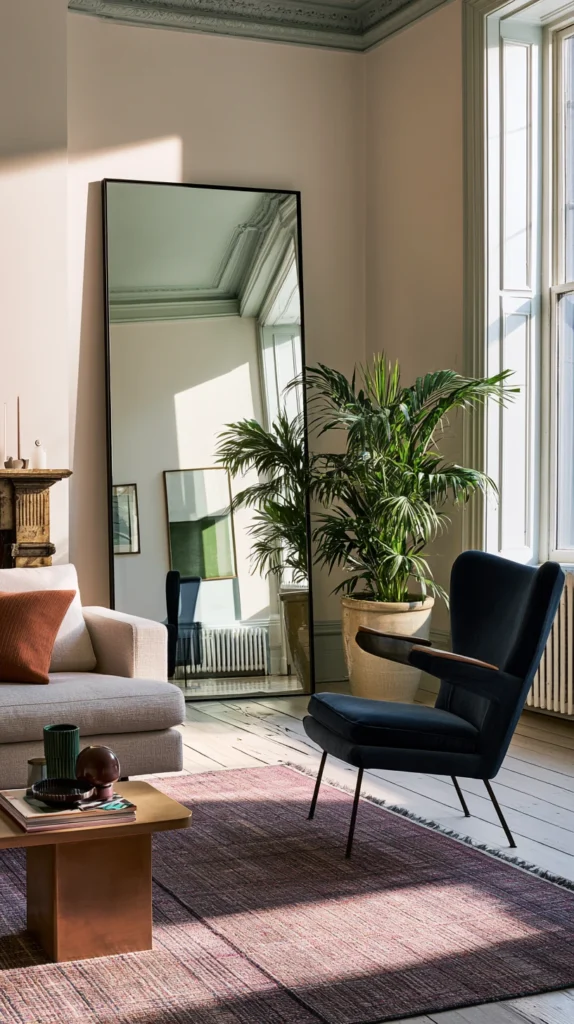
A full-length mirror leaned against the living room wall — in a simple timber, cane, rattan, or architectural frame — is among the most consistently saved living room styling ideas on Pinterest for the way it simultaneously doubles the perceived size of the room, bounces natural light into darker corners, and introduces a reflective surface that adds visual interest to a plain wall without the permanence of wall-mounted art. Leaning rather than hanging is the specific styling choice that makes this idea feel contemporary rather than functional.
A large floor mirror of 160–180 cm height in a simple rattan or timber frame costs $80–$200 from homeware retailers. An architectural plaster or ornate gold-leaf frame version runs $200–$400. Position against the wall perpendicular to the main window rather than directly facing it — a mirror facing a window reflects the window itself and creates a flat rectangle of light rather than reflecting the interesting living room space that creates the spatial expansion effect. Against the perpendicular wall the mirror captures and reflects the full depth of the room.
Style tip: Lean the oversized floor mirror at a very slight forward angle — 2 to 3 degrees — rather than perfectly vertical against the wall. A mirror leaned very slightly forward reflects the floor and lower room elements rather than the ceiling, which creates a more flattering and more spatially effective reflection of the living room interior. A perfectly vertical mirror against a wall reflects primarily the ceiling and upper walls — the least interesting elements of most rooms — rather than the furniture, plants, and objects at floor and mid-height that make the room worth reflecting.
7. Mixed Metals Done Deliberately
Budget: $50 – $300
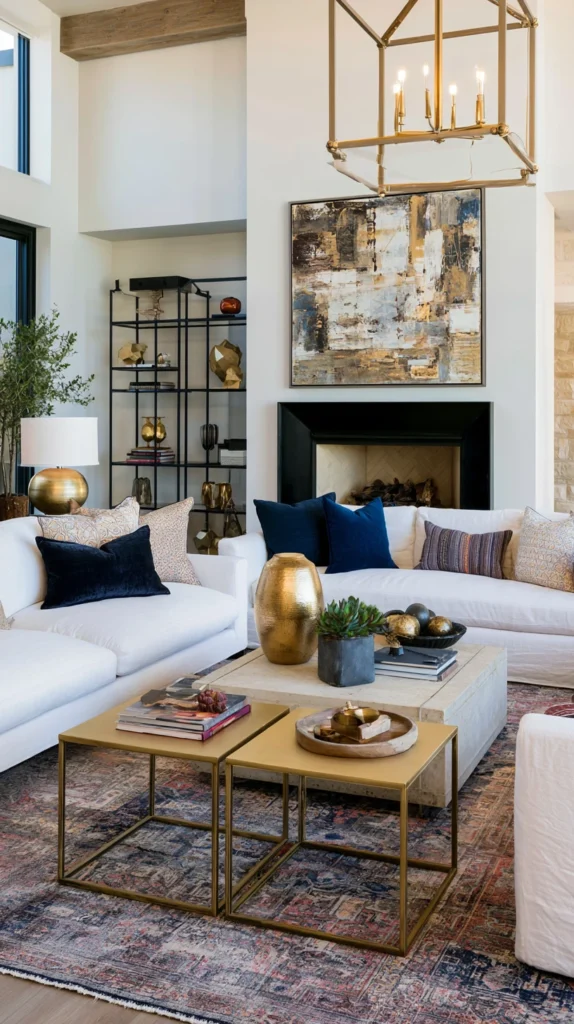
Mixing metal finishes within a single living room — combining brushed brass, antique bronze, and warm gunmetal rather than insisting on a single consistent metal throughout — is the approach that the most admired modern interiors in 2026 all share. The key word is deliberately: mixed metals look curated when the combination has a clear logic (all warm tones, or all aged and patinated finishes) and assembled when the combination is random. The distinction between the two is entirely in the intention behind the selection.
A deliberate warm metal mix might combine a brushed brass floor lamp ($80–$200), antique bronze picture frames ($15–$40 each), a warm gold cushion with metallic thread ($25–$50), and gunmetal candle holders ($15–$30 a set). All four metals are different in finish but share the underlying quality of warmth — none are cool, none are polished to a mirror finish, and all have a slightly aged or textured quality that relates them visually despite their surface differences.
Style tip: Limit the metal mix to three finishes maximum in a single room — two primary metals that appear in larger, more prominent objects and one accent metal that appears in smaller, more incidental pieces. More than three metal finishes in a room becomes genuinely confused rather than intentionally mixed. Two with one accent is the composition that reads as curated. Four or more reads as uncategorised, which is the quality that mixed metals are specifically trying to avoid.
8. The Statement Ceiling
Budget: $30 – $200 for paint; $200 – $800 for wallpaper
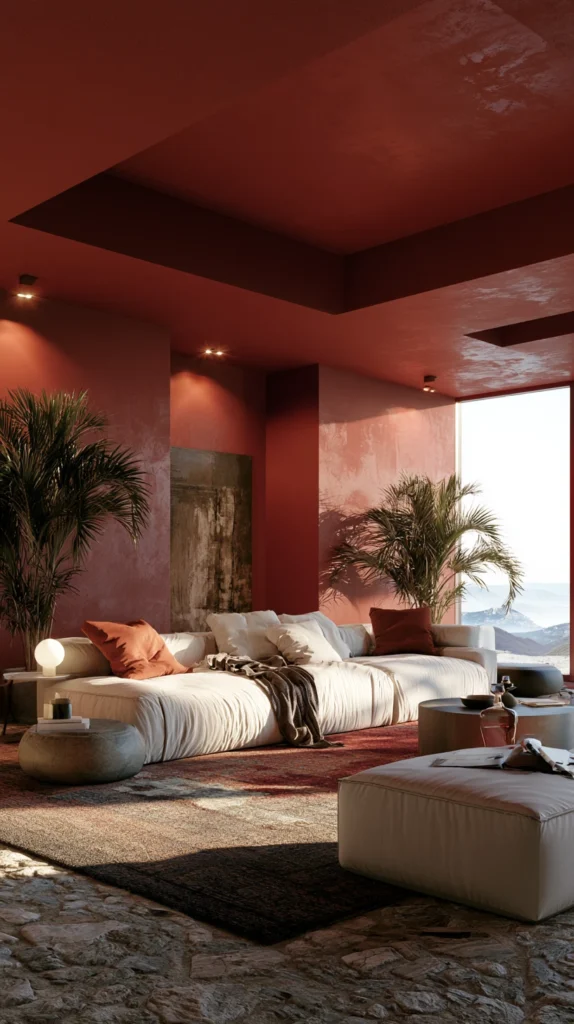
The ceiling — the most consistently ignored surface in most living rooms — is becoming one of the most saved design decisions on Pinterest as more designers and homeowners recognise its potential as a colour, texture, and pattern surface. A ceiling painted in the same deep tone as the walls, wallpapered in a botanical or geometric print, or finished in a warm metallic creates a room of immediate visual interest and confidence that four identically treated walls and a white ceiling never produce regardless of how well they are executed.
Painting the ceiling in the same colour as the walls costs no more than painting the walls alone — the same tin of paint, the same application technique, the same weekend of work — and produces one of the most dramatically transformed rooms available from a single decorating decision. A ceiling wallpapered in a bold botanical print ($40–$120 per roll for the ceiling area of a standard living room) creates a different and more complex effect while requiring the same commitment to confidence that makes any statement ceiling work in the rooms where it is attempted.
Style tip: Paint the ceiling in the same colour as the walls but in a matt finish while the walls are in eggshell. The different sheens on the same colour create a subtle variation between ceiling and wall that preserves a sense of spatial definition without the visual break of a different colour — producing a seamlessly wrapped room that feels enveloping and sophisticated rather than simply dark. The sheen variation is invisible until someone tries to identify where the wall ends and the ceiling begins and finds they cannot do so easily.
9. A Single Large-Scale Plant
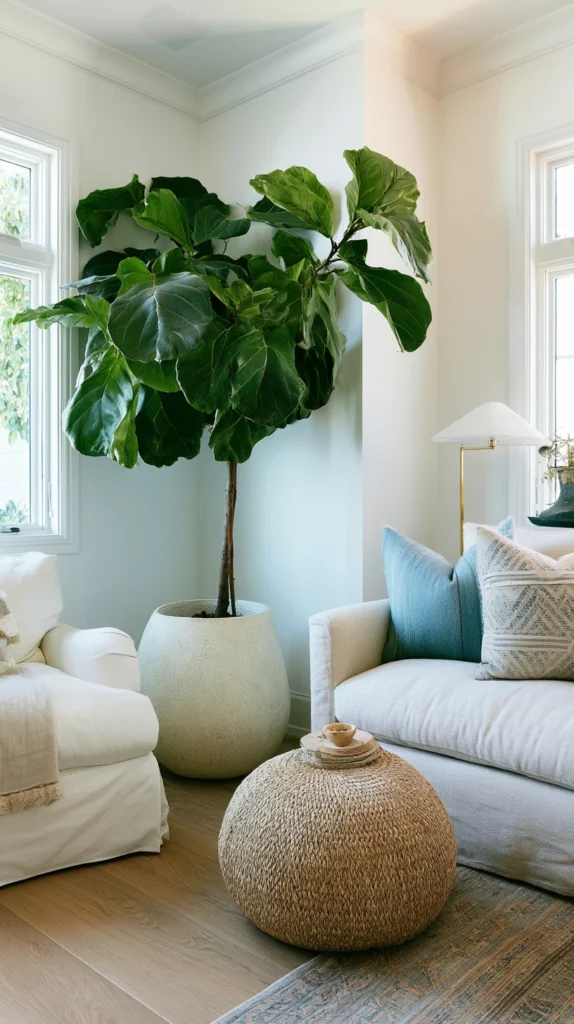
Budget: $30 – $200
One large plant — a fiddle leaf fig, a monstera, a bird of paradise, or a large olive tree — placed in a generous ceramic or woven pot in a prominent living room corner is the most consistently saved biophilic design element in 2026 Pinterest interior images. The scale of the plant — ideally reaching 150–180 cm or above — is the quality that makes it work as a design element rather than simply as a houseplant: a large plant has presence in the same way that a sculpture or a tall lamp has presence, anchoring the corner and giving the room a vertical element at human scale.
A large fiddle leaf fig (Ficus lyrata) in a 25 cm nursery pot costs $40–$100. A large monstera deliciosa runs $30–$80. A bird of paradise (Strelitzia) costs $50–$150. Transfer to a large ceramic, concrete, or woven rattan pot of 35–45 cm diameter — the pot is as important to the visual quality of the feature as the plant itself. Position in a corner that receives indirect bright light for most of the day and at least 60 cm from any radiator or heat source that would stress the plant through the winter months.
Style tip: Use one large plant rather than three medium ones for the same corner position. A single large plant at 160 cm reads as a deliberate design feature with the visual authority of a piece of furniture. Three medium plants in the same corner create a collection that reads as a grouping rather than a statement. The hierarchy of one large, authoritative plant in the most prominent position is one of the most reliable styling principles available for the living room — singular confidence always outperforms plural hedging in a composition that aims for maximum visual impact.
10. Built-In Shelving Around a Fireplace
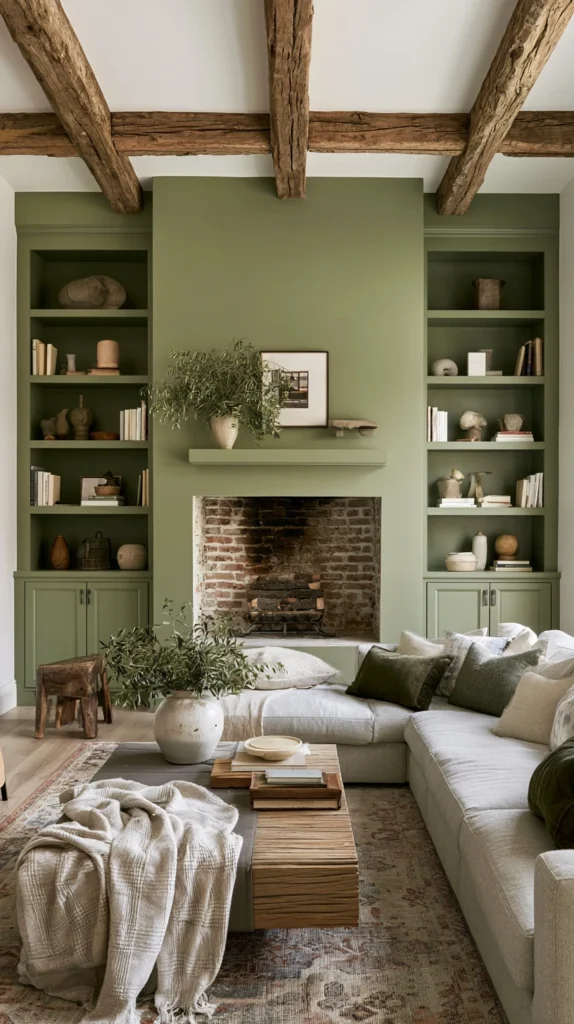
Budget: $200 – $1,500
Built-in shelving flanking a fireplace or chimney breast — painted the same colour as the walls to create a seamlessly integrated alcove treatment — is the most universally admired living room architectural feature in 2026 Pinterest saves. The combination of storage, display surface, and architectural detail in a single seamlessly painted installation creates the quality of a room that has been designed from the building outward rather than furnished from the catalogue inward. It is the feature that makes every estate agent and every house viewer stop in the doorway.
A professional built-in alcove shelving installation costs $600–$1,500 depending on the complexity and the carpenter. A well-executed DIY version in plywood or MDF costs $200–$500 in materials for a pair of standard alcoves. Paint everything — shelves, uprights, interior walls, and the surrounding skirting — in the same wall colour for the seamless, intentional quality that makes built-in shelving look genuinely architectural rather than fitted furniture. A contrasting painted interior to the alcove — a darker tone than the surrounding wall — creates depth and frames the objects on the shelves more dramatically than a uniform colour throughout.
Style tip: Style built-in living room shelves with a maximum of one-third books to two-thirds objects and negative space — the shelf arrangement that reads as most considered always has more air around individual objects than a standard bookshelf display produces. Group objects in odd numbers, vary heights consistently, and reserve at least two shelf lengths as entirely empty. The empty shelf is not wasted space in a built-in display — it is the visual breathing room that makes every occupied shelf appear more deliberately curated than it would beside another occupied shelf.
11. Warm Ambient Lighting Layers
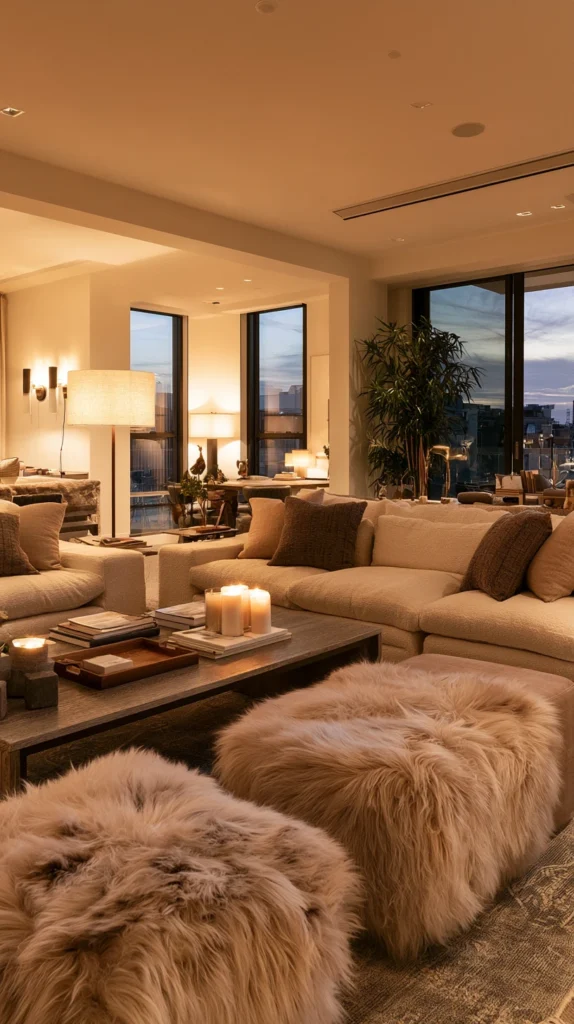
Budget: $80 – $400
The living rooms being saved most on Pinterest in 2026 are almost universally those lit by multiple warm light sources at different heights rather than by a single central overhead fitting. The layered lighting approach — a floor lamp, two table lamps, a wall light, and candles — at 2700K or below creates the warm, golden, specifically residential atmosphere that no single overhead light source produces regardless of its dimmer setting or bulb quality. It is the most impactful atmospheric upgrade available for any living room that currently relies on one central light.
A floor lamp in a natural fibre shade costs $80–$200. Two matching ceramic table lamps run $40–$100 each. A simple wall light costs $40–$100 plus installation. Six candles in varied ceramic or glass holders cost $20–$50. All five light source types switched on simultaneously at their lowest practical levels produce the living room atmosphere that generates the most saves and the most aspirational responses on every interior design platform — the room that people imagine spending an entire evening in without ever wanting to leave it.
Style tip: Photograph the living room under different lighting conditions — daylight only, overhead only, layered lamps only, and candles only — before making any lighting purchases. The photographs reveal the specific quality of each condition in a way that standing in the room does not, because the camera captures light quality more objectively than the eye does. The photograph of the layered lamp condition invariably shows why it consistently outperforms every alternative and provides a clear target to work toward in building the room’s lighting scheme.
12. Textured Walls — Plaster, Venetian, or Render
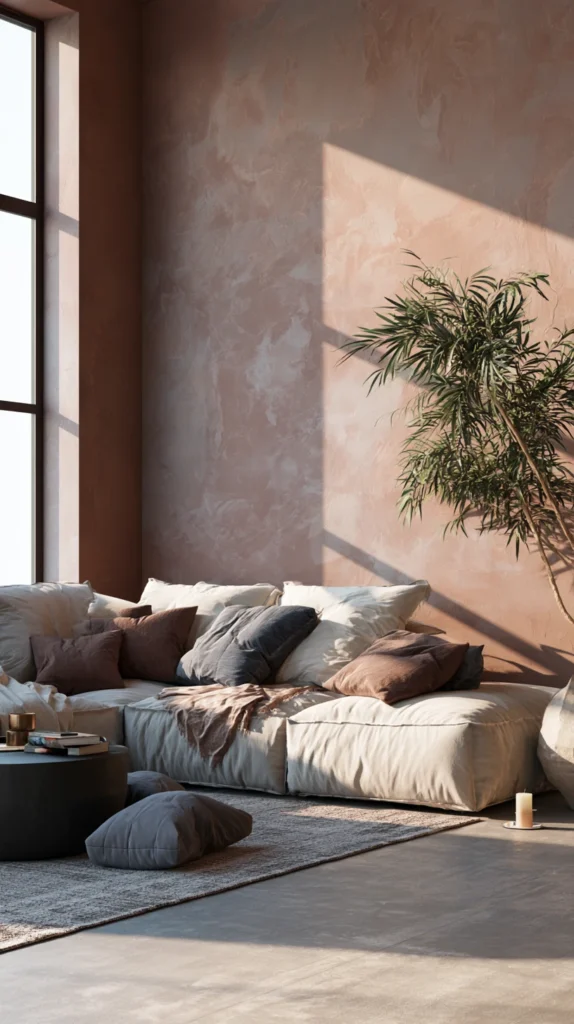
Budget: $100 – $600 per wall
Textured wall finishes — microcement, Venetian plaster, tadelakt, or simple sand render — are among the most aspirational living room details saved on Pinterest in 2026. The depth and richness that a textured wall surface provides in both natural and artificial light is something that no flat painted surface replicates regardless of the quality of the paint or the care of the application. A textured wall changes character throughout the day — appearing almost flat in direct light and dramatically three-dimensional in raking or low-angle light.
Professional Venetian plaster application costs $50–$150 per square metre. Microcement costs $80–$200 per square metre applied. A DIY sand render or textured plaster effect using bagged finishing products costs $15–$30 per square metre in materials with a technique learning curve of one to two test panels before the finished wall. Applied to a single feature wall behind the main sofa or fireplace, a textured finish creates one of the most specifically impressive and most enduringly interesting wall surfaces available in any living room interior at any budget level.
Style tip: Apply any textured wall finish to one wall only — the feature wall behind the main sofa or fireplace — rather than to all four walls simultaneously. One textured wall reads as a deliberate architectural decision that the room is organised around. Four textured walls read as a treatment that was applied to the whole room rather than chosen for a specific purpose. The restraint of the single textured wall is what makes it an interior design feature rather than a finish applied uniformly across the available surface.
13. A Low-Slung Furniture Arrangement
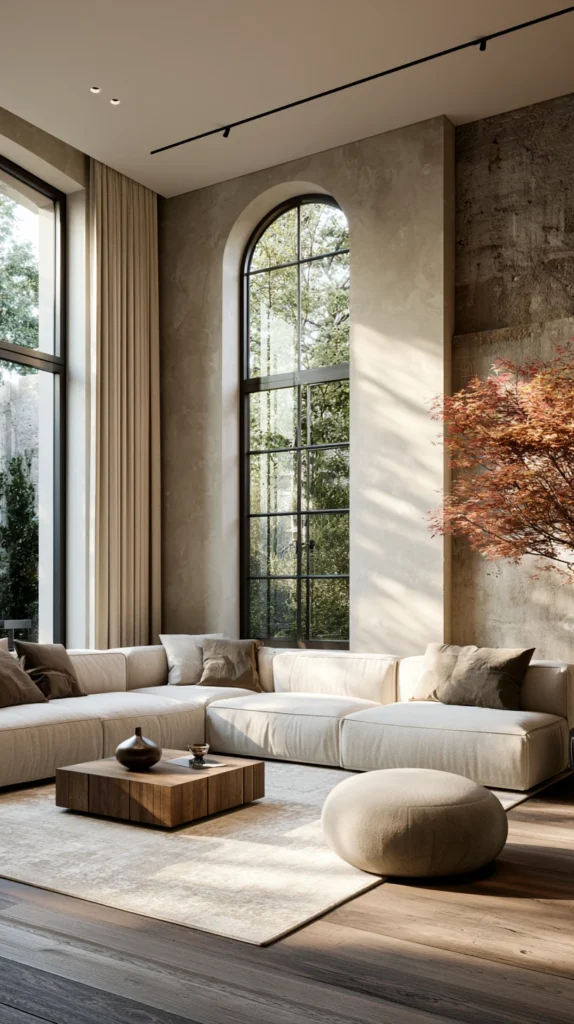
Budget: $200 – $1,500
Low-profile furniture — a sofa with a seat height of 40–42 cm rather than the standard 45–48 cm, a coffee table of 35–40 cm height, floor cushions and low poufs as additional seating — creates a living room aesthetic of relaxed, horizontal spaciousness that references both Japanese and mid-century Californian interior traditions. The low arrangement makes ceiling heights appear greater, creates an impression of generous floor area, and produces a quality of unhurried calm that higher furniture proportions rarely achieve in the same space.
Low-profile modular sofas in a sectional configuration cost $600–$1,500. Low timber-leg coffee tables run $120–$400. Floor poufs and cushions add $30–$80 each as additional flexible seating. The low arrangement works best in rooms with at least 2.5 metre ceiling heights and at least 15 square metres of floor area — in very small rooms with standard ceiling heights, low furniture can make the room appear compressed rather than spacious, which is the opposite of the effect the arrangement is designed to produce.
Style tip: Maintain a consistent furniture height throughout the low arrangement rather than mixing low-profile pieces with standard-height furniture in the same seating zone. A low sofa beside a standard-height armchair creates a mismatched, unresolved composition that reads as furniture acquired without a design logic rather than a considered interior arrangement. Commit to the low-profile principle throughout the seating zone — and use any standard-height pieces elsewhere in the room where their proportions work independently of the low seating arrangement.
14. The Cozy Reading Corner
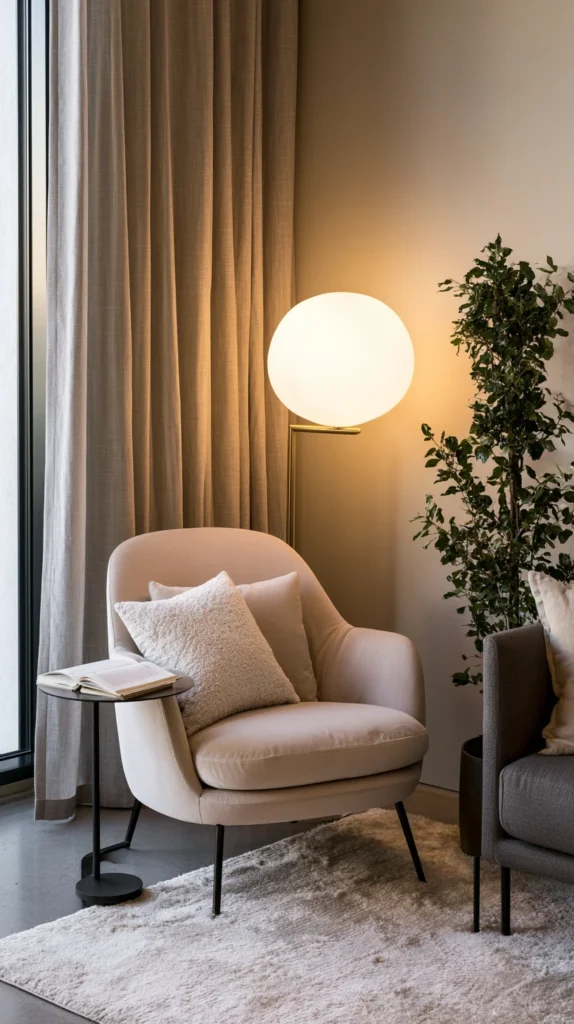
Budget: $150 – $600
A defined reading corner within the living room — a single comfortable chair in a naturally lit position, a floor lamp positioned over the shoulder, a small side table for a drink, and a low bookshelf within arm’s reach — is one of the most consistently saved living room ideas on Pinterest in 2026 because it represents the specific quality of home that most people genuinely aspire to: a space designed for the particular pleasures of reading, thinking, and being quietly alone within a shared household.
A good reading chair in a natural fabric — linen, boucle, or a quality cotton — costs $200–$600. A floor lamp positioned behind and beside the chair costs $80–$200. A small side table runs $40–$100. A low open bookshelf costs $60–$150. The reading corner does not need to be a designed alcove or a built-in nook to work — a chair in the right position, with the right light, and with books nearby creates the reading corner in any living room regardless of its architecture. The composition is the decision, not the construction.
Style tip: Position the reading chair at 45 degrees to the main wall rather than flat against it or facing directly into the room. A chair angled at 45 degrees creates a subtle sense of enclosure from the corner behind it while maintaining an open, inviting orientation toward the room — the balance between sheltered and open that makes a reading position feel genuinely private without creating the slightly separated quality of a chair pushed into a corner facing away from the room.
The living room ideas that Pinterest users save in the millions are always the ones that answer the same underlying question: what does it feel like to be in that room? The rooms that stop the scroll are never simply well decorated — they communicate a specific quality of atmosphere, a particular way of living, and a set of small, considered decisions that together produce something that feels genuinely better than what most people currently have. That is always achievable, at every budget, in any room. It requires decisions, not expenditure.
Choose two or three ideas from this list that address the most specific gap between the living room you currently have and the one you want. Implement them in the right order — the foundational decisions first, the styling details after — and let each completed step show you clearly what the room needs next. The most saved living rooms are always the result of a clear sequence of right decisions rather than a single large investment.