15 Elegant Dining Room Lighting Ideas Designers Love
The dining room is the room where lighting matters most. Every other room in the house has competing activities and competing lighting requirements — the kitchen needs task light, the bedroom needs sleep-friendly dimness, the living room needs flexibility.
The dining room needs one thing: the quality of light that makes everyone at the table look better than they do anywhere else in the house and makes the food on the table look as good as it tastes. That quality of light is always warm, always directed toward the table, and always on a dimmer.
The fifteen ideas below cover every approach to dining room lighting — from the single statement pendant to the fully layered multi-source scheme — with the specific design principles that make each one work. Costs and a practical tip are included throughout.
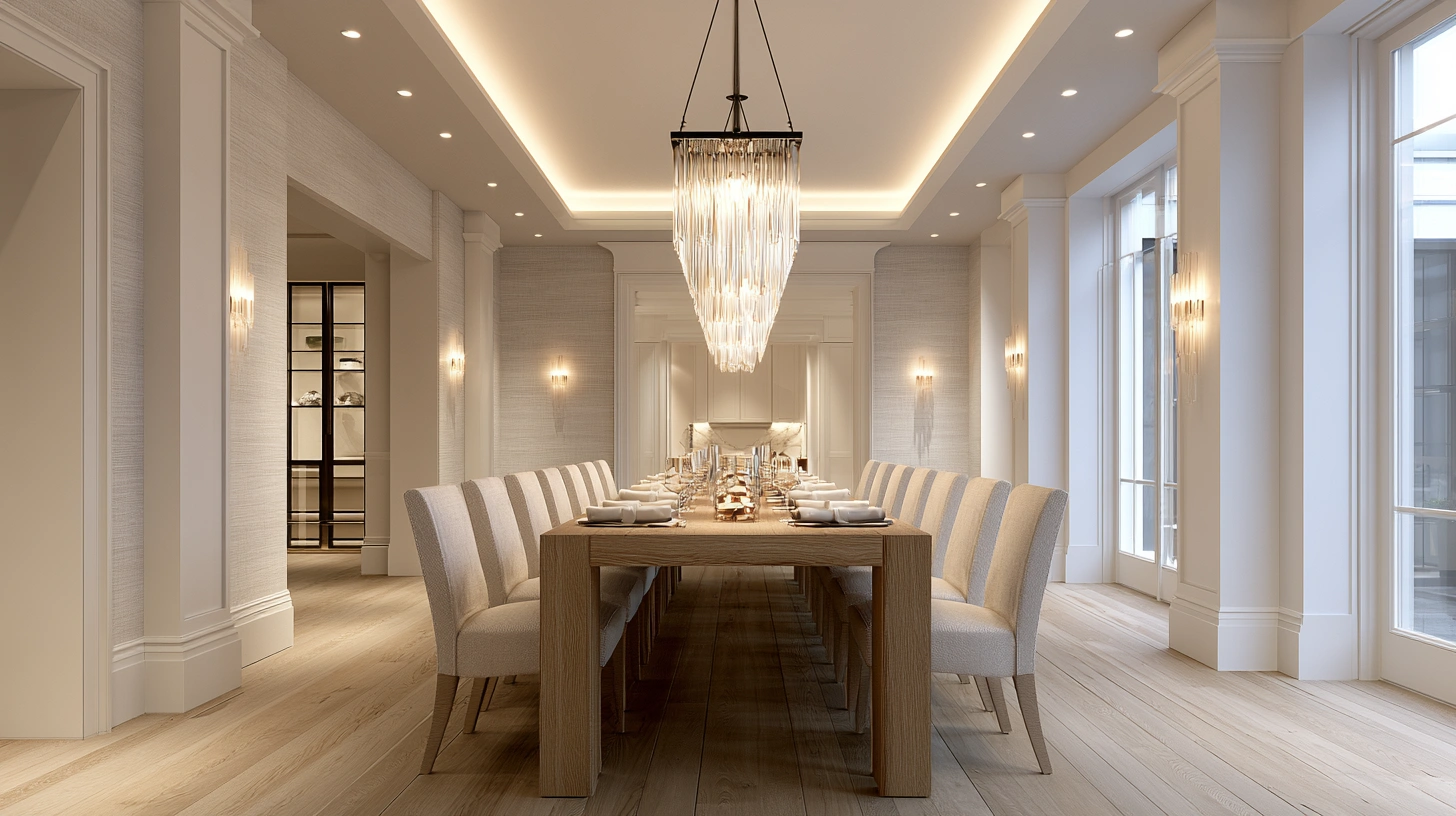
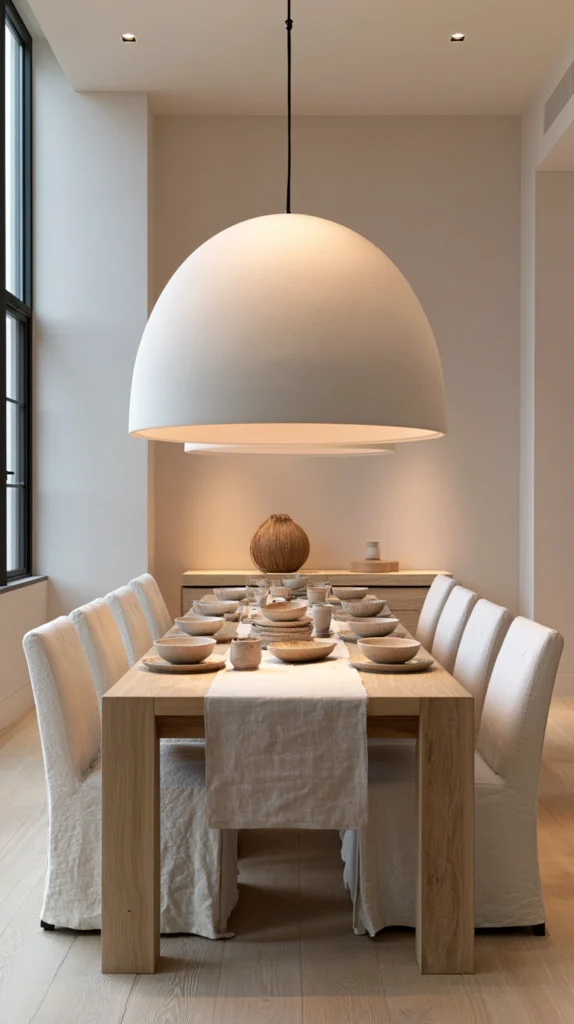
1. One Oversized Pendant Centred Over the Table
Budget: $150 – $1,200
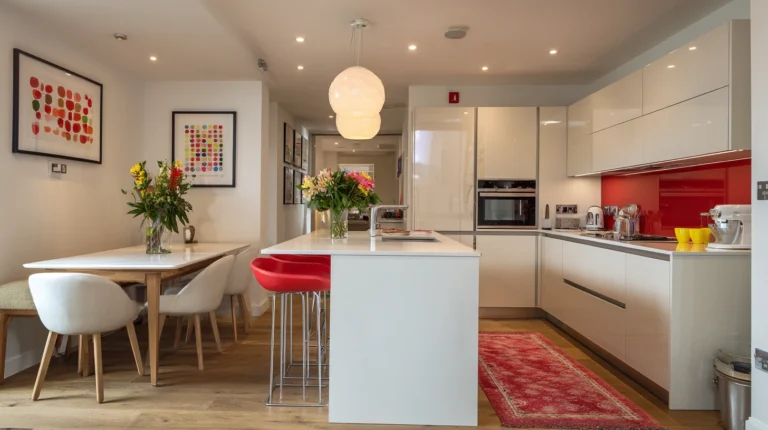
A single generously sized pendant light hung directly above the centre of the dining table is the most universally appropriate and most consistently admired dining room lighting approach available. The pendant defines the table as the room’s primary destination, creates a warm pool of light specifically at the place where people gather, and provides the sculptural daytime interest of a beautiful object hanging in the room’s most prominent position.
The pendant diameter should be at least 40 percent of the table width — a 90 cm wide table warrants a pendant of 36 cm diameter minimum. An oversized pendant of 60–80 cm diameter makes the most confident statement. Hang at 70–80 cm above the table surface — close enough to create intimacy without obstructing sight lines across the table for anyone seated. A rattan pendant costs $120–$300. A handblown glass version runs $300–$800. A statement plaster or ceramic pendant costs $250–$700.
Lighting tip: Always install a dining room pendant on a dimmer — this is non-negotiable regardless of the pendant’s design quality or cost. A pendant at full output during a dinner party produces the flat, revealing light of a restaurant kitchen rather than the warm, intimate atmosphere of a dining room. The same pendant at 30–40 percent output on a dimmer creates the most flattering and most atmospheric dining light available. Install the dimmer before the pendant, not after.
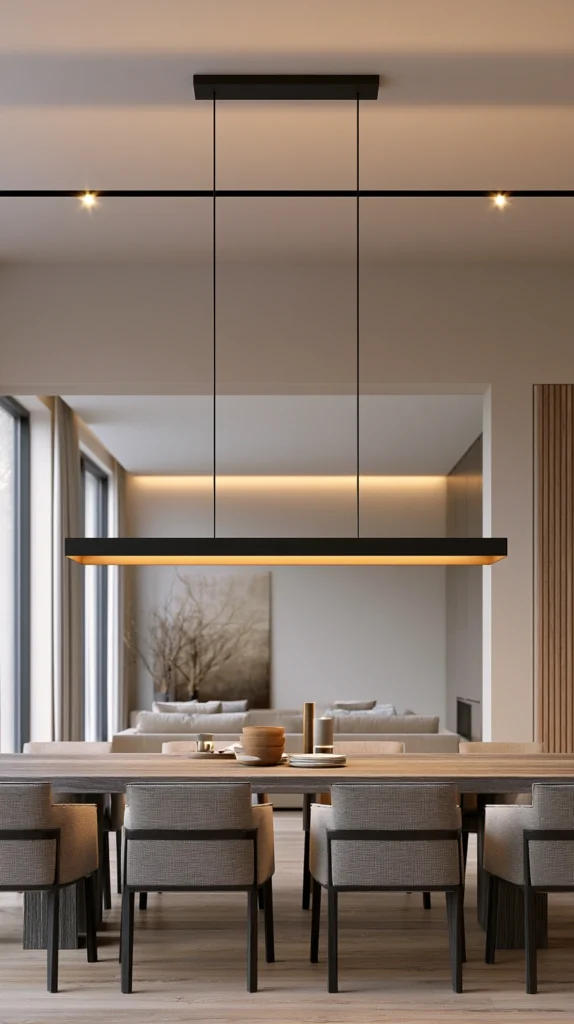
2. A Linear Pendant Over a Rectangular Table
Budget: $200 – $1,500
A rectangular or linear pendant — a fitting that spans a significant length of the table rather than hanging as a single point above its centre — is the most design-conscious and most specifically proportionate lighting approach for a long rectangular dining table. The linear form mirrors the table’s horizontal geometry and creates an even distribution of light along the full table length rather than the graduated falloff from a single central source that leaves both ends of a long table in relative dimness.
A linear industrial-style pendant in steel or brass costs $200–$600. A linear rattan or woven form runs $300–$800. A custom lighting bar with multiple individual pendants on a single track costs $400–$1,200. For a table of 200 cm length, a linear pendant of 100–140 cm length provides the best proportional relationship between fitting and table — long enough to illuminate the full table length without reaching so close to the table ends that the light appears to overhang the seating positions at each end.
Lighting tip: Centre the linear pendant both along the table’s length and across its width — a pendant that is offset to one side of the table, however slightly, is immediately visible as an asymmetric placement from any seated position. Use a plumb line or a tape measure to confirm the pendant is positioned directly above the geometric centre of the table before tightening any ceiling fixings. The centred pendant reads as precise and considered. A slightly off-centre one reads as a measuring error.
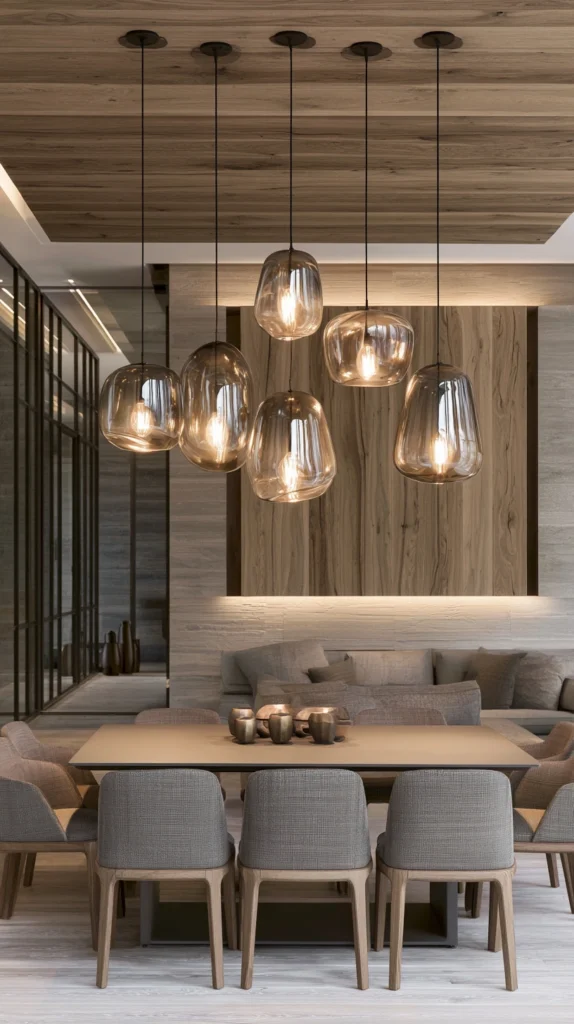
3. A Cluster of Pendants at Different Heights
Budget: $300 – $2,000
A cluster of three, five, or seven pendant lights — all hung from a single ceiling canopy but at slightly different drop lengths, creating a cascading effect above the dining table — produces the most visually dynamic and most specifically decorative dining lighting available. The variation in height between the individual pendants creates a three-dimensional composition above the table that reads as a sculptural chandelier at the scale of multiple individual fittings rather than a single large one.
Individual pendants in a cluster should all be from the same family — the same manufacturer, the same material, or the same form family — at different scales. A cluster of five smoked glass pendants in 15 cm, 20 cm, and 25 cm diameters at heights ranging from 60 to 100 cm above the table costs $400–$1,200 in fittings. A multi-drop ceiling canopy that allows individual cables to be adjusted to different lengths costs $30–$80 and is the technical element that makes the cluster manageable as a single ceiling fixture rather than five independently installed fittings.
Lighting tip: Keep the lowest pendant in the cluster at a minimum of 60 cm above the table surface — lower than this creates a physical obstruction of the sight line between seated diners facing each other across the table. The height variation in the cluster should be expressed upward from this 60 cm minimum rather than downward from a single standard height — the upward variation makes the cluster feel generous and three-dimensional. The downward variation makes the lowest pendants feel too close to the table surface for comfortable use.
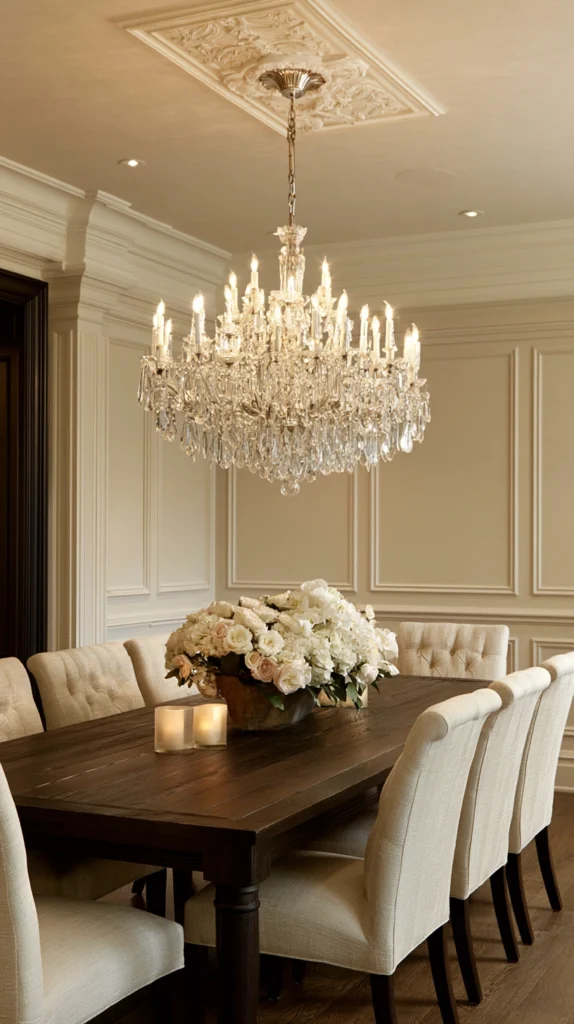
4. A Traditional Chandelier
Budget: $200 – $5,000
A chandelier — the dining room’s oldest and most architecturally authoritative lighting form — creates the most formally dramatic and most specifically occasion-marking dining room atmosphere available. In a traditional, Georgian, or country house dining room a well-chosen chandelier is the single most important element in the room’s character. It communicates that the dining room is a specific kind of room — one where meals are an occasion rather than a routine.
A crystal chandelier in a 60 cm diameter format costs $200–$800. An antique or reproduction brass and glass chandelier runs $300–$1,500. A contemporary reinterpretation in plaster, rattan, or blown glass costs $400–$2,000. Hang at a height that places the lowest point of the chandelier at 70–75 cm above the table surface in a room with a standard 240 cm ceiling. In rooms with higher ceilings, the chandelier can hang proportionally higher while maintaining the visual relationship between the light source and the table that defines the dining room’s functional and atmospheric hierarchy.
Lighting tip: A chandelier with multiple bulb positions produces its most atmospheric light when all bulbs are at 2700K and on a dimmer set to 25–35 percent of full output. A chandelier at full output produces the flat, even illumination of a ceiling light and makes the dining experience feel theatrical rather than intimate. At 30 percent on a dimmer the multiple points of warm light create the distributed, multi-source glow that has made the chandelier the most admired dining room light fitting for three centuries.
5. Concealed Perimeter Uplighting
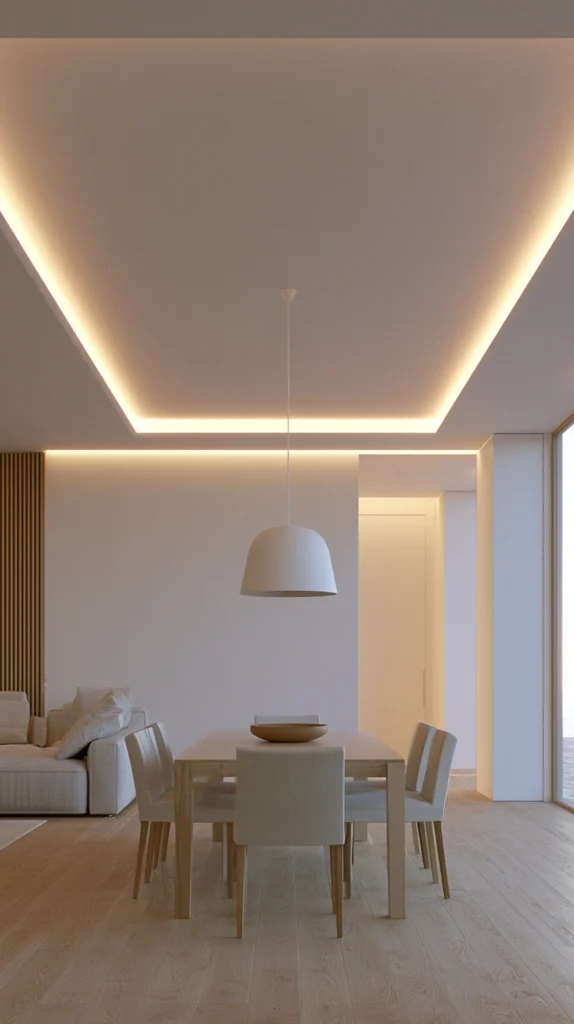
Budget: $200 – $800
LED strip lighting installed in a recessed coving detail or behind a ceiling pelmet around the perimeter of the dining room ceiling — providing indirect upward light that bounces off the ceiling and fills the room with a warm, shadowless ambient glow — creates the most sophisticated and most specifically modern dining room atmospheric light available. Used in combination with a pendant over the table, the perimeter uplighting provides the ambient backdrop that the pendant’s focused table light requires to produce the layered, multi-source light environment that looks best in dining photographs and performs best for actual dinner guests.
LED strip lighting suitable for architectural indirect applications costs $15–$30 per metre in warm white 2700K. A standard dining room perimeter of 14 metres requires $210–$420 in LED strip. A recessed coving detail to house the strip costs $200–$600 in materials and installation. A smart LED strip system that allows the perimeter light level to be controlled independently of the table pendant costs $80–$200 in controller hardware and creates complete atmospheric flexibility for every dining occasion from a weekday family meal to a formal dinner party.
Lighting tip: Set the perimeter uplighting at 15–20 percent of its full output when used in combination with a dining table pendant at 40 percent. The very low perimeter light provides enough ambient fill to prevent the walls from going completely dark — which creates a cave-like quality even in a well-decorated room — without competing with the pendant for visual prominence above the table. The combination of low ambient perimeter light and focused pendant table light is the dining room lighting approach that consistently produces the most admired results in practice.
6. A Sculptural Rattan or Woven Pendant
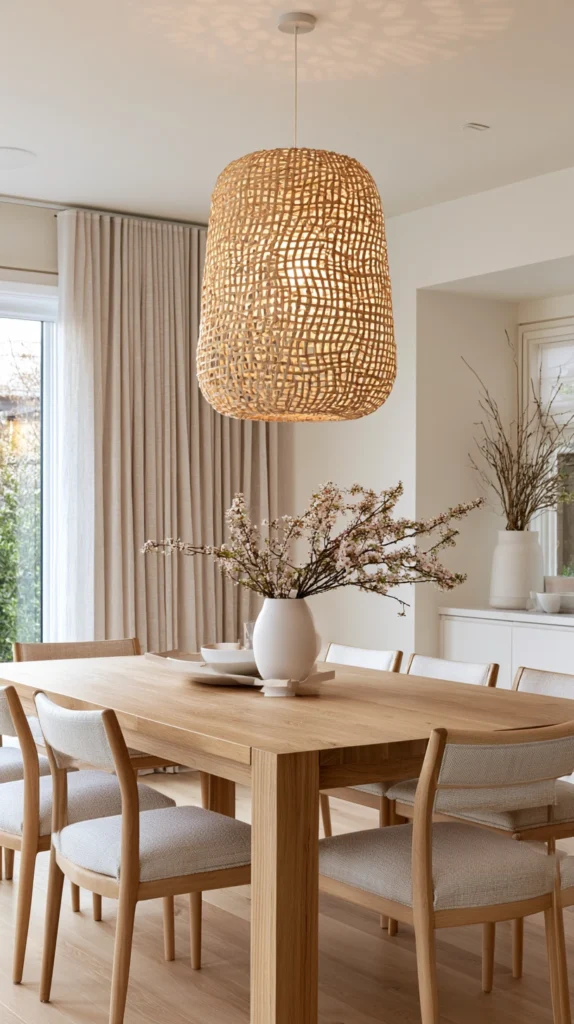
Budget: $100 – $500
A woven rattan, seagrass, or abaca pendant — in a large drum, dome, or organic form — creates one of the most visually warm and most specifically natural dining room light fittings available. The woven material creates a dappled, patterned light effect where the light source inside the shade casts the weave’s pattern onto the ceiling and walls around the fitting, adding textural interest to the room’s light quality that a solid shade of any material cannot produce.
A woven rattan pendant in 50–60 cm diameter costs $100–$250. A large overscale version in 70–80 cm diameter runs $200–$500. The natural fibre material suits coastal, Scandinavian, natural, and bohemian dining room aesthetics equally — its warmth and texture complement every other natural material in the room (timber, linen, ceramic) and create a material vocabulary that reads as consistently considered across the full room interior.
Lighting tip: Use a clear or near-clear bulb inside a woven or open-weave pendant rather than an opaque bulb. The pattern of light that a woven pendant creates on the surrounding ceiling and walls — the quality that makes this fitting so visually distinctive — is produced by the light source being visible through the gaps in the weave. An opaque bulb inside the same shade produces a diffused overall glow without the distinctive patterning. The clear bulb is the specific technical element that creates the woven pendant’s most beautiful light quality.
7. Wall Sconces at Table Height
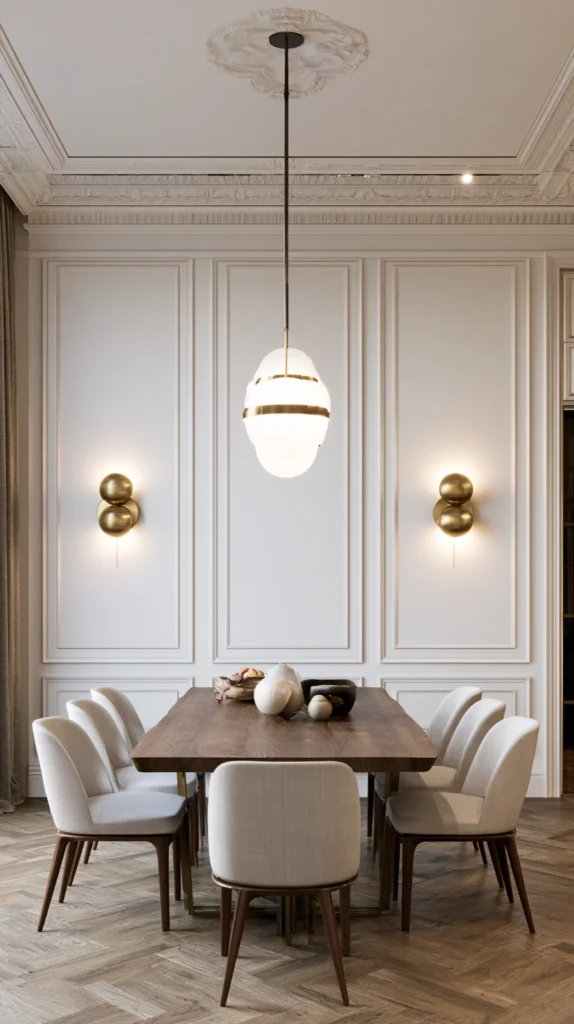
Budget: $60 – $300 per pair
Wall sconces installed on the dining room wall at approximately table height — 100–120 cm from the floor, one on each wall flanking the dining area — provide a warm, directional light source at exactly the level that most flatters the people seated at the table. The side light from sconces at face height produces the most flattering and most atmospheric light available for a dining occasion — equivalent in its flattering effect to the well-placed candlelight that makes every dinner by candlelight feel specifically beautiful.
Simple adjustable wall sconces in brushed brass cost $60–$150 per fitting. Decorative plaster or ceramic sconces run $80–$200 each. Vintage-style swing-arm sconces in antique bronze cost $100–$300 each. Install on a dimmer independent of the main pendant circuit — the ability to adjust wall sconces and pendant separately allows the dining room light to be calibrated precisely for different times of day and different occasions without any combination of the two light levels creating a flat or unflattering overall effect.
Lighting tip: Position wall sconces so their shades sit at eye level when seated — approximately 100–110 cm from the floor for a standard dining chair seat height. Sconces positioned above eye level from the seated position direct their light upward rather than toward the faces of the diners — reducing their flattering effect significantly. Sconces at eye level from the seated position provide the side light at face height that makes every person at the table look their best, which is always the primary functional requirement of dining room lighting.
8. A Mirrored Dining Room With Reflected Candlelight
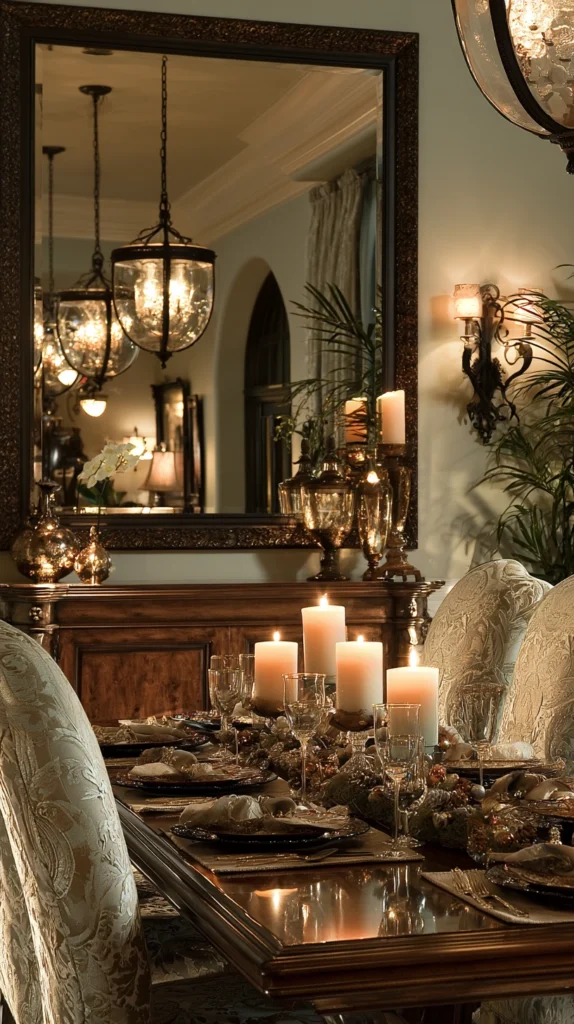
Budget: $80 – $400 for the mirror
A large mirror on the dining room wall — positioned to reflect the pendant light above the table, the candles on the table surface, and the seated diners — doubles the apparent size of the dining room while also creating a reflected light quality that is specifically beautiful in the evening. The candlelight reflected in a large dining room mirror multiplies the number of visible flame points and creates a shimmering, moving light environment that no fixed light source replicates without genuine candles or high-quality LED candle alternatives.
A large mirror of 80×120 cm or above in a quality frame costs $80–$400 from homeware retailers and antique markets. Position on the wall that runs along the longest side of the dining room — the wall that is most directly visible from the main entry point and from the most frequently occupied seating positions at the table. A mirror on the short end wall creates a visual tunnel rather than a spatial expansion, which is the quality that makes a dining room mirror work for atmosphere rather than purely for spatial illusion.
Lighting tip: Light the mirror itself from below with a small floor-level uplighter or from the side with a directed wall light rather than relying on the ambient room light to illuminate it effectively. A mirror lit from a specific source has greater presence and provides better reflected light quality than one simply illuminated by the room’s general light level. Even a small battery-powered LED uplighter positioned at the mirror’s base costs $15–$25 and creates the specifically lit mirror quality that makes the dining room mirror most effective as a light-enhancing element of the room’s overall atmosphere.
9. Layered Candlelight and Pendant Together
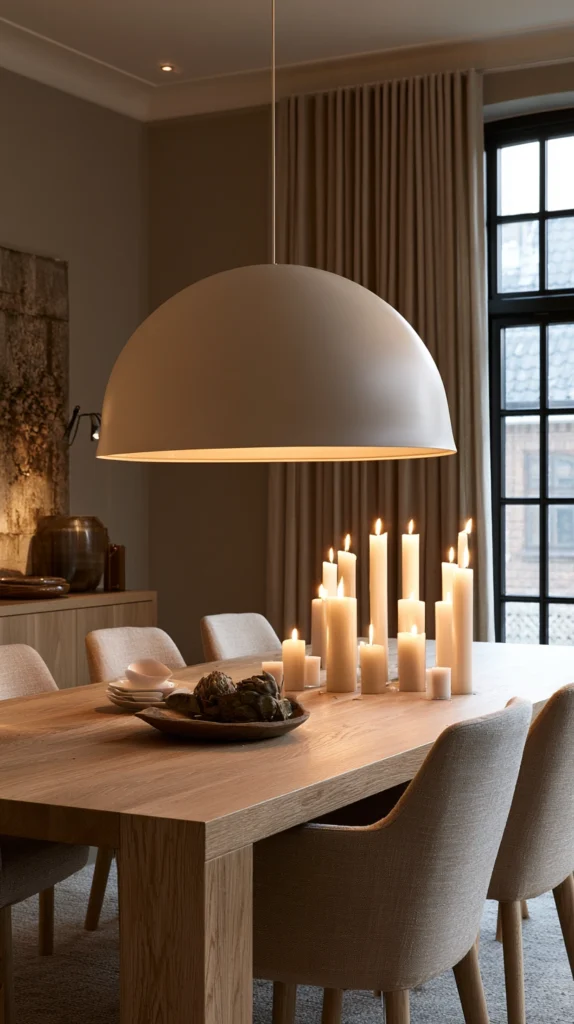
Budget: $30 – $100 for candles and holders
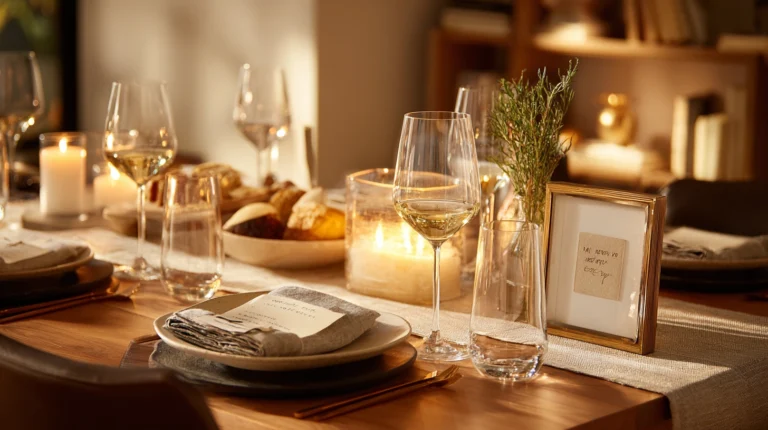
The combination of pendant light on a dimmer at 30–40 percent and a collection of candles on the table surface — at the centre and distributed along the table’s length — creates the most beautiful and most flattering dining room light environment available at any budget level. The pendant provides the ambient table light. The candles provide the individual points of warm, moving flame quality that no electric source replaces with the same effect on the atmosphere and on the faces of the people around the table.
A set of four pillar candles in graduated heights costs $15–$30. Six taper candles in matching candlesticks cost $20–$50 in candles and $30–$80 in candlesticks. LED flame candles — which flicker realistically without the fire risk — cost $8–$25 per candle in a quality LED version. Use real candles for the occasions that most justify the additional attention, and LED equivalents for the occasions where an open flame is impractical. The combination of dimmed pendant and candle — real or LED — creates the dining room atmosphere that every other lighting approach is attempting to approximate, which is why it is always the most effective and always the most frequently returned to.
Lighting tip: Place candles at two different heights on the table surface — taller tapers at the centrepiece level and shorter votives or tea lights distributed along the table’s length. The two heights create a visual depth to the table’s candle arrangement that a single consistent height cannot produce and that prevents the candles from creating an obstruction between diners facing each other across the table while still providing the distributed flame quality at the table surface level where it is most flattering.
10. A Pendant With a Downward-Directing Shade
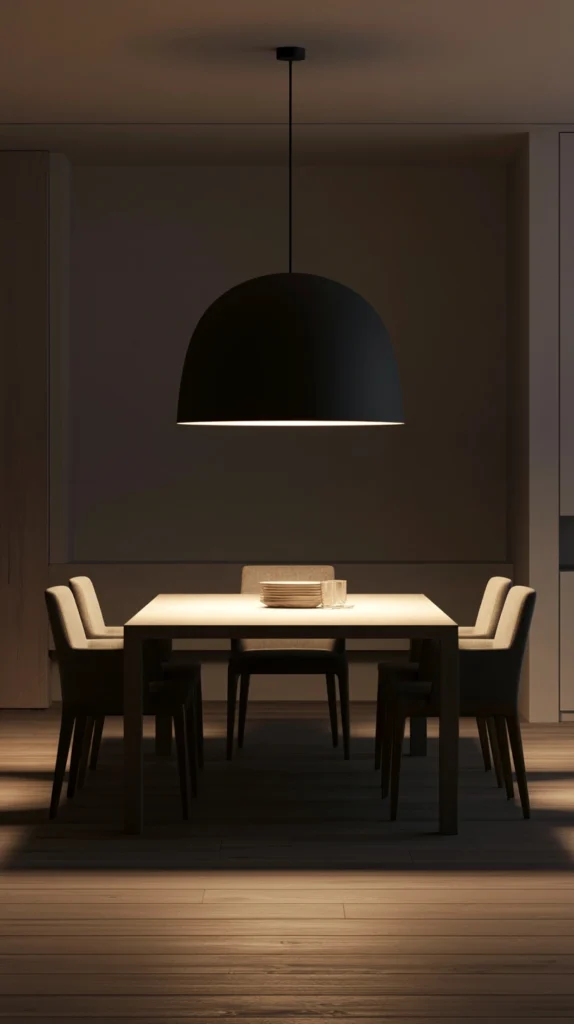
Budget: $80 – $500
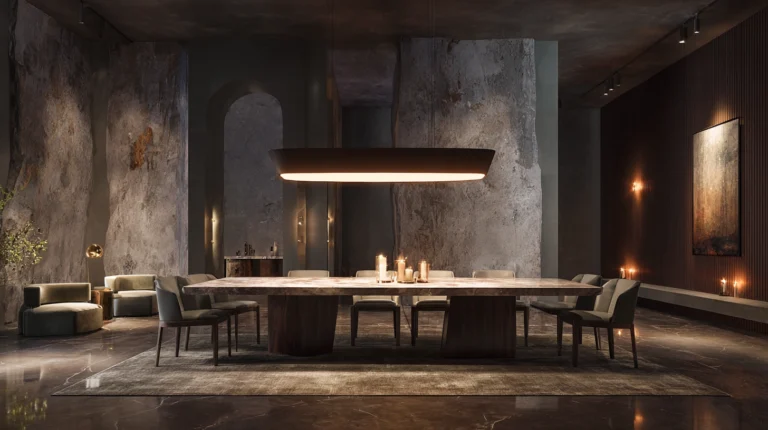
A pendant with an opaque shade that directs all its light downward — rather than through or around a translucent shade — creates the most specifically pool-of-light quality that defines the dining table as a lit stage within a darker room. The contrast between the brightly lit table surface and the relatively darker surrounding room creates the intimate, focused atmosphere that makes dining feel genuinely special — the room recedes and the table becomes the room’s entire world for the duration of the meal.
An opaque dome pendant in enamel or painted steel costs $80–$200. A copper or brass cone pendant runs $100–$300. A matte black dome pendant costs $80–$250. The shade diameter should be at least 40 cm to avoid creating a harsh spotlight effect at the table surface — a larger shade distributes the downward light over a greater area and produces the soft-edged pool of warm light that defines the dining table generously rather than sharply.
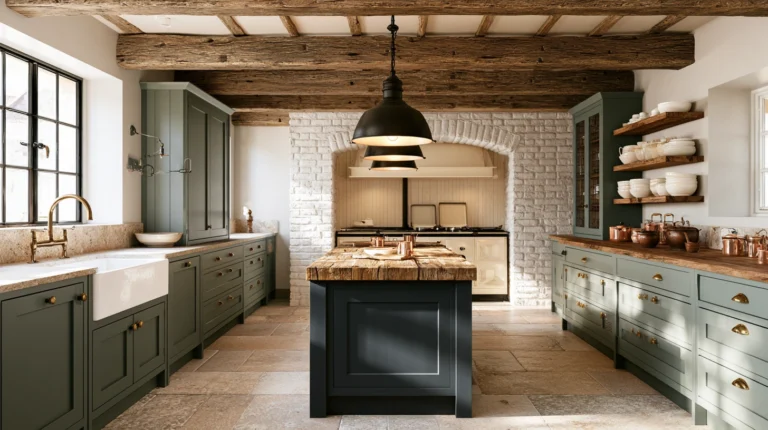
Lighting tip: Use a large-filament Edison-style bulb in a downward-directing pendant rather than a frosted LED alternative. The Edison filament is visible through the open bottom of the shade when viewed from certain angles and contributes to the warm quality of the downward light in a way that a frosted bulb does not — the visible filament itself is a light quality element rather than simply the source of light, and it adds the specific warm character that a clear filament in an opaque shade uniquely provides for a dining room pendant.
11. Recessed Downlights on a Dimmer
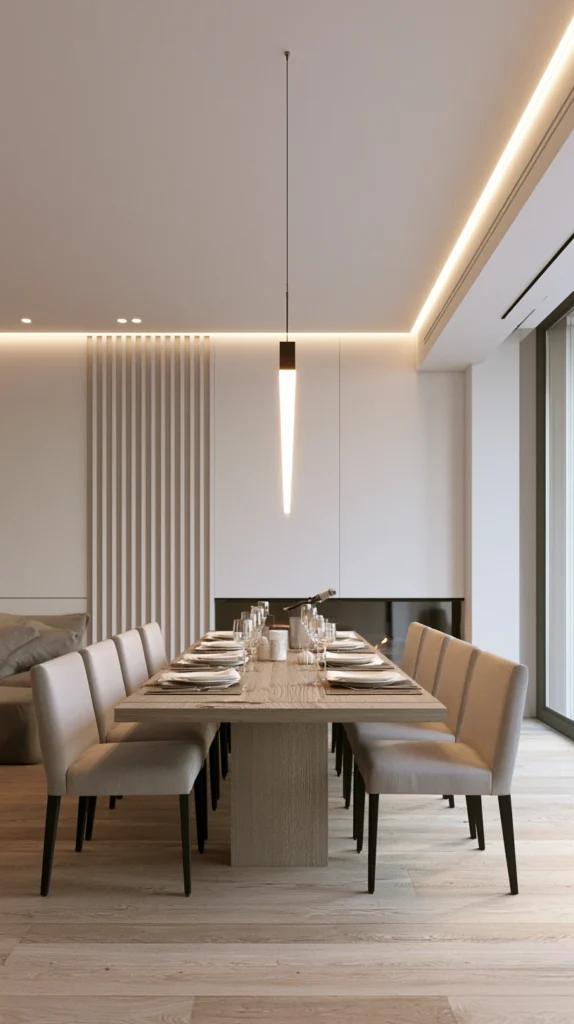
Budget: $200 – $800 installed
Recessed ceiling downlights in the dining room — on a dimmer, in a warm 2700K colour temperature, and positioned to light the table surface rather than the room perimeter — create the most architecturally discreet dining room lighting option available. The ceiling remains uninterrupted and the pendant or chandelier is given full visual prominence as the room’s decorative lighting feature while the recessed downlights provide the functional table lighting that the decorative pendant may not deliver alone.
Standard GU10 recessed downlighters cost $15–$40 each with fitting. A typical dining room requires four to six positioned directly above the table area at $60–$240 in fittings. A professional installation by an electrician adds $150–$300. Specify fire-rated fittings in any ceiling above which there is a habitable room. Use warm white 2700K bulbs exclusively — cool white downlights in a dining room create the specific quality of a cafeteria rather than a dining room regardless of every other design quality the room possesses.
Lighting tip: Point recessed downlights directly downward rather than at an adjustable angle if they are positioned directly above the dining table. Angled downlights create shadows across diners’ faces from the side — emphasising facial features unflattering from an oblique light direction. Straight downlights positioned directly above the table light the table surface and the food on it without creating the unflattering cross-lighting that angled fittings produce on seated diners from above.
12. A Smoked or Amber Glass Pendant
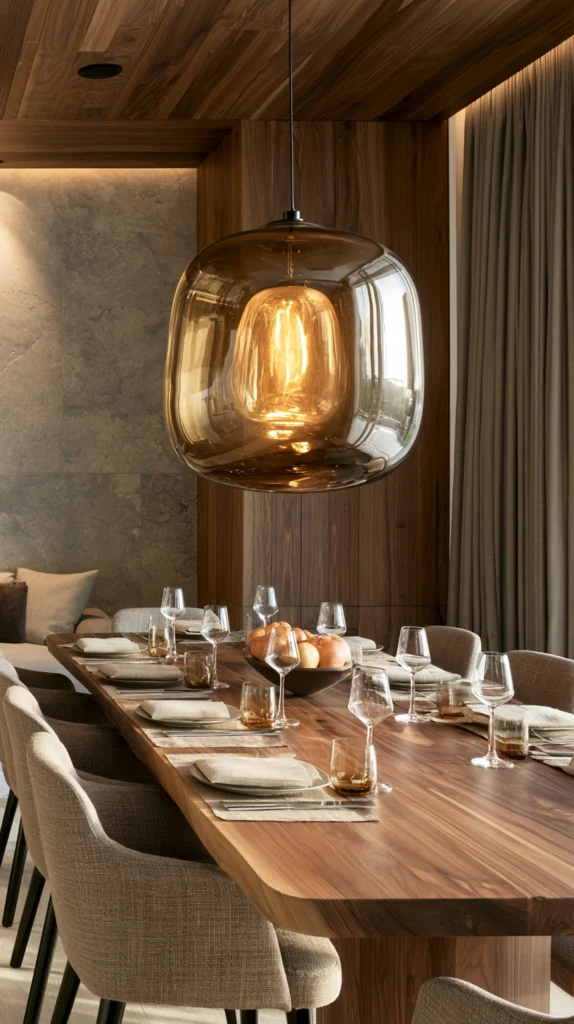
Budget: $150 – $600
A smoked or amber glass pendant — handblown or mould-formed — produces the most specifically warm and most visually rich light quality available from a single pendant fitting. The glass colour adds its own tone to the white light passing through it, creating a golden-amber or warm bronze quality in the light that reaches the table surface below — a specific warmth that a clear glass pendant of identical form does not produce from the same bulb in the same position.
A handblown smoked glass pendant in 25–35 cm diameter costs $150–$400. An amber ribbed glass pendant costs $120–$350. A large amber glass dome pendant of 50 cm diameter costs $300–$600. The amber and smoked glass pendant suits warm, earthy, and natural dining room palettes — terracotta walls, timber tables, and natural linen are all specifically enhanced by the amber quality of the light that this pendant type produces. Against cool-toned grey walls and white tables the amber tone can create a slight warmth mismatch that needs to be resolved in the surrounding palette choices.
Lighting tip: Use a clear, warm-white LED bulb with a visible filament inside a smoked or amber glass pendant rather than an opaque bulb. The visible filament seen through the coloured glass creates a layered depth to the light fitting — the amber glass, the internal filament, and the warm pool of coloured light below — that an opaque bulb in the same shade reduces to a simple coloured glow without the three-dimensional light quality that the glass and filament combination produces.
13. A Botanical or Organic Form Pendant
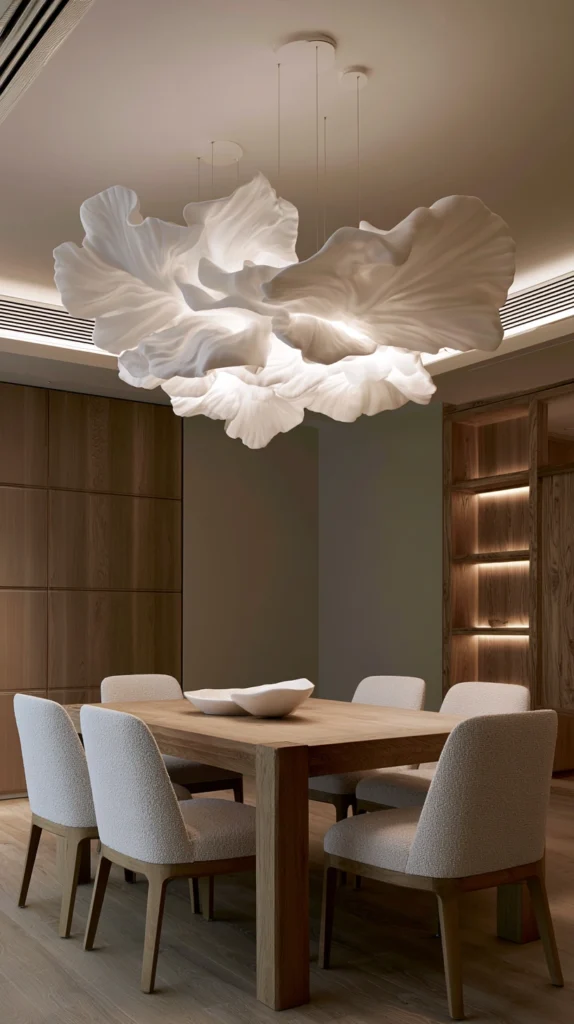
Budget: $200 – $1,000
Pendants in organic botanical forms — shaped like seed pods, leaves, sculptural shells, or natural mineral formations — create dining room lighting that reads as art as much as as illumination. In a dining room where the ceiling is an otherwise ignored surface, a pendant of genuinely sculptural character creates the specific quality of a room designed around a single exceptional object, with the table and all its furnishings arranged beneath and in conversation with the light fitting above them.
A paper or resin botanical form pendant costs $200–$500. A plaster sculptural pendant runs $300–$800. An artisan-made ceramic pendant costs $250–$700. A wire-frame botanical or geometric pendant in brass or steel costs $200–$600. The organic or sculptural pendant is most effective in a dining room whose other surfaces are relatively simple — plain walls, a clean table, natural textiles — where the pendant is given the visual space to be the room’s primary object without competition from other similarly complex forms in the surrounding decor.
Lighting tip: Photograph the sculptural or organic pendant from the seated dining position before finalising its installation height. The sculptural quality of a botanical pendant is experienced most fully from below and slightly to the side — the angle of a seated diner at the table — rather than from directly below at standing height. A pendant that looks proportionate from standing height may read as too high and therefore too remote from the table when viewed from the seated angle that everyone using the room will experience most consistently.
14. A Mixed Metal Chandelier in Warm Tones
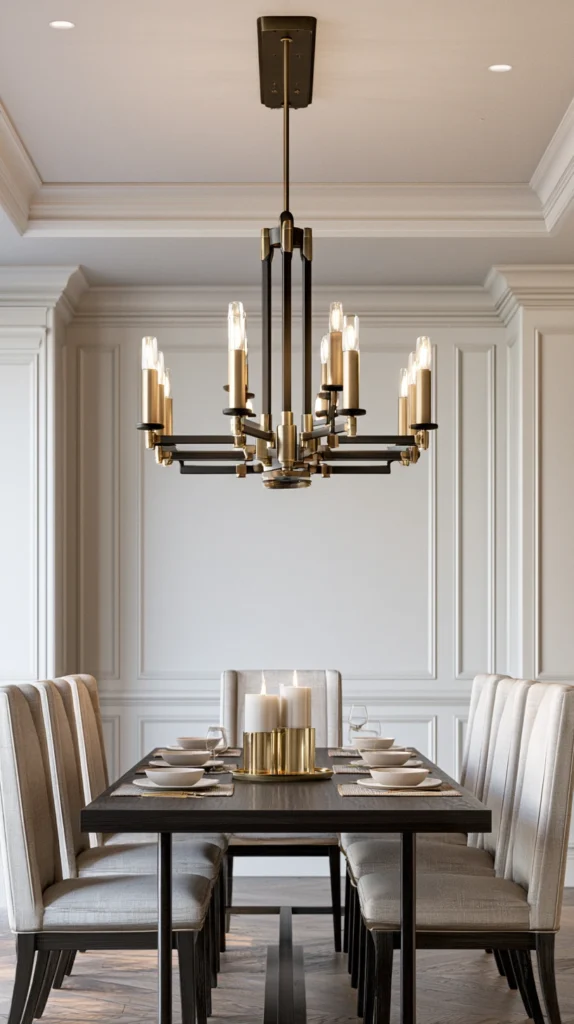
Budget: $300 – $2,000
A chandelier that combines warm metals — brushed brass, antique bronze, and warm gold in the same fitting — creates the most specifically eclectic and most specifically contemporary chandelier aesthetic available. The mixed metal approach references the collected quality of an antique or vintage lighting piece that has been repaired and added to over time, which gives it a character and a warmth that a single-finish contemporary chandelier rarely achieves at any equivalent price point.
Mixed metal chandeliers from specialist lighting retailers cost $300–$800 in standard sizes. Custom or artisan versions run $800–$2,000. The combination of metals should all be warm — no cool silver, no chrome — so that the variation between finishes reads as tonal and complementary rather than as a colour contrast that produces an unresolved mixture rather than a collected one. Brushed brass and antique bronze together create the most consistently successful warm mixed metal chandelier pairing in current interior design practice.
Lighting tip: Use candle-style bulbs in a chandelier with arm-mounted sockets rather than a single central source. Multiple individual candle bulbs at low wattage — or high-quality LED candle bulbs in a warm 2200K colour temperature — produce the distributed, multi-point light quality that gives a chandelier its characteristic atmospheric effect. A single central bulb in a chandelier frame produces a single-source light quality that eliminates the distributed warmth that the multi-arm form specifically exists to create.
15. The Complete Dining Room Lighting Scheme
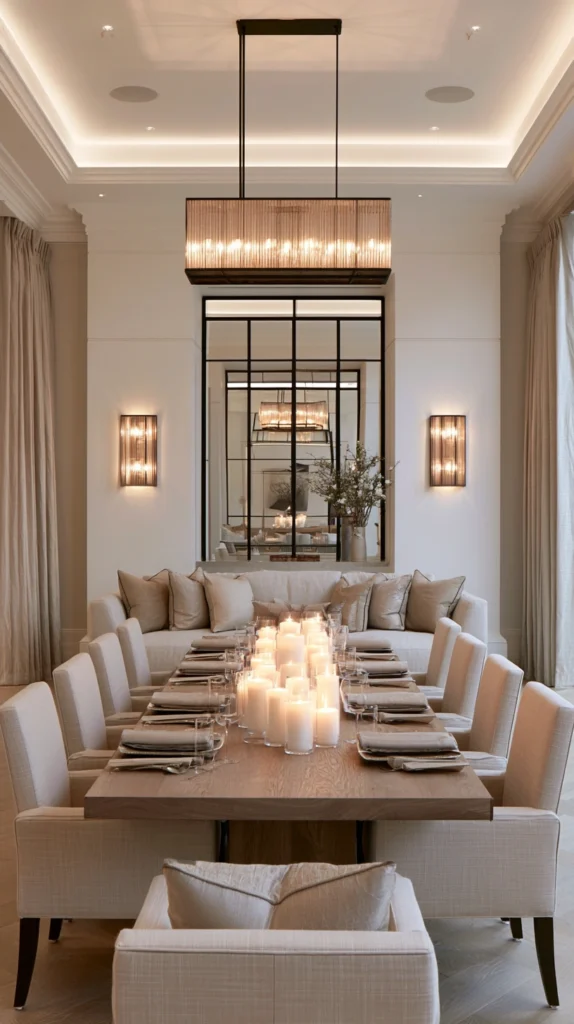
Budget: $500 – $3,000
The most admired dining room lighting environments are always multi-source — a pendant or chandelier over the table, wall sconces on the side walls, candles on the table surface, and a dimmer on every electrical circuit — because the combination of sources at different heights and of different quality creates the atmospheric layering that no single source, however beautiful its fitting and however warm its output, can produce alone. Each source contributes a specific quality that the others lack, and the combination of all of them at their appropriate level creates a dining room that is a genuinely excellent place to spend an evening.
A complete dining room lighting scheme: one statement pendant ($150–$600), two wall sconces ($60–$300 per pair), a candle collection ($30–$100), and three independent dimmer circuits ($15–$30 each to install) — at a total combined cost of $270–$1,060 — produces the most atmospheric and most flexible dining room lighting available at any accessible budget level. The flexibility of three independently controlled circuits on three dimmers allows the dining room to provide a different light quality for breakfast, lunch, late afternoon, dinner, and after-dinner conversation — each a distinct atmospheric environment created from the same room with the same fittings at different combinations of dimmer settings.
Lighting tip: Create a lighting scene for each dining occasion — a specific combination of dimmer settings for weekday family dinners, for formal dinner parties, and for the relaxed after-dinner conversation that follows — and establish the habit of setting the room to the appropriate scene before any meal rather than adjusting the light reactively during the meal itself. A dining room whose lighting is set before the table is laid communicates that the occasion was anticipated and prepared for, which is the quality of atmosphere that the best dining room lighting is ultimately designed to create.
Dining room lighting is always the most return-generating lighting investment available in any home because it is the room where the quality of the atmosphere is most directly felt, most consistently noticed, and most specifically associated with the quality of the time spent in it. The dining table where the light is exactly right is the dining table everyone chooses to linger at after the meal has finished — which is the most practical measurement of excellent dining room lighting and the most reliable guide to whether the investment in it was worthwhile.
Begin with the pendant on a dimmer. That single change — installing a quality fitting on a properly calibrated dimmer — transforms the dining room’s evening atmosphere more immediately and more completely than any other single lighting decision available at any cost. Everything else on this list adds to that foundation. Nothing on this list works without it.