How to Host a Small Thanksgiving in a Small Space
A studio or one-bedroom apartment can realistically seat 6 to 8 people for Thanksgiving. Most guides assume a dining room that doesn’t exist.
The actual constraints are consistent: limited oven space, limited table space, limited counter space, and nowhere to hide the mess mid-cook. Small-space Thanksgiving isn’t about doing less. It’s about sequencing and space planning differently than a full house would.

Here’s the full breakdown, with the actual numbers and timing that make it work.
The Core Small-Space Challenges
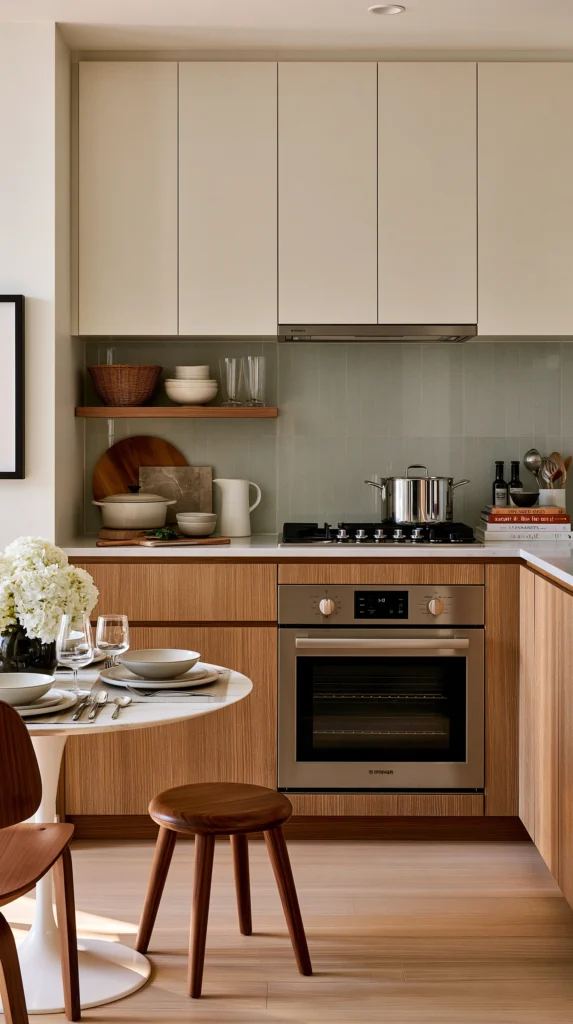
Four problems come up in almost every small-space Thanksgiving, regardless of layout.
- One oven, multiple dishes that all traditionally want oven time around the same hour
- Limited seating that doesn’t match a traditional Thanksgiving guest list size
- No spare counter space for the assembly and plating stage
- Nowhere to store serveware that only comes out once a year
Each of these has a workable fix, covered below.
Planning Your Guest Count Against Your Actual Space
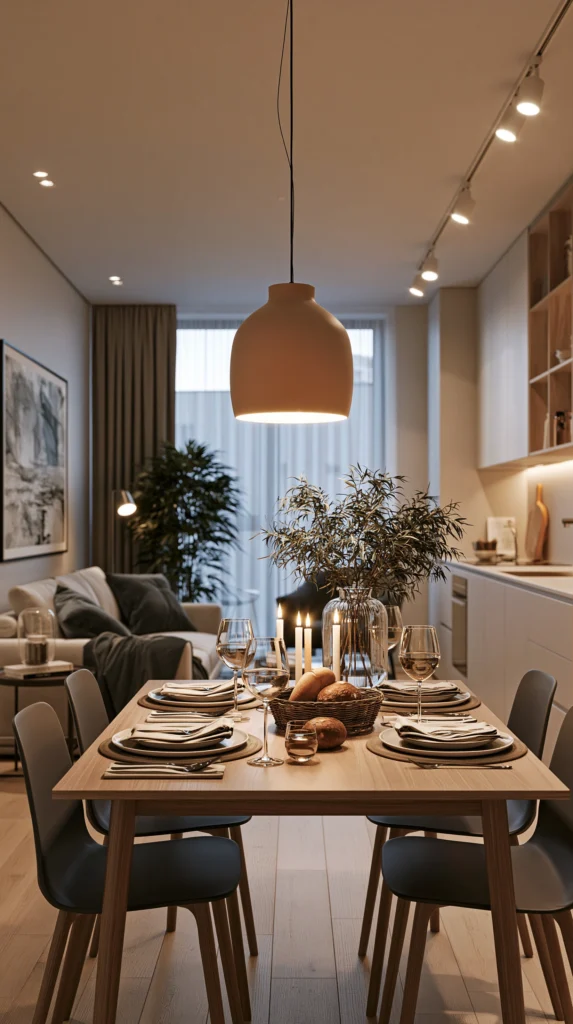
Before anything else, get honest about how many people your space can actually hold comfortably.
| Space Type | Realistic Seated Guests | Realistic Standing/Buffet Guests |
| Studio apartment | 4–6 | 8–10 |
| One-bedroom apartment | 6–8 | 10–14 |
| Small house, no dining room | 8–10 | 12–16 |
| Small house with dining room | 10–12 | 16–20 |
How to use this table: If your guest list exceeds the seated number for your space, plan for a buffet-style service instead of a seated dinner. Buffet service needs less table space per person since people aren’t all seated simultaneously.
Solving the Single-Oven Problem
This is the single biggest logistical issue in small-space hosting, and it has a genuinely reliable fix: staggering.
The staggering method:
- Cook dishes that hold well at room temperature first, several hours ahead
- Reserve oven space closest to serving time only for what truly needs to be hot, like the turkey and stuffing
- Use a slow cooker, Instant Pot, or stovetop for anything that can be made without the oven at all
- Rest the turkey for 30–45 minutes after roasting, which frees the oven for a final round of sides during that exact window
| Dish | When to Cook | Method |
| Turkey | Morning, well ahead of serving | Oven, then rests 30–45 min |
| Stuffing | During turkey’s resting period | Oven |
| Mashed potatoes | 1–2 hours ahead | Stovetop, kept warm in a slow cooker |
| Green beans | 30 min before serving | Stovetop |
| Cranberry sauce | 1–2 days ahead | Stovetop, refrigerated |
| Pie | 1 day ahead | Oven, reheated briefly or served room temp |
| Gravy | While turkey rests | Stovetop |
| Rolls | 20 min before serving | Oven, right after turkey comes out |
Why this works: By the time the turkey needs to rest, the oven is free for anything last-minute, and everything that can be made ahead already is.
Making the Table Work With Limited Space
A small table doesn’t have to mean a cramped, uncomfortable dinner if a few adjustments happen ahead of time.
- Skip the full place setting. A charger, one plate, and a folded napkin with utensils tucked inside takes up meaningfully less space than a charger, plate, bread plate, and multiple glasses
- Serve family-style in smaller dishes, not large platters, which take up less surface area and are easier to pass in a tight space
- Use a narrower table runner instead of a full tablecloth with overhang, since overhang eats into usable knee and chair space
- Borrow or rent a few extra folding chairs rather than buying, since storage after the holiday becomes its own small-space problem
| Table Size | Max Comfortable Seats | Serving Style Recommendation |
| 30″ round | 4 | Family-style, smaller dishes |
| 36″ round | 4–5 | Family-style |
| 48″ round | 6 | Family-style or light buffet |
| 6-foot rectangular | 6–8 | Either works |
| 8-foot rectangular | 8–10 | Buffet recommended |
Handling Counter Space When There Isn’t Much
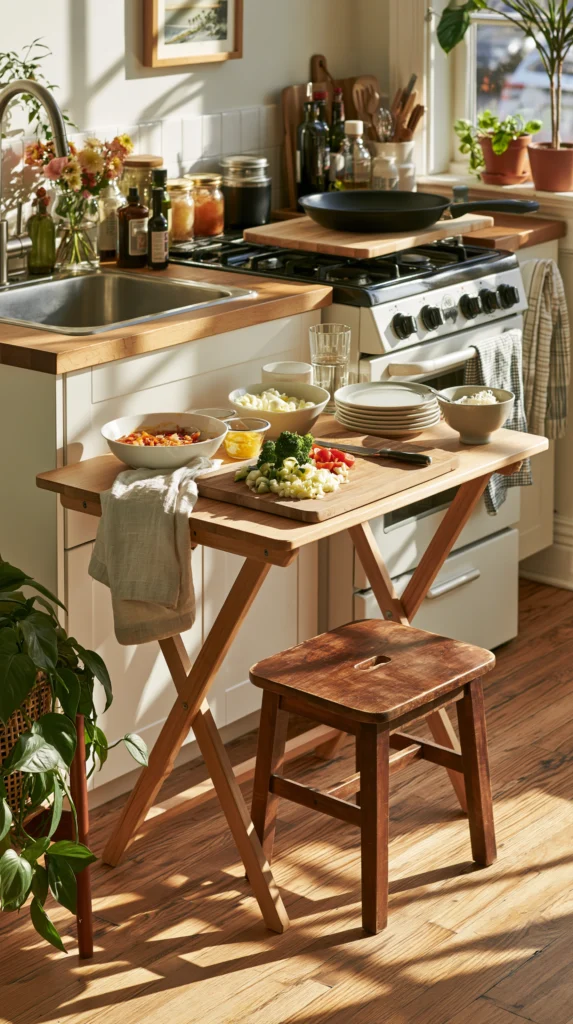
Assembly and plating typically demand the most surface area of the entire cooking process, and it’s usually the tightest moment in a small kitchen.
- Clear everything not currently in use off the counter the night before, including small appliances that can be temporarily stored elsewhere
- Use a large cutting board as a movable prep surface over the stovetop when burners aren’t in use
- Set up a folding table or bar cart specifically as overflow counter space for the day, even if it lives elsewhere in the home the rest of the year
- Plate in the same order dishes will be served, so nothing sits out longer than necessary waiting for counter space to free up
A Simple Day-Before Prep Checklist
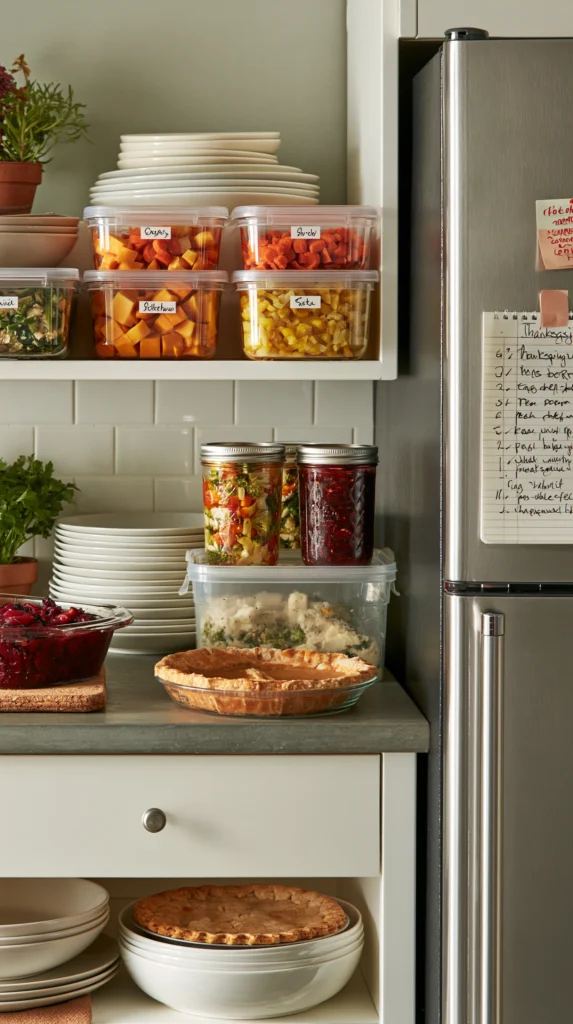
Doing as much as possible the day before is what actually makes small-space hosting feel manageable rather than frantic.
- Chop all vegetables and store in labeled containers
- Make cranberry sauce and any dish that reheats well
- Bake pies
- Set the table completely, including folded napkins and place cards
- Wash any serving dishes that only come out once a year, since they’re often dusty from storage
- Write out the oven schedule from the table above and post it somewhere visible in the kitchen
Storage Solutions for Serveware You Only Use Once a Year
Small spaces rarely have a dedicated spot for Thanksgiving-specific dishes, and that’s worth planning around rather than ignoring until the day arrives.
- Nest similar items, like mixing bowls and serving bowls, inside each other rather than storing separately
- Store under the bed or on top of a closet shelf in a labeled, flat bin specifically for once-a-year items
- Borrow rather than own for anything used only for this single meal, like a turkey roasting pan, if storage space is tighter than budget
- Consider disposable but nice-looking serveware for one or two items specifically to avoid a permanent storage commitment for something used once annually
Rethinking the Traditional Menu for a Smaller Crew
A full traditional spread scaled down to 6 people often means a lot of leftovers and a lot of dishes for very little payoff. Trimming the menu itself solves part of the space problem before cooking even starts.
| Traditional Item | Small-Space Alternative |
| Whole turkey | Turkey breast or turkey thighs only |
| Multiple pie flavors | One pie, or a smaller tart pan |
| 4–5 side dishes | 2–3 well-chosen sides |
| Full bar setup | One signature cocktail or wine only |
| Multiple appetizers | A single small charcuterie board |
Why this matters for space specifically: A turkey breast fits in a smaller roasting pan, needs less oven time, and produces proportionate leftovers instead of an overwhelming amount for a table of 6.
Seating Arrangements That Don’t Require a Dining Table At All
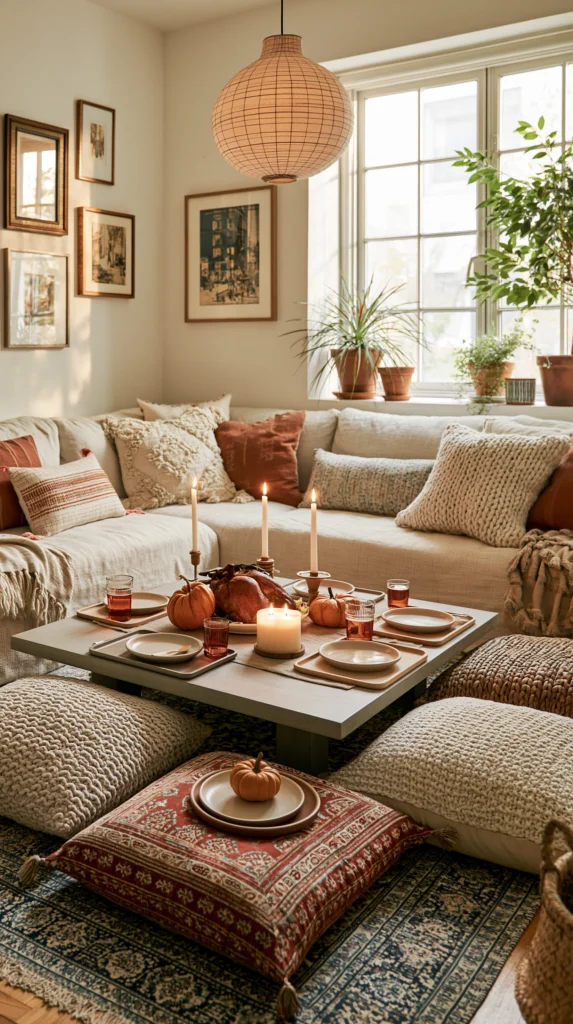
For the smallest spaces, skipping a traditional table setup entirely sometimes works better than forcing a table that doesn’t comfortably fit.
- Coffee table plus floor cushions works well for a smaller, more casual group willing to sit lower
- A folding table set up specifically for the day, stored flat against a wall the rest of the year
- Lap trays or individual small tables paired with regular living room seating for a genuinely informal approach
- A kitchen island or counter with barstools if that’s the largest flat surface actually available in the space
Matching Seating Style to Group Size
| Guest Count | Best Seating Approach |
| 2–4 | Coffee table and floor cushions, or kitchen counter |
| 4–6 | Folding table set up for the day |
| 6–8 | Folding table plus borrowed chairs, or buffet-style with mixed seating |
| 8+ | Buffet-style strongly recommended over seated dinner |
Timing the Whole Day So Nothing Overlaps Badly
A written timeline matters more in a small space than a large one, since there’s no room to improvise around a scheduling conflict.
- Morning: Turkey goes in, table gets its final setup, any last vegetable prep happens
- Early afternoon: Turkey comes out to rest, stuffing and rolls go in during that window
- Just before serving: Stovetop items get their final reheat, gravy gets finished, table gets its hot dishes
- Serving window: Everything comes to the table within a 15–20 minute span, rather than staggered over an hour
Small kitchens punish poor timing more than large ones do, simply because there’s no extra counter or oven capacity to absorb a delay.
Cleanup Strategy for Small Spaces
Post-meal cleanup in a small kitchen benefits from the same staggering principle used for cooking.
- Wash prep dishes throughout the cooking process rather than letting them all stack up
- Designate one small area, like a dish rack or a single counter section, specifically for air-drying delicate serveware
- Pack away rarely used items immediately after washing, rather than letting them sit out until “later”
- Send guests home with leftovers in disposable containers specifically to reduce what needs storage space in a small refrigerator afterward
What to Skip Entirely in a Small Space
Some Thanksgiving traditions genuinely don’t translate well to a small footprint, and skipping them isn’t a loss so much as a reasonable adjustment.
- A full-size turkey for a table of 6 or fewer, which creates more storage burden than benefit
- A formal multi-course service style, which needs more table turnover space than most small tables can offer
- Multiple dessert options, which take up oven and counter space disproportionate to how much will actually get eaten
- A fully matched china and glassware set, which usually means storage space better used elsewhere the other 364 days of the year
Handling Drinks Without a Dedicated Bar Area
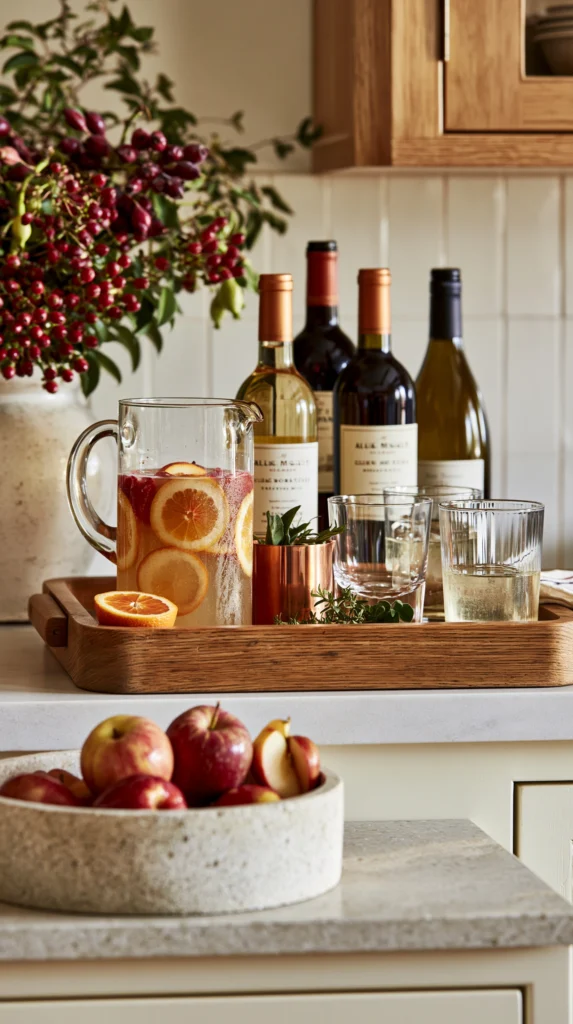
A full bar cart or drink station isn’t realistic in most small spaces, but a scaled-down version still works well.
- Pick one signature cocktail rather than stocking a full bar, which cuts down on glassware, mixers, and counter space all at once
- Use a single tray to corral all drink-related items in one spot, rather than letting bottles and glasses spread across the kitchen
- Pre-batch cocktails in a pitcher the day before if serving more than a few guests, so mixing isn’t competing with food prep for counter space
- Keep wine and non-alcoholic options simple, one or two choices each, rather than a full selection that needs its own storage and chilling space
| Guest Count | Drink Station Approach |
| 2–4 | A single tray with wine and one mixed drink option |
| 4–8 | Add a pre-batched pitcher cocktail, kept in the fridge until serving |
| 8+ | Consider asking a guest to help manage the drink station during serving |
Decorating Without Losing Usable Space
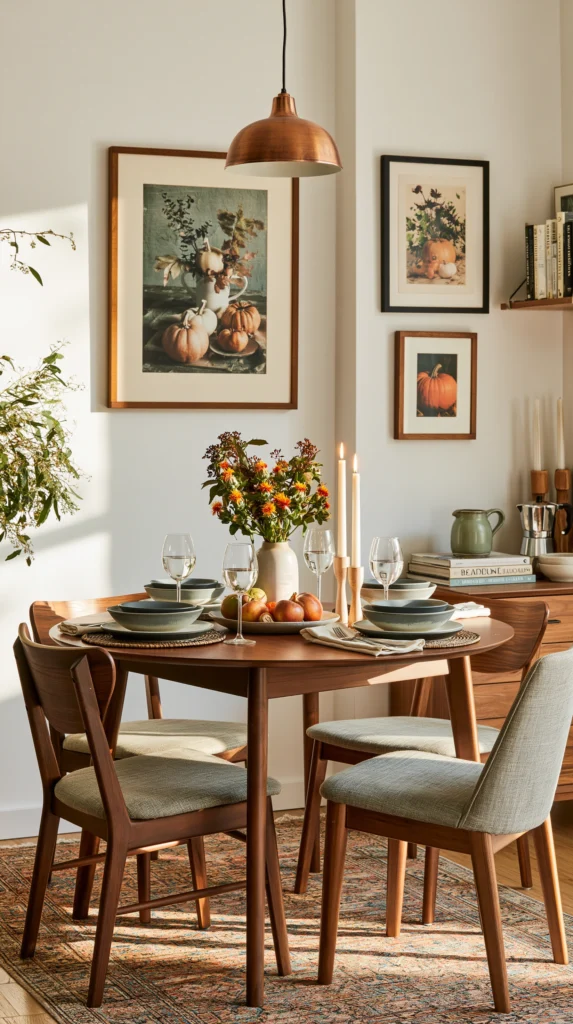
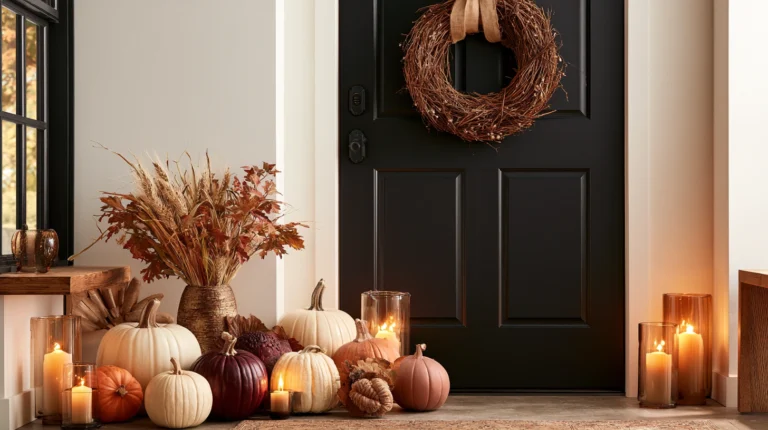
Decor in a small space competes directly with the space needed for food, seating, and movement, so it benefits from the same restraint as the menu.
- Choose low, flat centerpieces over tall arrangements, which take up less visual and physical space on an already tight table
- Use wall space instead of surface space, like a simple paper garland or seasonal print, rather than additional tabletop decor
- Skip oversized floor decor, like large decorative pumpkins or freestanding signs, which eat into walking space in a small room
- Let the food itself be part of the decor, since a well-arranged serving dish often does double duty as both centerpiece and meal
A cluttered small space reads as chaotic faster than a cluttered large one does, simply because there’s less room for the eye to rest between objects.
A Sample Full-Day Schedule for a Table of 6
Putting the timing principles together, here’s roughly how a full small-space Thanksgiving day breaks down for a modest guest count.
| Time | Task |
| 8:00 AM | Turkey breast goes in the oven |
| 9:30 AM | Final table setup, chairs arranged |
| 10:30 AM | Turkey comes out, rests |
| 10:35 AM | Stuffing and rolls go in |
| 11:00 AM | Mashed potatoes reheated on stovetop, moved to slow cooker |
| 11:15 AM | Gravy finished on stovetop |
| 11:20 AM | Green beans cooked |
| 11:25 AM | Rolls come out, turkey carved |
| 11:30 AM | Everything plated and served |
Why this schedule works in a small space specifically: Every dish either finishes well ahead of serving or slots into the oven during the turkey’s mandatory rest period, so nothing is ever competing for the same appliance at the same time.
Managing Leftovers in a Small Refrigerator
A small fridge fills up fast on Thanksgiving, and planning for that ahead of time avoids a chaotic post-dinner scramble.
- Clear out non-essential fridge items the day before to make room for prepped dishes and eventual leftovers
- Use flat, stackable containers rather than bulky mismatched ones, which fit a small fridge shelf far more efficiently
- Send guests home with leftovers immediately after the meal, both as a nice gesture and as a practical way to free up fridge space right away
- Freeze anything not eaten within a few days, since a small fridge doesn’t have the buffer space a larger kitchen would for slowly working through a week of leftovers
| Item | Best Storage Approach |
| Turkey | Flat container, used within 3–4 days or frozen |
| Mashed potatoes | Shallow container for faster cooling, freezes well |
| Stuffing | Shallow container, best eaten within 3 days |
| Gravy | Small container or freezer bag, freezes well |
| Pie | Room temperature covered, or fridge if cream-based |
Making It Feel Intentional, Not Like a Compromise
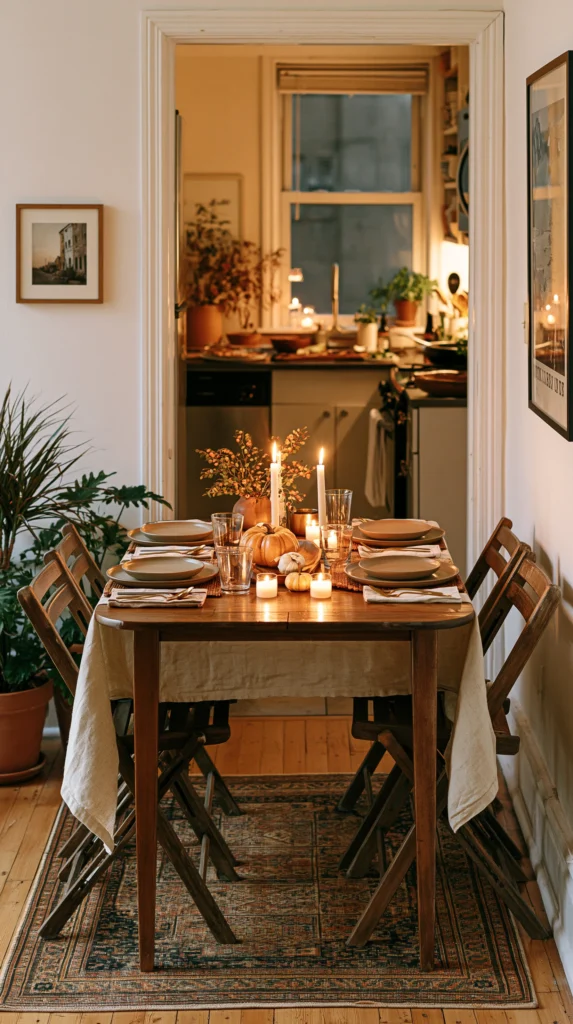
A small-space Thanksgiving can feel just as considered as a larger one, and a few small choices go a long way toward that.
- Light a few candles for ambiance, since a smaller space benefits disproportionately from warm, low lighting
- Choose two or three centerpiece elements rather than a large arrangement that eats into already-limited table space
- Play music at a volume that fills the room without requiring anyone to raise their voice over it
- Frame the smaller gathering as intimate rather than apologizing for the size, since guests generally take their cue on how to feel about the space from the host’s own attitude toward it
A small Thanksgiving isn’t a lesser version of a big one. It’s a genuinely different format, with its own logic around timing, sequencing, and what actually earns a place on a limited table. Once the oven schedule and seating plan are sorted, the rest of the day tends to run itself.