15 Stylish Ways to Turn Your Hot Tub Area Into a Luxury Retreat
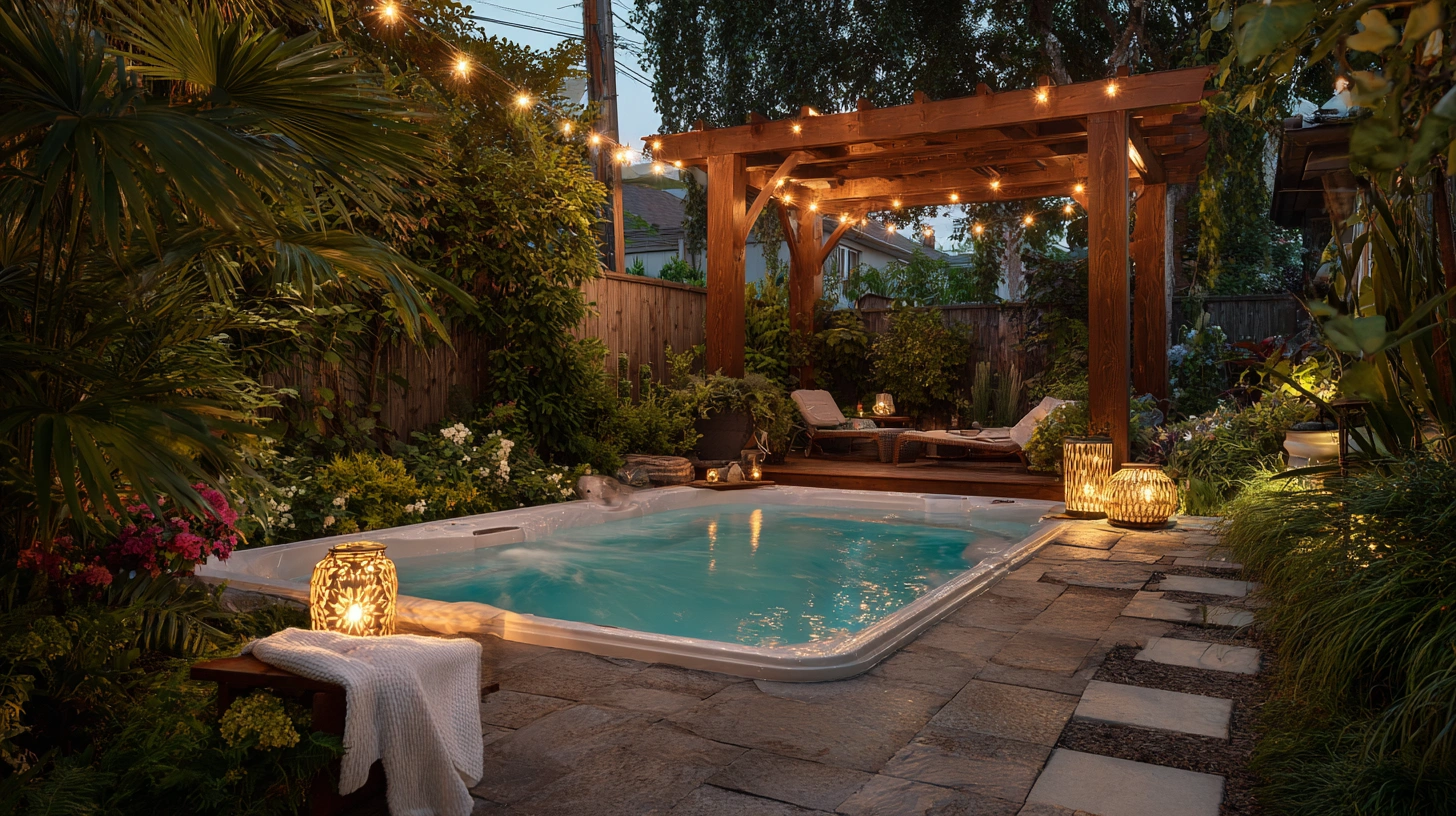
There is a gap between a hot tub and a hot tub retreat, and it is not the size of the tub or the number of jets or the temperature of the water. It is everything that surrounds it. A hot tub sitting on a plain concrete pad under a security light beside a garden shed is a hot tub. The same tub enclosed by plants, lit by lanterns, sheltered by a pergola, approached by a path of warm stone — that is somewhere you want to be even before you get in the water.
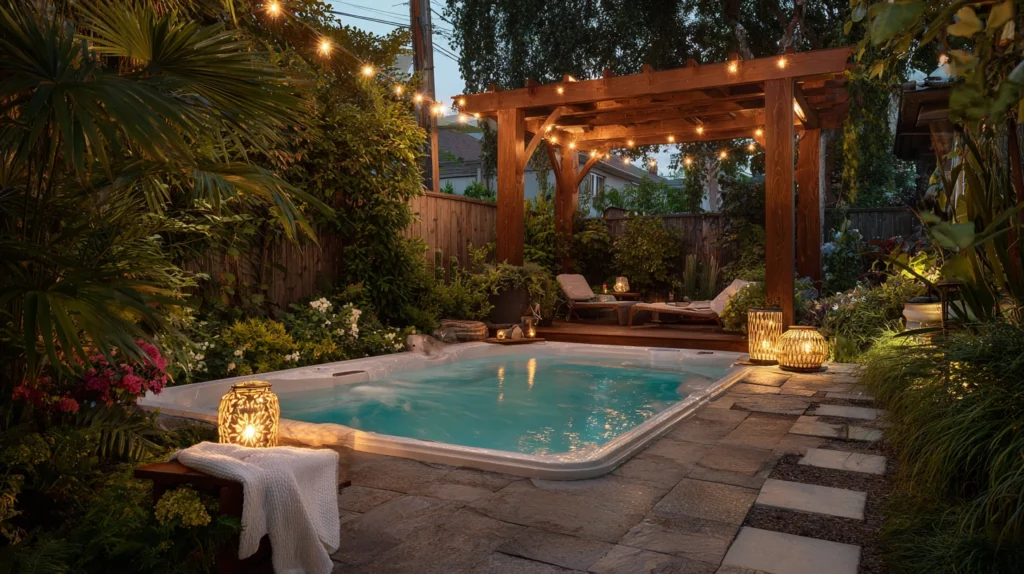
The transformation is almost entirely about the surround rather than the tub itself, which means the investment required is considerably less than replacing or upgrading the equipment. What it requires instead is the same thinking that goes into any room — where is the light, what defines the boundary, what is the floor doing, what is the view from the best seat. The hot tub area, treated as a room with water at its centre, becomes one of the most genuinely luxurious spaces a garden can contain.
Each idea below includes what you will need, what it will cost, and a practical tip to make the whole thing work as well as the idea deserves.
1. The Pergola Frame
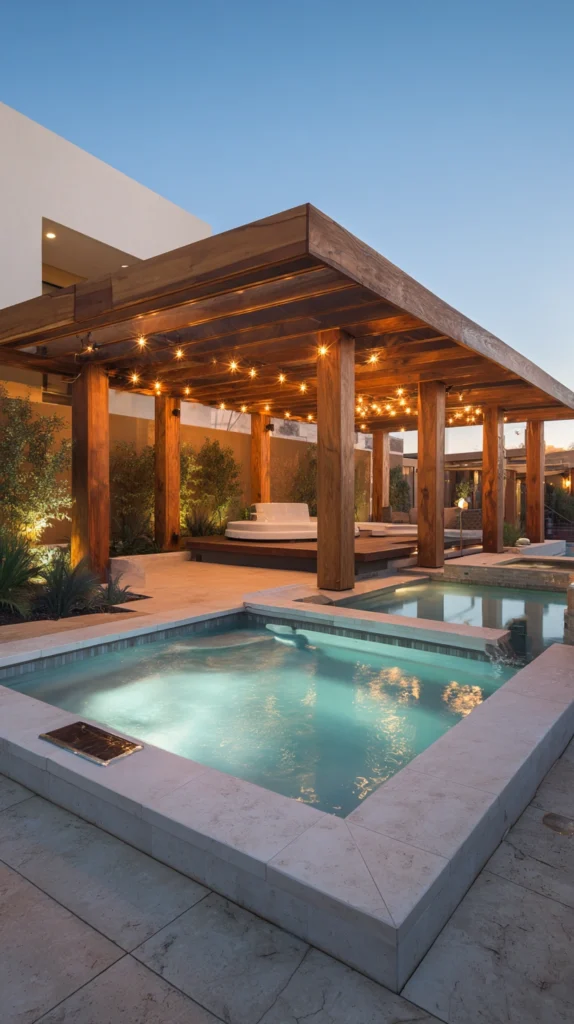
Budget: $200 – $1,500
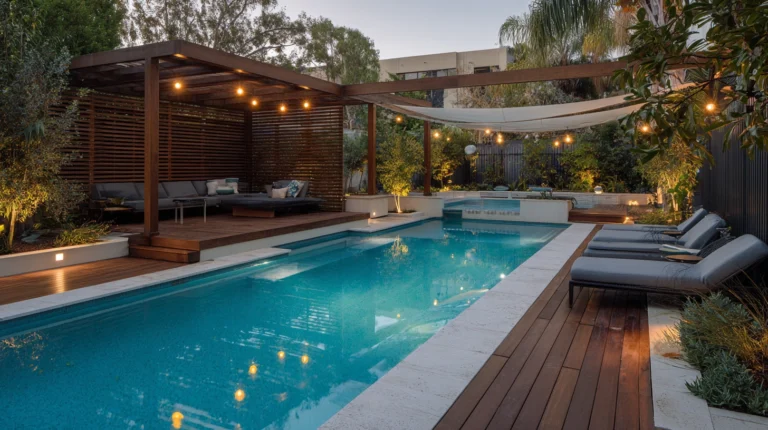
A pergola positioned directly over the hot tub — or adjacent to it with the tub visible from beneath the covered section — creates the most immediate architectural transformation available to an outdoor tub area. It changes the hot tub from an object sitting in a garden to a feature sitting within a defined outdoor room, and the framing effect of a pergola overhead makes the space beneath it feel genuinely enclosed and private without blocking the sky above.
A basic freestanding timber pergola in a 3 by 3 metre size costs $200–$500. An aluminium version with a powder-coated finish runs $400–$1,000. A louvred roof system — adjustable slats that open and close — costs $800–$2,000 and provides genuine weather protection in addition to the architectural framing. Fix the pergola posts to a concrete base rather than directly into soil — a pergola adjacent to a hot tub is exposed to significant moisture and a post set in soil rather than concrete will begin to deteriorate at ground level within two to three seasons.
Style tip: String lighting through the pergola before planting any climbers and before positioning the hot tub beneath the structure. Lighting threaded through a pergola frame before it is loaded with plants and equipment is a ten-minute task; the same task after a wisteria has wound through every horizontal member and a hot tub is positioned directly beneath the lowest fixing point is considerably more complicated and considerably less pleasant.
2. The Planted Privacy Screen
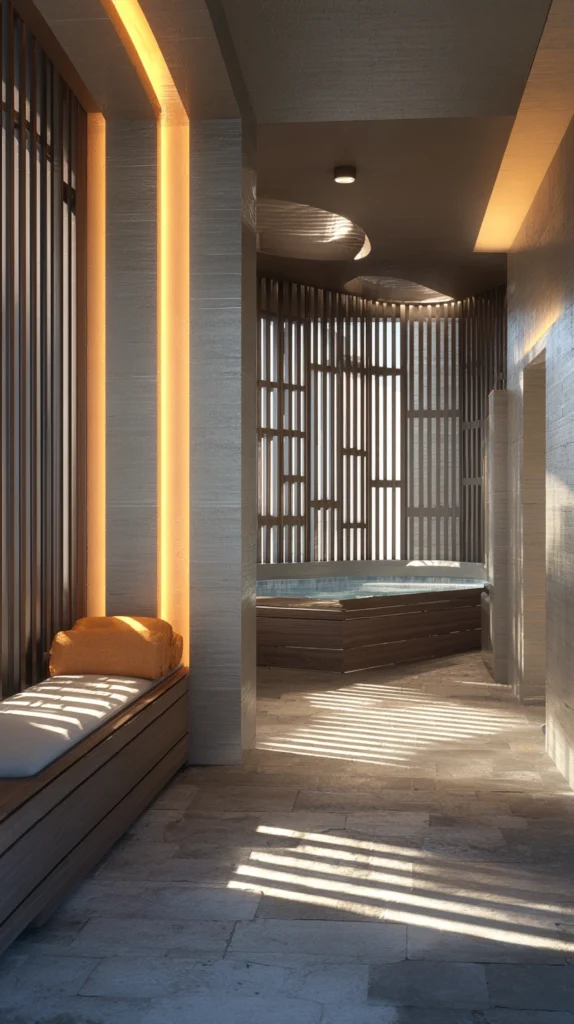
Budget: $40 – $200
A planted privacy screen — bamboo in a trough, tall ornamental grasses, a trellis planted with a fast-growing climber — placed on the side of the hot tub area that faces the most exposure creates the sense of enclosure that makes using the tub feel genuinely private without requiring any structural construction. A hot tub you feel overlooked in is a hot tub you use less than one where the boundaries of the space feel defined and protected.
Clump-forming bamboo (Fargesia species, non-invasive) in a 10-litre pot costs $20–$50. A long zinc trough to contain it runs $30–$80. Tall ornamental grasses — Miscanthus, Pennisetum — cost $15–$35 each. A trellis panel with a fast-growing annual climber costs $20–$50 total. Position the screen on the side from which the prevailing wind enters the tub area as well as the side from which the most overlooking occurs — a screen that provides privacy and wind shelter simultaneously earns its position twice.
Style tip: Plant the privacy screen at least one season before expecting it to function. A bamboo screen planted in May reaches screening height by August in a good growing season; one planted in July when the tub is already in regular summer use provides privacy from October onward. The planted screen rewards the same forward planning as a shade tree — its value is greatest when it is established, not when it is installed.
3. The Warm Lighting Plan
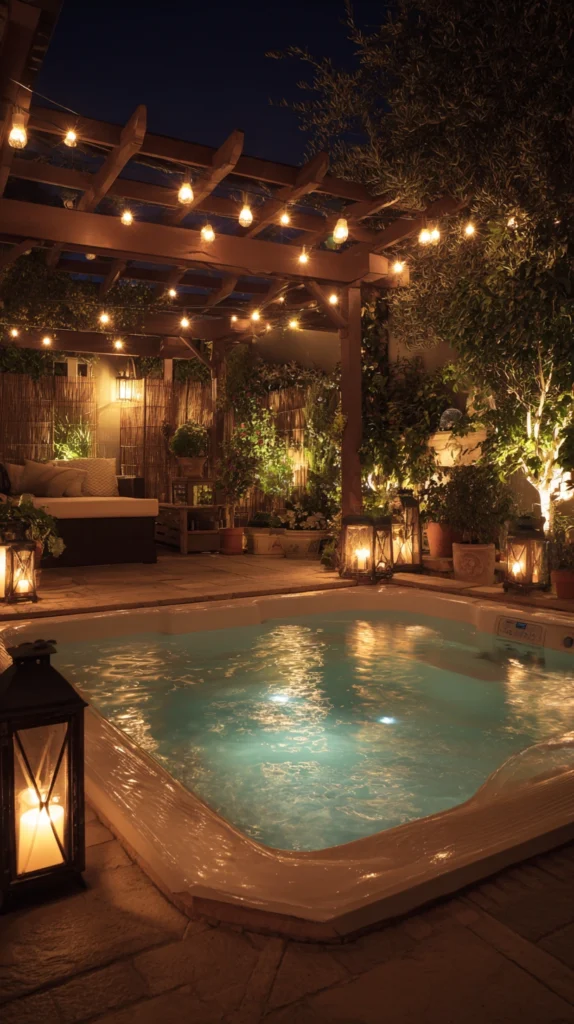
Budget: $40 – $300
A hot tub area lit with warm, low-level lighting — lanterns on surrounding surfaces, LED strip lights beneath the tub coping, festoon lights overhead, candles on the adjacent deck — creates a nighttime atmosphere that the tub’s own lighting, however capable, cannot achieve alone. The lighting of the surroundings is as important as the lighting of the water, and a hot tub area with considered perimeter lighting looks dramatically better than the same tub lit only by its own LED system.
Outdoor festoon lights cost $20–$50 for a 5-metre string. Waterproof LED strip lights for beneath the tub coping run $15–$40 per 5-metre reel. Floor lanterns at the tub surround cost $10–$25 each. A ring of citronella candles on the surrounding deck or stone ($5–$15 each) adds insect deterrence alongside the atmosphere. Waterproof rating is essential for any lighting within 2 metres of the tub — IP65-rated fixtures as a minimum for splash zone proximity.
Style tip: Keep all perimeter lighting below eye height when seated in the tub. Lighting at or above the water line level — at the height of someone’s eyes when seated in the water — creates glare that disrupts the relaxed atmosphere the lighting is intended to enhance. Lighting directed downward from overhead or upward from ground level, with nothing at eye level, produces an immersive warm glow rather than competing with the view.
4. The Natural Stone Surround
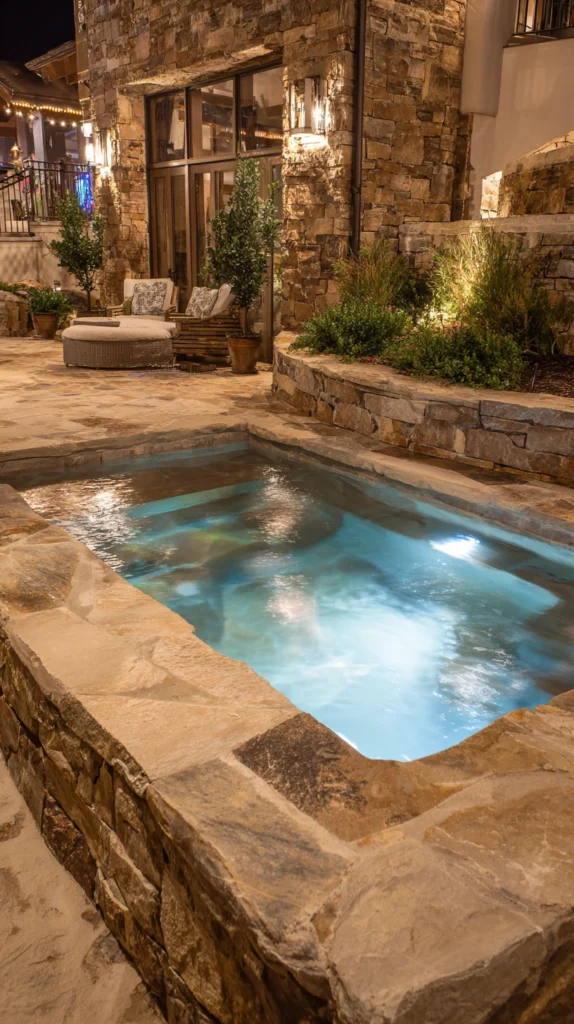
Budget: $100 – $500
A natural stone surround — slate, sandstone, limestone, or granite cut to fit around the tub — elevates the hard surface immediately adjacent to the water from a practical necessity to a design feature. Stone that is warm-toned, slightly textured for grip when wet, and consistent in colour and finish across the full surround reads as a considered material choice rather than a functional one, and the difference between a natural stone coping and a painted concrete or timber equivalent is the difference between a hot tub installation and a spa installation.
Natural stone coping tiles in a 60 by 30 centimetre format cost $3–$8 each. A full surround for a standard 2 by 2 metre tub requires approximately twenty tiles — $60–$160 in materials. Anti-slip sealant for the stone surface costs $15–$30 and is essential for any horizontal stone surface adjacent to water. Apply the sealant annually rather than once at installation — a sealant coat that has worn away after two seasons provides no slip resistance and the stone absorbs water and staining compounds that degrade its appearance permanently.
Style tip: Choose a stone with a slight surface texture — riven slate, brushed sandstone — rather than a polished finish. A polished stone surface is beautiful when dry and dangerous when wet, which beside a hot tub means it is dangerous whenever it is in use. A textured surface provides the grip that adjacent water makes necessary while looking considerably more refined than rubber matting or grip tape applied after the fact.
5. The Outdoor Shower Addition
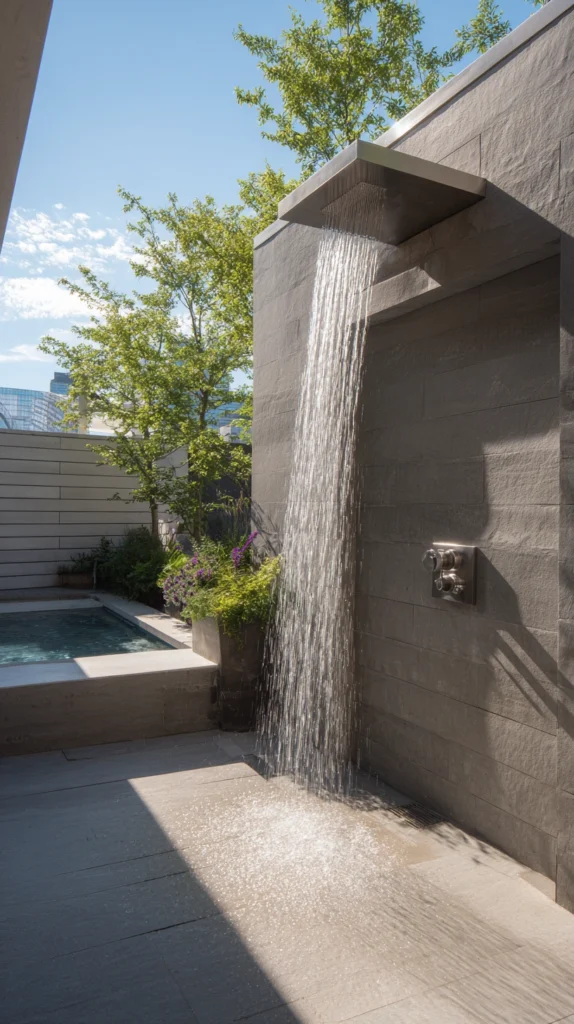
Budget: $80 – $400
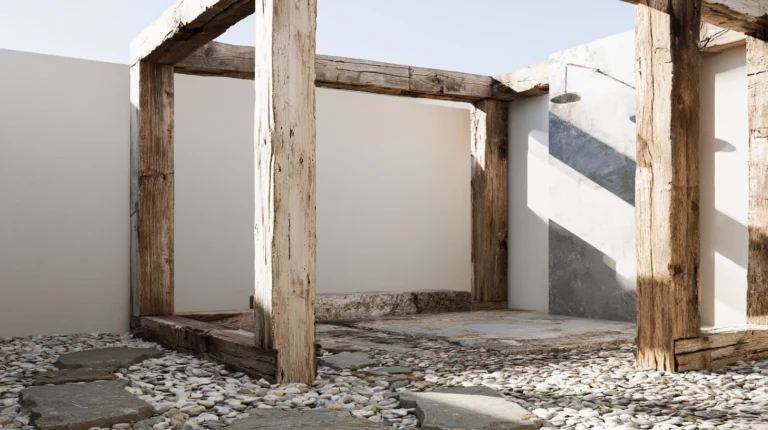
An outdoor shower positioned beside the hot tub — a simple wall-mounted shower head on a deck post or a freestanding shower column — adds a practical ritual to the tub experience and a visual element that signals a properly designed wet area rather than a tub sitting in a garden. The outdoor shower is used to rinse before entering the tub and after leaving it, which reduces the maintenance requirement of the water chemistry considerably, and its presence alone communicates the kind of considered spa thinking that transforms a hot tub area into a retreat.
A wall-mounted outdoor shower head connected to the cold water supply costs $30–$80. A mixer shower column with hot and cold supply runs $100–$300. A simple timber changing screen beside the shower costs $40–$100 to build from reclaimed timber. Connect the shower drain to a soakaway or a garden drain rather than allowing it to pool on the deck surface — standing water on a timber deck accelerates the deterioration of the boards at the point most consistently wet.
Style tip: Position the outdoor shower between the house and the hot tub rather than on the far side of the tub area. A shower that requires passing the hot tub to reach it is a shower used only after the tub; one positioned on the approach to the tub is used before and after, which is the sequence that keeps the water chemistry stable and the filters functioning effectively.
6. The Changing Area Screen
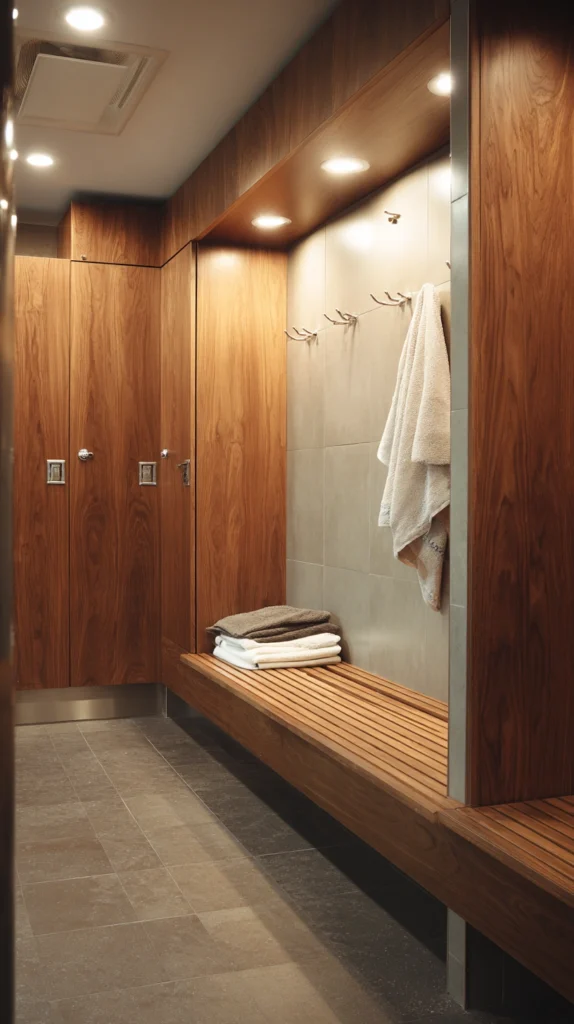
Budget: $30 – $150
A dedicated changing area — defined by a screen of timber panels, bamboo, outdoor curtains, or planted tall grasses — beside the hot tub removes the awkwardness of changing in the garden that often limits hot tub use to established friends and removes the spontaneity that makes a hot tub genuinely enjoyable. A change area need not be large — 90 by 90 centimetres is sufficient — but it needs to exist and needs to feel genuinely private.
Timber privacy panels of 180 by 90 centimetres cost $20–$50 each. A three-sided enclosure requires three panels — $60–$150 in total. Outdoor hooks for robes and towels ($3–$8 each) fixed to the inside face of the panels complete the functional requirement. A hook rail inside a changing screen with robes already hanging on it signals that the hot tub area has been thought through to the detail of the user experience rather than simply the visual impression.
Style tip: Add a non-slip mat and a small shelf or bench inside the changing area as well as the hook rail. A changing area with only hooks is a changing area where everything goes on the floor; one with a bench and a shelf is one where the experience of changing — robe hung, shoes on the bench, glasses on the shelf — is comfortable rather than improvised. The difference costs $15–$30 and is felt every time the space is used.
7. The Hot Tub Side Table Setup
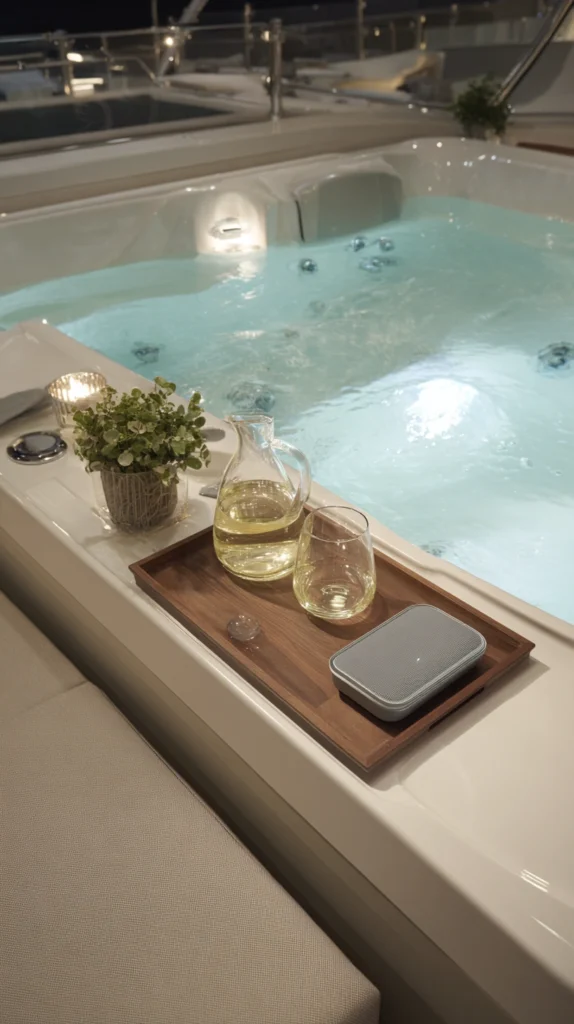
Budget: $30 – $150
A dedicated side table or ledge beside the hot tub — at the right height to reach from the water — holding drinks, a candle, and a small waterproof speaker is the furnishing detail that most directly improves the quality of time spent in the tub. A hot tub without a surface within reach is a hot tub where drinks are left on the deck and reached for with wet arms over the edge; one with a proper surface beside it is a tub that has been set up for the experience.
A teak or hardwood side table at hot tub coping height costs $40–$100. A stone or concrete side table runs $60–$150. A waterproof drinks tray on the tub coping itself costs $15–$30. Choose a table material that tolerates constant moisture — teak, stainless steel, concrete, or powder-coated aluminium — rather than painted timber or standard metal, which deteriorate rapidly at the splash line adjacent to a regularly used tub.
Style tip: Keep the side table stocked before getting into the tub rather than during the session. The organisation of the hot tub area before entering the water — drinks poured, candles lit, music playing — is the equivalent of mise en place in cooking: the pleasure of the activity is uninterrupted when everything is in place before it begins rather than assembled in stages while it is happening.
8. The Robe and Towel Station
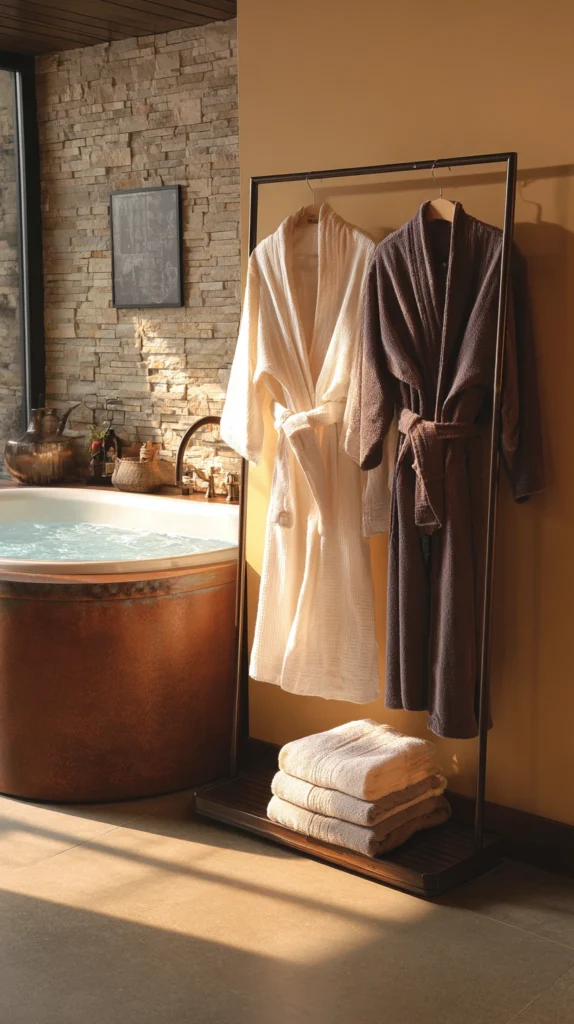
Budget: $30 – $120
A robe and towel station beside the hot tub — a weatherproof hook rail or a freestanding towel stand with robes hanging and towels folded — is the detail that most consistently elevates the hot tub experience from domestic to spa-like. The quality and the warmth of the robe and towel available when leaving the water contributes more to the perception of luxury than most visual improvements, and a well-considered robe station signals that the area has been designed for the full experience rather than the hardware alone.
A weatherproof hook rail in stainless steel or powder-coated aluminium costs $20–$50. A freestanding towel stand runs $30–$80. Quality cotton or microfibre robes cost $25–$60 each. Install the hook rail under the pergola or under a dedicated small roof so robes and towels are dry when reached for — a wet robe on an outdoor hook is the detail that most quickly collapses the spa illusion and reminds the user that they are in a garden rather than a retreat.
Style tip: Warm the towels before a planned hot tub session — either in the tumble dryer for fifteen minutes before going outside or in a small outdoor towel warmer ($40–$80) fixed under the pergola. A warm towel received when leaving hot water on a cool evening is a sensory experience that no visual improvement to the surroundings can replicate and that costs nothing beyond the fifteen minutes of forethought.
9. The Surrounding Deck Refresh
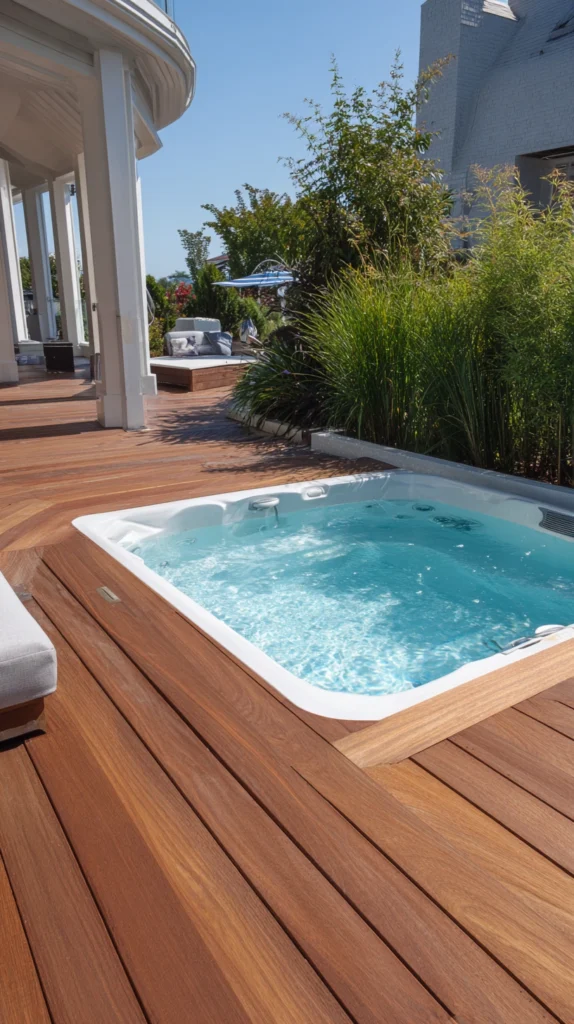
Budget: $50 – $400
The deck surface immediately around the hot tub — if timber — deteriorates faster than any other section of outdoor decking because of the consistent moisture, the chemical water splashback, and the barefoot traffic it receives. A deck that is grey, splintered, and uneven around the tub undermines every other improvement to the area regardless of how well the tub itself functions. Refreshing the deck with a clean, sand, and oil treatment — or replacing the most deteriorated boards — restores the foundation that the whole hot tub area sits on.
Decking cleaner for stripping grey weathered timber costs $15–$30. Decking oil in a natural or warm brown tone runs $20–$50 per litre. A decking sander — orbital sander hire for a day costs $30–$50 — removes the top layer of weathered grey timber to reveal the fresh wood beneath before oiling. Replace any boards that have developed deep cracks, persistent splintering, or significant rot rather than attempting to oil them — a deteriorated board oiled is a deteriorated board that smells of oil.
Style tip: Oil the deck boards in the direction of the grain using a brush rather than a roller. A brush applied coat penetrates the timber more deeply than a roller coat, which applies oil to the surface rather than into it. Penetrated oil protects from moisture within the timber; surface oil protects only the surface and wears off within a single season of barefoot traffic and water exposure.
10. The Outdoor Entertainment System
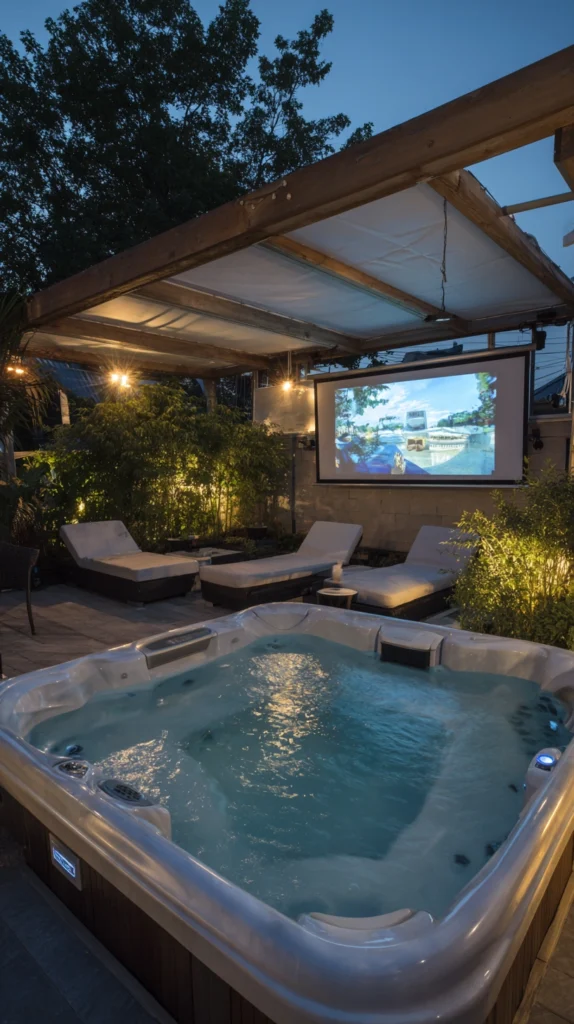
Budget: $50 – $400
A waterproof outdoor speaker system and a weatherproof tablet or screen mounted within sight of the tub — positioned under the pergola or fixed to a nearby wall under adequate cover — gives the hot tub area the entertainment infrastructure of an outdoor cinema combined with the water experience of the tub. The combination of warm water, good audio, and a long evening creates a version of at-home luxury that very few investments of equivalent cost can match.
A quality waterproof Bluetooth speaker costs $40–$120. Permanently installed outdoor speakers in a weatherproof housing run $80–$200 for a pair. A weatherproof outdoor television suitable for a covered pergola position starts at $200. Keep all electronics under cover — even weatherproof ratings have limits, and a speaker described as waterproof that sits in a puddle after rain has exceeded those limits regardless of its IP rating.
Style tip: Set the music volume so conversation is comfortable from inside the tub without raising the voice. The acoustic properties of a hot tub area — open to the sky, with hard surfaces reflecting sound unpredictably — make it easy to underestimate how loud a speaker is from outside the tub and overestimate from inside it. Set and test the volume from the seated-in-water position rather than from the deck before getting in.
11. The Landscaped Approach Path
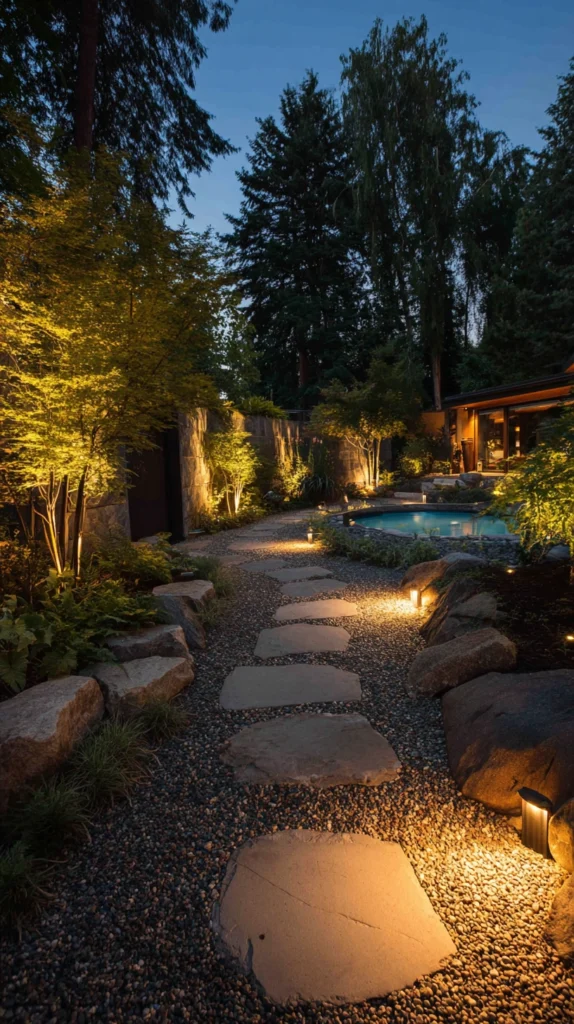
Budget: $40 – $200
A defined path from the house to the hot tub — in a warm natural material, lit at each side, with planting along its edges — turns the approach to the tub into the beginning of the retreat experience rather than a functional walk across the garden. A path that is deliberately beautiful in itself prepares the mind for what is at the end of it, and the quality of the approach contributes to the quality of the experience in a way that is felt rather than observed.
Natural stone stepping stones cost $3–$8 each. A gravel path with edging runs $30–$80 for a standard length. Solar path lights on each side cost $5–$15 each. Fragrant planting along the path edges — lavender, rosemary — costs $4–$8 per plant. Choose a path material in the same stone family as the hot tub surround — the visual continuity between the path and the destination reads as a designed sequence rather than two independent elements that happen to be connected.
Style tip: Light the path at ankle height rather than at knee height or above. Ankle-height path lighting illuminates the surface you are walking on without creating glare at face height or light pollution that disrupts the dark, atmospheric quality of the hot tub area at night. The path lights guide the approach; the tub area lighting creates the destination — keeping the two at different intensities makes the arrival feel like entering a different and better-lit space.
12. The Heated Outdoor Space
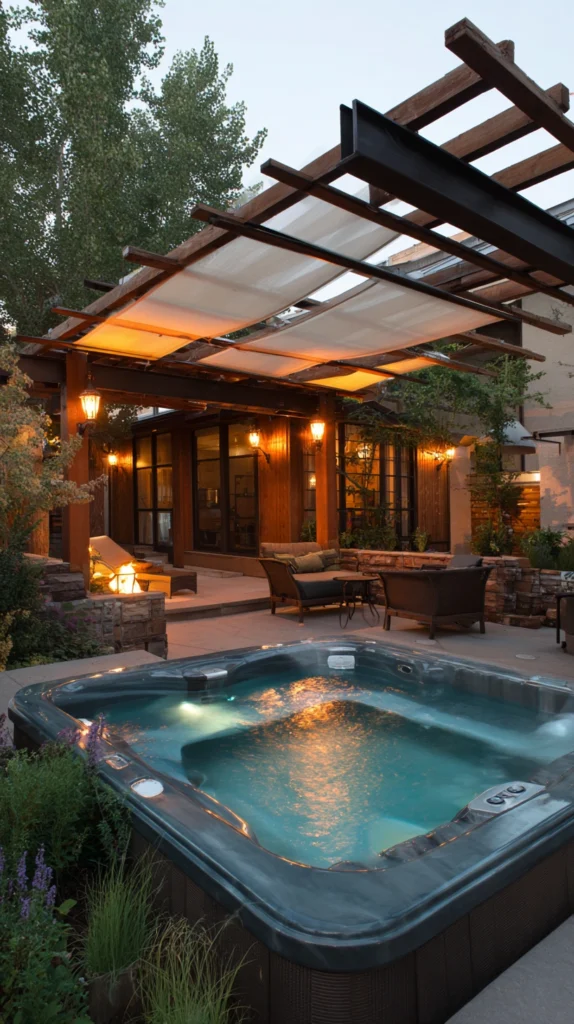
Budget: $80 – $500
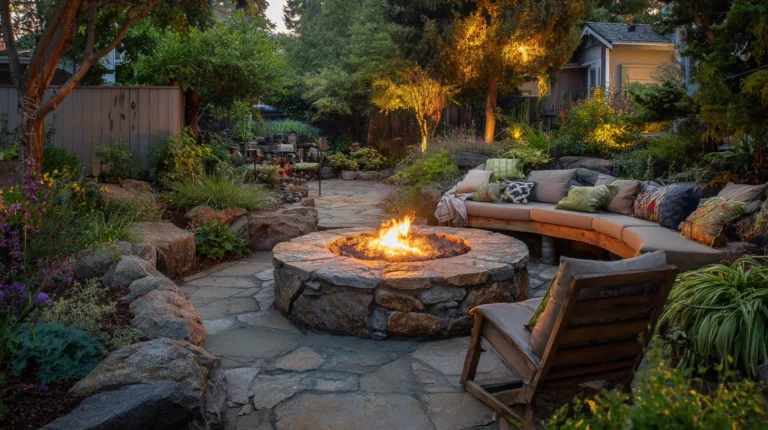
An outdoor heater positioned adjacent to the hot tub — a wall-mounted infrared panel, a freestanding patio heater, or a small fire pit — extends the comfort zone of the hot tub area beyond the water itself. The experience of moving between the hot water and a heated outdoor space — rather than stepping from the tub into cold air — is the detail that most changes the luxury quality of the outdoor hot tub from seasonal to year-round.
A wall-mounted infrared outdoor heater costs $80–$200. A freestanding patio heater runs $100–$300. A small portable fire pit costs $50–$150. Position the heater so its warmth reaches the changing area and the robe station as well as the main seating area — the moment of leaving the water and reaching for a robe is the moment when external warmth is most needed and most felt.
Style tip: Use an infrared heater rather than a convection heater for an outdoor hot tub area. A convection heater warms the air — which escapes immediately in an outdoor space with no ceiling to trap it. An infrared heater warms surfaces and bodies directly, regardless of air temperature, in the same way that sunlight warms on a cold clear day. The warmth from an infrared heater is felt immediately and continuously rather than accumulating slowly in a space that cannot retain heated air.
13. The Aromatherapy and Scent Layer
Budget: $15 – $80
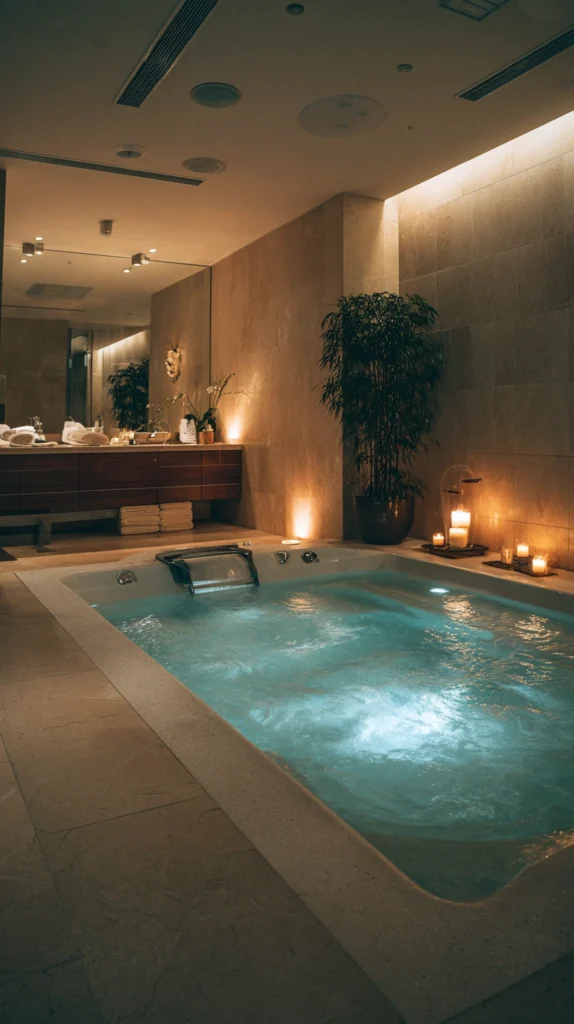
Adding a scent layer to the hot tub area — through tub-safe aromatherapy crystals in the water, citronella and essential oil candles on the surround, or fragrant plants in the surrounding planting — gives the retreat experience an olfactory dimension that visual and acoustic improvements alone cannot provide. The combination of warm water, warm air, and a deliberately chosen fragrance is the sensory combination that most closely replicates a professional spa experience.
Hot tub aromatherapy crystals cost $8–$20 per treatment. Scented pillar candles run $5–$15 each. A pot of gardenia or jasmine beside the tub costs $15–$40 and releases fragrance continuously in warm conditions. Use only aromatherapy products specifically formulated for hot tub use — standard bath bombs, essential oils, and bubble bath products affect the water chemistry and the filter system in ways that require expensive remediation.
Style tip: Choose a single consistent fragrance for the hot tub area rather than combining multiple scents simultaneously. A candle, a plant, and aromatherapy crystals all in the same scent family — eucalyptus and mint, or jasmine and white flowers, or cedar and sandalwood — create an immersive olfactory environment. The same three scent sources in three different fragrance families create a confusion that no individual element of the experience compensates for.
14. The Storage and Organisation Solution
Budget: $30 – $150
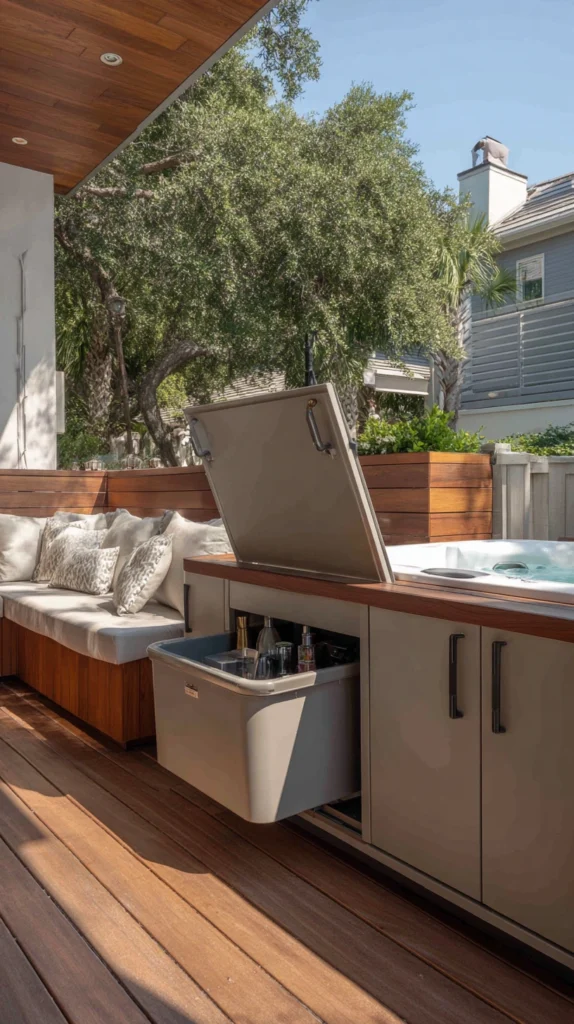
A dedicated storage solution for the hot tub area — a weatherproof box or cabinet for chemicals, testing kits, cleaning equipment, and accessories — removes the functional clutter that most hot tub surrounds accumulate and that undermines the retreat quality of even the most beautifully designed space. A chemical bottle visible on the deck coping, a testing kit beside the robe station, a brush leaning against the pergola post: each small item of maintenance equipment visible in the leisure space reminds the user of the work that makes the experience possible rather than allowing the experience itself to be the only thing present.
A weatherproof storage box in 100–150 litre capacity costs $40–$80. A lockable outdoor cabinet runs $80–$150. A small designated shelf within the cabinet for chemicals, at a height that prevents children from accessing them ($10–$20 in shelving materials), addresses the safety requirement that outdoor hot tub chemicals always present. Label the contents of the storage unit clearly — unlabelled bottles of hot tub chemicals look identical and the consequences of using the wrong one at the wrong concentration are significant.
Style tip: Store only what is currently needed in the hot tub area storage and keep seasonal or infrequently used supplies in the garage or a shed. A storage box that is half-full is a storage box where everything can be found quickly; one that contains every hot tub product ever purchased, including several that are now discontinued, is a storage problem rather than a storage solution.
15. The Four-Season Enclosure
Budget: $200 – $2,000
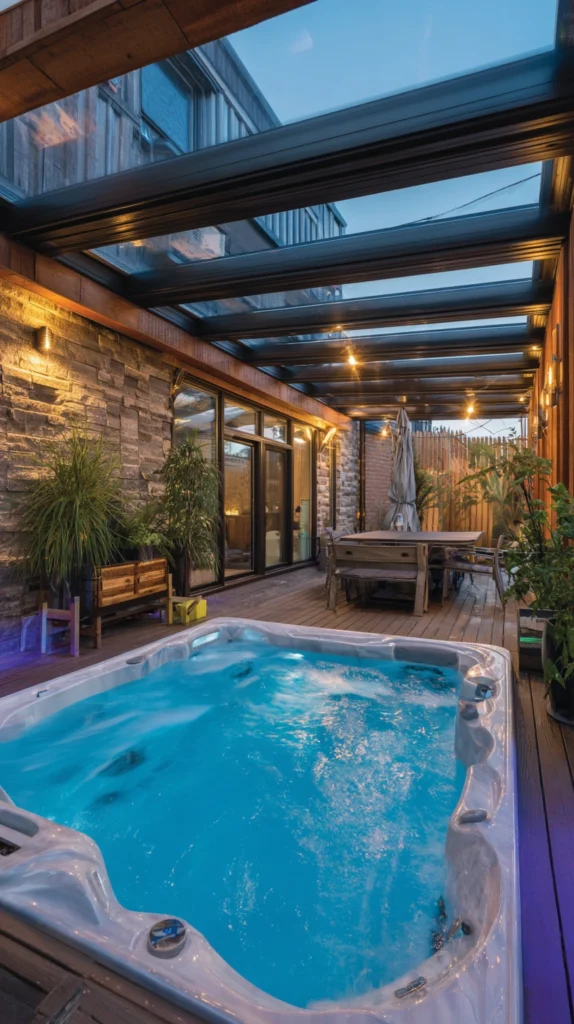
A semi-permanent or seasonal enclosure for the hot tub area — a combination of pergola, side panels, outdoor curtains, and a louvred or clear polycarbonate roof — extends the usable season of the hot tub from the warm months to most of the year. A hot tub that is genuinely pleasant to use in October and February as well as July is a hot tub that earns its running costs across twelve months rather than four, and the investment in enclosure pays back in extended use rather than in aesthetic improvement alone.
Polycarbonate roof panels for a pergola frame cost $20–$40 each. Outdoor curtain panels for the sides run $20–$50 each. A full louvred roof system costs $800–$2,000. Zip-up clear PVC side curtains ($30–$80 per panel) provide the most flexible weather protection — opened in summer for full outdoor experience, closed in winter to create a greenhouse-warm enclosure around the tub without restricting the view.
Style tip: Design the four-season enclosure so it can be fully opened on good days rather than partially closed on all days. An enclosure that is always slightly closed — always with a panel or curtain reducing the connection to the garden and the sky — reduces the pleasure of the hot tub on good days in the effort to extend the season on bad ones. The enclosure earns its value when it is fully open in summer and fully closed in winter, not when it occupies a permanent middle position that serves neither season well.
The best hot tub retreat is not the one with the most features or the most elaborate surround — it is the one that makes the decision to use the tub easy rather than effortful, that has anticipated what is needed before it is needed, and that makes the time spent in the water feel genuinely separate from the ordinary life of the house that is visible twenty metres away.
Get the privacy right, the lighting warm and low, the robe dry and within reach, and the path to the tub beautiful enough that walking it feels like the beginning of something worth arriving at. The water does the rest.